Call for Papers | Made People: The Beauty of the Body
Made People: The Beauty of the Body in Art and Cosmetics—An Academic Workshop in Two Parts
Made People I: Make-up
Freie Universität Berlin, 26–27 June 2015
Made People II: Makeover
Kunsthistorisches Institut in Florenz,Max-Planck-Institut, 20–21 November 2015
Proposals due by 31 July 2014
Since antiquity, beauty has been regarded as a work of art in which nature plays a role not so much as a holistic model and ideal but as a basic substance and an ‘assembly kit’. This concept of composite beauty bears the reservation that beauty as an entity only exists in an incomplete form in nature. It suggests that work can be performed on the human body, both to improve and to correct it. The initial hypothesis is that such work represents a concept combining artistic, cosmetic and medical practices that sees the techniques of art in a fundamental field of tension vis-à-vis the substances provided by nature.
Even more than in painting and sculpting, both of which pursued a demonstration of their autonomy and perfection in estheticizing nature in the fifteenth and sixteenth centuries, a supposed inadequacy of what nature had to offer became a lasting point of friction and even the sole legitimisation in the practice of putting on make-up or doing one’s hair and in more recent beauty surgery. While the impression of naturalness remained virulent as a measurement and an ideal, as it also does in art that continuous to pursue imitatio, the boundary to reality simultaneously became permeable, so that beauty could literally assume the role of a second nature and the stylist could turn into an alter deus.
Designed as an interdisciplinary event, the workshop explores the norms and techniques of such an estheticizing treatment of nature in the fields of art, cosmetics and plastic surgery regarding physical beauty and the instruments and guiding principles of its creation or enhancement. In two sessions, it traces the various degrees of cosmetic and artistic treatment of and intervention in the natural body from antiquity to the present, examining its superficial make-up on the one hand and its far-reaching makeover on the other. Here, special attention is given to the techniques of estheticization, the processes of selection and synthesis as well as the modification or modelling of parts of the body with respect to both colours and shapes. Such a focus also allows for a demonstration of the violent side that the ideal of beauty bears which ultimately always entails changes to nature, a dissection of the body into beautiful individual parts and their chimera-like reassembling.
The aim of the workshop is to promote academic exchange between junior scholars and established experts. Also, with the aid of a selection of source texts and a common discussion of selected museum exhibits on site, a common thematic basis is to be developed that covers beautifying techniques of make-up and makeover and reaches beyond individual specialisation.
Junior scholars from all disciplines are invited to hand in proposals for twenty-minute contributions in German or English on the presentations and design of physical beauty between nature and art and cosmetics and medicine. Abstracts not exceeding 500 words and a brief CV are to be submitted to workshop@gemachtemenschen.net by July 31, 2014. Travel and accommodation expenses will be covered if applications for funding are accepted.
Organization
Dr. Romana Filzmoser, Universität Salzburg
Prof. Dr. Wolf-Dietrich Löhr, Freie Universität Berlin/Kunsthistorisches Institut in Florenz, Max-Planck-Institut
Julia Saviello M. A., Ludwig-Maximilians-Universität München
Call for Papers | Art History: The Formation of the Academic Discipline
Art History: The Formation of the Academic Discipline
Rethymnon, Greece, 3–4 October 2014
Proposals due by 30 June 2014
The Association of Greek Art Historians and the Institute for Mediterranean Studies (FORTH) organise an Academic Forum with the title Art History: The Formation of the Academic Discipline in Europe and Related Developments in Greece (18th–19th Centuries). The meeting will take place at the Institute’s premises in Rethymnon, Crete on Friday, 3rd and Saturday, 4th October 2014. The aim of this meeting is to explore the ways in which the academic and research fields of Art History were formed from the late 18th century and continued to develop up to the beginning of the 20th century. Shaped by its interactions with other disciplines, Art History eventually created its own unique discursive field and distinct methodology. With this meeting we also hope to chart the status of historiographical research in Greece, but also worldwide.
We invite papers that focus on, but are not limited to, the following topics: (more…)
Call for Papers | Understanding British Portraits 2014 Seminar
From the Understanding British Portraits website:
Understanding British Portraits Annual Seminar 2014
National Portrait Gallery, London, 26 November 2014
Proposals due by 13 June 2014
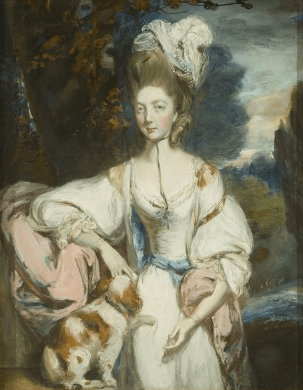
Mrs Henchman by Daniel Gardner (?1750-1805), drawing and watercolour © Bristol Musuem & Art Gallery
The ‘Understanding British Portraits’ Annual Seminar aims to highlight current scholarly research, museum-based learning programmes, conservation discoveries and curatorial practice relating to British portraits of all media and time periods. This year’s Annual Seminar will be held at the National Portrait Gallery, London, on Wednesday 26 November.
We invite proposals for 20/25 minute-papers from professionals who would like to share case studies and ideas which relate to the aims of the seminar as given above. Please send an outline of approximately 200 words, along with a brief biographical note, to mail@britishportraits.org.uk before Friday 13 June. Those who have submitted papers for consideration in the past are very welcome to do so again this year.
Understanding British Portraits is an active network with free membership for professionals working with British portraits including curators, museum learning professionals, researchers, academics and conservators. They aim to enhance the knowledge and understanding of portraits in all
media in British collections, for the benefit of future research,
exhibitions, interpretation, display and learning programmes.
Call for Papers | L’architecture des ingénieurs, 1650–1850
From the Call for Papers:
L’architecture des ingénieurs, 1650–1850
Galerie Colbert, Paris, 8 November 2014
Proposals due by 15 May 2014

Jacques-Pierre-Jean Rousseau, ingénieur des ponts et chaussées, puis architecte de la ville d’Amiens, reliefs de la façade du théâtre de la ville, 1778, Archives départementales de la Somme
Organisée par les universités Bordeaux III, Paris-Sorbonne, Paris-Ouest, avec le concours du GHAMU
Les années 1980 furent propices à l’étude du travail des ingénieurs : en 1981, Anne Blanchard publiait un Dictionnaire des ingénieurs militaires actifs en France entre 1691 et 1791, témoignant par son volume de l’importance de leur activité, tandis qu’en 1988, Antoine Picon, dans son ouvrage Architectes et ingénieurs au siècle des Lumières, accordait enfin aux ingénieurs des Ponts l’attention qu’ils méritaient et examinait leur formation et leurs méthodes de travail au regard de celles des architectes de l’Académie royale d’architecture.
Au-delà des programmes attendus, fortifications, ouvrages hydrauliques, ponts et routes, les ingénieurs, militaires et des Ponts et Chaussées, honorèrent des commandes dans le domaine de l’architecture publique monumentale, de l’architecture religieuse et hospitalière, mais aussi dans celui de l’architecture domestique et de l’art des jardins.
L’historiographie fait la part belle aux architectes dans les embellissements de la capitale, tandis que les études récentes sur la province accordent aux ingénieurs une place de plus en plus importante : le tableau est en réalité bien plus nuancé. Cette journée sera l’occasion de présenter les limites de cette opposition et d’initier un travail systématique sur l’activité des ingénieurs du règne de Louis XIV à la monarchie de Juillet.
Pour cette première rencontre sont attendues plus spécialement les communications portant sur l’architecture privée et son décor, la distribution et le projet urbain.
Une deuxième rencontre se déroulera en 2015.
Direction scientifique : Basile Baudez, maître de conférences, Paris IV, Alexia Lebeurre, maître de conférences, Bordeaux III, et Dominique Massounie, maître de conférences, Paris Ouest-Nanterre.
Propositions à transmettre avant le 15 mai 2014 : alexialebeurre@aliceadsl.fr, basile.baudez@gmail.com, dommassounie@aol.com
Call for Papers | CAA in New York 2015, Donald Posner Session
Here’s the description for the HECAA-sponsored, 90-minute session—chaired by Andria Derstine and Rena Hoisington—on the legacy of Donald Posner:
103rd Annual Conference of the College Art Association
New York, 11–14 February 2015
Proposals due by 9 May 2014
The 2015 Call for Participation for the 103rd Annual Conference, taking place February 11–14 in New York, describes many of next year’s sessions. CAA and the session chairs invite your participation: please follow the instructions in the booklet to submit a proposal for a paper or presentation. This publication also includes a call for Poster Session proposals.
◊ ◊ ◊ ◊ ◊
Donald Posner and the Study of Seventeenth- and Eighteenth-Century French and Italian Art
Andria Derstine, Allen Memorial Art Museum, Oberlin College; Rena M. Hoisington, Baltimore Museum of Art, Andria.Derstine@oberlin.edu and RHoisington@artbma.org
Donald Posner (1931–2005), the Ailsa Mellon Bruce Professor of Fine Arts at the Institute of Fine Arts, New York University, was one of a select group of art historians who, beginning in the 1950s and 1960s, significantly advanced scholarly inquiry into the Italian and French Baroque. From his first published article, on Le Brun’s Triumphs of Alexander series (1959), to his work on Annibale Carracci, Caravaggio, Domenichino, Lanfranco, Callot, and Poussin, his work helped to initiate and direct future research in the field. In the late 1960s and early 1970s, he began to turn his attention toward the eighteenth century—then a notably understudied area. His publications on Watteau, Fragonard, Boucher, Tiepolo, Rigaud, and Nattier set standards for art historical scholarship and greatly contributed to the burgeoning interest in this ‘new’ century. As wide-ranging as the topics he took up was his critical method, encompassing connoisseurship, patronage and collecting, iconography, stylistic issues, taste, and aesthetics, among others. Posner promoted and encouraged research and publication over the course of his long career, and served CAA as Editor-in-Chief of The Art Bulletin from 1968 to 1971 and as Chairman of The Art Bulletin Editorial Board from 1991 to 1994. Ten years after his death, this panel celebrates Posner’s rich legacy by inviting papers that take up particular areas of his field of inquiry and present new information, or that are stimulated by his scholarship and relate to his broad interests.
Descriptions for additional sessions are available here»
Call for Papers | ‘Capability’ Brown: Perception and Response
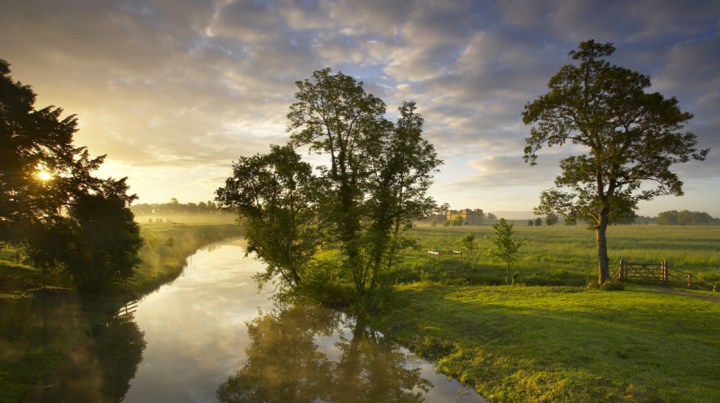
© National Trust Images / David Noton / Croome Park / Worcestershire
From the Capability Brown Tercentenary website
◊ ◊ ◊ ◊ ◊
From The Garden History Society:
‘Capability’ Brown: Perception and Response in a Global Context
University of Bath, 9–11 September 2016
Proposals due by 31 August 2014
An ICOMOS-UK International Conference in collaboration with the University of Bath, in association with the Garden History Society and the National Trust, and supported by the ICOMOS International Scientific Committee on Cultural Landscapes.
The landscape designer Lancelot ‘Capability’ Brown (1716–1783) changed the face of 18th-century England. Yet Brown left no written explanation of his work. Much must be inferred from his surviving landscapes and by seeing his work in the wider context of the naturalistic style that developed in Europe and in countries influenced by Europe. In 2016 the tercentenary of his birth is being celebrated as an opportunity to reflect on his life, work, style and significance.
This international conference, organised by the ICOMOS-UK Cultural Landscapes and Historic Gardens Committee in collaboration with the University of Bath, will be one of the major events in the Capability Brown Tercentenary year. Internationally renowned researchers and practitioners will present Brown’s work in a global context and explore the ways in which it has been interpreted over the last 250 years. The papers will be published in Garden History. With partners including the Garden History Society and the National Trust, this conference will be one of the highlights of the first-ever ‘Capability’ Brown Birthday and Festival, bringing together in a national campaign a huge range of events, openings, exhibitions and publications.
More information is available on the full Call for Papers»
Call for Papers | SAH in Chicago, 2015

From the SAH 2015 Call for Papers:
2015 Society of Architectural Historians Annual Conference
Chicago, 15–19 April 2015
Proposals due by 6 June 2014
The Society of Architectural Historians is now accepting abstracts for its 68th Annual Conference in Chicago, April 15–19, 2015. Please submit abstracts no later than June 6, 2014, for one of the 32 thematic sessions or for an open session. Sessions have been selected to cover topics across all time periods and architectural styles. SAH encourages submissions from architectural, landscape, and urban historians; museum curators; preservationists; independent scholars; architects; and members of partner organizations.
Thematic sessions are listed below. Open sessions are available for those whose research does not match any of the themed sessions. Instructions and deadlines for submitting to themed sessions and open sessions are the same. Only one abstract per author or co-author may be submitted.
SAH is using an online abstract submission process—please do not send your abstract to the session chair’s email address as this will delay the review of your abstract or possibly void your submission.
Abstract submissions must follow these guidelines:
• Abstracts must be under 300 words
• The title cannot exceed 65 characters, including spaces and punctuation
• Abstracts must follow the Chicago Manual of Style
If submitting to a thematic session, send your CV to the appropriate session chair and the SAH office at info@sah.org. If submitting to the open session, send your CV to the SAH office only, at info@sah.org. Abstracts should define the subject and summarize the argument to be presented in the proposed paper. The content of that paper should be the product of well-documented original research that is primarily analytical and interpretative rather than descriptive in nature. Papers cannot have been previously published or presented in public except to a small, local audience. All abstracts will be held in confidence during the review and selection process, and only the session chair and General Chair will have access to them. All session chairs have the prerogative to recommend changes to the abstract in order to ensure it addresses the session theme, and to suggest editorial revisions to a paper in order to make it satisfy session guidelines. It is the responsibility of the session chairs to inform speakers of those guidelines, as well as of the general expectations for participation in the session and the Annual Conference. Session chairs reserve the right to withhold a paper from the program if the author has not complied with those guidelines.
Please note: each speaker is expected to fund his or her own travel and expenses to Chicago. SAH has a limited number of partialfellowships for which Annual Conference speakers may apply. However, SAH’s funding is not sufficient to support the expenses of all speakers. Each speaker and session chair must register and establish membership in SAH for 2015 by August 30, 2014, to show their commitment for the 2015 conference and are required to pay a non-refundable fee equal to that of the conference registration fee.
◊ ◊ ◊ ◊ ◊
A selection of panels that might be relevant for eighteenth-century scholars:
ANCIENTS AND MODERNS: THE UNRAVELING OF ANTIQUITY
The Quarrel of the Ancients and Moderns erupted in late seventeenth-century France. Although ostensibly concerned with the relative merits of the literary and cultural achievements of modernity and antiquity, the quarrel was predicated upon more ideologically charged issues, and as such what initially began as a literary quarrel quickly developed into a broader debate that impinged upon an array of subjects including architecture. Indeed, the Quarrel of the Ancients and Moderns unleashed a discourse pitting the sanctity of antiquity against the exigencies of modernity that would shape views of the architecture of both the past and present throughout the long eighteenth century.
As they grappled with questions of imitation and invention, authority and novelty, progress and perfection, and rules and genius, architects turned to the ruins of antiquity to redefine the architecture of the present. The interpretive space that existed between the ruin and its reconstruction, the fragment and the whole, gave rise to differing and vigorously contested visions of antiquity and its relevance for the modern world. The resulting expansion of knowledge led architects to question the prevailing holistic view of antiquity and the assumptions upon which it was based.
This session seeks to explore how the quarrel’s unraveling of the past influenced architectural theory and practice in the present and to understand it as a pan-European phenomenon. We invite papers that reconsider the quarrel and its architectural legacy over the course of the long eighteenth century (1670–1815) throughout Europe. Papers may address architecture as it relates to a range of issues, including the nature of authority, the possibility of progress, the status of the architect, the role of genius, and the relationship between socio-cultural change and the built environment.
Session chairs: John Pinto, Princeton University pinto@princeton.edu; Daniel McReynolds, Princeton University, dmcreyno@princeton.edu
◊ ◊ ◊ ◊ ◊
ARCHITECTURAL HISTORIES OF DATA
In the so-called digital age, ‘data’ is repeatedly presented as the primary unit of knowledge. Yet we know almost nothing of this epistemic unit’s history. How did we come to imagine data as untethered, immaterial bits of information? Historians of the early modern period have written compelling histories of the modern ‘fact’ by exposing its unexpected ties to preternatural monsters and double-entry bookkeeping. What would equivalent histories of data look like? Architectural historians may be particularly well positioned to excavate histories of data since space is a central paradox in our understanding of this unit: while data needs to be infinitely addressable, we assume that it does not occupy an address in space. The sixteenth- century scholar who decided to record his bibliographies not in bound volumes but on slips of paper so as to be able to rearrange them understood this as well as the contemporary data analyst. Over against the assumption that data is dematerialized information flowing in an imaginary frictionless space, then, this session proposes that data has always had architecture. We invite papers that explore the material infrastructures that gather, store, index, aggregate, and dissimulate data: from cabinets that file paperwork to buildings that house bureaucracies and from graphs and tables that make data visible to data centers and satellites in orbit that push it out of sight. How can these spatial and material histories start sketching an historical ontology of data? What concepts, artifacts, techniques, and institutions have been playing roles in these histories? And, finally, how might historical accounts of data challenge the technological master- narratives on which histories of architectural modernity have been based?
Session chairs: Zeynep Çelik Alexander, University of Toronto, zeynep.celik@utoronto.ca and Lucia Allais, Princeton University, allais@princeton.edu
◊ ◊ ◊ ◊ ◊
EMOTIONAL HISTORIES OF ARCHITECTURE
Louis Sullivan defied his profession’s orthodoxies in a 1894 AIA convention address titled “Emotional Architecture as Compared with Classical.” Deploring the state of contemporary design pedagogy, he argued “how deeply necessary it is that a technical or intellectual training be supplemented by a full, a rich, a chaste development of the emotions.” Sullivan’s unfamiliar antinomies of “emotional” versus “classical” architecture confound us, indeed instructively. An architectural historiography grounded solely in formal, technical and intellectual constructs is poorly equipped to evaluate emotions as evidence. Our discipline’s limitations render Sullivan’s discourse odd and inscrutable.
That situation is changing, thanks to methodological innovations in the burgeoning field of the history of emotions. Reassessing interior states conventionally assumed to be “hardwired” and universal, the field’s pioneers insist upon the historical specificity, contingency, and transience of emotional expressions. Analyzing emotive terms embedded in primary documents, they produce nuanced readings of affect as a social and cultural construct. Concepts including “emotional navigation,” “emotional regimes,” “emotional communities” (characterized by particular “systems of feeling” and “emotional styles”) and “emotional labor” bear close scrutiny by architectural historians. Familiar buildings, newly contextualized by emotive evidence discovered in their corresponding texts, bear unforeseen witness to architectural enterprises and the societies that initiate them.
This session invites papers that serve as case studies in how research methods developed in the field of the history of emotions can inform and broaden architectural history, and which suggest, conversely, how architectural history might offer unique contributions to the history of emotions. Abandoning impressionistic readings of architectural affect, papers in this session will explicitly evaluate methodologies that embed built objects within their emotional context(s). Proposals from scholars of all periods and geographies are welcome.
Session chair: Greg Castillo, University of California, Berkeley; gregcastillo@berkeley.edu
◊ ◊ ◊ ◊ ◊
FROM DRAWING TO BUILDING: REWORKING ARCHITECTURAL DRAWING
It is understood that drawing leads to building. However, the movement from one to the other is neither direct nor determined in advance. It is the presence of this ‘indeterminacy’ that creates a specific locus of research. There is, as Robin Evans (1997) has argued, a constitutive ‘gap’ between drawing and building that demands a revision of architectural history. This ‘gap’ constitutes a site in which the project of the history of architecture can be rethought and the appropriate theoretical dimensions to that rethinking incorporated. For Evans the gap is the general condition of architectural drawing. In sum this session—From Drawing to Building: Reworking Architectural Drawing—will allow for a productive rethinking of the relationship between drawing and building; a relationship that has implications as much in history and theory as it does to architectural pedagogy and contemporary practices of design.
This session will concentrate on those architectural drawings that occur apart from the ones created for what can be described as the legal documentation of the construction processes. In other words, emphasis will be given to those drawings that are used to communicate concepts and meanings central to the discipline of architecture. Furthermore, the session will emphasize interest in the specific techniques and conventions of the perspective and the axonometric as techniques used to convey spatial strategies. Even though tied to specific periods and individual practices, drawings using these techniques represent distinctive disciplinary propositions.
Through these conventions and techniques, image-based representations provide transactional visual environments that are instrumental in the development of architectural knowledge. Such provocations for the discipline are beyond any authorial desire for architecture’s substantiation in building. This session will invite papers from a range of historical periods to open discussion on the functionality of the ‘gap’ between drawings and buildings.
Session chairs: Desley Luscombe, University of Technology Sydney, Desley.luscombe@uts.edu.au and Andrew Benjamin, Monash University Melbourne, andrew.benjamin@monash.edu
◊ ◊ ◊ ◊ ◊
REPLICAS: CONTENTIOUS RECONSTRUCTIONS OF THE PAST
‘Replica’ architectures employ selective ideas of the past to construct the self-image of states, cultures, organizations or powerful individuals in the present, often operating in service of radically conservative ideologies. Frequently promoted through the rhetoric of ‘reconstruction’, these projects are seldom ‘literal’ reconstructions. Rather, they involve the tendentious reclamation of historic architectural or urban forms to reinforce identity narratives, however tenuous or counterfactual their historical veracity. Such projects advance certain political, religious or socio-cultural worldviews or reinforce certain structures of power, preserving distinctions. While architecture has always conveyed ideologies or legitimized a particular social or political order, ‘reconstruction’ projects imagined to embody authority, or which transmit counterfactual histories, sit on the margins of our discipline. Yet they are profoundly interesting as material artifacts. The stories of their life in use are just as interesting as the stories of their procurement and construction. Striking in their own contexts, such “replicas” are often stranger when examined from another cultural, temporal or political vantage point.
The study of replicas is interdisciplinary, implicating architecture as well as philosophy, cultural studies, memory studies and cultural geography. We are interested in papers that examine:
• the intentions and anxieties of their patrons and makers
• the significance of retelling or reorienting stories and myths in the service of dominant or distinctive ideologies
• the shifting relations, incipient contradictions, or unwitting ironies that emerge between originals and replicas, as the latter respond to new programs, contemporary materialities, regulations and techniques of construction
• questions of collective memory, official history and the politics of preservation
Theoretically informed proposals that ground these questions in actual sites and practices from a broad range of geographies and time periods are welcome.
Session chairs: Adam Sharr, Newcastle University, adam.sharr@ncl.ac.uk Zeynep Kezer, Newcastle University, Zeynep.Kezer@ncl.ac.uk
◊ ◊ ◊ ◊ ◊
THE TENT: ONE OF ARCHITECTURE’S MANY GUISES
From the palace and pleasure garden to the military campaign and refugee camp, the tent exemplifies a realm that is ephemeral (although not evanescent), mediatory between the natural and built environments, and, as architecture ‘built’ out of textiles, insistently foregrounding a foundation in craftsmanship. Transformed into icons, tents have also been fixed in palatial and domestic interiors as ‘tent-rooms’ in places as geographically and historically diverse as, for example, the Norman palace in Palermo, Malmaison, and Graceland. Be it as structure, site, or icon, the tent offers a critical lens for investigating architecture’s fluid and yet (often) uneasy co-existence with nature, craft, and ephemerality. To date, the most comprehensive study of tent architecture (indeed, of tents as architecture) has been Peter A. Andrews’ Felt Tents and Pavilions: the Nomadic Tradition and its Interaction with Princely Tentage (1999). Andrews’ volumes not only offer a useful catalog of medieval and early modern tents, but they also draw attention to the ways in which tents instantiate a crucial meeting-point between East and West. This panel seeks to highlight the possibilities of rethinking architectural theory and practice afforded through a careful study of tents. Our session will take a wide angle view of the phenomenon of the tent, both geographically and chronologically, and so papers are invited that treat any place or period. Plausible topics include, but are not limited to, tents as gifts, engineers of alternate realities, markers of hybrid temporalities, textiles, sites of war, and symbols of an irrepressible pre-modernity.
Session chairs: Zirwat Chowdhury, Reed College, zirwat@reed.edu; William Tronzo, University of California, San Diego, wtronzo@yahoo.com
◊ ◊ ◊ ◊ ◊
WATERY NETWORKS
If architecture and cities have long been characterized by fixity, groundedness, and a formative relationship to land, how might a maritime perspective shift our understanding? Following the pioneering work of Fernand Braudel on the Mediterranean, Kurti Chaudhuri on the Indian Ocean, and Paul Lovejoy on the Black Atlantic, historians have not only reinvigorated Mediterranean studies and encouraged the growth of trans- Atlantic studies, they have also begun to identify transnational geographies as similarly fruitful sites for exploration, including the Black Sea, the Swahili Coast, and the Red Sea. This session considers how historic connections across the sea—created through networks of trade, imperial expansion, systems of communication, and/or migrations of people—have facilitated the transmission of ideas about architecture and have shaped buildings and cities across these watery terrains.
We seek papers that explore, either in case studies or more broadly analytic investigations, the possibilities, challenges, and potential pitfalls of thinking architecture from the mid-fifteenth century to the present through an oceanic lens. Although the age of European exploration put many regions into commercial and cultural dialogue, we seek work that opens onto less familiar routes, such as the swansong of Ming exploration or Arab trade across the Indian Ocean. Papers engaging the urban scale are especially encouraged. Our aim is to bring together architectural historians who work on geographically disparate places to consider the methodological ties that bind them. What lessons might be learned about how buildings and cities are shaped by transnational networks built across systems of water and transformed by the movements and complex cultural affiliations of individuals and groups? How do we negotiate the desire for a global outlook with the localized dynamics of particular sites?
Session chairs: Sheila Crane, University of Virginia, scrane@virginia.edu; and Mark Hinchman, Taylors University, Malaysia, MarkAlan.Hinchman@taylors.edu.my
◊ ◊ ◊ ◊ ◊
WHAT CANON? QUESTIONS OF LANDSCAPE HISTORY
A canon of landscape architectural history has emerged just as art and architectural historians have questioned the value and limits of the idea of any canon. Landscape history has expanded in the context of Marxist, feminist, and race-based critiques of established canons in art and architectural history. This critical condition has produced a landscape architectural canon both more inclusive and less defined, one at once more porous and thicker. Crossing disciplinary boundaries, scholars have investigated the complex connections between the fields of landscape architecture and architecture, ecology and environment, resiliency and sustainability, cities and urbanism. A canon of sorts has emerged, though by no means static or clearly grounded in any one approach. This session seeks to explore what the canon defines and what are the manifestations, limits, and potential areas of exposure. The session seeks to consider the role of critique in historical narratives and the development of the canon- where and what is the appropriate critical role? How has critique become an historical tool? Papers that consider landscapes in non-Western cultures would be appropriate, as would alternative views of canonic places. We encourage papers addressing the relationship of architecture and landscape architecture, urban design and planning, environmental design and analysis. Papers might present completed research projects or those still being theorized. We seek papers that suggest alternative views and challenging perspectives that will contribute to the growing body of scholarship in landscape architectural history.
Session chair: Thaisa Way, University of Washington, tway@uw.edu
Call for Papers | Facing the Unknown: Anonymity in the History of Art
From the symposium website:
Student Symposium | Facing the Unknown: Anonymity in the History of Art
The Cleveland Museum of Art, 24 October 2014
Proposals due by 15 June 2014
The Case Western Reserve University/Cleveland Museum of Art Joint Graduate Program in Art History & Museum Studies invites submissions from all areas of art history for the 40th Annual Cleveland Symposium. Facing the Unknown: Anonymity in the History of Art seeks papers which address the theme of anonymity or the unknown in the visual arts. The obscurity of an artist, subject, function, or context may be a byproduct of the passage of time, of traditional cultural practices, or a conscious decision on the part of the maker. This symposium aims to explore the ways in which an anonymous aspect of a work may influence its interpretation, function, classification, or perceived value throughout the object’s history.
Potential topics include, but are not limited to:
• Anonymous artists or makers
• Images of unknown subjects or for unknown patrons
• Objects with undetermined function or context
• Works of questionable authenticity, attribution, dating, or provenance
• Objects with elements that have been deliberately effaced, obscured, or omitted
• Lost works of art
• Previously unknown, unstudied, or unpublished artists or artworks
• Intentional use of anonymity, including works that mask or conceal identity
Doctoral and master’s degree students in art history and related disciplines are invited to submit a 250-word abstract and C.V. to clevelandsymposium@gmail.com by June 15, 2014. Applicants will receive notification of their status via email by August 1, 2014.
The 40th Annual Cleveland Symposium will be held in conjunction with the Symposium in Honor of Ellen G. Landau, Andrew W. Mellon Professor Emerita in the Humanities, to take place on Saturday, October 25, 2014 at the MOCA Cleveland. The keynote speaker for both events is Dr. Joan Marter, Board of Governors Professor of Contemporary Painting and Sculpture, Rutgers University, who will speak after the conclusion of the program on Friday October 24.
Call for Papers | CAA in New York, 2015
The following selection of panels may be of interest for scholars of the eighteenth century, though readers are encouraged to consult the full Call for Participation. HECAA members are asked to pay special attention to two sessions: 1) a commemorative panel for Donald Posner chaired by Andria Derstine and Rena Hoisington and 2) a new scholars workshop led by Jennifer Milam (details for the latter will follow soon). –CH
◊ ◊ ◊ ◊ ◊
103rd Annual Conference of the College Art Association
New York, 11–14 February 2015
Proposals due by 9 May 2014
The 2015 Call for Participation for the 103rd Annual Conference, taking place February 11–14 in New York, describes many of next year’s sessions. CAA and the session chairs invite your participation: please follow the instructions in the booklet to submit a proposal for a paper or presentation. This publication also includes a call for Poster Session proposals.
◊ ◊ ◊ ◊ ◊
Donald Posner and the Study of Seventeenth- and Eighteenth-Century French and Italian Art
Andria Derstine, Allen Memorial Art Museum, Oberlin College; Rena M. Hoisington, Baltimore Museum of Art, Andria.Derstine@oberlin.edu and RHoisington@artbma.org
Donald Posner (1931–2005), the Ailsa Mellon Bruce Professor of Fine Arts at the Institute of Fine Arts, New York University, was one of a select group of art historians who, beginning in the 1950s and 1960s, significantly advanced scholarly inquiry into the Italian and French Baroque. From his first published article, on Le Brun’s Triumphs of Alexander series (1959), to his work on Annibale Carracci, Caravaggio, Domenichino, Lanfranco, Callot, and Poussin, his work helped to initiate and direct future research in the field. In the late 1960s and early 1970s, he began to turn his attention toward the eighteenth century—then a notably understudied area. His publications on Watteau, Fragonard, Boucher, Tiepolo, Rigaud, and Nattier set standards for art historical scholarship and greatly contributed to the burgeoning interest in this ‘new’ century. As wide-ranging as the topics he took up was his critical method, encompassing connoisseurship, patronage and collecting, iconography, stylistic issues, taste, and aesthetics, among others. Posner promoted and encouraged research and publication over the course of his long career, and served CAA as Editor-in-Chief of The Art Bulletin from 1968 to 1971 and as Chairman of The Art Bulletin Editorial Board from 1991 to 1994. Ten years after his death, this panel celebrates Posner’s rich legacy by inviting papers that take up particular areas of his field of inquiry and present new information, or that are stimulated by his scholarship and relate to his broad interests.
◊ ◊ ◊ ◊ ◊
Artistic Exchange between the Spanish and British Empires, 1550–1900
Michael A. Brown, The San Diego Museum of Art; and
Niria E. Leyva-Gutiérrez, Long Island University C.W. Post Campus, michael.alexander.brown92@gmail.com and Niria.Leyva-Gutierrez@liu.edu
This session will focus on the vibrant cultural, political, and economic connections between early modern Spain and Britain and how these histories played out in their American colonies between the years 1550 and 1900. While recent exhibitions and publications have examined the compelling rivalry between the two empires, the nature of artistic exchange between England and Spain and how it unfolded in the Americas is a topic that has received scant scholarly attention. Papers should address any aspect of artistic exchange between Spain and England in North and South America and the Caribbean. We encourage proposals with an interdisciplinary, global purview. Emerging and early career scholars are especially welcome to submit proposals.
◊ ◊ ◊ ◊ ◊
Remaking the American Gallery
Sharon Corwin, Colby College Museum of Art, scorwin@colby.edu
In recent years major museums across the United States have been opening and reopening galleries devoted to American art, from the National Gallery of Art (2009) and the Museum of Fine Arts Boston (2010) to the Crystal Bridges Museum of American Art (2012) and the Colby College Museum of Art (2013). This session invites speakers to reflect on these efforts to remake the “American gallery” and specifically examine the kinds of histories of American art that museums are putting on display. How are those histories being (re)constructed in the twenty-first century? What work are they doing for particular institutions, collectors, curators, scholars, students, and museum visitors? In what ways are new museum installations reinforcing and challenging the parameters (or the very notion) of the American canon? Speakers may explore such questions through contemporary case studies; interpretive surveys of historiography, criticism, and institutional practices; or creative proposals to remake an American gallery.
◊ ◊ ◊ ◊ ◊
Rethinking American Art and the Italian Experience, 1760–1918
Melissa Dabakis, Kenyon College; and Paul Kaplan, Purchase College, State University of New York, dabakis@ kenyon.edu and paul.kaplan@purchase.edu
This session will focus on Italy as a key destination for Americans between the years 1760 and 1918. Examining the ways in which artists engaged the social, political, and aesthetic life of the Italian peninsula, papers should expand the ground upon which visual imagery has been understood by situating it within the dynamic process of transatlantic exchange. This panel seeks papers that offer new avenues of study by locating and analyzing the hybrid aesthetic practices that developed from encounters with Italian cultural traditions. How did American artists adopt, transform, and even translate modern Italian beliefs and aesthetic practices in their own artwork? How did the categories of gender, race, and religion inform artistic production across national boundaries? How were these artists and artworks received by Italian and American critics? We especially invite Italian scholars with research interests in transatlantic exchange and expatriate studies to submit paper proposals.
◊ ◊ ◊ ◊ ◊
Making and Being Made: Visual Representation and/of Citizenship
Corey Dzenko, University of North Carolina, Greensboro; and Theresa Avila, independent scholar, cjdzenko@gmail.com and sahibah@hotmail.com
Traditionally defined by an individual’s membership and level of participation within a community, “citizenship” results in access to benefits or rights, as described by scholars such as Eric Hobsbawm. Yet citizenship moves beyond political framings. According to Aiwha Ong, cultural citizenship is a “dual process of self-making and being-made” but done so “within webs of power linked to the nation-state and civil society.” Taking citizenship as a political position, cultural process, and intertwining of both, this panel examines the role of art and visual culture in reflecting, confirming, or challenging ideals of citizenship across historical periods and media. We seek proposals that engage with the questions: How does citizenship inform artistic and visual practices? And how do images inform citizenship? Topics may include but are not limited to nation building, civic practices, transnationalism, civil rights, politics of identity, labor, border zones, affects of belonging, and activism.
◊ ◊ ◊ ◊ ◊
The Art of Travel: People and Things in Motion in the Early Modern Mediterranean
Elisabeth Fraser, University of South Florida, fraser@usf.edu
For centuries artists, diplomats (ambassadors, consuls, and interpreters), and merchants served as cultural intermediaries in the Mediterranean. Stationed in port cities and other entrepôts of the Mediterranean, these go-betweens forged intercultural connections even as they negotiated and sometimes promoted cultural misunderstandings. They also moved objects of all kinds across time and space. Focusing on the early modern period from roughly 1600 to 1850, this session will consider how the mobility of art is intertwined with diplomatic and trade networks in the international arena of the Mediterranean. With the theorist Arjun Appadurai, we consider “ways in which people find value in things and things give value to social relations,” investigating analogies and relationships between the work performed by artists, diplomats, and merchants. How does the work of art participate in, foster, or resemble diplomatic negotiation or commercial exchange? Papers investigating any aspect of visual and material culture are welcome.
◊ ◊ ◊ ◊ ◊
Shifting Sands: ‘Ancient’ Art and the Art Historical Canon
Amy Gansell, St. John’s University; and Ann Shafer, Rutgers University, gansella@stjohns.edu and ann.shafer@rutgers.edu
This session critiques the art-historical canon by investigating the terminology “ancient” across cultural boundaries. We define a “canon” as an established list of sites, monuments, and objects considered most representative of a tradition. Although the current canon has evolved to include global cultures, outmoded periodizations linger. When, how, and why did ancient art become canonized as such? We aim to take stock of the viability of our present criteria for classifying art as ancient, to investigate how regional subcanons of ancient material have developed, and to explore the impact of discovery, exhibition, and publication. Considering future frameworks of conceptualization, how might ancient art be situated within the global perspective? When issues of authenticity, provenance, and loss arise, should the canon preserve the memory? We welcome contributions from scholars of any period or culture, artists, publishers, and museum professionals whose work transforms the very concept of ancient art in the art-historical canon today.
◊ ◊ ◊ ◊ ◊
White People: The Image of the European in Non-Western Art during the ‘Age of Exploration’, 1400–1750
James Harper and Philip Scher, University of Oregon, harperj@uoregon.edu and pscher@uoregon.edu
How did the rest of the world see Europeans during the so- called Age of Exploration? This session focuses on images of “Westerners” dating from the onset of European expansion to the beginning of the industrial period. While much has been written about Western images of Europe’s others, this session reverses the direction of the gaze, consider ing the African, Asian, Pacific Islander, and Native North or South American as the makers and the European as the object. Whether their exposure to Europeans was fleeting or sustained, first- or secondhand, artists and artisans around the world distilled their impressions of the encounter into images of foreign soldiers, sailors, merchants, missionaries, explorers, and colonists. Culturally specific, these often tell as much about the makers as they do about those they depicted. Papers are invited from a variety of cultural traditions, and interdisciplinary approaches are encouraged.
◊ ◊ ◊ ◊ ◊
Skeuomorphic: The Skeuomorph from the Acropolis to iOS
Nicholas Herman, The Courtauld Institute of Art; and Sarah M. Guérin, Université de Montréal, nicholas.herman@courtauld.ac.uk and s.guerin@umontreal.ca
A skeuomorph, from Greek σκεῦος (vessel) and μορῦή (form), is an object that adopts essential structural features of its predecessor as ornament. While not strictly necessary, these features connect the new to the old, rendering an object recognizable or more palatable to its audience. Examples include stone modillions on Greek temples derived from the structural elements of wooden architecture; print- ed fonts resembling their handwritten antecedents; faux- wood paneling; and, most topically, touchscreen software that mimics the appearance of three-dimensional items such as notebooks, agendas, and clocks. At the intersection of ergonomics, historicism, and illusionism, the skeuomorph can be revealed as a frequent feature across many historical periods. This session seeks papers that consider instances of skeuomorphism from antiquity to the present, and solicits especially analyses that reach beyond descriptive categories to investigate the motivations, intentions, and ideologies behind seemingly redundant visual continuities that survive at times of technological change.
◊ ◊ ◊ ◊ ◊
Historic Preservation and Changing Architectural Function
Maile Hutterer, Rutgers, The State University of New Jersey, maile.hutterer@rutgers.edu
This session explores shifts in the visual and physical experience of premodern buildings and monuments as a consequence of their preservation, which intrinsically alters the way historians and visitors interact with those spaces. Sometimes this intervention comes in the form of fences or newly created parvis, and other times by means of changed accessibility, signage, or purpose. The session welcomes papers on subjects from all geographical locations. It seeks to understand more fully how structures operate as records that reflect changing social practice and how that social practice might be reconstructed. If the function of a monument changed, for what purpose was it adapted and was there any resulting amendment to the fabric? Does its preservation obscure or highlight the full range of activities for which it was used, and why or how might it do so? How do the theories and practices of architectural preservation and landmark status account for the intrinsically transformative nature of restoration and conservation?
◊ ◊ ◊ ◊ ◊
Architecture in Islamic Painting
Abdallah Kahil, Lebanese American University, Abdallah.kahil@lau.edu.lb
This session addresses the representation of architecture in Islamic painting. Architectural structures and decoration are often included in Islamic paintings from most periods; they form either an independent visual entity or sets for scenes. The forms and roles of architectural representations in Islamic painting stimulate various methodological and formal approaches. These include exploring spatial concepts and representations, relationships between the architectural representation and visual culture of a specific period or style, the relationship between physical architecture and painted architecture, the imaginative renderings of painters, the formulaic representation, and so on. The architectural decorations in these paintings are so varied and rich in details. Some of them may correspond to the decoration of existing buildings, and some may not. This session is open to exploring all aspects of architectural representation and architectural decoration within the painting, and between the painting and the physical world throughout the periods between thirteenth and eighteenth centuries.
◊ ◊ ◊ ◊ ◊
Unfolding the Enlightenment
Alyce Mahon, University of Cambridge; and
Nebahat Avcioglu, Hunter College, City University of New York, am414@cam.ac.uk and navciogl@hunter.cuny.edu
What was the value of the Enlightenment for the artist, and how have artists responded to it since? While the Enlightenment is a well-known critical and historical paradigm, associated with an established set of ideas and objects in art, literature, philosophy, and science, this panel asks how we might go beyond existing formulations by seeking to understand the Enlightenment in terms of the expression of flexibility and hybridity in noncanonical art forms such as costume albums, carnets de voyages, livres d’artiste, and performance art. From the late eighteenth century to the present day, artists have explored the Enlightenment and its legacy in various media and historical and geographical contexts. They have challenged and undermined its obsession with knowledge, truth, and classification and exploited its preoccupation with the relationship of ethics to aesthetics, the private to the public, art to the state, and the collector to the museum. We welcome proposals that ask what forms have been taken by these representations of the Enlightenment and its legacy, and what insights they have offered.
◊ ◊ ◊ ◊ ◊
Original Copies: Art and the Practice of Copying
Stephanie Porras, Tulane University, sporras@tulane.edu
Technologies of copying—printing, casting, digital duplication—have always engendered debates about artistic authorship and invention. Copying can be viewed as a debasement and as creative praxis. Albrecht Dürer complained about copyists but also advised young artists learning to draw to “copy the work of good masters until you attain a free hand.” Copying can also produce originality. Andy Warhol’s copies of Brillo Boxes expose this paradox, asking (in Arthur Danto’s words), “What is the difference between two things, exactly alike, one of which is art and one is not?” This session seeks papers addressing techniques and functions of artworks that copy other objects (drawings, prints, casts, rubbings, photographs) produced from the early modern period to today, as well as the legal, ethical, philosophical, and ontological issues embedded in copying. Covering a wide temporal and material range, the session aims to encourage a broader dialogue about the problematic status of the copy in the history of art.
◊ ◊ ◊ ◊ ◊
Art Historical Scholarship and Publishing in the Digital World
Emily Pugh, Center for Advanced Study in the Visual Arts, National Gallery of Art; and Petra Chu, Seton Hall University, emily@emilypugh.com and petra.chu@shu.edu
In recent years computing technologies have opened up new avenues of inquiry and new publishing formats for art-historical research. Yet these new opportunities are not without challenges and raise a number of questions. Do computer-based tools represent merely a more expedient way to answer existing art-historical research questions, or can they inspire art historians to ask (and answer) entirely new questions? What are the options available for publishing new kinds of scholarly data (datasets, three-dimensional images)? What about copyright? And funding? Are there models for best practices for collaborative projects or for working with technical specialists? What are the implications of such approaches for peer review and tenure? Scholars who have used computing technology in their research and publishing are invited to join this panel to discuss their approaches and practices, to analyze what has worked or has not, and in the process to answer some of the questions raised above.
◊ ◊ ◊ ◊ ◊
What Have You Done for Art History Lately? Initiatives for the Future of a Discipline
Karen J. Leader, Florida Atlantic University; and Amy K. Hamlin, St. Catherine University, karen.leader@nyu.edu and akh218@nyu.edu
This session emerges out of the so-called crisis in the humanities, and our objective is to change the conversation toward constructive engagement, using art history as a platform. This Open Forms session will showcase eight to ten initiatives. Examples might include projects that promote positive outcomes in the political and employment arena, classroom innovations that rejuvenate the discipline for a twenty-first-century audience, museum practices that capture the centrality of the physical en- counter with the object in the digital age, or ideas that embrace crowdsourcing or collective activity. This session will represent the outcome of our multiyear, multiplatform project to partner with current and former CAA officers, CAA-affiliated committees and caucuses, and other art professionals. We invite proposals for short presentations on results-oriented initiatives that are concrete vs. anecdotal and that are grounded in best practices. A project website more thoroughly describes our vision: https:// sites.google.com/site/arthistorythat/.
◊ ◊ ◊ ◊ ◊
Performative Architecture before the Modern Era
Wei-Cheng Lin, University of North Carolina at Chapel Hill, wclin@email.unc.edu
When speaking of how art engages viewers, one is already considering its performative potential as an active agent in shaping and mediating the world. This panel seeks more specifically to explore architecture’s performativity, not as the structural frame of a theater, so to speak, but as the construction of a theatrical space as well as an essential component of the performance, before it was built with modern technologies. Recent research in architecture has already turned our attention less to what it looks like than what it does, thus shifting our focus to experience rather than interpretation of architecture, asking how it acts upon the beholder and transforms the perceived reality. We are chiefly interested in how architecture creates or provokes synesthetic and kinesthetic experience, and how architecture orchestrates the built environment in such a way that it, for example, performs the sacred, enacts memories, elicits desire, commands authority, and produces social drama.
◊ ◊ ◊ ◊ ◊
Guerilla Approaches to the Decorative Arts and Design
Haneen Rabie, Princeton University; and Catherine Whalen, Bard Graduate Center, hrabie@princeton.edu and whalen@bgc.bard.edu
The methodological conventions of art-historical practice remain inadequate for a thorough appreciation of objects classed as decorative art and design. In a broad “material turn,” researchers in a diverse array of academic fields have begun to consider such objects and proffer alternative frameworks for their study. This panel seeks to move the decorative arts and design further toward the center of our own field with rich, rigorously analytical, multidisciplinary studies that treat them as both document and text, material and abstracted, evidentiary and productive of meaning. The organizers encourage “guerilla” approaches that strategically deploy extradisciplinary analytical tools as needed. We welcome submissions from scholars at all levels whose papers focus on decorative art and design while demonstrating thoughtfully derived theoretical, methodological, and interpretive models.
◊ ◊ ◊ ◊ ◊
Techniques of Reversal
Jennifer L. Roberts and David Pullins, Harvard University, roberts6@fas.harvard.edu and pullins@fas.harvard.edu
This panel explores reversal as a generative operation across a wide range of media, geography, and historical contexts including printmaking, casting, counterproofing, and photography. While art historians have often assumed that a technical understanding of these processes is sufficient, this panel aims to elucidate how basic physical operations that demand an understanding of an image and its inverse might inform more abstract modes of thinking. How is reversal inherent to processes of reproduction and of conceptualizing images in three dimensions? How might formal solutions result from material and technological change? How might “negative intelligence” embody broader cultural beliefs and ideas or engage with problems of symmetry, bodily orientation, and oppositionality? We hope to explore the perspectives of both makers and viewers. And while we seek to highlight historical and geographic breadth and diversity of media (including such traditionally under- interrogated forms as marquetry, metalwork, or weaving), contextual specificity will also be crucial, notably in relation to materials and technology.
◊ ◊ ◊ ◊ ◊
Global Baroques: Shared Artistic Sensibilities in the Seventeenth and Eighteenth Centuries
Ünver Rüstem, Columbia University, ur2124@columbia.edu
Arguably the first truly global artistic style, the Baroque achieved extraordinary reach during the seventeenth and eighteenth centuries, spreading far beyond its original European context. Little regard, however, has been paid to non-Western aspects of the Baroque outside the colonial framework, despite the style’s manifest impact on regions such as the Ottoman Empire, Iran, India, and China. This session explores the Baroque’s global dimensions in a manner commensurate with the phenomenon itself, encompassing topics and geographies that fall outside the field’s traditional purview. Contributions are invited from scholars concerned with all global expressions of Baroque art and architecture, including Europeanists engaged in cross-cultural perspectives. Relevant topics include the Baroque as an international aesthetic of power; the roles of trade, export, and travel in spreading the style; the meaningfulness or otherwise of Baroque ornament in its global iterations; Orientalism, Occidentalism, and cultural appropriation in the Baroque; and the intellectual and conceptual factors behind the style’s worldwide success.
◊ ◊ ◊ ◊ ◊
Composite Art in the Colonies of Europe: Stealing, Smiting, Enshrining, Erasing, Recarving, and Recontextualizing
Kaylee Spencer, University of Wisconsin-River Falls; and Linnea Wren, Gustavus Adolphus College, kaylee. spencer@uwrf.edu and lwren@gustavus.edu
The term spolia, which derives from the Latin word for “spoils” of war, refers to architectural and sculptural materi- als reused in new monuments, thus creating composite works of art. This panel focuses on spoliated works of art that came into being through the encounter of Europe with the broader world during the Colonial era. What meanings were transferred from Europe to territories on other continents? To what extent was spoliation motivated by pragmatic necessities? How was the materiality of spolia understood by both colonizer and colonized? What potentials for propaganda, imperialism, compliance, or resistance existed in spoliated forms? How did spolia function in the rapidly shifting visual cultures of colonized territories? How do discussions of spoliation in colonial contexts inform dialogues surrounding art criticism today? To engender dialogues about these types of questions, we seek papers of geographic breadth between 1400 CE and the present.
◊ ◊ ◊ ◊ ◊
The Global History of Design and Material Culture
Paul Stirton, Bard Graduate Center, Stirton@bgc.bard.edu
In recent years, the “global history of art” has become a familiar theme in teaching and research, but the global history of design and the decorative arts remains a formidable prospect. As histories of design, craft, and material culture find a wider application in colleges, this session will address the problems of teaching at undergraduate and graduate level, seeking to confront both practical and theoretical questions: how to expand the canon and yet retain some degree of coherence to the field; the lack of introductory tools for teaching particular regions or subject areas; the problems of Eurocentrism; the separation of “indigenous” and “colonial” studies in the Americas; disciplinary boundaries between design, craft, decorative arts, and material culture; also the boundaries between art and design historians, anthropologists, and archaeologists; questioning the role of the survey as a pedagogical method. Papers may consider topics from any period or region, but should aim to highlight underlying conceptual, methodological, or pedagogical problems that relate to the larger histories of design and material culture.
◊ ◊ ◊ ◊ ◊
Early Modern Cross-Cultural Conversions
Claudia Swan, Northwestern University; and
Bronwen Wilson, University of East Anglia, c-swan@northwestern.edu and bronwen.wilson@me.com
The mobility of people, things, and forms of knowledge between Islamic and European lands in the early modern world, and the intriguing ways in which artifacts activated conversations and creativity across geographical boundaries, have been the focus of much recent scholarly attention. This session seeks contributions concerning early modern cross-cultural and transregional conversions, transformations, and metamorphoses. Cross-cultural interaction has a long history, and one premise of this session is that societies and cultures are always already entangled. By using the terms “conversions,” “transformations,” and “metamorphoses,” then, instead of “encounters” or “exchanges,” this session shifts the focus away from categories of identity, otherness, and hybridity to explore the potential for creativity and imagination—for reorientations of material and pictorial forms—that are opened up by cross-cultural interplay. We seek papers that explore, for example, how forms and ideas were transformed or underwent conversion, and how disorientation, temporality, and concerns with religion manifested in visual and material forms. How might such forms allow us to rethink art-historical categories such as periodization and style?
◊ ◊ ◊ ◊ ◊
The Period of the Period Room: Past or Present?
Elizabeth A. Williams, Rhode Island School of Design Museum, eawilliams@risd.edu
In 1904 Charles L. Pendleton bequeathed his collection of decorative arts to the Rhode Island School of Design (RISD), and in 1906 RISD opened Pendleton House, the country’s first muse- um wing dedicated to the display of American decorative arts. Built to replicate Pendleton’s 1799 house in Providence with eight contextualized period rooms, Pendleton House is ripe for reassessment after nearly 110 years of existence. Yet, among the myriad options of reconsidered interpretation and display, which is the most engaging, the most educational, and the most accurate? What criteria must a period room achieve to be deemed authentic and worthy? This session will rigorously explore and debate the viability of the contextualized period room within the environment of a museum, historical property, or other public institutions and venues. Papers addressing the complex issues of contextualized period installations with innovative approaches, theory, research, and experience from all perspectives are welcome.
◊ ◊ ◊ ◊ ◊
Note (added 14 April 2014) — The original version of the posting referenced the HECAA-sponsored Posner session but did not include the full description.
Call for Papers | Art History— Adaptation—Knowledge—Society
Art History—Adaptation—Knowledge—Society
Budapest, 20 June 2014
Proposals due by 30 April 2014
Organized by Zoltán Dragon and Miklós Székely
The end of art history was first envisioned by Hans Belting Munich’s inaugural lecture in 1983. Belting later reconsidered his theory, but the creed of art history and its consciousness have not been affected. In recent decades, the demands of society, social inclusion, forms, communications, infrastructure, and the environment have changed several times, but the discipline of art history still uses the same methodology, it interprets the actualities by applying the same structures. Meanwhile, the social utility of traditional art historical research is questioned and its usability is thrown into doubt. Other fields of the humanities adopted new structures, approaches, new interdisciplinary areas. It seems as if in the discipline of art history, change is not enforced by the profession in the strict sense, but by the commissioners and those interested. The importance of art historians is also diminished by new employment practices, when professionals of information technology, communication, and museum education are more likely to be employed in museums or in the traditional places related to heritage conservation. As a sign of the crisis, university students often neglect art historical studies and focus their interest instead on art management and curatorial studies. Belting has envisioned the future of art history in a kind of science of the image / Bildwissenschaft, but traditional art historical practices can well be represented by new emerging professionals of the reformed higher educational system. One crucial question concerns the historical focus of art history. Can art history identify itself as a historical (backward looking) field of the humanities, reflecting mainly on history, in spite of the palpable interest in contemporary interpretation of events? Creativity and the use of innovative approaches have been equally characteristic of art history, the preservation of cultural heritages, and museology. As an initiative aiming at renewal, a one-day workshop will be organized. Its purpose is to provide a forum for innovative, progressive, proactive and even provocative ideas and approaches, presenting solutions that are appropriate responses to today’s challenges through their relevant contemporary approach.
Topic Frames
1. Image and image preservation. A work of art is not always merely a matter of what is seen or how it is viewed. Works of art can be a demonstration, a performance, and documentation—if the space and time of the work have been limited, or if the work of art has been destroyed altogether. How do museums adapt in their acquisition practices to technological advancements and social changes? During the canonization-process of the works, what new contemporary meanings are added, provoked by new circumstances and surpassing the traditional framework of art history? And what happens with objects outside the museums: graffitis, tags, documents of festivals, performances, demonstrations, digital tools and mediums?
2. Monument, community, space use. Is there such a thing as a community monument, instead of or in addition to national monuments? What are the new challenges with respect to the protection of monuments caused by private “contemporary use” of public spaces? What are innovative solutions and what is the appropriate attitude to adopt towards contemporary renovations? What are the roles and limits of virtual reconstructions, their educational use, and how do they challenge traditional methods in monument conservation?
3. Museum and innovation. The post-museum is still one of the most commonly cited concepts of the museum in the theoretical discourse on museums. But what is beyond the post-museum? What are the characteristics of an innovation-based acquisition policy? What potentials are there in the stronger cooperation between the external research into the museum world and the integration of partialities into the scientific research? What are potential future solutions for real-time online publication of archival materials, and what is the next step in the participatory museum concept?
4. Changes in the history of art history methodologies are also a question of shifts of focus lies. The modern-day equivalent of taking notes on index-cards is database construction, while image albums, popularizing articles will be replaced by the photo galleries and Wikipedia. Constructing databases exempts one from interpretation and transforms the research topic into dry data, while simultaneously democratizing the data itself. The democratization of scholarship takes place on the pages of Wikipedia. But what is the future of new publications of data, essays and monographs? How will they be published, and on the basis of what, and for whom?
5. Knowledge-based society. What should be taught in public schools about the history of art and what should be taught outside the schools? Can the instruction of art history be transformed at the university level? What new educational models would be appropriate at the secondary school level or in postsecondary education? How can the transfer of knowledge be adapted to the changed social, scholarly and technological contexts?
Presentations are in ‘TED -style’. If you wish to share your vision, your ongoing research or recent scholarly findings, we encourage you to join us for the workshop! Prepare a presentation of no more than 15 minutes in length. Send us an outline by 30 April to conference@centrart.hu We will compile the program by mid-May and then reply to participants. Info on broadcasting will be provided later.
Regarding the application, there are no formal criteria: you can send short abstracts, portfolios, presentations, etc. The point is to see what questions or problems you are interested in and whether you are aware of the theoretical background, and also to give you a chance to outline your conception clearly. Be sure to write a few lines about yourself and to provide us with your contact details. The conference will be broadcast online and recorded, and the recording will be made publicly available via video-sharing. Speakers from abroad are welcome to join the event virtually and also to hold presentations via online communication mediums (Skype, Google hangout, etc). We invite you to join us as a speaker or participant for our event on the spot in Budapest or via internet on 20 June, 2014.










leave a comment