Exhibition | Duke Herzog Anton Ulrich, A Collector’s Travels
Founded in 1754, the Herzog Anton Ulrich Museum in Braunschweig explores the origins of its foundation collection on the 300th anniversary of Anton Ulrich’s death:
Fürst von Welt: Herzog Anton Ulrich—Ein Sammler auf Reisen
Herzog Anton Ulrich Museum, Braunschweig, 10 April — 20 July 2014
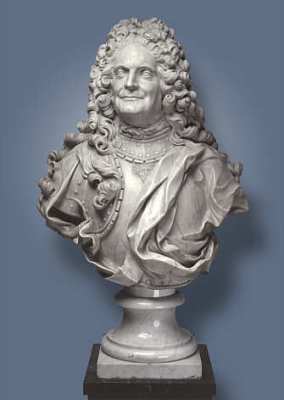
Balthasar Permoser (1651–1732), Bust of Duke Herzog Anton Ulrich (Braunschweig: Anton Ulrich Museum)
Anlässlich des 300. Todestages Anton Ulrichs von Braunschweig-Lüneburg (1633–1714) präsentiert das Herzog Anton Ulrich-Museum die Kabinett-Ausstellung Fürst von Welt. Herzog Anton Ulrich—ein Sammler auf Reisen vom 10. April bis zum 20. Juli 2014 in der Kemenate der Burg Dankwarderode. Die Sonderschau würdigt den vielseitig begabten Herzog, der angeregt durch seine Liebe zur Kunst den Grundstein für eine der bedeutendsten Kunstsammlungen Deutschlands legte.
Die Ausstellung in der Burg Dankwarderode führt in sechs Kapiteln die Besucherinnen und Besucher durch die verschiedenen Lebensstationen des schillernden Sammlungsgründers, beginnend mit seinem humanistisch-intellektuell geprägten Elternhaus bis hin zu regelmäßig aufgesuchten Reiseorten in Frankreich, Italien, den Niederlanden und im Deutschen Reich.
Anton Ulrichs Kavalierstour, die fester Bestandteil der Erziehung zukünftiger Monarchen war, führte ihn 1655 nach Paris und gab den Anstoß für seine intensive Sammeltätigkeit. Hier kaufte er erstmalig einige Kunstobjekte wie Gemälde, Kupferstiche und Münzen. Bis an sein Lebensende sollten Anton Ulrichs Reiseunternehmungen von zahlreichen Ankäufen erlesener Kunstwerke geprägt sein.
Die Sonderausstellung zeigt eine Auswahl von rund 40 Kunstwerken aus den Bereichen der Malerei, Skulptur, Grafik und Angewandten Kunst, die entweder von Anton Ulrich selbst angekauft oder durch seine Agenten ausgesucht wurden.
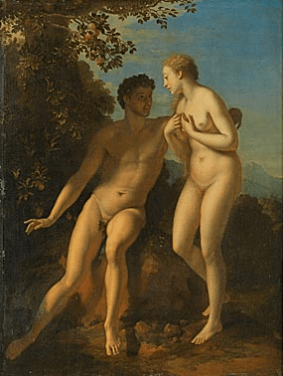
Adriaen van der Werff, Adam and Eve, ca. 1711
(Braunschweig: Anton Ulrich Museum)
Der Welfenherzog, der sich zeitlebens auch als Dichter und Mäzen von Theater- und Opernhäusern einen Namen machte, begeisterte sich im Besonderen für Kunstwerke mit erzählerischen Elementen. Als Beispiel für diesen Umstand gilt das Gemälde Die Auffindung des Moses (1650), ein Spätwerk des neapolitanischen Künstlers Bernardo Cavallino (1616–1656), das Anton Ulrichs Interesse vermutlich vor allem durch seine raffinierte Erzählweise geweckt hat. Der Erwerb der französischen Bronze Diana mit Hirsch (Ende d. 17 Jh.) sowie der römischen Antiken Herakles und Dionysos, die mit neuzeitlichen Ergänzungen bestückt wurden, zeugen vom herzoglichen Interesse für mythologische Geschichten.
Die Präsentation einer virtuellen Rekonstruktion des ehemaligen Lustschlosses Salzdahlum, das Herzog Anton Ulrich nach dem Vorbild niederländischer und italienischer Schloss- und Villenarchitektur erbauen ließ, führt in dreidimensionaler Hinsicht den seit dem 19. Jahrhundert nicht mehr existenten Ausstellungsort für seine Kunstsammlungen vor Augen.
Im Rittersaal der Burg Dankwarderode können im Rahmen der Meisterwerke-Ausstellung Epochal weitere 50 herausragende Kunstobjekte betrachtet werden, die durch Anton Ulrichs Kaufinitiative in seine Sammlung gelangten. Darunter befinden sich neben Ostasiatika auch Objekte aus dem einzigartigen Bestand italienischer Majolika sowie Gemälde von Rubens, Rembrandt und Vermeer, die den exquisiten Geschmack des herzoglichen Sammlers nachdrücklich belegen. Besucherinnen und Besucher können zu ausgewählten Objekten interessante Hintergrundinformationen mit dem eigenen Smartphone abrufen.
◊ ◊ ◊ ◊ ◊
From Michael Imhoff Verlag:
Jochen Luckhardt, „… einer der größten Monarchen Europas“?! Neue Forschungen zu Herzog Anton Ulrich (Petersberg: Michael Imhoff Verlag, 2014), 208 pages, ISBN 978-3731900559, 30€.
 Die Jubiläumspublikation zum 300. Todesjahr des bedeutenden Sammlers und Dichters Herzog Anton Ulrich präsentiert Forschungsergebnisse europäischer Wissenschaftler aus Wien, Paris, Venedig und Amsterdam. Der Welfenherzog aus der Linie Braunschweig-Wolfenbüttel wird hier erstmals aus der Sicht von Außen betrachtet – seine Reisen in europäische Länder stehen dabei ebenso im Fokus wie seine Kunstankäufe und Beziehungen zu tonangebenden Fürstenhäusern. Der Anspruch Anton Ulrichs, sich als Monarch innerhalb der Führungsriege zu positionieren, wird mit den Beiträgen, auch zu Zeremoniell und Geschenkewesen der Barockzeit, verständlich—wenn man diese Ambitionen auch mit dem etwas ironisch klingenden Ausspruch Liselottes von der Pfalz sehen muss: „Wenn Verdienste und Wünsche gelten sollten, so würde der Herzog einer der größten Monarchen seyn.“
Exhibition | Ships, Clocks, and Stars: The Quest for Longitude
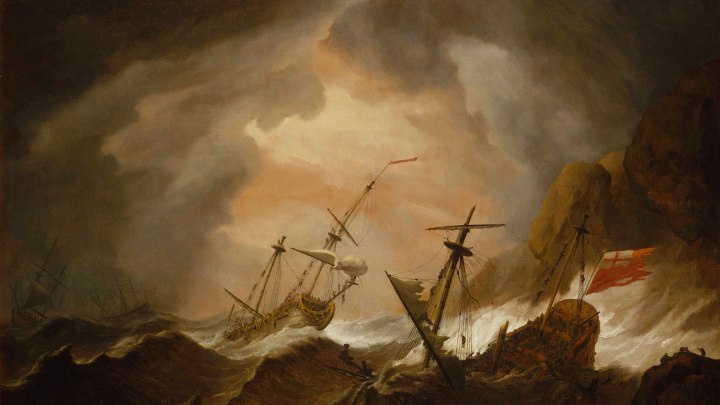
Willem van de Velde, the Younger, Two English Ships
Wrecked in a Storm on a Rocky Coast, ca. 1700
(London: National Maritime Museum)
Press release (21 March 2014) for the current exhibition:
Ships, Clocks, and Stars: The Quest for Longitude
National Maritime Museum, Greenwich, 11 July 2014 — 4 January 2015
Mystic Seaport, Mystic, Connecticut, 19 September 2015 — 28 March 2016
Curated by Richard Dunn and Rebekah Higgitt
To mark the tercentenary of the Longitude Act of 1714, Ships, Clocks, and Stars: The Quest for Longitude, a major new exhibition at the National Maritime Museum, tells the extraordinary story of the race to determine longitude at sea and how one of the greatest technical challenges of the eighteenth and nineteenth centuries was eventually solved. The exhibition draws on the latest research to shed new light on the history of longitude—one of the great achievements of the Georgian age—and how it changed our understanding of the world.

John Harrison, H1 Marine Timekeeper, 1730–35
(London: National Maritime Museum)
In recent years, John Harrison has been cast as the hero of the story, not least in Dava Sobel’s seminal work Longitude: The True Story of a Lone Genius Who Solved the Greatest Scientific Problem of His Time. Ships, Clocks, and Stars provides a new perspective on this famous tale. While John Harrison makes a good story and his marine sea-watch was vital to finally solving the problem of longitude, this was against a backdrop of almost unprecedented collaboration and investment. Famous names such as Galileo, Isaac Newton, James Cook, and William Bligh all feature in this fascinating and complex history. Crucially, it was Astronomer Royal Nevil Maskelyne’s observations at the Royal Observatory in Greenwich, his work on the Nautical Almanac and the Board of Longitude that demonstrated the complementary nature of astronomical and timekeeper methods, ultimately leading to the successful determination of longitude at sea.
Highlights from the exhibition include all five of John Harrison’s famous timekeepers. H1, H2, H3 and H4 will move from the Royal Observatory Greenwich to be displayed in the National Maritime Museum for the first time in nearly 30 years. H5 is being loaned from the Worshipful Company of Clockmakers. Also featured is the original Longitude Act of 1714, which has never been on public display before; an intricate 1747 model of the Centurion, the ship which carried out the first proper sea trial of Harrison’s H1, and the elegant, padded silk ‘observing suit’ worn by Nevil Maskelyne at the Royal Observatory during the 1760s.
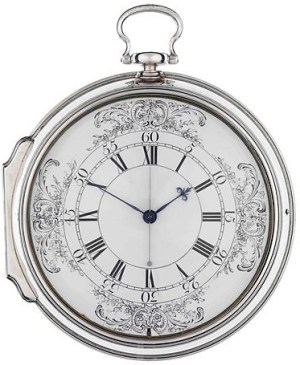
John Harrison, H4 Marine Timekeeper, 1755–59
(London: National Maritime Museum)
Passed by the British government in July 1714, the Longitude Act aimed to solve the problem of determining a ship’s longitude (east-west position) at sea. For a maritime nation such as Britain, investment in long distance trade, outposts and settlements overseas made the ability to determine a ship’s longitude accurately increasingly important. As different nations, including Spain, the Netherlands and France, sought to dominate the world’s oceans, each offered financial rewards for solving the longitude problem. But it was in Britain that the approach paid off. With life-changing sums of money on offer, the challenge became the talk of London’s eighteenth-century coffee-houses and captured the imaginations and talents of astronomers, skilled artisans, politicians, seamen and satirists; many of whom came up with ingenious methods and instruments designed to scoop the Board of Longitude’s tantalising rewards and transform seafaring navigation forever.
The Royal Observatory in Greenwich was founded in 1675 specifically to carry out observations ‘to find out the so much desired longitude of places for the perfecting of the art of navigation’. Under the 1714 Longitude Act, successive Astronomers Royal became leading voices on the Board of Longitude, judging proposals and encouraging promising developments.
As solutions were developed, the Royal Observatory also became a testing site for marine timekeepers and the place at which the astronomical observations needed for navigational tables were made. The significance of this work eventually lead to Greenwich becoming the home of the world’s Prime Meridian in 1884.
◊ ◊ ◊ ◊ ◊
The catalogue is published by Harper Collins:
Richard Dunn and Rebekah Higgitt, Ships, Clocks, and Stars: The Quest for Longitude (London: Collins, 2014), 256 pages, softcover ISBN: 978-0007940523, £15 / hardcover, ISBN: 978-0062353566, $75.
 A tale of eighteenth-century invention and competition, commerce and conflict, this is a lively, illustrated, and accurate chronicle of the search to solve ‘the longitude problem’, the question of how to determine a ship’s position at sea—and one that changed the history of mankind.
Ships, Clocks, and Stars brings into focus one of our greatest scientific stories: the search to accurately measure a ship’s position at sea. The incredible, illustrated volume reveals why longitude mattered to seafaring nations, illuminates the various solutions that were proposed and tested, and explores the invention that revolutionized human history and the man behind it, John Harrison. Here, too, are the voyages of Captain Cook that put these revolutionary navigational methods to the test.
Filled with astronomers, inventors, politicians, seamen, and satirists, Ships, Clocks, and Stars explores the scientific, political, and commercial battles of the age, as well as the sailors, ships, and voyages that made it legend—from Matthew Flinders and George Vancouver to the voyages of The Bounty and The Beagle. Featuring more than 150 photographs specially commissioned from Britain’s National Maritime Museum, this evocative, detailed, and thoroughly fascinating history brings this age of exploration and enlightenment vividly to life.
Richard Dunn is Senior Curator and Head of Science and Technology at Royal Museums Greenwich. Rebekah Higgitt is Lecturer in History of Science at the University of Kent.
◊ ◊ ◊ ◊ ◊
Note (added a few hours after the original posting appeared) — I should have noted that Jeremy Wear plans to chair a session on the theme of longitude at the 2015 ASECS conference in Los Angeles. –CH
(more…)
Exhibition | The Art of Golf: The Story of Scotland’s National Sport
Press release (11 July 2014) for the current exhibition:
The Art of Golf: The Story of Scotland’s National Sport
The Scottish National Gallery, Edinburgh, 12 July — 26 October 2014

David Allan, William Inglis (ca. 1712–1792), Surgeon and Captain of the Honourable Company of Edinburgh Golfers (Scottish National Gallery)
The Scottish National Gallery is delighted to take part in the sporting celebrations taking place this summer in Scotland with The Art of Golf: The Story of Scotland’s National Sport. The exhibition will overlap with two important events: the Commonwealth Games, Glasgow (23 July–3 August) and the Ryder Cup, Gleneagles (23–28 September), the biennial competition played between teams of professional golfers representing the United States and Europe. The Art of Golf explores golf as a subject of fascination for artists from the seventeenth century to the present day, with a particular emphasis on the emergence of the sport in Scotland.
The Art of Golf will bring together around 60 paintings and photographs—as well as a selection of historic golfing equipment—with works by artists such as Rembrandt van Rijn (1606–1669), Sir Henry Raeburn (1756–1823), Hendrick Avercamp (1585–1634) and Paul Sandby (1731–1809) illustrating the origins of the game. Other highlights will include Sir John Lavery’s (1846–1951) beautiful 1920s paintings of the golf course at North Berwick, a coastal resort 25 miles east of Edinburgh, and colourful railway posters for popular destinations such as Gleneagles, which illustrate the boom in golfing tourism in the inter-war years. Stunning images of golf courses from Brora to the Isle of Harris by contemporary photographer Glyn Satterly and spectacular aerial shots by artist and aviator Patricia Macdonald will bring the exhibition up to present day. Generous loans from a number of famous Scottish golf clubs, the British Golf Museum in St Andrews and private collectors have been secured for this exhibition.
The centrepiece of the show will be the greatest golfing painting in the world, Charles Lees’s 1847 masterpiece The Golfers. This commemorates a match played on the Old Course at the Royal and Ancient Golf Club, St Andrews, by Sir David Baird and Sir Ralph Anstruther, against Major Hugh Lyon Playfair and John Campbell of Saddell. It represents a veritable ‘who’s who’ of Scottish golf at that time and was famously reproduced in a fine engraving which sold in great quantities. Lees (1800–80) made use of photography, at a time when it was in its infancy, to help him design the painting’s overall composition. The image in question, taken by photography pioneers D O Hill & Robert Adamson, will be included in the show and Lees’s preparatory drawings and oil sketches will also be displayed alongside the finished painting to offer visitors further insight into the creation of this great work. Impressions of The Golfers are now in many of the greatest golf clubhouses around the world. The painting is jointly owned by the National Galleries of Scotland and the Royal and Ancient Golf Club of St Andrews.

David Allan, The Prize of the Silver Golf: Officer Carrying a Decorated Golf Club, Two Soldiers with Drums behind Him, ca. 1785 (Scottish National Gallery)
Golf has been played in Scotland since at least the fifteenth century. Whilst its origins are obscure, it is undoubtedly close to the Netherlandish game of ‘colf’, which was played over rough ground or on frozen waterways, and involved hitting a ball to a target stick fixed in the ground or the ice. ‘Colvers’ playing on the frozen canals are seen in Dutch seventeenth-century paintings which form the earliest part of the show. In Scotland the game is often played over ‘links’ courses, originally rough common ground where the land meets the sea. The majority of Scotland’s famous old courses, such as St Andrews or North Berwick, are links courses. In Edinburgh, the early links courses of Bruntsfield, Leith and Musselburgh are shown in works by Sandby and Raeburn.
Michael Clarke, Director of the Scottish National Gallery, said: “This show is designed to be fun and to bring together two publics, lovers of art and lovers of golf. Where better to do this than in this world-class gallery, with its great Old master and Scottish paintings, which is situated in Scotland’s beautiful capital city of Edinburgh, and through which so many golfers pass on their way to our internationally renowned courses.”
◊ ◊ ◊ ◊ ◊
From ACC Distribution:
Michael Clarke and Kenneth McConkey, The Art of Golf (Woodbridge: Antique Collectors Club, 2014), 72 pages, ISBN: 978-1906270674, £13.
 The Art of Golf illustrates how the noble game has been depicted in European art from the seventeenth century to the present day. This fascinating story is told by images in a variety of media, from paintings and prints to photographs and posters. The centrepiece is Charles Lees’s The Golfers, 1847, which depicts a match played on the Old Course at St Andrews in 1847, and is one greatest golfing painting in the world. In his essay Michael Clarke, director of the Scottish National Gallery, outlines the story behind the development of the game, while art historian Kenneth McConkey discusses the series of paintings of golf at North Berwick made by Sir John Lavery in the years following the Great War.
Michael Clarke is Director of the Scottish National Gallery in Edinburgh. He has published widely, including books on English watercolours, the landscape painter Camille Corot, and his second, revised edition of The Oxford Concise Dictionary of Art Terms was published in 2010. Most recently he co-curated the international exhibition Impressionist Gardens (2010–11) and wrote the exhibition catalogue of French Drawings in the Scottish National Gallery (2011). Kenneth McConkey is Professor of Art History and Dean of the Faculty of Arts and Design, the University of Northumbria at Newcastle. He has written extensively about late Victorian and Edwardian painting.
◊ ◊ ◊ ◊ ◊
The politics of gender, golf, and Scottish identity will soon go to the polls. On September 18 (the same day, Scots vote to stay or secede from Britain), members of the Royal and Ancient Golf Club (roughly 2500 men) will vote on the question of whether women may be admitted. As reported by The New York Times, for Louise Richardson, the principal of the University of St. Andrews, the discriminatory policy is also a “workplace hurdle.” Karen Crouse’s article, “In St. Andrews, a Heavy Knock on a Neighbor’s Door: First Female President of University of St. Andrews Fights for Admittance at Royal and Ancient Golf Club,” appeared in the paper on 11 July 2014.
Update (added 22 September 2014) — As Crouse reports in The New York Times (18 September 2014). . .
The Royal and Ancient Golf Club voted overwhelmingly to admit its first female members. . . . Peter Dawson, the secretary of the club, announced the results of a postal balloting of the club’s 2,400 male members, many of whom were on site in matching blue jackets and patterned blue ties. About three-quarters of the members participated in the voting, he said, with 85 percent of them opting to accept women. . .
Exhibition | Swedish Wooden Toys
On view this summer at Les Arts Décoratifs in Paris, the exhibition comes to the Bard Graduate Center next fall:
Swedish Wooden Toys / Les jouets en bois suédois
Les Arts Décoratifs, Paris, 19 June 2014 — 11 January 2015
Bard Graduate Center, New York, September 2015
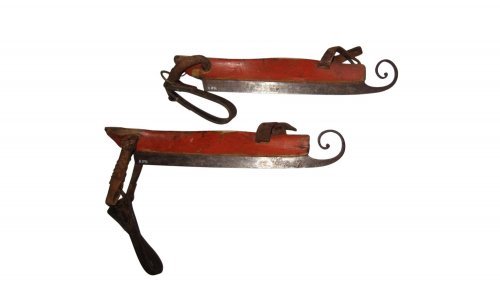
Patins à glace pour enfants, 1800-1850, Suède
Focusing on the Swedish tradition of wooden playthings derived from abundant forests of fir, pine, spruce, and birch and the rural pursuits of woodworking and carpentry, curators BGC Founder and Director Susan Weber and Professor Amy F. Ogata investigate their histories of manufacture, consumption, and representation from the seventeenth century to the present. Although Germany, Japan, and the United States have historically produced and exported the largest numbers of toys worldwide, Sweden has a long and enduring history of designing and making wooden toys—from the simplest handmade plaything to more elaborate forms reflecting the computer age. For the presentation in Paris, Swedish Wooden Toys features more than 250 toys and related objects drawn primarily from the collections of the Sovrintendenza ai Beni Culturali di Roma Capitale, Italy, the BRIO Lekoseum in Osby, Sweden, and Les Arts Décoratifs.
◊ ◊ ◊ ◊ ◊
Catalogue published by Yale UP:
Amy F. Ogata and Susan Weber, eds., Swedish Wooden Toys (New Haven: Yale University Press, 2014), 432 pages, ISBN: 978-0300200751, $65.
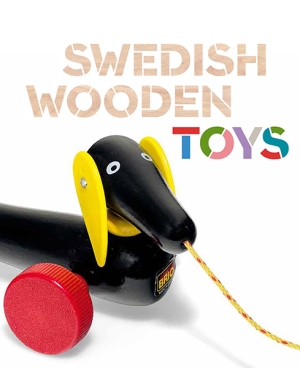 The Swedish toy industry has long produced vast quantities of colorful, quality wooden items that reflect Scandinavian design and craft traditions. This superbly illustrated book, including specially commissioned photography, looks at over 200 years of Swedish toys, from historic dollhouses to the latest designs for children. Featuring rattles, full-size rocking horses, dollhouses, and building blocks to skis, sleds, and tabletop games with intricate moving parts, Swedish Wooden Toys also addresses images of Swedish childhood, the role of the beloved red Dala horse in the creation of national identity, the vibrant tradition of educational toys, and the challenges of maintaining craft manufacturing in an era of global mass-production.
Amy F. Ogata is professor of 19th- and 20th-century architectural and design history, Bard Graduate Center, New York. Susan Weber is founder and director of the Bard Graduate Center, New York, and Iris Horowitz Professor in the
History of the Decorative Arts.
Exhibition | Goya: Order and Disorder

Press release (29 May 2014) from the MFA:
Goya: Order and Disorder
Museum of Fine Arts, Boston, 12 October 2014 — 19 January 2015
This fall, the Museum of Fine Arts, Boston (MFA), presents Goya: Order and Disorder, a landmark exhibition dedicated to Spanish master Francisco Goya (1746–1828). The largest retrospective of the artist to take place in America in 25 years features more than 160 paintings, prints and drawings—offering the rare opportunity to examine Goya’s powers of observation and invention across the full range of his work. The MFA welcomes many loans from Spain and throughout Europe, including 21 works from the Museo Nacional del Prado in Madrid, along with loans from the Musée du Louvre, the Galleria degli Uffizi, The Metropolitan Museum of Art, the National Gallery of Art (Washington) and private collections throughout Europe and the US. Goya: Order and Disorder includes some 60 works from the MFA’s collection of Goya’s works on paper, one of the most important in the world. Many of these prints and drawings have not been on view in Boston in 25 years.
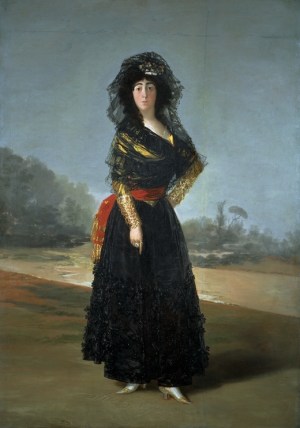
Francisco José de Goya y Lucientes, The Duchess of Alba, 1797 (New York, The Hispanic Society of America).
Employed as a court painter by four successive rulers of Spain, Goya managed to explore an extraordinarily wide range of subjects, genres and formats. From the striking portrait Duchess of Alba (1797) from the Hispanic Society of America, to the tour de force of Goya’s Seated Giant (by 1818) in the MFA’s collection, to his drawings of lunacy, the works on view demonstrate the artist’s fluency across media. On view in the Museum’s Ann and Graham Gund Gallery from October 12, 2014 to January 19, 2015, the MFA is the only venue for the exhibition, which is accompanied by a publication revealing fresh insights on the artist.
“This exhibition offers a once-in-a-generation look at one of the greatest, most imaginative artists of all time,” said Malcolm Rogers, Ann and Graham Gund Director at the MFA. “Goya: Order and Disorder reflects the Museum’s close collaboration with the Prado, and builds on our proud tradition of Goya scholarship.”
As 18th-century culture gave way to the modern world, little escaped Goya’s penetrating gaze. Working with equal prowess in painting, drawing and printmaking, he was the portraitist of choice for the royal family as well as aristocrats, statesmen and intellectuals—counting many as acquaintances or friends. Living in a time of revolution and radical social and political transformations, Goya witnessed drastic shifts between “order” and “disorder,” from relative prosperity to wartime chaos, famine, crime and retribution. Among the works he created—some 1,800 oil paintings, frescoes, miniatures, etchings, lithographs and drawings—many are not easy to look at, or even to understand. With a keen sensitivity to human nature, Goya could portray the childhood innocence of Manuel Osorio Manrique de Zuñiga (about 1788, The Metropolitan Museum of Art, New York)—his most famous portrait of a child—or the deviance of the Witches’ Sabbath (1797–98, Fundación Lázaro Galdiano, Madrid).
The full arc of Goya’s creativity is on display in the exhibition, from the elegant full-length portraits of Spanish aristocrats that first brought the artist fame, to caustic drawings of beggars and grotesque witches, to his series of satirical etchings targeting ignorance and superstition, known as the Caprichos. Rather than a chronological arrangement, exhibition curators Stephanie Loeb Stepanek, Curator of Prints and Drawings, and Frederick Ilchman, Chair, Art of Europe and Mrs. Russell W. Baker Curator of Paintings, grouped the works in Goya: Order and Disorder, and its accompanying publication, into eight categories highlighting the significant themes that captured Goya’s attention and imagination. From tranquil to precarious, Goya’s art made the diversity of life, and the conflicting emotions of the human mind, comprehensible to the viewer—and to himself.
“We decided to juxtapose similar subjects or compositions in different media in order to allow visitors to examine how Goya’s choice of technique informed and transformed his ideas, since the characteristics of each medium—and the intended audience—influenced the final appearance of the work,” said Stepanek.
Noted for his satirical eye, Goya reserved his closest scrutiny for himself. The first section of the exhibition, Goya Looks at Himself, is a sweeping group of self-portraits. In the MFA’s etching, The Sleep of Reason Produces Monsters (El sueño de la razon produce monstruos), Caprichos 43 (1797–99), Goya offers himself as a universal artist sleeping at a desk, while the creatures of his dreams swirl about his head. This print is grouped with two loans from Madrid, The Artist Dreaming (about 1797), a drawing from the Prado that preceded the famous print, and Self-Portrait while Painting (about 1795), from the Museo de la Real Academia de Bellas Artes de San Fernando. Together, these works reflect Goya’s tendency to insert his persona into allegories and fantasies. At the entrance of this section is an imposing group portrait of The Family of the Infante Don Luis (1784, Fondazione Magnani Rocca, Parma, Italy)—the brother of King Charles III—which features 14 figures, including Goya, who depicts himself working on a sizeable canvas on an easel.
“Just as Goya’s imagery is determined by whether he painted, drew or made a print, he also reconsidered certain favored subjects, reviving them from his memory and returning to them again and again during his long career,” said Ilchman. “Examining his compositional preoccupations across decades—often in the same room of the exhibition—reveals the continuity of Goya’s imagination.”
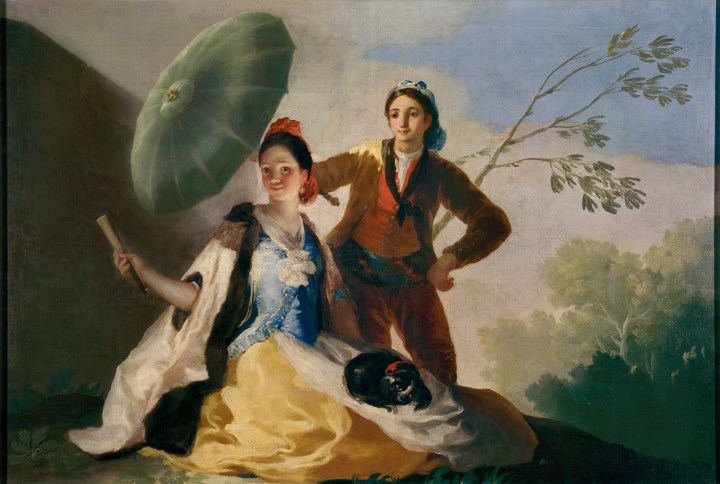
Francisco José de Goya y Lucientes, The Parasol, 1777
(Madrid: Prado)
Click here for a higher resolution image.
◊ ◊ ◊ ◊ ◊
Through his art, Goya sought to describe, catalogue and satirize the breadth of human experience—embracing both its pleasures and discomforts. The artist tackled the nurturing of children, the pride and infirmity of old age, the risks of romantic love, and all types of women—from young beauties to old women. In the section dedicated to Goya’s depictions of the stages of life, Life Studies, the exhibition explores how the artist transformed observations of human frailty, creating allegories of vanity and the passage of time. A wizened woman, who is unsuccessfully attempting to adopt youthful styles in Until Death (Hasta la muerte), Caprichos 55 (1797–99, The Boston Athenaeum), is revived in one of Goya’s most haunting monumental paintings—Time (Old Women) (about 1810–12, Palais des Beaux-Arts de Lille). The aged woman is now decayed and diseased, but still clings to her outdated fashions, and is soon to be swept away by the broom of Time. Goya’s tapestry designs frequently depict young people, with relationships between men and women marked by affection, disaffection and tension. The Parasol (1777, Museo Nacional del Prado) presents a young woman who poses under a parasol with her docile lapdog—she seems to ignore her male companion in favor of engaging viewers who would look up at this tapestry, which was meant to hang over a door.
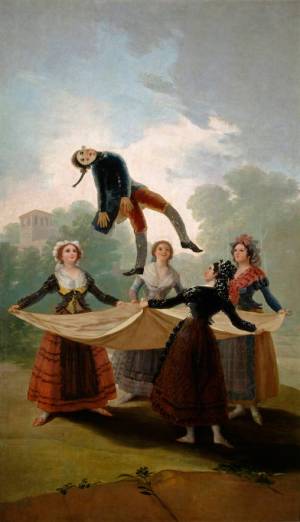
Francisco José de Goya y Lucientes, Straw Mannequin (El pelele), 1791–92 (Madrid: Prado)
In the Play and Prey section, Goya’s creative process is revealed through representations of a popular game in which young women toss a well-dressed mannequin in a blanket. In Straw Mannequin, this carnivalesque reversal of class and gender roles is seen in a tapestry (1792–93, Patrimonio Nacional, Spain), as well as two preparatory paintings (1791, Hammer Museum, Los Angeles and Museo Nacional del Prado). A late print, Feminine Absurdity (Disparate femenino) Disparates 1 (1815–17, Fundación Lázaro Galdiano), imparts new meaning to the previously simple image of young women at play, as the women now strain to lift several figures, including a peasant and donkey. This more sinister vein is reflected in many of the subjects the artist returned to later in life, following the devastation of the Peninsular War and its political reversals. “Play and Prey” also explores Goya’s famous images of men engaging in hunting (his own favorite pastime) and the bullfight. In these works, including examples from the series of prints, the Tauromaquia and the Bulls of Bordeaux, Goya celebrates both activities while also subtly portraying their darker sides.
The precarious relationship between order and discord, balance and imbalance, is fundamental to Goya’s work, and the subject of the section In the Balance. The theme appears vividly in images of the punishing forces of nature, figures losing their balance and others fighting. This topic is particularly noteworthy given the tumultuous social and political change during Goya’s lifetime, as well as the artist’s own struggles with illness, dizzy spells and deafness. The MFA’s print, The Agility and Audacity of Juanito Apiñani in the Ring at Madrid (Ligereza y atrevimiento de Juanito Apiñani en la de Madrid (Tauromaquia 20) (1815–16) depicts a precarious matador, who is poised midair as he vaults over a charging bull, anchored only by his upright pole.
Goya earned widespread fame through grand portraits executed in the 1780s and 1790s, and the exhibition displays some of these masterpieces alongside more intimate likenesses of his artistic and family circle. Focusing on the painter’s approach to portraiture—from relations with sitters to his handling of paint—Portraits explores the discipline that remained central to his reputation as Spain’s leading painter and helped sustain him financially throughout his career. Paintings of the Duke of Alba (1795, Museo Nacional del Prado) and Duchess of Alba (1797, Hispanic Society of America), shown together for the first time since the early 19th century, are superb examples of his aristocratic portraits and illustrate two of his most important patrons. In the Duchess of Alba, the darkly clothed sitter points a finger to the ground, where the words “Solo Goya” are written in the sand. The assertion that only Goya was worthy of this commission and that only he could have pulled off such a dramatic likeness, changes the painting’s focus from the aristocrat to the artist.
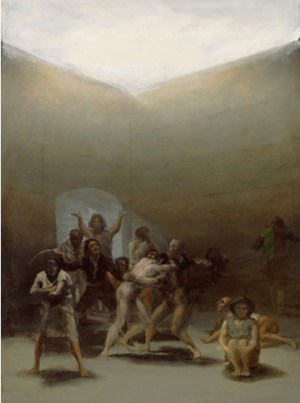
Francisco José de Goya y Lucientes, Yard with Madmen, 1794 (Dallas: Meadows Museum)
Other Worlds, Other States features two facets of Goya’s spiritual explorations—Christian religious belief and its opposite, superstition. While Goya frequently focused on clerical abuses, religious commissions helped pay the bills throughout his life, and there is no evidence that he lacked personal piety. One of Goya’s greatest legacies is his ability to represent mental and psychological conditions. His depictions of illusions and inner reality are also on view in this section, and include visions, nightmares and the deluded mind of the insane. An imaginative rendering of a particular Spanish nightmare—a witch riding a bull through the air—is depicted in the drawing Pesadilla (Nightmare) (1816–20). Many of Goya’s deranged characters highlight the fragile boundary between lunacy and sanity. A luminous painting on copper from the Meadows Museum in Dallas, Yard with Madmen of 1794—which shows distressed and helpless lunatics—anticipates a sequence of black crayon drawings made three decades later. In these later works, the individuals, whom Goya labeled as “locos,” are in even more desperate condition, restrained in straitjackets or trapped behind bars. Also in this gallery, a “learning space” offers a map, timeline and additional educational materials that offer insight into the mind of the Spanish Master.
A keen awareness of the weight of historical events pervades Goya’s work. Although he belongs in the ranks of great history painters who narrated courageous acts, he is not preoccupied with generals, patriots and battles. Instead, he focuses attention on the anonymous victims of the horrors of war or the Spanish Inquisition, and rarely fails to raise moral questions in these works. In Capturing History, works that blend the epic and mundane include a painting of an imagined scene, Attack on a Military Camp (about 1808–10, Colección Marqués de la Romana), in which a woman holds a screaming infant as she runs from assailants who have already wounded several people. In One Can’t Look (No se puede mirar), Disasters of War 26 (1810–14), the viewer is only a step or two away from the victims and the advancing bayonets of the print’s aggressors. The work is part of the wrenching print series, Disasters of War, which depict the artist’s thoughts on violence during the Peninsular War that ripped Spain apart from 1808 to 1814.
The final section of the exhibition, Solo Goya, summarizes the characteristics that establish the artist’s greatness—exploring themes such as Goya’s imagery of swarms of human figures as well as his periodic reflection on the concept of redemption. The same artist who took on the abuses of war could also evoke the most sympathetic and poignant moments of human experience, such as the Last Communion of Saint Joseph of Calasanz (1819, Collection of the Padres Escolapios). The altarpiece depicts Joseph of Calasanz, from Goya’s home region of Aragón, who founded the order of the Padres Escolapios (Piarists) to educate poor children. Goya may have attended one of the order’s schools, known as the Escuelas Pías, and might have felt a personal connection to the protagonist of the painting—his final major religious work—which comes to the US for the first time in this exhibition.
One of Goya’s most resonant themes addresses the problem with power, embodied by a central character: the giant. Conditioned by the events of his day, particularly the sudden rise and fall of military and institutional fortunes, Goya explores how power is not necessarily inherent, but comes with a cost. Goya’s Seated Giant (by 1818), from the MFA’s renowned collection of Goya prints and drawings, is among the most enigmatic and compelling of the artist’s graphic works, depicting a looming figure immobilized by the burden of power. While no single work can epitomize an artist’s achievement, this figure embodies the grandest of Goya’s great themes.
The MFA’s Goya collection owes a great debt to former MFA Curator of Prints and Drawings, and esteemed Goya scholar, Eleanor A. Sayre, who worked on the exhibitions The Changing Image: Prints by Francisco Goya (1974) and Goya and the Spirit of Enlightenment (1989) at the MFA. Many of the works on view in Goya: Order and Disorder were acquired by the Museum during her tenure, including the Seated Giant; Woman Reading to Two Children (about 1819); Resignation (La resignacion) (1816–20); Merry Absurdity (Disparate alegre) (1816–19); and the oil sketch on canvas of the Annunciation (1785). The Sleep of Reason Produces Monsters (El sueño de la razon produce monstruos), Caprichos 43 (1797–99) and the drawing of Two Men Fighting (1812–20) were part of Sayre’s bequest to the MFA after she passed away in 2001.
Generous support for this exhibition provided by Highland Street Foundation and the Thompson Family Foundation. Additional support from the Samuel H. Kress Foundation. This exhibition is supported by an indemnity from the Federal Council on the Arts and the Humanities. Organized by the Museum of Fine Arts, Boston, with the special collaboration of the Museo Nacional del Prado. Generous support for this publication was provided by the Andrew W. Mellon Publications Fund, with additional support from Isabelle and Scott Black.
◊ ◊ ◊ ◊ ◊
The catalogue is scheduled to be released in October:
Stephanie Loeb Stepanek, Frederick Ilchman, and Janis A. Tomlinson, with contributions by Manuela B. Mena Marques, Gudrun Maurer, Juilet Wilson-Bareau, et al., Goya: Order and Disorder (Boston: MFA Publications, 2014), 400 pages, ISBN: 978-0878468089, $65.
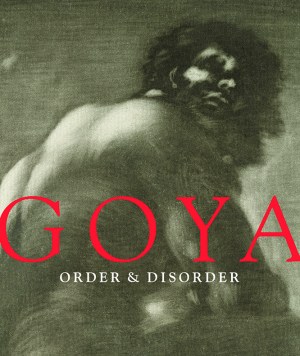 Francisco Goya is widely celebrated as the most important Spanish artist of the late eighteenth and early nineteenth centuries, the last of the Old Masters and the first of the Moderns, and an astute observer of the human condition in all its complexity. Few, however, have attempted to explore his work as a painter, printmaker, and draftsman across media and the timeline of his life. This book does just that, presenting a comprehensive and integrated view of Goya’s most important work through the themes that continually challenged or preoccupied the artist. They reveal how he strove relentlessly to understand and describe human behavior and emotional states, even at their most orderly or disorderly extremes. Derived from the research for the largest Goya exhibition in North America in a quarter century, this book takes a fresh look at one of the greatest artists in history by examining the fertile territory between the two poles that defined the range of his boundlessly creative
personality.
Stephanie Loeb Stepanek is Curator of Prints and Drawings, Museum of Fine Arts, Boston.
Frederick Ilchman is Mrs. Russell W. Baker Curator of Paintings, Art of Europe, Museum of Fine Arts, Boston.
Janis A.Tomlinson is Director, University Museums, University of Delaware.
Exhibition | Checklist for Royal Spectacle

‘Cinquième journée. Feu d’artifice sur le Canal de Versailles (Fifth day. Fireworks on the canal of Versaille), engraved by Le Pautre in Les divertissemens de Versailles. Paris, de l’Imprimerie royale, 1676; Waddesdon, The Rothschild Collection (The National Trust). Bequest of James de Rothschild, 1957.
◊ ◊ ◊ ◊ ◊
A recent Enfilade posting (31 May 2014) introduced the Waddesdon Manor exhibition, Royal Spectacle. Since then, an especially impressive 45-page checklist has been added to the Waddesdon website. If notice of the exhibition at all piqued your curiosity, then it’s certainly worth returning to download the file. -CH
Royal Spectacle: Ceremonial and Festivities at the French Court
Waddesdon Manor, Buckinghamshire, 26 March — 26 October 2014
Curated by Selma Schwartz and Rachel Jacobs
The exhibition handlist for the exhibition at Waddesdon Manor, Royal Spectacle: Ceremonial and Festivities at the French Court is now available for download as a PDF file from the Waddesdon website. It includes short introductory essays for each of the sections (royal entrances, weddings, coronations, funerals, fireworks, etc.), an illustration of each of the 58 exhibited works, and their labels. The engravings, drawings, and manuscripts—many of extremely large formats, designed by celebrated artists and produced by some of the best engravers—are the only visual records of the extravagantly-staged spectacular but ephemeral events.
Exhibition | Making America: Myth, Memory, and Identity
Next fall at the VMFA:
Making America: Myth, Memory, and Identity
Virginia Museum of Fine Arts, Richmond, 12 September 2015 — 3 January 2016
Other venues to be announced
Making America will be the first full-scale multimedia investigation of America’s most enduring cultural phenomenon—the Colonial Revival. Featuring approximately 200 paintings, sculptures, works on paper, photographs, decorative arts, architectural and landscape designs, costumes, and popular culture ephemera—dating from the late 18th century to the present day—VMFA’s landmark exhibition expands the chronological and geographic boundaries of the regionally diverse, multicultural revival. More than just a style or movement, this ongoing hybrid impulse draws from the historical past to understand the present through the creative use of iconic forms and motifs. Making America will explore how and why this desire to revisit—and reinterpret—the past has shaped America’s visual landscapes, ideologies, and collective memories in times of celebration and crisis.
Making America, which will travel nationally, is organized by the curatorial team of University of Virginia Commonwealth Professor Dr. Richard Guy Wilson; Dr. Sylvia Yount, VMFA Chief Curator and Louise B. and J. Harwood Cochrane Curator of American Art; and her museum colleagues Dr. Susan J. Rawles, Assistant Curator of American Decorative Art, and Christopher Oliver, Assistant Curator of American Art, all of whom will contribute to the accompanying scholarly catalogue.
Exhibition | The Fortunes of the Italian Primitives, ca. 1800
From the exhibition website:
La Fortuna dei Primitivi: Tesori d’Arte dalle Collezioni Italiane fra Sette e Ottocento
The Fortunes of the Primitives: Art Treasures from Italian Collections
between the Late Eighteenth and Nineteenth Centuries
Galleria dell’Accademia, Florence, 24 June — 8 December 2014

Libro d’Ore di Lorenzo de’ Medici, Annunciazione (Firenze, Biblioteca Medicea Laurenziana, Ms. Ashb. 1874, c. 13v)
This exhibition is the first ever dedicated to the topic as a whole. It proposes to offer a critical-bibliographic picture of this very important cultural phenomenon concerning the history of taste and collecting in Italy between the late XVIII century and early XIX century. Among other things, this phenomenon exerted a considerable and direct influence on the formation of the major public art collections in the most important European countries.
The exhibition begins with the fundamental contribution of Giovanni Previtali (La fortuna dei primitivi. Dal Vasari ai Neoclassici, Turin, 1964), published exactly fifty years ago. With a scientific committee made up of art historians, historians of collecting and art critics, the exhibition intends to delve into this theme that to date has been relatively neglected. Significant progress has been made since the pioneering studies of Venturi, Previtali, Haskell and Pomian. The time is therefore ripe to reflect on this phenomenon and, especially, on the people who collected works by the primitives, to some extent systematically (and therefore not occasionally), and on those who strove to lay hands on these panel paintings with precious gold grounds (merchants, agents, procurers and restorers). Singling out Florence as the privileged site for an exhibition like this one is practically a foregone conclusion, given the wealth the Tuscan-Florentine area has had historically in the production of artworks in the fourteenth and fifteenth centuries. Almost all the collections of primitives indeed boasted works from this geographic area.
The exhibition will review the principal personalities who were in the forefront of this recovery, exponents of the church (from simple abbots to powerful cardinals), as well as noblemen and scholars who could not resist the attraction of these fragile and precious artistic representations. The rooms will therefore exhibit works of art (paintings, sculptures, objects of sumptuary art and illuminated codices) that were once in the collections of Francesco Raimondo Adami, Stefano Borgia, Angelo Maria Bandini, Alexis-François Artaud de Montor, Joseph Fesch, Teodoro Correr, Girolamo Ascanio Molin, Alfonso Tacoli Canacci, Sebastiano Zucchetti, Anton Francesco Gori, Agostino Mariotti, Matteo Luigi Canonici, Giuseppe Ciaccheri, Tommaso degli Obizzi, Gabriello Riccardi, Giovan Francesco De Rossi and Guglielmo Libri, to cite only the best-known names.
An animated dialogue will accompany visitors along a sort of ideal stroll through the Italy of collectors from the late XVIII century to the early XIX century. Visitors will be encouraged to make quick visual comparisons aimed at grasping the taste, the eye and the aesthetic sensitivity of the various collectors whose collections will be compared for the first time. Alongside paintings that at that time constituted the principal interest of collectors, there are other, equally important sections tied to illuminations and sculpture. The intention is to show the circularity of interests of collectors who with a pioneering approach sought to preserve these historical-scholarly representations, every day threatened by the risk of destruction or abandon.
The very numerous visitors of the Galleria dell’Accademia will thus be able to appreciate a selection of works of art of high and, in many cases, of the highest level, based on a serious scientific project, which will offer yet another confirmation of the heights of quality Italian art attained from the XIII to the XV century. The artists whose work will be on display in this exhibition include, among others, the Master of Magdalene, Arnolfo di Cambio, Bernardo Daddi, Taddeo Gaddi, Nardo di Cione, Lippo Memmi, Ambrogio Lorenzetti, Pietro da Rimini, Beato Angelico, Filippo Lippi, Andrea Mantegna, Cosmè Tura, Piermatteo d’Amelia and Giovanni Bellini. The exhibition catalogue is expected to constitute the till-now inexistent text of reference dedicated to this specific theme taken as a whole.
The catalogue will be available from ArtBooks.com:
Angelo Tartuferi and Gianluca Tormen, eds., La Fortuna dei Primitivi: Tesori d’Arte dalle Collezioni Italiane fra Sette e Ottocento (Firenze: Giunti, 2014), $78.
Exhibition | Art and Politics: The Electress Palatine

From the Museo delle Cappelle Medicee:
Art and Politics: The Electress Palatine and the Final Season of Medici Patronage in San Lorenzo
Museum of the Medici Chapels (Cappelle Medicee) Florence, 8 April — 2 November 2014
Curated by Monica Bietti
There are many reasons for paying due tribute to the Electress Palatine, Anna Maria Luisa de’ Medici (1667–1743), the last descendent of the Grand-ducal branch of the Medici dynasty. Indeed the last years of her life—following the death of her brother the last Medici Grand Duke Gian Gastone—were intimately bound up with the present and future life of her State, for the safeguarding of which she drafted the “Family Pact,” the fundamental document that guaranteed the protection and conservation of the heritage of the Medici within their city and their State.
The idea for the exhibition stemmed from a 2012 project organised in collaboration between the REM museums of Mannheim—which wished to honour the memory of the Electress who lived and reigned in Germany following her marriage to the Elector Palatine Johann Wilhelm von Pfalz Neuburg, from 1691 to 1716—the Museum of the Medici Chapels, the Faculty of Medical Surgery of the University of Florence and the Superintendencies for the Archaeological Heritage of Tuscany, for the Architectural, Landscape, Historic, Artistic and Ethno-Anthropological Heritage of the Province of Florence and the Opificio delle Pietre Dure. This project led, between the 8th and 22nd October of 2012, to the control of the state of conservation of the mortal remains of the Electress and the rehabilitation of the tomb as well as the restoration of part of the important collection of grave goods. The Museum of the Medici Chapels decided to illustrate to the public the results of this research and restoration by organising this exhibition, centred in particular on the last years of life of the Electress.
Among the outcomes of the control of the tomb and the remains of the last descendent of the Medici, the show displays to the public for the first time two gold medals, two coins and the dedicatory plaque. In addition, the exhibition is also intended to cast light on what Anna Maria Luisa did for art and politics in Florence from 1737, when her brother Gian Gastone died up to the year of her own death in 1743. It presents novelties and authentic rarities emerging from the new studies and researches that followed in the wake of the monographic show devoted to the Electress in 2006, curated by Stefano Casciu (The Wise Princess: The Legacy of Anna Maria Luisa de’ Medici, Electress Palatine).

Bartolomäus van Douven, Allegoria degli Elettori Palatini come protettori delle Arti, 1722 (Firenze, Galleria degli Uffizi)
The show is divided into four sections designed to introduce the heterogeneous public of the Museum of the Medici Chapels to the personality of the Princess. The first, Childhood and the Adolescent Years at Poggio Imperiale, briefly illustrates her education and the years of her early youth that she spent at the Medici Villa of Poggio Imperiale with her brothers Ferdinando and Gian Gastone, her uncle Francesco Maria and her grandmother Vittoria della Rovere.
The second section, Youth and Marriage, opens with the fine portrait of Anna Maria Luisa as Flora by Antonio Franchi and deals with the period of her marriage to the Elector Palatine of the Rhine, Johann Wilhelm, celebrated in 1691, and her long sojourn in Germany where the couple were intensely engaged in artistic patronage, well-represented by the works commissioned from Bartolomeo Van Douven, whose famous Allegory of the Electors Palatine as Patrons of the Arts can be admired at the exhibition.
The third section, The Return to Florence and the Commitment to the Family Church, constitutes the core of the exhibition, illustrating the years immediately following the return to Florence of the Electress after the death of her husband in 1716. The events of these years significantly affected the complex of San Lorenzo, which was enhanced by important commissions made by Anna Maria Luisa, presented here in the light of new “political” documents. Following the “Family Pact” of 1737, the Princess indeed launched the final season of Medici patronage in the great complex of San Lorenzo: “Anna Maria set in motion a wide-ranging series of commission initiatives which were focused on San Lorenzo, comprising the construction of the bell-tower, the painting of the cupola of the basilica, the project for the decoration of the ceiling of the Chapel of the Princes (never carried through): it was clearly an attempt on her part to conclude the extensive cycle of operations begun by her distant ancestor Giovanni di Bicci three centuries earlier, in the service of the famous basilica and the public magnificence of the family” (Cristina Acidini).
The show ends with the fifth section, Death, which took place on 18 February 1743, where period engravings and publications illustrate the ceremonies connected with the event. Also displayed in this section are the three-dimensional cast of the head of the Electress, the medals and the other objects found in her tomb.
◊ ◊ ◊ ◊ ◊
From Sillabe:
Monica Bietti, Arte e Politica: L’Elettrice Palatina e l’ultima stagione della committenza medicea a San Lorenzo (Livorno, Sillabe, 2014), 280 pages, ISBN: 978-8883477324, €30.
 La campagna di restauro e indagine che ha avuto per oggetto il monumentale complesso delle Cappelle dei Principi presso la basilica di San Lorenzo a Firenze ha dato esiti a dir poco straordinari, non ultima la riesumazione e la delicatissima ricognizione sulle spoglie mortali della principessa Anna Maria Luisa, evento eccezionale di altissimo profilo scientifico, documentato dal National Geographic, e in questo 2014 il Museo vuole renderne partecipe il pubblico.
Già nel 2006 Firenze ha reso omaggio all’ultima dei Medici con un’altra importante mostra La principessa saggia. L’eredità di Anna Maria Luisa de’ Medici Elettrice Palatina, edito da Sillabe; in questo nuovo evento saranno affrontati temi che approfondiscono la vita di Anna Maria Luisa, moglie dell’Elettore Palatino Johann Wilhelm von Pfalz-Neuburg, e la sua politica dopo il rientro a Firenze, in seguito della morte del fratello Giangastone.
La mostra delle 77 opere di vario genere, alcune delle quali mai esposte al pubblico, offriranno una panoramica aggiornata e approfondita della vita della principessa, le sue committenze artistiche, le sue scelte politiche e di famiglia.
Study Day | Fame and Friendship: Pope, Roubiliac and the Portrait Bust
The exhibition Fame and Friendship: Pope, Roubiliac and the Portrait Bust (recently closed at YCBA) opens June 18 at Waddesdon Manor in Buckinghamshire (where it will be on display until 26 October 2014). In connection, Malcolm Baker will lead a special interest day on Thursday, 10 July.
From Waddesdon Manor:
Study Day | Fame and Friendship: Pope, Roubiliac and the Portrait Bust
Waddesdon Manor and Stowe Landscape Gardens, 10 July 2014
 Led by Professor Malcolm Baker, the curator of the exhibition, this day will begin with an in-depth look at Fame and Friendship: Pope, Roubiliac and the Portrait Bust, followed by lunch in the Manor Restaurant. In the afternoon, participants will travel to nearby Stowe Landscape Gardens to see the famous Temple of British Worthies and to explore the central role of the sculpture portrait bust in the creation and celebration of fame and friendship. The day will end with tea at Stowe. The price of your ticket (£70) includes coach travel from Waddesdon to Stowe and return to your car at Waddesdon; normal admissions charges apply to both Waddesdon and Stowe.
Malcolm Baker is Distinguished Professor of the History of Art, University of California, Riverside, and Honorary Senior Research Fellow at the Victoria and Albert Museum.
◊ ◊ ◊ ◊ ◊
In addition to The Marble Index: Roubiliac and Sculptural Portraiture in Eighteenth-Century Britain, Malcolm Baker’s major publication related to the exhibition and due out later this year from Yale University Press, a more tightly focused catalogue will be published by Paul Holberton:
Malcolm Baker, Fame and Friendship: Pope, Roubiliac and the Portrait Bust (London: Paul Holberton Publishing, 2014), 128 pages, ISBN: 978-0954731052, £15 / $25.
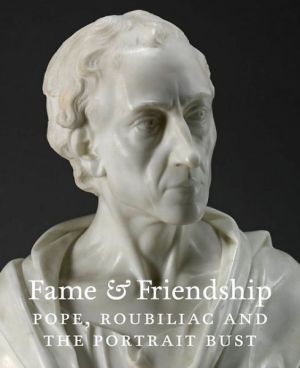 No literary figure of the eighteenth century was more esteemed than the poet Alexander Pope, and his sculpted portraits exemplify the celebration of literary fame at a period when authorship was being newly conceived and the portrait bust was enjoying new popularity. Accompanying an exhibition at Waddesdon Manor (The Rothschild Collection), this publication explores the convergence between authorship, portraiture, and the sculpted image in particular, by bringing together a wide range of works that foreground Pope’s celebrity status.
Pope took great pains over how he was represented and carefully fashioned his public persona through images, published letters and the printed editions of his works. Alongside some of the most celebrated painted portraits of the poet will be a selection of the printed texts which Pope planned with meticulous care. The publication focuses on eight versions of the same portrait bust by the leading sculptor of the period, Louis François Roubiliac.
The marble bust had long been seen as a form appropriate for the celebration of literary fame and Pope’s bust in part imitates those of classical authors whose works he both translated and consciously imitated in his own poems. More than any other sculptor, Roubiliac reworked the conventions of the bust, transforming it into a genre that was considered worthy of close and sustained attention. Nowhere is this seen more tellingly than in his compelling and intense portraits of Pope. Based on a vividly modelled clay original, the variant marble versions were carved with arresting virtuosity, recalling Pope’s own phrase, “Marble, soften’d into Life.” At the same time, the image was reproduced by both the sculptor himself and by others, in a variety of materials.
Multiplied and reproduced throughout the eighteenth century, Pope’s bust was the most familiar and visible sign of his authorial fame. At the same time, it was also used as a way of articulating friendship—a constant theme in Pope’s verse—and all the early versions of Roubiliac’s bust were probably executed for Pope’s closest friends. By bringing together the eight versions thought to have been executed by Roubiliac and his studio, and a number of other copies in marble, plaster and ceramic, this publication will offer the opportunity to explore not only the complex relationship between these various versions but the hitherto little understood processes of sculptural production and replication in eighteenth-century Britain.










leave a comment