New Book | Paris 1650-1900: Decorative Arts in the Rijksmuseum
With the Rijksmuseum open once again, this book is especially timely. It’s due out in May from Yale UP:
Reinier Baarsen, Paris 1650-1900: Decorative Arts in the Rijksmuseum (New Haven: Yale University Press, 2013), 608 pages, ISBN: 978-0300191295, $275.
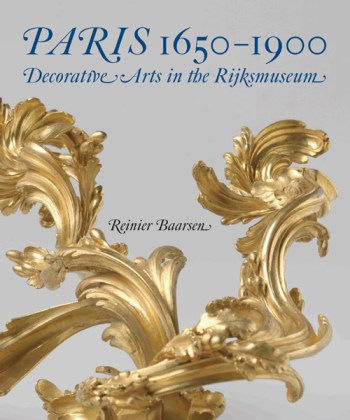 From 1650 to 1900 Paris was the undisputed center of fashion and taste in Europe. Home to a unique concentration of artists, designers, patrons, critics, and a keen buying public, Paris was the city where trends were made and where novel types of objects, devised for new ways of life, were invented. This book traces the wonderful story of Parisian decorative arts from the reign of Louis XIV to the triumph of art nouveau, through a selection of 150 breathtaking, and often little-known, masterpieces from the collection of the Rijksmuseum in Amsterdam. It features an exhilarating mixture of furniture, gilt bronze, tapestries, silver, watches, snuff-boxes, jewellery, Sèvres porcelain, and other ceramics, as well as some design drawings and engravings. Specially taken photographs reveal the daring design and beautiful execution of the work of some of the greatest artists and craftsmen of their time. Reinier Baarsen discusses the history and significance of each object, presenting the findings of much new research.
Reinier Baarsen is senior curator of furniture at the
Rijksmuseum.
New Title | Venetian Engravers of the Eighteenth Century
From Fondazione Giorgio Cini:
Rodolfo Pallacchini, Gli incisori veneti del Settecento: Venezia 1941 (Verona: Scripta Edizioni, 2012), 403 pages, ISBN: 9788896162514, $47.50. available from ArtBooks.com
 Il volume ripresenta, in edizione anastatica, il catalogo della mostra Gli incisori veneti del Settecento, organizzata da Rodolfo Pallucchini a Venezia, al teatro del “Ridotto” nel 1941. Solo 94 erano tuttavia le illustrazioni, a fronte di 613 opere esposte. Al fine di poter offrire uno strumento di lavoro adeguato sia per gli studiosi sia per i collezionisti dell’incisione veneta del Settecento, si è deciso di riprodurre qui integralmente tutte le incisioni presentate a quella mostra memorabile, incentrata su un aspetto eccezionale di creatività in ambito europeo, indagato da Pallucchini con l’abituale intelligenza critica in questo studio pionieristico.
Exhibition | Mexican Art at the Louvre
From The Louvre:
Le Mexique au Louvre: Chefs-d’oeuvre de la Nouvelle Espagne, XVIIe et XVIIIe siècles
Musée du Louvre, Paris, 7 March — 3 June 2013
Curated by Guillaume Kientz and Jonathan Brown
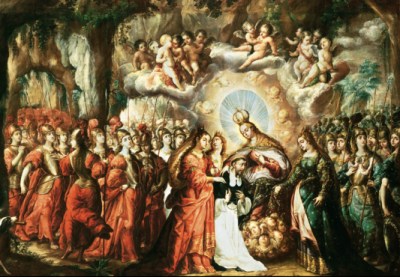
Cristobal de Villalpando, La Lactacion de Santo Domingo, © Rafael Doniz / Conaculta-INAHSinafo-Mex.
Mexican art, an area in which the Louvre’s Hispanic collection is intended to expand, will be showcased at the museum this spring. A selection of some ten of the finest works from this ‘sister’ school will be exhibited among the Spanish paintings. Among others, the monumental ‘Zurbaranesque’ work of José Juárez, the Baroque dynamism of Cristóbal Villalpando and the softness and delicacy of Rodríguez Juárez will introduce visitors to the many facets of New World art during this period and give them an understanding of its close yet independent relationship with Spanish art.
Although represented in national museums, Latin American art remains little known in France. The book that accompanies this exhibition, based on inventory work conducted by the Louvre and the French National Institute of Art History (the BAILA project), provides an overview of the major Latin American works in French museums, and explores the origins and evolution of this artistic school.
The Louvre’s press release (14 February 2013) is available here»
Exhibition | Napoleon and Europe
As noted at Art Daily:
Napoléon et l’Europe
Musée de l’Armée, Hôtel National des Invalides, Paris, 27 March — 14 July 2013
Curated by Émilie Robbe
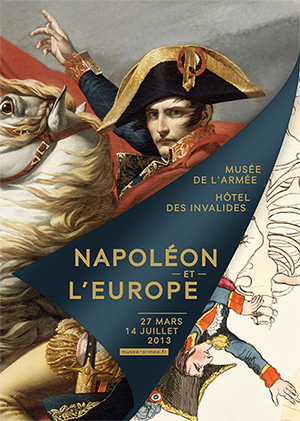 Napoleon Bonaparte (1769-1821) had a deep and lasting effect on the history of Europe, despite remaining in power for a mere fifteen years. The exhibition Napoléon et l’Europe [Napoleon and Europe], at the Musée de l’Armée from 27 March to the 14 July 2013, bears witness to Napoleon Bonaparte’s European ambitions between 1793 and 1815. The visit reveals his ambitious policies for expansion in Europe and the subsequent reactions by the various European countries, whether in support of, or against, such policies. The exhibition also highlights the consequences and the deep scars that such a conquest left on Europe.
Far removed from stereotype and biased opinion, this exhibition aims to present an influential episode in French and European history in a different manner; by combining the diverse, often-times opposing viewpoints of Napoleon’s contemporaries, on themes such as war, politics, diplomacy, the government, currency, propaganda and the arts… In order to recount or retrace this chapter of history, 250 artworks, objects and documents have been gathered together, on loan from fifty or so European museums and institutions, with more than half of these coming from outside France. Since the retrospective exhibition Napoléon held in 1969 at the Grand Palais, Paris, no other exhibition of this scope and ambition has been organized in France.
Conquest and Resistance
The entire exhibition is punctuated by or structured around two viewpoints that both question and mirror the other: the progressive and concrete creation of Napoleon’s Empire on the one hand, and the reactions of certain peoples and the main European powers to this direct quest for domination, on the other hand. From alliances to battles, from treaties to reform, this incredibly rapid succession of events is recounted in chronological fashion and explained in context. (more…)
Exhibition | Marquis de Marigny
I’m afraid this is another exhibition that slipped past me, but I include it here nonetheless. The catalogue is, at least, still available from Artbooks.com. -CH
◊ ◊ ◊ ◊ ◊
From the press release:
Le Naturel Exalté: Marigny, Ministre des Arts au Château de Menars
Expo 41, Loir-et-Cher, Blois, 30 June — 16 September 2012
 Ambitieux, fier, ombrageux : les qualificatifs ne manquent pas pour définir Abel-François Poisson de Vandières, marquis de Marigny et seigneur de Menars (1727-1781). Son destin, tracé à la plume de l’exception, en fait foi. Il eut la chance d’être le frère cadet de la maîtresse de Louis XV, titrée marquise de Pompadour, qui l’introduisit dès son adolescence à la cour du roi. À vingt-quatre ans, il est nommé directeur général des Bâtiments du roi, arts et manufactures. Un voyage en Italie en compagnie d’artistes et d’architectes engagés dans les débats esthétiques contemporains fut le déclic vers l’émancipation : Marigny commença alors à se constituer une collection d’exception. Sa galerie de statues était la 1ère de France après celle de Louis XV. Il dirigea surtout la politique des arts du royaume pendant 30 ans, laissant à l’humanité des chefs-d’oeuvre tels que la place de la Concorde, l’École Militaire, les jardins des ChampsÉlysées ou le Panthéon de Paris.
L’exposition Le naturel exalté. Marigny, ministre des arts au château de Menars, qui sera présentée à Expo 41, du 30 juin au 16 septembre 2012, est la 1ère rétrospective mondiale consacrée au frère de la Pompadour et ministre de Louis XV. Le visiteur découvrira le fonds exceptionnel des archives départementales de Loir-et-Cher, encore jamais dévoilé au public, constitué de centaines de dessins représentant l’aménagement des jardins du château de Menars en Loir-et-Cher, plusieurs tableaux majeurs en provenance du musée du Louvre ou du château de Versailles, ainsi que des oeuvres issues de la collection personnelle de Marigny. . .
◊ ◊ ◊ ◊ ◊
Christophe Morin, ed., Le Naturel Exalté: Marigny, Ministre des Arts au Château de Menars (Milan: Silvana, 2012), 192 pages, ISBN: 978-8836622658, €28 / $55.
 Abel-François Poisson (1727-1784), marquis de Vandières puis de Marigny est plus que le frère de la marquise de Pompadour. Directeur général des Bâtiments du roi à compter de 1751, il a rang de ministre et participe à la vie de cour autour de Louis XV. Courtisan zélé, il conserve ses fonctions au-delà même de la disparition de sa soeur, jusqu’en 1773. Il a toute la reconnaissance du roi qui lui offre un somptueux ” meuble ” pour décorer son hôtel de la rue Saint-Thomas-du-Louvre, ainsi que de nombreuses sculptures qui viendront embellir son château de Menars.
Le présent ouvrage rappelle, grâce aux contributions des meilleurs spécialistes de la question, la brillante carrière d’un grand commis de l’Etat au service de Louis XV. Pour la première fois, une exposition monographique sur le marquis de Marigny rassemble des oeuvres qui évoquent la carrière de l’homme public dont le rôle fut éminent dans la transformation radicale du goût au milieu du XVIIIe siècle.
L’autre versant de cette entreprise, tout aussi inédit, regarde le seigneur de Menars, ses collections et sa vie en Val de Loire. Ce ne sont pas moins de 90 dessins d’architecture qui sont présentés ici. Des oeuvres parfois majeures, parfois émouvantes, commandées par Marigny aux plus grands artistes du temps pour décorer le parc de sa maison de campagne. Grand seigneur sur ses terres, il aménage en effet le château de Menars, à sa mesure, réglant les moindres détails de son nouveau jardin anglo-chinois.
New Title | Houghton Revisited: The Walpole Masterpieces
The catalogue for the Houghton Revisited exhibition should be available soon. From Artbooks.com:
Thierry Morel, Larissa Dukelskaya, John Harris, and Andrew Moore, Houghton Revisited: The Walpole Masterpieces from Catherine the Great’s Hermitage (London: Royal Academy of Arts, 2013), 256 pages, ISBN: 978-1907533501, £40 / $85.
 In 1779 the family of Sir Robert Walpole, Britain’s first prime minister, sold his remarkable art collection to Catherine the Great, Empress of Russia. More than two centuries later, these masterpieces, rarely seen outside Russia since that time, are returning to Houghton Hall, the great house built by Walpole. This handsome book illustrates these superlative works hanging once again in William Kents magnificent interiors. Thierry Morel uncovers the wonders of Walpole’s collection, which includes paintings by Van Dyck, Poussin, Rubens and Rembrandt, and traces its journey to the State Hermitage Museum in St Petersburg, to which most of the works now belong. Other essays explore Walpole’s artistic tastes and collecting habits, and his beautiful house, one of the finest Palladian buildings in England.
Exhibition | French Paintings from the Wadsworth Atheneum
It’s interesting to see how this exhibition has been retitled in various venues: from Old Masters to Impressionists, to Old Masters to Monet, to Court to Café. The exhibition appeared in a fuller version at the Wadsworth Atheneum itself as Medieval to Monet: French Paintings, where it was accompanied by a full catalogue. -CH
◊ ◊ ◊ ◊ ◊
Press release (4 December 2012) from the Mississippi Museum of Art:
Old Masters to to Monet: Three Centuries of French Painting from the Wadsworth Atheneum
The Michele and Donald D’Amour Museum of Fine Arts, Springfield, MA, 13 December 2011 — 29 April 2012
Taft Museum of Art, Cincinnati, 18 May — 16 September 20122
Wadsworth Atheneum, Hartford, CT, 19 October 2012 — 27 January 2013 [expanded version of the exhibition]
Mississippi Museum of Art, Jackson, 23 March — 8 September 2013
Denver Art Museum, 27 October 2013 — 9 February 2014
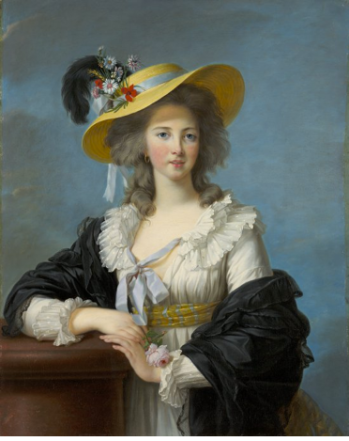
Elisabeth-Louise Vigée Le Brun, The Duchesse de Polignac Wearing a Straw Hat, 1782 (Hartford, CT: Wadsworth Atheneum Museum of Art)
The Mississippi Museum of Art is pleased to present Old Masters to Monet: Three Centuries of French Painting from the Wadsworth Atheneum, on view from March 23 through September 8, 2013. It is the thirteenth presentation in The Annie Laurie Swaim Hearin Memorial Exhibition Series. Established in 1989 to honor the memory of Annie Laurie Swaim Hearin, one of the Museum’s most dedicated patrons and volunteers, the Hearin series showcases exhibitions of world-class art, attracting visitors to Jackson from across Mississippi, the Southeast, and beyond.
Old Masters to Monet features fifty masterpieces from the collection of the Wadsworth Atheneum in Hartford, Connecticut. The outstanding artworks provide a history of French painting, ranging from the seventeenth through the nineteenth centuries and into the beginning of the twentieth century and include religious and mythological subjects, portraits, landscapes, still lifes, and genre scenes.
The Wadsworth Atheneum is America’s oldest public art museum, founded in 1843, and has never presented a full-scale survey of its distinguished collection of French paintings. To honor the recent publication of its
collection catalogue, the Atheneum has launched a tour of fifty of these outstanding masterpieces. “The Mississippi Museum of Art is honored to be one of the select venues to host this important exhibition,” said Betsy Bradley, director of the Mississippi Museum of Art. “In keeping with our mission of engaging Mississippians in the visual arts, this exhibition provides a rare opportunity for our visitors to come face to face with some of the most historically valued French paintings held in any museum collection.”
The exhibition begins with the great seventeenth-century masters, Nicolas Poussin, Claude Lorrain, Simon Vouet, and Jacques Stella, all of whom spent time in Rome and whose work embodies Italianate ideas of beauty, classical sculpture, and ideal landscape. Poussin’s enormous Crucifixion, painted in 1646 for President Jacques-Auguste de Thou, and Lorrain’s Landscape with St. George and the Dragon, commissioned by Cardinal Fausto Poli in 1641, are among the most important French paintings residing in the United States.
The eighteenth-century works present a remarkably rich tapestry of life in France during the rococo age. There are several scenes and portraits of aristocrats, including the Portrait of the Duchesse de Polignac by the era’s leading painter of women, Madame Vigée-Lebrun. Genre scenes rendered during this period exhibit a decidedly risqué bent as well as humorous aspects of life, both of which are evident in paintings on view by Jean Baptiste Greuze, François Boucher, and Louis Leopold Boilly. A more serious approach is evidenced in Still Life by Jean Baptiste Simeon Chardin and in the charming family pictures by Nicolas-Bernard Lépicié and Nöel Hallé. The change in style brought about by the French Revolution is evident in the impressive composition designed by Jacques Louis David, and the creation of a new aristocracy is presented by the two brilliant paintings by Jean Auguste Dominique Ingres. (more…)
New Book | Masters of French Painting at the Wadsworth Atheneum
From Giles:
Eric M. Zafran, Masters of French Painting, 1290–1920: At the Wadsworth Atheneum (London: D. Giles, 2012), 288 pages, ISBN: 978-1904832935, £45 / $65.
 Masters of French Painting, 1290–1920: At the Wadsworth Atheneum presents over 130 of the most significant works of art from this internationally recognized collection of French paintings and pastels.
As the first public art museum in the U.S., the Wadsworth Atheneum paved the way for encyclopaedic museums across the country. Founded by Daniel Wadsworth, the Atheneum opened in 1844 with 79 paintings and three sculptures, and today holds more than 50,000 works of art. These include great 17th-century religious masterpieces by Poussin and Claude, charming 18th-century genre paintings and portraits by Boucher, Robert, Vigée Lebrun, and Trinquesse, and varied and rich examples from the 19th century, with outstanding works by Géricault, Delacroix, Monet, Renoir, Gauguin, and Toulouse-Lautrec.
Masters of French Painting, 1290–1920 fills a major gap in the museum’s series of titles devoted to its collections. It provides scholars and researchers with an entirely new catalogue, with up-to-date references, provenance, exhibition histories and technical/conservation reports, in addition to insightful art historical commentaries on the paintings. The book also includes an introductory essay on the creation of this remarkable collection by curator Eric M. Zafran.
An exhibition of about 100 highlights of the collection, Medieval to Monet, will be on view at the Wadsworth Atheneum, October 19, 2012 – January 27, 2013
Eric M. Zafran is the Susan Morse Hilles Curator of European Art at the Wadsworth Atheneum, where he has worked since 1997. As curator of European Paintings at the Museum of Fine Arts, Boston he wrote volume I of the museum’s Catalogue of French Paintings. He is the author of publications on Rembrandt, Monet, Gauguin, Doré, and Calder.
Exhibition | Edges of Books
I regret that notice of this exhibition at RIT’s Cary Graphic Arts Collection slipped by me, but the catalogue is still available. -CH
◊ ◊ ◊ ◊ ◊
Edges of Books
Rochester Institute of Technology, Rochester, New York, 1 October — 14 December 2012
 Edges of Books examines a familiar form from an unfamiliar perspective. When books are on display it is usually their spines, covers, text, or illustrations that are featured. These are the familiar parts of the books—the parts that modern readers have come to interact with the most. Edges of Books takes a different approach, uncovering a tradition that extends back centuries in which the edges of books were important sites for information and decoration. A selection of artifacts from 1518 to the present will inspire visitors to view books in new and exciting ways.
Steven K. Galbraith, Edges of Books: Specimens of Edge Decoration from RIT Cary Graphic Arts Collection (Rochester: RIT Press, 2012), 74 pages, ISBN: 978-1933360690, $17.
Steven K. Galbraith is Curator of the Melbert B. Cary, Jr. Graphic Arts Collection. He has a Ph.D. in English Literature from Ohio State University and an M.L.S. from the University at Buffalo. Prior to coming to RIT, he was the Andrew W. Mellon Curator of Books at the Folger Shakespeare Library in Washington, D.C. and the Curator of Early Modern Books and Manuscripts at the Ohio State University. He is the author of works on early English printing, English Renaissance literature, rare book librarianship, and book conservation and digitization.
Exhibition | British Drawings from the Cleveland Museum of Art
Some of the offerings for those of you who will be in Cleveland next month for ASECS. From the museum’s website:
British Drawings from the Cleveland Museum of Art
Cleveland Museum of Art, 8 February — 26 May 2013
The British drawings at the Cleveland Museum of Art have received less attention than the renowned Italian and French drawings but are eminently worthy of such. The collection includes works by some of the best-known artists in the history of English art, such as Thomas Gainsborough, William Blake, J. M. W. Turner, and Edward Burne-Jones. Important recent acquisitions include a highly finished wash drawing exemplary of John Flaxman’s neoclassical style, an 18th-century double-portrait in pastel by Daniel Gardner, and a watercolor in pristine condition describing the Surrey countryside at sunset by Samuel Palmer. The exhibition features approximately 50 works from the collection along with a small group of loans from private collections, ranging from the 18th century through the Edwardian period, and will be accompanied by a collection catalogue. This is the inaugural exhibition of a new series exploring highlights from the Cleveland Museum of Art’s collection of drawings.
◊ ◊ ◊ ◊ ◊
From the publisher:
Heather Lemonedes, British Drawings: The Cleveland Museum of Art (London: D. Giles, 2013), 152 pages, 978-1907804229, $45.
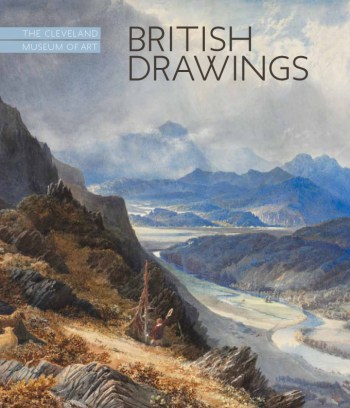 This volume, the first in a new series, presents outstanding drawings from the permanent collection of works on paper at the Cleveland Museum of Art. It features 50 highlights, along with a small group of loans from private collections, ranging from the 18th century through to the Edwardian period. Fragile and light sensitive, opportunities to see such treasures are rare and for that reason are all the more to be celebrated. Many are published here for the first time, such as Francis Cotes’s breathtaking portrait of Lady Mary Radcliffe and an exquisite female nude drawn in coloured chalk by William Mulready.
Heather Lemonedes is curator of Drawings at the Cleveland Museum of Art. Prior to her arrival at the museum in 2002, she worked as a specialist in the Print Department at Christie’s, New York and supervised the Print Study Room at the Metropolitan Museum of Art, New York. She was awarded a Samuel H. Kress
Foundation Travel Fellowship in the History of Art for
research on her dissertation, “Paul Gauguin’s Volpini
Suite,” in 2004.










 Enfilade
leave a comment