Exhibition | François-André Vincent
From Le musée des Beaux-Arts de Tours:
François-André Vincent
Musée des Beaux-arts, Tours, 18 October 2013 — 19 January 2014
Musée Fabre de Montpellier Agglomération, 8 February — 11 May 2014

François André Vincent, Portrait Presumed to be Madame Jeanne-Justine Boyer-Fonfrede and Her Son, Henri (Paris: Louvre)
Le musée des Beaux-Arts de Tours et le musée Fabre de Montpellier s’associent pour concevoir et organiser d’octobre 2013 à mai 2014 la première exposition consacrée au peintre François-André Vincent (1746–1816), à l’occasion de la publication du catalogue raisonné de l’œuvre de l’artiste publié chez Arthéna par Jean-Pierre Cuzin, ancien conservateur général du département des peintures du musée du Louvre.
Le commissariat de l’exposition est constitué, aux côtés de Jean-Pierre Cuzin qui a sélectionné peintures et dessins, de Sophie Join-Lambert et Michel Hilaire, directeurs des deux musées, et de deux conservateurs, Olivier Zeder, conservateur en chef à Montpellier et Véronique Moreau, conservateur en chef au musée des Beaux-Arts de Tours.
Les publications récentes ont montré l’importance d’un artiste, aussi bien pour la peinture que pour le dessin, dont les œuvres, entre deux mondes stylistiques, ont pu être confondues avec celles de Fragonard comme avec celles de David. Il tient une place essentielle dans la peinture française comme promoteur des sujets pris à l’Antiquité comme de ceux pris à l’Histoire de France et peut apparaître, à beaucoup d’égards, comme un “préromantique”. Son rôle dans le domaine du portrait et particulièrement dans celui du portrait-charge apparaît capital.
L’exposition devrait apporter la révélation d’un grand artiste jusqu’ici méconnu et dont les œuvres enrichissent des collections publiques et privées des plus prestigieuses, tant en Europe qu’à l’étranger. Un tel projet ne peut se concevoir sans faire appel aux musées et collectionneurs français et étrangers. Parmi les collections publiques, plusieurs appartiennent au réseau FRAME (French Regional American Museums Exchange, France et Etats-Unis).
◊ ◊ ◊ ◊ ◊
From Art Media Agency:
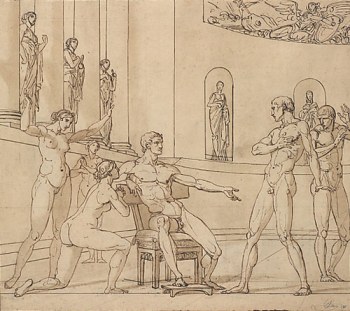
François André Vincent, The Clemency of Augustus (Corneille, Cinna, V, 3) (recto); Knight Restraining a Female Figure (verso), 1788
(New York: Metropolitan Museum of Art)
An exhibition of works by François-André Vincent (1745–1816) is to take place between 19 October 2013 and 19 January 2014 at the Musée des Beaux-Arts in Tours. The exhibitions is to coincide with the publication by Arthéna of a catalogue raisonné devoted to the artist François-André Vincent produced by Jean-Pierre Cuzin, former curator of painting at the Louvre.
Stylistically, Vincent’s works have been compared to those by Fragonard and David, and are sometimes described as pre-Romantic. Inspired by antiquity, the artist’s pieces often return to explore moments in France’s history. The exhibition features over 100 works, gathered from collections in both France and further afield. It is organised with the support of the French state, in collaboration with the Ministry of Culture and Communication, the French Heritage Management association, and the French Museums Service.
Following its close at Tours, the exhibition is to travel to the Musée Fabre in Montpellier, where is is to be on display between 8 February to 11 May 2014. A selection of drawings by Vincent will then be display at the Cognacq-Jay museum from 26 March to 30 June 2014.
Exhibition | Exuberance of Meaning: Catherine the Great’s Patronage
Press release (1 July 2013) from the Georgia Museum of Art:
Exuberance of Meaning: The Art Patronage of Catherine the Great
Georgia Museum of Art, The University of Georgia at Athens, 21 September 2013 — 5 January 2014
Hillwood Museum and Gardens, Washington, D.C., 1 February — 7 June 2014
Curated by Asen Kirin
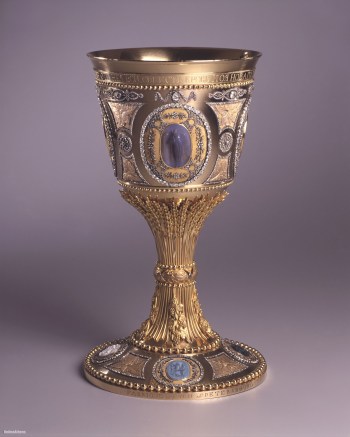
Chalice, Iver Windfeldt Buch (1749-1811), St. Petersburg, 1791, gold, diamonds, chalcedony, bloodstone, nephrite, carnelian, cast glass, height: 33 cm, diameter: 18 cm (Hillwood Museum and Gardens)
The Georgia Museum of Art at the University of Georgia presents Exuberance of Meaning: The Art Patronage of Catherine the Great September 21, 2013 to January 5, 2014. This exhibition features works of decorative art the Russian empress Catherine the Great commissioned for her own use or as gifts for courtiers, including a large chalice created by noted goldsmith Iver Winfeldt Buch.
The Buch chalice, which belongs to Hillwood Museum and Gardens in Washington, D.C., serves as the centerpiece of the exhibition. Adorned with precious gems and eight carved cameos, it demonstrates how Catherine combined Byzantine and classical influences to forge a new direction for Russian culture. Other objects establish the background for the empress’s choices or represent major currents in 17th- and 18th-century Russian art. Dr. Asen Kirin, associate professor of art and associate director of UGA’s Lamar Dodd School of Art, is curator of this exhibition, which borrows objects from the Metropolitan Museum of Art, the Chipstone Foundation, the Walters Museum and private collections, as well as Hillwood.
Marjorie Merriweather Post, the sole heir to the multimillion-dollar Post Cereal Company, purchased the works that formed Hillwood’s Russian collection. Many of the works she purchased while in Russia in the 1930s are on display in this exhibition. Kirin invites audiences “to contemplate the art collections of two extraordinary women, who lived at different times and could not have come from more dissimilar environments. One is Europe’s Old Regime of absolute hereditary monarchies, the other—the modern, industrialized America of free enterprise.”
The exhibition presents a comparison of dazzling and masterful objects that exemplify both medieval Byzantine culture, of which Russia was the successor and guardian, and the Western, neoclassical style that was the hallmark of the Enlightenment. It focuses on the manner in which Catherine applied her knowledge of ancient and medieval glyptic art and incorporated her collection of carved gems in the commission of new works of art, a deliberate continuation of the centuries-old tradition of placing pagan, Greek, and Roman carved stones onto sacred Christian liturgical and devotional objects.
During her reign, the empress worked to reconcile her contemporary scientific and historical frame of mind with the devotional ways of the Orthodox Church, which had long been sanctified by tradition. The title Exuberance of Meaning refers to the crucial characteristic that distinguishes her endeavors in the arts: she conceived her projects in a manner that allowed for multiple complementary interpretations covering a wide spectrum of meanings.
Kirin is particularly interested in the comparison of the two collectors, Catherine and Post, as both women were powerful, accomplished and elevated their respective domains despite a tradition of male dominance. Kirin suggests that audiences contemplate “how the arts enabled them to present themselves to society and to control the perception of their images.”
Kirin has worked with the museum before, perhaps most notably on the exhibition Sacred Art, Secular Context, which examined Byzantine works of art from the collection of Dumbarton Oaks, Washington, D.C.
The museum will publish a catalogue to accompany the exhibition, featuring full-page, full-color illustrations of the objects it includes and scholarly essays on Catherine’s art patronage, the Buch chalice and the empress’ proto-feminist use of vessels to make a statement about gender and power.
Events associated with the exhibition include films, a family day, and a two-day symposium scheduled for November 1–2 featuring noted scholars of Russian art. The museum’s Collectors Group, an upper-level membership group within the Friends of the Georgia Museum of Art, will host an opening for the exhibition September 21 in conjunction with the UGA Performing Arts Center’s presentation of a concert of music the empress favored.
Exhibition | Souvenir Nation: Relics, Keepsakes, and Curios
From the Smithsonian’s National Museum of American History:
Souvenir Nation: Relics, Keepsakes, and Curios
Smithsonian Castle, Washington, D.C., 9 August 2013 — 17 August 2014
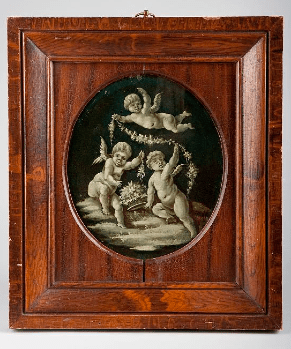
Panel from George Washington’s Coach, 17 x 15 inches. President Washington’s state coach featured four side panels representing the seasons; this panel, encased in an oak frame, depicts ‘Spring’ (Smithsonian)
Souvenir Nation: Relics, Keepsakes and Curios features a selection of diminutive and personal objects that Americans have taken, made and saved as historical mementos from the Early Republic up to the present day. Many of the postcards, structural fragments such as a brick from George Washington’s childhood home, consumer goods, locks of hair and other keepsakes on display are part of the earliest Smithsonian collections now in the museum’s Division of Political History. Highlights include a fragment of Plymouth Rock, presidential hair, wood from George Washington’s coffin and pieces from Joan of Arc’s dungeon, the Bastille, and the Berlin Wall.
◊ ◊ ◊ ◊ ◊
From Princeton Architectural Press:
William Bird, Souvenir Nation: Relics, Keepsakes, and Curios from the Smithsonian’s National Museum of American History (Princeton: Princeton Architectural Press, 2013), 176 pages, ISBN: 978-1616891350, $25.
 Buried within the collection of the Smithsonian Institution’s National Museum of American History exists an astonishing group of historical relics from the pre-Revolutionary War era to the present day, many of which have never been on display. Donated to the museum by generations of souvenir collectors, these ordinary objects of extraordinary circumstance all have amazing tales to tell about their roles in American history. Souvenir Nation presents fifty of the museum’s most eccentric items. Objects include a chunk broken off Plymouth Rock; a lock of Andrew Jackson’s hair; a dish towel used as the flag of truce to end the Civil War; the microphones used by FDR for his Fireside Chats; and the chairs that seated Nixon and Kennedy in their 1960 television debate. This fascinating collection of Americana includes an introductory essay on this nation’s passion for souvenir collecting, as well as a brief history and a glimpse behind the scenes of the Smithsonian.
Exhibition | Artists & Amateurs: Etching in Eighteenth-Century France
Press release (3 June 2013) from The Met:
Artists and Amateurs: Etching in Eighteenth-Century France
The Metropolitan Museum of Art, New York, 1 October 2013 — 5 January 2014
Curated by Perrin Stein
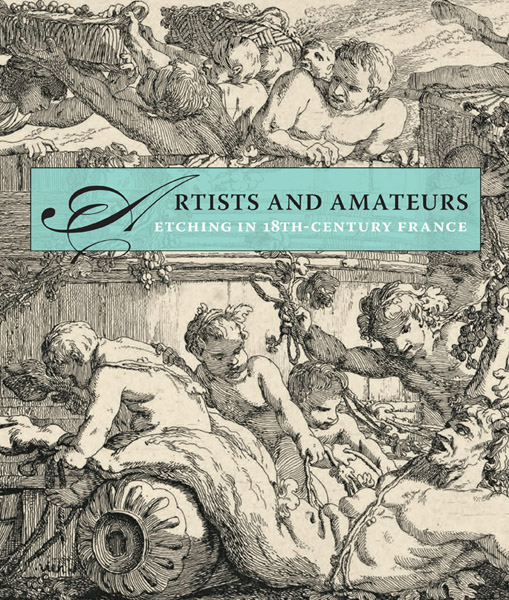 During the eighteenth century in France, a great number of artists—painters, sculptors, draftsmen, and amateurs—experimented with etching, a highly accessible printmaking technique akin to drawing. Featuring 130 works by such artists as Watteau, Boucher, Fragonard, Hubert Robert, and many others, Artists and Amateurs: Etching in Eighteenth-Century France will be the first exhibition to focus on the original etchings created by painters and amateurs in eighteenth-century France. It will present a fresh exploration of how etching flourished in ancien régime France, shedding new light on artistic practice and patronage at that time. In a period when artists strained to navigate the highly regulated Académie Royale and the increasingly discordant public spheres of the marketplace and the Salon, etching afforded them stylistic freedom and allowed them to produce exquisite works of art in a spirit of collaboration and experimentation. The exhibition will present etchings, plus a few drawings and preparatory sketches, from the Metropolitan Museum’s rich holdings, as well as loans from North American museums and private collections. The selection of prints includes a number of rare or unique examples.
While printmaking was dominated by professionals for much of its early history, the technique of soft-ground etching—where a plate was coated in varnish and could then be drawn on with a metal stylus—transformed the practice from a specialized technique practiced by an exclusive group with extensive training, to a highly accessible art form. Some artists, like Antoine Watteau and François Boucher, encountered the process within the thriving commerce of the Paris print trade, where a painter would sometimes be asked to make a preliminary sketch on a prepared copper plate to guide the professional printmaker who would later reinforce the design with engraving. Others, like Jean-Honoré Fragonard and Hubert Robert, first experimented with the technique during their student years in Rome, where Piranesi’s studio was in close proximity to the French Academy. For some, like Jean-Baptiste-Marie Pierre, etching formed a bridge with amateurs, wealthy members of the court or aristocracy who wanted to learn etching as a cultured, leisure pursuit. Because of these relationships, the making of the prints became intermingled with the collecting and studying of prints, creating an environment of cross-fertilization which led to a flourishing of the art form.
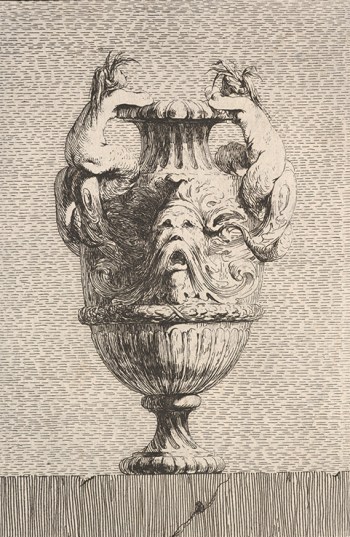
Jacques François Joseph Saly, Design for a Vase with Two Mermaids, from the “Vases” series, 1746 (NY: The Metropolitan Museum of Art)
Artists and Amateurs will highlight the freedom, spontaneity, and creativity of the medium of etching in the hands of artists and collectors. Over the course of the century, etching came to be viewed not solely as a reproduction medium, but also, as one capable of original artistic expression. As the free and improvisational aesthetic of the etching process increasingly was embraced, French artists looked to seventeenth-century masters—such as Rembrandt in the North and Salvator Rosa and Giovanni Benedetto Castiglione to the South—for inspiration. The expressive potential of the technique was also explored in a more experimental manner by artists like Gabriel de Saint-Aubin and Louis Jean Desprez, who harnessed the inky tonalities of the medium to their personal and idiosyncratic vision. The painters who felt the urge to pick up the etching needle were drawn to the freedom and accessibility of the technique, and not necessarily focused on exploiting commercial potential. Their prints tend to be rare and are valued for their qualities of expressiveness and experimentation—in many ways the opposite of the mass production and technical expertise of professional printmakers like Demarteau and Bonnet.
The exhibition will also focus on the French Academy in Rome as a setting that provided the means and freedom to explore this medium; the etchings made by amateurs, both in Rome and in Paris; and, finally, the increasing stylistic engagement with past masters. Overall there will be a balance between works of the most successful painters of the period and lesser known, but equally accomplished figures, including the work of amateurs and the working relationships between them where the influence went both ways.
The exhibition will be organized thematically and will explore how, where, and why artists first learned to etch, their occasional experimentation with marketing their prints for sale, and their technical innovations as they found new ways to manipulate the medium for individual expression. Highlights include Watteau’s Recruits Going to Join the Regiment (ca. 1715-16), Fragonard’s The Satyr’s Family (1763) and The Armoire (1778), Liotard’s Self-Portrait, Boucher’s Andromeda (1734), Gabriel de Saint-Aubin’s View of the Salon of 1753, de Boissieu’s Study of Thirteen Heads (ca.1770), and amateur Ange-Laurent de la Live de Jully’s etching after a drawing by Jacques-François-Joseph Saly of Nicolas Bremont, Cook at the French Academy in Rome (ca. 1754).
From Yale UP:
Perrin Stein, ed., Artists and Amateurs: Etching in Eighteenth-Century France (New York: The Metropolitan Museum of Art, 2013), 240 pages, ISBN: 978-0300197006, $60. With essay by Charlotte Guichard, Rena M. Hoisington, Elizabeth Rudy, and Perrin Stein.
Exhibition | Picturing America
In addition to the exhibition, the Dixon has devised a truly-inspired plan to lure visitors to the museums on Fridays: food trucks in the parking lot!
Picturing America: Signature Works from the Westmoreland Museum of American Art
Dixon Gallery and Gardens, Memphis, 4 August — 6 October 2013
Vero Beach Museum of Art, Vero Beach, Florida, 15 February — 25 May 2014
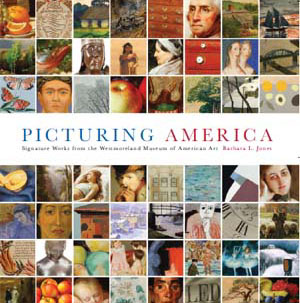 Over the past fifty years, the Westmoreland Museum of American Art, in Greensburg, Pennsylvania, has assembled a collection of works by significant American artists, concentrating on the mid-18th through the mid-20th centuries. Featuring works by John Singleton Copley, Charles Wilson Peale, and Mary Cassatt, Picturing America showcases the signature works from the museum’s collections, from preeminent American artists of the Hudson River School to modernists such as Milton Avery and Doris Lee.
Barbara Jones, Picturing America: Signature Works from the Westmoreland Museum of American Art (Greensburg, PA: Westmoreland Museum of American Art, 2010), 256 pages, ISBN: 978-0931241376, $45.
Exhibition | Charakterköpfe: Portrait Busts in the Enlightenment
From the museum’s 2013-14 exhibition schedule:
Charakterköpfe: Die Bildnisbüste in der Epoche der Aufklärung
Germanisches Nationalmuseum, Nuremberg, 6 June — 6 October 2013
Curated by Frank Matthias Kammel and Anna Pawlik
 The portrait bust is one of the most fascinating genres of sculpture. It was particularly adaptable to the varieties of concurrent artistic styles prevalent at the end of the 18th century. Portraits of rulers, burghers, artists and intellectuals were oriented towards idealized images, towards the antique, or presented the subject in unidealized, haunting realism. Often they show consideration of the interconnectedness between physiognomy and personality. Through the presentation of sculptural masterpieces, this exhibition illuminates a major facet of a politically and spiritually fascinating era, and not least will convey a lively image of the Enlightenment’s novel interest in the individual.
◊ ◊ ◊ ◊ ◊
From the Germanisches Nationalmuseumm:
Die Porträtbüste ist eine der faszinierendsten Gattungen der Bildhauerkunst. Ende des 18. Jahrhunderts war sie von der Gleichzeitigkeit gegensätzlicher Stile bestimmt wie in kaum einer anderen Epoche zuvor. Bildnisse von Regenten, Bürgern, Künstlern und Gelehrten orientieren sich an Idealbildern, an der Antike oder stellen den Porträtierten ungeschönt, in einem packendem Realismus dar. Nicht selten spiegeln sie Überlegungen zur Abhängigkeit von Gesichtzügen und Charakter wider. Die Ausstellung präsentiert dieses breite Spektrum anhand plastischer Meisterwerke zahlreicher bedeutender Künstler wie Johann Heinrich Dannecker, Franz Xaver Messerschmidt, Johann Valentin Sonnenschein oder Johann Gottfried Schadow. Namhafte Geistesgrößen der Zeit, wie Goethe, Herder, Pestalozzi oder Winckelmann, erscheinen in Glanzleistungen früher realistischer und klassizistischer Strömungen der Bildhauerei. Flankiert von zeitgenössischer Graphik und Malerei vermittelt die Ausstellung eine lebhafte Vorstellung von einem damals neuartigen Interesse am Bild des Menschen.
Frank Matthias Kammel, Charakterköpfe: Die Bildnisbüste in der Epoche der Aufklärung (Nürnberg: Germanisches Nationalmuseum, 2013), 244 pages, ISBN: 978-3936688757, €33.
Exhibition | Quilts 1700–1945
From the QAG press release (14 June 2013) . . .
Quilts 1700–1945
Queensland Art Gallery, Brisbane, 15 June — 22 September 2013
Curated by Sue Prichard

Coverlet with sundial, cotton, 1797
(London: Victoria and Albert Museum)
An exhibition of historic British quilts from London’s Victoria and Albert Museum (V&A) is now on view at the Queensland Art Gallery, presenting enthralling social histories and personal stories of more than 200 years of quiltmaking and patchwork. The exhibition includes more than 35 hand-crafted textiles created to provide comfort and commemorate historical events and family occasions between 1690 and 1945, plus a host of associated material such as pin cushions, needlework tools and sewing baskets.
The works come primarily from the esteemed collection of the V&A, the world’s leading decorative arts and design museum. Select pieces have travelled from British regional museums and private collections, and there is the special addition of the much-admired Rajah quilt of 1841, sewn by convict women during transportation to Van Diemen’s Land, on loan from the National Gallery of Australia.
Divided into four thematic sections, the exhibition explores the domestic landscape of the wealthy bedrooms of 18th-century Britain; the private thoughts and political debates that emerged as patchwork spread to aspirational middle class homes in the early 19th century; the movement of quilts to the public sphere for exhibition and display in Victorian England; and the survival of quiltmaking in economically deprived areas in the face of the emergence of mass production in the early 20th century.
“The exhibition has been curated for QAG by Sue Prichard, Curator of Contemporary Textiles at the V&A, based on the popular exhibition Quilts 1700–2010: Hidden Histories, Untold Stories, presented in 2010 at the V&A,” explained Director Chris Saines.
The exhibition is accompanied by the 196-page publication Quilts 1700–1945, a co-edition from QAGOMA and the V&A.
Exhibition | Witches and Wicked Bodies
Press release (10 December 2012) from the Scottish National Gallery of Modern Art:
Witches and Wicked Bodies
Scottish National Gallery of Modern Art, Edinburgh, 27 July — 3 November 2013
 The fascination for witches, which has gripped many Western artists from the sixteenth century to the present, will be the subject of a major new exhibition at the Scottish National Gallery of Modern Art this summer. Witches and Wicked Bodies, will delve into the dark and cruel origins of the classic image of the witch, and demonstrate how the now familiar old woman on a broomstick is just one part of a rich and very diverse visual tradition.
Witches and Wicked Bodies will highlight the inventive approaches to the depiction of witches and witchcraft employed by a broad range of artists over the past 500 years, with striking examples by famous names such as Albrecht Dürer, Lucas Cranach, Salvator Rosa, Francisco de Goya, Henry Fuseli, John William Waterhouse and William Blake. The selection will also include more recent interpretations of the subject, by twentieth-century and contemporary artists including Paula Rego, Kiki Smith and Edward Burra. The exhibition has been curated by the National Galleries of Scotland with artist and writer Deanna Petherbridge and will contain major works on loan from the British Museum; the National Gallery (London); the Ashmolean Museum, Oxford; Tate; and the Victoria & Albert Museum, to be shown alongside key images from the Royal Scottish Academy and the Galleries’ own collections.
John Leighton, Director General of the National Galleries of Scotland, said: “We look to offer our public a world-class yet very distinctive programme of exhibitions. I believe that this is the first time that witchcraft across the ages has been the subject of a major art exhibition in the UK and we are delighted to be partners with the British Museum on this truly fascinating and compelling show.”
Europe has a long history of witchcraft and the persecution of witches was particularly widespread in the sixteenth and seventeenth centuries, accounting for thousands of deaths of women and even children. Prints and drawings dating from this period will form a key part of the exhibition, showing how the advent of the printing press gave artists as well as writers the means to share ideas, myths and fears about witches from country to country. Engravings by Albrecht Dürer will be shown alongside woodcuts by Hans Baldung Grien and many other printmakers including Bruegel and de Gheyn.

Paul Sandby, The Flying Machine from Edinburgh in One Day Performed by Moggy Mackenzie at the Thistle and Crown, etching, 1762. The print satirizes Scottish emigration to England.
Photograph: National Galleries of Scotland
The exhibition will focus on six key themes. The centrepiece of Witches’ Sabbaths and Devilish Rituals is one of the most famous images of witches of all time – Salvator Rosa’s Witches at their Incantations on loan from the National Gallery (London). Unnatural Acts of Flying will include the origins of the image of the witch as an old woman riding a broomstick against a night sky, but rather than the cloaked figure wearing a pointy hat that has become so widely known to adults and children alike, this section features more sinister images of flying witches attending black masses.
In Magic Circles, Incantations and Raising the Dead, visitors will encounter glamorous witches cooking up spells as in Frans Francken’s 1606 painting Witches’ Sabbath. This powerful section also includes the luscious 1886 painting by John William Waterhouse, The Magic Circle. Hideous Hags and Beautiful Witches will include the medusa-like witch with snakes for hair in John Hamilton Mortimer’s drawing Envy and Distraction. This introductory section will also feature unsettling works depicting old crones by Francisco de Goya – the exhibition contains a significant group of works by this major Spanish artist. Some of the images are genuinely frightening and disturbing, whereas others will reveal the negative attitudes towards women in periods when they were very much seen as the second sex. Due to the particular association of women with witchcraft, these works will highlight the ways in which a largely male-dominated European society has viewed female imperfections, highlighting the concerns created by women laying claim to special powers, or simply behaving in the ‘wrong’ way.

Daniel Gardner, The Three Witches from Macbeth (Elizabeth Lamb, Viscountess Melbourne; Georgiana, Duchess of Devonshire; Anne Seymour Damer), pastel on paper, 1775 (London: NPG)
Works depicting the various appearances of the witches in Shakespeare’s Macbeth, in Unholy Trinities and The Weird Sisters from Macbeth, will range from John Martin’s theatrical large-scale painting of Banquo and Macbeth lost on the blasted heath, with the turbulent skies swirling over exaggerated mountains, through to John Runciman’s striking drawing which here is interpreted as the Three Witches conspiring over Macbeth’s fate.
This fascinating thematic survey will culminate with The Persistence of Witches. Works by Kiki Smith and Paula Rego mark a sea-change with these high-profile contemporary artists’ own take on a subject that had previously been almost exclusively male-dominated. In Smith’s study Out of the Woods, the artist herself explores the expressions and attitudes of the ‘witch’, whereas Rego’s 1996 work Straw Burning relates to the famous Pendle Witch trials which took place in 1612 in Lancaster, 400 years ago.
The exhibition has been organised in partnership with the British Museum, whose loans will include William Blake’s magnificent drawing The Whore of Babylon which will be shown alongside the National Galleries’ own Blake drawing, once thought to depict Hecate, the classical witch of the crossroads. Witches and Wicked Bodies will be an investigation of extremes, exploring the highly exaggerated ways in which witches have been represented, from hideous hags to beautiful seductresses who ‘bewitch’ unwary men.
Writing for The Guardian (22 March 2013), Charlotte Higgins provides a useful introduction»
◊ ◊ ◊ ◊ ◊
From ACC Distribution:
Deanna Petherbridge, Witches & Wicked Bodies (Edinburgh: National Galleries of Scotland, 2013), 112 pages, ISBN: 978-1906270551, £15.
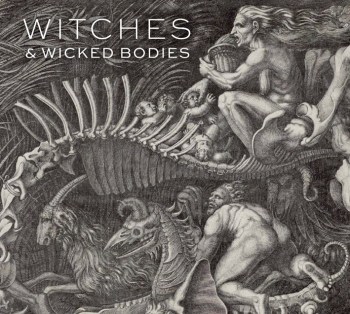 Witches & Wicked Bodies provides an innovative, rich survey of images of European witchcraft from the sixteenth century to the present day. It focuses on the representation of female witches and the enduring stereotypes they embody, ranging from hideous old crones to beautiful young seductresses. Such imagery has ancient precedents and has been repeatedly re-invented by artists over the centuries, to include scenes with corpses and cauldrons, caverns and kitchens, and the dead being raised through demonic or satanic rites – all inversions of an ordered and religious social world.
Petherbridge introduces this fascinating subject and includes catalogue entries on each of the exhibited works. The illustrations primarily feature drawings and prints as well as a group of important paintings. A wide range of artists is represented including Dürer, Goya, Fuseli, Blake, Burra and Rego.
Deanna Petherbridge CBE is an artist, curator and writer. Her book The Primacy of Drawing: Histories and Theories of Practice (Yale University Pres)s, was published June 2010. She was Visiting Professor of Drawing at the University of the Arts London from 2009 to 2012 and was Professor of Drawing at the Royal College of Art from 1995 to 2001 where she launched the Centre for Drawing Research. Between 2002 and 2006 Petherbridge held a post as Arnolfini Professor of Drawing at the University of the West of England, Bristol and a two year Research Professorship at the University of Lincoln from 2007 to 2009.
Exhibition | Northern Vision: Master Drawings
From the Soane’s Museum:
Northern Vision: Master Drawings from the Tchoban Foundation
Sir John Soane’s Museum, London, 21 June – 28 September 2013
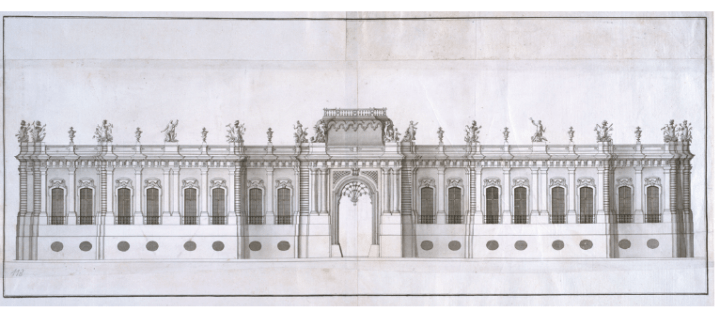
Matthäus Daniel Pöppelmann (1662–1736), Project for the Orangerie
of the Peterswalsky von Peterswald Palace, Silesia, undated
(Berlin: Tchoban Foundation)
◊ ◊ ◊ ◊ ◊
From Schinkel’s earliest attributed drawing to designs for the Palace of the Soviets, Moscow, this exhibition draws on the highlights of the Tchoban Foundation collection, Museum für Architekturziechnunung, Berlin. Amongst the architects represented will be seldom seen works by Matthias Daniel Pöppelmann (1662–1736), Leo von Klenze (1784–1864), Herman Giesler (1898–1987) and Boris Iofan (1891–1976). The Tchoban Foundation has been set up by the Russian Berlin-based architect Sergei Tchoban and the collections reflect his personal, architectural interests.
The exhibition includes drawings by Sergei Tchoban illustrating his practice’s interest in the continued use of architectural draughtsmanship. Many of these drawings also reflect the distinctive and historical cityscapes of Berlin and Sergei Tchoban’s native St Petersburg.
The 41-page guide (with wall text and images) is available as a PDF file here»
The catalogue is available from the museum shop»
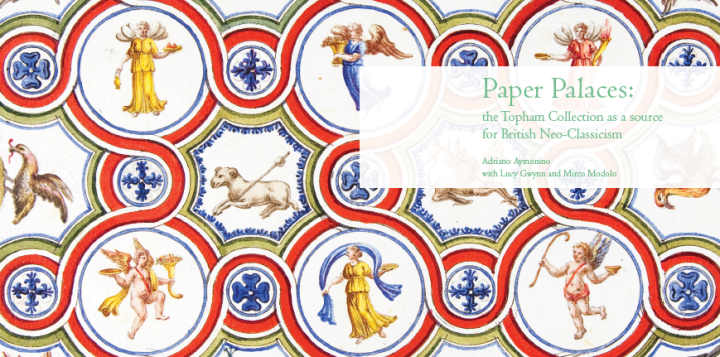
Exhibition Catalogue | Paper Palaces: The Topham Collection
◊ ◊ ◊ ◊ ◊
Adriano Aymonino with Lucy Gwynn and Mirco Modolo, Paper Palaces: The Topham Collection as a Source for British Neo-Classicism (Windsor: Eton College, 2013).
Exhibition on view from May until November 1, 2013 at The Verey Gallery, Eton College Library.
I’m delighted to announce that the 56-page catalogue for Paper Palaces is available free of charge for download as a PDF file here. Warm thanks to the exhibition organizers for their generous cooperation. -CH










leave a comment