Exhibition | The Male Nude: Drawings from the Paris Academy
From Paul Holberton Publishing:
The Male Nude: Eighteenth-Century Drawings from the Paris Academy
The Wallace Collection, London, 24 October 2013 – 19 January 2014
 Including artists such as Rigaud, Boucher, Nattier, Pierre, Carle van Loo, Gros and Jean-Baptiste Isabey, this catalogue of nearly forty French drawings of male nude figures, all drawn between the late seventeenth and the late eighteenth centuries, accompanies an exhibition that is unprecedented in Britain. All from France’s equivalent of the Royal Academy, the École nationale supérieure des Beaux-Arts in Paris, many of the extraordinary drawings are by artists represented in the Wallace Collection.
Painting in eighteenth-century France before the Revolution was centred on the Royal Academy of Painting and Sculpture, which had been founded in 1648. The purpose of the Academy was to train the most important artists and to provide them with the raw materials for successful history painting, which was by far the most esteemed genre for an artist to practise. Budding painters or sculptors would be apprenticed to a master, but much of their training would take place at the Academy where the drawing of the male human figure was at the core of the curriculum. Only after mastering the copying of drawings and engravings, and then casts of antique sculptures, would the student be allowed to progress to drawing the nude figure in the life class. The drawings they produced there were so associated with the Academy that they came to be known as ‘académies’.
The male human figure was regarded as the very foundation of painting and sculpture; it had to be mastered by any aspiring artist of the highest class. No female artists were admitted to the Academy and all models were male. This practice in itself went on to create problems for artists, who lacking the necessary training to portray the female form, were compelled to search out models, not always in the most respectable and salubrious settings. Classes were complemented by courses on anatomy, perspective, geometry, literature and history. The Academy’s training was learned and structured, and, although it was sometimes criticized for its rigour and its insistence on discipline and uniformity, it produced superb draughtsmen. Some of the artists featured became painting Masters of their generation, focusing on historical and allegorical pictures. Others utilised their training in a variety of artistic fields, including Bachelier, who went on to assume the role of Director of Design and Decoration at the Sèvres porcelain factory, influencing many of the pieces exhibited in the Wallace Collection.
Variety and beauty are omnipresent in The Male Nude. The works show figures – sometimes single, sometimes two together – in an enormous variety of poses and in various degrees of light and shade. The study of physiognomic expression was also taught at the Academy, and the facial expressions of the figures always complement the poses they adopt, whether they show, say, serenity, exertion, pleasure or anger.
As a descendant of the French Royal Academy of Painting and Sculpture, the École nationale supérieure des Beaux-Arts owns an incomparable collection of these académies which have come down to it directly from the Academy’s teaching classes. It also owns an outstanding collection of drawings, second only to the Louvre in France, comprising not only a superb group of French drawings, but many works by some of the other great draughtsmen of European art, such as Raphael, Dürer and Michelangelo. This exhibition at the Wallace Collection will be an excellent opportunity for collections at ENSBA – which are open to anyone to visit – to become much better known to a British audience, as well as allowing visitors an insight into this influential, but now non-existent world.
The Wallace Collection displays one of the greatest collections of eighteenth-century French paintings in the world, and these drawings from Paris will make an excellent complement to them. The Hertfords collected almost no academic, or historical, works for which these drawings were the basis, favouring ‘pleasing pictures’: portraits and landscapes. In many ways, The Male Nude will offer the visitor a new dimension and complete the jigsaw. Seen alongside our world-class holdings of eighteenth-century furniture and decorative arts, they will provide a thorough understanding of the period.
Catalogue edited by Emmanuelle Brugerolles with Georges Brunel and Camille Debrabant, The Male Nude: Eighteenth-Century Drawings from the Paris Academy (London: Paul Holberton Publishing, 2013), 144 pages, £25.
Exhibition | Shunga: Sex and Pleasure in Japanese Art, 1600–1900
Press release from The British Museum:
Shunga: Sex and Pleasure in Japanese Art, 1600–1900
The British Museum, London, 3 October 2013 — 5 January 2014
Curated by Tim Clark

Torii Kiyonaga, Sode no maki (Handscroll for the Sleeve), ca. 1785
(London: British Museum)
◊ ◊ ◊ ◊ ◊
In early modern Japan, 1600–1900, thousands of sexually explicit paintings, prints, and illustrated books with texts were produced, known as ‘spring pictures’ (shunga). Official life in this period was governed by strict Confucian laws, but private life was less controlled in practice. Often tender, funny and beautiful, shunga were mostly done within the popular school known as ‘pictures of the floating world’ (ukiyo-e), by celebrated artists such as Kitagawa Utamaro (died 1806) and Katsushika Hokusai (1760–1849). This was very different from the situation in contemporary Europe, where religious bans and prevailing morality enforced an absolute division between ‘art’ and ‘pornography’.
 Early modern Japan was certainly not a sex-paradise. However, the values promoted in shunga are generally positive towards sexual pleasure for all participants. Women’s sexuality was readily acknowledged and male-male sex recognised in particular social contexts.
Shunga is in some ways a unique phenomenon in pre-modern world culture, in terms of the quantity, the quality and the nature of the art that was produced. This exhibition — which features some 170 works of explicit shunga paintings, sets of prints and illustrated books drawn from collections in the UK, Japan, Europe and USA — explores some key questions about what is shunga, how it circulated and to whom, and why was it produced. In particular it begins to establish the social and cultural contexts for sex art in Japan.
During the late nineteenth and twentieth centuries, shunga was all but removed from popular and scholarly memory in Japan and became taboo. The ambition of the exhibition is to reaffirm the importance of shunga in Japanese and world history. In conjunction with the exhibition, British Museum Press will publish a lavish scholarly catalogue of some 550 pages and with 400 colour illustrations, edited by Timothy Clark (British Museum), C. Andrew Gerstle (SOAS, University of London), Akiko Yano (SOAS) and Aki Ishigami (Ritsumeikan University, Kyoto), and with contributions from more than thirty authors worldwide.
The exhibition is part of Japan400, a nationwide UK series of events celebrating 400 years of Japan-British relations.
◊ ◊ ◊ ◊ ◊
Timothy Clark, C. Andrew Gerstle, Aki Ishigami, and Akiko Yano, eds., Shunga: Sex and Pleasure in Japanese Art (London: The British Museum Press, 2013), 560 pages, ISBN: 978-0714124766, £50.
As reported by AFP, the exhibition includes an age limit requiring visitors under 16 to be accompanied by an adult.
Exhibition | Sacred Stitches: Ecclesiastical Textiles at Waddesdon Manor
Paul Holberton published the catalogue for this exhibition now on view at Waddesdon Manor:
Sacred Stitches: Ecclesiastical Textiles in the Rothschild Collection at Waddesdon Manor
Waddesdon Manor, Buckinghamshire, 27 March – 27 October 2013
Curated by Rachel Boak
 Sacred Stitches accompanies an exhibition that assembles together for the first time fragments of opulent and unique ecclesiastical textiles drawn from the stored collections at Waddesdon Manor, the astonishing Renaissance-style château that is one of the rare survivors of the splendour of the ‘goût Rothschild’. Dating from c. 1400 to the late 1700s, the textiles were acquired by several members of the Rothschild family, the greatest collectors of the 19th century, who sought the highest quality of workmanship with a keen sense of historical importance.
Although it might seem strange for a Jewish family to collect objects associated with the Christian Church, the textiles were prized for their technical and artistic brilliance. Parts of altar frontals, vestments and other church furnishings, they survive as fragments, cushions, banners, hangings and furniture upholstery, as their original purposes were altered to suit tastes and interior styles of the late 1800s. Baron Ferdinand de Rothschild used them in the Bachelors’ Wing at Waddesdon, the first part of the house to be completed in 1880. His sister, Alice, also had an eye for the finest ecclesiastical embroideries, displayed as decorative hangings in her own house nearby. A passionate collector of costume and textiles, Ferdinand and Alice’s niece, Baroness Edmond de Rothschild, shared their interest and added to the collection.

Dress fabric, now a chalice veil, ca. 1745-50, (Rothschild Collection at Waddesdon Manor, acc. #523). Photo by Mike Fear.
Rachel Boak, Curator at Waddesdon Manor, first considers the changing manufacture and style of vestments and furnishings for the Church in the Medieval and early Renaissance period, as well as the impact of the Reformation and the French Revolution, when many vestments and textile furnishings became redundant, were destroyed and their precious metal threads melted down. Her main focus, however, is the collecting habits of Ferdinand, Alice and Baroness Edmond in the context of 19th-century Britain, where George IV’s historicizing coronation of 1821, at which guests wore Tudor-style dress, had brought about a renewed interest in Medieval and Renaissance collecting, design and costume, and the Oxford Movement in 1833 meant a revival of vestments associated with the celebration of the Eucharist.
Each Waddesdon object – its iconography, manufacture and history – is considered individually, illustrated with beautiful new photography that captures all the detail, texture and intricate stitching.
Rachel Boak, Sacred Stitches: Ecclesiastical Textiles in the Rothschild Collection at Waddesdon Manor (London: Paul Holberton, 2013), 80 pages, ISBN: 978-0954731038, £15.
Display and New Catalogue | Printed Books and Bookbindings
Now on view at Waddesdon Manor:
 A Celebration of Books and Bindings
Waddesdon Manor, Buckinghamshire, 10 July — 27 October 2013
To mark the publication this year of Giles Barber’s magisterial catalogue of the French 18th-century books and bindings at Waddesdon, a number of highlights of the collection will be on display in the Morning Room at the Manor. The books were collected by Baron Ferdinand de Rothschild towards the end of his life, partly to complement the collections of 18th-century paintings and decorative arts, but also as works of art in their own right thanks to their intricately decorated gold-stamped bindings. The Waddesdon collection is one of the finest in the world, and the publication of the catalogue marks the first time which many of these treasures have been revealed in public.
◊ ◊ ◊ ◊ ◊
Press release from Waddesdon Manor:
Giles Barber, Catalogue of Printed Books and Bookbindings: The James A. de Rothschild Bequest at Waddesdon Manor (London: The Rothschild Foundation, 2013), 1162 pages, ISBN: 978-0954731083, £300.
A new catalogue of Printed Books and Bookbindings marks the completion of the important Waddesdon Catalogue Series, and the final publication of eminent author and book specialist, Giles Barber. The James A. de Rothschild Bequest: Printed Books and Bookbindings, published by the Rothschild Foundation, 2013, presents a scholarly analysis of Waddesdon’s outstanding collection of largely 18th-century French books. These were collected by Baron Ferdinand de Rothschild towards the end of his life, partly to complement the collections of 18th-century paintings and decorative arts, but also as works of art in their own right thanks to their intricately decorated gold-stamped bindings. The Waddesdon collection is one of the finest of its kind in the world, and the publication of the catalogue allows many of these treasures to be revealed to public for the first time. A monumental work in two volumes, the first offers a series of essays, which chart the history of bookbinding, from the materials and techniques used, the histories of the binders themselves, the role of the patron and collector and the fluctuations of the market. One unique feature is the photographic index of every tool used on each book in the catalogue. All the books have been scanned and the individual tools isolated reprographically and reproduced at actual size. As many as 50 separate tools could be used in the creation of a prestigious binding, and being able to identify each one precisely allows comparisons with books in other collections and attributions to particular workshops to be made more accurately than ever before.
The Books and Bookbindings catalogue is also the final publication in the thirteen-volume Waddesdon Catalogue series, which covers the James A. de Rothschild Collection at the Manor as bequeathed to the National Trust. Waddesdon holds one of the most significant collections of 18th-century works of art in the world, comparable with similar holdings in the V&A, the Louvre, the Metropolitan Museum and the Wallace Collection. The impetus to create the catalogue series arose when, on the death of James de Rothschild, the house was bequeathed to the National Trust and the need to make the collections accessible to the public and scholars became pressing. James’s widow, Dorothy, who took over the management of the house and ran Waddesdon until her death in 1988, set up a Catalogue Committee, headed initially by Anthony Blunt, then Director of the Courtauld Institute of Art. He was succeeded as General Editor of the series by Geoffrey de Bellaigue, later Director of the Royal Collection. The first volume, Paintings, by Ellis Waterhouse, appeared in 1967, and over the ensuing half century all the major subject areas of the Collections have been covered, each catalogue written by an eminent specialist in the field. The result is an exemplar in art publishing, with many of the titles, in which world-class objects benefit from exhaustive expert research, setting the standard in their fields.
This tradition of inviting eminent specialists to write the catalogues was especially true of Giles Barber, an internationally acknowledged expert with an unique encyclopaedic knowledge of the French bookbinders’ art. Barber’s career encompassed the Bodleian and the Taylor Institution at Oxford alongside independent writing and research, and included this last extensive catalogue for Waddesdon. Very sadly, Giles died unexpectantly in 2012, leaving the overseeing of the final editorial stages to the former Keeper of the Collections at Waddesdon, Rosamund Griffin, a role she has carried out on almost all the previous catalogues.
Exhibition | An Indiscreet Look at the Mechanics of Fashion
Sarah Moroz provides a summary of the exhibition for The Daily Beast (5 July 2013). From the Musée des Arts Décoratifs:
La Mécanique des Dessous: Une Histoire Indiscrète de la Silhouette
Behind the Seams: An Indiscreet Look at the Mechanics of Fashion
Musée des Arts Décoratifs, Paris, 5 July — 24 November 2013
Bard Graduate Center, New York, 3 April — 26 July 2015
Curated by Denis Bruna

Panier à coudes articulé, vers 1770, et corps à baleines, vers
1740-60, Paris, Les Arts Décoratifs, Collection Mode et
Textile et dépôt du musée de Cluny, © Patricia Canino
◊ ◊ ◊ ◊ ◊
This exhibition explores the ‘underworld’ of female and male undergarments such as the fly, the pannier, the corset, the crinoline, the bustle, the pouf, the stomach belt, the bra and other vestimentary devices fashioning the body by means of whalebones, hoops and cushions according to the changing dictates of fashion. Modelling the body sometimes to extremes, these ‘mechanical garments’ enabled the wearer to artificially attain the ideal of beauty of the time. This exploration is full of surprising discoveries since, contrary to common belief, these artifices were by no means a 19th-century speciality. Recourse to these concealed architectures has been constant since at least since the 14th century until the present day. Illustrating the diversity of artifices and their mechanics with museum pieces rarely shown to the public, this exhibition – the first of its kind – takes us ‘backstage’, into another, behind-the-scenes history of clothing and fashion.
La Mécanique des dessous. Une histoire indiscrète de la silhouette (Paris, Musée des Arts Décoratifs, 2013), 272 pages, ISBN : 978-2916914428, 55€.
◊ ◊ ◊ ◊ ◊
Exhibition Press release:

Robe de cour, vers 1760, Lyon, musée des Tissus, achat, 1913
© Lyon, musée des Tissus, photo Pierre Verrier.
L’exposition La mécanique des dessous, une histoire indiscrète de la silhouette présentée aux Arts Décoratifs du 5 juillet au 24 novembre 2013 se propose d’explorer les artifices utilisés par les femmes et les hommes, du XIVe siècle à nos jours, pour dessiner leur silhouette. Ce projet original peut être appréhendé comme une longue histoire des métamorphoses du corps soumis aux diktats des modes successives. Quels sont les mécanismes qui ont contraint les corps des femmes afin d’obtenir des tailles resserrées jusqu’à l’évanouissement, des gorges pigeonnantes contrebalançant un fessier rehaussé à l’extrême, des hanches elargies, ou bien applati des seins et des ventres ?
Comment les hommes eux-mêmes ont-ils poussé leur virilité en bombant artificiellement les torses, en rajoutant des formes aux mollets, ou aux braguettes ? Toutes ces structures faites de fanons de baleine, de cerceaux de rembourrage, mais plus encore de laçages, de charnières, de tirettes, de ressorts ou de tissus élastiques dissimulés sous l’habit sont exposés dans une scénographie de Constance Guisset. Près de deux cents silhouettes rassemblant paniers, crinolines, ceintures d’estomac, faux-cul, gaines, « push up » issus des collections publiques et privées françaises et étrangères permettent, pour la première fois, d’aborder une lecture insolite de la mode liée au corps.
Tout d’abord, l’univers masculin et sa quête de la virilité sont évoqués avec les pourpoints étonnamment rembourrés du XIVe au XVIe siècle ainsi qu’avec les braguettes proéminentes de la Renaissance. Le XVIIIe siècle est caractérisé par les vestes matelassées provoquant des torses arqués. Les amplificateurs de mollets, les ceintures d’estomac et les slips-gaines sont révélateurs de la période XIXe-XXIe siècles. Les femmes, quant à elles, ont de tout temps rivalisé d’imagination et d’artifices avec les premiers corsages baleinés, les vertugadins (premières jupes renforcées de cerceaux de rotin ou de métal), les paniers, les crinolines, les tournures, les corsets, les gaines et les push-up d’aujourd’hui. Cet insolite défilé de mode n’oublie pas non plus les enfants qui ont porté des corsets au moins depuis le XVIIe siècle. Renforcées d’armatures et d’autres mécanismes, toutes ces pièces de vêtement permettaient la rectitude, la verticalité tant attendue par une aristocratie, puis par une puissante bourgeoisie, toutes deux soucieuses d’un idéal de supériorité.
Le parcours tant insolite que didactique donnera la part belle au XIXe siècle. En effet, sous le Second Empire et la Troisième République principalement, le corset règne en tyran pour répondre à l’exigence de la « taille de guêpe » accentuée par l’évasement excessif des crinolines. Après 1870, ce jupon à baleines disparaît et se voit remplacé par la tournure – dite aussi le « fauxcul », la « queue d’écrevisse » ou encore le strapontin – qui donne aux femmes un étrange et sinueux profil d’oie. Au XIXe siècle, les sous-vêtements n’ont jamais été aussi abondants et cachés à la fois. Si, au fil de l’histoire de la mode, les formes évoluent et les techniques s’affinent, le dessein du vêtement mécanique est récurrent : effacer le ventre, comprimer la taille jusqu’à la creuser, maintenir la poitrine, rehausser les seins – parfois les aplatir –, arrondir les hanches. Bref, le confort a souvent cédé le pas à l’apparence jusqu’à ce que, vers 1900, Nicole Groult, Paul Poiret et Madeleine Vionnet instaurent, pour un temps, le goût de la ligne «naturelle».
L’exposition se poursuit avec le soutiengorge, la gaine (et ses exemples masculins). Si le souci du soutiengorge n’est plus de comprimer ou de rehausser les seins mais de les emboîter et les séparer, a-t-il perdu pour autant le rôle essentiel des vêtements baleinés d’autrefois : modeler la silhouette ? De nos jours, les soutiens-gorge « ampliformes » et pigeonnants en vue de créer un effet plongeant même sur les silhouettes les plus menues, répondent encore aux diktats des canons de beauté à une époque où l’on façonne moins son corps par des vêtements que par des régimes, le body building et la chirurgie.
Toutefois, l’histoire du corset, de la crinoline ou de la tournure n’est pas révolue pour autant puisque des créateurs comme Thierry Mugler, Jean Paul Gaultier, Rei Kawakubo pour Comme des Garçons, Christian Lacroix ou Vivienne Westwood, etc. ont livré d’étonnants exemples permettant de clamer que les XXe et XXIe siècles ont fait du dessous d’autrefois un dessus expérimental.
Parallèlement aux deux-cents dessous présentés – et habits complets formés grâce à ces structures dissimulées –, l’exposition montre des mannequins couverts de reconstitutions de paniers, de crinolines ou de tournures, etc., toutes animées afin de saisir l’ingéniosité des mécanismes. De plus, un espace du parcours est spécialement dédié à l’essayage de corsets, de paniers du XVIIIe ou de crinolines, tous spécialement faits à l’identique, afin que le visiteur puisse porter et comprendre ces structures qui ont joué un rôle essentiel dans l’histoire de la mode et des usages vestimentaires.
◊ ◊ ◊ ◊ ◊
Note (added 14 January 2015) — The Bard Graduate Center venue was not part of the original posting; more information is available here»
Exhibition | Mengs & Azara: Portrait of a Friendship
Press release (3 July 2013) from The Prado:
Mengs & Azara: Portrait of a Friendship / El Retrato de una Amistad
Museo Nacional del Prado, Madrid, 3 July — 13 October 2013
Curated by Stephen Schröder and Gudrun Maurer
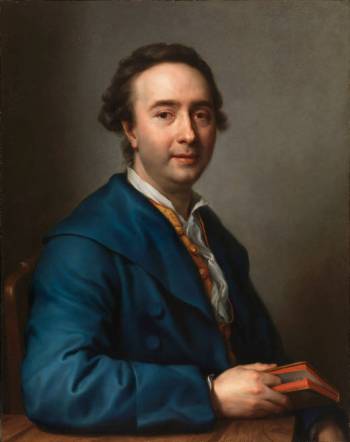
Rafael Mengs, José Nicolás de Azara, oil on panel, 77 x 61.5 cm, 1774 (Madrid, Museo Nacional del Prado)
To mark the Museum’s recent acquisition of one of Mengs’s finest portraits, his Portrait of José Nicolás de Azara, the Prado has recreated the friendship and close collaboration between the Neo-classical painter and his sitter, a leading exponent of the Spanish Enlightenment. This small exhibition, on display in Room 38 of the Villanueva Building until 13 October, consists of 24 works – paintings, sculptures, prints, medals and books – from the Museum’s own holdings or loaned from private collections. The addition of this work to the Prado’s collections will enrich the Museum’s holdings of 18th-century paintings and add to its group of portraits by Mengs.
The recent acquisition by the State and its entry into the Prado of the remarkable Portrait of José Nicolás de Azara, painted in 1774 by Anton Raphael Mengs, has led to the organisation of this small exhibition, which evokes the friendship and close collaboration that existed between the two men: Mengs, the
Neoclassical painter from Bohemia, and Azara, one of
the leading names of the Spanish Enlightenment.
Portrait of José Nicolás de Azara by Mengs
This intimate and strikingly simple image, painted in Florence in early 1774, is an outstanding example of Mengs’s particular classicism and is considered one of his finest portraits. It is also important due to the identity of the sitter, who was one of the most prominent representatives of the Spanish Enlightenment.
Mengs’s portrait conforms to the taste of the time in its use of a pure Neo-classical mode, of which the artist was one of the principal exponents. Azara is depicted with a sublime dignity and naturalness that suggest his intellectual integrity. He has none of the accessories normally used to evoke power and authority but is portrayed with a psychological depth that reveals his character. Particularly striking is his lyrical expression, with its slight smile conveyed through the “gentle movement of the mouth and eyes” that Azara considered the Ancient Greeks to have used to represent the movements of the soul. His expression transmits his friendship with Mengs, his sensibility and his passion for literature. The latter is also indicated by the book that he holds, which he momentarily sets aside in order to focus on the artist with a spontaneity of the kind newly fashionable in 18th-century portraits.
The Exhibition
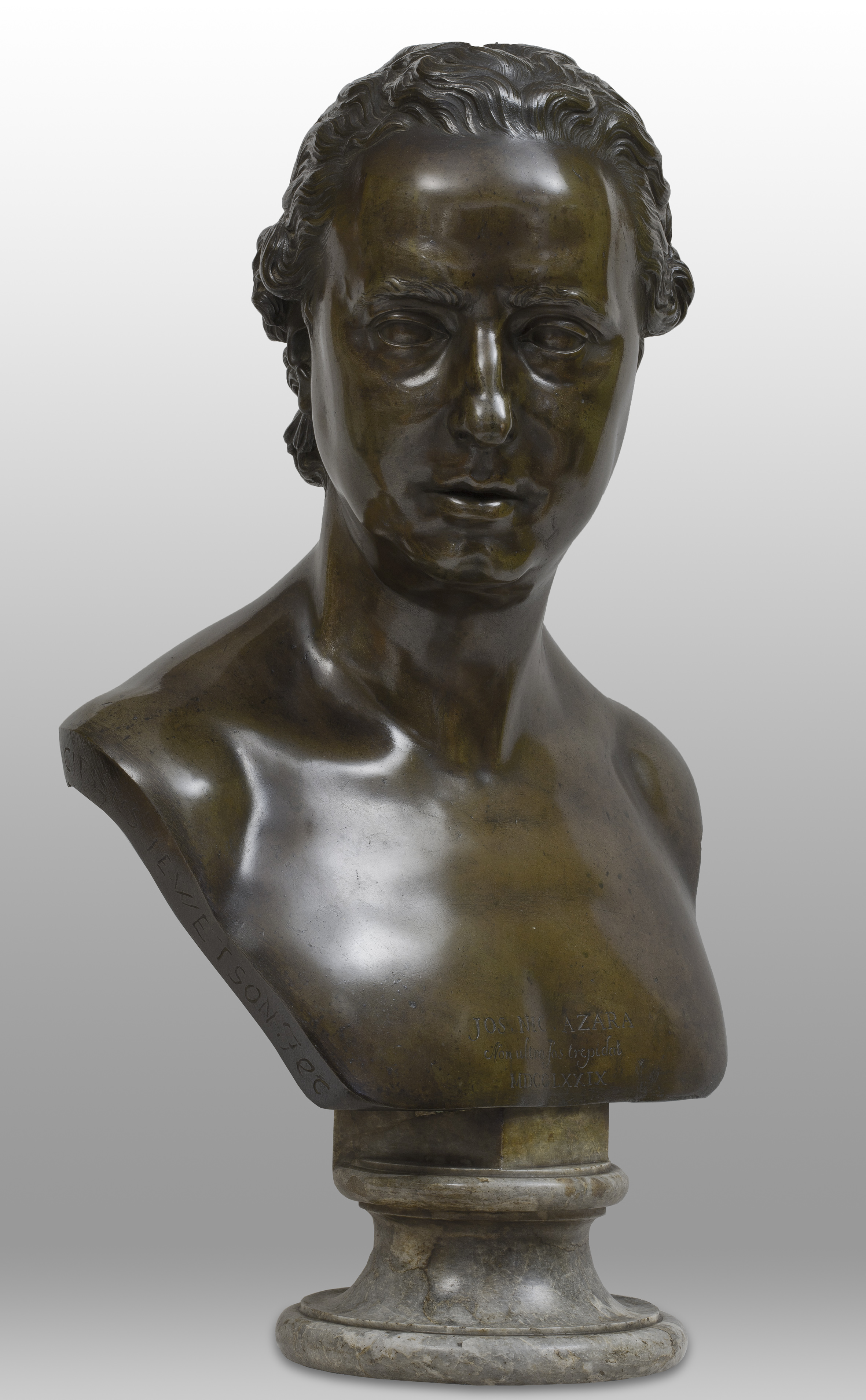
Christopher Hewetson, José Nicolás de Azara, bronze, 52 x 39 x 29 cm, 1779 (Private collection)
The exhibition focuses on the friendship between Mengs and Azara, the affinities between their aesthetic ideas and their close artistic collaboration. It also looks at the way they were depicted in portraits, Azara’s collecting activities, and his role in the promotion and dissemination of Mengs’s works.
In addition to the recently acquired painting, other eloquent proofs of the friendship between the artist and his patron are the two bronze busts of Azara and Mengs of 1779 by the Irish sculptor Christopher Hewetson. The exhibition also includes a Self-portrait by Mengs (ca.1761–1765) dating from the time he first met Azara and their collaboration on the production of a medal to commemorate the marriage of the Prince and Princess of Asturias, which is also on display. Another later Self-portrait of around 1774–1776 was the primary model for the dissemination of the artist’s image in Spain. It is present here through a copy in pastel by Mengs’s daughter, Ana María, and a print after it by Ana María’s husband, Manuel Salvador Carmona.
As examples of the affinity between the two men’s aesthetic ideas, the exhibition includes a drawing by Mengs of the classical sculpture of Antinous as Osiris (original in the Vatican Museums), and a print after a drawing by Mengs of one of the mural paintings in the
Villa Negroni.

Christopher Hewetson, Anton Raphael Mengs, bronze, 51 x 38 x 26 cm, 1779 (Madrid, Museo Nacional de Artes Decorativas)
In 1779 Azara initiated an excavation project in Tivoli near Rome. Following the discovery of fifteen portraits of Greek philosophers and poets and other small sculptures in the so-called Villa dei Pisoni, Azara began to collect classical portraits and sculptures, possessing around 70 examples by the end of his life. His collection, which is now divided between the Real Casa del Labrador in Aranjuez and the Museo del Prado, is represented here by sculpted portraits of the poets Homer and Menander, the Epicurian philosopher Hermarcus and the Attic general Miltiades, in addition to a statue of a Dacian from Trajan’s Forum in Rome and one of Fortuna.
Also on display is a copy of the Life of Cicero by Conyers Middleton, edited and translated by Azara and illustrated with prints of sculptures from his own collection. Azara’s role in protecting and disseminating Mengs’s artistic legacy is conveyed in the exhibition through a print of his portrait by Mengs, engraved by Domenico Cunego; a commemorative medal of the “philosopher painter” by Caspar Joseph Schwendimann, in which Azara included his own image; Las Obras de D. Antonio Rafael Mengs, edited and with commentaries by Azara, published in Parma and Madrid in 1780; and the first biography of the artist written in 1780 by Ludovico Bianconi and illustrated with a print relating to Azara’s homage to Mengs after his death when he installed a bust of him by Hewetson in the Pantheon in Rome.
Finally, Azara’s friendship with Napoleon arising from his diplomatic mission of 1796 is documented through two works: a commemorative gold medal issued that year by the Senate in Rome in honour of Azara and his negotiation of the Armistice of Bologna; and a medal with a portrait of Napoleon that commemorates the Peace of Amiens, which Azara signed in 1802 as the representative of the Spanish monarch.
Stephen Schröder and Gudrun Maurer, Mengs & Azara: El Retrato de una Amistad (Madrid: Museo Nacional del Prado, 2013), 48 pages, ISBN: 978-8484802648, 10€.
The exhibition is accompanied by an essay-catalogue written by the curators, Stephen Schröder, Head of the Department of Classical and Renaissance Sculpture, and Gudrun Maurer, Curator in the Department of 18th-century Spanish Painting and Goya, both at the Museo del Prado.
Azara and Mengs
The relationship between the two men yielded its first artistic results in 1765 when Azara requested the collaboration of Mengs in the design of a medal to commemorate the marriage of the Prince and Princess of Asturias.
José Nicolás de Azara (Barbuñales, 1730 – Paris, 1804) became widely known in Spain from the time of his first appointment as a civil servant in the Government Office in 1760. He subsequently achieved international renown through his diplomatic post in Rome, where he remained for more than thirty years, followed by Paris from 1798 to 1803 as Spanish ambassador at a delicate period in the last decade of the 18th century and early years of the following century. Among Azara’s numerous friendships with leading cultural and political figures were those with Winckelmann, the theoretician of classical art, the famous typographer Bodoni, Pope Pius VI and politicians such as Godoy in Spain and Napoleon and Talleyrand in France.
Anton Raphael Mengs (Aussig, 1728 – Rome, 1779) initially trained with his father Ismael Mengs in Dresden then went to Italy to study the works of the Italian masters including Raphael, Michelangelo, Carlo Maratti, Correggio, the Carracci, and Titian. In 1751 he was appointed painter to the privy chamber by the Elector of Saxony, Frederick August II. During his time in Rome from 1752 to 1761, where he met the German archaeologist Johann Joachim Winckelmann, Mengs evolved the theories that formed the basis of his writings on ideal beauty and the recovery of the perfection of art through the study of the great models of the ideale classico. After painting the fresco of the Parnassus in the Villa Albani, which can be considered the embodiment of Neo-classical art, Mengs was summoned to Madrid by Charles III, the Elector of Saxony’s son-in-law, to supervise the decoration of the Royal Palace.
Appointed painter to the privy chamber in 1766, he introduced the new artistic trends into Spain and supported Spanish painters such as Maella, the Bayeu brothers and Goya. Due to poor health, Mengs returned to Rome in 1769. As a commission from Charles III, in 1770 in Florence he painted the portraits of the families of the Grand Dukes of Tuscany (Museo Nacional del Prado), at which point he made plaster casts of the most important classical and Renaissance sculptures in their collection, which he used for teaching purposes. In Rome the artist was appointed director of the Academy of Saint Luke and received important commissions for paintings for the Museo Clementino and the basilica of Saint Peter’s. Having returned to Madrid in 1774 he went to Rome again in 1776, where he died of tuberculosis in 1779. Mengs’s output encompasses history paintings, religious works, frescoes on religious, mythological and allegorical subjects, and an important group of portraits.
A checklist of the 24 works on display is available at the end of the press release.
Exhibition | Anton Graff: Faces of an Era
The exhibition opened last weekend on the two-hundredth anniversary of the artist’s death (22 June 1813). From the Museum Oskar Reinhart:
Anton Graff: Gesichter einer Epoche
Museum Oskar Reinhart, Winterthur, 22 June — 29 September 2013
National Gallery in Berlin, 25 October 2013 — 23 February 2014
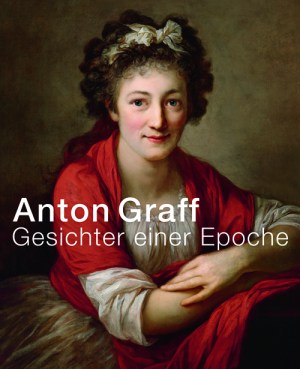 Anton Graff, who was born in Winterthur, was the most important portrait painter in the German-speaking world around 1800. He influenced the image of the bourgeoisie and nobility and the image of poets and thinkers on the brink of Modernism like no other. When he died in 1813, he left behind around 1800 portraits depicting a panorama of transitioning European society.
In celebration of the 200th anniversary of his death, the Museum Oskar Reinhart in Winterthur and the National Gallery in Berlin are honouring the work of Anton Graff in a comprehensive exhibition for the first time in 50 years. After a first stop at the Museum Oskar Reinhart from 22 June to 29 September 2013, the exhibition will be able to be seen in the National Gallery in Berlin between 25 October 2013 and 23 February 2014. The exhibition and the richly illustrated catalogue, which will be published by the Munich-based Hirmer Publishers, came about thanks to the cooperation of both institutions.
Marc Fehlmann and Birgit Verwiebe, eds., Anton Graff: Gesichter einer Epoche (Munich: Hirmer Publishers, 2013), 336 pages, ISBN: 978-3777420509, 40€.
◊ ◊ ◊ ◊ ◊
From Berlin’s Alte Nationalgalerie:
Bis in das Innere der Seele“ zu schauen, darin bestand, den Worten des Philosophen Johann Georg Sulzer zufolge, die Meisterschaft des großen Porträtisten Anton Graff. Der überaus produktive Künstler zählt zu den herausragenden Bildnismalern des späten 18. und frühen 19. Jahrhunderts. Sein größtes Verdienst war, die Berühmtheiten seiner Epoche zu porträtieren. Ihm ist das Panorama des deutschen Geistes zu danken, das die Bildnisse der bedeutendsten Dichter und Denker umfasst, wie etwa Lessing, Nicolai, Mendelssohn, Sulzer, Wieland, Gellert, Herder und Schiller.
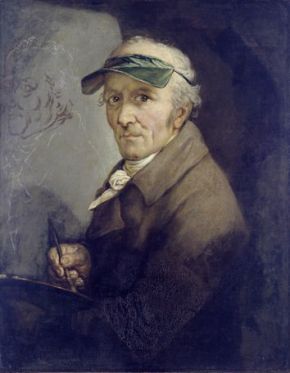
Anton Graff, Self-portrait with the Green Eye-shade, 1813 (Staatliche Museen zu Berlin, Nationalgalerie)
Graff wurde 1736 in Winterthur geboren und nahm dort seinen ersten Kunstunterricht. In Augsburg, Ansbach und Regensburg bildete er sich weiter. 1766 – 30jährig – wurde er in Dresden kurfürstlich-sächsischer Hofmaler und Mitglied der Akademie. Regelmäßig führten ihn Reisen nach Berlin, Leipzig und in die Schweiz. Gegen Ende seines Lebens wurde Graff gleichsam zu einer Symbolfigur für den Kreis junger Romantiker in Dresden. 1813, mit 76 Jahren, starb der Maler.
Graff hat seine Zeitgenossen nicht im Gestus der Repräsentation festgehalten. Vielmehr lag ihm daran, das Wesen des Einzelnen auszuloten, seine Individualität zu entdecken, seine seelischen und geistigen Qualitäten wiederzugeben. Auch heute noch spricht die innere Gestimmtheit der aufgeklärten geistigen Elite in Deutschland unmittelbar aus Graffs meisterhaften Werken. Mit Bildnissen von Königen und Fürsten, vom aufstrebenden Bürgertum, von Staatsmännern, Gelehrten, Künstlern, Kaufleuten, Geistlichen schuf er eine Galerie der deutschen Gesellschaft an der Schwelle zur Moderne.
Ein halbes Jahrhundert hat es keine Ausstellung zum Werk Graffs gegeben. Nun, anlässlich des 200. Todestages, wird sein Werk wieder umfassend präsentiert.
Die Retrospektive „Anton Graff. Gesichter einer Epoche“ entstand in Kooperation mit dem Museum Oskar Reinhart, Winterthur. Dort sind rund 80 Werke vom 22. Juni bis 29. September 2013 zu sehen. In der Alten Nationalgalerie Berlin wird die Ausstellung anschließend in erweiterter Form mit rund 140 Werken vom 25. Oktober 2013 bis 23. Februar 2014 gezeigt.
Reviewed | Extravagant Inventions
Recently added to caa.reviews:
Wolfram Koeppe, Extravagant Inventions: The Princely Furniture of the Roentgens (New York: Metropolitan Museum of Art, 2012), 304 pages, ISBN: 978-0300185027, $75.
Reviewed by Michael Yonan; Department of Art History & Archaeology, University of Missouri; posted 6 June 2013.
Once in a while an exhibition comes along that achieves many things. It illuminates past and present, and does so by creating a viewing experience both beautiful and instructive. All the better when such an exhibition also brightens up a blind spot in the history of art. The exhibition at the Metropolitan Museum of Art entitled ‘Extravagant Inventions: The Princely Furniture of the Roentgens’ achieved this. Curated by Wolfram Koeppe, Maria Kellen French Curator of European Decorative Arts, the show was a monographic investigation of father-and-son furniture makers Abraham (1711–1793) and David Roentgen (1743–1807), whose workshop in the German town of Neuwied produced furniture for the European elite between 1743 and 1800. By my estimation this was the decorative arts show of the decade, an educationally illuminating and utterly enjoyable museum experience whose rewards far
exceeded, in the words of a colleague of mine, the
opportunity to look at ‘old desks’. . . .
The full review is available here» (CAA membership required)
Exibition | Allan Ramsay: Portraits of the Enlightenment
From The Hunterian:
Allan Ramsay: Portraits of the Enlightenment
The Hunterian Art Gallery, Glasgow, 13 September 2013 — 5 January 2014
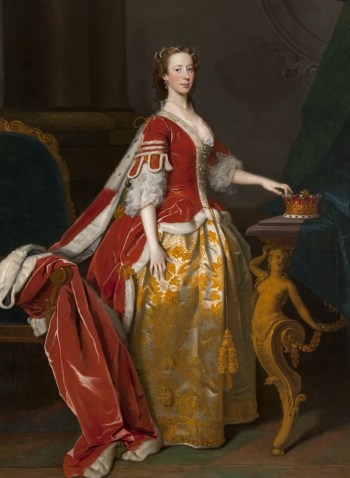
Allan Ramsay, Lady Anne Campbell, Countess of Strafford, 1743 (Glasgow: The Hunterian)
In 2013 The Hunterian will stage a major new exhibition dedicated to one of Britain’s most accomplished 18th-century painters. Allan Ramsay (1713-1784) is best known as a portrait painter whose elegant style set him apart from other portraitists of the time. Born in Edinburgh, his career took him from a small Scottish clientele to the Hanoverian court of King George III. Away from his studio, Ramsay was in close contact with a number of influential figures, and his published writing includes works on taste, politics and archaeology. The exhibition centres on a selection of portraits from across Ramsay’s thirty years as a painter and also features drawings, watercolours, published books, pamphlets, letters and other materials which demonstrate Ramsay’s fascinating place in the intellectual and cultural life of Edinburgh, London, Paris and Rome in the mid 18th century. The exhibition also includes key loans from UK public and private collections and new research, examining the intellectual context in which Ramsay painted a number of his most important portraits, including that of Hunterian founder Dr William Hunter.
◊ ◊ ◊ ◊ ◊
From ArtBooks.com:
Mungo Campbell, ed., Allan Ramsay: Portraits of the Enlightenment (New York: Prestel, 2013), 200 pages, ISBN: 978-3791348780, $60.
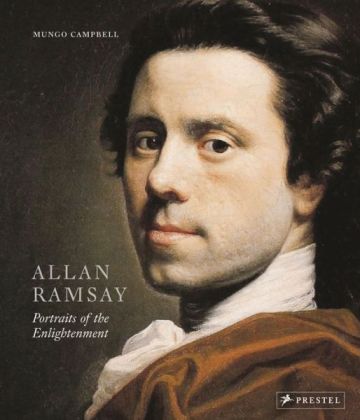 Allan Ramsay’s accomplished canvases and refined drawings offer us some of the defining portraits of the Enlightenment. He was as well equipped to offer a deep sense of engagement with his Enlightenment sitters through his intellectual and cultural upbringing as he was trained to create elegantly constructed paintings through his extended education as a painter in Italy. Establishing himself in London and Edinburgh, Ramsay was admired for his understanding of contemporary political, cultural, and intellectual issues, as well as for his portraits of key protagonists in these debates. This beautiful volume brings together Ramsay’s most celebrated sitters, such as Rousseau, Hume, and William Hunter, along with numerous drawings and prints to consider his critical role in the British Enlightenment. Many of the artist’s rarely seen portraits of women are included. Alongside exquisite reproductions, the volume presents fascinating new research exploring the unique sensitivity of Ramsay’s
painting, the development of his technique, and
familial influences on his work.
New Book | Delftware in the Fitzwilliam Museum
From Philip Wilson’s current catalogue:
Michael Archer, Delftware in the Fitzwilliam Museum (London: Philip Wilson Publishers, 2012), 464 pages, ISBN: 978-1781300022, £55 / $95.
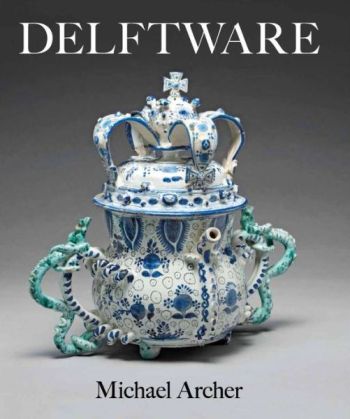 This complete catalogue of the English and Irish delftware in the Fitzwilliam Museum, Cambridge, reveals much that is beautiful and unusual. The greater part of the collection was bequeathed by Dr J.W.L. Glaisher in 1928, and much of it is little known. A detailed publication has long been overdue, and 588 items are illustrated here in colour, many with multiple views. The strength of Dr Glaisher’s collection is the English earthenware of the seventeenth and eighteenth centuries, particularly delftware: no better assemblage has ever been made by a single collector. He amassed objects with great academic rigour over a period of more than thirty years, concentrating particularly on dated pieces while always exercising a discriminating and aesthetical eye. Michael Archer’s catalogue provides details of date and place of manufacture, size, body, glaze, decoration and provenance with a full discussion where appropriate.
Julia Poole has contributed a fascinating chapter with much new material on Dr Glaisher’s life and the extraordinary breadth of his collecting interests. There is also a general introduction to delftware, including a description of the manufacturing process; further sections give indexes and exhaustive information on all the works. This book is an essential addition to the library of all scholars, collectors,auction rooms and dealers in the field and invaluable to those members of the public with an interest in the history of English pottery generally and delftware in particular.
Michael Archer, O.B.E, M.A., F.S.A. is a former Keeper of the Ceramics Department of the Victoria and Albert Museum where he becamethe acknowledged expert on English delftware. He has written numerous articles and books on ceramics, culminating in Delftware: The Tin-Glazed Earthenware of the British Isles, a catalogue of the collections inthe Victoria and Albert Museum, published in 1997.










leave a comment