Mount Vernon Symposium | Decorative Arts in the French Atlantic World

French porcelain tea and coffee service made for George and Martha Washington, and gifted by the Comte de Custine de Sarreck, ca. 1782.
◊ ◊ ◊ ◊ ◊
From Mount Vernon:
‘Very elegant & much admired’: Decorative Arts in the French Atlantic World
George Washington Presidential Library, Mount Vernon, Virginia, 2–4 June 2023
After the American Revolution, George Washington resolved that he would no longer “send to England (from whence I formerly had all my goods) for anything I can get upon tolerable terms elsewhere.” He instead turned to the United States’ greatest ally, France, where he found the furniture, ceramics, textiles, and decorative objects to be “very elegant” and “much admired.”
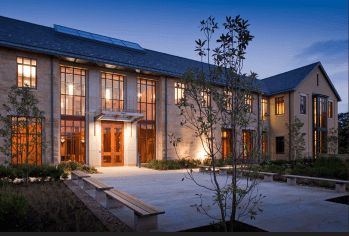
The symposium will take place at the George Washington Presidential Library at Mount Vernon, in Virginia. The library opened in 2013.
The 2023 Mount Vernon Symposium will examine George and Martha Washington’s adoption of the French taste, as a catalyst to further explore the complex interchange of culture, decorative styles, and objects in the French-Atlantic World. Join leading curators and historians as they examine the diffusion of French style, from the Ancien Régime through the French Revolution to the French Empire, and from Paris to London, Philadelphia, Port-au-Prince, and New Orleans, to 20th-century Los Angeles. In-person participation cost is $400 ($375 for members and donors), which includes all lectures, meals, and tours. Virtual participation (in real-time or through recordings available until 4 July 2023) is $40.
F R I D A Y , 2 J U N E 2 0 2 3
1:00 Registration
1:30 Welcome and Introductions
1:45 The Garde-Meuble de la Couronne: From its Creation to Revolutionary Sales — Stéphane Castelluccio
The Garde-Meuble de la Couronne was the administration in charge of furnishing the apartments of the members of the royal family in the residences of the French sovereign. King Henry IV created it in 1604 as part of his policy to reorganize the kingdom after the Wars of Religion. This talk will present the management, exercised by only three different families during a century and a half, as well as the functioning of this administration which took an increasing importance throughout the 18th century. It will explain the changes in its organization during the Revolution, and end with the reasons, principles and organization of the revolutionary sales of the Crown’s furniture, decided by the new Republic from 1793.
2:45 ‘A little French ease adopted would be an improvement”: Lessons in Sociability and Decorative Arts from 1780s Paris — Amy Hudson Henderson
After the American Revolution, an increasing number of American diplomats, businessmen, students, artists, and tourists found themselves in Paris mixing amongst themselves in the upper echelons of French society. It was a heady time, ripe with opportunities for forging new relationships and identities. Here, in 1784, a young Nabby Adams observed that Americans would do well to adopt “a little French ease” as an antidote to the stiffness and reserve that seemed to mar their social circles back home. What did she mean? This paper answers that question by exploring extant correspondence and household furnishings. By focusing on the acquisitions and behaviors of the prominent Americans who spent time in Paris during the 1780s, we deepen our understanding of the role of French decorative arts in both sociability and diplomacy and discover why these objects appealed to George and Martha Washington.
3:45 Break
4:00 Adam T. Erby – TBA
5:00 Henry Auguste: A Goldsmith in Revolutionary Paris — Iris Moon
This talk explores the unlikely career trajectory of the Parisian goldsmith Henry Auguste (1759–1816) during the French Revolution, drawing on new research published in Luxury after the Terror. Crafty, wily, and untrustworthy, but obviously talented with a hammer and chisel, Auguste started off as an apprentice to his well-known goldsmith father, who worked for Louis XVI. Beyond the French court, Auguste acquired a number of prestigious clients, including the British connoisseur William Beckford, for whom he fashioned an ewer made out of pure gold. Just as the volatile politics of the French Revolution sought to overturn the values of the Ancien Régime in favor of new ones, Auguste sought to refashion himself as more than a goldsmith during a moment of tremendous opportunity—and great risk.
6:30 Reception
7:15 Dinner
S A T U R D A Y , 3 J U N E 2 0 2 3
7:30 Breakfast
8:45 Welcome and Introductions
9:00 Emerging Scholars’ Panel
10:00 Break
10:15 Revolutionary Things — Ashli C. White
During the late 18th century, a wide range of objects associated with the American, French, and Haitian revolutions crisscrossed the ocean. Furniture and ceramics; clothing and accessories; maps, prints, and public amusements—all circulated among diverse actors who wrestled with the political implications of these items. In this presentation we will examine the unique ways that transatlantic revolutionary things shaped how people understood contested concepts like equality, freedom, and solidarity. And, we will explore how these objects became a means through which individuals—enslaved and free, women and men, poor and elite—promoted, and sometimes tried to thwart, the realization of these ideals on the ground.
11:15 À la française: Designing French North America, 1700–1820 — Philippe Halbert
At its height, New France extended from eastern Canada, across the Great Lakes, and down the Mississippi River to Louisiana. Although its population remained small, French North America was no less dynamic in terms of artistic originality or creative output. Even after New France’s fall in 1763, areas of French settlement held fast to creole syntheses of Gallic aesthetics and vernacular tradition. This presentation will introduce a cross-section of objects and buildings whose stories reveal the vibrant legacies of French cultural identity as it took root in North America before 1800.
12:15 Lunch
1:45 An American in Paris: Walt Disney and France — Wolf Burchard
Walt Disney was about to turn 17 when he first set foot in France in December 1918. The buildings, the art and the atmosphere had a lasting impact on the animated world he would go on to create. Inspiring Walt Disney: The Animation of French Decorative Arts, an exhibition shown at the Metropolitan Museum of Art in New York, the Wallace Collection in London and the Huntington Art Gallery in Pasadena, brought together the seemingly disparate worlds of 20th-century hand-drawn animation and 18th-century decorative arts, which upon closer inspection reveal remarkable similarities. Wolf Burchard will relate how the exhibition explored Disney’s fascination with European art and the impact it had on the studio’s output, especially the three French fairytales retold in hand-drawn animation: Cinderella (1950), Sleeping Beauty (1959), and Beauty and the Beast (1991).
2:45 Break
3:15 A Passion for Porcelain: Sèvres in the Wallace Collection — Helen Jacobsen
Ever since the early days of its development in the mid-18th century, the porcelain produced at the Sèvres Manufactory outside Paris has been a magnet for collectors, attracted by its vibrant colours, rich gilding, and innovative designs. The Sèvres collection at the Wallace Collection was put together in the 19th century, but its collectors were no less beguiled by its flamboyant luxury and exquisite craftsmanship. This lecture will follow the evolution of some of the most celebrated pieces ever produced at the manufactory and will explore the passions that gave shape to what is now one of the finest collections of Sèvres porcelain in the world, a testament to its enduring fascination.
4:15 James Monroe’s Use of French Furnishings in the White House and the Restoration of the Bellangé Suite — Melissa Naulin
Following its burning during the War of 1812, the President’s House required almost all new furnishings before it could reopen for President James Monroe’s use in 1817. Relying on his extensive knowledge of fashionable home goods gained through his two European diplomatic appointments, Monroe worked to secure a large number of these new furnishings from Paris. My talk will focus on these government-purchased French goods, many of which remain amongst the most-treasured objects in the White House collection. I will also detail the recent effort to restore the furniture suite made by Pierre Antoine Bellangé and purchased for Monroe’s “large oval room” (today’s Blue Room) to its original splendor.
5:45 Reception
7:00 Dinner
S U N D A Y , 4 J U N E 2 0 2 3
9:00 Breakfast
9:30 From West to East: Huguenot Craft Communities in London’s Soho and Spitalfields — Tessa Murdoch
Drawing on research undertaken for her recent publication, Tessa will speak about the formation of Huguenot artisan communities in Soho and Spitalfields. Leading personalities, include engraver Simon Gribelin, resident in West London who married into the Spitalfields based Mettayer family. The complex history of the Courtauld family, established in West London, gravitates from silversmithing in Soho and the City to textile production in Spitalfields and beyond. Craft communities centered on conformist and non-conformist French speaking churches and were gradually assimilated into Anglican churches. Huguenot refugees developed mutual support systems, friendly societies, the French Hospital which still flourishes as almshouses and the Westminster French Protestant Charity School. These Huguenot charities document the contribution of Huguenot craftsmen and women to British culture.
10:15 Forging a New Vernacular: The Transformation and Triumph of a French Ébéniste in Federal New York — Peter M. Kenny
Charles-Honoré Lannuier (1779–1819) arrived in New York in the spring of 1803 a thoroughly-trained Parisian ébéniste who, according to his inaugural newspaper advertisement, had “worked at his trade with the most celebrated Cabinet Makers of Europe.” Well-versed in the elegant forms of the late Louis XVI period, which still held sway during the earliest period of his training in Paris, Lannuier’s design vocabulary at the time of his arrival also included the harder edged yet brilliant neoclassical style of post-Revolutionary France known as Directoire (1795–99), and the Consulat (1799–1804), a heavier more monumental style featuring the more archaeologically correct forms of le goût antique. This was Lannuier’s Parisian stylistic legacy. How he transformed this legacy, ultimately becoming one of the two principal leaders of the New York school of cabinetmaking alongside his greatest rival, Duncan Phyfe, is an inspiring and uniquely American story.
11:00 Break
11:15 Elizabeth Patterson Bonaparte and the Material Creation of an Imperial Legacy — Alexandra Deutsch
Elizabeth Patterson Bonaparte (1785–1879) is often remembered for her short, but remarkable marriage in 1803 to Napoleon’s youngest brother, Jerome Napoleon Bonaparte. Although their mésalliance resulted in divorce, their union set her and future generations of American Bonapartes on a path that allied them with France and an imperial legacy. Drawing from thousands of documents and a collection of more than 600 objects associated with the Bonapartes, this lecture charts the history of Elizabeth’s long life during which she meticulously created and documented a material world tethered to France. From her fashion to her silver, jewels, and furniture, Elizabeth’s self-presentation proclaimed her French connection. Her obsessive documentation of her possessions reveals a fascinating and complex narrative that spans multiple generations and reaches far beyond Baltimore.
Conference | Shifting Tides: Art in the 18th-Century Caribbean

A New & Correct Map of the Trading Part of the West Indies: Including the Seat of War between Gr. Britain and Spain: Likewise the British Empire in America, with the French and Spanish Settlements adjacent Thereto: Adorn’d with Prospects of ye Most considerable Towns, Ports, Harbours &c. therein Contained from the Latest & Best Observations (London: Printed for and sold by Henry Overton, at the White Horse without Newgate, 1741), “Dedicated to the Honble. Edward Vernon Esqr., Vice Admiral of the Blue and Commander in chief of all his Majs. ships in the West Indies, by H.O.”
◊ ◊ ◊ ◊ ◊
From Winterthur:
Shifting Tides: Art in the 18th-Century Caribbean
Online and in-person, Winterthur Museum, Garden & Library, Wilmington, Delaware, 20–21 April 2023
Join leading and emerging scholars, museum professionals, and community partners as we rethink narratives surrounding colonial art in the Caribbean region. Shifting Tides: Art in the 18th-Century Caribbean aims to reimagine the relationship between American historical collections in public institutions and the communities they serve. The conference is made up of an in-person symposium followed by a virtual study day, with livestreamed roundtable discussion and an examination of paintings in the Winterthur collection. The conference is free, with a box lunch available for purchase. Register here»
Shifting Tides centers the Caribbean region to explore new pathways in the history of eighteenth-century art. Histories of colonial and viceregal American art tend to privilege art produced in continental spaces as they came to be organized as nation states, overlooking the interrelatedness of early Caribbean and continental colonies, and the significance of the Caribbean region.
The Caribbean basin, spanning the coastal areas as well as the islands which lie in the Caribbean Sea, was a central space for the making and circulation of European wealth. It was a space of competition between empires; a space of resistance against imperial exploitation; a space of porous boundaries that facilitated inter-imperial crossings and exchanges between creators and their patrons. This interconnectedness had a profound impact on artistic creation in the early Americas. Artists like José Campeche, Peter Bentzon, John Greenwood, Josef Francisco Xavier de Salazar y Mendoza, Antonio José and Juan José Landaeta, and Agostino Brunias, worked outside and across borders; between social classes and races; and beyond sovereignties which historical narratives have organized for the eighteenth century. Abundant evidence also shows that John Singleton Copley, Luis Paret y Alcázar, and Benjamin West’s careers were profoundly impacted by their patrons’ connections to the Caribbean.
Shifting Tides brings together scholars, conservators, community partners, artists, and curators to discuss cutting edge scholarship and initiatives that explore the significance of the art created in and in relation to the Caribbean. We will explore new understandings of art making between American spaces, and reflect on their impact on how institutions frame colonial art in the Americas.
T H U R S D A Y , 2 0 A P R I L 2 0 2 3
8.00 Registration and coffee
8.30 Welcome
• Chris Strand, Charles F. Montgomery Director and CEO, Winterthur
• Alexandra Deutsch, John L. and Marjorie P. McGraw Director of Collections, Winterthur
8.40 Panel 1 | Sources and Perspectives: Rethinking the 18th-Century Caribbean
Scholars will introduce new perspectives on comparative colonialism in the Americas, on the Caribbean, and the Atlantic world and their role in renewing our understanding of the Americas in the eighteenth century. The panel will also reflect on the ways the field of United States American and Latin American art history have engaged with this recent historiography.
• José Luis Lazarte Luna (The Metropolitan Museum of Art)
• Christelle Lozère (Université des Antilles)
• Pedro Luengo (Universidad de Sevilla)
• Eveline Sint Nicolaas (Rijksmuseum)
11.00 Panel 2 | Centering the Caribbean
Panelists will present new sources that are currently employed by art historians, scholars of material culture, and conservators in their research on eighteenth-century art and material culture. The speakers will discuss how their sources have been key to the emergence of new ways of seeing the nature of artmaking in American colonies, the mobility of creators, the role of enslaved individuals, knowledge transfer, and mixed-race artists and artisans.
• Emily Casey (University of Kansas)
• Janeth Rodríguez Nóbrega (Universidad Central de Venezuela)
• Sophie White (University of Notre Dame)
12.30 Lunch
1.30 Panel 3 | Beyond Boundaries: Artists and Creators
This panel will focus on individual-centered narratives emerging from research on creators, as well as curatorial practice. The speakers will talk about their projects and discuss how such individual-centered approaches present models for shifting our approach to what American art as a field of study should encompass.
• Alexis Callender (Smith College)
• Iraida Rodríguez-Negrón (Museo de Arte de Ponce)
• Marc Vermeulen (National Archives, UK)
• Michael Wilson (Temple University)
3.45 Panel 4 | Color and Artistic Creation
This panel will center questions of race and colorism in Caribbean art. Speakers will discuss research and projects that address the various roles that enslaved people and free people of African and Indigenous descent played in artmaking in the Caribbean, as well as their relationships with artistic practices in continental colonies.
• Mark Aronson (Yale University)
• Jorge Rivas Pérez (Denver Art Museum)
• Lucia Noor Melita (Victoria and Albert Museum)
F R I D A Y , 2 1 A P R I L 2 0 2 3
9.00 Study Session
Physical examination and discussion of colonial paintings in the Winterthur collection, highlighting their Caribbean connections. The selected group of paintings include those by John Greenwood, Benjamin West, William Williams, John Smibert, John Wollaston, and Robert Feke.
• Stephanie Delamaire (Carnegie Museum of Art)
• Matthew Cushman (Winterthur Museum, Garden & Library)
• Mina Porell (The Barnes Foundation)
* Due to space constraints, the Study Day will be filmed and available online only; registrants will receive further information with a link to the recording.
12.00 Lunch Break
2.00 Livestream Roundtable | Research, Methodologies, and Institutional Initiatives
Concluding the conference, this online roundtable will bring together scholars, museum and historic site administrators, and community partners who have contributed to initiatives that are creating spaces for Caribbean art in their institutions and communities. They will discuss new trends and opportunities for an expanded view of the significance of eighteenth-century Caribbean art in various regional and national institutions.
• Rocío Aranda-Alvarado (Ford Foundation)
• Rafael Damast (Taller Puertorriqueño)
• Wim Klooster (Clark University)
• Louis Nelson (University of Virginia)
Speaker biographies are available here»
Symposium | Spain and the Hispanic World

Giovanni Vespucci, World Map, 1526, ink and colour on four sheets of parchment, 85 × 262 cm
(New York: The Hispanic Society of America)
◊ ◊ ◊ ◊ ◊
This week at the RA, in connection with the exhibition Spain and the Hispanic World, on view until 10 April 2023:
Spain and the Hispanic World Symposium: Cross-Cultural Exchanges
Royal Academy of Arts, London, 24 March 2023
The Royal Academy of Arts will host an academic symposium exploring the global exchange of Spanish art and culture—from the Islamic legacy of Al-Andalus to the transatlantic connections between Spain and Latin America. This interdisciplinary symposium, timed to coincide with our exhibition of treasures from the Hispanic Society Museum & Library, explores current academic perspectives on the histories of cultural exchange surrounding the Spanish and Latin American worlds.
We begin by considering material cultures through the movement of objects, tracing global exchange in the contexts of empire and colonialism. We move on to consider global imperialism through the lens of faith, studying religious art and objects. From the society of Al-Andalus to the history of Spanish Catholicism in Mexico, we look beyond the export of Spanish culture, to the influences and exchanges that were simultaneously being brought back into Iberia. Finally, we explore the legacies of Spanish art and literature in Latin America, investigating the layers of cultural difference caused by colonialism, as well as using a materials-based approach to investigate how these layers appear in objects and artworks. The symposium concludes with an artist in-conversation with Ana Maria Pachecho, exploring how the themes and ideas discussed throughout the day are still relevant to contemporary artist practice.
This intensive one-day symposium is a key moment in driving forward conversations and discussions on the art of the Latin world and is open to scholars, enthusiasts, and anyone wanting to know more about this groundbreaking exhibition. Ticket fees (£45 / £15) include exclusive early-morning access to the RA’s exhibition Spain and the Hispanic World starting at 8:30am and a drinks reception at 6:00pm.
This will be the first iteration of an annual symposium made possible by the Armando Garza-Sada Sr. Endowment for the Arts.
S P E A K E R S
Andrew M. Beresford is Professor of Medieval and Renaissance Studies at the University of Durham, and has published widely on Iberian art and literature, focusing principally on the cults of the saints and the signifying potential of the human body. His most recent book (2020) offered a study of the flaying of St Bartholomew.
Caroline Egan is Assistant Professor of Colonial Latin American Literature in the Department of Spanish and Portuguese at Northwestern University. Her research examines the portrayal of Indigenous languages in the sixteenth and seventeenth centuries, focusing especially on works composed in and about Nahuatl, Quechua, and Tupi and their circulation in the transatlantic world. Dr Egan has published in the Bulletin of Hispanic Studies, Hispanic Review, and Latin American Literature in Transition Pre-1492-1800, edited by Rocío Quispe-Agnoli and Amber Brian (Cambridge University Press).
Akemi Luisa Herráez Vossbrink is a Researcher at Nicolás Cortés Gallery in Madrid, an Old Master gallery focusing on Spanish, Italian, and Latin American art from the fifteenth century to the early twentieth century. She has been the Enriqueta Harris Frankfort Curatorial Fellow at the Wallace Collection, as well as a curatorial fellow at the National Gallery and the Meadows Museum. Her doctoral thesis at Cambridge focused on Spanish seventeenth-century artist Francisco de Zurbarán and his reception in the Americas.
Claudia Hopkins is Director of the Zurbarán Centre for Spanish and Latin American Art at Durham University, and Associate Editor of the Getty-funded journal Art in Translation. She has published widely on nineteenth- and twentieth-century Spanish art and curated the exhibition La España romántica. David Roberts y Genaro Pérez Villaamil (Real Academia de Bellas Artes de San Fernando, Madrid, 2021–22). Her forthcoming book discusses Spanish art in relation to attitudes to al-Andalus and Morocco (from Romantic liberalism in the 1830s, to colonial discourse before Moroccan independence in 1956).
IIona Katzew is Curator and Department Head of Latin American Art at the Los Angeles County Museum of Art (LACMA). Her most recent exhibition Archive of the World: Art and Imagination in Spanish America, 1500–1800 (2022) foregrounds the museum’s notable holdings of viceregal art. She was project director and co-curator of Painted in Mexico, 1700–1790: Pinxit Mexici (2017–18), which travelled to the Metropolitan Museum of Art and Fomento Cultural Banamex, Mexico City. She holds fellowships from the Metropolitan Museum of Art, the Getty, and Fulbright. In 2018 she was selected by Artsy as one of the top 20 international curators taking a cutting-edge approach to art history.
Emmanuel Ortega is the Marilynn Thoma Scholar and Assistant Professor in Art of the Spanish Americas at the University of Illinois at Chicago, and a Scholar in Residence at the Newberry Library for 2022–23. Ortega has lectured internationally on images of autos-de-fe, nineteenth-century Mexican landscape painting, and visual representations of the New Mexico Pueblo peoples in Novohispanic Franciscan martyr paintings. Ortega has curated the exhibition Contemporary Ex-Votos: Devotion Beyond Medium, at the New Mexico State University Art Museum.
Adjoa Osei is a Research Fellow at Trinity College, University of Cambridge. She is a cultural historian whose research explores themes that are at the intersection of Performing Arts, Afro-Latin American Studies, and Francophone Studies. Her PhD, from the University of Liverpool, was in Latin American Studies, and her MPhil, from the University of Oxford, was in Portuguese Studies. Her research has been published in journals including Atlantic Studies and the Journal of Romance Studies, and she is a BBC New Generation Thinker.
Gabriela Siracusano is Scientific Researcher at CONICET (National Research Council, Argentina) and Director of the Centro MATERIA at the Universidad Nacional de Tres de Febrero (UNTREF), as well as Chair Professor at the Universidad de Buenos Aires. She has been a Guggenheim Fellow and a Getty Scholar, and has authored books including Pigments and Power in the Andes (London, Archetype, 2011) and Materia Americana (2020) (in co-edition with Agustina R. Romero). She received the 2022 Gratia Artis Award by the National Academy of Fine Arts.
Lucy West is Assistant Curator at Dulwich Picture Gallery, where her focus is on the Spanish and Italian paintings. She was previously Assistant Curator of Paintings at the Royal Collection Trust, London, and has worked across curatorial departments at the Ferens Art Gallery, Hull; the National Gallery, London; and Compton Verney, Warwickshire. Lucy is also completing an AHRC-funded PhD with the National Gallery, the Bowes Museum, and Leeds University, interrogating the roles of art dealers and agents in the market for Old Master paintings in nineteenth-century Britain.
Ana Maria Pachecho is a Brazilian artist who has lived in England since 1973. Pacheco is best known for her dramatic polychrome wooden sculptures. Her work draws upon the rich diversity of Latin American culture with echoes of African art, a reminder of the slave trade’s links with Brazil. She was the National Gallery’s Associate Artist between 1997 and 2000, when she produced the monumental multi-figured sculpture Dark Night of the Soul, inspired by the work of the sixteenth-century Spanish mystic, Saint John of the Cross. Her work has been shown in Cathedrals at Chichester, Norwich, and Salisbury, and most recently at the Galway International Arts Festival in 2022.
Colin Wiggins was Head of Education and Special Projects Curator at the National Gallery. He was responsible for the Associate Artist scheme and worked with artists such as Paula Rego, Peter Blake, and Michael Landy.
ASECS 2023, St. Louis
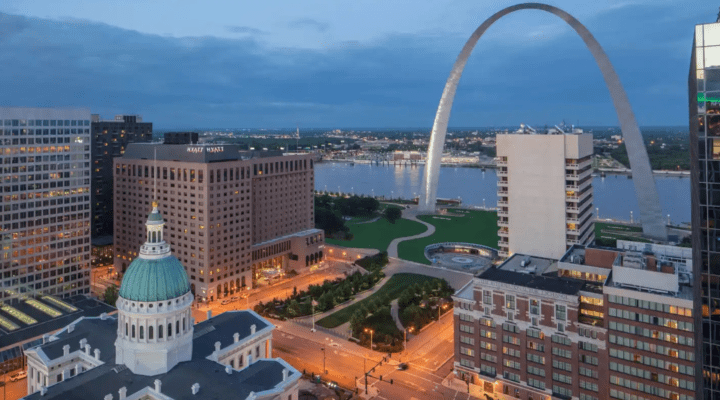
From ASECS:
2023 American Society for Eighteenth-Century Studies Conference
Hyatt Regency at the Arch, St. Louis, 9–11 March 2023
The 53rd annual meeting of the American Society for Eighteenth-Century Studies takes place in St. Louis. HECAA will be represented by the Anne Schroder New Scholars’ Session, chaired by Emily Casey and Amy Torbert, on Friday, starting at 11.30am. In addition to delivering the presidential address on Saturday, Wendy Roworth will chair a tribute session in honor of Christopher Johns on Thursday afternoon. To close out the conference, HECAA has organized a happy hour for Saturday evening. A selection of 18 additional panels is included below (of the 179 sessions scheduled, many others will, of course, interest HECAA members). For the full slate of offerings, see the program.
◊ ◊ ◊ ◊ ◊
T H U R S D A Y , 9 M A R C H 2 0 2 2
Westminster Abbey Revisited
Thursday, 8:00–9:30am, Sterling 9
Chair: Bradford MUDGE, University of Colorado Denver
1. Cedric REVERAND, University of Wyoming, “Westminster Abbey’s Invisible Architect”
2. Laura ENGEL, Duquesne University, “‘She will not allow one to look elsewhere’: Queen Elizabeth I, Westminster Abbey, and the Uncanny Seduction of Wax”
3. David VINSON, Auburn University, “(Re)Making Major John André: Britain’s Revisionary Strategies for Masking Wartime Failures”
◊ ◊ ◊ ◊ ◊
All Things Great and Small: Miniatures and Monstrosities
Thursday, 8:00–9:30am, Sterling 8
Chair: Daniella BERMAN, Institute of Fine Arts, New York University
1. Michelle MOSELEY-CHRISTIAN, Virginia Tech, “Miniature, Microscopy & Magnification: Scale and the Dutch Luxury Dollhouse during the Long 18th Century”
2. Katherine CALVIN, Kenyon College, “Palmyra’s Arch, Reproduced”
3. Blythe C. SOBOL, Nelson-Atkins Museum of Art and Institute of Fine Arts, NYU, “Colonialism in Miniature: John Smart’s Journey to India, 1785–1795”
◊ ◊ ◊ ◊ ◊
Plagier, citer, détourner / Plagiarizing, (Mis)quoting, and Rewriting (Society for Eighteenth-Century French Studies)
Thursday, 9:45–11:15, Sterling 2
Chair: Rudy Le MENTÉOUR, Bryn Mawr College
1. David EICK, Grand Valley State University, “The Original Sin of the Dictionnaire de Trévoux (1704)”
2. Kaitlyn QUARANTA, Brown University, “Between Citation and Censorship: Abridging the Encyclopédie”
3. Ryan BROWN, University of Chicago, “18th-Century ‘Celebrity Autobiography’ and the Plague of Plagiarism: The Case of Voltaire’s Commentaire historique”
4. Anna RIGG, Metropolitan Museum of Art, “Art Criticism as Anecdote: Souvenirs of Sophie Arnould”
◊ ◊ ◊ ◊ ◊
Asia
Thursday, 9:45–11:15, Sterling 8
Chair: Susan SPENCER, University of Central Oklahoma, Emerita
1. Yuefan WANG, University of Illinois Urbana-Champaign, “Landscape into Gardens, Gardens into Landscape: Poetry of the Banana Garden Women in Late-Seventeenth-Century Hangzhou”
2. Laura NUFFER, Colby College, “Beasts and Brides: Tales of Otherkind Marriage in Early-Modern Japanese Trosseaus”
3. Han CHEN, Penn State University, “Trading Aesthetics in the Early 18th Century: The Eccleston Screen and the Transcultural Visual Trope”
4. Lina JIANG, Fordham University, “Naturalizing the ‘Chinese Lady’ in ‘Her New English Garb’: Thomas Percy’s Translation of the Chinese Fiction Hau Kiou Choaan (1761)”
◊ ◊ ◊ ◊ ◊
Special Session, Lightning Round: ‘Sex Objects’ and Unstable Luxury
Thursday, 9:45–11:15, Sterling 9
Chair: Joelle DEL ROSE, College for Creative Studies
1. Mary PEACE, Sheffield Hallam University, “The Divan Club and the Contradictions of Enlightenment”
2. George WILLIAMS, Independent Scholar, “Geisha and Yuna: Bathhouse Culture, Desire, and the Shifting Roles of Women during the Kensai Reforms of the Late 18th Century’”
3. Elena DEANDA-CAMACHO, Washington College, “Condoms and Dildos in 18th-Century Europe: Spain and France”
4. Michelle LYONS-MCFARLAND, Case Western Reserve University, “The Sexiest Silver Ever: Valuation and ‘Virtue’ in Defoe’s Roxana”
◊ ◊ ◊ ◊ ◊
Poetry and the Arts
Thursday, 9:45–11:15, Mills 5
Chair: Amy TORBERT, Saint Louis Art Museum
1. Chip BRADLEY, University of California, Davis, “Phillis Wheatley Peters’ Desire to Look: Ekphrasis and Lyric Interiority”
2. Johannah KING-SLUTZKY, Columbia University, “Poetic Energy and Literature as a Response to Resource Scarcity in the Long 18th Century”
3. Elizabeth GIARDINA, University of California, Davis, “The Portland Vase and the Mysterious Initiations of Erasmus Darwin’s Visual Poetics”
◊ ◊ ◊ ◊ ◊
Roundtable: Performing Challenges to Imperialism
Thursday, 11:30–1:00, Sterling 6
Chair: Kristina STRAUB, Carnegie Mellon University
1. Jean I. MARSDEN, University of Connecticut, “Adaptation and Imperialism”
2. Allison CARDON, College of Wooster, “Samuel Foote’s Nabob and Imperialism Turned Inward”
3. Monica Anke HAHN, Community College of Philadelphia, “Tinsel and Toy Theaters: Decolonizing the British Empire at Home”
4. Lisa A. FREEMAN, University of Illinois Chicago, “Race and the Failures of Imperial Imagination in Edward Young’s The Revenge”
◊ ◊ ◊ ◊ ◊
Rome, Italian Art, and the Catholic Enlightenment: A Tribute to Christopher M.S. Johns (Presidential Session)
Thursday, 4:30–6:00, Regency E
Chair: Wendy Wassyng ROWORTH, University of Rhode Island
1. Carole PAUL, University of California, Santa Barbara, “Rome and the Motivations for Public Art Museums”
2. Jeffrey COLLINS, Bard Graduate Center, “Seeing is Believing: Marchionni and Bergondi at the Crossing of Saint Peter’s”
3. Rebecca MESSBARGER, Washington University St. Louis, “Betwixt Trent and Beccaria: The Pope’s ‘Moderately Modern’ Criminal Justice Reforms”
◊ ◊ ◊ ◊ ◊
Indigenous, Black, Asian, and Mixed-Race Architects and Builders in the Americas
Thursday, 4:30–6:00, Sterling 5
Chair: Luis Gordo PELÁEZ, California State University, Fresno, and Juan Luis BURKE, University of Maryland
1. Luis J. CUESTA, Universidad Iberoamericana, “Labor Force and the Architect’s Self Image: Indios, Mestizos and Criollos during New Spain’s Town Planning under the Bourbon Reform. The Case of ‘D. Ignacio Castera, maestro de architectura’”
2. Cody BARTEET, University of Western Ontario, “Maya Masons, Carpenters, and Masters in 18th-Century Yucatán: Pre-Contact Legacies in the Colonial Era”
3. Sabina DE CAVI, Universidade Nova, Lisboa, “Aleijadinho, creole sculptor-architect from Minas Gerais: Expressionism, Myth, and Artistic Practice in 18th-Century Brazil”
◊ ◊ ◊ ◊ ◊
Making Knowledge in the Atlantic World
Thursday, 4:30–6:00, Mills 3
Chair: Daniella BERMAN, Institute of Fine Arts, New York University
1. Sahai COUSO DIAZ, Vanderbilt University, “Antonio Parra’s Collection: Material Culture, Displays, and Trans-Atlantic Networks”
2. E. Bennett JONES, The Huntington Library, Art Museum, and Botanical Gardens, “The Entire Skin of the Bird: Whooping Cranes, Indigenous Expertise, and Mark Catesby”
3. Jacob EDMOND, University of Otago, “Total Confusion: Making and Confounding Knowledge in 18th-Century Cross-Readings from the Newspaper”
◊ ◊ ◊ ◊ ◊
Amateur Art
Chair: Katherine A. P. ISELIN, University of Missouri
Thursday, 4:30–6:00, Mills 7
1. Fiona BRIDEOAKE, American University, “Inside and Outside at A La Ronde”
2. Brittany LUBERDA, Baltimore Museum of Art, “Paper & Paste, Shell & Hair: The Bonnell Sisters and Craft”
3. Jennifer VAN HORN, University of Delaware, “Flora’s Profile: Enslavement, Resistance, and the Silhouette”
4. Andrea PAPPAS, Santa Clara University, “‘My Will and Pleasure’: Art and Enslavement in Two Massachusetts Pictorial Embroideries, 1756–1758”
◊ ◊ ◊ ◊ ◊
F R I D A Y , 9 M A R C H 2 0 2 2
‘Nature Display’d’: Visualizing the Natural World
Friday, 8:00–9:30am, Mills 3
Chair: Anne Nellis RICHTER, Independent Scholar, and Melinda MCCURDY, Huntington Library, Art Museum, and Botanical Gardens
1. Elisa CAZZATO, Università Ca’ Foscari/NYU, “The Spectacle of Nature: Theatre Sets and Gardens in 18th-Century Paris”
2. Angela ESCOTT, Independent Scholar, “The Environment and Commercial Prosperity Considered in Hannah Cowley’s Scottish Village (1787 and 1813) and Oliver Goldsmith’s Deserted Village (1770)”
3. Dani EZOR, Southern Methodist University, “A Colonial Arboretum: Tropical Hardwoods at the Toilette Table in the French Caribbean and France”
4. Tori CHAMPION, University of St. Andrews, “Boundaries, Borders, and Women’s Naturalisms: Marie-Thérèse Reboul Vien’s Illustrations for the Histoire naturelle du Sénégal, coquillages”
◊ ◊ ◊ ◊ ◊
‘L’homme mêle et confond les climats’: Jean-Jacques Rousseau and the Anthropocene (German Society for Eighteenth Century Studies)
Friday, 9:45–11:15, Regency F
Chair: Jürgen OVERHOFF, Universität Münster
1. Tim ZUMHOF, Universität Trier, Germany, and Nicole BALZER, University of Münster, Germany, “Rousseau’s Critique of the Anthropocene and the Legacy of Enlightenment: A New Materialist Perspective”
2. Célia ABELE, Princeton University, “‘J’aperçois une manufacture de bas’: Industry, Colonies, and Nature in Rousseau’s ‘Seventh Promenade’”
3. Giulia PACINI, William & Mary, “Deforestation and the French Climate Literature of François-Antoine Rauch and Jean-Baptiste Rougier de la Bergerie”
4. James SWENSON, Rutgers University, “A Rediscovered Text by Rousseau on the Notion of Climate”
5. Jason KELLY, Indiana University Purdue University Indianapolis, “Making ‘Nature’ in the Anthropocene”
6. Charlee BEZILLA, George Washington University, “L’art de ‘se circonscrire’: Rousseau on Living in the Anthropocene”
◊ ◊ ◊ ◊ ◊
Anne Schroder New Scholars Session (HECAA)
Friday, 11:30–1:00, Sterling 9
Chair: Emily CASEY, University of Kansas, and Amy TORBERT, Saint Louis Art Museum
1. Kaitlin R. GRIMES, Auburn University, “The Metonymic Colonial Materiality of Ivory Ships in Early Modern Denmark-Norway”
2. Elisabeth (Lizzie) RIVARD, University of Virginia, “Discipline and Disorder: 18th-Century British Drawing Practice in the Age of Academies”
3. Sabina SULLIVAN, Boston College, “Pack Up Your Jewels: Beauty, Currency, and Character in the Work of Penelope Aubin”
4. Demetra VOGIATZAKI, Harvard University, “The Curious Case of Louis François Petit-Radel (1739–1818)”
◊ ◊ ◊ ◊ ◊
The Enlightened Body? Part I
Friday, 11:30–1:00, Sterling 5
Chair: Anne SEUL, Washington University in St. Louis
1. Amelia RAUSER, Franklin & Marshall College, “Fashion, Abjection, and the Enlightened Body”
2. Eleonora DEL RICCIO, Sapienza University of Rome, “The Tabulae Anatomicae by Pietro da Cortona: A Question Still to Be Explored”
3. Jacob SIDER JOST, Dickinson College, “Medicine and Politeness in Shaftesbury’s Askemata and Soliloquy”
◊ ◊ ◊ ◊ ◊
Presidential Session: Awards, Business Meeting, and Presidential Address
Friday, 2:45–4:15, Regency C
Wendy Wassyng ROWORTH, Professor Emerita of Art History University of Rhode Island, “Close Encounters and Stranger Things: Angelica Kaufman’s First Years in London”
◊ ◊ ◊ ◊ ◊
S A T U R D A Y , 9 M A R C H 2 0 2 2
Building the 18th Century: Histories of Physical Form
Saturday, 8:00–9:30am, Sterling 3
Chair: Janet R. WHITE, UNLV School of Architecture
1. Dylan Wayne SPIVEY, University of Virginia, “Palladianism and Print: Architectural Style and Representation in 18th-Century British Architecture”
2. Julie PARK, Penn State University, “Follies and Fictions of Gothic Space in 18th-Century Landscapes”
3. Luis GORDO PELÁEZ, California State University, Fresno, “The Architecture of Cigar Making: Tobacco Industry and Infrastructure in Bourbon New Spain”
◊ ◊ ◊ ◊ ◊
Enlightenment Afterlives, Part II
Saturday, 8:00–9:30am, Regency F
Chair: Joseph DRURY, Villanova University
1. David A. BREWER, The Ohio State University, “The Friends of English Magic”
2. Tekla BABYAK, Independent Scholar, “Christianity without Enlightenment: 19th-Century Musical Evocations of the 18th Century”
3. Steve NEWMAN, Temple University, “Haunted by the Enlightenment: Robert Burns, the Black Atlantic, and the Resources of Lyric in Shara McCallum’s No Ruined Stone”
4. Rachel HARMEYER, Rice University, “Lost in Austen: The Cinematic Afterlife of Angelica Kauffman (1741–1807)”
◊ ◊ ◊ ◊ ◊
Off the Beaten Path: New Perspectives on the Grand Tour
Saturday, 8:00–9:30am, Sterling 8
Chair: Sarah CARTER, University of Chicago, and Lauren DISALVO, Utah Tech University
1. Megan BAKER, University of Delaware, “The Roman Genesis of a New Franco- British Masculinity”
2. Dominic BATE, Brown University, “Coming Home: The Artistic Education of a Catholic Jacobite in the Papal States”
3. Peter DEGABRIELE, Mississippi State University, “Lady Mary Steals Some Antiquities: The Legacy of Cultural Imperialism”
◊ ◊ ◊ ◊ ◊
Inventing the Global and Discovering the World: Global Imagination, Part II
Saturday, 2:00–3:30, Mills 5
Chair: Idolina HERNANDEZ, Lindenwood University, and Heesoo CHO, Washington University in Saint Louis
1. Matt J. SCHUMANN, Bowling Green State University, “Persia in the European ‘World View’, ~1720–1747”
2. Amy FREUND, Southern Methodist University, “Killing Crocodiles at Versailles: Louis XV’s ‘Foreign Hunt’ Paintings”
3. Sarah R. COHEN, University at Albany, SUNY, “Globalizing the Caribbean for the European Dessert Table”
◊ ◊ ◊ ◊ ◊
HECAA Happy Hour
Saturday, 5:00–8:00pm, Sterling
◊ ◊ ◊ ◊ ◊
Note (added 8 March 2023) — The original posting did not include the session on Enlightenment Afterlives or the HECAA Happy Hour.
Conference | Rethinking British and European Romanticisms
From ArtHist.net and Friedrich-Schiller-Universität Jena:
Rethinking British and European Romanticisms in Transnational Dimensions
Friedrich-Schiller-Universität Jena, Rosensäle, 28–30 March 2023
Organized by Elisabeth Ansel, Johannes Grave, Richard Johns, Christin Neubauer, and Elizabeth Prettejohn

J.M.W. Turner, A Paddle-steamer in a Storm, ca. 1841, watercolor, graphite, and scratching out on medium, slightly textured, cream wove paper (New Haven: Yale Center for British Art, Paul Mellon Collection, B1977.14.4717).
The workshop is a first-time cooperation between the History of Art Departments of the University of York and the Friedrich Schiller University Jena. Considering the institution’s main research areas, the event aims to discuss the different concepts of Europe present in the art and culture of Romanticism.
In recent years, national tendencies have challenged the European idea, exemplified by the wake of Brexit and its aftermath. In this context, the question arises to what extent European and national identity concepts can be reconciled. Today’s debate between Britain and Europe still roots in the divergent notions of national identity that manifested in several European countries in the 1800s. This workshop, therefore, addresses the relationship between visual images and constructions of nationality and questions how European Romanticism can be understood. In contrast to literary studies, investigating transnational transfer processes of Romantic movements has been a desideratum in art historical research. Considering transcultural methods, the participants will reflect national patterns of thought and Romantic identities not as fixed but as processual and hybrid phenomena within the framework of the binational exchange. Based on individual case studies, the event aims to reevaluate the complex interplay of alterity and reciprocity of the relations between cultural spaces. For questions or more information, please contact, europaeischeromantik@uni-jena.de.
Funded by the Deutsche Forschungsgemeinschaft (DFG, German Research Foundation)
T U E S D A Y , 2 8 M A R C H 2 0 2 3
9.00 Welcome and Introduction — Elisabeth Ansel and Christin Neubauer
9.30 Introductory Lecture
• Johannes Grave (Jena) — Romantic Temporalities
10.15 Early Romantic Relations
• Johannes Rößler (Jena) — Towards a Modern Theory of Illustration: August Wilhelm Schlegel on John Flaxman
• Tilman Schreiber (Jena) — Gavin Hamilton and the Aesthetics of Dilettantism
12.15 Transcultural Romanticism and Peripheries
• Helena Cox (York) — Bohemian Romanticism
13.00 Lunch
14.30 Transcultural Romanticism and Peripheries, continued
• Elisabeth Ansel (Jena) — Visual Ossianism: Artistic Circulations, Transculturality, and Romanticism
• Rhian Addison (York) — George Morland’s ‘Emblematic Palette’: The Afterlives of Self-Fashioning Landscape Artist
• Lars Zieke (Jena) — Becoming Watteau: Artistic Self-Definition and Painted Art Theory in Turner’s Watteau Study by Fresnoy’s Rules
17.15 Evening Lecture
• Richard Johns (York) — Art of the Living Dead
20.00 Dinner
W E D N E S D A Y , 2 9 M A R C H 2 0 2 3
9.15 Greeting
9.30 Aesthetic Discourses and Translation Processes
• Sonja Scherbaum (Jena) — ‘Great Beyond All Comparison’: The Sublime as a Comparative Aesthetic Experience
• Miguel Gaete Caceres (York) — The German Picturesque: Between a (British) Landscape Aesthetic Category, a Scientific Method, and a Racial Label
11.00 Coffee
11.30 Origins and Afterlives
• David Grube-Palzer (Jena) — Copy and Self-Repetition in the Age of Genius: Using the Example of Caspar David Friedrich
• Sammi Lukic-Scott (York) — Images into Objects: Reproductions and Translations
13.00 Lunch
14.30 Romanticism in the Context of New Turns
• Marte Stinis (York) — Depicting Romantic Music-Making
• Mira Claire Zadrozny (Jena) — European Romantic Ruins? The ‘Architectural Uncanny’ in Nineteenth-Century French and British Landscape Painting
• Caitlin Doley (York) — Venerable Vulnerability? Violence against Animals in Romantic Artwork
18.30 Reception at Schillers Gartenhaus, home of the poet, ca. 1800
T H U R S D A Y , 3 0 M A R C H 2 0 2 3
9.15 Greeting
9.30 The Late Romantics
• Nicholas Dunn-McAfee (York) — Breath, Flesh, Warmth: The Pre-Raphaelite Brotherhood’s Immortal Keats
• Kayleigh Williams (York) — Picturing John Keats
• Christin Neubauer (Jena) — The Romantic Embodiment in Pre-Raphaelite Visual Art
12.15 Concluding Discussion
Afternoon Field Trip to Weimar
14.30 Graphische Sammlung, Vulpius-Galerie, Herzogin Anna Amalia Bibliothek
18.00 Goethes Wohnhaus, Goethe’s home from 1782 until his death in 1832
20.00 End of Workshop
◊ ◊ ◊ ◊ ◊

Herzogin Anna Amalia Bibliothek, Rokokosaal (Photo by Maik Schuck).
The Herzogin Anna Amalia Bibliothek in Weimar was named in 1991 for Anna Amalia who in the 1760s moved the ducal book collection to the newly constructed Rococo library—famous since then for its oval hall—within the Grünes Schloss (‘Green Palace’). The Vulpius Gallery honors Goethe’s wife, Christiane Vulpius, and brother-in-law, Christian August Vulpius, the latter having worked at the library from 1797 to 1826. Much of the library was destroyed by fire in 2004; it reopened in October 2007 following an $18million restoration. –CH
Symposium | The Power and Prestige of Collecting
From Haughton International, where one can find full speaker and lecture descriptions:
The Power and Prestige of Collecting: Private and Museum Collections and Their Survival
Haughton International Seminar
Society of Chemical Industry, 14–15 Belgrave Square, London, 28–29 June 2023

Jingdezhen (Jiangxi Province, China), The ‘Kylin’ Clock, 2nd half of the 18th century; mounts, ca.1700–1822; porcelain, gilt bronze, 112 × 81 × 37 cm (whole object) (Royal Colleciton Trust, 2867).
This year’s Haughton International Seminar will address the power and prestige of collecting. It will include a tour of the Royal Collection as well as private and museum collections, focusing on how such works of art might be presented to future generations and what lessons the past might contain to direct the future.
Cost of the two day seminar: £110. Cost of the two-day seminar with champagne reception and dinner at The Athenaeum (Wednesday, 28th June): £190. Student tickets for the two-day seminar (on production of ID): £60. Booking in advance through the website is essential due to limited numbers. Box office now open.
Copies of lectures from past seminars are available at the videos and articles section of the symposium website.
L E C T U R E S , 2 8 – 2 9 J U N E 2 0 2 3
• Private and Public Museums in China — Rose Kerr, Honorary Associate of the Needham Research Institute in Cambridge, previously Keeper of the Far Eastern Department at the Victoria and Albert Museum, 1978–2003
• One Family’s Legacy: The Treasures of Burghley House — Miranda Rock, Executive Chair of the Burghley House Preservation Trust
• The Royal Collection in the Reign of Queen Elizabeth II — Caroline de Guitaut, Deputy Surveyor of The King’s Works of Art
• Medici Porcelain — Timothy Wilson, Honorary Curator, Department of Western Art, Ashmolean Museum
• ‘… Let No Man Put Asunder’: How Much Do Collections Matter? — Timothy Schroder, FSA, Former Curator, Lecturer, and Author
• Has Collecting Really Died or Just Changed Direction? — Anna Somers Cocks OBE, Founder editor of The Art Newspaper
• The Corning Museum of Glass: Nearly 75 Years of Collecting, Research, and Inspiration — Karol Wight, President and Executive Director, The Corning Museum of Glass
• Heaven on Earth: The Phenomenon of Baroque Austrian Monasteries — Claudia Lehner-Jobst, Director, Augarten Porcelain Museum, Vienna
• ‘You, That Way; We, This Way’: Whither the Future of Public Collections in the United States? — Matthew Hargraves, Director, Wadsworth Atheneum Museum of Art
• Kings & Queens and Soup Tureens: The Evolution of the Campbell Collection — Patricia Halfpenny, Vice President Northern Ceramic Society, Curator Emerita Ceramics and Glass, Winterthur Museum
• A Prince’s Treasure: From Buckingham Palace to the Royal Pavilion, The Return of the Royal Collection to Brighton — David Beevers, FSA, Former Keeper Royal Pavilion, Brighton
• Hungry for the Past: Baroque Buffets, Ducal Desserts, and Rococo Suppers — Ivan Day, Food Historian, Museums and Country House Consultant
• The Soane Museum and What Is to Come of It? — Bruce Boucher, Director, Sir John Soane’s Museum
• A Manufactury‘s Past, Present, and Future: The Collection of Museum Schloss Fürstenberg — Christian Lechelt, Director, Museum Fürstenberg
Study Day | Women Collectors at the Turn of the 20th Century
From the conference programme:
Her Discerning Eye: Women Collectors at the Turn of the 20th Century
The National Trust and Waddesdon Manor Annual Conference
Waddesdon Manor, 28 March 2023
We are delighted to announce the programme for Her Discerning Eye: Women Collectors at the Turn of the 20th Century. The conference will be held at Waddesdon Manor on Tuesday, 28th March. Our invited speakers will be talking on Joséphine Bowes, Yolande Lyne Stephens, Charlotte Schreiber, Hannah Gubbay, Queen Alexandra, and Queen Mary. The study day was inspired by our work on Margaret Greville and Alice de Rothschild. To book a place please email enquiries@waddesdon.org.uk. The conference is free; a charge for lunch will be payable on the day (please let us know of any dietary requirements). If you have any questions please do email us: Mia.Jackson@waddesdon.org.uk and Alice.Strickland@nationaltrust.org.uk.
–Mia Jackson and Alice Strickland
P R O G R A M M E
10.30 Registration and Coffee
11.00 Session One
• Tom Stammers (Associate Professor in Modern European Cultural History, University of Durham) — Recovering Female Collectors: Paradigms and Challenges
• Lindsay Macnaughton (Lecturer, University of Buckingham) — Some Fragments from the Boweses’ Collection and the Difficulties of Singling out Joséphine’s Taste
• Laure-Aline Griffith-Jones (Independent Art Historian) — Yolande Lyne Stephens: A French Collection in Victorian England
12.30 Lunch
13.30 Session Two
• Caroline McCaffrey-Howarth (Lecturer in French and British History of Art c.1650–1900, University of Edinburgh) — Charlotte Schreiber: Becoming a Ceramics Collector
• Mia Jackson (Curator of Decorative Arts, Waddesdon Manor) and Pippa Shirley (Director of Waddesdon Manor) — Alice de Rothschild’s Dishes and Daggers
• Patricia F. Ferguson (Independent Scholar) — Shaping Ceramic Connoisseurship: Mrs. David Gubbay, ‘Collector of Genius’
15.00 Session Three
Tour of the exhibition Alice’s Wonderlands: Alice as a Collector
16.00 Final Session
• Alice Strickland (Curator, National Trust) — ‘Full of Rare China and Expensive Treasures’: The Collection of Margaret Greville at Polesden Lacey, Surrey
• Caroline de Guitaut (Deputy Surveyor of The King’s Works of Art) — Embracing the Modern and Fashionable: Queen Alexandra as Collector
• Kathryn Jones (Senior Curator of Decorative Arts, Royal Collection Trust) — ‘Quite a Creditable Collection’: Queen Mary as Collector and Curator
17.30 Closing Comments — Mia Jackson and Alice Strickland
Online Symposium | Design, Description, and Discovery in Cataloging
From the Hood Museum of Art:
Terms of Art: Design, Description, and Discovery in Cataloging
Online, Hood Museum of Art, Dartmouth, 22–24 February 2023
Institutions such as museums, libraries, and archives have a mission to preserve, interpret, and disseminate cultural heritage. In addition to new acquisitions for their collections, these institutions must also update the tools with which researchers access and study these holdings, objects, and works of art. Increasingly, stakeholders like academics, educators, and the public treat a collection’s digital representation—its metadata records—as an entry point for discovery. Paradoxically, these web-based experiences meant to expose collections to broad audiences often assume users have specialized knowledge of the terms and processes GLAM (Galleries, Libraries, Archives, and Museums) institutions use to describe their own work, making them inaccessible to the majority of visitors. Additionally, variation and evolution of language often outpaces or does not align with public understanding. For example, someone interested in 17th-century Dutch art might not know that the phrase “Dutch Golden Age” has colonialist implications and has been removed from many museums’ internal databases. The search language isn’t wrong, it’s just outmoded.
The Hood Museum of Art and Dartmouth Research Computing have organized a virtual symposium to bring together museums, libraries, and archives to discuss issues of access and ethical vocabularies in cultural heritage. The goal is to develop the debate about how the language we use to describe collections impacts the communities that create and seek out art. The organizers hope to prompt dialogue on the issues curators and researchers face in trying to maintain equitable and anti-racist progress and research. Additionally, this symposium will emphasize the role of technologists who specialize in user-centered design as critical to promoting equity in information systems. In combining subject-matter specialists and user-centered design technologists, we aim to bridge the communication gap between institutions and the publics they serve, allowing each to educate the other about how they describe collections. The symposium is free and open to all. Click here to register.
More information about each session is available here»
W E D N E S D A Y , 2 2 F E B R U A R Y 2 0 2 3
Times are Eastern Standard Time (UTC-5)
9.30 Welcome
• Ashley Offill, Associate Curator of Collections, Hood Museum of Art, Dartmouth
• Elizabeth Rice Mattison, Andrew W. Mellon Associate Curator of Academic Programming, Hood Museum of Art, Dartmouth
• John Bell, Program Director, Data Experiences and Visualizations Studio, Dartmouth
• Meredith Steinfels, Assistant Director, Digital Platforms, Media & Archives, Hood Museum of Art, Dartmouth
10.00 Reparative Archival Description at Rauner Library
• Caro Langenbucher, Processing Specialist, Rauner Special Collections Library, Dartmouth
• Joshua Shaw, Library Web and Application Developer, Digital Library Technologies Group, Dartmouth
• Richel Cuyler, Cultural Heritage Technical Developer, Dartmouth
Moderator: Peter Carini, Archivist, Rauner Special Collections Library, Dartmouth
11.00 Continuing the Conversation
This informal 30-minute Zoom session is intended to provide a space for attendees to continue the dialogue from the previous session. Participants are encouraged to connect, brainstorm, and ideate. This session will not be recorded.
12.00 The Spectacle of Bodily Difference in Georgian England: A Case Study in Describing Visual and Textual Representations of Bodily Differences in Historic Printed Materials
• Alex Kither, Curator of Printed Heritage Collections, The British Library
12.30 Case Study: Leveraging the Authority of Labels to Align Design with Diverse Audiences
• Kiersten Thamm, Collections Curator, Museum of 21st-Century Design
1.30 Trouble with the Curve: Describing and Cataloguing Ornament
• Elizabeth Saari Browne, Remote Senior Research Cataloguer, Cooper Hewitt Smithsonian Design Museum
• Adrienne Childs, Independent Scholar, Art Historian, Curator
• Rachel Jacobs, Remote Senior Research Cataloger, Cooper Hewitt Smithsonian Design Museum
• Hazel Wilkinson, Associate Professor, University of Birmingham
2.30 Continuing the Conversation
T H U R S D A Y , 2 3 F E B R U A R Y 2 0 2 3
9.30 Open Office Hours with Elizabeth Rice Mattison: Cataloguing Complex Heritage and Data
10.00 Alt Text Power Hour
• Amelia Mylvaganam, Curatorial Research Aide, The Block Museum of Art, Northwestern University
• Melanie Garcia Sympson, Curatorial Associate for Collections Information and Digital Interpretation, The Block Museum of Art, Northwestern University
11.00 Continuing the Conversation
12.00 Case Study: Tag Along with Adler
• Jessica BrodeFrank, Senior Manager of Digital Management Services, the Academy of Motion Picture Arts and Sciences; Doctoral Candidate the University of London School of Advanced Studies
12.30 Case Study: Assessing the Application of a Locally-Developed Controlled Vocabulary
• Hannah M. Jones, 2022 LEADING Fellow, Dominican House of Studies in Washington, DC
• Mark E. Phillips, Associate Dean for Digital Libraries, University of North Texas Libraries
• Hannah Tarver, Head, Digital Projects Unit, University of North Texas Libraries
• Ana Krahmer, Director, Texas Digital Newspaper Program, University of North Texas Libraries
1.30 Case Study: Casting Terms
• Milena Gallipoli, Head of Research, Museo de la Cárcova and Postdoctoral Research Fellow, Universidad Nacional de San Martín, Argentina
2.00 Case Study: The Office of Art and Archives, US House of Representatives
• Michelle Strizever, Photography and Digital Content Specialist, U.S. House of Representatives, Office of Art and Archives
• Mackenzie Miessau, Registrar, U.S. House of Representatives, Office of Art and Archives
2.30 Open Office Hours with Brinker Ferguson: 3D Documentation, Archiving, and Dissemination of Cultural Heritage Objects
F R I D A Y , 2 4 F E B R U A R Y 2 0 2 3
9.00 Designing and Curating East Asia Art in the Digital Age
• Janet Fong, Research Assistant Professor (Curating), Academy of Visual Arts, Hong Kong Baptist University
• Harald Kraemer, Curator, University of Hong Kong, University Museum and Art Gallery
• Shuo Sue Hua, Assistant Curator (Postdoc Research Fellow), University of Hong Kong, University Museum and Art Gallery
• Ying Liu, Curator (Director of Digital Archive Department), Zhejiang Art Museum (ZJAM) and Associate Director, Chinese Artists Association Print Art Committee – Zhejiang Province, China
• Zhu Yi, Ph.D. Candidate, Lingnan University
10.00 Continuing the Conversation
10.30 Roundtable and Workshop: Curationist.org
• Sharon Mizota, DEI Metadata Consultant
• Amanda Acosta, Digital Archivist, MHz Foundation
• Christina Stone, Digital Archivist, MHz Foundation
• Ravon Ruffin, Educational Programs Manager, MHz Foundation
11.30 Continuing the Conversation
12.00 Open Office Hours: Media Preservation with John Bell
12.30 Open Office Hours: Student-Led Projects and Initiatives with Ashley Offill
1.30 Terms of Art: Reflection, Dialogue, and Facilitating Change
Conference | Wastework
From the Bibliotheca Hertziana:
Wastework
Bibliotheca Hertziana – Max Planck Institute for Art History, Rome, 15–17 March 2023
Organized by Francesca Borgo and Ruth Ezra
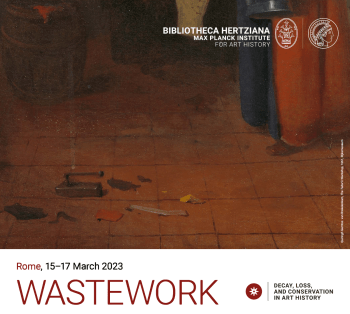 Wastework is an international, interdisciplinary conference on the materiality, spatiality, and processing of waste in the early modern workshop. It proposes to examine acts of disposal, displacement, removal, and abeyance—in short, the getting rid of unwanted things—and the consequences these carry for the study of early modern material culture.
How did the apparent formlessness of this discarded matter—the residues, the shavings, the piles—generate new ideas for forms or find new life through changes in state engendered by slaking, burning, distilling or casting? What disposal flows led household waste—egg shells, stale bread, stove ash—to enter the space of the studio as artistic material or cleaning product? The conference will foreground waste as the material expression of practices of ordering and classification by which people adjudicated between collection and disposal, wanted and unwanted, salvation and loss. In reimagining the discarded past, we intend to test the usefulness of contemporary formulations—secondary product cycles, material fatigue, metabolic flows, sustainability, recycling—while also proposing new typologies and categories.
Wastework is organised by Francesca Borgo (St Andrews / Bibliotheca Hertziana) and Ruth Ezra (St Andrews / eikones) as part of the Lise Meitner Research Group Decay, Loss, and Conservation in Art History.
1 5 M A R C H 2 0 2 3
Site visits for conference participants
• Monte dei Cocci, led by Emlyn Dodd, Assistant Director of Archaeology, British School at Rome
• The American Academy in Rome, introduction to the Rome Sustainable Food Project
Open to the public
21.00 Artists’ talk by DOM on LA BUCA — Esplorazioni dentro il Wasteocene, in conversation with Marco Armiero, author of Wasteocene: Stories from the Global Dump (2021).
1 6 M A R C H 2 0 2 3
9.00 Francesca Borgo and Ruth Ezra — Introduction
9.30 Panel One: Environment
• Stephanie Leitzel — Color and Contamination: An Environmental Approach to the Early Modern Dyehouse
• John Gagné — Rags and Riches: The Paper Workshop’s Suppliers before Industrialization
• Jennifer Van Horn with Megan Baker — Making Paint from Stone: Unfreedom and Material Reuse in Eighteenth-Century North America
10.30 Discussion
11.15 Coffee break
11.45 Panel Two: Network and Translation
• Carlo Scapecchi — A Netherlandish Method to Recycle Wool Shearings in Sixteenth-Century Florence
• Erin O’Connor — All Batched Up: Resource Extraction and Wastework among Glassblowers
12.30 Discussion
13.00 Lunch break
14.00 Panel Three: Economies of Waste
• Sophie Pitman — Cutting Costs: The Use and Abuse of Waste in Early Modern Clothing
• Cass Turner — On Waste and the Book: Origins of the Attention Economy
• Vitale Zanchettin — Waste Made Rich: Venetian Terrazzo Flooring from Antiquity to Carlo Scarpa
15.00 Discussion
16.45 Coffee break
17.15 Keynote Lecture
• Vittoria Di Palma — Use, Value, Waste
18.00 Discussion
1 7 M A R C H 2 0 2 3
9.30 Panel One: Stories from the Workshop Floor
• Daniel Zolli — Sweeping the Workshop Floor: Donatello and the Virtue of Spazzatura
• Lisa Coulardot — Jean Hellot (1685–1766) and the Question of Waste in Dyes Laboratories and Workshops
• Marika Knowles — Pressed and Hung: Wastework in Jacques Callot’s Les grandes misères de la guerre and Abraham Bosse’s La manière de graver
10.30 Discussion
11.15 Coffee break
11.45 Panel Two: Household
• Catherine Girard — Painture: The Temporal and Emotional Labour of Stale Bread in the French Studio
• Anna Reynolds — Fluctuating Matter: Wastework in Seventeenth-Century Breakfast Still Life Paintings
12.30 Discussion
13.00 Lunch break
14.00 Panel Three: Paradoxes of Matter
• Tillmann Taape — Distilling Material Economies: Separating, Preserving, and Recovering Matter
• Justin Linds — ‘Efficacious Fermentation’: Making Value from Rot on Early Modern American Plantations
• Lucy Razzall — ‘Nothing But a Thin Painted Past-board’: Substance and Paradox in Early Modern England
• Charlett Wenig — The Hidden Colors of Bark Ash: Reanimate a Final Leftover
15.30 Discussion
16.15 Coffee break
17.00 Keynote Lecture
• Simon Werrett — Making Use and Making Art: Thrift and Waste in the Early Modern Period
17.50 Closing discussion and roundtable
Poster Image: Quiringh Gerritsz. van Brekelenkam, The Tailor’s Workshop, detail, 1661 (Amsterdam: Rijksmuseum).
Symposium | Rococo across Borders: Designers and Makers

Commode designed by Jean-François Cuvilliés, the Elder, pine partially painted and gilded, German, ca. 1735–40 (New York: The Metropolitan Museum of Art, 28.154).
◊ ◊ ◊ ◊ ◊
Registration now open at Eventbrite:
Rococo across Borders: Designers and Makers
In-person and live-streamed, Victoria and Albert Museum, London, 24–25 March 2023
Organized by the Furniture History Society and the French Porcelain Society, this two-day symposium on Rococo ceramics and furniture across Europe and beyond aims to examine the geographical spread of the Rococo style, the interaction between designers and makers, and the significant role played by print culture in its dissemination. It will go beyond the traditional geographical, chronological, and conceptual fields of Rococo design to explore how the style evolved throughout the long eighteenth century and to reflect on wider discussions about the historical contexts for Rococo ceramics and furniture, alongside the place of the ‘Rococo’ in museums and art historical scholarship today. Tickets: £30–142.
 F R I D A Y , 2 4 M A R C H 2 0 2 3
10.00 Registration
10.20 Welcome and Introduction from Dame Rosalind Savill DBE, FSA, FBA, President of the French Porcelain Society
10.35 Session One | Origins and Circulation of the Rococo
Moderated by Helen Jacobsen
• Form versus Function: The Rococo Contradiction and Its Application to French Eighteenth-Century Decorative Arts — John Whitehead (Independent Scholar)
• The Diplomatic Gifts of Louis XV (working title) — Marie-Laure Buku-Pongo (Assistant Curator of Decorative Arts, The Frick Collection, New York
• From Cathay to Paris: Trade with Asia, Its Actors, and Its Influence on the Arts in Paris — Stéphane Castelluccio (Directeur de recherche au CNRS, Centre André Chastel, Paris)
• The Rococo Diaspora: Wandering Craftsmen, Objects, Patronage, and Diplomacy — Sarah Coffin (Independent Curator, Former Senior Curator, Cooper Hewitt Museum, New York)
12.40 Discussion
12.55 Lunch including ’Object in Focus Sessions’ with V&A Collections and Curators (separate tickets required)
14.25 Session Two | Virtuoso Rococo: England and the Netherlands
Moderated by David Oakey
• ‘A Peculiarity in the Lines’: Drawing and Carving ‘Rococo’ in Mid-Eighteenth-Century England — Jenny Saunt (Curatorial Research Fellow, V&A Museum, London)
• Chelsea’s Extreme Rococo: A Perspicuous Misunderstanding or a Calculated Risk — Patricia Ferguson (Independent Scholar)
• Designing or Making: On the Role of Craftsmen as Designers — Reinier Baarsen (Curator Emeritus of Decorative Arts at the Rijksmuseum)
• Rococo Silver in the Austrian Netherlands: A Virtuoso Kaleidoscope? — Wim Nys (Head of Collections and Research, DIVA Museum, Antwerp)
16.35 Discussion
16.50 Closing Remarks
18.00 Ticket holders are invited to a drinks reception, supported by Bonhams, at Montpelier St, London SW7 1HH; spaces are limited so early booking is advised.
S A T U R D A Y , 2 5 M A R C H 2 0 2 3
10.00 Registration
10.20 Welcome and Introduction from Christopher Rowell FSA, Chairman of the Furniture History Society
10.30 Session Three | Inspiration and Emulation: Ireland, Germany, and Russia
Moderated by Caroline McCaffrey-Howarth
• The Prints of Carl Pier (b. 1717): Visions and Potentialities in Southern German Rococo Design — Michael Yonan (Professor of Art History, University of California)
• Frederician Furniture in Berlin and Potsdam, ca. 1740–1775 — Henriette Graf (Curator of Furniture, Stiftung Preußische Schlösser und Gärten Berlin-Brandenburg)
• The Englishness of Irish Rococo: The Dublin School of Stucco Workers — Conor Lucey (Associate Professor in Architectural History, University College Dublin)
• Pineau le Russe: A French Sculptor in Service to the Tsars— Turner Edwards (Collaborateur Scientifique, Musée des Arts Décoratifs, Paris)
12.40 Discussion
12.55 Lunch
14.25 Session Four | Across the Seas: China, the Americas, and back to France
Moderated by Adriana Turpin
• Persistence, Resistance, and Canadian Rococo Furniture — Philippe Halbert (Curator of American Decorative Arts at the Wadsworth Atheneum, Hartford)
• Ornaments from the Western Ocean: Rococo as a Qing Imperial Style in the Decorative Arts — Mei Mei Rado (Assistant Professor, History of Textiles, Dress, and Decorative Arts, Bard Graduate Center, New York)
• The French Rococo Style in Colonial Latin America — Dennis Carr (Virginia Steele Scott Chief Curator of American Art, Huntington Library, Art Museum, and Botanical Gardens, Los Angeles)
• Colonial Fantasy and Rococo Regressions: Porcelain in the Time of Louis-Philippe — Iris Moon (Assistant Curator of European Sculpture and Decorative Arts, Metropolitan Museum of Art, New York)
16.35 Discussion
16.50 Closing Remarks










 Enfilade
leave a comment