Symposium | Dutch and Flemish Drawings, 1500–1800

Rembrandt van Rijn, Landscape with Canal and Boats, ca. 1652–55, pen in brown ink with brown wash on paper, framing lines in brown ink, 10 × 20 cm (The University of North Carolina, Chapel Hill, Ackland Art Museum, Peck Collection, 2017.1.67). From The Peck Collection: “In 2017 the Ackland Art Museum . . . received its largest gift to date. Donated by UNC alumnus Dr. Sheldon Peck and his late wife Leena, the gift included 134 largely seventeenth- and eighteenth-century Dutch and Flemish drawings as well as a generous endowment to support a new curator of European and American art before 1950, future acquisitions, exhibitions, educational materials, and public programming related to the collection.”
◊ ◊ ◊ ◊ ◊
From ArtHist.net:
Making, Collecting, and Understanding Dutch and Flemish Drawings, 1500–1800
Rijksmuseum, Amsterdam, 1–2 June 2023
The Peck Drawings Symposium celebrates Old Master drawings on the occasion of the exhibition The Art of Drawing: Master Drawings from the Age of Rembrandt in the Peck Collection at the Ackland Art Museum, on view in Amsterdam at the Rembrandt House Museum (18 March – 11 June 2023).
Research in early modern Dutch and Flemish drawings touches on a wide variety of issues, including the study of materials and techniques; issues of attribution and oeuvre cataloguing; and expanding our understanding of the provenance, collecting, and display of works on paper. This symposium offers scholars a chance to come together to present and discuss recent research in this specialized field, which now evolves to encompass new methodologies and concerns.
Registration is available here»
T H U R S D A Y , 1 J U N E 2 0 2 3
9.00 Registration, with Coffee and Tea
9.30 Welcome Remarks
9.45 Session 1
• The Case of Pieter Vlerick: A Netherlandish Draughtsman’s ‘Many Beautiful Views of the City on the Tiber’ — Stijn Alsteens (Christie’s)
• (Re)Introducing Jan Snellinck (1544/49–1638) as a Draughtsman — Maud van Suylen (Rijksmuseum)
• Drawings Made to be Engraved: Paul Vredeman de Vries and Claes Jansz. Visscher — Peter Fuhring (Fondation Custodia, Frits Lugt Collection, Paris)
• A Helmet Design by Johannes Lutma the Elder? — Reiner Baarsen (Rijksmuseum)
11.05 Coffee and Tea
11:35 Session 2
• The Portable Studio: Navigating the Early Netherlandish Sketchbook — Daantje Meuwissen (Vrije Universiteit, Amsterdam)
• Deconstructing the Antique: The Ornamental Language in the Sketchbook of the Cornelis Anthonisz. Workshop — Oliver Kik (Royal Institute for Cultural Heritage in Brussels (KIK-IRPA)
• Playground and Repository: Maarten van Heemskerck’s Roman Sketchbook — Tatjana Bartsch (Bibliotheca Hertziana, Rome)
• Fresh Eyes on Old Sketchbooks: Revisiting the Content and Function of 17th-Century Dutch Sketchbooks — Yvonne Bleyerveld (RKD Netherlands Institute for Art History, The Hague/Leiden University)
13.00 Lunch
14.00 Session 3
• Making the Invisible Visible: New Digital Technologies in the Study of Drawings — Thomas Ketelsen and Carsten Wintermann (Klassik Stiftung Weimar)
• Local Landscapes on Paper from Afar: The Connoisseurial Relevance of Washi in the Drawn Oeuvres of Dutch Artists — Sanne Steen (Erasmus University, Rotterdam)
• Hunting Moldmates of 17th-Century Dutch Drawings — C. Richard Johnson, Jr. (Utrecht University)
• Rembrandt’s Drawings: The Cut — Birgit Reissland (RCE – Cultural Heritage Agency of the Netherlands, Amsterdam)
15.20 Coffee and Tea
15.50 Session 4
• Aert Schouman’s Animal Drawings in Teylers Museum — Marleen Ram (Teylers Museum, Haarlem)
• Beyond Academies: The Inaugural Drawing Session at Felix Meritis in 1789 — Charles Kang (Rijksmuseum)
• Life on Paper: New Insights into the Drawing Practice of Christina Chalon (1749–1808) — Austėja Mackelaitė (Rijksmuseum)
17.30 Exclusive visit to the Rembrandt House Museum to view the Peck Collection exhibition
F R I D A Y , 2 J U N E 2 0 2 3
8.00 Exclusive visit to the Vermeer exhibition at the Rijksmuseum
9.00 Coffee and Tea
9.45 Session 5
• The Less Well-known Side of Andries Both as a Draughtsman — Jane Shoaf Turner (Master Drawings; formerly Rijksmuseum)
• ‘Alle de posturen, die de soldaten in ‘t hanteren van hare wapenen behoren te gebruycken’: Jacques de Gheyn’s Drawings for The Exercise of Arms For Calivers, Muskettes, and Pikes — Susanne Bartels (University of Geneva)
• The Drawing Oeuvre of Pieter Quast (c.1605–1647): An Assessment — Jochai Rosen (University of Haifa)
• A Sea of Drawings: The Van de Veldes at the Queen’s House, Greenwich — Allison Goudie, Emmanuelle Largeteau and Imogen Tedbury (Royal Museums, Greenwich)
11.05 Coffee and Tea
11.35 Session 6
• Wallerant Vaillant (1623–1667): A Dutch Artist in the Vienna Collection of Prince Dmitry M. Golitsyn — Catherine Phillips (Independent Scholar)
• The Bookseller and Publisher Isaac Tirion and His Collection of Drawings — Everhard Korthals Altes (Delft Technical University)
• Johann Friedrich von Uffenbach (1687–1769) as Collector of Drawings — Anne-Katrin Sors (Göttingen University)
• Rediscovering Pieter de Hooch: 18th-Century Dutch Reproductive Drawings and the Auction Market — Junko Aono (Meiji Gakuin University, Tokyo)
13.00 Lunch
14.10 Session 7
• On the 17th-Century Reception of Pieter Saenredam’s Drawing Practice — Lorne Darnell (Courtauld Institute)
• Material Sympathies: Paper as Water in 17th-Century Dutch Landscape Drawings — Sarah W. Mallory (Harvard University)
• Still a Hot Case: Reconsidering the ‘Du-Gardijn’ Inscriptions — Annemarie Stefes (Independent Scholar)
• Copious Copies: On the Trail of a Drawing Practice and Its Aesthetic and Material Implications — Christien Melzer (Kupferstichkabinett, Berlin)
15.30 Coffee and Tea
16.00 Final Session
• TBA
17.00 Drinks and Appetizers
Conference | The Dutch Museum of Freemasonry
From ArtHist.net:
‘A Heritage Collection, Unparalleled in the World’: An Introduction to the Dutch Museum of Freemasonry
The Hague, 25 May 2023
Registration due by 22 May 2023

The Vrijmetselarij Museum / Dutch Museum of Freemasonry. Designed by the architects A.P. Smits and J. Fels., the building was constructed in 1908 for the furniture manufacturer Harmen Pander. (Photo: Wikimedia Commons, September 2010).
Freemasonry is one of the oldest social networks in the world. It has been active in the Netherlands since 1721 and is distinguished by a remarkable ritual tradition. For over three centuries the initiation society produced an impressive cultural heritage. Through strict collection policy, this earned a museum status in the middle of the 19th century under the rule of Grand Master Prince Frederick (1797–1881) and subsequently grew into a heritage collection of (inter)national importance. The Vrijmetselarij Museum or Dutch Museum of Freemasonry is located in The Hague.
The museum consists of three interlinked collections: historical archives, scientific library (including the famous Bibliotheca Klossiana, acquired by Prince Frederick), and historical objects. The collection not only reflects the development of freemasonry, its tolerant ideas, and ritual tradition. It also documents 300 years of the social, political, and cultural history of the Netherlands and its international contacts, as well as the lives and works of 70,000 members. From the history of Western expansion to the emancipation of women, from art history to gender studies, the collection is a gold mine for researchers from all disciplines within the humanities.
The Dutch Museum of Freemasonry is internationally renowned amongst academic researchers, although it is less well known to the wider Dutch public. Ample reason therefore exists to put this best kept ‘secret’ in The Hague in the spotlight with an international conference. Experts from different countries and disciplines will discuss the founding of the collection and its relevance as heritage of international calibre, with lectures in English. A special guest speaker from America (via Zoom) is Dr. Margaret Jacob, author of The Radical Enlightenment and Living the Enlightenment. She consulted the Dutch lodge archives for her groundbreaking research. This conference provides a unique introduction to a collection that has been preserved in The Hague for more than 150 years, and which should continue to be cherished in the future.
The event will be held at the Carlton Ambassador Hotel in The Hague, which is conveniently located near the Dutch Museum of Freemasonry, and another significant venue: the lodge rooms designed by Karel de Bazel in 1916. These rooms, which were created by the renowned architect, Freemason, and Theosopher, are now a protected monument and part of the Beeld & Geluid Den Haag building complex. Guided tours of the museum and the lodge rooms will be organized for participants.
The conference is open to students, researchers, and heritage professionals, as well as to lodge members and anyone with a love of history or cultural heritage. Advance registration is required, and availability is limited. Participation fee: €75 regular rate / €50 OVN donors / €35 students (please enclose a copy of your student ID). The fee covers coffee, tea, and drinks at the closing reception, along with a copy of the conference publication and tours. To register, please email info@stichtingovn.nl. After sending your email, you will receive a registration form and additional information. Places will be allocated on a first-come, first-served basis, and will be confirmed only upon receipt of payment.
Preliminary conference program, 9.30–18.00
• Opening by Vera Carasso, Director Dutch Museums Association
• The Dutch Museum of Freemasonry and the Study of Humanities (via Zoom) — Margaret C. Jacob, Professor Emerita, Department of History, UCLA
• From 18th-Century Club Archive to National Heritage: The Dutch Museum of Freemasonry — Andréa Kroon, Kroon & Wagtberg Hansen / Guest Curator Vrijmetselarij Museum, Den Haag
• The Kloss Library: A Goldmine for Researchers — Jan Snoek, Professor of Ritual and Religious Studies, University of Heidelberg
• Archive, Library, Objects: The Unique Hybrid Nature of Masonic Collections — Martin Cherry, Librarian of the Museum of Freemasonry, London
• Western Esotericism and the Dutch Museum of Freemasonry (via Zoom) — Henrik Bogdan, Professor of Religious Studies, Department of Literature, History of Ideas, and Religion, University of Göteborg
• Egyptology and Freemasonry: An Example of Interdisciplinary Research Opportunities — Eugène Warmenbol, Professor Emeritus, Department of History, Art, and Archaeology, Université libre de Bruxelles
• Freemasonry and the Study of Religion: Opportunities for Collaboration — Ab de Jong, Scientific Director of the Leiden Centre for Religious Sciences
• From Private to Public Collections: The Future of Masonic Museums — Andrew Prescott, Digital Humanities Department, Glasgow University
Conference | Historical Fragments

From Eventbrite:
Historical Fragments: Making, Breaking, and Remaking, 1500–1800
Online and In-person, University of Edinburgh, 19 May 2023
Taking ‘fragmentation’ as the conceptual starting point for the day, The Material and Visual Culture in the Seventeenth and Eighteenth Centuries Research Cluster will host a one-day hybrid conference that considers the materiality and shifting conditions of global objects and collections (focusing on the time period 1500–1800) as they are broken, fragmented, remade, or assembled. Seeking to investigate the ‘brokenness’ of such material culture objects and collections, the conference will de-centre conservation and restoration which often dominate discourse on the subject. The Research Cluster aims to provide a space to foster interdisciplinary discussion on the material approaches to fragmented objects through material culture.
Online registration is available here»
P R O G R A M M E
9.00 Arrival
9.15 Welcome
9.30 Keynote
Chair: Carol Richardson (University of Edinburgh)
• Catriona Murray (University of Edinburgh) — Smashing Statues: Breaking and Remaking the Monumental Bodies of King Charles I
10.30 Break
10.45 Morning Session: Early Career Researcher and PhD Papers
Chair: Seren Nolan (University of Edinburgh)
• Simon Spier (Victoria & Albert Museum) — Tinker, Burner, Riveter, Turner: The ‘China Mender’ in 18th-Century Britain
• Agata Piotrowska (University of St Andrews) — Assembled, Catalogued, Displayed in Their Brokenness: Shakespeare’s Chair, Stones from the Tomb of Romeo and Juliet, and Other Objects Telling the Story of Duchess Izabela Czartoryska’s Collection
• Hanne Schonkeren (Vrije Universiteit Brussel/ Research Foundation of Flanders) — Sustained Splendor: (Re)assembling Early Modern Luxury Objects
• Esther Rollinson (University of Manchester) — ‘Trim’d with gold but very old’: Exploring the Importance of Preservation and Remaking for the English Catholic Community, ca. 1660–1800
• Yi Shan (University of Texas, Austin) — Meaningful Losses: Exploring the Knowable Past by Collecting Premodern China
12.15 Lunch
1.00 Afternoon Session: Historical Fragments Roundtable
Chair: Caroline McCaffrey-Howarth (University of Edinburgh)
• Alejandro Nodarse (Harvard University) — Goya’s Remedy (‘Remidio’): On Print as Fragment
• Serena Dyer (De Montfort University) — A Fashionable 1760s Gown
• Lauren Working (University of York) — Sea Change: Regenerative Shipwrecks
• Sarah Laurenson (National Museums Scotland) — Quartz Crystals and the Cairngorms, 1750–1820
2.30 Break
3.00 Walk to St Cecilia’s Hall
The walk is 15–20 minutes; please email materialcultureresearcheca@ed.ac.uk if you require transport.
3:30 St Cecilia’s Hall, in-person attendees only
Presentation by Jenny Nex (Musical Instruments Collections Curator, St Cecilia’s Hall) — The Fragmentation, Remaking, and Consumption of Musical Instruments, as Seen through Examples in the Collection at the University of Edinburgh
Tour of collections and object handling session
5.00 Close
Study Day | Huguenot Craftspeople and the Visual Arts in Britain
From The Fitzwilliam:
Huguenot Craftspeople and the Visual Arts in Britain
The Fitzwilliam Museum, Cambridge, Monday, 15 May 2023

Paul de Lamerie, Silver Two-handled Cup and Cover, made in London, 1739–40 (Lent by Clare College, Cambridge).
In celebration of the display Refugee Silver: Huguenots in Britain, join us in person for a study day exploring the contributions of Huguenot craftspeople to the visual arts in Britain. Curators and experts will provide new perspectives on silver, ivories, prints, and portrait miniatures. Refreshments and lunch will be provided, included in the ticket price.
P R O G R A M M E
10.00 Tea and coffee
10.45 Welcome from Neal Spencer (Deputy Director for Collections & Research)
11.00 Session 1
• Women Huguenot Silversmiths and The Goldsmiths’ Company Collection — Frances Parton (Deputy Curator, The Goldsmiths’ Company)
• A New Look at Huguenot Silver — Miriam Hanid (Artist Silversmith)
12.00 Break
12.15 Session 2
• Making One’s Mark: Silver, Sugar, and Tea in 18th-Century Britain and Beyond — Chiedza Mhondoro (Assistant Curator, British Art, Tate)
• Cross-fertilisation: International Huguenot Connections between Goldsmiths and Watchmakers — Tessa Murdoch (Independent Scholar and Trustee of the Huguenot Museum)
13.15 Lunch and a chance to see the display Refugee Silver: Huguenots in Britain
14:15 Session 3
• Huguenot Printmakers in a Closet-Catholic’s Collection? The Prints of Lord Fitzwilliam (1745–1816) — Elenor Ling (Senior Curator, Prints & Drawings, The Fitzwilliam Museum)
• Huguenot Miniaturists: Isaac and Peter Oliver’s Influence on the Development of British Portrait Miniature Painting, 1580–1650, pre-recorded — Sophie Rhodes (PhD candidate, Department of History of Art, University of Cambridge)
• Carving Caricatures in Ivory: Huguenot or Not? — Victoria Avery (Keeper, European Sculpture & Decorative Arts, The Fitzwilliam Museum)
Symposium | Georgian Group, Wren 300

Sir Godfrey Kneller, Portrait of Sir Christopher Wren, 1711, oil on canvas, 49 × 40 inches
(London: NPG).
◊ ◊ ◊ ◊ ◊
From The Georgian Group:
Wren 300: Georgian Group Symposium
Trinity College, Oxford, 15 April 2023
The Georgian Group’s 2023 Symposium, led by Geoffrey Tyack of Oxford University, will form a central focus of the Wren 300 Festival. Wren’s late work from 1690 to 1723, his subsequent reputation, and design legacy will be considered by leading scholars. Public tickets (£70) include a buffet lunch and drinks reception. A limited number of student tickets (£35) are available here. Please read the Terms and Conditions before booking. If tickets have sold out for this event, please email members@georgiangroup.org.uk to be added to the waiting list.
P R O G R A M M E
10.15 Registration
10.45 Session 1
• Geoffrey Tyack — Introduction / Wren’s Work in Oxford
• Rory Coonan — Wren before Architecture
• Jennifer Mitchell — Tom Tower
• Mark Kirby — The Furnishing of Wren’s Churches
12.45 Lunch
1.45 Session 2
• Anya Lucas — Greenwich
• Elizabeth Dean and Matthew Walker — Wren and Hawksmoor
• Will Aslet — Wren and Gibbs
4.00 Session 3
• Charles Hind — Wren’s Sale Catalogues
• David McKinstry — Wren’s 19th-Century Reputation
• Geoffrey Tyack — Destruction and Rebuilding: Wren’s Churches after 1945
5.45 Drinks Reception, The Garden Room, Trinity
Conference | Arts and Culture in the Capuchin Order
From ArtHist.net:
De habitudine Ordinis ad artem: Arts, Religion, and Culture in the Capuchin Order between the 16th and 18th Centuries
In-person and online, University of Teramo, 12–14 April 2023
The international conference De habitudine. Ordinis ad artem. Arts, Religion, and Culture in the Capuchin Order between the 16th and 18th Centuries aims to deepen the relationship between the arts, culture, religion, and the Capuchin Order on an international level, with a particular focus on the historical context and the religious dimension as an essential prerequisite for understanding artists, the production of art objects, commissions, and relations with the secular world on a global scale.
 The conference is divided into six sessions:
• The role of the Order in the context of the post-Tridentine Church
• Artistic practice between norms, prohibitions, and customs
• The cultural objects of the Capuchin world: use and circulation
• Capuchin patronage
• Capuchin painters and marangoni
• Images, knowledge, and preaching between devotion and catechesis
The conference will be held in-person and online in Italian. For both modalities, registration is required here. Links to access the conference in webinar mode will be sent by email in the days following registration.
W E D N E S D A Y , 1 2 A P R I L 2 0 2 3
9.00 Saluti Istituzionali
• Dino Mastrocola (Magnifico Rettore)
• Christian Corsi (Direttore Dip. Scienze della Comunicazione)
• fr. Roberto Genuin (Ministro Generale dei Frati Minori Cappuccini)
• fr. Carlo Maria Chistolini (Vicario provinciale della Prov. Serafica Immacolata Concezione OFM Cap.)
• fr. Daniel Kowalewski (Presidente Istituto Storico dei Cappuccini)
• Massimo Carlo Giannini (Università degli Studi di Teramo, Universidad Complutense de Madrid)
• Raffaella Morselli (Università degli Studi di Teramo)
9.30 Prolusione
• Mons. Felice Accrocca (Arcivescovo di Benevento, docente di Storia Francescana)
10.00 I Sessione | Il ruolo dell’Ordine nel contesto della Chiesa post-tridentina
Presiede: Grado Giovanni Merlo (Università degli Studi di Milano)
• Paolo Cozzo (Università degli Studi di Torino) — Fra corte e missioni: i cappuccini nella politica religiosa degli Stati sabaudi (sec. XVI–XVII)
• Massimo Carlo Giannini (Università degli Studi di Teramo, Universidad Complutense de Madrid) — ‘Las obligaciones de Religiosos y buenos Vassallos’: l’ordine dei cappuccini e la Monarchia spagnola (1671–1698)
• Giovanni Pizzorusso (Università degli Studi di Chieti-Pescara) — La controversa attività missionaria del cappuccino francese Pacifique de Provins dalla Persia al Nuovo Mondo (prima metà XVII secolo)
• Maria Teresa Fattori (Humboldt, Universität zu Berlin) — Cronologia e casi di frati cappuccini contrari alla schiavitù (XVII–XVIII secolo)
• Giuseppe Patisso (Università del Salento) — ‘I cappuccini di Richelieu’: Missioni ed evangelizzazione nella Nuova Francia durante la prima metà del XVII secolo
• Carlo Pelliccia (Università degli Studi Internazionali di Roma) — L’esperienza religiosa e missionaria di Onofrio Villiani (1715–1789) tra la Compagnia di Gesù e l’Ordine dei Frati Minori Cappuccini
13.15 Pausa pranzo
15.00 II Sessione | La pratica artistica tra norme, divieti e consuetudini
Presiede: Raffaella Morselli (Università degli Studi di Teramo)
• Yuri Primarosa (Roma, Gallerie Nazionali di Arte Antica) — Per un’estetica cappuccina nella Roma del primo Seicento. Caravaggio e Orazio Gentileschi
• Alessandro Zuccari (Sapienza Università di Roma) — Sviluppi dell’arte cappuccina tra Roma e Bologna
• Claudio Sagliocco (Sapienza Università di Roma) — Originale e copia nella pittura cappuccina
• Arianna Petraccia (Liceo Scientifico ‘D’Ascanio’, Montesilvano, PE) — I dipinti di Baccio Ciarpi per i cappuccini: Affinità elettive tra un pittore ed un Ordine religioso
• Attilio Maria Spanò (Liceo Classico ‘Campanella’, Reggio Calabria) — Controriforma e pauperismo francescano: L’esperienza architettonica e insediativa dei frati minori cappuccini
T H U R S D A Y , 1 3 A P R I L 2 0 2 3
9.30 III Sessione | Gli oggetti culturali del mondo cappuccino: uso e circolazione
Presiede: Luca Siracusano (Università degli Studi di Teramo)
• Roberto Rusconi (Università di Roma Tre) — Le parole e le pagine: I Cappuccini e i libri ovvero i libri dei Cappuccini
• Mario Tosti (Università degli Studi di Perugia) — Gli Atlanti cappuccini e l’immagine dell’Ordine nell’età della Controriforma
• Giovanna Granata (Università degli Studi di Cagliari) — Il patrimonio librario antico dei Cappuccini: Il caso della Sardegna
• Andrea Pezzini (Universität Bern) — Il culto di S. Ignazio da Santhià (1686–1770): Oggetti di devozione come cultura materiale
• Jason Di Resta (Wesleyan University) — Os ex ossibus meis et caro de carne mea: Giving Shape to Collective Identity in the Crypts of the Capuchin Order
12.45 Pausa pranzo
15.00 IV Sessione | La committenza cappuccina
Presiede: Anna Orlando (Advisor Cultura Comune di Genova)
• Donatella Biagi Maino (Università di Bologna) — L’arte per i cappuccini in Emilia-Romagna
• Laura Facchin (Università degli Studi dell’Insubria) — Arti figurative nelle chiese cappuccine dalla capitale ai territori della Provincia Pedemontana
• Vincenzo Sorrentino (Fondazione 1563 per l’Arte e la Cultura) — Alessandro, Giovanni e Cherubino Alberti nella chiesa dei Cappuccini di Frascati
• Ondřej Slanina (Universität Bern) — Unique Large Pearl Monstrance from the Capuchin Loreto in Hradčany, Prague
• Pietro Costantini (Università degli Studi di Teramo) — Insediamenti e patrimonio culturale: Donazioni e committenze per i frati cappuccini in Abruzzo (sec. XVI–XVIII)
F R I D A Y , 1 4 A P R I L 2 0 2 3
9.30 V SESSIONE | Pittori, marangoni e fabbricieri cappuccini
Presiede: Giorgio Fossaluzza (Università degli Studi di Verona)
• Isabella Di Liddo (Università degli Studi di Bari Aldo Moro) — Le botteghe dei cappuccini in Puglia tra Sei e Settecento: Prime tracce per uno studio
• Anna Orlando (Advisor Cultura Comune di Genova) — Bernardo Strozzi sperimentatore: Un pittore cappuccino dal convento genovese alla fuga a Venezia
• Miriam Kreischer (Ludwig-Maximilians-Universität) — The impact and importance of Paolo Piazza on the European art landscape of the 17th and 18th centuries: Paolo Piazza in Bavaria
• Luca Calenne (Archivio storico diocesano ‘Innocenzo III’, Segni, RM) — Un risarcimento per Fra’ Antonio Borgognone
• Daniele Giglio (Archivio storico Prov. Serafica Immacolata Concezione OFM Cap. – sez. di Assisi) — Fabbriche, arti e mestieri dei cappuccini umbri nel Settecento
12.45 Pausa pranzo
15.00 VI Sessione | Le immagini, i saperi e la predicazione tra devozione e catechesi
Presiede: Cecilia Paolini (Università degli Studi di Teramo)
• Francesco Nocco (Archivio storico Prov. dei Cappuccini di Puglia, Università degli Studi di Bari Aldo Moro) — Predicatori della Terra di Bari e della Terra d’Otranto nell’Archivio storico della Provincia dei Cappuccini di Puglia (sec. XVI–XVIII)
• Tereza Horáková (Masaryk University) — Possibilities and ‘offer’ of devotional practice in Capuchin monasteries in the Czech lands during the 18th century
• Javier González Torres (Fundación Victoria) Sergio Ramírez González (Universidad de Málaga) — La promoción cultual de un santoral eucarístico propio: Concreción conceptual y praxis artística en los conventos capuchinos andaluces
• Daniela Caracciolo (Università del Salento) — ‘Le cose spirituali non si possono dipingere’: La questione delle immagini sacre negli scritti di Bernardino Ochino
• Martina Leone (Università degli Studi di Teramo) — Iconografia cappuccina da Roma alla Serenissima: Francesco Ruschi tra innovazione e tradizione
Mount Vernon Symposium | Decorative Arts in the French Atlantic World

French porcelain tea and coffee service made for George and Martha Washington, and gifted by the Comte de Custine de Sarreck, ca. 1782.
◊ ◊ ◊ ◊ ◊
From Mount Vernon:
‘Very elegant & much admired’: Decorative Arts in the French Atlantic World
George Washington Presidential Library, Mount Vernon, Virginia, 2–4 June 2023
After the American Revolution, George Washington resolved that he would no longer “send to England (from whence I formerly had all my goods) for anything I can get upon tolerable terms elsewhere.” He instead turned to the United States’ greatest ally, France, where he found the furniture, ceramics, textiles, and decorative objects to be “very elegant” and “much admired.”
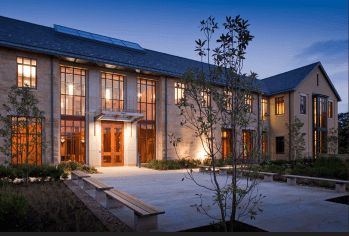
The symposium will take place at the George Washington Presidential Library at Mount Vernon, in Virginia. The library opened in 2013.
The 2023 Mount Vernon Symposium will examine George and Martha Washington’s adoption of the French taste, as a catalyst to further explore the complex interchange of culture, decorative styles, and objects in the French-Atlantic World. Join leading curators and historians as they examine the diffusion of French style, from the Ancien Régime through the French Revolution to the French Empire, and from Paris to London, Philadelphia, Port-au-Prince, and New Orleans, to 20th-century Los Angeles. In-person participation cost is $400 ($375 for members and donors), which includes all lectures, meals, and tours. Virtual participation (in real-time or through recordings available until 4 July 2023) is $40.
F R I D A Y , 2 J U N E 2 0 2 3
1:00 Registration
1:30 Welcome and Introductions
1:45 The Garde-Meuble de la Couronne: From its Creation to Revolutionary Sales — Stéphane Castelluccio
The Garde-Meuble de la Couronne was the administration in charge of furnishing the apartments of the members of the royal family in the residences of the French sovereign. King Henry IV created it in 1604 as part of his policy to reorganize the kingdom after the Wars of Religion. This talk will present the management, exercised by only three different families during a century and a half, as well as the functioning of this administration which took an increasing importance throughout the 18th century. It will explain the changes in its organization during the Revolution, and end with the reasons, principles and organization of the revolutionary sales of the Crown’s furniture, decided by the new Republic from 1793.
2:45 ‘A little French ease adopted would be an improvement”: Lessons in Sociability and Decorative Arts from 1780s Paris — Amy Hudson Henderson
After the American Revolution, an increasing number of American diplomats, businessmen, students, artists, and tourists found themselves in Paris mixing amongst themselves in the upper echelons of French society. It was a heady time, ripe with opportunities for forging new relationships and identities. Here, in 1784, a young Nabby Adams observed that Americans would do well to adopt “a little French ease” as an antidote to the stiffness and reserve that seemed to mar their social circles back home. What did she mean? This paper answers that question by exploring extant correspondence and household furnishings. By focusing on the acquisitions and behaviors of the prominent Americans who spent time in Paris during the 1780s, we deepen our understanding of the role of French decorative arts in both sociability and diplomacy and discover why these objects appealed to George and Martha Washington.
3:45 Break
4:00 Adam T. Erby – TBA
5:00 Henry Auguste: A Goldsmith in Revolutionary Paris — Iris Moon
This talk explores the unlikely career trajectory of the Parisian goldsmith Henry Auguste (1759–1816) during the French Revolution, drawing on new research published in Luxury after the Terror. Crafty, wily, and untrustworthy, but obviously talented with a hammer and chisel, Auguste started off as an apprentice to his well-known goldsmith father, who worked for Louis XVI. Beyond the French court, Auguste acquired a number of prestigious clients, including the British connoisseur William Beckford, for whom he fashioned an ewer made out of pure gold. Just as the volatile politics of the French Revolution sought to overturn the values of the Ancien Régime in favor of new ones, Auguste sought to refashion himself as more than a goldsmith during a moment of tremendous opportunity—and great risk.
6:30 Reception
7:15 Dinner
S A T U R D A Y , 3 J U N E 2 0 2 3
7:30 Breakfast
8:45 Welcome and Introductions
9:00 Emerging Scholars’ Panel
10:00 Break
10:15 Revolutionary Things — Ashli C. White
During the late 18th century, a wide range of objects associated with the American, French, and Haitian revolutions crisscrossed the ocean. Furniture and ceramics; clothing and accessories; maps, prints, and public amusements—all circulated among diverse actors who wrestled with the political implications of these items. In this presentation we will examine the unique ways that transatlantic revolutionary things shaped how people understood contested concepts like equality, freedom, and solidarity. And, we will explore how these objects became a means through which individuals—enslaved and free, women and men, poor and elite—promoted, and sometimes tried to thwart, the realization of these ideals on the ground.
11:15 À la française: Designing French North America, 1700–1820 — Philippe Halbert
At its height, New France extended from eastern Canada, across the Great Lakes, and down the Mississippi River to Louisiana. Although its population remained small, French North America was no less dynamic in terms of artistic originality or creative output. Even after New France’s fall in 1763, areas of French settlement held fast to creole syntheses of Gallic aesthetics and vernacular tradition. This presentation will introduce a cross-section of objects and buildings whose stories reveal the vibrant legacies of French cultural identity as it took root in North America before 1800.
12:15 Lunch
1:45 An American in Paris: Walt Disney and France — Wolf Burchard
Walt Disney was about to turn 17 when he first set foot in France in December 1918. The buildings, the art and the atmosphere had a lasting impact on the animated world he would go on to create. Inspiring Walt Disney: The Animation of French Decorative Arts, an exhibition shown at the Metropolitan Museum of Art in New York, the Wallace Collection in London and the Huntington Art Gallery in Pasadena, brought together the seemingly disparate worlds of 20th-century hand-drawn animation and 18th-century decorative arts, which upon closer inspection reveal remarkable similarities. Wolf Burchard will relate how the exhibition explored Disney’s fascination with European art and the impact it had on the studio’s output, especially the three French fairytales retold in hand-drawn animation: Cinderella (1950), Sleeping Beauty (1959), and Beauty and the Beast (1991).
2:45 Break
3:15 A Passion for Porcelain: Sèvres in the Wallace Collection — Helen Jacobsen
Ever since the early days of its development in the mid-18th century, the porcelain produced at the Sèvres Manufactory outside Paris has been a magnet for collectors, attracted by its vibrant colours, rich gilding, and innovative designs. The Sèvres collection at the Wallace Collection was put together in the 19th century, but its collectors were no less beguiled by its flamboyant luxury and exquisite craftsmanship. This lecture will follow the evolution of some of the most celebrated pieces ever produced at the manufactory and will explore the passions that gave shape to what is now one of the finest collections of Sèvres porcelain in the world, a testament to its enduring fascination.
4:15 James Monroe’s Use of French Furnishings in the White House and the Restoration of the Bellangé Suite — Melissa Naulin
Following its burning during the War of 1812, the President’s House required almost all new furnishings before it could reopen for President James Monroe’s use in 1817. Relying on his extensive knowledge of fashionable home goods gained through his two European diplomatic appointments, Monroe worked to secure a large number of these new furnishings from Paris. My talk will focus on these government-purchased French goods, many of which remain amongst the most-treasured objects in the White House collection. I will also detail the recent effort to restore the furniture suite made by Pierre Antoine Bellangé and purchased for Monroe’s “large oval room” (today’s Blue Room) to its original splendor.
5:45 Reception
7:00 Dinner
S U N D A Y , 4 J U N E 2 0 2 3
9:00 Breakfast
9:30 From West to East: Huguenot Craft Communities in London’s Soho and Spitalfields — Tessa Murdoch
Drawing on research undertaken for her recent publication, Tessa will speak about the formation of Huguenot artisan communities in Soho and Spitalfields. Leading personalities, include engraver Simon Gribelin, resident in West London who married into the Spitalfields based Mettayer family. The complex history of the Courtauld family, established in West London, gravitates from silversmithing in Soho and the City to textile production in Spitalfields and beyond. Craft communities centered on conformist and non-conformist French speaking churches and were gradually assimilated into Anglican churches. Huguenot refugees developed mutual support systems, friendly societies, the French Hospital which still flourishes as almshouses and the Westminster French Protestant Charity School. These Huguenot charities document the contribution of Huguenot craftsmen and women to British culture.
10:15 Forging a New Vernacular: The Transformation and Triumph of a French Ébéniste in Federal New York — Peter M. Kenny
Charles-Honoré Lannuier (1779–1819) arrived in New York in the spring of 1803 a thoroughly-trained Parisian ébéniste who, according to his inaugural newspaper advertisement, had “worked at his trade with the most celebrated Cabinet Makers of Europe.” Well-versed in the elegant forms of the late Louis XVI period, which still held sway during the earliest period of his training in Paris, Lannuier’s design vocabulary at the time of his arrival also included the harder edged yet brilliant neoclassical style of post-Revolutionary France known as Directoire (1795–99), and the Consulat (1799–1804), a heavier more monumental style featuring the more archaeologically correct forms of le goût antique. This was Lannuier’s Parisian stylistic legacy. How he transformed this legacy, ultimately becoming one of the two principal leaders of the New York school of cabinetmaking alongside his greatest rival, Duncan Phyfe, is an inspiring and uniquely American story.
11:00 Break
11:15 Elizabeth Patterson Bonaparte and the Material Creation of an Imperial Legacy — Alexandra Deutsch
Elizabeth Patterson Bonaparte (1785–1879) is often remembered for her short, but remarkable marriage in 1803 to Napoleon’s youngest brother, Jerome Napoleon Bonaparte. Although their mésalliance resulted in divorce, their union set her and future generations of American Bonapartes on a path that allied them with France and an imperial legacy. Drawing from thousands of documents and a collection of more than 600 objects associated with the Bonapartes, this lecture charts the history of Elizabeth’s long life during which she meticulously created and documented a material world tethered to France. From her fashion to her silver, jewels, and furniture, Elizabeth’s self-presentation proclaimed her French connection. Her obsessive documentation of her possessions reveals a fascinating and complex narrative that spans multiple generations and reaches far beyond Baltimore.
Conference | Shifting Tides: Art in the 18th-Century Caribbean

A New & Correct Map of the Trading Part of the West Indies: Including the Seat of War between Gr. Britain and Spain: Likewise the British Empire in America, with the French and Spanish Settlements adjacent Thereto: Adorn’d with Prospects of ye Most considerable Towns, Ports, Harbours &c. therein Contained from the Latest & Best Observations (London: Printed for and sold by Henry Overton, at the White Horse without Newgate, 1741), “Dedicated to the Honble. Edward Vernon Esqr., Vice Admiral of the Blue and Commander in chief of all his Majs. ships in the West Indies, by H.O.”
◊ ◊ ◊ ◊ ◊
From Winterthur:
Shifting Tides: Art in the 18th-Century Caribbean
Online and in-person, Winterthur Museum, Garden & Library, Wilmington, Delaware, 20–21 April 2023
Join leading and emerging scholars, museum professionals, and community partners as we rethink narratives surrounding colonial art in the Caribbean region. Shifting Tides: Art in the 18th-Century Caribbean aims to reimagine the relationship between American historical collections in public institutions and the communities they serve. The conference is made up of an in-person symposium followed by a virtual study day, with livestreamed roundtable discussion and an examination of paintings in the Winterthur collection. The conference is free, with a box lunch available for purchase. Register here»
Shifting Tides centers the Caribbean region to explore new pathways in the history of eighteenth-century art. Histories of colonial and viceregal American art tend to privilege art produced in continental spaces as they came to be organized as nation states, overlooking the interrelatedness of early Caribbean and continental colonies, and the significance of the Caribbean region.
The Caribbean basin, spanning the coastal areas as well as the islands which lie in the Caribbean Sea, was a central space for the making and circulation of European wealth. It was a space of competition between empires; a space of resistance against imperial exploitation; a space of porous boundaries that facilitated inter-imperial crossings and exchanges between creators and their patrons. This interconnectedness had a profound impact on artistic creation in the early Americas. Artists like José Campeche, Peter Bentzon, John Greenwood, Josef Francisco Xavier de Salazar y Mendoza, Antonio José and Juan José Landaeta, and Agostino Brunias, worked outside and across borders; between social classes and races; and beyond sovereignties which historical narratives have organized for the eighteenth century. Abundant evidence also shows that John Singleton Copley, Luis Paret y Alcázar, and Benjamin West’s careers were profoundly impacted by their patrons’ connections to the Caribbean.
Shifting Tides brings together scholars, conservators, community partners, artists, and curators to discuss cutting edge scholarship and initiatives that explore the significance of the art created in and in relation to the Caribbean. We will explore new understandings of art making between American spaces, and reflect on their impact on how institutions frame colonial art in the Americas.
T H U R S D A Y , 2 0 A P R I L 2 0 2 3
8.00 Registration and coffee
8.30 Welcome
• Chris Strand, Charles F. Montgomery Director and CEO, Winterthur
• Alexandra Deutsch, John L. and Marjorie P. McGraw Director of Collections, Winterthur
8.40 Panel 1 | Sources and Perspectives: Rethinking the 18th-Century Caribbean
Scholars will introduce new perspectives on comparative colonialism in the Americas, on the Caribbean, and the Atlantic world and their role in renewing our understanding of the Americas in the eighteenth century. The panel will also reflect on the ways the field of United States American and Latin American art history have engaged with this recent historiography.
• José Luis Lazarte Luna (The Metropolitan Museum of Art)
• Christelle Lozère (Université des Antilles)
• Pedro Luengo (Universidad de Sevilla)
• Eveline Sint Nicolaas (Rijksmuseum)
11.00 Panel 2 | Centering the Caribbean
Panelists will present new sources that are currently employed by art historians, scholars of material culture, and conservators in their research on eighteenth-century art and material culture. The speakers will discuss how their sources have been key to the emergence of new ways of seeing the nature of artmaking in American colonies, the mobility of creators, the role of enslaved individuals, knowledge transfer, and mixed-race artists and artisans.
• Emily Casey (University of Kansas)
• Janeth Rodríguez Nóbrega (Universidad Central de Venezuela)
• Sophie White (University of Notre Dame)
12.30 Lunch
1.30 Panel 3 | Beyond Boundaries: Artists and Creators
This panel will focus on individual-centered narratives emerging from research on creators, as well as curatorial practice. The speakers will talk about their projects and discuss how such individual-centered approaches present models for shifting our approach to what American art as a field of study should encompass.
• Alexis Callender (Smith College)
• Iraida Rodríguez-Negrón (Museo de Arte de Ponce)
• Marc Vermeulen (National Archives, UK)
• Michael Wilson (Temple University)
3.45 Panel 4 | Color and Artistic Creation
This panel will center questions of race and colorism in Caribbean art. Speakers will discuss research and projects that address the various roles that enslaved people and free people of African and Indigenous descent played in artmaking in the Caribbean, as well as their relationships with artistic practices in continental colonies.
• Mark Aronson (Yale University)
• Jorge Rivas Pérez (Denver Art Museum)
• Lucia Noor Melita (Victoria and Albert Museum)
F R I D A Y , 2 1 A P R I L 2 0 2 3
9.00 Study Session
Physical examination and discussion of colonial paintings in the Winterthur collection, highlighting their Caribbean connections. The selected group of paintings include those by John Greenwood, Benjamin West, William Williams, John Smibert, John Wollaston, and Robert Feke.
• Stephanie Delamaire (Carnegie Museum of Art)
• Matthew Cushman (Winterthur Museum, Garden & Library)
• Mina Porell (The Barnes Foundation)
* Due to space constraints, the Study Day will be filmed and available online only; registrants will receive further information with a link to the recording.
12.00 Lunch Break
2.00 Livestream Roundtable | Research, Methodologies, and Institutional Initiatives
Concluding the conference, this online roundtable will bring together scholars, museum and historic site administrators, and community partners who have contributed to initiatives that are creating spaces for Caribbean art in their institutions and communities. They will discuss new trends and opportunities for an expanded view of the significance of eighteenth-century Caribbean art in various regional and national institutions.
• Rocío Aranda-Alvarado (Ford Foundation)
• Rafael Damast (Taller Puertorriqueño)
• Wim Klooster (Clark University)
• Louis Nelson (University of Virginia)
Speaker biographies are available here»
Symposium | Spain and the Hispanic World

Giovanni Vespucci, World Map, 1526, ink and colour on four sheets of parchment, 85 × 262 cm
(New York: The Hispanic Society of America)
◊ ◊ ◊ ◊ ◊
This week at the RA, in connection with the exhibition Spain and the Hispanic World, on view until 10 April 2023:
Spain and the Hispanic World Symposium: Cross-Cultural Exchanges
Royal Academy of Arts, London, 24 March 2023
The Royal Academy of Arts will host an academic symposium exploring the global exchange of Spanish art and culture—from the Islamic legacy of Al-Andalus to the transatlantic connections between Spain and Latin America. This interdisciplinary symposium, timed to coincide with our exhibition of treasures from the Hispanic Society Museum & Library, explores current academic perspectives on the histories of cultural exchange surrounding the Spanish and Latin American worlds.
We begin by considering material cultures through the movement of objects, tracing global exchange in the contexts of empire and colonialism. We move on to consider global imperialism through the lens of faith, studying religious art and objects. From the society of Al-Andalus to the history of Spanish Catholicism in Mexico, we look beyond the export of Spanish culture, to the influences and exchanges that were simultaneously being brought back into Iberia. Finally, we explore the legacies of Spanish art and literature in Latin America, investigating the layers of cultural difference caused by colonialism, as well as using a materials-based approach to investigate how these layers appear in objects and artworks. The symposium concludes with an artist in-conversation with Ana Maria Pachecho, exploring how the themes and ideas discussed throughout the day are still relevant to contemporary artist practice.
This intensive one-day symposium is a key moment in driving forward conversations and discussions on the art of the Latin world and is open to scholars, enthusiasts, and anyone wanting to know more about this groundbreaking exhibition. Ticket fees (£45 / £15) include exclusive early-morning access to the RA’s exhibition Spain and the Hispanic World starting at 8:30am and a drinks reception at 6:00pm.
This will be the first iteration of an annual symposium made possible by the Armando Garza-Sada Sr. Endowment for the Arts.
S P E A K E R S
Andrew M. Beresford is Professor of Medieval and Renaissance Studies at the University of Durham, and has published widely on Iberian art and literature, focusing principally on the cults of the saints and the signifying potential of the human body. His most recent book (2020) offered a study of the flaying of St Bartholomew.
Caroline Egan is Assistant Professor of Colonial Latin American Literature in the Department of Spanish and Portuguese at Northwestern University. Her research examines the portrayal of Indigenous languages in the sixteenth and seventeenth centuries, focusing especially on works composed in and about Nahuatl, Quechua, and Tupi and their circulation in the transatlantic world. Dr Egan has published in the Bulletin of Hispanic Studies, Hispanic Review, and Latin American Literature in Transition Pre-1492-1800, edited by Rocío Quispe-Agnoli and Amber Brian (Cambridge University Press).
Akemi Luisa Herráez Vossbrink is a Researcher at Nicolás Cortés Gallery in Madrid, an Old Master gallery focusing on Spanish, Italian, and Latin American art from the fifteenth century to the early twentieth century. She has been the Enriqueta Harris Frankfort Curatorial Fellow at the Wallace Collection, as well as a curatorial fellow at the National Gallery and the Meadows Museum. Her doctoral thesis at Cambridge focused on Spanish seventeenth-century artist Francisco de Zurbarán and his reception in the Americas.
Claudia Hopkins is Director of the Zurbarán Centre for Spanish and Latin American Art at Durham University, and Associate Editor of the Getty-funded journal Art in Translation. She has published widely on nineteenth- and twentieth-century Spanish art and curated the exhibition La España romántica. David Roberts y Genaro Pérez Villaamil (Real Academia de Bellas Artes de San Fernando, Madrid, 2021–22). Her forthcoming book discusses Spanish art in relation to attitudes to al-Andalus and Morocco (from Romantic liberalism in the 1830s, to colonial discourse before Moroccan independence in 1956).
IIona Katzew is Curator and Department Head of Latin American Art at the Los Angeles County Museum of Art (LACMA). Her most recent exhibition Archive of the World: Art and Imagination in Spanish America, 1500–1800 (2022) foregrounds the museum’s notable holdings of viceregal art. She was project director and co-curator of Painted in Mexico, 1700–1790: Pinxit Mexici (2017–18), which travelled to the Metropolitan Museum of Art and Fomento Cultural Banamex, Mexico City. She holds fellowships from the Metropolitan Museum of Art, the Getty, and Fulbright. In 2018 she was selected by Artsy as one of the top 20 international curators taking a cutting-edge approach to art history.
Emmanuel Ortega is the Marilynn Thoma Scholar and Assistant Professor in Art of the Spanish Americas at the University of Illinois at Chicago, and a Scholar in Residence at the Newberry Library for 2022–23. Ortega has lectured internationally on images of autos-de-fe, nineteenth-century Mexican landscape painting, and visual representations of the New Mexico Pueblo peoples in Novohispanic Franciscan martyr paintings. Ortega has curated the exhibition Contemporary Ex-Votos: Devotion Beyond Medium, at the New Mexico State University Art Museum.
Adjoa Osei is a Research Fellow at Trinity College, University of Cambridge. She is a cultural historian whose research explores themes that are at the intersection of Performing Arts, Afro-Latin American Studies, and Francophone Studies. Her PhD, from the University of Liverpool, was in Latin American Studies, and her MPhil, from the University of Oxford, was in Portuguese Studies. Her research has been published in journals including Atlantic Studies and the Journal of Romance Studies, and she is a BBC New Generation Thinker.
Gabriela Siracusano is Scientific Researcher at CONICET (National Research Council, Argentina) and Director of the Centro MATERIA at the Universidad Nacional de Tres de Febrero (UNTREF), as well as Chair Professor at the Universidad de Buenos Aires. She has been a Guggenheim Fellow and a Getty Scholar, and has authored books including Pigments and Power in the Andes (London, Archetype, 2011) and Materia Americana (2020) (in co-edition with Agustina R. Romero). She received the 2022 Gratia Artis Award by the National Academy of Fine Arts.
Lucy West is Assistant Curator at Dulwich Picture Gallery, where her focus is on the Spanish and Italian paintings. She was previously Assistant Curator of Paintings at the Royal Collection Trust, London, and has worked across curatorial departments at the Ferens Art Gallery, Hull; the National Gallery, London; and Compton Verney, Warwickshire. Lucy is also completing an AHRC-funded PhD with the National Gallery, the Bowes Museum, and Leeds University, interrogating the roles of art dealers and agents in the market for Old Master paintings in nineteenth-century Britain.
Ana Maria Pachecho is a Brazilian artist who has lived in England since 1973. Pacheco is best known for her dramatic polychrome wooden sculptures. Her work draws upon the rich diversity of Latin American culture with echoes of African art, a reminder of the slave trade’s links with Brazil. She was the National Gallery’s Associate Artist between 1997 and 2000, when she produced the monumental multi-figured sculpture Dark Night of the Soul, inspired by the work of the sixteenth-century Spanish mystic, Saint John of the Cross. Her work has been shown in Cathedrals at Chichester, Norwich, and Salisbury, and most recently at the Galway International Arts Festival in 2022.
Colin Wiggins was Head of Education and Special Projects Curator at the National Gallery. He was responsible for the Associate Artist scheme and worked with artists such as Paula Rego, Peter Blake, and Michael Landy.
ASECS 2023, St. Louis
From ASECS:
2023 American Society for Eighteenth-Century Studies Conference
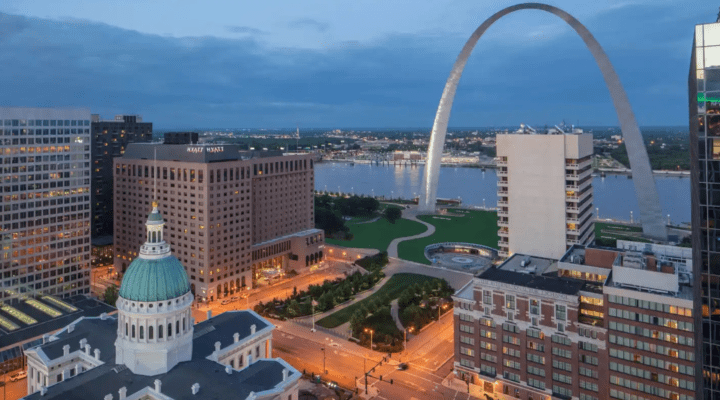
Hyatt Regency at the Arch, St. Louis, 9–11 March 2023
The 53rd annual meeting of the American Society for Eighteenth-Century Studies takes place in St. Louis. HECAA will be represented by the Anne Schroder New Scholars’ Session, chaired by Emily Casey and Amy Torbert, on Friday, starting at 11.30am. In addition to delivering the presidential address on Saturday, Wendy Roworth will chair a tribute session in honor of Christopher Johns on Thursday afternoon. To close out the conference, HECAA has organized a happy hour for Saturday evening. A selection of 18 additional panels is included below (of the 179 sessions scheduled, many others will, of course, interest HECAA members). For the full slate of offerings, see the program.
◊ ◊ ◊ ◊ ◊
T H U R S D A Y , 9 M A R C H 2 0 2 2
Westminster Abbey Revisited
Thursday, 8:00–9:30am, Sterling 9
Chair: Bradford MUDGE, University of Colorado Denver
1. Cedric REVERAND, University of Wyoming, “Westminster Abbey’s Invisible Architect”
2. Laura ENGEL, Duquesne University, “‘She will not allow one to look elsewhere’: Queen Elizabeth I, Westminster Abbey, and the Uncanny Seduction of Wax”
3. David VINSON, Auburn University, “(Re)Making Major John André: Britain’s Revisionary Strategies for Masking Wartime Failures”
◊ ◊ ◊ ◊ ◊
All Things Great and Small: Miniatures and Monstrosities
Thursday, 8:00–9:30am, Sterling 8
Chair: Daniella BERMAN, Institute of Fine Arts, New York University
1. Michelle MOSELEY-CHRISTIAN, Virginia Tech, “Miniature, Microscopy & Magnification: Scale and the Dutch Luxury Dollhouse during the Long 18th Century”
2. Katherine CALVIN, Kenyon College, “Palmyra’s Arch, Reproduced”
3. Blythe C. SOBOL, Nelson-Atkins Museum of Art and Institute of Fine Arts, NYU, “Colonialism in Miniature: John Smart’s Journey to India, 1785–1795”
◊ ◊ ◊ ◊ ◊
Plagier, citer, détourner / Plagiarizing, (Mis)quoting, and Rewriting (Society for Eighteenth-Century French Studies)
Thursday, 9:45–11:15, Sterling 2
Chair: Rudy Le MENTÉOUR, Bryn Mawr College
1. David EICK, Grand Valley State University, “The Original Sin of the Dictionnaire de Trévoux (1704)”
2. Kaitlyn QUARANTA, Brown University, “Between Citation and Censorship: Abridging the Encyclopédie”
3. Ryan BROWN, University of Chicago, “18th-Century ‘Celebrity Autobiography’ and the Plague of Plagiarism: The Case of Voltaire’s Commentaire historique”
4. Anna RIGG, Metropolitan Museum of Art, “Art Criticism as Anecdote: Souvenirs of Sophie Arnould”
◊ ◊ ◊ ◊ ◊
Asia
Thursday, 9:45–11:15, Sterling 8
Chair: Susan SPENCER, University of Central Oklahoma, Emerita
1. Yuefan WANG, University of Illinois Urbana-Champaign, “Landscape into Gardens, Gardens into Landscape: Poetry of the Banana Garden Women in Late-Seventeenth-Century Hangzhou”
2. Laura NUFFER, Colby College, “Beasts and Brides: Tales of Otherkind Marriage in Early-Modern Japanese Trosseaus”
3. Han CHEN, Penn State University, “Trading Aesthetics in the Early 18th Century: The Eccleston Screen and the Transcultural Visual Trope”
4. Lina JIANG, Fordham University, “Naturalizing the ‘Chinese Lady’ in ‘Her New English Garb’: Thomas Percy’s Translation of the Chinese Fiction Hau Kiou Choaan (1761)”
◊ ◊ ◊ ◊ ◊
Special Session, Lightning Round: ‘Sex Objects’ and Unstable Luxury
Thursday, 9:45–11:15, Sterling 9
Chair: Joelle DEL ROSE, College for Creative Studies
1. Mary PEACE, Sheffield Hallam University, “The Divan Club and the Contradictions of Enlightenment”
2. George WILLIAMS, Independent Scholar, “Geisha and Yuna: Bathhouse Culture, Desire, and the Shifting Roles of Women during the Kensai Reforms of the Late 18th Century’”
3. Elena DEANDA-CAMACHO, Washington College, “Condoms and Dildos in 18th-Century Europe: Spain and France”
4. Michelle LYONS-MCFARLAND, Case Western Reserve University, “The Sexiest Silver Ever: Valuation and ‘Virtue’ in Defoe’s Roxana”
◊ ◊ ◊ ◊ ◊
Poetry and the Arts
Thursday, 9:45–11:15, Mills 5
Chair: Amy TORBERT, Saint Louis Art Museum
1. Chip BRADLEY, University of California, Davis, “Phillis Wheatley Peters’ Desire to Look: Ekphrasis and Lyric Interiority”
2. Johannah KING-SLUTZKY, Columbia University, “Poetic Energy and Literature as a Response to Resource Scarcity in the Long 18th Century”
3. Elizabeth GIARDINA, University of California, Davis, “The Portland Vase and the Mysterious Initiations of Erasmus Darwin’s Visual Poetics”
◊ ◊ ◊ ◊ ◊
Roundtable: Performing Challenges to Imperialism
Thursday, 11:30–1:00, Sterling 6
Chair: Kristina STRAUB, Carnegie Mellon University
1. Jean I. MARSDEN, University of Connecticut, “Adaptation and Imperialism”
2. Allison CARDON, College of Wooster, “Samuel Foote’s Nabob and Imperialism Turned Inward”
3. Monica Anke HAHN, Community College of Philadelphia, “Tinsel and Toy Theaters: Decolonizing the British Empire at Home”
4. Lisa A. FREEMAN, University of Illinois Chicago, “Race and the Failures of Imperial Imagination in Edward Young’s The Revenge”
◊ ◊ ◊ ◊ ◊
Rome, Italian Art, and the Catholic Enlightenment: A Tribute to Christopher M.S. Johns (Presidential Session)
Thursday, 4:30–6:00, Regency E
Chair: Wendy Wassyng ROWORTH, University of Rhode Island
1. Carole PAUL, University of California, Santa Barbara, “Rome and the Motivations for Public Art Museums”
2. Jeffrey COLLINS, Bard Graduate Center, “Seeing is Believing: Marchionni and Bergondi at the Crossing of Saint Peter’s”
3. Rebecca MESSBARGER, Washington University St. Louis, “Betwixt Trent and Beccaria: The Pope’s ‘Moderately Modern’ Criminal Justice Reforms”
◊ ◊ ◊ ◊ ◊
Indigenous, Black, Asian, and Mixed-Race Architects and Builders in the Americas
Thursday, 4:30–6:00, Sterling 5
Chair: Luis Gordo PELÁEZ, California State University, Fresno, and Juan Luis BURKE, University of Maryland
1. Luis J. CUESTA, Universidad Iberoamericana, “Labor Force and the Architect’s Self Image: Indios, Mestizos and Criollos during New Spain’s Town Planning under the Bourbon Reform. The Case of ‘D. Ignacio Castera, maestro de architectura’”
2. Cody BARTEET, University of Western Ontario, “Maya Masons, Carpenters, and Masters in 18th-Century Yucatán: Pre-Contact Legacies in the Colonial Era”
3. Sabina DE CAVI, Universidade Nova, Lisboa, “Aleijadinho, creole sculptor-architect from Minas Gerais: Expressionism, Myth, and Artistic Practice in 18th-Century Brazil”
◊ ◊ ◊ ◊ ◊
Making Knowledge in the Atlantic World
Thursday, 4:30–6:00, Mills 3
Chair: Daniella BERMAN, Institute of Fine Arts, New York University
1. Sahai COUSO DIAZ, Vanderbilt University, “Antonio Parra’s Collection: Material Culture, Displays, and Trans-Atlantic Networks”
2. E. Bennett JONES, The Huntington Library, Art Museum, and Botanical Gardens, “The Entire Skin of the Bird: Whooping Cranes, Indigenous Expertise, and Mark Catesby”
3. Jacob EDMOND, University of Otago, “Total Confusion: Making and Confounding Knowledge in 18th-Century Cross-Readings from the Newspaper”
◊ ◊ ◊ ◊ ◊
Amateur Art
Chair: Katherine A. P. ISELIN, University of Missouri
Thursday, 4:30–6:00, Mills 7
1. Fiona BRIDEOAKE, American University, “Inside and Outside at A La Ronde”
2. Brittany LUBERDA, Baltimore Museum of Art, “Paper & Paste, Shell & Hair: The Bonnell Sisters and Craft”
3. Jennifer VAN HORN, University of Delaware, “Flora’s Profile: Enslavement, Resistance, and the Silhouette”
4. Andrea PAPPAS, Santa Clara University, “‘My Will and Pleasure’: Art and Enslavement in Two Massachusetts Pictorial Embroideries, 1756–1758”
◊ ◊ ◊ ◊ ◊
F R I D A Y , 9 M A R C H 2 0 2 2
‘Nature Display’d’: Visualizing the Natural World
Friday, 8:00–9:30am, Mills 3
Chair: Anne Nellis RICHTER, Independent Scholar, and Melinda MCCURDY, Huntington Library, Art Museum, and Botanical Gardens
1. Elisa CAZZATO, Università Ca’ Foscari/NYU, “The Spectacle of Nature: Theatre Sets and Gardens in 18th-Century Paris”
2. Angela ESCOTT, Independent Scholar, “The Environment and Commercial Prosperity Considered in Hannah Cowley’s Scottish Village (1787 and 1813) and Oliver Goldsmith’s Deserted Village (1770)”
3. Dani EZOR, Southern Methodist University, “A Colonial Arboretum: Tropical Hardwoods at the Toilette Table in the French Caribbean and France”
4. Tori CHAMPION, University of St. Andrews, “Boundaries, Borders, and Women’s Naturalisms: Marie-Thérèse Reboul Vien’s Illustrations for the Histoire naturelle du Sénégal, coquillages”
◊ ◊ ◊ ◊ ◊
‘L’homme mêle et confond les climats’: Jean-Jacques Rousseau and the Anthropocene (German Society for Eighteenth Century Studies)
Friday, 9:45–11:15, Regency F
Chair: Jürgen OVERHOFF, Universität Münster
1. Tim ZUMHOF, Universität Trier, Germany, and Nicole BALZER, University of Münster, Germany, “Rousseau’s Critique of the Anthropocene and the Legacy of Enlightenment: A New Materialist Perspective”
2. Célia ABELE, Princeton University, “‘J’aperçois une manufacture de bas’: Industry, Colonies, and Nature in Rousseau’s ‘Seventh Promenade’”
3. Giulia PACINI, William & Mary, “Deforestation and the French Climate Literature of François-Antoine Rauch and Jean-Baptiste Rougier de la Bergerie”
4. James SWENSON, Rutgers University, “A Rediscovered Text by Rousseau on the Notion of Climate”
5. Jason KELLY, Indiana University Purdue University Indianapolis, “Making ‘Nature’ in the Anthropocene”
6. Charlee BEZILLA, George Washington University, “L’art de ‘se circonscrire’: Rousseau on Living in the Anthropocene”
◊ ◊ ◊ ◊ ◊
Anne Schroder New Scholars Session (HECAA)
Friday, 11:30–1:00, Sterling 9
Chair: Emily CASEY, University of Kansas, and Amy TORBERT, Saint Louis Art Museum
1. Kaitlin R. GRIMES, Auburn University, “The Metonymic Colonial Materiality of Ivory Ships in Early Modern Denmark-Norway”
2. Elisabeth (Lizzie) RIVARD, University of Virginia, “Discipline and Disorder: 18th-Century British Drawing Practice in the Age of Academies”
3. Sabina SULLIVAN, Boston College, “Pack Up Your Jewels: Beauty, Currency, and Character in the Work of Penelope Aubin”
4. Demetra VOGIATZAKI, Harvard University, “The Curious Case of Louis François Petit-Radel (1739–1818)”
◊ ◊ ◊ ◊ ◊
The Enlightened Body? Part I
Friday, 11:30–1:00, Sterling 5
Chair: Anne SEUL, Washington University in St. Louis
1. Amelia RAUSER, Franklin & Marshall College, “Fashion, Abjection, and the Enlightened Body”
2. Eleonora DEL RICCIO, Sapienza University of Rome, “The Tabulae Anatomicae by Pietro da Cortona: A Question Still to Be Explored”
3. Jacob SIDER JOST, Dickinson College, “Medicine and Politeness in Shaftesbury’s Askemata and Soliloquy”
◊ ◊ ◊ ◊ ◊
Presidential Session: Awards, Business Meeting, and Presidential Address
Friday, 2:45–4:15, Regency C
Wendy Wassyng ROWORTH, Professor Emerita of Art History University of Rhode Island, “Close Encounters and Stranger Things: Angelica Kaufman’s First Years in London”
◊ ◊ ◊ ◊ ◊
S A T U R D A Y , 9 M A R C H 2 0 2 2
Building the 18th Century: Histories of Physical Form
Saturday, 8:00–9:30am, Sterling 3
Chair: Janet R. WHITE, UNLV School of Architecture
1. Dylan Wayne SPIVEY, University of Virginia, “Palladianism and Print: Architectural Style and Representation in 18th-Century British Architecture”
2. Julie PARK, Penn State University, “Follies and Fictions of Gothic Space in 18th-Century Landscapes”
3. Luis GORDO PELÁEZ, California State University, Fresno, “The Architecture of Cigar Making: Tobacco Industry and Infrastructure in Bourbon New Spain”
◊ ◊ ◊ ◊ ◊
Enlightenment Afterlives, Part II
Saturday, 8:00–9:30am, Regency F
Chair: Joseph DRURY, Villanova University
1. David A. BREWER, The Ohio State University, “The Friends of English Magic”
2. Tekla BABYAK, Independent Scholar, “Christianity without Enlightenment: 19th-Century Musical Evocations of the 18th Century”
3. Steve NEWMAN, Temple University, “Haunted by the Enlightenment: Robert Burns, the Black Atlantic, and the Resources of Lyric in Shara McCallum’s No Ruined Stone”
4. Rachel HARMEYER, Rice University, “Lost in Austen: The Cinematic Afterlife of Angelica Kauffman (1741–1807)”
◊ ◊ ◊ ◊ ◊
Off the Beaten Path: New Perspectives on the Grand Tour
Saturday, 8:00–9:30am, Sterling 8
Chair: Sarah CARTER, University of Chicago, and Lauren DISALVO, Utah Tech University
1. Megan BAKER, University of Delaware, “The Roman Genesis of a New Franco- British Masculinity”
2. Dominic BATE, Brown University, “Coming Home: The Artistic Education of a Catholic Jacobite in the Papal States”
3. Peter DEGABRIELE, Mississippi State University, “Lady Mary Steals Some Antiquities: The Legacy of Cultural Imperialism”
◊ ◊ ◊ ◊ ◊
Inventing the Global and Discovering the World: Global Imagination, Part II
Saturday, 2:00–3:30, Mills 5
Chair: Idolina HERNANDEZ, Lindenwood University, and Heesoo CHO, Washington University in Saint Louis
1. Matt J. SCHUMANN, Bowling Green State University, “Persia in the European ‘World View’, ~1720–1747”
2. Amy FREUND, Southern Methodist University, “Killing Crocodiles at Versailles: Louis XV’s ‘Foreign Hunt’ Paintings”
3. Sarah R. COHEN, University at Albany, SUNY, “Globalizing the Caribbean for the European Dessert Table”
◊ ◊ ◊ ◊ ◊
HECAA Happy Hour
Saturday, 5:00–8:00pm, Sterling
◊ ◊ ◊ ◊ ◊
Note (added 8 March 2023) — The original posting did not include the session on Enlightenment Afterlives or the HECAA Happy Hour.










leave a comment