Symposium | Richard Castle

From Russborough House:
Richard Castle Symposium
Russborough House, Blessington, County Wicklow, 4 November 2022
Richard Castle was the pre-eminent architect and landscape designer in Ireland from 1733 until his death in 1750. Yet there is still much to learn about his origins, training, office practice, and engagement with craft practitioners. His commissions included the principal town and country houses of the period and public buildings in the capital and the provinces. His surviving domestic works include Powerscourt, Hazelwood, Iveagh House, Tyrone House, Westport House, Carton, Leinster House, Newman House (85 St Stephen’s Green), Belvedere House, and Russborough, together with public projects such as Knockbreda Church and the Rotunda Hospital.
This one-day symposium draws together new and existing scholarship on Castle’s output and considers his legacy in terms of architecture, decoration, and landscape. The first such event dedicated to Richard Castle, it includes speakers from Ireland, Europe, and Britain and takes place in one of the architect’s finest and best-preserved buildings, Russborough House in County Wicklow. Tickets can be purchased here: €55 / €25 Student (includes lunch and refreshments).
P R O G R A M M E
9.30 Registration
10.00 Morning Session
• Christine Casey (Trinity College Dublin) — Richard Castle, Architect: What We Know and What We Need to Know
• Barbara Freitag (Dublin City University) — The Troubled Life of Richard Castle
• Simon Lincoln (Irish Architectural Archive) — Drawings by Richard Castle at the Irish Architectural Archive
• Nele Luttmann (Trinity College Dublin) — Richard Castle and 18th-Century Woodworking Crafts
• Andrew Tierney (Trinity College Dublin) — Staircases and Stair Halls in the Work of Richard Castle: A Study in 18th-Century Craftsmanship
1.00 Lunch
2.00 Afternoon Session
• Melanie Hayes (Trinity College Dublin) — Craft Practice in Richard Castle’s Early Country Houses
• Steven Brindle (English Heritage) — Richard Castle in the Context of British 18th-Century Architecture
• Finola O’Kane Crimmins (University College Dublin) — Richard Castle’s Landscapes: Design Challenges and Opportunities
• Christopher Gallagher (Historic landscape consultant) — Richard Castle and the Early Designed Landscape at Russborough
Conference | Rereading Constable
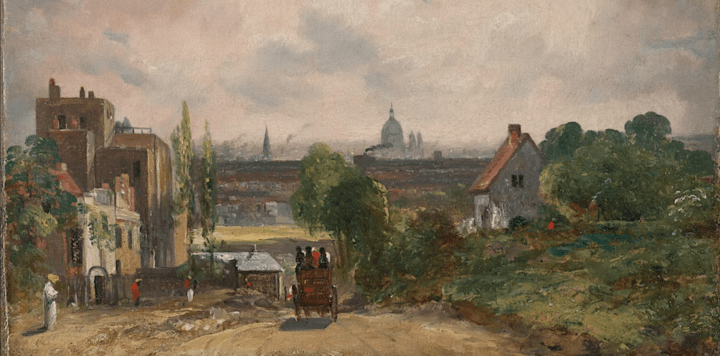
John Constable, Sir Richard Steele’s Cottage, Hampstead, 1831–32, oil on canvas, 21 × 29 cm
(New Haven: Yale Center for British Art, Paul Mellon Collection, B2001.2.25)
◊ ◊ ◊ ◊ ◊
From PMC:
Rereading Constable: Letters, Life, and Art
In-person and online, Paul Mellon Centre, London, 2 December 2022
Organized by Stephen Daniels and Mark Hallett
How do artists’ letters articulate professional and personal affiliations, embody networks, and forge allegiances? What role has letter writing played in artistic self-fashioning? In what ways do letters serve as a form of art-historical evidence, and help us understand works of art themselves?
R.B. Beckett’s multi-volume edition of Constable’s correspondence, published in six volumes by the Suffolk Records Society (1962–68), has long been recognised as an invaluable source for scholars working on the artist, and for all those interested in British art and culture in the late Georgian period. The published correspondence shows the painter to have been a shrewd, skilled writer, versed in a variety of literary, scientific, and biblical texts. His correspondents were, in turn, often highly articulate writers, including many family members, and many more with very different characters and backgrounds. Often utilised by art historians, the correspondence has more recently attracted the interest of scholars interested in the literary character and rhetorical conventions of nineteenth-century correspondence, who have subjected Constable’s letters to new kinds of critical scrutiny. This event will build on this important work, exploring Romantic art, culture, and society through the prism provided by the landscape painter’s correspondence.
The central structuring concept of this interdisciplinary conference is that speakers will focus on a single letter written by the artist, his correspondents, or other contemporary figures whose work, life, or letters can be understood in productive relation to Constable himself. These individual letters will be used to open up new questions and arguments about Constable’s life, practice, and identity as a painter, and about the wider artistic, literary, religious, and political cultures of his era.
Rereading Constable: Letters, Life, and Art has been organised as part of the PMC’s Generation Landscape research project. The conference is being convened by Stephen Daniels and Mark Hallett. Book tickets here.
We are offering up to five bursaries to support individuals who may not otherwise be able to attend the conference. Bursaries will cover the ticket price, travel, and some expenses, including childcare. If you would like to be considered for a bursary please email events@paul-mellon-centre.ac.uk with Rereading Constable Bursary in the subject field, outlining your request for a supported place by 10am, Friday, 4 November 2022.
P R O G R A M M E
9.30 Introduction by Mark Hallett (Paul Mellon Centre) and Stephen Daniels (University of Nottingham)
10.00 Session 1 | Chair: Stephen Daniels
• Alexandra Harris (University of Birmingham), New Friends, New Scenes: Constable in the Arun Valley
• Amy Concannon (University of York and Tate Britain), Strengthening Ties and Gaining Esteem: Constable Writes to Wordsworth, 15 June 1836
11.00 Tea and Coffee Break
11.30 Session 2 | Chair: Martin Postle (Paul Mellon Centre)
• Emma Roodhouse (Art Curator and Researcher), An Evening’s Amusement: Portraits, Writing, and Other Oddments from the Mason Family Album
• Sarah Cove (The Constable Research Project), A Regency ‘Nip-and-Tuck’: Constable’s Treslove Portraits Rediscovered
12.30 Lunch (provided by PMC)
Constable material available to view in the Public Study Room
1.30 Session 3 | Chair: Mark Hallett
• Morna O’Neill (Wake Forest University), John Constable, David Lucas, and Artistic Identity
• Katharine Martin (V&A and the University of Sussex), Translations and Fraught Relations: English Landscape and the Language of Collaboration
2.30 Break
2.45 Session 4 | Chair: Sarah Victoria Turner (Paul Mellon Centre)
• Gillian Forrester (Independent Scholar), ‘Solemnity, Not Gaiety’: Language and the Production of Meaning in Constable’s English Landscape Scenery
• Elenor Ling (The Fitzwilliam Museum), The ‘Definition of our Book’: John Constable, David Lucas, and their English Landscape
3.45 Tea and Coffee Break
4.15 Session 5 | Chair: Sria Chatterjee (Paul Mellon Centre)
• Rhian Addison McCreanor (University of York and Tate Britain), Repairing the House with a Thorough Painting: Reimagining 63 Charlotte Street
• Nicholas Robbins (University College London), The Life Academy and the Origins of Landscape
5.15 Panel Discussion
Stephen Daniels (University of Nottingham), Martin Myrone (Paul Mellon Centre), Trev Broughton (University of York), and Timothy Wilcox (Independent Scholar)
5.55 Closing Remarks by Mark Hallett
6.00 Drinks Reception
HECAA Zoom Event | Transporting Culture
Transporting Culture
HECAA Zoom Event, Thursday, 20 October 2022
Please join us for our next HECAA Zoom Event, Transporting Culture. It’s open to HECAA members and non-members alike. Please register in advance here.
P R O G R A M M E
Welcome 12.00 (EST) / 17.00 (BST)
12.15 Panel One
Moderator: Lorne Darnell (Courtauld Institute)
• Practicalities of Bearing Diplomatic Gifts from Versailles to Isfahan in 1705 — Samantha Happe (Graduate Research Teaching Fellow and Postgraduate Student, University of Melbourne, and Research Officer, Australian National University)
• Crates, Boxes, and Cases: The Transport of Works of Sculpture and Silver between Rome and Lisbon in the 18th Century — Teresa Leonor M. Vale (Senior Assistant Professor School of Arts and Humanities and Researcher of the ARTIS-Institute of History of Art, University of Lisbon)
• Transporting America: The Politics of Import and Export in the New Indies Gobelins Tapestry Set — Carole Nataf (PhD Candidate, Courtauld Institute)
1.45 Break
2.00 Panel Two
Moderator: Harvey Shepherd (Courtauld Institute)
• ‘Fortuna favet Fortibus!’ Early Modern Art Insurance — Avigail Moss (Lecturer, American University of Paris)
• A Thumb on the Scale: Examining the Control of Art in Comanche Trade Networks — Carlos Littles (Johns Hopkins University, Alumni)
• ‘Truly Chinese’: Transporting Chinese Objects to Germany in the 19th Century — Emily Teo (Postdoctoral Researcher, Gotha Research Centre of the University of Erfurt)
Online Workshop | Lacing around the World

Decor la Dentelle, French, ca. 1725, silk, metallic-wrapped thread, gold, 51 × 29 cm
(Washington, DC: Cotsen Textile Traces Study Collection, T-0598)
◊ ◊ ◊ ◊ ◊
From The George Washington University Museum:
Lacing around the World and across Time
The Cotsen Textile Traces Global Roundtable
Online, 12–13 October 2022
The third annual virtual Cotsen Textile Traces Global Roundtable explores the rich traditions of lacemaking through examples from the Cotsen Textile Traces Study Collection at The George Washington University Museum and The Textile Museum in Washington, D.C., October 12 and 13.
The Cotsen Textile Traces Global Roundtable: Lacing around the World and across Time includes some fifteen international scholars, artists, and designers, who will present multiple dimensions of the global art, from its history and globalization to innovations, fashion, and artistic creativity. This program is a partnership with Bard Graduate Center, New York, and Textilmuseum St. Gallen, Switzerland, and is supported through the Cotsen Textile Traces Study Collection Endowment.
Those interested in attending the roundtable should register early in order to receive links and details for joining each day of the roundtable on Zoom, as well as a full program with the detailed schedule.
The Cotsen Textile Traces Study Collection represents a lifetime of collecting by business leader and philanthropist Lloyd Cotsen (1929–2017). Comprised of nearly 4,000 fragments from all over the world, the collection offers insights into human creativity from antiquity to the present. Cornerstones of the collection include fragments from Japan, China, pre-Hispanic Peru and 16th- to 18th-century Europe. The entire collection is available online.
W E D N E S D A Y , 1 2 O C T O B E R 2 0 2 2
Situating Lace: Traditions and Transmission
10.00 Introduction
• Lori Kartchner — Curator of education, The George Washington University Museum and The Textile Museum
• John Wetenhall — Director, The George Washington University Museum and The Textile Museum
• Emma Cormack — Associate curator, Bard Graduate Center
• Marie-Eve Celio-Scheurer — Art historian, academic coordinator, Cotsen Textile Traces Study Center, The George Washington University Museum and The Textile Museum
10.30 Panel 1 | Needle Lace, Bobbin Lace: Traditions and Transmissions
• Diana Greenwold — Lunder Curator of American Art, National Museum of Asian Art, Smithsonian Institution
• Cecilia Gunzburger — Lecturer, decorative arts and design history, the George Washington University and Smithsonian Institution
• Sarah Besson Coppotelli — Head of collections, Musée et château de Valangin, Switzerland
11.30 Panel 2 | Mimicking Lace
• Sumru Krody — Senior curator, The Textile Museum Collection, The George Washington University Museum and The Textile Museum
• Vaishnavi Kambadur — Assistant curator, Museum of Art & Photography (MAP), Bengaluru, India
T H U R S D A Y , 1 3 O C T O B E R 2 0 2 2
Exploring Global Traditions and Industrial Innovations in Contemporary Creativity
10.00 Keynote Opening
• Emma Cormack — Associate curator, Bard Graduate Center
• Ilona Kos — Curator, Textilmuseum St. Gallen, Switzerland
• Michel Majer — Professor emerita, Bard Graduate Center
10.30 Panel 3 | Handmade Lace Today
• Caroline Kipp — Curator of contemporary art, The George Washington University Museum and The Textile Museum
• Elena Kanagy-Loux — Collections specialist, Antonio Ratti Textile Center, The Metropolitan Museum of Art
• Nidhi Garg Allen — Founder and CEO, Marasim, New York/India
11.30 Panel 4 | Industrial Innovations
• Elena Kanagy-Loux — Collections specialist, Antonio Ratti Textile Center, The Metropolitan Museum of Art
• Jérémy Gobé — Artist, founder, Corail Artefact, France
• Rose-Lynn Fisher — Artist, United States
Symposium | Close Encounters: The Low Countries and Britain
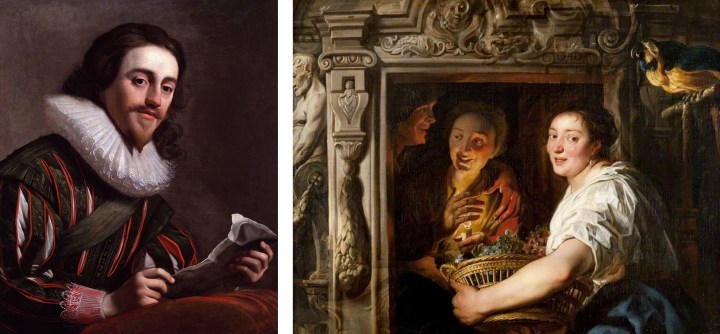
Left: Gerrit van Honthorst, King Charles I, 1628 (London: National Portrait Gallery). Right: Jacob Jordaens, A Maidservant with a Basket of Fruit and Two Lovers, 1629–35 (Glasgow: Kelvingrove Art Gallery and Museum).
◊ ◊ ◊ ◊ ◊
From CODART:
Close Encounters: Cross-Cultural Exchange between the Low Countries and Britain, 1500–1800
RKD – Netherlands Institute for Art History, The Hague, 22–23 September 2022
On 22 and 23 September 2022, a symposium will be held at the RKD – Netherlands Institute for Art History on the occasion of the launch of the richly annotated and illustrated digital English version of Horst Gerson’s chapter on Britain from his Ausbreitung und Nachwirkung der holländischen Malerei des 17. Jahrhunderts of 1942 (Dispersal and Legacy of Dutch Painting of the 17th Century). The event is jointly organized by the RKD and the embassy of the UK in the Netherlands, University of Amsterdam and Courtauld Institute of Art.
Before 1942, the study of Dutch art and artists in Britain was largely uncharted territory. In the last thirty years, research on early modern artists migration and cultural exchange between the Low Countries and Great Britain has progressed rapidly and in various directions. In particular, the Dutch and Flemish artists community in London and the careers of individual artists at the English and Scottish courts have received attention. The same goes for the collection history of Netherlandish art in the UK. The launch of the annotated and translated version of Gerson’s text marks the perfect occasion to rethink, discuss, and contextualize his original findings with current knowledge.
At the symposium Close Encounters, international experts from the UK, the United States, Germany, and The Netherlands will present a range of papers that will draw attention to different aspects of this cultural exchange: artists’ and dealers’ travels and routes, artist’s education, networks, patronage, as well as styles and its implications for connoisseurship. Tickets are available through the RKD website: €30 (€15 students).
Program Committee
• Rieke van Leeuwen (RKD)
• Angela Jager (RKD)
• Karen Hearn (Honorary Professor, University College London)
• Sander Karst (University of Amsterdam)
• David Taylor (Independent, previously National Trust and National Galleries Schotland)
• Joanna Woodall (Courtauld Institute of Art)
T H U R S D A Y , 2 2 S E P T E M B E R 2 0 2 2
9.45 Registration and Coffee
10.30 Welcome and Introduction
• Chris Stolwijk (General Director RKD) — Welcome
• Lucy Ferguson (Deputy Ambassador of the UK in the Netherlands) — Welcome
• Rieke van Leeuwen — Introduction to the Program
11.00 Session 1: Cross-Cultural Networks and Collaboration
Chairs: Sander Karst and David Taylor
• Adam White — Nicholas Stone the Elder (c. 1587–1647) and His Circle: Anglo-Netherlandish Inter-Action in Sculpture, Architecture, and Painting
• Imogen Tedbury — The Van de Velde Studio at the Queen’s House
• Ada De Wit — Woodcarvers and Their Anglo-Netherlandish Network: Grinling Gibbons and Laurens van der Meulen
12.30 Lunch Break
13.30 Session 2: Thinking Differently about Cross-Cultural Exchange
Chairs: Karen Hearn and Joanna Woodall
• Gary Alabone — Leatherwork and Kwab: Influences between English and Netherlandish Picture Frames
• Flash Talk: Eleanor Stephenson — Copying the Cartouche: Cross-Cultural Exchanges in Dutch and English Cartography, 1658–1675
• Amy Lim — John van Collema: A Dutch India Merchant in London
• Ulrike Kern — Dutch Art Terminology in the British Workshop
15.15 Coffee and Tea Break
15.45 Session 3: 17th-Century Netherlandish Painters and Their Relations to British Patrons
Chairs: Angela Jager and Joanna Woodall
• Michele Fredericksen — Between Two Courts: Gerrit van Honthorst and Stuart Patrons in London and The Hague
• Flash Talk: Rebekka Hoummady — A Kings Daughter in Exile: Diplomatic and Artistical Mediation between the Courts of Elizabeth Stuart and Charles I by Gerrit van Honthorst
• John Loughman — Samuel van Hoogstraten’s English Patrons
Launch of Gerson Digital: Britain
• Karen Hearn and Rieke van Leeuwen — Gerson Digital: UK, the Project
Panel Discussion
F R I D A Y , 2 3 S E P T E M B E R 2 0 2 2
9.30 Registration and Coffee
10.00 Session 4: Collecting and Art Trade
Chairs: Angela Jager and David Taylor
• Ellinoor Bergvelt and Helen Hillyard — Dutch Paintings for Everyone! A Study of the Cartwright Collection at Dulwich Picture Gallery
• Sander Karst — Migration and Adaptation: Netherlandish Artists and the Art Market in Late 17th-Century Britain
• Tico Seiffert — Collecting Rembrandt’s Art in Britain before 1700
• Kate Heard — George IV (1762–1830) as a Collector of Dutch and Flemish Prints and Drawings
• Quentin Buvelot — British Connections in the Collection of the Mauritshuis
12.30 Lunch Break Opportunity to visit the Mauritshuis
14.30 Session 5: Legacy of the Dutch Golden Age
Chairs: Karen Hearn and Rieke van Leeuwen
• Remmelt Daalder — ‘Whom no Age has equalll’d in Ship-painting’, Willem van de Velde: World Famous in 18th-Century England
• Rica Jones — Untangling the Tangled Evidence of Jan Griffier the Elder’s Descendants and a Note on Their Legacy in British Painting
• Rebecca Welkens — Thomas Worlidge, His Approach to Rembrandt’s Prints, and the Construction of Concepts of Fame in England in the 18th Century
• Flash Talk: Quirine van de Meer Mohr — In the Wake of the Old Masters: The Migration of Dutch Modern Artists in Early 19th-Century Britain
16.30 Drinks Reception
Online Workshop around Simon Burrows’ Oeuvre

From the Pamphlets and Patrons project:
18th-Century Libelles, Libellistes, and Book Trade
Workshop around Simon Burrows’ Oeuvre
Online and in-person, 22 September 2022
Organised by Damian Tricoire and the Pamphlets and Patrons (PAPA) project at the University of Trier
All times are Central European Time
13.00 Introduction — Damien Tricoire (Universität Trier)
13.15 Where’s Marie-Antoinette? Pamphlets, Politics, and French Enlightenment Print Culture — Simon Burrows (Western Sydney University)
14.00 The Palais-Royal Style of Revolution: Brissot, Secretary General of the Chancellery of the Duc d’Orléans — Damien Tricoire (Universität Trier)
14.45 Break
15.15 Political Pamphlets and Print Culture in Liège from the Triumph of Enlightenment to Revolution, 1764–1790 — Daniel Droixhe (Université de Liège)
16.00 Persecuting Printers in France before and after 1789 — Jane McLeod (Brock University)
16.45 Break
17.15 Round Table Discussion
• Simon Burrows (Western Sydney University)
• Edmond Dziembowski (Université de Franche-Comté)
• Olivier Ferret (Université de Lyon)
• Julian Swann (Birbeck University of London)
If you wish to attend online through Zoom or in person, please write to doering@uni-trier.de.
22 September 2022, 12.45pm Paris
Zoom-Meeting
https://uni-trier.zoom.us/j/87391514608?pwd=MlMxYzFsU1hUNFM0OUhndzMwZXBYUT09
Meeting-ID: 873 9151 4608
Passcode: dbjpxFg1
Colloquium | Inventaires et cartographies du patrimoine
From the conference programme, with more information about the Collecta research project noted below :
Inventaires et cartographies du patrimoine, XVIIe–XXIe siècle
École du Louvre, Paris, 15–16 September 2022
 Organisé dans le cadre du programme de recherche Collecta Archives numériques de la collection Gaignières (1642–1715)
Depuis 2014, le programme de recherche Collecta interroge les pratiques érudites du Grand Siècle et les met en perspective à partir de l’exemple de la collection de François-Roger de Gaignières (1642–1715).
Sa reconstitution et sa mise en ligne ont requis la création d’un outil numérique (collecta.fr) qui tente de rendre compte des liens et des cheminements qui se trament, au sein de la collection :
• à travers les stades du travail de l’érudit — des sources, notes et brouillons aux dessins mis au net et classés pour la présentation au public ;
• à travers les matériaux réunis par l’érudit — tableaux et gravures, manuscrits et imprimés, dessins et copies d’archives ;
• à travers les points d’entrée retenus par l’érudit — personnes, familles, institutions, lieux, périodes.
Se dessinent ainsi les itinéraires mentaux, documentaires, mais aussi spatiaux de l’érudit à travers ses sources, son réseau de contacts, les lieux qu’il visite, ses centres d’intérêt et les méthodes qu’il déploie dans son objectif d’inventaire des monuments et des familles du royaume et de l’Europe.
J E U D I , 1 5 S E P T E M B R E 2 0 2 2
9.30 Accueil des participants
10.00 Ouverture du colloque — Claire Barbillon (École du Louvre) et François Bougard (Institut de recherche et d’histoire des textes – CNRS)
10.20 Introduction
• Après Gaignières : continuité et discontinuité, les enjeux d’une reconstitution numérique de la collection — Anne Ritz-Guilbert (École du Louvre / Institut de recherche et d’histoire des textes – CNRS)
• Le point de vue du design : mise en perspective de la nouvelle interface Collecta & esthétique de la structure — Sophie Fétro (Paris 1 Panthéon-Sorbonne) et Kim Sacks (Université de Strasbourg)
13.00 I. Héraldique et territoires
Michel Pastoureau (École pratique des Hautes Études)
• Marquage héraldique, cartographie et histoire des lignages : les relevés de Gaignières à la chapelle des chanoinesses de Luynes — Sarah Héquette (École du Louvre / École pratique des Hautes Études)
• Une géographie des ordres ? L’ombre de la chevalerie dans la collection Gaignières — Pierre Couhault (Bibliothèque nationale de France)
• Inventorier et cartographier l’héraldique des municipalités portugaises : l’armorial de Cristóvão Alão de Morais — Miguel Metelo de Seixas (Universidade NOVA de Lisboa)
• La cartographie héraldique de Frotier de la Messelière — Laurent Hablot (École pratique des Hautes Études)
15.45 II. La copie comme mise en récit des archives
Marlène Helias-Baron (Institut de recherche et d’histoire des textes – CNRS)
• L’apport des copies de Gaignières à la connaissance des archives de l’abbaye de Longpont — Benoît-Michel Tock (Université de Strasbourg)
• Voyage au passé. Les cartulaires de la collection Gaignières comme fenêtres sur les archives de jadis — Annalena Müller (Université de Fribourg)
V E N D R E D I , 1 6 S E P T E M B R E 2 0 2 2
9.00 III. Voyages, séries, topographies
Émilie d’Orgeix (École pratique des Hautes Études)
• Construire une collection topographique au XVIIe siècle. L’élaboration des portefeuilles dans la collection Gaignières — Damien Bril (Institut national du patrimoine)
• Mémoires des lieux, mémoires des hommes. Étude du portefeuille topographique « Beauce et Vendômois » de la collection Gaignières (1642–1715) — Clotilde Vivier (École du Louvre)
• Imprimer, collecter et concentrer l’image des villes. Lieux d’édition et représentations urbaines en Europe (fin du XVe siècle – milieu du XVIIe siècle) — Eric Grosjean (École pratique des Hautes Études)
• Voyager en image : la topographie dans la collection de Jehannin de Chamblanc (1722–1797) — Johanna Daniel (Institut national d’histoire de l’art, LAHRA – Lyon 2)
14.00 IV. Visualisation et narration, du portefeuille au numérique
Anne Ritz-Guilbert (École du Louvre/Institut de recherche et d’histoire des textes – CNRS)
• Les humanités numériques, un lieu pour les archives du bizarre — Myriam Marrache-Gouraud (Université de Poitiers)
• Construire un outil d’association de données à l’heure de l’open data : la Fabrique Numérique du Passé — Laurent Costa (UMR 7041 ArScAn)
• La fabrique du paysage urbain parisien avant les destructions haussmanniennes : inventorier et cartographier les savoirs — Ellie Khounlivong (École du Louvre), Christophe Claramunt (Institut de Recherche de l’École navale), Éric Mermet (Centre d’analyse et de mathématique sociales, UMR 8557), et Alexandre Radjesvarane (CY Tech)
◊ ◊ ◊ ◊ ◊
From Le Domaine d’Intérêt Majeur Sciences du Texte et Connaissances Nouvelles:
The Collecta + Project is part of a larger research program in digital humanities, devoted to the collection of François-Roger de Gaignières (1642–1715). After launching the website http://www.collecta.fr and its database which provides a reconstitution of the collection now dispersed, Collecta + has defined three main objectives, in partnership with the ANG-G project (Digital Geolocated Archive — the Gaignières collection) sponsored by the ANR (Research Project Funding) within the framework of the IRHT-CNRS.
The first goal is to enrich the database, giving priority to documents relating to the Ile-de-France region. The complete digitization of the Gaignières collection kept in the Bodleian Library of Oxford—1,600 drawings of medieval and modern monuments, mainly from the Paris region—offers a considerable breakthrough in the knowledge of the region’s collection and heritage.
Secondly, we will examine the contribution of geolocation to bring out a better understanding of the collection and the monuments concerned. A mobile application based on the drawings of the Gaignières collection will be the central tool of a participatory research method to launch an inquiry on local heritage. The collection of geolocated datas will offer the opportunity to conduct a large-scale study on the history of viewpoints.
The third objective is to promote interchanges with other projects or partners of the DIM STCN, in particular E-signa and the Bibale database of the IRHT-CNRS. Sharing digital ressources and tools, we will accentuate the interoperability of academic programmes and we will ultimately offer a common platform as a reference frame for research on regional, national and international levels.
Conference | English and Irish Crystal Drinking Glass, 1640–1702
From the V&A:
Celebrating the Birth of English and Irish Crystal Drinking Glass, 1640–1702
In-person and online, Victoria and Albert Museum, London, 6 October 2022
Organised by Colin Brain, Reino Liefkes, and Caroline McCaffrey-Howarth, with assistance from Simon Spier
2022 has been designated the International Year of Glass by the United Nations. This year also marks 125 years since the publication of Albert Harshorne’s Old English Glasses, the first serious study of the history of English and Irish glass. To celebrate, the V&A is presenting a conference Celebrating the Birth of English and Irish Crystal Drinking Glass, 1640–1702, in partnership with the Association for the History of Glass. This study day aims to explore the evolving story of the birth of these sophisticated products, a century before the ‘industrial revolution’ began.
The conference has been organised by Colin Brain (Association for the History of Glass), Reino Liefkes (V&A) and Dr Caroline McCaffrey-Howarth (University of Edinburgh), with assistance from Dr Simon Spier (V&A).
In-person tickets, through Eventbrite
Online tickets, through Eventbrite

Roemer drinking glass, attributed to George Ravenscroft, probably at the Savoy Glasshouse, London, ca. 1677 (London: V&A, C.530-1936).
P R O G R A M M E
10.00 Registration with Tea and Coffee
10.25 Welcome — Justine Bayley and Reino Liefke
10.30 Morning Session
• Colin Brain — ‘And of noe other sorts or fashions’: Fashionable Design in the Birth of English and Irish Crystal Drinking Glass
• Peter Francis — The Irish ‘Lead Glass Revolution’
• Jo Wheeler — Recipes for Lead-glass and Cristallo in Venetian and Florentine Sources and Their Influence on Antonio Neri
• Reino Liefkes — A New Type of Colourless Glass in Imitation of Rock Crystal: Crizzled Glass of the Late-Seventeenth Century
1.00 Lunch Break
2.15 Afternoon Session
• Oliver Gunning — New Perspectives on the Role of the Migrant in British Crystal Glass
• Antoine Giacometti — Seventeenth-Century Glass from the Dublin Castle Excavations, 1961–1987
• Inês Coutinho and Colin Brain — Science in the Service of History: Analysis of Early English and Irish Crystalline Glasses
• Iris Moon and Karen Stamm — Drinking Glass in the Met Museum’s British Galleries
5.10 Closing Remarks — Caroline McCaffrey-Howarth
Tessin Lecture | Melissa Hyde on Pink and Portraits
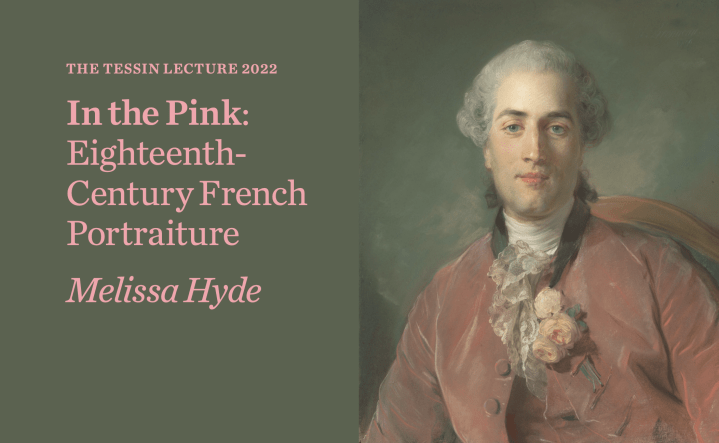
Jean-Baptiste Perronneau, Portrait of Olivier Journu, 1756, pastel on blue-gray laid paper, laid down on canvas, 58 × 47 cm
(New York: Metropolitan Museum of Art, 2003.26)
◊ ◊ ◊ ◊ ◊
This conference marks the 200th anniversary of the establishment of Sweden’s national portrait gallery at Gripsholm. Melissa Hyde will deliver this year’s Tessin lecture as the keynote address on Thursday, 15 September. The full conference schedule is available here.
Statens porträttsamling 200 år / The State Portrait Collection: 200 Years
Nationalmuseum, Stockholm and Gripsholm Castle, Mariefred, 15–16 September 2022
Melissa Hyde, In the Pink: Eighteenth-Century French Portraiture
Though never as ubiquitous in the eighteenth century as the colour blue, pink became the colour par excellence of the French Rococo. The colour was intimately associated with the so-called ‘Godmother of the Rococo’, Madame de Pompadour, the famous mistress of Louis XV. But even before Pompadour, pink was a hue much favored amongst elites in France, where it attained an unprecedented level of visibility in the visual and decorative arts and in the fashions worn by women, children, and men. This talk will demonstrate why, in the eighteenth-century, to wear pink was to make a statement—a statement made all the more emphatic and enduring when memorialized in portraiture; and one in which gender, class and/or race played a fundamental role. These matters concerning portraiture ‘in the pink’ will be addressed by way of some very basic, but actually quite complicated, questions: what did pink mean in the eighteenth century? What colors were comprehended by ‘pink’? Who did or didn’t embrace this color and why? In light of the complexities and nuances of pink, what might it have meant for a racially ‘white’ Frenchman to wear this notionally feminine colour (or to have himself depicted wearing it)?
Melissa Hyde is Professor and Distinguished Teaching Scholar at the University of Florida. Her scholarly interests include: women artists, and more broadly, the gendering of aesthetic culture, the cultural meanings of color, the history of the Salon and art criticism, self-portraiture, and questions of identity and place. She teaches courses on European art (c. 1650–1830), as well as courses on gender and the visual arts from the late Renaissance to the early nineteenth century. Professor Hyde’s research and publications focus on gender and visual culture in eighteenth- century France. Her work has appeared in The Art Bulletin, Eighteenth-Century Studies, Studies in Eighteenth-Century Culture, and numerous edited volumes. Key publications include Making Up the Rococo: François Boucher and His Critics (2006), Becoming a Woman in the Age of Enlightenment (catalogue for an exhibition she co-curated in 2017), and numerous book chapters and articles. She is author of two recent essays on the contemporary pastel artist, Nicolas Party. She is currently completing a book project entitled, Painted by Herself: Marie-Suzanne Giroust: Madame Roslin, the Forgotten Académicienne.
The Tessin Lecture
Once a year the Nationalmuseum, Stockholm invites a prominent international scholar to give a lecture in art history. The lecture, which is public, is a way to pay tribute to an exceptional scholar in art history and emphasize the museum’s commitment to research.
Conference | Ales through the Ages
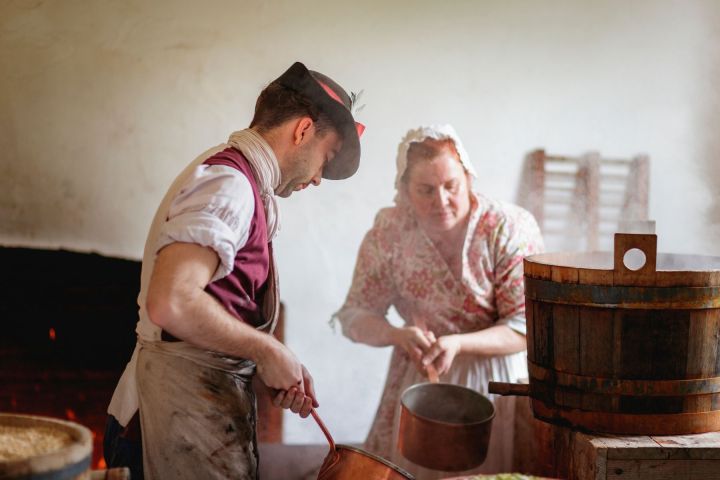
From the announcement (20 July 2022) and the conference website:
Ales through the Ages
Online and in-person, Colonial Williamsburg, 11–13 November 2022
Craft beer may be enjoying a surge in popularity, but as participants in Colonial Williamsburg’s Ales through the Ages conference will discover, there’s nothing new about the beverage. In this one-of-a-kind history conference, offered both virtually and in-person November 11–13, participants will journey through time and space with some of the world’s top beer scholars to follow beer from its primitive roots to its modern form.
Register to reserve your opportunity to mingle with an international lineup of guests including maltsers, authors, brewery owners, social media influencers, and entrepreneurs. Speakers include
• Pete Brown, author, journalist, broadcaster, and consultant in food and drink, and 2020 recipient of Imbibe Magazine’s Industry Legend award, delivering the opening keynote, sponsored by the Virginia Beer Museum: The Highs and Lows of Researching Beer History
• Award-winning author and former journalist, Martyn Cornell, an authority on the history of British beer and the development of British beer styles, discussing the origins of Pale Ale
• George ‘Butch’ Heilshorn, co-founder of Earth Eagle Brewings and Talisman Spirits, going Back to the Future of Botanical Beers
• Food and drink historian Marc Meltonville on reconstructing a Tudor brewery and producing beer from a 16th-century recipe, the products of his venture with the FoodCult project
• Maltster Andrea Stanley on developments in malting technology in the 18th and 19th centuries
• Author Lee Graves exploring the connection between early American brewing and the West African beer traditions of enslaved populations
• Craig Gravina journeying through 400 Years of Beer and Brewing in New York’s Hudson Valley
• Journalist and author Stan Hieronymus providing insight into Breaking the Lupulin Code
• Ron Pattinson on the transformative story of UK brewing during World War I
• ‘The Beer Archaeologist’, Travis Rupp, sharing what he’s dug up most recently on ancient brewing
• Kyle Spears and Dan Lauro from Carillon Brewing Co. on operating a historic brewery in the modern world
The full program is available here»
In-person registrants will have the opportunity to enjoy a pint from the past with speakers and other attendees at an opening reception on Friday night sponsored by Aleworks Brewing Company that will feature their historic brew collaborations with Colonial Williamsburg; Saturday lunch accompanied by 18th-century theater and historically-based brews; and a post-conference gathering at Virginia Beer Company with guest speakers, Historians on Tap. Tickets for the event at Virginia Beer Company are available to in-person attendees for $20 and include beer samples from local breweries, including special brews developed in partnership with Colonial Williamsburg’s 18th master of historic foodways, Frank Clark. Attendees are also encouraged to bring and share homebrews for a truly unique taste-testing experience.
In-person registration is $275 per person and includes access to lectures, the welcome reception, and the Saturday lunch. Virtual-only registration is $100 per person and includes access to lectures through the conference streaming platform. Both in-person and virtual-only registration include a 7-day ticket voucher to Colonial Williamsburg’s Art Museums and Historic Area, valid for redemption through 31 May 2023. A limited number of virtual and in-person conference scholarships are available to students, museum or non-profit professionals, and emerging brewers with an application deadline of September 20. Special room rates at Colonial Williamsburg hotels are available for in-person conference registrants. All registrants will have access to the main conference lectures via the streaming platform through 31 December 2022.
This conference is made possible by the generosity of private and corporate sponsors including Virginia Beer Company, Virginia Beer Museum, and Aleworks Brewing Company.










 Enfilade
leave a comment