Conference | Stereotypes
This week at The Huntington:
Stereotypes and Stereotyping in the Early Modern World
The Huntington Library, Art Collections, and Botanical Gardens, San Marino, 19–20 April 2019
 The use and abuse of stereotypes is not limited to present-day politics. In this conference, experts in British and American history examine stereotypes related to such vital issues as race, religion, gender, nationality, and occupation. The program explores how stereotyping then, as now, persisted across different spheres of life; how individuals and groups responded; and with what consequences.
Funding provided by The Huntington’s William French Smith Endowment.
F R I D A Y , 1 9 A P R I L 2 0 1 9
8:30 Registration and coffee
9:15 Welcome by Steve Hindle (The Huntington) and opening remarks by Koji Yamamoto (University of Tokyo)
9:30 Session 1: Popery and Religious Stereotypes
Moderator: Koji Yamamoto
• Jennifer Anderson (California State University, San Bernardino), Controversial Figures as Synecdoches: Thomas Nash’s Distorted Snapshots of Puritans and Catholics
• Peter Lake (Vanderbilt University), Puritans and Projectors in the Plays of Ben Jonson
• Abigail Swingen (Texas Tech University), Whigs, Tories, and Jacobites: Stereotypes and the Financial Revolution
12:30 Lunch
1:30 Session 2: Economy, Occupations, and Gender
Moderator: Peter Lake
• Koji Yamamoto, Beyond ‘Keywords’: History Plays, Stereotypes, and the Staging of Political Economy in Late Elizabethan England
• Jane Whittle (University of Exeter), The Early Modern Housewife: A Positive Stereotype of the Working Woman?
• Lisa Cody (Claremont McKenna College), Mind, Body, Soul, and Mirrors: Stereotyping Women in Early Modern England
S A T U R D A Y , 2 0 A P R I L 2 0 1 9
9:00 Registration and coffee
9:30 Session 3: Colonies and Empire
Moderator: Koji Yamamoto
• Kristen Block (University of Tennessee, Knoxville), Creating and Fighting Stereotypes of Sin and Sexual Excess: Leprosy and Race in the Eighteenth-Century Caribbean
• Valerie Forman (New York University), Managing Slave Plantation Labor: Or, How Productivity Became Beautiful and Accumulation Anti-tyrannical. A Study of the Political Economy of Sugar in the Early Modern Transatlantic World
• Sharon Block (University of California, Irvine), Daily Descriptions as Racemaking in Colonial North America
12:30 Lunch
1:30 Session 4: Stereotypes in Archives and on Stage
Moderator: Peter Lake
• Bridget Orr (Vanderbilt University), Re-presenting Character: Dramaturgy Versus Performance in Eighteenth-Century Stereotypes
• Miles Parks Grier (Queens College, City University of New York), Staging the Transferable Stigma of Early Modern Blackness
• Brendan Kane (University of Connecticut), Explicit Bias and the Politics of Difference in Irish-English Encounter
4:30 Closing Remarks
Exhibition | Making Time: The Art of the Kentucky Tall Case Clock
Now on view at the Speed Art Museum:
Making Time: The Art of the Kentucky Tall Case Clock, 1790–1850
Speed Art Museum, Louisville, 2 February — 16 June 2019
Curated by Scott Erbes

Case attributed to Daniel Spencer (American, about 1741–1796), Lexington, Fayette County, Kentucky, Tall Case Clock, 1793–96; cherry, poplar, chestnut, walnut; eight-day brass and steel movement, 98 inches high (Cox Collection).
Making Time: The Art of the Kentucky Tall Case Clock, 1790–1850 is a first-of-its-kind exhibition devoted to early Kentucky tall case, ‘grandfather’ clocks. The exhibition showcases twenty-seven clocks made across a wide swath of Kentucky from the 1790s through the 1840s. The majority of the clocks come from family and private collections and have rarely, if ever, been shared with the public. The exhibition is accompanied by a fully illustrated scholarly catalog that presents significant new research on early Kentucky cabinetmaking and the state’s watch and clock trade.
When shown side-by-side, the clocks reveal the expert hands of many Kentucky artisans; illustrate the hidden world of gears, bells, weights, and pendulums that kept the clocks running and chiming; and record the complex webs of craft, taste, trade, and technology needed to make these practical works of art. Throughout the exhibition, the clock cases illustrate the talents of early Kentucky cabinetmakers, both native-born and those who came to the state in search of success. These artisans transformed local woods like cherry and walnut into towering cases that frequently incorporate flourishes like inlaid decoration, carved ornament, and richly figured veneers. The results range from urbane, Federal-style creations to more idiosyncratic, often boldly inlaid forms. Numerous Kentucky silversmiths are associated with the intricate movements housed within the various clocks.
Just in Time: Exploring Kentucky Tall Case Clocks
Speed Art Museum, Louisville, 18 May, 9:00–3:00
Come join us for a study day exploring the backstories behind early Kentucky tall case clocks with the experts who created the exhibition Making Time: The Art of the Kentucky Tall Case Clock, 1790–1850. Enjoy a morning of presentations focused on the art, history, and technology of these Kentucky treasures; an opportunity to purchase signed copies of the exhibition’s accompanying catalog; and an afternoon tour of the exhibition with its creators. $75.
Scott Erbes (Curator of Decorative Arts and Design, Speed Art Museum), From the Beginning: An Introduction to Kentucky Tall Case Clocks
Early Kentucky tall case clocks tell many stories: of the talented artisans who created them, of local and regional practices, of fashionable taste, of international trade, of the nature of time and timekeeping in Federal America, and of family memory. This overview will touch on these themes and others, setting the stage for the day’s conversations.
Mack Cox (independent researcher and collector), Making the Case for the Art in Kentucky Tall Case Clocks
Kentucky tall case clocks consist of locally made cases mated with clock movements, dials, and other components often made elsewhere. While the latter are often well documented, the Kentucky-made portions and artistic expressions of early Kentucky craftsmen are nearly unknown. Based on over a decade of serious study of Kentucky furniture, this lecture will shed light on the art and Kentucky parts of the Kentucky tall case clock.
Bob Burton (independent researcher and collector), What Makes It Tick: Inside Kentucky Tall Case Clocks
The movements and related parts in Kentucky tall case clocks vary widely in type, materials, and origins. This discussion will reveal these secrets, exploring the time-keeping mechanisms, painted dials, and other components that marked the time in early Kentucky clocks.
Greg Black (independent researcher and collector), Will the Real Elijah Warner Please Stand Up?
Over the past decades, much has been written about Elijah Warner of Lexington, Kentucky, especially that he was a cabinetmaker and clockmaker. The recent discovery of nineteenth-century documents and advertisements cast new light on Warner’s training and occupation and the goods he produced and sold. This presentation will review this information to bring the real Elijah Warner into better focus.
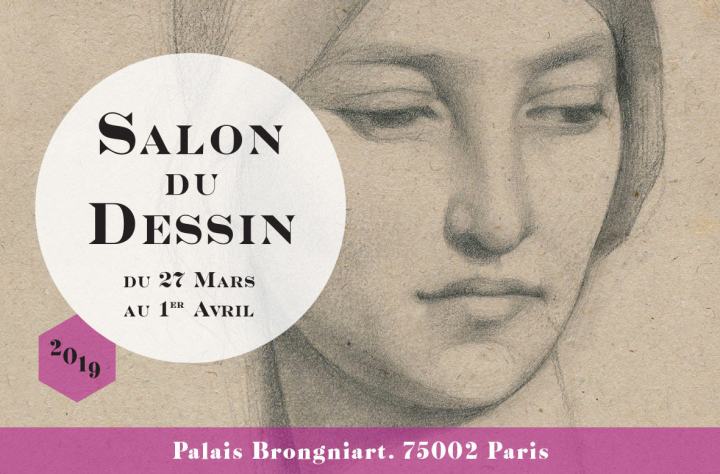
Salon du Dessin 2019
From the press kit:
Salon du Dessin 2019
Palais Brongniart, Paris, 27 March — 1 April 2019
The eagerly anticipated Salon du Dessin will take place again this spring under the vaulted roof of Paris’s Palais Brongniart and will once again feature a selection of outstanding works on paper. among the 39 exhibitors from around the world will be four handpicked new galleries and two that are returning after an absence of a few years. Among the treasures on display will be rare drawings by egon schiele and Gustav Klimt, presented by the Austrian gallery Wienerroither & Kohlbacher, and a solo show of the work of contemporary artist Jean-Baptiste Sécheret on the stand of Galerie Jacques Elbaz. The German dealer Martin Moeller will celebrate 100 years of drawings from his country, while the Galerie de la Présidence features drawings by sculptors.

Juan Antonio Conchillos y Falcó, Academic Study, 1703; offered by Artur Ramon Art ($36,000).
The 28th edition of the art fair will also host two museum-level exhibitions. Festivities in Paris will feature drawings from the collection of the Musée Carnavalet-Histoire de Paris (currently closed for renovation until late 2019), while the Maison Chaumet will exhibit drawings of its jewelry in an exhibition on the theme of nature, curated by botanist Marc Jeanson, who worked on the magnificent exhibition Jardins at the Grand Palais in 2017.
Other highlights of the Salon du Dessin will be the presentation of the 12th Daniel and Florence Guerlain Drawing Prize and the return of a program of international symposia, which will focus on the performing arts this year. Drawing Week, a highly popular off-site event organized in partnership with over 20 museums and institutions, will offer access to graphic arts collections that are usually off-limits to the public.
W E D N E S D A Y , 2 7 M A R C H 2 0 1 9
Occupying the Stage: Sets and Costumes
Chair: Jean-Claude Yon (Professor at the University of Saint-Quentin-en-Yvelines)
• Emmanuelle Brugerolles (Curator General at the École Nationale Supérieure des Beaux-Arts, Paris), Georges Focus and the Theater: Sets and Staging
• Rudi Risatti (Curator at the Theatermuseum in Vienna), The Magic Space: Technical and Aesthetic Solutions in Baroque Scenography as Seen in Drawings from the Theatermuseum in Vienna
• Marc-Henri Jordan (independent art historian, doctoral student, University of Lausanne), The Royal Academy of Music in Search of Draftsmen and Painters: Identification of Decorative Drawings and Clothing, ca. 1780
• Catherine Join-Diéterle (Curator General, former director of the Musée Galliera, Paris), Theater Sets in the Romantic Era: A New Approach to the Stage Area
• Marine Kisiel (Painting Curator at the Musée d’Orsay), ‘A Unique System of Lines’: The Body in Space in the Work of Edgar Degas
• Mathias Auclair (Director of the Music Department at the Bibliothèque Nationale de France, Paris), The Stage Seen as a Painting: The Birth of Scenography at the Paris Opera, 1914–1972
T H U R S D A Y , 2 8 M A R C H 2 0 1 9
Occupying the City: Festivities and Ceremonies
Chair: Michel Delon (Professor at the University of Paris-IV Sorbonne)
• Franca Varallo (Professor at the university of Turin), Onorato Tiranti’s Il Laberinto de Groppi and Drawings for Festivities by Tommaso Borgonio
• Jérôme de La Gorce (Emeritus Research Director, CNRS- Centre André Chastel), Collections of Drawings Held in Paris and Madrid Illustrating Important Celebrations of the Marriage of Madame to the Infant of Spain, 1739
• Maria Ida Biggi (Director of the Centro Studi per la Ricerca Documentale sul Teatro Europeo Fondazione Cini, Venice), Le feste sull’acqua: Apparati per Napoleone
• Gaëlle Lafage (Postdoctoral Researcher, Université de Paris Sorbonne), Drawing as a Source of Study of Fireworks
• José de Los Llanos (Chief Curator, Head of the Musée Carnavalet’s Graphic art Department) and David Simonneau (Conservation Assistant, Musée Carnavalet Graphic art department), Festivals and Spectacles in the Collection of the Musée Carnavalet-Histoire de Paris, 17th–19th Centuries
Conference | 1802: Cultural Exchange between Paris and London

Thomas Girtin, View of Pont de la Tournelle and Notre Dame, etching and aquatint, from A Selection of Twenty of the Most Picturesque Views in Paris, and Its Environs (London, 1803), RB 400000, (San Marino: The Huntington Library, Art Collections, and Botanical Gardens).
◊ ◊ ◊ ◊ ◊
From the program for the upcoming conference:
1802: Cultural Exchange between Paris and London during the Peace of Amiens
The Huntington Library, Art Collections, and Botanical Gardens, San Marino, 17–18 May 2019
This interdisciplinary conference illuminates the movement of writers, artists, scientists, and cultural goods between Paris and London during the fourteen months of peace ushered in by the Treaty of Amiens, from March 1802 through May 1803—the first break in hostilities after a decade of Revolutionary warfare. Registration information is available here.
Funding provided by The Dibner History of Science Program at The Huntington
F R I D A Y , 1 7 M A Y 2 0 1 9
9:00 Registration and Coffee
9:30 Welcome by Steve Hindle (The Huntington) and Opening Remarks by Cora Gilroy-Ware (Isaac Julien Studio) and Paris Spies-Gans (Harvard University)
10:00 Session 1: Writers
Moderator: Kevin Gilmartin (California Institute of Technology)
• Susan Lanser (Brandeis University), Helen Maria Williams, Radical Sociability, and the Uneasy Peace of Amiens
• Kelly Summers (MacEwan University), Between Amiens and Amnesty: The Parisian Wanderings of the d’Arblays, c. 1802
12:00 Lunch
1:00 Session 2: Artists
Moderator: Hector Reyes (University of Southern California)
• Cora Gilroy-Ware (Isaac Julien Studio), Inferior Beauty: The (British) Artist’s Gaze on the Streets and in the Louvre
• Catherine Roach (Virginia Commonwealth University), ‘Great National Establishments’: Amiens and the Foundation of the British Institution
3:00 Break
3:15 Session 3: Publication
Moderator: Paula Radisich (Whittier College)
• Melinda McCurdy (The Huntington), Thomas Girtin’s Paris Venture
• Susan Siegfried (University of Michigan), Amelia Opie’s ‘Recollections of a Visit to Paris in 1802’
S A T U R D A Y , 1 8 M A Y 2 0 1 9
9:30 Registration and Coffee
10:00 Session 4: Intellectual Exchanges
Moderator: Alexander Statman (Dibner Long-Term Research Fellow, The Huntington)
• Dena Goodman (University of Michigan), French Scientists Cross the Channel: Peace and the Advancement of Knowledge, Industry, and Agriculture
• Joshua Ehrlich (University of Macau), Alexander Hamilton, Asian Knowledge, and Anglo-French Competition
12:00 Lunch
1:00 Session 5: Material Culture
Moderator: Mary Terrall (University of California, Los Angeles)
• Courtney Wilder (University of Michigan), Revolutions and Rivalries in the Printed Textile Trade before, during, and after the Peace of Amiens
• Renaud Morieux (University of Cambridge), The ‘Obscene’ and ‘Infamous’ Trade between Britain and Europe around the Peace of Amiens
3:00 Break
3:15 Session 6: Shaping the Narrative
Moderator: Nathan Perl-Rosenthal (University of Southern California)
• Simon Macdonald (Queen Mary University of London), The Argus, or London Review’d in Paris: Mediascape between France and Britain during the Peace of Amiens
• Paris Spies-Gans (Harvard University), ‘In this Country the Law is on my Side:’ Marie Tussaud, the Peace of Amiens, and the Formation of a Wax Empire
5:15 Closing Remarks by Cora Gilroy-Ware, Dena Goodman, and Paris Spies-Gans
Workshop | Antiquarian Science in the Scholarly Society
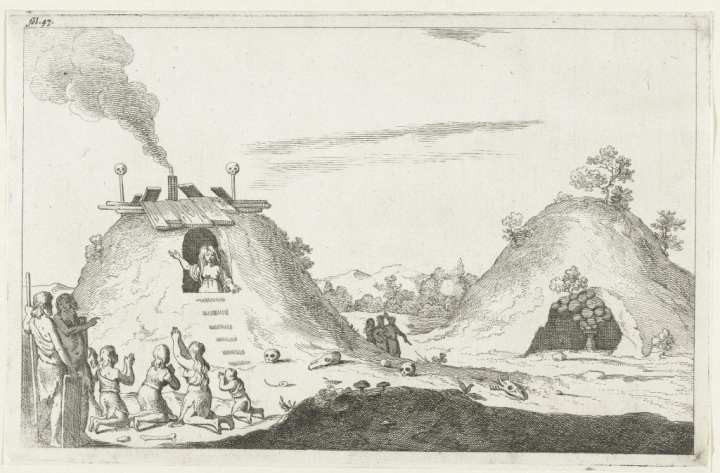
A Priestess Speaking from within a Prehistoric Barrow in Drenthe, from Johan Picardt, Korte beschryvinge van eenige vergetene en verborgene antiquiteten (Amsterdam 1660), f. 47 (Rijksmuseum, RP-P-OB-77.857).
◊ ◊ ◊ ◊ ◊
From the project website:
Antiquarian Science in the Scholarly Society
Society of Antiquaries of London, 1–2 April 2019
Organized by Vera Keller and Anna Marie Roos
This is workshop II of the AHRC International Networking Grant: Collective Wisdom: Collecting in the Early Modern Academy. What was the relationship between archaeological fieldwork or antiquarianism and learned travel or the Grand Tour? What does collecting on tour say about the manner and scale of personal and institutional contacts between London and the scientific world of the Continent? What tools of natural philosophy were utilised to understand buildings and artefacts? What were the implications of the collecting of ethnographic objects for political dominance and Empire?

Ex libris of Z. C. von Uffenbach (Amsterdam: Rijksmuseum, RP-P-2015-26-1860).
Speakers include Philip Beeley (Oxford), Dominik Collet (Oslo), Luke Edgington-Brown (East Anglia), Dustin Frazier Wood (Roehampton), Vera Keller (Oregon), Chantel Grell (Versailles), Clare Hornsby (British School at Rome), Stephanie Moser (Southhampton), Staffan Müller-Wille (Exeter), Cesare Pastorino (Berlin), Anna Marie Roos (Lincoln), Edwin Rose (Cambridge), Martin Rudwick (Cambridge), Kim Sloan (British Museum), Alexander Wragge-Morley (NYU), Elizabeth Yale (Iowa).
A working session using sources from the Society of Antiquaries Library and Museum will also be part of the programme. The Society’s library is Britain’s oldest major research library for archaeology, architectural history, decorative arts (especially medieval), material culture, and the historic environment. It contains books, archives, manuscripts, prints, and drawings. Its Accredited museum collection—which was formed before the introduction of public museums and galleries in the mid-18th century—contains prehistoric, classical and medieval antiquities, seal matrices and impressions, and paintings. Full fee: £100 including lunch. Student/Concessions: £50 including lunch.
M O N D A Y , 1 A P R I L 2 0 1 9
10:00 Registration
10:15 Welcome and Introduction by Vera Keller and Anna Marie Roos
10:20 Plenary Talk
• Stephanie Moser (Southampton) and Christian Hoggard (Aarhus), Visual Testimony: Images and Discipline-Building at the Society of Antiquaries of London
11:15 Egypt and ‘Scientific Antiquarianism’
Chair: Roey Sweet (University of Leicester)
• Chantal Grell (Université de Versailles), Tito Livio Burattini: A Seventeenth-Century Engineer and Egyptologist
• Anna Marie Roos (University of Lincoln), The First Egyptian Society, 1741–43
12:15 Lunch
1:00 The Republic of Letters, Scholarly Societies, and Antiquarianism (Seventeenth Century)
Chair: Lisa Skogh
• Vera Keller (University of Oregon), The Ottoman History of Letters
• Dominik Collet (University of Oslo), Weak Ties, Big Science: Challenges to ‘Blended Learning’ in Early Academic Collections
• Philip Beeley (University of Oxford), ‘The Antiquity, Excellence, and Use of Musick’: Ancient Greek Music and Its Reception in Late Seventeenth-Century Oxford
• Cesare Pastorino (Technische Universität, Berlin), The Features of Early Modern English Antiquarian Metrology
3:00 Coffee Break
3:15 The Republic of Letters, Scholarly Societies, and Antiquarianism (Eighteenth Century)
Chair: Jana Schuster (Cambridge)
• Dustin Frazier Wood (University of Roehampton), Antiquarian Science and Scientific Antiquarianism at the Spalding Gentlemen’s Society, 1710–55
• Clare Hornsby (British School at Rome), Winckelmann, the Descrizione della Villa dell’Em Alessandro Albani, and the Society of Antiquaries of London
4:15 Hands-On Session I
6:00 Reception
T U E S D A Y , 2 A P R I L 2 0 1 9
10:00 Registration
10:30 Plenary Talk
• Kim Sloan (British Museum), Sloane’s Antiquities: Providing a ‘Body of History’ through Beads, Bottles, Brasses, and Busts
11:30 Ruins and Remains
Chair: Caroline Barron (Birkbeck, University of London)
• Alexander Wragge-Morley (NYU), In Search of Lost Design: The Science of Ruins in the Seventeenth Century
• Elizabeth Yale (University of Iowa), Elf-Arrows and Origins: Antiquarian Collections and Human Descent
• Luke Edgington-Brown (University of East Anglia), The 1901 Excavation of Stonehenge and Its Connection to Antiquarian Research in Late Nineteenth-Century Japan
1:00 Lunch
2:00 Eighteenth-Century Natural History and Antiquarianism
Chair: Arthur MacGregor (Oxford)
• Martin Rudwick (University of Cambridge), Volcanoes and Vases: Naturalists, Antiquaries, and the Mobilisation of Images
• Staffan Müller-Wille (University of Exeter), Following Footsteps: Linnaeus in Lapland
• Edwin Rose (University of Cambridge), From Collection to Publication: Joseph Banks, Thomas Pennant, and Defining Natural History and Antiquarianism in Late Eighteenth-Century Britain
3:30 Coffee Break
4:00 Hands-On Session II
Workshop | The Mind in the Matter
From Eventbrite:
The Mind in the Matter: New Approaches to the Psychology of Collecting
Institute of Historical Research, London, 27 March 2019
Organised by the Society for the History of Collecting
Psychology informs us about what drives an individual to collect. In the Enlightenment, the human mind was often analysed and discussed by means of metaphors and analogies borrowed from the world of collecting. In the nineteenth-century, the stereotypes surrounding the monomaniac, eccentric or perverse collector was codified in the art press and through fiction. In the twentieth century, the topic was treated at length by scholars such as Werner Munsterberger, often working in an explicitly psychoanalytic framework. Whilst this Freudian approach has been subject to intense criticism in the past thirty years, many scholars continue to interpret collecting in terms of categories such as ‘lack’, ‘surrogacy’, ‘desire’ and ‘loss’.
Join us for a workshop that investigates the extent to which psychological models are still valid and necessary to understand collecting as a human activity. Is there a tension between the universalising psychological theories and the drive to study collecting historically? What sources are particularly useful or revealing for uncovering the collector’s motivations or relations to his objects? What can recent developments in psychology and neuroscience add to our understanding? How far can or should we enter the interior life of a collector, and what role does imagination play in communicating these insights to new audiences? And what are the meaningful alternatives, apart from opportunistic acquisitions; to a psychological approach of the study of collecting—can we ever escape from this way of thinking?
The workshop brings together six specialists working in different disciplines, who approach the ‘psychology of collecting’ from alternative perspectives, using historical case-studies and scientific models. Confirmed speakers include the pioneering historian of collecting Professor Susan Pearce; neuropsychologist Professor John Harrison; artist, collector and scholar Dr Jane Wildgoose; librarian and heritage expert Dr Tony Burrows; doctoral researcher into the collector Sir William Burrell, Isobel Macdonald; and contemporary art adviser Shaune Arp.
Organising committee: Tom Stammers, Adriana Turpin, Eleni Vassilika
Conference | Rome and Lisbon in the 18th Century
From the conference programme:
Rome and Lisbon in the 18th Century: Music, Visual Arts, and Cultural Transfers
Roma e Lisboa no século XVIII: música, artes visuais e transferências culturais
Biblioteca Nacional de Portugal, Lisbon, 28–29 March 2019
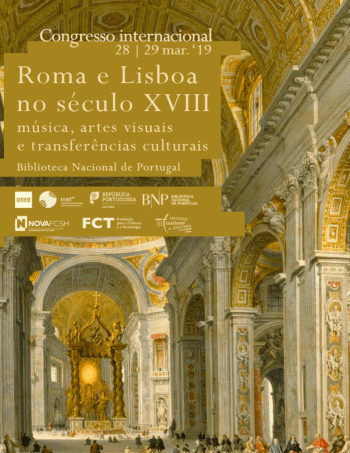 Political, diplomatic, cultural, and artistic relations—including music and the visual arts—between Rome and Lisbon in the 18th century have, at different times, aroused the interest of several scholars. However, these research fields have often been approached in parallel paths within the traditions of each of the disciplines, without establishing in most cases a true dialogue between the different areas of knowledge and disregarding cross-cutting issues. On the other hand, the study of artistic relations and cultural transfers presupposes an in-depth and up-to-date view of the historical and social context of each city in their own peculiarities. This international conference intends to promote new approaches to the history of music and the arts through multidisciplinary dialogue that involves different points of view.
T H U R S D A Y , 2 8 M A R C H 2 0 1 9
9.30 Opening Session
• Inês Cordeiro (Director of the BNP)
• Pilar Diez del Corral and Cristina Fernandes (conference board of directors)
10.00 Ceremonial and Diplomacy
Chair: Pilar Diez del Corral
• John E. Moore (Smith College, Northampton, Massachusetts), Obsequies for Peter II (1707) and John V (1751) in S. Antonio dei Portoghesi, Rome
• Rodrigo Teodoro de Paula (CESEM-NOVA FCSH), Imitando Roma: Música e outros sons no cerimonial fúnebre por D. João V (1750)
• Christopher M. S. Johns (Vanderbilt University, Nashville, Tennessee), Queen Maria I, Pope Pius VI, and the Sacred Heart of Jesus: Lisbon, Rome, and the Counter-Enlightenment
11.30 Coffee Break
12.00 Ceremonial and Diplomacy, continued
Chair: Pilar Diez del Corral
• Maria João Ferreira (CHAM – NOVA/FCSH – UAc), Da Roma pontifícia para a Lisboa joanina: Abordagem das encomendas de têxteis através da correspondência trocada entre José Correia de Abreu e Fr. José Maria da Fonseca Évora
• Rosana Brescia (CESEM – NOVA FCSH), ‘Teatro alla Moda’: Opera Costumes for Portuguese Royal Theatres during the Reign of D. José I
13.00 Lunch
14.30 Working for Portuguese Patrons: From Italy to Portugal
Chair: Manuel Carlos de Brito
• Giuseppina Raggi (CES – Universidade de Coimbra), Roma e le traiettorie artistiche di Filippo Juvarra e Domenico Scarlatti nella penisola iberica
• Ricardo Bernardes (CESEM/NOVA FCSH), Giovanni Giorgi (d. 1762) and the ‘Roman Musical Style’ in Lisbon in the First Half of the 18th Century
• Fabrizio Longo (MIUR), I solfeggi di Giovanni Giorgi (d. 1762), valide ed ispirate lezioni di violino
16.00 Coffee Break
16.30 Working for Portuguese Patrons: From Italy to Portugal, continued
Chair: Manuel Carlos de Brito
• Aline Gallasch-Hall de Beuvink (Universidade Autónoma de Lisboa/CIAUD/CICH), O arquitecto Giovanni Sicinio Galli Bibiena: novos contributos biográficos
• Marco Brescia (CESEM/NOVA FCSH), Niccolò Nasoni and Visual and Sound Symmetry on Portuguese Organs
17.30 Book Presentation
• Politics and the Arts in Lisbon and Rome: The Roman Dream of John V of Portugal (The Voltaire Foundation, 2019) for Pilar Diez del Corral
F R I D A Y , 2 9 M A R C H 2 0 1 9
9.30 Aristocratic Power and Performing Arts in Baroque Rome: Portuguese Connections
Chair: Rui Vieira Nery
• Teresa Chirico (Conservatorio di musica ‘S. Cecilia’ di Roma- Performart), l cardinale Pietro Ottoboni (1667–1740), i portoghesi e la musica
• Cristina Fernandes (INET-md, NOVA FCSH, PerformArt – Rome), ‘When in Rome, Do as the Romans Do’: Portuguese Cardinals’ Musical Patronage and Their Artistic Networks after the Conclave of 1721
• Diana Blichmann (PerformArt –Rome), Alessandro nell’Indie as Opera Event in Rome (1730) and Lisbon (1755): Examples of Different Multimedia Strategies for Staging Power
11.00 Coffee Break
11.30 Images, Treatises, and Books
Chair: James W. Nelson Novoa
• Alexandra Gago da Câmara (UAb / IHA / CHAIA ) + Carlos Moura (IHA- UNL), Uma imagem da Roma Pontifícia no fausto da Lisboa Joanina: Os azulejos do Terraço superior do Mosteiro de São Vicente de Fora
• João Cabeleira (Lab2PT, Escola de Arquitetura, Univ. De Minho), Perspectiva Pictorum et Architectorum: Science and Architectural Image Propagation
• Leonor Antunes (BNP, Lisboa), From Lisbon to Rome, Passing through Parma: Portuguese Artists and patrón Diplomats in Bodonian Editions
13.00 Lunch
14.30 From Portugal to Rome
Chair: TBA
• James W. Nelson Novoa (Otawa University, Canada), Forging Portuguese National Memory in 18th-Century Rome
• Maria Onori (Univ. di Roma ‘La Sapienza’), Dos Santos/De Sanctis: Notizie di un architetto lusitano a Roma dagli archivi romani
• Giada Lepri (Univ. di Roma ‘La Sapienza’), Un inedita committenza portoghese nella Roma del 700’: La vigna da Gama de Padua sulla via Salaria ed i suoi legami con l’ambiente architettonico romano dell’epoca
• Michela Degortes (ARTIS-UL), Giovanni Gherardo De Rossi and the Portuguese in Rome at the End of the 18th Century: Artistic Relations and Cultural Network
16.30 Coffee Break
17.00 Roman Taste for Lisbon Court
Chair: Maria João Albuquerque
• Fernando Miguel Jalôto (INET-md, NOVA FCSH), Antonio Tedeschi: An Italian Musician at the Court of John V
• Vicenzo Stanziola (Univ. degli Studi di Roma, Tor Vergata), Arte romana per Joao V: Il caso di Pietro Bianchi
18.00 Closing Session
• Guided tour of the library exhibition From Tagus to Tiber: Portuguese Musicians and Artists in Rome in the 18th Century
Scientific Committee
• Manuel Carlos de Brito (NOVA FCSH, Lisboa)
• Elisa Camboni (Accademia Nazionale di San Luca, Roma)
• Pilar Diez del Corral Corredoira (UNED, Madrid)
• Cristina Fernandes (INET-md, NOVA FCSH, Lisboa)
• Anne-Madeleine Goulet (CNRS, Projecto Performart-Roma)
• Teresa Leonor M. Vale (ARTIS, Universidade de Lisboa)
• Rui Vieira Nery (INET-md, NOVA FCSH/Fundação Gulbenkian, Lisboa)
Board of Directors
• Pilar Diez del Corral Corredoira
• Cristina Fernandes
Conference | Art Institutions and Race in the Atlantic World
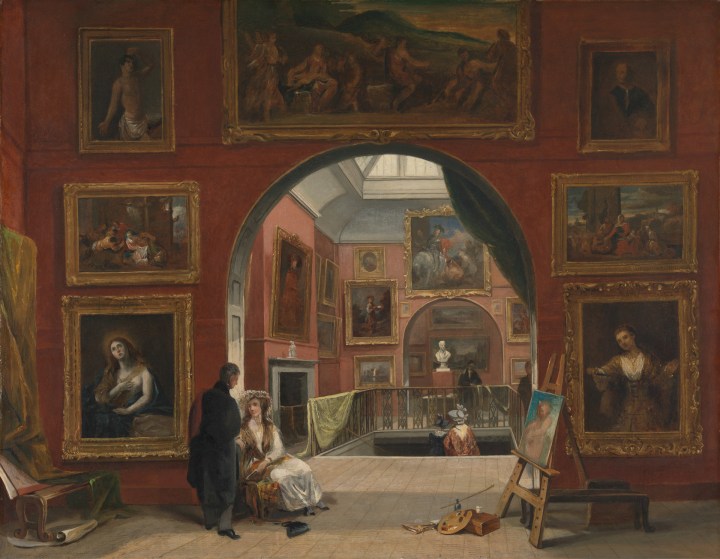
Alfred Joseph Woolmer, Interior of the British Institution (Old Master Exhibition, Summer 1832), 1833, Oil on canvas (New Haven: Yale Center for British Art, Paul Mellon Collection).
◊ ◊ ◊ ◊ ◊
From The Courtauld:
Art Institutions and Race in the Atlantic World, 1750–1850
The Centre for American Art at The Courtauld Institute of Art, London 24–25 May 2019
Organized by Nika Elder and Catherine Roach
The long eighteenth century gave rise to a host of art institutions throughout the Atlantic world, including the Royal Academy of Arts in London, the Academia de San Carlos in Mexico City, and the Academia Imperial de Belas Artes in Rio de Janeiro. Vibrant markets for paintings, sculpture, decorative arts, and prints developed alongside and beyond these established institutions, creating networks of cross-cultural exchange that mirrored the economic ties among Great Britain, Africa, the Caribbean, and the Americas during this period. These cultural developments were inextricably linked with the profits and the cultural logics of colonialism and slavery. Building on important recent work on the visual culture of slavery and abolition, this conference examines the reciprocal relationship between the fine arts and racial ideologies during the apogee and decline of the transatlantic slave trade. The talks will consider sites of artistic production from throughout the Atlantic world, including Brazil, Britain, Jamaica, Massachusetts, and Mexico, and cover a wide variety of topics, including museum collections, artists’ models, the hierarchy of genres, print culture, and exhibitions of images and human beings. In sum, this two-day gathering examines how theories of race informed the production, circulation, collection, and display of art, and how those processes in turn solidified and promulgated understandings of race.
Booking information is available here»
F R I D A Y , 2 4 M A Y 2 0 1 9
10:00 Opening remarks
10:30 Panel 1
• Ray Hernández-Durán (Associate Professor of Early Modern Ibero-American Colonial Arts and Architecture, University of New Mexico), From Novohispanic Castas to Mexican Citizens: Colonialism, Race, and the Academy of San Carlos in Mexico City
• Geoffrey Quilley (Professor of Art History, University of Sussex), India in the City: The Ambiguous Place of East India House and the India Museum
11:45 Coffee
12:00 Panel 2
• Esther Chadwick (Lecturer in Early Modern Art History, The Courtauld Institute of Art), ‘This she looking black, this Molly dressed thing of a man’: Mai and Thayendanegea at the Royal Academy in 1776
• Sadiah Qureshi (Senior Lecturer in Modern History, University of Birmingham), ‘A Peep at the Natives’: Exhibitions, Empire, and the Natural History of Race in Nineteenth-Century Britain
1:15 Lunch
3:00 Event for the Speakers: British Museum Print Study
S A T U R D A Y , 2 5 M A Y 2 0 1 9
10:00 Panel 3
• Nika Elder (Assistant Professor of Art History, American University), Fugitive Pigments: Painting and Race in the British Atlantic
• Cheryl Finley (Associate Professor of Art History, Cornell University), Mapping the Slave Trade
11:15 Coffee
11:30 Panel 4
• Rachel Grace Newman (A.W. Mellon Postdoctoral Fellow, Center for Advanced Study in the Visual Arts), Framing the Plantation: The Plantocracy, Artists, and Image Production of the Early Nineteenth Century
• Sarah Thomas (Lecturer in Museum Studies and History of Art, Birkbeck College, University of London), Slavery, Patronage and the Love of Art: Slave-ownership and the Politics of Collecting in Early Nineteenth-Century Britain
12:45 Lunch
1:45 Panel 5
• Catherine Roach (Associate Professor of Art History, Virginia Commonwealth University), Hybrid Exhibits: Race, Empire, and Genre at the British Institution in 1806
• Nicholas Robbins (Doctoral Candidate, History of Art, Yale University), Constable’s Whiteness
3:00 Coffee
3:15 Panel 6
• Caitlin Beach (Assistant Professor of Art History, Fordham University), Ira Aldridge and the Performed Persona
• Daryle Williams (Associate Professor of History and Associate Dean for Faculty Affairs, College of Arts and Humanities, University of Maryland), The Brazilian Imperial Academy of Fine Arts and the Transatlantic Slave Trade
4:30 Closing Discussion
ASECS 2019, Denver
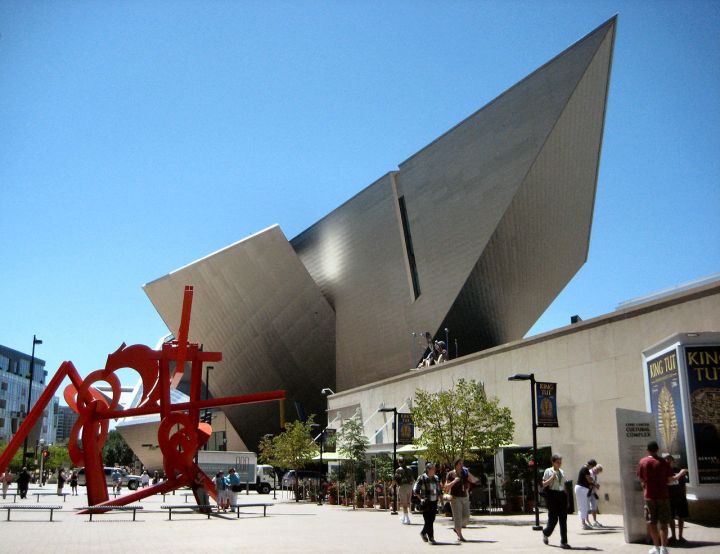
Frederic C. Hamilton Building, Denver Art Museum (Photo: Wikimedia Commons, August 2010). The Hamilton building, by Daniel Libeskind, opened in October 2006. Works from the Berger Collection Educational Trust have been on long-term loan at DAM since 1996; in February of this year 65 works of British art from the trust—including paintings by Thomas Gainsborough, Angelica Kauffman, George Stubbs, and Benjamin West—were donated to the museum. A selection will be on view beginning 2 March 2019 in Treasures of British Art: The Berger Collection, organized by Kathleen Stuart, curator of the Berger Collection at the DAM.
◊ ◊ ◊ ◊ ◊
2019 American Society for Eighteenth-Century Studies Conference
Grand Hyatt, Denver, 21–23 March 2019
The 50th annual meeting of the American Society for Eighteenth-Century Studies takes place at the Grand Hyatt in Denver. HECAA will be represented by the Anne Schroder New Scholars’ Session, chaired by Susanne Anderson-Riedel and scheduled for Saturday morning. Our annual business meeting will take place Friday evening at 6:00. A selection of 31 additional panels is included below (of the 198 sessions scheduled, many others will, of course, interest HECAA members). For the full slate of offerings, see the program.
H E C A A E V E N T S
HECCA Business Meeting
Friday, 6:00–7:00, Mt Evans
Anne Schroder New Scholars Session (HECAA)
Saturday, 8:00–9:30, Mt Harvard
Chair: Susanne ANDERSON-RIEDEL, University of New Mexico
1. Danielle EZOR, Southern Methodist University, “‘Of Exquisite Whiteness’: Porcelain and Constructing Race”
2. Lauren Kellogg DISALVO, Dixie State University, “‘Fancy Portraits’ and Women in Antique Guise”
3. Joshua HAINY, Truman State University, “John Flaxman’s Shield of Achilles: The Visualization of an Ancient Greek Text”
4. Katherine ISELIN, University of Missouri, “A Collection of the ‘Spintrian’ Medals of Tiberius and the Role of Ancient Erotic Art in Eighteenth-Century Collecting Culture”
◊ ◊ ◊ ◊ ◊
O T H E R S E S S I O N S R E L A T E D T O T H E V I S U A L A R T S
T H U R S D A Y , 2 1 M A R C H 2 0 1 9
Roundtable: From Dissertation to Book (Cultural Studies Caucus)
Thursday, 8:00–9:30, Mt. Sopris B
Chair: Rajani SUDAN, Southern Methodist University
1. Melissa SCHOENBERGER, College of the Holy Cross, “The Author and the Applicant”
2. Bridget ORR, Vanderbilt, “Thinking Bigger: Being Read by Publishers and the Profession beyond Your Professors”
3. James MULHOLLAND, North Carolina State University, “What I’ve Learned about Writing a Book: Lessons about Time Management, Revision Plans, and Interacting with Publishers”
4. Angie HOGAN, University of Virginia Press, “What to Expect from a University Press Publisher”
5. Robert MARKLEY, University of Illinois, “From Dissertation to Book . . . to Book, to Book”
◊ ◊ ◊ ◊ ◊
Producers, Creators, Designers: Women Artists
Thursday, 8:00–9:30, Mt. Evans
Chairs: Franny BROCK, University of North Carolina, Chapel Hill and Lindsay DUNN, Texas Christian University
1. Kelsey BROSNAN, New Orleans Museum of Art, “Flowers, Fluids, and Femininity: The Olfactory Texture of Anne Vallayer-Coster’s Flower Paintings”
2. Katie SAGAL, Cornell College, “Vegetal Reality and Artistic Originality: Henrietta Maria Moriarty’s Botanical Illustrations”
3. Kelsey MARTIN, University of North Carolina, Chapel Hill, “Prints, Politics, and Publics: Women Printmakers during the 1789 French Revolution”
4. Molly MAROTTA, Florida State University, “‘That union of parts’: Museum Building as Nation Building in Barbara Hofland’s Ekphrastic Descriptions in the 1835 Description of the House and Museum of the North Side of Lincoln’s Inn Fields, The Residence of Sir John Soane”
◊ ◊ ◊ ◊ ◊
Making Stars: Biography and Celebrity
Thursday, 8:00–9:30, Mt. Wilson
Chairs: Nora NACHUMI, Yeshiva University and Kristina STRAUB, Carnegie Mellon University
1. Elaine MCGIRR, University of Bristol, “Shooting Star: Theophilus Cibber’s Disastrous Self-Fashioning”
2. Jane WESSEL, Austin Peay State University, “Charles Mathews and Transmedia Biography”
3. Stuart SHERMAN, Fordham University, “Actress-Autobiographers in Print and Time: Catherine Clive, Eliza Haywood, Charlotte Charke, and the Mid-Century Pivot from Playhouse towards Periodicity”
4. Heather McPHERSON, University of Alabama, Birmingham, “Image/Counter-Image: Contesting Celebrity in Graphic Satire”
◊ ◊ ◊ ◊ ◊
Roundtable: Race, Gender, Empire, and the Archives (SHARP)
Thursday, 9:45–11:15, Grays Peak A
Chair: Sean MOORE, University of New Hampshire
1. Beth Fowkes TOBIN, University of Georgia, “Drawings in the Archives”
2. Rachael Scarborough KING, University of California, Santa Barbara, “Race, Gender, and Religion in the Ballitore Collection”
3. Rebecca SCHNEIDER, University of Colorado, Boulder, “Jamaican Archives and the Study of Freedom, Dead and Alive”
◊ ◊ ◊ ◊ ◊
Reinventing Graduate Student Mentoring
Thursday, 9:45–11:15, Mt. Elbert A
Chair: Kathryn TEMPLE, Georgetown University
1. Manushag POWELL, Purdue University
2. Jacob MYERS, University of Pennsylvania
3. Lisa MARUCA, Wayne State University
4. Mark VARESCHI, University of Wisconsin, Madison
5. Juliet SHIELDS, University of Washington
6. Mita CHOUDHURY, Purdue University Northwest
◊ ◊ ◊ ◊ ◊
Collecting Studies: Circulation and Disruption
Thursday, 9:45–11:15, Mt. Evans
Chair: Bénédicte MIYAMOTO, Université Sorbonne Nouvelle
1. Sarah BAKKALI, Université Paris Nanterre, “The Portfolio as ‘Portable Museum’: Disrupting French Collecting Practices”
2. Cristina MARTINEZ, University of Ottawa, “The Removal of Poussin’s Sacraments from Italy: Smuggling, Displacing Cultural Property, and Developing Copyright”
3. Jeffrey SCHRADER, University of Colorado, Denver, “Sacred Images as a Foundation of Collecting Practices in the Spanish Monarchy”
4. Louisiane FERLIER, The Royal Society, “Classifying the Royal Society Collections in the Eighteenth Century (and Now)”
◊ ◊ ◊ ◊ ◊
Gesturing toward the Antique
Thursday, 9:45–11:15, Torrey Peak
Chairs: Monica Anke HAHN, Community College of Philadelphia and Craig HANSON, Calvin College
1. Ersy CONTOGOURIS, Université de Montréal, “Emma Hamilton’s Attitudes: Appropriating the Antique”
2. Tracy EHRLICH, Parsons School of Design/The New School, “Gesture, Antiquity, Aesthetics: Rome before Winckelmann and Goethe”
3. Amy FREUND, Southern Methodist University, “When in Rome: Antiquity and Ambition in Jean Ranc’s The Sons of the Duke of Berwick”
4. Ashley HANNEBRINK, Harvard University, “Classicizing Gestures in and around French Eighteenth-Century Sculpture”
◊ ◊ ◊ ◊ ◊
Changing Faces: New Directions in Portraiture
Thursday, 11:30–1:00, Mt. Harvard
Chair: William CLARK, Queens College and The Graduate Center, CUNY
1. Vivian P. CAMERON, Independent Scholar, “A Question of Identity: Vigée-Lebrun’s Madame Dugazon as Nina”
2. Caroline CULP, Stanford University, “Painting Outside Time: Icons and Anachronism in Copley’s Revolutionary Boston”
3. Dorothy JOHNSON, University of Iowa, “Historical Faces/Historical Fictions? Art and Ontology in David’s Portraits”
4. Bradford MUDGE, University of Colorado, Denver, “Face Value: Portraits, Money, and Genre”
◊ ◊ ◊ ◊ ◊
Roundtable: Forms of Empire (Race and Empire Caucus)
Thursday, 2:30–4:00, Grays Peak B
Chairs: Julie Chun KIM, Fordham University and Sunil AGNANI, University of Illinois, Chicago
1. Eugenia ZUROSKI, McMaster University, “What Happened in the Chinese Summer House?: Empire’s Ambivalent Details”
2. Chloe Wigston SMITH, University of York, “Empire, Handmade”
3. Douglas FORDHAM, University of Virginia, “Worldmaking in Aquatint”
4. Edward LARKIN, University of Delaware, “Visualizing the Chronotope of Empire”
5. Abby COYKENDALL, Eastern Michigan University, “The Empire of Form and the British Novel: Clara Reeve’s Destination”
Respondent: Wendy Anne LEE, New York University
◊ ◊ ◊ ◊ ◊
Roundtable: Recovering Women’s Satiric Voices; or, A Feminist’s Work is Never Done, I
Thursday, 2:30–4:00, Pike’s Peak
Chair: Sharon SMITH, South Dakota State University
1. Jonathan SADOW, SUNY Oneonta, “Satirizing ‘Satire’ and Haywood’s Eovaai”
2. Ersy CONTOGOURIS, Université de Montréal, “Hannah Humphrey, London’s Leading Caricature Printseller”
3. Susan CARLILE, California State University, Long Beach, “The Satiric Voices of Charlotte Lennox”
4. Shawn Lisa MAURER, College of the Holy Cross, “Recovering ‘Satirical’ Austen: The Work of the Juvenilia”
5. Jocelyn HARRIS, University of Otago, “Jane Austen, Satirist”
◊ ◊ ◊ ◊ ◊
Small Things in the Eighteenth Century, II
Thursday, 2:30–4:00, Torrey Peak
Chair: Beth Fowkes TOBIN, University of Georgia
1. Marina KLIGER, Institute of Fine Arts, New York University, “‘Small gifts kindle friendship’: Amateur Art and the Politics of Exchange in Post-Revolutionary France
2. Joanna GOHMANN, The Walters Art Museum, “A Small Box with a Big Punch: A Case Study in the Intellectual Complexity of Small Things”
3. Nathalie RIZZONI, Sorbonne Université, “French Eighteenth-Century Handscreens or Cardboard Treasures in American Public Collections”
◊ ◊ ◊ ◊ ◊
Interactions between Art and Insurance
Thursday, 4:15–5:45, Mt. Wilson
Chair: Jennifer CHUONG, Harvard University
1. Avigail MOSS, University of Southern California, “A Gallery of Risk and Virtue: The Eighteenth-Century Image of Insurance”
2. Matthew HUNTER, McGill University, “From the Ship and Bladebone to The Slave Ship and Back Again: Turner and Insurance”
3. Sarah CARTER, McGill University, “Underwriting Art: Thomas Coutts and Fuseli’s Milton Gallery”
◊ ◊ ◊ ◊ ◊
Publishing in an Eighteenth-Century Journal
Thursday, 4:15–5:45, Mt. Elbert A
Chair: Matthew WYMAN-MCCARTHY, Eighteenth-Century Studies
1. Eve Tavor BANNET, Studies in Eighteenth-Century Culture
2. Robert MARKLEY, Eighteenth-Century Theory and Interpretation
3. Cheryl NIXON, Eighteenth-Century Studies
4. Cedric REVERAND, Eighteenth-Century Life
5. Roxann WHEELER, Studies in Eighteenth-Century Culture
◊ ◊ ◊ ◊ ◊
Members Reception
Thursday, 6:00–7:30, Capitol Peak
◊ ◊ ◊ ◊ ◊
F R I D A Y , 2 2 M A R C H 2 0 1 9
Print Room Pedagogies: Teaching in the Print Room
Friday, 8:00–9:30, Mt. Evans
Chair: Hope SASKA, University of Colorado, Boulder
1. Thora BRYLOWE, University of Colorado, Boulder, “Learning to Look: Teaching Literature in the Museum”
2. Rebecca MAY, Duquesne University, “‘The very subject before us…the flies that haunt the places of dissection’: Teaching Anatomical Knowledge Using Archival Illustrations”
3. Cynthia ROMAN, Yale University, “W. S. Lewis’s Print Room to the Lewis Walpole Library: Making Connections between Documentary Content and Materiality in the Study of Eighteenth-Century Prints”
4. Alden GORDON, Trinity College, “Print History Courses for Undergraduate Liberal Arts Students”
◊ ◊ ◊ ◊ ◊
The Landscape Garden in Eighteenth Century England and Beyond
Friday, 8:00–9:30, Mt. Elbert B
Chair: Janet WHITE, University of Nevada, Las Vegas
1. Elizabeth MJELDE, De Anza College, “William Gilpin at Stowe”
2. Dana Gliserman KOPANS, SUNY Empire State College, “…to the gulph in which I am now swallowed up’: Some Literary Uses of Landscape Architecture”
3. Felix MARTIN, Aachen University, “Frank Lloyd Wright’s Taliesin—An English Landscape Garden?”
◊ ◊ ◊ ◊ ◊
Bon Appétit: Dining in the Eighteenth Century
Friday, 8:00–9:30, Mt. Yale
Chair: Joanna GOHMANN, The Walters Art Museum
1. Sarah Sylvester WILLIAMS, Independent Scholar, “Nicolas Lancret and the Sociability of Dining”
2. Nicole MAHONEY, University of Maryland College Park, “The Politics of Dinner: French Sociability, Material Culture, and Cuisine in the Early American Republic”
3. Lauren FREESE, University of South Dakota, “‘Life is like a good bowl of punch’: The Communicative and Social Function of Food Imagery in Eighteenth-Century American Periodicals”
4. Thomas NEAL, University of Akron, “‘La mesa ilustrada’: Culinary Discourse in Eighteenth-Century Spain”
◊ ◊ ◊ ◊ ◊
Picturing the Stage I (Theatre and Performance Studies Caucus)
Friday, 9:45–11:15, Pike’s Peak
Chair: Michael BURDEN, New College, Oxford University
1. Laurence MARIE, Columbia University, “Is Painting the New Model for Eighteenth-Century Acting?”
2. Deborah PAYNE, American University, “Theatrical Illustrations as Scholarly Evidence”
3. Laurel PETERSON, The Morgan Library and Museum, “Spectacular Stages: Set Design and Mural Painting in the Age of Vanbrugh”
4. Mark LEDBURY, University of Sydney, “Painter, Playwright, Entrepreneur: Prince Hoare and Innovation Transfer in 1790s London”
◊ ◊ ◊ ◊ ◊
Art, Literature, and Medicine in Eighteenth-Century Italy
Friday, 9:45–11:15, Mt. Yale
Chair: Francesca SAVOIA, University of Pittsburgh
1. Paolo PALMIERI, University of Pittsburgh, “Animal magnetism in Da Ponte’s libretto for Mozart’s Così fan tutte”
2. Wendy Wassyng ROWORTH, University of Rhode Island, “Anatomists and Portraiture: Some Encounters on the Grand Tour in Italy”
3. Rebecca MESSBARGER, Washington University, St. Louis, “Visceral Sense: From Criminal Corpses to Donor Bodies in Eighteenth-Century Bologna”
4. Irene Zanini CORDI, Florida State University, “This Body of Mine in Pain: Women’s Poetic and Discursive Portrayals of the Medicated Female Body”
◊ ◊ ◊ ◊ ◊
50 Years of Women at ASECS
Friday, 9:45–11:15, Mt. Sopris B
Chair: Melissa SCHOENBERGER, College of the Holy Cross
1. Margaret Anne DOODY, University of Notre Dame
2. Felicity NUSSBAUM, University of California, Los Angeles
3. Heather McPHERSON, University of Alabama, Birmingham
4. Kristina STRAUB, Carnegie Mellon University
5. Susan S. LANSER, Brandeis University
◊ ◊ ◊ ◊ ◊
Roundtable: Job Market Crash Course (Graduate Student Caucus)
Friday, 11:30–1:00, Maroon Peak
Chair: Kristin DISTEL, Ohio University
1. Dennis MOORE, Florida State University, “How (and How Much) to Promote Your Accomplishments”
2. Ann CAMPBELL, Boise State University, “How to Adapt a Tenure-Track Dossier to Apply for Lectureships”
3. Jonathan KRAMNICK, Yale University, “Perspectives on the Changing Job Market”
4. Joseph BARTOLOMEO, University of Massachusetts, Amherst, “Be ‘Yourself’: The Professional Persona”
5. Aleksondra HULTQUIST, Stockton University, “Adjunct to Tenure Track?”
◊ ◊ ◊ ◊ ◊
The Colors of Race
Friday, 11:30–1:00, Mt. Elbert B
Chairs: Oliver WUNSCH, Harvard Art Museums and Jennifer CHUONG, Harvard University
1. Rebecca CHUNG, The Legacy Press, “‘Not quite black’: Lady Mary Wortley Montagu’s Representations of Racialized Skin, in Text and Portraiture”
2. Sarah COHEN, SUNY Albany, “Fabricating Race through Metalwork in French Sugar Casters”
3. Elizabeth ATHENS, University of Connecticut, “That ‘Variety of Complexions’: Racial Variance in William Hogarth’s The Analysis of Beauty”
4. Olivia CARPENTER, Harvard University, “‘Rendered Remarkable’: Race, Color, and Character in The Woman of Colour”
◊ ◊ ◊ ◊ ◊
ASECS Business Meeting, Presentation of Awards, and Presidential Address
Friday, 2:30–4:15, Colorado Ballroom
ASECS Business Meeting All ASECS Members are encouraged to attend.
Presiding: Lisa BERGLUND, Executive Director
ASECS Presidential Address
Presiding: Christopher MS JOHNS, Norman and Roselea Goldberg Professor of History of Art Vanderbilt University
Melissa HYDE University of Florida, “Ambitions, Modest and Otherwise: Women and the Visual Arts in France”
◊ ◊ ◊ ◊ ◊
Repurposing
Friday, 4:30–6:00, Mt. Oxford
Chairs: Lauren Kellogg DISALVO, Dixie State University and Sarah Sylvester WILLIAMS, Independent Scholar
1. Matthew GIN, Harvard University, “Made Anew: Repurposed Materials and the Production of Ephemeral Festival Architecture in Eighteenth-Century Paris”
2. Shaena WEITZ, Independent Scholar, “The Afterlife of ‘Nina’: Creative Reuse of Music in Post-Revolutionary France”
3. Bethany WONG, Whittier College, “Sarah Siddons in America”
4. Mary CRONE-ROMANOVSKI, Florida Gulf Coast University, “Seats of Power: Repurposing the Chair in Three Novels of the Long Eighteenth Century”
◊ ◊ ◊ ◊ ◊
Picturing the Stage, II (Theatre and Performance Studies Caucus)
Friday, 4:30–6:00, Pike’s Peak
Chair: Austin Peay State University
1. Jennie MACDONALD, Independent Scholar, “‘The Most Artistic Thing’: Framing the Theatre in Miniature”
2. Mita CHOUDHURY, Purdue University Northwest, “Domesticity Re(de)fined: The Architecture of Theatrical Space at Home”
3. Vanessa ROGERS, Rhodes College, “Picturing Polly: Iconographical Approaches to The Beggar’s Opera”
◊ ◊ ◊ ◊ ◊
Freakery: The Limits of the Body
Friday, 4:30–6:00, Mt. Wilson
Chair: Stan BOOTH, University of Winchester
1. Noelle GALLAGHER, University of Manchester, “Noseless in London: Nasal Disfigurement in Eighteenth-Century British Literature and Art”
2. Scott SANDERS, Dartmouth College, “Freaky Sounds: Vocal Physiology as conceived through Marginalized Voices”
3. Tonya HOWE, Marymount University, “‘Sometimes we frame our Selves to be lame’: Bodies of Farce on the Eighteenth-Century Stage”
◊ ◊ ◊ ◊ ◊
Virtute Duce, comite Fortuna Music for Harpsichord and Flute by Elisabetta de Gambarini and Anna Bon, A Lecture-Recital
Friday, 7:30–9:00, Colorado Ballroom
Kimary FICK, Oregon State, Baroque Flute
Alison DeSIMONE, University of Missouri, Kansas City, Harpsichord
◊ ◊ ◊ ◊ ◊
S A T U R D A Y , 2 3 M A R C H 2 0 1 9
Pressing Questions for ASECS at 50: The Digital Humanities and the Global Eighteenth Century
Saturday, 9:45–11:15, Mt Evans
Chair: Christy PICHICHERO, George Mason University
1. Jeff RAVEL, MIT
2. Nicole ALJOE, Northeastern University
3. Paris SPIES-GANS, Harvard University
4. Rebecca GEOFFROY-SCHWINDEN, University of North Texas
5. Karen STOLLEY, Emory University
6. Michael YONAN, University of Missouri
7. Chi-Ming YANG, University of Pennsylvania
8. Kristel SMENTEK, MIT
◊ ◊ ◊ ◊ ◊
Art and Material Culture from the Ibero-American Realms
Saturday, 2:00–3:30, Mt. Harvard
Chair: Jeffrey SCHRADER, University of Colorado, Denver
1. Rachel ZIMMERMAN, Colorado State University, Pueblo, “Sacred, Secular, Exotic, European: Imitation Lacquer Chinoiserie in Colonial Minas Gerais, Brazil”
2. Sabena KULL, University of Delaware, “Floral Garland Paintings in Eighteenth-Century Peru: Circumscribing the Sacred from Europe to the Colonial Andes”
3. James MIDDLETON, Independent Scholar, “Dress and Trade in a Mid-Eighteenth-Century New Spanish Topographical Painting”
4. Gustavo FIERROS, University of Denver, “Toward an Equinoctial Landscape during the Eighteenth Century”
◊ ◊ ◊ ◊ ◊
Between Art and Labor: Craft in the Global Eighteenth Century
Saturday, 2:00–3:30, Mt. Elbert B
Chair: Cassidy PICKEN, Capilano University
1. Ruth MACK, SUNY Buffalo, “‘Useful, Again and Again’: Theory in Worker-Poet Craft”
2. Isabelle MASSE, McGill University, “The Transmission of Craftsmanship: Making Pastel Sticks in Eighteenth-Century Lausanne”
3. Katarina O’BRIAIN, St. Mary’s University, “Phillis Wheatley and the Limits of Craft Labor”
◊ ◊ ◊ ◊ ◊
Living with the Ancients
Saturday, 3:45–5:15, Mt. Princeton
Chair: Paul KELLEHER, Emory University
1. Helen DEUTSCH, University of California, Los Angeles, “‘TO VIRTUE ONLY and HER FRIENDS, A FRIEND’: Pope, Wimsatt, and the Erotics of Criticism”
2. Chris ROULSTON, University of Western Ontario, “Sexuality in Translation: Anne Lister and the Ancients”
3. Caroline GONDA, University of Cambridge, “Identity and the Classics in Anne Damer’s Notebooks”
◊ ◊ ◊ ◊ ◊
Going Public: Taking Eighteenth-Century Material Culture into the Public Eye
Saturday, 3:45–5:15, Torrey Peak
Chair: Jamie KINSLEY, Arizona State University
1. Susannah OTTAWAY, Carleton College, “‘The Biggest Object in Our Collection’: Material Culture and Museum Collaboration in the History of Social Welfare”
2. Susan EGENOLF, Texas A&M University, “Gods in the Western Midlands: Bringing Josiah Wedgwood to 21st-Century Texas”
3. Maureen HARKIN, Reed College, “Tapestry and Topiary: Adam Smith’s Defense of Craft”
4. Caitlan TRUELOVE, University of Cincinnati College-Conservatory of Music, “Ambiguity and Intertextuality in the Music of Outlander (2014–Present)”
Respondent: Jessica RICHARD, Wake Forest University
◊ ◊ ◊ ◊ ◊
Women and Whiteness
Saturday, 3:45–5:15, Mt. Elbert A
Chair: Katharine JENSEN, Louisiana State University
1. Emily Clare CASEY, St. Mary’s College of Maryland, “White Revivals: Women in the Guise of Shakespeare’s Miranda in Eighteenth-Century Portraiture”
2. Christopher DOUGLAS, University of Alabama, “More than ‘half an Englishwoman’: Performing Race, Nationality, and Belonging in The Woman of Colour”
3. Katherine ARPEN, Guilford College, “Elevating the White Heroine in Paul et Virginie”
4. Oliver WUNSCH, Harvard Art Museums, “Carriera’s Whiteness”
◊ ◊ ◊ ◊ ◊
Quinquagenary Reception and Cash Bar
Saturday, 5:30–6:30, Capitol Peak
Study Day | Women and Architecture
From the study day flyer:
Genres & Espaces « Pas de politique, pas de chien, pas de femme »
Le Musée du 11 Conti – Monnaie de Paris, 22 March 2019
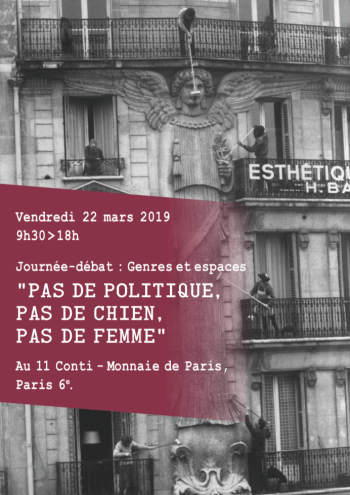 Cette journée-débat proposée par l’ENSA Paris-Malaquais, le 11 Conti-Monnaie de Paris et AWARE (Archives of Women Artists Research & Exhibition), ambitionne de réunir et promouvoir les travaux de chercheur.se.s, mais aussi des associations, collectifs, publications et enseignements dans les ENSA, proposant tout.e.s une réflexion inclusive. De la construction de l’histoire des femmes architectes à une conception féministe de l’espace à toutes ses échelles, la journée propose de s’interroger sur la place actuelle du genre dans l’enseignement de l’architecture et quelle place doit lui être faite demain.
9.30 Accueil
• Camille Morineau (directrice des collections et expositions du 11 Conti – Monnaie de Paris, présidente d’ AWARE)
• Luc Liogier (directeur de l’École nationale supérieure d’architecture Paris-Malaquais)
10.00 Introduction
• Bérénice Gaussuin
10.20 Histoire de femmes architectes
Modération: Anne-Marie Châtelet
• Arlette Auduc (Comité d’histoire du ministère de la Culture) et Anne-Marie Châtelet (ENSA Strasbourg, EA3400 Arche) de la revue Livraisons d’Histoire de l’Architecture, Femme et architecture
• Sarah Feriaux-Rubin (ENSA Belleville), Simone Galpin, femme effacée de Wogenscky
• Dominique Amouroux (Fondation Marta Pan-André Wogenscky), Marta Pan
11.30 Du genre en ville
Modération: Lucile Biarrotte (Université Paris-Est, Lab’Urba)
• Giulia Custodi (École de Géographie de Paris, LAA), Cartographies des approches genrées dans les villes européennes: Entre le mainstreaming et le féminisme diffus
• Chris Blache et Pascale Lapalud (Genre et ville), Pourquoi et comment le genre change l’urbanisme
• Lucile Biarrotte (Université Paris-Est, Lab’Urba), L’infusion d’approches genrées dans l’urbanisme parisien: Métaphore d’une propagation aux échelles organisationnelles et individuelles
Déjeuner
14.30 Projection du film Les dites cariatides, Agnès Varda (1984, 13 minutes).
14.45 Du genre en architecture
Modération: Stéphanie Dadour (ENSA Grenoble, MHA evt, ACS)
• Flore Gustin et Yen Bui (ENSA Marnes-la-Vallée), Présentation de l’intensif sur le genre ENSA Marnes-la-Vallée (Fanny Lopez, enseignante responsable)
• Sophie Orlando (ENSA Villa Arson, situations post), Modernismes saphiques, espaces non-hétéronormés: Subjectivités, sensualité et politiques de la couleur
• Stéphanie Dadour, Architecture et féminisme: De la théorie critique à l’action in Revue Malaquais
16.30 Madame l’architecte
Modération: Olivier Chadoin (ENSAP Bordeaux, PAVE-Centre Émile Durkheim)
• Giulia Zonca et Dorota Slazakowska (ENSA Paris-Malaquais), Who runs the world? Chronologie réflexive d’un intensif féministe
• Rossella Gotti et Anne Labroille (MéMO), Présentation du Mouvement pour l’Équité dans la Maîtrise d’Œuvre (MEMO)
• Stéphanie Bouysses-Mesnages (ENSA Nantes, EA3400 Arche), Les premières femmes inscrites à l’Ordre des architectes d’Ile-de- France
18.30 Fin de la journée-débat










leave a comment