Conference | CAA 2019, New York
Please pay particular attention to the HECAA session The Versatile Artist, chaired by Daniella Berman and Jessica Fripp, which takes place Wednesday afternoon at 4:00, and the ASECS session Anonymity in the Eighteenth Century, chaired by Kee IL Choi and Sonia Coman, also on Wednesday at 2:00. With more and more thematic offerings, I’ve inevitably missed material relevant to the eighteenth century; so, please don’t be bashful about noting panels omitted below. –CH
107th Annual Conference of the College Art Association
New York Hilton Midtown, 13–16 February 2019
CAA’s 2019 Annual Conference will feature over 300 sessions reflecting the unprecedented range of subject areas proposed and selected by CAA members from a record-breaking 900 plus submissions. Over four days in the spectacular setting of New York City, CAA will host 500 events on site and off, including distinguished speakers, business meetings, art making and professional development workshops, gallery tours, a book and trade fair, receptions, and more.
◊ ◊ ◊ ◊ ◊
Historic Libraries and the Historiography of Art
Wednesday, 13 February, 8:30–10:00am
Chair: Jeanne-Marie Musto (Queens College, City University of New York)
• Barbara Steindl, The Library of Leopoldo Cicognara: From Bibliophilic Collection to Scholarly Instrument
• Susan Dixon (La Salle University), Rodolfo Lanciani’s Revenge
• Dominique Polanco (University of Arizona), Colonial, Imperial, and National Collecting: Mexican Manuscripts and Their Historical Positions in the Biblioteca Nacional de España
• Jennifer Purtle (University of Toronto), Borrowing from Books: The Xu Family Library and the Use of Art History against Empire
◊ ◊ ◊ ◊ ◊
Anonymity in the Eighteenth Century (American Society for Eighteenth-Century Studies)
Wednesday, 13 February, 2:00–3:30pm
Chairs: Kee IL Choi (Leiden University) and Sonia Coman (Columbia University)
Discussant: Anne Higonnet (Columbia University and Barnard College)
• Margot Danielle Bernstein (Columbia University), Carmontelle and the Art of Furnishing Identity
• Alessandro Bianchi (Haverford College), Sine Nomine: Nameless Partners, Anonymous Writers, and Unknown Artists in Eighteenth-Century Japanese Book Production
• Nicholas Dandridge Stagliano (Cooper Hewitt/ Parsons School of Design, New School), Sèvres Porcelain on Paper
◊ ◊ ◊ ◊ ◊
The Versatile Artist (Historians of Eighteenth-Century Art and Architecture)
Wednesday, 13 February, 4:00–5:30pm
Chairs: Daniella Berman (New York University Institute of Fine Arts) and Jessica Lynn Fripp (Texas Christian University)
• Changduk (Charles) Kang (Columbia University), A Chronicler of Royal Likenesses: Benoist and Portraits of Louis XIV
• Tracy Lee Ehrlich (New School), Drawing within and without Rules
• Yuriko Jackall (Wallace Collection), Managing the Market: Greuze, Artist and Art Dealer
• Elyse Nelson (Institute of Fine Arts, New York University), Changing Patrons: The Post-Napoleonic Politics of Canova’s Three Graces
◊ ◊ ◊ ◊ ◊
Image Reiterated
Thursday, 14 February, 8:30–10:00am
• Alexander Coyle (Yale University), The Recursive Crucifix: Giunta Pisano and the Byzantine Icon
• Davide Stefanacci, Humility as a Virtue: Saintly Teachings and the Iconographic Humanization of the Madonna to Purify the Female Gender in Italy during the Early Quattrocento
• Emma Steinkraus (Hampden-Sydney College), God’s Lowliest Creatures: The Insect Paintings of Maria Sibylla Merian and Giovanna Garzoni in the Context of Seventeenth-Century Female Advocacy and Exchange
• Rachel Robertson Harmeyer (Rice University), After Angelica Kauffman: Early Mechanical Reproduction and the ‘Angelicamad’ World
◊ ◊ ◊ ◊ ◊
Early Modern Craftsmanship and Contemporary Techniques
Thursday, 14 February, 6:00–7:30pm
Chair: Estelle Lingo (University of Washington, Seattle)
• Jason Eugene Nguyen (University of Southern California), Matters of Form: Mathurin Jousse’s Material Theory of Metalworking
• Isabelle Masse (McGill University, Montreal), The Transmission of Craftsmanship: Making Pastel Sticks in Eighteenth-Century Lausanne
• Michael D. Price, A Contemporary Solution to Making Renaissance Blue Pigments
• Bryan Robertson (Jefferson College), Egg Tempera, Modern Surfactants, and Painting the Mixed Technique with Water-Soluable Oils
◊ ◊ ◊ ◊ ◊
Ceramics and the Global Turn
Friday, 15 February, 8:30–10:00am
Chair: Meghen Jones (Alfred University)
Discussant: Edward Cooke (Yale University)
• Rachel Gotlieb (Gardiner Museum and Sheridan College), Ceramics and the Portland Vase: Global Networks
• Feng He (Heidelberg University), The Dragoon Vases and Monumentality at the Global Turn of Ceramic Studies
• Yasuko Tsuchikane (The Cooper Union and Waseda University), Contact, Diversion, and Merger: Lucio Fontana’s Ceramics Displayed in Tokyo, 1964
• Elizabeth Perrill (University of North Carolina, Greensboro), Zulu Ceramics: A Label, a Tool, a Tradition
◊ ◊ ◊ ◊ ◊
Visualizing Scientific Thinking and Religion in the Early Modern Iberian World
Friday, 15 February, 8:30–10:00am
Chairs: Brendan C. McMahon and Emily Floyd (University College London)
• Tomas Macsotay (Universitat Pompeu Fabra), The Miracle and the Sanctuary: Transformations of Matter and Light in the Spanish Retablo and Camarín, ca. 1700–1785
• Emily Floyd (University College London), The Monster and the Saint: Religion, Science, and the Printed Image in Colonial Peru
• Brendan C. McMahon, The First Phoenix of New Spain: Natural Theology and Seventeenth-Century Mexican Feathered Microcarvings
• Kristi Marie Peterson (Skidmore College), Antonio de Herrera y Tordesillas and the Picturing and Displaying of New World Sacrality in the Early Modern World
◊ ◊ ◊ ◊ ◊
North American Landscapes and Counter-histories
Friday, 15 February, 10:30–noon
Chairs: Jocelyn Anderson (University of Toronto) and Julia Lum (University of Toronto)
• Jolene Rickard (Cornell University), Point Zero: The Emergence of America as Empire and the Intended Erasure of the Haudenosaunee (Iroquois)
• Caroline Laura Gillaspie (The Graduate Center, City University of New York), Coffee House Slip: Global Trade and Environmental History in Francis Guy’s Tontine Coffee House, N.Y.C.
• Elizabeth Bacon Eager (Southern Methodist University), Sewn in Place: Embroidered Maps of the Early Republic
• Samantha Noel (Wayne State University), The Alternative Geographic Formulations of Robert S. Duncanson’s Landscapes
• Anna Evangeline Arabindan-Kesson (Princeton University), From Poetry into Paint: Narrative, Natives, and Freedom in Robert S. Duncanson’s Landscapes
◊ ◊ ◊ ◊ ◊
Visions of Mexico and the Iberian Peninsula (American Society for Hispanic Art Historical Studies)
Friday, 15 February, 10:30–noon
Chair: Jeffrey Schrader (University of Colorado Denver)
• Kate Holohan (Cantor Arts Center, Stanford University), ‘If he is converted’: A Mexican Feather Work Ecce Homo in Southeastern Africa
• Orlando Hernandez-Ying, Earthly and Heavenly Hierarchies: The Seven Archangels of Palermo in the Cathedral of Mexico City
• Luis Javier Cuesta (Universidad Iberoamericana), Marian Devotions and Patronage in Eighteenth-Century Mexico City: Between Italy, Spain, and America
◊ ◊ ◊ ◊ ◊
Reconsidering the Status of the Artist in Early Modern Spain and Latin America, 1600–1715
Friday, 15 February, 2:00–3:30pm
Chair: Lisandra Estevez (Winston-Salem State University)
• Laura Bass (Brown University), Vicencio Carducho’s Last Wills and Testaments: Affective Ties and Professional Success
• Sabena Kull (University of Delaware, Denver Art Museum), Race, Rhetoric, and Reality in Art Historical Discourse: Reconsidering Painters of African Descent in the Seventeenth-Century Spanish World
• Alessia Frassani, Gregorio Vázquez de Arce y Ceballos, Painter of Nueva Granada (1638–1711)
• Catherine Burdick (Centro de Investigación en Artes y Humanidades (CIAH) y Facultad de Arte, Universidad Mayor, Santiago, Chile), Beyond Bread and Roses: Indigenous Innovation in Andean Paintings of San Diego de Alcalá, ca. 1715
◊ ◊ ◊ ◊ ◊
Between Object and Viewer: Spectatorship, Theatricality, Mediation
Saturday, 16 February, 8:30–10:00am
• Jamie Richardson, Framing Collections, Painting the Frame: On the Still-Life Paintings of Frans II Francken (1581–1642)
• Aaron Wile (University of Southern California), In Defense of Theatricality: The Politics of Affect in Early Eighteenth-Century France
• Monica Zandi, Tales from the Table: The Politics of Dessert in Franz Anton Bustelli’s Harlequin
• Katherine Brunk Harnish (Washington University), Paintings of Prints and Photographs: The Temporality of Trompe l’Oeil and the Enduring Value of Painting
◊ ◊ ◊ ◊ ◊
Design History / Design Heritage
Saturday, 16 February, 8:30–10:00am
Chairs: Rebecca Houze (Northern Illinois University) and Grace Lees-Maffei (University of Hertfordshire)
• Freyja Hartzell (Bard Graduate Center), Poets of Wood: Dürer, Goethe, and Modern German Design
• Ashley Miller (UC Berkeley), Designing Identities at the Franco-Moroccan Exposition
• Jacqueline June Naismith (Massey University, New Zealand), Spectacular Enchantment: The Design and Heritage of the Public Wintergardens at the Auckland Domain
• Samuel Dodd (Ohio University), Mining Southeastern Ohio: The Production of Regional Identities
◊ ◊ ◊ ◊ ◊
Ecocritical Approaches to Colonial Art History
Saturday, 16 February, 8:30–10:00am
Chairs: C. C. McKee (Northwestern University) and Claudia Swan (Northwestern University)
• Laura Igoe, A Mass of Materials: Expanding the Boundaries of a High Chest
• Dwight Carey (UCLA), Coral, Sand, Sea Shells, Data: Testing the Building Materials and the Indigenous Knowledge of Eighteenth-Century Mauritius
• Maura Coughlin (Bryant University), The Last Fish: an Ecomaterialist Visual Culture of Ocean Commons
• Yang Wang (University of Colorado Denver), Through the Yellow Haze: Land Rehabilitation and the Art of the Chang’an School
◊ ◊ ◊ ◊ ◊
Empires of Pleasure across Eighteenth-Century Cultures
Saturday, 16 February, 10:30–noon
Chairs: Dipti Khera (New York University) and Meredith Martin (New York University)
• Farshid Emami (Oberlin College), Disguised as Paradise: Representations of Courtesans and their Beholders in Safavid Isfahan, 1590–1722
• Mei Mei Rado (Parsons School of Design), Delight in Otherness: Western Figures in Qing Palace Interiors
• Zirwat Chowdhury, Independent Scholar), ‘Let him esteem the English as his best and only friends’: Cross-Cultural Friendship as a Pictorial Problem in Eighteenth-Century British Painting
◊ ◊ ◊ ◊ ◊
Frenemies: Unlikely Cultural Exchange in the Pre- and Early Modern World (International Committee)
Saturday, 16 February, 10:30–noon
Chair: Noa Turel (University of Alabama at Birmingham)
Discussant: Brigit Ferguson (Hamilton College)
• Theresa Kutasz Christensen (Penn State), Sweden and Rome in the 17th Century: Christina, Queen of Sweden, the Goths and the Vandals. Collector, Patron, Barbarian Cultural Ambassador
• Noa Turel (University of Alabama at Birmingham), Subsuming the Saracens: The Rhetoric of Luxury Exotica in Early Renaissance France and the Netherlands
• Ashley Bruckbauer (University of North Carolina Chapel Hill), Citizen Franklin: Picturing a Revolutionary Ambassador in Louis XVI’s France
◊ ◊ ◊ ◊ ◊
Art and Diagrams across Cultures
Saturday, 16 February, 2:00–3:30pm
• Zhenru Zhou (University of Chicago), Moses Maimonides’s (1138–1204) Architectural Diagrams of the Second Temple
• Francesca Fiorani (University of Virginia), Leonardo da Vinci’s Book on Painting and Arab Optics
• Catherine Girard (Eastern Washington University), Skin to Skin: Animality and Interconnectedness in the Caribou-Skin Coats Painted by Innu Women during the Eighteenth Century
• Silvia Tita (Center for Advanced Study in the Visual Arts), Bridging the Mediterranean with the Orient: The Catafalque of a Seventeenth-Century Assyrian Woman
◊ ◊ ◊ ◊ ◊
Art and Financial Bubbles
Saturday, 16 February, 2:00–3:30pm
Chair: Maggie M. Cao (University of North Carolina at Chapel Hill)
• Shana Rae Cooperstein (McGill University), How Bubbles Gained Currency: Perception and Economic Speculation in Eighteenth-Century British Print Culture
• Nina Jesse Dubin, University of Illinois at Chicago), Cupid’s Bubbles: Love, Capital and the Culture of Credit
• Richard Taws (University College London), The Most Restless of Capitals: Charles Meryon’s Crypto-Games
◊ ◊ ◊ ◊ ◊
Globalizing the Architectural History Syllabus
Saturday, 16 February, 2:00–3:30pm
Chair: Eliana AbuHamdi Murchie (MIT)
• Shundana Yusaf (University of Utah), Decolonizing Architectural Pedagogy
• Fernando Luis Martinez Nespral (Universidad de Buenos Aires), Mysterious? According to Whom? Globalizing the Architectural History Syllabus
• Eliana AbuHamdi Murchie (MIT), Are We Teaching Global Yet?
Conference | Romantic Prints on the Move
From the University of Pennsylvania:
Romantic Prints on the Move
University of Pennsylvania and Philadelphia Museum of Art, 1–2 February 2019
Organized by Cordula Grewe and Catriona MacLeod

Caspar David Friedrich, Woman Seated under a Spider’s Web (Melancholy), detail, ca. 1803, woodcut (Philadelphia Museum of Art 1993-128-1).
In partnership with the Philadelphia Museum of Art, the Kislak Center for Special Collections, Rare Books, and Manuscripts is pleased to introduce Romantic Prints on the Move. This symposium takes its lead from the 2013 PMA exhibition and corresponding collection catalogue, The Enchanted World of German Romantic Prints, 1770–1850 (Yale University Press, 2017).
In the second half of the nineteenth century John S. Phillips amassed a collection of roughly 8500 German works in all media and all genres, housed today at the Philadelphia Museum of Art. Inspired by recent debates about the circulation and pricing of contemporary art, the conference bridges the nineteenth and the twenty-first century by shedding light on the economic, aesthetic, and geographical aspects of the production, dissemination, and collection of these prints in the era of their burgeoning new technologies, and by bringing together a unique mixture of academics and curators, dealers, and collectors.
For registration (free but kindly requested), announcements, and updates, please visit the conference web pages.
F R I D A Y , 1 F E B R U A R Y 2 0 1 9
To be held at the Kislak Center for Special Collections, Rare Books, and Manuscripts, University of Pennsylvania Libraries, Van Pelt-Dietrich Library Center, 6th floor, 3420 Walnut Street.
1:30 Introduction by Catriona MacLeod (Edmund J. and Louise W. Kahn Term Professor of German, University of Pennsylvania)
1:45 Print Economies
Moderator: Britany Salsbury (Associate Curator of Prints and Drawings, The Cleveland Museum of Art)
• F. Carlo Schmid (C. G. Boerner, Düsseldorf), Johann Christian Reinhart and the Print Market in Germany and Rome around 1800
• Peter Fuhring (Fondation Custodia/Collection Frits Lugt), Catalogues and Correspondences: The Marketing Tools of German Print Publishers, 1780–1850
3:15 Break
4:00 Collecting German Romanticism Today: Discussion with Contemporary Collectors
Introduction by Cordula Grewe (Associate Professor of Art History, Indiana University Bloomington)
Participants
• Fiona Chalom (Psychotherapist, Board Member of Wende Museum of the Cold War and Chair of the J. Paul Getty Museum Disegno Group/Friends of Drawings, Los Angeles)
• Charles Booth-Clibborn (Founder of Paragon Press, London)
5:30 Reception
S A T U R D A Y , 2 F E B R U A R Y 2 0 1 9
To be held at Perelman Auditorium, Philadelphia Museum of Art.
1:15 Introduction by Cordula Grewe (Associate Professor of Art History, Indiana University Bloomington)
1:30 Spreading the Print
Moderator: Freyda Spira (Associate Curator, Department of Drawings and Prints, The Metropolitan Museum of Art, New York)
• Kirsten ‘Kit’ Belgum (Associate Professor of German, University of Texas at Austin), Serialized Landscapes: Joseph Meyer and the Transnational Print Market, 1833–1856
• Michael Leja (James and Nan Wagner Farquhar Professor of the History of Art, University of Pennsylvania), From Print to Image Culture
3:00 Break
3:30 Keynote Address
Introduction by Louis Marchesano (Audrey and William H. Helfand Senior Curator of Prints, Drawings, and Photographs, Philadelphia Museum of Art)
• Jay A. Clarke (Rothman Family Curator, Department of Prints and Drawings, The Chicago Art Institute), The Matrix, the Market, and Its Critical Reception in Late Nineteenth-Century Berlin
Conference | Horace Walpole and the Queer Eighteenth Century
From St Mary’s University:
Text Artefact Identity: Horace Walpole and the Queer Eighteenth Century
Strawberry Hill, 15–16 February 2019
 This conference will bring together scholars and curators from the disciplines of Literature, Cultural History, Art and Architectural History, and Heritage to investigate LGBTQ perspectives on the ‘long’ eighteenth century, and features keynotes from Walpole’s biographer, George Haggerty, and Matthew Reeve, who has written extensively on Gothic architecture, sexuality, and aesthetics.
Hosted in partnership with Horace Walpole’s Gothic villa at Strawberry Hill in west London, the conference will complement a major exhibition taking place October 2018–February 2019, The Lost Treasures of Strawberry Hill, which brings together, for the first time since 1842, masterpieces from Walpole’s collection. There will be an opportunity to visit the exhibition during the conference.
Booking is now available online via Strawberry Hill House’s website, with generous reductions for unfunded students. One and two-day tickets are available, in addition to reduced prices for those not funded by their employer or external body. The conference is a partnership between the National Trust, Strawberry Hill, and St Mary’s University. More information is available here.
F R I D A Y , 1 5 F E B R U A R Y 2 0 1 9
9.00 Registration and coffee
9.50 Welcome by Peter Howell, Nino Strachey, and Silvia Davoli
10.00 Keynote Lecture
• George Haggerty, Horace Walpole: ‘Queernesses’ in the Epistolary Mode
11.00 Break
11.10 Panel 1: Horace Walpole and His Network
• Eugenia Zuroski, ‘That you may show us what we have seen’: Bentley’s Drawings and the Archive of Queer Feeling
• Freya Gowrley, Inheriting Strawberry Hill: Shared Practices and Shared Spaces
• Andrew Rudd, Shut out of the Queer Family Romance: Thomas Chatterton’s Revenge on Walpole
12.40 Lunch
1.40 Keynote Lecture
• Maurice Howard, Resolving the Past without a Certain Future: Classical and Gothic in John Chute’s Ideas for The Vyne
2.40 Break
2.50 Panel 2: Queer Perspectives on Eighteenth-Century Culture (1)
• Gràinne O’Hare, Harmless Queerness: Eighteenth-Century Erasure of Female Sexual Experience
• Emily West, ‘A little play-thing-house’: Queer Childishness at Strawberry Hill
• Keiko Kimura, The Americanized Gothic Theatre: C. B. Brown’s Wieland
4.20 Break
4.30 Panel 3: Queer Perspectives on Eighteenth-Century Culture (2)
• Dominic Janes, Queer Eye for the Queer Guys?: Horace Walpole and the Macaronis
• Cameron MacDonell, Walpole’s Queer Passionometer: Britain’s Climate and Gothic Aesthetics
5.30 Tea and tours of the exhibition, The Lost Treasures of Strawberry Hill
7.00 Drinks and dinner
S A T U R D A Y , 1 6 F E B R U A R Y 2 0 1 9
9.30 Registration and coffee
10.00 Keynote Lecture
• Matthew Reeve, Queer Family Romance in the Strawberry Hill Collections
11.00 Break
11.10 Panel 4: Architecture, Display, and ‘Camp’
• Daniela Roberts, Framing Queer Identity: Gothic Revival Interior and Collection Display in Strawberry Hill
• Wojciech Szymański and Robert Kusek, Strawberry Hill and the Camp History of Architecture: The Case of Central Europe
• Luciana Colucci, ‘Well, I begin to be ashamed of my magnificence’: Horace Walpole and the Queer Eighteenth Century
12.40 Lunch
1.40 Keynote Lecture
• Daniel Orrells, Walpole, Neoclassicism, and the Erotics of Historical Debate in the Eighteenth Century
2.40 Panel 5: Neo-classicism and Sexual Identity
• Sarah Betzer, Aesthetic Antagonists? Walpole, Patch, and Queer Taste
• Caroline Gonda, Identity and the Classics in the Notebooks of Anne Damer (1748–1828)
3.40 Break
3.50 Keynote Lecture
• Ulf Hansson, ‘I Find I Cannot Live Without Stosch’s Intaglia of the Gladiator with the Vase’: The Museo Stoschiano, Male Homosociability, and the Cult of the Ancients
4.50 Panel 6: Strawberry Hill and LGBTQ Heritage
• Nino Strachey, Alison Oram, and Richard Sandell, Presentations and discussion reflecting on Strawberry Hill and the legacies of Prejudice & Pride (National Trust) and Pride of Place (Historic England)
6.00 Farewell drinks
Workshop | Doing Connoisseurship
From H-ArtHist:
Doing Connoisseurship: Yesterday, Today, Tomorrow
Bielefeld University, 11 January 2019
It has become a historiographical commonplace to describe connoisseurship as the natural forerunner of the academic history of art and visual culture. However, connoisseurship did not just end at a certain point, but it is still part of scientific practices today, and in all likelihood, it will continue to do so in the future. Therefore, this workshop is dedicated to the impact—past, present, and future—which connoisseurship has on our understanding of artistic artifacts.
In order to analyze the preconditions, merits, and problems of connoisseurship, it is worth looking at how working routines, interest in particular questions, the way of perception, and its verbalization might result from an early eighteenth-century understanding of categorizing and comparing. Therefore, it appears necessary to discuss some aspects of connoisseurship in greater detail: its actors, its discourses, its modes of visual experience, and its objects.
It is remarkable that connoisseurship, from its beginnings, particularly benefited from an interdisciplinary orientation. The biographies of early connoisseurs span a wide range from individuals with a background in the natural sciences to artists or scholars of philosophy. In light of different interests, it is not trite to examine the different preconditions of working methods applied in these fields. How did a certain technical and empirical know-how form a certain epistemological interest? What kinds of questions and requirements arose from a culture where collectors, art dealers, philosophers, artists, or natural scientists were entangled in a complex discourse on the judgment of art? While it is common practice to start with a historiographical contextualization of the eighteenth-century discourse visible in a great number of treatises and early histories on art, it might also be enlightening to look at practices prior to those written works. Distinctive modes of visual and practical experiences, the negotiation of norms, and the learning of a ‘language’ of resemblance and difference, thus the argument, shaped a professional way of viewing up to the present day. The workshop aims to critically trace its formation and develop a future perspective on connoisseurship.
P R O G R A M
9.00 Introduction by Joris Heyder
9.30 Fabienne Brugère, Inventing the Audience in the Eighteenth Century: Taste in the Arts
10.30 Break
11.00 Pascal Griener, For a New History of Connoisseurship in the Nineteenth Century: Analysis of Some Connoisseurs’ Greatest Blunders in Context
12.00 Valérie Kobi, On Spectacles And Lorgnettes: The Connoisseur’s Vision Aids
13.00 Lunch
14.15 Ingrid Vermeulen, The Connoisseurship of Forging Relations Between School and Nation, 1650–1750
15.15 Stephan Kemperdick, Connoisseurship: Looking for Masters or Looking for Connections?
16.15 Closing Remarks
Colloquium | Venetian Artists and Artistic Exchanges in Europe
In connection with the exhibition Magnificent Venice! Europe and the Arts in the 18th Century; from H-ArtHist:
La ‘diaspora’ des artistes vénitiens et les échanges artistiques en Europe au XVIIIe siècle
Auditorium du Louvre / Institut Culturel Italien, Paris, 12–13 December 2018
L’exposition Éblouissante Venise: Venise, les arts et l’Europe au XVIIIe siècle (Galeries nationales du Grand Palais, 26 septembre 2018 — 21 janvier 2019) propose un parcours de la civilisation vénitienne du XVIIIe siècle au travers d’un choix de peintures, sculptures, objets d’art, costumes et instruments de musique. À cette occasion l’auditorium du Louvre organise un colloque en collaboration avec l’Institut Culturel Italien et l’Association des Historiens de l’Art Italien (AHAI), qui portera sur la diaspora des artistes vénitiens et les échanges artistiques en Europe au XVIIIe siècle. Ce rayonnement de Venise au-delà de ses frontières constitue une singularité et s’explique par différents facteurs économiques, diplomatiques et politiques au-delà du génie propre aux artistes qui attire les mécènes les plus puissants. Le colloque se propose d’approfondir certains des aspects les plus complexes et les plus riches de ce phénomène.
M E R C R E D I , 1 2 D É C E M B R E 2 0 1 8
10.00 Ouverture, Auditorium du Louvre
10.30 Matin
Directeur de séance: Stéphane Loire (Musée du Louvre)
• Catherine Loisel (conservateur général du patrimoine, commissaire de l’exposition), Venise et l’Europe au 18e siècle, de la problématique historique à l’exposition
• Valentine Toutain Quittelier (Université Paris-Sorbonne), Venise et la douloureuse quête de mécènes et de subsides
• Paolo Delorenzi (Università Ca’ Foscari, Venise), Venise et la France: Antonio Maria Zanetti comme intermédiaire
12.00 Débat
15.00 Après-midi
Directrice de séance: Paola Marini (Gallerie dell’Accademia, Venise)
• Monica De Vincenti (Università Internazionale dell’Arte di Venezia), Sculptures vénitiennes du Settecento dans les jardins princiers européens
• Françoise Joulie (historienne de l’art), Les tombeaux des princes, des grands capitaines et autres hommes illustres (1735): Une entreprise franco-anglo-vénitienne
• Adrián Almoguera (Université Paris Sorbonne), L’art vénitien et la cour de Madrid au temps des Lumières: Triomphe et déclin d’une magnificence allégorique
• Viviana Farina (Accademia di Belle Arti, Naples), Passion pour la lumière: Relations entre Naples et Venise au début du XVIIIe siècle
17.00 Débat
J E U D I , 1 3 D É C E M B R E 2 0 1 8
15.00 Ouverture, Institut Culturel Italien
15.30 Après-midi
Directeur de séance: Sergio Marinelli (Università Ca’ Foscari)
• Massimiliano Simone (École pratique des Hautes Études, Paris), ‘L’eroica poesia’ de La Jérusalem délivrée illustrée par Piazzetta: Chef-d’œuvre de l’imprimerie vénitienne
• Gabriele Rossi Rognoni (Royal College of Music, Londres), Instruments, musique et musiciens: Quand la musique vénitienne conquit l’Europe
• Anne Houssay (Laboratoire du Musée de la musique, Cité de la Musique – Philharmonie de Paris), Des violoncelles vénitiens pour créer un son nouveau: Les innovations de l’atelier de Matteo Goffriller
• Caroline Giron-Panel (École nationale des chartes, Paris), ‘Une école dans le goût des conservatoires d’Italie’: Modèles vénitiens pour le Conservatoire de Paris
17.30 Débat
20.00 Concert — La mandoline baroque à Venise au XVIIIe siècle
Ensemble Pizzicar Galante
• Anna Schivazappa, mandolino veneziano (mandoline vénitienne)
• Daniel de Moraïs, tiorba (théorbe)
• Fabio Antonio Falcone, clavicembalo (clavecin)
Symposium | The Orléans Collection

In conjunction with the exhibition now on view at NOMA:
The Orléans Collection: Tastemaking, Networks, and Legacy
New Orleans Museum of Art, 11–12 January 2019
The New Orleans Museum of Art and the Frick Collection’s Center for the History of Collecting will host a symposium in conjunction with The Orléans Collection exhibition, dedicated to the collecting and collection of Philippe II, Duc d’Orléans, (1674–1723) and on view at the New Orleans Museum of Art through 27 January 2019.
In the course of just two decades in the early eighteenth century, Philippe II d’Orléans amassed one of the most important collections of European paintings in the history of art, which he displayed in his Palais-Royal in Paris. This celebrated collection assembled over 500 masterpieces of European art and this landmark exhibition reunites a representative group of thirty-eight works to tell the complex story of the collection’s formation and character and the impact of the sales of the collection in London during the French Revolution, a watershed event in the history of collecting.
The symposium will consider Philippe d’Orléans’s taste and the impact the collection had for generations of collectors and artists, and an increasingly wider public throughout the eighteenth century. Subjects of interest include Philippe II’s patronage network, fellow collectors and trends in collecting in Paris, dealers and the art market in eighteenth-century Paris, connections with contemporary collections in the German principalities, the ‘Orleans Effect’ in Great Britain and later entrance into public collections.
Admission: $100 for adults | $75 NOMA members | $30 Graduate students with ID (please use a university email address). Hotel blocks have been reserved for symposium participants at the Hampton Inn on Saint Charles; register using the codeword NOMAFRICKSYMPOSIUM. Register here.
F R I D A Y , 1 1 J A N U A R Y 2 0 1 8
6:00pm Keynote Lecture
• Vanessa Schmid (Senior Research Curator for European Art at the New Orleans Museum of Art), Repositioning Philippe’s Collecting
S A T U R D A Y , 1 2 J A N U A R Y 2 0 1 8
9:00am Registration
9:30 Welcome
• Inge Reist (Director Emerita, The Frick Center for the History of Collecting), The Legacy of The Orléans Collection
10:30 Tastemaking in Paris: Philippe, His Circle, and Connections in Eighteenth-Century France
• François Marandet (Independent Scholar), Philippe d’Orléans and Artists and Dealers in Paris
• Aaron Wile (University of Southern California), Absolutism and the Politics of Affect in Antoine Coypel’s Aeneas Gallery
• Sophie Raux (University of Lyon), Alternatives to the French Academy: Painters and the Public Spaces during the Regency
• Everhard Korthals Altes (Delft Technical University), The Craze for Dutch Painting in Eighteenth-Century Paris
12:30 Lunch — A boxed lunch will be provided to all full-price participants, excluding graduate student admission.
1:30 The Orléans Effect in Great Britain
• Julia Armstrong-Totten (Independent Scholar), Crossing the Channel: The Orléans Pictures Arrive in London
• Peter Humfrey (Professor Emeritus, University of St. Andrews), The Orléans Collection Reborn in Regency London: The Stafford Gallery
• Elizabeth Pergam (Sotheby’s Institute), Decline and Fall: The Fate of the Orléans Pictures in Britain
• Alison Clarke (Independent Scholar), ‘Looking at the £100,000 Picture’: Responses to Raphael and Rembrandt at the National Gallery, London at the Turn of the Twentieth Century
Conference | Art and Power, the Power of Art, Part III
From H-ArtHist:
Art et pouvoir, le pouvoir de l’art, III
Le séminaire annuel de l’équipe Histara, EA 7347, École Pratique des Hautes Études (EPHE)
Institut national d’histoire de l’art (INHA), Paris, 5 December 2018
P R O G R A M M E
9.30 Sabine Frommel (EPHE) Introduction
9.45 Matin
Présidence: Rachel Lauthelier-Mourier (EPHE)
• Emilie d’Orgeix (EPHE), Dessiner le vide: Vues de villes et matérialisation du pouvoir, XVIIe–XVIIIe siècles
• Marina Viallon (EPHE), Les tournois à la cour de France à la Renaissance
11.15 Pause café
11.30 Matin
Présidence: Rachel Lauthelier-Mourier (EPHE)
• Kristina Deutsch (Westfälische Wilhelms-Universität Münster), Le décor du pouvoir entre la France et l’Allemagne vers 1700: Le pavillon des bains du château de Nymphenburg à Munich
• Jean-Michel Leniaud (EPHE), Les peintures de Delacroix à la bibliothèque du Sénat
13.00 Pause déjeuner
14.15 Après-midi
Présidence: Isabelle Saint-Martin (EPHE)
• Rachel Lauthelier-Mourier (EPHE), Les monarchies de l’âge classique confrontées au dévoilement du site de Persépolis et à l’obsédante question de la décadence
• Emmanuel de Waresquiel (EPHE), La prise de la Bastille et les métamorphoses de la liberté, 1789–1830
• Barbara von Orelli (Université de Zurich), Le préventorium Le Rosaire à Les Sciernes-d’Albeuve (Suisse): Un monument Art déco entre législation, administration et philanthropie
16.30 Pause café
16.45 Après-midi
Présidence: Isabelle Saint-Martin (EPHE)
• Florence Descamps (EPHE), Bercy. Décors ministériels
• Agnès Callu (CNRS), Domination(s): Histoire politique des commandes aux artistes, de 1980 à nos jours
• Jean-Miguel Pire (EPHE), L’histoire de l’art dans le débat public: Une ‘discipline active dans la cité’ (Chastel)?
19.00 Fin des travaux
Conference | Discovering Dalmatia IV
From H-ArtHist, with lots more information available from the conference programme:
Discovering Dalmatia IV
Institute of Art History – The Cvito Fisković Centre, Split, Croatia, 22–24 November 2018
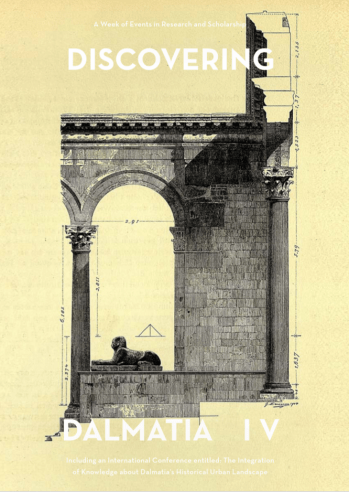 The Discovering Dalmatia conference, to be held from 22 to 24 November 2018 at the Institute of Art History – The Cvito Fiskovic Centre in Split, is the fourth installment related to our interdisciplinary project Dalmatia: A Destination of the European Grand Tour in the 18th and the 19th Century. This year, alongside the traditional papers dedicated to the integration of knowledge about Dalmatia’s historical urban landscape, based on the travel writing of artists and scientists who visited it over the course of their travels, we would like to open the conference to another group of themes.
We have been inspired by the Institute’s new project, The Vocabulary of Classical Architecture, which is supported by the Croatian Science Foundation and conducted in collaboration with the Institute of Croatian Language and Linguistics, to dedicate a part of the conference to researching variations in terminology relating to historical architectural forms in Dalmatia. In addition, this year’s programme includes the presentation of two extensive garden-related projects focused on two incredibly important Croatian sites. One is dedicated to the gardens of the Benedictine Monastery and Maximilian’s summer residence on the island of Lokrum, across from Dubrovnik. These gardens form part of the city of Dubrovnik, which is itself on UNESCO’s list of World Heritage Sites. The second study, meanwhile, gave rise to the extraordinary restoration project of the classicist garden of the Garagnin-Fanfogna family, on the mainland side of Trogir, right beside the historical walls of this Romanesque-Gothic town, which is also on UNESCO’s World Heritage List.
Scientific Committee
Josko Belamaric (Institute of Art History – Cvito Fisković Centre Split)
Katrina O’Loughlin (ARC Centre of Excellence for the History of Emotions UWA)
Ana Sverko (Institute of Art History – Cvito Fisković Centre Split)
Colin Thom (The Bartlett School of Architecture, London)
Elke Katharina Wittich (Fresenius University of Applied Sciences, AMD Hamburg)
T H U R S D A Y , 2 2 N O V E M B E R 2 0 1 8
9.30 Registration and introduction
10.00 Morning Session
Moderators: Josko Belamaric and Sinisa Runjaic
• Antonia Tomic, The Adoption and Transformation of the Meaning of Ancient Architectural Terminology during the Expansion of Christianity
• Antonia Vodanovic, The Pentagram in the Context of the Traditional Architecture of the Makarska Coast
• Jasenka Gudelj and Petar Strunje, The Eastern Adriatic Coast and the Architectural Vocabulary of the Renaissance
• Croatian Glossary of Classical Architecture (KLAS)
12.00 Internal KLAS workshop / Visit to the Ethnographic Museum
14.30 Break
17.00 Afternoon Session
• Mara Maric, Gardens of the island Lokrum during the Habsburgs
• Ivan Vigjen, An Overview of the Current Research on the Benedictine Monastery and Maximilian’s Residences on Lokrum, 1986–2018
• Igor Belamaric and Ana Sverko, The Restoration of the Garagnin-Fanfogna Park in Trogir
F R I D A Y , 2 3 N O V E M B E R 2 0 1 8
10.00 Morning Session
Moderators: Danko Zelic and Sanja Zaja Vrbica
• Sarah Rengel, Writing the ‘Inner Lives’ of the East: Encounters between Women in the Work of Female Travel Writers
• Elke Katharina Wittich, Stones and Costumes: Subjects of Interest in Alberto Fortis‘s Viaggio in Dalmazia
• Colin Thom, ‘This Knotty Business’: The Making of Robert Adam’s Spalatro (1764) Revealed in the Adam Brothers’ Grand Tour Letters
11.45 Break
14.00 Afternoon Session
Moderators: Ana Sverko and Colin Thom
• Sanja Zaja Vrbica, Highlands and Islands of the Adriatic: Dubrovnik in Andrew Archibald Paton’s 1849 Text
• Josip Belamaric, Jean Baptiste Van Moer (1819–1884), Images of the Peristyle of Diocletian’s Palace
• Hrvoje Grzina, 19th-Century Dalmatia Inverted in Camera: Photographic Glass Plate Negatives by Franz Thiard de Laforest
16.00 Tour of Diocletian’s Palace
S A T U R D A Y , 2 4 N O V E M B E R 2 0 1 8
10.00 Visit to the Museum of Fine Arts
12.00 Closing Reception
Conference | The Roman Art World in the 18th Century
From the conference flyer:
The Roman Art World in the 18th Century and the Birth of the Art Academy in Britain
British School at Rome and the Accademia di San Luca, Rome, 10–11 December 2018
Organized by Adriano Aymonino, Carolina Brook, Gian Paolo Consoli, and Thomas Leo-True
 This two-day conference focuses on the role of the Roman pedagogical model in the formation of British art and institutions in the long 18th century.
Even as Paris progressively dominated the modern art world during the 18th century, Rome retained its status as the ‘academy’ of Europe, attracting a vibrant international community of artists and architects. Their exposure to the Antique and the Renaissance masters was supported by a complex pedagogical system. The network of the Accademia di San Luca, the Académie de France à Rome, the Capitoline Accademia del Nudo, the Concorsi Clementini, and numerous studios and offices, provided a complete theoretical and educational model for a British art world still striving to create its own modern system for the arts. Reverberations from the Roman academy were felt back in Britain through a series of initiatives culminating in the foundation of the Royal Academy of Arts in London in 1768, which officially sanctioned and affirmed the Roman model.
This conference addresses the process of intellectual migration, adaptation and reinterpretation of academic, theoretical and pedagogical principles from Rome to 18th-century Britain. It responds to the rise of intellectual history, building on prevalent trends in the genealogy of knowledge and the history of disciplines, as well as the exchange of ideas translated across cultural borders. The conference concludes a series of events celebrating the 250th anniversary of the 1768 foundation of London’s Royal Academy of Arts.
It is also part of a series of conferences and exhibitions focusing on the role of the Accademia di San Luca in the spread of the academic ideal in Europe and beyond, inaugurated in 2016 with an exhibition and conference on the relationship between Rome and the French academies, held at the Accademia di San Luca and at the Académie de France à Rome.
For additional information, please write to adriano.aymonino@buckingham.ac.uk or events@bsrome.it.
M O N D A Y , 1 0 D E C E M B E R 2 0 1 8
British School at Rome, Before the Royal Academy of Arts
9:45 Registration
10:00 Welcome: Stephen Milner (Director, BSR), Adriano Aymonino, Carolina Brook
10:35 Eleonora Pistis (Columbia University, New York), Visible and invisible Rome: British architectural education in the early eighteenth century and the Oxford Circle
11:10 Coffee break
11:45 Barbara Tetti (Sapienza Università di Roma), Roman influence on the development of the British academies: James Gibbs’ contribution
12:20 Ilaria Renna (Sapienza Università di Roma), La collezione di disegni dei Clerk of Penicuik e la School of St Luke di Edinburgo: Modelli classicisti romani in Scozia
13:00 Lunch break
14:30 Jason M. Kelly (Indiana University), The Dilettanti, art pedagogy, and Roman models for an art academy in London
15:05 Clare Hornsby (Independent Scholar, London), The role of the Society of Antiquaries as an ‘academy of classical taste’ in mid eighteenth-century London
15:45 Tea break
16:15 Alessandro Spila (Sapienza Università di Roma), L’Accademia delle Romane Antichità di Benedetto XIV e la Society of Antiquaries. Antiquaria istituzionale e dibattito architettonico fra Roma e Londra alla metà del XVIII secolo
16:50 Helen McCormak (University of Glasgow), Northern Italian painting and naturalism: Robert Strange, William Hunter, and the Royal Academy of Arts
17:25 Keynote by Robin Simon (University College London), Before the Royal Academy of Arts: The long search for an academy of arts in Britain
T U E S D A Y , 1 1 D E C E M B E R 2 0 1 8
Accademia di San Luca, The Royal Academy of Arts and Beyond
9:30 Registration
9:45 Welcome by Francesco Moschini (Segretario Generale, Accademia Nazionale di San Luca)
10:00 Katherine McHale (University of St Andrews), ‘The Truest Model of Grace’: Giovanni Battista Cipriani in London academies
10:35 Flaminia Conti (Sapienza Università di Roma), Giovanni Battista Cipriani e Agostino Carlini: Classicismo e tradizione accademica italiana presso la Royal Academy of Arts
11:10 Coffee break
11:45 Donato Esposito (Independent Scholar, London), Building a canon: Roman Baroque art, Sir Joshua Reynolds, and the Royal Academy of Arts
12:20 Elena Carrelli (Biblioteca Nazionale Vittorio Emanuele III, Naples), British painters in Italy and the Royal Academy of Arts: Landscape painting between academic practice and scientific empiricism
13:00 Lunch break
14:30 Martin Postle (Paul Mellon Centre for Studies in British Art, London), Assembling the Antique: The role of the classical cast in the pedagogy of the Royal Academy of Arts, 1769 to 1780
15:05 Susanna Pasquali (Sapienza Università di Roma), Crosscurrents: Exchanges between British and Italian architects, 1757–1796
15:45 Final discussion
16:15 Tea break
16:50 Tour of the exhibition Roma-Londra: Scambi, modelli e temi tra l’Accademia di San Luca e la cultura artistica britannica tra XVIII e XIX secolo at the Accademia Nazionale di San Luca
18:00 Concert, ContempoArtEnsemble in quartetto plays Sir Peter Maxwell Davies, Naxos Quartet No. 7, Metafore sul Borromini for String Quartet
Colloquium | Between Belief and Iconoclasm: Sacred Space in France
From H-ArtHist:
Entre croyance aux miracles et iconoclasme: L’espace sacré en France au XVIIIe siècle
Deutsches Forum für Kunstgeschichte / Centre allemand d’histoire de l’art, Paris, 3–4 December 2018
Ce colloque se propose d’interroger les témoignages, les expériences religieuses et les transformations esthétiques de l’espace sacré au siècle des Lumières. Dans le contexte d’un débat caractérisé par la critique de l’Église et de l’absolutisme, l’athéisme et la démystification de la religion, mais aussi par la recherche d’une réactualisation crédible du spirituel, les conceptions (syn)esthétiques de l’espace sacré revêtent une pertinence toute particulière. L’art se révèle ici à la fois matrice, sismographe et instrument agissant. Dans quelle mesure l’église du XVIIIe siècle doit-elle être appréhendée non seulement comme un lieu sacré, mais aussi comme un endroit fréquenté par les croyants et les touristes, par les clercs et les artistes, par la noblesse et la bourgeoisie, par les hommes et les femmes, et vécu tout autant comme espace social qu’esthétique ou émotionnel ? Comment expliquer la sécularisation fondamentale, le décloisonnement puis la réactualisation du culte qui s’est opérée dans l’espace sacré entre la mort de Louis XIV et la Révolution française ? Ces questions, au cœur de cette rencontre, seront abordées dans une perspective intermédiale et transdisciplinaire.
L U N D I , 3 D É C E M B R E 2 0 1 8
14.45 Begrüßung, Thomas Kirchner (Direktor des DFK Paris)
15.00 Introduction, Markus Castor (DFK Paris), Martin Schieder (Universität Leipzig), und Wiebke Windorf (Heinrich-Heine-Universität Düsseldorf)
15.15 1. L’espace sacré comme lieu public
Moderation: Markus Castor (DFK Paris)
• Guillaume Kazerouni (Musée des Beaux-Arts de Rennes), Les aléas des dispersions révolutionnaires: Questions autour du décor de la salle du chapitre du prieuré Saint-Martin-des-Champs
• Martin Schieder (Universität Leipzig), «Un salon continuellement ouvert aux étrangers & aux curieux»: La mise en scène de la peinture religieuse au XVIIIe siècle
• Hannah Williams (Queen Mary University of London), Du salon à l’autel: Peindre les saints dans le Paris des Lumières
• Émilie Chedeville (Université Paris 1 Panthéon-Sorbonne), Partage de la Grâce et esthétique de la communion: Les embellissements de Saint-Jean-en-Grève, paroisse janséniste du XVIIIe siècle
M A R D I , 4 D É C E M B R E 2 0 1 8
9.30 2. Sculpture et espace sacré
Moderation: Wiebke Windorf (Heinrich-Heine-Universität Düsseldorf)
• Hans Körner (Heinrich-Heine-Universität Düsseldorf), Edme Bouchardons Silbermadonna für Saint-Sulpice: Materialwert, Kunstwert und religiöses Prestige
• Étienne Jollet (Université Paris 1 Panthéon-Sorbonne), Les limites du sacré: Des colosses dans et devant Notre-Dame de Paris au XVIIIe siècle
• Julie Laval (Heinrich-Heine-Universität Düsseldorf), Die Evidenz des Sakralen: Die Glorie als Vermittlungsmöglichkeit von Transzendenz im französischen 18. Jahrhundert
• Cécilie Champy-Vinas (Petit Palais, Paris), Perpétuer la mémoire d’un individu exemplaire: Le tombeau de Mignard et le monument au cardinal de Fleury par Jean-Baptiste Lemoyne
12.45 Pause déjeuner
14.15 3. Transformations de l’espace sacré
Moderation: Martin Schieder (Universität Leipzig)
• Wiebke Windorf (Heinrich-Heine-Universität Düsseldorf), Zwischen Modernisierung und Reaktualisierung des Kultes im 18. Jahrhundert: Das Martyrium des Hl. Savinianus und der Kardinal de Luynes in Sens
• Markus Castor (DFK Paris), «Grand goût» pour le gothique – illuminer Saint-Germain-l’Auxerrois
• Emmanuel Lacam (École nationale des chartes; Université de Picardie-Jules Verne, Amiens), Les mutations d’un espace sacré en Révolution: l’église Saint-Eustache à Paris, 1789–1804
• Sébastien Bontemps (Université de Bourgogne, Dijon), Vers une révolution des espaces? De l’Église catholique au temple de la Raison
• Philipp Stenzig (Heinrich-Heine-Universität Düsseldorf), Le pèlerinage de Port-Royal – créer un espace sacré virtuel
18.00 Conclusion
Konzept und Organisation
Markus A. Castor (DFK Paris), mcastor@dfk-paris.org
Martin Schieder (Universität Leipzig), schieder@uni-leipzig.de
Wiebke Windorf (Heinrich-Heine-Universität Düsseldorf), windorf@phil.hhu.de










leave a comment