Exhibition | Witches: Metamorphosis of Goya
Press release (via Art Daily) for the exhibition:
Denise de la Rue, Witches: Metamorphosis of Goya / Brujas: Metamorfosis de Goya
Lázaro Galdiano Museum, Madrid, 21 June — 31 October 2017
Curated by Carmen Espinosa and Flavia Hohenlohe
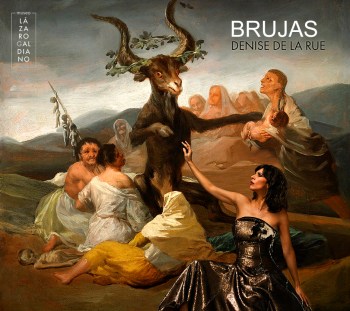
Denise de la Rue, ‘Maribel Verdú y Goya’, a partir de ‘El Aquelarre’ de Francisco de Goya (1798), 2017.
Witches, an exhibition by Mexican artist Denise de la Rue, curated by Carmen Espinosa and Flavia Hohenlohe at the Lázaro Galdiano Museum in Madrid, is the second component of her series Angels and Witches: Goya, Metamorphose, a study of Francisco de Goya’s paintings through a reinterpretation of the old master’s work. De la Rue has created a series of photographs juxtaposing iconic Spanish actresses with the painter’s work, analysing the dichotomies and similarities between these characters whilst engaging with historical and relevant sites such as the Museum. Taking elements of the actor profession that coincide with the characteristics of angels and witches such as mysticism, magic, life, death and the power of creation, transformation and destruction, De la Rue has created a dialogue between the actresses and Goya’s paintings. The essence of this series is the interest of the artist in researching the capability of women to transform and empower themselves, which historically has been seen as threatening to the conservative preconception of patriarchal societies.

Denise de la Rue, a partir de ‘Vuelo de Brujas’ de Francisco de Goya (Prado, 1798), 2017.
As a starting point to create Witches, a new body or work, De la Rue has taken Goya’s Vuelo de Brujas (Witches’ Flight), Prado Museum; El Aquelarre (Witches’ Sabbath) and Las Brujas (The Witches), both at the Lázaro Galdiano Museum; Hechizado a la Fuerza (The Forcibly Bewitched), National Gallery London; La Cocina de las Brujas (The Witches’ Kitchen), untraced; and Don Juan y el Comendador (Don Juan and the Commander), untraced. The series was commissioned by the Dukes of Osuna between 1797 and 1798 for the Alameda Palace in Madrid, best known as El Capricho.
Two of these pieces, Las Brujas and El Aquelarre, are part of the Museum’s permanent collection and will be displayed alongside De la Rue’s work, creating a conversation between the old master and the contemporary artist. The extravagance of these two pieces also draws special attention. Here the unreal becomes visible, riding between the terrifying and the ironic. Both paintings appear to be inspired by eighteenth-century texts as well as popular tradition, a key focus in De la Rue’s research. The exhibition of Witches is a unique opportunity not only to see two of Goya’s original paintings of witches together but to appreciate the full series through De la Rue’s work.
Two of the original paintings have been lost, and De la Rue has recaptured them by retrieving historic files that include details of the works. Using photography technology, the artist has reconstructed the works and reunited them in the same space for the first time since the pieces left the Dukes of Osuna’s hands.
In addition to the photographs, the Museum will present De la Rue’s video dedicated to the painting Las Brujas in which the actress Bárbara Lennie dances to the poem “Pequeño vals Vienés” (“Little Venice Waltz”) by Federico Garcia Lorca interpreted by flamenco singer Enrique Morente.
The first component of the exhibition Angels and Witches Goya, Metamorphose was the chapter of Angels at the Royal Chapel of San Antonio de la Florida in Madrid where Goya remains rest, as well as where some of his most recognised frescos are. The exhibition opened in February and was a highlight of the Madrid cultural calendar. Having the two exhibitions of Angels and Witches in dialogue with Goya’s work in these unique venues is a rare opportunity to see and understand Goya’s interest in witchcraft and the holy, revised by photography and a contemporary perspective.
Video from the previous installation Ángelas:
Symposium | Art of Power: The 3rd Earl of Bute, Politics, and Collecting
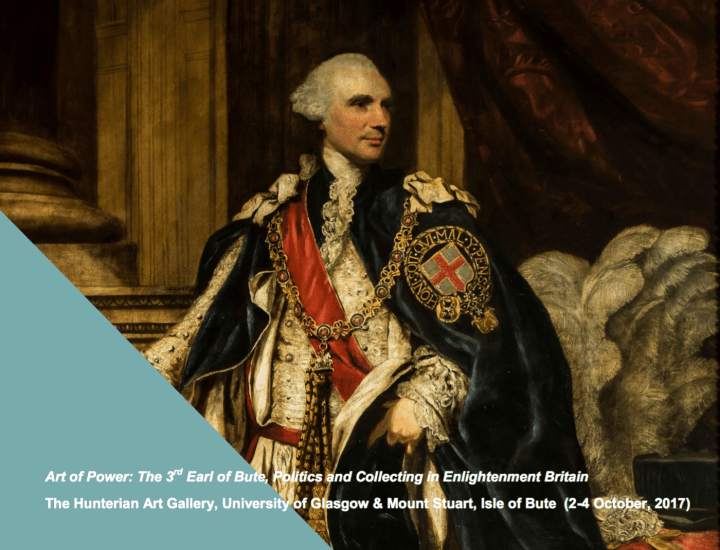
From the symposium flyer:
Art of Power: The 3rd Earl of Bute, Politics, and Collecting in Enlightenment Britain
The Hunterian Art Gallery, University of Glasgow and Mount Stuart, Isle of Bute, 2–4 October 2017
In 2017, the Mount Stuart Trust and The Hunterian Art Gallery, University of Glasgow, are hosting a major exhibition merging art, biography, politics, and cultural history. Art of Power: Masterpieces from the Bute Collection uncovers the fascinating Enlightenment figure, John Stuart, 3rd Earl of Bute (1713–1792), and his collection of rarely-seen masterpieces. A three-day interdisciplinary symposium inspired by themes of the exhibition will explore the dynamic interplay between art, politics, and collecting so evident in the life of the 3rd Earl of Bute. In sessions open to the public, papers will be delivered on day one in Glasgow. Days two and three will take place at Mount Stuart (with only a very limited number of spaces) and will include tours of the house, archives, and collection highlights.
Confirmed Speakers
Desmond Shawe-Taylor (Royal Collection), Rosie Razzall (Royal Collection), Anne T. Woollett (J. Paul Getty Museum), Anthony Lewis (Glasgow Museums), Wayne E. Franits (Syracuse University), Graham Rowe (University of Derby), Heiner Krellig (independent), Janet Stiles Tyson (Birkbeck), Oliver Cox (Oxford), Peter Black (Hunterian), Mungo Campbell (Hunterian), and Caitlin Blackwell (Mount Stuart)
Exhibition | In Her Majesty’s Hands: Medals of Maria Theresa
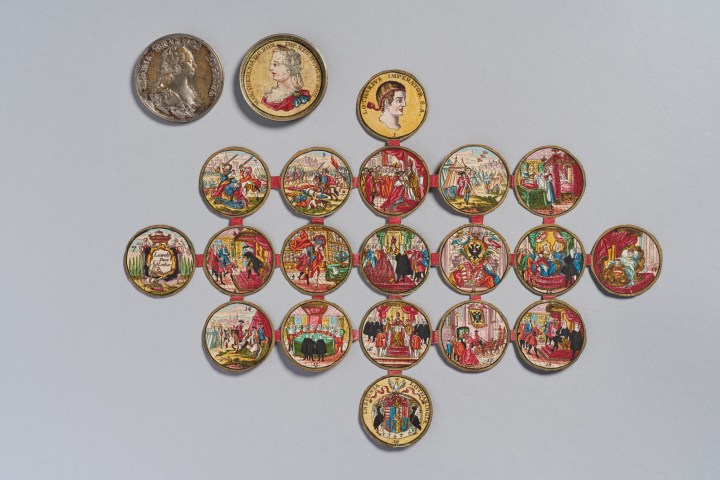
Matthäus Donner / Andreas Vestner, Maria Theresa Box Medal (Schraubmedaille) containing hand-coloured drawings; silver, hand-coloured drawing on paper inside the medal (Vienna, Kunsthistorisches Museum, Coin Collection, inv.no. 5955/1914B).
◊ ◊ ◊ ◊ ◊
Press release (via Art Daily) for the exhibition now on view at the KHM:
In Her Majesty’s Hands: Medals of Maria Theresa
Kunsthistorisches Museum, Vienna, 28 March 2017 — 18 February 2018
Curated by Anna Fabiankowitsch and Heinz Winter
The Kunsthistorisches Museum’s Coin Collection holds both the largest and by far the most important collection of coins minted under Maria Theresa; it is the best place, and now is the best time, to host an exhibition that presents the monarch’s life in medals to celebrate what would have been her 300th birthday.
 The exhibition focuses on the most important topoi in Maria Theresa’s private and public life. It presents her in the company of her large family, running the gamut of events from dynastic marriages to heart-breaking calamities. It showcases her role as a ruler forced to fight several wars for her inheritance and, together with her son and co-regent Joseph II, as a pioneering social reformer. The artefacts on show also illustrate the extent of Maria Theresa’s realm, which comprised many different ethnicities and cultures.
All these topoi are reflected in medals that emblematise historical events with the help of allegories. Maria Theresa was already widely glorified and celebrated during her lifetime, but the exhibition also documents how she was portrayed by her enemies. So-called satirical medals, which were passed around in private, turned Maria Theresa into an object of derision.
The exhibition focuses, too, on the historical background of medal production to illustrate the requisite technical skills, expenditure, and effort; introduce the most important protagonists; and document the range, purview, and media-value of Maria Theresa’s medals.
Maria Theresa (1717–1780) became a legend during her lifetime, and few female rulers were depicted more frequently or diversely. Her many likenesses—among them portraits, engravings, medals, and medallions—were designed to preserve her memory for posterity, turning her into an 18th-century media-star.
Medals played a central role in this propaganda effort controlled by the imperial court. Among the period’s foremost artistic mass media, medals were minted under the aegis of the court, and they continue to reflect the ruler’s political aims and the way she saw herself. Over three hundred different medals were produced during Maria Theresa’s reign to commemorate or celebrate either members of the imperial family or political events, both national and international.
Medals functioned as a way to commemorate important events of her reign, and as they were minted in large numbers, the material is noted for its longevity and their handy format made it easy to disseminate them, they were regarded as a historical record that would last forever. Contemporaries called these miniature memorials show- or commemorative coins, and they evolved into much sought-after and frequently exchanged collectors’ pieces. The monarch presented them as signs of imperial favour, in recognition of the recipient’s merits or achievements, or to strengthen diplomatic ties, and the majority of the medals produced in Vienna were destined for the court—ending up in Her Majesty’s hands.
Zuhanden Ihrer Majestät: Medaillen Maria Theresias (Vienna: Kunst Historisches Museum, 2017), 100 pages, 15€.

Curator Anna Fabiankowitsch during preparations for the exhibition
Photo by Lukas Beck
Exhibition | Living Rooms: The Period Room Initiative
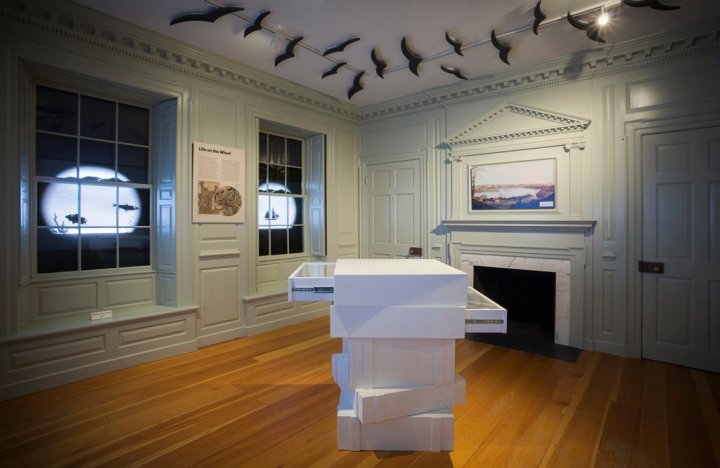
Providence Parlour, ca. 1760–70; painted pine
(Minneapolis Institute of Art)
◊ ◊ ◊ ◊ ◊
I’m glad to note that former Enfilade intern Mattie Koppendrayer contributed portions of the research for the room on ‘Science and Sociability’. Along with these fascinating installations of Mia’s period rooms, the museum’s eighteenth-century offerings for the fall will include the exhibition Eyewitness Views: Making History in Eighteenth-Century Europe, which recently closed at The Getty and opens in Minneapolis on September 10. –CH
Now on view at Mia:
With Living Rooms, a multi-year initiative, Mia is reinvigorating its period rooms for today’s visitors, placing the past in dialogue with the present, while simultaneously broadening the conversation to include other histories—of marginalized people, of the senses, and even of time itself.
Just Imported: Global Trade in 1700s New England
Minneapolis Institute of Art, 22 April 2017 — 15 April 2018
The Providence Parlor once occupied prime real estate on a wharf in 1700s Providence, Rhode Island. Its owners, brothers Joseph and William Russell, operated a prosperous merchant business that imported and exported goods by sea. Their store, The Sign of the Golden Eagle, offered a resplendent selection of imported fabrics, exotic spices, fine housewares, and hogsheads of rum, among other goods. Their market was the world, and the world, their market, made possible by trade winds, war profiteering, and the labor of enslaved people. With their wealth, the Russell Brothers built the first three-story home in Providence, with views of the harbor. Originally installed at Mia in 1923, the parlor, along with its original inhabitants and harborside location, is brought back to life through a naturalistic soundscape, multi-sensory discovery cabinet of mercantile curios, and animated shadow puppets.
Read more here»
Charleston Drawing Room, ca. 1772; cyprus
(Minneapolis Institute of Art)
◊ ◊ ◊ ◊ ◊
The Many Voices of Colonial America
Minneapolis Institute of Art, 22 April 2017 — 15 April 2018
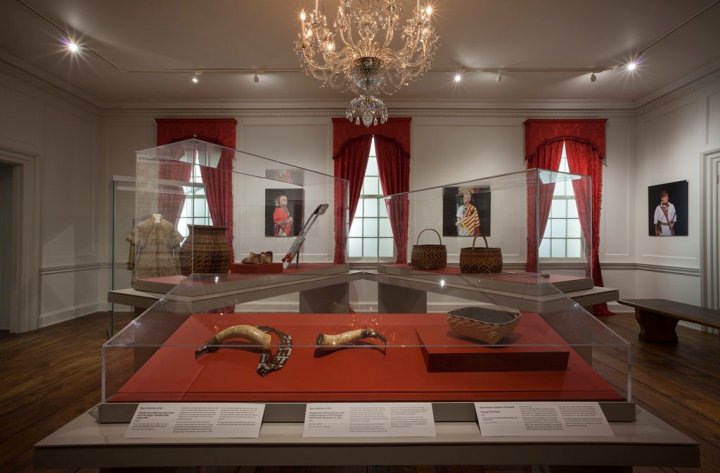
The Charleston Dining and Drawing Rooms came from the 1772 home of Colonel John Stuart, who served as Superintendent of Indian Affairs for Britain’s southern colonies and was also an owner of enslaved Africans. For over 80 years, the rooms have been interpreted as late-1700s interiors featuring high-style Chippendale and Federal-style American and English furniture and objects. This new temporary exhibition replaces a stylistic approach by reinserting African and Native American presence in these spaces. In the Charleston Drawing Room, Cherokee art of the Colonial era and contemporary Cherokee art that responds to this moment of history reveal stories of diplomatic relations and travel between the Cherokee Nation and the British Crown. In the Charleston Dining Room, West African and African American objects tell important stories of Charleston’s dependence on enslaved West Africans’ indigenous knowledge of rice cultivation for commercial gain and as a source of nourishment during this time—foreshadowing the legacy of African cuisine in contemporary America.
Read more here»
In addition, see this Mia blog posting by Alex Bortolot (Content Strategist at the Minneapolis Institute of Art, and a specialist in the arts of Africa), “Who Is an American? Here’s one way museums can ask—and answer,” available here»
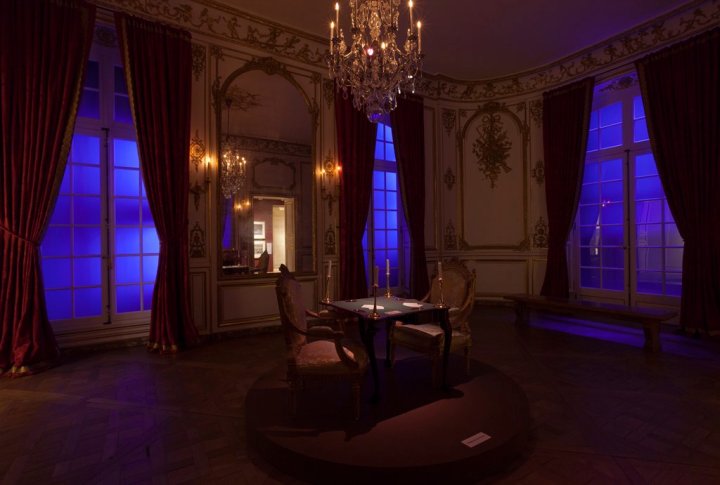
Grand Salon from the Hôtel de la Bouëxière, 1733–37; painted and gilt wood, plaster, marble and iron
(Minneapolis Institute of Art)
◊ ◊ ◊ ◊ ◊
Up All Night in the 18th Century
Minneapolis Institute of Art, 22 April 2017 — 15 April 2018
In the 1700s, European cities witnessed a gradual but profound shift in daily life: people stayed up later and partied harder into the night. Many of their nocturnal soirees were private affairs, hosted in elite homes by invitation only. The Grand Salon from the Hôtel de la Bouëxière will be prepped for one of these exclusive parties with a games table for card-playing (the night-loving aristocrat’s favorite diversion), candlesticks, and the required stimulants: coffee and chocolate. Of course, staying up late meant burning the midnight oil, so artificial lighting with candles and fire increased in importance during this time. New lighting in the Salon will simulate the effects of flickering flames, revealing the warm glow of gilded paneling and metalwork in a ‘nighttime’ setting.
Read more here»
Additional information on the Grand Salon is available here»
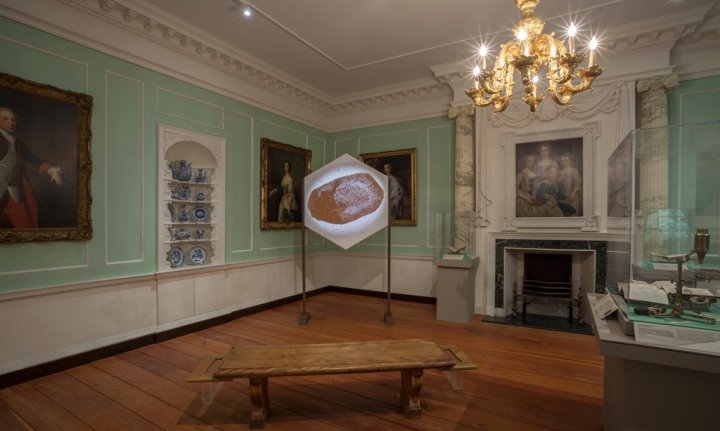
Georgian Drawing Room, ca. 1740; painted pine
(Minneapolis Institute of Art)
◊ ◊ ◊ ◊ ◊
Science and Sociability in 1700s England
Minneapolis Institute of Art, 22 April 2017 — 15 April 2018
In 1700s England, the home was a place where genteel men and women studied and conversed about natural history; only later did science move exclusively to the laboratory, where it became a predominantly male profession. This temporary exhibition presents Mia’s British rooms as places for the pursuit of science. Women often engaged with scientific discoveries and cultivated observational skills through embroidery and drawing—common pursuits for women of leisure. The c. 1730 Queen Anne Room will feature works on paper and textiles made by women. The adjoining c. 1740 Georgian Drawing Room will be arranged for a ‘scientific party’ where curious men and women socialized amidst telescopes, microscopes, an electrostatic generator—an experimental instrument that generated an electric charge—and, of course, tea.
Read more here»
In addition, see this Mia blog posting by Nicole LaBouff (Assistant Curator, Textiles Department of Decorative Arts, Textiles and Sculpture), “Science Is for Lovers: Why the planet needs scientists and passionate amateurs to work together,” available here»
and this posting by Peter Heering (Professor of Physics at the Europa Universität Flensburg in Germany and the former president of the International History, Philosophy, and Science Teaching Group), “Social Science: How to recreate an Enlightenment-era ‘science party,” available here»
Exhibition | Piranesi: Rome in Ruins
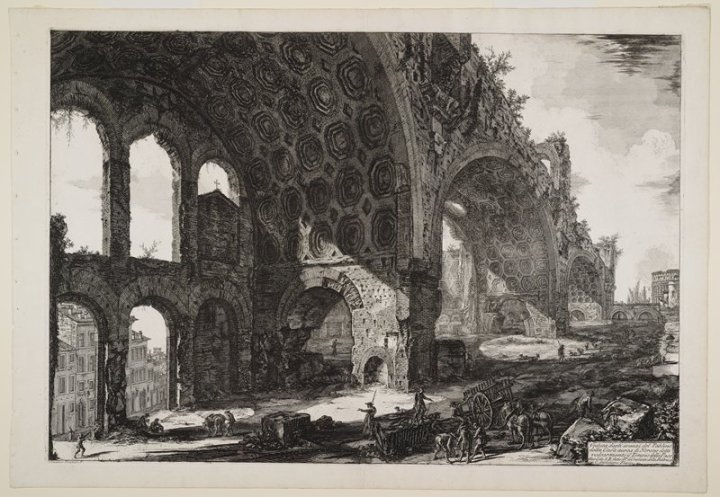
Giovanni Battista Piranesi, View of the Remains of the Dining Room of Nero’s Golden House, commonly called the Temple of Peace, 1756–78; etching (Minneapolis: Minneapolis Institute of Art, Gift of Ruth and Bruce Dayton 2007.49.2.2).
◊ ◊ ◊ ◊ ◊
Now on view at Mia:
Piranesi: Rome in Ruins
Minneapolis Institute of Art, 20 May 2017 — 14 January 2018
Giovanni Battista Piranesi (1720–1778) takes us on a ramble through the ruins of ancient Rome. His etchings of the remains of a great civilization couple his archaeological interest in detail with his flair for dramatic effect. This intimate exhibition invites you to reflect on a quiet world of grand desolation. Seen through the lens of the mid-1700s, the ruins suggest romance, mystery, melancholy, awesome possibility, and loss.
Exhibition | Chinese Daoist Priest Garments
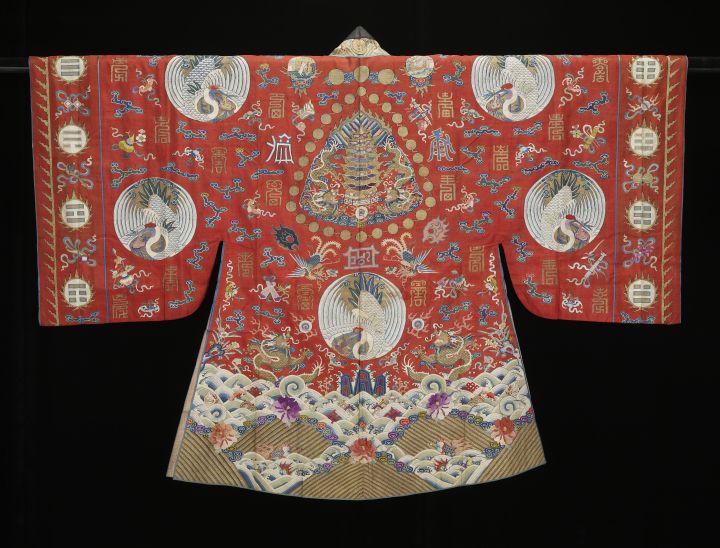
Daoist Robe, Qing dynasty (1644–1911), 1821–50, silk
(Minneapolis Institute of Art, 42.8.118)
◊ ◊ ◊ ◊ ◊
On view for a few more weeks at Mia:
Embroidering an Ordered Cosmos: Chinese Daoist Priest Garments of the Qing Dynasty (1644–1911)
Minneapolis Institute of Art, 12 December 2016 — 3 September 2017
Daoist belief emphasizes an ordered cosmos, harmonious existence with nature, and heavenly paradise. Together with Confucianism and Buddhism, it is one of China’s three major belief systems. Daoism emerged after 100CE and soon acquired the trappings of organized religion: a supreme god, a set of scriptures, temples, priests, and ritual practices.
Robes worn by Daoist priests represent some of the richest embroidered decoration in Chinese clothing. They take two basic forms: a square, full-length, sleeveless robe with center-front opening (jiangyi) and a full-length, sleeved garment with center-front opening fastened with ties (daopao). Elaborate symbolic schemes are common to both. They feature cosmic diagrams representing paradise, the sun and moon, phoenixes (birds with fiery feathers), abstract forms of China’s five sacred mountains, and circles containing 12 zodiac animals. When priests wore robes like these, they were symbolically united with the cosmos and able to go beyond the earthly and heavenly realms.
Exhibition | Stones Steeped in History
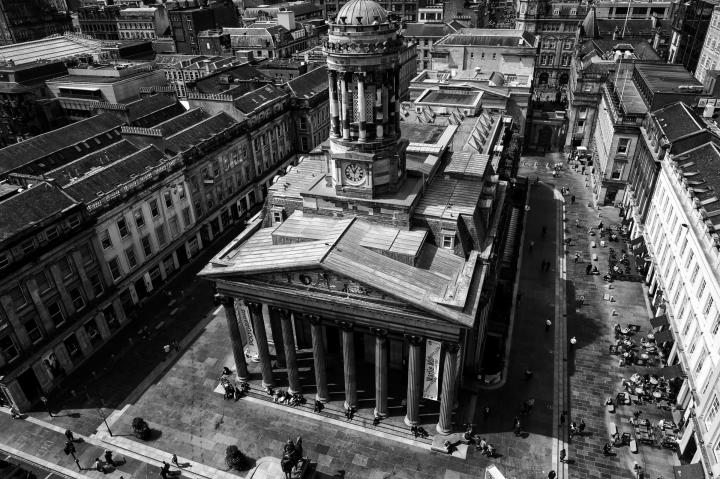
GoMA and Royal Exchange Square taken from Grant Thornton offices on the 8th floor of 110 Queen Street. Photo by Jamie Simpson.
◊ ◊ ◊ ◊ ◊
Press release (9 August 2017) from GoMA:
Stones Steeped in History
Gallery of Modern Art, Glasgow, from August 2017
As Scotland’s most popular modern art gallery and one of the country’s top ten visitor attractions, the Gallery of Modern Art, Glasgow has opened a new display charting significant dates in the development of the site, together with important milestones in the cultural development of Glasgow. Stones Steeped in History tells the story from 1777, when the original building was commissioned as a mansion for tobacco merchant, William Cunninghame, until the present day. The permanent show will inform visitors of the history of the building and is also part of the city’s ambition to aid a deeper understanding of the role slavery played in the narrative of Glasgow. Images of beautiful old photographs, watercolours, and postcards complement nostalgic images of Glasgow throughout the years, which enhance the detailed timeline on display.
Stones Steeped in History begins with a brief account of the life of William Cunninghame and moves through times of great wealth, created by international trade. The building’s first commercial purpose was as a bank some forty years later, before becoming Glasgow’s Royal Exchange in 1827, where for over 100 years businessmen gathered to trade cotton, sugar, coal, and iron. Many, like Exchange founder James Ewing of Strathleven, owned or profited from the labour of enslaved people on the sugar and tobacco plantations in the American colonies and West Indies.
The display continues with innovations such as one of Glasgow’s first telephone exchanges, housed in the building from 1880 and records the iconic Duke of Wellington statue being erected outside in 1884. Glasgow Corporation purchased the building in 1954. Its first civic use was as a library, containing both the Stirling and Commercial Library collections. Stones Steeped in History then chronicles the building’s key role in Glasgow’s rise as a centre for art and culture, which began in the 1970s.
Chair of Glasgow Life, Councillor David McDonald, said: “We are pleased to open Stones Steeped in History and share a few of this historic building’s stories, including its undeniable ties to slavery. GoMA has been a home, a bank, an exchange, a library, and is now a respected gallery of modern and contemporary art. This building’s stones really are steeped in history. This exhibition records some of the key events in the cultural development of Glasgow. Importantly it continues to tell the story of Glasgow’s links to the slave trade, by providing a fuller appreciation of the part slavery played in the narrative of the city and how important that is not only to the past, but also to the future.”
Glasgow had a reputation as a tough city, but always running alongside this has been a history of innovation and creativity. In the 1970s, Glasgow City Council recognised how culture could be used to re-frame the city’s reputation. The first major project was the creation of a new museum to hold Sir William Burrell’s gift to the city—his collection of over 9,000 objects. The Burrell Collection opened in 1983, to international acclaim. The Garden Festival followed in 1988, attracting over 4 million visitors and in 1990 Glasgow won the title of European Capital of Culture, changing its cultural standing forever. Glasgow and the artists who have emerged from it are now acknowledged around the world and the city boasts one of the finest civic art collections in Europe.
The Mitchell Library opened in 1911, incorporating much of the book collection housed in the building. Stirling’s Library remained until work began on the Gallery of Modern Art in 1994. GoMA opened in 1996, under the leadership of then Director of Museums Julian Spalding. It had six galleries, five showing works from the permanent collection, with one for exhibitions. Spalding’s vision was quite radical—to display only works by living artists—but his selection of artists was met with dismay by the artistic community. Glasgow Museums’ current approach to collecting and commissioning is quite different and now focuses on building the collection and important social justice and human rights issues. Curators continue to collect and commission work by artists with a Glasgow connection. Visitors can see displays of local and international artworks from the collection as well as temporary exhibitions and artist events across the building’s four galleries. The basement is home to a library and café; there is a shop and artists workspace on the top floor.
Stones Steeped in History is located on two balconies across level 1 and 2 at GoMA. The display covers the period from when the first building appeared in the 1700s up to the opening of the Gallery of Modern Art in 1996. It highlights some of the significant dates and functions in the history of the venue, alongside some key points in the cultural development of Glasgow. It is open now. The exhibition was made possible thanks to the generous donations from the 3.1 million visitors who visit Glasgow Museums every year.
The Burlington Magazine, August 2017
The eighteenth century in The Burlington:
The Burlington Magazine 159 (August 2017)
 E D I T O R I A L
• “Reflected Glory: University Art Collections in Britain,” p. 599.
O B I T U A R I E S
• Simon Jervis, “Rudolf Hermann Wackernagel (1933–2017),” p. 639. His great article, “Carlton House Mews: The State Coach of the Prince of Wales and of the Later Kings of Hanover, A Study in the Late-Eighteenth-Century ‘Mystery’ of Coach-Building, in Furniture History 31 (1995) remains the most authoritative statement on London coach building in the late eighteenth century. But his crowning achievement was the massive two-volume Staats- und Galawagen der Wittelsbacher (Stuttgart, 2002). This is a catalogue of the wonderful collection of the Marstallmuseum at Schloss Nymphenburg, outside Munich, where he generously deposited part of his own extensive and systematic archive on coaches and carriages…
R E V I E W S
• Gauvin Alexander Bailey, Review of Christine Casey, Making Magnificence: Architects, Stuccatori and the Eighteenth-Century Interior (Yale University Press, 2017), pp. 642–43.
• Ayla Lepine, Review of Julian Holder and Elizabeth McKellar, eds., Neo-Georgian Architecture, 1880–1970: A Reappraisal (Historic England, 2016), pp. 643–44.
• Michael Hall, Review of Pauline Prévost-Marcilhacy, ed., Les Rothschild: une dynastie de mécènes en France, 1873–2016 (Somogy éditions d’Art, 2016), pp. 644–46.
• Francis Russell, Review of the exhibition Canaletto and the Art of Venice (London: The Queen’s Gallery, Buckingham Palace, 2017), pp. 651–52.
• Matthi Forrer, Review of the exhibition Hokusai: Beyond the Great Wave (London, The British Museum; and Osaka: Abeno Harukas Art Museum, 2017), pp. 652–53.
•Eric Zafran, Review of the exhibition America Collects Eighteenth-Century French Painting (Washington: D.C.: National Gallery of Art, 2017), pp. 669–70.
R E C E N T A C Q U I S I T I O N S
Recent acquisitions (2007–17) by regional university collections in Britain
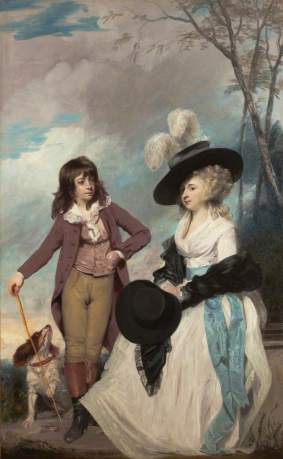
Joshua Reynolds, Maria Marow Gideon and Her Brother, William, 1786–87 (Birmingham: The Barber Institute of Fine Arts), January 2013.
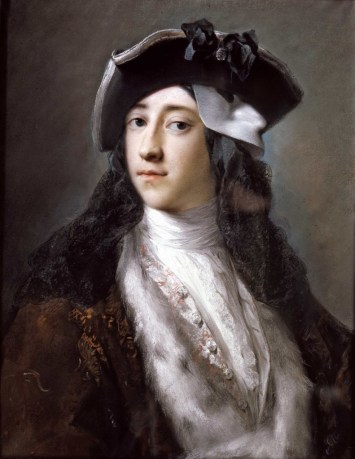
Rosalba Carriera, Portrait of Gustavus Hamilton, 2nd Viscount Boyne, ca. 1730–31; pastel, heightened with white bodycolour on paper (Birmingham: The Barber Institute of Fine Arts), 2009.
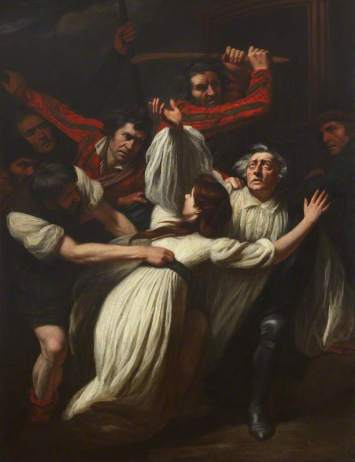
John Opie, The Death of Archbishop Sharpe, 1797; oil on canvas (University of St Andrews), 2008.
Exhibition | Basic Instincts

Joseph Highmore, The Angel of Mercy, ca. 1746; oil on canvas, 59.7 × 48.3 cm (New Haven: Yale Center for British Art, Paul Mellon Collection, B1981.25.362).
◊ ◊ ◊ ◊ ◊
Press release from The Foundling Museum:
Basic Instincts
The Founding Museum, London, 29 September 2017 — 7 January 2018
Curated by Jacqueline Riding
A highly successful artist and Governor of the Foundling Hospital, Joseph Highmore (1692–1780) is best known as a portrait painter of the Georgian middle class. However, during the 1740s Highmore’s art radically shifted as he turned his focus to societal attitudes towards women and sexuality. Curated by Highmore expert, Dr Jacqueline Riding, Basic Instincts explores this ten-year period and his disruptive commentary, reflecting his engagement with the work of the new Foundling Hospital and its mission to support desperate and abused women. On public display in the UK for the first time is a remarkable painting that still retains the power to shock.
In 1744 Highmore created a series of 12 paintings on his own initiative inspired by Samuel Richardson’s international bestseller, Pamela, or Virtue Rewarded. First published in 1740, the novel’s sixth edition of 1742 included illustrations by Hubert Gravelot and Francis Hayman. However, unlike the commissioned illustrations, Highmore’s paintings explicitly make reference to the abuse and sexual violence at the heart of Richardson’s story of a virtuous young maidservant fighting off the unwanted advances of her predatory master. Highmore and Richardson became friends, and Highmore subsequently illustrated Richardson’s masterpiece, Clarissa, or, the History of a Young Lady, whose tragic heroine avoids a forced marriage, but dies having been abandoned by her family, duped by an admirer, drugged and raped.
Unlike William Hogarth, Highmore’s representation of Georgian society favoured realism over broad humour and theatricality, so his nuanced articulation of social attitudes towards women and sexuality means that modern audiences can miss his challenging commentary. However, at the heart of Basic Instincts is a remarkable painting that has never before been publically displayed in the UK and which does not fail to shock. The Angel of Mercy (c.1746) depicts a desperate mother in the act of killing her baby, with the distant Foundling Hospital presented as an alternative solution. This painting is unique in western art for showing maternal infanticide as a contemporary reality. The fashionably dressed mother is free from direct biblical or mythological allusion, unlike Hagar and Ishmael (1746) the large canvas Highmore donated to the newly established Hospital, which represents an Old Testament story of maternal abandonment. Instead The Angel of Mercy confronts the ‘elephant in the room’ in terms of the Hospital’s campaign; that without Christian compassion and practical support, even respectable women will be driven to murder.
Basic Instincts curator Jacqueline Riding said: “This is the first major Highmore exhibition for 50 years and nowhere can his life and work have greater resonance than at the Foundling Museum: an organisation at the forefront of the public display, interpretation and appreciation of early-Georgian art. Setting The Angel of Mercy, the Pamela paintings and Hagar and Ishmael among Highmore’s most tender portraits of mothers and children, family and friends, uniquely demonstrates the artist’s depth and variety, while indicating the true breadth of British Art in a period still labelled ‘The Age of Hogarth’.”
Foundling Museum director Caro Howell said: “Basic Instincts demonstrates that in the eighteenth century, the Foundling Hospital’s impact on contemporary artists went far beyond a simple donation of art. For Joseph Highmore it sparked a radical engagement with the issue of women’s vulnerability to sexual assault and society’s unwillingness to support them, culminating in a work of quite exceptional power.”
Basic Instincts explores the limits and narratives around female respectability in Georgian society, and reveals the complexity of Highmore’s engagement with issues surrounding women’s vulnerability to male exploitation. The first major publication dedicated to Joseph Highmore and written by Dr Riding will be published by Paul Holberton publishing to coincide with the exhibition. The exhibition is supported by the Paul Mellon Centre for Studies in British Art.
On display in the Museum’s historic rooms, a series of nine previously unseen sculptures by acclaimed contemporary artist Rachel Kneebone provide a highly charged counterpoint to Basic Instincts. Exploiting porcelain’s history as a material of refinement and rococo exuberance, Kneebone subverts viewers’ expectations by creating works that are simultaneously delicate and visceral. Raft of the Medusa’s tumbling limbs and fractured swags are at once coquettish and sinister; their gleaming white surfaces and exquisite detail belie scenes of collapse and dismemberment. Displayed amongst the Museum’s historic Collection, these works distil and abstract the Foundling Hospital’s suppressed narratives of sexual desire, emotional damage, and female strength.
Jacqueline Riding specialises in Georgian history and art. She read History and Art History at the universities of Leicester, London, and York and has over twenty-five years’ experience working as a curator and consultant within a broad range of museums, galleries, and historic buildings, including the Guards Museum, Tate Britain, and Historic Royal Palaces. From 1993 until 1999 she was Assistant Curator of the Palace of Westminster and later founding Director of the Handel House Museum in London. She has published widely on early-Georgian art and history, including her major book Jacobites: A New History of the ’45 Rebellion (Bloomsbury 2016). She is currently writing a biography of William Hogarth (Head of Zeus). She was the consultant historian and art historian on Mike Leigh’s award-winning film Mr. Turner (2014) and is the consultant historian on his next feature film, Peterloo. Jacqueline Riding is Associate Research Fellow in the School of Arts, Birkbeck College, University of London and a Fellow of the Clore Leadership Programme.
Rachel Kneebone (b. 1973) lives and works in London. Recent solo exhibitions include Rachel Kneebone at the V&A, London (2017); 399 Days, White Cube Bermondsey (2014) and London; and Regarding Rodin, Brooklyn Museum, New York (2012). Group exhibitions include Obsession, Maison Particulière, Brussels and Flesh, York Art Gallery (2016); Lust for Life, Galleri Anderson Sandstrom, Stockholm and Ceramix at Bonnefantenmuseum, Maastricht (2015); 3am: Wonder, Paranoia and the Restless Night, The Bluecoat, Liverpool and Chapter, Cardi (2013–14); The Surreal House, Barbican Centre, London (2010); Summer Exhibition, Royal Academy of Arts, London (2008); and Mario Testino at Home, Yvon Lambert, New York (2007). In 2005, Kneebone was nominated for the MaxMara Art Prize and this year has been nominated for the breakthrough award for the 2017 South Bank Show Sky Arts Award.
The accompanying book is published by PHP:
Jacqueline Riding, Basic Instincts: Love, Passion, and Violence in the Art of Joseph Highmore (London: Paul Holberton Publishing, 2017), 120 pages, ISBN: 978 1911300 281, £25.
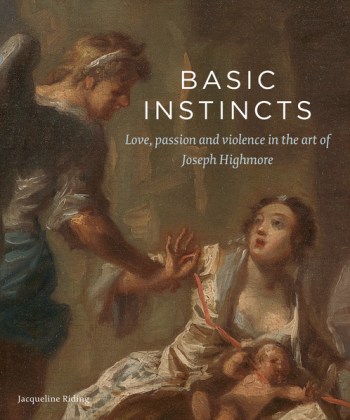 Published to coincide with the exhibition at the Foundling Museum in London, this fascinating book will re-introduce Joseph Highmore (1692–1780), an artist of status and substance in his day, who is now largely unknown. It takes as its focus Highmore’s small oil painting known as The Angel of Mercy (ca. 1746, Yale), one of the most shocking and controversial images in 18th-century British art.
The painting depicts a woman in fashionable mid-18th-century dress strangling the infant lying on her lap. A cloaked, barefooted figure cowers to the right as an angel intervenes, pointing towards the Foundling Hospital, the recently built refuge for abandoned infants, in the distance. The image attempts to address one of the most disturbing aspects of the Foundling Hospital story—certainly a subject that many (now as then) would consider beyond depiction. But if any artist of the period had attempted such a subject it would surely be William Hogarth, not the portrait painter Joseph Highmore? In fact, the painting was attributed to Hogarth for almost two centuries, until its reattribution in the 1990s. Even so, it is surprising that despite the wealth of scholarship associated with Hogarth and the ‘modern moral subject’ of the 1730s and 1740s, The Angel of Mercy has received little attention until now. The book and exhibition seeks to address this, while encouraging greater interest in, and appreciation for, this significant British artist.
Jacqueline Riding sets this extraordinary painting within the context of the artist’s life and work, as well as broader historical and artistic contexts. This includes exploration of superb examples of Highmore’s portraiture, such as his complex, monumental group portrait The Family of Sir Eldred Lancelot Lee and the exquisite small-scale ‘conversations’ The Vigor Family and The Artist and his Family, juxtaposed with analysis of key subject paintings, including the Foundling Museum’s Hagar and Ishmael and Highmore’s Pamela series, inspired by Samuel Richardson’s bestselling novel. Collectively they tackle relevant and highly contentious issues around the status and care of women and children, master/servant relations, motherhood, abuse, abandonment, infant death, and murder.
Exhibition | Made in York: Inventing & Enlightening the Georgian City
Now on view at Fairfax House:
Made in York: Inventing & Enlightening the Georgian City
Fairfax House, York, 5 May — 12 November 2017
Pioneering ideas, great inventions, ground-breaking discoveries, objects of beauty, innovation, artistry and craftsmanship and the people behind their creation…. These products of York’s age of Enlightenment are as rich as their impact is far-reaching. Made in York celebrates the wealth of this Georgian city’s inventive and enlightened output through the long eighteenth century (1670–1830).
York’s pages of history are strewn with astronomers, mathematicians, horologists, and zoologists through to world-class scholars, celebrated painters, sculptors, architects, and cabinetmakers. This is the story of those people who made this city a crucible for enlightened thought, intellectual creativity, and a centre for exquisite craftsmanship throughout the Georgian age. York nurtured some of the greatest names such as Grinling Gibbons, Thomas Chippendale, Laurence Sterne, John Goodricke, John Flaxman, and Joseph Rose, leaders in each of their metiers. But behind these icons are some lesser-known pioneers; Made in York rediscovers their rich and eclectic legacy and the rare objects and often forgotten triumphs that they have left for future generations. For the first time, this landmark exhibition will be showcased throughout the townhouse, vividly animating both Fairfax House’s beautiful period rooms and its exhibition gallery.










 Enfilade
leave a comment