Exhibition | Silk: From Spitalfields to Sudbury
Now on view at Gainsborough’s House:
Silk: From Spitalfields to Sudbury
Gainsborough’s House, Sudbury, Suffolk, 17 June – 8 October 2017
 The market town of Sudbury in Suffolk has a surprising history. Regarded today as Great Britain’s most important centre for silk manufacture, Sudbury produces nearly 95 per cent of the nation’s woven silk textiles from its three working mills: Vanners Silk Weavers, Stephen Walters & Sons, and Gainsborough Silks. Dating back to the late 1700s, Sudbury’s nascent silk industry was facilitated by the town’s former history as a wool centre, to which many family members of the Sudbury-born artist Thomas Gainsborough, R.A. (1727–1788) plied their trade.
The exhibition Silk: From Spitalfields to Sudbury will explore the local and national history of silk in England from the eighteenth century to the present day, focussing on the diaspora of silk manufacture from Spitalfields in London to Sudbury in Suffolk. In the first part of the exhibition, the formation of the English silk industry in Spitalfields in the early 1700s will be examined, highlighting the important Huguenot silk weavers who formed the basis of this work force. Objects displayed will illustrate the processes of design and manufacture and include everything from silk pattern books and historic costume to paintings and drawings featuring silk fashions of the era.
In the second part of the exhibition, the focus will turn to the relocation of silk manufacture from London to Suffolk over the course of the nineteenth century, exploring the history of Sudbury’s silk mills and the textiles they produced. Objects on show from the town’s three mills, in addition to the Sudbury manufacturer Humphries Weaving, will illustrate the many types of silk made in Sudbury, past and present—from furnishing textiles for historic palaces to contemporary design fabrics made for major British fashion houses.
This exhibition will draw together artworks and textiles from both national and local collections, including the Victoria & Albert Museum, Norfolk Museums Service, and the Warner Textile Archive. As the childhood home of the artist Thomas Gainsborough situated at the very heart of the nation’s active silk industry, Gainsborough’s House is ideally placed to tell this important story of silk in England, from Spitalfields to Sudbury.
Study Day | 300 Years of Silk

One of a pair of shoes, ca 1720; leather sole, with brocaded silk uppers with silk woven in Spitalfields
(London: V&A, T.446&A-1913)
◊ ◊ ◊ ◊ ◊
300 Years of Silk: A Study Day at Gainsborough’s House
Gainsborough’s House, Sudbury, Suffolk, 26 September 2017
Join us for 300 Years of Silk, an exclusive Silk Study Day held at Gainsborough’s House in Sudbury, Suffolk. Hosted by textile specialists Mary Schoeser and Kate Wigley of the School of Textiles, Coggeshall, and Keeper of Art & Place Louisa Brouwer of Gainsborough’s House, this event will feature a series of informative lectures, interactive handling sessions and a curator-led tour of the current exhibition, Silk: From Spitalfields to Sudbury (17 June — 8 October 2017). The daylong programme will include opportunities to study a range of silk textiles from the eighteenth to twentieth centuries in close detail and will offer privileged access to the Sudbury silk mill Vanners Silk Weavers, with guided tours led around this vibrant working factory in the afternoon.
Organised to accompany the current exhibition Silk: From Spitalfields to Sudbury at Gainsborough’s House, this Study Day will explore the fascinating history of the English silk industry, focussing on the town of Sudbury, Suffolk—regarded today as Great Britain’s most important centre for silk manufacture. Sudbury now produces more woven silk textiles than anywhere else in the nation, with four working firms still in operation: Vanners Silk Weavers, The Gainsborough Silk Weaving Company, Stephen Walters & Sons, and The Humphries Weaving Company. Dating back to the early years of the nineteenth century, Sudbury’s nascent silk industry was facilitated by the town’s former history as a wool centre, to which many family members of the Sudbury-born artist Thomas Gainsborough, R.A. (1727–1788) plied their trade.
Open to students, curators, and textile enthusiasts alike, this Study Day offers full access to Gainsborough’s House in the historic market town of Sudbury, located just 1 hour 20 minutes by train from London Liverpool Street. The day will run from 10am to 5pm and cost £80 per person (inc. VAT). Tickets will include tea, coffee, and biscuits upon arrival, followed by a light sandwich lunch in the afternoon. For further enquiries and to reserve your place, please contact louisa@gainsborough.org. Limited places are available so early booking is recommended.
Exhibition | Divine Visions, Earthly Pleasures
Press release (27 June 2017) for the exhibition now on view at BAMPFA:
Divine Visions, Earthly Pleasures: Five Hundred Years of Indian Painting
Berkeley Art Museum and Pacific Film Archive, 22 June — 10 September 2017
Curated by Robert J. Del Bontà
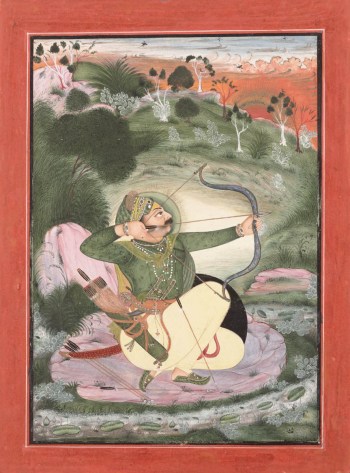
Unknown artist, Surajamala-ji, Son of Rao Nirandasa, 1820; ink, gouache, and gold on paper, 21 × 8 inches (Berkeley: BAMPFA, gift of Jean and Francis Marshall).
This summer, the UC Berkeley Art Museum and Pacific Film Archive (BAMPFA) presents a new exhibition of paintings that encompasses five hundred years of Indian art-making traditions. Divine Visions, Earthly Pleasures: Five Hundred Years of Indian Painting draws on the institution’s extensive holdings of Asian art, in particular a renowned collection of more than three hundred works donated to BAMPFA in 1998. Guest curated by the distinguished Indian art scholar Robert J. Del Bontà, the exhibition is on view from June 28 through September 10, 2017.
Divine Visions, Earthly Pleasures comprises more than sixty paintings from BAMPFA’s collection, representing a vast range of Indian art and cultural history from the early fifteenth through twentieth centuries. Reflecting the distinctive collecting interests of Jean and Francis Marshall—whose gift forms the core of BAMPFA’s Indian art holdings—the works display a diverse array of subject matter, ranging from early religious traditions and aristocratic portraiture to romantic narratives and musical performances. By presenting some early extant examples of Indian painting alongside more recent works, the exhibition illuminates common aesthetic conventions—in particular a subtle interplay between realistic and abstract forms that emerges as a persistent theme across centuries of artistic practice.
“Since Jean and Francis Marshall’s transformative gift in 1998, BAMPFA’s Asian art holdings have grown to be one of the defining strengths of our encyclopedic collection, and we’re thrilled to highlight that strength with a show that brings some of most exceptional of these works together for the first time in years,” said Lawrence Rinder, director and chief curator of BAMPFA. “We are especially grateful to our friend and colleague Robert J. Del Bontà for providing a fresh scholarly perspective on these paintings that will allow our visitors to rediscover them in a new and illuminating context.”
“For more than five hundred years, the Indian subcontinent has nurtured some of the world’s most vibrant and distinctive painting traditions, which are richly encapsulated in BAMFPA’s remarkable collection,” said Del Bonta, who previously served as research associate and guest curator at the Asian Art Museum of San Francisco. “The works in this exhibition present subtle interplays between representational and abstract aesthetics and between sacred and secular subject matter—often in a single painting. It’s a pleasure to partner with BAMPFA in sharing these breathtaking works with the public.”
Divine Visions, Earthly Pleasures: Five Hundred Years of Indian Painting is organized by guest curator Robert J. Del Bontà, with funding provided by the Asian Art Endowment Fund.
The 32-page exhibition brochure by Robert J. Del Bontà is available as a PDF file here»
Exhibition | Nelson & Norfolk
The Battle of the Nile was fought on August 1 and 2 in 1798. Press release (via Art Daily) for the exhibition now on view at Norwich Castle Museum:
Nelson & Norfolk
Norwich Castle Museum & Art Gallery, 29 July — 1 October 2017

Pierre Nicolas Legrand, Apotheosis of Nelson, ca. 1805–18 (Greenwich: National Maritime Museum).
Admiral Lord Nelson (1758–1805) and his affection for his native county of Norfolk is the subject of a major exhibition Nelson & Norfolk, on view at Norwich Castle Museum & Art Gallery from 29 July until 1 October 2017. The exhibition presents some of the most extraordinary and potent objects connected to Nelson, from his boyhood in Norfolk to his death at the Battle of Trafalgar in 1805.
The single bullet (or musket ball), which mortally wounded Admiral Lord Nelson at the Battle of Trafalgar in 1805, is one of the important objects on display as part of the revelatory exhibition. The bullet, which is usually on display at Windsor Castle has been generously lent by Her Majesty The Queen from the Royal Collection, and this is the first time it has been shown in Norfolk, Nelson’s home county. Measuring 15mm, the lead shot bullet is mounted in a hinged silver locket together with some remnants of gold lace from Admiral Nelson’s uniform and a small handwritten note with the words “The bullet by which Nelson was killed.” Although it cost Nelson his life, The Battle of Trafalgar, which took place on the 21 October 1805, is still regarded today as one of Britain’s greatest naval victories.
Another centerpiece is the highly important, early French Tricolour—the monumental Ensign (or flag) of the French warship Le Généreux, which took part in the Battle of the Nile in 1798. A British victory, the battle sealed Nelson’s reputation as England’s greatest hero. Although Le Généreux was one of only two ships of the line from the French fleet to escape this historic battle, it was subsequently captured, on 18 February 1800 by Nelson’s flag captain Sir Edward Berry, on board the HMS Foudroyant. When the huge Ensign of Le Généreux was ‘struck’, that is removed from the flagpole at the rear of the ship, and surrendered to Sir Edward Berry, it was immediately despatched as a gift to the City of Norwich. One of the largest (it measures 16 × 8.3 meters—roughly the size of a tennis-court) and most iconic objects connected to Norfolk’s most famous son, Admiral Lord Nelson, this is the first time this historic object has been on public display for more than a century.
Ruth Battersby Tooke, Senior Curator of Costume and Textiles at Norwich Castle, said: “The exhibition is built around key objects such as the fatal bullet and the Ensign, with their remarkable histories. In explaining the story of each of the unique and significant exhibits, we are providing insights into Nelson and his times, the cult of his personality and the way he has been lionised and commemorated. The exhibition’s main themes are Nelson’s extraordinary legacy, his reputation and the ongoing nature of his ‘Immortal Memory’.”
The exhibition is divided into several sections each one examining a key part or element of Nelson’s life and career starting with his birth and early years in his beloved home county of Norfolk. The Norfolk section includes the Burnham Thorpe Parish Register, the village where Nelson was born, which is annotated in the margin by Nelson’s father, rector of the parish, with dates of significant milestones and naval victories. The register is displayed alongside the poignant “Dear, dear Burnham letter” written by Nelson in 1804. Also of interest is a Freedom Box, presented to Nelson by the Corporation of Thetford following the decision to bestow upon him the Freedom of the town in 1798. Personalia from Strangers’ Hall in Norwich include a lock of Nelson’s hair, owned originally by Captain Hardy and given to Norwich Museums in 1847, a napkin bearing the monogram of NB for Nelson Duke of Bronte, an honour conferred to him after the Battle of the Nile, as well as scraps of the British Ensign and sailcloth from HMS Victory. Collectively these diverse objects all illustrate Nelson’s early life and the affection for his home county. Other sections focus on The Battle of the Nile, which took place on 1 August 1798, Naples and Emma, Nelson’s Death, and finally his Funeral.
Extremely apt to be exhibited together with the Ensign from Le Généreux is Nelson’s famous coat, which he wore at the Battle of the Nile kindly loaned by the National Maritime Museum Greenwich. Made in wool and linen with large brass buttons and gold alloy braiding, this is a typical flag officer’s undress coat of the period. The coat also gives an indication as to how slight Nelson was. Excitingly the hat, which Nelson wore at this decisive battle, is also on display. This is the first time that the coat and hat have been reunited since 1891.
The drama of the final moments of this historic Battle of the Nile are vividly depicted in a dramatic oil painting by artist Thomas Whitcombe. Amidst the smoke from cannons and fires, the magnificent ships are shown with their sails billowing and respective ensigns flying, the foreground littered with debris of wrecked ships and lifeboats filled with sailors lucky to have escaped alive. The painting was executed in 1799 a year after the Battle of the Nile took place.
No exhibition about Nelson can avoid the subject of his time in Naples (1798–1800), where he met the extraordinary Emma Hamilton, who became the love of his life. Particularly poignant is a charming locket (in the collection of Norwich Castle) that contains two different locks of hair. The high quality of the workmanship suggests that it was probably a private commission and there is a possibility that the hair enclosed is that of Nelson and Emma Hamilton, making this a hugely romantic and enigmatic object. Also in this section is the border of a dress embellished in honour of Lord Nelson and worn by Emma Hamilton at Palermo around 1799, together with a touching picture embroidered in silk of Nelson and his beloved Emma.
Nelson’s death is illustrated by the painting The Apotheosis of Nelson on loan from the National Maritime Museum painted by Scott Pierre Nicolas Legrand, circa 1805–18. It clearly conveys the level of hero-worship that Nelson had inspired during his life-time and which was set to continue for generations to come. This highly romantic painting depicts a deified Nelson achieving immortality as he ascends up to the gods on Mount Olympus, while his sailors grieve for him on the decks of the ship below.
Nelson’s funeral resulted in a public demonstration of grief on a national scale. The dramatic black velvet drape from Nelson’s funeral car, together with the painted silk hatchment, both used at his funeral, have not been seen together since the funeral car was dismantled around 1826. There is also a uniform worn by a Greenwich Volunteer who guarded Nelson’s coffin during his two-day lying-in-state, a model of the funeral barge made by a French prisoner of war at Norman Cross internment camp, a picture on glass showing Lord Nelson Lying in State by J. Hinton and additional extensive Nelson funeral memorabilia.
Presiding over the exhibition, as a whole, is the large, compelling portrait in oils of Nelson by the artist William Beechey, commissioned by the City of Norwich and completed in 1801. The portrait features another noteworthy exhibit, namely the sword surrendered to Nelson by the Spanish Admiral Xavier Winthuysen after the Battle of Cape St Vincent on 14 February 1797. When two Spanish ships, the San Nicolas and the San Josef, became entangled Nelson was able to board one then the other. On the deck of the San Josef, Nelson received the surrendered swords of the Spanish, including this one. Nelson’s naval officer’s hat, depicted prominently in the portrait and given to the artist William Beechey by Nelson after he sat for the famous portrait, adds further human interest.
Complementing the important loans from major national museums and institutions around the country are additional fascinating and unique objects drawn from Norfolk Museums Service’s own Nelson archives, as well as other local collections in the county including those of Norwich Social History, Fine and Decorative Art, the Great Yarmouth Sailors’ Home, as well as Nelson’s schools; The Norwich School and Paston College. Numerous items have also been generously loaned by private collectors.
Nelson & Norfolk is not intended to be a chronology of the life and times of Nelson illustrated by objects. Instead this exhibition takes its starting point and narrative from the objects themselves. In bringing together so much authentic material, the exhibition reflects the ways in which Nelson has been represented in imagery and how his remarkable life story has been told through objects. Likewise a strong cohesive thread is the affection that Nelson had for the county that ‘gave him birth’ and Norfolk’s immeasurable pride in its most famous son. This is the first time that these objects have ever been presented together in one exhibition.
Margaret Dewsbury, Chair of Norfolk County Council Communities Committee said: “The people of Norfolk are understandably proud to claim Nelson as one of our own; with this exhibition we can take stock of what his influence and reputation has meant to both his home county and the country as a whole. We are very grateful to all the lenders to the exhibition whose generosity has enabled us to bring together a truly unique collection of artefacts. To be able to include items which take us from his birth in the beautiful Norfolk village of Burnham Thorpe to his heroic death at Trafalgar is remarkable and moving and will make for an unforgettable experience for visitors.”
The exhibition is timely in that coincides with the 200th anniversary of the laying of the foundation stone of the Nelson memorial in Great Yarmouth, the county’s most significant memorial to its local hero.
Exhibition | Morgan: Mind of the Collector
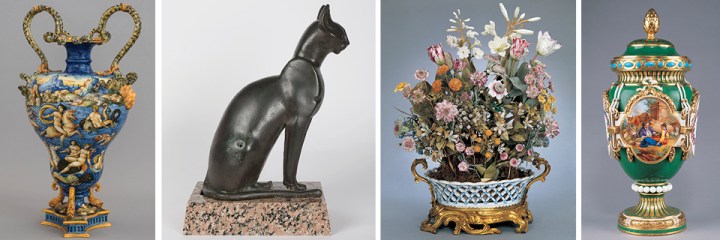
On this fall at the Wadsworth Atheneum:
Morgan: Mind of the Collector
Wadsworth Atheneum Museum of Art, Hartford, CT, 23 September — 31 December 2017
Nearly 100 years ago, the Wadsworth Atheneum received an extraordinary gift of more than 1,350 works of art from the collection of financier J. Pierpont Morgan. These objects, an array of 18th century German and French porcelains, Italian majolica, baroque goldsmith’s work and glass, and a small group of antiquities, now form the core of the museum’s European decorative arts collection.
Morgan’s story as a collector is not as well known as the story of his business career despite the groundbreaking quantity, scope, and character of his collection. Estimated to have exceeded 20,000 works of art assembled in only 23 years, the quality of the collection was remarkably high—a great achievement at a time when scholarship was young and fakery rampant.
Pierpont began to seriously collect art after his father’s death in 1890, and by 1907 he was devoting most of his time to building collections for himself and for institutions. Simultaneously, Morgan’s extensive philanthropies invigorated and reshaped a number of fledgling public institutions like the Metropolitan Museum, the Museum of Natural History, and the Wadsworth Atheneum Museum of Art.
Morgan: Mind of the Collector explores Pierpont’s groundbreaking collecting career through its impact on art scholarship, the art market, and the redefining of collecting in American and European culture. Profiling what he collected and how, the exhibition assesses this remarkable man and his colossal achievement with fresh eyes and the distance of a century. Was he a cultural super-hero, a ransacking barbarian, or something more nuanced? Featuring stellar works of art from the Wadsworth Atheneum, the Metropolitan Museum of Art, and the Morgan Library, this exhibition tells a variety of illuminating stories about J. Pierpont Morgan as a collector, delving into his mind and exploring his enduring legacy.
The Burlington Magazine, July 2017
The eighteenth century in The Burlington:
The Burlington Magazine 159 (July 2017), Decorative Arts

E D I T O R I A L
• “Furniture History: The Digital Future,” p. 519.
On the eve of the 300th anniversary of the birth of Thomas Chippendale in 2018, the editorial addresses the British and Irish Furniture Makers Online Project (BIFMO), which updates the The Dictionary of English Furniture Makers 1660–1840, edited by Geoffrey Beard and Christopher Gilbert and published by the Furniture History Society in 1986. The BIFMO—a collaboration between the FHS and the Centre for Metropolitan History (CMH) at the Institute of Historical Research, University of London—is an open-access searchable database of all the entries from The Dictionary, together with the names of furniture makers from Laurie Lindey’s recent PhD thesis (Lindey, as a post-doctoral research fellow is overseeing the project at the IHR with Mark Merry of the CMH). The first phase of the BIFMO’s launch is scheduled for 30 September.
A R T I C L E S
• Koenraad Brosens and Astrid Slegten, “Creativity and Disruption in Brussels Tapestry, 1698–1706: New Data on Jan van Orley and Judocus de Vos,” pp. 528–35.
• Francesco Morena, “The Emperor of Mexico’s Screen: Maximilian I’s ‘Biombo’ in Trieste,” pp. 536–43.
R E V I E W S
• Simonetta Prosperi Valenti Rodinò, Review of Sabina de Cavi, ed., Dibujos y ornamento: Trazas y Dibujos de Artes decorativas entre Portugal, España, Italia, Malta y Grecia: Estudio en honor de Fuensanta García de la Torre (De Luca Editori d’Arte, 2015), pp. 559–60.
• Pierre Terjanian, Review of A. V. B. Norman and Ian Eaves, Arms & Armour in the Collection of Her Majesty The Queen, European Armour (Royal Collection Trust, 2016),” pp. 560–61.
• Robin Hildyard, Review of Brian Gallagher, Barbara Stone Perry, Letitia Roberts, Diana Edwards, Pat Halfpenny, Maurice Hillis and Margaret Ferris Zimmerman, British Ceramics, 1675–1825: The Mint Museum (D. Giles, 2015), pp. 561–62.
• Gauvin Alexander Bailey, Review of Christopher M.S. Johns, China and the Church: Chinoiserie in Global Context (University of California Press, 2016) and Marco Musillo, The Shining Inheritance: Italian Painters at the Qing Court, 1699–1812 (Getty Publications, 2016),” pp. 562–63.
• Philippa Glanville, Review of James Rothwell, Silver for Entertaining: The Ickworth Collection (Philip Wilson, 2017), pp. 563–64.
• Humphrey Wine, Review of the exhibition Le Baroque des Lumières: Chefs-d’œuvre des églises parisiennes au XVIIIe siècle (Paris: Petit Palais, 2017), pp. 572–73.
• Patrick Bade, Review of the exhibition La Quête de la ligne: Trois siècles de dessin en Allemagne (Hamburg: Kunsthalle, 2016 and Paris: Fondation Custodia, 2017), pp. 574–75.
• Jamie Mulherron, Review of the exhibition Marie Madeleine: La Passion révélée (Bourg-en-Bresse: Monastère Royal de Brou; Carcassonne: Musée des Beaux Arts; and Douai: Musée de la Chartreuse, 2017), pp. 577–79.
• Elsje van Kessel, Review of the newly refurbished gallery of Portuguese painting and sculpture at the Museu Nacional de Arte Antiga (MNAA), pp. 579–80.
• Philippe Bordes, Review of the exhibition Charles Percier: Architecture and Design in an Age of Revolutions (New York, Bard Graduate Center Gallery; and Château de Fontainebleau, 2016–17), pp. 583–84.
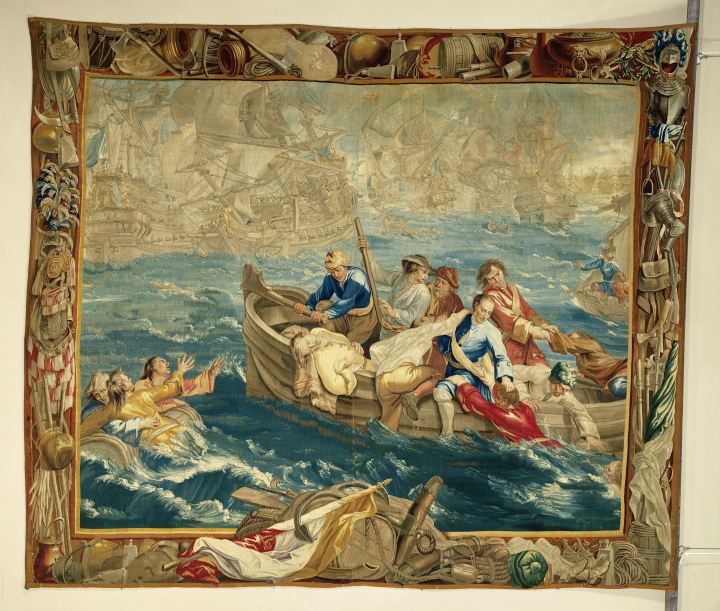
Judocus de Vos, after Lambert de Hondt, Lucas Achtschellinck, and Jan van Orley, Naval Battle from the Art of War series, ca. 1715–20; wool and silk, 344 × 400 cm (Amsterdam: Rijksmuseum).
Exhibition | Mary Magdalen: Passion Revealed

Laurent Pécheux, Penitent St Mary Magdalene, 1768, oil on canvas
(Lyon: Galerie Michel Descours)
◊ ◊ ◊ ◊ ◊
Now on view at the Musée de la Chartreuse:
Marie Madeleine: La Passion Révélée
Monastère Royal de Brou, Bourg-en-Bresse, 29 October 2016 — 5 February 2017
Musée des Beaux Arts, Carcassonne, 24 February — 24 May 2017
Musée de la Chartreuse, Douai, 17 June — 24 September 2017
Intercesseur majeur entre le terrestre et le céleste, pécheresse et repentante, voluptueuse et ascète, mondaine et ermite, Marie Madeleine est à la fois inclassable et mystique. Synthèse de trois figures féminines qui apparaissent dans les Évangiles, elle a inspiré de très nombreux artistes depuis l’époque médiévale jusqu’à nos jours. Ces derniers ont été sensibles aux mystères de cette femme et aux thèmes qui l’entourent : l’amour du péché, la féminité et le sacré. Tous ont été marqués par sa beauté, par l’évocation de sa solitude dans le désert ou encore par sa représentation en méditation ou en extase. Ce personnage biblique présente ainsi plusieurs facettes et chaque époque a inventé « sa » Madeleine : du XIIe siècle—quand le culte lié à ses reliques se développe et sa légende s’étoffe—jusqu’à notre époque contemporaine, où les amateurs de secrets et de mystères s’emparent du personnage et lui font porter leurs goûts pour l’ésotérisme, dont le Da Vinci Code de Dan Brown est un exemple retentissant. Dans cette exposition, peintures, sculptures et objets d’art retracent l’évolution de cette figure du Moyen Âge à nos jours, en mettant en lumière les différentes utilisations du personnage par les courants artistiques, spirituels et théologiques, tout en montrant comment chacun l’a adapté à ses aspirations.
Commissariat de l’exposition
Marie-Paule Botte, historienne de l’art ; Magali Briat-Philippe, conservatrice du patrimoine, responsable du service des patrimoines au Monastère Royal de Brou ; Pierre-Gilles Girault, administrateur du Monastère Royal de Brou ; Anne Labourdette, directrice du musée de la Chartreuse de Douai ; Marie-Noëlle Maynard, directrice du musée des Beaux-Arts de Carcassonne.
Bernard Ceysson, François Ceysson, Loïc Bénétière, Marie-Paule Botte, Magali Briat-Philippe, and Marie-Noëlle Maynard, Marie Madeleine: La Passion Révélée (Saint-Etienne: IAC Éditions d’Art, 2016), 220 pages, ISBN: 978 291637 3935, 25€.
Exhibition on Screen | Canaletto & the Art of Venice
As noted at Art Daily (23 July 2017) . . .
Exhibition on Screen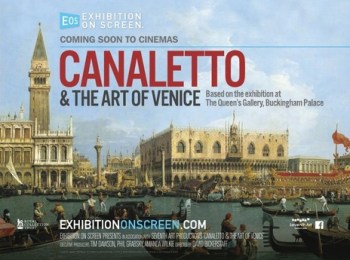 open its fifth season with Canaletto & the Art of Venice, an immersive journey into the life and art of Venice’s famous view-painter.
No artist better captures the essence and allure of Venice than Giovanni Antonio Canal, better known as Canaletto. Despite Canaletto’s close relationship with the city in which he lived and died, the world’s largest collection of his works resides not in Italy, but in Britain as part of the Royal Collection. In 1762, George III purchased almost the entire collection amassed by Joseph Smith, British Consul in Venice and Canaletto’s principal agent.
Exhibition on Screen’s latest release will grant unique access to the Royal Collection’s exceptional holdings of Canaletto’s work, much of which is on display as part of the exhibition Canaletto & the Art of Venice at The Queen’s Gallery in London (19 May — 12 November 2017). The remarkable group of over 200 paintings, drawings, and prints on display offer unparalleled insight into the artistry of Canaletto and his contemporaries and the city he became a master at capturing. The film also offers the chance to step inside two official royal residences—Buckingham Palace and Windsor Castle—to learn more about the artist and Joseph Smith, the man who introduced Canaletto to Britain.
From London, Canaletto & the Art of Venice travels to the great Italian city to explore the origins of Canaletto’s art. Whilst appearing to be faithful representations of the city, Canaletto’s skill came from his manipulation of reality. He moved buildings around or opened up vistas to create the perfect composition, and his paintings of Venice were highly sought after by Grand Tourists. His playful imagination extended into a new genre in which he excelled. The capriccio combined real and fantasy architecture into imagined views. In this sense, Canaletto is more than a topographical artist—he is a master storyteller.
Cinema-goers will embark on their very own 21st-century Grand Tour, visiting the sites enjoyed by their 18th-century counterparts and immortalised in Canaletto’s views—from the Rialto Bridge to the Piazza San Marco, and the Palazzo Ducale to the Church of Santi Giovanni e Paolo. Guided by Royal Collection Trust curators and the world’s leading experts in Venetian history, the film is not only a wonderful way to see the exhibition, but an opportunity to get closer to Canaletto and the city that inspired him.
Earlier films from Exhibition on Screen are now available for purchase here»
Exhibition | Fragonard: The Fantasy Figures

Jean Honoré Fragonard, Sketches of Portraits, ca. 1769, drawing, 23 × 35 cm
(Private Collection, Paris)
◊ ◊ ◊ ◊ ◊
From the press release (11 July 2017) for the exhibition:
Fragonard: The Fantasy Figures
National Gallery of Art, Washington, D.C., 8 October — 3 December 2017
Curated by Yuriko Jackall
Combining art, fashion, science, and conservation, the revelatory exhibition Fragonard: The Fantasy Figures brings together—for the first time—a newly discovered drawing by Jean Honoré Fragonard (1732–1806) and some 14 of his paintings that have been identified with it including the Gallery’s own Young Girl Reading (c. 1769). Fragonard is considered among the most characteristic and important French painters of his era, and this series casts light on the development of his career, the identity of his sitters and patrons, and the significance of his innovative imagery. Fragonard: The Fantasy Figures and the fully illustrated catalog that accompanies it not only present new art-historical and scientific research into this series but also examine the 18th-century Parisian world in which these paintings were created. The exhibition may be seen only at the National Gallery of Art, Washington, in the West Building, from October 8 through December 3, 2017.

Jean Honoré Fragonard, Young Girl Reading, ca. 1769, oil on canvas, framed: 104.9 × 89.5 cm (National Gallery of Art, Washington, D.C., Gift of Mrs. Mellon Bruce in memory of her father, Andrew W. Mellon).
Covered with 18 thumbnail-sized sketches and apparently annotated in the rococo artist’s own hand, the drawing now known as Sketches of Portraits emerged at a Paris auction in 2012 and upended several long-held assumptions about the fantasy figures—a series of rapidly executed, brightly colored paintings of lavishly costumed individuals.
“The first exhibition to unite the fantasy figures with the recently discovered drawing focuses on this aspect of Fragonard’s production in a powerful and intimate way,” said Earl A. Powell III, director, National Gallery of Art, Washington. “We are grateful to the public and private collections, both here and abroad, that have generously lent to this exhibition, as well as to Lionel and Ariane Sauvage whose gift supported the catalog’s publication.”
Fragonard: The Fantasy Figures explores the many interpretations of this series in the context of the artist’s career. Fragonard strove to create a specific portrait type that showcased the painterly skill for which he was renowned. The fantasy figures also enabled him to experiment and to refine his ideas of artistic reference and emulation. Created within the competitive atmosphere of the Parisian art world, these works were influenced by a range of events, artworks, and visitors to his studio.
The fantasy figures depict men and women posed at leisure or employed in various pursuits, such as acting, reading, writing, playing instruments, or singing. Wearing extravagant attire, these figures are dressed in what was known in 18th-century France as à l’espagnole (Spanish style)—plumed hats, slashed sleeves, ribbons, rosettes, ruffs, capes, and accents of red and black. Shaped by artistic imagination, these paintings pushed the boundaries of accepted figure painting at the time.

Jean Honoré Fragonard, The Writer, ca. 1769, oil on canvas, framed: 115 x 91 cm (Paris: Musée du Louvre, Département des Peintures).
Exhibited for the first time is the newly discovered Sketches of Portraits (c. 1769), a thin sheet of paper with three rows of 18 small sketches—all but one are annotated with a name, 14 have been identified with one of Fragonard’s painted fantasy figures, and four remain unknown. The emergence of Sketches of Portraits prompted a two-year investigation of Young Girl Reading, conducted as a collaborative effort by the Gallery’s Yuriko Jackall, assistant curator of French paintings, John K. Delaney, senior imaging scientist, and Michael Swicklik, senior conservator of paintings. Published in the April 2015 issue of The Burlington Magazine, the findings established Young Girl Reading as a part of the fantasy figure series and shed light upon Fragonard’s approach to the ensemble as a whole.
Other works in the exhibition include the rarely lent, privately held portraits of the Harcourt brothers François-Henri, duc d’Harcourt (c. 1770) and Anne-François d’Harcourt, duc de Beuvron (c. 1770)—which are on view together for the first time since the 1987 exhibition Fragonard at The Metropolitan Museum of Art and the Musée du Louvre—as well as The Vestal (c. 1769–71), The Actor (c. 1769), and The Singer (c. 1769). Also on view is the Louvre’s M. de La Bretèche (c. 1769), which depicts the wealthy brother of one of Fragonard’s most devoted patrons, Jean-Claude Richard, abbé de Saint-Non.
The exhibition is curated by Yuriko Jackall, assistant curator, department of French paintings, National Gallery of Art.
Yuriko Jackall ed., with essays by Carole Blumenfeld, Kimberly Chrisman-Campbell, Jean-Pierre Cuzin, John Delaney, Elodie Kong, Satish Padiyar, and Michael Swicklik, Fragonard: The Fantasy Figures (London: Lund Humphries, 2017), 160 pages, ISBN: 978 184822 2489, £40 / $50.
 The fully illustrated catalog includes an overview and technical examination by Yuriko Jackall with John K. Delaney and Michael Swicklik, all at the National Gallery of Art, and essays by Carole Blumenfeld, research associate at the Palais Fesch-Musée des Beaux-Arts d’Ajaccio; Kimberly Chrisman-Campbell, fashion historian; Jean-Pierre Cuzin, former director of the department of paintings at the Musée du Louvre, Paris; Elodie Kong, an art historian specializing in the collecting habits of financiers in 18th-century Paris; and Satish Padiyar, senior lecturer in 19th-century European art at The Courtauld Institute of Art, London.
P R O G R A M M I N G
Lecture and Book Signing
An Introduction to the Exhibition—Fragonard: The Fantasy Figures
October 8, 2:00pm
East Building Auditorium
Yuriko Jackall, assistant curator, department of French paintings, National Gallery of Art
Lecture
Fashion à la Figaro: Spanish Style on the French Stage
November 26, 2:00pm
Kimberly Chrisman-Campbell, fashion historian
Concert
New York Opera Society
November 26, 3:30pm
West Building, East Garden Court
New York Opera Society performs The Three Lives of Rosina Almaviva
Exhibition | Alexandre-Évariste Fragonard
Now on view in Grasse:
Alexandre-Évariste Fragonard: Une Collection Grassoise
Villa-Musée Jean-Honoré Fragonard, Grasse, 1 July — 1 October 2017
Curated by Rébecca Duffeix with Côme Fabre
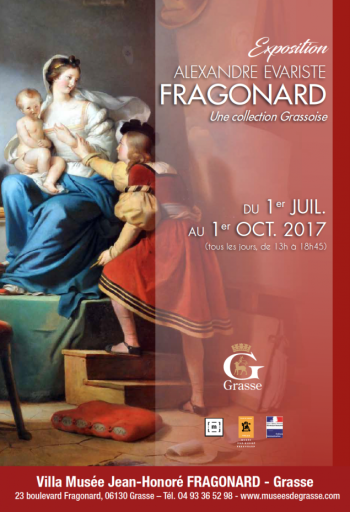 Né à Grasse le 26 octobre 1780 et mort le 11 novembre 1850 à Paris, Alexandre-Evariste Fragonard est le fils de Jean-Honoré. Considéré comme un enfant prodige, il expose au Salon à Paris dès 13 ans et est placé par son père dans l’atelier de David. Ses deux influences, néoclassique avec David et celle de la peinture amande et hollandaise qui lui vient de son père, vont être présentes dans ses œuvres tout au long de sa longue et proli que carrière de peintre, de sculpteur et de décorateur. Artiste of ciel très actif, il accepte de nombreuses commandes pour la manufacture de Sèvres et participe à plusieurs réalisations pour l’État sous l’Empire et la Restauration. Rattaché au courant Troubadour, son style demeure tout de même très enlevé et tumultueux. Il va également travailler dans le domaine de la gravure et participer notamment à l’édition des Voyages pittoresques et romantiques dans l’ancienne France du baron Taylor.
Injustement oublié aujourd’hui, Alexandre-Évariste Fragonard et son œuvre méritent largement d’être remis en lumière. Cette exposition estivale, du 1er juillet au 1er octobre 2017, a l’ambition de faire découvrir plus largement sa carrière à travers ses dessins et ses tableaux conservés dans notre collection grassoise.
Depuis la création des musées de Grasse dans les années 20 et l’ouverture de la Villa-musée Jean- Honoré Fragonard en 1977, les collections n’ont cessé de s’enrichir de dessins et de peintures de cet artiste pour constituer aujourd’hui une des collections publiques les plus importantes en France qui lui soit consacrée. Nous aurons ainsi le plaisir de présenter plusieurs dessins inédits, notamment des feuilles préparatoires à ses plafonds peints du Louvre, toujours en place, commande prestigieuse sous la Restauration pour le musée Charles X.
Le commissariat de l’exposition est assuré par Rebecca Duffeix, Docteur en Histoire de l’art et spécialiste de l’artiste, et nous avons eu l’honneur de béné cier également de la contribution de Côme Fabre, conservateur des peintures au Musée du Louvre.
The press release is available here»
The catalogue is available from ArtBooks.com:
Rebecca Duffeix and Olivier Quiquempois, Alexandre-Évariste Fragonard: Une Collection Grassoise (Milan: Silvana, 2017) 48 pages, ISBN: 978-8836636303, $23.










 Enfilade
leave a comment