Exhibition | Gardens, Art, and Commerce in Chinese Woodblock Prints
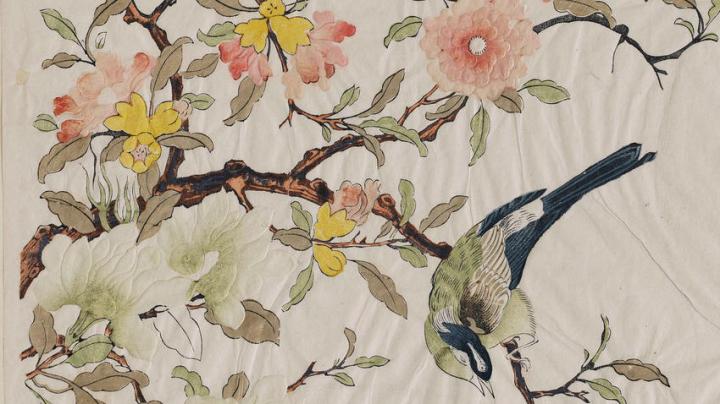
Ding Liangxian, Pomegranate and Magnolia with Bird, (detail), Qing Dynasty, 1700–50; woodblock print with embossing, ink, and colors on paper (multiblock technique with hand-coloring), 11 7/8 × 14 3/4 inches (Boston: Museum of Fine Arts)
◊ ◊ ◊ ◊ ◊
Press release (28 June 2016) from The Huntington:
Gardens, Art, and Commerce in Chinese Woodblock Prints
The Huntington, San Marino, CA, 17 September 2016 — 9 January 2017
Curated by June Li and Suzanne Wright
The Huntington Library, Art Collections, and Botanical Gardens will present a major international loan exhibition exploring the art, craft, and cultural significance of Chinese woodblock prints made during their golden age, with works made from the late 16th century through the 19th century. Gardens, Art, and Commerce in Chinese Woodblock Prints brings together 48 of the finest examples gathered from the National Library of China, Beijing; the Nanjing Library; the Shanghai Museum; and 14 institutional and private collections in the United States. The exhibition presents monumental visual accounts of sprawling, architecturally elaborate ‘scholar’s gardens’, alongside delicate prints with painterly textures and subtle colors depicting plants, birds, and other garden elements so finely wrought they might be mistaken for watercolors. A highlight of the exhibition is The Huntington’s rare edition of the Ten Bamboo Studio Manual of Calligraphy and Painting (ca. 1633–1703), acquired in 2014, and on public view for the first time in this exhibition.
Research informing the exhibition and an accompanying catalog reveals much about the history and significance of Chinese pictorial printing during the period, including its influence on better-known Japanese woodblock artists and collectors. Coveted for their artistic merit and technical virtuosity, Chinese illustrated books and pictorial works were collected by the literati and wealthy merchant classes in both China and Japan. The Ten Bamboo Studio Manual, for example, contains the inscriptions of five renowned Japanese artists, successive owners who treasured the artistically ambitious and visually creative volumes as an important resource.
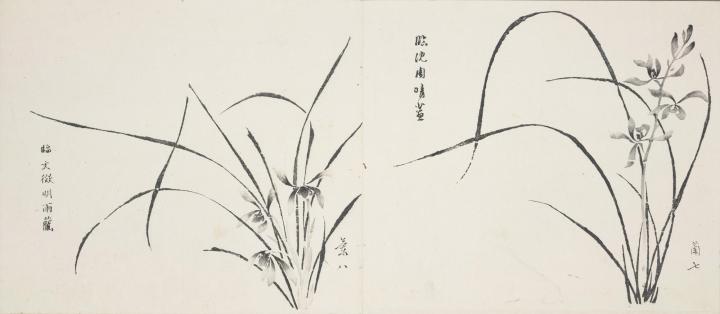
Lotus Leaf, Lotus Root, and Two Jitou Capsules, with calligraphy by Sun Yuwang, Fruit 10, from Ten Bamboo Studio Manual of Calligraphy and Painting, compiled and edited by Hu Zhengyan; woodblock-printed book, ink and colors on paper, each page 9 7/8 × 11 1/4 inches (San Marino: Huntington Library, Art Collections and Botanical Gardens)
◊ ◊ ◊ ◊ ◊
The founding curator of The Huntington’s Chinese Garden, June Li, is co-curator of the exhibition and co-author of the catalog, along with Chinese woodblock print specialist Suzanne Wright, associate professor of art history at the University of Tennessee.
Gardens, Art, and Commerce in Chinese Woodblock Prints unites several interests at The Huntington. It is the home of one of the most extensive collections of early printed books in the nation, various collections of prints by European and American artists, and one of the largest Chinese scholar’s gardens outside of China.
“This exhibition is utterly evocative of The Huntington’s transdisciplinary nature,” said Laura Skandera Trombley, Huntington president. “Woodblock prints were formative communication and aesthetic tools that served a number of purposes over time, from disseminating Buddhist teachings to depicting ideals of beauty. This perfect fusion of art and language, an integration of emotion and intellectual pursuit, is evidenced in The Huntington’s art and library collections, and is embodied in our stunning Suzhou-style Chinese Garden. We are enormously grateful for June Li’s commitment and guiding vision for this extraordinary exhibition.”
During the late Ming (1368–1644) and early Qing (1644–1912) dynasties, an increase in wealth, stemming in part from the salt, rice, and silk industries, led to higher levels of literacy and education. Consumer demand for printed words and images increased as merchants and scholars looked for ways to display their taste in drama, poetry, literature, and art. For these elites, gardens were central to a cultured life, appearing frequently in woodblock prints as subject or setting. By the 1590s, several enterprising publishers were successfully meeting the strong demand for woodblock prints. They hired renowned designers, carvers, and printers to produce sophisticated and exquisite works, raising the standards of printmaking. During the last decades of the Ming dynasty, several centers of printing around the lower Yangzi River delta grew in reputation, ushering in a golden age of Chinese pictorial printing.
“In the realm of Chinese art, pictorial woodblock prints are not as familiar as paintings, calligraphy, or ceramics,” said Li. “The subject of woodblock prints usually brings to mind Buddhist icons, Daoist deities, or folk images, rather than refined and artistic works. But, over the past few years, scholars researching the historical and artistic aspects of these prints have re-introduced a trove of beautiful works that are highly accomplished.”
Building on this story, Gardens, Art, and Commerce in Chinese Woodblock Prints is organized into thematic sections with explanatory panels in both English and Chinese. In the first gallery visitors will find an impressive nine-and-an-half-foot long hand scroll that was commissioned by the Song emperor Taizong (r. 976–97). An unusual Buddhist work that depicts landscape rather than images of deities, it is the earliest and only religious work in the exhibition, showing the lofty achievements of woodblock printers by the 10th century, with enormous clarity of line and painstaking attention to the details of mountains, streams, trees, and tiny figures. The accomplishments of such early printing established the technical foundation from which later Ming and Qing artists grew. Illustrations of the Garden Scenery of the Hall of Encircling Jade, an extraordinary set of 45 prints produced around 1602 to 1605, will be displayed in facsimile (the only evidence that remains of the original). Taken as a whole, the prints illustrate the enormous garden estate of a successful merchant, scholar, and book publisher of the early 17th century. The detailed prints show what seems to be acres of a fashionable garden, with a large, elegant hall framing scholars seated in conversation; a courtyard where figures re-enact a famous poetry game around a table; an enclosure for carefully sculpted penjing (bonsai trees); and more than a hundred names inscribed on buildings, ponds, and rocks. The print has an elevated viewpoint and changing perspectives that allow glimpses into interior spaces, revealing a cultivated life of books and men in scholars’ robes deep in discussion.
The exhibition next focuses exclusively on prints about gardens, both historical and fictional. Historical gardens include famous sites recorded by emperors, such as Suzhou’s Lion Grove, a popular tourist destination to this day. Another imperial work, a scroll more than 25 feet long (six feet of which will be displayed), shows urban gardens and the bustle of daily life in 18th-century Beijing.
The effects of exchanges between European missionaries and the Chinese also are explored in the exhibition. One publisher incorporated biblical illustrations into his ink catalog, produced around 1616. The Qianlong emperor in 1783–86 commissioned a set of large copperplate engravings in a European style that showed details of the European pavilions in his private retreat.
Another section of the exhibition explores the styles of print artists from the late 16th through the 18th centuries in publishing centers such as Hangzhou, Huizhou, Wuxi, and Suzhou. On view are several examples by different publishers illustrating a single popular story, The Story of the Western Chamber, making clear their varying visual and artistic interpretations. In some cases, prints were made to resemble known paintings. Sometimes famous painters, such as Chen Hongshou (1598–1652), designed works expressly for printing. The exhibition includes a rare early edition of Chen’s version of The Story of the Western Chamber, as well as a set of cards he designed for a drinking game.
The exhibition also looks at accomplishments in multi-color and embossed printing, such as beautifully printed guides offering suggestions for cultivating taste. These manuals prescribed appropriate pastimes for a cultivated life, instructed on calligraphy, and advised on chess strategy and drinking games for men, and embroidery patterns for women. They also illustrated musical and dramatic works such as the popular Peony Pavilion. Many of these leisure activities took place in the garden, and prints showing scholar’s rocks, which had become precious items for the discerning collector, will be represented by finely printed editions of well-known works including a rare edition of The Stone Compendium of Plain Garden. Two examples of actual scholar’s rocks from The Huntington’s collection will be on view to complement the book.
Additionally, four iPads in the galleries will allow for a deeper investigation of Illustrations of the Garden Scenery of the Hall of Encircling Jade (a work showing the large garden estate of the successful merchant and publisher Wang Tingna) and allow visitors to see all the leaves of The Huntington’s Ten Bamboo Studio Manual of Calligraphy and Painting, a work that due to its delicate nature can only be viewed a few leaves at a time in the galleries.
Visitors of all ages can view Chinese woodblock printing techniques in a gallery featuring a replica of a printing table, along with carving tools, colored inks, paper, brushes, and burnishers. To better understand the multi-color printing process, a set of woodblocks and step-by-step prints replicating a page of the Ten Bamboo Studio Manual will be on view, a display commissioned from the Shanghai publisher Duo Yun Xuan especially for the exhibition.
T. June Li and Suzanne E. Wright, Gardens, Art, and Commerce in Chinese Woodblock Prints (San Marino: The Huntington Library, Art Collections, and Botanical Gardens, 2016), 176 pages, ISBN 978-0873282673, $50.
June Li details the origins and provenance of The Huntington’s Ten Bamboo Studio Manual of Calligraphy and Painting, a landmark of multi-block color printing, with particular emphasis on its appeal to 18th- and 19th-century Japanese collectors. Suzanne Wright traces the development of three distinct regional styles of woodblock-printed illustrations during the late Ming dynasty, with striking examples of each style drawn from the exhibition. The 176-page volume, published by The Huntington, features more than 150 illustrations, including full-color plates of each work in the exhibition.
◊ ◊ ◊ ◊ ◊
Exhibition Symposium | Word and Image: Chinese Woodblock Prints
The Huntington, San Marino, CA, 12 November 2016
The late Ming period witnessed an unprecedented production of woodblock images printed for many different purposes, including illustrations for drama and games, decorations for stationery paper or ink making, as well as pictorial works for the market. This symposium will explore the relationship and interaction between image and text in woodblock prints during the late Ming and early Qing periods. Register online here.
• Kai-Wing Chow (University of Illinois at Urbana-Champaign), “Nature, Print, and Art: Commerce and Garden Culture in Late Imperial China”
• He Yuming (University of California, Davis), “Illustrating Encyclopedic Knowledge in the Ming”
• Richard Strassberg (University of California, Los Angeles), “The Kangxi Emperor’s Thirty-Six Views: The Making of an Imperial Publication”
• Meng-ching Ma (National Tsing Hua University, Taiwan), “‘Poetic Pictures’ in Late-Ming Illustrated Dramatic Publications”
• Suzanne Wright (University of Tennessee, Knoxville), “The Swallow Messenger: Text and Image”
• Hu Jun (Northwestern University), “A Panoply of Metaphor: Painting and Intermediality in the Late Ming”
Exhibition | Rooms Hidden by the Water: Photographs from Venice

◊ ◊ ◊ ◊ ◊
From Kansallis Museo Finland:
Rooms Hidden by the Water: Photographs from Venice by Jaakko Heikkilä
National Museum of Finland, Helsinki, 29 April — 28 August 2016
The exhibition features approximately 50 photographs by Jaakko Heikkilä, taken between 2005 and 2015 in the palaces of Venetian nobility along with Venetian furniture from the late 1800s from the National Museum’s collections.
Jaakko Heikkilä (b. 1956) is an observer, renowned for photographing people and groups of people around the world. Heikkila photographs people in their own environment: at home, working, at museums, or as flickering shadows on walls. Heikkilä started photographing the Venetian nobility through a friend who opened the doors of the first palace for him. The photographs offer a unique opportunity to peek inside the palaces of the decreasing Venetian nobility and meet the residents and their life stories.
The Venetian nobility live a somewhat isolated life that is bound and protected by their history. The nobility consists of merchants from La Serenissima, the golden age of the Republic of Venice, which existed from the 500s to 1797. They represent Old Europe, the lost world, which is disappearing under the waves just like Venice is due to climate change.
Jaakko Heikkilä, Barone Alberto Franchetti, Alex Snellman, and Minerva Keltanen, Rooms Hidden by the Water: Photographs from Venice by Jaakko Heikkilä (Helsinki: Maahenki, 2016), 131 pages, ISBN: 978-9516162723, €43.
Exhibition | Antoine Watteau: The Draughtsman
Opening in October at the Städel Museum:
Antoine Watteau: The Draughtsman / Der Zeichner
Städel Museum, Frankfurt am Main, 19 October 2016 — 15 January 2017
Teylers Museum, Haarlem, 2 February — 14 May 2017
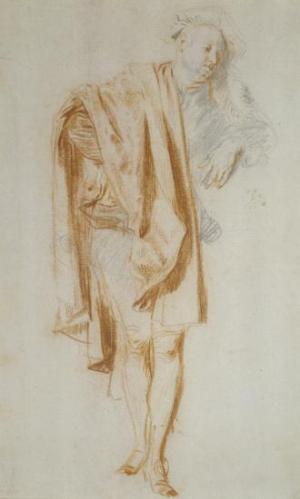
Jean Antoine Watteau, Standing Male Figure (Nicolas Vleughels?), ca. 1718–19 (Frankfurt: Städel Museum)
The French painter Antoine Watteau (1684–1721) is among the great masters of draughtsmanship. His sensitive studies in red, black and white chalk capture female and male models, observations of details and spontaneous ideas, and develop that world of cheerful companies and mutually attentive conviviality that would come to be called fêtes galantes (‘courtship parties’).
In cooperation with the Teylers Museum in Haarlem, the Städel Museum is planning an exhibition of drawings by Antoine Watteau for the autumn of 2016. Both institutions have in their possession substantial holdings of works by the artist, who can be considered one of the most outstanding draughtsmen in the history of French art. His innovative style—characterized by a combination of spontaneity, ease and intimacy on the one hand and observation of the utmost precision on the other—contrasts starkly with the formal tradition of the academically oriented artists of his time. With its psychological sensitivity, the new, virtuoso art reflects the spirit of the dawning Enlightenment.
Watteau is relatively little known in Germany, despite the fact that in the eighteenth century he was one of the Frederick the Great’s favourite artists. The last exhibition to be devoted here to Watteau took place in 1984. Among the works in the Stadel Museum’s painting collection is the earliest version of the Embarkation for Cythera, which—owing in part to the two further versions in the Louvre and Charlottenburg Palace—represents what is presumably the artist’s most famous pictorial invention. Enhanced by a small selection of further paintings, the Städel Museum’s Embarkation for Cythera will form the core of the presentation of approximately fifty choice drawings from the holdings of the participating institutions as well as a number of other prominent German, Dutch, and French collections. Approximately twenty drawings by such artists as François Boucher, Nicolas Lancret, or Jean-Honoré Fragonard will supplement this selection, bearing testimony to Watteau’s impact on later generations of artists.
Martin Sonnabend and Michiel Plomp, Antoine Watteau: Der Zeichner (Munich: Hirmer Verlag, 2016), 260 pages, ISBN: 978-3777426549, 35€.
◊ ◊ ◊ ◊ ◊
Note (added 19 October 2016) — The original posting listed the title of the exhibition as Antoine Watteau: Drawings / Zeichnungen and did not include the exhibition catalogue.
Exhibition | A Swede in Paris: The Tessin Collection

François Boucher, The Triumph of Venus, 1740, oil on canvas, 130 × 162 cm
(Stockholm: Nationalmuseum)
◊ ◊ ◊ ◊ ◊
Opening in October at the Louvre:
A Swede in Paris in the 18th Century: The Tessin Collection
Un Suédois à Paris au 18e siècle: La collection Tessin
Musée du Louvre, Paris, 20 October 2016 — 16 January 2017
The Morgan Library & Museum, New York, 5 February — 14 May 2017
Organized by Xavier Salmon, Guillaume Faroult, Juliette Trey, Magnus Olausson, and Carina Fryklund

Louis Tocqué, Portrait of Carl Gustaf Tessin, 1741, oil on canvas (Stockholm: Nationalmuseum)
Although not officially bearing the title, Count Carl Gustaf Tessin acted as Swedish ambassador in Paris from 1739 to 1741. A passionate collector of paintings and drawings during those three years, he became a friend of Pierre-Jean Mariette and acquired works at the remarkable Crozat sale in 1741.
Heavily in debt on his return to Sweden, Tessin was obliged to sell part of his collection of paintings to King Frederick I, who gave them to Queen Louisa Ulrika. In 1750 the count also had to part with his collection of drawings, which was acquired by Crown Prince Adolf Frederick.
Organized in tandem with the Nationalmuseum in Stockholm, now home to the greater part of Tessin’s collection, the exhibition takes a combined chronological and thematic approach to his modus operandi. In doing so, it also provides an insight into the art market and Parisian taste in the mid-18th century.
Programming includes:
Magnus Olausson | Les relations artistiques entre la France et la Suède au XVIIIe siècle
Musée du Louvre, 24 October 2016, 6:30pm
Guillaume Faroult, Xavier Salmon, and Juliette Trey | Présentation d’exposition
Musée du Louvre, 27 October 2016, 12:30pm
Xavier Salmon | Les maisons de Carl Gustaf Tessin
Musée du Louvre, 31 October 2016, 6:30pm
Guillaume Faroult | Carl Gustaf Tessin, un goût parisien pour la peinture
Musée du Louvre, 7 November 2016, 6:30pm
Xavier Salmon, Guillaume Faroult, and Juliette Trey, Un Suédois à Paris au 18e siècle: La collection Tessin (Paris: Coédition Liénart), 254 pages, ISBN: 235906178X / ISBN: 978-2359061789, 35€.
◊ ◊ ◊ ◊ ◊
Press release from the Nationalmuseum:

The 18th century marked a peak in the artistic relationship between France and Sweden. French art was very influential in Sweden, and conversely a Swedish count, Carl Gustaf Tessin, played a significant role in the artistic life of the French capital for a brief but intense period.
Tessin served as Swedish ambassador in Paris from 1739 to 1742. In this role, he was involved in top-secret political negotiations, but the enduring legacy of his time in France was the extensive contacts he made in the art world and the many works of art he acquired.
No other personal art collection assembled in 18th-century Paris remains as intact as Tessin’s, which documents how artistic styles and tastes evolved in the city at the height of the Rococo period. The collection now belongs to Nationalmuseum, where it is one of the crown jewels.
An exclusive selection of 120 notable works from the Tessin collection is on show at the Louvre in autumn 2016. A lavishly illustrated catalogue has been published to coincide with the exhibition, featuring various articles about Tessin and his collection based on new research. This co-production by Nationalmuseum and the Louvre is the first of its kind for many years. The exhibition will move on, in a modified version, to the Morgan Library in New York, where it goes on show in spring 2017.
Note — Programming, catalogue information, and the Nationalmuseum press release were added 13 October 2016. The original posting also did not include The Morgan as a venue, though a separate posting did address the exhibition in New York.
Exhibition | Art and Stories from Mughal India
Press release for the exhibition now on view at the CMA:
Art and Stories from Mughal India
The Cleveland Museum of Art, 31 July — 23 October 2016
Curated by Sonya Rhie Quintanilla

Women Enjoying the River at the Forest’s Edge, ca. 1765. Mughal, Murshidabad or Lucknow. Opaque watercolor and gold on paper; 33.1 × 24.9 cm (The Cleveland Museum of Art, 2013.351).
Art and Stories from Mughal India presents the story of the Mughals— and stories for the Mughals—in 100 exquisite paintings from the 1500s to 1800s. The exhibition and accompanying Mughal painting collection catalogue celebrate the Cleveland Museum of Art’s centennial with works drawn from the 2013 landmark acquisition of the Catherine Glynn Benkaim and Ralph Benkaim Collection of Deccan and Mughal paintings, many exhibited and published for the first time. Complementing the paintings are 39 objects including costume, textiles, jewelry, arms and armor, architectural elements and decorative arts, some on loan from other prominent institutions, such as the Asian Art Museum, San Francisco, the Brooklyn Museum and the Arthur M. Sackler Museum, Harvard University. These objects resonate with details in the paintings and bring the sumptuous material culture of the Mughal world to life.
“The Cleveland Museum of Art has long boasted a particularly fine holding of Indian art, and with the acquisition of the Benkaim collection of Mughal paintings, we are now fortunate to have an extraordinary representation of one of its most celebrated artistic traditions,” said William M. Griswold, Director. “This exhibition—beautifully curated and magnificently installed—vividly evokes the richness and cosmopolitanism of one of the world’s great empires.”
The Mughal Empire existed for more than 300 years, from 1526 until the advent of British colonial rule in 1858. It encompassed territory that included vast portions of the Indian subcontinent and Afghanistan. The Mughal rulers were Central Asian Muslims who assimilated many religious faiths under their administration. Famed for its distinctive architecture, including the Taj Mahal, the Mughal Empire is also renowned for its colorful and engaging paintings, many taking the form of scenes from narrative tales.
Art and Stories from Mughal India is organized into eight sections based on the Persian idea of the nama. Nama may be translated as any of a number of English words, among them: book, tale, adventure, story, account, life and memoir. Paintings were integral to the production of namas in book form for royal collections in Mughal India. Art and Stories from Mughal India sets the paintings, now long separated from their bound volumes, into their nama contexts. Four of the exhibition’s sections focus on a specific nama: a fable, a sacred biography, an epic, and a mystic romance. Many of the paintings, long celebrated for their vivid color, startling detail and alluring sense of realism, are displayed double-sided to show complete folios from albums and manuscripts, a constant reminder of their original status as part of a larger book or series.
“The paintings are products of a powerful, multiethnic dynasty of rulers who valued art and literature as essential elements of court life,” said Sonya Rhie Quintanilla, the George P. Bickford Curator of Indian and Southeast Asian Art. “They were made to inspire awe and delight, and this exhibition aims to do the same by making them accessible to audiences today.”
Sumptuously designed to evoke the spaces of Mughal palace interiors and verandas where paintings were kept and viewed, the exhibition opens with a 25-foot-long 16th-century floral arabesque carpet, rarely seen because of its scale. The first two galleries are devoted to Mughal paintings made for Akbar, the third Mughal emperor (r. 1556–1605), who saw to it that his copies of fables, adventures and histories were accompanied by ample numbers of paintings. On view are some of the earliest works from Akbar’s reign by celebrated artists, such as Basavana (Basawan) and Dasavanta (Daswanth), from the Tuti-nama (Tales of a Parrot), and the culminating scene from the Hamza-nama (Adventures of Hamza), 70 cm in height, one of the few surviving pages from this massive 1,400-folio project in which the Mughal style became thoroughly synthesized.
The next two galleries explore the relationship between Akbar and his oldest son, Salim, whose birth in 1569 was cause for great celebration. By 1600, Salim was ready to lead the empire and mutinously set up his own court where he brought paintings, artists and manuscripts from Akbar’s palace and commissioned new works, such as the illustrated Mir’at al-quds (Mirror of Holiness), a biography of Jesus written in Persian by a Spanish Jesuit priest at the Mughal court, completed in 1602. Like the Tutinama (Tales of a Parrot), the Mir’at al-quds manuscript is remarkable not only for its historical importance and artistic beauty, but because it survives nearly intact, though unbound, with few missing pages. Both manuscripts, crucial for the study of Mughal painting, are kept in the collection of the Cleveland Museum of Art, and most of their folios have never before been shown.
The story of the Mughals continues with works made for and collected by Emperor Jahangir—the name Prince Salim took after the death of Akbar in 1605—as well as his son Shah Jahan (r. 1627–58) and grandson Alamgir (r. 1658–1707). This period spanning the 17th century saw the production of some of the most exquisite paintings and objects ever made for the Mughals. Textiles, courtly arms, garments, jades, marble architectural elements and porcelains bring to life the painted depictions of the Mughal court’s refined splendor at the height of its wealth.
Concluding the exhibition is a large, dramatic gallery, painted black in keeping with depictions of the interiors of 18th-century Mughal palaces, with paintings framed in gold, hookah bowls, jewels, a vina, lush textiles and a shimmering millefleurs carpet. The assemblage celebrates the joy in Mughal art of the mid-1700s. The scenes predominantly take place in the world of women and the harem, where the emperor Muhammad Shah (r. 1719–48), who was largely responsible for the reinvigoration of imperial Mughal painting, grew up, sheltered by his powerful mother from the murderous intrigues that wracked the court after the death of Alamgir in 1707.
Throughout the exhibition viewers will note the international character of Mughal art and culture. Flourishing during the Age of Expansion between the 1500s and 1700s, Mughal India was the source for goods and natural resources coveted throughout the Western world, and visitors to the exhibition will encounter the origins of familiar aspects of current daily life in the works of art on view.
To complement Art and Stories from Mughal India, the Cleveland Museum of Art has developed a free, innovative CMA Mughal exhibition app, in which the exhibition’s curator, Sonya Rhie Quintanilla, relates stories and describes paintings. The app includes hyperlinks to an audio glossary of names and terms, and 100 tweetable facts illustrated with a related detail image from the 100 paintings on view. CMA Mughal—available now for download from the iTunes Store for Apple devices running iOS9 and above—is the first in a series of exhibition apps that will be available for use after the exhibition ends.
◊ ◊ ◊ ◊ ◊
From D. Giles, Ltd:
Sonya Rhie Quintanilla with Dominique DeLuca and essays by Mohsen Ashtiany, Marcus Fraser, Catherine Glynn, Ruby Lal, and Pedro Moura Carvalho, Mughal Paintings: Art and Stories, The Cleveland Museum of Art (London: Giles, 2016), 368 pages, ISBN: 978-1907804892, £50 / 70.
 The mighty Persian warrior Rustam; the Israelite prophets; the Christian Messiah; the Mughal emperors; and the women of the harem—Mughal paintings tell the stories of these figures from epic poetry, holy texts, and the history of the Mughals, one of the greatest empires of the early modern period. Captured in this unique art form, Mughal paintings blend Persian and Indian themes and styles, along with Central Asian and European elements. The results are works of great beauty: intense and delicate, detailed and luxurious, with a distinctive character of their own.
The Cleveland Museum of Art holds one of the leading collections of Indian art in the United States, illustrated here in stunning detail. The provenance, publication history, and technical information of each manuscript painting is also accompanied by full transcriptions of Persian and Arabic calligraphy. This, the third volume in a series dedicated to the Cleveland Museum’s special conservation collections, casts new light on these stunning paintings.
Sonya Rhie Quintanilla is the George P. Bickford Curator of Indian and Southeast Asian Art at The Cleveland Museum of Art. Mohsen Ashtiany is is currently a research scholar and editor on the Encyclopaedia Iranica at the Center for Iranian Studies of Columbia University. Marcus Fraser is is an independent scholar, cataloguer, curator, and specialist consultant in Islamic and Indian manuscripts and painting. Catherine Glynn served from 1970 to 1980 as assistant and associate curator of Indian and Islamic art at the Los Angeles County Museum of Art. Pedro Moura Carvalho has served as deputy director, Art and Programs, at the Asian Art Museum, San Francisco, before which he was the deputy director and chief curator of the Asian Civilisations Museum and the Peranakan Museum in Singapore. Ruby Lal is professor of South Asian Studies in the Department of Middle Eastern and South Asian Studies at Emory University, Atlanta.
Exhibition | Pierre Gouthière: Virtuoso Gilder at the French Court

Detail of a side table, bronzes by Pierre Gouthière after designs by Jean-François-Thérèse Chalgrin and François-Joseph Bélanger, 1781 (New York: The Frick Collection; photo by Michael Bodycomb)
◊ ◊ ◊ ◊ ◊
Opening in November at The Frick:
Pierre Gouthière: Virtuoso Gilder at the French Court
The Frick Collection, New York, 16 November 2016 — 19 February 2017
Musée des Arts Décoratifs, Paris, 16 March — 25 June 2017
Curated by Charlotte Vignon
The Frick Collection is organizing the first exhibition to focus on Pierre Gouthière (1732–1813), the great French bronze chaser and gilder who worked for Louis XV and Louis XVI. The exhibition will shed new light on the artist’s production, life, and workshop through the presentation of approximately thirty objects from public and private collections. Attributed with certainty to Gouthière, these works include clocks, vases, firedogs, wall lights, and mounts for Chinese porcelain and hardstone vases. The exhibition is organized by Charlotte Vignon, Curator of Decorative Arts, The Frick Collection. Based on new art historical and technical research, the exhibition and catalogue promise to transform our understanding of one of the greatest artists of eighteenth-century France.
 Pierre Gouthière became a master ciseleur-doreur (chaser-gilder) in 1758, during the reign of Louis XV. Little is known of his early years, but by 1765 he was gilding a number of pieces in both bronze and silver for François-Thomas Germain, the sculpteur-orfèvre du roi (sculptor-goldsmith to the king). In 1767 Gouthière began to work for the Menus-Plaisirs du Roi, an institution responsible for providing the king’s personal effects as well as organizing his entertainment, thus starting a long career at the service of the French court. His works were so admired by Louis XVI and Marie Antoinette that in addition to commissioning objects directly, they also acquired masterpieces at the auction organized in December 1782 after the death of the Duke of Aumont, an avid admirer of Gouthière’s production. The exhibition will bring the finest works, which are now in private and public collections in Europe and the United States, to New York for the first time. Besides Louis XVI and Marie Antoinette, Gouthière’s clientele included the Count of Artois, the Countess Du Barry, the Duke of Duras, the Duchess of Mazarin, Princess Kinsky, the Marquis of Marigny, and the King of Poland. He collaborated with some of the period’s most highly regarded sculptors, including Louis-Simon Boizot. Unfortunately, Gouthière’s wasteful expenditures and a series of financial setbacks—including the huge uncollectable sum owed to him by Madame Du Barry and the death in the early 1780s of two of his most important clients, the Duke of Aumont and Duchess of Mazarin—forced him to declare bankruptcy in 1787. A remarkable blue marble and gilt-bronze table commissioned for the latter—now a well-known highlight of the Frick’s decorative arts holdings—inspired this exhibition and fresh study of Gouthière’s oeuvre.
Soon after his death in 1813, Gouthière was lauded by collectors, critics, and art dealers as one of the most important eighteenth-century French artists, a fame that has not faded in subsequent centuries. One consequence of the artist’s reputation among the most important French and British collectors was the appearance of copies and overly generous attributions to Gouthiere. Indeed, during the nineteenth and twentieth centuries, French decorative arts pieces of great quality (and not only those featuring gilt bronze) were falsely attributed to Gouthière, and many of these attributions remain today. The exhibition of only those works that can be attributed to Gouthière with certainty will create a new corpus that will help establish further attributions. As part of the project, conservators undertook a technical study of Gouthière’s bronze and gilding techniques. The data provides both the basis for a much-needed reevaluation of the attribution and chronology of Gouthière’s oeuvre and elucidates his workshop practices.
In conjunction with the exhibition, a major publication will be published by The Frick Collection in association with D Giles, Ltd. This will be the first English-language monograph on Gouthière as well as the first comprehensive presentation of his work since 1986 (an essay on him by Christian Baulez, longtime Curator at Versailles and now Conservateur Général Honoraire du Patrimoine, was included in Vergoldete Bronzen: Bronzearbeiten des Spätbarock und Klassizismus by Hans Ottomeyer and Peter Pröschel). The text in the Frick catalogue is by exhibition curator Charlotte Vignon and Christian Baulez with contributions by Anne Foray-Carlier (Musée des Arts Décoratifs), Joseph Godla (The Frick Collection), Helen Jacobsen (The Wallace Collection), Luisa Penalva (Museu Nacional de Arte Antiga, Lisbon), Emmanuel Sarméo (Château de Versailles), and Anna Saratowicz (Royal Castle, Warsaw). Included are essays on Gouthière’s life and work, a reevaluation of his style in the context of the development of Neoclassicism, and an exploration of his relationship with François-Joseph Bélanger, Claude-Nicolas Ledoux, Louis-Simon Boizot, and other great architects and sculptors of the period. A section of the catalogue is also devoted to the results of the technical study. A French-language edition of the publication is also planned.
Christian Baulez and Charlotte Vignon, with contributions by Anne Forray-Carlier, Joseph Godla, Helen Jacobsen, Luisa Penalva, and Emmanuel Sarméo, Pierre Gouthière: Virtuoso Gilder at the French Court (London: Giles, 2016), 408 pages, ISBN: 978-1907804618, £55 / $80.
Exhibition | A Handful of Dust: Pastel Portraits
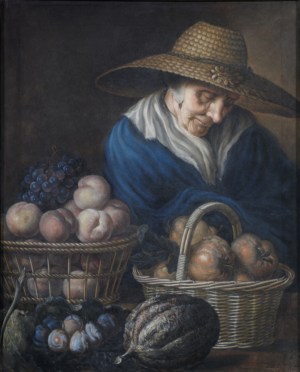
Unknown artist, A Market Woman with Fruit, eighteenth century, pastel on paper, 81.3 × 66 cm (Bath: The Holburne Museum)
On view now at The Holburne Museum:
A Handful of Dust
Holburne Museum, Bath, 13 February — 6 November 2016
To celebrate The Holburne’s centenary in its current home, this exhibition gathers together the best of the Museum’s delightful eighteenth-century British portraits in pastel. A mixture of china clay, plaster, and pigments, pastel is little more than brightly coloured dust, as fragile as a butterfly’s wing, yet when applied to paper the effect can be magical.
Pastel (also called crayon) was a favourite new medium in Britain between about 1730 and 1830. It was restricted almost entirely to portraits, as it silkiness and luminosity were found to be particularly suitable for depicting skin and textiles. The exhibition includes work by some of the great masters of eighteenth-century pastel painting: Jean-Etienne Liotard, John Russell, and Bath artists William Hoare and Lewis Vaslet.
Exhibition | History and Mystery: The NCMA British Collection
Opening next week at the NCMA:
History and Mystery: Discoveries in the NCMA British Collection
North Carolina Museum of Art, Raleigh, 6 August 2016 — 19 March 2017
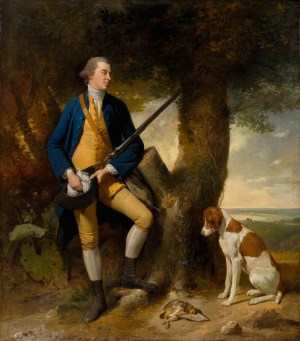
Attributed to Nathaniel Dance, Oldfield Bowles, ca. 1775–80 (Raleigh: NCMA, 52.9.87)
History and Mystery showcases the best of the NCMA’s permanent collection of Old Master British paintings and sculpture from 1580 to 1850. The exhibition is anchored by an extraordinary group of nine Elizabethan and Jacobean aristocratic portraits from about 1580 to 1620 that has been the focus of an ongoing research project involving the NCMA Conservation and Curatorial departments and students and faculty from UNC–Chapel Hill and Duke.
The exhibition also provides the opportunity to reexamine familiar favorites in the collection from new perspectives and to display a few ‘hidden treasures’ that have rarely—or never before—been on public view. History and Mystery is one in a series of permanent collection focus exhibitions highlighting the work of the NCMA’s Conservation Department.
Online Exhibition | Memento Mütter

Papier-mâché eyeball model, late nineteenth century
(Philadelphia: The Mütter Museum, F1993.701)
◊ ◊ ◊ ◊ ◊
From The Mütter Museum:
Memento Mütter
Online exhibition, The Mütter Museum of The College of Physicians of Philadelphia, Launched in March 2016
Memento Mütter is an online exhibit that allows you to get uncomfortably close to the Mütter Museum in the comfort of your own home. The exhibit includes more than 60 items from the Museum’s collection, about half of which are not on public display.
The name for the exhibit comes from the Latin memento mori –’remember that you shall die’. From medieval times, artists created memento mori artwork that expressed the sentiment that life is short and that attachment to worldly pleasures is fleeting. Just as mementos mori invited the viewer to reflect on mortality, Memento Mütter stimulates reflection on the diversity of the human bodily experience and our attempts to understand our physical selves.
Memento Mütter invites you to view, magnify, rotate, and interact with tools and specimens like never before. Discover the full stories behind the objects, with access to photography collections and Historical Medical Library materials.
Writing for Hyperallergic (8 July 2016), Allison Meier notes the exhibition to highlight the anatomical work of Frederik Ruysch (1638–1731).
Exhibition | 300 Years of the Cemetery for Foreigners in Rome

Rudolph Müller, The Protestant Cemetery in Rome with the Tomb of Julius August Walther von Goethe (1789–1830), ca. 1840s
(Klassik Stiftung Weimar)
◊ ◊ ◊ ◊ ◊
From Rome’s Non-Catholic Cemetery for Foreigners:
At the Foot of the Pyramid: 300 Years of the Cemetery for Foreigners in Rome
Ai piedi della Piramide, Il cimitero per gli stranieri a Roma – 300 anni
Am Fuße der Pyramide: 300 Jahre Friedhof für Ausländer in Rom
Casa di Goethe, Rome, 23 September — 13 November 2016
Curated by Nicholas Stanley-Price
“The most beautiful and solemn cemetery I have ever beheld” declared the poet Percy Bysshe Shelley. Since the height of the Grand Tour, non-Catholic foreigners dying in Rome have been buried in front of the pyramid-tomb of Caius Cestius. In 2016 the Protestant Cemetery (now officially the Non-Catholic Cemetery for Foreigners) in Rome will celebrate its 300th anniversary. For this occasion the Cemetery, in partnership with the Casa di Goethe, has planned an exhibition of paintings, drawings and prints from the 18th to early 20th centuries to illustrate the history of this place dedicated to citizens of Protestant faith who died in papal Rome.
The curator of the exhibition is Dr Nicholas Stanley-Price. It is sponsored by the 15 embassies that administer the Cemetery (Australia, Canada, Denmark, Finland, Germany, Greece, Ireland, Netherlands, Norway, Russia, South Africa, Sweden, Switzerland, the United Kingdom and the United States of America), under the Presidency of H.E. Peter McGovern, Ambassador of Canada in Italy.
The area of today’s cemetery was made available in 1716 by Pope Clement XI, initially to serve as a burial-ground for members of the Stuart court in exile from Britain. After a few decades, permission was given to erect funerary monuments to those buried there. The first such monument, which survives today, is to Georg Anton Friedrich von Werpup from Hanover, who died in 1765. His grave and that of the chamberlain to the Marquis of Ansbach, Wolf Carl Friedrich von Reitzenstein († 1775), are depicted in a drawing by Jacob Philipp Hackert (Vienna, Albertina).
They were followed by many others. It is the last resting-place not only of August von Goethe, son of the poet, but also numerous painters, sculptors, architects, as well as poets and scholars who lived in Rome or nearby. Among others, we mention Christopher Hewetson († 1799), the sons of Wilhelm von Humboldt († 1803 e 1807), John Keats († 1821) and Percy Bysshe Shelley († 1822), John Gibson († 1866), Gottfried Semper († 1879), Antonio Gramsci († 1937) and Gregory Corso († 2001).
Famous artists such as Giovanni Battista Piranesi, Bertel Thorvaldsen, William Wetmore Story and John Gibson designed funerary monuments for the Cemetery. Their fascination with the place has in turn inspired other artists to produce paintings, poems or monuments: from Goethe to Schinkel, from Oscar Wilde to d’Annunzio, and from Turner to Munch. The exhibition will, for the first time, provide a panorama of how European and American artists of different periods have depicted the Cemetery in paintings, drawings and prints, documenting at the same time the gradual changes in the appearance of the Cemetery. Some of the exhibits will be overall views of the area adjacent to the Pyramid and others of individual tombs. Various depictions of night-time funerals illustrate the difficult conditions in which the Protestants had to be buried. In addition to works by the artists already mentioned, there will be works by Jacques Sablet, Bartolomeo Pinelli, Salomon Corrodi, Walter Crane and others. The loans, already confirmed, come from different European museums and from private collections in Germany, Italy, Scandinavia, and the United States of America. The exhibition catalogue will be published in three different editions (English, German and Italian).










 Enfilade
leave a comment