Exhibition | The English Rose: Feminine Beauty
Now on view at The Bowes Museum:
The English Rose: Feminine Beauty from Van Dyck to Sargent
The Bowes Museum, Barnard Castle, County Durham, 14 May — 25 September 2016
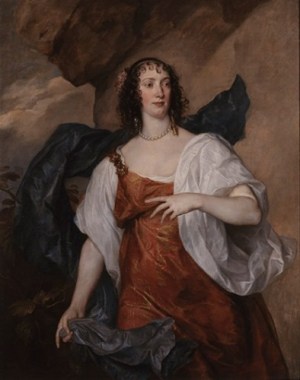
Anthony van Dyck, Portrait of Olivia Porter, ca. 1637 (The Bowes Museum)
The catalyst for The English Rose: Feminine Beauty from Van Dyck to Sargent—a salute to 400 years of society beauties—is a portrait recently acquired by The Bowes Museum via Arts Council England, in lieu of inheritance tax from the estate of the Duke of Northumberland. Olivia, Mrs. Endymion Porter, by court painter Van Dyck, was painted ca. 1637, when the artist was at the height of his career. One of his finest female portraits, it depicts Mrs. Porter, a lady-in-waiting to Queen Henrietta Maria—whose portrait also features in the show—in shift and pearls, displaying the ‘careless romance’ that is evident in many of Van Dyck’s images. Whilst this is an intimate domestic portrait commissioned by her husband, it also demonstrates his wealth, status, and prestige by the fact that he could afford to engage the King’s painter.
The exhibition’s themes centre on the artists represented, their sitters, and fashions and will follow a chronological order from the 17th to the 20th century. Alongside The Bowes Museum’s two Van Dyck’s will feature paintings by Gainsborough, Reynolds, George Romney, John Singer Sargent, and Peter Lely, loaned from galleries around the UK including the National Gallery, the V&A Museum, Dulwich Picture Gallery, The Holburne Museum, and the National Galleries of Scotland.

Thomas Gainsborough, Portrait of Elizabeth and Mary Linley, ca.1772, retouched 1785 (Dulwich Picture Gallery)
Many of the sitters are as famous as those engaged to paint them. Mrs. Sarah Siddons, the outstanding ‘tragic’ actress of her time, most famous for her dramatic portrayal of Lady Macbeth, reportedly had Gainsborough experiencing difficulties with her nose, leading him to exclaim, “Confound the nose, there’s no end to it.”
Fascinating beauties Elizabeth and Mary Linley, part of the famous 18th-century musical family known as ‘The Nest of the Nightingales’, also sat for Gainsborough, in the only known painting depicting both sisters together. The former had a colourful life: betrothed to a man of her father’s choice, a duel was fought between him and a then penniless Richard Brinsley Sheridan, soon to become a leading playwright, with Sheridan eventually winning her hand. Although the sisters’ extraordinary talents saw them perform privately for royalty and publicly at Covent Garden, both were forbidden to sing in public after marriage.
While female artists were thin on the ground in the 17th century, Mary Beale is represented in a self-portrait, ca. 1675—not unusual in those days, as there were few models to sit for them. Holding an artist’s palette, she is depicted as determined to challenge society’s intended role for her.
Adrian Jenkins, Director of The Bowes Museum, said: “We are delighted to celebrate the gift of this wonderful Van Dyck portrait, which will be central to our forthcoming exhibition. We also thank the Arts Council for their decision to retain this important painting in the North of England, where it will enhance The Bowes Museum’s permanent collection.”
Programming information is available here»
Exhibition | Catherine the Great: Self-Polished Diamond
Now on view at the Hermitage Amsterdam:
Catherine the Greatest: Self-Polished Diamond of the Hermitage
Catharina, de Grootste: Zelfgeslepen diamant van de Hermitage
Hermitage Amsterdam, 18 June 2016 — 15 January 2017
 Two hundred and fifty years after Catherine the Great founded the Hermitage, the Hermitage Amsterdam presents her life story in a sumptuous exhibition on Europe’s longest-reigning empress. Her name has always been surrounded with stories and superlatives, often about her private life and court intrigues. Some of these stories belong to the realm of myth, but others are perfectly true.
At the age of fourteen, the German princess Catherine (1729–1796) was married off to the Russian tsar. She later overthrew her husband, Peter III, and claimed the throne for herself. Catherine would become the greatest tsarina of all times. She had ambitious plans to reform the whole empire and acted with great foresight. Although she encountered setbacks, her achievements were astounding.
Catherine had a tremendous passion for art and contributed more than anyone else to the world’s greatest art collection. She was an enlightened despot, corresponding with Voltaire and Diderot. She added a new territory to her empire as large as France, and including the Crimea. And in all her endeavours, she had a sharp eye for talented people who could help her, such as the Orlov brothers and her most influential lover, Potemkin. She was a diamond of her own making.
After her death, Catherine was central to hundreds of books, films, and plays, and she inspired great actresses like Marlene Dietrich, Bette Davis, Hildegard Knef, Catherine Deneuve, and Julia Ormond.
Aided by her memoirs and those of her contemporaries, we present more than 300 objects from the Hermitage in St Petersburg, which invite visitors into Catherine’s world. The exhibition unravels her life story and sketches her personality. It is also an exhibition like a jewellery box, with magnificent personal possessions such as dresses, bijoux, cameos, and snuff boxes, as well the finest art works from her vast collection: paintings, sculptures, exquisite crafts, and portraits of her friends and loved ones.
The poster reproduces a detail of Vigilius Eriksen’s Portrait of Catherine the Great on Horseback, 1762 (St Petersburg: State Hermitage Museum)
Exhibition | Out of Their Heads: Building Portraits of Scottish Architects
Press release, via Art Daily:
Out of Their Heads: Building Portraits of Scottish Architects
Scottish National Portrait Gallery, Edinburgh, 11 June 2016 — 5 February 2017
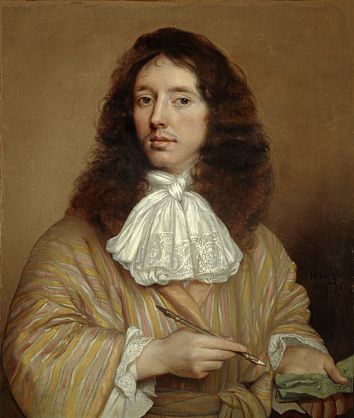
John Michael Wright, Portrait of Sir William Bruce, ca. 1664 (Edinburgh: National Galleries of Scotland, purchased 1919; photo by Antonia Reeve)
Some of Scotland’s most stunning buildings and the achievements of the country’s most distinguished architects are being celebrated this summer at the Scottish National Portrait Gallery in an innovatively-presented exhibition that explores the key figures who have helped to shape Scotland’s world-renowned architectural heritage. Out of Their Heads: Building Portraits of Scottish Architects, organised by the Royal Incorporation of Architects in Scotland (RIAS) and the Scottish National Portrait Gallery and supported by the Scottish Futures Trust, is a headline event of the year-long Festival of Architecture 2016 and the Year of Innovation, Architecture and Design. It features a series of 12 special constructions, based upon the profiles of key buildings, drawn by Edinburgh artist Ian Stuart Campbell Hon FRIAS. On each has been installed a portrait of an architect—paintings, photographs, drawings and busts are drawn from the collections of the SNPG and RIAS.
Internationally recognised names, such as Charles Rennie Mackintosh (1868–1928) and Robert Adam (1728–1792) feature. The exhibition also introduces some architects perhaps less familiar but whose buildings are very well known, such as Jack Coia (1898–1981) and Sir Robert Matthew (1906–1975). Coia was responsible for many of Scotland’s finest Roman Catholic churches, while Matthew’s practice was behind buildings including London’s Royal Festival Hall and the Royal Commonwealth Pool, Edinburgh.
Scotland has produced an impressive array of architect pioneers. The dozen selected architects in Out of Their Heads span a range of styles and a long chronology, beginning with Sir William Bruce (about 1625–1710, depicted in a vivid portrait by John Michael Wright), who almost single-handedly introduced neo-classicism to Scottish architecture in the 17th century, and culminating with the late Kathryn Findlay (1954–2014), former Associate Professor of Architecture at Tokyo University and avant-garde architect of the surrealist, Salvador Dalí-inspired, Soft and Hairy House (1994) in Tsukuba, Japan.
Kathryn Findlay forged a strong career in Japan, producing neo-expressionistic homes alongside her husband Eisaku Ushida (b. 1954). In 2012, Findlay collaborated with the artist Anish Kapoor, on the striking ArcelorMittal Orbit tower in the London’s Olympic Park. Two years later, Findlay was awarded the prestigious Jane Drew prize by the Architects Journal for her “outstanding contribution to the status of women in architecture,” tragically announced on the same day as she passed away.
Other architects featured include Sir Basil Spence (1907–1976), designer of Glasgow University’s Natural Philosophy building—on display is a photograph of Spence by the renowned photojournalist Lida Moser; James Craig (1739–1795), responsible for the lay-out of Edinburgh’s New Town, and Sir Robert Lorimer (1864–1929), creator of the magnificent Scottish National War Memorial at Edinburgh Castle.
Margaret Brodie (1907–1997) was site architect for much of the building of the Glasgow Empire Exhibition of 1938 and was the first female student to graduate from the Glasgow School of Architecture with First Class Honours.
Also represented is Sir Robert Rowand Anderson (1834–1921), the architect responsible for the red-sandstone Gothic Scottish National Portrait Gallery and the founder in 1916 of the Royal Incorporation of Architects in Scotland (RIAS).
One of Scotland’s leading Victorian architects, Anderson enjoyed an outstanding architectural career, with the highlight being the Portrait Gallery. The Gallery was completed in 1890, the first specially built portrait gallery in the world. Among his many other commissions were the Dome of Old College, The Faculty of Medicine and McEwan Hall at Edinburgh University, the Catholic Apostolic Church in Edinburgh, Glasgow Central Station Hotel and Mount Stuart House on the Isle of Bute. Anderson also restored many churches, cathedrals and abbeys, namely Dunblane Cathedral and Paisley Abbey.
Also featured is the great Modernist Peter Womersley (1923–1993), who lived in the Scottish Borders but also worked in Singapore.
As Scotland’s most famous architect and a massively influential figure worldwide, Charles Rennie Mackintosh secured his international reputation upon completion of the stunning Glasgow School of Art in 1909. In the exhibition, he is wonderfully captured in a very personal portrait by his friend and patron Francis Newbery, the Head of Glasgow School of Art.
This year, Scotland’s achievements in innovation, architecture and design will be showcased across the globe through a range of events and activity. The Festival of Architecture 2016 is a key to this exciting year-long celebration with hundreds of events across the length and breadth of the country.
To also mark the Festival of Architecture 2016 and running alongside Out of Their Heads, a series of celebrity photographic portraits have been commissioned by the RIAS from Broad Daylight (Tricia Malley and Ross Gillespie), to showcase and document the world class architecture of Scotland. Each portrait features a celebrity along with a commentary on their favourite Scottish building.
Christopher Baker, Director of the Scottish National Portrait Gallery, said: “The variety and outstanding quality of Scotland’s architecture is a key element of its distinctive culture and international profile. This exhibition celebrates the extraordinary achievements of Scottish architects, ranging from the brilliant seventeenth-century innovator Sir William Bruce to great contemporary figures, such as Kathryn Findlay. It seems fitting that their work should be highlighted within one of Edinburgh’s finest buildings—Sir Robert Rowand Anderson’s spectacular Scottish National Portrait Gallery. We are immensely grateful to the RIAS and Scottish Futures Trust for supporting the project so generously.”
Exhibition | Handel Exhibition at Boughton House

Boughton House, Northamptonshire. Most of the present building was undertaken by Ralph Montagu, 1st Duke of Montagu (d. 1709) who inherited the house in 1683. The Buccleuch Living Heritage Trust now looks after the house and estate.
◊ ◊ ◊ ◊ ◊
Later this summer at Boughton:
Handel Exhibition at Boughton House
Boughton House (near Kettering), Northamptonshire, August 2016
This August Boughton House celebrates the composer George Frideric Handel’s extraordinary legacy with items from the Buccleuch musical archives. The exhibition looks at key moments in Handel’s life, from his formative years in the palaces of cardinals and princes in Rome, to his rise as England musical genius presiding over London, the European capital of music theatre in the eighteenth century.
The exhibition will launch with an event hosted by the Duke of Buccleuch on Sunday, 17th July (see below). The Paris dance company, Les Corps Eloquents, will create a unique Handel performance in Boughton’s Great Hall, including re-created scenes from some of Handel’s most spectacular operas. London theatre-goers expected ballet in their opera, and Handel did not disappoint. He created over 70 works for the French dancers he had at his disposal, thanks to patrons like the Duke of Montagu.
The exhibition presents
• Glimpses of Handel’s early life in the palaces of cardinals in Rome
• Rare images of Handel and his colleagues, including a life size bust after Louis François Roubiliac
• Roubiliac’s terracotta model for the Handel statue in Vauxhall Pleasure Gardens
• A 1720 harpsichord thought to have belonged to Handel
• Original choreographies as used by Handel’s dancers at The Kings Theatre, Haymarket
• A small orchestra of Chelsea Porcelain musicians
• Rare scores and manuscripts including the first edition of The Messiah
• When Handel came to lunch: the menu and guest list from Montagu House April 1747
• Musical instruments as used in the music for the Royal Fireworks
Handel at Boughton
Boughton House (near Kettering), Northamptonshire, 17 July 2016
Hosted by the Duke of Buccleuch, this unique event begins with a welcoming coffee and the opportunity to stroll through Boughton’s glorious gardens and landscape. A buffet brunch is then followed by a tour of the house as well as a private view of Boughton’s 2016 Handel exhibition, which takes a fresh look at Handel’s life in Rome and London—with rare paintings, instruments, and original scores from the family archives, including The Messiah.
This one-off programme of events includes a splendid Handel performance in the Great Hall with counter-tenor James Laing and Paris dance company Les Corps Eloquents. Together they will re-create scenes from some of Handel’s most spectacular operas. You’ll also be treated to the first public performance of composer Luke Styles’s Passacaille—an extraordinary 21st-century re-imagining of Handel’s work through music, song, and dance. Tea and cakes will be served shortly afterwards. Luke Styles is one of the UK’s leading composers of his generation. Over the last four years his operas have been performed at Glyndebourne, the Royal Opera House Covent Garden, and the Vault Festival. Passacaille, his new piece for Boughton, is a re-imagining of an original Handel dance. For voice, instruments, and four dancers, its harmony, phrasing and melodic shapes are all given a 21st-century treatment, combining Sytles’s own musical language with the Handelian aesthetic.
The day starts at 11am and ends at 5pm. Please advise us in advance if you are a wheelchair user by calling 01536 515731 or emailing us. Early bird tickets cost £55 if purchased before 20th June and £65 thereafter.
Exhibition | Emma Hamilton: Seduction and Celebrity

◊ ◊ ◊ ◊ ◊
Looking ahead to the fall . . . press release from the National Maritime Museum:
Emma Hamilton: Seduction and Celebrity
National Maritime Museum, Greenwich, 3 November 2016 — 17 April 2016
From humble origins, Emma Hamilton rose to national and international fame as a model, performer, and interpreter of neo-classical fashion. Within the public mind, however, she typically continues to occupy a passive and supporting role and is often remembered simply as the mistress of Britain’s greatest naval hero, Admiral Lord Nelson. This landmark exhibition recovers Emma from myth and misrepresentation and reveals her to be an active and influential historical actor in her own right: one of the greatest female lives of her era.
Born into poverty in 1765, Emma’s talent and beauty brought her fame while still in her teens as muse to the great portrait artist George Romney. In her twenties she achieved still greater artistic prominence in Naples, the epicentre of the fashionable Grand Tour. Here, as the confidante of Queen Maria Carolina, she also came to wield considerable political power. Emma embarked on a passionate affair with Admiral Lord Nelson but risked her security and social status in the process. Her fortunes never recovered from the tragedy of his death at Trafalgar, and—following a period in debtor’s prison—she died in self-imposed exile in Calais in 1815.
The exhibition carries visitors through the arc of this remarkable story, revealing Emma’s driving ambition and her brilliance as a performer and placing in sharp relief the social conventions ranged against her. In an age when people tended to remain fixed in the social categories in which they began their lives, she crossed boundaries of all kinds, broke through barriers, and ultimately paid a heavy price.
Emma’s story will be told through over 200 objects from public and private lenders around a core from the Museum’s own collections. Emma’s compelling story will be explored through exceptional fine art, antiquities that inspired Emma’s famous ‘attitudes’, costumes that show her impact on contemporary fashions, prints and caricatures that carried her image to a mass audience, her personal letters and those of Nelson and William Hamilton, and finally the uniform coat that Nelson wore at Trafalgar, retained by Emma until destitution forced her to part with it.
◊ ◊ ◊ ◊ ◊
From Thames & Hudson:
Quintin Colville and Kate Williams, with contributions by Vic Gatrell, Hannah Greig, Jason Kelly, Margarette Lincoln, Christine Riding, and Gillian Russell, Emma Hamilton: Seduction and Celebrity (London: Thames & Hudson, 2016), 280 pages, ISBN: 978-0500252208, £30 / $50.
 Emma Hamilton (1765–1815) is widely known as a temptress who ensnared the naval hero Horatio Nelson and paid the price by dying in poverty in Calais. But this epic love affair, and the judgments surrounding it, have obscured a spectacular life story. This book, published to coincide with a major exhibition on Hamilton at the National Maritime Museum, Greenwich, explores her remarkable life and recovers Emma from myth and misrepresentation. Distinguished contributors provide a fresh evaluation of her artistic undertakings, cultural achievements, and legacy, as well as of the momentous years of her association with Nelson and the unravelling of her fortunes after his death at the Battle of Trafalgar in 1805. Illustrated with paintings, prints, and drawings capturing the beauty that propelled her to celebrity status, Emma Hamilton tells the story of an extraordinary woman who broke through barriers of class and privilege to win her own unique place in British history.
Quintin Colville is Curator of Naval History at the National Maritime Museum. He edited Nelson, Navy & Nation and is the author of The British Sailor of the First World War.
Kate Williams is Professor of History at the University of Reading. Her biography England’s Mistress: The Infamous Life of Emma Hamilton was published in 2006.
◊ ◊ ◊ ◊ ◊
Note (added 28 October 2016) — The original version of this posting used an earlier working title, Seduction and Celebrity: The Spectacular Life of Emma Hamilton. Other changes have been made to reflect updated information.
Exhibition | Marseille in the Eighteenth Century, 1753–1793
Now on view at the Musée des Beaux-Arts in Marseille:
Marseille au XVIIIe siècle: Les années de l’Académie, 1753–1793
Le Musée des Beaux-Arts, Marseille, 17 June — 16 October 2016
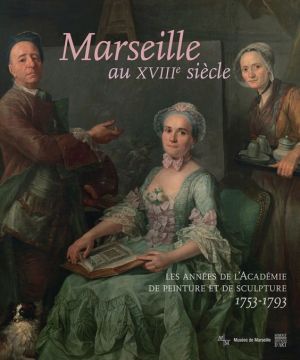 Pour la première fois le panorama artistique d’une période majeure de l’histoire de Marseille, le XVIIIe siècle, va être présenté au musée des Beaux-arts. Cent cinquante œuvres, peintures, sculptures et dessins, provenant des riches collections patrimoniales de la ville, musées, bibliothèque, archives, mais également des musées français et européens seront réunies pour retracer une histoire des arts dans une ville que le commerce a, de tout temps, ouvert aux influences extérieures.
Cette évocation débute pourtant par une tragédie, celle de l’épidémie de Peste dont les grandes toiles de Michel Serre, restaurées pour l’occasion, nous ont gardé l’exceptionnel souvenir. La ville saura se relever du désastre et au milieu du siècle, deux grands peintres, Dandré-Bardon et Joseph Vernet viendront redonner un nouveau souffle au milieu local.
En créant en 1753, l’académie de peinture et de sculpture de Marseille, Dandré-Bardon va faire de cette institution un extraordinaire vivier de jeunes artistes, y attirant également ceux qui sont en route vers l’Italie. Joseph Vernet, dont l’Europe entière s’arrache les marines, venant sur place peindre pour Louis XV le port de Marseille, va susciter de nombreux émules comme Lacroix de Marseille, Volaire ou Henry d’Arles, et faire des marines un genre particulièrement prisé des collectionneurs marseillais.
Du baroque au néo-classicisme, Marseillais ou non, installés à demeure ou simplement de passage, artistes et amateurs d’arts, ont fait de Marseille un des importants foyers artistiques de la France du XVIIIe siècle.
◊ ◊ ◊ ◊ ◊
From Somogy:
Luc Georget and Gérard Fabre, eds., Marseille au XVIIIe siècle: Les années de l’Académie, 1753–1793 (Paris: Somogy, 2016), 304 pages, ISBN: 978-2757210581, 39€.
Cet ouvrage rend compte de la vie artistique à Marseille au Siècle des lumières. L’Académie de peinture et de sculpture de Marseille, créée en 1753, est au cœur de ce récit. La naissance de cette institution concrétisait les efforts de ces hommes, artistes et amateurs d’art, qui voulaient doter leur ville d’un établissement capable de former peintres, sculpteurs et architectes. Ils rêvaient de faire de cette institution un soutien pour les jeunes artistes, un lieu d’accueil et de rencontre pour ceux qui étaient de passage et, par le réseau de relations qu’ils entretinrent avec le reste de l’Europe, un instrument du rayonnement de leur ville. Au cours de ses quarante années d’existence, l’Académie de peinture et de sculpture a formé des élèves qui connurent de grands succès, bien au-delà de Marseille, et des dessinateurs qui offrirent aux productions de ses manufactures un niveau inégalé. Fermée en 1793, comme toutes les académies en France, elle devait donner naissance, une fois la tourmente apaisée, à deux des plus importantes institutions culturelles du XIXe siècle : l’école des beaux-arts et le musée.
Sous la direction de Luc Georget, Conservateur en chef du Musée des Beaux-Arts de Marseille et Gérard Fabre, assistant de conservation au Musée des Beaux-Arts de Marseille – Avec la collaboration de Régis Bertrand, Marie-Claude Homet, Emilie Beck Saiello, Olivier Bonfait, Laëtitia Pierre, Markus Castor, Sylvain Bédard, Emilie Roffidal, Christine Germain-Donnat, Yves di Domenico, Alexandre Maral, et Claude Badet.
S O M M A I R E
• Luc Georget, Avant-propos
• Régis Bertrand, Le « glorieux » XVIIIe siècle marseillais: Marseille de la Régence à la Révolution
• Marie-Claude Homet, L’héritage baroque: Michel Serre
• Émilie Beck Saiello, De l’aristocratie du négoce aux cercles de l’Académie: Les réseaux marseillais de Joseph Vernet
• Olivier Bonfait, École de dessin, académie, académies: L’« Académie de Peinture, &c. de Marseille » dans l’espace des Lumières
• Gérard Fabre, De l’École académique de dessin à l’Académie de peinture, sculpture et architecture civile et navale de Marseille, 1753–1793
• Laëtitia Pierre et Markus Castor, Faire œuvre de pédagogie: Le directorat de Michel-François Dandré-Bardon à l’Académie de peinture et de sculpture de Marseille, 1749–1783
• Sylvain Bédard, Modèles parisiens: Un lot de figures académiques pour Marseille
• Luc Georget, Une académicienne: Françoise Duparc
• Émilie Roffidal, L’union des arts et du commerce
• Christine Germain-Donnat, La faïence de Marseille
• Yves di Domencio, Le cycle de l’Histoire de Tobie de Pierre Parrocel
• Alexandre Maral, Les sculpteurs de l’Académie de Marseille
• Luc Georget, L’architecture à l’Académie: Les morceaux de réception
• Luc Georget, Une commande singulière: Le Saint Roch intercède la Vierge pour la guérison des pestiférés de David
• Claude Badet, Marseille et la création artistique pendant la Révolution
Liste des œuvres exposées
Bibliographie
Index des noms de personnes
Exhibition | Olafur Eliasson at Versailles
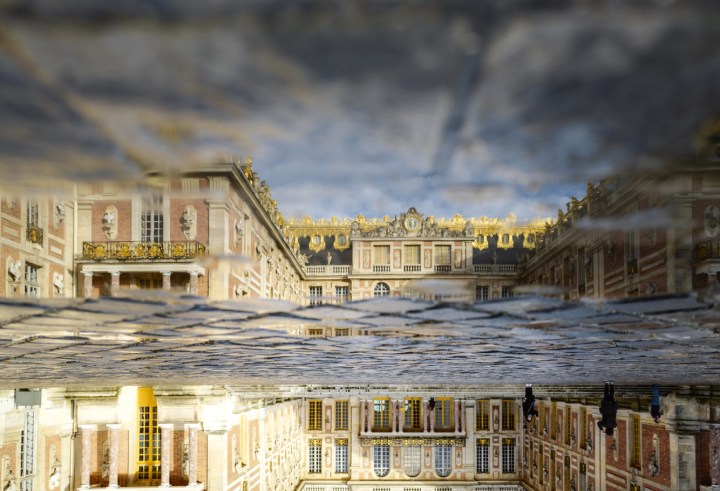
Olafur Eliasson, Versailles 2016 © Olafur Eliasson
◊ ◊ ◊ ◊ ◊
Press release from Versailles:
Olafur Eliasson at the Palace of Versailles
Château de Versailles, 7 June — 30 October 2016
Curated by Alfred Pacquement
The work of internationally acclaimed visual artist Olafur Eliasson investigates perception, movement, embodied experience, and feelings of self. He is best known for striking installations such as the hugely popular The Weather Project (2003) in the Turbine Hall of Tate Modern, London, which was seen by more than two million people, and The New York City Waterfalls (2008), four large-scale artificial waterfalls which were installed on the shorelines of Manhattan and Brooklyn.
Since 2008 the Palace of Versailles has put on a number of exhibitions dedicated to French or foreign artists, each one lasting a few months. Jeff Koons in 2008, Xavier Veilhan in 2009, Takashi Murakami in 2010, Bernar Venet in 2011, Joana Vasconcelos in 2012, Giuseppe Penone in 2013, Lee Ufan in 2014, and Anish Kapoor in 2015: these artists have all created a special dialogue between their works and the Palace and Gardens of Versailles. Since 2013 Alfred Pacquement is the curator of these exhibitions.
“With Olafur Eliasson, stars collide, the horizon slips away, and our perception blurs. The man who plays with light will make the contours of the Sun-King’s palace dance” says Catherine Pegard, President of the Château de Versailles.
“I am thrilled to be working with an iconic site like Versailles,” explains Olifur Eliasson. “As the palace and its gardens are so rich in history and meaning, in politics, dreams, and visions, it is an exciting challenge to create an artistic intervention that shifts visitors’ feeling of the place and offers a contemporary perspective on its strong tradition. I consider art to be a co-producer of reality, of our sense of now, society, and global togetherness. It is truly inspiring to have the opportunity to co-produce through art today’s perception of Versailles.”
Over the years, Eliasson has had significant exhibitions in France, from Chaque matin je me sens différent, chaque soir je me sens le même (2002) at the Musée d’art moderne de la ville de Paris, to Contact (2014), the first solo exhibition at the newly built Fondation Louis Vuitton, where Eliasson also created the permanent installation Inside the Horizon (2014). On the occasion of the COP21 United Nations Conference on Climate Change in Paris in December 2015, Eliasson made climate change tangible by leaving twelve massive blocks of Greenlandic glacial ice to melt in the Place du Panthéon for the installation Ice Watch.
In 2012, Eliasson and engineer Frederik Ottesen founded Little Sun. This social business and global project provides clean, affordable light to communities without access to electricity; encourages sustainable development through sales of the Little Sun solar-powered lamp and mobile charger, designed by Eliasson and Ottesen; and raises global awareness of the need for equal access to energy and light. Earlier this month in Davos, Eliasson received the prestigious Crystal Award for “creating inclusive communities”—a tribute to his work with Little Sun.
From 2009 to 2014, Eliasson ran the Institut für Raumexperimente (Institute for Spatial Experiments), an innovative model for art education affiliated with the Berlin University of the Arts. A comprehensive archive of the institute’s activities can be found online. In 2014, together with architect Sebastian Behmann, Eliasson founded Studio Other Spaces, an international office for art and architecture. As an architectural counterpart to Studio Olafur Eliasson, Studio Other Spaces focuses on interdisciplinary and experimental building projects and works in public space. Established in 1995, Eliasson’s studio today employs ninety craftsmen, specialised technicians, architects, archivists, administrators, and cooks. They work with Eliasson to develop and produce artworks and exhibitions, as well as to archive and communicate his work, digitally and in print. In addition to realising artworks in-house, the studio contracts with structural engineers and other specialists and collaborates worldwide with cultural practitioners, policy makers, and scientists.
A plan is available as a PDF file here»

Exhibition | In the Course of Time: 400 Years of Royal Clocks
Now on view at the Royal Palace in Stockholm:
In the Course of Time: 400 Years of Royal Clocks / I tiden: Kungliga klockor under 400 år
Royal Palace of Stockholm, 22 January — 25 September 2016

Marble and gold-plated bronze table clock with portrait medallions of King Gustav I, King Gustav II Adolf and King Gustav III. Made for King Gustav III by the Swedish-born clockmaker André Hessén in Paris. Photo: Alexis Daflos/Royalcourt.se
The exhibition In Course of Time: 400 Years of Royal Clocks features more than 50 royal clocks—some of which are on show for the first time—dating from the 16th century to the present day. The exhibition marks the 70th birthday of King Carl XVI Gustaf of Sweden (30 April 2016).
Clockmaking is a precise trade, and clocks have long been seen as extremely exclusive objects. They have therefore often been designed with a great degree of artistic skill. The clock as an objet d’art is one aspect of the exhibition. With the dawn of the modern era, clocks also became useful tools for coordinating work at the palace. For example, the exhibition includes the clock that governed the palace guards’ routines during the 19th century. Today, clocks remain part of day-to-day palace life. Most of the clocks in the collections still work, continuing to perform their function centuries later as timekeepers at a number of the royal palaces.
Exhibition | The Emperor’s Gold
◊ ◊ ◊ ◊ ◊
From the Kunsthistorisches Museum:
The Emperor’s Gold / Das Gold des Kaisers
Kunsthistorisches Museum, Wien, 24 May 2016 — 5 March 2017
The great fame that the imperial coin collection already enjoyed throughout Europe around 1800 derived from its size and quality as well as from the rarity of the objects it contained. It was the collecting passion of the Emperors Charles VI (reigned 1711–1740) and Francis I (reigned 1745–1765), which already fascinated contemporaries, and to which the Vienna Coin Cabinet owes its world-class status today. On the occasion of the 125th anniversary of the Kunsthistorisches Museum, the Vienna Coin Cabinet presents a special exhibition of the highest-carat gold pieces from its once-imperial coin collection.
From Antiquity to the Modern Period
The gamut ranges from gold coins in everyday circulation through multiples, true gold giants, and singular commemorative issues. Many of the imprints on display were honorific gifts to the emperor or were targeted acquisitions for the imperial collection. Antique treasure hordes also played an important role in the expansion and enrichment of the imperial coin collection. The spectacular find at Szilágysomlyó in Transylvania, for instance, contained the heaviest gold medals from antiquity ever discovered.
All That Glitters Is Not Gold
The so-called ‘splendid’ medals (Prunkmedaillen) represent a highlight of the exhibition. These were produced in only a few exemplars and presented as precious gifts to important personages. Due to their enormous sizes, they offer images with a richness of detail that is otherwise unknown. Today their exclusive value lies not only in their precious metal content and artistic quality, but also in their singular provenance.
The Birthplace of Numismatics
In addition to its purely representative function, the Vienna Coin Cabinet was also the birthplace of numismatics as a modern scholarly discipline during the eighteenth century. The custodians of the imperial coin collection penned the first printed coin catalogues. They were concerned with the organization of antique and modern coins, and developed systems that still remain relevant.
Exhibition | Porcelain, No Simple Matter

Left: Royal Meissen manufactory, a pair of four-sided bottles with stoppers, ca. 1724, Collection of Henry H. Arnhold; photo by Michael Bodycomb. Right: Arlene Shechet, Three Hundred Years, 2012, © Arlene Shechet, courtesy of Sikkema Jenkins & Co., New York; photo by Alan Wiener.
◊ ◊ ◊ ◊ ◊
Now on view at The Frick:
Porcelain, No Simple Matter: Arlene Shechet and the Arnhold Collection
The Frick Collection, New York, 24 May 2016 — 2 April 2017
Curated by Charlotte Vignon
The Frick will present a year-long exhibition exploring the complex history of making, collecting, and displaying porcelain. Included are 130 pieces produced by the renowned Royal Meissen manufactory, which led the ceramic industry in Europe, both scientifically and artistically, during the early to mid-eighteenth century. Most of the works date from 1720 to 1745 and were selected by New York−based sculptor Arlene Shechet from the promised gift of Henry H. Arnhold. Twelve works in the exhibition are Shechet’s own sculptures—exuberant porcelain she made during a series of residencies at the Meissen manufactory in 2012 and 2013. Designed by Shechet, the exhibition avoids the typical chronological or thematic order of most porcelain installations in favor of a personal and imaginative approach that creates an intriguing dialogue between the historical and the contemporary, from then to now. With nature as the dominant theme, the exhibition will be presented in the Frick’s Portico Gallery, which overlooks the museum’s historic Fifth Avenue Garden.
Porcelain, No Simple Matter: Arlene Shechet and the Arnhold Collection is organized by Charlotte Vignon, Curator of Decorative Arts, The Frick Collection. Major support for the exhibition is generously provided by Chuck and Deborah Royce, Melinda and Paul Sullivan, Margot and Jerry Bogert, and Monika McLennan. A fully illustrated booklet featuring installation views and a conversation with Arnhold, Shechet, and Vignon will be available in July.
Additional information and images are available from Meghan Dailey’s piece: “Contemporary Ceramics, Up Against 18th-Century Pieces — Literally,” T: The New York Times Style Magazine (24 May 2016).










 Enfilade
leave a comment