Exhibition | Burnishing the Night: Mezzotints from the AIC
From the AIC:
Burnishing the Night: Baroque to Contemporary Mezzotints from the Collection
Art Institute of Chicago, 22 February — 31 May 2015

Thomas Frye, Young Man with a Candle, 1760 (Art Institute of Chicago)
Excelling in eerie effects and seductive textures, the late 17th-century medium of mezzotint blossomed from an amateur fascination and hobby of members of the nobility to the 18th century’s most popular reproductive printmaking method. Mezzotint engraving allowed artists to burnish soft highlights and volume into a textured copper plate that would otherwise print in a solid tone. This shading method contrasted dramatically with the standard intaglio medium, which involved either painstakingly incising engraved lines with a burin (a metal-cutting tool) or etching looser lines into a plate with acid. Ideal for nocturnal scenes, portraits, reproductions of paintings, lush landscapes, and garish anatomical and botanical studies, the versatile medium later lent itself to color printing and remains in use today.
Burnishing the Night brings together mezzotint prints, books with mezzotint illustrations, and other works on paper from the permanent collection that span the medium’s predominantly Northern European origins through its worldwide use in the 20th century. Several works in the show are by Irish mezzotint engravers, especially Thomas Frye, whose imaginative head studies will also be featured in this spring’s highly anticipated exhibition Ireland: Crossroads of Art and Design, 1690–1840. Frye’s evocative Young Man with a Candle from 1760 demonstrates the liquid effects made possible by the mezzotint medium, from the bulging, startled eyes to the dancing candlelit shadows and dripping wax. The viewer waits with bated breath along with this startled youth, enjoying the theatrical uncertainty of a ghost story, printed in velvet tones.
A complementary and concurrent installation in Gallery 208A, Printing Darkness and Light in the Dutch Republic, details how Rembrandt and other artists created their own dramatic “Dark Manner” or “Night Pieces” without the use of mezzotint.
Exhibition | Europe in Vienna: The Congress of Vienna 1814/15

Johann Nepomuk Höchle, Redoute paré during the Congress of Vienna, ca. 1815
(Vienna: Österreichische Nationalbibliothek)
◊ ◊ ◊ ◊ ◊
Press release for the exhibition:
Europe in Vienna: The Congress of Vienna 1814/15
Europa in Wien: Der Wiener Kongress 1814/15
Lower Belvedere and the Orangery, Vienna, 20 February — 21 June 2015
Curated by Sabine Grabner and Werner Telesko
The Congress of Vienna is one of the most important international mega events in European history. Two hundred years ago, Vienna became Europe’s political, cultural, and social hub for a period of several months. The Congress was hosted by Emperor Francis I of Austria. All of the major European powers sent their delegates in order to confer together about how to reorganise the continent, which had lost its stability during the Napoleonic Wars. Austria was represented by the Prince of Metternich, who also functioned as the president of the Congress. Its declared goal was to achieve peace in Europe and secure order on a long-term basis. The diplomatic negotiations were accompanied by a number of social events and various entertainments, the enormous splendour of which has been captured in numerous written and pictorial documents. Vienna was flourishing as a centre of cultural life, with many artists coming to the imperial capital and inspiring all genres of domestic art production.

Exhibition view Europe in Vienna: The Congress of Vienna 1814/15. Photo by Eva Würdinger.
Europe in Vienna: The Congress of Vienna 1814/15 will highlight both the political and social aspects of this extraordinary event, which kept all Europe on tenterhooks over several months. There is hardly another political, diplomatic and social event of the nineteenth century that was documented by such a great diversity of materials like the Congress of Vienna, which turned the metropolis on the River Danube into the hotspot of Europe for a brief period of time. When preparing the objects for the exhibition, the curators Sabine Grabner and Werner Telesko were confronted with the challenge of how to vividly present a diplomatic and historical process that was mainly perceived as a social event. The exhibits, which come from numerous different countries, range from reportage prints and caricatures to history paintings and portraits in various dimensions and media—from miniature to sculpture and life-sized oil paintings. The scope of the Congress of Vienna as a phenomenon of social and artistic ramifications will primarily be displayed in the form of artistic masterpieces from all genres. The thematic spectrum will take into account both the exciting chronology of events—from the European Wars of Liberation and the occupation of Vienna in 1805 and 1809 to the Battle of Leipzig of 1813—and an adequate representation of their protagonists, who came from the aristocracy and the bourgeoisie alike.

François Pascal Simon Gérard, The Imperial Count Moritz Christian Fries with His Wife Maria Theresia Josepha von Fries (née Princess of Hohenlohe-Waldenburg-Schillingsfurst) and Their Son Moritz, ca. 1805 (Vienna: Belvedere)
“For the Belvedere it was particularly important to illustrate the epochal event of the Congress of Vienna as comprehensively as possible, both as to its historical and political and its social and cultural implications,” says Agnes Husslein-Arco, Director of the Belvedere and 21er Haus. “It was seemed essential to us to vividly capture the cultural impact of the Congress and the atmosphere that prevailed in those days through private loans, which we mostly found in the surroundings of direct descendants of the diplomats and aristocrats involved. Besides such personal souvenirs as medals and snuffboxes, we will also present the portrait of Princess Dorothea of Courland, the Duchess of Dino, Talleyrand-Périgord and Sagan, by François Gérard and the portrait of Prince Charles Philip of Schwarzenberg I by Johann Peter Krafft. I am particularly delighted that we succeeded in receiving Ludwig van Beethoven’s score for his Eroica symphony from the archives of the Gesellschaft der Musikfreunde in Wien, as well as the elaborately designed final act of the Congress of Vienna, which will naturally be the exhibition’s centrepiece,” Agnes Husslein-Arco adds.
Among the exhibition’s further highlights will be the portrait of Prince Clement Wenceslas Lothar von Metternich, then foreign minister of the Austrian Empire and its future chancellor, by the period’s leading English painter Sir Thomas Lawrence, as well as the more-than-lifesized portrait of Emperor Alexander I of Russia by François Gérard from the Château de Malmaison near Paris, which is hardly ever allowed to travel abroad.
The Congress of Vienna as a Junction of Politics and Culture

Johann Nepomuk Schaller, Bust of Empress Maria Ludovica Beatrix, 3rd wife of Emperor Franz I of Austria, 1814 (Vienna: Belvedere)
The Congress of Vienna as a historic diplomatic event whose consequences affected Europe as a whole was generally perceived by the public as a social spectacle. Yet those in charge and the organisers at the Viennese court were well aware from the very outset that there was a close connection between its political and diplomatic dimension on the one hand and its abundance of diverse court festivities (fireworks, dances, masked balls, carousels, tournaments, ethnic festivals, hunts, sleigh rides, theatre performances, etc.) and private fêtes on the other, which boils down to the fact that it was easier to arrive at relevant political results with the protagonists discussing unsettled or delicate issues in a relaxed atmosphere behind the scenes.
“The special challenge about the Congress of Vienna as a theme lies in the interdependence between history and event culture. What makes it even more difficult is that then there was no sense of documentation as it exists today, which means that many events have come done to us in the form of narrative but cannot be visualised in the form of images,” says curator Sabine Grabner.
As to the pictorial representation of the event it is characteristic that the image or images of the Congress of Vienna do not exist—except for the famous engraving based on a work by Jean-Baptiste Isabey (1819), which in our textbooks at school was still used as the illustration of the Congress of Vienna, although it actually visualises a fictitious conference of diplomats.
The Congress of Vienna as a Major Society Event

Exhibition view Europe in Vienna: The Congress of Vienna 1814/15. Photo by Eva Würdinger.
Initially the official entertainment programme of the Congress of Vienna comprised primarily military festivities. Various military parades, military church parades, and manoeuvres were intended to demonstrate to the high-ranking guests the strength and splendour of the imperial army. In addition, however, numerous court festivities were held, including balls and concerts that took place at the imperial palace or in the residences of influential members of the higher aristocracy, such as Rasumofsky or Metternich. The programme also included hunts, fireworks, and sleigh rides. For the huge balls at the Hofburg, which were attended by as many as 10,000 guests, the Winter Riding School was transformed into a gigantic dance floor and connected to the Hofburg’s two ballrooms by an outside staircase. ‘In order to do justice to the essential qualities of the Congress as a historic and diplomatic event on the one hand and as a point of attraction for European society on the other, the exhibition deliberately concentrates on the numerous intersections between art and cultural history,’ guest curator Werner Telesko, Director of the Department of Studies in Art and Music History at the Austrian Academy of Sciences, points out.
The Congress of Vienna as an Epochal Political Event

Exhibition view Europe in Vienna: The Congress of Vienna 1814/15. Photo by Eva Würdinger.
As to the significance of the Congress for posterity, one must not neglect the dramatic political developments of the year 1815. For Napoleon’s flight from the island of Elba and the subsequent declaration against him, which was signed by all of the European states on 13 March 1815, seem to have contributed considerably to the pressure of the Congress to succeed. As of this day, the political fate of Napoleon was sealed in the form of this hitherto unprecedented closing of ranks of the major European nations and eventually turned out to be final in the legendary and decisive Battle of Waterloo in June 1815 All in all, the Congress proved a remarkable political success. The borderlines between the individual European powers were redefined on a long-term basis. Especially the power equilibrium that had been achieved in Vienna had a far-reaching impact on the entire continent. The negotiations helped settle a number of conflicting interests and tensions. For almost forty years, no further martial conflicts occurred on a European level, due to the stability that had been brought about. Initially, Russia, Austria, Prussia, and Great Britain had decided that France, Spain, and the lesser powers should not have a voice in the decision processes. Yet the experienced French diplomat Charles-Maurice de Talleyrand eventually succeeded in getting France to participate in the deliberations of the major powers, so that he was able to secure the political influence of the ‘Grande Nation’.
On the Conception of the Exhibition and Catalogue
The Belvedere’s exhibition intends to confront visitors with the epochal event of the Congress of Vienna within a comprehensive historical review spanning the period from Napoleon’s appearance on the European stage to the Battle of Waterloo. Works of art serve to present an important historical episode as a narrative marked by a high degree of drama and fascinating personalities. The exhibition concept refrains from treating the individual genres and themes separately but seeks to offer exciting multimedia crossovers. It is only on such a basis that the interdependencies between social life and cultural boom as central aspects of the Congress can be properly experienced and understood. The catalogue and the exhibition complement each other and should therefore be seen as a conceptual unity. The contributions to this opulently designed publication offer essential information about the most important historical and art historical facts and their connections, some of which are difficult or even impossible to convey in the exhibition. The exhibition, on the other hand, is meant as a guide through historical developments alongside which it visualises the highlights of social life and cultural accomplishments. With its thematic approach, Europe in Vienna is the only exhibition that recognises this complex event in its entirety on the occasion of the 200th anniversary of the Congress of Vienna in 2014/15.
“You have come in time to see great things happen. Europe is in Vienna.” This is how the French nobleman Charles Joseph de Ligne welcomed Count Auguste de La Garde, one of the famous chroniclers of the Congress. De Ligne’s assessment is not an invention or justification conjured up in retrospect but is confirmed by many contemporary sources. Because of its uniquely telling combination of Europe and Vienna, his wording has given the Belvedere’s exhibition its title.
◊ ◊ ◊ ◊ ◊
Published by Hirmer, the catalogue is distributed by The University of Chicago Press:
Agnes Husslein-Arco, ed., Europe in Vienna: The Congress of Vienna 1814/15 (Munich: Hirmer Publishers, 2015), 448 pages, ISBN: 978-3777423241, $65.
 From September 1814 to June 1815, Vienna was the undisputed center of Europe. As the Congress of Vienna convened, the city saw an unprecedented gathering of crowned heads and their ambassadors. Among them were a tsar, an emperor, and no fewer than five kings as the leaders of Europe attempted to remake the continent in the wake of the Napoleonic wars. In total, two hundred European countries came together to discuss the future of the European continent. And while the diplomats worked during the day, in the evening, Viennese society blossomed: there were balls, parties, sleigh rides, receptions, theatrical performances, musical events, and much more. Vienna was suddenly the heart not just of European diplomacy, but of European social life as well.
This book draws on an astonishing trove of documents, including historical photographs and paintings, to re-create the atmosphere of the Congress of Vienna. The incredible images and documents are supported by essays that shed light on the political, cultural, and social aspects of the gathering. The resulting volume not only takes readers to an unforgettable moment in the past, but also highlights the continuing effects of this historic gathering for Europe and the entire world.
Agnes Husslein-Arco is an art historian and director of the Belvedere Gallery in Vienna.
Exhibition | Building a Dialogue: The Architect and the Client

Joseph Michael Gandy, John Soane’s Designs for Holy Trinity Church, Marylebone, in variously Norman, Gothic and Neoclassical Manners (London: Sir John Soane’s Museum)
◊ ◊ ◊ ◊ ◊
Press release for the exhibition:
Building a Dialogue: The Architect and the Client
Sir John Soane’s Museum, London, 17 February — 9 May 2015
Sir John Soane’s Museum presents Building a Dialogue: The Architect and the Client, an exhibition exploring the delicate, complex, and sometimes difficult relationship between clients and architects, charting the development of the architectural profession from Elizabethan to Victorian times. Analysing exemplary projects by Sir John Soane and the work of and influence on the profession by some of the most illustrious British architectural pioneers—Sir Christopher Wren (1622–1723), William Chambers (1723–96), Robert Adam (1728–92) and his brother James Adam (1732–94)—Building a Dialogue will look at the intrinsic dynamics of architectural commissions in an unprecedented display of rare pieces from the Museum collection.

John Soane, Elevation of the façade of No. 13 Lincoln’s Inn Fields in London, ca. 1812 (London: Sir John Soane’s Museum)
The commissioning process for Soane’s buildings—including Dulwich Picture Gallery and Holy Trinity Church and Wren’s Royal Naval Hospital—will be presented through a unique body of work, which includes never before seen drawings, private and public documents, letters, correspondence, and models, in one of the most comprehensive surveys of the architecture profession ever displayed at Sir John Soane’s Museum. A key area of interest is the client’s role within the process. Client typologies will be examined through a series of historical case studies, focusing on different types of commissions: the private client, the public client, the State as a client, and (unusually) a posthumous client commission.
One of the exhibition’s highlights, a recently discovered drawing of the façade of the Museum, will be displayed for the first time. Conservators found the drawing in 2014 hidden behind a painting within a frame in the Museum. Soane produced very few drawings of his home at Lincoln’s Inn Fields, as typically these were part of the presentation process to the client; this newly discovered drawing is thus a rare and precious depiction of the architect’s own vision for the building.
Sir John Soane’s work at Dulwich Picture Gallery forms one of the exhibition case studies. The project and its construction presents a unique client-architect relationship, as Soane designed the gallery to the posthumous specifications of his friend Sir Francis Bourgeois. Bourgois stipulated in his will (following his death in 1811) that Soane be given the commission to design and execute the Picture Gallery.
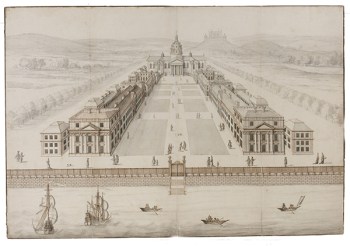
Leonard Knyff, Perspective presentation drawing of a design for an enlarged hospital with a central domed hall and chapel range, 1695, pen and ink (London: Sir John Soane’s Museum)
Problematic client relationships will also be explored through projects such as Soane’s Holy Trinity Church, Marylebone and Wren’s Royal Naval Hospital. Both these state-sponsored projects were characterised by radical changes to the architect’s initial vision brought about by the strong opinions of the patrons. In particular Wren’s initial concept of the Royal Naval Hospital envisaged demolishing Inigo Jones’s Queen’s House, something vetoed in the strongest manner possible by the King. Wren’s initial vision will be illustrated by drawings by Hawskmoor and Knyff, which have previously not been shown to the public. In the instance of Soane’s initial designs for Holy Trinity Church—one of three churches Soane undertook as part of a broader campaign of church building instigated by the Church Commissioners to celebrate the defeat of Napoleon in 1815—Soane’s classical vision was vetoed by both the parish and the Commissioners on grounds of cost and of style. Soane was forced to produce Norman and Gothic alternatives, both styles with which he was uncomfortable. On display will be Joseph Michael Gandy’s drawing showing the perspectives of eight designs for churches, including the various designs for Holy Trinity.

Robert Adam’s Admiralty Screen, 1760s (London: Sir John Soane’s Museum)
Early forms of ‘marketing’ will shape an important section of the display. In the early modern period architects transmitted ideas to prospective clients and to other architects through ‘pattern books’. The Thorpe Album is an exceptionally rare and important example of a late Elizabethan/early Jacobean architectural manuscript, which is central to our understanding of British architecture and how architectural ideas are transmitted in this early period. By the 18th century, however, recognisably modern ways of ‘marketing’ architectural projects and practices can be seen. The Adam brothers were pioneers in this field. They deployed cheap popular prints such as that of the Admiralty Screen in Whitehall to reach a broad audience of the general public while also producing ‘deluxe’ publications outlining their approach to design and architecture. The Works in Architecture of Robert and James Adam, published in 1778 by the Adam office, was intended to appeal to both prospective patrons and also to the architectural profession per se. The idea of persuading the general public as well as patrons is something that contemporary architects utilise as a strategy.
Another channel of communication with the public and with potential clients was given by the Royal Academy Annual Exhibition where architectural drawings were shown alongside paintings and watercolours. In order to make his architectural drawings stand out amongst the displays, Sir William Chambers highlighted them with distinctive blue borders. However, his drawings were still small in scale in comparison to the oil paintings and watercolours included in the Exhibition. Soane radically changed the way in which architecture was represented in the Annual Exhibition by utilising scale and heightened atmospheric effects in his office drawings. Utilising the visionary talent of his draughtsman Joseph Michael Gandy, Soane presented architectural projects such as his unexecuted plans for rebuilding Downing Street and Whitehall in an extremely theatrical, dramatic manner, ensuring that his architectural drawings would have as much impact as the oil paintings and watercolours displayed alongside them.
Abraham Thomas, Director of Sir John Soane’s Museum says: “Architectural drawings have a profound ability to record and articulate the various design discussions that occur within an office or between an architect and a client. I’m delighted that this exhibition not only draws upon gems from the Museum’s collection of over 30,000 architectural drawings but also reminds us that Sir John Soane’s home was the site of a busy architectural practice, embedded in the heart of the building, where such conversations happened every day. The exhibition also makes a connection between historical and contemporary contexts, by exploring the multi-faceted ways in which architects, especially Soane himself, have always engaged with, and re-defined, the notion of a ‘client’—showing us how design ideas have continued to express themselves through the drawing process, from Soane’s time through to the present day.”
Exhibition | Sweet 18: Contemporary Art, Fashion, and Design
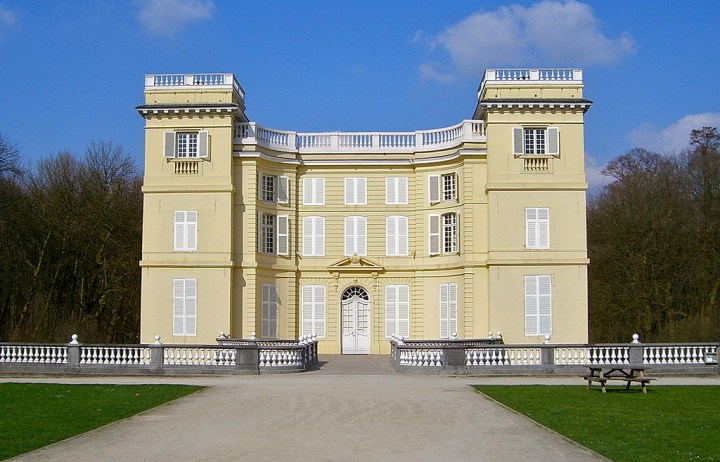
Kasteel d’Ursel at Hingene (Bornem), Belgium.
Photo from Wikimedia Commons, 4 May 2009.
◊ ◊ ◊ ◊ ◊
Press release for the exhibition:
Sweet 18: Contemporary Art, Fashion, and Design Inspired by the 18th Century
Kasteel d’Ursel, Hingene, Belgium, 1 May — 5 July 2015
Curated by Luisa Bernal, Dieter Van Den Storm, Wim Mertens, Tamara Berghmans, and Hélène Bremer
This spring the former summer residence of the aristocratic d’Ursel family will be the setting for the exhibition Sweet 18, presenting the 18th century through the eyes of fifty contemporary designers, artists, and fashion designers—from Erwin Olaf and Wim Delvoye to Walter van Beirendonck and Philippe Starck.

Jessica Harrison, Painted Lady (10), found ceramic, enamel paint, 22 x 17 x 13cm, 2014.
We all have somewhere in our minds the same images of the 18th century: wigs and hooped petticoats, towering hairstyles and elegant furniture, fine porcelain on lavishly decked tables, sensual portraits and frivolous paintings. The 18th century was the time of the Enlightenment and of the flowering of the arts and sciences. But it also created a playful, artificial world for aristocrats wanting to escape reality and immerse themselves in fantasy. A charmed world of pleasure, abundance, and voluptuousness, of pastel tints and curlicues, a world that inspires many an artist to this day. Spreading themselves over all three floors of the castle, these artists will show you the 18th century as you have never seen it before.
Sweet 18 has been brought together by the following team of curators: Luisa Bernal (art), Dieter Van Den Storm (design), Wim Mertens (fashion), Tamara Berghmans (photography) and Hélène Bremer (art).
Ode to Marie Antoinette
Whether it be for her extravagant lifestyle, influential fashion sense or her tragic death, French Queen Marie-Antoinette still speaks to our imagination. Director Sofia Coppola’s film spear- headed the revival. For pop stars like Madonna and Beyoncé, she is also a powerful icon. German illustrator Olaf Hajek gives his own take on her in the Black Antoinette series while top Dutch photographer Erwin Olaf offers up a gory portrait of the queen: beheaded.
Exuberant Fashion
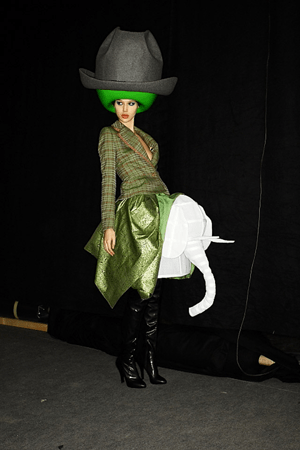
Walter Van Beirendonck. Foto: Ronald Stoops
The extravagant wardrobe of Marie-Antoinette is the springboard for many a contemporary fashion designer: from the minimalism of Japanese Yohji Yamamoto and eccentricity of German Bernhard Willhelm to French fashion houses Nina Ricci and Thierry Mugler. American artist Yasemen Hussein recreates one of her wigs in metal, and English milliner Stephen Jones is inspired by her to create his evocative hats. The outsized dresses, tight corsets, and tailored jackets of Belgian designers Walter Van Beirendonck and Olivier Theyskens also sample the 18th century.
Transparent Plastic en Burnt Wood
Dutch designer Hella Jongerius immersed herself in the archives of the German porcelain manufactory Nymphenberg to come up with plates which combine hand-painted patterns and little sculptured animals, all done in 18th-century style. Designer Maarten Baas literally set fire to a number of antique chairs before reworking them in lacquer. His Smoke Chair has become a classic. Even more famous is French star designer Philippe Starck’s Ghost Chair, which references a Louis XV chair in a pared-down, transparent design. Spanish designer Jaime Hayon’s lounge chair and an outlandish seat by British designer Nina Saunders also find a home in the exhibition. One absolute high point is L’ornement jamais by Swiss designer Philippe Cramer, an outstanding piece of pine furniture executed in 18th-century style and partially dipped in liquid gold.
Deformed Status Symbols
The fine china of Meissen, Sèvres, and Wedgwood remains to this day an inexhaustible source of inspiration. The sculptural groups of American artist Chris Antemann may look like replicas but reveal themselves on closer inspection to be rather wicked tableaux, full of forbidden fruit. British artist Jessica Harrison makes superficially sweet female figurines that are actually hideously mutilated, with their deformed heads and coloured tattoos. With War and Pieces, Dutch ceramicist Bouke de Vries offers a modern interpretation of the extravagant banquets that were thrown the night before a battle. British artist Amy Hughes’s Trésor découvert suggests treasure that has been lying buried for centuries under that same battlefield, treasure that has lost its gleam but has a story of the past and its rediscovery to tell.
Fêtes Galantes
In Stavronikita Project Austrian photographer Andreas Franke recreates 18th-century festivities. By situating them in the unusual setting of a sunken ship he emphasises the beauty that underlies decadence and decline. The tableaux of Canadian artist Ray Caesar border on the surreal, while the work of English painter Patrick Hughes plays games with the laws of perspective.
Pastoral Scenes

Richard Saja
Nothing is more typical of the 18th-century domestic interior than ‘toile de Jouy’, cotton wall- coverings depicting scenes of rural life. American artist Richard Saja pimps its little cowherds into clowns or punks, while the French Collectif Ensaders transforms them into figures of fantasy and Virginie Broquet gives them an erotic spin. Scottish design studio Timourous Beasties substitutes its idyllic villages with views of the London skyline, while French artist Joël Ducorroy reduces it to its bare essentials. American Beth Katleman brings toile de Jouy wallpaper to life in a vast 3D construction, introducing flea market finds into her installation to accentuate the strangeness of the effect.
Lavish Finery
British artist Jo Taylor translates the extravagant stucco ornament of the grand 18th-century house into three-dimensional porcelain objects. American Molly Hatch’s porcelain plates, when set together, form a landscape painting covering an entire wall. Taking as her inspiration the bizarre wigs of the French court, English artist Kathy Dalwood turns
casts of utilitarian objects into plaster portrait busts.
Made in Belgium
Belgian artists easily hold their own amongst all these international heavyweights. Isabelle Copet lays a gigantic lace collar in the pool behind the castle. In the park Michaël Aerts places an inverted statue of Louis XIV on a pedestal made of flight cases and builds a seven metre high obelisk from the same black cases. Two twisted sculptures by Wim Delvoye overlook the entrance hall. Zaza contributes a print. In the mirrored room Bart Ramakers has filmed a richly imaginative ballet on the theme of romantic love. Painter Jan Devliegher exhibits gigantic porcelain plates and Nick Ervinck has printed two stunningly designed vases in 3D. A design for a bedroom by architect Koen Deprez combines classic panelling and Fragonard paintings with Stanley Kubrick’s 2001: A Space Odyssey. Pieter Theuns (BOX) has composed music inspired by Mozart for the exhibition.
Kasteel d’Ursel
For nearly four centuries Kasteel van Hingene was the favourite summer residence of the aristocratic d’Ursel family. Every summer the Duke would travel with family and servants to his magnificent country house. Now it is the property of the Province of Antwerp, which is restoring it to its former glory. In 2014 Kasteel d’Ursel won the ‘Flemish Heritage Award’.
The exhibition begins on the first floor and leads you through the noble family’s former bedchambers. The service stairs bring you directly to the second floor where once the servants and the children of the family were accommodated. The circuit ends in the hall of mirrors and the reception rooms of the ground floor. The restored castle, with its characteristic Chinese interior decoration, is the perfect setting for this contemporary look at the 18th century.
Exhibition | Vivienne Westwood: Cut from the Past

◊ ◊ ◊ ◊ ◊
From Danson House:
Vivienne Westwood: Cut from the Past
Danson House, Bexleyheath, Kent, 1 April — 31 October 2015
The 18th century is the high point of art and culture. —Dame Vivienne Westwood
The impact of 18th-century art and design on the work of distinguished British fashion designer Vivienne Westwood is celebrated in a new exhibition at Danson House this spring. Vivienne Westwood: Cut from the Past brings together for the first time a number of her ground-breaking designs, and explores the collections that proved to be her turning point both critically and commercially.
Danson House, a splendidly restored Georgian villa, provides a tailor-made backdrop to the exhibition which highlights Westwood’s seminal work of the 1990s which was influenced by the 18th century. Designs and outfits on show make particular reference to the Rococo paintings of French artists Watteau and Boucher. Westwood’s passion for 18th-century design is also reflected in some earlier pieces from the ‘Cut, Slash and Pull’ and ‘Mini Crini’ collections, and the Malcom McLaren and Vivienne Westwood ‘Seditionaries’ Collection.
Caroline Worthington, Chief Executive, Bexley Heritage Trust said, “We are delighted to be working together with the Victoria & Albert Museum for the first time to bring cutting edge design back to Danson House for the 2015 season—just as the original owners, the Boyd family, did in the 18th century.”
◊ ◊ ◊ ◊ ◊
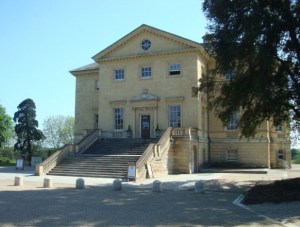 Danson House boasts a suite of rooms created for Sir John Boyd, a man besotted with his young bride. Enjoy this superb example of 18th-century architecture with its classical proportions, elegant interiors and rich symbolism celebrating love and marriage. Designed as a retreat from the hustle and bustle of central London, Danson House was completed in 1766. Sir John Boyd was a sugar merchant and vice-chairman of the British East India Company. Together with the notable architect Sir Robert Taylor, Boyd created this homage to the Golden Age of Antiquity, filling it with art and sculpture from his travels on the Continent. Today his home gives us a fascinating insight into fashionable
Georgian life.
Exhibition | Love Bites: Caricatures by James Gillray
From the Ashmolean:
Love Bites: Caricatures by James Gillray
Ashmolean Museum, Oxford, 26 March — 21 June 2015
Curated by Todd Porterfield

James Gillray, Design for a Naval Pillar, 1800
(New College, Oxford)
To mark the 200th anniversary of the death of British caricaturist James Gillray (1757– 1815), the Ashmolean presents more than 60 of Gillray’s finest caricatures from the outstanding collection of New College, Oxford.
James Gillray trained as a professional copyist at the Royal Academy and then staked his professional life on caricature, amongst the first generation of artists to do so. He produced more than a thousand prints, some the fruit of months of reflection, others banged out at lightning speed, responding to but also creating instant controversies on the very day of the event. His prints were divisive and partisan: in 1798 a Tory Lord would congratulate him for having “been of infinite service in lowering them [the Whigs] and making them look ridiculous,” while the exiled Napoleon, well aware of Gillray’s anti-French propaganda, was reported to have said that the British engraver did more than all the armies of Europe to bring him down.
Love Bites: Caricatures by James Gillray is curated by Professor Todd Porterfield of the University of Montreal. The exhibition has been generously supported by The Paul Mellon Centre for Studies in British Art and the Friends of the Ashmolean.
In connection with the exhibition, the Ashmolean Museum will host a conference, James Gillray@200: Caricaturist
without a Conscience?, on the 28th and 29th of March 2015.
Display | Elaborate Embroidery: Fabrics for Menswear before 1815
From The Met:
Elaborate Embroidery: Fabrics for Menswear before 1815
The Metropolitan Museum of Art, New York, 2 February — 19 July 2015
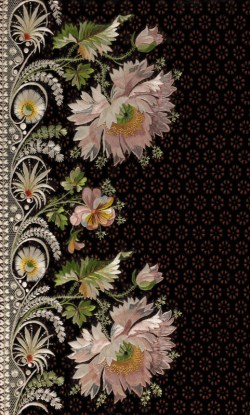 This installation features lengths of fabric for an unmade man’s suit and waistcoat, as well as a selection of embroidery samples for fashionable menswear made between about 1760 and 1815. During this period, France was the undisputed epicenter of the European fashionable world, and professional embroidery workshops there produced a dizzying array of colorful designs from which a man could choose. The installation features a copy of L’Art du Brodeur (The Art of the Embroiderer), which was published in Paris in 1770. This book contains detailed descriptions about subjects such as preparing fabric to be embroidered and the variety of threads used in a workshop, as well as illustrations of designs for men’s suits.
Seen together, the fabrics and the book provide a glimpse into the world of vividly colored and highly decorative fashion that was a key component of an upper-class European man’s life in the eighteenth and early nineteenth centuries.
Exhibition | Indigenous Australia: Enduring Civilisation
Press release (January 2015) for The British Museum exhibition:
Indigenous Australia: Enduring Civilisation
The British Museum, London, 23 April – 2 August 2015
National Museum of Australia, Canberra, Fall 2015

Kunmanara Hogan, Tjaruwa Woods, Yarangka Thomas, Estelle Hogan, Ngalpingka Simms and Myrtle Pennington, Kungkarangkalpa, acrylic on canvas, 2013. © The artists, courtesy Spinifex Arts Project.
In April 2015 the British Museum will open a major exhibition presenting a history of Indigenous Australia, the first exhibition in the UK devoted to the history and culture of Indigenous Australians: both Aboriginal peoples and Torres Strait Islanders. Drawing on objects from the British Museum’s collection, accompanied by important loans from British and Australian collections, the show will present Indigenous Australia as a living culture, with a continuous history dating back over 60,000 years. The objects in the exhibition will range from a shield believed to have been collected at Botany Bay in 1770 by Captain Cook or one of his men, a protest placard from the Aboriginal Tent Embassy established in 1972, contemporary paintings, and specially commissioned artworks from leading Indigenous artists. Many of the objects have never been on public display before.
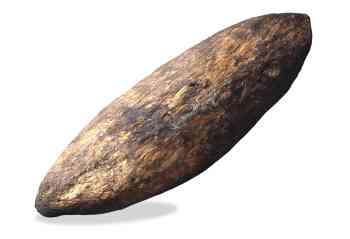
Shield collected at Botany Bay during Captain Cook’s visit, 1770 (London: The British Museum).
The objects displayed in this exhibition are immensely important. The British Museum’s collection contains some of the earliest objects collected from Aboriginal people and Torres Strait Islanders through early naval voyages, colonists, and missionaries dating as far back as 1770. Many were collected at a time before museums were established in Australia and they represent tangible evidence of some of the earliest moments of contact between Aboriginal people, Torres Strait Islanders and the British. Many of these encounters occurred in or near places that are now major cities such as Sydney, Melbourne, Adelaide, and Perth. As a result of collecting made in the early 1800s, many objects originate from coastal locations
rather than the arid inland areas often associated with
Indigenous Australia in the popular imagination.
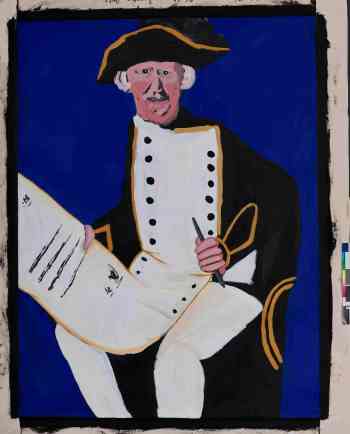
Vincent Namatjira, James Cook—with the Declaration, 2014. © Vincent Namatjira
The exhibition will present not only Indigenous ways of understanding the land and sea but also the significant challenges faced by Indigenous Australians from the colonial period until to the present day. In 1770 Captain Cook landed on the east coast of Australia, a continent larger than Europe. In this land there were hundreds of different Aboriginal groups, each inhabiting a particular area, and each having its own languages, laws and traditions. This land became a part of the British Empire and remained so until the various colonies joined together in 1901 to become the nation of Australia we know today. In this respect, the social history of 19th-century Australia and the place of Indigenous people within this is very much a British story. This history continues into the twenty first century. With changing policies towards Indigenous Australians and their struggle for recognition of civil rights, this exhibition shows why issues about Indigenous Australians are still often so highly debated in Australia today.
The exhibition brings together loans of special works from institutions in the United Kingdom, including the British Library, the Pitt Rivers Museum and the Cambridge Museum of Archaeology and Anthropology. A number of works from the collection of the National Museum of Australia will be shown, including the masterpiece ‘Yumari’ by Uta Uta Tjangala. Tjangala was one of the artists who initiated the translation of traditions of sand sculptures and body painting onto canvas in 1971 at Papunya, a government settlement 240km northwest of Alice Springs in the Northern Territory. Tjangala was also an inspirational leader who developed a plan for the Pintupi community to return to their homelands after decades of living at Papunya. A design from ‘Yumari’ forms a watermark on current Australian passports.
This exhibition has been developed in consultation with many Aboriginal and Torres Strait Islander individuals, Indigenous art and cultural centres across Australia, and has been organised with the National Museum of Australia. The broader project is a collaboration with the National Museum of Australia. It draws on a joint research project, funded by the Australian Research Council, undertaken by the British Museum, the National Museum of Australia and the Australian National University. Titled Engaging Objects: Indigenous communities, museum collections and the representation of Indigenous histories, the research project began in 2011 and involved staff from the National Museum of Australia and the British Museum visiting communities to discuss objects from the British Museum’s collections. The research undertaken revealed information about the circumstances of collecting and significance of the objects, many of which previously lacked good documentation. The project also brought contemporary Indigenous artists to London to view and respond to the Australian collections at the British Museum.
Neil MacGregor, Director of the British Museum said, “The history of Australia and its people is an incredible, continuous story that spans over 60,000 years. This story is also an important part of more recent British history and so it is of great significance that audiences in London will see these unique and powerful objects exploring this narrative. Temporary exhibitions of this nature are only possible thanks to external support so I am hugely grateful to BP for their longstanding and on-going commitment to the British Museum. I would also like to express my gratitude to our logistics partner IAG Cargo and the Australian High Commission who are supporting the exhibition’s public programme.”
Peter J. Mather, Group Regional Vice President, Europe and Head of Country, UK, BP: “BP is extremely pleased to support The BP Exhibition Indigenous Australia: Enduring Civilisation, part of our five year commitment to the museum’s special exhibitions programme. BP has had a presence in Australia for almost 100 years and our support for this exhibition is part of BP’s wider contribution to the societies where we operate, enabling audiences to connect with a variety of different cultures. We are delighted to continue our long-standing relationship with the British Museum by supporting this exhibition which we hope will inspire interest in Australia’s indigenous people and culture for many thousands of visitors.”
Dr Mathew Trinca, National Museum of Australia Director, welcomed the British Museum exhibition: “We are delighted to support this major exhibition in London with the loan of some key objects from our collection. We look forward to continuing our work together to realise our ambition for an exhibition of these artefacts in Canberra in late 2015.”
Patron: HRH The Prince of Wales
Supported by BP
Organised with the National Museum of Australia
Logistics partner IAG Cargo
Public programme supported by the Australian High Commission
Gaye Sculthorpe, John Carty, Howard Morphy, Maria Nugent, Ian Coates, Lissant Bolton, and Jonathan Jones, Indigenous Australia: Enduring Civilisation (London: The British Museum Press, 2015), 272 pages, ISBN: 978-0714126944, £30.
This ground-breaking publication explores the unique and ongoing relationship that Aboriginal people and Torres Strait Islanders have to place and country. It also explores the profound impact and legacy of colonialism, the nature of collecting and the changing meaning of objects now in the collection of The British Museum.
Exhibition | Spirits of the Passage: The Transatlantic Slave Trade
From the press release for the exhibition:
Spirits of the Passage: The Story of the Transatlantic Slave Trade
The Frazier History Museum, Louisville, Kentucky, February 2 through June 16, 2013
The DuSable Museum of African American History, Chicago, 19 September 2014 — 4 January 2015
Reading Public Museum, Reading, Pennsylvania, 24 January — 3 May 2015

Slave Shackles from The Henrietta Marie, ca. 1700 (Key West: The Mel Fisher Maritime Museum)
The Reading Public Museum invites guests to the new exhibition, Spirits of the Passage: The Story of the Transatlantic Slave Trade, exploring the transatlantic slave trade through a display of nearly 150 historical objects, many salvaged from sunken ships. This exhibition, sponsored locally by The Historic Abraham Lincoln Hotel, was developed in conjunction with the 150th anniversary of Abraham Lincoln’s 1863 Emancipation Proclamation and the turning point it represented for thousands of enslaved people at a pivotal point in the American Civil War. It’s the first exhibit of its kind to examine the entire history of the Transatlantic Slave Trade from the 16th through 19th centuries, while also presenting the most up-to-date research and discoveries to the public. These include the latest marine archaeological discoveries from the Mel Fisher Maritime Museum, new research on key African societies, and an exploration of the slave trade’s modern day legacies.
Spirits of the Passage allows guests to see authentic artifacts from the wreck of an actual slave ship, such as restraints, tools, plates and trade goods, as well as dozens of other objects from West African societies that show the uniqueness of the individual cultures they represent. These include religious objects, bronze- and beadwork, pottery, and jewelry. These compelling artifacts create a provocative picture of this tragic era, while also engendering a sense of pride in the legacy of strength these enslaved people left behind.
Spirits of the Passage was produced in partnership by The Mel Fisher Maritime Museum in Key West, Florida and The Frazier History Museum in Louisville, Kentucky.
◊ ◊ ◊ ◊ ◊
The 1972 discovery of The Henrietta Marie occasioned this 1997 book:
Madeleine Burnside and Rosemarie Robotham, with a foreword by Cornell West, Spirits of the Passage: The Transatlantic Slave Trade in the Seventeenth Century (New York: Simon & Schuster, 1997), 192 pages, ISBN: 978-0684818191.
 In a watery grave off the coast of Florida lies the earliest slave ship ever recovered. The English-owned Henrietta Marie plied the waters from Europe to Africa and the New World, sinking in the year 1700. She has waited three hundred years to reveal her story. Taking the wreck of the ship as its dramatic heart, Spirits of the Passage presents the first general-interest history of the early years of the slave trade. Told in part from the decks and the cargo hold of a single merchant slaver, this powerful and fascinating story covers a period that has heretofore been largely the territory of scholars—the late seventeenth century, when the slave trade began a period of explosive growth.
Spirits of the Passage describes the story of the largest forced migration in human history, with a powerful text that personalizes the experience of slavery in the most gripping way. Richly illustrated with artifacts found in the wreck along with etchings and paintings of the time, the book documents a tragic tale of human misery even as it reveals the strength of spirit that made survival possible for enslaved Africans. Included throughout are narratives of resistance and survival, many of them never before told. The mosaic of profiles breathes life into stories from all sides of the trade, stories that will contribute to a more complete understanding of the dilemmas of the time. As integral parts of this important volume, profiles, anecdotes, illustrations, and incisive narrative all combine to create a compelling account of one of history’s most important, and shattering, moments.
Exhibition | Bonaparte and the British: Prints and Propaganda

James Gillray, Maniac Ravings, 1803, hand-coloured etching on paper
(London: The British Museum)
◊ ◊ ◊ ◊ ◊
From The British Museum:
Bonaparte and the British: Prints and Propaganda in the Age of Napoleon
The British Museum, London, 5 February — 16 August 2015
This exhibition focuses on the printed propaganda that either reviled or glorified Napoleon Bonaparte, on both sides of the English Channel. It explores how his formidable career coincided with the peak of political satire as an art form. 2015 marks the 200th anniversary of the Battle of Waterloo—the final undoing of brilliant French general and emperor Napoleon Bonaparte (1769–1821). The exhibition will include works by British and French satirists who were inspired by political and military tensions to exploit a new visual language combining caricature and traditional satire with the vigorous narrative introduced by Hogarth earlier in the century.
The print trade had already made the work of contemporary British artists familiar across Europe. Continental collectors devoured the products of the London publishers, and artists across Europe were inspired by British satires. This exhibition includes work by James Gillray, Thomas Rowlandson, Richard Newton and George Cruikshank, some of the most thoughtful and inventive artists of their day. The range and depth of the British Museum’s collection allows the satirical printmakers’ approach to be compared with that of portraitists and others who tended to represent a more sober view of Napoleon.
The exhibition begins with portraits of the handsome young general from the mid-1790s and ends with a cast of his death mask and other memorabilia acquired by British admirers. Along the way, the prints will examine key moments in the British response to Napoleon—exultation at Nelson’s triumph in the Battle of the Nile in 1798, celebration of the Peace of Amiens in 1802, fear of invasion in 1803, the death of Nelson at the Battle of Trafalgar in 1805, and Napoleon’s triumph at Austerlitz, delight at his military defeats from 1812 onwards, culminating in his exile to Elba in 1814. 1815 sees triumphalism after Waterloo and final exile to St Helena, but some prints reflect an ambiguous view of the fallen emperor and doubts about the restoration of the French king Louis XVIII.
◊ ◊ ◊ ◊ ◊
From The British Museum Press:
Tim Clayton and Sheila O’Connell, Bonaparte and the British: Prints and Propaganda in the Age of Napoleon (London: The British Museum Press, 2015), 256 pages, ISBN: 9780714126937, £25.
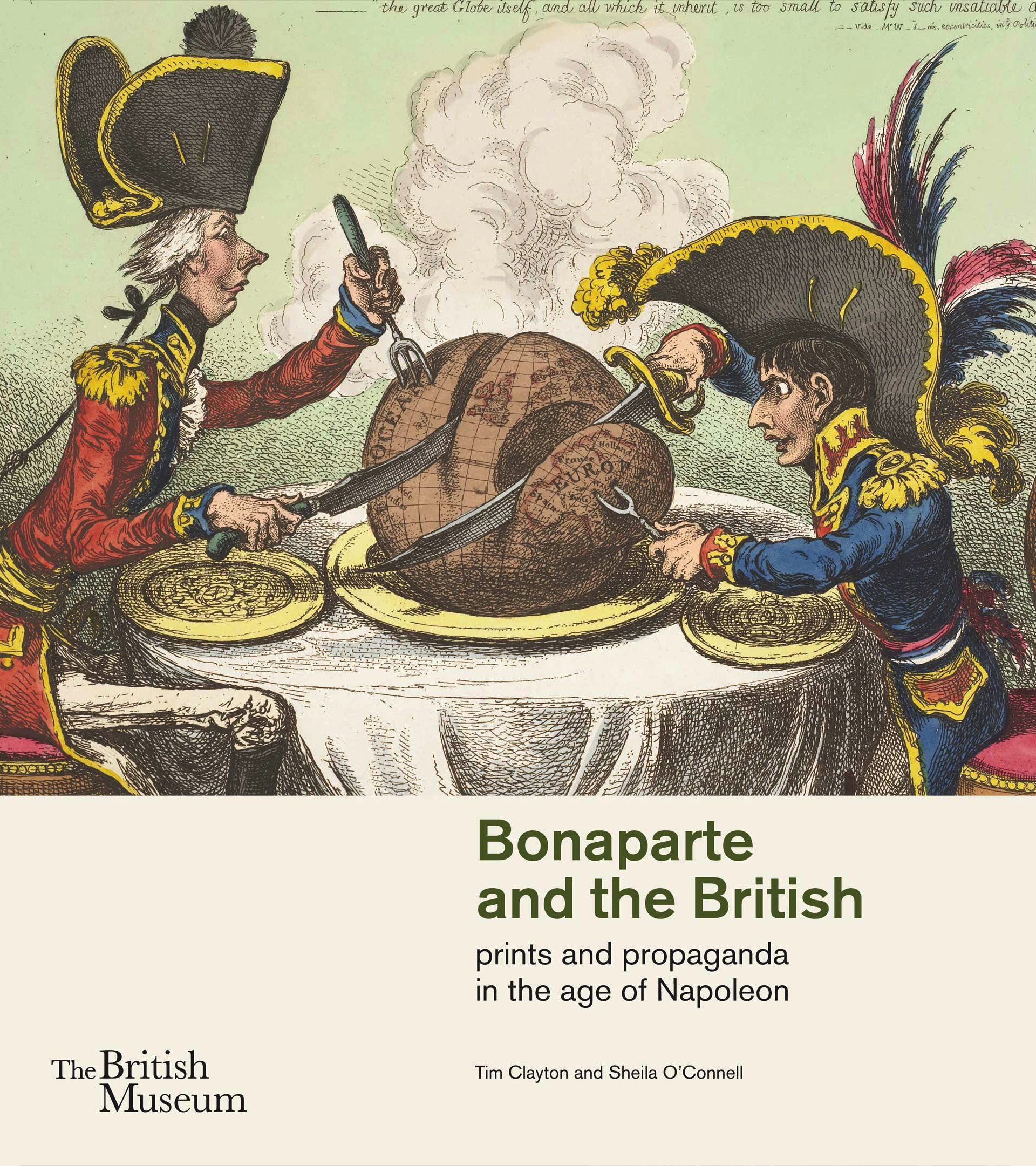 This fascinating book explores through contemporary prints how Bonaparte was seen from across the English Channel where hostile propaganda was tempered by admiration for his military and administrative talents. Featuring works from The British Museum’s world-renowned collection of political satires, including examples by the greatest masters of the genre, James Gillray, Thomas Rowlandson and George Cruikshank, the authors examine in detail these fascinating and humorous prints.
Attitudes to Bonaparte were coloured by political tensions in Britain as highlighted in satires of Charles James Fox, Richard Brinsley Sheridan, Lord Holland and other radicals. French, German, Russian and Spanish copies of British prints demonstrate the wide dissemination of prints and the admiration of continental artists for British satirists. From portraits of the handsome young general to the resplendent Emperor to the cast of his death mask, this book explores crucial events of Bonaparte’s career and the period. French satires showing the British in relation to Bonaparte are also included alongside portraits of Bonaparte and his family made for the British market. This richly illustrated title reveals the stories behind the prints, explaining how satire was used as propaganda and how the artists worked. It features intricately detailed prints in full colour, bringing to life a key period in European history.
Tim Clayton is a leading authority on British prints of the period and the author of several critically acclaimed military histories. Sheila O’Connell is curator of British prints before 1900 at The British Museum.










 Enfilade
leave a comment