Exhibition | The Roman Drawings of José de Madrazo
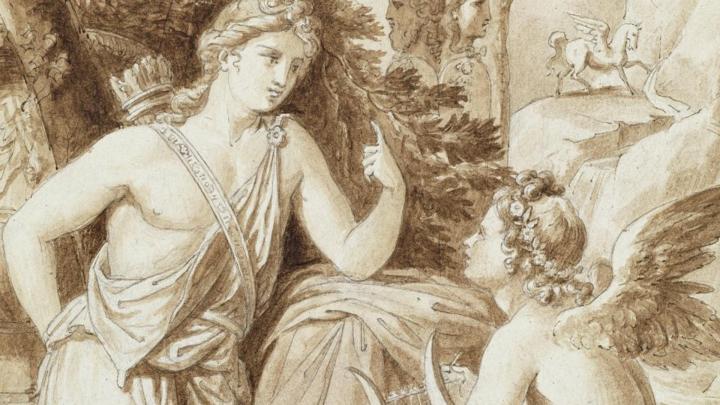
José de Madrazo y Agudo, The Dispute between Apollo and Cupid, detail, ca. 1812, pencil and grey-brown wash on wove paper, 29 × 22 cm
(Madrid: Prado, D006523)
◊ ◊ ◊ ◊ ◊
From press release for the exhibition:
Changing Forms: Myth & Metamorphosis in the Roman Drawings of José de Madrazo
Cambio de forma: Mito y metamorfosis en los dibujos romanos de José de Madrazo
Museo Nacional del Prado, Madrid, 10 March — 22 June 2025
Changing Forms: Myth and Metamorphosis in the Roman Drawings of José de Madrazo showcases the intriguing works of José de Madrazo y Agudo (1781–1859), the first artistic director of the Museo Nacional del Prado. The exhibition offers a unique glimpse into Madrazo’s fascination with classical mythology and its reflection of a turbulent era. During a time when Europe was reshaped by Napoleon and Goya captured the horrors of war, Madrazo, then in exile in Rome, explored the transformative power of myth.
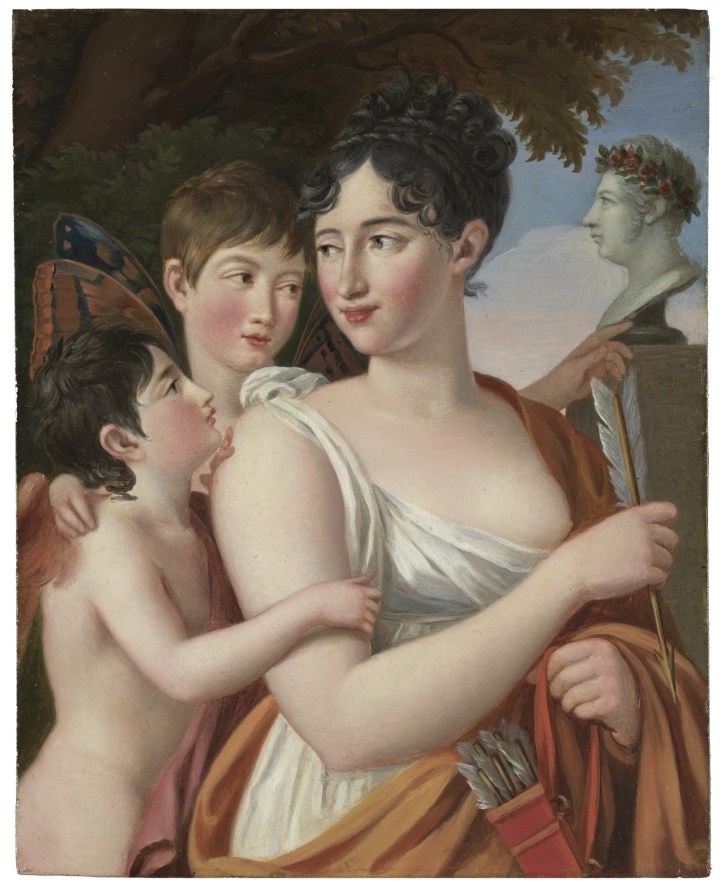
José de Madrazo y Agudo, Josefa Tudó with Her Sons Manuel and Luis Godoy, in a Garden, ca. 1812, oil on panel 20 × 16 cm (Madrid: Prado).
The exhibition features a collection of drawings and portraits from the Daza-Madrazo collection, acquired by the Prado in 2006, highlighting Madrazo’s ability to interpret ancient stories through a contemporary lens. The exhibition is structured around two distinct sets of works, prompting questions about their original purpose. One set appears to be preparatory sketches for engravings, while the other, semicircular compositions, suggests they were intended for decorative purposes, possibly for the exiled court of Charles IV in Rome. Themes like the contest between Apollo and Cupid are prominent, revealing Madrazo’s personal and scholarly approach to myth.
A notable inclusion is Madrazo’s Portrait of Josefa Tudó and Her Children, where they are depicted as mythological figures. This highlights how Madrazo incorporated mythological symbolism into his portraiture, adding layers of meaning to his works. The exhibition also delves into Madrazo’s self-representation, featuring his silhouette, a lithographic portrait, and a photograph, demonstrating his interest in evolving artistic technologies. These pieces span different periods of his life, showcasing his experimental nature.
Changing Forms goes beyond a simple display of technical skill, inviting visitors to consider the historical context in which Madrazo worked, a period marked by significant change. The exhibition emphasizes how Madrazo’s exploration of metamorphosis was not just a theme in his art, but a reflection of his own ability to adapt and reinvent himself. The Daza-Madrazo collection, a key resource for understanding Madrazo’s drawing practice, is central to the exhibition. It reveals his creative process, aesthetic choices, and the complexities of his Roman period.
Madrazo’s deep engagement with classical texts and art history is evident in his detailed drawings. He combined diverse sources to enrich his narratives, demonstrating a rigorous study of both past and present artistic trends. The exhibition aims to provide a deeper understanding of José de Madrazo’s artistic vision and his ability to navigate a time of significant historical and artistic change. Visitors are encouraged to explore the connection between myth, transformation, and the artist’s own journey.
Exhibition | Wild Apollo’s Arrows

Josef Abel, Klopstock’s Arrival in Elysium / Klopstocks Ankunft im Elysium, 1805
(National Gallery Prague)
◊ ◊ ◊ ◊ ◊
Now on view at Vienna’s Academy of Fine Arts:
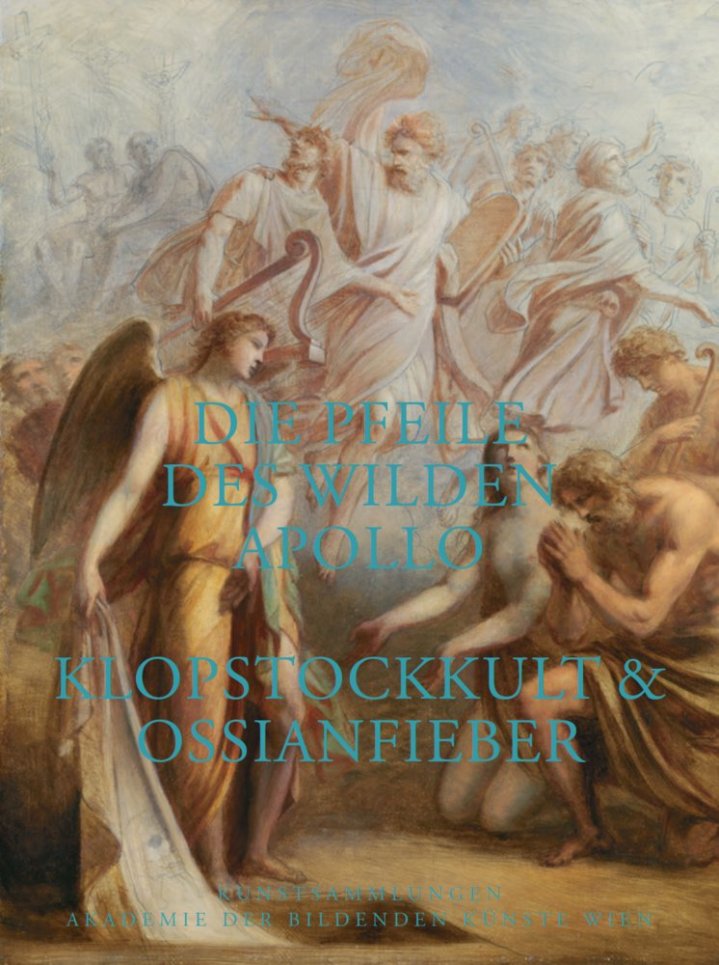
Wild Apollo’s Arrows: Klopstock Cult & Ossian Fever
Die Pfeile des wilden Apollo: Klopstockkult & Ossianfieber
Akademie der bildenden Künste Wien, 7 March — 25 May 2025
Curated by Alexander Roob
The exhibition Wild Apollo’s Arrows: Klopstock Cult & Ossian Fever presents significant artistic works that exemplify the epochal shift from the Enlightenment to the irrationalism of the Storm and Stress movement and Romanticism, exploring for the first time the immense influence of the poet Friedrich Gottlieb Klopstock (1724–1803) on the fine arts and music of his own age.
Decades before the French Revolution, the Age of Enlightenment saw a sudden outbreak of irrational sentiment, expressed in exuberant emotions, notions of spiritualistic gender switching, and a fragmented, heroic, and introspective view of art. This was the onset of an epochal shift with consequences for pictorial art: reliance on the actual appearance of things gave way to the mystical and diffuse, accompanied by a greater interest in the realm of acoustics. Nothing seems to better define this ‘acoustic turn’ than the trope of the blind prophet and lyrical poet, which functioned as a literary model for this new epoch, as seen in the figures of Homer, Ossian, and John Milton. Milton’s grand inner images were proclaimed to be the perfection of the romantic sublime, and the myth of the lost and regained paradise to which he had given literary form was associated with Mesmer’s notion of lucid dreaming. In the early 1750s, German poet Friedrich Gottlieb Klopstock positioned himself as an heir to Milton, with his pietistic epic The Messiah: A Heroic Poem, and in this he issued a challenge to the self-proclaimed English national bard William Blake.
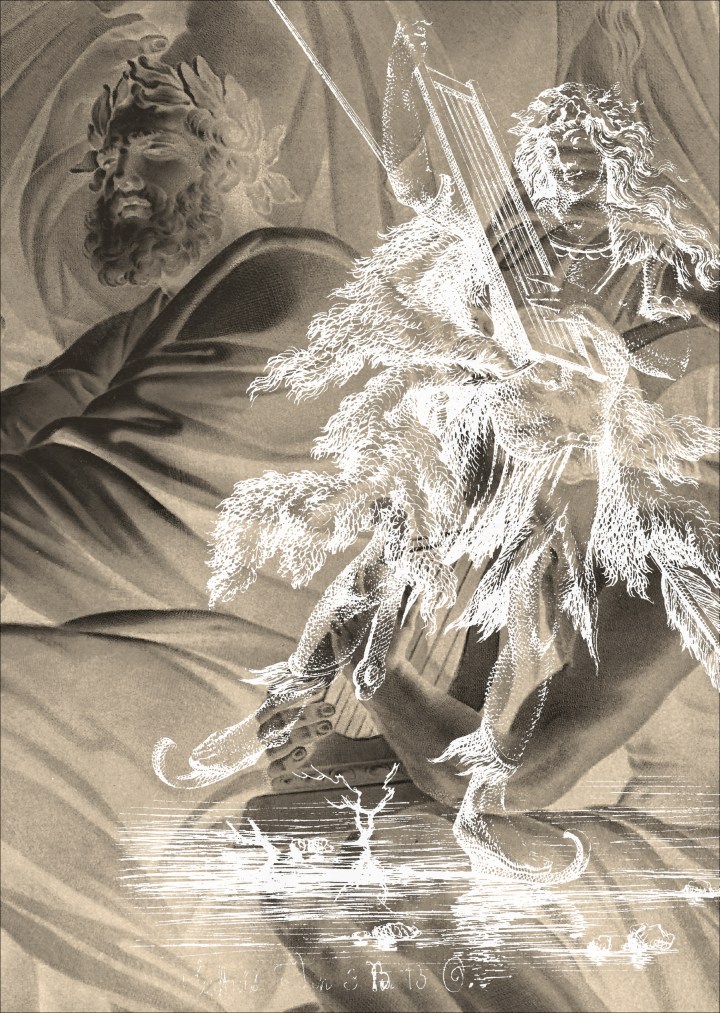
Motif combining works by Johann Peter Pichler after Heinrich Friedrich Füger, Homer Reciting, 1803 (Graphic Collection of the Academy of Fine Arts Vienna), and Carl Wilhelm Kolbe the Elder, Ice-skating Bard (‘Braga’), 1793–94 (Hamburger Kunsthalle, Kupferstichkabinett / bpk, photo by Julia Bau), design composite motif: Beton.
For cultural philosopher Johann Gottfried Herder, ‘wild Apollo’s arrows’ were the rousing sounds of an early folk movement and the Nordic dronescapes of a budding nationalist mysticism, which was all heralded in the pseudo-Celtic poem cycle Ossian. In the visions of the superstar poet Klopstock ‘wild Apollo’ appeared in a Celtic-Germanic mix, and the bard’s song and cosmic ice-dance put the world into creative turmoil. Klopstock, a keen ice-skater, who was nowhere more popular than in Austria, became a role-model for a sentimental skating trend that saw motion as a way to transcend limitations.
The exhibition presents art works that exemplify this epochal shift from the Enlightenment to the irrationalism of the Storm and Stress (Sturm und Drang) movement and Romanticism. For the first time, Klopstock‘s immense influence on the fine arts and music of his own age is explored. With interpretations of his work in art and music by Angelika Kauffmann, Heinrich Friedrich Füger, Josef Abel, and Franz Schubert, the republican poet Klopstock was surprisingly still very present in the Habsburg Empire at the time of the Napoleonic Wars. The exhibition blends works of Austrian classicism, evidence of international early romanticism, and the narcotic imagery of the Nazarenes to the accompaniment of music by Joseph Haydn, Christoph Willibald Gluck, and Franz Schubert.
Alongside works from the Paintings Gallery and numerous loans, this exhibition draws widely on works from the Academy of Fine Arts Vienna Graphic Collection. The project also integrates works by students from the Academy of Fine Arts Vienna, and it will be presented in the Exhibit Galerie and three rooms at the Paintings Gallery. A comprehensive publication with essays and illustrations will accompany the exhibition.
 With works by Josef Abel, Edmund Aigner, Johann Wilhelm Baur, Thomas Blackwell, William Blake, Filippo Caporali, Thomas Chatterton, Daniel Chodowiecki, Edward ‘Celtic’ Davies, Josef Dorffmeister, Bonaventura Emler, Heinrich Friedrich Füger, Johann Heinrich Füssli, Hendrick Goltzius, Christoph Willibald Gluck, Johann Valentin Haidt, Joseph Haydn, Anton Herzinger, William Hogarth, Bartholomäus Hübner, Anne Hunter, Archduchess Maria Clementina of Austria, Johann Evangelist Scheffer von Leonhardshoff, Friedrich John, Owen Jones, Angelika Kauffmann, John Kay, Friedrich Gottlieb Klopstock, Joseph Anton Koch, Carl Wilhelm Kolbe the Elder, Simon Petrus Klotz, Leopold Kupelwieser, Johann Caspar Lavater, Johann Friedrich Leybold, William James Linton, Johann Heinrich Lips, Johann Hieronymus Löschenkohl, Josef Löwy, James Macpherson, Charles-François-Adrien Macret, Jacob Wilhelm Mechau, Heinrich Merz, Isaac Mills, Jean-Michel Moreau, Wilhelm Müller, Friedrich Olivier, Carl Hermann Pfeiffer, Johann Peter Pichler, Albert Christoph Reindel, Johan Christian Reinhart, Ferdinand Ruscheweyh, Luigi Schiavonetti, Julius Schnorr von Carolsfeld, Ludwig Ferdinand Schnorr von Carolsfeld, Franz Schubert, Moritz von Schwind, William Bell Scott, Franz Xaver Stöber, Joseph Sutter, Johanna Dorothea Sysang, Giambattista Vico, Marianne von Watteville, Josef Wintergerst, Franz Wolf, Nikolaus Ludwig von Zinzendorf, Felice Zuliani, and others.
Works after William Blake, Asmus Jakob Carstens, Johann Nepomuk Ender, Heinrich Friedrich Füger, Bonaventura Genelli, Gerdt Hardorff, G. W. Hoffmann, William Hogarth, Angelika Kauffmann, Nicaise de Keyser, Giuseppe Longhi, Johann Friedrich Overbeck, Raffaello Santi, genannt Raffael, Bertel Thorvaldsen, Angiolo Tramontini, Richard Westall.
Contemporary works by students of the Academy such as Christian Azzouni, Ina Ebenberger, Hicran Ergen, Eginhartz Kanter, Julia Kronberger, Prima Mathawabhan, Amar Priganica, Liese Schmidt, Pia Wilma Wurzer, and Ancient Britons Team (ABK Stuttgart).
Alexander Roob, with Sabine Folie, Die Pfeile des wilden Apollo: Klopstockkult & Ossianfieber (Hamburg: Textem Verlag), 248 pages, ISBN: 978-3864853340, €32.
Exhibition | The Most Formidable Weapon against Errors
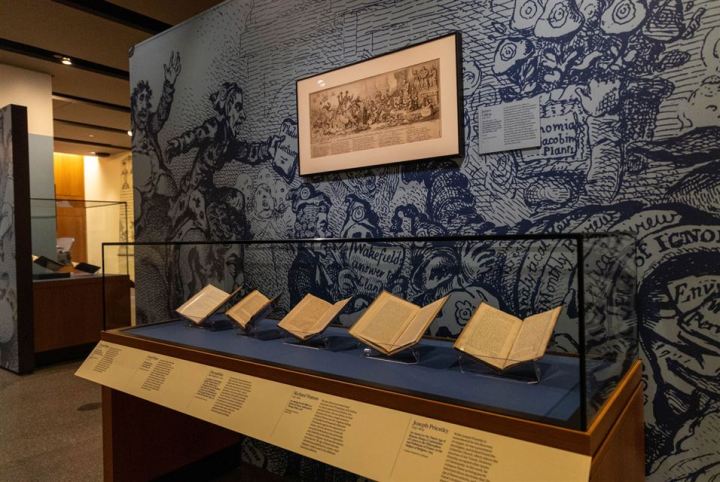
View of the exhibition The Most Formidable Weapon against Errors: The Sid Lapidus ’59 Collection and the Age of Reason, as installed at Princeton’s Firestone Library, 2025.
◊ ◊ ◊ ◊ ◊
Now on view at Princeton:
The Most Formidable Weapon against Errors
The Sid Lapidus ’59 Collection and the Age of Reason
Firestone Library, Princeton University, 19 February — 8 June 2025
Curated by Steven Knowlton
Thinking of the start of his long career as a collector of rare books, Sid Lapidus recalled, “My first antiquarian book was purchased in 1959. In a bookseller’s dusty window, I noticed a small book, a 1792 edition of Thomas Paine’s Rights of Man. The principal theme of my collection was even embedded in the title of [this first purchase].”
 That principal theme is the documenting of new conceptions of human liberty, political order, and scientific reasoning that emerged in the Anglo-American intellectual world between the 17th and 19th centuries. It resulted in a large book collection now dispersed in libraries on the East Coast. This exhibition attempts to provide an overview of Sid Lapidus’s overall achievement.
• Thomas Paine, The Age of Reason
• Thomas Paine, Rights of Man
• The Stamp Act Crisis
• Slavery and Emancipation
• Jewish Oppression and Liberation in England and the United States
• Medicine
• Astronomy and Atomic Science
A dedicated philanthropist, Lapidus has donated his books to several libraries, including Princeton University Library, the American Antiquarian Society, the Wolf Law Library at William & Mary Law School, the Schomburg Center for Research in Black Culture, the Center for Jewish History, the New York Historical, and the New York University Health Sciences Library. His contributions have strengthened the existing collections at those libraries, helping create collections of research value, with works that often are in conversation with one another.
The entire Sid Lapidus ’59 Collection on Liberty and the American Revolution in Princeton University Library has been digitized. You’re invited to browse or search within the collection here»
Exhibition | Myth and Marble
Opening this month at AIC:
Myth and Marble: Ancient Roman Sculpture from the Torlonia Collection
Art Institute of Chicago, 15 March — 29 June 2025
Kimbell Art Museum, Fort Worth, 14 September 2025 — 25 January 2026
Montreal Museum of Fine Arts, 14 March — 19 July 2026
Curated by Lisa Ayla Çakmak and Katharine Raff
 From large-scale figures of gods and goddesses to portraits of emperors and magnificent funerary monuments, this exhibition brings to North America, for the first time, a selection of 58 rarely seen ancient Roman sculptures from Italy’s storied Torlonia Collection. Nearly half of these sculptures, which range in date from the 5th century BCE to the early 4th century CE, have not been publicly displayed in more than 70 years and have been newly cleaned, conserved, and studied specifically for this exhibition, making for a spectacular opportunity to experience their first public presentation in decades.
The Torlonia Collection is not only the largest private collection of Roman marble sculptures in Italy, but it is also arguably the most important of such private collections in the world. Comprising 622 works and a wide range of sculptural types and subjects, its holdings rival those of major institutions in Europe, including the Capitoline and Vatican Museums.
This veritable ‘collection of collections’ was formed in the 19th century by Prince Giovanni Torlonia (1754–1829) and his son Prince Alessandro (1800–1886), primarily through the purchase of several groups of ancient sculpture assembled in early modern Rome, as well as through extensive archaeological excavations on Torlonia estates in Italy. The taste at this time was for complete works of art, and restorations and other interventions carried out across the decades—in some instances by famed sculptors of the day—have impacted the sculptures’ current appearances while also enriching their histories.
By the 1870s, the collection was placed on view in a private museum in Rome, and a number of its masterworks became world-famous—among them the lovely portrait of a young woman known as the ‘Maiden of Vulci’ as well as the ‘Torlonia Girl’. In the wake of the Second World War, Alessandro Torlonia’s museum closed, and the collection went unseen for generations. During this closure, the Torlonia Foundation was created at the behest of Prince Alessandro Torlonia (1925–2017) to continue to both study and conserve the collection and the Villa Albani Torlonia.
Beginning in 2020, a series of exhibitions across Europe have brought selected highlights of the Torlonia Collection to public display once more. Myth and Marble debuts these masterpieces to a North American audience, presenting a once-in-a-lifetime opportunity to experience these exceptional ancient sculptures and explore the fascinating stories they reveal about both their ancient pasts and their modern afterlives.
Myth and Marble: Ancient Roman Sculpture from the Torlonia Collection is co-organized by the Art Institute of Chicago and The Torlonia Foundation, in collaboration with the Kimbell Art Museum, Musée des beaux-arts Montréal, and The Museum Box. The exhibition is curated by Lisa Ayla Çakmak, Mary and Michael Jaharis Chair and Curator, Arts of Greece, Rome, and Byzantium, and Katharine A. Raff, Elizabeth McIlvaine Curator, Arts of Greece, Rome, and Byzantium.
Lisa Ayla Cakmak and Katharine A Raff, eds., with contributions by Silvia Beltrametti and Salvatore Settis, Myth and Marble: Ancient Roman Sculpture from the Torlonia Collection (New Haven: Yale University Press, 2025), 160 pages, ISBN: 978-0300279658, $40.
Display | Wedgwood and Darwin
From the V&A press release:
Wedgwood and Darwin
V&A Wedgwood Collection, Barlaston, Stoke-on-Trent, 24 February — June 2025
This display will explore the story of Josiah Wedgwood’s grandson Charles Darwin (1809–1882) and how the family link inspired Wedgwood ceramics creative output. Thirty-five historic objects from the collection will go on display alongside the acquisitions from Wedgwood’s new range inspired by Darwin’s Voyage of the Beagle. The display forms part of an ambitious new public events programme for 2025, marking ten years since the Wedgwood Collection was saved for the nation following a successful fundraising campaign spearheaded by Art Fund. Housed alongside the working Wedgwood factory at World of Wedgwood in Stoke-on-Trent, the collection celebrates the legacy of British potter and entrepreneur Josiah Wedgwood (1730–1795) and forms a unique record of over 260 years of British ceramic production, evolving tastes, changing fashions, and manufacturing innovation.
The press release marking the 10th anniversary of the V&A Wedgwood Collection is available here»
The Burlington Magazine, February 2025
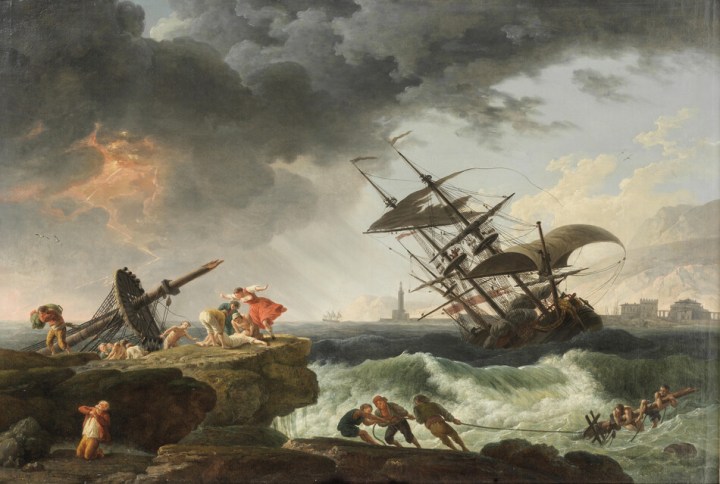
Claude-Joseph Vernet, Shipwreck on a Rocky Coast, 1775, oil on canvas, 74 × 108 cm (Private Collection). The work and its pendant, Harbour Scene at Sunset, are identified by Yuriko Jackall as paintings acquired directly from the artist by François-Marie Ménage de Pressigny, who likely commissioned The Swing by Fragonard. In contrast to the latter, which in 1794 was valued at 400 livres, the two paintings by Vernet were valued at 4,000 livres—the most valuable paintings owned by Ménage de Pressigny.
◊ ◊ ◊ ◊ ◊
The long 18th century in the February issue of The Burlington:
The Burlington Magazine 167 (February 2025)
e d i t o r i a l
• “Cataloguing,” p. 79.
It is one of the basic responsibilities of major collections to research and publish the works of art in their care. Such projects can take many years to mature and are often abandoned because of a lack of funding or shifting institutional priorities. It might be imagined, therefore, that because of these threats and the formidable cost of producing specialist and richly illustrated books, that collection catalogues would have become an extinct species. However, happily, a close reading of this Magazine in recent months would suggest otherwise, across a wide range of media and in terms of a broad chronological span . . .
 a r t i c l e s
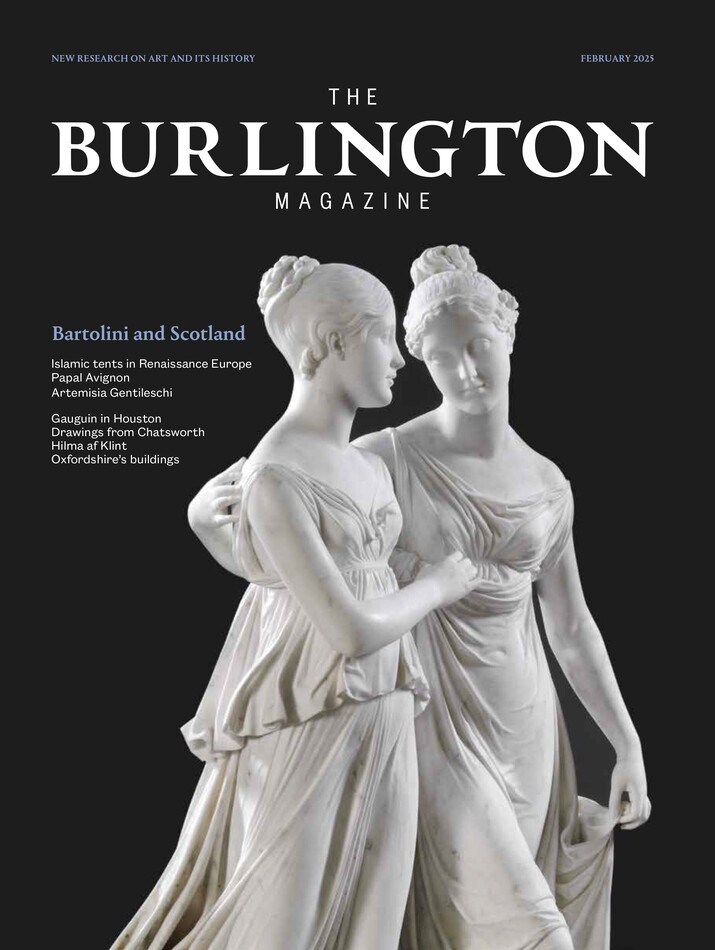
• Lucy Wood and Timothy Stevens, “The Elder Sisters of The Campbell Sisters: William Gordon Cumming’s Patronage of Lorenzo Bartolini,” pp. 126–53.
s h o r t e r n o t i c e s
• Yuriko Jackall, “Ménage de Pressigny and His Art Collection,” pp. 157–61.
• Dyfri Williams, “Lusieri’s Mysterious Wooded Lake Identified,” pp. 161–63.
r e v i e w s
• Marjorie Trusted, Review of the exhibition Luisa Roldán: Escultora Real (Museo Nacional de Escultura, Valladolid, 2024–25), pp. 164–66.
• Karin Hellwig, Review of the exhibition Hand in Hand: Sculpture and Colour in the Spanish Golden Age (Prado, 2024–25), pp. 166–69.
• William Whyte, Review of Simon Bradley, Nikolaus Pevsner and Jennifer Sherwood, Oxfordshire: Oxford and the South-East, The Buildings of England (Yale UP, 2023), pp. 188–89.
• Elizabeth Savage, Review of Esther Chadwick, The Radical Print: Art and Politics in Late Eighteenth-Century Britain (Paul Mellon Centre for Studies in British Art, 2024), pp. 194–96.
Exhibition | Get to Work! The Work and Toil of Women

.
Francisco Muntaner, The Spinners, detail, 1796, engraving
(Staatliche Museen zu Berlin, Kupferstichkabinett / Dietmar Katz)
◊ ◊ ◊ ◊ ◊
From the Staatliche Museen zu Berlin:
Get to Work! The Work and Toil of Women
An die Arbeit! Vom Schaffen und Schuften der Frauen
Kupferstichkabinett, Gemäldegalerie, Berlin 18 February — 18 May 2025
Curated by Dagmar Korbacher, Mailena Mallach, and Christien Melzer
Women’s contributions to society are often unseen and seldom considered in art. Many women’s names and their stories have long since been forgotten. Using French, German, Italian, Spanish and Dutch works on paper, this exhibition looks behind the allegorical scenes to shed light on women’s work in early modern Europe.
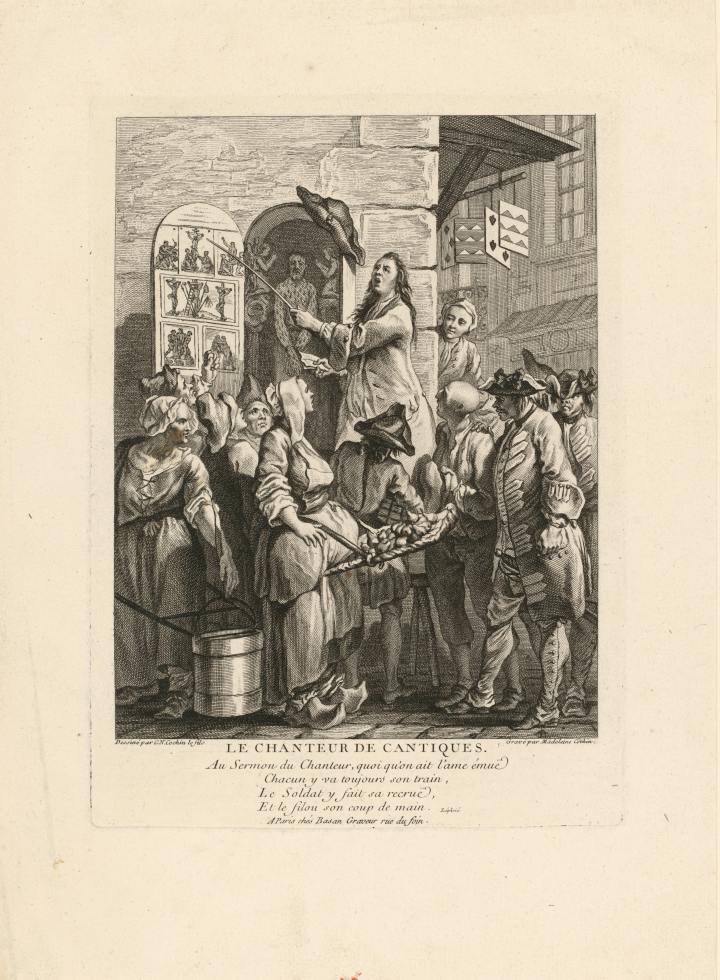
Louise Madeleine Cochin, after Charles-Nicolas Cochin the Younger, Le Chanteur de Cantiques, 1742, engraving and etching, 38 × 28 cm (Staatliche Museen zu Berlin, Kupferstichkabinett / Dietmar Katz).
This small thematic exhibition presents 25 French, German, Italian, Spanish, and Dutch prints from the 16th to 18th centuries preserved in the Kupferstichkabinett’s (Museum of Prints and Drawings) rich holdings. Works have been selected that show women in everyday activities, working as peasants, farmhands, teachers, maids, midwives and courtesans. One focus provide insight into the professions practised by women, including attending to births as midwives; another shows those areas of society where men and women went about their daily tasks side by side (as equals?). Beneath the allegorical layers of meaning, the viewer often discovers self-confident women going about their lives, yet the hardship of everyday travail is evident. To this day, so-called care work for children and the elderly receives little recognition; efforts are being made to reconcile work and family life and to achieve equality between women and men, including in financial matters, but these goals have yet to be fully attained. At the same time, it becomes clear that many of the depictions displayed were created by men—Albrecht Dürer, Lucas Cranach, and Rembrandt—to name just a few. Their (male) view of women characterised societal perspectives for centuries. Also represented, however, are two women artists, Louise Magdeleine Horthemels (1686–1767) and Marguerite Ponce (1745–1800), who earned their livings creating art.
An die Arbeit! Vom Schaffen und Schuften der Frauen is the Kupferstichkabinett’s contribution to Women’s Month in March, as well as to Equal Pay Day (7 March) and Labour Day (1 May in Europe). The exhibition is curated by Dagmar Korbacher, director; Mailena Mallach, curator of German art before 1800; and Christien Melzer, curator of Dutch and English art before 1800, Kupferstichkabinett, Staatliche Museen zu Berlin.
Exhibition | Body by Design: Fashionable Silhouettes
Opening in May at Historic Deerfield:
Body by Design: Fashionable Silhouettes from the Ideal to the Real
Historic Deerfield, Deerfield, Massachusetts, 3 May 2025 — 22 February 2026

Gown or robe à la française, made in France or Amsterdam, ca. 1765; blue and white brocade weave silk (paduasoy?, bleached plain weave linen lining, and silk knotted fringe (Historic Deerfield, F.355).
This exhibition explores the enduring interest in clothing our bodies to achieve fashionable shapes. It will feature twenty-five ensembles from the 18th to 21st centuries drawn predominantly from Historic Deerfield’s renowned clothing collection. Displayed along with the historical garments will be the understructures—stays, corsets, hoops skirts, and bustles—that helped shape, exaggerate, or reduce bodies to fit fashionable ideals. The show follows a loose chronological organization starting with two garments from the 1760s: a woman’s formal dress with exaggerated wide skirt supported by hooped petticoats and a man’s pink and gold brocaded suit. Fashions from the 19th century highlight huge sleeves, corseted torsos, and skirts that were supported by crinolines and bustles. Fashion plates from the museum’s collection will help contextualize styles within their time while select modern fashions, juxtaposed with historical garments, offer interesting connections between the past and today.
Exhibition | Romney: Brilliant Contrasts in Georgian England
Opening next month at the Yale University Art Gallery:
Romney: Brilliant Contrasts in Georgian England
Yale University Art Gallery, New Haven, 17 March — 14 September 2025
Organized by Brooke Krancer with the assistance of Martina Droth and Laurence Kanter

George Romney, A Conversation (or The Artist’s Brothers Peter and James Romney), 1766, oil on canvas (New Haven: Yale Center for British Art, Paul Mellon Collection).
Romney: Brilliant Contrasts in Georgian England, co-organized by the Yale University Art Gallery and the Yale Center for British Art to celebrate the YCBA’s reopening, features the work of the British portrait painter George Romney (1734–1802). Remembered today for his fashionable likenesses of wealthy patrons, Romney was rivaled in late eighteenth-century London only by the now better known artists Thomas Gainsborough and Sir Joshua Reynolds. His aspirations to be a history painter were never realized, but his many drawings serve as a testament to those greater ambitions. These swiftly executed sketches reveal a mastery of form, line, and light, while his proficiency as a musician and early experience building musical instruments distinguish him among his polymath contemporaries. To fully explore the era’s subjects and sensibilities, paintings and drawings by Romney from both museums are shown alongside selections from the Morris Steinert Collection of Musical Instruments. Unveiling the contrasts in his artistic practice, the exhibition presents a forceful vision—one that has resonated with admirers through the centuries, from William Blake in Romney’s own time to the portraitist Kehinde Wiley today.
This exhibition is made possible by the Wolfe Family Exhibition and Publication Fund and is organized by Brooke Krancer, Senior Curatorial Assistant, Yale Center for British Art, with the assistance of Martina Droth, Paul Mellon Director, Yale Center for British Art, and Laurence Kanter, Chief Curator and the Lionel Goldfrank III Curator of European Art.
Exhibition | Sir William and Lady Hamilton

.
Installation of the exhibition Sir William and Lady Hamilton at the Gallerie d’Italia, Naples, with a view of Joshua Reynolds’s 1777 Portrait of Sir William Hamilton (London: NPG) and George Romney’s 1782 Portrait of Lady Hamilton as Circe (Waddesdon Manor). Photo by Roberto Della Noce.
◊ ◊ ◊ ◊ ◊
Closing soon at the Gallerie d’Italia in Naples:
Sir William and Lady Hamilton
Gallerie d’Italia, Naples, 25 October 2024 — 2 March 2025
In the wake of the important studies by Carlo Knight (who recently passed away) and the great exhibition at the British Museum in 1996, the Gallerie d’Italia–Napoli dedicates its 2024 autumn exhibition to William Hamilton, the British royal ambassador at the court of Ferdinand IV of Bourbon and his wife Maria Carolina of Hapsburg. Diplomat, antiquarian and volcanologist, Hamilton, with his multifaceted personality, found fertile ground in the ‘Enlightened’ Naples of the second half of the 18th century to affirm and develop his great passions: antiquity and science.

Jakob Philipp Hackert, View of the English Garden at Caserta, 1793, oil on canvas, 93 × 130 cm (Madrid: Museo Nacional Thyssen-Bornemisza).
The exhibition highlights Hamilton’s great interest in volcanology, landscape painting, music, and collecting, as well as the role he played in Neapolitan society of the time, amplified by the sometimes legendary figure of Lady Emma Hamilton. In reconsidering and promoting the extraordinary human, political, and intellectual story of a man who was undoubtedly one of the greatest interpreters of his time, leaving a profound mark on the city, the exhibition also traces the fruitful cultural and artistic exchanges that took place between Italy and the United Kingdom at a key moment in European history.
By virtue of its theme, the exhibition has the support of the Italian Embassy in the United Kingdom as well as the support of the British Embassy in Rome and boasts the presence on the scientific committee of Carlo Knight and Kim Sloan, curators of the important exhibition Vases and Volcanoes dedicated to Hamilton in 1996 by the British Museum, and Aidan Weston-Lewis, Chief Curator of European Art at the National Galleries of Scotland.
William Hamilton—cadet son of Lord Archibald Hamilton, the ‘milk brother’ of King George III of England, possessed of a solid cultural education and a rich network of social relations—moved to Naples as British ambassador to the Kingdom of Naples in 1764, together with his first wife Catherine Barlow. In the Bourbon capital, where he stayed until 1798—when the French troops arrived—he was able to cultivate his greatest passions: Greco-Roman antiquities, of which he became one of the greatest collectors of all time, the scientific study of the eruptions of Vesuvius, collecting ancient and contemporary paintings, the sea, and hunting. His residences crammed with works of art and full of charm, Villa Emma in Posillipo, Villa Angelica near Torre del Greco, and especially Palazzo Sessa in Pizzofalcone with its famous view of the gulf, were the theatres of a refined and cosmopolitan worldliness for over thirty years. His extraordinary publishing ventures, his relationships with Ferdinand IV and Maria Carolina—cultivated also thanks to his second wife Emma, the legend of whom has been nurtured in modern times by literature and film—and with great international travellers, such as Goethe, Mozart, William Beckford, and the Russian Tsar Paul I, made him one of the most influential figures in 18th-century European culture, as recognised by prestigious institutions such as the Royal Academy and the Royal Society of London.










 Enfilade
leave a comment