Exhibition | First Sight: Recent Acquisitions of Prints and Drawings
Press release (13 June 2014) from the Scottish National Gallery:
First Sight: Recent Acquisitions of Prints and Drawings
Scottish National Gallery, Edinburgh, 14 June — 12 October 2014
 A group of around 30 outstanding drawings, watercolours, and prints will go on display at the Scottish National Gallery this summer in an exhibition which highlights some of the superb recent additions to the permanent collection. The aptly named First Sight exhibition will provide the general public with the chance to see many of these fabulous acquisitions for the first time following careful conservation treatment. It also offers an incredibly diverse experience, with pieces ranging from large-scale exhibition watercolours to small working sketches, from Rembrandt in the 17th century to Paul Cézanne in the late 19th century.
Acquisitions on show for the first time include an evocative watercolour by James Skene of Rubislaw which was inspired by The Heart of Midlothian, the celebrated novel by his close friend Sir Walter Scott; a delicate watercolour of Glasgow Cathedral by painted by David Roberts in 1829; and a colourful Neapolitan costume study by Giovanni Battista Lusieri from the late 18th century. J. M. W. Turner’s spectacular watercolour of Rome from Monte Mario, 1820, will once again be on show after it was briefly included in the Turner in January exhibition in 2013, along with a delicate red chalk drawing from about 1710 by Jean-Antoine Watteau. Both these pieces were allocated to the Galleries by the Government’s Acceptance in Lieu scheme.

Giovanni Battista Lusieri, A Young Woman (Rosalina Scala) with her Daughter, in Traditional Neapolitan Dress, probably 1780s
(Scottish National Gallery)
There are also landscapes by artists new to the collection, such as the Italian watercolourist Carlo Labruzzi and British artists Thomas Miles Richardson Junior and Francis Nicholson, as well as prints from the magnificent bequest made by celebrated art collectors Henry and Sula Walton in 2012, which includes etchings by Goya, Jean-Franҫois Millet, and Edouard Manet.
The Scottish National Gallery’s collection of prints and drawings has been built up through purchase, donation and bequest over many years. The generosity of supporters, donors, funding bodies and organisations has together helped to make the continued growth of this much treasured collection possible.
Works of art on paper make up the largest area of the Gallery’s permanent collection, comprising around 30,000 prints, drawings, watercolours, sketchbooks, and antiquarian volumes. When not on display, this vast resource is made available to the general public in the Prints and Drawings Study Room at the Scottish National Gallery.
Exhibition | Goya’s Tapestry Cartoons in the Context of Court Painting
From the Prado:
Goya’s Tapestry Cartoons in the Context of Court Painting
Los Cartones de Tapices de Goya en el Contexto de la Pintura Cortesana
Museo Nacional del Prado, Madrid, 24 November 2014 — 3 May 2015

Francisco de Goya, The Pottery Vendor, 1778
(Madrid: Prado, P00780)
Opening in November and coinciding with the remodelling of the galleries on the second floor of the Museum’s south wing that house Goya’s cartoons and the collection of 18th-century Spanish paintings, the Museo del Prado will be presenting an exhibition on Goya’s tapestry cartoons, to be shown in its temporary exhibition galleries. The cartoons will be displayed alongside loans from other collections and paintings on deposit or not habitually on display in order to establish an innovative dialogue between Goya’s cartoons and the works of other artists of his own time or earlier. This dialogue will reveal the artist’s links with earlier tradition, the inspiration of the classical world, which was of such fundamental importance in the second half of the 18th century, and his range of contemporary sources.
In addition, the exhibition will reveal how the tapestry cartoons are essential for an understanding of the artist’s work and for an appreciation of his particular technique, unique and varied artistic resources and the particular nature of his models, with their characteristic appearances and distinctive gestures. Together these elements laid the way for Goya’s subsequent creations in his small-format paintings, drawings and print series.
Exhibition | Wallpaper from the Deutschen Tapetenmuseums
As noted in Wallpaper News, Issue #5 (September 2014), an occasional newsletter edited by Robert Kelly:
Wandlust: Schaufenster Deutsches Tapetenmuseum
Westpavillon der Orangerie, Kassel 17 July 2014 — 28 June 2015
Mit der Ausstellung Wandlust lädt das Deutsche Tapetenmuseum zu einem Gang durch die Geschmacksgeschichte ein. Aus der international beachteten Sammlung wird eine Auswahl an Papiertapeten und Musterbüchern vom Rokoko bis zu aktuellen Trends gezeigt und mit zeitgenössischem Mobiliar kombiniert. Neben Meisterleistungen des 18. und 19. Jahrhunderts aus Frankreich, wie einer Arabesken- und Panoramatapete, wird auch Kassel mit einem Biedermeierdekor aus der einstigen Arnold’schen Tapetenfabrik und einem Exemplar der 1972 von Niki de Saint Phalle für die documenta 5 entworfenen Künstlertapete „Nana“ als traditionsreicher Tapeten- und Documenta-Standort gewürdigt.
Die Veränderungen oder sogar Wiederholungen der Motive im Laufe der Geschichte können in der Schau gut nachvollzogen werden. Klassische Muster des 18. und 19. Jahrhunderts sind ebenso vertreten wie die charakteristischen zarttonigen Dessins der Fifties oder die psychedelischen Farben der Seventies. Abschließend hat der Besucher Gelegenheit, in aktuellen Musterbüchern zu blättern. Diese eröffnen ihm neben modernen Kreationen auch facettenreiche „Retro“-Trends, deren historische Vorbilder in der Ausstellung aufgespürt werden können. Dabei können Wiederaufnahmen der Geschmacksgeschichte entdeckt werden, die vielleicht an die eigene Wohnvergangenheit erinnern.
Exhibition | Habsburg Splendor
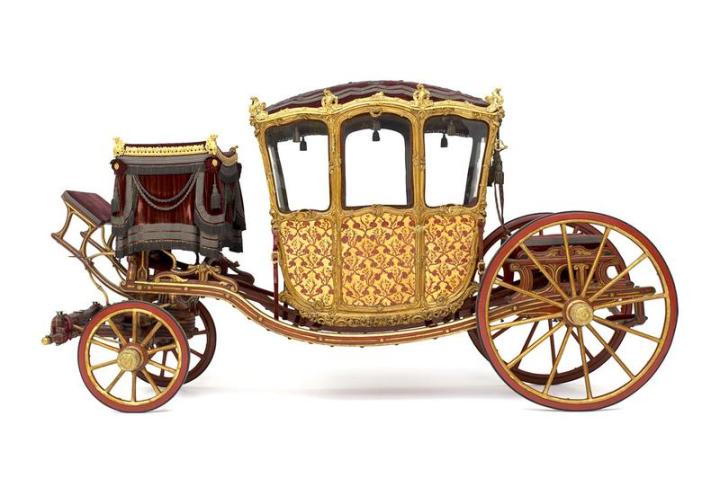
The Prince’s Dress Carriage, ca. 1750–55
(Vienna: Kunsthistorisches Museum)
◊ ◊ ◊ ◊ ◊
It’s still too early to get a good sense of what’s included from the eighteenth century, but we’re sure to hear lots more about the exhibition in the coming months, particularly if you live anywhere near Minneapolis, Houston, or Atlanta. It really should be an extraordinary show. –CH
Press release (18 April 2014) from the MFAH:
Habsburg Splendor: Masterpieces from Vienna’s Imperial Collections
Minneapolis Institute of Arts, 15 February — 10 May 2015
Museum of Fine Arts, Houston, 14 June — 13 September 2015
High Museum of Art, Atlanta, 18 October 2015 — 17 January 2016
Curated by Monica Kurzel-Runtscheiner
In 2015, a major American collaboration will bring masterworks amassed by one of the longest-reigning European dynasties to the United States. Habsburg Splendor: Masterpieces from Vienna’s Imperial Collections showcases masterpieces and rare objects from the collection of the Habsburg Dynasty—the emperors of the Holy Roman Empire and other powerful rulers who commissioned extraordinary artworks now in the collection of the Kunsthistorisches Museum in Vienna. The exhibition, largely composed of works that have never traveled outside of Austria, will be on view at the Minneapolis Institute of Arts (MIA); the Museum of Fine Arts, Houston (MFAH); and the High Museum of Art, Atlanta.
Debuting in Minneapolis in February 2015 before traveling to Houston and Atlanta, Habsburg Splendor: Masterpieces from Vienna’s Imperial Collections explores the dramatic rise and fall of the Habsburgs’ global empire, from their political ascendance in the late Middle Ages to the height of their power in the 16th and 17th centuries, the expansion of the dynasty in the 18th and 19th centuries to its end in 1918 with the conclusion of World War I. The 93 artworks and artifacts that tell the story include arms and armor, sculpture, Greek and Roman antiquities, court costumes, carriages, decorative-art objects, and paintings by such masters as Correggio, Giorgione, Rubens, Tintoretto, Titian, and Velázquez. Key masterpieces that have never before traveled to the United States include:
• The Crowning with Thorns (c. 1602/04) by Caravaggio
• A portrait of Jane Seymour (1536), Queen of England and third wife to Henry VIII, by Hans Holbein the Younger
• Jupiter and Io (c. 1530/32) by Correggio . . . .
Habsburg Splendor: Masterpieces from Vienna’s Imperial Collections chronicles the Habsburgs’ story in three chapters, each featuring a three-dimensional “tableau”—a display of objects from the Habsburgs’ opulent court ceremonies—as context for the other works on view.
D A W N O F T H E D Y N A S T Y
The first section features objects commissioned or collected by the Habsburgs from the 13th through the 16th centuries. In this late medieval/early Renaissance period, Habsburg rulers staged elaborate commemorative celebrations to demonstrate power and to establish their legitimacy to rule, a tradition that flourished during the reigns of Maximilian I and his heirs. Works from this era—including sabres and armor, tapestries, Roman cameos and large-scale paintings—illustrate the significance of war and patronage in expanding Habsburg influence and prestige.
Tableau: Suits of armor displayed on horseback, and jousting weapons from a royal tournament.
Highlights include:
• Armor of Emperor Maximilian I (c. 1492) made by Lorenz Helmschmid
• Bronze bust of Emperor Charles V (c. 1555) by Leone Leoni
• A rock crystal goblet made for Emperor Frederick III (1400–1450)
G O L D E N A G E
The second and largest section of the exhibition highlights the apex of Habsburg rule, the Baroque Age of the 17th and 18th centuries. The dynasty used religion, works of art and court festivities to propagate its self-image and claim to rule during this politically tumultuous time. Paintings by Europe’s leading artists demonstrate the wealth and taste of the Habsburg rulers, while crucifixes wrought in precious metals and gems, as well as sumptuous ecclesiastical vestments, reflect the emperor’s role as defender of the Catholic faith.
Tableau: A procession featuring a Baroque ceremonial carriage and sleigh, with carvings by master craftsman Balthasar Ferdinand Moll.
Highlights include:
• An ivory tankard (1642) by Hans Jacob Bachmann
• Infanta Maria Teresa (1652–53), a portrait of the daughter of Philip IV of Spain and eventual wife of Louis XIV of France, by Velázquez
• An alchemical medal (1677), illustrated with portraits in relief of the Habsburgs, by Johann Permann
T W I L I G H T O F T H E E M P I R E
The exhibition concludes with works from the early 19th century, when the fall of the Holy Roman Empire gave rise to the hereditary Austrian Empire—a transition from the ancien régime to a modern state in which merit determined distinction and advancement. Franz Joseph, who would reign longer than any previous Habsburg, saw the growth of nationalism and ultimately ruled over a dual monarchy of Austria-Hungary. As heir to the Habsburg legacy—and in the spirit of public education and enrichment—he founded the Kunsthistorisches Museum in 1891. Reflecting the modernization of the Habsburg administration, the exhibition ends with a spectacular display of official court uniforms and dresses.
Tableau: Uniforms and women’s gowns from the court of Franz Joseph.
Highlights include:
• Campaign uniform of Franz Joseph (1907)
• A velvet dress made for Empress Elisabeth (c. 1860/65)
• An evening gown made for Princess Kinsky (c. 1905)
• Ceremonial dress of Crown Prince Otto for the Hungarian Coronation (1916)
The exhibition is curated by Dr. Monica Kurzel-Runtscheiner, director of the Imperial Carriage Museum, Vienna. The hosting curator at the Minneapolis Institute of Arts is Kaywin Feldman, director. At the Museum of Fine Arts, Houston, the lead hosting curator is Dr. David Bomford, director of conservation; his curatorial team comprises Dr. Helga Aurisch, curator, European art, and Christine Gervais, associate curator, decorative arts and Rienzi. At the High Museum of Art, the hosting curator is Dr. David A. Brenneman, director of collections and exhibitions and Frances B. Bunzl Family Curator of European art.
A full-color catalogue is being published by the Museum of Fine Arts, Houston, with essays by Dr. Monica Kurzel-Runtscheiner, director of the Imperial Carriage Museum, Vienna; Dr. Franz Pichorner, deputy director, Kunsthistorisches Museum, Vienna; and Dr. Stefan Krause, curator of arms and armor, Kunsthistorisches Museum. Additionally, a virtual exhibition of additional pieces will be viewable online, deepening the visitor experience and providing further opportunities for the public to engage with the art and its history.
A Brief History of the Habsburgs
The noble House of Habsburg rose to prominence in the late Middle Ages through strategic marriages, political alliances and conquest. In 1273, count Rudolph IV gained control of Germany as King of the Romans, and Habsburg domains continued to grow leading up to Pope Nicholas V’s coronation of Frederick III as Holy Roman Emperor in 1452. Under Frederick’s son Maximilian I and his successor, Charles V, the Habsburgs achieved world-power status, assuming the title of emperor without papal consent and enfolding Spain and Burgundy into the Habsburg-controlled territories. The dynasty split into Spanish and Austrian branches shortly thereafter, and in the 17th and 18th centuries the male lines died out, resulting in the loss of Spain.
In 1740, Maria Theresa—the sole female Habsburg ruler, who reigned for a remarkable 40 years—seized control of the Austrian line to become the final ruler of the House of Habsburg. The early 19th century witnessed the final demise of the Holy Roman Empire and the establishment of the main Habsburg line’s successors: the House of Habsburg-Lorraine. A hundred years later, in 1916, Emperor Charles I inherited a dual Austro-Hungarian monarchy upon the death of longtime Emperor Franz Joseph. More than 600 years of Habsburg sovereignty came to an end in 1918 with the close of World War I.
◊ ◊ ◊ ◊ ◊
Scheduled for February publication with distribution by Yale UP:
Monica Kurzel-Runtscheiner, Franz Pichorner, and Stefan Krause, Habsburg Splendor: Masterpieces from Vienna’s Imperial Collections (New Haven: Yale University Press, 2015), 296 pages, ISBN: 978-0300210866, $60.
This beautiful book tells the fascinating story of the Habsburg dynasty, which ruled most of central Europe, Spain, Belgium, and parts of Italy for nearly six hundred years, from the 15th through the 20th century. Charles V (1500–1558) once remarked that the sun never set on the Habsburg Empire, and for most of its history, Vienna served as its capital. The Habsburgs were acclaimed collectors and generous patrons of the arts. Franz Joseph I (1830–1916), the penultimate emperor of the dynasty, created the Kunsthistorisches Museum in Vienna to house the artistic treasures of the empire. Today, this museum possesses one of the most renowned collections in the world of Western art. An extraordinarily wide-ranging survey of the Habsburgs’ collections, this volume features classical Greek and Roman works, medieval arms and armor, tapestries, early modern painting and craftwork, ceremonial gilded carriages, and opulent costumes. Together, they reveal the splendor and the spectacle of the Habsburg court.
Copyright © artdaily.org
Copyright © artdaily.org
Copyright © artdaily.org
“Habsburg Splendor: Masterpieces from Vienna’s Imperial Collections” showcases masterpieces and rare object
Exhibition | Pehr Hilleström: The 18th Century Observed

Pehr Hilleström, Three Women Telling Fortune in Coffee, 1780s, 80 x 110cm
(Stockholms universitets konstsamling, J. A. Berg Collection #158)
◊ ◊ ◊ ◊ ◊
From The Sinebrychoff Art Museum:
Pehr Hilleström: The 18th Century Observed / Välähdyksiä 1700-luvun elämästä
The Sinebrychoff Art Museum, Helsinki, 4 September 2014 — 11 January 2015
Curated by Mikael Ahlund
The life of the bourgeoisie in Stockholm in the Age of Enlightenment will be on display in the Sinebrychoff Art Museum. The paintings of the Swedish artist Pehr Hilleström (1732−1816) give us a unique view directly of ordinary life in the 18th century, of how the bourgeoisie lived in Stockholm. Hilleström portrayed the whole strata of life in the Gustavian period: the life and ceremonies of the court, idle young ladies in elegant drawing rooms, servant girls carrying on with their domestic tasks, theatre, peasant culture, foundries and mines. Fifty paintings representing his most important topics will be on display. Pehr Hilleström’s work has never been exhibited this widely in Finland. The exhibition has been created in cooperation with the Nationalmuseum of Stockholm.
Exhibition publication: Mikael Ahlund, Pehr Hilleström – Välähdyksiä 1700-luvun elämästä | 1700-talet i blickpunkten (editors Kirsi Eskelinen, Reetta Kuojärvi-Närhi).
A selection of high-resolution images are available here»
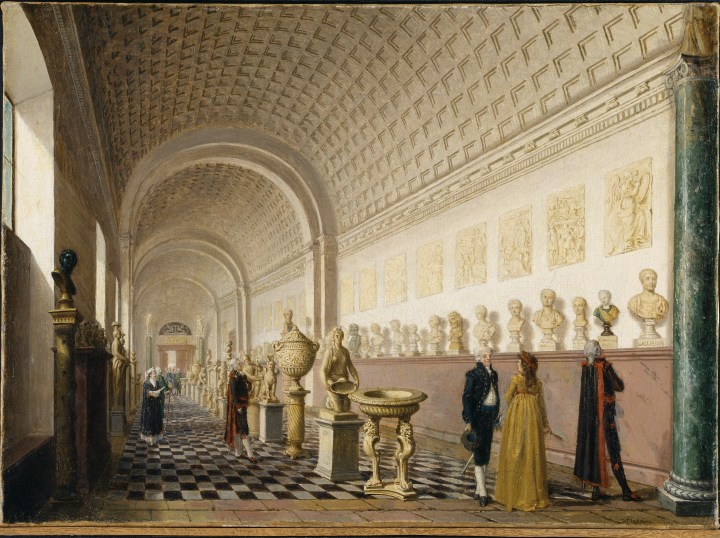
Pehr Hilleström, The Inner Gallery of the Royal Museum at the
Royal Palace, Stockholm, 1796 (Nationalmuseum, Stockholm)
◊ ◊ ◊ ◊ ◊
Press release (1 September 2014) from Stockholm’s Nationalmuseum:
Nationalmuseum has made a major loan of works to the Pehr Hilleström exhibition at the Sinebrychoff Art Museum in Helsinki. The loan comprises some twenty works by this artist best known for his documentary paintings of 18th-century Stockholm.

Pehr Hilleström, Self-Portrait, 1771 (Stockholm: Nationalmuseum; photo by Erik Cornelius)
This is the first time that a Finnish gallery has mounted a comprehensive exhibition of works by the Swedish artist Pehr Hilleström (1732–1816). Nationalmuseum in Stockholm has contributed some twenty paintings by Hillestrom, one of Sweden’s most highly regarded artists of the 18th century. The works on loan include Testing Eggs, Kitchen Scene, Card Game at the Home of Elis Schröderheim, Public Banquet at Stockholm Castle New Year’s Eve 1779, plus two self-portraits and an enigmatic portrait of Carl Michael Bellman. In all, fifty of Hilleström’s best-known paintings are on display. The exhibition was planned by Nationalmuseum’s Mikael Ahlund, who also wrote the commentary for the accompanying book.
Pehr Hilleström portrayed the entire spectrum of life in the Gustavian era, from idle young ladies in elegant drawing rooms to industrious working-class wives going about their domestic chores. He is famous for his almost documentary depictions of city fires and official ceremonies in 18th-century Stockholm. His wide range of motifs includes industry, landscapes and scenes from the theatre. In his later years, he
also turned to historical and religious motifs.
Exhibition | The Generous Georgian: Dr Richard Mead
From The Foundling Museum:
The Generous Georgian: Dr Richard Mead
The Foundling Museum, London, 26 September 2014 — 4 January 2015
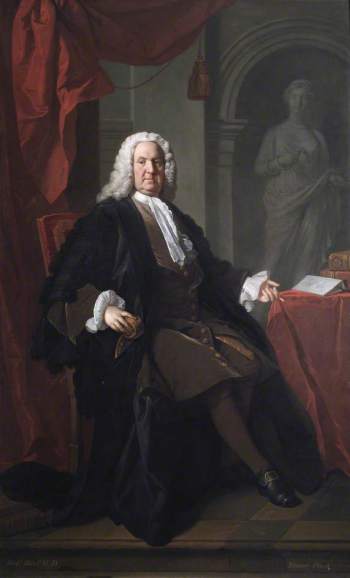
Allan Ramsay, Dr Richard Mead, 1747
(London: The Foundling Museum)
Dr Richard Mead (1673–1754) was one of the most eminent physicians, patrons, collectors, and philanthropists of his day, as well as a significant figure in the early history of the Foundling Hospital. A leading expert on poisons, scurvy, smallpox, and public health, Mead counted among his patients Queen Anne, King George II, Sir Isaac Newton, and the painter Antoine Watteau. A man of action, Mead explored poisons by drinking snake venom and is said to have defended his theory on smallpox treatment to the point of fighting a duel.
His home on Great Ormond Street backed onto the Foundling Hospital grounds and housed a magnificent collection of paintings, sculptures, antiquities, coins, and a library of over 10,000 volumes. Painters and scholars were given access to Mead’s renowned collection, which in a time before public galleries offered visitors a rare chance to view masterpieces from around the world. Examining its significance in London’s cultural landscape, this exhibition reunites key objects from his life and collection, such as the ancient bronze Arundel Head (2nd century BC) and Allan Ramsay’s half-length portrait of Mead.
Exploring Mead ‘in the round’, as a collector, philanthropist and physician, this exhibition will bring to light the Foundling Hospital’s relationship with a truly remarkable individual who, according to his contemporary the writer Samuel Johnson, “lived more in the broad sunshine of life than almost any man.”
The Generous Georgian: Dr Richard Mead is supported by the Wellcome Trust, the City of London Corporation and Verita.
◊ ◊ ◊ ◊ ◊
Conference programme from The Foundling:
Dr Richard Mead: Physician, Philanthropist, Collector
The Foundling Museum, London, 20 October 2014
To accompany the Museum’s autumn exhibition, The Generous Georgian: Dr Richard Mead, this one-day interdisciplinary conference considers the life, work, and collections of Mead. Adults £20, Concessions £15. To book, download a booking form or book online (subject to an 8% booking fee). Please send completed booking forms to: Stephanie Chapman, 40 Brunswick Square, London, WC1N 1AZ. For enquiries please contact exhibitions@foundlingmuseum.org.uk.
P R O G R A M M E
8:30 Optional early morning tour of the Royal College of Physicians (11 St Andrews Place, Regent’s Park) with curator Emma Shepley, addressing Richard Mead and his role in the institution.
9:15 Travel to the Foundling Museum. You will need to make your own way by public transport from RCP to the Foundling Museum, but staff will be able to recommend routes. The journey time is approximately 30 minutes.
9:30 Coffee and registration
10:00 Welcome
10:15 Ludmilla Jordanova, ‘The Problem of Richard Mead’
11:00 Break
11:30 Karen Howell, ‘The Curious Prescriptions of Dr Mead’
12:00 Janette Bright, ‘Dr Mead and the Curious Herbal’
12:30 Kevin Brown, ‘Richard Mead, George Anson’s Circumnavigation of the Globe, and the Health of the Seaman’
13:00 Lunch
14:00 Stephanie Chapman, ‘Richard Mead and the Foundling Hospital’
14:30 Tour of the exhibition, The Generous Georgian: Dr Richard Mead
15:00 Charles Avery, ‘The Large Brass Medallions Cast by Soldani, Selvi, and Pozzi in the Musaeum Meadianum’
15:30 Craig Hanson, ‘Debating Dissent in Leiden’
16:00 Refreshments
Exhibition | In Miniature
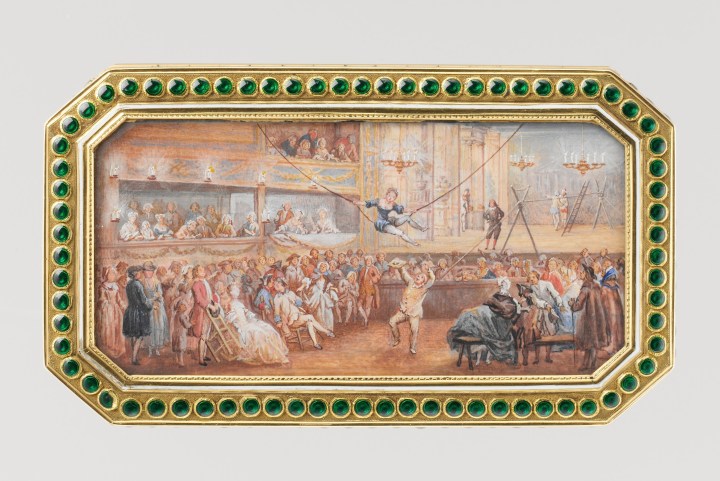
Joseph Étienne Blerzy, Snuffbox with theatrical scenes of a rope dancer and a puppet show by by Louis Nicolas van Blarenberghe and Henri Joseph van Blarenberghe, 1778–79 (New York: The Metropolitan Museum of Art. Gift of J. Pierpont Morgan, 1917; 17.190.1130). A high resolution image is available here»
◊ ◊ ◊ ◊ ◊
Now on at The Met (as noted at Bendor Grosvenor’s Art History News). . .
In Miniature
The Metropolitan Museum of Art, New York, 29 August 29 — 31 December 2014
This exhibition will comprise two groups of portrait miniatures: British, from the sixteenth and early seventeenth centuries, and French, from the revolutionary period to the Empire. Also included are several eighteenth-century French gold boxes decorated with narratives or scenes in grisaille. All are from the Museum’s permanent collection and, because of their sensitivity to light, are infrequently exhibited. Six larger paintings will be exhibited in order to consider what they may share with the miniatures and to show how they differ. Gallery 624.
◊ ◊ ◊ ◊ ◊
In conjunction with the exhibition, The Met has a Pinterest Board dedicated to “Met Miniatures”. There are lots of things there not included in the exhibition (nor particularly relevant to the exhibition), but notes indicate items that are part of the display. Serving basically as an illustrated checklist with links to the full online catalogue entries, it seems like a fairly obvious use of Pinterest by museums. –CH
Exhibition | Constable: The Making of a Master

◊ ◊ ◊ ◊ ◊
Press release for the upcoming exhibition:
Constable: The Making of a Master
Victoria & Albert Museum, London, 20 September 2014 — 11 January 2015
Curated by Mark Evans
“We see nothing till we truly understand it.” Constable, 1821
The V&A’s major autumn exhibition will re-examine the work of John Constable (1776–1837), Britain’s best-loved artist. It will explore his sources, techniques and legacy and reveal the hidden stories behind the creation of some of his most well-known paintings. Constable: The Making of a Master will juxtapose Constable’s work for the first time with the art of 17th-century masters of classical landscape such as Ruisdael, Rubens and Claude, whose compositional ideas and formal values Constable revered. On display will be such celebrated works as The Hay Wain (1821), The Cornfield (1826) and Salisbury Cathedral from the Meadows (1831), together with oil sketches Constable painted outdoors directly from nature, which are unequalled at capturing transient effects of light and atmosphere. The exhibition will bring together over 150 works of art including oil sketches, drawings, watercolours and engravings.
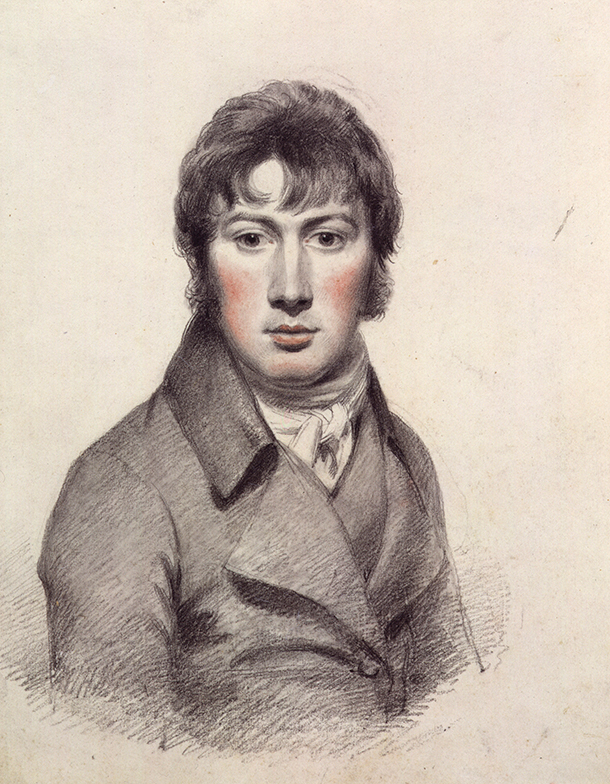
John Constable, Self-Portrait, ca. 1799-1804, pencil and black chalk heightened with white and red chalk (London: National Portrait Gallery)
Martin Roth, V&A Director, said: “The V&A has been one of the leading centres for Constable research since the 19th century, following a significant gift of paintings, oil sketches and drawings from Constable’s daughter Isabel in 1888. This exhibition refreshes our understanding of his work and creative influence. It shows that Constable’s art, so well-loved and familiar to many of us, still delivers surprises.”
Born in East Bergholt, Suffolk on 11 June 1776, John Constable was the second son of a gentleman farmer and mill owner. Whilst working in the family business he became intimately familiar with the countryside around the River Stour and sketched observations of nature and the scenery and motifs of the Suffolk countryside. Given permission by his father to pursue art, he travelled to London in 1799 where he studied at the Royal Academy of Arts. He was schooled in the old masters, meticulously copying their work and reflecting on their compositions in his individual style. On display will be paintings including Moonlight Landscape (1635–1640) by Rubens and Landscape with a Pool (1746–47) by Gainsborough, which inspired Constable’s early practice.
Constable made a number of close copies of the old masters which he referred to as a “facsimile…a more lasting remembrance.” Paintings including Claude’s Landscape with a Goatherd and Goats (c.1636–37) and Ruisdael’s Windmills near Haarlem (c.1650–52), as well as etchings and drawings by Herman van Swanevelt and Alexander Cozens, will be displayed alongside Constable’s own direct copies, many of which will be brought together for the first time since they were produced almost 200 years ago. Constable also owned an extensive art collection that included 5000 etchings principally by 17th-century Dutch, Flemish, and French landscape painters, which became a vital resource for his own image making.
Outdoor sketching was central to Constable’s working method. The 1810s saw the beginning of a series of expressive oil sketches and drawings in the open air, capturing the changes of weather and light in his native countryside. His naturalistic representation of the landscape and use of broad brushstrokes and impasto technique challenged conventions and brought the genre of outdoor oil sketching to a new level of refinement. Examples of his cloud studies, including sketches of Hampstead Heath and Brighton Beach will demonstrate Constable’s innovative and poetic evocations of land, sea and sky.
The exhibition will also investigate Constable’s methods for transferring the freshness of his sketches into his exhibition paintings. From 1818–19 Constable produced full-scale oil sketches to resolve the compositions, colours, and light values of his ‘six-footers’ such as The Hay Wain (1821) and The Leaping Horse (1825) which are amongst the best-known images in British art.
In the last decade of his life Constable and the engraver David Lucas collaborated on a series of mezzotints after the artist’s paintings. The final section of the exhibition will present a major group of these prints together with the exemplary original oil sketches on which they were based. Through these prints Constable sought to secure his artistic legacy and ensure the continued study of his groundbreaking paintings, which remain hugely influential to the present day.
◊ ◊ ◊ ◊ ◊
Constable: The Making of a Master Study Day
Victoria & Albert Museum, London, 4 October 2014
This study day will bring together scholars from a range of disciplines to explore the man, the artist, his ambitions, interests and techniques. Speakers will include Mark Evans, Annie Lyles, Sarah Cove, John Thornes, and Jonathan Clarkson. Saturday, 4 October, 10.30–17.15, Seminar Room Three. £45, £35 concessions, £15 students.
◊ ◊ ◊ ◊ ◊
Mark Evans, with Susan Owens and Stephen Calloway, John Constable: The Making of a Master (London: V&A Publishing, 2014), 192 pages, ISBN: 978-1851778003, £30.
 The remarkable naturalism of John Constable’s paintings has always been acknowledged, and his ‘vivid and timeless’ (as he called them) oil sketches have been celebrated since the 1890s as precursors of Impressionism, modernism and photographic composition. He remains a powerful influence on contemporary artists, and was famously Lucian Freud’s favourite painter. He was also hailed in 1866 as the first painter whose ‘art is purely and thoroughly English’, and his studio oil paintings have helped to define our idea of the English countryside. Published to accompany a major V&A exhibition, this book evaluates these aspects of Constable’s work, placing the artist’s naturalism and studio work in the context of his wider practice—in particular his talent for copying, and extensive print collection. A companion volume to John Constable: Oil Sketches from the Victoria and Albert Museum (V&A Publishing, 2011), this book shows how the artist’s reverence for the Old Masters is not incompatible with his revolutionary handling of paint: where others competed with the Masters, Constable assimilated their ideas and values to imbue his own naturalistic vision with dynamism..
Mark Evans is senior curator of Paintings at the V&A.
◊ ◊ ◊ ◊ ◊
Map: Constable’s England
 In conjunction with the exhibition, the V&A has created a Pinterest map to help visitors explore Constable’s England. As is usually the case with Pinterest, there are drawbacks, but I found the map useful for visualizing big points and connecting pictures to places. Given how technologically easy it is to produce this sort of page, it could work well as a teaching assignment. It also provides an excuse for me to remind readers that Enfilade maintains a handful of Pinterest boards, too. –CH
Exhibition | Of Heaven and Earth: 500 Years of Italian Painting

Andrea Casali, Triumph of Galatea, ca. 1740–65, oil on canvas,
28 x 34 inches, 71.5 x 87.2 cm (Glasgow Museums Collection)
◊ ◊ ◊ ◊ ◊
Nearing the end of its run in Allentown and opening soon in Milwaukee:
Of Heaven and Earth: 500 Years of Italian Painting from Glasgow Museums
Oklahoma City Museum of Art, 24 August — 17 November 2013
Art Gallery of Alberta, Edmonton, 14 December 2013 — 9 March 2014
Allentown Art Museum of the Lehigh Valley, Allentown, Pennsylvania, 8 June — 7 September 2014
Milwaukee Art Museum, 2 October 2014 — 4 January 2015
Santa Barbara Museum of Art, 6 February — 3 May 2015
Curated by Peter Humfrey
Starting in October, the Milwaukee Art Museum welcomes some of the biggest names in European art in its fall exhibition Of Heaven and Earth: 500 Years of Italian Painting from Glasgow Museums, organized by the American Federation of Arts and Glasgow Museums. Displayed in five chronological sections, Of Heaven and Earth will include paintings originating from the principal artistic centers of Italy—Rome, Milan, Bologna, Florence, Siena, Naples, and Venice—and will present the works of artists such as Giovanni Bellini, Sandro Botticelli, Domenichino, Francesco Guardi, Salvator Rosa, and Titian alongside those of lesser-known masters.
“With works by some of the most significant European masters like Giovanni Bellini, Sandro Botticelli, and Titian, Of Heaven and Earth: 500 Years of Italian Painting from Glasgow Museums will examine the thematic and stylistic developments in Italian art—from the religious paintings of the late Middle Ages and Renaissance to the secular neoclassical and genre paintings of the nineteenth century,” said Daniel Keegan, director of the Milwaukee Art Museum. “The remarkable regional and historical breadth of the exhibition will also showcase the outstanding quality of Glasgow Museums’ collection.”
“This sumptuous exhibition presents the works of famous artists that even some art historians wait a lifetime to see,” said Tanya Paul, the Isabel and Alfred Bader Curator of European Art at the Milwaukee Art Museum. “Most of the paintings have never traveled to America before, and many have been conserved specifically for this presentation.”
Of Heaven and Earth: 500 Years of Italian Painting from Glasgow Museums is organized by the American Federation of Arts and Glasgow Museums and is supported by an indemnity from the Federal Council on the Arts and Humanities. The exhibition tour is generously supported by the JFM Foundation and the Donald and Maria Cox Charitable Fund. In-kind support is provided by Barbara and Richard S. Lane and Christie’s.
◊ ◊ ◊ ◊ ◊
Peter Humfrey, Of Heaven and Earth: 500 Years of Italian Painting from Glasgow Museums (Glasgow, 2013), 192 pages, ISBN: 978-1908638021, £16.
 This catalogue looks at 41 of the key works from the Glasgow Museums’ collection of Italian Art, with insightful commentary on each piece. Also included are short introductions to the art history of the periods during which the works were made. Glasgow Museums owns one of the finest collections of Italian art in Northern Europe. Its richness derives from the great industrial and mercantile wealth that Glasgow enjoyed in the nineteenth century as the Second City of the British Empire and the fourth richest city in Europe, as well as from the generosity and civic pride of her citizens. The collection is remarkable for both the quality and interest of individual works and for its chronological range.
An internationally renowned specialist in Italian art history, Peter Humfrey teaches at the University of St. Andrews.
Exhibition | The Spanish Gesture: Drawings from Murillo to Goya

Francisco de Goya y Lucientes, Two Groups of Picadors Overrun Consecutively by a Single Bull, 1814–16. Red chalk and red-ink wash on laid paper
(Hamburger Kunsthalle, Kupferstichkabinett 38541; photo by Christoph Irrgang)
◊ ◊ ◊ ◊ ◊
From the Meadows Museum:
The Spanish Gesture: Drawings from Murillo to Goya in the Hamburger Kunsthalle
Dibujos españoles en la Hamburger Kunsthalle: Cano, Murillo y Goya
Meadows Museum, Dallas, 25 May — 31 August 2014
Museo Nacional del Prado, Madrid, 30 October 2014 — 8 February 2015
Curated by Jens Hoffmann-Samland
The Kupferstichkabinett (collection of prints and drawings) at the Kunsthalle of Hamburg holds, alongside Florence, Paris and London, one of the most significant collections of Spanish drawings to be found outside of Spain. This is perhaps surprising at first, given that the Hanseatic city of Hamburg has historically not been a stronghold of Catholicism. Indeed, the reason for this lies in a single, rather chance purchase by the first director of the Kunsthalle, Alfred Lichtwark (1852–1914); the motivation for this acquisition was as spontaneous as it was personal.

Francisco de Goya y Lucientes, Prince Balthasar Carlos as Hunter (after Velázquez), 1778–79. Red crayon over preliminary drawing in pencil. (Hamburger Kunsthalle, Kupferstichkabinett 38540; photo by Christoph Irrgang)
In 1891, the London art and antiques dealer Bernard Quaritch (1819–1899) offered for sale a mixed lot of Spanish and Italian drawings to the Berlin Museum. There, however, the budget had already been depleted by the purchase of a different collection. Lichtwark viewed the drawings in Berlin and, since they “pleased him greatly,” he immediately and successfully went about securing the necessary £180, thus acquiring them for Hamburg.
A few years later, however, the quality of the extraordinary collection, which today comprises over 200 drawings, had already faded from memory. When August L. Mayer (1885–1944) inquired as to whether there were any Spanish drawings in the Hamburg collection that he could include in his planned publication of 150 drawings by Spanish masters to be published by The Hispanic Society of America in 1915, he was told that “it contains almost nothing of significance.” As a result, the drawings went unheeded for a considerable length of time. There followed—at intervals of about thirty-five to forty years—a small in-house exhibition in 1931, a slightly larger exhibition in 1966 with additional items from the Museo Nacional del Prado and the Biblioteca Nacional in Madrid, and another smaller presentation in 2005 comprising forty-five works of art. To be certain, some important and, by now, famous works from the Hamburg collection have often traveled to different venues. The Spanish Gesture: Drawings from Murillo to Goya in the Kunsthalle, Hamburg is the first exhibition to present this exquisite collection on a larger scale, 123 years after it was first bought by the Kunsthalle of Hamburg.
A great part of the core of today’s Hamburg collection was assembled by Bartolomé Esteban Murillo (1617-1682) and was produced in and around the Academia de Murillo he established in Seville in 1660 with Francisco Herrera the Younger (1622-1685), Juan de Valdés Leal (1622–1690), Cornelis Schut (1629–1685) and others. Highlights from this period include Murillo’s Assumption of the Virgin (c. 1665); a pen-and-ink drawing, Nobleman in a Landscape (c. 1660), attributed to Herrera the Younger; Head of St. John the Baptist (1654–55) by Valdés Leal; and Alonso Cano’s (1601–1667) Sketch for the Altar of St. Catherine. The Hamburg Kupferstichkabinett holds the largest group of half-length holy figures, understood to represent the twelve apostles, by Francisco Herrera the Elder (c. 1590–1656), created around 1640–50, and this exhibition will display all twelve works together for the first time.
Representing the later end of the collection is a number of drawings by Francisco Goya (1746–1828). Together with his Tauromaquia prints and drawings from Goya’s “Album B,” the collection holds the majority of Goya’s drawings after Diego Velázquez (1599–1660) that he subsequently used (or intended to use) for his etchings. Among these are the two Greek literary figures Aesop and Moenippus. The collection also comprises full-length portraits of members of the royal family, dwarves and court jesters, Los Borrachos, Las Meninas, and one of Velázquez’s most important early works that leads us back to Seville, the Waterseller of Seville.
As part of the continued collaboration between the Meadows Museum and the Museo Nacional del Prado, the exhibition has been researched by Dr. Jens Hoffmann-Samland, an independent art historian. Approximately eighty drawings from the Kunsthalle of Hamburg will be on view in Dallas, and will be published in the accompanying catalogue, which is being collaboratively published by the Meadows Museum, the Museo Nacional del Prado, the Kunsthalle of Hamburg, and the Centro de Estudios Europa Hispánica (CEEH). The exhibition will travel to Madrid for display at the Museo Nacional del Prado October 2014–February 2015.
This exhibition has been organized by the Meadows Museum, SMU; the Museo Nacional del Prado; the Hamburger Kunsthalle; Centro de Estudios Europa Hispánica; Center for Spain in America; and is funded by a generous gift from The Meadows Foundation. Promotional support provided by The Dallas Morning News.
◊ ◊ ◊ ◊ ◊
◊ ◊ ◊ ◊ ◊
From the Centro de Estudios Europa Hispánica:
Jens Hoffmann-Samland, et al, The Spanish Gesture: Drawings from Murillo to Goya in the Hamburger Kunsthalle (Dallas: Meadows Museum, 2014), 294 pages, ISBN: 978-0692207864.
 Este catálogo publica por primera vez toda la colección de dibujos españoles de la Hamburger Kunsthalle. Algunas de sus obras eran ya conocidas por su singular importancia, habiéndose expuesto en varias ocasiones; faltaba un estudio completo del conjunto, su historia y los problemas atributivos que suscita. El fondo de este museo alemán contiene obras de los más destacados maestros españoles de los siglos XVI al XVIII, desde Juan de Juanes hasta Francisco de Goya pasando por los máximos representantes del Siglo de Oro, entre ellos Carducho, Francisco de Herrera el Viejo, Alonso Cano, Antonio del Castillo o Murillo.
La versión inglesa del libro acompaña la exposición de una selección de piezas en el Meadows Museum de Dallas (mayo–agosto 2014); la versión española corresponde a la segunda sede de esta muestra en el Museo Nacional del Prado (septiembre 2014–enero 2015).
Su autor principal, Jens Hoffmann-Samland, es historiador del arte independiente especializado en el arte español del Siglo de Oro.










leave a comment