Exhibition: Collective Creativity in 18th-Century Japanese Painting
From The Princeton University Art Museum:
Multiple Hands: Collective Creativity in Eighteenth-Century Japanese Painting
Princeton University Art Museum, 8 October 2011 — 22 January 2012
Curated by Xiaojin Wu
The study of individual artists has dominated modern art history, to the neglect of the collective creativity that contributed to countless important works of art. In Japan, as in many other cultures, collective creativity played—and still plays—a significant role in art-making. The exhibition Multiple Hands: Collective Creativity in Eighteenth-Century Japanese Painting, through a selection of paintings from the Princeton University Art Museum, the Metropolitan Museum of Art, the Philadelphia Museum of Art, and a private collection, provides a thoughtful consideration of the collective art-making process by focusing on two kinds of collective painting practices—workshop and collaborative— in eighteenth-century Japan.

Kano Tsunenobu, "Four Accomplishments," ca. 1700. Hanging silk scroll, 224.8 x 190.5 cm.
Interrelated but not identical, both practices involved multiple artists in the production of single works. In a workshop system, the head of the studio designed the composition of a painting, often a large-format work, and his assistants executed the details and applied colors. Only the master’s name was signed, however, making the presence of multiple hands in the paintings’ creation sometimes difficult to discern. Representative of the Kano school workshop—a prodigious hereditary apprentice system organized by generations of the Kano family from the sixteenth to the nineteenth century—is a pair
of large hanging scrolls, Four Accomplishments.

Kano Tsunenobu, "Four Accomplishments," ca. 1700. Hanging silk scroll, 224.8 x 190.5 cm.
Signed by the head of the workshop, Kano Tsunenobu (1636–1713), the two paintings exhibit the brushwork styles of more than one artist, particularly evident in the background. This signals the involvement of multiple workshop members in producing Four Accomplishments. Another important feature of the Kano workshop operation is the use of style manuals: workshop assistants had limited access to original paintings, so copies made by the head of the workshop served as style manuals that the assistants studied and relied on in collectively producing one work. Consequently, certain
motifs in a similar style are used repeatedly in different works, as
demonstrated by a painting of a long-tailed bird by Kano Tsunenobu
and a similar passage in his Four Accomplishments. (more…)
Exhibition: Daniel Sarrabat
From the Centre des monuments nationaux website:
Daniel Sarrabat (1666-1743) l’éclat retrouvé
Monastère royal de Brou, Bourg-en-Bresse (near Lyon), 15 October 2011 — 29 January 2012
Curated by François Marandet
 Cette exposition révèle l’art d’un des plus grands peintre d’histoire à Lyon et dans sa région, pendant la première moitié du XVIIIe siècle : Daniel Sarrabat (1666-1743). Alors que le style rocaille triomphe en France, il poursuit l’idéal artistique de Nicolas Poussin, et montre combien la peinture d’histoire s’est maintenue à Lyon et dans sa région depuis la disparition de Jacques Stella (1596-1657) et Thomas Blanchet (1614-1689).
Cette toute première rétrospective rassemble près de 50 œuvres de l’artiste, dont 36 tableaux. Sont présentées des réalisations inédites aux cotés d’œuvres de collections privées, notamment le décor mythique de l’Hôtel de Sénozan, à Lyon, complété par un groupe de tableaux provenant du patrimoine religieux de la région, avec le cycle illustrant l’histoire de Marie-Madeleine de l’église de Thoissey. Le parcours de l’exposition restitue les étapes successives de la carrière de Daniel Sarrabat : l’époque de son apprentissage à Paris, le séjour à
Rome (1685-1694), son implantation à Lyon en 1695, jusqu’à sa consécration
(1716-1732).
Additional information is available from the exhibition brochure (PDF).
◊ ◊ ◊ ◊ ◊
Catalogue: François Marandet, Daniel Sarrabat, 1666-1748 (Saint-Étienne: I.A.C. Éditions d’Art, 2011), 128 pages, ISBN: 9782916373478, $42.50. [Available from Artbooks.com]
Exhibition: Mexican Miracle Paintings at the Wellcome
From the Wellcome Collection:
Infinitas Gracias: Mexican Miracle Paintings
Wellcome Collection, London, 6 October 2011 — 26 February 2012
Mexican votives are small paintings, usually executed on tin roof tiles or small plaques, depicting the moment of personal humility when an individual asks a saint for help and is delivered from disaster and sometimes death. Infinitas Gracias will feature over 100 votive paintings drawn from five collections held by museums in and around Mexico City and two sanctuaries located in mining communities in the Bajío region to the north: the city of Guanajuato and the distant mountain town of Real de Catorce. Together with images, news reports, photographs, devotional artefacts, film and interviews, the exhibition will illustrate the depth of the votive tradition in Mexico.
Usually commissioned from local artists by the petitioner, votive paintings tell immediate and intensely personal stories, from domestic dramas to revolutionary violence, through which a markedly human history of communities and their culture can be read. The votives displayed in Infinitas Gracias date from the 18th century to the present day. Over this period, thousands of small paintings came to line the walls of Mexican churches as gestures of thanksgiving, replacing powerful doctrine-driven images of the saints with personal and direct pleas for help. The votives are intimate records of the tumultuous dramas of everyday life – lightning strikes, gunfights, motor accidents, ill-health and false imprisonment – in which saintly intervention was believed to have led to survival and reprieve.
Infinitas Gracias will explore the reaction of individuals at the moment of crisis in which their strength of faith comes into play. The profound influence of these vernacular paintings, and the artists and individuals who painted them, can be seen in the work of such figures as Diego Rivera and Frida Kahlo, who were avid collectors. The contemporary legacy of the votive ritual will be present in the exhibition through a wall covered with modern-day offerings from one church in Guanajuato: a paper shower of letters, certificates, photographs, clothing and flowers, through which the tradition of votive offering continues today. The sanctuaries at Guanajuato and Real de Catorce remain centres of annual pilgrimage, attracting thousands of people to thank and celebrate their chosen saints.
Exhibition: Masterworks from the Speed Art Museum in Tulsa
Press release from the Philbrook:
Magnificent Vision: Two Centuries of European Masterworks from the Speed Art Museum
Philbrook Museum of Art, Tulsa, 9 October 2011 — 8 January 2012
Flint Institute of Arts, Flint, Michigan, 5 May — 19 August 2012

Adélaïde Labille-Guiard, “Portrait of Madame Adélaïde,” ca. 1787, oil on canvas (Louisville: Speed Art Museum)
After two exhibitions focusing primarily on work from 20th-century America, Tulsa’s Philbrook Museum of Art is preparing for a dramatic shift in both time and setting. For the Museum’s final and biggest show of the year, the Museum is taking a look back at Europe in the 17th and 18th centuries. Magnificent Vision: Two Centuries of European Masterworks from the Speed Art Museum features more than 70 major works by the likes of Rembrandt, Rubens, Tiepolo, and Gainsborough.
The works in the exhibition are entirely drawn from the permanent collection of the Speed Art Museum in Louisville, KY, one of this country’s premier regional art museums. Forming the backdrop to this exhibition, which is organized thematically, is a two-hundred-year period in which European art underwent a dramatic and radical transformation. During the 1600s, particularly in the Netherlands, a newly affluent populace with a desire to improve their standing in society helped to generate a tremendous demand for artwork, and the market for paintings boomed. In the 1700s, as the artistic profession became institutionalized, the mood shifted and the abundance and variety of the earlier period was replaced. As significant taste-making institutions like the Academie des Beaux-Arts in Paris gained new power, demand for paintings remained high but became more focused.
“It is a group of paintings that not only dovetails beautifully with Philbrook’s own collection, but it also elegantly reflects one of the most extraordinary and inspiring periods in European art; it was truly a Golden Age,” says Dr. Tanya Paul, Philbrook’s Ruth G. Hardman Curator of European Art.
Exhibition: Satire and Religion
From The Walpole Library:
Sacred Satire: Lampooning Religious Belief in Eighteenth-Century Britain
The Lewis Walpole Library, Farmington, Connecticut, 22 September 2011 — 2 March 2012
Curated by Misty Anderson and Cynthia Roman
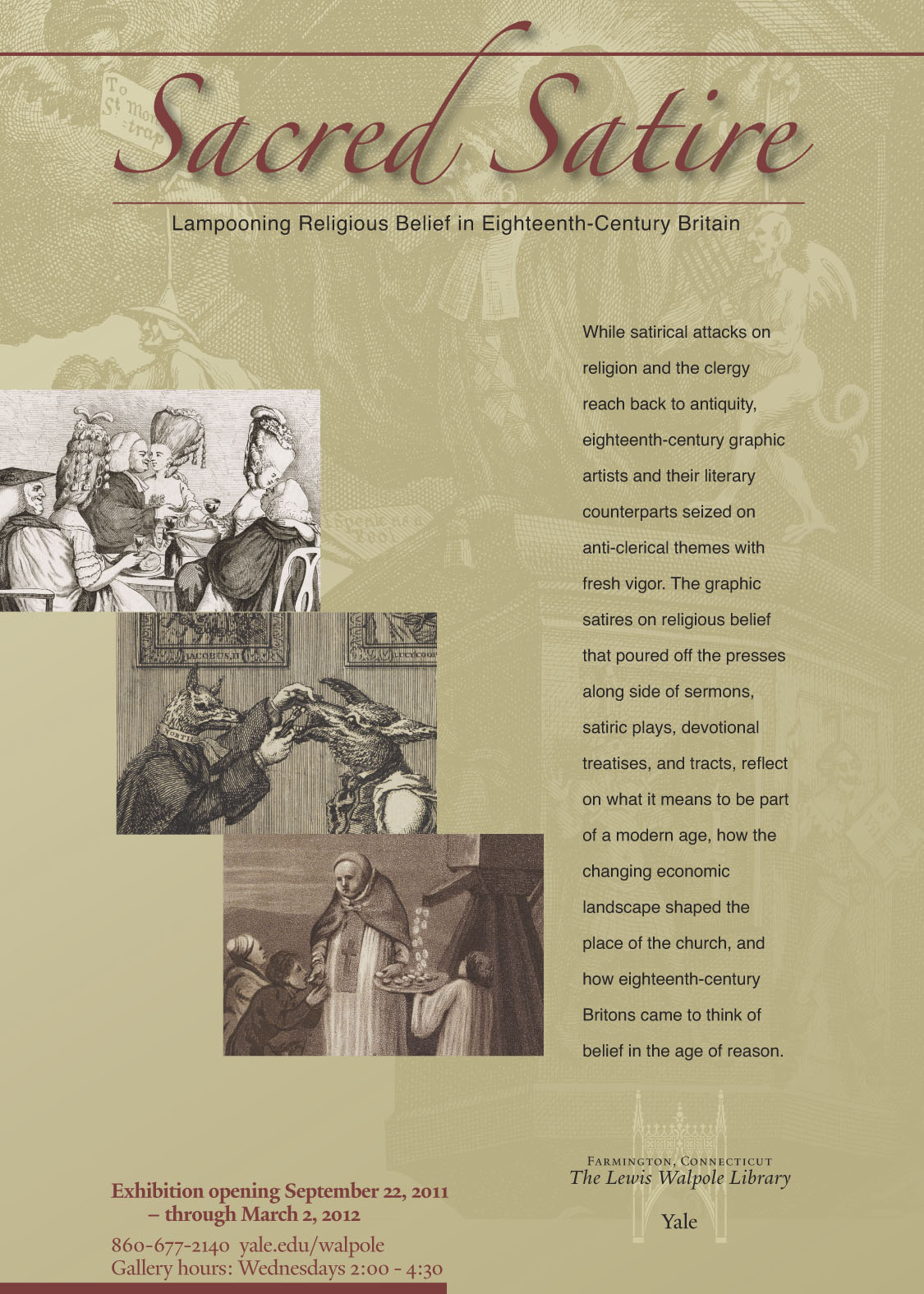 Religious beliefs and practices provided ample subject matter for the irreverent printmakers producing graphic satire in eighteenth-century Britain. While clerical satire is an ancient mode, eighteenth-century British artists seized on it with fresh vigor. Satirists appropriated centuries-old themes like corruption, hypocrisy, and greed, but updated them with contemporary concerns about the role of religion in the age of enlightenments. The visual rhetoric of these prints illustrates some of the ways in which eighteenth-century Britons were renegotiating their relationship to religious practice and belief.
The prints in this exhibition reflect a tension between a vision of religion as part of traditional life and the emergence of modern Christianity as a collection of new movements, practices, and ideas about belief. The eighteenth-century images on display preserve for us a moment in an ongoing conversation about the relationship of religion, representation, and modernity.
Stormy Skies, Calm Waters: Vernet’s Lansdowne Landscapes
Press release (18 October 2011) from the Dallas Museum of Art (as noted at ArtDaily):
Vernet Pendants from Lansdowne House Reunited in Dallas
Dallas Museum of Art, 18 October — 11 December 2011

Claude-Joseph Vernet, "A Mountain Landscape with an Approaching Storm," 1775 (Dallas Museum of Art)
Two landscape paintings by eighteenth-century French master Claude-Joseph Vernet have been reunited for the first time in more than 200 years at the Dallas Museum of Art. Commissioned in 1774 at the height of Vernet’s career by famous English collector Lord Lansdowne, the two large-scale paintings depict the complementary scenes of unruly rustic landscape and tranquil seaport. The duo, A Mountain Landscape with an Approaching Storm and A Grand View of the Sea Shore, hung together in the collector’s home, Lansdowne House, Berkeley Square, London, until his death, when the paintings were sold to separate private collections in 1806.

Claude-Joseph Vernet, "A Grand View of the Sea Shore Enriched with Buildings Shipping and Figures" 1775
On view through December 11, 2011, the Dallas presentation is the first opportunity, since the Museum acquired A Mountain Landscape several decades ago, to bring the two paintings together to be viewed as Vernet originally intended. The exhibition will be accompanied by a new monograph published by the Dallas Museum of Art examining Vernet’s landscape practice.
The Dallas Museum of Art is presenting the paintings in its second-floor European art galleries, where they can be viewed in dialogue with other eighteenth-century masterworks. The landscapes, which are unusually large for the genre, measuring five by eight feet each, reflect both the collector’s neoclassical taste as well as Vernet’s powerful use of light and atmosphere. A Grand View of the Sea Shore depicts elegant buildings set against a tranquil sea at sunset, while A Mountain Landscape portrays an ominous rocky terrain with villagers scrambling to weather an impending storm.
ISBN: 9780936227009, $20
The presentation of the Vernet paintings is made possible by the generous loan of A Grand View of the Sea Shore by collector David H. Koch. The landscape paintings will remain on view at the Dallas Museum of Art through December 11, 2011.
“The temporary reunion of the pair not only presents a singular opportunity for our audiences to experience anew a beloved painting in our collection, but allows for a new scholarly consideration of Vernet’s oeuvre,” said Olivier Meslay, Interim Director of the DMA and its Senior Curator of European and American Art and The Barbara Thomas Lemmon Curator of European Art. “Vernet’s precision in and exploitation of pairings has been highly influential to European art, and we are delighted to be able to display these
magnificent works together.”
“The Museum has sought to reunite these two landscape works since the realization, in January 2011, that A Grand View of the Sea Shore was not lost as presumed, and after such a lengthy separation the reunion is extraordinarily vivid, both historically and visually,” said Dr. Heather MacDonald, The Lillian and James H. Clark Associate Curator of European Art at the DMA. “In bringing the pair back together, we are finally able to fully experience the contrasting natural effects and the complex dialogue of aesthetics and ideas created by the two scenes. Their full meaning is finally revealed.”
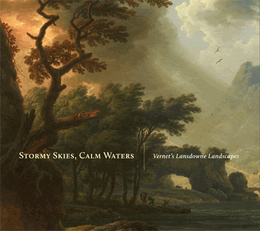
A monograph, the first English book-length publication on Vernet’s work in thirty years, will be published in conjunction with the reunification of the pair at the DMA. The fifty-page illustrated catalogue, Stormy Skies, Calm Waters: Vernet’s Lansdowne Landscapes, with an introduction by Olivier Meslay and scholarly essay by Heather MacDonald, provides a reappraisal of the Lansdowne commission and examines the meaning of the pairing and the role of pendant canvases within Vernet’s practice as a whole.
◊ ◊ ◊ ◊ ◊
Heather MacDonald, Stormy Skies, Calm Waters: Vernet’s Lansdowne Landscapes (Dallas: Dallas Museum of Art, 2011), 48 pages, ISBN: 9780936227009, $20.
Exhibition: The Occult as Inspiration
From the exhibition website:
Europe and the Spirit World or the Fascination with the Occult, 1750-1950
Musée d’Art Moderne et Contemporain, Strasbourg, 8 October 2011 — 12 February 2012

ISBN : 9782351250921, 48€
Europe and the Spirit World or the Fascination with the Occult, 1750-1950 is a cross-disciplinary exhibition exploring the influence of the occult on artists, thinkers, writers and scholars throughout Europe, at decisive moments in the history of the modern world. The exhibition is organized into three sections:
- The creative arts: painting, drawing, sculpture, print-making and photography, the literature of the irrational and unexplained.
- The esoteric tradition revisited, with an extensive chronological survey encompassing the movement’s foundational texts and print iconography.
- The relationship between occult phenomena and the scientific world, through key scholarly figures and thinkers, and an examination of their experiments and scientific instruments.
With some 500 works of art, 150 scientific artefacts, 150 books and 100 documents from a host of European countries, Europe and the Spirit World will be presented in a dedicated 2500-m² space at the the Museum
of Modern and Contemporary Art of Strasbourg.
◊ ◊ ◊ ◊ ◊
Exhibition catalogue: L’Europe des esprits ou la fascination de l’occulte, 1750-1950 (Éditions des Musées de la Ville de Strasbourg, 2011), 450 pages, ISBN: 9782351250921, 48€.
Exhibition: Monkeys and Dragons at Chantilly
The following press release comes from the Musée Conde. -HB
Singes et Dragons: La Chine et le Japon à Chantilly au XVIIIe Siècle
Musée Conde, Château de Chantilly, 14 September 2011 — 1 January 2012
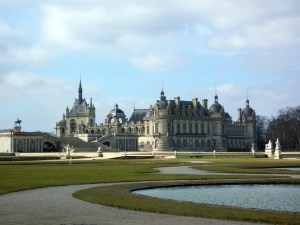
Pour la rentrée de septembre 2011, le musée Condé propose une exposition qui s’inscrit dans la thématique du « voyage » qui sera développée jusqu’à la fin 2011 par le Domaine de Chantilly. En effet, les visiteurs sont invités à remonter le temps, au XVIIIe siècle, quand artistes et artisans réalisaient des œuvres peintes ou d’art décoratif sur commande, afin de combler un goût immodéré pour les décors asiatiques où singes et dragons se mêlaient parfois avec délicatesse aux animaux familiers de nos campagnes.
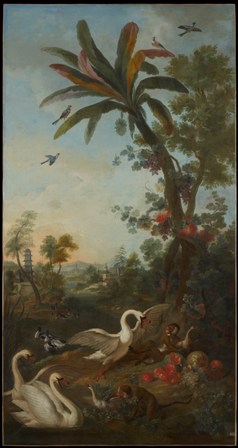 En ce début du XVIIIe siècle, alors que la France se passionne pour l’exotisme, le duc de Bourbon, prince de Condé (1692-1740), collectionne pour son Château de Chantilly les porcelaines, les indiennes – tissus peints ou imprimés fabriqués en Asie entre le XVIIe siècle et le XIXe siècle – et les meubles en laque de Chine et du Japon. Il les fait copier par des artisans français et crée pour ce faire trois manufactures. En mécène entrepreneur passionné, il commande en 1735 au dessinateur Jean-Antoine Fraisse (1680-1739) un album de modèles, gravés en taille-douce, d’après ses collections. Les artisans au service du prince s’en inspirent, notamment pour les porcelaines de Chantilly ; et ce jusqu’en 1740 à la mort du Prince et au tournant de cet engouement pour l’exotisme. C’est à partir de cet ouvrage in-folio rarissime que Nicole Garnier, conservateur général du patrimoine chargée du musée Condé, a conçu son exposition de rentrée où sont présentés outre les deux exemplaires enluminés provenant des collections du Château de Chantilly et de la Bibliothèque nationale de France (Bnf), des gravures de Fraisse (dont deux de plus de trois mètres sont extraites de l’exemplaire enluminé), d’autres de Jean-Baptiste Guélard (1698-1767), des peintures de Christophe Huet (1700-1759) et des pièces d’art décoratif représentatives de cette époque où l’Extrême-Orient était de mise à la Cour et dans les plus belles demeures. . . .
The full press release is available here»
◊ ◊ ◊ ◊ ◊
Catalogue: Manuela Finaz de Villaine and Nicole Garnier-Pelle with assistance from Eléonore Follain, Singes et Dragons: La Chine et le Japon à Chantilly au XVIIIe siècle (Chantilly: Édité par la Fondation pour la Sauvegarde et le Développement du Domaine de Chantilly, 2011), 64 pages, ISBN: 9782953260335, 12€.
Small Exhibition at the V&A: Venetian Visions
From the V&A:
Venetian Visions: The Art of Canaletto, Tiepolo, Carlevarijs, and Their Contemporaries, 1700–1800
Victoria & Albert Museum, London, 7 October 2011 — 1 April 2012

Giambattista Tiepolo, "Apollo and Marsyas,"ca. 1725 (V&A)
The eighteenth century was possibly the last great period of Venetian art. It witnessed a wealth in artistic production from paintings, drawings and prints to porcelain, lace and glass. This display will draw from the V&A collections of prints, drawings, textiles, ceramics and glass to showcase Venetian arts during this age of stylistic splendour.
◊ ◊ ◊ ◊ ◊
Complementing our permanent collections, there are many free temporary displays around the V&A. They range in size from a single case to a room.
Exhibition: The Young Tiepolo, The Discovery of Light
Xavier Salomon reviews the exhibition in the October issue of The Burlington (pp. 698-99). From the Udine website:
Il giovane Tiepolo: la scoperta della luce
Civic Museum of Udine, Castello, Udine, 4 June — 4 December 2011
Curated by Giuseppe Pavanello and Vania Gransinigh
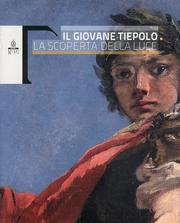
ISBN: 9788895752112
Che cosa caratterizza l’esordio di un giovane pittore di genio? Quali percorsi mentali e creativi presiedono alla formazione di un artista di talento? A questa e ad altre domande proverà a dare risposta la mostra che i Civici Musei di Udine inaugurano il 4 giugno 2011 all’interno della terza edizione delle Giornate del Tiepolo. L’esposizione, dal titolo Il giovane Tiepolo: la scoperta della luce, è rivolta proprio a ricostruire, attraverso le opere più significative, il periodo giovanile dell’attività di Tiepolo, prima del suo soggiorno udinese del 1726.
Se, nel corso del suo apprendistato presso la bottega del pittore accademico Gregorio Lazzarini, l’artista ebbe modo di confrontarsi con i modelli offerti dalla tradizione figurativa veneta del Cinquecento, egli si dimostrò particolarmente attento anche a quanto i suoi contemporanei andavano sperimentando, e alle nuove teorie sulla luce di ispirazione newtoniana. Le opere di Federico Bencovich e Giambattista Piazzetta rappresentarono per il giovane Tiepolo un punto di riferimento ugualmente importante che egli seppe assimilare in maniera originale, in sintonia con il suo essere “tutto spirito e foco,” attraverso un linguaggio pittorico costruito sull’interpretazione luminosa dell’immagine. Ed è proprio su questa peculiare visione tiepolesca della luce che l’esposizione udinese si focalizza, ripercorrendo il tracciato di un’attività che dalle tele dipinte per la chiesa veneziana dell’Ospedaletto si dipana, per il tramite delle decorazioni di Palazzo Sandi, fino al ciclo di affreschi realizzati a Udine nel Palazzo Patriarcale.
I dipinti in esposizione permettono così di documentare il passaggio da una pittura costruita nella luce, secondo precise fonti di illuminazione interne all’immagine, a una pittura costruita dalla luce, nella quale forme e volumi appaiono generati, come vetro soffiato, dall’interna energia luminosa della materia. In mostra sono presentate opere provenienti dai musei di Venezia, Milano, Torino e da alcune delle più prestigiose collezioni pubbliche e private internazionali.
Comitato scientifico: Svetlana Alpers, William L. Barcham, Linda Borean, Caterina Furlan, Peter O. Krückmann, Giuseppe Pavanello e Catherine Whistler.
◊ ◊ ◊ ◊ ◊
Catalogue: Giuseppe Pavanello and Vania Gransinigh, eds., Il Giovane Tiepolo. La Scoperta della Luce (Udine: Civici Musei e Gallerie di Storia e Arte di Udine, 2011), 207 pages, ISBN: 9788895752112, €45 / $87.50.










leave a comment