Engraving Watteau
Antoine Watteau et l’art de l’estampe / Antoine Watteau and the Art of Engraving
Musée du Louvre, Paris, 8 July — 11 October 2010

Exhibition catalogue by Marie-Catherine Sahut and Florence Raymond, ISBN: 9782847421521 ($50)
A hundred engravings from the oeuvre of Antoine Watteau, mostly from the Edmond de Rothschild collection, illustrate the art of engraving in the 18th century. Before his premature death at age thirty-seven, the painter, engraver, and tireless draftsman Antoine Watteau (1684–1721) set his seal on the 18th century with the grace and spontaneity of his art. The oeuvre was engraved almost at once—between 1724 and 1735—on the initiative of his friend and protector Jean de Julienne. This remarkable venture—four volumes totaling some six hundred plates after his drawings and paintings—was entrusted to fifty engravers. A crucible for young talents including François Boucher and Laurent Cars, the project played its part in the Europe-wide development of the Rocaille style, of which Watteau was one of the main instigators.
Curators: Marie-Catherine Sahut (Department of Paintings) and Pascal Torres-Guardiola (Department of Prints and Drawings)
◊ ◊ ◊ ◊ ◊
N.B. — The catalogue is available through artbooks.com (a full description, in English, is available here). The latest mailing from Artbooks.com also includes the forthcoming title edited by Christiane Naffah, Watteau et la fête galante (Paris: Musées nationaux, 2010), ISBN: 9782711856541 ($90).
Thomas Lawrence Exhibition and Conference
Thomas Lawrence: Regency, Power and Brilliance
A Conference at the National Portrait Gallery and The Paul Mellon Centre, London, 18-19 November 2010
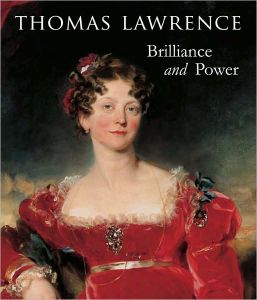
Ed. by Cassandra Albinson, Peter Funnell, Lucy Peltz ISBN: 9780300167184 (YCBA, 2010), $70
This conference accompanies the exhibition Thomas Lawrence: Regency, Power and Brilliance at the National Portrait Gallery, London (20 October 2010–23 January 2011) which will be shown at the Yale Center for British Art, New Haven, (24 February–5 June 2011). This will be the first exhibition in the United Kingdom since 1979 to examine Lawrence’s work and the first substantial presentation of this artist in the United States. It will present Lawrence as the most important British portrait painter of his generation and will explore his development as one of the most celebrated and influential European artists of the late eighteenth and early nineteenth centuries. By his untimely death in 1830 Lawrence had achieved the greatest international reach and reputation of any British artist. Based on new research and fresh perspectives, this exhibition will introduce Lawrence to a new generation of museum visitors and students. It will also contextualise his work in the light of recent scholarship on the art, politics and culture of the period. The exhibition will include the artist’s greatest paintings and drawings alongside lesser known works in order to provide a fresh understanding of Lawrence and his career. It will contrast his approach to sitters according to age and gender, juxtapose the power and impact of his public works with the intimacy and intensity of those portraits of his friends and family, trace his innovations as a draughtsman and painter, and place him within the broader contexts of the aesthetic debates, networks of patronage and international politics of his day.
Thursday, 18 November 2010, National Portrait Gallery (2:00pm–8:30pm)
Session One will address issues relating to Lawrence, gender and representation, and will include papers by Marcia Pointon (Professor Emerita, University of Manchester), Shearer West (Arts and Humanities Research Council and the University of Birmingham) and Sarah Monks (School of World Art Studies and Museology, University of East Anglia).
Evening: At 6pm, delegates are invited to attend a guest lecture by Richard Holmes, the biographer and author of The Age of Wonder: How the Romantic Generation Discovered the Beauty and Terror of Science (2008) and formerly Professor of Biographical Studies at the University of East Anglia. The lecture will be followed by a wine reception hosted by the curators, and free admission to the exhibition.
Friday, 19 November 2010, Paul Mellon Centre (9:15am–7:15pm)
Session Two, devoted to Lawrence and his contemporaries, will include papers by Viccy Coltman (University of Edinburgh) and Martin Myrone (Tate).
Session Three will explore technical aspects of Lawrence’s career, particularly his studio practice and relationship with engravers, and will include papers by Jacob Simon (National Portrait Gallery) and Sally Doust (Independent Scholar).
Session Four will address Lawrence’s reputation and historiography into the later nineteenth century, and will include papers by Philippa Simpson (Tate) and Pat Hardy (Walker Art Gallery, National Museums Liverpool).
The conference will conclude with a roundtable discussion, including Mark Hallett (University of York), Ludmilla Jordanova (King’s College, London), David Solkin (Courtauld Institute of Art), and the curators of the exhibition, which will consider themes arising from this exhibition and conference. The discussion will be followed by a wine reception at 5:45pm.
Full conference fee for both days, including coffee, lunch and tea on 19 November, and receptions: £40. Student and Senior concessions £20. To register for the conference please check availability with Ella Fleming at The Paul Mellon Centre: Email: events@paul-mellon-centre.ac.uk, Tel: 020 7580 0311, Fax: 020 7636 6730.
200th Anniversary of Napoleon’s Second Marriage
Press release (PDF) from the Musée national du château de Compiègne:
1810: The Politics of Love — Napoleon I and Marie-Louise in Compiègne
Musée national du château de Compiègne, 28 March — 19 July 2010

Exhibition catalogue, ISBN: 9782711857029
This first exhibition in France to evoke Marie-Louise, Empress of the French, intends to celebrate the two hundredth anniversary of the second marriage of Napoleon I to the young Archduchess of Austria, Marie-Antoinette’s grand-niece. It describes the extraordinary preparations for the arrival of the new Empress at the Palace of Compiègne, the splendours of the wedding ceremonies in Paris and the subsequent honeymoon in Compiègne. More than 200 works, wedding gifts, commissions for the sovereign’s trousseau and items of furniture, have been brought together: paintings, drawings, prints, sculptures, objets d’art, clothes, silks and jewellery. The exhibition has special loans from French museums (Louvre, Versailles, Fontainebleau, Fondation Napoléon and Fondation Thiers, etc) as well as international loans (Italy, Switzerland, Germany etc).
Napoleon I chose to receive his second wife at the Palais de Compiègne, just as Marie-Antoinette had been received here in 1770 by Louis XV and the Dauphin, the future Louis XVI. This event took place on 27 March 1810 and, on the orders of the Emperor who in his impatience brushed aside all protocol, the official meeting planned for Soissons was cancelled. 1810: la politique de l’amour: Napoléon Ier & Marie-Louise à Compiègne sets out to show the sumptuous refurbishment of the palace and the park before 1810.
The works started in 1807 under the direction of the architect Louis-Martin Berthault, and were hurried forward for the arrival of the Archduchess. Large portraits of the great figures of the Empire were presented in the new Galerie des Ministres (Prud’hon, Fabre, Lefèvre, etc), paintings by great masters from many different schools (Le Dominiquin, Patel, Flinck, etc) were brought together in the new Galerie des Tableaux de l’Impératrice, and Canova’s famous marbles on the theme of Psyche and Love (the standing version of this is on special loan from the Louvre), were placed at the entrance to the imperial apartments. The furniture, made by cabinetmakers Jacob-Desmalter and Marcion, as well as the Sèvres porcelain ordered for the palace, illustrates one of the high point of decorative art at a time when the Empire style was at its peak.
The grandeur of the civil and religious wedding celebrations at the Palace of Saint-Cloud then in the Salon Carré of the Louvre, together with the festivities organised in Paris up to 1st July 1810, reflecting an Emperor at the height of his power, created a wealth of iconographic images (Rouget’s painting inspired by David’s Coronation of Napoleon, drawings by Zix and Prud’hon, portraits by Gérard, Isabey, etc). (more…)
An Eighteenth-Century Synagogue from Suriname in Jerusalem
Press release (24 May 2010) from the Israel Museum:
Rare and Newly Restored 18th-Century Synagogue from Suriname to be Highlight of Israel Museum’s New Synagogue Route

Interior of the 18th-century Suriname Synagogue Zedek-ve-Shalom at the Israel Museum. Photo by Eli Posner. Courtesy of the Israel Museum, Jerusalem.
A newly restored 18th-century synagogue from Suriname – one of only two remaining examples – will be a highlight of the Israel Museum’s newly installed Mandel Wing for Jewish Art and Life, on view beginning July 26, 2010, when the Museum opens its expanded and renewed campus to the public. This rare and striking South American synagogue will stand alongside synagogue interiors from Italy, Germany, and India as part of the Museum’s new Synagogue Route, which will offer visitors the opportunity for a notably rich experience with Jewish ritual traditions from around the world. On display with its original furniture and decorations and a sand floor, the Tzedek ve-Shalom Synagogue will offer visitors a glimpse into Suriname’s once vibrant Jewish community.
Built in 1736 in the capital city of Paramaribo, Suriname, Tzedek ve-Shalom ceased to function as a place of worship in the 1990s. In order to rescue this important example of the Jewish life of this remote Jewish community, the Israel Museum approached its leaders with the aim of restoring and preserving the synagogue on its campus for the benefit of future generations of visitors from around the world. The synagogue’s interior and its original ceremonial objects and furnishings were transferred to the Museum in 1999, where it has now been meticulously refurbished. (more…)
NPG Appeal to Secure Historic Portrait
Press release from the NPG in London:
Appeal to Secure First British Portrait of a Black African Muslim and Freed Slave
National Portrait Gallery needs £100,000 to acquire first British oil painting of a freed slave, never seen in public
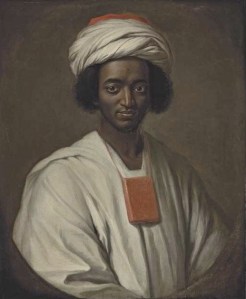
William Hoare, "Portrait of Ayuba Suleiman Diallo, also known as Job ben Solomon," oil on canvas, 1733 © Christie's Images Limited
The National Portrait Gallery today launches, with the support of the Heritage Lottery Fund (HLF) and the Art Fund, an appeal to acquire for the nation the earliest known British oil painting of a freed slave, and the first portrait that honours a named African subject as an individual and an equal. Never before seen in public, and currently on temporary display at the Gallery, this portrait of Ayuba Suleiman Diallo (c.1701-73), known when he was in England as Job ben Solomon, shows the sitter painted in 1733 in his traditional dress wearing his copy of the Qur’an around his neck.
The portrait, from a private collection, was sold at auction in December, is now under a temporary Ministerial export bar following a recommendation by the Reviewing Committee on the Export of Works of Art and Objects of Cultural Interest, administered by the Museums, Libraries and Archives Council (MLA). The Gallery needs to have raised £554,937.50 to secure this important and compelling painting for future generations by 25 August 2010. Art Fund members have kick-started the campaign with a £100,000 grant and the Heritage Lottery Fund has pledged £333,000 towards the acquisition and a project to cover costs for its conservation, display, interpretation and regional tour to Leicester, Liverpool and the North East Museums Hub. In addition to the funds the Gallery is able to contribute to the purchase, it is now launching a campaign to raise £100,000 to complete the target. . . .
A high status African from a prosperous family of Muslim religious clerics, Ayuba Suleiman Diallo was born in the Gambia. At the age of 29 he was captured as a slave and transported to work on a plantation in America. After being imprisoned for trying to escape, he met the lawyer Thomas Bluett who become aware of Diallo’s high birth, intellect and education and took an interest in him, arranging to bring him to England in 1734. After his arrival, he mixed with high society and had a lasting impact on Britain’s understanding of African culture, identity and religion. (more…)
Canaletto Exhibition in London and D.C.
Press release from the National Gallery in London:
Venice: Canaletto and His Rivals
National Gallery, London, 13 October 2010 — 16 January 2011
National Gallery, Washington D.C., 20 February — 30 May 2011
 This exhibition presents the finest assembly of Venetian views, by Canaletto and all the major practitioners of the genre, to be held since the much-celebrated display in Venice in 1967. Remarkably, considering the dominant role of British patronage in this art form, Venice: Canaletto and His Rivals is also the first exhibition of its kind to be organised in the UK.

Canaletto, "The Stonemason's Yard," 1727-28 (London: National Gallery)
Bringing together approximately 55 major loans from public and private collections of the UK, Europe and North America, the exhibition highlights the rich variety of Venetian view painting, representing Canaletto alongside major rivals such as Luca Carlevarijs, Gaspar van Witell, Michele Marieschi, Bernardo Bellotto, and Francesco Guardi. Also represented are less well-known painters such as Antonio Joli, Pietro Bellotti, Francesco Tironi and Giambattista Cimaroli, each responding to the market driven largely by the British Grand Tour.
Featured works span the 18th century, from the first accurately datable Venetian view by Luca Carlevarijs in 1703 to the death of Francesco Guardi in 1793 and Napoleon’s invasion and the fall of the Republic in 1797.
 In each room, major works by Canaletto are juxtaposed by those of his rivals and associates, to demonstrate their different approaches to the same or similar views of the city. The exhibition features many of Canaletto’s greatest masterpieces, including The Riva degli Schiavoni, looking West, 1736 (Sir John Soane’s Museum, London), The Stonemason’s Yard, 1727–28 (The National Gallery, London), and four of the finest works from the Royal Collection. A catalogue edited by Charles Beddington will accompany the exhibition (ISBN-13: 9781857094183), $50.
◊ ◊ ◊ ◊ ◊
For additional coverage, see the posting at Artdaily.org (16 June 2010).
Skin this Summer (exhibition and conference at the Wellcome)
The Wellcome Collection in London currently hosts an exhibition on Skin that includes various anatomical images from the eighteenth century (and a fine online component). Next week, there will be a symposium on the topic of Skin Exposed. While the latter is far-ranging in period and approach, it does raise the question of what a conference focused entirely on skin in the eighteenth-century might look like.
Skin
Wellcome Collection, London, 10 June — 26 September 2010

A suspended lower arm from which the skin and fatty layer has been removed to reveal the muscles. Next to it is a knife and a surgical instrument case with its lid. Gérard de Lairesse after Govard Bidloo and William Cowper, 1739 (Wellcome Library)
The Skin exhibition invites you to re-evaluate the largest and probably most overlooked human organ. We consider the changing importance of skin, from anatomical thought in the 16th century through to contemporary artistic exploration. Covering four themes (Objects, Marks, Impressions and Afterlives), Skin takes a philosophical approach. It begins by looking at the skin as a frontier between the inside and the outside of the body. Early anatomists saw it as having little value and sought to flay it to reveal the workings of the body beneath.
The exhibition then moves to look at the skin as a living document: with tattoos, scars, wrinkles or various pathologies, our skin tells a story of our life so far. Finally, the skin is considered as a sensory organ of touch and as a delicate threshold between life and death.
Skin Lab, which features artistic responses to cutting-edge research and technological developments in skin science from the mid-20th century onwards, will complement the exhibition.
◊ ◊ ◊ ◊ ◊
Symposium — Skin: Exposed
Wellcome Collection, London, 16-17 July 2010
 Nudity is an intimate state, perceived differently across times and cultures. For some it is a taboo, for others something to be celebrated. Join us for this special two-part ‘skin-posium’ to explore nakedness in all its guises.
Friday: Literary reading, 19.00-21.00
Bask in words of literary masterminds Milton, Keats, Tennyson and others. The evening includes a drinks reception so you can get to know your fellow guests.
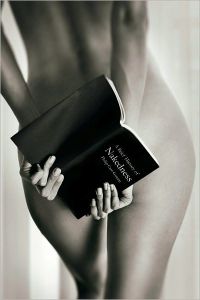
Philip Carr-Gomm, "A Brief History of Nakedness" (May 2010), $30
Saturday: Talks and discussions, 10.30-17.00
Experts from the worlds of history of art, evolutionary science and more will explore how bare skin is understood in different cultures, how nudity makes us feel and how our ancestors evolved to reveal their bare skin in the first place.
Our multidisciplinary speakers include ‘Skin’ curator Javier Moscoso; fashion historian Rebecca Arnold; geneticist Walter Bodmer; historian of art Jill Burke; author of A Brief History of Nakedness, Philip Carr-Gomm; human geographer Glenn Smith; and anthropologist and film-maker Michael Yorke. Friday evening is curated by Steven Connor, author of The Book of Skin.
Tickets must be booked in advance. £30 full price/£20 concession for both days, including drinks on Friday evening and lunch, tea and coffee on Saturday. Please call 020 7611 2222 to book.
Later this Year: Exhibition on Johann Christian Wentzinger
Freiburg Baroque: Johann Christian Wentzinger und seine Zeit
Augustinermuseum, Freiburg, 27 November 2010 — 6 March 2011
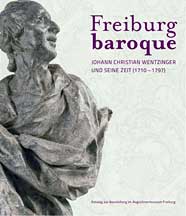
ISBN: 9783422070394, $53.50 (available in December 2010)
This exhibition at the Augustinermuseum in Freiburg, commemorates the 300th birthday of Johann Christian Wentzinger (1710-1797). A Baroque sculptor, painter and architect, Wentzinger may be counted among the most important eighteenth-century artists in southern Germany.
◊ ◊ ◊ ◊ ◊
A full description (in German) of the artist and the upcoming exhibition from the Badische Zeitung is available here»
Happy July 4th!
As noted at ArtDaily.org:

Fair copy of the Declaration of Independence in Thomas Jefferson's hand, 1776 (New York Public Library)
One of The New York Public Library’s greatest treasures, a full-text version of the Declaration of Independence handwritten by Thomas Jefferson will be on view through July 31 at The New York Public Library’s Stephen A. Schwarzman Building in the Sue and Edgar Wachenheim III Gallery. The display will be open for a special viewing over the Independence Day weekend, Sunday, July 4 through Monday, July 5. The exhibition also includes early printings of the Declaration as well as a letter from Benjamin Franklin to George Washington mentioning that the Declaration was being drafted. . . .
In the days immediately following ratification on July 4, 1776, Jefferson made several copies of the text that had been submitted to the Continental Congress, underlining the passages to which changes had been made. Jefferson was distressed by the alterations made, most notably the removal of his lengthy condemnation of slavery. The Library’s copy is one of two known to survive intact. It is shown together with the first Philadelphia printing and the first New York printing of the final version issued by Congress. These versions are complemented by the earliest newspaper printings; the second
official version ordered by Congress, published by a woman printer in Baltimore.
Regular exhibition hours are Monday, Thursday, Friday, and Saturday, from 11 a.m. to 6 p.m.; Tuesday and Wednesday from 11 a.m. to 7:30 p.m. There will be a special viewing of The Declaration of Independence exhibition only from Sunday through Monday, July 4 through July 5, from 1 p.m. to 5:00 p.m. (all other Library exhibitions, collections, and services will be unavailable).
◊ ◊ ◊ ◊ ◊
There’s also an informative online component of the exhibition, available here»
Selections from the Prado Library
From the Prado:
Bibliotheca Artis: Treasures from the Museo del Prado Library, 1500-1750
Prado, Madrid, 5 July — 17 October 2010
Curated by Javier Docampo, Head of Library, Archive and Documentation at the Museo Nacional del Prado

Giuseppe Galli Bibiena, (1696-1756), "Architetture e prospettive... ," 1740 (Cerv/708)
The Museo del Prado Library, presently installed in the Casón del Buen Retiro, houses an important Old Books Holdings, notably increased the past years thanks to the acquisition of the José María Cervelló library and the Daza-Madrazo family library. The exhibition will show forty books and manuscripts dated between 1500 and 1750, as well as a group of eight paintings from the museum’s collection (Titian, El Greco, Velázquez, etc) which will reveal different connections between the bibliographical fund and the paintings collection.
The exhibition is made up of three sections. The first one, Bibliotheca artis, shows the basic landmarks of the European artistic bibliography from the most important renaissance treaties (Alberti, Leonardo, Dürer) up to the fundamental works form the Spanish Golden Age (Pachecho, Carducho, García Hidalgo, Palomino). The second one, Bibliotheca architecturae is devoted to architectural treaties conceived as a defined typology among art books and it comprises early editions of the Vitruvio up to great Italian and European renaissance treaties (Palladio, Serlio, Vignola, Delorme, Dieteterlin). Some books from public festivities will be included (royal admissions, canonizations…) conceived as an irreplaceable testimony of the disappeared ephemeral architectures. And finally, the section Bibliotheca imaginis which focuses on the role that books play as a work tool and as a source of inspiration for artists. From the artists’ portrait repertoire to the drawing drafts, baroque emblem books or the albums with reproductions of works of art, the whole will show the importance of illustrations in books in the building of the visual European imaginary of the Modern Age.










leave a comment