Exhibition | The Myth of Rembrandt in the Century of Fragonard
Now on view at the MBA Draguignan:
Le Phare Rembrandt: Le Mythe d’un Peintre au Siècle de Fragonard
Musée des Beaux-Arts de Draguignan, 15 November 2025 — 15 March 2026
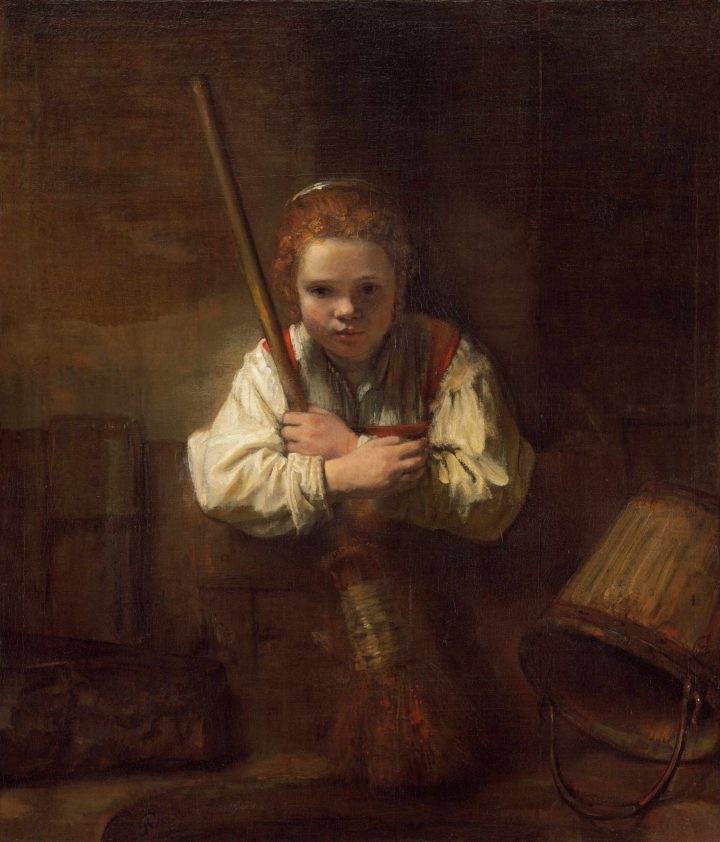
Rembrandt Workshop (possibly Carel Fabritius), A Girl with a Broom, 1646–51 (Washington DC: National Gallery of Art, 1937.1.74).
Le Phare Rembrandt invite le public à plonger dans l’univers de Rembrandt à un moment crucial : un demi-siècle après sa mort (en 1669), son nom devient un véritable mythe en Europe, et particulièrement à Paris, devenue capitale du marché de l’art. De plus en plus de tableaux du maître hollandais y sont importés, pour ensuite être exportés vers l’Allemagne, l’Angleterre ou la Russie.
L’originalité de l’exposition réside dans sa volonté de faire découvrir comment l’art de Rembrandt a été perçu au XVIIIe siècle en France, où ses œuvres influencent profondément les artistes et collectionneurs. À travers une sélection de cinquante œuvres visibles à l’époque, dont des peintures attribuées à Rembrandt ou réalisées par des artistes ayant étudié ou collectionné son travail tels que Chardin ou Fragonard, l’exposition explore les thèmes de l’imitation et de l’appropriation de son art.
Le Phare Rembrandt: Le Mythe d’un Peintre au Siècle de Fragonard (Paris: In Fine éditions d’art, 2025), 304 pages, ISBN: 978-2382032343, €35. With contributions by Jaco Rutgers, Jacqueline Carroy, Isabelle Arnulf, Jean-Pierre Maranci, Ivan Alexandre, Dominique Païni, Érick Desmazières, Gaëtane Maës, Anna Tummers, Jan Blanc, Quentin Buvelot, Dominique Brême, Ariane James-Sarazin, Yohan Rimaud, Laura Bossi.
From the CODART announcement:
This ambitious exhibition explores the undiminished aura of the Dutch master, focusing on two fascinating portraits seized during revolutionary confiscations and attributed to Rembrandt in the eighteenth century. . . .
Exhibition | Undressed: The Nude in Dutch Art, 1550–1800
Opening in March at Syracuse University:
Undressed: The Nude in Dutch Art, 1550–1800
Syracuse University Art Galleries, 17 March — 9 May 2026
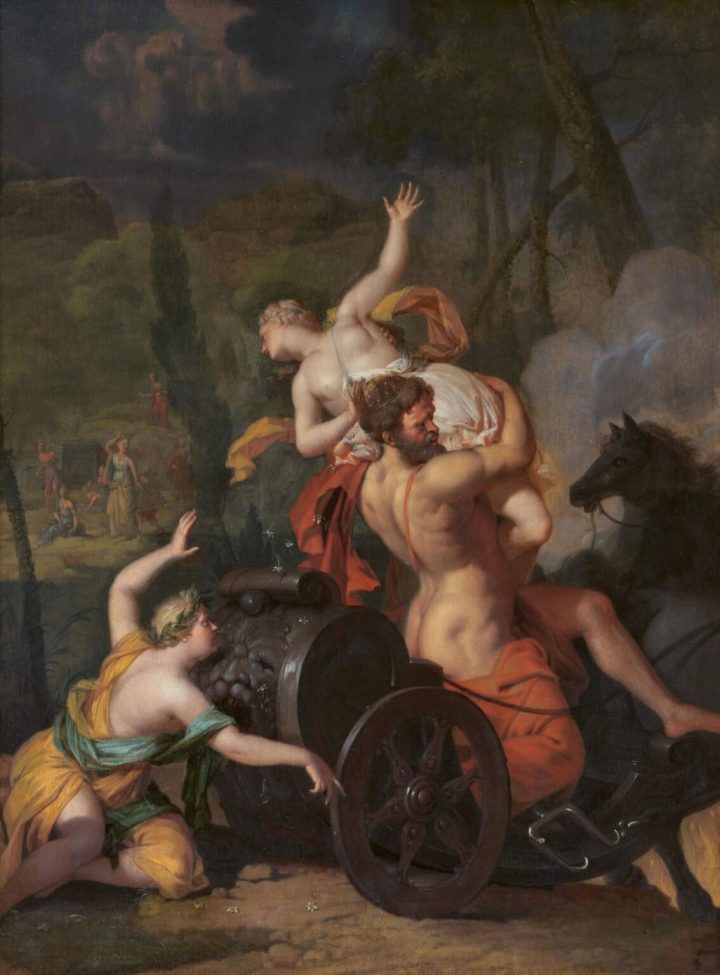
Pieter van Veen (1667–1736), The Rape of Proserpina, oil on canvas.
This exhibition, encompassing twenty-one works in various media, surveys the portrayal of nudity and semi-nudity in a variety of subjects rendered by Dutch artists over several centuries. It will explore how the nude has been articulated, both artistically and contextually, to disrupt traditional ideas of nudity in art, which were primarily argued by Sir Kenneth Clark in The Nude: A Study in Ideal Form (1956). In this influential text, Clark posited that the presence of the nude in art, existed above and beyond cultural circumstances, as a timeless, almost abstract ideal. He advanced a distinction between ‘naked’ and ‘nude’, with the latter explained as an idealization, or an evocation of timeless ideals. To the contrary, this exhibition presents nudity in art as a phenomenon that is time-bound and culturally determined.
This exhibition is curated by Wayne Franits (Distinguished Professor and Department Chair, Art and Music Histories) and the eight senior art history majors enrolled in the fall 2025 course HOA 498: Senior Seminar, Research and Professional Practice.
Exhibition | Dealing in Splendour
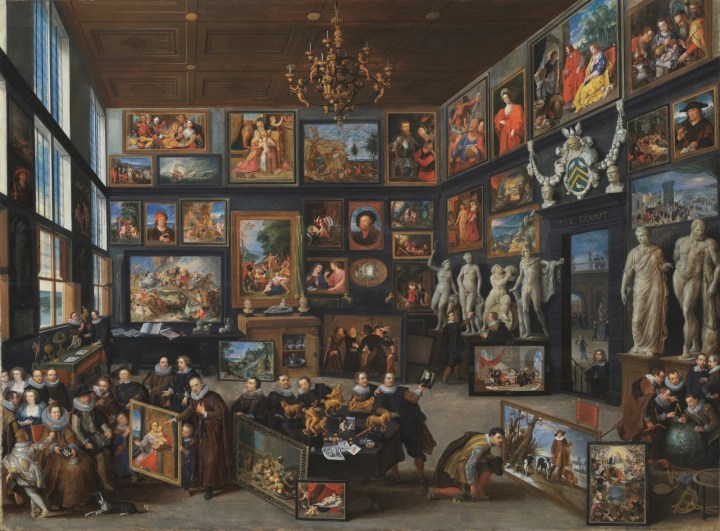
Willem van Haecht, The Gallery of Cornelis van der Geest, 1628, oil on panel
(Antwerp, Rubenshuis, City of Antwerp Collection, Rubenshuis)
◊ ◊ ◊ ◊ ◊
Now on view in Vienna at the Liechtenstein Garden Palace:
Dealing in Splendour: A History of the European Art Market
Noble Begierden: Eine Geschichte des Europäischen Kunstmarkts
Gartenpalais Liechtenstein, Wien, 30 January — 6 April 2026
Curated by Stephan Koja, Christian Huemer, and Yvonne Wagner
With a history reaching back over four centuries, the Collections of the Princely Family of Liechtenstein are part of a long tradition of collecting that spans many generations. Essential to this at all times has been a policy of active collecting. In the past as in the present, new acquisitions shaped the appearance of the galleries. The art collection has thus been formed not only by the personal tastes of the various princes but also by the art market with its changing sales strategies, trend-setting individuals, and economic factors.
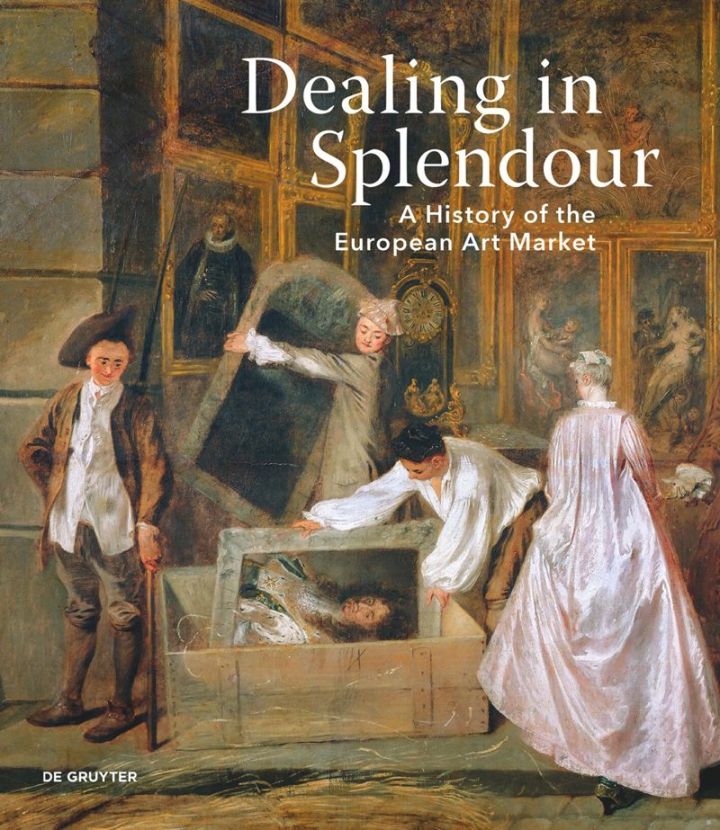 Against this background, Dealing in Splendor addresses the fascinating history of the European art market. Spotlights will be shone on structures, centres of innovation, influential personalities, and marketing methods from antiquity to the nineteenth century, revealing that many of these methods have changed very little up to the present day. Auctions were held in ancient imperial Rome. In Antwerp, art trade fairs were already attracting an international clientele in the sixteenth century, and the first catalogues raisonnés of Old Masters were compiled by art dealers in the eighteenth century.
These and other enthralling insights into the history of the European art market await you at the Liechtenstein Garden Palace in Vienna, with major works from the Princely Collections appearing alongside sensational loans in the largest annual temporary exhibition we have mounted to date. The extensive catalogue will boast essays by leading experts in the field of art market scholarship, bringing interdisciplinary approaches to bear in a volume that will provide a comprehensive overview of the subject.
Art as a Commodity: The Flourishing Art Market of Antiquity
Even in ancient Roman times, there was a flourishing art market, sustained by a network of collectors, connoisseurs, buyers, and agents. Early forms of serial production and market adjustment were already developed and continued to have an effect into the early modern age. The great demand for classical Greek works led to a burgeoning production of replicas, variations, and reduced-size copies, which Roman collectors acquired specifically for particular rooms and functions. Workshops all over the Mediterranean specialized in reproducing famous representational formulas in order to provide objects in various price ranges—from monumental copies in marble to small bronze statuettes.
International Trade: Forchondt
Prince Karl Eusebius I von Liechtenstein had a particularly long and intensive connection with the Forchondt family of dealers. They had an international presence with branches in Antwerp, Vienna, and the Iberian Peninsula, shipping works of art and furniture in all price categories to destinations as far afield as South America. Karl Eusebius’s son, Prince Johann Adam Andreas I, was likewise a client of the Forchondts, from whom he purchased many of his most important acquisitions, including paintings by Rubens and van Dyck. This business relationship with the Forchondts, holders of an imperial privilege as jewellers to the imperial court, lasted until the reign of Prince Joseph Wenzel I.
Serial Production in the Fifteenth Century
In the Italian city-states of the fifteenth century, the emergent ruling families, foremost among them the Medici in Florence, made systematic use of art patronage. By erecting imposing monuments, they shaped the appearance of the cities and demonstrated their power. They commissioned chapels and altarpieces, and alongside the Church were the most prominent and important patrons of the era. However, there were also classes of customers with smaller purses. The prices for works of art depended on the materials used, the time and labour involved, and the prestige of the masters who had made them. The workshops produced particularly popular motifs in various price ranges, some being offered for sale as ready-made works, without having been previously commissioned. Outlay and labour were reduced by turning out multiple copies of a work with just minor variations, or by serial production in suitable materials such as terracotta.
The Brueg(h)el Dynasty
Pieter Bruegel the Elder was one of the most important Flemish painters of his time. His compositions were so successful that copies of his works were made in his workshop and in those of his descendants. A whole dynasty of painters and numerous imitators drew on his works even after his death, continuing to sell them, often with only minimal changes, at a healthy profit.
The Beginnings of Large-scale Production in the Low Countries
One notable feature of Holland’s seventeenth-century Golden Age was the unusual wealth of art works, particularly paintings, in the homes of its burghers. In order to keep up with demand artists developed methods that shortened their working hours and increased their productivity. To achieve this, they specialized in particular genres, one such practitioner being Jan van Goyen, whose reduced palette both limited his material expenses and became his hallmark. His landscapes earned him international acclaim. Jan Davidsz. de Heem was famous for his opulent still lifes. Rachel Ruysch made a successful speciality of the flower still life.
Souvenirs from the Grand Tour
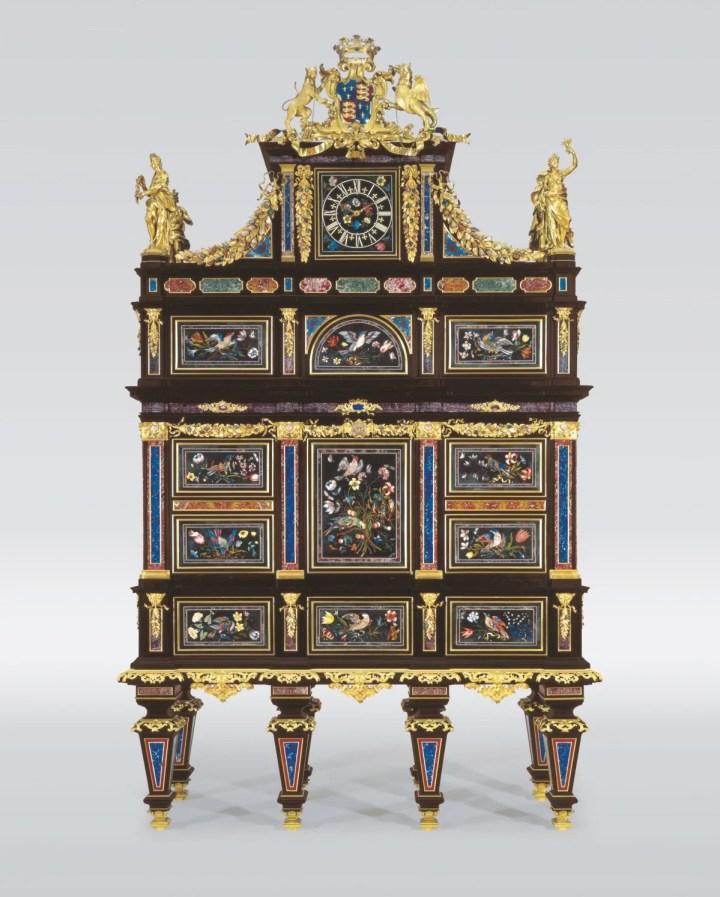
Baccio Cappelli and Girolamo Ticciati, Galleria dei Lavori, Badminton Cabinet, 1720–32 (Collection of the Princely Family of Liechtenstein, acquired in 2004 by Prince Hans-Adam II von und zu Liechtenstein).
In the seventeenth and eighteenth century, journeys taking in the centres of European culture were an important part of the education of scions of the nobility. In British society in particular, the so-called Grand Tour was regarded as the height of fashion, with the result that in the countries visited, in particular Italy with Rome as its cultural centre, a veritable industry grew up to cater for these young tourists, with accommodation, cicerones, and guidebooks to the sights—and souvenirs of the sights to take back home. The most popular of these were the views known as capricci—compositions of various statues, ruins, and edifices that in reality stood nowhere near one another. In Rome, the most successful artists in this field were Giovanni Battista Piranesi and Giovanni Paolo Pannini. It was regarded as especially prestigious to have one’s likeness painted by a well-known portraitist, or best of all by Pompeo Girolamo Batoni. The phenomenon of the souvenir was possibly carried to its greatest extreme by Henry Somerset, third duke of Beaufort, who commissioned the monumental Badminton Cabinet from the grand-ducal Galleria dei Lavori in Florence.
From Dilettante to Connoisseur: Edme-François Gersaint
During the eighteenth century, Paris and London became centres of innovation in the art market. There the auction scene was given fresh impetus with the arrival of influential experts and auctioneers, elegant auction rooms, printed sale catalogues, and exhibitions that became veritable social spectacles. A pioneering role in these developments was played by Edme-François Gersaint, who blazed new trails with his shop on the Pont Notre Dame, his auctions, and his detailed auction catalogues.
Art Historians, Expertise, and the Establishment of Canons of Works
Attributions and provenances—which had assumed increasing importance over the previous century—now lay in the hands of scholars, whose opinions as proclaimed in catalogues raisonnés influenced contemporary tastes and above all the price of works included in these publications. The value of the works increased or decreased depending on their purported authenticity (or lack of it). In many cases the criteria for authenticity were necessarily limited to stylistic characteristics. These were duly contested, in scholarly circles and elsewhere. This can be seen particularly clearly in the case of Rembrandt, whose body of works expanded or contracted depending on the scholar surveying his oeuvre.
Art for the Masses: The Revolutionary Art Market of the Nineteenth Century
In the nineteenth century the art market was revolutionized. New forms of presentation and serial production and the reproduction of images in huge numbers made art into a mass medium that circulated all over the world. Firms such as Goupil et Cie professionalized these mechanisms by systematically providing reproductions of famous works of art for various categories of buyer. At the same time dealers such as Charles Sedelmeyer established the phenomenon of the art spectacle, which—accompanied by deliberately dramatic presentation, advertising, and skilful use of media—attracted huge crowds. Thus, in the nineteenth century various innovative strategies directed at a wide sector of the public came together to shape the art market of the time, forming the basis for the present-day art business.
Curators
Stephan Koja, Director of the Princely Collections of Liechtenstein
Christian Huemer, Head of the Belvedere Research Center
Yvonne Wagner, Chief Curator of the Princely Collections of Liechtenstein
Christian Huemer and Stephan Koja, eds., Dealing in Splendour: A History of the European Art Market (Berlin: De Gruyter Brill, 2026), 448 pages, ISBN: 978-3689241063 (German) / ISBN: 978-3689241070 (English), €59 / $65.
Exhibition | Goya and the Age of Revolution
Now on view at the Hispanic Society Museum & Library:
Goya and the Age of Revolution
Hispanic Society Museum & Library, New York, 11 December 2025 — 28 June 2026
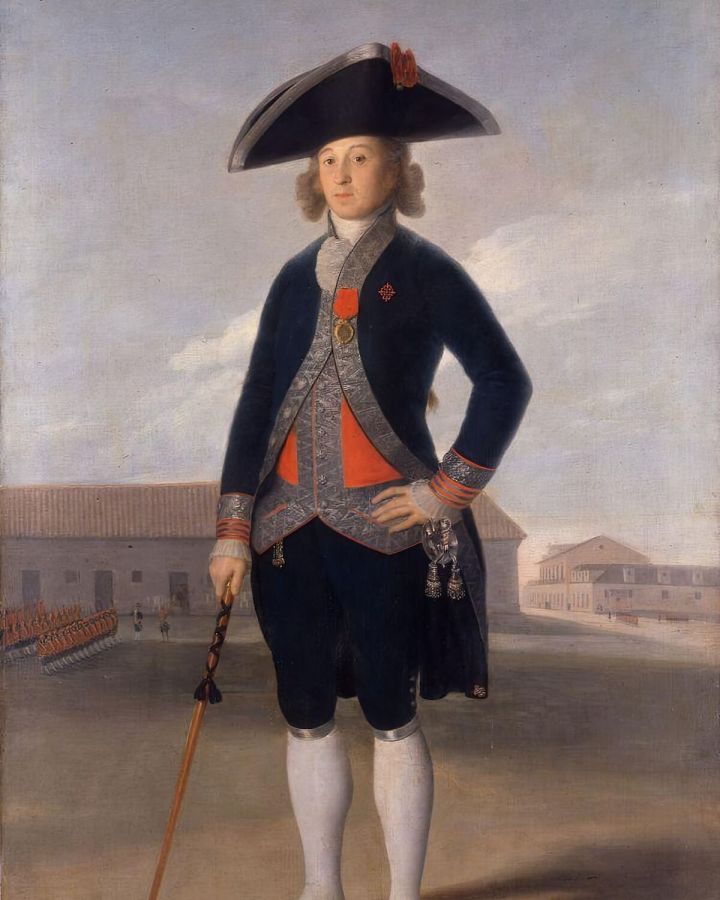
Francisco Goya, Portrait of Manuel Lapeña, Marquis of Bondad Real, detail, 1799, oil on canvas, 225 × 140 cm (Hispanic Society of America).
Beginning in the late 18th century, three interconnected revolutions transformed the world. Supported by Spain and France, the American Revolution (1775–1783), would inspire the French Revolution (1787–1799), which led to the rise of Napoleon, who invaded Spain in 1808, sparking the Spanish War of Independence, known as the Peninsular War (1808–1814). All three conflicts impacted the life and work of Francisco de Goya y Lucientes (1746–1828). The artist painted the portraits of at least two protagonists of the American Revolution: Admiral Jose de Mazarredo (ca. 1785, private collection) and General Francisco de Saavedra (1798, The Courtauld, London). Caught in the middle of the Peninsular War, Goya captured acts of heroism and atrocity in a series of 82 prints executed between 1810 and 1820 known as the Disasters of War. From the promise of egalitarianism to the horrors of battle, the story of revolution animates some of Goya’s most powerful works.
To mark the 250th anniversary of the U.S. Declaration of Independence, the present installation displays a selection of works by Francisco de Goya and his circle broaching the subject of war, revolution, and independence. This initiative is supported by the Goya Research Center. Launched in 2024 by the Hispanic Society Museum & Library, the Goya Research Center aims to advance on the study of Francisco de Goya and bring him to new audiences through public programs, exhibitions, and publications.
◊ ◊ ◊ ◊ ◊
Note (added 2 February 2026)— When the show opened in December, the Museum’s Instagram page included a powerful detail of Eugenio Velázquez’s Victims of War, painted in the 1860s. In these days of war and rumors of war, it all feels all too poignant. –CH
Exhibition | Stubbs: Portrait of a Horse
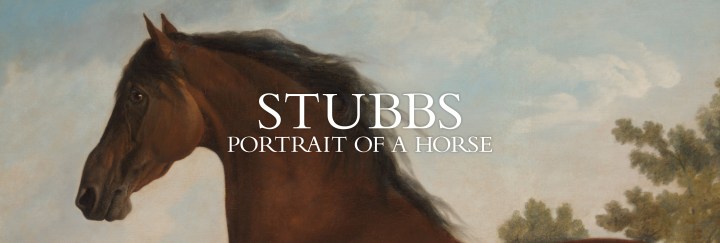
George Stubbs, Scrub, a Bay Horse Belonging to the Marquess of Rockingham, ca. 1762 (Private Collection).
◊ ◊ ◊ ◊ ◊
On view this spring at the National Gallery:
Stubbs: Portrait of a Horse
National Gallery, London, 12 March — 31 May 2026
Step into the world of George Stubbs, the visionary British painter, and marvel at his monumental portrait of a rearing racehorse, Scrub.
In the 1750s, Stubbs spent eighteen months in a remote barn in Horkstow, Lincolnshire. Hidden away, he devoted his time to studying and drawing the anatomy of horses. What resulted was the most thorough study on the subject for almost a hundred years. Incredibly, Stubbs’s pictures of horses are still some of the most accurate ever painted, all while capturing their unique characters.
In this exhibition, viewers will meet one of these horses, Scrub, painted around 1762. Scrub rears in a landscape backdrop—notably without a rider. In a nearby room hangs another monumental horse painting by Stubbs, a depiction of Scrub’s now famous contemporary, Whistlejacket. Painted around the same time, these would be the first life-size portraits to depict horses without a rider in British history. The two paintings changed the spirit of equine art forever. Stubbs: Portrait of a Horse focuses on the creation of this portrait of Scrub, while presenting other paintings and drawings by the artist. Join us for a closer look at this groundbreaking work.
Journal18, Fall 2025 — Clean
The latest issue of J18:
Journal18, Issue #20 (Fall 2025) — Clean
Issue edited by Maarten Delbeke, Noémie Etienne, and Nikos Magouliotis
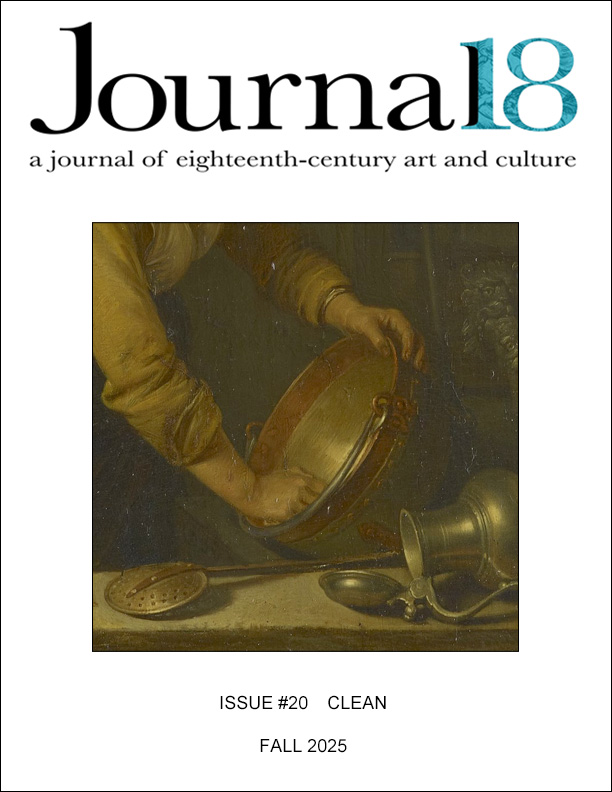 Cleaning is never a neutral act. In the eighteenth century, acts of cleaning became a way to decide what counted as disorder, to separate asserted purity from designated pollution, and to display authority over matter, space, and people. From the forecourt of Paris’s Notre-Dame to the Ganges river in Varanasi to Scotland’s filthy privies, practices of cleaning have shaped political order. Racial issues, colonization, and the management of public space revolved around the idea and implementation of cleaning, which could also involve the deliberate relocation or erasure of human beings.
a r t i c l e s
Economies of Waste: Revolutionary Administration and the Afterlives of the Kings of Notre-Dame — Demetra Vogiatzaki
‘Beneath the Waters of a Universal Ocean’: Containing, Contaminating, and Cleaning the Ganges River in Varanasi — Ushma Thakrar
Piss, Poison, and other Paths between Scotland and England in Caricature since 1745 — Laura Golobish
c o n v e r s a t i o n p i e c e
The Grammar of Cleaning: A Conversation — Maarten Delbeke, Noémie Etienne, and Nikos Magouliotis
All articles are available for free here, along with recent notes & queries:
r e c e n t n o t e s a n d q u e r i e s
Marie Antoinette Style: An Exhibition Catalogue Review — Madeleine Luckel
Room for the Lost Paradise: A Symposium — Jason M. Kelly
Reflections on Mai, Joshua Reynolds, and Eighteenth-Century Art — A Roundtable
Colonial Crossings: A Review — Juan Manuel Ramírez Velázquez
Conference | Kunst um 1800
In connection with the exhibition Art around 1800: An Exhibition about Exhibitions in Hamburg, as noted at ArtHist.net:
Kunst um 1800
Hamburger Kunsthalle, 29–30 January 2026
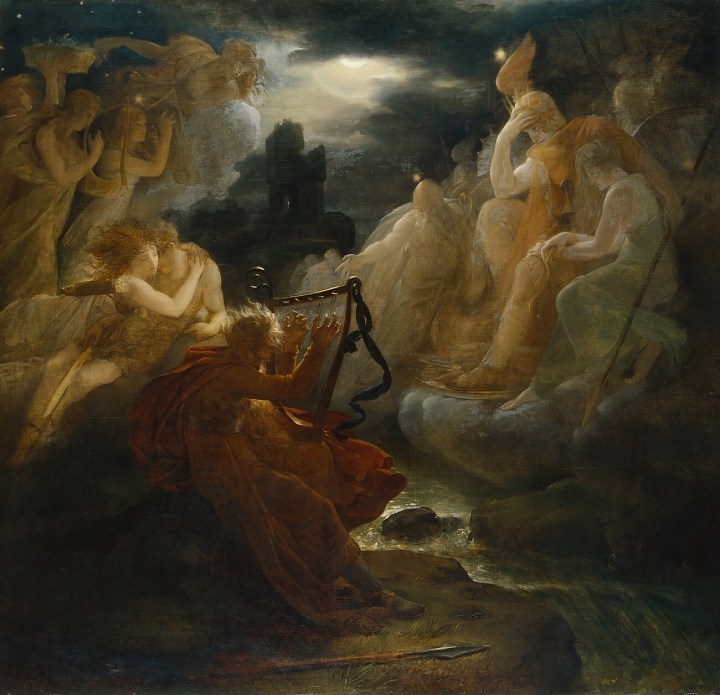
François Gérard, Ossian am Ufer der Lora beschwört die Geister beim Klang der Harfeum, 1810, oil on canvas, 211 × 221 cm (Hamburger Kunsthalle; photo by Elke Walford).
Der Workshop findet im Rahmen der Ausstellung Kunst um 1800. Eine Ausstellung über Ausstellungen statt, die den gleichnamigen Zyklus der Hamburger Kunsthalle in den Mittelpunkt stellt: Von 1974 bis 1981 widmete sich die legendäre Ausstellungsreihe in neun Teilen der Wirkmacht von Kunstwerken im „Zeitalter der Revolutionen“ und prägte Debatten über die gesellschaftliche Relevanz von Kunst, die bis heute nachwirken. Die Ausstellungen revidierten Narrative der europäischen Kunstgeschichte, indem sie Themen und Künstler ins Zentrum stellten, die mit den Konventionen ihrer Zeit brachen: Ossian, Caspar David Friedrich, Johann Heinrich Füssli, William Blake, Johan Tobias Sergel, William Turner, Philipp Otto Runge, John Flaxman und Francisco Goya. Die gegenwärtige Ausstellung Kunst um 1800 kommentiert und aktualisiert aus einer heutigen Perspektive die historischen Ordnungen und Präsentationen der Dinge, die unter der Regie des damaligen Direktors Werner Hofmann entstanden. Dazu werden über 50 Gemälde, Bücher und graphische Arbeiten der Sammlung der Kunsthalle aus der Zeit um 1800 in ein Zusammenspiel mit über 70 ausgewählten Leihgaben und Werken zeitgenössischer Künstler:innen gebracht. Das komplexe Gefüge im Kuppelsaal versteht sich als eine kritische Edition der Ausstellungen der 1970er Jahren und unternimmt zugleich einen Remix der künstlerischen Formen und Formate um 1800.
Bis zum 29. März 2026 entfaltet Kunst um 1800 in zehn Stationen mit damals gezeigten Werken ein Panorama der Epoche und widmet sich Themen wie Aufklärung, Gewalt, Träumen, politischer Landschaft, Industrialisierung sowie Revolution und Freiheit – stets aus heutiger Perspektive. Diesen Fragen geht auch der interdisziplinäre Workshop nach. In dieser Veranstaltung setzen sich Künstler- und Wissenschaftler:innen mit dem historischen Zyklus, der Musik um 1800, forschendem Kuratieren und historischen Leerstellen auseinander. So werden punktuell Aspekte betont, die im Zyklus der 1970er Jahre fehlten oder nur ansatzweise zum Vorschein kamen, jedoch für die Zeit um 1800 relevant sind: Der Kampf um Frauenrechte, die jüdische Aufklärung, Kolonialismus, Sklaverei, Abolitionismus und die Haitianische Revolution.
Eine Veranstaltung von Petra Lange-Berndt, Kunstgeschichtliches Seminar der Universität Hamburg, und Dietmar Rübel, Akademie der Bildenden Künste München, in Zusammenarbeit mit und der Hochschule für Musik und Theater sowie der Hamburger Kunsthalle. Der Eintritt zum Liederabend und zur Tagung ist frei.
Mit freundlicher Unterstützung der Hamburgischen Wissenschaftlichen Stiftung, der Franz Wirth-Gedächtnis-Stiftung und der Liebelt-Stiftung, Hamburg.
d o n n e r s t a g
19.00 Begrüßung — Alexander Klar (Direktor der Hamburger Kunsthalle)
Ossian und die Musik um 1800
Lieder u. a. von Franz Schubert, Joseph Haydn und Nan-Chang Chien nach Texten von u. a. James Macpherson, Matthäus von Collin, Anne Hunter, Johann Wolfgang Goethe, Friedrich Gottlieb Klopstock und Ludwig Rellstab; Konzept: Burkhard Kehring (Hochschule für Musik und Theater Hamburg)
Einführung — Ivana Rentsch (Institut für Historische Musikwissenschaft, Universität Hamburg)
Musikerinnen, Studierende der Hochschule für Musik und Theater: Anna Bottlinger (Sopran), Yi-Wen Chen (Klavier), Chen-Han Lin (Countertenor), Rita Rolo Morais (Sopran), João Sousa (Klavier)
f r e i t a g
10.15 Begrüßung — Petra Lange-Berndt (Kunstgeschichtliches Seminar, Universität Hamburg) & Dietmar Rübel (Akademie der Bildenden Künste München)
10.30 Hans Hönes (History of Art, University of Aberdeen) — Blick auf die Insel: Deutsch-britische Dialoge
11.15 Elisabeth Ansel (Institut für Kunstwissenschaften, Friedrich-Schiller-Universität Jena) — „Gälische Überreste“: Ossian, Kolonialismus und die Schattenseiten der Romantik
12.00 Marten Schech (Künstler, Berlin) — Eine Innenwelt der Außenwelt der Innenwelt. Die An-, Ein- und Umbauten für die Ausstellung Kunst um 1800
12.45 Mittagspause
14.00 Lucas Stübbe (Kunstgeschichtliches Seminar, Universität Hamburg) — Körper, Kolonialismus und Kunst um 1800. Eine kritische Impulsführung
14.45 Uta Lohmann (Institut für Judaistik, Universität Hamburg) — Moses Samuel Lowe und Benedict Heinrich Bendix. Zwei jüdische Künstler um 1800
15.30 Kaffeepause
16.00 Lea Kuhn (Zentralinstitut für Kunstgeschichte München) — Marie-Gabrielle Capet: Kunst der Konstellation
17.00 Ende der Tagung
Exhibition | Satirical Prints in Georgian London and Dublin
The exhibition recently closed in Dublin with the catalogue available from Churchill House Press and Centro Di:
Artists and Pirates: Satirical Prints in Georgian London and Dublin
Irish Architectural Archive, Dublin, 13 November 2025 — 8 January 2026
The Driehaus Museum, Chicago, 15 May — 13 September 2026
Curated by Silvia Beltrametti and William Laffan
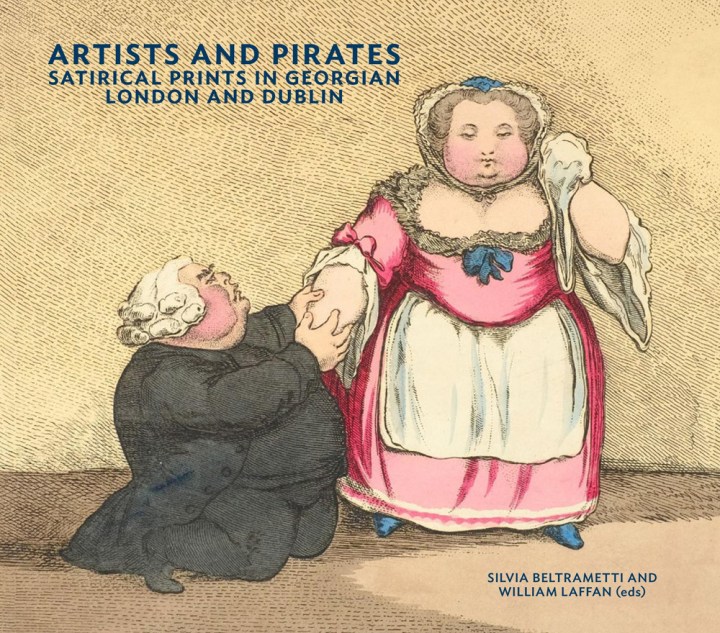 Single-sheet satire emerged in the louche milieu where politics and high society of late Georgian London intersected. Artists such as James Gillray (1756–1815) and Thomas Rowlandson (1757–1827) combined devastating wit with graphic brilliance to lampoon the great and the good, the vain and the vacuous, creating timeless images inspired by moments of fleeting controversy or scandal. Availing of a legal loophole under which copyright law protecting images did not apply to Ireland, a business of pirating caricatures by London satirists also flourished in Regency Dublin. The work of these Dublin plagiarists—which though derivative is paradoxically inventive and vibrant—as well as prints of Irish subject matter by English caricaturists such as Gillray, is the subject of this exhibition and the accompanying publication. Caricature dealt with the great political issues of the day, including religious toleration and contested concepts of liberty, but was also a vehicle to explore less elevated and often risqué (sometimes scatological or pornographic) subject matter. Single-sheet satire, Georgian England’s greatest artistic innovation, and its smaller but still dynamic offshoot in early nineteenth-century Dublin offer a fascinating—and very funny—chronicle of the human comedy.
Silvia Beltrametti and William Laffan, eds., Artists and Pirates: Satirical Prints in Georgian London and Dublin (Fenit, County Kerry: Churchill House Press with Centro Di, 2025), 184 pages, ISBN: 978-8870385939, €30. With additional contributions by James Kelly (Professor of History at Dublin City University), David Fleming (Professor of History at the University of Limerick), and Ben Casey (PhD candidate, University of Maynooth).
◊ ◊ ◊ ◊ ◊
Note (added 15 February 2026) — The original posting omitted the Chicago venue, though a note suggested the possibility, with reference to the Centro Di website. At The Driehaus Museum, the show will be titled Ink and Outrage: 18th-Century Satirical Prints in London and Dublin.
Exhibition | Savonnerie Carpets of Louis XIV
Opening soon (for just one week) at the Grand Palais:
Le Trésor Retrouvé du Roi-Soleil / The Rediscovered Treasure of the Sun King
Grand Palais, Paris, 1–8 February 2026
Curated by Wolf Burchard, Emmanuelle Federspiel, and Antonin Macé de Lépinay
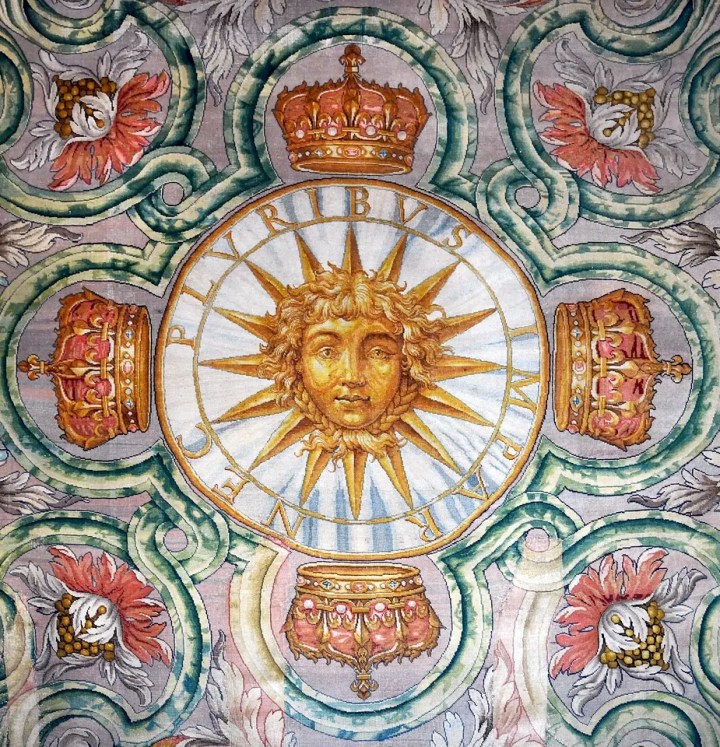 For the first time in history, the monumental carpets commissioned by Louis XIV for the Louvre’s Grand Gallery are brought together and displayed beneath the glass roof of the Grand Palais.
In 1668, as King Louis XIV prepared to make the Louvre his royal residence, he entrusted his First Painter, Charles Le Brun, with a bold and magnificent commission: the creation of 92 carpets, woven at the Savonnerie Manufactory, to adorn the floor of the palace’s most majestic gallery. Each carpet, nine meters wide, was meant to form a spectacular decorative ensemble, one of the most ambitious ever conceived for a royal palace. Fate, however, took a different course. Never installed in the Louvre, these treasures crossed the centuries through revolutions, sales, and dispersals. Today, 41 original carpets remain in the collections of the National Manufactories, 33 of which are complete. Brought together for the first time beneath the glass roof of the Grand Palais, alongside a carpet designed for the Galerie d’Apollon, they offer a display of rare magnificence. A unique and historic event, lasting just one week, inviting visitors to discover these jewels of French heritage in a setting worthy of their splendor.
Exhibition co-produced by the GrandPalaisRmn and Les Manufactures nationales – Sèvres & Mobilier national.
Curators
• Wolf Burchard | Curator, Department of European Sculpture and Decorative Arts, The Metropolitan Museum of Art, New York
• Emmanuelle Federspiel | Conservatrice en chef du patrimoine, inspectrice des collections des Manufactures nationales – Sèvres & Mobilier national
• Antonin Macé de Lépinay | Inspecteur des collections des Manufactures nationales – Sèvres & Mobilier national
Scénographie
• Clément Hado and Anthony Lelonge – Manufactures nationales
Exhibition | The Count of Artois, Prince and Patron
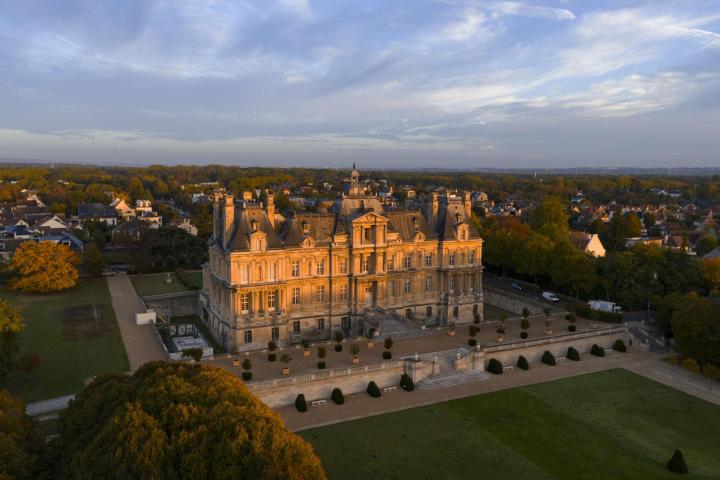
Château de Maisons, in Maisons-Laffitte, a northwest outer suburb of Paris, about 12 miles from the city center
(Photo: © EPV / Thomas Garnier)
◊ ◊ ◊ ◊ ◊
From the Château de Versailles:
The Count of Artois, Prince and Patron: The Youth of the Last King of France
Château de Maisons, Maisons-Laffitte, 14 November 2025 — 2 March 2026
The result of a partnership between the Centre des Monuments Nationaux and the Palace of Versailles, this exhibition traces the life of the Count of Artois (1757–1836), brother of Louis XVI and the future Charles X, through his residences, his artistic projects, and his passions. From the splendor of the Château de Maisons to the count’s exile in 1789, it reveals the journey of a refined prince at the heart of the 18th century.
The exhibition begins with a presentation of the Château de Maisons in the 18th century and then traces the life of the Prince of Artois from his birth to his exile. The prince’s personality, his life, his patronage, and his taste are explored through a great variety of objects: graphic arts, paintings, objets d’art, sculptures, furniture, curiosities, and books. The exhibition also highlights the prince’s interest in architecture, as he was the last owner of the Château de Maisons under the Ancien Régime. Sourced primarily from the collections of the Palace of Versailles, the exhibition benefits from additional prestigious loans from the National Archives, the National Library of France, the Louvre Museum, the Mobilier National, the Château de Fontainebleau, the Carnavalet Museum, the Musée de l’Armée – Invalides, the municipal library of Versailles, and the Fine Arts Museums of Amiens and Reims, as well as from private collections.
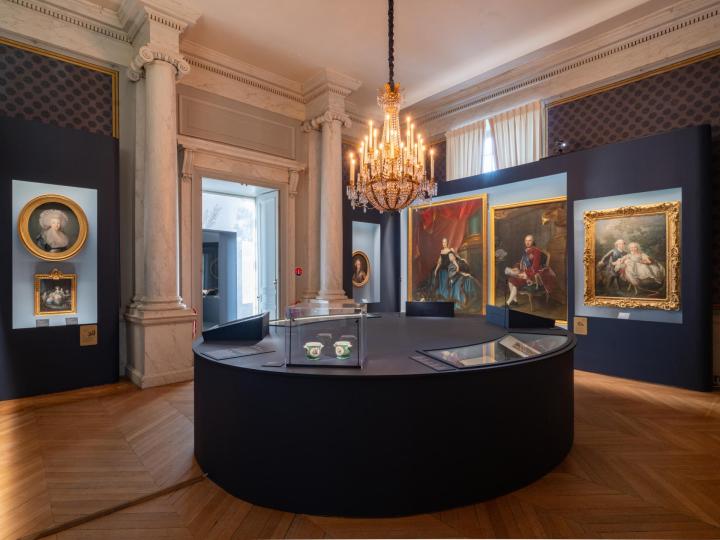
The exhibition as installed at the Château de Maisons
(Photo: © EPV / Thomas Garnier)
◊ ◊ ◊ ◊ ◊
The Count of Artois, Future Charles X
Reputed for his frivolous spirit and taste for luxury, the Count of Artois was both an attractive and controversial figure, eccentric yet conservative. Charles-Philippe of France, known under the title Count of Artois, was born in Versailles on 9 October 1757. He was the grandson of Louis XV and the brother of Louis XVI and the future Louis XVIII. He became King of France upon the death of the latter in 1824, under the name Charles X, and soon emerged as the representative of the most uncompromising Catholic faction. He was consecrated at Reims the following year. The July Ordinances of 1830, which restricted freedom of the press and dissolved the Chamber, triggered an uprising that became known as the Three Glorious Days. Faced with the revolt, Charles X abdicated and left France. His exile led him first to Scotland, then to Prague, and finally to Istria (a peninsula shared by Slovenia, Croatia, and Italy), where he died on 6 November 1836.
A Taste for Innovation
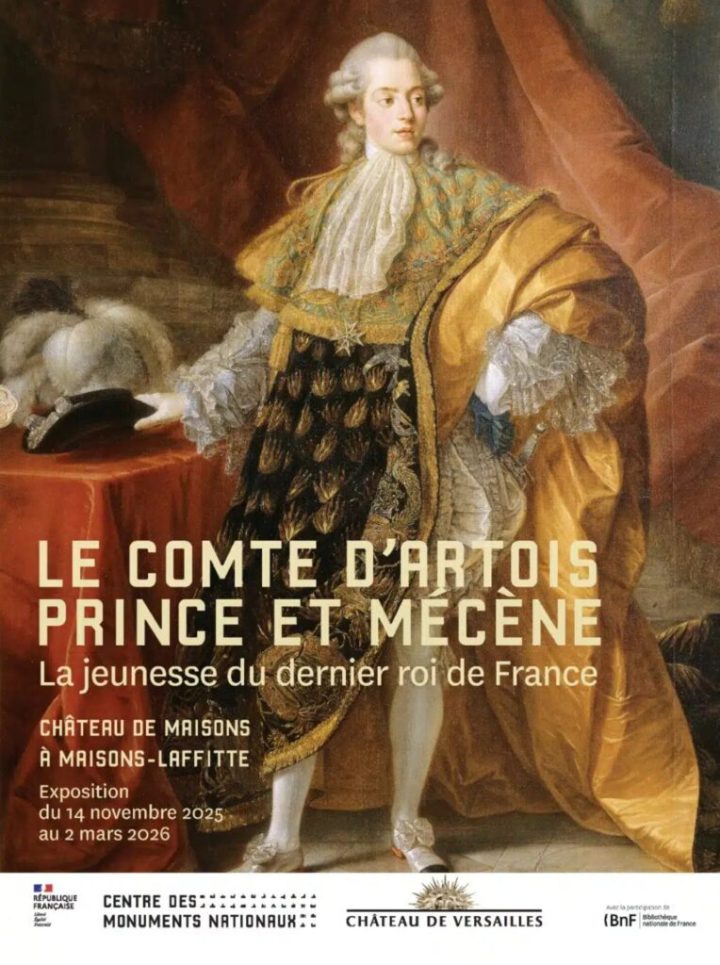 From an early age, the Count of Artois distinguished himself through his marked interest in splendor and refinement, coupled with an unrestrained passion for the modern currents of art and fashion. He was very close to Marie-Antoinette at the beginning of her reign, and they shared this common enthusiasm. However, unlike the queen, constrained by the demands of court etiquette, the Count of Artois enjoyed far greater freedom to adopt and promote the latest trends.
The château de Maisons, a masterpiece by François Mansart, was built from 1633 onward for René de Longueil, a magistrate of the Parliament of Paris. Designed as a pleasure residence, it became, as early as the 17th century, a place admired by the court. King Louis XIV himself visited it several times. In the following century, the estate entered a new era of splendor when, in 1777, the Count of Artois acquired it. He commissioned the architect François-Joseph Bélanger to transform the château with ambitious embellishment projects, refined interior decoration, and modern gardens. The count intended to make it both a setting for entertainment and a symbol of aristocratic refinement. But the upheavals of 1789 brought the work to a halt, and the prince’s property was confiscated.
After the Revolution, the château passed through various hands, from Marshal Lannes under the Empire to the banker Jacques Laffitte, who subdivided the park. The château was saved from ruin at the beginning of the 20th century thanks to its listing as a historic monument and its acquisition by the State. Today, restored and open to the public, the Château de Maisons remains a jewel of the Grand Siècle and still bears the mark of the Count of Artois’s lavish ambitions, whose tenure constitutes one of the most brilliant episodes in its history.
A Dialogue between Collections
The partnership established in 2013 between the Centre des Monuments Nationaux and the Palace of Versailles creates a dialogue between collections that are too often overlooked and major landmarks of France’s national heritage. Temporary exhibitions allow both institutions to pool their resources in order to offer as many people as possible the opportunity to discover, or rediscover, chapters of French history within the prestigious setting of national monuments. The CMN and the Palace of Versailles have concluded a deposit agreement that will allow the return and presentation, in situ, of works that were once at Maisons during the time of the Count of Artois, seized during the Revolution, and later kept at Versailles.
Curators
• Laurent Salomé, director of the National Museum of the Palaces of Versailles and Trianon
• Vincent Bastien, scientific collaborator at the Palace of Versailles
• Benoît Delcourte, chief curator at the Palace of Versailles
• Raphaël Masson, chief curator at the Palace of Versailles
• Clotilde Roy, responsible for enriching the collections of the Centre des Monuments Nationaux
• Gabriel Wick, doctor of history
Vincent Bastien, Benoît Delcourte, and Clotilde Roy, eds., Le Comte d’Artois, Prince et Mécène: La Jeunesse du Dernier Roi de France (Paris: Éditions du patrimoine, 2025), 96 pages, ISBN: 978-2757710821, €16.










 Enfilade
leave a comment