Exhibition | La Ménagerie de Chantilly
Now on view at the Château de Chantilly:
La Ménagerie de Chantilly
Château de Chantilly, 8 September 2021 — 3 January 2022
Curated by Florent Picouleau
 Archive material, books, plans, prints, and drawings provide a glimpse into a less well-known aspect of the history of the Château de Chantilly. The remarkable menagerie at Chantilly, with its collection of exotic animals, was one of the largest of its kind in the 17th and 18th centuries, rivaled only by that of Versailles.
À partir du Moyen Âge, posséder des animaux étrangers est un marqueur de richesse auquel prétendent, dès la Renaissance, les seigneurs de Chantilly. De la fin du XVIe siècle à celle du XVIIIe, le domaine appartient aux familles des Montmorency et des Bourbon-Condé. Pour se divertir et satisfaire leur curiosité, ils introduisent, d’abord dans le parc du château, puis dans l’une des plus extraordinaires ménageries du royaume, des animaux exotiques ou autochtones qui embellissent les jardins et valorisent l’image des propriétaires.
Les cheptels s’accroissent à tel point qu’à la fin du XVIIe siècle il apparaît indispensable de leur construire un lieu spécifique, une ménagerie au moins digne de celle de Louis XIV à Versailles. Point de convergence de la zoologie, de l’architecture animalière, de l’art, de la curiosité scientifique, elle s’inscrit pleinement, jusqu’à sa disparition amorcée en 1792, dans la vie culturelle et mondaine des XVIIe et XVIIIe siècles.
Dans le prolongement de l’exposition sur l’Orangerie de Chantilly proposée en 2017, le service des archives ressuscite désormais, au croisement de l’histoire, de l’histoire naturelle et de l’architecture, une autre partie du parc qui a, elle aussi, grandement contribué à la renommée du château et de ses propriétaires du XVIe au XVIIIe siècle.
Les visiteurs découvrent ainsi des documents rares ou inédits issus des archives et de la bibliothèque de Chantilly, du musée Condé, ou prêtés par la Bibliothèque de l’Institut de France et le Muséum national d’histoire naturelle. L’exposition leur dévoile les multiples sources du travail historique et la difficulté de la reconstitution.
Commissariat
Florent Picouleau, Chargé d’archives au musée Condé
The press packet (in French) is available as a PDF file here»
Florent Picouleau, La Ménagerie de Chantilly, XVIe–XIXe siècles (Dijon: Éditions Faton, 2021), 160 pages, ISBN: 978-2878443059, €35.
Exhibition | The King’s Animals

Now on view at Versailles:
Les Animaux du Roi / The King’s Animals
Château de Versailles, 12 October 2021 — 13 February 2022
Curated by Alexandre Maral and Nicolas Milovanovic
From its location in the heart of a vast forest in the Île-de-France region, the Palace of Versailles has always fostered a dynamic relationship with the animal kingdom. From animals as objects to be studied or collected to those used as political attributes and symbols of power, the exhibition explores the bond between the court of Versailles and animals—whether ‘companion animals’ (primarily dogs, cats, and birds), exotic beasts, or ‘wild’ creatures. It also brings two long-lost areas of the estate back to life: the Royal Menagerie and the Maze. Once the pride and joy of Louis XIV’s gardens, they can still be admired today in drawings, paintings and testimonies from the period.
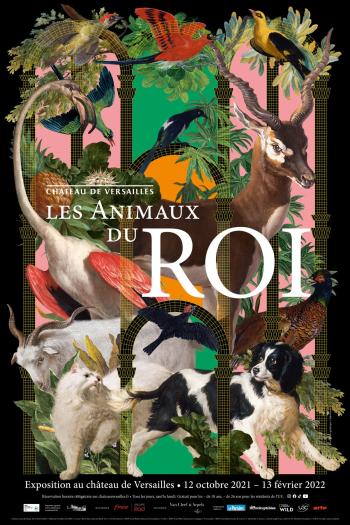 The Royal Menagerie, which the Sun King had installed close to the Grand Canal, was home to the rarest and most exotic animals—from coatis to quaggas, cassowaries to black-crowned cranes (nicknamed the ‘royal bird’)—constituting an extraordinary collection in which the king took ever greater pride. The animals in the menagerie were also a great source of inspiration for the artists of the time: they helped Claude Perrault with his Histoire naturelle, as well as serving the Royal Academy of Sciences as subjects for dissections and, later, Louis XV and Louis XVI, in their naturalism pursuits.
In addition to decorative items from the interior of the menagerie—particularly the paintings by Nicasius Bernaerts—on display are well-known garden sculptures, such as those in the Latona Fountain and the Maze. The latter comprised no fewer than 300 animals made from lead, arranged into a scene from Aesop’s fables and depicting a vision of the world in which animals make political, often moralising, always educational, pronouncements. In all, 37 sculptures recovered from the erstwhile grove will be on display.
More information about the Labyrinth (in French) is available here»
As well as the actual animals that were collected and studied, animal symbolism was used to represent power. The exhibition illustrates the link between the establishment of Versailles as a seat of power—from the construction of the palace itself on the site of Louis XIII’s old hunting lodge—and animal symbolism. Part of the exhibition is devoted to the daily hunt—a key activity pursued by warrior kings in times of peace as a form of training and demonstration of power. The hunt, consequently, features prominently in royal iconography.
 The animals themselves will return in droves to Versailles, because they never disappeared completely. They live on in the work of the king’s top painters; from Bernaerts, Boel and Le Brun, to Desportes and Oudry, many artists produced portraits of these exotic, wild and more familiar animals. As well as paintings, on view are portraits woven by the Gobelins Manufactory plus animals that were dissected, engraved, then preserved at the Academy of Sciences and in the King’s Garden, which is now the National Museum of Natural History. The exhibition also includes the skin of the Asian elephant gifted to Louis XV, which was donated to the Pavia Museum by Napoleon, and the skeleton of the very first elephant at Versailles, which was presented to Louis XIV by the king of Portugal and lived at Versailles for 13 years.
Finally, the exhibition addresses the role at court of companion animals for both the royal family and courtiers. As is evident from many portraits, companion animals were present everywhere, enlivening the royal apartments and brightening up the daily lives of children and adults alike. Many of the sovereigns, such as Marie Lesczcynska, wife of Louis XV, chose to surround themselves with their favourite animals. The court’s interest in the animal world led to greater sensitivity towards animals, in direct contrast to the Cartesian theory of animal-machines. Madame Palatine and, later, Madame de Pompadour, were particularly passionate about them.
Exhibition Curators
• Alexandre Maral, Curator General, Head of the Sculpture Department of the Musée National des Châteaux de Versailles et de Trianon
• Nicolas Milovanovic, Head Curator of the Paintings Department of the Louvre Museum
Alexandre Maral and Nicolas Milovanovic, eds., Les Animaux du Roi (Paris: Lienart éditions / musée national des châteaux de Versailles et de Trianon, 2021), 464 pages, ISBN: 978-2359063455, 49€.
Exhibition | Le Portrait Animal aux XVIIe et XVIIIe Siècles
Now on view at the Museum of Hunting and Nature:
Le Portrait Animal aux XVIIe et XVIIIe Siècles
Musée de la chasse et de la nature, Paris, 11 October 2021 — 20 March 2022
Curated by Karen Chastagnol
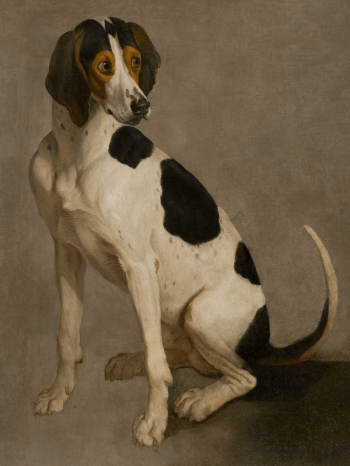
François Desportes, Étude pour mémoire du portrait de Pompée, ca. 1739, 94 × 72 cm (Dépôt de la Manufacture nationale de Sèvres).
Le Musée de la Chasse et de la Nature présente un parcours sur le portrait animalier en écho à l’exposition consacrée aux Animaux du roi au Château de Versailles. A travers différentes salles, cet accrochage retrace les caractéristiques de la représentation animale sous l’Ancien Régime.
Portraituré depuis la Renaissance, l’animal devient véritablement sujet à la cour comme à la ville depuis les commandes des portraits de ses chiens favoris que Louis XIV fit à François Desportes. En envisageant l’animal comme sujet iconographique et comme modèle, isolé ou non, les artistes nordiques et français des XVIIe et XVIIIe siècles développent largement ce genre pictural. Commande ou étude de travail, en pied, en tête, ou à travers des détails choisis, les animaux sont observés, analysés, et mis en image, seuls ou accompagnés, mais toujours montrés pour eux-mêmes, dans toute leur singularité. Entre esquisses et portraits, ces œuvres éclairent les différents aspects et enjeux du portrait animalier au moment où l’on passe d’une approche cartésienne de la nature animale à une évolution, au siècle des Lumières, du statut de l’animal qui est désormais de plus en plus perçu comme le miroir de l’homme.
A list of the twenty-one works in the exhibition (including links with more information) is available here»
Karen Chastagnol, Le portrait animal aux XVIIe et XVIIIe siècles dans les collections du musée de la Chasse et de la Nature (Paris: Fondation François Sommer, 2021), 60 pages, ISBN: 978-2957954827, €3.
Exhibition | Hidden Hands: Invisible Workers in Industrial England

Worcester Porcelain Manufactory, gilding attributed to Charlotte Hampton, Covered Dessert Tureen and Ladle from the ‘Bostock’ Service, ca. 1785–90, soft-paste porcelain (Museum of Fine Arts, Houston, the Rienzi Collection, Museum purchase funded by Mr. and Mrs. Harris Masterson III).
◊ ◊ ◊ ◊ ◊
Now on view at Rienzi:
Hidden Hands: Invisible Workers in Industrial England
Rienzi, The Museum of Fine Arts, Houston, 1 September 2021– 2 January 2022
The introduction of new materials and technological innovation in the 18th century sparked an increased demand for luxury objects and useful wares made of ceramics, glass, and metals. These technologies and techniques allowed manufacturers to create wares to appeal to a broader and more diverse audience. The Industrial Revolution affected not only how objects were made but also the organization of labor in workshops and factories. Behind famous names such as Josiah Wedgwood and Worcester Porcelain was a diverse, yet mostly unseen and nameless workforce composed of large numbers of women and children who were involved in various aspects of production and manufacture. Hidden Hands: Invisible Workers in Industrial England focuses on the many hands involved in the production of these wares. The exhibition also challenges established ideas about craftsmanship and artistic authorship.
Rienzi, the MFAH house museum for European decorative arts, presents special exhibitions twice a year.
Exhibition | Simon Watson: Portrait of a House

From Dublin’s Kevin Kavanagh gallery and Dürer Editions:
Simon Watson: Portrait of a House
Kevin Kavanagh, Dublin, 14–30 October 2021
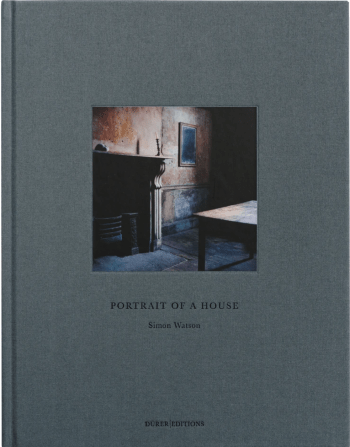
In Portrait of a House, Watson explores an eighteenth-century Georgian house on Dublin’s storied Henrietta Street. The house (Number Twelve) has a history of transformation, from the grand city home of wealthy merchants to the inner-city tenement dwelling for the poverty stricken. In a gentle Proustian fashion, the house reveals a quiet melancholy and the slow passing of time. The photographs were made over several years. The work is intended to be a poetic and intimate portrait.
 For over 30 years Simon Watson has exhibited his photographs in Europe and the U.S. including solo shows at the late Richard Anderson Gallery in New York and the Auschwitz Museum in Poland. More recently he has shown his paintings at the Galerie Rideau de Fer in France. His work is included in museums and in public and private collections worldwide. Watson has been a regular contributor to The New York Times T Magazine, W Magazine, Vogue, and Vanity Fair. His recent book The Lives of Others was published by Rizzoli in 2020.
Simon Watson, Portrait of a House (Dürer Editions, 2021 ), 64 pages, ISBN: 978-1838314309 , first edition of 1000 copies, €45; special edition of 50, €350; limited edition of 10, €750; collector edition of 5, €1850.
Exhibition | On Stage! Costume Designs
From the press release for the exhibition:
On Stage! Costume Designs from the Edmond de Rothschild Collection
Louvre, Paris, 28 October 2021 – 31 January 2022
Curated by Jérôme de La Gorce, Mickaël Bouffard, and Victoria Fernández Masaguer
 The Edmond de Rothschild Collection boasts 1,644 sumptuous costume designs for balls, ballets, masquerades, and operas given in France from the reign of François I to that of Louis XIV. Acquired in the late 19th century by Baron de Rothschild, they constitute an extraordinary resource for understanding the world of spectacle during the Ancien Régime. The exhibition showcases a hundred of the finest pieces from this unique corpus.
Cette exposition réunit une sélection d’une centaine de feuilles provenant de l’un des plus importants fonds de dessins d’habits de spectacle, celui des volumes de Costumes de fêtes, de ballets et de théâtre au temps de Louis XIV offerts par le baron Edmond de Rothschild (1845–1934) au musée du Louvre. Leur richesse permet de dévoiler la diversité d’invention des artistes qui habillèrent les divertissements montés à la Cour de France et de Lorraine du milieu du XVIe siècle à l’aube du XVIIIe siècle : le Primatice, Jacques Bellange, Daniel Rabel, Henri Gissey et Jean Berain notamment. Les véritables ouvrages textiles ayant disparu pour la plupart, ces dessins sont des sources inestimables pour l’histoire du costume, de la danse, de la musique et des spectacles en France durant cette période.
Divisée en quatre sections, cette exposition consacre une première salle à l’atelier du dessinateur de costumes qui entend explorer la transmission de modèles entre les différentes générations d’artistes et les spécificités techniques propres à ce type de dessin. Le parcours propose ensuite de suivre les principaux genres spectaculaires représentés dans ces recueils, qui correspondent aux intérêts de l’un des plus grands collectionneurs de dessins de fêtes et divertissements de la fin du XVIIe et du début du XVIIIe siècle, Claude Pioche, sieur Du Rondray (1660/1665–1733), à qui une partie des feuilles assemblées dans ces volumes aurait appartenu :
Les divertissements équestres : les costumes des cavaliers et des chevaux deviennent l’un des attraits majeurs de ces compétitions destinées tant à prouver la valeur que la galanterie des concurrents dans la lice. Par leur magnificence et l’émerveillement qu’ils suscitent, ils contribuent à l’affirmation du pouvoir.
Les bals, ballets et mascarades : dans la seconde moitié du XVIe siècle, un caractère à la fois bizarre et poétique guide les artistes qui produisent des « habits de masques » pour les bals et mascarades. Au temps de Louis XIII, le sérieux et le grotesque se mêlent aux influences mythologiques, exotiques et bucoliques, codes que le ballet de Cour et la comédie-ballet se réapproprient au cours du XVIIe siècle.
Les tragédies en musique : ce nouveau genre musical français réunit une multitude de chanteurs, danseurs, musiciens et acrobates qu’il est nécessaire d’habiller harmonieusement. C’est le défi que relève le créateur des Menus Plaisirs Jean Berain, en faisant preuve d’une invention sans pareil dans la variation des coupes, des couleurs et des ornements.
Grâce à une campagne de restauration conduite par l’atelier de restauration du département des Arts graphiques du musée du Louvre, l’ensemble du corpus de dessins de costumes, soit 1644 feuilles, a été restauré et remonté dans des papiers de conservation neutre.
Commissaires de l’exposition
• Mickaël Bouffard, chargé de recherche, Centre d’Étude de la Langue et des Littératures Françaises (CELLF)
• Jérôme de La Gorce, directeur de recherche émérite, CNRS
• Victoria Fernández Masaguer, chargée d’études documentaires, département des Arts graphiques, musée du Louvre
Jérôme de La Gorce, Mickaël Bouffard, et Victoria Fernández Masaguer, En scène! Dessins de costumes de la collection Edmond de Rothschild (Paris: Louvre éditions / Lienart, 2021), 232 pages, ISBN: 978-2359063240, 29€.
Exhibition | The Salem Witch Trials: Reckoning and Reclaiming

Trunk, made perhaps in Boston or London, 1670; wood, seal skin, iron (Salem: Peabody Essex Museum, Gift of George Rea Curwen, 1898, 3970; photograph by Kathy Tarantola ). The trunk belonged to Jonathan Corwin (1640–1718), one of the magistrates involved in the 1692 trials; Corwin resided at the building in Salem now known as the Witch House (the only surviving structure with direct ties to the trials).
◊ ◊ ◊ ◊ ◊
From the press release (24 August 2021) for the exhibition:
The Salem Witch Trials: Reckoning and Reclaiming
Peabody Essex Museum, Salem, Massachusetts, 18 September 2021 — 20 March 2022
Curated by Lydia Gordon, Dan Lipcan, and Paula Richter
This fall, the Peabody Essex Museum (PEM) presents a new exhibition about the tragic events and lasting legacy of the 1692 witch trials. The Salem Witch Trials: Reckoning and Reclaiming dives into the circumstances that fueled the crisis while recognizing the individuals who rose to defend those unjustly accused. The exhibition features authentic 17th-century court documents and objects as well as two compelling contemporary responses made by artists with direct ancestral links to the trials. Fashion by Alexander McQueen and photography by Frances F. Denny revive the impact of Salem’s historical trauma and provide a new perspective on a centuries-old story.
“More than 300 years after the Salem witch trials, the personal tragedies and grave injustices that occurred still provoke reflection as we continue to reckon with the experiences of those involved,” said Dan Lipcan, the Ann C. Pingree Director of PEM’s Phillips Library and one of the exhibition co-curators. “Thanks to these artists’ mining of Salem’s painful history, we are able to put these events into context with our lives today and imagine how we might courageously mold our communities moving forward while continually advocating for justice and tolerance.”
PEM holds the world’s largest collection of Salem witch trials materials, including more than 500 original documents on deposit from the Massachusetts Supreme Judicial Court. Selections of these documents along with furnishings and personal objects help tell the tragic and true story of those accused, including a trunk that once belonged to Jonathan Corwin, the magistrate who resided at the 17th-century building in Salem that is today known as the Witch House.
 The exhibition opens with the power dynamics, fear and community tensions that plagued Salem in the summer of 1692. The extraordinary crisis involved more than 400 people and led to the deaths of 25 innocent people between June 1692 and March 1693. The panic grew from a society threatened by war and a malfunctioning judicial system in a geographical and cultural setting rife with religious conflict and intolerance.
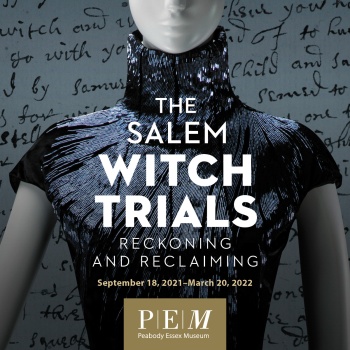
The fashion designer Alexander McQueen’s Fall/Winter 2007 collection, In Memory of Elizabeth How, 1692, was based on his Salem research into his ancestor Elizabeth How, one of the first women to be condemned and hanged as a witch in July 1692. More than three centuries after How’s death, McQueen and Sarah Burton, now the creative director for the House of McQueen, visited Salem. Selections from the resulting intensely personal and autobiographical collection will be on view, including the form-fitting velvet press sample runway dress from PEM’s collection, with a starburst hand-sewn in iridescent gunmetal-gray bugle beads that radiates down the neckline and across the chest and shoulders. Set in context, nearby authentic documents help tell How’s story, from the initial complaint filed May 28, 1692 to the warrant for her arrest, her examination in court, testimony, indictment, pardon, and final restitution to her family in 1712.
“Alexander McQueen’s theatrical fashion show, featuring his powerful designs, reclaimed How’s power and memory from the false accusation that led to her unjust execution,” said exhibition co-curator, Paula Richter. “His visit to key sites in Salem and research into his ancestestry left a lasting impact on him. The resulting designs include symbols of witchcraft, paganism, magic and religious persecution.”

Frances F. Denny, Karen, (Brooklyn, New York), 2016, from Major Arcana: Portraits of Witches in America series, archival pigment print, 26 × 20 inches (Courtesy of the artist and ClampArt, New York, NY).
From a woman in hospital scrubs to a local Salem shop owner, photographer Frances F. Denny’s series Major Arcana: Portraits of Witches in America reclaims the meaning of the word ‘witch’ from its historical use as a tool to silence and control women. As a descendent of both accusers and the accused, Denny set out on a journey to discover modern-day witches. She encountered healers, artists and tarot readers, a vast spectrum of identities and spiritual practices. The exhibition features 13 portraits and accompanying personal essays, each revealing a fascinating glimpse into the contemporary spiritual movement.
“Frances Denny’s portraits not only claim agency for those who identify as witches, but they also diversify our perception of what a witch is,” said Lydia Gordon, PEM’s Associate Curator and exhibition co-curator. “What do witches even look like? These powerful portraits do not festishize, but rather reveal multidimensional, self-possessed individuals. They invite careful study and consideration and remind us that identity is most truthful when it is self defined.”
The Salem Witch Trials: Reckoning and Reclaiming is organized by the Peabody Essex Museum. Carolyn and Peter S. Lynch and The Lynch Foundation, Jennifer and Andrew Borggaard, James B. and Mary Lou Hawkes, Kate and Ford O’Neil, and Henry and Callie Brauer provided generous support. We also recognize the generosity of the East India Marine Associates of the Peabody Essex Museum.

Part of the Salem Witch Memorial, designed by Maggie Smith and James Cutler, dedicated 5 August 1992 (Photo by Kathy Tarantola/PEM).
Exhibition | Gilded Figures: Wood and Clay Made Flesh

Pedro de Mena, Bust of Saint Acisclus, ca. 1680, polychrome and gilded wood
(New York: Hispanic Society Museum & Library)
◊ ◊ ◊ ◊ ◊
Now on view at HSM&L:
Gilded Figures: Wood and Clay Made Flesh
The Hispanic Society Museum and Library, New York, 15 October 2021 — 9 January 2022
Gilded Figures: Wood and Clay Made Flesh offers a rare glimpse of a major art form from the early modern Hispanic World: polychrome sculpture. Building on the legacy which Archer M. Huntington left the museum, the institution has added to its holdings of this material so that today the HSM&L boasts the finest collection of these works outside Spain. Until recently, this vivid sculpture went largely unnoticed, but now it elicits enthusiastic responses. Even so, this exhibition is the first event in New York to feature this art form in the last two decades. The over twenty wood and terracotta sculptures exhibited not only attest to the high level of artistic production, but they also highlight the role of women artists and show how the stylistic conventions of Spain were adapted in the New World.

Luisa Roldán, The Mystical Marriage of Saint Catherine, 1692–1706, painted terracotta (New York: Hispanic Society Museum & Library).
Gilded Figures begins with late Gothic and early Renaissance works by the finest sculptors from Castile. Among these, a superb monumental relief of the Resurrection attributed to Gil de Siloe reveals the dazzling talent of those artists. How decisively Italian models shaped the work of following generations appears in the sixteenth-century reliquary busts by Juan de Juni. The Baroque period witnessed an impressive flowering in which figures like Pedro de Mena achieved effects of stunning naturalism as seen in his St. Acisclus. The exhibition also draws attention to the role of women artists with works by Luisa Roldán and Andrea de Mena, the first of whom achieved spectacular success in her lifetime rising to the position of Royal Sculptor (escultora de cámara).
The last section of the exhibition focuses on sculpture from Latin America, with works characterized by an impressive range of scale and emotion. A monumental sixteenth-century relief of Santiago Matamoros (St. James the Moorslayer) from Mexico reveals how Spanish models were transplanted and adapted to the needs of the Catholic church as it embarked on a campaign to convert the indigenous people. In addition to Mexico, Ecuador witnessed a flourishing of polychromed sculpture in which sculptors in Quito produced masterpieces. Painted with a vivid attention to detail, statues like the Virgin of Quito or St. Michael show the powerful effects these talented artists achieved. The exhibition concludes with perhaps the most dramatic display from this school: Caspicara’s Four Fates of Man. In these figures, the sculptor depicts a range of emotions with consummate skill and a delicate touch as part of a theological lesson to inspire people to persevere in their faith.
P R O G R A M M I N G
Wednesday, November 17, 6.00pm
Orland Hernandez-Ying (Curatorial Research Fellow), Gilded Figures: 18th-Century Sculpture in the Real Audience de Quito
A presentation of the iconographic innovations of three particular sculptures from Ecuador covering issues of the indigenous predilection for angelic representations in art and santo-making techniques (carving, painting, gilding, encarnados, etc.) and the ordenanzas. The examples demonstrate how the extraordinary aesthetic quality of pious sculpture in the Real Audience de Quito was admired overseas during the colonial period with works shipped to other American colonies as well as to Spain. Reservations are required; please contact events@hispanicscoiety.org, indicating the number of guests and the name of the event.
Saturday, November 20 and Saturday, December 4, 3.00pm
Gilded Figures: Somatic Walk
Join Nicolás Dumit Estévez, Hispanic Society Artist Research Fellow, who will guide visitors through an embodied exploration of emotions germinated from the sculptures in the exhibition, as well as those arising during our current times. We will investigate individually and as a group how the awareness and articulation of emotions can lead to the process of healing and balance. Reservations are required; please contact events@hispanicscoiety.org, indicating the number of guests and the name of the event.
Tuesday, December 14, 6.00pm
Gilded Figures: Roundtable Discussion
• Jerrilynn Dodds (Harlequin Adair Dammann Chair in History of Art, Sarah Lawrence College)
• Hélène Fontoira Marzin (Head of Conservation, Hispanic Society Museum & Library)
• Edward J. Sullivan (Helen Gould Shepard Professor in the History of Art, Institute of Fine Arts and Department of Art History, New York University)
• Amanda Wunder (Associate Professor, City University of New York, Lehman College, Department of History; and CUNY Graduate Center for Art History, History, and Global Early Modern Studies)
• Moderated by Patrick Lenaghan (Curator of Prints, Photographs, and Sculptures, Hispanic Society Museum & Library)
Join us for this lively, informal conversation about the unique field of polychrome sculpture. ‘Outside’ perspectives and reactions will illicit new understanding of these painted sculptures made of wood and clay. Reservations are required; please contact events@hispanicscoiety.org, indicating the number of guests and the name of the event.
At Sotheby’s | In an Indian Garden: Company School Paintings
From the press release (via Art Daily) for the sale:
In an Indian Garden: The Carlton Rochell Collection of Company School Paintings
Sotheby’s, London, 27 October 2021
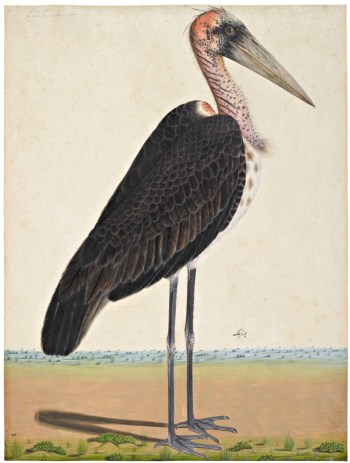
Lot 3: A Lesser Adjutant Stork (Leptoptilos Javanicus) in a Landscape, Company School, Lucknow, ca. 1775–85 (est. £60,000–80,000). The painting was included in The Wallace Collection’s 2020 exhibition Forgotten Masters: Indian Painting for the East India Company.
In October Sotheby’s will hold the first auction dedicated solely to Company School paintings, the work of Indian master artists who were commissioned by East India Company officials in the 18th and 19th centuries. Ranging in their subject matter from individual animal and human studies to complex architectural panoramas, the remarkable corpus of paintings encapsulates on paper the rich fauna, flora, and architecture of the Indian subcontinent. The 29 works in the auction are being offered by the American collector and art dealer Carlton C. Rochell, Jr., who spent the first 18 years of his career at Sotheby’s, where he founded the Indian and Southeast Asian Art Department in 1988. He was on the Board of Directors and served as Managing Director of Sotheby’s Asia. In 2002, Rochell opened his own gallery in New York.
In 2019 and 2020, The Wallace Collection presented Forgotten Masters: Indian Painting for the East India Company, curated by renowned writer and historian William Dalrymple. The ground-breaking exhibition brought to the fore the names of some of the finest Indian painters working on paper during the late Mughal period, introducing the public to the names of these truly great artists. Many of those same names—Shaykh Zayn al-Din, Ram Das, Bhawani Das, and Ghulam Ali Khan—are represented in this sale, with seven of the works having been loaned to The Wallace Collection exhibition. Most of the others have never been on public view and are emerging for the first time in decades.
“I first began to collect these lesser-known masterpieces over two decades ago simply for my personal enjoyment, my imagination having been captured by their ‘East meets West’ aesthetic. When they were painted, these works were the principal way in which India could be revealed to those in Great Britain, who otherwise could only hear stories about this sumptuous land. The meticulous ‘miniature’ style was scaled up to depict birds, animals, and botanical studies with remarkable lifelike detail, with the results rivalling any Western artists who recorded natural history and travel. Many years on, as they are beginning to take their rightful place in world art, these pieces can now inspire a new generation of collectors who, I hope, will cherish them as I have.” —Carlton C. Rochell, Jr.
“This remarkable collection contains quite simply some of the great masterpieces of Indian painting, brought together by a collector with an incredibly fine eye. This is a unique opportunity to purchase some of the greatest masterpieces of a genre that is only now beginning to receive its full credit.” —William Dalrymple, Writer, Historian, and Curator of Forgotten Masters
“These delightful paintings reflect a fascination and passion for India’s culture and history, from Lucknow to Calcutta to Delhi and Agra, and showcase a remarkable hybrid style merging Mughal and European elements. Both the patronage and the painters provide a great deal of interest to viewers, no more so than now, when this genre of painting is finally receiving the full attention it deserves. These works are the product of true collaboration—not grand portraits of the patrons themselves, but tableaux of everyday human activity, as well as meticulous studies of nature and vernacular architecture.” —Benedict Carter, Sotheby’s Head of Sale
In An Indian Garden features many works from the most renowned series of Company School paintings, including albums commissioned by Sir Elijah and Lady Impey, the Fraser brothers, Viscount Valentia, and Major General Claude Martin. The most famous is that of the Impey family, who created an enchanting menagerie of animals in their gardens in Calcutta and hired local artists to paint the surrounds, with more than half of their over 300-strong collection depicting birds. The Impey Collection was sold at auction in London in 1810, with several pieces held in international institutions, including The Metropolitan Museum of Art in New York—with a similar dramatic image of the Great Indian Fruit Bat—and the Victoria and Albert Museum in London. Perhaps the person who sparked the fashion for such commissions was merchant, soldier, architect, hot air balloonist, and collector Major General Claude Martin, and the sale offers a Lesser Adjutant Stork from his collection, which survives as a masterpiece of the genre. More recently, these works have passed through such hands as those of Jacqueline Kennedy Onassis, who for many years owned the arresting study of a Stork Eating a Snail; renowned South Asian paintings collector Edwin Binney 3rd; leading scholar and curator Stuart Cary Welch; and former United States Ambassador to Morocco, The Hon. Joseph Verner Reed, Jr.
Prior to the stand-alone auction in London on 27 October, highlights of In an Indian Garden went on view in Sotheby’s galleries in New York (17–20 September), Hong Kong (7–11 October), and London (22–26 October).
Exhibition | La Surprise: Watteau in Los Angeles
Opening next month at the The Getty:
La Surprise: Watteau in Los Angeles
The Getty Center, Los Angeles, 23 November 2021 — 20 February 2022
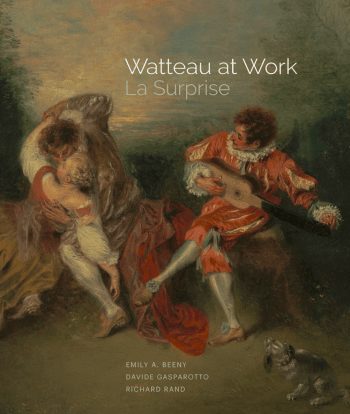 Graceful scenes of courtship, music and dance, strolling lovers and theatrical characters: this is the imaginary world conjured by the greatest French painter and draftsman of the 18th century, Antoine Watteau (1684–1721). Los Angeles is home to an extraordinary group of Watteau’s works. This focused exhibition, marking the 300th anniversary of the artist’s death, brings together a dozen of them from public and private collections and celebrates the Getty’s recent acquisition of an exquisite example: the painting La Surprise. The picture belongs to what was a new genre of painting invented by the artist himself—the fête galante. These works do not so much tell a story as set a mood: one of playful, wistful, nostalgic reverie. Esteemed by collectors in Watteau’s day as a work that showed the artist at the height of his skill and success, La Surprise vanished from public view in 1848, reemerging only in 2007. The Getty Museum acquired the painting in 2017.
Emily Beeny, Davide Gasparotto, and Richard Rand, Watteau at Work: La Surprise (Los Angeles: J. Paul Getty Museum, 2021), 88 pages, ISBN: 978-1606067352, $25.
La Surprise by Antoine Watteau has never before been the subject of a dedicated publication. Marking the three hundredth anniversary of Watteau’s death, this book considers the painting within the context of the artist’s oeuvre and discusses the surprising history of collecting works by the artist in Los Angeles.
Emily A. Beeny, former associate curator of drawings at the J. Paul Getty Museum, is curator in charge of European paintings at the Fine Arts Museums of San Francisco. Davide Gasparotto is senior curator of paintings and chair, curatorial affairs, at the J. Paul Getty Museum. Richard Rand is associate director for collections at the J. Paul Getty Museum.
C O N T E N T S
Timothy Potts, Director’s Foreword
Acknowledgments
Richard Rand, Jean Antoine Watteau, Three Hundred Years Later
Davide Gasparotto, Rediscovering a Masterpiece: Watteau’s La Surprise
Emily Beeny, Quelle Surprise! Watteau in Los Angeles
Plates
Works in the Exhibition
References
Index










leave a comment