Installation | Marie-Antoinette: An Eye for Beauty
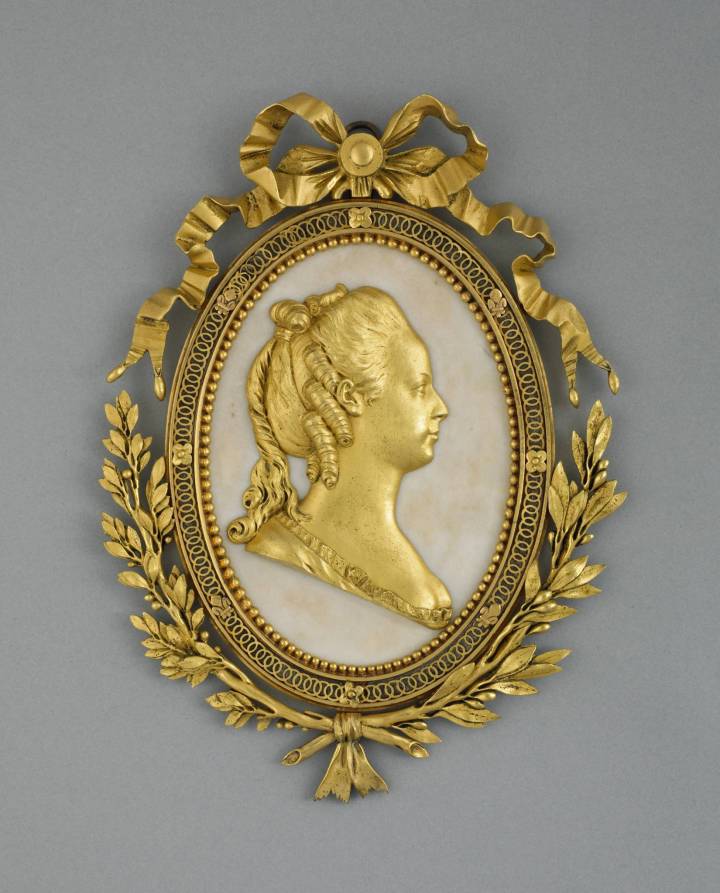
Antoine-François Lebrun (possibly), Queen Marie Antoinette Medallion, ca. 1774, bronze, marble, and gilt, 13 inches high (London: The Wallace Collection, S393; S392 is the object’s paired partner).
Now on view at The Wallace Collection:
Marie-Antoinette: An Eye for Beauty
The Wallace Collection, London
2 February — 31 March 2026
Few figures fire the imagination quite like Marie-Antoinette (1755–1793). Born an archduchess at the glittering Austrian court, her destiny was decided by her marriage to the future Louis XVI of France. She soon attuned herself to the French vogue and the glamour of life at Versailles, while also cultivating a discerning eye for the beautiful. Once crowned queen, she used her almost limitless wealth and influence to commission interiors and artworks of unparalleled refinement, right up until the dawn of revolution. The Wallace Collection cares for some of the world’s greatest works of art associated with the ill-fated queen. Discover a selection of these during this special two-month trail, which offers a tantalising glimpse into her sumptuous, lost world.
Exhibition | 1725: Native American Allies at the Court of Louis XV
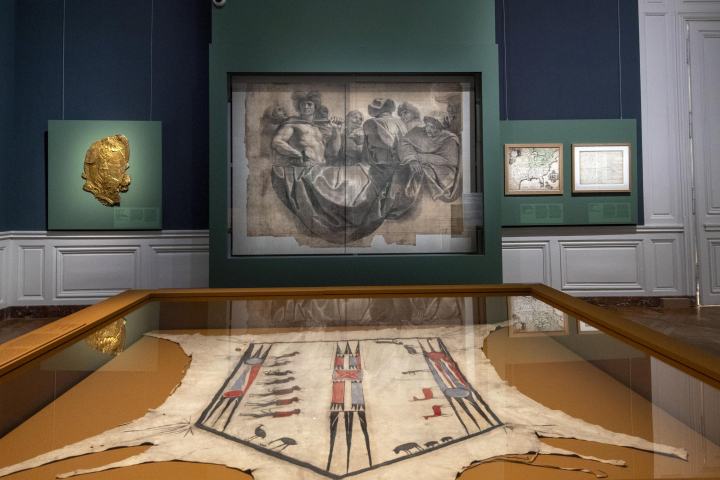
1725: Native American Allies at the Court of Louis XV
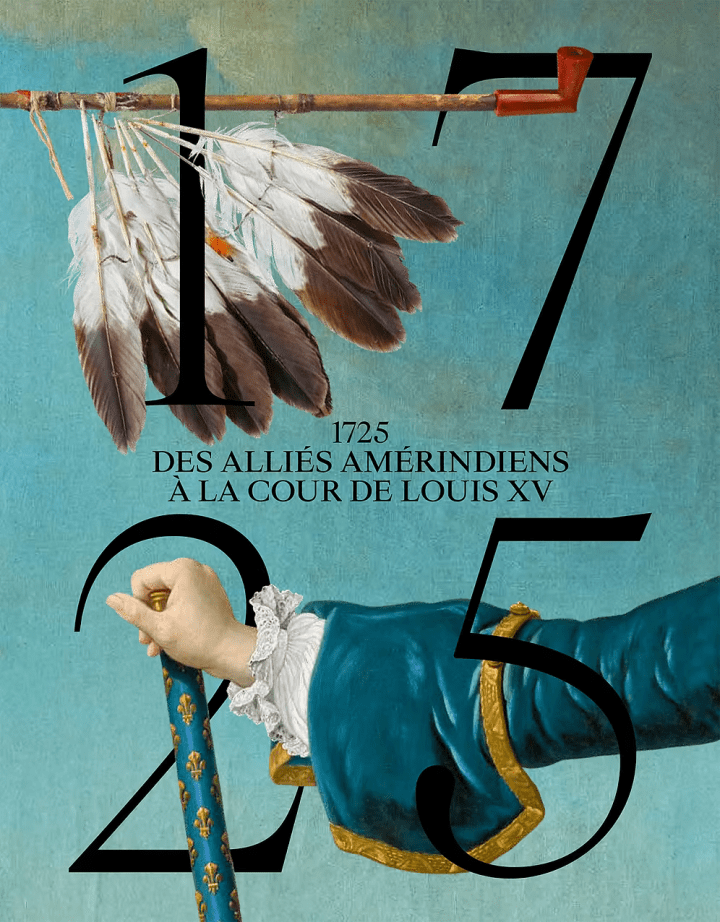
1725: Des alliés amérindiens à la cour de Louis XV
Château de Versailles, 25 November 2025 — 3 May 2026
Curated by Jonas Musco, Paz Núñez-Regueiro, and Bertrand Rondot
In 1725, four Native American chiefs and a Native American woman from the Mississippi Valley were received in France as part of an unprecedented diplomatic mission. The event marked the climax of efforts by the French crown to build relationships with Indigenous nations in North America, amidst ongoing conflicts between European colonial powers and the Indigenous allies. This exhibition offers a rare opportunity to explore the history and lives of the Native American nations of the Mississippi Valley in the 18th century, their connections with France, the extraordinary Atlantic crossing undertaken by their leaders, and their meeting with Louis XV, the royal court, and the capital.
The Indigenous Mississippi Valley in the 18th Century
 The first section of the exhibition immerses visitors in the complex world of Native American societies of the Mississippi Valley at the time the French began exploring and settling the area. The encounter between these two civilizations soon led to a lasting alliance based on close diplomatic ties. The exhibition introduces the major Indigenous nations at the heart of this story through a contemporary map specially created for the show, alongside rare 18th-century maps. Some of these nations were already allied with the French through earlier treaties, notably reinforced in 1701 by the Great Peace of Montreal, a historic treaty exceptionally presented to the public.
Through a series of rare portraits—some of the only surviving from that period—a different image of Native societies emerges, far from the 19th-century Plains stereotypes. The selection of artefacts includes a remarkable feathered headdress made in the 18th century for a high-ranking chief, likely the oldest of this type known in the world. The presentation continues with a glimpse into their seasonal way of life, alternating between farming and hunting. Their relationship with the living world is also spiritual, involving social connections with more-than-human beings, such as the thunderbirds—powerful spirits often depicted on hides presented to the French as diplomatic gifts.
The Founding of a French Colony: Louisiana
The second section focuses on the close ties developed between the French and their Indigenous allies after the founding of the Louisiana colony. A selection of objects illustrates the cultural blending that emerged in the early 18th century: war clubs decorated with fleur-de-lis, necklaces made of imported beads, and European knives sheated in Native-style scabbards. The most emblematic items are a peace pipe richly decorated with feathers and a painted hide depicting it.
In 1724, to strengthen the alliance, the Compagnie des Indes proposed inviting the Native leaders to the court of young Louis XV. Étienne Véniard de Bourgmont, commander of the Missouri post, contacted the Otoe, Osage, and Missouria nations—their responses, transcribed in diplomatic correspondence, will be featured in the exhibition—while the Illinois sent Chicagou, the Michigamea chief and conveyed the words of Mamantouensa, chief of the Kaskadia, through Jesuit missionary Nicolas Ignace de Beaubois.
Forming the delegation was not without difficulty. Several other nations planned to send representatives, but the shipwreck of the vessel meant to transport them to France discouraged many from continuing. Ultimately, the delegation consisted of four chiefs and the daughter of a Missouri chief. They set sail in the spring of 1725. From that moment, the delegates were treated as international ambassadors, and a document reveals they were served ‘at the captain’s table’, an honor reserved for elite guests.
The Delegation’s Reception at Court
The final section traces the steps of the Native American chiefs’ visit to France—Paris, Versailles, and Fontainebleau—and details the royal court’s diplomatic protocol for receiving foreign embassies. Thanks to invaluable accounts from the Mercure de France, we follow their movements: meetings with the directors of the Compagnie des Indes, the organizers of the journey, and with princes and princesses of the royal blood.
The exhibition highlights the audience granted by Louis XV to the chiefs on November 25, 1725, at Fontainebleau. This was the most symbolic moment of the visit, during which the chiefs gave speeches to the king, who responded with marked interest in his guests. After touring Versailles, Marly, and Trianon, the delegates were honored with an invitation to hunt alongside with the king at Fontainebleau. They gladly accepted and participated ‘in their own way’—on foot and armed with bows.
The exhibition pathway, punctuated with excerpts from the Mercure de France, presents gifts similar to those exchanged between the Native delegates, the king and the government: prestigious headdresses, bows, and a peace pipe for the Native visitors, and a gold medal and other precious artifacts for the French. Portraits of the main French figures and, for the first time in France, a portrait of a Miami Native American will bring this historic meeting to life.
The exhibition concludes with a reference to the ‘Danse des Sauvages’, a famous piece by Jean-Philippe Rameau added to his opera Les Indes galantes. Inspired by the dance of two Native chiefs at the Comédie-Italienne, this rarely discussed source of inspiration reveals the enduring cultural impact of the 1725 delegation in France.
A special visitor program will allow guests to hear from Native members of the exhibition’s scientific committee as they reflect on the modern-day relationship between their nations and France, echoing this long-shared history.
Curators
• Jonas Musco, Historian, Research Associate
• Paz Núñez-Regueiro, Chief Curator of Heritage, Musée du quai Branly–Jacques Chirac
• Bertrand Rondot, Chief Curator of Heritage, Palace of Versailles
The exhibition is developed within the framework of the research project CRoyAN – Royal Collections of North America—coordinated by the musée du quai Branly–Jacques Chirac, in dialogue with four Native nations: the Choctaw Nation of Oklahoma, the Quapaw Nation, the Miami Tribe of Oklahoma, and the Peoria Tribe of Indians of Oklahoma. The exhibition is organized thanks to the patronage of The CORA Foundation. The exhibition is co-organized with the musée du quai Branly–Jacques Chirac.
Jonas Musco, Paz Núñez-Regueiro, and Bertrand Rondot, 1725: Des alliés amérindiens à la cour de Louis XV (Paris: Liénart, 2025), 160 pages, ISBN: 978-2359064766, €29.
Exhibition | Drawn to Venice
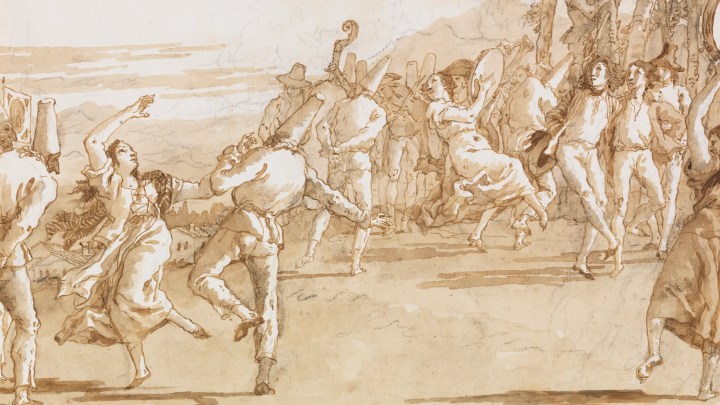
Giovanni Domenico Tiepolo, La Furlana (The Friulian Dance), detail, no. 31 from the series Divertimento per li regazzi (Entertainment for Children), ca. 1790–1800, pen and brown ink and brown wash over black chalk, 35 × 47 cm (Fine Arts Museums of San Francisco, 1967.17.133).
◊ ◊ ◊ ◊ ◊
Now on view in San Francisco:
Drawn to Venice
Legion of Honor, Fine Arts Museums of San Francisco, 24 January — 2 August 2026
Spanning the Renaissance to the Rococo period, this exhibition celebrates the vitality and originality of the arts in Venice and the Veneto region through more than 30 drawings and prints. In the 16th century, Venice became a thriving artistic center rivaling Rome and Florence. Patronage fostered creative competition among family workshops, such as the Bassano and Tintoretto families. After a period of decline, Venice experienced a second golden age in the 18th century. This was illustrated with dazzling bravura by humorous scenes from contemporary life by Giovanni Battista Tiepolo (1696–1770) and his son Giovanni Domenico Tiepolo (1726–1804), as well as alluring portraits by Rosalba Carriera (1673–1757). Glistening maritime views by Francesco Guardi (1712–1793) and Canaletto (1697–1768) crystallized the imagery of the Venetian landscape for centuries to come. From landscapes and figure studies to designs for sumptuous decorations, the works presented in this exhibition offer a fresh look at this memorable place in history and art.
This exhibition is designed in dialogue with Monet and Venice, on view from 21 March until 26 July 2026 at the de Young.
Exhibition | Johan Tobias Sergel: Fantasy and Reality
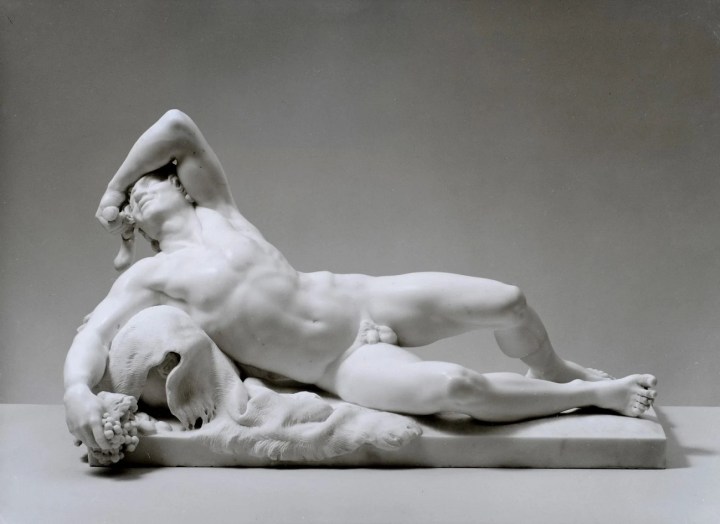
Johan Tobias Sergel, The Faun, 1774, marble, 46 × 46 × 84 cm
(Nationalmuseum, NMSk 357; photo by Viktor Fordell)
◊ ◊ ◊ ◊ ◊
From the Swedish Nationalmuseum in Stockholm, as noted at ArtNet:
Johan Tobias Sergel: Fantasy and Reality / Fantasi och Verklighet
Nationalmuseum Stockholm, 19 February — 9 August 2026
The Morgan Library & Museum, New York, 30 October 2026 — 31 January 2027
Curated by Daniel Prytz
In spring and summer 2026, Nationalmuseum will present a major exhibition on sculptor and draughtsman Johan Tobias Sergel (1740–1814) Sergel was a central figure in Swedish art during the late 18th century and is also considered one of the most important sculptors of his time on an international scale.
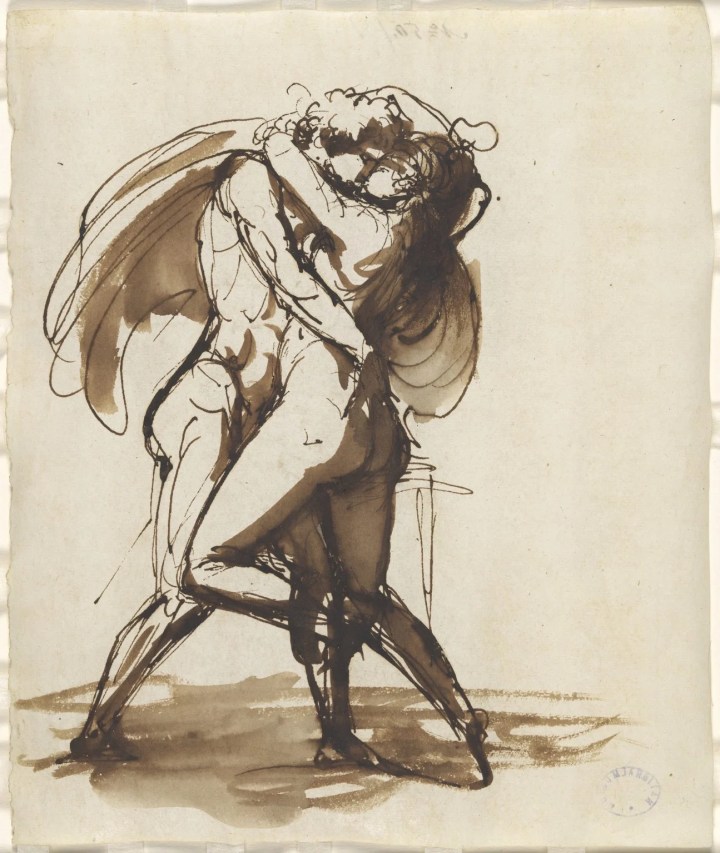
Johan Tobias Sergel, Passionate Lovers (Hetsigt kärlekspar), pen and brown ink with brown wash on paper, 21 × 18 cm (Stockholm: Nationalmuseum, NMH A 45/1970; photo by Cecilia Heisser).
The exhibition offers a comprehensive view of Sergel’s life and art—from his early years in Stockholm in the 1760s, through his extended study trips to France and Italy, to his commissions for King Gustav III upon his return to Stockholm. One of the goals of the exhibition is to place Sergel’s life and work in a broader cultural and historical context. His relationships with leading Swedish cultural personalities and political authorities of the time are given significant attention, and his career is portrayed against the backdrop of life in 18th-century Stockholm, Paris, and Rome. Sergel maintained an extensive international network, and the exhibition highlights how important these connections were to his artistic development. In addition to his close friend, the Danish painter Nicolai Abraham Abildgaard, his circle of friends included renowned artists from the British Isles such as Henry Fuseli, Thomas Banks, Alexander Runciman, and James Barry.
A major focus is placed on Sergel’s more personal and private drawings. He left behind a large number of works depicting everyday life, family, friends, and erotic scenes—images that reveal the man behind the monumental sculptures: an artist who viewed his contemporaries with both sharp insight and warmth. Nationalmuseum holds an extensive collection of works by Sergel, which forms the foundation of the exhibition.
Johan Tobias Sergel: Fantasy and Reality is curated by Daniel Prytz. A smaller version of the exhibition, organized by John Marciari, will be shown in autumn 2026 at The Morgan Library & Museum in New York.
From The Morgan:
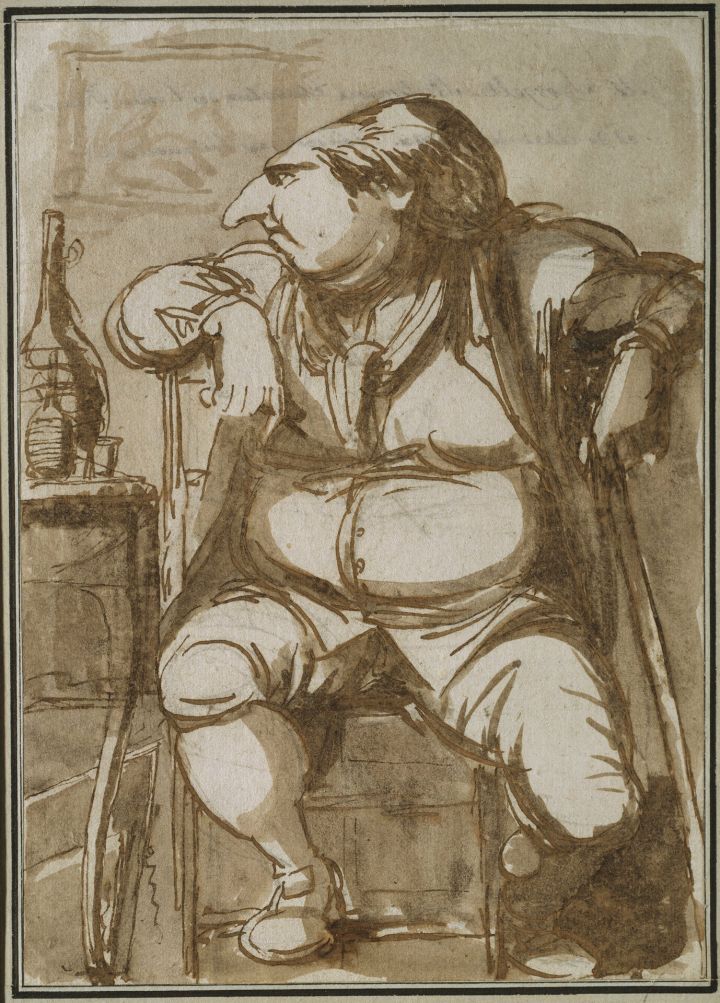
Johan Tobias Sergel, Self Portrait with a Bottle of Wine in Rome (Självporträtt vid en flaska vin i Rom), ink and graphite drawing, 22 × 16 cm (Stockholm: Nationalmuseum, NMH 280/1891).
This exhibition—the first dedicated to Sergel outside Europe—will feature a selection of the artist’s drawings alongside sculptural works in terracotta, marble, and plaster. Trained initially in Stockholm, Sergel spent time in Paris and, more importantly, over a decade in Rome, where his associates included a dazzling international circle of artists and patrons. Sergel’s sculpture was an important model for a generation of Neoclassical artists, but the artist’s personality is most evident in the drawings that constitute a virtual diary of his life, often in caricature. An extensive corpus of self-portraits will be joined by scores of surviving sheets that explore his artistic friendships, his relationship with King Gustav III and other figures at the court in Stockholm, and his common-law marriage to Anna Rella Hellström. Sergel’s late drawings, made when he was in poor health and in a state of depression, have been compared to those of Francisco Goya. Although Sergel’s career spanned artistic movements from Rococo to Neoclassicism to Romanticism, he also seems at times a modern figure, one whose life can offer a rich story to contemporary audiences.
Exhibition | Badin: Beyond Surface and Mask
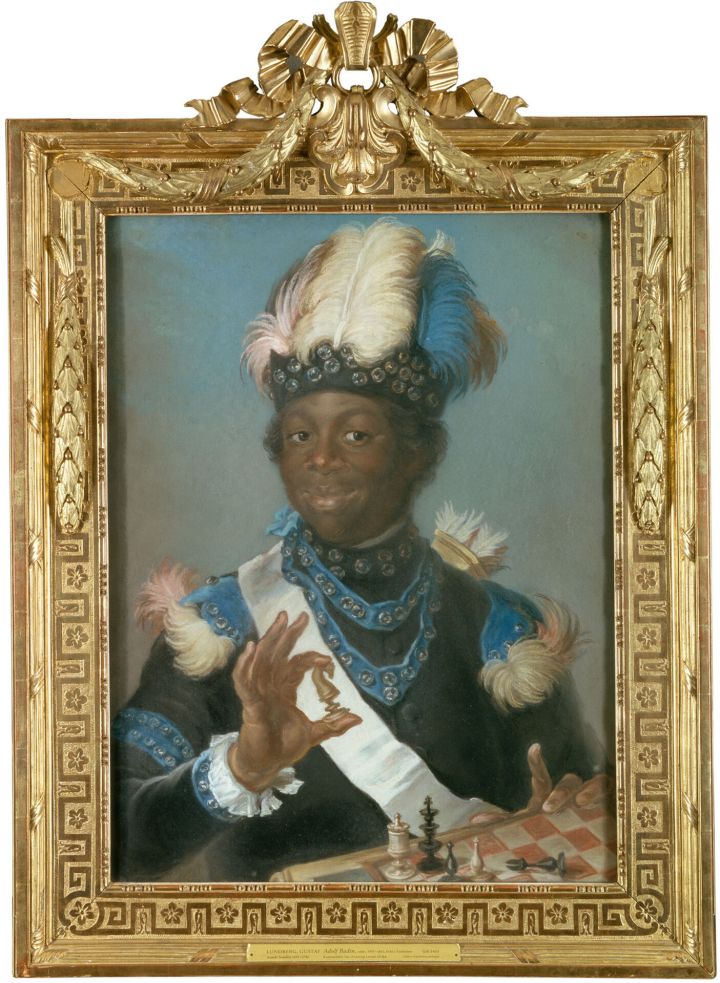
Gustaf Lundberg, Portrait of Adolph Ludvig Gustav Fredrik Albert Couschi, known as Badin, First Footman, Court Secretary, and Titular Assessor, 1775, pastel (Stockholm, Nationalmuseum, NMGrh 1455).
From the Swedish Nationalmuseum in Stockholm:
Badin: Beyond Surface and Mask
Nationalmuseum, 19 February – 9 August 2026
Running alongside and partially integrated with the exhibition on artist Johan Tobias Sergel, Nationalmuseum presents a smaller-scale exhibition about Adolf Ludvig Gustav Fredrik Albrecht Couschi, also known as Badin (ca.1747–1822).
Badin is thought to have been born in 1747, seven years after Sergel, as a slave on the island of Saint Croix, a Danish colony in the Caribbean. He was later taken to Europe, where he was eventually presented as a ‘gift’ to Sweden’s Queen Lovisa Ulrika. The exhibition seeks to create a nuanced and multifaceted understanding of how a person of African descent rose to become a significant figure in Swedish society of the time.
Nationalmuseum has commissioned a new film about Badin by artist Salad Hilowle that will appear in the exhibition.
Exhibition | Longing: Painting from the Pahari Kingdoms
From the press release (3 December 2025) for the exhibition:
Longing: Painting from the Pahari Kingdoms of the Northwest Himalayas
Cincinnati Art Museum, 6 February — 7 June 2026
Curated by Ainsley Cameron
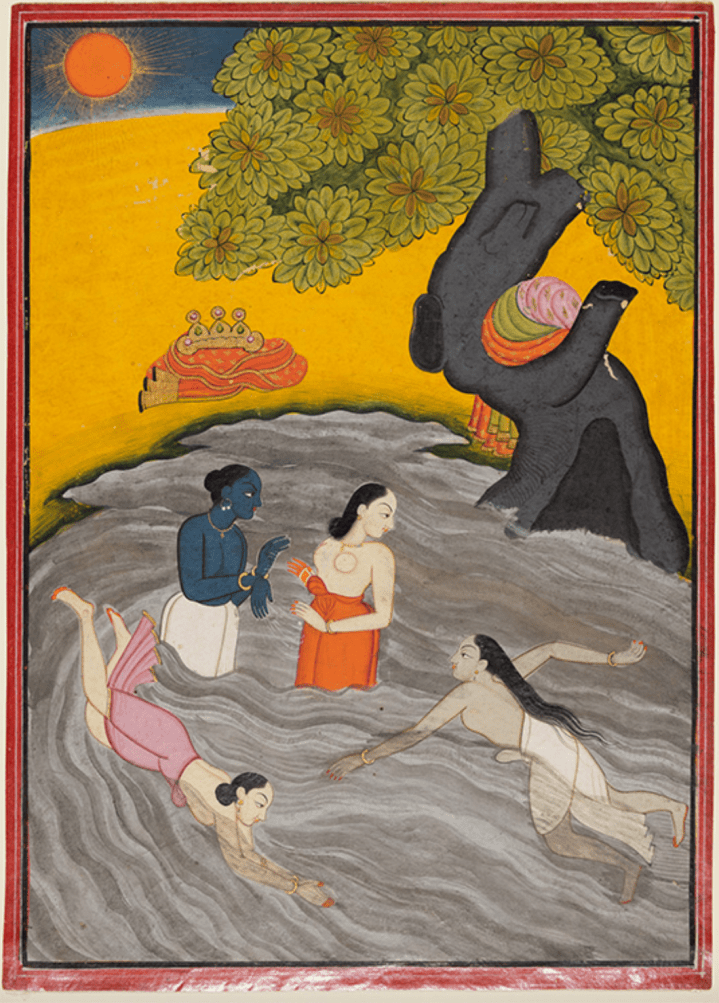
Krishna Playing with the Gopis in the Yamuna River, ca. 1770, India, Himachal Pradesh, Nurpur, opaque watercolor and gold on paper, (Cleveland Museum of Art, purchase and partial gift from the Catherine and Ralph Benkaim Collection and Millikin Purchase Fund, 2018.118).
Featuring more than 40 works of art, Longing: Painting from the Pahari Kingdoms of the Northwest Himalayas will present colorful court paintings from present-day India dating between the 17th and 19th centuries. Practicing unique techniques, artists produced these small, portable paintings primarily for royal, noble, and priestly patronage. The paintings were often given as gifts between regional nobility, families, and political allies creating large networks of artistic exchange.
Influenced by the region’s culture and politics, the artworks portray longing in several ways: through paintings of devotees who long to connect with the divine, through individuals and couples who yearn for romance, and through rulers and noblemen who longed to be at the center of political control. The exhibition encourages visitors to experience art as multisensory. Select paintings will be paired with scent or touch opportunities, while others are paired with musical soundscapes, to heighten the works’ bhava (emotion or mood) and encourage multiple ways to physically, intellectually, and emotionally connect with the art.
“This exhibition explores paintings through the lens of a shared human emotion,” reflects Ainsley M. Cameron, PhD, Curator of South Asian Art, Islamic Art & Antiquities at CAM. “Through color, form, and composition, paintings that portray devotional and cultural values, amorous alliance, or political gain also reveal an emotive force reflective of the region in which they were produced. I’m excited to share the vibrant painting histories of the Pahari region with Cincinnati audiences, to encourage our visitors to actively participate in their museum experience, to interact with art in multiple ways, and to forge new connections with the works on display.”
Longing is part of a larger research project connecting the South Asian art collections at the Cincinnati Art Museum, the Cleveland Museum of Art (CMA), and the National Museum of Asian Art (NMAA) in Washington, DC. Alongside scholars based in India, curators from these three museums are working collaboratively to research, publish, and display works from the Catherine Glynn Benkaim and Ralph Benkaim Collection. Beginning in April 2026, the CMA and the NMAA will also present exhibitions of paintings from the Pahari kingdoms. These three distinct thematic exhibitions are presented in the publication Pahari Paintings: Art and Stories, a lavishly illustrated volume that foregrounds recent research in paintings from this mountainous region. Published by the Cleveland Museum of Art and Yale University Press, the volume celebrates both the Benkaim Collection and this cross-institutional collaboration.
Sonya Rhie Mace, Sarang Sharma, and Vijay Sharma, eds., Pahari Paintings: Art and Stories (New Haven: Yale University Press, 2026), 368 pages, ISBN: 978-0300286489, $65. With contributions by Catherine Glynn Benkaim, Ainsley Cameron, Debra Diamond, and Vrinda Agrawal
Exhibition | Of the Hills: Pahari Paintings
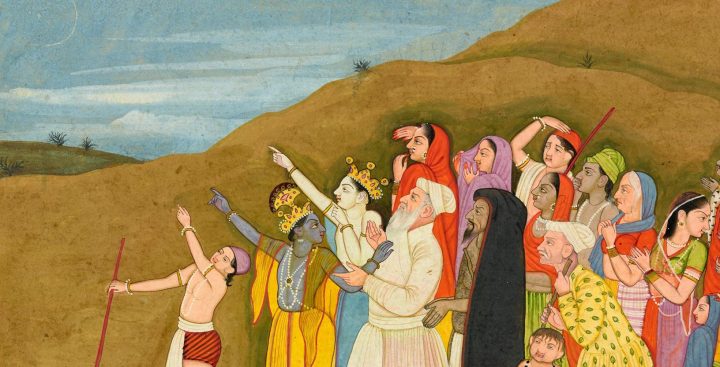
Attributed to an artist from the generation (ca. 1725–ca. 1785) after Nainsukh and Manaku, Krishna and His Family Admire a Solar Eclipse, from a Bhagavata Purana (Ancient Tales of the Lord), canto 10.82 (detail); India, Himachal Pradesh state, 1775–80; opaque watercolor on paper (Washington DC: National Museum of Asian Art, Smithsonian Institution, Freer Collection, Purchase from the Catherine and Ralph Benkaim Collection—Charles Lang Freer Endowment, F2017.13.5).
◊ ◊ ◊ ◊ ◊
Opening this spring at the National Museum of Asian Art:
Of the Hills: Pahari Paintings from India’s Himalayan Kingdoms
National Museum of Asian Art, Washington DC, 18 April — 26 July 2026
Curated by Debra Diamond
The tallest mountains on earth rise from the plains of northern India in a series of steep hills, snowy peaks, and narrow valleys. From the same Himalayan region arose some of the world’s most beautiful—yet least understood—works of art. Discover the extraordinary beauty and unique history of paintings made for Hindu kings in India’s Pahari (hill) region between the 1620s and 1830s. Pahari artists worked in radically different styles ranging from lyrical and naturalistic to boldly colored and abstracted. Of the Hills: Pahari Paintings from India’s Himalayan Kingdoms illuminates new scholarship on the collaborative artist communities in which most painters worked. Learn about the political, cultural, and religious contexts of these forty-eight exquisite works, and look closely to enter a world of fine detail that delights and astounds.
The exhibition celebrates the remarkable collection of Pahari paintings the museum acquired from renowned art historian Catherine Glynn Benkaim and Ralph Benkaim. Some of these artworks have never been exhibited publicly before. We’ve brought these rare pieces into conversation with our historic collections and paintings on loan from the Cleveland Museum of Art. Of the Hills is accompanied by the major publication Pahari Paintings: Art and Stories and runs concurrently with Pahari exhibitions at the Cleveland Museum of Art and the Cincinnati Art Museum.
Sonya Rhie Mace, Sarang Sharma, and Vijay Sharma, eds., Pahari Paintings: Art and Stories (New Haven: Yale University Press, 2026), 368 pages, ISBN: 978-0300286489, $65. With contributions by Catherine Glynn Benkaim, Ainsley Cameron, Debra Diamond, and Vrinda Agrawal
Exhibition | Epic of the Northwest Himalayas: Pahari Paintings
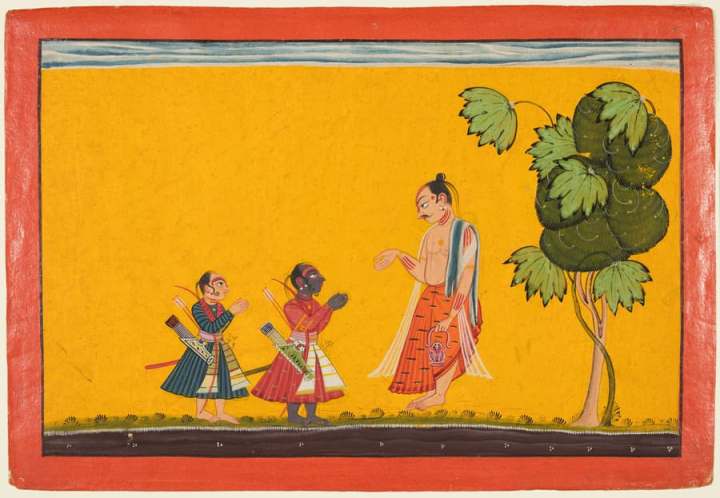
Rama and Lakshmana with the sage Vishvamitra, from the ‘Shangri’ Ramayana, ca. 1700, Northern India, Pahari kingdoms, gum tempera and ink on paper; page: 22 × 32 cm (Washington, DC: National Museum of Asian Art, Smithsonian Institution, purchase and partial gift from the Catherine and Ralph Benkaim Collection—Funds provided by the Friends of the National Museum of Asian Art, S2018.1.9).
◊ ◊ ◊ ◊ ◊
Opening this spring at The Cleveland Museum of Art:
Epic of the Northwest Himalayas: Pahari Paintings from the ‘Shangri’ Ramayana
The Cleveland Museum of Art, 19 April — 16 August 2026
Curated by Sonya Rhie Mace
Forty paintings are reunited from a widely dispersed pictorial series that presents the story of the Hindu divine hero Rama. The timeless tale, more than 2,000 years old, remains a cultural force across southern Asia. Potent themes of righteousness, vengeance, and loyalty are explored through dramatic episodes in which demons are vanquished, lovers are separated, and monkeys, bears, and a man-eagle save the day. Magic abounds, and emotions fly with warriors’ arrows. Three digital stations present more than 100 gently animated images of paintings from multiple collections reassembled into their original episodic sequences.
Created with blazing colors for a royal collection around 1700, the ‘Shangri’ Ramayana has been a beloved and enigmatic series among scholars and collectors for the past century. New evidence from previously unpublished paintings reveals many more artistic styles and triple the number of total folios than have been previously recognized. It argues in favor of a collaborative model of production involving artists from across the alpine region of Pahari India, which straddles the present-day state of Himachal Pradesh and that of Jammu and Kashmir. Twelve lenders generously contributed to this focused exhibition. The unbound pictorial series began to be divided as early as the 1760s, suggesting that its spiritual merit was intended to be shared among multiple owners. Its title derives from the kingdom of Shangri, where a member of the royal family sold his 275 folios to a dealer in Delhi, beginning in 1962. Hundreds more paintings, however, have been in other royal collections.
The exhibition celebrates the publication of the Catherine Glynn Benkaim and Ralph Benkaim Collection of Pahari paintings, which includes three pages of the ‘Shangri’ Ramayana that are on view and contextualized in Epic of the Northwest Himalayas. The exhibition runs concurrently with Pahari exhibitions at the National Museum of Asian Art in Washington, D.C. and the Cincinnati Art Museum.
Sonya Rhie Mace, Sarang Sharma, and Vijay Sharma, eds., Pahari Paintings: Art and Stories (New Haven: Yale University Press, 2026), 368 pages, ISBN: 978-0300286489, $65. With contributions by Catherine Glynn Benkaim, Ainsley Cameron, Debra Diamond, and Vrinda Agrawal
Symposium | El Prado en femenino III: Queen Isabel de Farnesio
Next month from The Prado, with some simultaneous translation planned:
Key Women in the Creation of the Collections of the
Museo del Prado III: Isabel de Farnesio
Online and in-person, Museo Nacional del Prado, Madrid, 9–10 March 2026
Organized by Noelia García Pérez
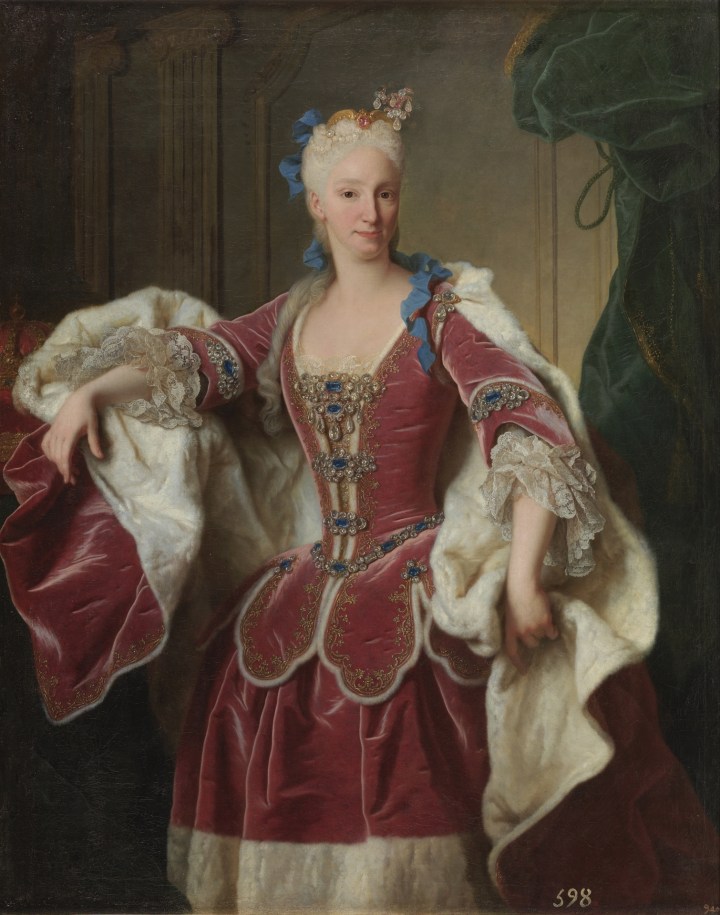
Jean Ranc, Isabel de Farnesio, 1723, oil on canvas, 144 × 115 cm (Madrid: Museo Nacional del Prado).
It was probably Queen Isabel de Farnesio (1692–1766), patron of the arts, who most decisively contributed to giving shape to the Museo del Prado’s collections. This third edition of the series Protagonistas femeninas en la formación de las colecciones del Museo del Prado invites us to reconsider the significance of her patronage and her pivotal contribution to the artistic collection that the Museum now preserves. As in previous editions, this scientific meeting was designed with the intention of recovering, studying, and disseminating the cultural agency of the women of Europe’s royal houses, whose collections and artistic decisions have left a profound imprint on the identity of the Museum.
Throughout the sessions, a group of notable national and international specialists will examine the political, cultural, and dynastic context in which Elisabeth Farnese advanced her patronage; the mechanisms through which she built her public image as queen consort in the exercise of her power; the complex network of mediators that made the realization of her collections possible; and her extraordinary relevance in the fields both of painting and classical sculpture. From an initial analysis of the interests of other queenly European patrons—for instance, Maria Theresa of Austria, Catherine II, and Sophia Charlotte of Mecklenburg-Strelitz—to a specific consideration of Isabel de Farnesio’s own collecting activities, this symposium invites reflection on female artistic agency in the Modern Age and its impact on the circulation of works, the promotion of artists, and the consolidation of new narratives of power.
As complementary activities, the meeting will include the screening of a documentary dedicated to Isabel de Farnesio and a visit to the exhibition El Prado en femenino III. The exhibition explores the legacy this queen passed on, underscoring how her work in the field of artistic promotion definitively contributed to enriching the Museum’s collection. With this initiative, the Museo del Prado consolidates an essential line of work that explores the actions of these queens who made possible an essential part of the legacy that we are fortunate to continue to admire today.
m o n d a y , 9 m a r c h
9.30 Registration
10.00 Introductions
• Alfonso Palacio (Museo del Prado)
• Cristina Hernández Martín (Women’s Institute)
• Noelia García Pérez (University of Murcia)
10.30 Empress Maria Theresa and the Politics of Habsburg Imperial Art — Michael Yonan (University of California)
11.15 Power and Paint: The Patronage of Women Artists at the Court of Catherine II — Rosalind Polly Blakesley (University of Cambridge)
12.30 Sophia Charlotte of Mecklenburg-Strelitz: How a Queen Promoted Both Art and Female Artists in English Society — Heidi A. Strobel (University of North Texas)
16.00 Round table | Isabel de Farnesio: A Queen Consort in the Exercise of Power
Moderator: Carlos González Navarro (Museo del Prado)
• María de los Ángeles Semper (University of Barcelona)
• Giulio Sodano (Università della Campania Luigi Vanvitelli)
• Pablo Gestal (Sorbonne Université, Centre Roland Mousnier)
17.00 Round table | The Patronage of Isabel de Farnesio: State of the Art
Moderator: Ana González Mozo (Museo del Prado)
• Ángel Aterido (Complutense University of Madrid)
• Antonio Iommelli (Farnese Palace Museums)
t u e s d a y , 1 0 m a r c h
10.00 Isabel de Farnesio en las colecciones del Museo del Prado — Noelia García Pérez (University of Murcia)
10.45 Round table | The Construct of the Image of the Queen: From Molinaretto to Van Loo
Moderator: Noelia García Pérez
• Sandra Antúnez (Complutense University of Madrid)
• Andrés Úbeda (Museo del Prado)
• Mercedes Simal (University of Jaén)
12.00 Round table | From Christina of Sweden to Isabel de Farnesio: Collections of Classical Sculpture
Moderator: Ana Martín (Museo del Prado)
• Manuel Arias (Museo del Prado)
• Juan Ramón Sánchez del Peral (Museo del Prado)
• Mercedes Simal (University of Jaén)
16.00 El boceto de Santa Ana enseñando a leer a la Virgen: La sustracción y retorno del boceto de Murillo del Museo del Prado — Benito Navarrete (Complutense University of Madrid)
16.45 Screening of the documentary
17.15 Viewing of the exhibition The Female Perspective III
Exhibition | The Myth of Rembrandt in the Century of Fragonard
Now on view at the MBA Draguignan:
Le Phare Rembrandt: Le Mythe d’un Peintre au Siècle de Fragonard
Musée des Beaux-Arts de Draguignan, 15 November 2025 — 15 March 2026
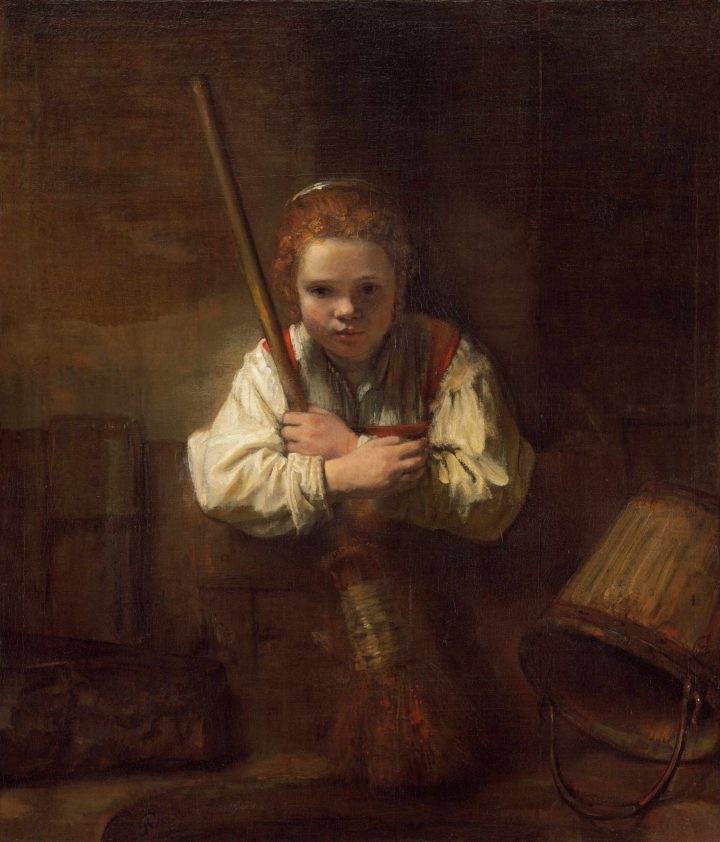
Rembrandt Workshop (possibly Carel Fabritius), A Girl with a Broom, 1646–51 (Washington DC: National Gallery of Art, 1937.1.74).
Le Phare Rembrandt invite le public à plonger dans l’univers de Rembrandt à un moment crucial : un demi-siècle après sa mort (en 1669), son nom devient un véritable mythe en Europe, et particulièrement à Paris, devenue capitale du marché de l’art. De plus en plus de tableaux du maître hollandais y sont importés, pour ensuite être exportés vers l’Allemagne, l’Angleterre ou la Russie.
L’originalité de l’exposition réside dans sa volonté de faire découvrir comment l’art de Rembrandt a été perçu au XVIIIe siècle en France, où ses œuvres influencent profondément les artistes et collectionneurs. À travers une sélection de cinquante œuvres visibles à l’époque, dont des peintures attribuées à Rembrandt ou réalisées par des artistes ayant étudié ou collectionné son travail tels que Chardin ou Fragonard, l’exposition explore les thèmes de l’imitation et de l’appropriation de son art.
Le Phare Rembrandt: Le Mythe d’un Peintre au Siècle de Fragonard (Paris: In Fine éditions d’art, 2025), 304 pages, ISBN: 978-2382032343, €35. With contributions by Jaco Rutgers, Jacqueline Carroy, Isabelle Arnulf, Jean-Pierre Maranci, Ivan Alexandre, Dominique Païni, Érick Desmazières, Gaëtane Maës, Anna Tummers, Jan Blanc, Quentin Buvelot, Dominique Brême, Ariane James-Sarazin, Yohan Rimaud, Laura Bossi.
From the CODART announcement:
This ambitious exhibition explores the undiminished aura of the Dutch master, focusing on two fascinating portraits seized during revolutionary confiscations and attributed to Rembrandt in the eighteenth century. . . .










leave a comment