Exhibition | Rosetsu: Ferocious Brush

Nagasawa Rosetsu, Tiger, 1786 door panels from the Zen Temple Muryōji, Kushimoto.
◊ ◊ ◊ ◊ ◊
From the press release for the exhibition:
Rosetsu: Ferocious Brush / Rosetsu: Fantastische Bilderwelten aus Japan
Museum Rietberg, Zurich, 6 September — 4 November 2018
Curated by Khanh Trinh and Matthew McKelway
For eight weeks, Japan’s most famous tiger will reside exclusively at Museum Rietberg in Zurich. The story goes that the Japanese artist Nagasawa Rosetsu (1754–1799) painted this monumental tiger together with its counterpart, a dragon, on the sliding door panels of the Zen temple Muryōji in a single night in the year 1786. Now the entire temple’s painted walls and a number of other, awe-inspiring masterpieces by Rosetsu are being shown for the first time outside of Japan. Rosetsu’s highly dynamic paintings created with vigorous brushstrokes and sometimes with his fingers, but also his delicate compositions painted with fine brushes and rich colour are replete with energy, wit, and modern appeal.
Renowned as one of the most eccentric and imaginative artists in early modern Japan, Nagasawa Rosetsu (1754–1799) produced visually exciting, classification-defying works during his brief career. The exhibition Rosetsu: Ferocious Brush unravels the many mysteries of this enigmatic career. An exclusive and expert selection of works by Rosetsu chosen in consultation with the Agency for Cultural Affairs of the Government of Japan (Bunkachō) reveals his painting subjects, his relationship to Zen Buddhism, his contacts with patrons outside Kyoto, and his choice of extraordinarily bold images.

The exhibition at the Rietberg Museum will survey Rosetsu’s art through a selection of sixty of his most important paintings, beginning with the earliest works in the realist style of his teacher Maruyama Ōkyo (1733–1795) and ending with the haunting and occasionally bizarre final masterpieces of his career. Screen paintings, scrolls, and albums depicting Zen eccentrics, children at play, ethereal beauties, breathtaking landscapes, and vivacious animals and birds will take viewers on a journey through Rosetsu’s own travels and into his fantastic imagination. These works, some of them compellingly realistic and others surprisingly abstract, take us into an early modern Japan we did not know and which feels very contemporary.
The highlight of the exhibition will be a magnificent ensemble of 48 screens and hanging scrolls, displayed in a recreated original floorplan of the Zen temple Muryōji. This Zen temple in the southern part of Japan’s main island holds the largest and most important collection of Rosetsu’s paintings, created in 1786. Various stories recount the creation of this breathtaking ensemble. The installation of these works would present an unprecedented opportunity to view and examine the paintings in a single venue outside their home in Kushimoto, and indeed the first such installation of architecturally specific paintings in an exhibition outside Japan.
Approximately one-third of the works to be exhibited are registered as Important Cultural Properties or Important Art Objects. Complementing these masterpieces from Japan, paintings from museums, temples, and private collections in Japan, Europe, and the United States trace the phases of Rosetsu’s life as he pursued his livelihood in Kyoto and the surrounding provinces. The exhibition closes with a dramatic display of abstract landscapes, ghosts, and perhaps his most astonishing work of all, a depiction of 500 Disciples of the Buddha on a surface of only one square inch.
Rosetsu, who hailed from a low-ranking samurai family, gained his reputation among art circles in the imperial capital Kyoto and its neighbouring regions with his untamed personality and his unusual talent. The exhibits run the gamut of formats and subjects, from exquisitely executed scrolls depicting birds and flowers in brilliant polychrome pigments to large-scale sliding doors and folding screens with fantastic landscapes, bizarre figures, and adorable animals. With his unconventional compositions and powerful brushwork Rosetsu always offers a fresh take on traditional subject matter. His paintings never fail to surprise, entertain, and charm.
The show at the Museum Rietberg is the first comprehensive presentation ever to take place outside of Japan. The exhibition is jointly curated by Dr Khanh Trinh, Curator of Japanese art, Museum Rietberg, Zurich, and Professor Matthew McKelway, Takeo and Itsuko Atsumi Professor of Japanese art history; director of the Mary Griggs Burke Center for Japanese Art, Columbia University in the City of New York.
Khanh Trinh and Matthew McKelway, Rosetsu: Ferocious Brush (London: Prestel, 2018), 296 pages, ISBN: 978-3791357263, $60 / £45. Also available in German.
Exhibition | Isabelle de Borchgrave
From The Frick Pittsburgh:
Isabelle de Borchgrave: Fashioning Art from Paper
Dixon Gallery and Gardens, Memphis, 15 October 2017 — 7 January 2018
The Society of the Four Arts, Palm Beach, 27 January — 15 April 2018
Oklahoma City Museum of Art, 16 June — 9 September 2018
The Frick Art Museum, Pittsburgh, 13 October 2018 — 6 January 2019
The Baker Museum, Artis, Naples, February — May 2019
Curated by Dennita Sewell

Isabelle de Borchgrave, Banyan and Waistcoat, 1998; inspired by a banyan and waistcoat ca. 1730 worn by Peter the Great of Russia.
Co-organized by the Frick in collaboration with four other American museums, this major exhibition presents the full breadth of de Borchgrave’s exploration of historical costume through contemporary paper sculpture. If you’ve never seen the artist’s work, you will be delighted by these breathtaking, life-size renditions of historic clothing created completely from artfully painted, pleated, crumpled, and manipulated paper.
From replicas of Renaissance Italian gowns to recreations of the fantastical modernist costumes of the Ballet Russes, Isabelle de Borchgrave’s work is meticulously crafted and astonishingly beautiful. The artist’s interest in creating paper costumes was sparked by a visit to the Metropolitan Museum of Art in 1994, where she found herself inspired by the historic costumes on display. Back in her studio, she began to experiment with creating renditions of the pieces in paper. Since then, de Borchgrave’s paper costumes have been featured in major exhibitions around the world.
This immersive exhibition celebrates the breadth of de Borchgrave’s work with costume and fashion history and is designed to introduce her work to a wider audience. De Borchgrave’s paper sculptures are masterpieces of trompe l’oeil—even upon close inspection it is often difficult to discern that the costumes are made of paper. At the Frick, de Borchgrave’s work will be exhibited throughout the museum, creating a dialogue with the museum’s collection. Joining the exhibition will be the Frick’s recently commissioned piece inspired by one of our best-known masterpieces—Peter Paul Rubens’ Portrait of Charlotte- Marguerite de Montmorency, Princess of Condé.
The exhibition will include examples from all the artist’s major series, beginning with her exploration of 300 years of fashion history in the works created for Papiers à la Mode. The works from her Splendors of the Medici series are inspired by Italian Renaissance costumes portrayed in Old Master paintings. Her next series, The World of Mariano Fortuny explored the work of the iconoclastic Spanish fashion designer, famously based in Venice, and her most recent series, Les Ballet Russes features fantastical modernist costumes designed by artists like Picasso, Bakst, and Matisse. The Frick’s recent commission will be the only new piece included in the exhibition. A fully illustrated color catalogue accompanies the exhibition.
Exhibition | The Chocolate Girl by Liotard
Notice of the exhibition appeared at Enfilade in April, but here are the details for the catalogue, published in association with Hirmer Verlag:
Stephan Koja and Roland Enke, eds., ‘The Most Beautiful Pastel Ever Seen’: The Chocolate Girl by Jean-Étienne Liotard in the Dresden Gemäldegalerie (Munich: Hirmer Verlag, 2018), 272 pages, ISBN: 978-3777431369, $42.
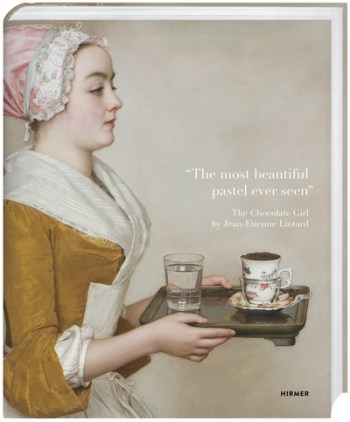 The Chocolate Girl is one of the most famous works by the Swiss artist Jean-Étienne Liotard. This richly illustrated volume leads the reader through the age in which it was created during the French-inspired Rococo and into the Vienna of Empress Maria Theresia, where the work was painted. It also explains the art of pastel painting, in which this enchanting work has been executed. The painting had a tremendous effect in those days and still does so today. Even during Liotard’s life (1702–1789) his pastel painting was highly valued, as the description by the most famous pastel artist Rosalba Carriera as “the most beautiful pastel” demonstrates. The Chocolate Girl shows a simple, unknown domestic servant, until then a rarely chosen subject. In its sober and precise observation it reflects the art of the Enlightenment as well as anticipating the realism of the nineteenth century. Chocolate itself, always associated with pleasure, contributes further to the particular charm. Characteristic works from other creative periods complete the overview of Liotard’s oeuvre.
Exhibition | Tudors to Windsors: British Royal Portraits
From the MFAH:
Tudors to Windsors: British Royal Portraits
Museum of Fine Arts, Houston, 7 October 2018 — 27 January 2019
Bendigo Art Gallery, 16 March — 14 July 2019
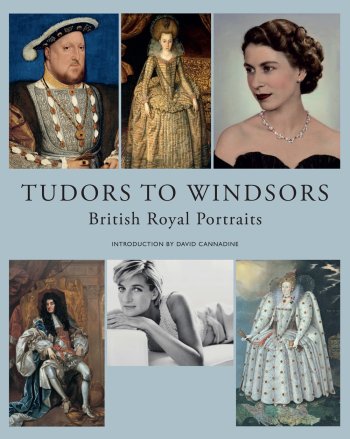 Tudors to Windsors: British Royal Portraits from Holbein to Warhol sheds new light on changing ideas of monarchy and nationhood in Britain. The exhibition features portraits of British royalty spanning 500 years, by artists from Hans Holbein and Sir Joshua Reynolds to Annie Leibovitz and Andy Warhol.
In a sweeping survey, Tudors to Windsors covers the cavalcade of kings, queens, princes, and princesses who have graced the British crown. The MFAH is the only U.S. venue to host this unprecedented exhibition, part of a major partnership with the National Portrait Gallery in London. Some 150 objects—most never before seen outside of England—tell the story of Britain’s monarchy through masterworks of painting, sculpture, and photography.
Visitors have an extraordinary opportunity to come face-to-face with the fascinating figures of British royalty. Tudors to Windsors explores four royal dynasties: the House of Tudor (1485–1603), the House of Stuart (1603–1714), the House of Hanover (1714–1901), and the present-day House of Windsor. Among the many works of art on view are portraits featuring King Henry VIII, Queen Elizabeth I, King George I, Queen Victoria, Queen Elizabeth II, Princess Diana, and Prince William.
Tudors to Windsors: British Royal Portraits, with an introduction by David Cannadine (London: National Portrait Gallery, 2018), 240 pages, ISBN 978-1855147560, $50.
Exhibition | Ladies of Quality and Distinction
Press release for the exhibition now on view at The Foundling:
Ladies of Quality and Distinction
The Foundling Museum, London, 21 September 2018 — 20 January 2019

Andrea Soldi, Portrait of Isabella Duchess of Manchester, 1738 (London: Whitfield Fine Art).
This autumn, for the first time, visitors to the Foundling Museum will have an opportunity to discover portraits and stories of the remarkable women who supported the establishment and running of London’s Foundling Hospital. Marking 100 years of female suffrage, Ladies of Quality and Distinction resets the focus of the Hospital’s story and radically re-hangs the Museum’s Picture Gallery.
Despite its male face, women permeate every aspect of the Hospital story—as mothers, supporters, wet nurses, staff, apprentice masters, artists, musicians, craftsmen, and foundlings. Yet for almost 300 years, history has placed these women as a footnote in the story. The Museum is redressing this balance by bringing these overlooked stories to the fore.
Following a successful campaign via Art Happens, the Art Fund’s crowdfunding platform, the Museum brings together portraits of the ‘ladies of quality and distinction’ who signed Thomas Coram’s original petition to King George II in 1735, calling for the establishment of a Foundling Hospital. Working closely with eighteenth-century specialist Elizabeth Einberg, the Museum has identified portraits of these duchesses in public and private collections across the UK. Hung together for the first time, these paintings will temporarily replace the portraits of male governors that line the walls of the Museum’s Picture Gallery, reuniting the Ladies on the site of the charity they helped establish, and highlighting their role in shaping British society today. Included are magnificent court portraits by leading eighteenth-century painters William Hogarth, Thomas Hudson, and Godfrey Kneller. The majority of the portraits are in private collections, having remained within the family or ancestral home. Some paintings have not been on public display for many years.
Downstairs in the Museum’s exhibition gallery, the lives of the women who supported the day-to-day running of the institution will be brought to life. Women worked in many different roles at the Hospital, from laundresses and scullery maids, to cooks and matrons. Beyond its walls the organisation was supported by a small army of wet nurses who fostered the children in their infancy, as well as inspectors who supervised them. It was not until the twentieth century that the first woman was appointed Governor. Nevertheless, many female supporters of similar social class to the Hospital Governors gave valued advice, particularly around the proper care of infants, girls, and female staff.
Highlighted stories include: Mrs Prudence West, a female inspector and the only woman to run a branch Hospital; Miss Eleanor Barnes, one of the earliest female Governors of the Hospital; Mrs Elizabeth Leicester, an early matron of the Foundling Hospital who oversaw some of its most challenging years; and Jane Pett, a dry nurse highly acclaimed for her exceptional care.
Caro Howell, Director of the Foundling Museum said: “Women of every social class permeate every aspect of the Foundling Hospital story. After centuries of omission, their revolutionary, catalytic and invaluable contributions can at last be celebrated. We are incredibly grateful to the 336 donors who supported our Art Happens campaign to make this important exhibition possible.”
This exhibition forms part of the Museum’s year-long programme of exhibitions, displays, and events to mark the centenary of female suffrage, by celebrating women’s contribution to British society, culture, and philanthropy from the 1720s to the present day. The Museum raised over £20,000 towards this exhibition through a successful Art Happens crowdfunding campaign. The Museum is incredibly grateful to all our exhibition donors, including the 336 donors who gave to our Art Happens campaign, our main corporate exhibition sponsor Saxton Bampfylde, and to Art Fund, whose support made conservation of paintings loaned for this exhibition possible.
P R O G R A M M I N G
Georgian Women
The Foundling Museum, London, 19 October 2018
Discover what it meant to be a woman during this period and how three writers have brought the era to life. Speakers include Imogen Hermes Gowar, author of the Women’s Prize for Fiction shortlisted novel The Mermaid and Mrs Hancock; writer and television presenter Janet Ellis, author of The Butcher’s Hook; and Katharine Grant, whose novel Sedition was described by The Guardian as “subversive and unmissable.” Cash bar on the night. The programme begins at 19:00 (doors open at 18:30). Tickets £15 (£12.50 concessions and Foundling Friends). Details, including booking information, are available here.
Film Screening: The Duchess
The Foundling Museum, London, 9 November 2018
Join us for a unique cinema experience and enjoy the sensational 18th-century drama The Duchess, screened in the Picture Gallery. Keira Knightley and Ralph Fiennes star in this film exploring the life of Georgiana Spencer, Duchess of Devonshire, as she struggles to protect her children from her unscrupulous husband and social pressures, and find her independence. The film begins at 19:00. Tickets are £12. Details, including booking information, are available here.
Wikithon: Ladies Of Quality & Distinction
The Foundling Museum, London, 17 November 2018
Join our Wikipedia edit-a-thon and help us bring the overlooked stories of women and the Foundling Hospital to the fore. Bring your laptop and prepare with our Edit-a-thon guide. Led by researchers from the project Editing the Long Nineteenth Century: Recovering Women in the Digital Age in partnership with the Birkbeck Centre for Nineteenth-Century Studies, the session begins at 13:00 and lasts until 16:00; it is free, but booking is essential. This event is part of the Being Human Festival, organized by the School of Advanced Study, University of London, in partnership with the Arts & Humanities Research Council and the British Academy.
Exhibition | Russia: Royalty and the Romanovs
Press release (7 August 2018) for the exhibition:
Russia: Royalty and the Romanovs
The Queen’s Gallery, Buckingham Palace, London, 9 November 2018 — 28 April 2019
The Queen’s Gallery, Palace of Holyroodhouse, Edinburgh, 21 June — 3 November 2019

Vigilius Eriksen, Catherine II, Empress of Russia, ca.1765, oil on canvas, 276 × 202 cm (London: Royal Collection Trust, RCIN 404774).
For more than 300 years Britain has been linked to Russia through exploration and discovery, diplomatic alliances and, latterly, by familial and dynastic ties. Russia: Royalty & the Romanovs, opening on 9 November 2018, explores the relationship between the two countries and their royal families through works of art in the Royal Collection, many of which were acquired through the personal exchange of gifts.
In 1698 Tsar Peter I, known as Peter the Great, arrived in London. The first Russian ruler to set foot on English soil, he stayed for three months as part of a ‘Grand Embassy’, a diplomatic and fact-finding tour of Western Europe that included meetings with the British King, William III. On his departure Peter presented the King with his portrait, painted by Sir Godfrey Kneller. Kneller depicts the Tsar as a young and vibrant ruler, looking to the West and hoping to establish a new, ‘open’ Russia.
During the reign of the Empress Catherine II (Catherine the Great) Russia’s borders expanded to the south and west, and the country was established as one of the great powers in Europe. The Empress’s coronation portrait by Vigilius Eriksen, c.1765–69, is thought to have been given to George III and is recorded as hanging in the Privy Chamber at Kensington Palace in 1813. George III never visited Russia, yet his interest in the country is evident from the books in his library. These included the accounts of European merchants and the first description of Russia in the French language by the mercenary soldier Jacques Margeret.
The year 1815 saw final victory in the Napoleonic wars by the allied forces, including those of Great Britain and Russia. George IV commissioned Sir Thomas Lawrence to paint portraits of the central figures in the defeat of Napoleon for the Waterloo Chamber at Windsor Castle, a room created to celebrate the achievement. Paintings of Matvei Ivanovitch, Count Platov, commander of the Cossack cavalry, and of General Fedor Petrovitch Uvarov, Emperor Alexander I’s Aide-de-Camp at the Congress of Vienna, recognised Russia’s important contribution to the defeat of Napoleon.
A steady stream of Russian emperors, empresses, grand dukes, and grand duchesses were entertained in Britain in the following years. The future Emperor Nicholas I visited in 1816–17, when he attended a banquet of more than 100 courses, hosted by the Prince Regent at his seaside residence, Brighton Pavilion, in the company of Frederick, Duke of York and the Duke of Clarence, later William IV. In gratitude for the hospitality shown to the future Emperor, his mother, Empress Maria sent the Prince Regent’s daughter, Princess Charlotte, the insignia of the Order of St Catherine. The Order had been instituted in 1714 by Peter I on the occasion of his marriage to Catherine I and was the most prestigious award for women in Imperial Russia. The Princess is shown wearing the badge on a Russian-style dress in a portrait of c.1817.
Queen Victoria’s eldest son, Albert Edward, Prince of Wales (later King Edward VII), married Princess Alexandra of Denmark in 1863. Three years later, Alexandra’s sister, Princess Dagmar, married Tsesarevich Alexander, later becoming Empress Maria Feodorovna and linking the English, Russian and Danish royal houses. In 1874, Queen Victoria’s second son Alfred, Duke of Edinburgh, married Grand Duchess Marie Alexandrovna, daughter of Emperor Alexander II, as recorded in Nicholas Chevalier’s painting of the ceremony. This first direct dynastic marriage between the two families was followed by the marriage of two of Queen Victoria’s granddaughters, the Princesses Elizabeth and Alix of Hesse, to Grand Duke Sergei, son of Alexander II, and the future Nicholas II respectively.
The English, Russian, and Danish royal families regularly visited one another and marked these occasions in paintings and photographs, and through the exchange of gifts. The Danish artist Laurits Regner Tuxen was commissioned to record significant family events, including The Marriage of Nicholas II, Emperor of Russia, 26th November 1894 and The Family of Queen Victoria in 1887, celebrating the Queen’s Golden Jubilee that year. A great number of works by Carl Fabergé entered the Royal Collection as a result of the close relationship and shared tastes of the sisters Queen Alexandra and Empress Maria Feodorovna. Among them are a framed portrait miniature of the Empress and a gold cigarette case, given to King Edward VII as a 40th wedding anniversary present in 1903.
Nicholas II and his family made their last visit to England in August 1909. They attended the annual regatta at Cowes on the Isle of Wight, and the royal families dined together on each other’s yachts. A local photographer was commissioned to record the occasion and produced a double portrait of the Prince of Wales (later King George V) and his cousin Emperor Nicholas, which shows the strong family resemblance. During the visit the Princess of Wales (later Queen Mary) was given a diamond-set Fabergé brooch made from a Siberian amethyst, a stone famous for its intense purple hue. Following the deaths of the Imperial Family in 1918, King George V and Queen Mary assembled a collection of works of art that had belonged to their Russian relations as poignant reminders of happier times.
In 1923 the Duchess of York (later Queen Elizabeth The Queen Mother) commissioned a portrait of herself from the Russian artist Savely Sorine. Twenty-five years later she commissioned Sorine to paint a portrait of her daughter Princess Elizabeth, Duchess of Edinburgh, the future Queen Elizabeth II. During an official visit in 1956, First Secretary Nikita Khrushchev and Premier Nikolai Bulganin presented Her Majesty The Queen with a number of gifts, including the oil painting A Winter’s Day by the prominent painter, publisher, and art historian Igor Grabar.
Exhibition | Dressed to Impress
Press release (via Art Daily) for the exhibition now on view at the Walker Art Gallery:
Dressed to Impress: Fashion in the Eighteenth Century
Walker Art Gallery, Liverpool, 4 August 2018 — Spring 2020
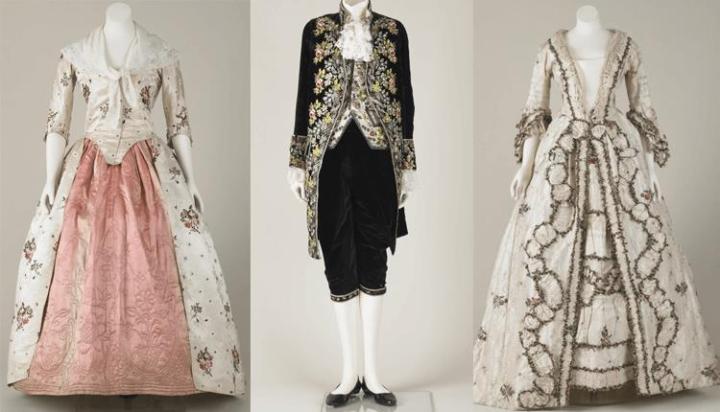
A stunning collection of eighteenth-century fashion items is on display at the Walker Art Gallery, Liverpool, from 4 August 2018 to spring 2020. Showcasing 13 male and female costumes as well as accessories, Dressed to Impress: Fashion in the Eighteenth Century highlights changing attitudes towards body shapes as well as documenting the social climate of the time.
Pauline Rushton, Senior Curator at National Museums Liverpool, said: “We’re incredibly fortunate to be presenting these exquisite items from our collections together for the first time in this display. Visitors to the Walker Art Gallery will enjoy not only the variety and detail seen in eighteenth-century ways of dressing, but also learn about some of the social issues at play throughout the century. These beautiful pieces demonstrate how fashion can be an important vehicle for exploring everyday life in past centuries.”
The clothes in the display are typical of the main fashionable styles worn by the middle classes, known at that time as ‘the middling sort’. These people were neither rich nor poor, and often wanted to improve their social standing. Examples of their clothes to be seen in the display include a pair of ‘stays’ (a laced corset), formal female dresses, and elaborately embroidered men’s waistcoats with hand cut sequins known as ‘spangles’.
The display also includes a number of important accessories, such as a pair of women’s shoes with overshoes for outdoor wear to protect the feet against the unsanitary conditions in the streets. The accessories on display include two men’s wallets, one of which belonged to John Bridge, a Liverpool merchant heavily involved in the transatlantic slave trade. Money acquired from his activities would have been kept in this wallet, which is embossed with Bridge’s name in gold lettering.
As well as containing reminders of Liverpool’s past involvement in the transatlantic slave trade, the display provides some fascinating insights into how clothing helped to foster idealised body shaping, both for women and men. The display includes a rare pair of men’s stockings—one of just a few surviving pairs remaining in the UK—with padding designed to accentuate the calf area, from an era when it was deemed important for men to have shapely calves. This is the first time that the stockings, made from knitted silk and lambs wool, are displayed at the Walker Art Gallery, although they have previously been shown in museums in New York and Los Angeles.
There are two videos on show in the gallery, depicting how 18th-century men and women were dressed by their servants.
Print Quarterly, September 2018
The eighteenth century in the current issue of Print Quarterly:
Print Quarterly 35.3 (September 2018) . . .
N O T E S A N D R E V I E W S
• Jean Michel Massing, Review of the collection of essays, Suzanne Karr Schmidt and Edward Wouk, eds., Prints in Translation, 1450–1750: Image, Materiality, Space (Routledge, 2016), pp. 305–08. “The eleven most interesting articles in Prints in Translation . . . developed from a two-day conference panel at the 2014 meeting of the College Art Association on ‘Objectifying Prints: Hybrid Media 1450–1800’ (305).” [Of particular interest to Enfilade readers will be the article by David Pullins, “The State of the Fashion Plate, circa 1727: Historicizing Fashion Between ‘Dressed Prints’ and Dezallier’s Recueils,” discussed briefly by Massing on pp. 307–08.]
• John Roger Paas, Review of the exhibition catalogue Tiphaine Gaumy, ed., Images & Révoltes dans le livre et l’estampe, XIVe–milieu du XVIIIe siècle (Bibliothèque Mazarine & Editions des Cendres, 2016), pp. 308–10. “This catalogue with its thirteen scholarly essays and numerous images—many not widely known—focuses on political events, but more importantly it underscores the seminal importance of all visual material for our general understanding of the past. It is clear that these images are not of secondary historical importance” (310).
• Julia McHugh, Review of Pedro German Leal and Rubem Amaral, eds., Emblems in Colonial Ibero-America: To the New World on the Ship of Theseus (Glasgow University Press, 2017), pp. 311–13. “The three sections of the book correspond to the three main colonies of the New World [New Spain, Peru, and Portuguese America]. In each section, two case studies follow a general survey of emblematic and symbolic culture, which foregrounds the distinct historical and geographical conditions of each administrative territory. These three preliminary essays by Víctor Mínguez, José Júlio García Arranz, and Rubem Amaral Jr. are extremely systematic and comprehensive and would be excellent additions to syllabi for colonial Latin American courses” (311).
 • Thomas Döring, Review of Jef Schaeps, Edward Grasman, Elmer Kolfin, and Nelke Bartelings, eds., For Study and Delight: Drawings and Prints from Leiden University (Leiden University, 2017), pp. 313–15. “The book was published to mark the 200th anniversary of the 1814 bequest of Jan Theodore Royer’s print collection to the University of Leiden. This gift became the basis of the university’s Print Room founded in 1825. . . The publication aims to offer a representative cross-section of the collection. Carefully conceived and handsomely produced, it fully lives up to this claim and to its well-considered title” (313).
• Stephanie Dickey, Review of the exhibition catalogue, Victoria Sancho Lobis, with an essay by Maureen Warren, Van Dyck, Rembrandt, and the Portrait Print (Art Institute of Chicago, 2016), pp. 315–17. “This compact, handsomely produced publication documents an exhibition that featured 116 prints, two albums, and twenty portraits in other media, dating from 1522 to 1993, most from the Art Institute of Chicago’s own collection” (315).
• Rena Hoisington, Review of the exhibition catalogue, Anne-Lise Desmas, Edouard Kopp, Guilhem Scherf, and Juliette Trey, Bouchardon: Royal Artist of the Enlightenment (Getty Publications, 2017), pp. 318–21. “Prefaced by essays written by each of the four contributing curators, this beautifully produced and lavishly illustrated catalogue includes images of hundreds of sculptures, drawings, prints and illustrated books (and a few paintings) discussed according to theme or project, including Bouchardon’s work on two celebrated landmarks in eighteenth-century Paris: the elegant Grenelle Fountain that still graces the street from which it takes its name, completed in 1745; and the equestrian statue of King Louis XV that once presided over the Place Louis XV, begun in 1748, completed after Bouchardon’s death by the sculptor Jean-Baptiste Pigalle and destroyed in 1792” (318).
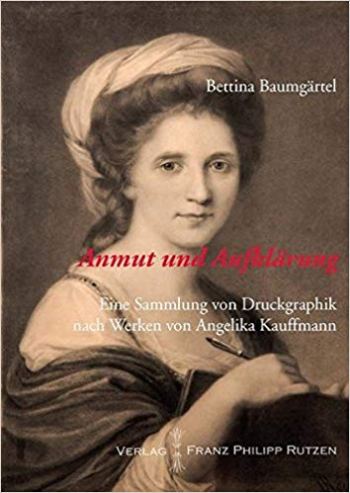
• Wendy Wassyng Roworth, Review of the exhibition catalogue, Bettina Baumgärtel, Anmut und Aufklärung: Eine Sammlung von Druckgraphik nach Werken von Angelika Kauffman (Harrassowitz, 2016), pp. 321–23. “An exhibition at the Winckelmann Museum in Stendhal, Germany . . . presented a selection of prints after Kauffman’s work . . . The exhibition catalogue includes examples of engraved reproductions by British and other printmakers . . . There is a detailed chronology of Kauffman’s life and work; an essay on prints after Kauffman and eighteenth-century printmaking; another essay on the Winckelmann portrait and its influence; a numbered catalogue of works exhibited; and a bibliography of cited sources. The catalogue of works exhibited is divided into sections according to subjects and themes Kauffman portrayed: self-portraits, portraits, mythology, scenes from Shakespeare and other poetry, Roman and early English history, allegory and genre” (322).
• Monika Hinkel, Review of the exhibition catalogue, Timothy Clark, ed., Hokusai: Beyond the Great Wave (Thames & Hudson, 2017), pp. 323–25. “The superb selection, incorporating paintings, woodblock prints, drawings, manuals and illustrated books selected from collections around the world illustrate well the versatility of Hokusai’s striking work. They not only portray the ingenious way in which he amalgamated Japanese-, Chinese- and European-inspired techniques, but also reveal his profound knowledge of mythology, history, the natural world and religion and his strong interest in draughtsmanship” (324–25).
• Stephen Clarke, Review of the book Lucy Peltz, Facing the Text: Extra-illustration, Print Culture, and Society in Britain, 1769–1840 (Huntington Library Press, 2017), pp. 353–55. “Peltz’s book is the product of some fifteen or more years of research, during which period she has published a number of related articles, most notably the correspondence of Granger and Bull in the Walpole Society volume for 2004. The result of her labours is by far the best and most detailed study of a phenomenon that has received surprisingly little scholarly attention. She divides the subject into three broadly chronological sections, using exemplars to tease out meanings and connections rather than aspiring to an impossible vision of encyclopaedic completeness” (354–55).
◊ ◊ ◊ ◊ ◊
Note (added 11 September 2018) — The original posting did not include quotations from the reviews.
Exhibition | The Orléans Collection
This fall at NOMA:
The Orléans Collection
New Orleans Museum of Art, 26 October 2018 — 27 January 2019
Curated by Vanessa Schmid

Guido Reni, The Meeting of David and Abigail, 1615–20, oil on canvas, 61 × 65 inches (Norfolk, VA: Chrysler Museum of Art).
At its founding in 1718, New Orleans was named for the French Regent, Philippe II, Duke of Orléans (1674–1723). A formidable personality, Philippe II’s legacy is his patronage of the arts: architecture, painting, furniture, music, dance, and theatre. In celebration of the tricentennial of the city that bears his regal title, NOMA will present an exhibition of selections from the Duke’s magnificent personal collection. This international loan exhibition will bring together masterpieces by Veronese, Valentin, Poussin, Rubens, and Rembrandt that formerly graced the walls of the Palais Royal in Paris.
The quality of the Orléans Collection was universally praised during Philippe II’s lifetime and its stature is attested by the astounding 772 paintings inventoried at his death. Although originally bequeathed to the duke’s heirs, in the 1790s the family hastily sold the collection to raise money during the French Revolution. The subsequent sales became a watershed event in the history of collecting and museology. The exhibition and its accompanying scholarly catalogue will explore exceptional aspects of the collection through four guiding themes: the Palais Royal and its grand redecoration as a center for the arts and exchange in Paris; the diplomatic and personal display of the collection in public and private spaces; the Duke of Orléans’ personal taste and psychology as a collector; and the fame and impact the collection had for contemporary visitors, artists, and collectors in Paris.
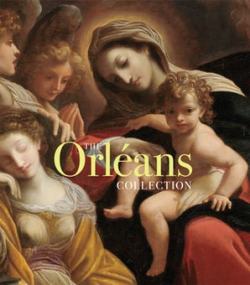 No exhibition of this fascinating subject has been undertaken and this project offers an exceptional opportunity for new scholarship, with a catalogue structured to maximize scholarly research and publish new research about Philippe II’s collection. The Orléans Collection will bring together, for the first time since its 1790s dispersal, a representative group of forty works that tell the story of its formation and character.
Vanessa Schmid with Julia Armstrong-Totten and essays by Jean-François Bédard, Kelsey Brosnan, Alexandre Dupilet, Nicole Garnier-Pelle, Françoise Mardrus, Rachel McGarry, and Xavier Salomon, The Orléans Collection (London: D. Giles Limited, 2018), 288 pages, ISBN: 978-1911282280, $55.
As described in John Kemp’s article for New Orleans Magazine (May 2018):
In addition to luxurious and historic artwork, the show also will explore the duke’s artistic tastes and psychology as a collector, the Palais-Royal as a center for the arts in Paris, how the duke displayed his collection in private and public spaces in the palace, the history of the collection, court life, the collection’s reputation based on earlier writings and Parisian guidebooks from the early 1700s, and, finally, the collection’s influences on 18th-century artists in Europe…
The full article is available here»
Display | Bad-boy Adrian Beverland
Now on view at the Rijksmuseum:
Bad-boy Adrian Beverland / Hadriaan Beverland
Rijksmuseum, Amsterdam, 26 April — 17 September 2018

Isaak Beckett, after Simon Dubois, Portrait of Adrian Beverland Drawing a Statue of Venus, ca. 1685–90 (Amsterdam: Rijksmuseum).
On display in Gallery 2.21 is a small exhibition of the work of 17th-century bad-boy Adrian Beverland (1650–1716), a Dutch classicist who devoted his studies exclusively to one subject: sex! The display in this gallery of a selection of fourteen portraits, publications, and erotic prints from Beverland’s collection offers a tantalising glimpse into his intriguing life and his predilection for erotica.
For many years, Beverland worked on an encyclopaedia of eroticism in the ancient world entitled De Prostibulis Veterum (On the Prostitution of the Classics). But it was never published. When another provocative treatise by Beverland appeared in print in 1679, he was banished from the Dutch provinces of Holland, Zeeland and West-Friesland. His reputation as a scholar lay in ruins.
The disgraced classicist moved to London, where he built up a new life, earning a respectable living as an agent in art and literature and hunting out interesting antiquities, shells, and manuscripts for wealthy collectors. But the delights of erotica still beckoned, and Beverland continued his studies in secret. He illustrated his notes with intriguing, erotic collages comprising cut-out fragments of prints, and he was apparently unable to restrain himself from referring to his bad-boy status in curious portraits of himself. In one we see a mischievous Beverland drawing the bare buttocks of a statue of Venus.
Those wishing to find out more about Adrian Beverland will be interested to know that Joyce Zelen, an Andrew W. Mellon Fellow, is currently studying the life of this ostracised eroticist. Her research into Beverland’s portraits will be published in the Rijksmuseum Bulletin later this year, and the complete results of her broader study of Beverland will appear in a year’s time.










leave a comment