Registration is open for a limited in-person audience. Bard Graduate Center requires proof of vaccination and photo identification to enter the building. Guests are required to wear masks regardless of vaccination status. This talk will also be available on Zoom (register here). A link will be circulated to registrants by 4pm on the day of the event. This event will be live with automatic captions.
Lecture | Charlotte Vignon on the Renovation of the Sèvres Museum

From the BGC:
Charlotte Vignon, Rebuilding the City of Ceramic: Projects for the Renovation of the Sèvres Museum
The Françoise and Georges Selz Lectures on 18th- and 19th-Century French Decorative Arts and Culture
Online and in-person, Bard Graduate Center, New York, 1 March 2022
Charlotte Vignon will be speaking in the Françoise and Georges Selz Lectures on Eighteenth- and Nineteenth-Century French Decorative Arts and Culture on Tuesday, March 1 at 6 pm. Her talk is entitled “Rebuilding the City of Ceramic: Projects for the Renovation of the Sèvres Museum.”
The Sèvres Museum was created in 1824 by Alexandre Brongniart (1770–1847), then the director of the Porcelain Manufactory of Sèvres. At its beginning, it was considered as a technical resource, a conservatory of materials and techniques intended to inspire craftsmen and artists working at the prestigious French manufactory by providing them with varied examples of ceramic from many periods and places. Thanks to further acquisitions from the second half of the nineteenth century, the collection gradually became an encyclopedic museum offering a comprehensive overview of the history of ceramics.
Today, the Sèvres Museum brings together a collection of more than 50,000 ceramic objects from prehistory to the present, principally from Europe but also including important examples from Asia, America, Africa, and Oceania. This lecture will unveil current plans for a major renovation of the museum, which will both transform its displays and highlight its historical and physical links to the Sèvres Porcelain Manufactory. A true national treasure, Sevres seeks to contribute to the world of tomorrow by balancing today’s quest for instantaneity and start-ups with a new art of living that affirms the values of artistic creativity, scientific experimentation, and cultural diversity.
Charlotte Vignon is Director of the French National Museum of Ceramics located at Sèvres, just outside Paris (Musée national de céramique de Sèvres). Previously, she was Curator of Decorative Arts at The Frick Collection in New York for more than ten years. She has held fellowships at The Metropolitan Museum of Art, The Cleveland Museum of Art, and The Frick Collection, where she was an Andrew W. Mellon Curatorial Fellow. Vignon organized several exhibitions at The Frick Collection: Exuberant Grotesques: Renaissance Maiolica from the Fontana Workshop (2009); Turkish Taste at the Court of Marie-Antoinette (2011); White Gold: Highlights from the Arnhold Collection of Meissen Porcelain (2011); Gold, Jasper, and Carnelian: Johann Christian Neuber at the Saxon Court (2012); Precision and Splendor: Clocks and Watches at The Frick Collection (2013); Pierre Gouthière: Virtuoso Gilder at the French Court (2016); Fired by Passion: Masterpieces of Du Paquier Porcelains from the Sullivan Collection (2017); Masterpieces of French Faience: Selections from the Sidney R. Knafel Collection (2018); and Elective Affinities: Edmund de Waal at The Frick Collection (2019). She is the author of numerous articles and essays on European decorative arts, including sixteenth- to nineteenth-century ceramics, tapestries, furniture, and architecture, as well as the history of the art market and collecting in the United States. Vignon is also the author of Duveen Brothers and the Market for Decorative Arts, 1880−1940, as well as Gouthière’s Candelabras, with Edmund de Waal, both published in 2019.
Online Symposium | Museum, Research, and Discovery
From the symposium flyer:
Museum, Research, and Discovery
Online, Masterpiece London, 15–16 February 2022
 Masterpiece London is delighted to host a programme of digital debate and discussion, co-organised by the Fair and writer and critic Thomas Marks, to bring together preeminent museum curators and conservators with the leading figures in the art and antiques trade, with the aim of encouraging constructive discussion, networking, and the exchange of knowledge and practical advice.
Museums, Research and Discovery is the sixth in a series of events that Masterpiece London launched in 2018—and which since 2020 have fully embraced the possibilities of digital discussion, with recent online events focusing on conservation, artistic materials, and the history of colour. This spring the focus is on museums as sites of discovery, exploring how research within museums can engender a greater understanding of their holdings; and how new forms of collaboration between museums, as well as between museums and the public, stand to bring new information about collections to light.
Over two days, experts will offer a range of perspectives on how museums and archives make art-historical discoveries possible—and how innovative collaborations and technologies are opening new pathways for collections-based research. What is the role of research in preparing exhibitions, conservation projects or making acquisitions, say, and how far does the potential for discovery motivate such activities? How are research findings in museums best communicated to the public? And how might the sharing of archives and digitised collections, and new modes of analysing them, give rise to fresh art-historical discoveries in the future?
As ever at the Masterpiece Symposium, attendees will be invited to participate in the discussion during the break-out sessions that follow the panels—with the aim of sharing knowledge and ideas. “This event builds on our online programme, which has aimed to foster better understanding of works of art,” says Philip Hewat-Jaboor, Chairman of Masterpiece London. “The sixth Masterpiece Symposium will continue this thread by celebrating how museums enable art-historical research and communicate it to the public—and how museum collections offer opportunities to develop new methods of research.”
Register for the Masterpiece Symposium here»
Knowing Collections
Tuesday, 15 February 2022
Panel Discussion: 5pm (BST), Break-out Sessions: 6pm–6.30pm (BST)
This session will explore how research within museums allows for the reconsideration of individual works or types of work, be that their facture, authorship, meaning, provenance or wider cultural significance. The conversation will cover the relationship between research and: display; conservation; exhibition-making; digitisation; and acquisitions. To what extent are collections rediscovered, in some sense, by successive generations of curators and conservators?
Panellists
Paola D’Agostino | Director, Musei del Bargello, Florence
Helen Jacobsen | Executive Director, The Attingham Trust
Francesca Whitlum-Cooper | Associate Curator, National Gallery, London
Katie Ziglar | Director, Ackland Art Museum, The University of North Carolina at Chapel Hill
Moderated by Thomas Marks | Associate Fellow, Warburg Institute, London
Modes of Discovery
Wednesday, 16 February 2022
Panel Discussion: 5pm (BST), Break-out Sessions: 6pm–6.30pm (BST)
This session will focus on how the sharing of objects, images and data between institutions, and between them and the public, can lead to types of discovery that might not otherwise be possible. The conversation will explore collaboration between collections; institutional transparency about provenance and other types of information; the possibilities for public participation in research; and how new technologies such as machine learning and computer vision might generate new ways of understanding museum collections. What might we discover in and about museum collections in the not-too-distant future?
Panellists
MacKenzie L. Mallon | Specialist, Provenance, The Nelson-Atkins Museum of Art, Kansas City
Rebecca Roberts | Project Coordinator, Arcadia MAHSA, and Research Associate, Fitzwilliam Museum, Cambridge
Pip Willcox | Head of Research, The National Archives, Kew
Louisa Wood Ruby | Head of Research, The Frick Art Reference Library, New York and
Chair, PHAROS: The International Consortium of Photoarchives
Moderated by Thomas Marks | Associate Fellow, Warburg Institute, London
Online Seminar Series | Neoclassicism, Race, and Empire

From TORCH:
Neoclassicism, Race, and Empire
Online, The Oxford Research Centre in the Humanities, March 2022
Charmaine Nelson (NSCAD University)
Wednesday, 2 March, 4.00–5.30pm GMT (11am EST), register here»
Anne Lafont (L’École des Hautes Études en Sciences Sociales)
Wednesday, 16 March, 4.00–5.30pm GMT (12pm EST), register here»
Louis Nelson (University of Virginia)
Wednesday, 30 March, 4.00–5.30pm BST (11am EST), register here»
This three-part series examines the intersection between neoclassicism and questions of race, colonisation, empire-building, and national identity. With a focus on the British and French Atlantic worlds from the eighteenth century onwards, but with attention to a broader geographical field, we will ask how classical ideas and forms were invoked in art, architecture, and aesthetics in ways that intersected with colonial expansion, the assertion of imperial power, and the development of racial ideologies. Through a series of seminars led by pioneering scholars in this field—Charmaine Nelson, Anne Lafont, and Louis Nelson—we will explore the stylistic phenomenon of ‘neoclassicism’ within its broadest political and cultural contexts, while discussing the longer historiographical legacy of self-consciously classical art made in the modern age of empire. Registration is required for each online talk.
Please note that in the USA and Canada, the session on 16 March starts an hour later than the others, because the clocks go forward on different dates.
Lecture | James Middleton on Mexican Court Clothing
Tomorrow (Thursday) from BGC:
James Middleton | ‘But She’s Wearing It Backwards’: Understanding and Misunderstanding an Eighteenth-Century Mexican Court Gown
Online (Zoom), Bard Graduate Center, New York, 3 February 2022, 12.15 (ET)
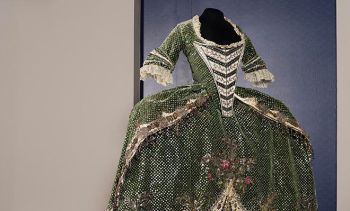
Museo Nacional de Historia. Photo by Omar Dumaine.
This talk will explore the history of a late eighteenth-century Mexican gown since its donation to Mexico’s Museo Nacional de Historia in 1900. The opulent, deep green silk-velvet and ivory satin dress with lavish silver embroidery has long been recognized as one of the most elaborate garments surviving from the colonial Americas, but has only recently been identified as a traje de corte—a court gown, one of four extant New Spanish garments to be so identified—made according to the etiquette requirements of the Spanish royal court. It has been exhibited in many guises, with and without its stomacher and/or train, and paired with radically different pannier and hoop variations. The genesis of the talk’s title is the gown’s first published appearance, in the 1988 book, La historia de Mexico a través de la indumentaria, in which it was correctly identified as a court gown, but misidentified as a Velázquez-era infanta dress and photographed worn backwards by a live model.
Middleton will be using this extant dress, as well as other extant garments in paintings, as a means of reflecting on some of the questions posed by the existence of court clothing in Spanish America. Who wore gowns like this? Were they required for functions of the viceregal court of Mexico City as they were for the court of Madrid, or were they aspirational garments worn for social display by the nouveau riche nobles of New Spain? The presentation will consist of photographs and analyses of extant and painted garments, as well as contemporary texts that document New Spanish tailoring practices and textile commerce, to investigate the little-understood phenomenon of court culture in the Americas.
James Middleton is an independent scholar working on dress in the Spanish-Colonial Americas circa 1520–1820. He has lectured and published on the subject in the US (Metropolitan Museum of Art, Los Angeles County Museum of Art, Denver Art Museum, et al.), Mexico (Museo Nacional de Historia, Museo Nacional de Arte), Colombia (Universidad de los Andes), and England (Society of Dress Historians). His particular interest in this subject dates from the early 1990s, when he first saw the dress that is this presentation’s focus in the conservation lab of the Museo Nacional de Historia, two weeks after having bought a copy of La historia de Mexico a través de la indumentaria.
This event will be held via Zoom. A link will be circulated to registrants by 10am on the day of the event. This event will be live with automatic captions. Registration is available here.
Lecture | Sarah Cohen on Sugar, Silver, and Slavery
Next month from BGC:
Sarah Cohen | Sugar, Silver, and the Bourbon Sucriers: Sweetening Slavery in 18th-Century France
The Françoise and Georges Selz Lectures on 18th- and 19th-Century French Decorative Arts and Culture
Online (Zoom), Bard Graduate Center, New York, 10 February 2022, 12.15 (ET)
Inseparable from the rise of sugar within the economies of international trade in eighteenth-century Europe was the Caribbean slave trade: in France, whose primary source of sugar for local consumption and re-export was its principal colony of Saint Domingue, the trade in enslaved persons swelled directly in tangent with the sugar business throughout the 1730s and beyond. But because all of the steps in harvesting and producing sugar, apart from some of the most elaborate refining processes, were carried out in the distant island colonies, such interdependency, to say nothing of the coerced labor it entailed, was invisible on the French dining table.

Paire de sucriers à poudre : esclaves chargés de cannes à sucre, 1730s (Paris: Musée du Louvre, photo by Daniel Arnaudet).
A startling exception to this submersion of the harsh facts of how sugar cane was harvested is found in a pair of silver sugar casters (sucriers) that depict a man and woman laboring beneath bundles of sugar cane, as if physically ‘delivering’ their sweet crystals for the elite dessert. Almost certainly made by the royal silversmith Claude II Ballin on commission for Louis-Henri, duc de Bourbon, the casters would have appeared among the duke’s many other worldly goods on display at the château of Chantilly in the 1730s. The harvesters would have been identifiable as an African woman and man through their carefully modelled physiognomies, which reflect incipient French understandings of racial type. Their bodies are cast in glistening, solid silver, while their hollowed burdens of bundled cane detach to dispense the powdered sweetener. Departing notably from typical examples of this type of luxury dispenser, whose baluster design references its placement and use on the table, rather than the sourcing of the product itself, the two large figures were also designed to occupy their own, unique place on a dessert or collation table. Cohen’s talk will explore the diverse implications of the sucriers within the context of international trade; the physical and cultural interconnections of sugar and slavery; and elite French practices of dining and festive entertainment in the early eighteenth century.
Registration is available here»
Sarah R. Cohen is Professor of Art History and Chair of the Department of Art and Art History at the University at Albany, SUNY. She is also a joint Professor in the Department of Women’s, Gender, and Sexuality Studies. Her research focuses on the body and sensory experience in art and culture from the sixteenth through eighteenth centuries, with a special emphasis on early modern France. Her books include Art, Dance and the Body in French Culture of the Ancien Régime (2000) and Enlightened Animals in Eighteenth-Century Art: Sensation, Matter, and Knowledge (2021). A third book, Picturing Animals in Early Modern Europe: Art and Soul, is forthcoming in 2022.
Author Talks | Highlighting New Books from the Mellon Centre
This spring, you’re invited to a series of talks by authors of books recently published by the Paul Mellon Centre. Each author will give a glimpse into their project, sharing insights about the process of researching, writing, and publishing their book. Each event consists of two talks of around 20 minutes each, followed by a discussion and Q&A session. All events take place from 18.30 to 20.00. More information, including booking details, is available from the Mellon Centre.

Henrietta McBurney and Joseph Viscomi | Illustrations and Illuminations
Online, 2 February 2022
In the first of these events, Henrietta McBurney will discuss her book Illuminating Natural History: The Art and Science of Mark Catesby, and Joseph Viscomi will speak about William Blake’s Printed Paintings. Together, the authors will consider how art and cultural histories tackle issues around illustration, copies, copying, and originality, as well as questions of professional status, authorial voice, and vision. The evening will be chaired by British Art Network convener, Martin Myrone. Register here»
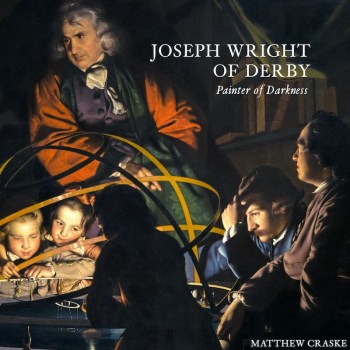
Matthew Craske and Martin Postle | In Darkness and In Light: Rethinking Joseph Wright of Derby
Online and in-person, Paul Mellon Centre, London, 16 February 2022
Join Matthew Craske, author of Joseph Wright of Derby: Painter of Darkness (published by the Paul Mellon Centre, 2020; winner of the 2021 William M. B. Berger Prize for British Art History) and Martin Postle, Senior Research Fellow at the Paul Mellon Centre, who is working on a catalogue raisonné on Joseph Wright of Derby’s paintings, for an evening of talks and discussion. Together, the authors will consider how the output of a single artist is rewritten and reimagined at different historical moments. The conversation will be chaired by PMC Director, Mark Hallett. Register here»

Petra ten-Doesschate Chu, Max Donnelly and Andrea Wolk Rager, | Aesthetic Encounters
Online, 9 March 2022
In the third of these events, Petra ten-Doesschate Chu and Max Donnelly will speak about their research for their book Daniel Cottier: Designer, Decorator, Dealer; and Andrea Wolk Rager will discuss The Radical Vision of Edward Burne-Jones (which will be published in May 2022). Together, the authors will consider new approaches to studying art, craft, and design of the nineteenth century and the intersection of art, social, and political history for creating richer understandings of the work of the artists and art workers they have researched. The conversation will be chaired by Liz Prettejohn. Register here»
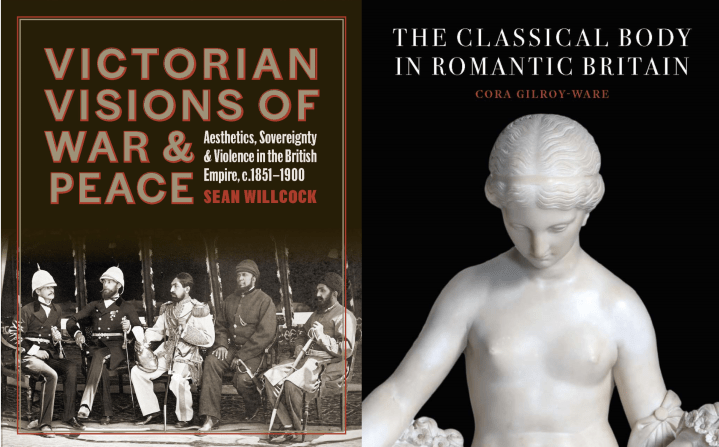
Cora Gilroy-Ware and Sean Willcock | War and Peace: Rethinking Aesthetics in the Age of Empire
Online and in-person, Paul Mellon Centre, London, 16 March 2022
In the fourth of these events, Cora Gilroy-Ware will speak about her research rethinking the sculpted body The Classical Body in Romantic Britain, and Sean Willcock will discuss Victorian Visions of War & Peace: Aesthetics, Sovereignty, and Violence in the British Empire. Together, the authors will consider how their research has questioned assumptions about aesthetics and style in the eighteenth and nineteenth centuries, researching overlooked artists, and discuss the intersections of the body, gender, race, and empire through their work on sculpture and photography. They will also talk about the process of turning a PhD thesis into a book manuscript. The conversation will be chaired by PMC Head of Research and Learning, Sria Chatterjee. Register here»
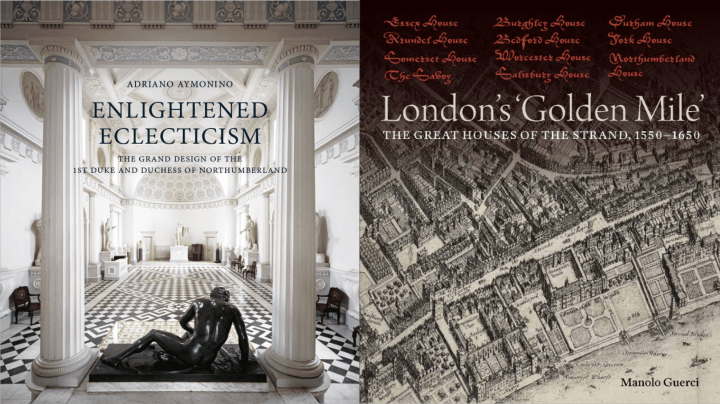
Adriano Aymonino and Manolo Guerci | Grand Designs and Great Houses
Online and in-person, Paul Mellon Centre, London, 23 March 2022
In the fifth and final of these events, Adriano Aymonino, author of Enlightened Eclecticism: The Grand Design of the 1st Duke and Duchess of Northumberland, and Manolo Guerci, author of London’s ‘Golden Mile’: The Great Houses of the Strand, 1550–1650, will come together to discuss discoveries made in writing their books about ambitious architectural commissions. They will consider the possibilities and the losses of the archive, issues around writing about designs of great scale (both extant and destroyed), and how to research campaigns of design, patronage and collecting stretching over a number of decades. The conversation will be chaired by Kate Retford. Register here»
Online Talk | Corey Brennan on the Villa Aurora
The sale of the Casino di Villa Ludovisi (Villa Aurora) has—understandably—generated lots of media attention (see the full announcement for press links), and at least some of the finds have involved the eighteenth century . . .
T. Corey Brennan, Inside the ‘World’s Most Expensive Home’: A Decade of Rutgers Research at the Villa Aurora in Rome
Online, 20 January 2022, noon (EST)
 The Villa Aurora in Rome—for precisely 400 years the home of the papal Boncompagni Ludovisi family—will go on auction this month with an asking price of $532 million dollars. Called by one leading art historian a “sort of seventeenth-century Sistine Chapel,” the Villa Aurora boasts famous mural art by more than a dozen major artists, including a unique 1597 ceiling painting by Caravaggio. In this richly illustrated talk, Professor Corey Brennan will discuss this landmark sale, his decade-long collaboration with the owners—†HSH Prince Nicolò and HSH Princess Rita Boncompagni Ludovisi—and the discoveries inside the Villa made with over two dozen Rutgers undergraduate students. This virtual presentation, open to the public, will take place on Thursday, 20 January 2022, 12:00–1:00pm (EST). Registration information is available here.
Exhibition | Gainsborough’s Blue Boy
Opening this month at the National Gallery:
Gainsborough’s Blue Boy
National Gallery, London, 25 January — 15 May 2022
In the winter of 1922, Gainsborough’s The Blue Boy hung at the National Gallery in London for three weeks before it sailed across the Atlantic to its new home in California. It was a public farewell to a beloved painting. 100 years later (to the day), Gainsborough’s masterpiece returns to the Gallery to go on display in Trafalgar Square once again.
On a child-sized canvas, the young subject is dressed in a striking blue costume; he is bright-eyed yet serious, shy yet direct. The identity of the boy in blue is uncertain; more importantly, he is a stand-in for all boys and the idea of childhood. Through a series of high-profile exhibitions, widely published reproduction prints, and countless copies by artists down the ages, he has become one of Britain’s most beloved sons.
The Blue Boy represents the best of 18th-century British art. It is Gainsborough’s eloquent response to the legacy of Van Dyck and grand manner portraiture. It is a proud demonstration by Gainsborough of what painting can achieve. The popularity and influence of the painting have made it an icon, which has been quoted by contemporary artists and referenced in Hollywood films. After exactly 100 years, this exhibition reunites The Blue Boy with the British public and with the paintings that inspired it. This is the first time the painting has been loaned by The Huntington—it is a once-in-a-century opportunity to see this iconic work in the UK.
S E L E C T E D P R O G R A M M I N G
Paterson Joseph in Conversation
Friday, 18 February 2022, 6.30pm
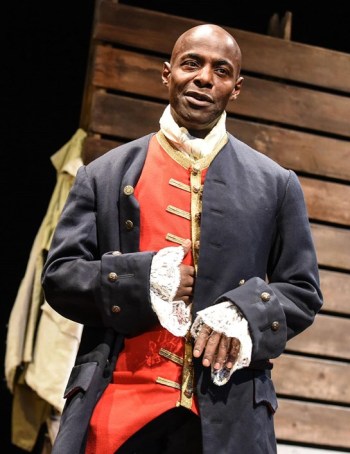
Paterson Joseph in the title role of his play Sancho: An Act of Remembrance, 2018 (Photograph by Robert Day).
Acclaimed actor and writer Paterson Joseph considers the legacies created by Gainsborough’s portraits of Ignatius Sancho and The Blue Boy. Joseph has extensively researched the 18th-century Black writer and composer Ignatius Sancho, whose portrait by Gainsborough is found in the National Gallery of Canada, Ottawa. In conversation with Christine Riding, the Jacob Rothschild Head of the Curatorial Department, Joseph will explore the narratives created through Gainsborough’s work, revealing a portrait of 18th-century Britain and how it is remembered today.
Paterson Joseph is an actor and writer. His work includes stints at the National Theatre and the Royal Shakespeare Company as well as roles in Peep Show, Timeless, Noughts and Crosses, and Vigil. Films include The Beach, Aeon Flux, and In The Name of the Father. He is the author of the monodrama Sancho: An Act of Remembrance and Julius Caesar and Me: Exploring Shakespeare’s African Play. His debut novel The Secret Diaries of Charles Ignatius Sancho will be published in October 2022 by Dialogue Books.
Curator’s Introduction: Gainsborough’s Blue Boy
Monday, 28 February 2022, 1.00pm
Join Christine Riding, the Jacob Rothschild Head of the Curatorial Department, for this lunchtime talk to learn more about this iconic image of childhood, which has been a source of inspiration for contemporary artists and referenced in Hollywood films. A recording will be available on Youtube.
Online Roundtable | The Animation of Decorative Arts in 18th-C France
From The Met:
The Animation of Decorative Arts in Eighteenth-Century France
Online, 14 December 2021, 6.00pm (Eastern Time)
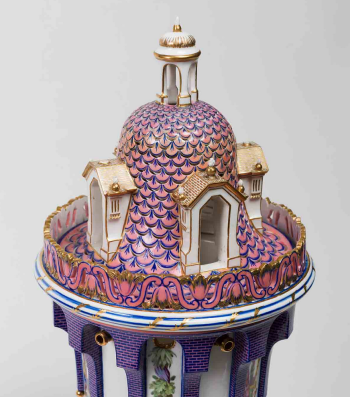 Presented in conjunction with the exhibition Inspiring Walt Disney: The Animation of French Decorative Arts, on view at The Metropolitan Museum of Art from 10 December 2021 until 6 March 2022, this live event takes place online. Watch on YouTube or Facebook (no login required).
Discover how furniture and decorative arts came to life in the literature, dance, and theater of eighteenth-century France, a theme later explored and elaborated by Disney in the classic animated film Beauty and the Beast.
• Wolf Burchard, Associate Curator, European Sculpture and Decorative Arts, The Met
• Alicia Caticha, Assistant Professor, Department of Art History, Weinberg College of Arts and Sciences, Northwestern University
• Sarah Lawrence, Iris and B. Gerald Cantor Curator in Charge, European Sculpture and Decorative Arts, The Met
• Meredith Martin, Associate Professor of Art History, Department of Art History, and Institute of Fine Arts, New York University
• David Pullins, Associate Curator, European Paintings, The Met
Online Talk | Mia Jackson on Boulle and Prints
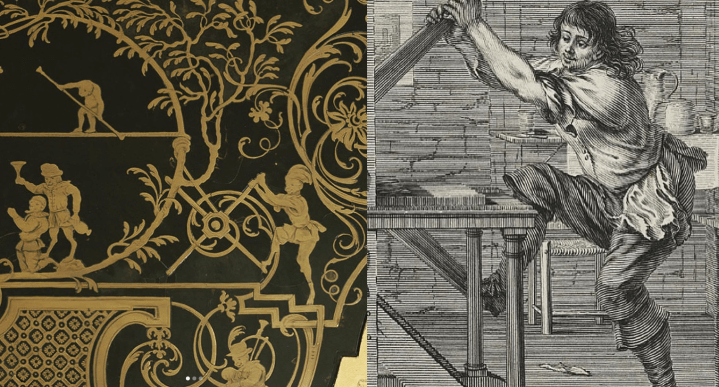
Left: André-Charles Boulle, detail of a table, veneered in turtleshell and brass, with gilt-bronze mounts, ca. 1705 (London: The Wallace Collection, F56). Right: Abraham Bosse, ‘Cette figure vous montre comme on Imprime les planches de taille douce…’, 1642, etching (London: British Museum, R,8.15).
◊ ◊ ◊ ◊ ◊
This Sunday from The Furniture History Society:
Mia Jackson | André Charles Boulle as a Maker, Designer, and Publisher of Prints
The Furniture History Society Online Lecture, 5 December 2021,7pm (GMT) / 2pm (EST)

André-Charles Boulle, table, veneered in turtleshell and brass, with gilt-bronze mounts, ca. 1705 (London: The Wallace Collection, F56).
André-Charles Boulle’s interest in print-making was not limited only to his vast collection of works on paper. The cabinet-maker also designed, made, and sold prints and used print-making techniques in the workshop. Drawing on her doctoral research, Mia Jackson will explore Boulle’s role in print-making, print-publishing, and print-selling. She will discuss Boulle’s series of prints of furniture designs, which her research into publishing history allows her to date more precisely. She will also discuss Boulle’s print design for the Confraternity of St Anne at Carmes-Billettes, and the numerous copperplates that he owned and from which he sold impressions. Dr Jackson’s talk is free to members and £5 for non-members (via this link with code AVUJEN).
Mia Jackson (@theboullelady) has been Curator of Decorative Arts at Waddesdon Manor since 2017. She studied French and Philosophy at Oxford University and then earned an MA in eighteenth-century French decorative arts at the Courtauld Insitute of Art. Her doctoral thesis entitled “André-Charles Boulle (1642–1732) and Paper: Prints and Drawings in the Workshop of an Ébéniste du Roi” was completed at Queen Mary University of London in 2016. She previously worked in the Prints and Drawings Department at The British Museum, at The Wallace Collection, and at English Heritage. She worked on the Riesener Project with The Wallace Collection and the Royal Collection, and is currently preparing a series of exhibitions on Alice de Rothschild with her colleagues at Waddesdon Manor.










leave a comment