Martin Postle on Portraits by Reynolds and Northcote
From the Mellon Centre:
Martin Postle | Patrons and Painters: Portraits by Joshua Reynolds and James Northcote at Trewithen, Cornwall
Paul Mellon Centre for Studies in British Art, London, 7 March 2018

James Watson, after Sir Joshua Reynolds, The Rev. Mr. Zachariah Mudge, Prebend of Exeter &c., mezzotint (New Haven: Yale Center for British Art, Paul Mellon Collection).
Among the pictures in the collection at Trewithen, Cornwall are two portraits by Sir Joshua Reynolds and four by his pupil James Northcote. The portraits feature for the most part members of the Mudge family and were painted in Plymouth—the home of the Mudges and the birthplace of both Reynolds and Northcote. The group comprises a portrait of the cleric Zachariah Mudge and his wife Kitty, by Joshua Reynolds; portraits by Northcote of the philosopher William Ferguson and Thomas Mudge; as well as Northcote’s self portrait and his copy of Reynolds’s portrait of John Mudge. These portraits remain virtually unknown beyond the confines of Trewithen and those acquainted with the house and its collection. Nor have they been subjected to any significant research in the modern period. The intention in this talk is to explain the context for their creation and the light they shed on an important source of local patronage, which had a profound impact on the careers of Reynolds and his pupil James Northcote.
Wednesday, 7 March 2018, 18:00–20:00, at the Paul Mellon Centre for Studies in British Art, Bedford Square, London. Book here.
Lecture | Marie-Antoinette and Josephine as Garden Patrons
From the BGC:
Susan Taylor-Leduc | Designing Legacy: Marie-Antoinette and Josephine as Garden Patrons
Bard Graduate Center, New York, 7 February 2018
During the tumultuous forty years from 1774 until 1814, when the French government was transformed from monarchy to empire, Queen Marie-Antoinette and Empress Josephine Bonaparte created picturesque gardens at the Petit Trianon, Versailles, and Malmaison respectively. The captivating life stories of both women have elicited critiques of their garden patronage, suggesting that they pursued insatiable desires unfettered by financial constraints, detached from political and social realities. This talk suggests an alternative reading: Taylor-Leduc contends that both women constituted living legacies of female empowerment that were essential to the creation and dissemination of the picturesque garden and as such contributed to the evolution of modern landscape architecture in France. This Brown Bag Lunch presentation is scheduled for Wednesday, February 7, at 12:15pm.
Susan Taylor-Leduc earned both her masters and doctoral degrees from the University of Pennsylvania. Since 1992, she has worked as a teacher, curator, university administrator, and tour guide in Paris. A specialist in eighteenth-century French gardens, she is currently working on a book tentatively entitled Designing Legacy: Marie-Antoinette, Josephine and the French Picturesque Garden 1774–1814.
This event will be livestreamed. Please check back the day of the event for a link to the video. To watch videos of past events please visit the BGC YouTube page.
Lecture | Anne Lafont on Portraits of African Women
Next week at the Warburg Institute:
Anne Lafont | Portrait of the African Woman from Atlantic to Mississippi:
A New Topography of the Art of Enlightenment
The Warburg Institute, London, 24 January 2018
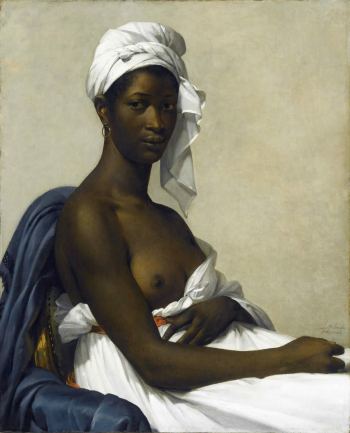
Marie-Guillemine Benoist, Portrait d’une femme noire, shown at the Salon of 1800 under the title Portrait d’une négresse (Paris: Musée du Louvre, 2508, acquired in 1818).
The figures of Africans in the early modern arts trouble the traditional chronology and geography of art history and sometimes disturb the hierarchical circulation of commodities between European metropolises and colonial territories. One cannot study art of colonial times and places with the exact same categories used to define the Italian Renaissance, the British Landscape and even the mobile case of El Greco. Authorship, centre versus periphery, the picture, the unicum… all these units need to be renegotiated in the imperial context. This lecture will focus on these issues through case studies based on the painting of female black figures in France and the French Americas at the end of the eighteenth century and in the first decades of the nineteenth century. Wednesday, 24 January 2018, 17:30.
Anne Lafont, Directrice d’études, EHESS, l’Ecole des hautes études en sciences sociales, Paris.
Book here»
Celebrating Repton 200
From The Gardens Trust:
 Aylsham in Norfolk will host the official launch of Repton 200—a year of nationwide celebrations coordinated by the Gardens Trust marking the bicentenary of the death of Humphry Repton, who succeeded Capability Brown as Britain’s greatest landscape gardener.
Norfolk is where Repton first worked as a landscape gardener, at Catton Park, and where he was buried, at St Michael and All Angels Church in Aylsham, in March 1818. To mark the bicentenary of his death, a programme of events celebrating his life and work have been planned in Norfolk and around the country.
Humphry Repton, whose works include Tatton Park and Woburn Abbey, was the successor to Capability Brown and the first to coin the term ‘landscape gardening’. Born in Bury St Edmunds in April 1752, he attended Norwich Grammar School and trained to work in the textile business but was not successful in the industry. After trying his hand at a number of careers—including dramatist, artist, journalist, and secretary—Repton set himself up as a landscape gardener and gained work through his social contacts. He went on to work on estates across the country, producing his famous Red Books which showed his clients ‘before’ and ‘after’ views of how he would improve their land.
The Gardens Trust are co-ordinating the national celebrations, which start in March 2018, and include the Repton Season organized by Aylsham and District Team Ministry, Aylsham Town Council, community groups and Broadland District Council.
Events in Norfolk include a history workshop with Dr. Tom Williamson, professor of landscape history and archaeology at the University of East Anglia, a Repton 200 Memorial Choral Evensong, a Humphry Repton Memorial Lecture with Professor Stephen Daniels of the University of Nottingham, and a Red Book competition involving pupils from local schools.
Cllr Karen Vincent, Member Champion for Heritage at Broadland District Council, said: “We are lucky as a district to have links to such an important and fascinating figure. Repton’s work remains on show throughout the country, with his first work being here in Broadland at Catton Park. We would encourage anyone interested in one of the country’s most important landscape gardeners to come and help us celebrate his achievements in the spring.”
Dr James Bartos, Chairman of the Gardens Trust, said: “Humphry Repton designed around 400 landscapes across the country, many of which remain much-loved historic gardens. His picturesque designs featured terraces, gravel walks and flower beds around the house, as well as themed flower gardens. Next year will see a host of events celebrating his enduring influence, and drawing attention to gardens which need help to survive.”
For more information about Repton events in 2018 visit www.humphryrepton.org or follow #Repton200 on Twitter.
Lecture | Claudia Johnson on the Rice Portrait of Jane Austen
Happy Birthday, Jane Austen! (she was born on 16 December 1775). From The Lewis Walpole Library:
Claudia Johnson | Pride, Prejudice, and Portraits: The Rice Portrait of Jane Austen
Twenty-third Lewis Walpole Library Lecture
Yale Center for British Art, New Haven, 4 April 2018
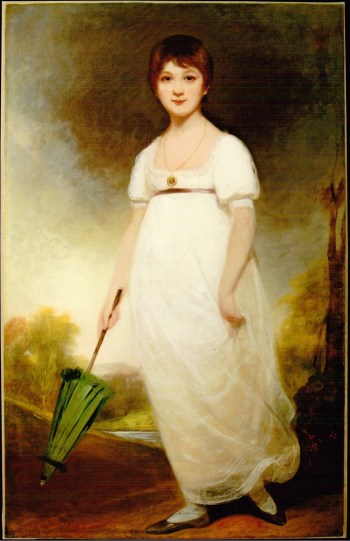
Ozias Humphry, Rice Portrait of Jane Austen, 1788.
Examining the controversial reception of the Rice Portrait of Jane Austen, by Ozias Humphry, this illustrated talk ponders the stakes of legitimacy in general as well as the unusual acrimony this portrait in particular has often inspired. Wednesday, April 4, 2018, 5:30pm, Yale Center for British Art Lecture Hall.
Claudia L. Johnson joined the faculty at Princeton in 1994 and was Chair of the English Department from 2004 to 2012. She specializes in 18th- and early 19th-century literature, with a particular emphasis on the novel. In addition to 18th-century courses, she teaches courses on gothic fiction, sentimentality and melodrama, the history of prose style, film adaptations of novels into film, detective fiction, Samuel Johnson, and, of course, Jane Austen. She has strong research interests in 18th-century music, in voice, in letterpress printing, in Yiddish story, and in the American Songbook of the 1930s and 1940s.
Johnson’s most recent book, Jane Austen’s Cults and Cultures (Chicago, 2012) won the Christian Gauss Award in 2103. Her other books include The Blackwell Companion to Jane Austen, ed. with Clara Tuite (Blackwell, 2005); The Cambridge Companion to Mary Wollstonecraft (Cambridge, 2002); Equivocal Beings: Politics, Gender and Sentimentality in the 1790s (Chicago, 1995), which won an Honorable Mention for the MLA Lowell Prize; and Jane Austen: Women, Politics, and the Novel (Chicago, 1988). In addition, she is keenly interested in textual scholarship and has prepared editions of Jane Austen’s Mansfield Park, Sense and Sensibility, Northanger Abbey, and (with Susan Wolfson) Pride and Prejudice. Her research has been supported by major fellowships such as the NEH and the Guggenheim.
Johnson is working on several book-length projects: an edition of Austen’s The Beautifull Cassandra, with drawings by Leon Steinmetz, forthcoming from Princeton University Press, 2018; 30 Great Myths about Jane Austen, with Clara Tuite, forthcoming from Wiley-Blackwell in 2019; and Raising the Novel, which explores key phases the history of the history of the novel in which critics have attempted to elevate them to keystones of high culture.
Court Studies Seminars, 2018 Schedule
From The Society for Court Studies:
Society for Court Studies Seminars, 2018
New York University, Bedford Square, London
An annual programme of seminars is run by the Society for Court Studies in which new work in the field is presented and discussed. These take place in London on Monday evenings, starting at 6:00pm, at New York University, 6 Bedford Square, London, WC1B 3RA, room 102. Refreshments, including wine, are served. The seminars are free (except the guest lecture) and open to everyone. For further details, please contact the Seminar Secretaries, Jo Tinworth (jtinworth@soane.org.uk) and Nicola Clark (Nicola.Clark.2008@kent.ac.uk). Historians interested in giving a seminar paper to the Society should contact the Seminar Secretaries as well. Members of the society do not need to book in advance. If you are not a member, please register your interest using the booking link next to the relevant seminar paper.
29 January
Katarzyna Kuras (Jagiellonian University, Cracow), Conflicts or Cooperation? The World of Courtiers of the Queen Maria Leszczyńska (1725–1768)
19 February
James Legard (University of Edinburgh), ‘Princely Glory’: The 1st Duke of Marlborough, Court Culture, and the Construction of Blenheim Palace
12 March
Valerie Schutte (independent scholar), Princess Elizabeth Tudor: Book Dedications and the New Year’s Gift Exchange
16 April
David Parrott (New College, Oxford), Anne of Austria, Mazarin, and the French Court in Crisis, 1650–54
4 June
Joint event with the Institute of Historical Research Tudor and Stuart seminar, location to be confirmed
Samantha Harper (Winchester University), Continuity and Change in the Household of Henry VII and Henry VIII
17 September
Alden Gregory (Historic Royal Palaces), The Tudor Court under Canvas: Royal Tents and Timber Lodgings, 1509–1603
15 October
Mandy Richardson (University of Chichester), Hunting, Hounds, and Hospitality: Gendered Aspects of the Late Medieval and Early Modern Royal Hunt
12 November
Peter Barber (King’s College London), George III as a Map Collector
3 December
Helen Watanabe O’Kelly (University of Oxford), Catholic Ruler, Protestant People: The Impact of the Reformation on Court and Civic Festivals in Early Modern Europe
Lecture | Wolf Burchard on Savonnerie Carpets: Stages of Power
From the BGC:
Wolf Burchard | Savonnerie Carpets: Stages of Power
Françoise and Georges Selz Lectures on Eighteenth- and Nineteenth-Century French Decorative Arts and Culture
Bard Graduate Center, New York, 6 February 2018
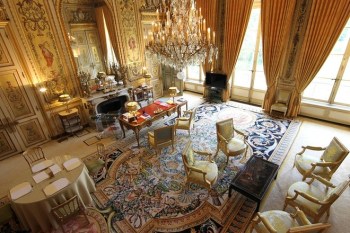
The Salon Doré: President Macron’s office at the Elysée Palace with one of Louis XIV’s Savonnerie carpets.
Wolf Burchard will deliver a Françoise and Georges Selz Lecture on Eighteenth- and Nineteenth-Century French Decorative Arts and Culture on Tuesday, February 6, at 6pm. His talk is entitled “Savonnerie Carpets: Stages of Power.”
Since the Second World War, every President of France has had one of Louis XIV’s famed Savonnerie carpets in his office at the Elysée Palace. Sumptuous stages on which key events of French history have unfolded, these spectacular weavings initially formed part of an unprecedented commission from the Sun King for no less than 93 carpets to cover the entire Long Gallery of the Louvre, spanning more than 442 meters. However, as Louis gradually lost interest in the Louvre Palace, instead choosing Versailles as the headquarters of the Bourbon monarchy, these magnificent carpets, originally intended to be laid out side to side, were largely separated and used singly as focal points in the lavishly decorated salons of Louis XIV and his successors.
Wolf Burchard’s lecture will revisit the history of the Savonnerie manufactory from its beginnings under Louis XIII to the present day, focusing on its major commissions for the Louvre, Versailles, and Notre Dame. His talk will also examine the dispersal of many of these weavings after the French Revolution in 1789, both through sale and as diplomatic gifts, as well as the rising British and American taste for Savonnerie carpets beginning around 1900.
Wolf Burchard is the Furniture Research Curator at Britain’s National Trust and the author of The Sovereign Artist: Charles Le Brun and the Image of Louis XIV (Paul Holberton Publishing, 2016). From 2009 to 2014 he was Curatorial Assistant at the Royal Collection Trust, where he co-curated The First Georgians: Art & Monarchy, 1714–1760, an exhibition held at The Queen’s Gallery, Buckingham Palace, to commemorate the tercentenary of George I’s accession to the British throne. He studied the history of art and architecture at the universities of Tübingen and Vienna as well as the Courtauld Institute of Art in London, from which he holds an MA and PhD. Wolf Burchard regularly writes and lectures about the art and architectural patronage at the British, French, and German courts. He has worked extensively on the Savonnerie manufactory and in 2012 published an update of Pierre Verlet’s catalogue of Louis XIV’s carpets for the Louvre’s Long Gallery, adding newly discovered carpets, carpet fragments and designs. He serves on the Executive Board of the Georgian Group and the Council of the Furniture History Society and was a member of the Committee of the Society for Court Studies from 2011 to 2017.
Colin Sheaf on Chinese Art for Western Interiors, 1650–1850
From the Society of Antiquaries:
Colin Sheaf | Chinese Art for Western Interiors, 1650–1850
Society of Antiquaries of London, 16 January 2018
Linking Asian craftsmanship with evolving Western tastes in interior decoration and passion for Chinoiserie, the ‘China Trade’ facilitated the arrival in London of principally Chinese artefacts and traditions like tea-drinking, which greatly enriched English polite society between about 1600 and 1850. This lecture will explore this exotic yet fundamentally commercial maritime relationship, illustrating some of the fine lacquers, ‘Export-taste’ ceramics, silks and wallpapers which the ‘Honourable East India Company’ regularly imported.
Colin Sheaf has enjoyed a distinguished 40-year career in the London art auction world after reading Modern History at Worcester College Oxford. A world authority on Asian ceramics and Chinese Art, as Chairman of Bonhams UK and Asia, and Global Head, he directs Asian Art specialist teams across four continents. He has lectured widely in the UK and Asia, and—besides publishing some 120 specialist articles—is co-author of a definitive study of Qing Dynasty Chinese ceramics. He was recently appointed Chairman of the world-famous Sir Percival David Foundation of Chinese Art, and chairs the Company running an award-winning historic London Square garden.
All lectures begin at 13.00. Doors open at 12.30 on the day of the lecture. Our Public Lectures are free and open to the public, but space is limited and reservations are strongly recommended to avoid disappointment. To book online, simply click the ‘Reserve Your Seat’ button at the Society of Antiquaries website.
Seminar Series | Art and the Senses

From the University of Cambridge:
Art and the Senses
Department of History of Art Graduate Research Seminar Series, University of Cambridge, Lent 2018
The work of art is more than a visual object. It has surface, texture that can be touched, and emits or evokes sounds, smells, and tastes. Recently, academic studies on the senses have flourished, especially in the context of the material approach to visual studies; meanwhile, museums and art institutions have been considering new ways to augment visitor experience through the senses, and better engage with visitors who have sensory impairments; and in contemporary art, performance, video, and sound can incorporate more than one sense at a time, and calls into question the primacy of the visual. This Graduate Seminar Series, Art and the Senses, seeks to appreciate the roles of the senses in visual culture, explore the senses’ problematic and pleasurable qualities, and ultimately offer participants the opportunity to engage with their own senses.
Wednesdays at 5pm
History of Art Graduate Centre
4a Trumpington Street, CB2 1QA
Refreshments provided, all welcome
Making
Wednesday 17 January
Nose-First: Rendering Visible the Humanist Smellscape
Kate McLean – Programme Director, Graphic Design Canterbury Christ Church University and Information Experience Design PhD Candidate RCA
Seeing
Wednesday 24 January
Investigating the Invisible: Optiques and Visual Culture in the French Merveilleux-Scientifique Genre (1880–1930)
Fleur Hopkins – History of Art PhD Candidate, Université Paris 1 Panthéon-Sorbonne and Assistant Researcher at the Bibliothèque Nationale de France, département des Sciences et Techniques
Tasting
Wednesday 31 January
Tasting Impressionism
Dr Allison Deutsch – Junior Research Fellow, Institute of Advanced Studies, University College London
Smelling
Wednesday 7 February
In Search of Lost Scents: (Re-)constructing the Aromatic Heritage of History of Art and How to Use the Nose as a Methodological Tool
Caro Verbeek – Curator and PhD Candidate, Vrije Universiteit, Amsterdam, Embedded Researcher Rijksmuseum and International Flavors & Fragrances
Hearing
Wednesday 14 February
Emergency Noises: Sound Art and Gender
Dr Irene Noy – Independent scholar
Touching
Wednesday 21 February
Touching the Renaissance: The Material Culture of Skin in Europe, 1450–1700
Professor Evelyn Welch FKC – Provost/Senior Vice President (Arts & Sciences) and Professor of Renaissance Studies in the Department of History, School of Arts & Humanities
Displaying
Wednesday 28 February
Sensory Experiences in the National Gallery
In Conversation with Dr Caroline Campbell – The Jacob Rothschild Head of the Curatorial Department, The National Gallery, London
Love Making
Wednesday 7 March
Illustration and the Erotics of Re-Use in Victorian Print Culture
Dr Sarah Bull – Wellcome Trust Research Fellow, History and Philosophy of Science, Cambridge
Convenors: Lizzie Marx and Lorraine de la Verpillière
Twitter: @ArtSensesCam | Facebook: ArtSenseCambridge
Research Lunch | Emily Knight on Portraiture as Remembrance
From the Paul Mellon Centre:
Emily Knight | ‘The Last Sad Testimony of Affection’:
Portraiture as Remembrance in Eighteenth-Century Britain
Paul Mellon Centre for Studies in British Art, London, 8 December 2017

George Romney, Ann Wilson with Her Daughter, Sybil, ca. 1776–77, oil on canvas, 124.5 × 100.3 cm (New Haven: Yale Center for British Art, Paul Mellon Fund, B1983.1).
In 1773, six year-old Sibyl Wilson died. Her grief-stricken parents George and Ann commissioned the artist George Romney to complete a portrait of Ann and Sibyl. This touching work shows the mother’s head cast downward but not quite touching the head of her now deceased daughter, her arms softly embracing the child’s delicate form. The young girl looks out to the viewer with a solemn expression, connected to her mother in space but not time.
Using Romney’s portrait as a starting point, this paper will examine the particularities of posthumous portraits of children in light of new ideas about childhood put forward by Jean-Jacques Rousseau and John Locke. I will analyse the resulting impact that this change had on artists who fulfilled the commissions of grieving parents and argue that the various ways in which artists attempted to capture a deep sense of loss reveals much about familial relationships during this period and provides a deeper understanding of overt expressions of emotion that emerged during the age of sentimentality.
Over the course of the paper, I will demonstrate how artists in the mid-eighteenth century assumed a varied yet interconnected mode of emotional expression in portraiture that was distinct from the symbolic devices used by previous generations, and compelled the viewer to unpick embedded artistic and cultural references.
8 December 2017, 12:30–2:00pm, Seminar Room, Paul Mellon Centre
Emily Knight is a DPhil candidate at the University of Oxford working on posthumous portraiture in the mid-eighteenth to early nineteenth centuries in Britain. She has undertaken research as a Visiting Scholar at the Yale Center for British and she has recently been awarded a Robert R. Wark Fellowship at The Huntington. She is also Curatorial Assistant at Historic Royal Palaces working on the current exhibition Enlightened Princesses: Caroline, Augusta, Charlotte and the Shaping of the Modern World and is the Paul Mellon Centre’s Doctoral Researchers Network Co-Convenor.










leave a comment