Lars Kokkonen Appointed Assistant Curator at the YCBA
As announced by Amy Meyers, Director of the Yale Center for British Art:
The Yale Center for British Art is pleased to announce that Lars Kokkonen has been appointed Assistant Curator of Paintings and Sculpture at the Yale Center for British Art, for a one-year term, effective August 1, 2014. He was previously, for three years, a Postdoctoral Research Associate in the Department of Research at the Center. In his new position, Lars will report to and work closely with Cassandra Albinson, Curator of Paintings and Sculpture and Acting Head of the Department, in planning the reinstallation of the collection in 2016. He also will be involved in all other aspects of the department, including acquisitions, exhibitions, and loans.
Lars received his Ph.D. in art history from the Graduate Center, City University of New York, in 2010, writing his dissertation on the British artist, John Martin. Immediately prior to joining the Center in 2011 as a postdoc, Lars was the Allen Whitehill Clowes Curatorial Fellow at the Indianapolis Museum of Art. In 2007–2008 he was a Graduate Curatorial Intern, and in 2008–2009, the Joseph F. McCrindle Foundation Curatorial Fellow in the Department of American and British Paintings at the National Gallery of Art in Washington, DC. His publications include several essays and articles on John Martin, and, most recently an essay on Richard Wilson for the book accompanying the Center’s exhibition, Richard Wilson (1714–1782) and the Transformation of European Landscape Painting. He has been awarded grants and fellowships from, among others, the City University of New York, the Historians of British Art, the Institute of Historical Research (IHR), the Leon Levy Center for Biography, the Samuel H. Kress Foundation, the University of Illinois at Urbana-Champaign, and the Yale Center for British Art. He received his BA magna cum laude in art history from Boston University.
Peabody Essex Museum Acquires 18th-Century Indian Export Textiles
Press release (10 September 2014) from PEM:
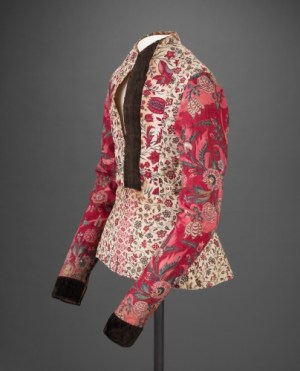 The Peabody Essex Museum (PEM) is pleased to announce the acquisition of a singular collection of rare early 18th-century Indian textiles made for export to the Netherlands. The collection of more than 100 pieces, including hand-painted chintz palampores (bed covers), an embroidered palampore, as well as extraordinary examples of Dutch costumes, was assembled in the Netherlands between the 1920s and 1960s by a private collector, A. Eecen-van Setten. Carefully stewarded by Eecen’s granddaughter, Lieke Veldman-Planten, the Veldman-Eecen Collection has been preserved in exceedingly fine condition for the better part of the last century. The acquisition, funded by anonymous donors, significantly enhances PEM’s world-renowned Asian Export Art collection, and offers insight into 18th-century textile production, design, and trade.
Between 1650 and 1750, cotton textiles were imported in large quantities from eastern India to the Netherlands by the VOC (Dutch East India Company). Decorated with sinuous floral and foliage patterns, Indian cotton was commonly referred to as ‘chintz’ after the north Indian word chitra meaning ‘spotted’ or ‘sprinkled’. Indian chintzes were prized globally for their vivid and durable colors-something that European textile manufacturers were unable to match until the mid-18th century. These vibrant textiles were particularly popular in the Netherlands, where they were used for nearly everything-clothing, upholstery, bed hangings and even wall coverings. The Veldman-Eecen Collection features nearly a dozen Indian cotton chintz bed covers (palampores), as well as unusual examples of men’s dressing gowns (banyans), and women’s and children’s chintz clothing.
Collected at a time when chintz textiles were not well studied, the Veldman-Eecen Collection would be virtually impossible to assemble today given the scarcity of such textiles in the contemporary market. The collection, which also includes a selection of related European-printed textiles from the late 18th to the early 20th centuries, is enhanced by a detailed journal, or Sits Boek (chintz book), in which A.Eecen-van Setten chronicled her acquisitions. Selections from the collection will be on view in Asia in Amsterdam, a forthcoming 2016 exhibition co-organized by PEM and the Rijksmuseum.
PEM’s Asian Export Collection
The Peabody Essex Museum’s Asian Export Art Collection is the world’s most comprehensive collection of decorative art made in Asia for export to the West. Consisting of over 25,000 objects made in China, Japan and India for the Western market between the 15th and 21st centuries, items include works in porcelain, lacquer, paintings, silver, textiles, and ivory among others. The collection reflects the complex and fascinating interaction between the artistic and cultural traditions of East and West.
The Peabody Essex Museum
The Peabody Essex Museum (PEM) is one of the oldest and fastest growing museums in North America. At its heart is a mission to transform people’s lives by broadening their perspectives, attitudes and knowledge of themselves and the wider world. PEM celebrates outstanding artistic and cultural creativity through exhibitions, programming and special events that emphasize cross-cultural connections and the vital importance of creative expression. Founded in 1799, the museum’s collection is among the finest of its kind boasting superlative works from around the globe and across time—including American art and architecture, Asian export art, photography, maritime art and history, as well as Native American, Oceanic and African art. PEM’s campus affords a varied and unique visitor experience with hands-on creativity zones, interactive opportunities, performance spaces and historic properties, including Yin Yu Tang: A Chinese House, a 200-year-old house that is the only example of Chinese domestic architecture on display in the United States.
Eve Kahn recently wrote about the acquisition for The New York Times (28 August 2014).
The Met Launches App for iPhone, iPad, and Touch

◊ ◊ ◊ ◊ ◊
Press release (2 September 2014) from The Met:
The Met App provides an easy way for the museum’s community—locally and globally—to stay current with what’s happening at the museum.
Thomas P. Campbell, Director and CEO of The Metropolitan Museum of Art, announced that the Museum will launch today its flagship smartphone app—titled simply The Met—developed exclusively for iPhone, iPad, and iPod touch. This free digital resource is the easiest way to see what’s happening at the Met every day, wherever you are. . .
Mr. Campbell said: “With so much to see and do at the Met on a daily basis, we wanted to create a simple yet personalized way for our community to find the art, exhibitions, and events that matter most to them. The new app is a pocket-sized, customizable tool that puts the Met at users’ fingertips. It will be great for both New Yorkers and everyone in our global community who wants to stay connected with the Met—from anywhere in the world.”
Sree Sreenivasan, the Museum’s Chief Digital Officer, added: “In developing the app, we hope to provide our audiences with what’s most useful to them, and in the most engaging way. We want this app to offer an enjoyable starting point for many new relationships with the Museum, right now and in the future.”The Met app is supported by Bloomberg Philanthropies.“Bloomberg Philanthropies made an extraordinary and important investment in the Met’s digital initiatives, and this innovative new app is just one of the results,” Mr. Campbell continued. “The foundation is an amazing, forward-thinking partner whose generous support will expand the Met experience exponentially across the globe.”
“The Metropolitan Museum is one of the world’s most important cultural institutions, and the museum’s new app will help open peoples’ eyes to its extraordinary collection and programs like never before. The Met app makes a day at the museum even more rewarding; and by making it possible to experience the museum even when you’re not there, the app is a wonderful way to bring art into more lives, more often,” said Michael R. Bloomberg, founder of Bloomberg Philanthropies and three-term mayor of New York City.
The Met app helps users discover the galleries, works of art, media, events, facilities, information, and resources that best meet their interests—both in its main building along Fifth Avenue and at The Cloisters museum and gardens, the Metropolitan Museum’s branch for medieval art and architecture in Upper Manhattan.
The app provides information on current exhibitions and when they will close; must-see highlights of the collection; a way to purchase an admission; activities for families and children; syndication of the Met’s highly popular Twitter feed, which carries up-to-the-minute messages and announcements; and much more. Users can swipe both vertically and horizontally within the app, and its contents can be shared seamlessly through users’ social media accounts.
One of the highlights of the app is a set of themed lists of artworks that provide fresh, often playful, perspectives on the Met’s permanent collection. These include: “Grand Spaces and Hidden Nooks,” “Animals: See One, Be One,” “Hidden in Plain Sight,” “Medieval Love” (for The Cloisters), and “Met-Staches,” which shows works of art with mustachioed subjects. For the more avid users there is also a hidden feature to discover: the Museum’s popular “Artwork of the Day.”
“This is an entirely original type of museum app,” said Loic Tallon, the Met’s Senior Mobile Manager. “At the start of this project we took a step back and asked people what they wanted to see in a Met app. They told us three things: make it useful, make it simple, make it delightful. We know there’s a lot to do at the Met, and what we heard was that people wanted our app to answer easily their most essential questions about the Museum: ‘Where should I start? What’s happening today? What can my kids do there? Can you show me something fresh?’ These are the types of questions about the Museum for which our audience wants to turn to their phone, and our app, for answers. At the same time we had to make the app as beautiful as it was useful—a product worthy of the museum itself. We worked with Instrument, one of the world’s leading digital agencies, to design and build an app that would meet those goals, and I believe we have. The Met app balances beauty with utility.”
The Met app includes a special area designated for use by the Museum’s Members, a group more than 150,000 strong. It provides news and updates as well as information about special events organized for Members. Museum Memberships can also be purchased through the app.
The Met app was produced by the Metropolitan Museum’s Digital Media Department in collaboration with Instrument, an independent digital creative agency in Portland, Oregon, and with the assistance of staff from across the Museum, in departments including Information Systems & Technology, Education, and Design. The Museum is now developing a version of The Met app for Android users, and this will launch in 2015. . . .
Wedgwood Appeal: Donate to Save the Collection
From Save the Wedgwood Collection:

Josiah Wedgwood, The First Day’s Vase, c.1769 (Wedgwood Museum). Inscribed ‘artes Etruriae renascuntur’ (‘the arts of Etruria are reborn’).
The Wedgwood Collection, one of the most important industrial archives in the world and a unique record of over 250 years of British art, is under threat of being separated and sold off.
The Art Fund now has the opportunity to purchase it for the nation intact, provided the final £2.74m of a total £15.75m fundraising target can be raised by 30 November 2014. This is the only chance to keep the collection in one piece and on public display, preserving this unique record of British history and global commerce.
The collection is the major asset of the Wedgwood Museum Trust, which inherited £134m of pension debt as a result of the UK subsidary of Waterford Wedgwood Plc going into administration in 2009. The debt transferred from company to Trust because the two had been linked through a shared pension fund. Although the Pension Protection Fund (PPF)—the industry body set up by the government to compensate individual pensioners in the event of a company insolvency—will absorb the liability, it has a duty to claw back as much as it can from sale of assets.
In December 2011 the High Court ruled that the Wedgwood Collection was indeed an asset of the Wedgwood Museum Trust that should be sold in order to repay some of the debt owed, and in March 2012 the Attorney General upheld this ruling. Since then, the Art Fund and other partners have looked at all options to prevent the Collection from being broken up and sold on the open market. However, after exploring several avenues, all parties have now agreed that the only option is for the Art Fund to raise the necessary funds to purchase the Collection on behalf of the nation. In order to protect the Collection from ever being at risk again, if the money can be raised, the Art Fund plans to gift it to the Victoria & Albert Museum, the national museum of art and design. Without needing to move it, but with its ownership secure in perpetuity, the V&A intends to assign it on long-term loan to the Wedgwood Museum at Barlaston, which will lie at the heart of a major new visitor experience as part of Waterford Wedgwood Royal Doulton’s (WWRD) £34m redevelopment of the site—set for completion in spring 2015.
The Art Fund has launched an appeal to raise the full £15.75m needed for the purchase, in order to keep this irreplaceable Collection together and on display. Thanks to major support from the Heritage Lottery Fund, the Art Fund and a number of private trusts and foundations, over £13m has already been raised. The campaign has until 30 November to find the remaining £2.74m necessary to purchase—and save—the Collection.
The future of the remarkable Wedgwood Collection has never looked brighter—provided the funds can be raised.
Donate to the appeal online or text WEDGWOOD to 70800 to give £10.
Mark Brown’s coverage for The Guardian (1 September 2014) is available here»
A. N. Wilson’s essay “Wedgwood: The Legacy Must Live On” appears in the Autumn 2014 issue of Art Quarterly and is also available at Save the Wedgwood Collection (4 September 2014).
Sweden’s Nationalmuseum Launches Free Online Journal, Volume 20
Press release (3 September 2014) from the Nationalmuseum:
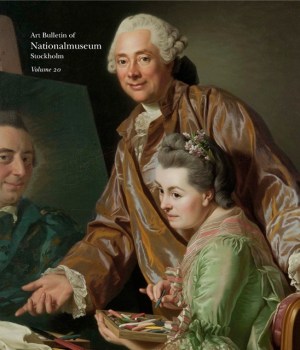 Stockholm’s Nationalmuseum has launched its first digital journal, available online to download and read free of charge. The Art Bulletin of Nationalmuseum Stockholm contains academic articles on art history relating to Nationalmuseum’s collections. The journal is moving to digital-only format and will be available through the DiVA portal (a Swedish publishing system for academic research and student theses) and the museum’s own website. The Art Bulletin of Nationalmuseum Stockholm is an annual publication containing academic articles on art history relating to Nationalmuseum’s collections. The journal has existed in print form since 1996, but is now switching to digital-only format, starting with volume 20. The journal’s established graphic design will be enhanced through the addition of digital media features such as metadata, live links to chapter headings and page references, and high-resolution images.
“For an art institution like Nationalmuseum, it’s important to offer our readers high-quality images that do full justice to the works,” said Janna Herder, editor of the Art Bulletin of Nationalmuseum Stockholm. “Readers therefore have the option of downloading the entire journal in low-resolution format or individual articles in high-resolution format.”
Nationalmuseum expects to attract a larger and wider readership now that the journal and its articles are freely available and searchable via Google and other search engines. As a member of the DiVA portal, the museum is able to distribute the publication more effectively in the academic community. “This is a further step in the digital evolution of Nationalmuseum and a key initiative in fulfilling our mandate to improve access to and awareness of our collections,” said Magdalena Gram, the museum’s head of research, library and archives and the journal’s editor-in-chief. “Another aspect of our mandate involves collaboration with other institutions such as universities and colleges. Offering an established publication like the Art Bulletin of Nationalmuseum Stockholm in digital format through the DiVA portal marks a breakthrough in terms of our ability to make specialized knowledge and information freely available.”
◊ ◊ ◊ ◊ ◊
Articles related to the eighteenth century (visit the Nationalmuseum website for the full contents) . . .
Art Bulletin of Nationalmuseum Stockholm 20 (2013).
A C Q U I S I T I O N S
Carina Fryklund, “Three 17th-Century Paintings from the Collection of Gustaf Adolf Sparre (1746–94),” pp. 11–16.
Magnus Olausson, “Roslin’s Self-Portrait with his Wife Marie Suzanne Giroust Painting a Portrait of Henrik Wilhelm Peill (1767),” pp. 17–18.
Magnus Olausson, “Wertmüller’s Portrait of Henri Bertholet-Campan with the Dog Aline (1786),” pp. 19–20.
Guilhem Scherf, “Une Statuette en Terre Cuite de Jean-Baptiste Stouf au Nationalmuseum,” pp. 27–36.
Magnus Olausson, “Madame Lefranc Painting a Portrait of her Husband Charles Lefranc (1779): A Miniature by Adélaïde Labille-Guiard,” pp. 37–8.
Anders Bengtsson, “A Unique Plate Warmer,” pp. 39–40.
Anders Bengtsson, “A Chair Fit for a Prince,” pp. 41–2.
Acquisitions 2013: Exposé, pp. 61–96.
A R T I C L E S O N T H E H I S T O R Y A N D T H E O R Y O F A R T
Martin Olin, “An Italian Architecture Library under the Polar Star: Nicodemus Tessin the Younger’s Collection of Books and Prints,” pp. 109–18.
Magnus Olausson, “Louis Gauffier’s Portrait of Gustaf Mauritz Armfelt (1793): A Political or a Conspiratorial Painting?,” pp. 119–22.
Ulf Cederlöf, “An Exceptionally Protracted Affair: The Nationalmuseum’s Acquisition of Sergel’s Collections of Drawings and Prints, 1875–76,” pp. 123–34.
S H O R T E R N O T I C E S
Görel Cavalli-Björkman and Margaretha Rossholm-Lagerlöf, “A Source-Critical Comment on Roger de Robelin’s “On the Provenance of Rembrandt’s The Conspiracy of the Batavians under Claudius Civilis,” 135–36.
Roger de Robelin, “Response to “A Source-Critical Comment etc.,” pp. 137–38.
R E P O R T
Helen Evans and Helena Kåberg, “The Nationalmuseum Lighting Lab,” pp. 139–46.
Salacious Gossip Tours of Hampton Court Palace
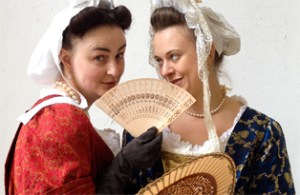 As the summer of the Georgians winds down, I thought I would mention this bit of programming. In connection with The Glorious Georges exhibition, Hampton Court Palace is featuring ‘Salacious Gossip Tours’ to highlight the “racy stories” they “dare not tell during the day!”
Historic Royal Palaces has done these in the past for The Wild, the Beautiful and the Damned exhibition (2012), and I would speculate—though it is only speculation—that the racy bits are comparable to what many of us present in class to keep students’ attention. I mention it here, in part, because as I was thinking about what readers might want from a newsletter like this one several years ago, someone perceptively replied ‘gossip!’. Ever since then, I’ve been trying (unsuccessfully) to pull that off. As with other things, suggestions are most welcome. As for the tours, participants must be at least 18 years old, tickets are £25, and the tours begins at 7:15. My hunch is that it probably adds up to a fine way to avoid the crowds, and walking out of Hampton Court Palace at 9:00 or so isn’t a bad evening. A champagne reception at the beginning couldn’t hurt either. –CH
Historic Willoughby-Baylor House Reopens
◊ ◊ ◊ ◊ ◊
From the Chrysler Museum:
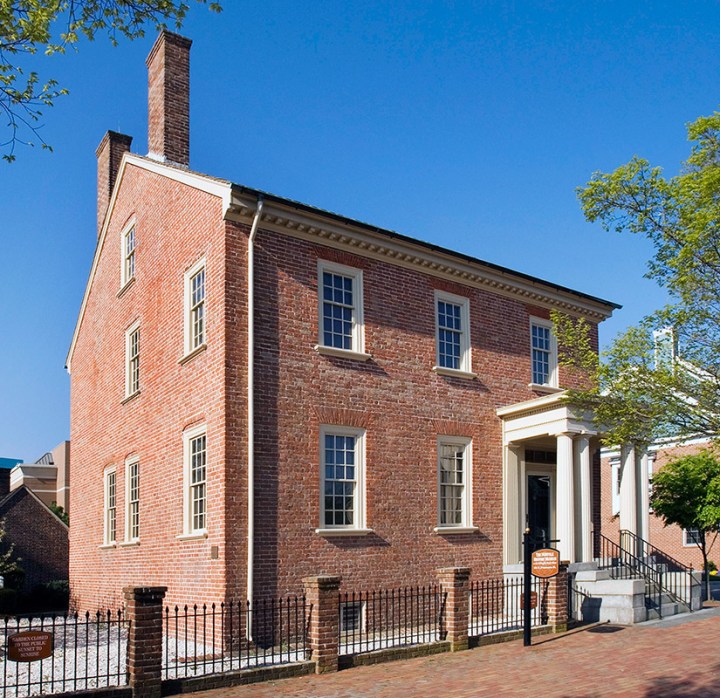
The Willoughby-Baylor House, the long-time home of the Norfolk History Museum, reopens August 16 after a long closure for structural renovations and a complete re-imagination of the displays and artifacts related to the history and art of one of America’s original heritage port cities.
The ground floor greets visitors with a new exhibition, Democratic Designs: American Folk Paintings from the Chrysler Museum. “This exhibition is our largest display of American folk art in more than three decades,” said Crawford Alexander Mann III, the Brock Curator of American Art at the Chrysler Museum. “Few museums surpass the Chrysler’s depth in this field, and it’s time to put our masterpieces in the spotlight.”
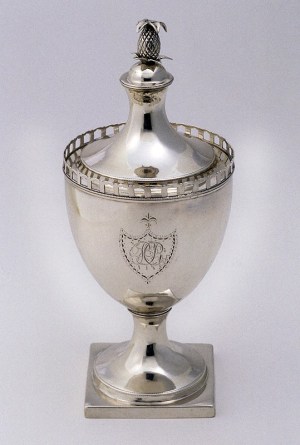
Jeremiah Andrews, Covered Sugar Bowl, silver, ca. 1791 (Chrysler Museum)
On the second floor you’ll find The Norfolk Rooms. This suite of Norfolk-made art and artifacts includes period paintings, furniture, and silver. Highlights includes Cephas Thompson’s stately portrait of Norfolk attorney John Nivison, painted in 1812, and a delicately engraved silver sugar bowl by Jeremiah Andrews created around 1791. “Andrews and other local silversmiths often embossed their wares with both their initials and the word Norfolk, building name recognition for this city as a source of fine craftsmanship,” said Mann. “We’ve built new cases to show off more of their work, and we will switch these displays periodically.”
The Willoughby-Baylor House is a two-story brick townhouse built in 1794 by Captain William Willoughby, a descendent of one of Norfolk’s founding families. After falling into disrepair, it was saved from demolition and opened as a house museum in 1970. A complete look at the history of the Willoughby-Baylor House is available here.
The Morgan Library’s Drawings Online

Giovanni Domenico Tiepolo, Visit to a Lawyer, Pen and brown ink, with brown and brown-black wash, over black chalk, on laid paper, 1791 (New York: The Morgan Library & Museum). More information is available here»
◊ ◊ ◊ ◊ ◊
As noted by Lucy Vivante at her blog Vivante Drawings (7 July 2014), The Morgan recently launched its Drawings Online, with 2000 images now available and the entire collection of 12,000 scheduled to be available by the end of the year. In addition to the scholarly value, there must also be useful teaching possibilities. –CH
From The Morgan Library & Museum:

Georg Dionysius Ehret, Chenopodium bonus henricus, watercolor on vellum (New York: The Morgan Library & Museum).
For nearly a century, the Morgan Library & Museum has played a leading role in the field of master drawings. All the major European schools are represented in the collection, with particular strengths in Italian, French, British, Dutch, Flemish, and German masters. The collection also includes drawings by American artists as well as a growing number of modern and contemporary works on paper. The Morgan’s collection is thus unusual in that it represents, in increasing depth, continuity as well as innovation throughout the entire history of drawing.
Drawings Online aims to provide the public and specialists with a digital library of over 12,000 images, representing works of art spanning the fifteenth through twenty-first centuries. Included are approximately 2,000 images of versos of drawings that contain rarely seen sketches or inscriptions by the artist. Debuting on 15 June 2014 with nearly 2,000 images, Drawings Online will provide comprehensive imaging of the Morgan’s drawing collection by the end of the year.
Drawings Online is generously underwritten by the Joseph F. McCrindle Foundation and the Samuel H. Kress Foundation, with additional funding from the David L. Klein, Jr. Foundation.
The Met Welcomes New Curator of The American Wing

Sylvia L. Yount,
Photo by David Stover for VMFA.
◊ ◊ ◊ ◊ ◊
Press release (11 June 2014) from The Met:
Thomas P. Campbell, Director and CEO of The Metropolitan Museum of Art, announced today that preeminent American art scholar Morrison H. Heckscher will retire on June 30, following 13 years as Lawrence A. Fleischman Chairman of The American Wing and a distinguished curatorial career at the Museum that spanned nearly five decades. He will become Curator Emeritus of The American Wing on July 1.
Mr. Campbell announced further that Sylvia L. Yount—currently Chief Curator as well as the Louise B. and J. Harwood Cochrane Curator of American Art and Department Head at the Virginia Museum of Fine Arts (VMFA)—will become the Lawrence A. Fleischman Curator in Charge of The American Wing this fall. She was elected to her new position at the June 10 meeting of the Executive Committee of the Museum’s Board of Trustees.
In making the announcement, Mr. Campbell said: “Morrie Heckscher has had a long and distinguished career at the Met with many landmark scholarly accomplishments. Perhaps the most significant has been his supervision of the decade-long renovation and reinstallation of the entire American Wing, which involved every aspect of our American art collection and every member of his superb staff. The new galleries, which opened in phases culminating with the inauguration of the American Paintings and Sculpture Galleries in 2012, have been a resounding success with millions of visitors to date. Through his exhibitions, acquisitions, lectures, and writings, Morrie has championed such important and diverse topics as architecture, landscape, and American furniture and interiors. I’m pleased that he will continue to share his expertise with the Museum as Curator Emeritus, working on various projects, including a book on the architectural and cultural history of the Met.”
Mr. Campbell continued: “I am also delighted that Sylvia Yount will join the Met to assume leadership of The American Wing this fall. She is a talented curator and energetic administrator who, for the past two decades, has applied scholarship and vision to organizing exhibitions, writing catalogues, and overseeing several important, extensive collections of American art that—like the Met’s—cover the colonial period through the early 20th century. With her wide-ranging background and special interest in 19th- and early-20th-century art, I am certain that Sylvia will lead the distinguished staff of the Wing to further accomplishments in the years to come.”
Morrison H. Heckscher
 Morrison H. Heckscher joined the Metropolitan Museum in 1966 as a Chester Dale Fellow in the Prints Department. From 1968 to 1978, he was an Assistant Curator, Associate Curator, and Curator in The American Wing; from 1978 to 1998, he was Curator of American Decorative Arts. In 1998, he was appointed the Anthony W. and Lulu C. Wang Curator of American Decorative Arts, and assumed chairmanship of The American Wing in 2001. As chairman, he conceived and initiated the redesign and reinstallation of the entire Wing.
During his first decade in The American Wing, Mr. Heckscher was involved in preparations for an extension to the Wing that opened in 1980. He planned and oversaw the rearrangement and reinstallation of the period rooms in the original 1924 American Wing. He also acquired late-19th- and early-20th-century architectural elements—notably the cast-iron staircases from Louis Sullivan’s 1893 Chicago Stock Exchange—and entire rooms (Shaker, Classic Revival, Gothic Revival, and Frank Lloyd Wright) that provide Museum visitors with an unparalleled means of experiencing and appreciating American domestic architecture and interior design.
The first two exhibitions he organized at the Metropolitan—In Quest of Comfort: The Easy Chair in America (1971) and An Architect and His Client: Frank Lloyd Wright and Francis W. Little (1973)—expressed Mr. Heckscher’s interest in both furniture and architecture. The latter exhibition was organized in conjunction with the landmark acquisition of a 1912–14 living room, including many original furnishings and accessories—designed by Wright for the Little family—that remains a cornerstone of the Museum’s collection of American period rooms. Mr. Heckscher researched and wrote the catalogue of the Museum’s late Colonial furniture, 1730–1790 (1985). He also acquired noteworthy examples of American furniture, such as a mahogany chest-on-chest made in 1778 by Thomas Townsend of Newport, Rhode Island, for the Gardiner family of Long Island, and a carved mahogany armchair made around 1765 by Thomas Affleck of Philadelphia for John Penn, one of the signers of the Declaration of Independence.

Now available digitally for free from The Met; click on the image for more information.
Mr. Heckscher has been the curator of a number of important exhibitions at the Metropolitan, including: The Architecture of Richard Morris Hunt (1986), American Rococo: Elegance in Ornament, 1750–1775 (with Leslie Greene Bowman, 1992), The Architecture of The Metropolitan Museum of Art (1995), Central Park–A Sesquicentennial Celebration (2003), and John Townsend, Newport Cabinetmaker (2005).
His recent awards include: Antique Dealers Association of America Award of Merit (2011); the Frederic E. Church Award (awarded jointly to Mr. Heckscher and Martha Stewart by The Olana Partnership, 2012); Lawrence A. Fleischman Award for Scholarly Excellence in the Field of American Art History (The Smithsonian Institution, Archives of American Art, 2012); and Iris Foundation Award for Outstanding Achievement in Scholarship (Bard Graduate Center, 2013).
He was educated at Wesleyan University (B.A.); The Winterthur Program in Early American Culture, University of Delaware (M.A.);
and Columbia University (Ph.D.).
Sylvia L. Yount
Prior to her seven-year tenure at the Virginia Museum of Fine Arts, Sylvia L. Yount was the Margaret and Terry Stent Curator of American Art and Department Head at the High Museum of Art in Atlanta from 2001 to 2007. She also served on the staff of the Pennsylvania Academy of the Fine Arts in Philadelphia as Curator of Collections (1993–99) and Chief Curator (1999–2001).
In addition to organizing landmark exhibitions on American modernism, Maxfield Parrish, and Cecilia Beaux at the Academy and the High, Ms. Yount has strengthened and diversified VMFA’s American holdings through purchases and gifts. She has also presented exhibitions of work by the Anglo-American printmaker Clare Leighton and the celebrated African American modernist Jacob Lawrence. Currently, she is organizing a reappraisal of the Colonial Revival phenomenon, Making America: Myth, Memory, Identity.
She has been the recipient of numerous grants and awards, primarily for research, exhibitions, and catalogues. In 2008, she was awarded the Victorian Society of America’s William E. Fischelis Award for the exhibition catalogue Cecilia Beaux, American Figure Painter.
Ms. Yount was educated at New York University (B.A.) and the University of Pennsylvania (M.A. and Ph.D.). Her dissertation was on the late-19th-century American Aesthetic Movement, New York art worlds, and consumer culture.
The Frick Collection Announces Expansion Plans
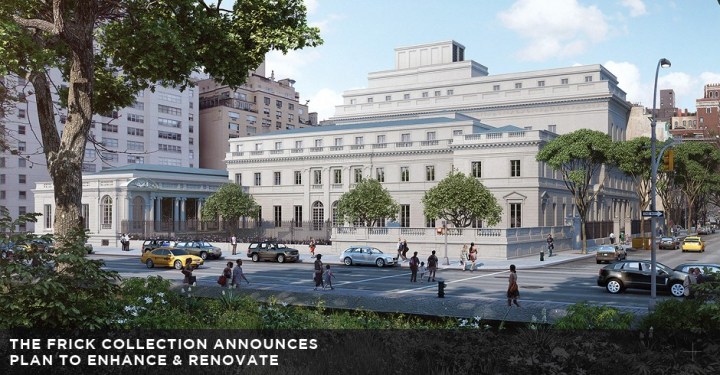
Rendering of The Frick Collection plan from Fifth Avenue
Neoscape Inc., 2014
◊ ◊ ◊ ◊ ◊
Press release (10 June 2014) from The Frick:
The Frick Collection today unveiled a plan to enhance and renovate its museum and library to further fulfill founder Henry Clay Frick’s long-standing vision to offer public access to its works of art and educational programs. The proposal derives from the Frick’s history of architecturally cohesive expansions and alterations. It includes the construction of a new addition in keeping with the scale and design of the original house and the library wing, and the renovation and expansion of interior spaces added in the 1930s and 1970s. A centerpiece of the new plan will be the opening of the museum’s second floor to the public for the first time. The result will preserve the intimate visitor experience in an extraordinary mansion that has delighted art lovers for nearly eight decades. Davis Brody Bond Architects and Planners, the New York–based firm that was responsible for the 2011 award-winning transformation of an exterior loggia into the museum’s Portico Gallery, will design the project.
In addition to converting several of the museum’s historic second-floor rooms into galleries, the Frick’s proposal calls for the construction of an architecturally respectful addition to the East 70th Street side of the museum, consistent with the style, history, and design of the original 1913–14 mansion and previous expansions. The new addition, which will provide the institution with a net gain of 42,000 square feet, will house more gallery space, an expanded entrance hall, additional space for the Frick’s world-renowned art reference library, new classrooms, a 220-seat auditorium, expanded administrative space, and updated conservation laboratories, as well as a rooftop garden terrace for museum visitors. The addition will match the heights of the Frick’s historic wings, including the three-story original house and the six-story library building constructed in 1935. The project will undergo all necessary public reviews, including that of the New York City Landmarks Preservation Commission.
“Since The Frick Collection opened as a museum nearly eighty years ago, we have been guided by Henry Clay Frick’s mandate that his home and exquisite collection offer inspiration and enjoyment to the public,” said Frick Director Ian Wardropper. “Today, Mr. Frick’s wishes continue to guide our Trustees and Administration as we seek to further realize his vision and, at the same time, secure the institution’s future through a sensitive plan that is respectful of the museum’s tradition and the community.”
“To improve service to our audiences, we wish to make an already great institution even better,” said Margot Bogert, Chair of the Frick Board of Trustees. “We occupy a structure and property that has evolved numerous times since the passing of Henry Clay Frick in 1919, with each occurrence conceived to better meet the needs of the institution and its public. We are driven by our mission once more with this plan.”
“We approach this project with reverence for the 1913–14 Frick mansion and the 1935 additions, including the Frick Art Reference Library,” said Carl Krebs, a partner at Davis Brody Bond. “The evolution of the Frick has been marked by a combination of a consistent design vocabulary, high architectural quality, and respectful additions and alterations. Our design speaks to all of these themes.”
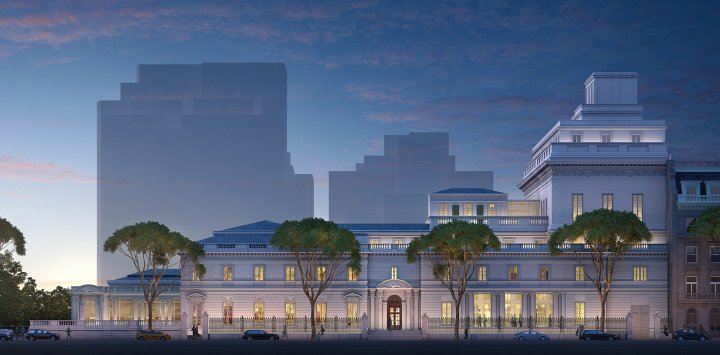
Elevation of The Frick Collection plan from 70th Street
Neoscape Inc., 2014
◊ ◊ ◊ ◊ ◊
The project primarily focuses on three areas:
Expanding Gallery Space
• The Frick will open several second-floor rooms to museum visitors for the first time ever, including what were formerly bedrooms, a study, and a breakfast room. This will enable more objects from the permanent collection to be exhibited and will offer visitors a greater sense of how the Frick family lived in the Gilded-Age house.
• The plan calls for the construction of an addition that will match the heights of the existing house and library to create more than 42,000 square feet of new space, including an additional exhibition gallery on the museum’s first floor. The new gallery will allow the museum to better accommodate popular special exhibitions without having to take works from the permanent collection off public view, as it often does currently.
Enhancing Educational Offerings
• The Frick’s educational programming will expand with a new education center including two dedicated classrooms and an auditorium capable of accommodating 220 visitors, a 30% capacity increase. The Frick’s education programming already serves more than 25,000 adults and children through lectures and symposia, school group visits, and an acclaimed concert series. The new education center will expand the Frick’s ability to cultivate these lifelong students of art.
• A dedicated study room for visiting scholars and public seminars will be added.
• Additional space for the Frick Art Reference Library will be created, as well as barrier-free access between it and the museum’s galleries on the ground floor.
• Also included will be an enlarged, updated lab where the Frick’s world-class conservators will work to preserve the Collection’s masterpieces.
Improving the Visitor Experience
• The entrance hall will be enlarged to approximately three times its current size, thereby reducing the time visitors wait in line outside the Frick and providing them with a smoother, more comfortable arrival.
• Two new elevators and a ramp will be constructed to provide improved barrier-free access.
• Four new restrooms and larger coat-check facilities will be added.
• The plan will create a larger shop to allow visitors more space to browse and purchase an expanded array of books, images, and merchandise related to the collection and exhibitions.
• The new building will feature a meditative rooftop garden terrace accessible to museum visitors.
Construction is expected to start in the spring of 2017, with completion as early as 2020. The museum and library are anticipated to remain open throughout the construction process.

Rendering of The Frick Collection plan from 70th Street looking West, Neoscape Inc., 2014
As with all of the Frick’s previous renovations and expansions, Davis Brody Bond’s approach to the Frick project will remain true to the neoclassical building constructed in 1913–14 by Carrère and Hastings. Since Mr. Frick’s death in 1919, the museum has continued to acquire works of art, expanding the permanent collection holdings of paintings by more than one-third. To accommodate this growth and the needs of the public, the building’s public spaces have been enlarged several times (in 1924, 1931–35, 1977, and 2011). Visitors to The Frick Collection are often surprised to learn that many of the museum’s architectural features were not part of the original Frick family home. In 1924, a single-story library was constructed on 71st Street, adjoining the mansion. In the 1930s architect John Russell Pope undertook the conversion of the family home into a public museum, nearly doubling its original size, and demolishing the 1924 building to construct a larger, six-story library. As the institution continues to grow, the need for additional gallery space and expanded facilities for education, conservation, and other activities is paramount.
The addition to the museum―which will feature a rooftop garden terrace for visitors―will be constructed on Frick property that includes the 1977 addition and a gated side garden on East 70th Street, also from 1977, which has always been inaccessible to the public. Originally the site of three unrelated townhouses, the property was acquired by the Frick over a period of decades beginning in the 1940s with an eye towards expanding the building to better serve the public. But, due to a lack of funds, in 1977, the Frick was only able to build a structure with a small reception hall, coat check, and shop on the ground-floor level, and two small rooms in the basement, with the gated private garden occupying the remaining space.
Several critically acclaimed exhibitions, including last year’s Vermeer, Rembrandt, and Hals: Masterpieces of Dutch Painting from the Mauritshuis (which attracted more than 235,000 visitors), have underscored the strong public demand and the need for additional space in order to continue to fulfill the Frick’s mission of providing the public easy access to the institution’s offerings.
Davis Brody Bond is one of the nation’s leading design firms with capabilities in urban design, architecture, master planning, historic preservation, and interior design. It is the recipient of more than 200 awards of excellence and has a unique design style that responds to the physical, cultural, and historical contexts of each project and site. Many of Davis Brody Bond’s iconic structures are enduringly relevant and have earned the firm a reputation for innovation and design excellence. Current cultural projects include the National September 11 Memorial Museum at the World Trade Center; the Smithsonian Institution’s National Museum of African American History and Culture, under construction on the National Mall in Washington, D.C.; the Embassy of South Africa in Washington, D.C.; and the Portico Gallery at The Frick Collection in New York City, which was completed in 2011.
◊ ◊ ◊ ◊ ◊
Note (added 13 June 2014) — In her article “Frick Seeks to Expand Beyond Jewel-Box Spaces” for The New York Times (9 June 2014), Robin Pogrebin notes that
Critics of other expansions—like MoMA’s—have called them unnecessary, too expensive or even hubristic. As the Frick rolls out its plans, it could face opposition for altering one of New York’s beloved historic buildings, a late Gilded Age mansion designed by Thomas Hastings for the industrialist Henry Clay Frick, where visitors can view a world-class assemblage of old master paintings, European sculpture and decorative arts. . .
Right on cue, David Masello, the executive editor of the design magazine Milieu, weighs in with an Op-Ed for The New York Times (12 June 2014), “Save the Frick Collection” . . .
America has few mansions built by a family with an art collection they meant to share with the public. So when word came this week that the Frick Collection, on the Upper East Side of Manhattan, was planning to expand and build a tower where there is now a discreet garden and a splashing fountain with lily pads—one of those few places in the cityscape where we are allowed to stop and breathe—I felt blunt disappointment, as well as betrayal. . .
The full editorial is available here»
◊ ◊ ◊ ◊ ◊
Note (added 30 July 2014) — Michael Kimmelman weighs in against the project: “The Case Against a Mammoth Frick Collection Addition,” The New York Times (30 July 2014), available here»
◊ ◊ ◊ ◊ ◊
Note (added 4 June 2015) — Michael Kimmelman notes the demise of the project, “Frick Collection Returns to Square One, a Prized Garden Intact,” The New York Times (4 June 2015) . . .
The administration of Mayor Bill de Blasio let the Frick know that the proposal couldn’t survive the gantlet of the Landmarks Preservation Commission. The museum had no choice. It issued a gracious statement on Thursday morning, thanking everyone, including opponents “who share a great deal of affection and respect for the institution.” The museum promised to come up with a new plan, one that would spare the Russell Page-designed garden. . . .
The full piece is available here»










leave a comment