Study Session | French Royal Furniture by Jean-Henri Riesener
◊ ◊ ◊ ◊ ◊
Study day opportunities at Waddeson Manor in connection with the Riesener exhibition:
Study Session: Spotlight on French Royal Furniture by Jean-Henri Riesener
Waddesdon Manor, Buckinghamshire, 25 May, 28 July, and and 23 September 2016
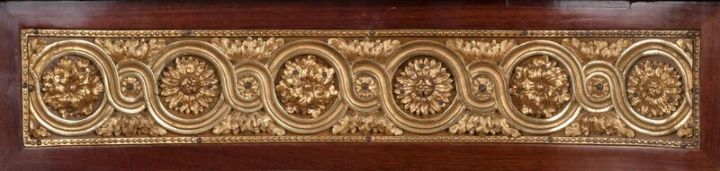
Waddesdon Manor houses three extraordinary chests of drawers by court cabinet-maker Jean-Henri Riesener, two of which belonged to members of the French royal family. They are among twelve pieces of furniture now at Waddesdon that were originally at the Palace of Versailles. Riesener was perhaps the most celebrated cabinet-maker of the 18th century, the official cabinet-maker to King Louis XVI, and the favourite of Queen Marie Antoinette. Each of these chests of drawers is richly decorated with colourful marquetry (designs made with wood veneers) depicting flowers and trophies and geometric patterns, and mounted with finely chased and gilded bronzes. Learn about their design, technical construction, and fascinating history. £25 (includes grounds admission), £15 National Trust/Art Fund members, £10 students. Wednesday 25 May, Thursday 28 July, and Friday 23 September 2016. Coffee on arrival at 10.15; session 10.45–12.15.
Study Session | Persuading the King
Study day opportunity at Waddeson Manor in connection with the exhibition:
Study Session Persuading the King: Gabriel de Saint-Aubin’s Placets
de l’officier Desbans and Other Books by the Saint-Aubin Brothers
Waddesdon Manor, Buckinghamshire, 24 June 2016
A rare opportunity to study Waddesdon’s newly acquired royal petition by Gabriel de Saint-Aubin, alongside other manuscript volumes, drawings, and prints by the artist and his brothers Charles-Germain and Augustin. Senior Curator Dr Juliet Carey and Curator Rachel Jacobs will offer a glimpse into the politics of promotion and favour near the end of the Old Regime. Works will include Gabriel de Saint-Aubin’s Memoire sur la reformation de la police de France (1749) and a special copy of Du Perron’s Discours sur la peinture et sur l’architecture (1757), made for the book’s dedicatee Madame de Pompadour. Charles-Germain de Aubin’s famous Livre de caricatures will provide a subversive counterpoint to the arts of flattery and persuasion that lay at the heart of court culture. £25 (includes grounds admission), £15 National Trust/Art Fund members, £10 students. Friday, 24 June 2016. Coffee on arrival at 10.15; study session 10.45–12.15. Book early to avoid disappointment.
Study Session | Books and Bindings at Waddesdon Manor
From Waddesdon:
Study Session: Books and Bindings
Waddesdon Manor, Buckinghamshire, 12 May and 15 September 2016
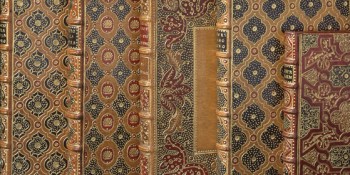 Come and explore the treasures of the Waddesdon collection of 17th- and 18th-century books and bindings. These include unique manuscripts and luxuriously illustrated printed volumes. Many of the books in the collection have illustrious provenances including great bibliophiles and members of the French Royal Family. The session will provide an opportunity to view some of the treasures of the Waddesdon Collection and to learn about book history through some of its finest examples. £25 (includes grounds admission), £15 National Trust/Art Fund members, £10 students. Thursday 12 May and 15 September 2016. Coffee on arrival at 10.15; study session 10.45–12.15.
2016 Summer Institute in Technical Art History for PhD Students
◊ ◊ ◊ ◊ ◊
From the Institute of Fine Art’s Conservation Center:
Manifestations of the Model in Art and Architecture
2016 Summer Institute in Technical Art History for PhD Students
Institute of Fine Arts, New York University, 6–17 June 2016
Applications due by 21 March 2016
The Summer Institute in Technical Art History (SITAH) is an intensive two-week course, geared towards PhD candidates in art history who are looking to delve more deeply into technical studies. Students are immersed into the world of technical art history and conservation of works of art, with faculty ranging from conservators to conservation scientists, curators, art historians, and artists. The course takes full advantage of the wonderful resources of New York City, and many sessions are held in local conservation labs, where attendees have the opportunity to closely examine works of art with experts in the field. Off-site visits also include artists’ studios, museum permanent collections, and, where relevant, special exhibitions and galleries. A priority is placed on case studies and discussions, and students are encouraged to build relationships within the group, in the hopes of enriching their own research.
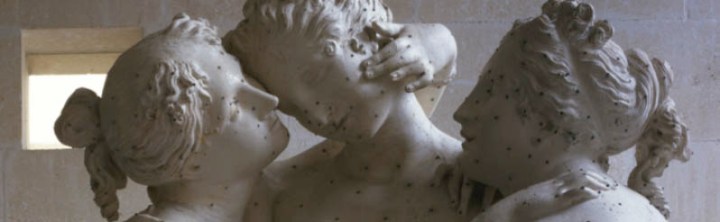
This year’s Summer Institute in Technical Art History focuses on forms of the model in art and architecture. We will examine preparatory materials such as sketches, bozzetti, and architectural plans, as well as presentation models for sculpture and architecture, and will look for evidence of the model in the finished work of art. Our study will consider works that served as models for other media, like prints and lay figures; maps, globes, and three-dimensional botanical and medical replicas; so-called tomb models; the contemporary use of models in art making; and the afterlives of models as collection objects. This topic will allow us to explore questions of scale, material, and process through close examination of objects in New York City museums and conservation laboratories.
Participants will study with distinguished conservators, art historians, scholars and artists, with a focus on materiality and process through close looking at art objects. Hands-on studio sessions will introduce historic and contemporary working practices. Participants will discuss how these methodologies materially and theoretically inform their own diverse research interests. This seminar will provide a forum to develop critical skills in the interpretation of object-based analyses.
Generously funded by the Andrew W. Mellon Foundation, the seminar will be held at the Conservation Center of the Institute of Fine Arts, and in New York City’s leading museums. Participants will receive housing and a stipend of $1400 to help defray travel costs.
Students currently enrolled in or completing a doctoral program in the US and Canada are eligible to apply. No background in science or conservation is required. A maximum of fifteen participants will be admitted to the program. Applicants will be evaluated on the basis of their academic accomplishment to date and on their expressed interest in integrating technical art history into their own research.
Applicants should submit a cover letter addressed to Professor Michele Marincola, Conservation Center, Institute of Fine Arts, NYU; a statement of purpose (maximum 1200 words) expressing interest in integrating technical art history into their research; a letter of support from their advisor that addresses their academic standing and their interest in the topic; and an academic and professional CV. The application deadline is March 21, 2016. Please submit applications in electronic format to: Sarah Barack, course coordinator, sb340@nyu.edu.
Summer Course Offerings at Sotheby’s, 2016

◊ ◊ ◊ ◊ ◊
Among the course offerings this summer at Sotheby’s (for undergraduate credit). . .
European Decorative Arts: From Baroque to Art Nouveau
Sotheby’s Institute of Art, London, 31 May — 24 June 2016
Beginning in the seventeenth century with the rise of the Baroque and culminating in Art Nouveau at the end of the nineteenth, this varied and exciting course provides a comprehensive understanding of key stylistic developments in Western European design and the decorative arts. The course focuses on furniture, ceramics, glass and metalwork, explored within the context of architecture and interiors and the broader historical and cultural forces that have influenced the production and consumption of decorative art objects. It seeks also to provide students with a basic knowledge of materials and techniques.
A diverse programme of lectures is complemented by visits to leading museums, galleries and historic houses. Students are taught by a range of in-house tutors and visiting experts from the art world. The course is introductory and requires no prior knowledge. The teaching approach is object-based and enables students to gain confidence in analyzing and identifying a wide range of art objects. It promotes skills that will be useful for working in the art world and also serves as a bridging course for further study. Faculty: Helena Pickup (Course Leader), Lis Darby, Anne Ceresole, Daniel Packer, Elisabeth Bogdan.
◊ ◊ ◊ ◊ ◊
London, Art Capital of the World, 1700–2000
Sotheby’s Institute of Art, London, 28 June — 22 July 2016
The history of the market holds valuable lessons for those hoping to work in the commercial art world. London has been synonymous with the exhibiting, collecting, buying, and selling of art for centuries. This course will provide an in-depth exploration of the institutions, personalities, and locations that have made London the epicenter of the art world, historically and today. With many of these historic works and buildings still in existence and accessible, students will experience themselves how the art scene evolved along with the city itself. We will examine the key factors that led to an increase in the demand for fine arts and how London emerged as the favored location for auctions in the eighteenth century. The connection between opportunities to view works of art and the growth of collecting will be analyzed, as will the impact of the market on ‘native’ artists. Students acquire an understanding of the history of the art market, collecting, and museums. A comprehensive course of lectures is enhanced by visits to galleries, museums, and auction houses. Faculty: Elizabeth Pergam.
Historians of Netherlandish Art Fellowships, 2016–17
From HNA:
Historians of Netherlandish Art Fellowships, 2016–17
Applications due by 14 December 2015
We urge members of Historians of Netherlandish Art to apply for the 2016–17 Fellowship. Scholars of any nationality who have been HNA members in good standing for at least two years are eligible to apply. The topic of the research project must be within the field of Northern European art ca. 1400–1800. Up to $2,000 may be requested for purposes such as travel to collections or research facilities, purchase of photographs or reproduction rights, or subvention of a publication. Preference will be given to projects nearing completion (such as books under contract). Winners will be notified in February 2016, with funds to be distributed by April. The application should consist of: 1) a short description of project (1–2 pp), 2) budget, 3) list of further funds applied/received for the same project, and 4) current cv. A selection from a recent publication may be included but is not required. Pre-dissertation applicants must include a letter of recommendation from their advisor.
Applications should be sent, preferably via e-mail, by December 14, 2015, to Paul Crenshaw, Vice-President, Historians of Netherlandish Art. E-mail: paul.crenshaw@providence.edu; Postal address: Providence College, 1 Cummingham Square, Providence RI 02918-0001.
Attingham Offerings for 2016

George Barret the Elder, The West Front of Burton Constable,
oil on canvas, 1777
◊ ◊ ◊ ◊ ◊
Along with Attingham’s regular course offerings, next year’s study programme will be based in Denmark. More information and application form available at Attingham’s website. Applicants from the U.S. may contact Mary Ellen Whitford, admin@americanfriendsofattingham.org. Applicants from outside the U.S. may contact Rita Grudzień, rita.grudzien@attinghamtrust.org.
The London House Course, 19–25 April 2016
Applications due by 11 January 2016
This non-residential programme studies the development of the London house from the Renaissance to the present, as well as the history of planning and development in the city. Directed by Giles Waterfield and Sarah Nichols.
Attingham Study Programme: The Historic House in Denmark, 1–8 June 2016
Applications due by 24 January 2016
Commencing in Copenhagen this ambitious 8-day programme will concentrate on Denmark’s rich heritage of royal castles and manor houses virtually unknown outside the country. Ranging from the Middle Ages to the nineteenth century, a wide variety will be visited many still in private hands. The programme will be directed by Annabel Westman with the assistance of a Danish advisory committee.
The 65th Attingham Summer School, 30 June — 17 July 2016
Applications due by 31 January 2016
Directed by Elizabeth Jamieson and Andrew Moore, and accompanied by specialist tutors and lecturers, this intensive 18-day course will include visits to approximately 25 houses in Sussex, Nottinghamshire, Derbyshire and Yorkshire. The Summer School will examine the country house in terms of architectural and social history, and the decorative arts.
Royal Collection Studies, 4–13 September 2015
Applications due by 12 February 2016
Run on behalf of Royal Collection Trust, this strenuous 10-day course based near Windsor is directed by Giles Waterfield. The school will visit royal palaces in and around London with specialist tutors (many from the Royal Collection) and study the extensive patronage and collecting of the royal family from the Middle Ages onwards. The course is open to all but priority will be given to those with a professional or specialist knowledge of British architecture or history of the fine and decorative arts.
French 18th-Century Studies, 9–14 October 2016
Applications due by 30 April 2016
Directed by Helen Jacobson, and run for the fourth time, this 5-day non-residential program aims to foster a deeper knowledge and understanding of French eighteenth-century fine and decorative art. Based at the Wallace Collection with one full study day at Waddesdon Manor this course is intended primarily to aid professional development with object-based study, handling sessions and a look at behind-the-scenes conservation.
The Lewis Walpole Library 2016–17 Fellowships & Travel Grants
Applications due by 11 January 2016
The Lewis Walpole Library, a department of Yale University Library, invites applications to its 2016–2017 fellowship program. Located in Farmington, Connecticut, the Library offers short-term residential fellowships and travel grants to support research in the Library’s rich collections of eighteenth-century materials (mainly British), including important holdings of prints, drawings, manuscripts, rare books, and paintings. In addition, the Library offers a joint fellowship award with the Beinecke Rare Book and Manuscript Library to support up to eight weeks of research in both collections. Scholars pursuing postdoctoral or advanced research, as well as doctoral candidates at work on a dissertation, are encouraged to apply.
Recipients are expected to be in residence at the Library, to be free of other significant professional obligations during their stay, and to focus their research on the Lewis Walpole Library’s collections. Fellows also have access to additional resources at Yale, including those in the Sterling Memorial Library, the Beinecke Rare Book and Manuscript Library, and the Yale Center for British Art. Residential fellowships include the cost of travel to and from Farmington, accommodation for four weeks in an eighteenth-century house on the Library’s campus, and a per diem living allowance. Travel grants cover transportation costs to and from Farmington for research trips of shorter duration and include on-site accommodation.
The application deadline is January 11, 2016. Awards will be announced in March. For application details and requirements click here.
Terra Foundation for American Art International Publication Grants
Terra Foundation for American Art International Publication Grants
Letters of inquiry due by 21 September 2015
In 2014, the Terra Foundation for American Art awarded the College Art Association (CAA) a major, three-year grant to administer an annual program to support book-length scholarly manuscripts in the history of American art. This program, now in its second year, makes funds available to US and non-US publishers through the Terra Foundation for American Art International Publication Grant.
Awards of up to $15,000 will be given for books that examine American art in an international context, increase awareness of American art internationally through publication outside the United States, allow wider audiences to access important texts through translation, and/or result from international collaboration. The program also will support the creation of an international network of American art scholars by providing two non-US authors whose books are funded through the grant program with travel stipends and complimentary registration to attend CAA’s annual conference.
Grant guidelines, detailed eligibility requirements, and application instructions are available on the CAA website. Letters of inquiry should be submitted to CAA by September 21, 2015. Applicants whose projects fall within the guidelines and successfully fulfill the mission of the grant program will be invited to submit full applications, due November 9, 2015. The first round of award winners will be announced in March 2016.
Fellowships | Bard Graduate Center Research Fellowships
From BGC:
Bard Graduate Center Research Fellowship for 2016–17
Bard Graduate Center invites scholars from university, museum, and independent backgrounds with a PhD or equivalent professional experience to apply for funded research fellowships, to be held during the 2016–2017 academic year. The fellowships are intended to fund collections-based research at Bard Graduate Center or elsewhere in New York, as well as writing or reading projects in which being part of Bard Graduate Center’s dynamic research environment is intellectually valuable. Eligible disciplines and fields of study include—but are not limited to—art history, architecture and design history, economic and cultural history, history of technology, philosophy, anthropology, and archaeology.
The stipend rate is $3,500 per month, and housing is available. Both long- and short-term fellowships are available (for example, 6, 4 and 2 months). The timing of dates will be negotiated with individual awardees. Fellows will be given a workspace in the Bard Graduate Center Research Center at 38 West 86th Street, between Columbus Avenue and Central Park West, in New York City.
Bard Graduate Center is a graduate research institute devoted to the study of the decorative arts, design history, and material culture, drawing on methodologies and approaches from art history, economic and cultural history, history of technology, philosophy, anthropology, and archaeology. It offers MA and PhD degrees, possesses a specialized library of 60,000 volumes exclusive of serials, and publishes West 86th: A Journal of Decorative Arts, Design History and Material Culture and Cultural Histories of the Material World (both with The University of Chicago Press), and the catalogues that accompany the four exhibitions it presents every year in its Gallery space (with Yale University Press). Over 50 research seminars, lectures and symposia are scheduled annually and are live-streamed around the world on Bard Graduate Center’s YouTube channel.
To apply, please submit the following materials electronically, via email to fellowships@bgc.bard.edu, in a single PDF file: (1) cover letter explaining why Bard Graduate Center is an appropriate research affiliation and indicating the preferred length and dates of the fellowship; (2) detailed project description; (3) CV; (4) publication or academic writing sample of approximately 20-30 pages. In addition, please arrange for two letters of reference to be submitted either via email (to fellowships@bgc.bard.edu) or post (to Bard Graduate Center, Research Fellowship Committee, c/o Dean Elena Pinto Simon, 38 West 86th Street, New York, NY, 10024). All materials must be received by November 15, 2015. Incomplete or late applications will not be considered. Please direct questions to the Research Fellowship Committee via email (fellowships@bgc.bard.edu).
Bard Graduate Center does not reimburse fellows for travel, relocation, or visa-related costs in connection with this fellowship award. Also, please note that the fellowship stipend and the value of the provided housing may be subject to taxes for both US citizens and non-US citizens in accordance with US tax code. Fellowships are awarded without regard to race, color, gender, religion, national origin, sexual orientation, age, or disability. Please also see our Frequently Asked Questions page.










leave a comment