New Book | Ingenious Italians
From Brepols:
Katherine Jean McHale, Ingenious Italians: Immigrant Artists in Eighteenth-Century Britain (Turnhout: Brepols, 2024), 344 pages, ISBN: 978-1915487179, €175.
 Explores the lives of the nearly two hundred Italian artists who made the arduous journey to Britain, adapting to a foreign culture while using their renowned skills and entrepreneurial abilities, inspiring and instructing indigenous artists as they enriched the culture of their new country
This book fills a significant gap in the literature on eighteenth-century art in Britain. Although immigrant Italian artists played a crucial role in the development of Britain’s expanding art world over the course of that century, they have been largely overlooked in books on both British and Italian art. When mentioned in works on eighteenth-century British art, Italian artists are regarded as bit players who were tangential to the art world. Ingenious Italians seeks to correct this view, demonstrating the critical role played by immigrants who brought their skills and talents to a new country. In Britain, they established networks of Italian and British colleagues, cultivated new patrons, and created innovative works for a growing market. In doing so, they influenced the development of art in British society. This little-explored facet of art history in Britain presents readers with a new perspective from which to consider the art of the era, highlighting the important work contributed by Italian artists in Britain. The book also contains an appendix of biographical information on the Italian artists working in Britain throughout the eighteenth century.
Katherine Jean McHale received her PhD from the University of St Andrews in 2018, after a thirty-year career as a lawyer. Her thesis, the basis for this book, continued her masters’ research at Hunter College, New York City, exploring the intersection between eighteenth-century Italian and British art. Her articles have been published in Master Drawings, Dieciocho, The British Art Journal, and The Georgian Group Journal.
Exhibition | Piermarini in Milan: The Drawings of Foligno
Now on view at Palazzo Reale:
Piermarini in Milan: The Drawings of Foligno / Piermarini a Milano: I disegni di Foligno
Palazzo Reale, Milan, 30 May — 28 July 2024
Curated by Alessia Alberti, Emanuele De Donno, Marcello Fagiolo, Simone Percacciolo, Marisa Tabarrini, Italo Tomassoni, and Paolo Verducci
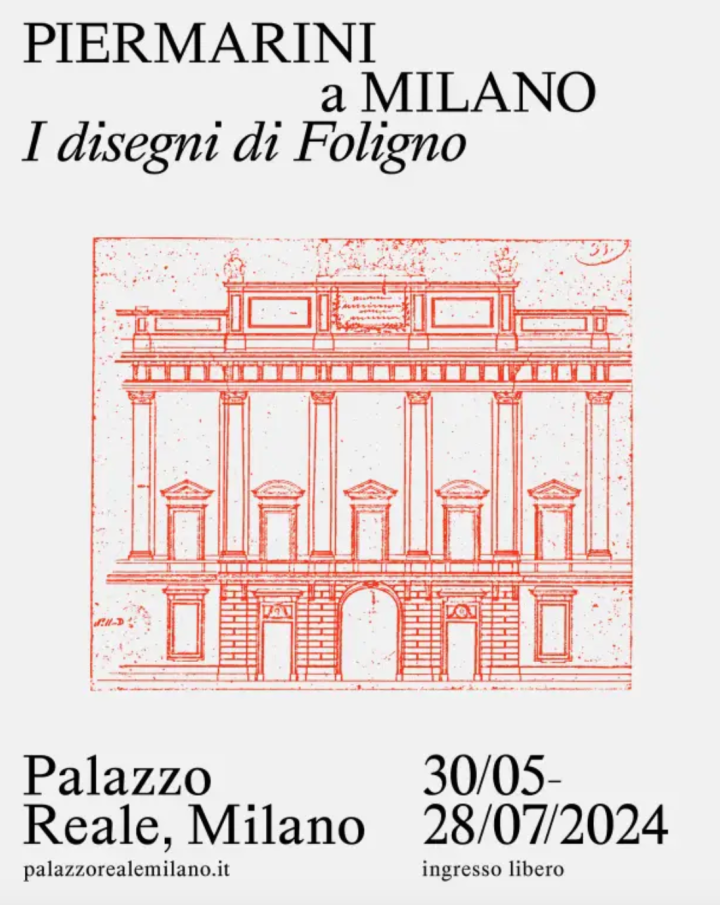 This summer Palazzo Reale presents Piermarini in Milan: The Drawings of Foligno, highlighting the evolution of the architect Giuseppe Piermarini (1734–1808), one of the leading Italian architects of the 18th century, whose neoclassical imprint can still be admired in the most significant buildings of Milan and Lombardy today. The exhibition immerses the viewer in preparatory drawings—sourced from the Piermarini Fund in his hometown of Foligno—ranging from early studies in Rome to major works in Lombardy, with particular attention to Milan and Palazzo Reale. Architectural models on loan from Palazzo Trinci in Foligno and the Museo Teatrale della Scala will also be displayed. The exhibition falls within the initiatives of enhancement aimed by Palazzo Reale as a member of the ARRE network — Association des Résidences Royales Européennes, which brings together approximately thirty royal residences in Europe.
New Historical Fiction | The Glassmaker and The Instrumentalist
From Penguin Random House:
Tracy Chevalier, The Glassmaker: A Novel (New York: Viking, 2024), 416 pages, ISBN: 978-0525558279, $32.
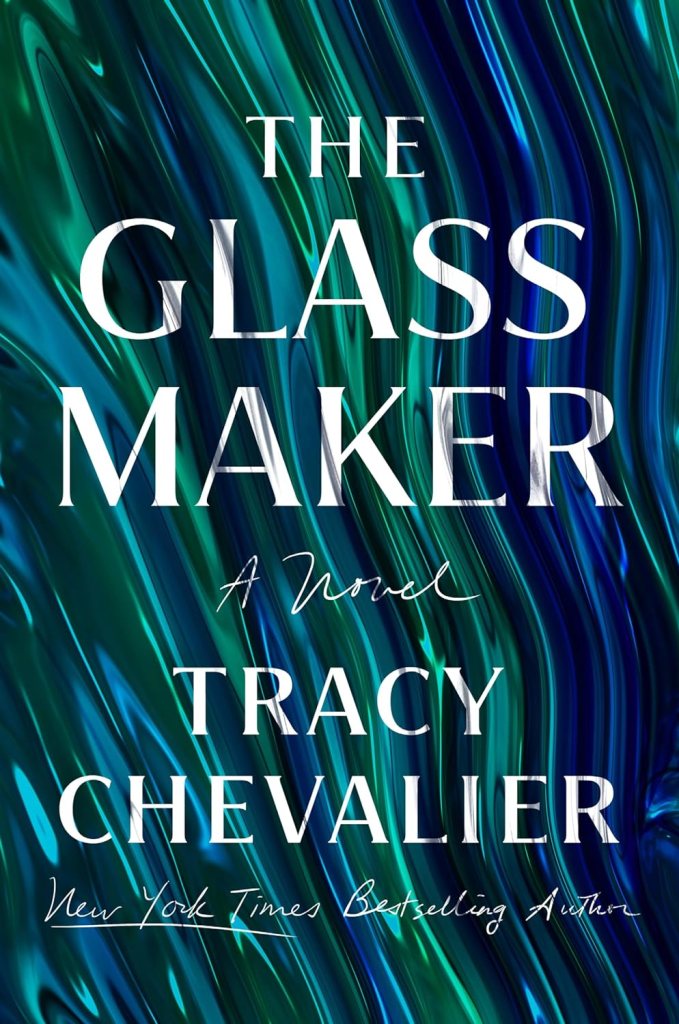 From the bestselling historical novelist, a rich, transporting story that follows a family of glassmakers from the height of Renaissance-era Italy to the present day
It is 1486 and Venice is a wealthy, opulent center for trade. Orsola Rosso is the eldest daughter in a family of glassblowers on Murano, the island revered for the craft. As a woman, she is not meant to work with glass—but she has the hands for it, the heart, and a vision. When her father dies, she teaches herself to make glass beads in secret, and her work supports the Rosso family fortunes. Skipping like a stone through the centuries, in a Venice where time moves as slowly as molten glass, we follow Orsola and her family as they live through creative triumph and heartbreaking loss, from a plague devastating Venice to Continental soldiers stripping its palazzos bare, from the domination of Murano and its maestros to the transformation of the city of trade into a city of tourists. In every era, the Rosso women ensure that their work, and their bonds, endure. Chevalier is a master of her own craft, and The Glassmaker is as inventive as it is spellbinding: a mesmerizing portrait of a woman, a family, and a city as everlasting as their glass.
Tracy Chevalier is the New York Times bestselling author of ten previous novels, including Girl with a Pearl Earring, which has been translated into forty-five languages and made into an Oscar-nominated film, a play, and an opera. Born and raised in Washington, DC, she lives in London with her husband.
◊ ◊ ◊ ◊ ◊
From Simon & Schuster:
Harriet Constable, The Instrumentalist (New York: Simon & Schuster, 2024), 336 pages, ISBN: 978-1668035825, $28.
 A stunning debut novel of music, intoxication, and betrayal inspired by the true story of Anna Maria della Pietà, a Venetian orphan and violin prodigy who studied under Antonio Vivaldi and ultimately became his star musician—and his biggest muse
Anna Maria della Pietà was destined to drown in one of Venice’s canals. Instead, she became the greatest violinist of the 18th century. Anna Maria has only known life inside the Pietà, an orphanage for children born of prostitutes. But the girls of the Pietà are lucky in a sense: most babies born of their station were drowned in the city’s canals. And despite the strict rules, the girls are given singing and music lessons from an early age. The most promising musicians have the chance to escape the fate of the rest: forced marriage to anyone who will have them. Anna Maria is determined to be the best violinist there is—and whatever Anna Maria sets out to do, she achieves. After all, the stakes for Anna could not be higher. But it is 1704 and she is a girl. The pursuit of her ambition will test everything she holds dear, especially when it becomes clear that her instructor, Antonio Vivaldi, will teach Anna everything he knows—but not without taking something in return.
Harriet Constable is an award-winning journalist and filmmaker living in London. She has written for The New York Times, The Economist, and the BBC, and is a grantee of the Pulitzer Center and a fellow of the Royal Society of Arts. She grew up playing the flute and piano and singing with her mother, a classically trained pianist and singer. The Instrumentalist is her debut novel.
Call for Papers | Textiles in Early Modern Venice
From ArtHist.net:
Venice: Trade, Production, Consumption of Textiles and Dress in the Early Modern Period
Dressing the Early Modern Network Conference
Centro Tedesco di Studi Veneziani, Venice, 28–29 May 2025
Organised by Jola Pellumbi, Sara van Dijk, and Torsten Korte
Proposals due by 30 September 2024
Venice in the early modern period flourished as a centre of textile production and trade, shaping and fostering global networks of connections that directly impacted dress in Europe and elsewhere. Due to Venice’s impenetrable location, its proximity to the centre of Europe, and a long-standing tradition of merchants and seafarers, Venice had positioned itself as a principal gateway between Europe and the East. Whether it was through the importation of luxury goods such as textiles and carpets, exports of beauty products and perfumes, or exchanges of ambassadorial gifts, Venice aided in the dissemination and infiltration of ideas, styles, and designs between Europe and the East. Furthermore, due to the flourishing art production and the thriving printing press in sixteenth-century Venice, textile patterns and dress styles were able to spread throughout Europe and the rest of Venice’s trading posts around the world influencing fashions, designs, methods of production, and patterns of consumption. Apart from the unaffected patrician government attire, infiltrations of new styles were particularly noticeable in Venice itself, throughout Carnival festivities, dogal and ambassadorial processions, operas and theatres, gambling dens, and in everyday life where both spaces and bodies were adorned. This conference aims to generate a discussion about the role of Venice as a centre of a global network of connections as seen through its trade, production, and consumption of textiles and dress as well as carpets, haberdashery, beauty products, perfumes, dyes, feathers, jewellery and design.
The conference is open to all, but we particularly welcome submissions from PhD candidates and early career researchers who are invited to speak about the topic with reference to their current or previous projects. We invite potential speakers to submit the following as a single document to the Dressing the Early Modern Network at info@dressingtheearlymodern.com: 1) a paper title; 2) a 300-word paper abstract, which should include the main question of the research project; 3) a short written biography (150 words max); 4) institutional affiliations; 5) subject of PhD thesis and (expected) date of completion; and 6) contact information. Each speaker will be allotted twenty minutes. The deadline for submissions is 30 September 2024. Notification of the outcome will be advised by email before 31 October 2024.
Organised by Jola Pellumbi, Sara van Dijk, and Torsten Korte, Dressing the Early Modern Network, in collaboration with Centro Tedesco di Studi Veneziani.
Call for Papers | The Art of Embroidery
From ArtHist.net:
The Art of Embroidery: History, Tradition, and New Horizons
University of Murcia / Lorca, 27–30 November 2024
Proposals due by 31 August 2024
Organized by the Lorca City Council and the Research Group Sumptuary Arts of the History of Art Department, University of Murcia
This congress aims to create a space to present and discuss the results of the most recent studies on the history of embroidery in its broadest dimension, without prioritizing specific cultural, artistic, or chronological areas, but encompassing all aspects that such an ancient art as embroidery entails. Languages for communications: Spanish, Portuguese, Italian, English, and French
Those interested in participating in the congress by presenting a communication must adhere to any of the themes that the scientific committee has established following the following descriptors:
Spanish embroidery history. European embroidery history. Ibero-American embroidery history. Geographies and circulation. Temporal connections. Spatial connections. Material connections. Formal connections. Technical connections. Relationships and exchanges. Aesthetic relationships. Uses and functions. Identities. Dating. Survivals. Typologies. Definition of centers, workshops, studios, schools, masters, etc. Flow of artists. Transmission of teaching. Craft and guilds. Techniques and designs. Patronage and sponsorship. Cultural histories surrounding embroidery. Religious contexts. Civil contexts. Provenances. Religious image embroidery. Civil and military embroidery. Rituals and symbolic practices. Liturgies and ceremonies. Cataloging and conservation. Theory, methodology, and historiography. Authorship and attributions. Decorations and ornamentations. Museums and collections. Restoration and conservation. Documentary findings. Research sources. Copies and fakes. Art market and trade. New challenges and approaches.
People interested in submitting a paper for its oral presentation should send their proposals by 31 August 2024 to Manuel Pérez Sánchez at congresobordadolorca@um.es. Questions are also welcome at the same address.
Proposals should include the following items
• Title of the proposal
• Brief summary of the proposal and justification (500 words maximum)
• Brief curriculum vitae (300 words maximum)
• Name(s) of the author(s)
• Institutional affiliation
• Email address
• Postal address
• Telephone number
Accepted papers will be announced 13 September 2024, when the registration period will begin (until 11 November).
Important Notes
• The papers submitted will have a maximum of three authors, must be original, unpublished, and not being considered for publication in any other medium for the dissemination of knowledge.
• Papers whose authors are not registered cannot be presented.
• One registration fee will be paid per author and paper.
• Priority will be given to those papers that provide a real advance in knowledge of the history of art and heritage in the lines of work proposed.
• The oral presentation of the paper will not exceed 15 minutes.
• The acceptance or rejection of the paper will be communicated on the given date to the authors via email
• The University of Murcia will issue certification of the papers only to those who have presented them orally at the congress.
Registration fees are as follows
• 20€ for standard presenters
• 10€ reduced fee for presenters: CEHA members, under 25, unemployed, and people with disabilities
• 5€ for non-presenting attendees
Online Talk | Hannah Carlson on Pockets and Gender
As noted at Events in the Field, maintained by The Decorative Arts Trust:
Hannah Carlson | Objects Up Close: Gendering Pockets and Purses
Online, Winterthur Museum, Garden & Library, 10 July 2024, 10.30am EDT
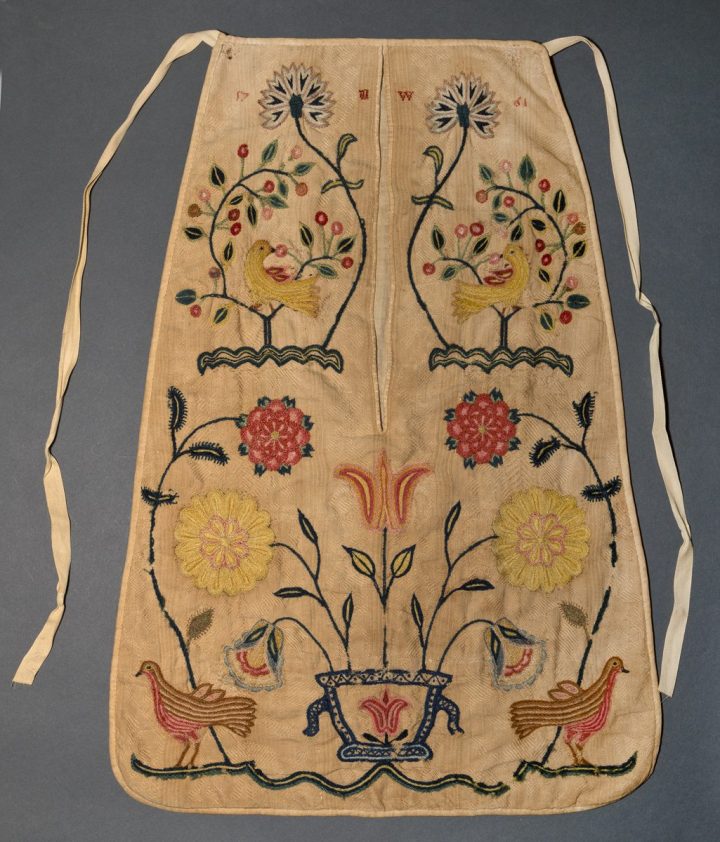
Pocket (Lady’s pocket), United States, 1780–1840, linen, wool, and silk (woven, embroidered, crewelwork), 56 × 39 cm (Winterthur, 1966.1126).
Explore the fascinating history of women’s and men’s pockets in this virtual lecture featuring a tie-on pocket in Winterthur’s collection. Through the 18th century, women used the tie-on pocket, an accessory worn under the skirt and wrapped around the waist. Men had pockets integrally stitched into the three-piece suit. Hannah Carlson, Winterthur summer research fellow and senior lecturer in the apparel design department at the Rhode Island School of Design, will explore the ‘pocket question’ and politics of individual preparedness and privacy.
Register for this free event here»
Hannah Carlson teaches dress history and material culture at the Rhode Island School of Design. After training as a conservator of costume and textiles at the Fashion Institute of Technology, she received a PhD in material culture from Boston University. She is the author of Pockets: An Intimate History of How We Keep Things Close (Algonquin Books, 2023).
Exhibition | Dutch and Flemish Encounters with the Islamic World

Pieter Coecke van Aelst, Customs and Fashions of the Turks, detail, 1553, woodcut printed from 10 blocks on joined sheets of antique laid paper (Harvard Art Museums/Fogg Museum, Acquisition Fund for Prints, 2011.11).
◊ ◊ ◊ ◊ ◊
Now on view at Harvard Art Museums (with more information available from the press release) . . .
Imagine Me and You: Dutch and Flemish Encounters with the Islamic World, 1450–1750
Harvard Art Museums, Cambridge, 18 May — 18 August 2024
Curated by Talitha Maria Schepers
Discover a story of cross-cultural artistic connection over 300 years between the Dutch, the Flemish, and the Islamic world.
Imagine Me and You unveils the vibrancy of multicultural exchange between the Low Countries (roughly modern-day Belgium and the Netherlands), then part of the Habsburg empire, and the Islamic world, in particular the Ottoman, Safavid, and Mughal empires that concurrently controlled much of Central and Southeast Europe, North Africa, and South, West and Central Asia. Prompted by the rich diversity of these empires, the exhibition explores a wide range of artistic, cultural, diplomatic, and mercantile interactions that took place either in person or through the peaceful exchange of objects, art, and ideas over the course of three centuries. This exhibition disrupts the persistent notion that war—in particular, religious strife between Christians and Muslims—dominated interactions between the Low Countries and the Islamic world.
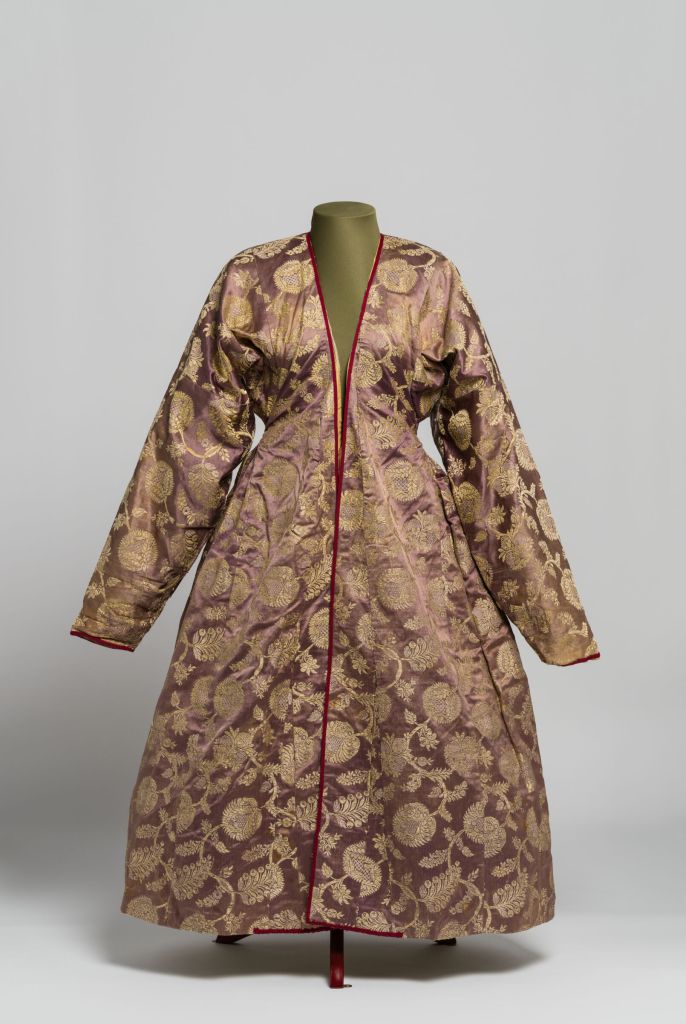
Aubergine Robe Decorated with Swaying Vine Motif, Ottoman, 18th–19th century, silver and silver gilt threads, silk satin ground, 126 × 178 cm (Harvard Art Museums/Arthur M. Sackler Museum, Gift of the Estate of Margaret Schroeder, 1999.323).
Imagine Me and You traces these multiple encounters through the world of Netherlandish artworks and their varied representations of the Islamic realm. Looking also at the ways in which contemporary Ottoman fashion played a role in biblical and historical scenes by Netherlandish artists, the exhibition invites viewers to reflect on the profound impact these interactions have had on crafting our shared history. This dynamic interplay between cultures unearths revelations about individual heritage and the broader global community. While acknowledging the complexity of establishing the origin of certain hybrid objects, the exhibition ultimately suggests that it is more important to amplify and celebrate these objects’ multicultural and multifaceted characteristics.
The approximately 120 objects in the exhibition include drawings, prints, paintings, textiles, and more; the works come from the collections of the Harvard Art Museums as well as from the Maida and George Abrams Collection, The Tobey Collection, other Harvard institutions, and the Museum of Fine Arts, Boston. In addition to sumptuous textiles and striking wool carpets from Türkiye (Turkey) and intricate album paintings from the Ottoman and Mughal periods, there is a range of drawings and prints from Dutch, Netherlandish, and other artists, including Margaretha Adriaensdr. de Heer, Haydar Reis, Pieter Coecke van Aelst, Melchior Lorck, Nicolas de Nicolay, Lucas van Leyden, Jacob Marrel, Rembrandt, and many more. A display of historical pigment samples sheds light on some of the materials these artists used.
The exhibition is curated by Talitha Maria G. Schepers, 2022–24 Stanley H. Durwood Foundation Curatorial Fellow, Division of European and American Art, Harvard Art Museums. Support for Imagine Me and You is provided by the Stanley H. Durwood Foundation Support Fund and the Melvin R. Seiden and Janine Luke Fund for Publications and Exhibitions. Related programming is supported by the M. Victor Leventritt Lecture Series Endowment Fund.
An accompanying digital resource dives deeper into the exhibition’s core themes of encounter and imagination. A variety of contributions, ranging from short texts focused on a single object to longer technical studies, reflects a multitude of voices from across the Harvard Art Museums and Harvard University.
Journal18, Spring 2024 — Color
The latest issue of J18:
Journal18, Issue #17 (Spring 2024) — Color
Issue edited by Ewa Lajer-Burcharth and Thea Goldring
 Color has been at the center of artistic debates at least since the seventeenth century, and it has remained a key issue in the historiography of art. Recent research has largely pursued two directions. First, color has been studied as a material substance and a technology. Scholars have documented the relation between technological, industrial, and commercial developments and the quality, range, and availability of pigments and colorants available to artists, manufacturers, and consumers. A second approach has focused on the key role of color in the construction of social, racial, colonial, and gender hierarchies. Recent scholarship has revealed the intimate connection between aesthetic debates on chroma and the development of the modern discourse of race. The eighteenth century’s feminization of color, linked to make-up and artifice, has also been reexamined. Clearly, it is no longer viable to think of color or its materials, technologies, and processes in purely aesthetic, ideologically innocent terms. This issue of Journal18 considers what is at stake now in reconsidering color in its historical dimensions by bringing these two lines of research together.
The four articles and two notes in this issue explore how the current interest in materiality and the matter of art might be harnessed to alter—enrich, complicate, or challenge—our understanding of the historical functions and socio-cultural meanings of color in the long eighteenth century. . . .
a r t i c l e s
Andrea Feeser — When Blue and White Obscure Black and Red: Conditions of Wedgwood’s 1787 Antislavery Medallion
Caroline Culp — Embalming in Color: John Singleton Copley’s Vital Portraits at the Edge of Empire
Tong Su — Color in Taxidermy at the Eighteenth-Century Qing Court
Melissa Hyde — Men in Pink: The Petit-Maître, Refined Masculinity, and Whiteness
s h o r t e r p i e c e s
Tori Champion — Catherine Perrot: Color, Gender, and Medium in the Seventeenth-Century Académie
Philippe Colomban — The Quest for the Western Colors in China under the Qing Emperors
Conference | Congress of Historical Botanical Gardens
From ArtHist.net and the conference website:
Prevention of Historical Botanical Gardens and Their Heritage from the Major Threats of Our Time
2nd International Congress of Historical Botanical Gardens
HBLFA für Gartenbau / College of Horticulture, Wien, 29–31 July 2024
Registration due by 30 June 2024
 Historical botanical gardens and historical plant collections embedded in a larger context are often a neglected topic. Especially in the field of garden history, landscape architecture, botany, history of science, and even art history, their importance cannot be overestimated. In recent years, there has been a growing interest in these fields of research. In 2021, the 1st International Congress of Historical Botanical Gardens was held in Lisbon.
The initial impulse to communicating the issues and importance of botanic gardens to a broader public, highlighting their history and importance, and building a common network will be continued at the 2nd International Congress of Historical Botanical Gardens. The second meeting will expand the focus to include conservation and preservation of plants and gardens. How can we protect historical botanical gardens and their heritage from the major threats of our time, such as lack of resources, climate change, war, and conflicts of all kinds? What can we learn from the often turbulent past?
The three organizing institutions (Austrian Federal Gardens, Natural History Museum, Botanical Garden of the University of Vienna) were founded by the Habsburg emperors for scientific and representative reasons. For more than 450 years, these institutions have collected, cultivated, studied and exhibited plants in Vienna. This long and continuous tradition makes Vienna one of the most important locations for current and historic plant research and conservation. Building on this tradition and moving forth together, we look forward to welcoming you to Vienna for the Second International Congress of Historical Botanical Gardens.
m o n d a y , 2 9 j u l y
9:00 Welcome Addresses
• Norbert Totschnig (Austrian Federal Minister of Agriculture, Forestry, Regions and Water Management)
• Dalila Espírito Santo (Head of Organization of the 1st ICHBG 2021, University Lisbon)
• Tim Entwisle (International Association of Botanic Gardens, IABG)
• Gerd Koch (College of Horticulture and Austrian Federal Gardens
• Katrin Vohland (Natural History Museum, Vienna)
• Michael Kiehn (Botanical Garden, University of Vienna)
10:00 Keynote
• Botany, History, and Biodiversity: New Horizons for the Jardin des Plantes de Paris — Isabelle Glais (Jardin des Plantes de Paris)
10:30 Coffee Break
10.50 Session 1 | The Transition of Historical Botanical Collections
• A Phoenix from the Ashes: The Transition of the Court Gardens to the Austrian Federal Gardens — Claudia Gröschel (Austrian Federal Gardens)
• Paleis Het Loo: From Royal Showcase towards a Decolonized Botanical Garden — Renske Ek (Palais Het Loo)
• The Role of Curation in Botanic Gardens: Platforms for Environmental and Social Transition — Kevin Frediani (Botanic Garden, University of Dundee)
• Art and Art Projects at the Historic Botanical Garden of the University of Vienna — Barbara Knickmann (Botanical Garden, University of Vienna)
12.10 Lunch
13.45 Afternoon Sessions
• Restoration Saga of the Only Croatian Public Greenhouse — Vanja Stamenkovic (Botanical Garden, University of Zagreb)
• The Impact of Climate Change on the Living Collections of the Botanic Garden of the University of Pisa — Marco D‘Antraccoli (Botanic Garden, University of Pisa)
• The Botanical Garden in Halle (Saale) through the Ages — Heike Tenzer (State Office for Heritage Management and Archaeology Saxony Anhalt)
• Decolonizing the Dutch Botanical Gardens — Sarina Veldman (Hortus Botanicus Amsterdam)
• A Healing Place: The Modern Botanic Garden as a Reimagined Physic Garden — Tim Entwisle (International Association of Botanic Gardens, Australia)
16.00 Natural History Museum — Visit of archive and collection of botanical illustrations, herbarium, and rooftop
18.00 Natural History Museum — Poster session and cocktail reception
t u e s d a y , 3 0 j u l y
9.00 Keynote
• Horticulture in the Age of Globalization, Biological Invasions, and Climate Change — Franz Essl (University of Vienna, Austria)
9.30 Session 2 | Horticulture: Challenges in Daily Horticulture Practice
• The Transfer towards Working with the Environment in a Historical Garden — Willem Zieleman (Palais Het Loo, Netherlands)
• Theory and Practice of Recreating Exotic Plant Collections in European Historic Gardens — Jacek Kuśmierski (Museum of King Jan III’s Palace at Wilanów, Poland) and Katarzyna Hodor (Cracow University of Technology)
• Charm and Harm of the Indian Lotus (Nelumbo nucifera) in a Historic Landscape Garden — Vince Zsigmond (National Botanic Garden Vácrátót, Hungary)
10.20 Coffee Break
10.40 Keynote
• Zagreb University Botanical Garden: 135 Years of Sharing Botanical Knowledge, High Hopes, and Practical Challenges — Sanja Kovacic ́(University of Zagreb)
11.10 Session 3 | Science: Sharing of Knowledge
• Heritage Skills in Historic Gardens: Conserving for the Future — Kate Nicoll (gardenconservation.eu, Norway) and Christian Grüßen (European Garden Heritage Network, Germany)
• Herbaria: Essays for a Material and Postnaturalist Memory of Botany and Film — Paula Bertúa (Leuphania University, Germany)
• A Park with Paths of Knowledge in the 18th Century: Challenges and Manifestations — Martina Sitt (University of Kassel)
12.10 Lunch
13.30 Afternoon Sessions
• Cultivation of Sensitive Plants at Belvedere Garden — Michael Knaack (Austrian Federal Gardens)
• The Hungarian Plant Names in Carolus Clusius’s Works in the Context of His Botanical Program — Áron Orbán (Tokaj University)
14.10 Coffee Break
14.45 Back-up collection at Schönbrunn Palace Garden
16.00 Palmhouse Schönbrunn
19.30 Conference Dinner, Palmhouse Burggarten
w e d n e s d a y , 3 1 j u l y
9.00 Keynote
• The Making of a Historical Botanical Garden — Santiago Madriñán (University of Bogotá and Botanic Garden Cartagena, Colombia)
9.30 Session 4 | Historical Botanical Gardens
• The Puccini Garden in Tuscany: A Celebratory Landscape Park and Its 19th-Century Botanical Cultivations — Costantino Ceccanti (Musei del Bargello, Florence)
• Arboretum Trsteno of the Croatian Academy of Sciences and Arts: The Garden with the Historically Longest Continuity on the Territory of the Republic of Croatia — Ivan Šimić (Croatian Academy of Sciences and Arts) and Mara Marić (University of Dubrovnik)
• How Botanical Gardens Helped To Shape International Trade Law — Elena Falletti (Carlo Cattaneo University, Castellanza)
10.30 Coffee Break
• Luca Ghini and the Origin of Modern Botany: An Italian History of Academic Botanic Gardens — Marco D‘Antraccoli (Botanic Garden, University of Pisa)
• Methods of Visually Experiencing Lost Historical Botanical Gardens — Dominik Lengyel (Brandenburg University of Technology Cottbus-Senftenberg)
• The Historical Botanical Gardens in Algiers, Kiev, and Tunis and Their Cooperation Projects with the Republic of Austria — Brigitte Mang (University College for Agricultural and Environmental Education, Vienna)
• Building the Botanical Garden for Roma Capitale: History, Architecture, Characters — Giulia Ceriani Sebregondi (University of Campania ‘Luigi Vanvitelli’)
12.00 Lunch
13.00 Afternoon Session
• The Botanic Garden and Museum of the University of Pisa: Five Centuries of Botanical Research, from Simples to New Frontiers — Marco D‘Antraccoli (Botanic Garden, University of Pisa)
13.20 Concluding Remarks by Michael Kiehn
13.50 Coffee Break
15.15 Botanical Garden University of Vienna
16.45 Back-up collection Belvedere Garden
18.00 Farewell
Cultural Heritage Magazine, Spring/Summer 2024

◊ ◊ ◊ ◊ ◊
From the National Trust:
Launched in October 2022 and published twice a year, the National Trust Cultural Heritage Magazine (CHM) showcases the latest curatorial findings, conservation projects, and research initiatives; keeps readers up to date with relevant National Trust publications and events; and shares other insights into the houses, collections, and gardens in the Trust’s care.
In the latest issue, readers will find:
• A conversation between writer and curator Robin Muir and National Curator for Photography Anna Sparham
• A long-term project to revitalise the historic designed landscape at Lodge Park
• Expert insights into a rare 18th-century doll at Dudmaston
• New research on Coleridge Cottage, the Trust’s first literary home
• Research and conservation project round-ups
• Cultural heritage news, events and publications
• Highlights of recent exhibition loans from the National Trust
The full issue is available here»










 Enfilade
leave a comment