Call for Papers | Ephemeral Exhibition Spaces, 1750–1918
From H-ArtHist:
Ephemeral Exhibition Spaces, 1750–1918
Geneva, 16–17 March 2018
Proposals due by 1 December 2017
During the last decades of the Ancien Régime and throughout the long nineteenth century, people in Europe marveled at absent worlds or past events that were reenacted visually or mentally in a variety of ephemeral exhibition spaces, like temporal museums, exhibits, (private) cabinets and, most strikingly, panoramic theaters and dioramic constructions. The latter installations or decors visually imitated reality, rather than represent it, like art would do, and with their illusory optical effects they were very popular with the big audience. They were however also criticised by those who stressed the imaginative, mental nature of vivification against forms of visual mimicry. From the very outset, reenactment in these spaces comes forward as an ambiguous, multifaceted and conflictive strategy.
In the new public and private spaces of the nineteenth century, ephemeral exhibition spaces or spaces with an exhibitional dimension par excellence fitted more encompassing epistemological and experiential strategies of reenactment. Within a wide scope of cultural practices, they provided new spatial frameworks of understanding and experiencing reality, of imagining, of identification and control. It is however still a matter of debate how the epistemological, visual and experiential dimensions of reenactment interrelated, conflicted and coincided in these spaces. Reenactment in ephemeral exhibition spaces was caught between visual and mental strategies, between material tangibility and imagination. Reenactment in these spaces was also at the same time a tool of (scientific) knowledge and of subjective experience. Imagination could in this context strongly relate to the sensation of the uncanny, to aesthetic rapture, to (ideological and political) identification and to personal memory or even, in particular cases, to solipsist isolation. These spaces, finally, precisely because of their exhibitional nature, are also revealing of a dynamic of control, of voyeurism, of a problematic dealing with otherness, difference and absence, of people, of cultures or of the past.
Our symposium intends to discuss a wide variety of ephemeral exhibition spaces or spaces with a distinctively exhibitional dimension, such as for example dépôts, derelict gardens, ruins, boudoirs, museums, exhibits, private interiors, cabinets, antique stores… against a broad cultural background and treated from various interdisciplinary angles within the humanities, including cultural history, history of art, literary studies and comparative literature, intellectual history, material culture studies, museum studies and others.
We particularly, but certainly not exclusively, welcome papers, either in English or in French, on the following topics:
• Ambiguous, multifunctional, liminal or hybrid spaces, in-between spaces, spaces between public and private uses, as well as the cultural practices they are connected with
• Imagery spaces, for example in written or visual sources (literature, catalogues, guides, travel literature, letters, art, images etc.) or material spaces that are able to stage the role of the imaginary in the construction of cultural practices
• Mediating spaces that worked as catalysts for interaction and interrelation between a number of cate- gories such as gender and social classes
There is no registration fee for the conference. Final papers, either in French or English, will be published in an edited volume with a reputable editor. Proposals (maximum 250 words) should be sent to Camilla Murgia (camilla.murgia@unige.ch) and Dominique Bauer (dominique.bauer@kuleuven.be) by December 1, 2017. Those who submitted their proposal will be notified of their acceptance by December 20.
Conveners: Dr. Camilla Murgia (University of Geneva) and Prof. Dominique Bauer (Catholic University of Leuven)
Exhibition | Turner in Surrey

J.M.W. Turner, Thomson’s Aeolian Harp, 1809
(Manchester Art Gallery)
◊ ◊ ◊ ◊ ◊
Opening this month at The Lightbox:
Turner in Surrey
The Lightbox, Woking, Surrey, 18 November 2017 — 4 March 2018
For the first time ever, this exhibition explores J.M.W. Turner’s work produced on his various travels, stops, and periods of residence on the Thames, Wey Navigation and in the county of Surrey, prior to the London boundary changes of 1889.
It will explore how Turner retreated into nature, capturing both the beauty of the landscape and its rustic elegance. Open air sketches highlighting his swiftness of hand and the changing effects of nature will sit alongside finished works, completed in the studio. Combining pencil and oil sketches, finished oils and watercolours, the exhibition will feature Newark Abbey on the Wey and View of Richmond Hill and Bridge from Tate, and Thomson’s Aeolian Harp from Manchester Art Gallery. The exhibition will also give a rare opportunity to see personal possessions of the artist—his fishing rod, travelling watercolour box, and watercolour palette—from The Royal Academy of Arts.
Exhibition | Napoleon: Images of the Legend
From the Châteaux de Versailles:
Napoleon: Images of the Legend
Arras Musée des Beaux-Arts, 7 October 2017 — 4 November 2018
Curated by Frédéric Lacaille and Marie-Lys Marguerite
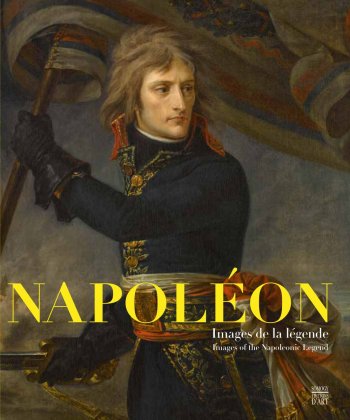 The exhibition will present a large selection of the Napoleonic collection from the palaces of Versailles and Trianon, which is the world’s largest on the subject. Visitors will be able to discover the history of Napoleon in chronological order, from General Bonaparte to the fallen Emperor.
The exhibition will also throw the spotlight on the Emperor’s close circle (family, important officers, imperial Court) and the Parisian and international societies of the time (artists, scholars, foreign sovereigns etc.) It will show how, from very early on, Napoleon wanted to write his own legend for posterity by commissioning multiple paintings commemorating key moments of his life. Paintings, sculptures, and furniture will reveal the wealth and quality of artistic production at the time and will lead visitors in the footsteps of Napoleon Bonaparte, whose unique destiny forever.
The exhibition is part of a partnership project between three major institutions: the region Hauts-de-France, the town of Arras, and the Palace of Versailles. This large-scale partnership was established in 2011, allowing collections from Versailles to be displayed in Arras. Major event-exhibitions are held alongside educational and cultural work in order to allow as many people as possible to discover the history and heritage of the Palace of Versailles.
The exhibition is curated by Frédéric Lacaille, Curator in charge of 19th-century paintings at the Musée National des Châteaux de Versailles et de Trianon, and Marie-Lys Marguerite, Director of Arras Musée des Beaux-Arts.
Frédéric Lacaille, ed., Napoléon: Images de la Légende (Paris: éditions Somogy, 2017), 280 pages, ISBN: 978 27572 12929, 28€.
Exhibition | Dancing with Death
From the Blanton:
Dancing with Death
Blanton Museum of Art, the University of Texas at Austin, 2 September — 26 November 2017
Organized by Elizabeth Welch
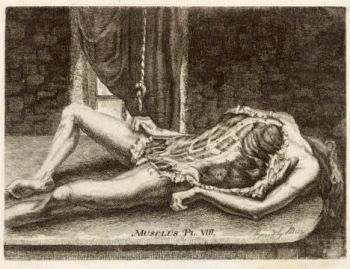
John Bell, Reclining Male Cadaver, from Anatomy of the Bones, Muscles, and Joints, by John Bell, 1794, engraving and etching (Austin: Blanton Museum of Art, The Karen G. and Dr. Elgin W. Ware, Jr. Collection, 2000.4).
By the year 1500, a new genre of visual and literary culture was thriving in Europe: the dance of death or danse macabre. Dancing with Death will feature works on paper spanning from the fifteenth to the twentieth centuries that highlight this visual tradition of bringing death to life. By animating death and transforming a state of being into a character, Europeans both poked fun of and meditated on mortality. This exhibition highlights both sides of the macabre coin: fear of death and fun in life.
Organized by Elizabeth Welch, Andrew W. Mellon Curatorial Fellow in Prints, Drawings, and European Paintings, Blanton Museum of Art
Call for Articles | Gardens and Melancholia
From H-ArtHist:
Cultural History of Europe, Issue: Garden and Melancholy in Europe
Proposals due by 15 December 2017, with finished articles due 30 April 2018
The research group ERLIS (EA 4254, University of Caen) is preparing a collective work on the theme “Garden and melancholy in Europe between the eighteenth century and the contemporary era.” The publication will take the form of a special issue of the electronic journal Cultural History of Europe, scheduled for autumn 2018.
Garden of heaven or garden of tortures, hortus conclusus or locus amoenus, utopia or idyll, mirror of society or antithesis, place of memory or place of oblivion, living place cultivated by humans, as work in progress without end or as relic, forgotten and abandoned, but alive nevertheless—the microcosm of the garden is not just the dream space par excellence, but often also a space of melancholy. In its many facets, the garden always reflects its creator. As such, the garden as research subject highlights essential aspects of the history of consciences.
Whether a work set in reality, or a representation in a creative piece, text, image, music—the garden exerts a universal fascination, for landscape architects as well as literary figures, poets, filmmakers, graphic artists, painters, philosophers and musicians. This fascination has recently undergone a renewal that goes hand in hand with an increasingly acute awareness of the climate crisis and gives new verve to both garden practices and theoretical reflection. We are witnessing a real craze, a sign of fundamental changes in society. The garden has now become a space of resistance against excessive liberalism and even, more generally, the loss of humanity.
Who says resistance, says melancholy. The garden, as ‘heterotopia’ seems in essence the place ‘where melancholy sleeps’ (Apollinaire). One can consider it in its therapeutic aim: to walk, to contemplate it soothes and releases the soul, and to take care of it means to exercise a fundamental and ‘universal’ human and social activity. Since the Enlightenment, the garden has become an element of social and sanitary policy. Medicine and psychiatry use it for therapeutic purposes. Or it can be given a place in a work of art. Here too, its role is intimately linked to melancholy: it can act as a drug, as a remedy, it can be the place of reflection, of distance from reality, it can highlight the link between beauty or death, or simply seduce by the response that its eloquent silence offers to the violence of the human world. It is always the space in which one lives at once freely its melancholy and one in which one can free oneself from it, even cure it, in which pathological melancholy can be transformed into ‘soft melancholy’, the one wherein melancholy becomes creative. The garden can even arouse the desire for metamorphosis, the desire to become a plant, for the plant becomes perceptible as the image, even the model of the force that does not aspire to power. Herein lie some thoughts around the garden and melancholy.
The special issue seeks to illuminate from various angles the link between the garden and melancholy. The goal is to gather articles from the various European linguistic fields in the following disciplines: literature, sociology, psychology, history of art and architecture, history of medicine, geography, philosophy, media sciences, visual arts and music.
The deadline for submissions is April 30, 2018. Submissions for the special issue may relate to any European cultural areas, but must be written in French, German, English, Italian or Spanish. The electronic magazine Cultural History of Europe publishes only original articles, which are evaluated through double-blind peer review. Members of both the scientific committee and the journal’s review committee will be invited to serve as reviewers. To insure anonymity during the review process, the articles themselves should not contain information that reveals the identity of the author. A cover page should be attached indicating the name, title and home institution of the author. Proposals must include a summary in French of approximately 200 words. Articles must be between 30,000 and 60,000 characters, including spaces and notes. The evaluation committee’s decision will be rendered within two months of the deadline.
The proposals for contributions (consisting of a title and abstract of about 15 lines), accompanied by a short CV, should be sent by 15 December 2017 to:
• Hildegard Haberl, hildegard.haberl@unicaen.fr
• Annette Lensing, annette.lensing@unicaen.fr
• Corona Schmiele, corona.schmiele@gmail.com
In Memoriam | Linda Nochlin (1931–2017)
From ARTnews:
Andrew Russeth, “Linda Nochlin, Trailblazing Feminist Art Historian, Dies at 86,” ARTnews (29 October 2017).
 Linda Nochlin, the perspicacious art historian who brought feminist thought to bear on the study, teaching, and exhibition of art, reshaping her field, has died, according to people close to her family. She was 86.
In 1971, Nochlin earned widespread attention for her landmark essay “Why Have There Been No Great Women Artists?,” which approached that question with incisive and nuanced analysis, demonstrating how, for centuries, institutional and societal structures had made it “impossible for women to achieve artistic excellence, or success, on the same footing as men, no matter what the potency of their so-called talent, or genius.” But Nochlin also interrogated how “greatness” itself had long been formulated and evaluated. “In the field of art history, the white Western male viewpoint, unconsciously accepted as the viewpoint of the art historian, may—and does—prove to be inadequate not merely on moral and ethical grounds, or because it is elitist, but on purely intellectual ones,” she wrote in the essay, which was published in ARTnews.
That article quickly became a cornerstone for the developing field of feminist art history. It would have been enough to secure her place as one of art history’s most important writers, but over the course of her six-decade career, she also made formidable contributions to the study of Realism and Gustav Courbet, Impressionism and Post-Impressionism, and numerous contemporary artists. . . .
The full obituary is available here»
New Ashmolean Gallery: The Story of the World’s First Public Museum
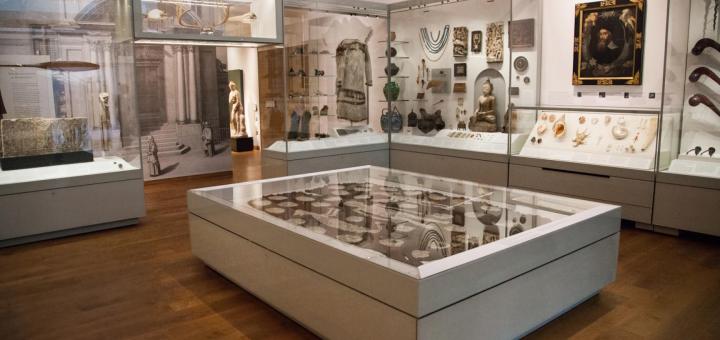
From the press release (3 October 2017) . . .
New Ashmolean Gallery: The Story of the World’s First Public Museum
Ashmolean Museum, Oxford, open from 3 October 2017
The world’s first public museum, the Ashmolean in Oxford, is celebrating a new permanent gallery called the ‘Ashmolean Story’, which opened earlier this month. The gallery marks the 400th anniversary of the birth of the museum’s founder, Elias Ashmole (1617–1692) who gave his collection to the University of Oxford in 1677 and founded the Ashmolean in 1683. On display are many of the original artefacts, specimens, and curiosities that fascinated museum visitors of the seventeenth century.
Elias Ashmole was a leading intellectual of his day who studied at Oxford and was elected a founding Fellow of the Royal Society in London in 1661. A true Enlightenment polymath, he was interested in everything from natural history, medicine and mathematics, to alchemy, astrology, and magic—all popular disciplines in the seventeenth century. In founding a new public museum Ashmole’s vision was to create a centre for practical research and the advancement of knowledge of the natural world which, in his own words, “is very necessary to humaine Life, health, & the conveniences thereof.” He recommended that the Keeper (head) of the museum should be Oxford’s Professor of Chemistry, and the first incumbent was Dr Robert Plot, a noted scientist and naturalist.
Evoking the style and atmosphere of the original museum, the new gallery displays objects related to scientific enquiry and the quest for knowledge that would have captivated visitors in 1680s Oxford. These include a crystal ball probably used by Ashmole for ‘crystal-gazing’ and making predictions; medical equipment and samples like kidney stones, apothecary jars and powders; and an array of natural history specimens of exotic animals, fish, and birds. One such specimen that clearly confused Plot was a “Gigantick thigh-bone.” He recognized that it was a real bone but could not identify the species due to its enormous size and concluded that it must have been the remains of a giant man or woman. Now known to be part of a femur of a large meat-eating dinosaur, Plot’s illustration was nonetheless the first publication of a dinosaur bone. Plot’s tenure at the Ashmolean came to end in 1689/90 when he resigned both his university posts citing an insufficient salary.
Ashmole’s gift to the University included his own extensive collection of books, manuscripts, coins, medals, and other antiquities. It also included the celebrated Tradescant family collection of ‘Rarities’ that had been gifted to Ashmole by John Tradescant the younger. In 1683 Ashmole transferred everything to Oxford from London, sending it by barge in twenty-six large chests. Ashmole specified that the new museum should be housed in a building designed to promote scientific practice. In the original Ashmolean in Broad Street, Oxford, there was a repository for the collections on the first floor; a lecture theatre for natural history on the ground floor; and in the basement was a state-of-the-art chemical laboratory and anatomy room. He also provided statutes of governance to guide the museum in achieving its aims, and this original handwritten document is on display in the new gallery. The eighteen statutes include the establishment of a board of governors, an annual inspection and audit, and the cataloguing of all objects that came into the collection. They also established procedures for the care and security of objects, the admission of visitors and museum finances—a model for modern museums and galleries the world over.
While the collections have grown and shifted focus to art and archaeology, the purpose of the Ashmolean is little changed today. The museum’s main aim remains the preservation and display of the collections for enjoyment and the advancement of knowledge. The development of the new gallery has allowed the re-display of important pieces such as Guy Fawkes’ lantern—a favourite of museum visitors. It has also created space to bring out of storage works such as Ashmole’s portrait collection of scholars and scientists which includes the famous painting of Elizabethan astrologer and mathematician, John Dee.
The gallery development has also provided staff the opportunity to research and conserve objects from the founding collection. One of the most significant pieces that has been re-displayed is Powhatan’s Mantle. Made of four white-tailed deer hides sewn together and decorated with shells, this huge and fragile object is traditionally linked to Powhatan, the father of Pocahontas and chief of the Indigenous North American Powhatan people who lived in Virginia, the area settled by the English in the 1600s. The museum’s conservation team has investigated the mantle with the help of the Factum Arte Foundation using specialized photography and imaging. Archival research into the mantle indicates that it was probably displayed vertically on the wall from the seventeenth century. The loss of shells around the lower border suggests that people were able to touch it and may have taken shells as souvenirs of their visit.
Today, the mantle has proved equally popular. The Ashmolean’s 2017 annual appeal has asked members of the public to support a new high-tech display case for the iconic object. Donors to the appeal have been offered the chance to have their name or a dedication inscribed on the case and more than 200 people have made donations totalling nearly £52,000. Miss Laura Wilson who made a dedication for her grandmother, says: “As soon as I saw the Ashmolean Birthday Appeal for the preservation of Powhatan’s Mantle, I knew I had to donate. When I was a little girl, my grandmother, Margaret Pinsent, would often take me to the museum to explore and we would always look at the Mantle—we were in awe of its historical significance. A quarter of a century later and I am still enchanted by this marvelous object and indebted to my grandma for her investment in my education. I cannot wait to see the Mantle in the new gallery and to enjoy it for many years to come.” In addition to the public appeal, the new gallery has been made possible by a generous donation from Mr Stephen Stow, Fellow of the Ashmolean; a major grant from the Linbury Trust; and a £110,000 grant from the DCMS/Wolfson Galleries and Improvements Fund.
Dr Xa Sturgis, Director of the museum, says: “Thanks to the generosity of members of the public, institutional support and private donors, we have been able to mark Elias Ashmole’s 400th birthday with this new gallery. It is a celebration of Ashmole’s vision and of the role the Ashmolean has played in the development of museums and galleries in this country and across the world.”
John Glen MP, Minister for Arts, Heritage and Tourism, says: “The Ashmolean Museum’s new gallery will mark 400 years since the birth of its founder Elias Ashmole and government is proud to support this fantastic space with £110,000 from the DCMS/Wolfson Museums & Galleries Improvement Fund. The public support for this project shows how well- loved the museum is and I wish all at the Ashmolean well for this exciting new chapter in its illustrious history.”
Paul Ramsbottom, Chief Executive of the Wolfson Foundation, says: “There seems to be an increased interest in the collectors and stories behind the UK’s great museums—and the Ashmolean has a fascinating story to tell. Ashmole’s vision of a place of curiosity which fuels a quest for knowledge is still being realised. We hope there will be many more little Laura Wilsons visiting with their grandmothers and enjoying the delights this new gallery has to offer. The Wolfson Foundation is a charity supporting and promoting excellence, and we are delighted to be funding this through the DCMS/Wolfson Fund—which sends a strong message about the importance of shared public and charitable funding of these great collections.”
Save the Date | HECAA Conference, November 2018

Art and Architecture in the Long Eighteenth Century: HECAA at 25
Southern Methodist University, 1–4 November 2018
Please save the date for the first-ever Historians of Eighteenth-Century Art & Architecture conference, to be held November 1–4, 2018, at Southern Methodist University in Dallas, Texas. The conference will present recent research on eighteenth-century visual culture, consider questions of historiography and pedagogy, and chart paths for the future of our field. Details and a CFP to follow! Questions or comments? Contact us at hecaa25@gmail.com.
Image: Francisca Efigenia Meléndez y Durazzo, Portrait of a a Seated Girl Holding Flowers, ca. 1795, tempera on ivory, 5 × 5 cm (Dallas: Meadows Museum, SMU, MM.08.01.20).
The Burlington Magazine, October 2017
The eighteenth century in The Burlington:
The Burlington Magazine 159 (October 2017)
 A R T I C L E S
• Gauvin Alexander Bailey, “Rococo in Eighteenth-Century Beijing: Ornament Prints and the Design of the European Palaces at Yuanming Yuan,” pp. 778–88.
• J. P. Losty, “Eighteenth-Century Mughal Paintings from the Swinton Collection,” pp. 789–99.
R E V I E W S
• Rose Kerr, Review of John Ayers, Chinese and Japanese Works of Art in the Collection of Her Majesty The Queen (Royal Collection Trust, 2016), pp. 822–23.
• Marjorie Trusted, Review of Alan Chong, ed., Christianity in Asia: Sacred Art and Visual Splendour (Asian Civilizations Museum, 2016), pp. 823–24.
• Milo Beach, Review of Terence McInerney, Divine Pleasures: Painting from India’s Rajput Courts: The Kronos Collections (The Metropolitan Museum of Art, 2016), pp. 824–25.
• Aida Yuen Wong, Review of Petra ten-Doesschate Chu and Ning Ding, eds., Qing Encounters: Artistic Exchanges Between China and the West (Getty Publications, 2015), p. 826.
• David Bindman, Review of Elizabeth Einberg, William Hogarth: A Complete Catalogue of the Paintings (The Paul Mellon Centre for Studies in British Art, 2016), pp. 827–29.
• Robert O’Byrne, Review of Mark Clark, The Dublin Civic Portrait Collection: Patronage, Politics, and Patriotism, 1603–2013 (Four Courts Press, 2016), p. 832.
• Charles Beddington, Review of the exhibition Eyewitness Views: Making History in Eighteenth-Century Europe (The Getty Center, Los Angeles, 2017; Minneapolis Institute of Art, 2017; and The Cleveland Museum of Art, 2018), pp. 856–58.
Call for Papers | Boston University Graduate Symposium — Excess
From H-ArtHist:
34th Annual Boston University Graduate Symposium
in the History of Art and Architecture — Excess
Boston University, 2–3 March 2018
Proposals due by 1 December 2017
Excess conjures the idea of the extractable, left over, too much, or ‘extra’. Looking closely at perceptions of the extraneous reveals excess to be a historically constructed category that marks shifting notions of cultural values. Deemed peripheral, abject, deviant, and tertiary due to factors such as geographic relationships or conceptions of power at a particular moment, excess is the focal point of the 34th Annual Boston University Graduate Symposium in the History of Art and Architecture.
We invite submissions that explore themes of excess. Topics may include but are not limited to the following: opulence; decoration; the grotesque; the carnivalesque; caricature; exuberance; indulgence; exaggeration; extremes of religious or social practice and ritual; extravagant lifestyle; expressions and critiques of abundance; so-called ‘luxury arts’; the overbuilt.
Papers must be original and previously unpublished. Please send an abstract (300 words or less), a paper title, and a CV to bugraduatesymposiumhaa@gmail.com. The deadline for submissions is 1 December 2017. Selected speakers will be notified by 23 December 2017 and are expected to accept or decline the offer within a week of notification. Papers should be 20 minutes in length and will be followed by a question and answer session.
The Symposium will be held Friday, 2 March – Saturday, 3 March 2018, with a keynote lecture (TBD) on Friday evening at the Boston University Art Gallery at the Stone Gallery and graduate presentations on Saturday at the Museum of Fine Arts, Boston.
This event is generously sponsored by the Boston University Center for the Humanities; the Boston University Department of History of Art and Architecture; the Museum of Fine Arts, Boston; the Boston University Graduate Student History of Art and Architecture Association; and the Boston University Art Gallery at the Stone Gallery.










leave a comment