Chawton House Appeal
From Chawton House Library:

We are launching an urgent, large-scale funding campaign to reimagine and enhance the manor house in Chawton that was as familiar to Jane Austen as her own village home.
We have ambitious plans for Jane Austen’s ‘Great House’ to reach its full potential as a major literary landmark. We want to expand our facilities to secure the house’s survival and provide an enhanced experience of the Chawton estate that was Jane Austen’s home throughout the final, productive years of her life.
We need your help to turn this vision into reality.
hen Jane’s brother Edward inherited the Chawton manor house from childless relatives, he offered a nearby cottage on the estate to his mother and two sisters.
Jane would spend the most productive years of her literary life there. She regularly came and went along the road between her cottage (now Jane Austen’s House Museum) to the Elizabethan property she called the ‘Great House’, where she dined with her family and happily ‘dawdled away’ much of her time.
The ‘Great House’ is now a fast developing visitor attraction complete with Austen family heirlooms, as well as a world-renowned research centre for early women’s writing. In 2018, the foundation that has funded us for many years is focusing its funding on other projects, and we are facing a shortfall of 65% of our income. We know Jane Austen’s ‘Great House’, should be a major historic literary landmark but it does not currently have the facilities to reach its full potential.
We have ambitious plans to create a cultural literary destination within the wider grounds of the ‘Great House’, offering larger and more extensive visitor facilities and providing an enhanced experience of the Chawton estate that was Jane Austen’s home throughout the final, productive years of her life.
The reimagining of Jane’s ‘Great House’ into a more recognised, commercially viable destination will help secure the house, the wider estate, and also our unique collection of early women’s writing and books we know Jane Austen read in her brother’s library. Our treasures include an original manuscript in Jane Austen’s own hand, first and early editions of all of her novels, and also works by important women writers who inspired her, and whom she inspired.
We need your help to turn this vision into reality. Please help see us through to the next chapter by donating to our appeal or by getting involved in our fundraising.
Call for Papers | Femmes artistes à l’âge classique
From the Call for Papers:
Femmes artistes à l’âge classique: arts du dessin – peinture, sculpture, gravure
Musée / École du Louvre, Paris, 31 May — 1 June 2018
Proposals due by 20 December 2017
Université Paris Nanterre, Université Bordeaux Montaigne, et avec le soutien de l’université Paris VIII et du musée du Louvre
L’art au féminin n’est plus regardé comme une anomalie. Plusieurs expositions ont récemment mis à l’honneur des peintres femmes du XVIIIe siècle. Une première rétrospective française consacrée à Élisabeth Louise Vigée-Le Brun a été présentée en 2015–2016 au Grand Palais à Paris, au Metropolitan Museum of Art de New York et au Musée des Beaux-Arts du Canada à Ottawa1 et ses Souvenirs ont été à cette occasion réédités2. Longtemps restée dans l’ombre de son maître et beau-frère Fragonard, Marguerite Gérard est aujourd’hui révélée, notamment grâce à une exposition tenue en 2009 au musée Cognacq-Jay3. La nouvelle acquisition par la Neue Pinakothek de Munich du tableau de Marie-Gabrielle Capet représentant Adélaïde Labille-Guiard dans son atelier (Salon de 1808), les recherches menées autour de cette œuvre ainsi qu’une exposition au musée des Beaux-Arts de Caen en 20144 ont attiré l’attention sur cette artiste méconnue. Elle apparaît pourtant avec Marie-Marguerite Carreaux de Rosemond dans L’Autoportrait avec deux élèves5 de Labille-Guiard dévoilé au Salon de 1785 et conservé aujourd’hui dans les collections du Metropolitan Museum of Art, tableau qui s’apparente à une véritable défense et illustration de la place des femmes en peinture. En 2015, le Portrait d’une violoniste, chef- d’œuvre d’Anne Vallayer-Coster, a été adjugé à 903 000 euros pour le Nationalmuseum de Stockholm, l’un des musées européens les plus actifs en matière d’acquisitions, en particulier pour l’art français du XVIIIe siècle6. Dans le sillage d’un accrochage thématique du Centre Pompidou, une exposition retraçait en 2011 le parcours des sculpteurs femmes du XVIIIe siècle à nos jours7.
Les exemples pourraient être multipliés, en France et en Europe. Certaines artistes de la période classique sont de nos jours admirées et des listes fleurissent, qui recensent des peintres et des sculpteurs célèbres, et que retient la postérité : les peintres italiennes Artemisia Gentileschi (1593–1652) et Elisabetta Sirani (1638–1665), l’Espagnole et Lusitanienne Josefa de Óbidos (1630–1684), la Suissesse Angelika Kauffmann (1741–1807), les Françaises Catherine Duchemin (1630–1698), Geneviève (1645–1708) et Madeleine (1646–1710) de Boullogne, et Élisabeth-Sophie Chéron (1648–1711), les quatre premières femmes peintres à être admises à l’Académie royale, la Vénitienne Rosalba Giovanna Carriera (1675–1757), ou encore les sculpteurs françaises Marie-Anne Collot (1748–1821), Clémence de Sermezy (1767–1850) et Julie Charpentier (1770–1845), et la liste pourrait continuer. Dans le domaine de la peinture surtout, mais aussi dans celui, réputé plus « viril » et austère, de la sculpture, des artistes femmes se sont toujours illustrées. D’emblée, elles sont observées, scrutées, remarquées. Diderot surnommait Marie-Anne Collot, sculpteur surdouée, élève de Falconet, « Mademoiselle Victoire », en écho peut-être à « l’illustre Mademoiselle Chéron », ainsi baptisée. Malgré les louanges, la plupart ont payé de leur existence personnelle le prix fort, rançon du succès. Le public de jadis se délectait des esclandres, réels ou inventés, de leur vie privée, traquant les intrigues qui devaient nécessairement entourer leur carrière. Notre époque leur rend hommage, distinguant certaines destinées et brandissant l’étendard de leur modernité. Ces artistes femmes travaillent, apprennent et souhaitent se perfectionner, préfèrent fréquemment signer leurs œuvres de leur nom de naissance ou de leur double nom, tissent des liens avec d’autres artistes, gagnent de l’argent et parfois même de coquettes pensions, aspirent à la reconnaissance – artistique, sociale, économique – et à la renommée.
Mais ces femmes peintres et sculpteurs célèbres éclipsent les autres, artistes de l’ombre. Mises à part quelques figures emblématiques, que savons-nous de ces nombreuses peintres de natures mortes, de fleurs et de fruits, de portraits et de scènes de genre, souvent en miniature, de celles qui manient, taillent et sculptent la pierre et le marbre, inventent des techniques pour la gravure en pierres fines et sur médaillons, illustrent des ouvrages littéraires ou savants, et se piquent encore de collectionner et de vendre un art qu’elles apprécient, en amateurs éclairées et avisées ? Comment leur choix est-il motivé ? Par qui sont-elles guidées ? Quels réseaux de sociabilité artistique sont créés ? Et surtout, quelle fut la vraie vie, concrète, de ces artistes multiples ? L’idée de ce colloque est de sonder leurs intentions et d’explorer ces pistes, afin d’examiner à la fois la place et le rôle des artistes femmes dans le monde de l’art du XVIIIe siècle.
On se propose d’examiner 4 axes en particulier :
« Femmes artistes », « artistes femmes »
Comment ces artistes sont-elles désignées, et de quelle manière préfèrent-elles se nommer ? Le siècle hésite à se saisir d’expressions pour les qualifier. « Peintre » (des deux genres), « femme peintre », ou encore « peintresse8 » dans les écoles professionnelles de Paris, semblent conjointement être employés, mais avec quelles connotations possibles et quelles revendications éventuelles ? Quels vocables sont utilisés dans les dictionnaires d’art, les textes des théoriciens, les écoles et les Académies, les manuels ou encore dans Les Vies qui tentent de dresser l’inventaire des artistes, dans leurs Mémoires et Souvenirs, et même dans les fictions littéraires ? Quand et sous quelles plumes apparaissent les expressions «femme sculpteur» et «sculptrice», «graveur» et «graveuse», «dessinateur» et «dessinatrice», «amateur» et «amatrice» et même «collectionneur» et « collectionneuse » ? À la fin du siècle, dans son Dictionnaire critique, Féraud enregistre le terme amatrice, « mot nouveau » jugé utile, et signale des usages divers et parfois contraires – « on dit, cette femme est Auteur, Poète, Philosophe, Médecin, Peintre, etc., et non pas Autrice, Poétesse, Philosophesse, médecine, Peintresse » – tout en précisant : « Peintre est de deux genres. Mlle de… peintre en miniatûre9 ». À l’orée d’une nouvelle ère, Mercier discute longuement dans sa Néologie les querelles liées au mot « amatrice » pour conclure à sa nécessité, tandis qu’il se moque, amusé, et avec sous-entendus sensuels, du terme « peintresse10 ». On s’interrogera ainsi sur la querelle du genre des mots, plus subtile qu’il n’y paraît.
Portrait de l’artiste en (jeune) femme : les conditions de vie
Quelles sont les conditions de travail et de vie de ces artistes ? De quelles façons apprennent-elles leur art, où peuvent-elles l’exercer et l’exposer, avec qui à leurs côtés ? Comment pensent-elles la théorie et la pratique de leur métier ? Quels sont leurs arts et leurs sujets de prédilection, favoris ou imposés, et théorisés ou non dans cette obligation ? On sait que la très grande majorité de ces artistes sont filles, sœurs ou femmes de peintres, sculpteurs, graveurs et marchands d’art ou collectionneurs et dépendent ainsi du bon vouloir des hommes, heureusement fort nombreux, qui les ont volontiers formées, aidées et considérées. Néanmoins, ces artistes sont cantonnées à certains arts et à certains genres. Plusieurs femmes s’adonnent ainsi à la gravure, telles Maria de Wilde – graveur et dramaturge néerlandaise, réputée notamment pour avoir gravé la collection d’art de son père – les sœurs Horthemels – Louise-Magdeleine épouse de Charles-Nicolas Cochin père, Marie-Anne Hyacinthe du graveur Nicolas-Henri Tardieu et Marie-Nicole du peintre Alexis Simon Belle, toutes trois professionnelles – ou encore Marie Fontaine – épouse de Bonnart, qui apprend le commerce de l’estampe aux côtés de son mari et décide à la mort de ce dernier de poursuivre l’activité de la boutique, non sans essuyer plusieurs revers professionnels. Relativement simplement acceptée, la pratique de la gravure est assimilée à une activité artistique modeste, orientée du côté de la reproduction et de la « traduction » entre les arts, donc convenable à la gent féminine11. Mais ces artistes femmes sont également reléguées à certains sujets, situés en bas de la hiérarchie des genres. Artistes du petit, elles sont privées de réalisations monumentales. Elles ne peuvent ni peindre ni sculpter d’après nature ou d’après des modèles nus, ne suivent aucun cours d’anatomie – n’en déplaise à Marie Biheron, qui tentera habilement d’y remédier – et sont ainsi empêchées de tout accès au succès et à la gloire. L’art du portrait, sous toutes ses formes – pictural, sculptural, miniature, médaillon – leur est dévolu, ainsi que celui de l’autoportrait. Fait significatif : l’art du portrait se situe précisément à la frontière, poreuse, entre grand style et scène de genre, manière à peine détournée de pratiquer une peinture d’histoire. Il hésite entre idéal mythologique – en vogue parmi la noblesse – et intimisme – plutôt prôné par la bourgeoisie montante. À côté de la dimension dynastique et familiale – femmes et mères, lignée – s’ajoute bientôt la veine culturelle et sociale – femmes au travail, ou lisant, écrivant, conversant. Or ces deux types de représentations obéissent à une même logique d’émancipation et appartiennent chacune à leur manière à une stratégie de communication, concertée avec leurs modèles. L’un des aspects essentiels de leur art est justement le lien qu’elles établissent entre théorie et pratique, dont l’autoportrait est le signe manifeste. Certaines deviennent maîtres à leur tour, et même théoriciennes, telle Catherine Perrot par exemple qui rédige déjà à la fin du XVIIe siècle Les Leçons royales ou la manière de peindre en miniature. Leurs réflexions sur leur art et sur l’art se transmettent. Et c’est à travers leur style, leur touche et leur technique qu’en véritables artistes elles disent le plus à la fois de leur vision de l’art et d’elles-mêmes. On cherchera à comprendre ces créatrices, autant de femmes peintres, sculpteurs, graveurs, et peut-être architectes, et encore amateurs et collectionneurs.
Ambition et pouvoir au féminin : l’étude ou la gloire12
Quelle est la réception de leur art dans les Salons et les journaux de l’époque, en France et en Europe ? En quelle réputation – nationale et internationale, bonne ou mauvaise – sont-elles ? Comment leurs œuvres ont-elles été reçues et comparées (dans les Salons de peinture, mais aussi dans les gazettes, journaux, etc., et même dans les fictions littéraires) ? Y a-t-il une trace de leur présence dans les salons littéraires et artistiques, ainsi que dans la littérature pamphlétaire13 ? Comment circulent leurs œuvres ? Et quels sont les échanges – réels avec les voyages, ou intellectuels et épistoliers – qui existent entre elles et d’autres artistes ? Quels sont les discours tenus sur elles – satires, caricatures, éloges – et sont-elles nécessairement jugées au prisme de leur sexe ? Comment réagissent-elles dans leurs écrits, notamment autobiographiques ?
À quelles conditions et selon quelles modalités sont-elles reçues à l’Académie ? Constate-t-on une évolution à la fin du XVIIIe siècle et durant la période révolutionnaire ? Combien gagnent aisément leur vie et combien deviennent célèbres ? À quel point s’en soucient-elles ? Ces femmes artistes concourent à des Prix et pénètrent au sein des Académies, très souvent alors qu’elles ont entre 20 et 35 ans. Reçues à titre dérogatoire, elles ne sont pas autorisées à prêter serment, ni à enseigner dans les Académies ou à y voter. Quinze ans après la fondation de l’Académie royale de peinture et de sculpture, Catherine Duchemin, épouse du sculpteur François Girardon, est la première femme à entrer à l’Académie royale. Geneviève et Madeleine de Boullogne lui succèderont – sur présentation de leur père, l’un des fondateurs de l’Académie royale – ainsi qu’Élisabeth- Sophie Chéron – sur recommandation de Charles Le Brun – toutes comme peintres de fleurs ou portraitistes. Elles exposent aux Salons, reçoivent une pension du Roi et même une gratification. Dorothée Massé, veuve Godequin, est la première à être admise en tant que sculpteur en bois. À la fin du XVIIe siècle, quelques femmes sont donc agréées, mais un décret du début du XVIIIe siècle, resté sans suite, vise à réduire leur nombre. Le mouvement s’amplifie malgré tout et devient même international avec les admissions de la Vénitienne Rosalba Carriera, la Hollandaise Marguerite Havermann, la française Marie-Thérèse Reboul qui épousera Vien, la Prussienne Anna Dorothea Therbusch ainsi qu’Anne Vallayer-Coster et Marie Suzanne Giroust qui se mariera à Roslin. Admises ensemble, Adélaïde Labille-Guiard et Élisabeth Louise Vigée-Le Brun sont immédiatement évaluées à l’aune de leurs différences et leur style – jugé respectivement « masculin » et « féminin » – aussitôt confronté, voire caricaturé.
Mais pour l’une de ces femmes de génie, combien demeurent ignorées, goûtant et pratiquant les arts sans la moindre formation artistique, éloignées des circuits d’exposition ? L’Académie de Saint Luc autorise en son giron des femmes, moyennant des frais d’inscription. Quel rôle jouent également les Académies étrangères et les Académies de province ainsi que les Écoles particulières, seules à ouvrir peut-être plus facilement leurs portes à ces artistes en germe ? Si elles conjuguent au talent la chance de suivre des leçons ou la formation d’un parent, de jeunes artistes réussissent à devenir élève de peintres réputés. Tous n’envisagent pas de les instruire, mais elles sauront gré à ceux, parmi les plus renommés, qui acceptent de les guider – Chardin, Bachelier, Greuze, Vernet et David, en peinture notamment, et pour ne citer qu’eux. Certaines femmes deviennent professeurs et enseignent leur art à leurs jeunes consœurs, ainsi Élisabeth Vigée-Le Brun et Adélaïde Labille- Guiard. Des femmes artistes exposent Place Dauphine, au Salon de la Jeunesse ou de la Correspondance, se font connaître par les journaux. Le Salon Officiel de la Révolution permet à tous les artistes français ou étrangers, membres de l’Académie ou non, de dévoiler leurs ouvrages au Louvre. Extraordinaire aubaine, pour toutes ces artistes anonymes qui peinent à étudier comme elles le voudraient.
La gloire revient à un tout petit nombre d’entre elles, surtout alliées à des femmes de pouvoir ou à des mécènes. Marie-Anne Collot quitte la France pour la Russie avec son maître Étienne Falconet, reçoit une pension importante, une gratification et un traitement conséquents, en sus de la valeur de ses œuvres. En 1767, à 19 ans, elle devient la première femme à être agréée à l’Académie impériale des Beaux-Arts de Saint- Pétersbourg, puis elle est nommée portraitiste de Catherine II. Son travail avec Étienne Falconet en vue de la réalisation du monument de Pierre le Grand excite la polémique et déclenche des rumeurs sur la nature des liens entre le maître et sa très jeune élève. Élisabeth Vigée-Le-Brun fait scandale au Salon de 1783 avec un tableau de Marie-Antoinette en robe « de gaulle », œuvre d’une artiste imposée aux académiciens par le monarque, et provocation lancée au public qui regarde la reine devenue jolie femme en tenue d’intérieur. Adélaïde Labille-Guiard sera nommée à la fin du siècle « Premier Peintre de Mesdames », autant de preuves s’il en est des fonctions éminemment politiques de ces portraits.
Liberté, précarité
Entre ces femmes artistes, aux profils divers, quelles constantes apparaissent ? Liens familiaux et conjugaux, problèmes de la signature, du nom et du renom, dimensions privé et public : tels semblent être les invariants. À plus de trois siècles de distance, ces femmes artistes sont à maints égards nos contemporaines, étonnamment modernes. En reliant certaines oppositions – artistes et femmes, élèves et maîtres, tirant leur force de leur faiblesse – elles dénouent les contradictions et rapprochent les êtres. Il s’agit alors surtout pour elles d’être artiste, ce qui impose indépendamment des sexes un rapport à des pratiques et un certain regard sur le monde. Ces artistes femmes déchaînent les haines. Des hommes s’en méfient et les rejettent ; mais d’autres les estiment, les protègent et les aident. Des femmes mûres et au pouvoir soutiennent ces jeunes artistes ; d’autres, leurs aînées, les empêchent, entre elles règnent rivalité ou émulation, selon les natures humaines. Et la misogynie artistique est loin de se trouver toujours là où l’on s’y attendrait. La barrière qui s’élève est peut-être surtout sociale. Puisqu’à de rares exceptions près, ce sont les femmes de la bourgeoisie et de la noblesse qui vivent de leur travail ou cultivent leur don, jamais les femmes du peuple, les grandes oubliées de l’art. Il revient aux recherches critiques actuelles de devenir les tombeaux de l’artiste inconnue. Dans ce parcours de carrière artistique, combien – devenues mères ou artisans – sont contraintes à l’abandon ?
On pourrait penser que ces artistes, à tout le moins celles qui parviennent à être reconnues telles – mérite, statut, argent – ont consenti à la hiérarchie sélective, la course aux prix et à la reconnaissance, et même entériné cet état de faits. Nul doute en effet que leurs traces ne dessinent un parcours de la combattante en art réservé à une élite. Mais n’y a-t-il pas parmi elles, en nombre, des artistes qui choisissent de se fondre délibérément dans ce système des arts pour mieux en saper de l’intérieur, et avec l’aide de certains hommes artistes, à la fois l’autorité et les fondements ? Et promouvoir ainsi une raison artistique nouvelle, qui met en son centre le corps et le renouvellement non des formes mais des pratiques.
Reste à saisir ce qui distingue, ou non, ces femmes artistes, célèbres ou ignorées, de leurs homologues masculins, non pas tant une vision ou une pratique de l’art, possiblement communes, mais la conscience peut- être plus aigue d’une liberté artistique précaire, et dont il faut user, et profiter, de peur qu’elle ne s’éteigne.
1 L’exposition « Élisabeth Louise Vigée-Le Brun. 1755–1842 » a été organisée par la Réunion des Musées Nationaux et le Grand Palais, le Metropolitan Museum of Art de New York et le Musée des Beaux-Arts du Canada (à Paris, du 23/09/2015 au 11/01/2016, New York du 9/02 au 15/05/2016 et Ottawa du 10/06 au 12/09/2016).
2 Les nombreuses éditions ainsi que les traductions témoignent de l’engouement que suscita très rapidement les mémoires de Vigée- Le Brun, voir notamment leur parution chez les éditeurs Fournier (1835–1837) et Charpentier (Paris, 1869) et les éditions de Claudine Hermann, Pierre de Nohlac et récemment Didier Masseau (Paris, Tallandier, 2015), Geneviève Haroche-Bouzinac (Paris, Champion, rééd. 2015) et Patrick Wald Lasowski (Paris, Citadelles & Mazenod, 2015).
3 « Marguerite Gérard (1761–1837). Artiste en 1789, dans l’atelier de Fragonard », Paris, Musée Cognacq-Jay, du 10/09 au 6/12/2009.
4 Marie-Gabrielle Capet (1761–1818). Une virtuose de la miniature, Catalogue de l’exposition présentée au musée des Beaux-arts de Caen (14/06–21/09/2014), Snoeck, Heule, 2014.
5 Le tableau est conservé depuis 1953 dans les collections du Metropolitan Museum of Art de New York.
6 http://www.latribunedelart.com/le-portrait-de-violoniste-d-anne-vallayer-coster-a-ete-acquis-par-stockholm.
7 « elles@centrepompidou. Artistes femmes dans les collections du Musée national d’art moderne » accrochage thématique des collections permanentes du Musée National d’Art Moderne du 27/05/2009 au 21/02/2011, Centre Georges Pompidou. Le Seattle Art Museum a prolongé cette manifestation avec l’accrochage « elles : sam » du 11/10/2012 au 17/02/2013. Dans ce sillage, l’exposition « Sculpture’Elles. Sculpteurs femmes du XVIIIe siècle à nos jours » a eu lieu au Musée des Années 30, espace Landowski, Boulogne-Billancourt, du 12/05 au 2/10/2011.
8 Voir notamment Arlette Farge, La Révolte de Mme Montjean – L’Histoire d’un couple d’artisans au siècle des Lumières, Paris, Albin Michel, 2016, chapitre « La “pintresse” », p. 47–53.
9 Dictionnaire critique de la langue française, par M. l’abbé Féraud, auteur du Dictionaire gramatical (sic), Marseille, Mossy, 1787–1788, articles AMATRICE, I, p. 94 : « *AMATRICE, s. f. J. J. Rousseau et M. Linguet ont employé ce mot. Un inconu (sic) prétend que c’est un mot nouveau et inutile, et qu’on doit dire une femme amateur comme on dit une femme auteur. Il est certain qu’amatrice est un mot nouveau, mais il n’est rien moins qu’inutile aujourd’hui que les femmes se piquent de goût pour les arts, autant et plus que les hommes. Pour la femme amateur, que l’inconu veut qu’on emploie au lieu d’amatrice, et à l’imitation de la femme auteur ; c’est aussi une nouveauté, et moins autorisée, et qui choque bien plus l’oreille qu’amatrice. », FEMME, II, p. 231 et PEINTRE, III, p. 115.
10 Louis Sébastien Mercier, Néologie, ou Vocabulaire des mots nouveaux, à renouveler ou pris dans des acceptions nouvelles, Paris, Moussard/Maradan, 1801, AMATRICE, I, p. 24–31 et PEINTRESSE, I, p. 173–174.
11 Voir l’article « Gravure » rédigé par Martial Guédron, Dictionnaires des femmes des Lumières, Huguette Krief et Valérie André (dir.), Paris, Champion, « Dictionnaire et références », 2015. Sur le thème des femmes artistes, cf. également les articles « Femme auteur » par Vicki Mitacco, « Gloire » par Huguette Krief, « Images picturales de la femme » par Martial Guédron, « Maternité (scène de genre) » par Lesley Walker, « Peintre » par Martial Guédron, « Portrait » par Catriona Seth, « Querelle de la langue » par Éliane Viennot, «Représentation politique» par Anne Verjus et «Sensibilité» par Geneviève Goubier ainsi que les monographies synthétiques sur chacune des artistes.
12 En référence aux propos d’Émilie du Châtelet, Discours sur le bonheur (1706–1749), Robert Mauzi (éd.), Paris, Les Belles Lettres, 1961, p. 21 : « Il est certain que l’amour de l’étude est bien moins nécessaire au bonheur des hommes qu’à celui des femmes. Les hommes ont une infinité de ressources pour être heureux, qui manquent entièrement aux femmes. Ils ont bien d’autres moyens d’arriver à la gloire, & il est sûr que l’ambition de rendre ses talents utiles à son pays & de servir ses concitoyens, soit par son habileté dans l’art de la guerre, ou par ses talents pour le gouvernement, ou les négociations, est fort au-dessus de [celle] qu’on peut se proposer pour l’étude ; mais les femmes sont exclues, par leur état, de toute espèce de gloire, & quand, par hasard, il s’en trouve quelqu’une qui est née avec une âme assez élevée, il ne lui reste que l’étude pour la consoler de toutes les exclusions & de toutes les dépendances auxquelles elle se trouve condamnée par état. »
13 Voir notamment Thomas Crow, Painters and Public Life in Eighteenth-Century Paris, Yale University, 1985 et Richard Wrigley, The Origins of French Art Criticism. From the Ancien Régime to the Restoration, Oxford, Clarendon Press, 1993.
Comité scientifique
Michel Delon, Université Paris Sorbonne
Guillaume Faroult, Musée du Louvre
Dena Goodman, University of Michigan
Huguette Krief, Université de Provence
Élisabeth Lavezzi, Université Rennes II
Christophe Martin, Université Paris Sorbonne Madeleine Pinault Sorensen, Musée du Louvre Catriona Seth, University of Oxford, All Souls College Richard Wrigley, University of Nottingham
Calendrier
Remise des propositions (titre, présentation d’une page et bio-bibliographie) avant le 20 décembre 2017. Validation par le comité scientifique : 30 janvier 2018. Colloque : jeudi 31 mai et vendredi 1er juin 2018.
Organisation et contacts
• Les propositions de communication (titre et présentation d’une page) ainsi qu’une courte bio-bibliographie (500 signes, espaces incluses) sont à envoyer avant le 20 décembre 2017 à Stéphane Pujol, stephane.pujol@parisnanterre.fr, et Élise Pavy-Guilbert, elise.pavy@u-bordeaux-montaigne.fr
• Stéphane Pujol, université Paris Nanterre, CSLF (EA 1586, Centre des Sciences de la Littérature Française), stephane.pujol@parisnanterre.fr
• Élise Pavy-Guilbert, université Bordeaux Montaigne, CLARE (EA 4593, Cultures, Littératures, Arts, Représentations, Esthétiques)/ CEREC (Centre de Recherche sur l’Europe Classique), elise.pavy@u-bordeaux-montaigne.fr
Exhibition | Beranger’s Ireland

Cromlech on the South Side of Kilternan Hill, 2 miles from Killgobbin (MS 3 C 30/45).
◊ ◊ ◊ ◊ ◊
Now on view at the Royal Irish Academy
Beranger’s Ireland: Eighteenth-Century Watercolours by Gabriel Beranger
Royal Irish Academy, Dublin, 14 August 2017 — 21 December 2017
Marking the bicentenary of the death of Gabriel Beranger on 18 February 1817, this exhibition features a selection of original watercolours from the collection of the Royal Irish Academy.
Gabriel Beranger (c.1729–1817) was a Dutch artist who came to Ireland in 1750, remaining there until his death. He ran a print shop and artist’s warehouse in Dublin and spent much of his time sketching the antiquities of Ireland. From 1779 to 1783 he was one of the main artists employed by the Hibernian Antiquarian Society—a predecessor of the Royal Irish Academy—to draw the ancient monuments of Ireland. He embarked on an extensive sketching tour of Connacht in 1779 with the Italian architect Bigari, which became the most important archaeological survey of Ireland until the Ordnance Survey began in 1824.
The Academy has one of Ireland’s finest collections of antiquarian drawings, and the Beranger collection is its largest collection of 18th-century watercolours. Many of the drawings are either copies by Beranger of his own originals or of originals by other artists such as General Charles Vallancey or the Earl of Portarlington. This exhibition showcases a selection of drawings of buildings and antiquities, many of which have since either fallen into ruin or entirely disappeared, such as St John’s Tower in Dublin or Ballybrittas Castle, Co Laois. Many of Beranger’s drawings are the only extant records of these monuments of Irish heritage.
Exhibition | Ages of Wonder: Scotland’s Art 1540 to Now

Thomas Hamilton (1784–1858) RSA, Design for National Gallery and Royal Scottish Academy.
◊ ◊ ◊ ◊ ◊
Press release from the National Galleries of Scotland:
Ages of Wonder: Scotland’s Art 1540 to Now
Royal Scottish Academy, Edinburgh, 4 November 2017 — 7 January 2018
The National Galleries of Scotland (NGS) and the Royal Scottish Academy (RSA) have collaborated to organise a major new exhibition, which opens in Edinburgh this autumn. Ages of Wonder: Scotland’s Art 1540 to Now will be the largest exhibition of the RSA’s hugely significant collection ever mounted and the first to occupy the entire RSA building.
The RSA is an independently funded institution founded in 1826, and is led by artists and architects to promote and support the creation, understanding and enjoyment of contemporary art. It was instrumental in the establishment of a Scottish national art collection in 1859, with the opening of the Scottish National Gallery (SNG). In 1910, the RSA transferred significant works to the SNG’s collection in exchange for exhibiting rights within what is now known as the RSA Building, which is part of the SNG complex in the heart of Edinburgh.
Ages of Wonder will, for the first time in over 100 years, reunite these paintings and sculptures with the RSA collection, bringing together a selection of over 450 works by more than 270 artists and architects that will highlight the significant part played by RSA in Scottish cultural over the past two centuries. Around 60 outstanding works from NGS will feature in the exhibition.
The artworks on show will cover a period of nearly five centuries, from 1540 until the present day—from the The Adoration of the Kings by Jacopo Bassano (c.1510–1592) right through to Callum Innes’s Exposed Painting Lamp Black, submitted as the artist’s Diploma Work in 2015 after his election as an Academician, and a number of new commissions. Among the exhibition’s highlights will be a spectacular recreation of a Victorian gallery hang, which in RSA Gallery 3 will see over 90 works hung as they would have in the 19th century, from dado rail to ceiling.
Ages of Wonder will also feature a range of special events, including a series of life drawing classes led by prominent contemporary artists such as John Byrne (b.1940), and live etching classes which will utilise a beautifully preserved 19th-century printing press which belonged to the distinguished etcher E. S. Lumsden (1883–1948).
One room will focus on Sir James Guthrie (1859–1930) and the 1910 transfer, featuring major works from both the RSA and NGS, by Guthrie and other artists such as William Dyce (1806–1864) and Joseph Noel Paton (1821–1901), and a specially commissioned sculpture of Guthrie by Kenny Hunter (b.1962). There will also be a room of outstanding portraits of RSA Presidents and artists, showcasing key works by David Allan (1744–1796), Elizabeth Blackadder (b.1934) and Alberto Morrocco (1917–1998).
John Leighton, Director-General of the National Galleries of Scotland, said: “The NGS and the RSA have a shared history and together we occupy a central place in the past, present and future of the arts in Scotland. We now work very closely together and we are delighted to have partnered with the Royal Scottish Academy (RSA) to help deliver what is set to be a historic show. Visitors to the exhibition can soon enjoy some exceptional works by artists both past and present, with items from the national collection complementing the rich and important holdings of the RSA.”
The exhibition will be accompanied by a fully illustrated publication edited by Tom Normand and a catalogue. The publication includes essays around the Academy from Duncan Macmillan HRSA, Joanna Soden HRSA, James Holloway, Helen Smailes, Arthur Watson PRSA, Alexander Moffat RSA, William Brotherston RSA, Iain Gale, Lyon and Turnbull, John Morrison, University of Aberdeen, John Lowrey, University of Edinburgh and Sandy Wood, RSA Collections Curator.
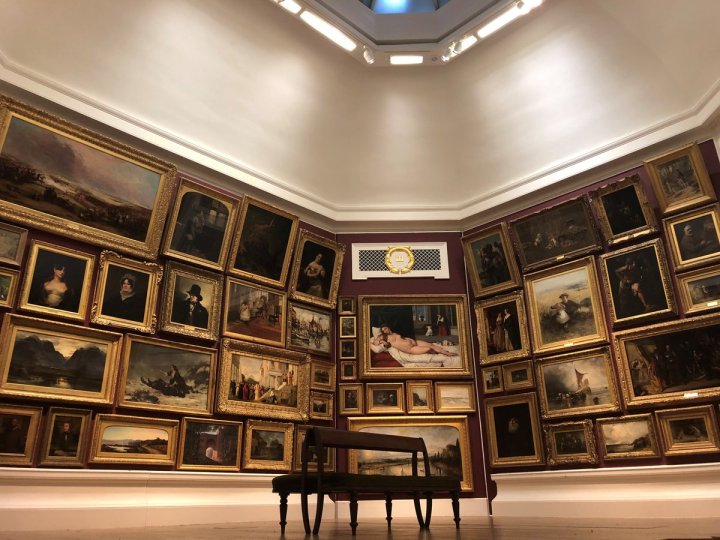
Salon hang with William Etty’s Venus of Urbino.
Call for Papers | Portraiture and Biography

Left: James Boswell by William Daniell, after George Dance, published 10 April 1802 (28 April 1793), NPG D12117; right: Samuel Johnson by Thomas Trotter, published by George Kearsley, published 1782, NPG D13814.
◊ ◊ ◊ ◊ ◊
From the Paul Mellon Centre:
Portraiture and Biography
London 29–30 November 2018
Proposals due by 1 February 2018
An international conference sponsored jointly by the Paul Mellon Centre for Studies in British Art and the National Portrait Gallery.
Biography has always haunted the study of portraiture. Although in recent decades art-historians may have developed a healthy skepticism for the intuitive practice of interpreting portraits with straightforward reference to what is known about the lives of their subjects, the temptation to do so remains strong. Moreover, such is the art-form’s seductive power that even nowadays scholars can still struggle to resist the allure of reading the image of a face as the index of character or mind, and as a corollary, of gauging a portraitist’s mastery in terms of his or her ability to plumb the depths of a sitter’s psyche. These tendencies often appear in their most untrammelled form in analyses of artists’ likenesses of themselves, or of their most intimate acquaintances. Hence the occasion of a major exhibition devoted to Thomas Gainsborough’s portraits of himself and his relations, to be held at the National Portrait Gallery from 22 November 2018 until 23 February 2019, offers a particularly opportune moment to stage a related conference, where critical consideration will be given to the role(s) that the biographical archive might play in portraiture studies going forward.
With the aim of generating a lively and thought-provoking discussion, we would welcome papers that consider portraiture’s fraught relationship with biography without restrictions of time or place, and from the vantage-point of a wide range of disciplines; some of the most interesting recent art-historical work has drawn upon anthropology, microhistory, and material culture studies, for example, though our ambition is to include contributions from across the broadest possible methodological spectrum. Although we would welcome case studies dealing with particular artists or sitters, each proposal should supply clear evidence of a commitment to open up broader questions pertinent to the conference’s overarching theme.
In addition to coinciding with Gainsborough’s Family Album, the conference will take place at a key moment for the National Portrait Gallery, as it develops plans for a major refurbishment of its spaces and the first comprehensive re-presentation of its collection. There could hardly be a better opportunity for colleagues from across the field to think about the role of portraiture in evoking a nation’s history, and to help shape the development and interpretation of the new displays.
Abstracts (of no more than 500 words) for 20-minute papers should be submitted by email to efleming@paul-mellon-centre.ac.uk by 5pm on 1st February 2018. We welcome applications from emerging and established scholars. Please also include a short professional biography.
Organizing Committee: David H Solkin, Lucy Peltz, Mark Hallett, and Sarah Victoria Turner
Exhibition | Painted in Mexico, 1700–1790: Pinxit Mexici
Press relese (5 July 2017) from LACMA:
Painted in Mexico / Pintado en México, 1700–1790: Pinxit Mexici
Fomento Cultural Banamex, Mexico City, 29 June — 15 October 2017
Los Angeles County Museum of Art, 19 November 2017 — 18 March 2018
The Metropolitan Museum of Art, New York, 24 April — 22 July 2018
Curated by Ilona Katzew with Jaime Cuadriello, Paula Mues Orts, and Luisa Elena Alcalá
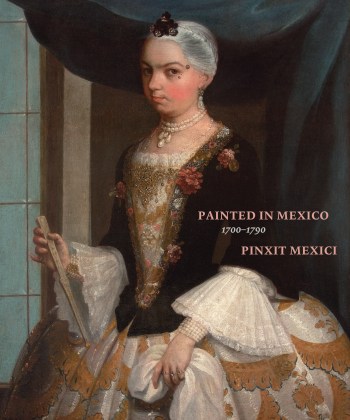
The Los Angeles County Museum of Art presents Painted in Mexico, 1700–1790: Pinxit Mexici, the first major exhibition to reposition the history of 18th-century Mexican painting, a vibrant period marked by major stylistic changes and the invention of compelling new iconographies. Co-organized by LACMA and Fomento Cultural Banamex, A.C. in Mexico City, this exhibition foregrounds the connections between Mexican painting and transatlantic artistic trends while emphasizing Mexican painting’s internal developments and remarkable pictorial output. More than 100 paintings are presented in the exhibition, many on view for the first time and restored for this exhibition.
Painted in Mexico, 1700–1790: Pinxit Mexici is curated by Ilona Katzew, curator and department head of Latin American art at LACMA, with guest co-curators Jaime Cuadriello, Universidad Nacional Autónoma de México, and Paula Mues Orts, Escuela Nacional de Conservación, Restauración y Museografía, both of Mexico City, and Luisa Elena Alcalá, Universidad Autónoma de Madrid of Spain. The exhibition is presented as part of the Getty’s Pacific Standard Time: LA/LA initiative and is one of a handful of historical exhibitions focusing on the legacy of Latin American art before the 20th century.
“This is truly a once-in-a-lifetime undertaking of an engrossing chapter in art history,” said Michael Govan, LACMA CEO and Wallis Annenberg Director. “Over the last six years, the co-curators have traveled all over Mexico to uncover new materials; many restored specially for the exhibition and photographed for the first time. This is a groundbreaking reassessment of the field, and we are proud to be at the forefront of this important undertaking and advancing new scholarship.”
Ilona Katzew, project director and a noted expert in the field, stated, “The 18th century is a particularly rich period in the history of Mexican art, which has not yet received its due attention. In organizing this exhibition, we hope to open up a vista on a sophisticated and innovative body of work, one that is contextually rich and highly rewarding to look at and study, and share our collective enthusiasm for this fascinating chapter of global art history.”
In the 16th century, European artists immigrated to Mexico to decorate newly established churches and complete artistic commissions. Some of these artists and their families formed workshops in Mexico that endured for several generations. By the 17th century, a new generation of artists born in the Americas began to develop their own pictorial styles that reflected the changing cultural climate as well as the desires of their patrons, both religious and secular. The 18th century ushered in a period of artistic splendor as local schools of painting were consolidated, new iconographies were invented, and artists began to group themselves into academies.
During the 18th century, painters were increasingly asked to create mural-size paintings to cover the walls of sacristies, choirs, and university halls, among other spaces. The same artists produced portraits, casta paintings (depictions of racially mixed families), painted folding screens, and finely rendered devotional imagery, attesting to their extraordinary versatility. The volume of work produced by the four generations of Mexican artists that spanned the 18th century is virtually unmatched elsewhere in the vast Hispanic world.
Painters also became more aware of their own contributions, largely owing to the sizable number of pictures that were exported to Europe, throughout Spanish America, and within the viceroyalty itself. This awareness led many educated painters not only to sign their works and emphasize their authorship but also to make explicit references to Mexico as their place of origin through the Latin phrase Pinxit Mexici (Painted in Mexico). This expression eloquently encapsulates the painters’ pride in their own tradition and their connection to larger, transatlantic trends.
The exhibition combines a chronological and thematic approach, and includes seven major sections:
Great Masters introduces the works of some of the leading painters of the day around which others congregated; the notion of a local tradition and intergenerational ties is emphasized. Since the 16th century, educated painters in Mexico City had organized themselves in guilds. By the 18th century, their most distinguished members (some of whom descended from long lines of illustrious painters) also established informal academies. The academy organized by the brothers Juan and Nicolás Rodríguez Juárez around 1722, for example, evidences the artists’ growing interest in revitalizing their art.
Master Story Tellers and the Art of Expression illustrates how works were designed to convey complex stories. Conceived as series, these works decorated the interiors of churches, convents, colleges, and other public spaces, where they became activated through their particular arrangement, including as part of altarpiece-ensembles. During the 18th century narrative painting underwent a resurgence, which is evident in its more organic and idealized (and at times idyllic) sensibility. The artist’s increasing interest in emphasizing domestic interiors and details of everyday life helped to establish a more intimate connection with the viewer.
Noble Pursuits and the Academy explores the efforts of artists throughout the 18th century to form art academies. The introduction of academic principles in Mexico is generally connected with the arrival of Jerónimo Antonio Gil from Spain and the establishment of Mexico’s Royal Academy of San Carlos in 1783. This perspective has overlooked the earlier trajectory of local artists, who long sought to have painting recognized as a noble, as opposed to a mechanical art. In the 18th century painters organized several independent academies (c. 1722, 1754, and 1768), where they actively engaged in discussions about the theory and practice of their art. They also attempted to elevate the status of painting by writing and referencing art treatises, by equating their task with that of the supreme creator, and refashioning their image through their self-portraits.
Paintings of the Land brings together a compelling group of works representing local subjects. The expression “paintings of the land” (pinturas de la tierra) recurs often in contemporary panegyric literature and artistic inventories to describe works unique to Mexico—either made there or representing aspects of life in Mexico. Many of the works included in this section, such as vedute (large-scale paintings of a cityscape or vista), casta paintings (depictions of racially mixed families), folding screens with fête gallant scenes (amorous figures in pastoral settings), and depictions of Indian weddings, are peppered with colorful local elements. The works brilliantly exemplify how Mexican painting could simultaneously fulfill artistic, political, and documentary purposes.
The Power of Portraiture illustrates the various modalities of the portrait genre. In the 18th century, Mexico saw an upsurge in portraiture associated with the economic growth of the viceroyalty, and different social groups, particularly within urban contexts, commissioned artists to paint their likenesses. In a hierarchical society such as New Spain, which placed a premium on nobility of birth, piety, wealth, titles, and merits, portraiture had the power to convey both corporate and personal messages. Through portraiture people could fashion and refashion their identities and project them onto society. Portraiture also fulfilled a genealogical role, designed to preserve the memory of families and institutions—religious and secular. Dress and other attributes became an essential part of the genre.
The Allegorical World looks at a highly inventive group of works that became prevalent in the 18th century. Often commissioned by ecclesiastical orders to instruct in issues of faith, allegorical images are fascinating manifestations of a culture that relied increasingly on its own visual metaphors. These images became particularly popular, in part, because of the versatility of allegorical language that could express many things simultaneously. Allegorical paintings can be broadly divided into four categories: guides to inner spirituality for nuns and monks within cloistered life, teaching or mnemonic tools to aid in the practice of piety, symbols that promoted local devotions, and commentaries to extol (or even criticize) figures of power. Some allegories were conceived as large- scale paintings that covered the walls of different institutions and religious spaces, while many smaller ones were designed to awaken piety within the context of cells and oratories.
Imagining the Sacred features a stunning selection of paintings that copied holy effigies, many considered miraculous. Copying holy images became part of a long tradition that engaged the best painters of the day. Although most subjects were universal, sacred painting saw significant developments in 18th-century Mexico. Painters updated age-old formulas: the resulting richness of themes, pictorial approaches, and devotional complexity is noteworthy. The most visible public images were large paintings representing specific sculptures that were known for performing miracles. Intimate devotional experience was more commonly channeled through smaller paintings, many on copper, in which painters demonstrated great precision and skill. These works reflect the extent to which art, belief, and society were inextricably connected.
Painters in the Exhibition
Juan Francisco de Aguilera (Spain [?], active Mexico, first quarter of the 18th century) Manuel de Arellano (Mexico, 1662–1722)
Ignacio María Barreda (Mexico, c. 1754–1800)
Ignacio Berben (Guadalajara, 1733–c. 1814)
Miguel Cabrera (Mexico, c. 1715–1768)
Francisco Clapera (Spain, 1746–1810, active Peru and Mexico)
Nicolás Correa (Mexico, 1657–c. 1708)
Nicolás Enríquez (Mexico, 1704–c.1790)
Rafael Joaquín Gutiérrez (Mexico, c. 1750–1792)
Fray Miguel de Herrera (San Cristóbal de la Laguna, Canary Islands, 1696–c. 1789, active Mexico)
José de Ibarra (Mexico, 1685–1756)
Andrés López (Mexico, 1727–1807)
Francisco Martínez (Mexico, 1687–1758)
Manuel Montes y Balcázar (Guadalajara, active, c. 1727–1760)
Juan Patricio Morlete Ruiz (Mexico, 1713–1772)
José de Páez (Mexico, 1721–c. 1790)
Rafael Ximeno y Planes (Spain, 1759–1825, active Mexico)
Pascual Pérez (Puebla, d. 1721)
Juan Rodríguez Juárez (Mexico, 1675–1728)
Nicolás Rodríguez Juárez (Mexico, 1677–1734)
Antonio de Torres (Mexico, 1667–1731)
Francisco Antonio Vallejo (Mexico, 1722–1785)
Miguel Jerónimo Zendejas (Puebla, 1720–1815)
José Joaquín de la Vega (Mexico, active second half of the 18th century)
International Scholar’s Day
February 2018
An international scholar’s day will be co-organized with the University of California, Los Angeles (UCLA), enabling established and junior scholars to present new research. Given the extensive restoration undertaken for the exhibition, part of the event will be dedicated to presentations by leading conservators from Mexico, the United States, and Europe, who will discuss the techniques, materials, and pictorial processes employed by Mexican painters, and their wider art historical implications.
Ilona Katzew, ed., with contributions from Ilona Katzew, Luisa Elena Alcalá, Jaime Cuadriello, Ronda Kasl, and Paula Mues Orts, Painted in Mexico, 1700–1790: Pinxit Mexici (New York: Prestel, 2017), 512 pages, ISBN: 978 379135 6778, $85.
Painted in Mexico, 1700–1790: Pinxit Mexici is accompanied by a groundbreaking catalogue that offers the first in-depth assessment of 18th-century Mexican painting, making accessible an extraordinary body of images, alongside compelling new scholarship. The volume is edited by Ilona Katzew with contributions by the exhibition co-curators Luisa Elena Alcalá, Jaime Cuadriello, Ilona Katzew, and Paula Mues Orts. Exquisitely illustrated with newly commissioned photography of never-before-published artworks, the book includes fascinating essays on a number of themes, such as the tradition and innovation of Mexican painting, the mobility of pictures within and outside the viceroyalty, the political role of images, and the emphasis on ornamentation. Rounding out this volume are over 130 catalogue entries that offer new and authoritative interpretations. The book is published by LACMA and Fomento Cultural Banamex, A.C., and DelMonico Books, Prestel. A Spanish edition is also available.
Catalogue cover image: Juan Patricio Morlete Ruiz, Mexico, 1713–1772, Portrait of Doña Tomasa Durán López de Cárdenas (Retrato de Doña Tomasa Durán López de Cárdenas), ca. 1762, Galería Coloniart. Collection of Felipe Siegel, Anna and Andrés Siegel, Mexico City.
New Book | Art, Commerce, and Colonialism, 1600–1800
From Manchester UP:
Emma Barker, ed., Art, Commerce, and Colonialism, 1600–1800 (Manchester: Manchester University Press, 2017), 200 pages, ISBN: 978 15261 22926, £18 / $35.
 The book examines how increasing engagement with the rest of the world transformed European art, architecture and design. It considers how commercial activity and colonial ventures gave rise to new and diverse forms of visual and material culture across the globe. Drawing on a wide range of recent scholarship, it offers a new perspective that challenges Eurocentric approaches.
Emma Barker is Senior Lecturer in Art History at The Open University.
C O N T E N T S
Introduction, Emma Barker
1 From Iberia to the Americas: Hispanic Art of the Colonial Era, Piers Baker-Bates
2 The Golden Age Revisited: Dutch Art in Global Perspective, Emma Barker
3 Creative Interactions: Chinoiserie in Eighteenth-Century Britain, Clare Taylor
4 Transatlantic Architecture: Classicism, Colonialism, and Race, Elizabeth McKellar
Conclusion, Emma Barker
Index
New Book | The Sun King’s Atlantic
From Brill:
Jutta Wimmler, The Sun King’s Atlantic: Drugs, Demons, and Dyestuffs in the Atlantic World, 1640–1730 (Leiden: Brill, 2017), 230 pages, ISBN: 9789004336070, 80€ / $93.
 In The Sun King’s Atlantic, Jutta Wimmler reveals the many surprising ways in which the Atlantic world channeled cultural developments during the age of the Sun King. Although hardly visible for contemporaries at the time, Africa and America were omnipresent throughout early modern France: in the textile industry, pharmaceutics, medicine, scientific methods, religious discourse, and court theatre. The book moves beyond typical plantation crops and the slave trade to illustrate how a focus on Europe challenges us to rethink the place of Africa in the early modern world.
Jutta Wimmler, Ph.D. (2011), University of Graz (Austria), is a researcher and lecturer at the European University Viadrina, Germany. She has published several articles about Africa’s impact on Europe, most recently in the Journal of Religion in Africa.
C O N T E N T S
1 Introduction
2 Sugar and Slaves? French Atlantic Trade before 1730
3 The Fashionable Atlantic: Innovation and Consumption
4 Body Matters: Remedies, Foodstuffs and Cosmetics
5 The Iatrochemical Advantage: Methods for an Expanding World
6 Perfect French Subjects: Staging the Atlantic World
7 Devils and Martyrs: Religious Concepts Travel the Globe
8 Epilogue
New Book | The Image of the Black in African and Asian Art
From Harvard UP:
David Bindman, Suzanne Preston Blier, Henry Louis Gates, Jr., eds., The Image of the Black in African and Asian Art (Cambridge, MA: Belknap Press, 2017), 456 pages, ISBN: 9780674504394, $95 / £70 / €85.
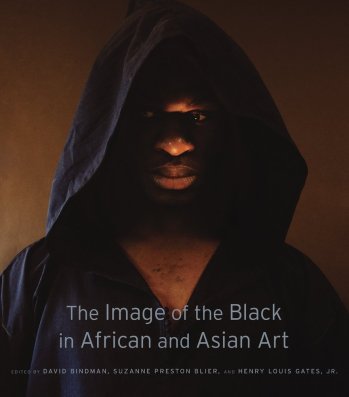 The Image of the Black in African and Asian Art asks how the black figure was depicted by artists from the non-Western world. Beginning with ancient Egypt—positioned properly as part of African history—this volume focuses on the figure of the black as rendered by artists from Africa, East Asia, and the Indian subcontinent. The aesthetic traditions illustrated here are as diverse as the political and social histories of these regions. From Igbo Mbari sculptures to modern photography from Mali, from Indian miniatures to Japanese prints, African and Asian artists portrayed the black body in ways distinct from the European tradition, even as they engaged with Western art through the colonial encounter and the forces of globalization.
This volume complements the vision of art patrons Dominique and Jean de Menil who, during the 1960s, founded an image archive to collect the ways that people of African descent have been represented in Western art from the ancient world to modern times. A half‐century later, Harvard University Press and the Hutchins Center for African and African American Research completed the historic publication of The Image of the Black in Western Art—ten books in total—beginning with Egyptian antiquities and concluding with images that span the twentieth century. The Image of the Black in African and Asian Art reinvigorates the de Menil family’s original mission and reorients the study of the black body with a new focus on Africa and Asia.
David Bindman is Emeritus Professor of the History of Art at University College London.
Suzanne Preston Blier is Allen Whitehill Clowes Professor of Fine Arts and Professor of African and African American Studies at Harvard University.
Henry Louis Gates, Jr., is Alphonse Fletcher University Professor and the Director of the W. E. B. Du Bois Research Institute at the Hutchins Center for African and African American Research at Harvard University.
C O N T E N T S
Preface, David Bindman, Suzanne Preston Blier, and Henry Louis Gates, Jr.
Acknowledgments
Introduction, David Bindman
I. Africa
1 Images of Africans by and of Themselves: Historical and Comparative Factors, Suzanne Preston Blier
2 The Body in African Art, Kristina Van Dyke
3 Masquerade in Sub-Saharan Africa, John Picton
4 The Image of the Black in Early African Photography, Christraud M. Geary
5 The Image of the Black in Modern and Contemporary African Art, Steven Nelson
II. Asia
6 The Image of the Black in Islamic Art: The Case of Painting, Robert Hillenbrand
7 The Image of the Black in India, John McLeod and Kenneth X. Robbins
8 The Image of the Black in Chinese Art, Don J. Wyatt
9 The Image of the Black in Japanese Art: From the Beginnings to 1850, Timon Screech
10 The Image of the Black in Japanese Art: Nineteenth Century to the Present Day, Alicia Volk
Notes
Illustrations
Index
Exhibition | Gods in Color: Polychromy in the Ancient World
From the Fine Arts Museums of San Francisco:
Gods in Color: Polychromy in the Ancient World
Bunte Götter: Die Farbigkeit antiker Skulptur
Glyptothek, Munich, 2003
Liebieghaus Sculpture Collection, Frankfurt am Main, 2008
Legion of Honor Museum, San Francisco, 28 October 2017 — 7 January 2018

Reconstruction (A1) of the so-called Chios kore from the Akropolis in Athens, 2012. Copy of the original: Athens, ca.500 BCE. Crystalline acrylic glass, with applied pigments in tempera. Liebieghaus Skulpturensammlung, Polychromy Research Project, Frankfurt am Main, acquired in 2016 as gift from U. Koch-Brinkmann and V. Brinkmann (Fine Arts Museums of San Francisco).
Gods in Color: Polychromy in the Ancient World will offer an astonishing look at Classical sculpture swathed in their original vibrant colors questioning the perception of an all-white ‘classical’ ideal. Ancient sculpture and architecture from Greece and Rome will be revealed as intended—garishly colorful, richly ornamented, and full of life—along with original sculpture from the Near East, Egypt, Greece, and Rome against the backdrop of the Legion of Honor’s neoclassical building.
To find out more about the exhibition, explore this digital offering from the Liebieghaus in Frankfurt:
In the eighteenth century there was already considerable debate about the extent to which ancient architecture and sculptures were painted. Two centuries later technical investigations with ultraviolet light and glancing light are providing new evidence about ancient polychromy. Investigations carried out in Munich’s Glyptothek in the 1960s resulted in important findings. In the 1980s a group of researchers associated with the archaeologist Volkmar von Graeve studied the polychromy of ancient works of art with the help of modern technological aids. At the time, Vinzenz Brinkmann was a member of von Graeve’s team. Later, as head of the Liebieghaus’s Department of Antiquities, he brought the research subject to Frankfurt.
By now the original painting of hundreds of Greek and Roman artworks around the world has been studied. Thanks to the development of new investigative methods, scholars have meanwhile been able to provide an increasingly precise sense of the kind and extent of the painting. Over the course of centuries of damage owing to wars or weathering it was lost. Even though only scant traces of pigment and scoring have survived, they can provide valuable information. Our newly won understanding of the original polychromy leads in many cases to surprising discoveries!
From FAMSF Publications:
Vinzenz Brinkmann, Renée Dreyfus, and Ulrike Koch-Brinkmann, eds., Gods in Color: Polychromy in the Ancient World (New York: Prestel, 2017), 192 pages, ISBN: 978 379135 7072, $40.
 Although not widely known, antiquities were colored to dazzling and powerful effect. Polychromy—the painting of objects in a variety of hues—was a regular feature of the sculpture and architecture of most ancient cultures, especially in Egypt, Mesopotamia, the Aegean, Greece, and Rome. When such works began to be rediscovered in the eighteenth century after prolonged exposure to the elements, their colored surfaces were often so faded that later sculptors evoked classicism by leaving white marble and bronze surfaces unadorned.
Published on the occasion of an exhibition at the Legion of Honor in San Francisco, Gods in Color: Polychromy in the Ancient World reintroduces the unexpected effect of these bright pigments. Through reconstructions of well-known sculptural works dating from Bronze Age Greece to Imperial Rome, readers can see firsthand how these objects would have appeared when they were first created. Complementing these reconstructions are many fine examples of original antiquities, many with surviving polychromy, from ancient Greece and Rome and beyond to Egypt and the Near East. Rounding out these offerings are breathtaking watercolors of Greece’s landscapes and monuments painted in 1805 and 1806 by English antiquarian Edward Dodwell and Italian artist Simone Pomardi.
This handsome volume features six essays alongside catalogue entries that describe the cultural contexts of the ancient works and the modern technological methods to uncover their original coloration. Vinzenz Brinkmann and Ulrike Koch-Brinkmann offer a history of the research and scholarship of polychromy since the eighteenth century; with Heinrich Piening, they also describe the pigments and techniques used. Renée Dreyfus discusses polychrome examples from Egypt and the Near East to demonstrate the strong influences these cultures left on the classical world. Oliver Primavesi recounts the dilemma of eighteenth-century German archaeologist Johann Joachim Winckelmann, who at once celebrated the “pure” form of classical Greek and Roman sculpture but became increasingly aware that such works were originally colored and ornamented. John Camp describes the Greek tour of Dodwell and Pomardi as they depicted classical monuments, some of which still retained their original color.
An enduring scholarly record, Gods in Color reveals how ancient sculpture is incomplete without color. White or monochrome sculpture, an inherited notion of the classical ideal, would have been as strange to the ancients as these color reconstructions might seem to us today.
• Vinzenz Brinkmann is head of the department of antiquities at the Liebieghaus Sculpture Collection, Frankfurt and professor of classical archaeology at Goethe University, Frankfurt.
• Renée Dreyfus is curator in charge of ancient art and interpretation at the Fine Arts Museums of San Francisco.
• Ulrike Koch-Brinkmann is an archaeologist of classical antiquity based in Frankfurt. She is also assistant lecturer of classical archaeology at Georg August University in Göttingen.
• John Camp is the Stavros Niarchos Foundation Professor of Classics at Randolph-Macon College in Ashland, Virginia and the director of the Agora excavations in Athens.
• Martin Chapman is curator in charge of European decorative arts and sculpture at the Fine Arts Museums of San Francisco.
• Louise Chu is associate curator of ancient art and interpretation at the Fine Arts Museums of San Francisco.
• Jens Daehner is associate curator of antiquities at the J. Paul Getty Museum in Los Angeles.
• Jonathan Elias is an Egyptologist and the director of the Akhmim Mummy Studies Consortium.
• Kenneth Lapatin is curator of antiquities at the J. Paul Getty Museum in Los Angeles.
• Rebecca Levitan is a PhD student in the history of art department at the University of California, Berkeley.
• Heinrich Piening heads the department of restoration and conservation, furniture and art objects of wood, at the Bavarian Department of State-Owned Palaces, Gardens, and Lakes in Germany.
• Oliver Primavesi is professor of Greek philology and philosophy at the Ludwig-Maximilian University in Munich. In 2007 he was a recipient of the Gottfried Wilhelm Leibniz Prize, an important research award given by the German Research Foundation.
• Andrew Stewart is Nicholas C. Petris Professor of Greek Studies and professor of ancient Mediterranean art and archaeology at the University of California at Berkeley and curator of Mediterranean archaeology at UCB’s Phoebe A. Hearst Museum of Anthropology.










leave a comment