Exhibition | Works from the Nationalmuseum in Stockholm

François Boucher, The Triumph of Venus, 1740, oil on canvas, 130 x 162 cm
(Nationalmuseum, Stockholm)
◊ ◊ ◊ ◊ ◊
Press release (24 December 2015) from The Morgan (with information for the show at the Louvre available here):
Paintings and Drawings from the Nationalmuseum in Stockholm (title forthcoming)
Musée du Louvre, Paris, 20 October 2016 — 16 January 2017
The Morgan Library & Museum, New York, 5 February — 14 May 2017
Seventy-six masterpieces of painting and drawing from the Nationalmuseum in Stockholm will make a rare appearance in New York beginning February 5, 2017 at the Morgan Library & Museum. The Nationalmuseum is Sweden’s largest and most distinguished museum, and it is lending to the Morgan outstanding works by Dürer, Raphael, Rubens, Rembrandt, Antoine Watteau, and François Boucher, among many celebrated artists. It is the first collaboration between the two institutions in almost fifty years.
“We are delighted to host this exhibition of treasures from the Nationalmuseum of Stockholm,” said Colin B. Bailey, director of the Morgan Library & Museum. “The selection of paintings and drawings is of extraordinary quality. Fine examples of work from the Italian, French, and Northern European schools are represented, with a group of sixty master drawings forming the heart of the show. We are deeply grateful to the museum’s director general Berndt Arell and his curatorial staff for making this collaboration possible.”
The exhibition will run through May 14, 2017 and continues a tradition at the Morgan of presenting drawings and other work from some of Europe’s most august institutions. Over the last several years, the Morgan has featured critically acclaimed shows from the Uffizi in Florence, the Louvre, and the Staatliche Graphische Sammlung in Munich.
The Nationalmuseum’s core holdings were assembled by Count Carl Gustav Tessin (1696–1770), a diplomat and one of the great art collectors of his day. The son and grandson of architects, Tessin held posts in Vienna, Berlin, and Paris, where he came into contact with the leading Parisian artists of the time and commissioned many works from them. By the time he left Paris in 1742, he had amassed a truly impressive collection of paintings and drawings.
Among the fourteen paintings in the exhibition are three commissioned by Tessin and exhibited at the 1740 Parisian Salon. These include Boucher’s Triumph of Venus, Jean-Baptiste Oudry’s Dachshound Pehr with Dead Game and Rifle, and a Portrait of Count Tessin by Jacques-André Joseph Aved, in which the collector is shown among his art, books, and medals. The group of paintings will also include six works by Jean-Siméon Chardin.
The drawings in the exhibition include works by Italian masters such as Domenico Ghirlandaio, Raphael, Giulio Romano, and Annibale Carracci. Northern European artists are represented by Dürer, Hendrik Goltzius, Peter Paul Rubens, Rembrandt, and Anthony van Dyck, among others. The French drawings begin with Primaticcio and practitioners of the Fountainebleau school and include works by Jacques Callot and Nicholas Poussin, as well as Count Tessin’s French contemporaries, Boucher, Chardin, and Antoine Watteau.
In the years following his return from France, Tessin encountered financial difficulties and was forced to sell much of his collection, with many of the finest works being acquired by the Swedish royal family. After the Count’s death, Swedish King Gustav III purchased most of his remaining works. Tessin’s holdings thus formed the nucleus of the Royal Museum of Sweden when it was created in 1794. It was later renamed the Nationalmuseum.
New Book | The Forge of Vision: A Visual History of Modern Christianity
From the University of California Press:
David Morgan, The Forge of Vision: A Visual History of Modern Christianity (Los Angeles: University of California Press, 2015), 407 pages, ISBN: 978-0520286955, $40 / £28.
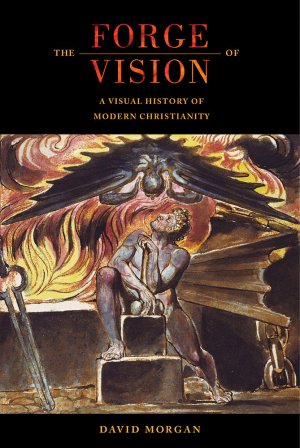 Religions teach their adherents how to see and feel at the same time; learning to see is not a disembodied process but one hammered from the forge of human need, social relations, and material practice. David Morgan argues that the history of religions may therefore be studied through the lens of their salient visual themes. The Forge of Vision tells the history of Christianity from the sixteenth century through the present by selecting the visual themes of faith that have profoundly influenced its development. After exploring how distinctive Catholic and Protestant visual cultures emerged in the early modern period, Morgan examines a variety of Christian visual practices, ranging from the imagination, visions of nationhood, the likeness of Jesus, the material life of words, and the role of modern art as a spiritual quest, to the importance of images for education, devotion, worship, and domestic life. An insightful, informed presentation of how Christianity has shaped and continues to shape the modern world, this work is a must-read for scholars and students across fields of religious studies, history, and art history.
David Morgan is Professor of Religious Studies at Duke University, with a secondary appointment in the Department of Art, Art History, and Visual Studies. He is the author of The Embodied Eye: Religious Visual Culture and the Social Life of Feeling and The Sacred Gaze: Religious Visual Culture in Theory and Practice, and coeditor of the journal Material Religion.
◊ ◊ ◊ ◊ ◊
C O N T E N T S
List of Illustrations
Acknowledgments
Introduction
I Word and Image
1 The Shape of the Holy
2 The Visible Word
II The Traffic of Images
3 Religion as Sacred Economy
4 The Agency of Words
5 Christianity and Nationhood
6 The Likeness of Jesus
7 Modern Art and Christianity
Conclusion
Notes
Selected Bibliography
Index
2015 Georgian Group Architectural Awards

Richard Samuel Coade, Belmont (Lyme Regis, Dorset), 1785, the home of Eleanor Coade; appropriately the house showcases the eponymous artificial stone she pioneered.
◊ ◊ ◊ ◊ ◊
The 2015 Georgian Group Architectural Awards were announced earlier in December. This year two joint winners share the award for Restoration of a Georgian Interior: the private apartment at Sir John Soane’s Museum and the Soane Tribune at Wotton House. The award for Restoration of a Georgian Building in an Urban Setting recognizes Belmont House in Lyme Regis (hooray for Eleanor Coade and the eponymous artificial stone she pioneered!). –CH
From The Georgian Group:
Belmont House in Lyme Regis is a 1785 maritime villa looking out over the Cobb. John Fowles wrote The French Lieutenant’s Woman here. By the time he died it was in a bad state, the gardens overgrown and the structural condition of the building poor. The Landmark Trust acquired it and took the decision, at once brave and controversial, to restore it to the form known by Mrs Coade, creator of the artificial stone that bears her name. That involved demolishing what was left of the substantial Victorian and later extensions in order to make it a villa in the round. The project has been informed by meticulous building analysis and documentary research and the building is now again a thing of real beauty, a delightful monument to one of the great female entrepreneurs of the Georgian period.
The full list of awards is available here»
Exhibition | Enigmas: The Art of Bada Shanren

Bada Shanren (Zhu Da), Lotus and Ducks (detail), ca. 1696, Qing dynasty; hanging scroll, ink on paper
(Freer Gallery of Art, Smithsonian, F1998.45)
◊ ◊ ◊ ◊ ◊
Press release (18 June 2015) for the exhibition now on view at The Freer:
Enigmas: The Art of Bada Shanren (1626–1705)
Freer Gallery of Art, Washington, D.C., 20 June 2015 — 3 January 2016
Born a prince of the Ming imperial house, Bada Shanren survived the military conquest of his dynasty and lived as a Buddhist monk for 30 years before emerging into fame as a professional artist. His storied life leaves many questions unanswered, and his masterpieces of painting and calligraphy are renowned in Chinese art for their daring idiosyncratic approaches to style, composition and meaning. On view from June 20, 2015 until January 3, 2016, at the Smithsonian’s Freer Gallery of Art, Enigmas: The Art of Bada Shanren (1626–1705) features 43 of the artist’s works, on public display for the first time in more than a decade. Enigmas is the final exhibition of the Freer’s celebrated collection of Chinese paintings before the museum closes for major renovations in 2016.

Bada Shanren (Zhu Da), Two Geese, ca. 1700, Qing dynasty; hanging scroll, ink on paper, 184.1 x 90.6 cm (Freer Gallery of Art, Smithsonian, F1998.47)
“The Freer Gallery of Art owns the largest, most diverse and arguably the most significant collection of Bada Shanren’s art outside China,” said Stephen Allee, associate curator for Chinese painting and calligraphy at the Freer and Sackler Galleries. “The enigmatic quality of Bada Shanren’s work brings one back to his art again and again. Trying to fathom some ambiguous aspect of a painting or calligraphy, one is convinced there is a key to unlocking the mysteries, cracking the code and that maybe this will be the time one stumbles across it. Of course, one never really finds the answer—Bada Shanren is too self-contained an artist for that—but the quest is always rewarding, as each careful viewing invariably yields new pleasures and discoveries.”
Particularly significant among the artist’s surviving works is the album Scripture of the Inner Radiances of the Yellow Court from 1684, which bears his earliest known signature using the name ‘Bada Shanren’. Similarly, Lotus is a rare early album done ca. 1665 while the artist was still a Buddhist monk. Its ingenuity of composition foretells the stylistic developments of his later works.
Bada Shanren developed a unique visual vocabulary full of personal symbolism and artistic gesture, and he frequently included unusual elements and juxtapositions that were deliberately jarring or obscure. Many works possess great graphic power, but the meaning behind them is elusive, leaving viewers puzzled and intrigued. Although outwardly playful at times, some paintings reveal a troubled psychological edge, an innately dark outlook on his own fortunes and the condition of the world at large, that he concealed behind a surface of simplicity and humor.
In Enigmas, visitors have an opportunity to view a broad selection of Bada Shanren’s work from his time as a monk in the 1660s, through his peak professional years in the 1680s and ’90s, to his late period in the early 1700s, when he became a hermit seeking solitude and harmony with the natural order.
◊ ◊ ◊ ◊ ◊
A catalogue from a 2003 exhibition was republished in 2013 by Orchid Press:
Joseph Chang, Bai Qianshen, and Stephen Allee, In Pursuit of Heavenly Harmony: Paintings and Calligraphy by Bada Shanren (Hong Kong: Orchid Press, 2013), 222 pages, ISBN: 978-9745240308, $60.
 Bada Shanren, the enigmatic, eccentric monk-painter also known as Zu Da, created a wealth of beautiful and important paintings and calligraphy over the course of his life (1626–1705). A princely descendent of the Ming dynasty (1368–1644) imperial house, Bada Shanren developed a distinctive, evolving individual style of painting that had a profound and lasting influence on other calligraphers. Two prominent collector-scholars, Wang Fangyu and Sum Wai, were devoted to the collection and study of Bada Shanren’s oeuvre. Their gift to the Freer Gallery of Art of twenty superb works by Bada Shanren and an extensive research collection of around 1,900 items, together with a further purchase of thirteen works from their collection, have made the Freer the unrivaled center for the exhibition and study of Bada’s art. In the spring of 2003, an exhibition of these works will be on display in the Freer Gallery of Art; this book accompanies the exhibition and will have a life well beyond it, as it documents an important part of the museum’s permanent collection. Text in English, with glossary and detailed descriptions of exhibits in bilingual English/Chinese.
Call for Papers | Allegory and Topography
From H-ArtHist:
Allegory and Topography in Early Modern Period (16th–18th Centuries)
Institut national d’histoire de l’art, Paris, Paris, 9–10 June 2016
Proposals due by 10 February 2016
Organized by Étienne Jollet and Antonella Fenech Kroke
The arts of the early modern period, from the Renaissance to the end of the eighteenth century, attach great importance to the allegory as a mode of visual evocation of the invisible universal—be it the Christian divine or the human values. Defined in this manner, the notion of allegory appears far removed from the understanding of topography intended as expression of the specificity of a ‘place’, all together visible, physical and particular. However, this tension between the universal and the particular, the invisible and the visible, the intangible and the tangible, figure and place, meaning and representation, characterizes the culture and the arts of early modern. During this period, Western Europe thinks out a new order of the world and, at the same time, endeavors to describe it and to figure it through complex symbolic representations set in a significant space, which then is ‘place’.
Four major questions constitute the principal axes of this symposium.
• The first one is the place of allegory. Allegory deploys its figures in a meaningful extension and in variable ways—for instance, in the tension between allegory and personification.
• The second issue concerns allegory of ‘place’ (but also allegory of specific places): this dimension is especially important because of the constitution, since the Renaissance, of increasingly strong political entities gradually defining their boundaries, until the appearance of modern notion of borders at the end of the eighteenth century.
• The third point focuses on the relation and on the tension between allegory and the world. The early modern period is characterized by a renewal of comprehension of the world and by the discoveries of regions of the Earth still unknown to Europeans: in this particular context, how does allegory challenge the new topographical knowledge and, first and foremost the development of cartography? But beside this kind of issues, one can also question the links between allegory and other ‘worlds’, as those intangible of the soul which shape other visual
forms of allegorical cartographies.
• The fourth question concerns allegorical spaces, that is to say the space as a notion provided by different meaning but irreducible to a precise signification: mainly the landscape in which an allegorical meaning is just potentially to be found in natural features (for example, the entrance of a grotto, a waterfall, a volcano, etc.) allowing sometimes the representation of the nature’s sublime to emerge.
This call for papers is an invitation to all scholars working in the field in a plural and interdisciplinary perspective. We encourage to propose submissions for the conference, both emerging and established researchers. Please send your proposal, in English or French (max. 500 words including a short bibliography) with a one-page curriculum vitae to the organizers: allegory.topography@gmail.com. The deadline for the call for paper is February 10, 2016.
The symposium is sponsored by the HiCSA, University Panthéon-Sorbonne and the Centre André Chastel (UMR 8150), University Paris-Sorbonne.
Exhibition | Under the Guillotine: James Gillray

◊ ◊ ◊ ◊ ◊
From Metropolitan State University of Denver:
Under the Guillotine: James Gillray and Contemporary Counterparts
Center for Visual Art, Metropolitan State University of Denver, 18 December 2015 — 19 March 2016
Curated by Arthur Gilbert and Cecily Cullen
The Center for Visual Art, for the first time in its history, is presenting work that dates back more than two hundred years in Under the Guillotine: James Gillray and Contemporary Counterparts. Over 60 original hand-colored etchings will be shown from the collection of Arthur Gilbert, professor at the University of Denver. London artist James Gillray (1756–1815), hailed as the father of modern caricature, was not reserved in his biting critique of European politics and social norms of his day. In this work we see Gillray’s dark humor unleashed at the expense of the royal family, the institution of marriage and healthcare, among other current issues.
Although Gillray’s etchings date back over 200 years, the themes are familiar to contemporary society, highlighting the cyclical nature of history. In response to the ongoing relevance of Gillray’s subject matter, a contemporary take on political satire is presented by the work of three living artists, Molly Crabapple, Chris Dacre, and Deb Sokolow. These artists wield wit and irony in their critique of today’s political and social norms.
New York artist and writer Molly Crabapple is a contributing editor for VICE magazine. Her illustrations take a line from Gillray’s brand of satire, pointing out the ridiculous and unjust with irreverence. Illustrations in the exhibition draw from her press tour of Guantanamo Bay prison and other articles in VICE and Vanity Fair, in which she targets Donald Trump and ISIS. Crabapple’s memoir, Drawing Blood, will be released in December 2015.
The work of Chris Dacre reflects upon his own experience in the US military. Shining a light on the hypocrisy of war glorification and recruiting techniques targeted at the naïve, Dacre’s toy-sized porcelain tanks and pirouetting soldiers beckon the curious to play at the game of war. His installation also includes lithographs depicting war scenes emblazoned with commands to “Be A Man!” or “Do Something for Once in Your Life,” sentiments felt if not heard once the game of war becomes reality.
Chicago-based artist Deb Sokolow combines fiction and humor to create work that parallels real life events and characters. For this exhibition, Sokolow is contributing text-based works focused on the conspiracy theories swirling around Denver International Airport and the shady campaign strategy of a fictional politician.
The work of James Gillray was curated by Arthur Gilbert and CVA Managing Director and Curator Cecily Cullen. The contemporary response was curated by Cecily Cullen.
Exhibition| Salon Style: French Portraits
From the National Museum of Women in the Arts:
Salon Style: French Portraits from the Collection
National Museum of Women in the Arts, Washington, D.C., 29 January — 22 May 2016

Elisabeth Louise Vigée-LeBrun, Portrait of Princess Belozersky, 1798 (National Museum of Women in the Arts)
The biennial Salon of the Royal Academy of Painting and Sculpture in Paris was the preeminent exhibition venue for artists in the 18th century. In order to exhibit their work, artists had to be members of the Academy. Artists were voted in by other members after being presented formally by a current academician. For women, this was doubly challenging: their work had to be found as worthy as that of their male peers despite not having equal access to artistic training, and the total number of female members allowed at any one time was limited to four.
Élisabeth Louise Vigée-LeBrun and Adélaïde Labille-Guiard made history on May 31, 1783, when they were both admitted into the Academy. However, while Labille-Guiard was accepted via the standard application process, Vigée-LeBrun’s acceptance came about under different circumstances. The Academy was compelled to admit her under an edict from King Louis XVI, whose wife, Marie Antoinette, employed Vigée-LeBrun as a portraitist. With the admission of Labille-Guiard and Vigée-LeBrun in 1783, the Academy reached its quota for women artists, together with the portrait and still-life painter Anne Vallayer-Coster and miniaturist Marie-Thérèse Reboul Vien.
Perhaps unsurprisingly, works by women who exhibited in the Salon were compared and judged against one another, as were their characters. By placing themselves in the public sphere, Vigée-LeBrun, Labille-Guiard, and other women artists risked upsetting societal expectations, which held that virtuous women belonged solely to the private, domestic sphere. Despite this risk, these artists persisted in exhibiting in the Salon throughout the rest of the 18th century. This focus exhibition examines these women and their art as well as their artistic legacies—particularly that of Élisabeth Louise Vigée-LeBrun.
Exhibition | Coffee in Kütahya Tiles and Ceramics
From the Pera Museum (part of Google’s Cultural Institute Art Project) . . .
Coffee Break: The Adventure of Coffee in Kütahya Tiles and Ceramics
Online exhibition, Pera Müzesi, Istanbul

French School, Enjoying Coffee, first half of the eighteenth century, oil on canvas, 112 x 102 cm (Istanbul: Pera Museum)
Discovered in Ethiopia as the ‘magic fruit’ and reaching the land of the Ottomans through Yemen in the 15th century, coffee soon assumed its place as a prestigious beverage in the palace and wealthy households. Over time, coffee not only generated its own rituals and ceremonies, but also played an instrumental role in the development of social life. This unique selection from the Suna and İnan Kıraç Foundation Kütahya Tiles and Ceramics Collection investigates the various routines, rituals, and relationships centered on coffee, as well as concepts associated with modernism, such as public space, social roles, and economics, through an examination of coffee culture and Kütahya ceramic production, which largely contributed to its development.
As the second most important center of ceramic production after İznik during the Ottoman era, Kütahya witnessed intensive ceramic production in the Phrygian, Hellenistic, Roman, and Byzantine periods, and has upheld this art form to date with traditional methods. Having reached its zenith in the 17th and 18th centuries in terms of creativity, creativity, the ensuing years witnessed a decline in variety and production rate of Kütahya tiles and ceramics. It was once again revived in the late 19th century and, standing somewhere between İznik and Çanakkale ceramics as ‘urban art’ became an integral part of the Ottoman art mosaic with its broad product range and continuity.
Enter the online exhibition here»
Famous Golf Portrait Sells at Bonhams
Press release (10 December 2015) from Bonhams:

Lemuel Francis Abbott, Portrait of Henry Callender, 1790s.
[Last week] Bonhams sold one of the most famous golfing paintings in the world for £722,500. Lemuel Francis Abbott’s The Portrait of Henry Callender standing in a landscape, in the red coat of Captain General of the Blackheath Golf Club and holding a putter is now the most valuable portrait of golf ever sold at auction [sale 22645, lot 47]. Also in the Old Master Paintings sale at Bonhams London was an extremely rare iron headed putter from around 1780, almost certainly the same club featured in the portrait, which sold for £62,500. Both lots went to the same buyer in the packed saleroom.
Painted between 1790 and 1798, Henry Callender’s portrait is one of the earliest golf paintings of an identified sitter. Prints were made of the work in 1812 after Callender’s death and copies have hung in golf clubs and private collections worldwide for centuries. The original painting has hung at the Royal Blackheath Golf Club for more than 150 years, watching over the famous ‘Wee Dinners’ in the clubhouse. Traditionally, guests enjoyed haggis, neeps and tatties before hitting golf balls out of the window onto the 18th green from the dining room table. The Royal Blackheath has sold the painting to raise funds for the Club’s acquisition of the freehold of its course and clubhouse from The Crown Estate—a one-off opportunity to ensure its future. “Working with this painting has taken our department on a fascinating journey through British cultural history,” said Andrew McKenzie, Bonhams Director of Old Master Paintings. “A Scottish expatriate, Henry Callender was both connoisseur and sociable bon viveur and his charisma shines through this charming painting. The sale marked an incredibly exciting opportunity for golfing enthusiasts all over the world.”
Other highlights of the sale included a number of lots which sold for well over their pre-sale estimates. A winter landscape by Gysbrecht Leytens sold for £110,500, more than five times its estimate of £20,000–30,000, while a still life from the workshop of Jan Brueghel the Younger smashed its estimate of £30,000–50,000, selling for £86,500. An early 16th-century German School drawing, Portrait of a Gentleman, bust-length, in a red hat, also sold for £35,000, nearly ten times its pre-sale estimate of £4,000–6,000.
Call for Papers | Rethinking Pictures: A Transatlantic Dialogue
From H-ArtHist:
Rethinking Pictures: A Transatlantic Dialogue
Paris, 19–20 May 2016
Proposals due by 25 January 2016
On the occasion of the launch of Picturing, the first volume of the Terra Foundation Essays, a new publication series exploring themes of critical importance to the history of arts and visual culture of the United States, the Deutsches Forum für Kunstgeschichte, Paris, and the Terra Foundation for American Art are jointly organizing a conference that will further the transatlantic dialogue about what pictures are and what they do.
Since the 1980s, theories of visual studies in Anglo-American scholarship and of Bildwissenschaft in German art history have expanded the field of potential subjects for study, building an extensive body of literature and introducing innovative methodologies and approaches. Developed nearly contemporaneously, these theories about the nature and reception of images have run parallel to one another. While on the Anglophone side visual studies have branched out to a wide range of media following a socio-critical impetus, Bildwissenschaft finds origins in Aby Warburg’s methods and (among other approaches) is notably nourished by a hermeneutic perspective. Over the last decade on both sides of the Atlantic, new avenues of inquiry have questioned the purely visual nature of images to consider them as objects that possess agency or vitality in and of themselves. Pictures are now understood as inviting complex experience in which the entire body, not only the eye, is solicited, and as invoking multiple temporalities, by collapsing past and present. Attention is called to the materials that constitute the object world and the ways in which their circulation creates social relationships that become part of their meaning over time. In alignment with object-centered approaches in anthropology, material culture, media studies, and philosophy, recent theories of the visual have raised questions of affect, subjectivity, and medium in Anglo-American scholarship, while socio-historical considerations have gained particular ground in the German literature. As renewed attention to the art work’s “materiality” shifts the terms of investigation, this conference invites speakers to reflect on the differences and convergences between the intellectual traditions of visual studies and Bildwissenschaft. Are there ways to think about pictures anew by bringing these models more closely together? Does the move away from visuality towards the material offer possibilities for overcoming early differences between these two approaches?
We seek proposals for 20-minute talks introducing new ideas and propositions. We especially welcome submissions from early- and mid-career scholars. Presentations are encouraged to focus on specific objects and historical conditions in order to anchor theoretical questions. While binary considerations of comparative methodologies and the scope of national traditions will certainly arise, the discussion will be plural and interdisciplinary, inviting reflections on the various forms of study of the visual arts in Europe, the United States, and beyond. Please submit abstracts no longer than 500 words in English along with a CV, to rethinkingpictures@gmail.com by January 25, 2016. The symposium will cover travel and lodging. Selected participants will be notified by February 15, 2016.










leave a comment