New Book | The Self-Portrait: A Cultural History
From Thames & Hudson:
James Hall, The Self-Portrait: A Cultural History (London: Thames & Hudson, 2014), 288 pages, ISBN 978-0500239100, £25.
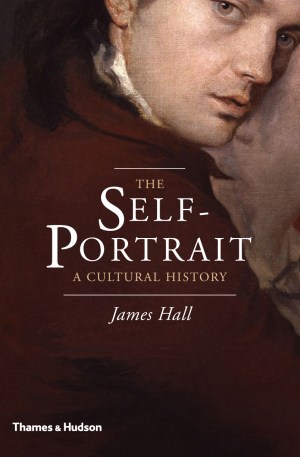 In this broad cultural survey, art historian and critic James Hall brilliantly maps the history of self-portraiture, from the earliest myths of Narcissus to the prolific self-image-making of contemporary artists.
His intelligent and vivid account shows how artists’ depictions of themselves have been part of a continuing tradition that reaches back for centuries. Along the way he reveals the importance of the medieval ‘mirror craze’; the explosion of the genre during the Renaissance; the confessional self-portraits of Titian and Michelangelo; the role of biography for serial self-portraitists such as Courbet and van Gogh; themes of sex and genius in works by Munch, Bonnard and Modersohn-Becker; and the latest developments of the genre in the era of globalization.
The full range of self-portraits is covered here, from comic and caricature self-portraits to ‘invented’ or imaginary ones, as well as key collections of self-portraiture such as that of the Medici in Florence. Throughout, Hall asks why—and when—artists have chosen to make self-portraits, and looks deeply into the worlds and mindsets of the artists who have created them.
Comprehensive and beautifully illustrated, the book features the work of a wide range of artists including Alberti, Caravaggio, Courbet, Dürer, Emin, Gauguin, Giotto, Goya, Kahlo, Koons, Magritte, Mantegna, Picasso, Raphael, Rembrandt and Warhol. Offering a rich and lively history, The Self-Portrait is an essential read for all those interested in this most enduringly popular and humane of art forms.
James Hall is an art critic and historian whose previous books include The World as Sculpture: The Changing Status of Sculpture from the Renaissance to the Present Day; Michelangelo and the Reinvention of the Human Body; Coffee with Michelangelo; and The Sinister Side: How Left-Right Symbolism Shaped Western Art.
Exhibition | Figures of Empire: Slavery and Portraiture
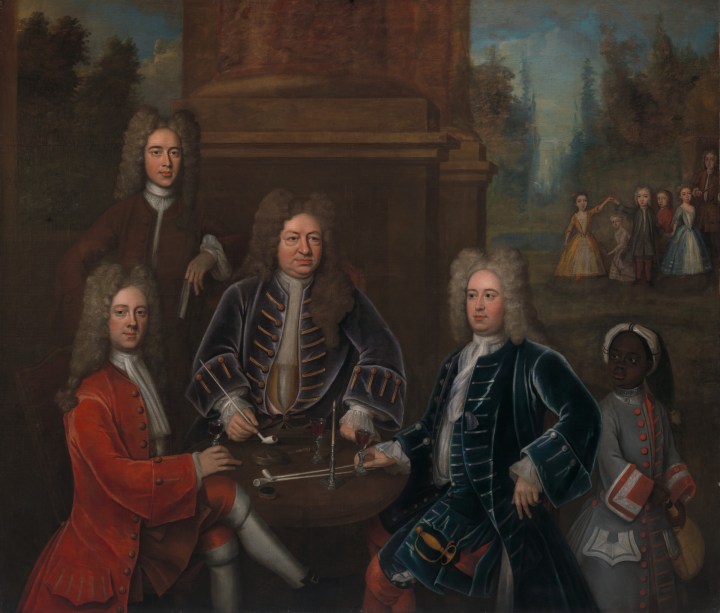
Artist unknown, Elihu Yale, the 2nd Duke of Devonshire, Lord James Cavendish, Mr. Tunstal, and an Enslaved Servant, ca. 1708, oil on canvas (New Haven: Yale Center for British Art, Gift of the 11th Duke of Devonshire)
◊ ◊ ◊ ◊ ◊
Press release from the YCBA:
Figures of Empire: Slavery and Portraiture in Eighteenth-Century Atlantic Britain
Yale Center for British Art, New Haven, 2 October 2014 — 14 December 2014
Curated by Esther Chadwick, Meredith Gamer, and Cyra Levenson
This October, the Yale Center for British Art will shed new
light on representations of slavery in Britain through more than sixty paintings, sculptures, prints, drawings, and decorative objects. Figures of Empire: Slavery and Portraiture in Eighteenth-Century Atlantic Britain will examine the ways in which portraiture reflected the perceptions, attitudes, and contradictions of slavery at the time.

Sir Joshua Reynolds, Charles Stanhope, 3rd Earl of Harrington, 1782 (New Haven: Yale Center for British Art)
The rise of the British Empire during the eighteenth century, fueled by enslaved labor on plantations in the Caribbean and the mainland of North America, contributed to a period of economic and cultural growth. It also brought unprecedented numbers of Africans and people of African descent, both enslaved and free, to Britain. Figures of Empire explores the impact of these developments on the most popular artistic genre of the time: the portrait.
In eighteenth-century Britain, portraits were a principal means of self- representation. Sitters conveyed information about themselves in a variety of ways—through clothing, setting, props, and, often, in relation to subordinate figures, such as servants or slaves. In many cases, these figures were modeled after life; however, in the eighteenth century, they were rarely regarded as subjects in their own right. By contrast, this exhibition challenges us to consider all of the figures depicted within a given portrait as individuals with histories and as ‘figures of empire’—as people whose lives were shaped by British imperialism and the institution of transatlantic slavery. Figures of Empire asks us to think again about what exactly a portrait is and how the answer to this question might change over time.
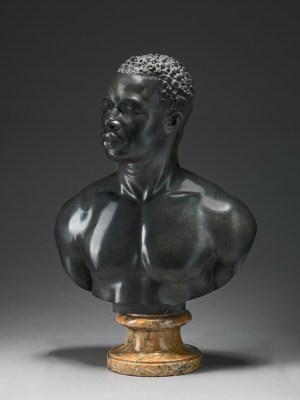
Studio of Francis Harwood, Bust of a Man, ca. 1758, black limestone on yellow marble socle (New Haven: Yale Center for British Art, Paul Mellon Collection)
The exhibition opens with a selection of early eighteenth-century portraits, maps, and sculptures that trace Britain’s expanding commercial empire and engagement with the institution of transatlantic slavery. Anchoring this display is an important and rarely exhibited group portrait that includes Elihu Yale, the founding benefactor of Yale University, along with an enslaved servant. The next section focuses on the role and representation of slavery in a number of mid-century portraits and conversation pieces, including William Hogarth’s Portrait of a Family (ca. 1735) and Francis Harwood’s remarkable sculpted Bust of a Man (1758). The exhibition continues with an exploration of imagery produced within the context of abolitionism later in the century, examining the particular impact of the antislavery movement on the practice of Britain’s leading portraitist, Sir Joshua Reynolds. Finally, the exhibition concludes by highlighting a number of cases in which portraiture became a means for some of African birth and descent who crossed the Atlantic aboard slave ships to forge new identities as both black and British.
The exhibition presents the portraits and their historical context through a wide range of media and art forms. Selected primarily from the Center’s holdings, the display also will be enriched by loans from other Yale collections, and from the National Gallery of Canada, Ottawa.
Figures of Empire takes its place in a new body of scholarship and critical engagement with the legacy of slavery, including the recent high-profile films Twelve Years a Slave (2013) and Belle (2014). It also expands upon conversations begun by prior scholarly publications and exhibitions at the Center, most significantly Art and Emancipation in Jamaica: Isaac Mendes Belisario and his Worlds (2007). While Art and Emancipation focused on slavery in British colonial Jamaica, this exhibition will turn its sights to Britain.
The exhibition includes a series of interviews with academic and curatorial scholars, as well as artists, to help place the works of art in a contemporary context. The interviews will be presented as part of an interactive presentation, accessible in the exhibition and on the Center’s website. In addition, a series of related programs, including lectures, exhibitions, a conference, and a film screening, is taking place across Yale University. Highlights include a pendant exhibition entitled Prospects of Empire: Slavery and Ecology in Atlantic Britain at the Lewis Walpole Library, and a major international conference planned in partnership with The Gilder Lehrman Center for the Study of Slavery, Resistance, and Abolition, entitled Visualizing Slavery and British Culture in the Eighteenth Century.
Figures of Empire has been organized by the Center and curated by Esther Chadwick and Meredith Gamer, PhD candidates in the history of art at Yale University, and Cyra Levenson, Associate Curator of Education at the Yale Center for British Art.
◊ ◊ ◊ ◊ ◊
Figures of Empire: Opening Panel Discussion
Yale Center for British Art, New Haven, 8 October 2014, 5:30
A conversation with Tim Barringer, Paul Mellon Professor of the History of Art, Yale University; Kobena Mercer, Professor, History of Art and African American Studies, Yale University; and Titus Kaphar, artist.
Exhibition | Prospects of Empire: Slavery and Ecology

H. Cock, after prints included in Captain John Gabriel Stedman, Narrative of a Five Years Expedition against the Revolted
Negroes of Surinam, from the year 1772 to 1777, elucidating the history of that country and describing its productions
(London, 1796). Left: after William Blake, The Skinning of the Aboma Snake, shot by Capt. Stedman. Right: after Benedetti,
Indian Female of the Arrowauka Nation. Though originally appearing in separate volumes of Stedman, the two images
were here printed together.
◊ ◊ ◊ ◊ ◊
From The Lewis Walpole Library:
Prospects of Empire: Slavery and Ecology in Eighteenth-Century Atlantic Britain
The Lewis Walpole Library, Farmington, 20 October 2014 — 27 March 2015
Curated by Hazel Carby and Heather Vermeulen
Prospects of Empire: Slavery and Ecology in Eighteenth-Century Atlantic Britain will explore the notion of empire’s ‘prospects’—its gaze upon bodies and landscapes, its speculations and desires, its endeavors to capitalize upon seized land and labor, as well as its failures to manage enslaved persons and unruly colonial ecologies. It will read latent anxieties in the management of bodies and borders, both in the colonies and in the metropole, and will examine the forces that empire mustered in efforts to quell and contain various threats to its regimes of power and knowledge. In addition to the focus on eighteenth-century material, the exhibition will feature a selection of four lithographs from Joscelyn Gardner’s series Creole Portraits III: Bringing down the Flowers (2009–11), a recent joint acquisition by the Yale Center for British Art and the Yale University Art Gallery. Gardner’s work mines the eighteenth-century Jamaica archive of white English immigrant and overseer Thomas Thistlewood, whose plantation ledger book will be on loan from the Beinecke.
A pendant exhibition, Figures of Empire: Slavery and Portraiture, will be on display at the Yale Center for British Art from 2 October until 14 December 2014.
Eighteenth-Century Encounters: Lövstabruk, Sweden

by Michael Yonan
In traveling through the forested plains of eastern Sweden, one encounters a Nordic rural idyll. Abundantly verdant, dotted with charming red houses, and home to the occasional moose, it is a region seemingly far removed from the bustle of Stockholm or the university culture of nearby Uppsala. The presence of scattered Viking runestones in the landscape only adds to the feeling of having traveled far from the modern world. Yet as one enters the front gates of Lövstabruk, a beautifully preserved eighteenth-century mining estate, it becomes apparent this was in its time no remote backwater but that, instead, it kept in touch with the most current continental developments in the sciences and arts.
Truthfully, the realization didn’t come entirely as a surprise when I visited Lövstabruk in May. Virtually every Swedish dix-huitièmiste speaks of the town with great affection, and many conveyed the belief that one finds there something very Swedish indeed. That interested me greatly, since one of Sweden’s more remarkable eighteenth-century qualities was its cosmpolitanism, its participation in cultural developments we associate mostly with other places. The best known to art historians is the Swedish connection to France. Yet that’s just the beginning of a much larger history of Swedish cultural exchange, of which Lövstabruk is a prime example.
To understand this place, one needs to be familiar with the Swedish institution of the bruk. The word has no exact English equivalent; it can mean forge, mine, or mill. In Sweden the bruk was a major impetus for small-scale civic development based on Sweden’s immensely rich mineral and metal deposits. The largest of the nation’s many mines was the Great Falun Mine (Stora Kopparberg), which operated for a millennium and at its peak supplied Europe with two-thirds of its copper. Lövstabruk was an ironworks that processed ore from the nearby mine at Dannemora. Interestingly, the region’s miners were a mixture of native Swedes and émigré Walloons who relocated to work in the industry. One can find in Sweden today the legacy of mass Walloon migration in the occasional French or French-sounding name.
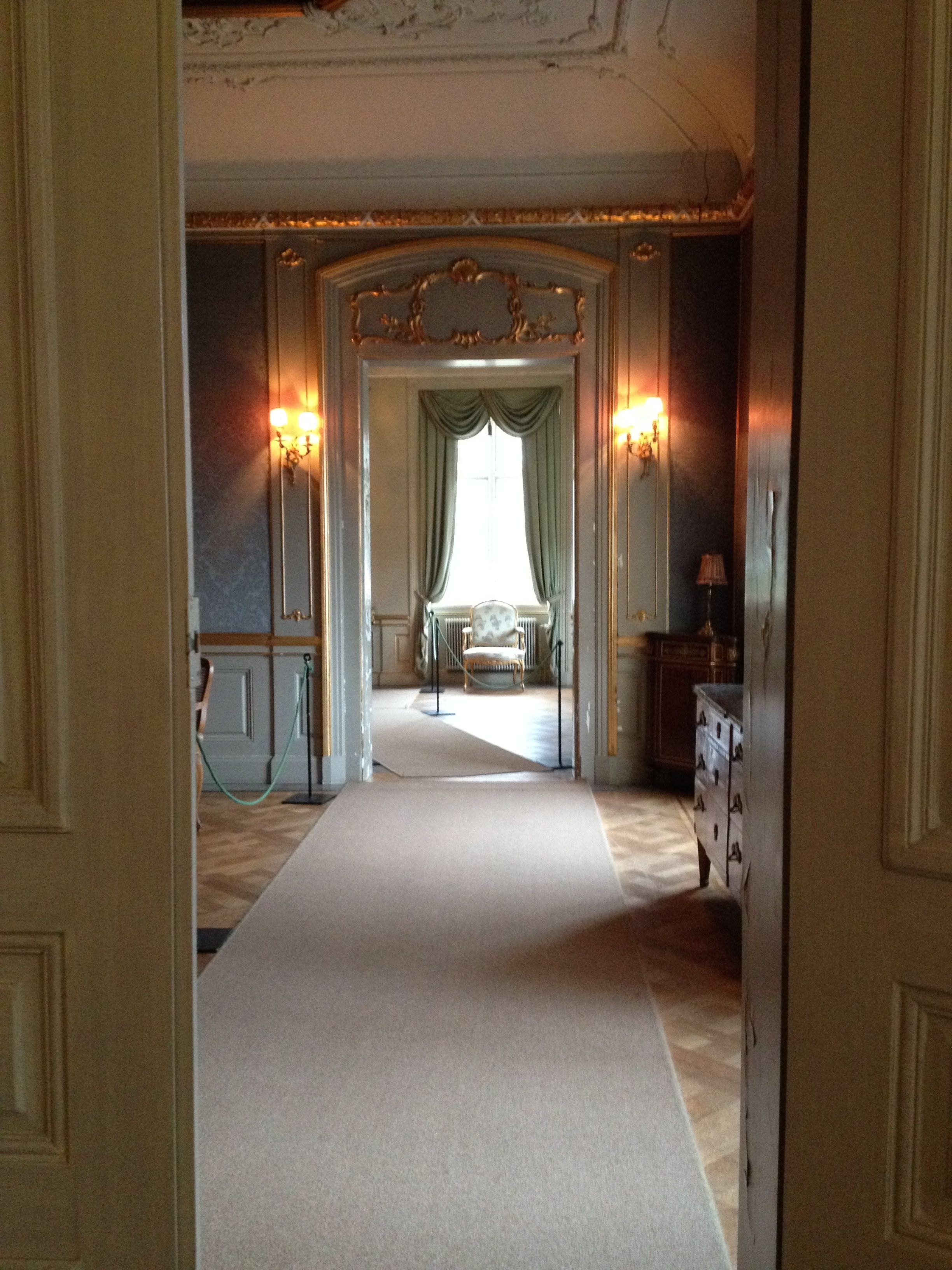 For art historians, Lövstabruk is most interesting because of its material legacy. The nobles overseeing the estate originated in the Netherlands, and it was they who expanded Lövstabruk’s footprint after a 1719 fire. Notable among them was Charles de Geer (1720–1778), who began collecting books and natural specimens for the library at Lövsta. De Geer published a comprehensive multivolume study of insects—modeled after Réaumur and Linnaeus—and oversaw an extensive building campaign that resulted in many of Lövstabruk’s architectural glories. The manor house contains a series of rococo rooms hung with dozens of beautiful eighteenth-century portraits. The musical culture at Lövstabruk was also world-class; the de Geers collected musical scores from Amsterdam and Paris for use in local concerts. But the jewel of Lövstabruk is unquestionably the library, designed by Swedish architect Jean-Eric Rehn (1717–1793). Housed in a separate little building immediately overlooking the central waterway and garden, the library gives the impression of having been left untouched since 1780. It
perfectly evokes the nobleman–scholar–entrepreneur ideal so
cherished during the Enlightenment.
 Postal deliveries to this little Swedish town must have been incredible indeed, containing as they did drawings by Watteau and Boucher, scores by Handel and Vivaldi, and the latest volumes of Diderot and d’Alembert’s Encyclopédie. I spotted Mme de Graffigny’s Lettres d’une péruvienne and books by Montesquieu and Rousseau on the library’s shelves. This give-and-take between such a distinctively local institution, the bruk, and the larger international culture is what makes Lövstabruk so distinctive. Recently, historian Göran Rydén has described Lövstabruk as an architectural metaphor for eighteenth-century Sweden as a whole: “a local community reaching out to a much wider global setting,” as well as “a place consuming commodities from other global places.”1 That interaction between the local and the global produces a “provincial cosmpolitanism,” to use Rydén’s term, the effects of which shaped the formation of Swedish society. To a visitor like me, it seems correct to claim that Lövstabruk was a microcosm of the eighteenth-century world.
1. Göran Rydén, “Provincial Cosmopolitanism: An Introduction,” in Sweden in the Eighteenth-Century World, ed. Göran Rydén (Farnham: Ashgate, 2013), p. 5.
◊ ◊ ◊ ◊ ◊
Michael Yonan is the president of HECAA and author of Empress Maria Theresa and the Politics of Habsburg Imperial Art (Penn State Press, 2011). From January to June 2014 he was research fellow at the Swedish Collegium for Advanced Study, Uppsala.
Call for Papers | SCSECS 2015 Session, Devices for Making Art
Paper, Paints, Crayons and Camera Obscura: Devices for Making Art in the Eighteenth Century
Session at the Annual Meeting of the South Central Society for Eighteenth-Century Studies
Marriott Grand, Point Clear, Alabama, 26–28 February 2015
Proposals due by 15 September 2014
Chair: Christina K. Lindeman, clindeman@southalabama.edu
While the focus of art historical study has concentrated on the finished portrait, painting, and print, this panel seeks papers that explore the historical, social and cultural context of the devices, implements, and things that made art in the eighteenth century. Possible paper topics include: new technologies that produced art products; trade and market of materials; art treatises or literary accounts on using devices. Interdisciplinary papers are welcome.
More information about the conference is available from the SCSECS newsletter, available as a PDF file here»
Also see the SCSECS website.
Exhibition | William Blake: Apprentice and Master
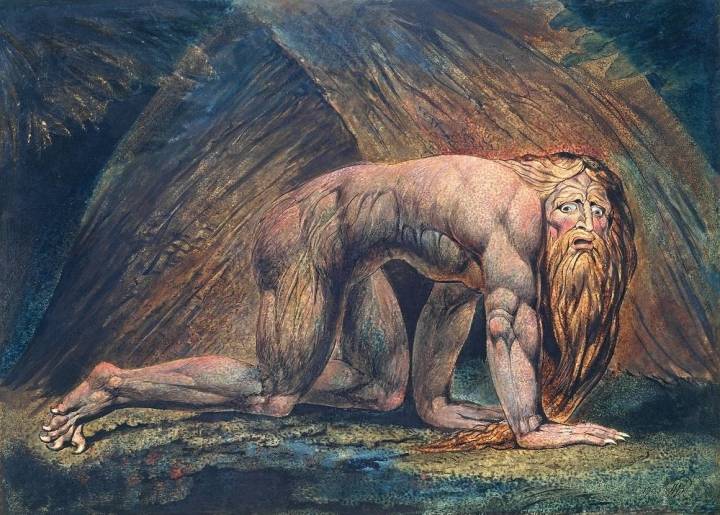
William Blake, Nebuchadnezzar, ca. 1795–1805, colour print,
ink, and watercolour on paper, 54.3 x 72.5 cm (London: Tate)
◊ ◊ ◊ ◊ ◊
From the Ashmolean:
William Blake: Apprentice and Master
Ashmolean, Oxford, 4 December 2014 — 1 March 2015
Curated by Michael Phillips and Colin Harrison
This major exhibition focuses on the extraordinary life and work of William Blake (1757–1827), printmaker, painter and revolutionary poet of the prophetic books. It examines his formation as an artist, apprenticeship as an engraver, and his maturity during the 1790s when he was at the height of his powers as both an artist and revolutionary poet. We also explore his influence on the young artist-printmakers who gathered around him in the last years of his life, including Samuel Palmer, George Richmond and Edward Calvert.
One of the most popular English artists, William Blake is still one of the least understood. His radical politics were reflected in his extraordinary technical innovations, especially in the field of printmaking and the illuminated book. This exhibition brings together more than 90 of Blake’s most celebrated works and offers new insights into his remarkable originality and influence.
At a young age William Blake showed artistic promise and, at the age of 15, was apprenticed to James Basire, the official engraver to the Society of Antiquaries. Under Basire’s tutelage, Blake was sent out to study London’s gothic churches and, most particularly, the monuments and decorations in Westminster Abbey—an experience which was to prove formative for his later style and imagery. The first section of the exhibition looks at Blake’s early work, exemplifying his already unorthodox approach.
After studying at the Antique School of the Royal Academy, Blake opened a print shop with his former apprentice colleague, James Parker, and from this point he began to associate with the leading writers and intellectuals of radical politics such as Mary Wollstonecraft and Thomas Paine, who gathered at the house of publisher, Joseph Johnson. Blake was soon producing prints of startling originality, which anticipate by nearly a century the monotypes made by artists such as Edgar Degas from the 1880s onwards. The exhibition examines Blake’s technical innovations in the creation of his illuminated books, which brought a new sophistication to colour printing. Among the works on display are several of the most extraordinary illuminated books, including The Marriage of Heaven and Hell, and a complete set of the plates from Europe: A Prophecy, together with some of the finest separate plates, among them Nebuchadnezzar and Newton.
Apprentice and Master will also look at Blake’s later career when, encouraged by his friendship with the young artist, John Linnell, he developed an interest in the great artist-printmakers of the Renaissance such as Albrecht Dürer and Lucas van Leyden. It was Linnell who commissioned the last of Blake’s great series of watercolours, the illustrations to the Book of Job and to Dante. It was these works, and above all the small woodcut illustrations to Virgil’s Pastorals, which inspired the young artists Samuel Palmer, George Richmond, and Edward Calvert, known as the Ancients. During the last three years of his life, they visited Blake and his wife in their two-room flat off the Strand. This exhibition juxtaposes many of the works the Ancients would have seen on these visits, with their own early works. Among the most notable are Palmer’s greatest creations, the six sepia drawings of 1825; and Calvert’s exquisite woodcuts of the late 1820s.
William Blake: Apprentice and Master has been curated by Dr Michael Phillips (Centre for Eighteenth Century Studies, University of York) and Mr Colin Harrison (Senior Curator of European Art, Ashmolean Museum).
Michael Phillips is currently writing a biography of William Blake in Lambeth during the anti-Jacobin Terror in Britain, entitled Blake and the Terror. His edition in facsimile of Blake’s The Marriage of Heaven and Hell was published by the Bodleian Library and the University of Chicago Press in 2011. He was guest curator of the William Blake Exhibition that opened in Paris at the Petit Palais from 1 April to 28 June 2009 and editor of the catalogue. He was also guest curator of the major Blake exhibition at Tate Britain and the Metropolitan Museum of Art, New York, 2000–2001, and is currently guest curator of the Blake exhibition opening in December 2014 in the new galleries of the Ashmolean Museum of the University of Oxford, William Blake: Apprentice & Master, where Blake’s printmaking studio at No. 13 Hercules Buildings, Lambeth, will be recreated.
◊ ◊ ◊ ◊ ◊
Michael Phillips, William Blake: Apprentice and Master (Oxford: Ashmolean Museum, 2015), 200 pages, ISBN: 978-1854442888, £21 / $40.
Exhibition | Robert Le Vrac Tournières: Portaitriste au XVIIIe siècle
From the Musée des Beaux-Arts de Caen:
Robert Le Vrac Tournières: Portaitriste au XVIIIe siècle
Musée des Beaux-Arts de Caen, 14 June — 21 September 2014
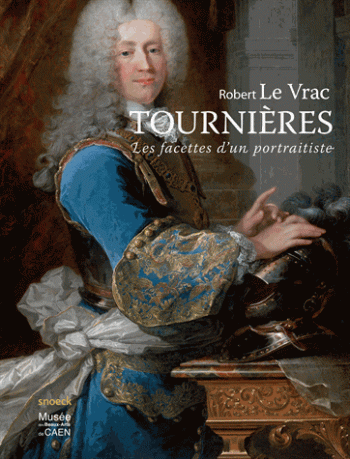 L’exposition d’été du musée des Beaux-Arts de Caen dépend étroitement du chiffre 3 : 3 artistes (deux portraitistes et un paysagiste), 3 siècles (les XVIIIe, XIXe et XXe), 3 époques, 3 temps de l’histoire de l’art mais aussi de l’histoire du musée des Beaux-Arts de Caen.
Robert Le Vrac Tournières (1667–1752) et Marie-Gabrielle Capet (1761–1818) furent de ramarquables portraitistes, chacun dans leur genre : Tournières fut un des grands maîtres du portrait au temps de Louis XV et Capet porta le genre de la miniature (précieux portraits peints sur ivoire) à un point éblouissant. Joan Mitchell (1925–1992), quant à elle, demeure l’un des grands peintres abstraits de la seconde moitié du XXe siècle.
La muséographie des trois salles est spécialement conçue pour chaque artistes : elle met en valeur les compositions de Tournières, suggére l’atmosphère d’un cabinet d’amateur pour les miniatures de Capet et joue des vastes espaces lumineux pour les paysages de Mitchell. Il se trouve aussi que chacun de ces artistes tient une place importante dans l’histoire du musée pour des raisons très différentes. Tournières, car des oeuvres insignes de ce maître sont récemment entrées dans les collections. Capet, car ce qui est probablement son chef-d’oeuvre est conservé au musée après y avoir été volé puis restitué. Joan Mitchell est un temps fort des collections contemporaines de Caen. Ces trois peintres sont le point de départ de trois expositions au cours desquelles sont évoqués leur histoire, leur oeuvre, leur art. Une façon de réconcilier le hasard et la raison.
Robert Le Vrac Tournières, né et mort à Caen (1667–1752), a eu une longue et brillante carrière presque exclusivement parisienne. Pendant près d’un demi-siècle, c’est une clientèle aristocratique et bourgeoise qui fréquente son atelier où il propose un art hérité de Rigaud, sans exclure une production de petits tableaux dans le goût nordique, tout comme des allégories décoratives. Jalon important de l’histoire du portrait français. Tournières n’a jamais fait l’objet d’exposition monographique. Il appartient au musée de Caen, qui possède un ensemble significatif de ses oeuvres, d’organiser une manifestation qui restitue l’étendue de son art, en regroupant des oeuvres provenant essentiellement des grandes collections publiques.
Eddie Tassel and Patrick Ramade, Robert Le Vrac Tournières: Les facettes d’un portraitiste (Cologne: Snoeck Verlagsgesellschaft, 2014), 96 pages, ISBN: 978-9461611840, 18€.
◊ ◊ ◊ ◊ ◊
As reported by Didier Rykner for La Tribune de l’Art (July 2014), the Musée des Beaux-Arts de Caen purchased at Christie’s (New York, 30 January 2014) Robert Le Vrac Tournières’s 1704 Self-portrait with Pierre de la Roche, which had previously been in the collection of The Metropolitan Museum of Art. The painting sold for $37,500.
Exhibition | Marie-Gabrielle Capet: Une Virtuose de la Miniature
From the Musée des Beaux-Arts de Caen:
Marie-Gabrielle Capet: Une Virtuose de la Miniature
Musée des Beaux-Arts de Caen, 14 June — 21 September 2014
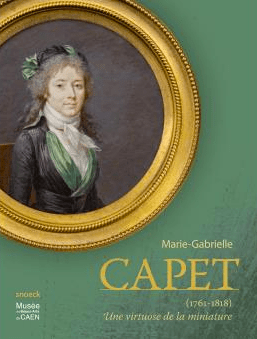 L’exposition d’été du musée des Beaux-Arts de Caen dépend étroitement du chiffre 3 : 3 artistes (deux portraitistes et un paysagiste), 3 siècles (les XVIIIe, XIXe et XXe), 3 époques, 3 temps de l’histoire de l’art mais aussi de l’histoire du musée des Beaux-Arts de Caen.
Robert Le Vrac Tournières (1667–1752) et Marie-Gabrielle Capet (1761–1818) furent de ramarquables portraitistes, chacun dans leur genre : Tournières fut un des grands maîtres du portrait au temps de Louis XV et Capet porta le genre de la miniature (précieux portraits peints sur ivoire) à un point éblouissant. Joan Mitchell (1925–1992), quant à elle, demeure l’un des grands peintres abstraits de la seconde moitié du XXe siècle.
La muséographie des trois salles est spécialement conçue pour chaque artistes : elle met en valeur les compositions de Tournières, suggére l’atmosphère d’un cabinet d’amateur pour les miniatures de Capet et joue des vastes espaces lumineux pour les paysages de Mitchell. Il se trouve aussi que chacun de ces artistes tient une place importante dans l’histoire du musée pour des raisons très différentes. Tournières, car des oeuvres insignes de ce maître sont récemment entrées dans les collections. Capet, car ce qui est probablement son chef-d’oeuvre est conservé au musée après y avoir été volé puis restitué. Joan Mitchell est un temps fort des collections contemporaines de Caen. Ces trois peintres sont le point de départ de trois expositions au cours desquelles sont évoqués leur histoire, leur oeuvre, leur art. Une façon de réconcilier le hasard et la raison.
Marie-Gabrielle Capet: Une Virtuose de la Miniature
L’an dernier, le musée a pu retrouver, presque par miracle, une miniature volée en 1925 : le Portrait de Jean-Antoine Houdon sculptant le buste de Voltaire, chef-d’oeuvre de la grande miniaturiste Marie-Gabrielle Capet (1761–1818). Avec comme prétexte cet heureux évènement, l’exposition se propose de rassembler le meilleur de la production de l’artiste ; des miniatures, mais aussi des tableaux issus de collections publiques et privées, françaises et étrangères, qui permettront d’illustrer un style qui fascina son époque, exactitude illusionniste de la touche et rendu vibrant de la lumière. L’ensemble permet d’évoquer l’influence capitale de ses maîtres, Adélaïde Labille-Guiard et son époux François-André Vincent.
Marie-Gabrielle Capet (1761–1818): Une Virtuose de la Miniature (Cologne: Snoeck Verlagsgesellschaft, 2014), 2014) 104 pages, ISBN: 978-9461611659, 18€.
The Art Bulletin, June 2014
The eighteenth century in the current issue of The Art Bulletin:
The Art Bulletin 96 (June 2014)
 Marcia Pointon, “Casts, Imprints, and the Deathliness of Things: Artifacts at the Edge,” pp. 170–95.
The practice of making death masks was extensive throughout Europe in the eighteenth and nineteenth centuries, yet their interest to scholars has been confined to their preparatory role in the production of portrait sculpture, the dissemination of phrenology, and as a figure for the indexicality of photographic images. The meanings generated, past and present, by casts of faces and other body parts can be investigated by addressing their materiality. As three-dimensional artifacts, positives deriving from negatives, casts have been understood as deathly in that they present an absence. In what does this deathliness consist, and how is it communicated?
Joanne Rappaport, Review of Daniela Bleichmar, Visible Empire: Botanical Expeditions and Visual Culture in the Hispanic Enlightenment (The
University of Chicago Press, 2012), pp. 241–43.
Conference | Fifth Annual Feminist Art History Conference
From the conference webpages:
Fifth Annual Feminist Art History Conference
American University, Washington, D.C., 31 October — 2 November 2014
The Fifth Annual Feminist Art History Conference, sponsored by the Art History Program of American University, offers participants a space in which to engage with the expanding legacy of Norma Broude and Mary D. Garrard, two pioneering feminist art historians and professors emerita of art history at AU. This year’s conference includes sixty-eight papers in seventeen sessions. The papers have a global focus that spans a broad range of topics and time periods; together they illustrate the diverse ways in which feminist research and interpretation continue to inform art historical analysis and scholarship.
All events this year will take place on the American University campus. Please see the 2014 program posted online. This year’s keynote speaker, Dr. Lisa Gail Collins, is Professor of Art History at Vassar College. Her talk, titled “Here Lies Love: Feminism, Mourning, and a Quilt from Gee’s Bend,” is drawn from her current book project on history, memory, creativity, and community.
◊ ◊ ◊ ◊ ◊
The eighteenth-century offerings are modest, but these two caught my attention. –CH
• Heather Belnap Jensen, “Parures, Pashminas, and Portraiture, or, How the Bonaparte Women Fashioned the Napoleonic Empire”
• Anne Nellis Richter, “The Marchioness of Stafford and the Cleveland House Gallery, 1812”










 Enfilade
leave a comment