Exhibition | History and Stories of Doges and Dogaressas
From the Palazzo Ducale:
The Serenissimo Prince: History and Stories of Doges and Dogaressas
Doge’s Palace, Venice, 26 January — 30 June 2014
Curated by Camillo Tonini

Giovanni Bonazza, Doge Carlo Ruzzini (1732–35), ca. 1732 (Venice: Museo Correr)
In the renovated space of the Doge’s Apartment in Palazzo Ducale, the exhibition aims to tell—through works from the prestigious collections of the Museo Correr, its library and its drawing cabinet, prints and numismatics—the historical evolution of this symbol, which returns in paintings, sculptures, manuscripts, coins, medals and insignia of traditional power, in memory of the extraordinary life of a world collapsed in 1797 and later immortalized in the size of the myth.
The scenic itinerary starts with three important pictorial representations of the Lion of St. Mark, the work of Jacobello del Fiore (1415), Donato Veneziano (1459) and Vittore Carpaccio (1516), which is the preface to the beautiful portraits of the Doge Francesco Foscari, Alvise Mocenigo and Leonardo Loredan, respectively by Lazzaro Bastiani, Giovanni Bellini and Carpaccio, among which the latter highlighted the image of the prince as a real icon of the Serenissima. The Portrait of Sebastiano Venier by Andrea Vicentino closes the series of the doges that have made grown Venice with the use of weapons, which culminated in the Battle of Lepanto.
A part of the exhibition is dedicated to the figure of the dogaressas such as Morosina Morosini Grimani (1595–1605), of whom is displayed a portrait attributed to Palma il Giovane and a celebrative painting of her coronation, and Elizabeth Querini Valier (1694–1700), the fourth and last wife of a ‘Serenissimo’ to officially receive a public investiture.
Conference Recap | MAHS 2014, St. Louis
While I’m afraid it’s a bit late, I nonetheless want to draw attention to the excellent slate of papers presented in conjunction with a panel I chaired earlier this month at the 41st annual meeting of the Midwest Art History Society (MAHS), hosted by the Saint Louis Art Museum. If your ears perked up at yesterday’s posting on The Wallace’s small exhibition, Reproducing the 18th Century: Copying French Furniture, I would especially draw your attention to Tobias Locker’s paper; it nicely brought the eighteenth century to St. Louis, indeed to the doorstep of the museum, which is located in Forest Park, the site of the 1904 exhibition. My warm thanks to all four speakers for their fine work. I’ve also included the abstract for Judy Mann’s presentation on an exciting acquisition for SLAM, Joseph Claus’s Bust of Caracalla (a press release is available here). -Craig Hanson
◊ ◊ ◊ ◊ ◊
MAHS Annual Meeting, Eighteenth-Century European Art
Saint Louis Art Museum, 3–5 April 2014
“Cornelis de Bruyn (1652–1726): Artist, Traveler, and Writer,” Rebecca Brienen, Vennerberg Professor of Art and Professor of Art History, Oklahoma State University
This paper addresses the fascinating career of Cornelis de Bruyn (1652–1726), an artist, traveler, and writer from The Hague who spent nearly thirty years outside of the Dutch Republic, living and working in places as far flung as Rome, Constantinople, and Batavia in the Dutch East Indies. During his lifetime, De Bruyn was in contact with other Dutch and European artists, many of them leading painters of the day. In addition, major political figures, including Dutch Stadholder and English king William III, Tsar Peter I of Russia, and Nicolaes Witsen (Dutch East India Company Director and burgomaster of Amsterdam) were patrons and supporters of de Bruyn. The existing literature on de Bruyn has focused specifically on his published travel accounts, but not on his career as an artist in Europe and abroad, areas that this paper will address.
“Capturing Genius: Collecting Salvator Rosa’s Etchings in Eighteenth-Century England,” Nicole N. Conti, Ph.D. Candidate, University of Minnesota
British artists, antiquarians, and aristocrats in the eighteenth century transformed Baroque artist Salvator Rosa (1615–1673) into an archetypal figure embodying the spirit of the Grand Tour. Rosa’s persona pervaded many aspects of intellectual life in England: tourists experienced Rome through his eyes, staying in his former home and comparing their journeys to his landscapes; collectors bought his paintings and etchings; artists emulated Rosa’s style in their works, and created original works that featured Rosa; and composers, novelists, poets, and playwrights wrote works of fiction casting Rosa as a revolutionary. This paper looks at the role collecting Rosa’s prints had in this eighteenth-century revival of Rosa and his cult of genius. It specifically examines albums compiled by eighteenth-century aristocrats of Rosa’s Figurine—a set of 64 small etchings that contains between 1 and 5 figures such as ragged soldiers, knights, Roman sentinels, and seductresses. While each composition contains a unique image, the prints share many visual rhymes: the same figures reappear in different combinations; some figures point off the page; others display dramatic gestural reactions; some compositions mirror each other; some images appear to represent the same group from a different vantage point; etc. This iconography allowed the prints to play off one another in an unlimited number of ways, encouraging the collector to interact with the images and to create personal narratives between the figures. Through the act of recombining these images, the album-maker asserted his own interpretive agency over the images and assigned a new meaning to Rosa and his oeuvre that reflected the needs of the collector.
“Sèvres’ Teaching of Love and the Concept of Marriage in Eighteenth-Century France,” Sarah S. Jones, Ph.D. Candidate, University of Missouri–Columbia
In 1763, the royal porcelain manufactory at Sèvres, France, produced a small sculpture entitled The Teaching of Love. The mythological subject of the piece references an episode in the life of Cupid, god of love, in which he was taught to read by Mercury. Produced in unglazed biscuit porcelain, the Sèvres group displays an adolescent Cupid passing along his knowledge to three young women on the verge of marriageable age. If Mercury, the god of eloquence, taught Cupid about rhetoric, then Cupid, god of love must be relaying his knowledge of love to these girls. Cupid is often cast as an allegory for love and sentiment, an ingredient emphasized in marital relationships during the romantic Rococo era. Eighteenth-century philosophers developed the notion of love, or sentiment, as a vital part of marriage. I propose that Cupid teaching a young girl, as he was taught by Mercury, denotes that an education in the ways of love was an integral element in grooming a girl for her marital relationship in mid-eighteenth century France. Education controlled the passions of the mischievous god; love and sentiment controls immoral passions that threatened the stability of the early modern marriage. I suggest that this scene of girls under the tutelage of a charismatic Cupid relates to the shifting ideas about the concept of marriage and proper aspects of a woman’s preparations for her marital relationship in eighteenth-century France.
“Celebrating Rococo Splendor in St. Louis: Historicizing Prussian Furniture at the 1904 World’s Fair,” Tobias Locker, Lecturer, Saint Louis University, Madrid
Early World Fairs were showcases for technical innovations and achievements in the arts. Nations presented themselves with spectacular pavilions that often referenced a glorious period of their past with distinct architectonical forms or interiors, thereby endowing chauvinist narratives and economic ambitions with historical weight. At the 1904 St. Louis Fair, the German Empire pursued a concept that had proven successful at the Paris Exhibition four years earlier. In St Louis, the Imperial pavilion resembled the central building of Charlottenburg Palace, and its interiors emphasized the Frederician Rococo, embellished with a mix of original and recreated interiors intended to recall the time when Prussia became a major player in Europe.
In particular, this paper addresses the important work of the contemporary luxury furniture producer Joseph-Émmanuel Zwiener (c. 1848–after 1910). On the basis of new archival findings, various examples will illustrate how this Berlin-based cabinetmaker—‘purveyor to the court of his majesty the German King and Emperor William II’—adopted historic French and Prussian models. The paper links his production to the royal furniture the Swiss-born Johann Melchior Kambly (1718–1784) had created for Frederick of Prussia, and it will explain how the objects of these two artisans had already been used to support a nationalistic narrative at the 1900 World’s Fair in Paris. Considering that Zwiener’s outstanding Neo-Rococo furniture was seen by contemporaries as equal to the works of the famous Parisian entrepreneur François Linke, the political dimension in exhibiting his luxury objects as ‘German’ creations is explained. Thus, it will become clear how historic and historicizing furniture were instrumentalized within a nationalist cultural discourse reflecting the competition between Prussia and France at the beginning of the twentieth century.
MAHS Annual Meeting, Recent Acquisitions in Midwestern Collections
Saint Louis Art Museum, 3–5 April 2014
Joseph Claus’s Bust of Caracalla: An Eighteenth-Century Look at an Ancient Masterpiece, Judith W. Mann, Curator, European Art to 1800, Saint Louis Art Museum

Joseph Claus, Bust of the Emperor Caracalla (r. 198–217 AD), signed and dated 1757, white marble, height 71.5 cm
(Saint Louis Art Museum)
Joseph Claus’s Bust of Caracalla demonstrates the sculptor’s great talent at rendering likeness and his adept carving of marble, making it a masterful example of the Neo-classical style. The bust is one of six known copies after the famous ancient Caracalla that was acquired by the Farnese family in Rome during the sixteenth century. That bust remained in the ducal family’s palace until 1787, when it was shipped together with the rest of the Farnese collection to Naples, where it can still be seen at the Museo Nazionale. Very little is known about Joseph Claus; he has yet to be the focus of extended study. He was born in Cologne, and his earliest dated bust (1754) portrays Clemens August von Wittelsbach, Archibishop and Elector of Cologne and a member of one of the most powerful families of the time. Claus arrived in Rome by 1755 and remained there for most of his career. He is known for his finely-detailed classicizing portraits that are tour-de-forces of marble carving and for his copies after the antique. This paper analyzes Claus’s Bust of Caracalla in terms of what little is known about the artist and evaluates the sculpture in the context of other copies executed by Claus’s contemporaries.
The full conference programme is available here»
Display | Reproducing the 18th Century: Copying French Furniture
Now on at The Wallace:
Reproducing the 18th Century: Copying French Furniture
The Wallace Collection, London, 10 March — 29 August 2014

Secretaire, Pierre-Antoine Foullet, c.1777
(London: The Wallace Collection)
In the second half of the 19th century and the first decade of the 20th century, many of the best pieces of 18th-century French furniture were copied by skilled cabinet-makers in Paris and London. Rather than being dismissed as mere ‘reproductions’, these copies were of great quality and were highly prized by their owners.
In this display in the Conservation Gallery, the Wallace Collection’s desk by Pierre-Antoine Foullet (circa 1777) is compared with one such copy, kindly lent by Butchoff Antiques, enabling visitors to compare the construction techniques and finishes of two different periods of cabinet making.
Much more information is available at The Wallace Collection’s blog»
Symposium | The Collector and His Circle
From The Seminar on Collecting and Display:
The Collector and His Circle
Institute of Historical Research and The Wallace Collection, London, 1–2 July 2014
This two-day workshop presents new research in the area of collecting and art markets in the early modern era (1700–1900). Speakers examine the mutual interests of collectors and art patrons; the client relationships between dealers and collectors; the roles of advisers, museum curators and critics; and the importance of art publications.
◊ ◊ ◊ ◊ ◊
T U E S D A Y , 1 J U L Y 2 0 1 4
Institute of Historical Research
10.00 Registration and coffee
10.25 Welcome from Adriana Turpin, IESA/University of Warwick
10.30 The Early 18th Century
• Charles Avery, Historian of Sculpture and Independent Fine Art Consultant, ‘The sculptor Soldani and the marketing of Baldinucci’s collection of paintings’
• Christophe Guillouet, PhD candidate, Université Paris IV Sorbonne, ‘Genre painting in the circles of Parisian collectors’
• Franny Brock, PhD candidate, The University of North Carolina at Chapel Hill, ‘‘‘Chez Monsieur Huquier’’: the role of Gabriel Huquier’s collection in interactions among artists, dealers, and collectors’
12.00 The Role of the Print Market
• Donato Esposito, independent scholar, Birmingham, ‘Charles Rogers (1711–1784) and his circle’
• Lucy Peltz, Curator, 18th Century Collections, National Portrait Gallery, London, ‘‘‘Brother Chalcographimanians’’: extra-illustration, the Sutherland Clarendon and the print market c. 1790–1840’
13.00 Lunch
14.15 The Collector and His Advisors in the Early 19th Century
• Sarah Bakkali, PhD candidate, Université Paris X Nanterre, ‘John Trumbull’s “speculative” adventure: circles of collecting between Paris and London during the French Revolution’
• Rufus Bird, Deputy Surveyor of The Queen’s Works of Art, The Royal Collections Trust, ‘The Prince and the pâtissier: François Benois’ acquisitions in Paris for the Prince Regent’
• Susanna Avery-Quash, Curator (History of Collecting), National Gallery, London, ‘John Julius Angerstein: an 18th-century London financier and his circle of art advisers’
• Rebecca Lyons, Christie’s Education, London, and PhD candidate, University of Cambridge: ‘Connoisseurship and commerce: the relationship between the Prince Regent and the 3rd Marquess of Hertford’
16.15 Coffee
16.45 Late 19th-Century Collecting
• Dora Thornton, Curator of the Waddesdon Bequest and Curator of Renaissance Europe, The British Museum, ‘Baron Ferdinand Rothschild and the Waddesdon Bequest in the British Museum: a new look’
• Elena Greer, National Gallery, London, ‘Sir Frederic Burton and his Trustees: the politics of collecting for the nation in the late nineteenth century’.
18.00 Reception
W E D N E S D A Y , 2 J U L Y 2 0 1 4
The Wallace Collection
9.30 Registration and coffee
9.55 Welcome from Christoph Vogtherr, Director, The Wallace Collection
10.00 Jeremy Warren, Collections and Academic Director, The Wallace Collection, ‘Patrons and collectors: new acquisitions for the history of collecting at the Wallace Collection’
10.30 Curators, Antiquarians and Archaeologists
• Judy Rudoe, Curator of Nineteenth- and Twentieth-Century Collections, The British Museum, ‘The role of a remarkable curator: letters from Justus Brinckmann to Charles Hercules Read’
• Elizabeth Norton, Collaborative Doctoral Award Student, The University of Southampton and The British Museum, ‘Polished axes: viewing networks behind the construction of prehistory at the British Museum’
• Francesca de Tomasi, PhD candidate, Università di Roma Tor Vergata, ‘The archeologia mondana and its protagonists’
• Ulf R. Hansson, Research Fellow, Department of Classics, The University of Texas at Austin, ‘Adolf Furtwängler and the culture of professional and amateur collecting in Munich around the turn of the century 1900’
12.30 Lunch and opportunity to see a display of new acquisitions for the history of collecting at the Wallace Collection
14.00 Artists and Collectors
• Annalea Tunesi, PhD candidate, University of Leeds, ‘Stefano Bardini and Riccardo Nobili’
• Patricia de Montfort, Lecturer in History of Art, University of Glasgow, ‘Collecting women’s works: Louise Jopling, the Rothschilds and their circle’
• Annie Pfiefer, PhD candidate, Department of Comparative Literature, Yale University, “‘The American Invasion”: Henry James and the collecting of Europe’
15.30 Coffee
16.00 Keynote address: Frank Herrmann, independent scholar and author of The English as Collectors, ‘Lady Charlotte Schreiber: a truly remarkable woman’
16.30 Round table and concluding remarks
Call for Papers | Made People: The Beauty of the Body
Made People: The Beauty of the Body in Art and Cosmetics—An Academic Workshop in Two Parts
Made People I: Make-up
Freie Universität Berlin, 26–27 June 2015
Made People II: Makeover
Kunsthistorisches Institut in Florenz,Max-Planck-Institut, 20–21 November 2015
Proposals due by 31 July 2014
Since antiquity, beauty has been regarded as a work of art in which nature plays a role not so much as a holistic model and ideal but as a basic substance and an ‘assembly kit’. This concept of composite beauty bears the reservation that beauty as an entity only exists in an incomplete form in nature. It suggests that work can be performed on the human body, both to improve and to correct it. The initial hypothesis is that such work represents a concept combining artistic, cosmetic and medical practices that sees the techniques of art in a fundamental field of tension vis-à-vis the substances provided by nature.
Even more than in painting and sculpting, both of which pursued a demonstration of their autonomy and perfection in estheticizing nature in the fifteenth and sixteenth centuries, a supposed inadequacy of what nature had to offer became a lasting point of friction and even the sole legitimisation in the practice of putting on make-up or doing one’s hair and in more recent beauty surgery. While the impression of naturalness remained virulent as a measurement and an ideal, as it also does in art that continuous to pursue imitatio, the boundary to reality simultaneously became permeable, so that beauty could literally assume the role of a second nature and the stylist could turn into an alter deus.
Designed as an interdisciplinary event, the workshop explores the norms and techniques of such an estheticizing treatment of nature in the fields of art, cosmetics and plastic surgery regarding physical beauty and the instruments and guiding principles of its creation or enhancement. In two sessions, it traces the various degrees of cosmetic and artistic treatment of and intervention in the natural body from antiquity to the present, examining its superficial make-up on the one hand and its far-reaching makeover on the other. Here, special attention is given to the techniques of estheticization, the processes of selection and synthesis as well as the modification or modelling of parts of the body with respect to both colours and shapes. Such a focus also allows for a demonstration of the violent side that the ideal of beauty bears which ultimately always entails changes to nature, a dissection of the body into beautiful individual parts and their chimera-like reassembling.
The aim of the workshop is to promote academic exchange between junior scholars and established experts. Also, with the aid of a selection of source texts and a common discussion of selected museum exhibits on site, a common thematic basis is to be developed that covers beautifying techniques of make-up and makeover and reaches beyond individual specialisation.
Junior scholars from all disciplines are invited to hand in proposals for twenty-minute contributions in German or English on the presentations and design of physical beauty between nature and art and cosmetics and medicine. Abstracts not exceeding 500 words and a brief CV are to be submitted to workshop@gemachtemenschen.net by July 31, 2014. Travel and accommodation expenses will be covered if applications for funding are accepted.
Organization
Dr. Romana Filzmoser, Universität Salzburg
Prof. Dr. Wolf-Dietrich Löhr, Freie Universität Berlin/Kunsthistorisches Institut in Florenz, Max-Planck-Institut
Julia Saviello M. A., Ludwig-Maximilians-Universität München
New Book | Travel and Tourism in Britain, 1700–1914
From Pickering & Chatto:
Susan Barton and Allan Brodie, eds., Travel and Tourism in Britain, 1700–1914, 4 volumes (London: Pickering & Chatto, 2014), approximately 1600 pages, ISBN: 978-1848934122, £350 / $625.
The British led the way in holidaymaking. During the eighteenth century travel was only available to the wealthiest people, but from the 1830s the railways brought a transport revolution, opening up the chance for travel to all classes. As tourism grew in popularity, a whole new industry developed. Many new large, lively towns grew up around spas and at the seaside to meet the needs of visitors. Guidebooks were produced, aimed at all sorts of holidaymakers and the first travel agencies emerged.
This four-volume primary resource collection brings together a diverse range of texts on the various forms of transport used by tourists, the destinations they visited, the role of entertainments and accommodation and how these affected the way that tourism evolved over two centuries. Case studies on specific towns—Bath, Cheltenham and Tunbridge Wells—illustrate the rise of spa tourism, then studies of Brighton, Margate, Blackpool and Scarborough are used to demonstrate the later dominance of the seaside resort. The collection will be of interest to social and economic historians as well as those researching print culture and the history of tourism.
• Contains over 200 rare primary resources
• Includes diaries, memoirs, guide books, journal articles, railways guides, handbills, trade directories, local newspaper articles and poems
• Editorial apparatus includes a general introduction, volume introductions, headnotes and endnotes
• A consolidated index appears in the final volume
Volume 1: Travel and Destination
Volume 2: Spa Tourism
Volume 3: Seaside Holidays
Volume 4: Seaside Resorts
Susan Barton is an honorary fellow at the International Centre for Sports History and Culture, De Montfort University. Allan Brodie is an architectural historian for English Heritage.
Call for Papers | Art History: The Formation of the Academic Discipline
Art History: The Formation of the Academic Discipline
Rethymnon, Greece, 3–4 October 2014
Proposals due by 30 June 2014
The Association of Greek Art Historians and the Institute for Mediterranean Studies (FORTH) organise an Academic Forum with the title Art History: The Formation of the Academic Discipline in Europe and Related Developments in Greece (18th–19th Centuries). The meeting will take place at the Institute’s premises in Rethymnon, Crete on Friday, 3rd and Saturday, 4th October 2014. The aim of this meeting is to explore the ways in which the academic and research fields of Art History were formed from the late 18th century and continued to develop up to the beginning of the 20th century. Shaped by its interactions with other disciplines, Art History eventually created its own unique discursive field and distinct methodology. With this meeting we also hope to chart the status of historiographical research in Greece, but also worldwide.
We invite papers that focus on, but are not limited to, the following topics: (more…)
Symposium | Enlightened Princesses: Caroline, Augusta, Charlotte
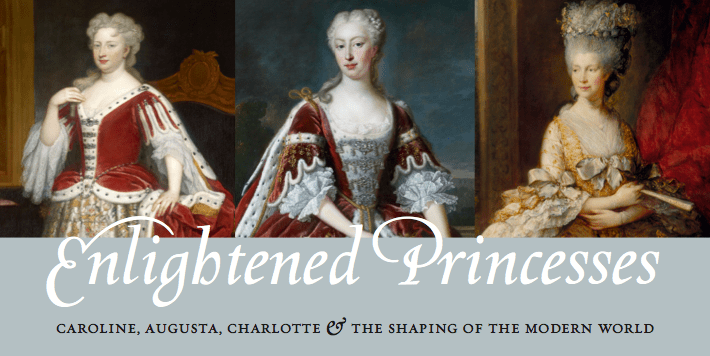
Left: Sir Godfrey Kneller, Queen Caroline of Ansbach, when Princess of Wales (detail), 1716; center: Jean-Baptiste van Loo, Augusta, Princess of Wales (detail), 1742; right: Thomas Gainsborough, Queen Charlotte (detail), ca. 1781; all: Royal Collection/© Her Majesty Queen Elizabeth II 2014.
◊ ◊ ◊ ◊ ◊
From the symposium flyer:
Enlightened Princesses: Caroline, Augusta, Charlotte & the Shaping of the Modern World
Hampton Court Palace, London, 7–9 July 2014
This three-day international symposium, taking place at Hampton Court Palace and associated sites, brings together eminent academicians and museum scholars to examine the roles played by Queen Caroline of Ansbach; Augusta, Princess of Wales; and Queen Charlotte in the promotion of the arts and sciences in eighteenth-century Britain. The themes that will be addressed are pertinent to exhibitions scheduled to open in 2017 at the YCBA and in London. The princesses’ individual and collective interests in art, botany and gardens, natural philosophy and medicine, and the education of their children will be explored in relation to a dramatically changing social, political, and technological milieu, as will their roles in the encouragement of the British Enlightenment. The symposium is timed to take advantage of the period when various London institutions will be commemorating the anniversary of the Hanoverian Succession and aims to contribute in a major way to the general public discourse around that event.
The program includes two full days of lectures, themed panels, and special tours and events, followed by a day devoted to tours of two sites important in the lives of these royal women: Kew Palace and its gardens, and Kensington Palace. The fee for attending the conference is £100. Reductions are available for a limited number of students on application to the conference organizer. To register, visit the HRP website. Questions may be addressed to the conference organizer at ycba.research@yale.edu.
Co-organized by the Yale Center for British Art, Historic Royal Palaces, and the Paul Mellon Centre for Studies in British Art, London
◊ ◊ ◊ ◊ ◊
From the provisional schedule:
M O N D A Y , 7 J U L Y 2 0 1 4
9:00 Arrival and coffee
9:30 Introduction
Amy Meyers, Yale Center for British Art
John Barnes, Historic Royal Palaces
9:45 Joanna Marschner, Historic Royal Palaces, Three German Princesses: Caroline, Augusta, Charlotte, and Cultural Politics at the English Court in the Eighteenth Century
10:30 Break
10:45 Session 1: The Princesses and Their World
Chair: Amanda Vickery, Queen Mary, University of London
• Andrew Thompson, University of Cambridge, The Hanoverians: Crafting a New Dynasty
• Stephen Taylor, Durham University, Court Politics and Religion
• Berta Joncus, Goldsmiths, University of London, The Court, Music and Theatre
• Rosemary Harden, Fashion Museum, Bath, Dressing the Hanoverian Court
13:00 Lunch
14:00 Session 2: The Princesses’ Gardens and Architectural Projects
Chair: Michael Snodin, Strawberry Hill Trust
• Mark Laird, Harvard University, The Princesses’ Collecting and Display of Exotic Flora and Fauna
• Todd Longstaffe-Gowan, landscape historian, Royal Gardens: The Role of the Princesses
• Wolf Burchard, Royal Collection Trust, The Palaces of the Hanoverian Consorts
• Lee Prosser, Historic Royal Palaces, Kew and its Built Heritage
16:00 Tea
16:30 Board buses for London/Queen’s Gallery
18:00 Desmond Shawe-Taylor, Surveyor of the Queen’s Pictures, Tour of the Queen’s Gallery exhibition The First Georgians; Art and Monarchy 1714–1760
T U E S D A Y , 8 J U L Y 2 0 1 4
9:00 Arrival and coffee
9:30 Clarissa Campbell Orr, Anglia Ruskin University, The Hanoverian Court and Europe
10:15 Break
10:30 Session 3: The Princesses’ Art and Other Collections
Chair: Desmond Shawe-Taylor, Surveyor of the Queen’s Pictures
• Cassandra Albinson, Yale Center for British Art, Creating the Royal Image: Royal Princesses and Portraiture
• Cynthia Roman, Lewis Walpole Library, The Princesses in Print: Character and Caricature
Malcolm Baker, University of California, Riverside, Royal Sculpture Commissions
• John Goldfinch, British Library and Emma Jay, The National Archives, The Princesses and their Books
• Jane Roberts, formerly Librarian, Windsor Castle, Royal Collection Trust, The Princesses as Artists
13:00 Lunch
14:00 Session 4: Natural Philosophy and Medicine
Chair: Lucy Worsley, Historic Royal Palaces
• Kim Sloan, British Museum, The Role of the Court in the English Enlightenment
• Patricia Fara, Clare College, Cambridge, Royal Women and Natural Philosophy
• Craig Ashley Hanson, Calvin College, Royal Patronage and Medical Practices
• 4th Speaker TBD
16:00 Tea
17:00 Historic Royal Palaces Curators, Tour of the Queen’s Apartments, Hampton Court Palace
18:00 Drinks, reception, and concert with music from the Hanoverian Court
W E D N E S D A Y , 9 J U L Y 2 0 1 4
9:00 Meet at speakers’ hotel for tours
10:00 Kensington Palace, Historic Royal Palaces Curators, Tour of King’s Apartments
12:00 Kew, Historic Royal Palaces Curators, Tour of Kew Palace and the Royal Kitchens
14:00 Close of symposium
L’Aquila: The Future of the Historical Center
From the Kunsthistorisches Institut in Florenz:
L’Aquila: The Future of the Historical Center, A Challenge for Art History
Summer School of the Kunsthistorisches Institut in Florenz, Max-Planck-Institut
Florence, 8–15 September 2014
Applications due by 25 May 2014
Concept and organization: Carmen Belmonte, Elisabetta Scirocco and Gerhard Wolf
The devastating earthquake that struck L’Aquila on 6 April 2009 created a major rupture in the social and cultural history of the city. After dealing with the immediate aftermath of the natural disaster through the construction of the so-called ‘New Towns’, the necessity of securing the city’s buildings has paralyzed the historical center. Today, ongoing restorations are accompanied by a lively debate, requiring the expertise of specialists from various disciplines. It is crucial that art historians participate in the discussions on the complex issues of reconstruction, restoration, and preservation, that are deciding how to return the city to its citizens and to ensure the survival of its monumental heritage.
The KHI summer school invites young art historians and scholars from neighboring disciplines to discuss the future of historic centers, focusing particularly on the critical as well as the ethical roles of art history. The case of L’Aquila provides an opportunity to reflect broadly upon the effect of natural disasters on civic life and cultural heritage and its management.
Located on site, the summer school will take a diachronic approach to the study of the city of L’Aquila, both inside and outside the walls, beginning with its medieval foundation as a free ‘civitas’ disputed by popes and emperors, through Spanish rule, up to the urban transformations of the Fascist period. Located in a strategic position on the ‘Via degli Abruzzi’, L’Aquila has long been a market town; its main raw materials, wool and saffron, reached the markets of northern Italy and beyond the Alps. The city of L’Aquila serves as a shrine that houses the bodies of Pope Celestine V and Bernardino of Siena. Throughout its history, the city has therefore been a place of exchange, a center of culture and artistic patronage, and an important pilgrimage site beginning with the institution of the plenary indulgence in 1294 at Collemaggio.
The close study of the historical city, its urban structure, its works of art, and its dispersed and decontextualized collections, together with an awareness of the dynamics of destruction and reconstruction of its cultural heritage, will call attention to the future of L’Aquila and to the methodological questions related to the preservation of its past. What techniques and methodologies allow mediation between aesthetic and historical values? Is it possible to find a balance between the protection of heritage and the needs of the citizens of L’Aquila; between the desire for change and the impulse to return to the forms of the past? Issues such as reconstruction, integration, and authenticity versus fake are central topics to be addressed. (more…)
MA in Decorative Arts and Historic Interiors
MA in Decorative Arts and Historic Interiors
Leche Trust Bursary for September 2014
Bursary applications due by 2 June 2014
Applications are invited for a partial studentship on the Buckingham University MA in Decorative Arts and Historic Interiors starting September 2014. Generously funded by the Leche Trust, the bursary, worth £7500, will cover 82% of the course fees for EU students and 55% for international students. Priority will be given to applicants with excellent academic qualifications seeking, or currently pursuing, curatorial careers in museums or the built heritage. The bursary is also open to part-time students currently working in the field, who can take the course as a form of in-service training over two years.
This unique one-year MA in French and British Decorative Arts and Historic Interiors provides sound vocational and academic training, first-hand study of furniture, silver and ceramics in the context of historic interiors, numerous study trips to museums and historic house collections, (including a study week in Paris) and placements in museums and heritage institutions. For further details please visit the website or contact Clare Prendergast: claire.prendergast@buckingham.ac.uk.










 Enfilade
leave a comment