Subject of Art History Added to Oxford Bibliographies
Under the direction of Editor-in-Chief Thomas DaCosta Kaufmann, Art History is the latest subject to be added to OUP’s subscription-based resource Oxford Bibliographies (as of January 2014). At present there are only 50 articles—ranging from ‘Art of the Aztec Empire’ to ‘Yuan Dynasty Art’—with plans for a few dozen more to be added in the coming months. And so for now, the resource is better at showcasing potential than providing a truly useful, comprehensive collection of bibliographies. That said, Dorothy Johnson’s entry for Jacques-Louis David provides a promising glimpse of what the future might entail, and the larger Oxford Bibliographies project ranked among Choice’s Top Ten Internet Resources for 2013 (along with ARTstor). All of the usual concerns about expensive, subscription-based resources, inevitably, remain relevant. -CH
◊ ◊ ◊ ◊ ◊
◊ ◊ ◊ ◊ ◊
From the Art History page of Oxford Bibliographies:
Art history is a vast discipline, geographically, historically, and intellectually. In its initial centuries, art history dealt with Western art, but the boundaries of the field have since expanded. The canon continues to be redefined as histories of art in regions that had previously been ignored are brought into the mainstream. Traditional emphases on European art have been reduced, as the discipline reaches world-wide dimensions in which connections as much as differences have increasingly come into focus. Originating as a study much informed by ancient art, and then by the art of the Renaissance, the historical dimension of the discipline has also continuously advanced with time. More and more works and types of objects are made throughout the world, and art historians’ interests have increasingly shifted to more recent art. In the past half century art historians have also engaged more and more with questions of theory, method, and the history of the discipline. New approaches, often borrowed from other fields, have proliferated.
As a result of all this flux and ferment, it has become progressively more difficult to grasp the literature of the field, and to gain an orientation to current and perennial problems. Oxford Bibliographies in Art History responds to these needs and offers a trustworthy pathway through the thicket of information overload. Whether an expert in contemporary European art needs to read up on the art of ancient China for a book project or an undergraduate student needs to start a research paper on iconography in Renaissance art, Oxford Bibliographies in Art History will provide a trusted source of selective bibliographic guidance.
Exhibition | Genius and Grace
From the exhibition press release:
Genius and Grace: Franҫois Boucher and the Generation of 1700
Cincinnati Art Museum, 14 February — 11 May 2014
Curated by Esther Bell

François Boucher, Venus Presenting Aeneas to Jupiter and Juno, 1747, black chalk, pen with brown ink, and brush with brown wash and touches of white gouache on tan antique laid paper (Boston: The Horvitz Collection)
◊ ◊ ◊ ◊ ◊
This spring, the verve, grace, and exuberance of 18th-century French drawings will be on display at the Cincinnati Art Museum. The Cincinnati Art Museum will show drawings by the talented group of artists responsible for an unprecedented level of artistic and cultural production in the France of Louis XV in an exhibition titled Genius and Grace: Franҫois Boucher and the Generation of 1700, on view from February 14 to May 11, 2014. Franҫois Boucher, Charles-Joseph Natoire, Carle Vanloo, and their contemporaries, born in or around 1700, executed virtuoso compositions whose refined elegance epitomizes the French grand manner. Along with Boucher, Natoire, and Vanloo, the exhibition will also celebrate lesser known but equally talented figures such as Louis-Gabriel Blanchet and Joseph Franҫois Parrocel, as well as several pastels, including a rare example by Jean-Baptiste-Siméon Chardin. More than seventy master drawings, many of which have never before exhibited or published, will be on view.
This exhibition is organized by the Horvitz Collection in Boston—the preeminent private collection of early French art in the United States. Twenty-nine of the most distinguished artists of this period will be featured, along with a fully illustrated catalogue edited by Alvin L. Clark, Curator of the Horvitz Collection and the J.E.Horvitz Research Curator, Department of Drawings, Harvard Art Museums/Fogg Museum. The Cincinnati Art Museum venue for Genius and Grace: François Boucher and the Generation of 1700 is organized by Dr. Esther Bell, Curator of European Paintings, Drawings, and Sculpture; it is the first old master drawings exhibition to take place at the Cincinnati Art Museum in more than thirty years. “These are some of the most beautiful and sexiest images the Old Masters ever produced,” commented Cincinnati Art Museum Director Aaron Betsky. “They are stunning in their display of talent and the sensuality they convey.”

François Boucher, Recumbent Female Nude, ca. 1742–43, red chalk, heightened with white chalk (Boston: The Horvitz Collection)
◊ ◊ ◊ ◊ ◊
Sixteen of the works on view were created by Franҫois Boucher, who an eighteenth-century critic called “the painter of voluptuousness and grace.” One of the artist’s drawings, Recumbent Nude, depicts a luscious female figure. This may, at first, seem to be a provocative and erotically charged image, but it may have simply developed from a figure study intended to be used when painting a sea nymph or other historical subject. Also part of the exhibition is Carle Vanloo’s Saint Augustine Disputing with the Donatists, which has never before been exhibited. This masterpiece is remarkable for its heavy contours and energetic forms encased within a scene of monumental Italian architecture.
According to Cincinnati Art Museum Curator Dr. Esther Bell, “A selection of master drawings was selected that best tell the story of the unfolding eighteenth century. Not only will visitors be able to enjoy the sumptuous forms of the high Rococo, but also the virtuoso drawings that resulted from rigorous academic training and the cool and classicizing manifestations of these artists’ Italian journeys.”
◊ ◊ ◊ ◊ ◊
From Artbooks.com:
Alvin Clark, ed., Genius and Grace: Franҫois Boucher and the Generation of 1700 (Boston: The Horvitz Collection, 2014), 151 pages, ISBN: 978-0991262502, $34.
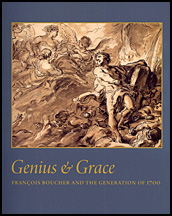 Genius and Grace: Franҫois Boucher and the Generation of 1700 features over seventy master drawings from the Horvitz Collection, Boston—widely considered the preeminent collection of French art in the United States. The exhibition features works by a group of artists known as the Generation of 1700. This talented group of artists born in or around the year 1700, such as François Boucher, Charles-Joseph Natoire, Carle Vanloo, and their contemporaries, will be celebrated for their virtuoso compositions whose curvilinear elegance epitomizes the French grand manner. From Boucher’s sumptuous reclining female nude, to a rare, early pastel by Jean-Baptiste-Siméon Chardin, to Director of the French Academy Charles Coypel’s mature self portrait—the works on view celebrate Dezallier d’Argenville’s comment of 1745: “A painter’s way of drawing is as distinctive as handwriting and more so than a writer’s style.” Includes: A. Clark, “The Generation of 1700: Draftsmen, Drawings, and Questions”; F. Joulie, “Reflections on the Early Drawings of Boucher and His Contemporaries”; and E. Bell, “Charles Coypel and the Age of Eclecticism.”
Conference | Russian Art: Exhibitions, Collections, and Archives
From the conference programme:
Exhibit A: Russian Art | Exhibitions, Collections, and Archives
The Courtauld Institute of Art, London, 21–22 March 2014
Exhibit A: Russian Art | Exhibitions, Collections and Archives, is the second conference in an on-going collaborative project between Moscow Lomonosov State University and the Cambridge Courtauld Russian Art Centre (CCRAC). Speakers will explore contemporary and historical practices of exhibiting and collecting Russian art and the potential of collections, exhibitions and documentary archives as important material resources and objects of study in their own right. The conference is also intended as a forum through which to showcase important but less familiar collections of Russian art and documentary material located inside and outside of Russia. It is conceived without chronological boundaries, and papers will address topics ranging from the earliest instances of collecting, exhibiting and writing about Russian art to contemporary practice in these three areas.
Organised by Natalia Budanova (The Courtauld Institute of Art) and Jenn Brewin (University of Cambridge) in collaboration with Moscow Lomonosov State University and the Cambridge Courtauld Russian Art Centre (CCRAC), with additional support from the Russian Art World (РХМ).
Ticket/entry details: £25 (£15 students, Courtauld staff/students and concessions) Book online or send a cheque made payable to ‘The Courtauld Institute of Art’ to: Research Forum Events Co-ordinator, Research Forum, The Courtauld Institute of Art, Somerset House, Strand, London WC2R 0RN, stating ‘CCRAC conference’.
◊ ◊ ◊ ◊ ◊
F R I D A Y , 2 1 M A R C H 2 0 1 4
13:45 Registration
14:15 Opening remarks
14:30 Session 1 | Collecting Russian Religious and Folk Art
Chair: Nicola Kozicharow (University of Cambridge)
• Engelina Sergeevna Smirnova (Moscow Lomonosov State University), The collection of antiquities in sixteenth-century Russia: motivations and methods
• Aleksandr Sergeevich Preobrazhenskii (Moscow Lomonosov State University), Icon collections of Moscow Old Believers in the early nineteenth century: evidence of owners’ inscriptions
• Valery Stefanovich Turchin (Moscow Lomonosov State University), Collectors of lubki [Russian popular prints] and the development of the avant-garde in Russia (In Russian)
15:40 Coffee
16:10 Session 2 | Collections and Exhibitions in Eighteenth-Century Russia
Chair: Natalia Budanova (The Courtauld Institute of Art)
• Andrey Aleksandrovich Karev (Moscow Lomonosov State University), The portrait gallery in eighteenth-century Russia as an ensemble: a typological aspect
• Zalina Valerievna Tetermazova (Moscow Lomonosov State University), Collecting Russian portrait engravings from the age of Peter to the twentieth century: an outline of the phenomenon and its main features
• Vera Sergeevna Naumova (Moscow Lomonosov State University), The art collection of Count K. Razumovskii: the history of the collection’s formation and composition
• Rosalind P. Blakesley (University of Cambridge), Exhibiting Russian success?: the 1770 exhibition at the Imperial Academy of Arts
17:45 Drinks reception (more…)
Journal of the History of Collections 26 (March 2014)
The eighteenth century in the current issue of the Journal of the History of Collections:
Journal of the History of Collections 26 (March 2014)
A R T I C L E S
José Saporiti Machado and Miguel Telles Antunes, “Aniceto Rapozo’s Cabinet at the Lisbon Academy of Sciences: A Window into Brazilian Eighteenth-Century Timber Resources,” pp. 21–33.
From the end of the eighteenth until the beginning of the nineteenth century, wood samples were regularly sent to the Royal Army Arsenal in Lisbon for testing. The large number and variety of samples, as well as increasing interest on Brazil, explain why, in 1805, the Prince Regent of Portugal commissioned the preparation of four collections containing 1,213 timber specimens from Brazil and twelve from other origins. One of these collections, housed in a cabinet at the Lisbon Academy of Sciences, is now being studied in order to reveal its origins and to identify the wood samples. Botanical identifications will provide valuable information about the wood resources and the species used by furniture-makers in the late eighteenth and early nineteenth centuries.
Arthur MacGregor, “Patrons and Collectors: Contributors of Zoological Subjects to the Works of George Edwards (1694–1773),” pp. 35–44.
Through his lavishly illustrated and eminently accessible Natural History of Uncommon Birds (1743–51) and Gleanings of Natural History (1758–64), George Edwards became one of the most influential naturalists and illustrators of mid-eighteenth-century England. The specimens on which he relied – either alive, stuffed, or in spirits – were generally in the ownership of others and his practice of carefully acknowledging the source of each of his subjects sheds considerable light on the extent to which exotic birds and animals were to be found in the possession of a range of owners from wealthy grandees to humble citizens, as well as specialist traders who emerged to supply this growing market. Edwards’s texts are drawn upon here to chart the degree to which exotic species, alive or dead, had begun to penetrate households great and small by the mid 1700s, particularly in the London area; an online appendix lists and identifies those who supplied him with specimens.
Debora J. Meijers, “An Exchange of Paintings between the Courts of Vienna and Florence in 1792–1793: A Logical Step Taken at the Right Moment,” pp. 45–61.
It may come as a surprise that in the turbulent political period of spring 1792 a decision was taken at the courts of Vienna and Florence to carry out an exchange of paintings, the aim of which was ‘to complete’ the collections of the Emperor and the Grand Duke, each ‘with the profusion of the other’. There are, however, signs that this step originated in the recent past of both galleries and further that it related to the developments of that particular historical moment. The exchange can be interpreted as a logical consequence of the recently introduced taxonomic division into schools, the advancement of which would lead to an unprecedented level of ‘completeness’. Besides being a perfect seed-bed for emerging artists, the presentation of ‘all’ the schools could also be seen as a metaphor for political power. But in this time of war with France the exchange served mainly as a bond between two brothers who were pursuing very different political courses.
R E V I E W S
• David Howarth, Review of Christopher Rowell, ed., Ham House: 400 Years of Collecting and Patronage (2013), pp. 117–19.
• Rosemary Sweet, Review of Noah Heringman, Sciences of Antiquity: Romantic Antiquarianism: Natural History and Knowledge Work (2013), pp. 119–20.
• Arthur MacGregor, Review of Glyn Williams, Naturalists at Sea: Scientific Travellers from Dampier to Darwin (2013), pp. 120–22.
• Mark A. Roglán, Review of Shelley M. Bennett, The Art of Wealth: The Huntingtons in the Gilded Age (2013), p. 125.
• Fiona Savage, Review of Sarah Longair and John McAleer, eds., Curating Empire: Museums and the British Imperial Experience (2012), pp. 125–26.
• Francesco Paolo de Ceglia, Review of Medical Museums: Past, Present, Future (2013), pp. 126–27.
New Book | Inventing Falsehood, Making Truth
Published in December by Princeton UP:
Malcolm Bull, Inventing Falsehood, Making Truth: Vico and Neapolitan Painting (Princeton: Princeton University Press, 2013), 160 pages, ISBN: 978-0691138848, $25 / £17.
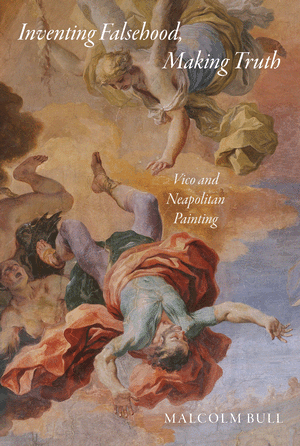 Can painting transform philosophy? In Inventing Falsehood, Making Truth, Malcolm Bull looks at Neapolitan art around 1700 through the eyes of the philosopher Giambattista Vico. Surrounded by extravagant examples of late Baroque painting by artists like Luca Giordano and Francesco Solimena, Vico concluded that human truth was a product of the imagination. Truth was not something that could be observed: instead, it was something made in the way that paintings were made–through the exercise of fantasy.
Juxtaposing paintings and texts, Bull presents the masterpieces of late Baroque painting in early eighteenth-century Naples from an entirely new perspective. Revealing the close connections between the arguments of the philosophers and the arguments of the painters, he shows how Vico drew on both in his influential philosophy of history, The New Science. Bull suggests that painting can serve not just as an illustration for philosophical arguments, but also as the model for them–that painting itself has sometimes been a form of epistemological experiment, and that, perhaps surprisingly, the Neapolitan Baroque may have
been one of the routes through which modern consciousness
was formed.
Malcolm Bull is university lecturer in fine art at the University of
Oxford. His previous books include Anti-Nietzsche, The Mirror
of the Gods, and Seeing Things Hidden.
C O N T E N T S
Acknowledgments
Prologue
1. Vico
2. Icastic Painting
3. Fantastic Painting
4. Theological Painting
Epilogue
Notes
Index
Call for Participation | Technologies of Turning
From the Call for Participation:
Technologies of Turning: An Exploration of Making and Meaning
Harvard University, 20–22 May 2014
Applications due by 18 March 2014
 Organized by Jennifer L. Roberts (Elizabeth Cary Agassiz Professor of the Humanities, Harvard University) and Ethan W. Lasser (Margaret S. Winthrop Associate Curator of American Art, Harvard Art Museums)
Eligibility: Current graduate students in any discipline; space is limited to nine students.
This workshop is the second in a new annual series focusing on processes of making in the fine, decorative, and industrial arts. The workshops will bring together faculty, artists, museum professionals, and graduate students for demonstrations, hands-on exercises, and discussion. Each day will combine instruction in historic techniques with the close analysis of related historic objects. One of the features that will differentiate this workshop from others like it is that it will include time for extensive discussion about the merits of bringing technical and artisanal knowledge into the historical and interpretive disciplines in a conceptually rigorous way. Rather than focus on a specific medium or type of object, each workshop is organized around a single species of physical operation that cuts across multiple media and can also be evocatively transposed into cultural and theoretical dimensions.
This year we will concentrate on “turning.” From the lathe to the spindle to the potter’s wheel to the turntable, rotational dynamics sit at the heart of multiple mechanical and artisanal practices. The workshop will trace processes of turning through pottery throwing, textile production, and media playback and projection. What modes of thinking and approaches to materials link these processes? How have makers across time conceptualized working “in the round” and how might such modes of embodied making inform our understanding of the creative process? What are the implications of turning’s intricate relationship to control in artisanal and industrial settings? How does turning engage with problems in programming, tacit knowledge, and automation?
Each participant will be expected to complete a short list of preliminary readings and to attend all portions of the workshop. The workshop is organized by Americanists and will focus primarily on American material, but students in all fields are encouraged to apply. Lodging for four nights and most meals will be provided for selected participants. Participants will be responsible for supporting their own travel to and from Cambridge.
Send a CV and a short statement explaining your reasons for wishing to participate in the workshop to both roberts6@fas.harvard.edu and elasser@fas.harvard.edu by March 18, 2014, 5pm. Selected participants will be notified by March 25. Space in this workshop will be limited to nine students.
Sponsored by the American Art Workshop Fund and the Department of American Art, Harvard Art Museums
◊ ◊ ◊ ◊ ◊
T U E S D A Y , 2 0 M A Y 2 0 1 4 — C E R A M I C S
Demonstration and hands-on studio session, Harvard Ceramics Studio (Allston, MA)
Handling session with historic material
Debriefing and reflection
Dinner
W E D N E S D A Y , 2 1 M A Y 2 0 1 4 — T E X T I L E S
Demonstration and hands-on session with early machinery, American Textile History Museum (Lowell, MA)
Handling session with historic material
Debriefing and reflection
Dinner
T H U R S D A Y , 2 2 M A Y 2 01 4 — M E D I A
Demonstration and hands-on session, Harvard Film Archive
Final debriefing, workshop conclusion
Exhibition | Anglo-American Portraiture in an Era of Revolution
From the Louvre:
Anglo-American Portraiture in an Age of Revolution
Musée du Louvre, Paris, 1 February — 28 April 2014
Crystal Bridges Museum of American Art, Bentonville, Arkansas, 17 May — 15 September 2014
High Museum of Art, Atlanta, 28 September 2014 — 18 January 2015
Curated by Guillaume Faroult
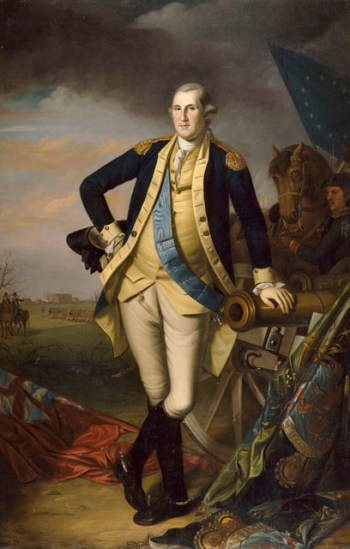
Attributed to Charles Wilson Peale, George Washington after the Battle of Princeton, 3 January 1777, ca. 1779 (National Museum of the Palace of Versailles and the Trianons)
The Louvre continues its exploration of the history of painting in America with a third special exhibition that compares and contrasts five Anglo-American portraits from 1780 to 1800 and slightly later, produced in the midst of a revolution that would lead to the independence and creation of the United States of America. The selected artworks revolve around the guardian and emblematic figure of General George Washington (1732–1799), elected first president of the United States in 1789.
The exhibition features three portraits of the Father of the Country, including one attributed to Charles Wilson Peale (1741–1827) depicting him as Commander in Chief of the Continental Army, on special loan from the Musée du Château de Versailles. Portraits of the opposing belligerents, notably a stunning, newly restored portrait of Captain Robert Hay of Spot by Scottish painter Sir Henry Raeburn (1756–1823), are presented in response to the magnificent portrait of Washington as president of the young nation painted in 1797 by Gilbert Stuart (1755–1828)—one of the most talented American portrait artists—on loan from the Crystal Bridges Museum.
This special exhibition is part of a long-term partnership with the Crystal Bridges Museum of American Art, the High Museum of Art, Atlanta, and the Terra Foundation for American Art, and was made possible through their generous support.
Digital Plans at the Reynolda House Museum of American Art
Press release (12 February 2014) from the Reynolda House Museum of American Art in Winston-Salem, North Carolina:

Joseph Blackburn, Portrait of Elizabeth Browne Rogers, 1761, oil on canvas (Reynolda House Museum of American Art)
As metropolitan museums across the country begin to focus personnel resources on digital content and new media strategies, Reynolda House Museum of American Art has created a new position to develop the extension of the museum’s desired impact and mission to an online audience. Trish Oxford has been named Assistant Director of Marketing & Communications, a position that will focus on the evolving need for digital communications. In this role she will create synergy between on-site experiences and virtual experiences through management of the Museum’s new website, email, social media, and other digital platforms. Oxford will also work closely with the curatorial staff to explore ways to enhance the visitor experience. She first joined the museum part-time in 2012 as Audience Engagement and Communications Specialist.
Oxford’s new position is part of a larger Reynolda House initiative called the Digital Engagement Project launched in 2010 with the digitizing of the museum’s collections. The federally funded project included cataloging each object in the museum’s collections, redesigning the museum’s website to facilitate access to collections, and creating new opportunities for people to interact with the museum online. Allison Perkins, Reynolda House executive director, said in her new position Oxford will invite museum visitors, online and in-person, to contribute their own interpretations and ideas, making all interactions with Reynolda House more impactful. (more…)
Historic New England 2014
From Historic New England:
Program in New England Studies
16–21 June 2014
Each year, Historic New England presents the Program in New England Studies, an intensive learning experience with lectures by curators and architectural historians, workshops, and behind-the-scenes tours of Historic New England’s properties and collections, as well as of other museums and private homes in the region.
Program in New England Studies examines New England history and material culture from the seventeenth century through the Colonial Revival, and delves into building design and technology, and the wide-ranging lifestyles illustrated by the historic sites on the itinerary. The program is designed to appeal to owners of historic houses, collectors, museum professionals, graduate students, and those who enjoy New England history, and is limited to twenty-five participants.
More information, including an itinerary, is available here»
2014 Summer Institute in Technical Art History for PhD Students
From the Institute of Fine Art’s Conservation Center:
2014 Summer Institute in Technical Art History for Doctoral Students in Art History
Institute of Fine Arts, New York University, 9–20 June 2014
Applications due by 24 March 2014
The Summer Institute in Technical Art History (SITAH) is an intensive two-week course, geared towards PhD candidates in art history who are looking to delve more deeply into technical studies. Students are immersed into the world of technical art history and conservation of works of art, with faculty ranging from conservators to conservation scientists, curators, art historians, and artists. The course takes full advantage of the wonderful resources of New York City, and many sessions are held in local conservation labs, where attendees have the opportunity to closely examine works of art with experts in the field. Off-site visits also include artists’ studios, museum permanent collections, and, where relevant, special exhibitions and galleries. A priority is placed on case studies and discussions, and students are encouraged to build relationships within the group, in the hopes of enriching their own research.
The Artist’s Book: Materials and Processes
A good understanding of material aspects of works of art is becoming increasingly important to art historical studies. The Artist’s Book is a two-week, intensive seminar that examines how technical art history might simultaneously clarify and complicate established art historical narratives of this important art form. The program will focus on works from the modern era, and will consider a variety of different formats. These might include: traditional letterpress printed books, deconstructed texts and book blocks, artists’ photo books, and other unique works. Bound volumes, as well as forms like scrolls, fold-outs, concertinas, loose leaves kept in boxes, and e-books may all be examined. This topic will allow us to explore the intersections of book construction, photography, printmaking, and graphic design within the context of literature, both experimental and traditional.
Under the direction of Professors Constance Woo (Long Island University) and Michele Marincola (Institute of Fine Arts, New York University), participants will study with distinguished conservators, book artists, scholars and master craftspeople. We will consider specific artworks as case studies, examine materiality and process through close looking and recreation of techniques and processes, and create a book in the studio. Participants will ascertain how these methodologies materially and theoretically inform their own diverse research interests. This seminar will provide a forum to develop critical skills in the interpretation of object-based analyses related to the scholarship of artist’s books.
Generously funded by the Mellon Foundation, the seminar will be held at the Institute of Fine Art’s Conservation Center, with selected sessions at area libraries, artist studios and in the conservation labs of New York City’s leading museums.
Eligibility and Application Process
Students currently enrolled in or completing a doctoral program in the US and Canada are eligible to apply. No background in science or conservation is required. A maximum of fifteen participants will be admitted to the program. Applicants will be evaluated on the basis of their academic accomplishment to date and on their expressed interest in integrating technical art history into their own research.
Applicants should submit a cover letter addressed to Professor Michele Marincola, Sherman Fairchild Chairman of the Conservation Center, Institute of Fine Arts, NYU; a statement of purpose of interest in integrating technical art history into their research; a letter of support from their advisor that addresses their academic standing and their interest in the topic; and an academic and professional CV. The application deadline is March 24, 2014. Please submit applications in electronic format to: Sarah Barack, course coordinator, sb340@nyu.edu.
Funding
Participants will receive housing (single room occupancy) and stipends of $1,300 to help defray travel and living costs. For further information, please contact: Professor Michele Marincola at 212-992-5849,email: michele.marincola@nyu.edu.










 Enfilade
leave a comment