Call for Papers | HBA Young Scholar Session at CAA, 2014
Historians of British Art Young Scholar Session
College Art Association, Chicago, 12–15 February 2014
Proposals due by 15 August 2013
The Historians of British Art, a CAA-affiliated society, seeks papers for an upcoming mini-session of work by emerging scholars to be held during the HBA Business Meeting at CAA in Chicago (February 12–15, 2014). Current or recent graduate students are invited to submit proposals (if a Ph.D. recipient, the degree must have been earned within the past three years). Papers may address any topic related to British art, architecture, and visual culture and should be limited to fifteen minutes. This is an opportunity for informal presentations of new or ongoing research followed by open discussion.
To submit a paper for consideration, please send the following items to Jongwoo Jeremy Kim, HBA 2nd Vice President, at jongwoo.kim@louisville.edu: (1) a one page abstract; (2) a C.V. (limited to two pages).; and (3) a brief cover letter explaining interest in the field. The deadline for submission is August 15, 2013. Upon selection, each presenter will be requested to join HBA if not already a member.
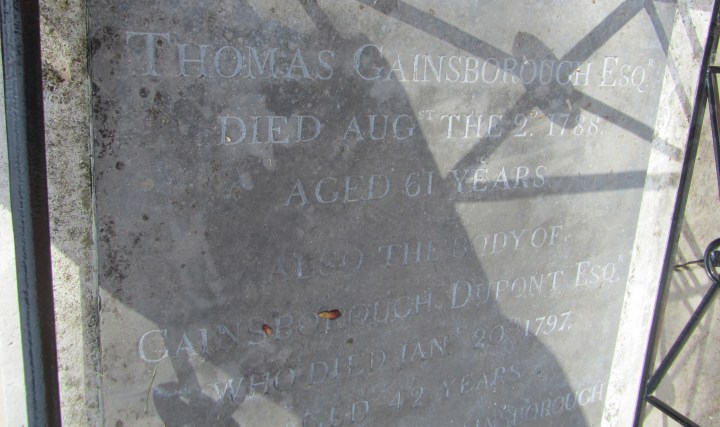
Marking the 225th Anniversary of Gainsborough’s Death
When Valerie Hedquist, who’s finishing a book on the reception history of Gainsborough’s Blue Boy, recently pointed out to me that today will mark the 225th anniversary of Gainsborough’s death, I was happy to invite her to contribute a posting, even happier that she agreed. And thus here, for a brief moment, she leads us alongside the painter’s coffin towards Kew . . . –CH
◊ ◊ ◊ ◊ ◊
Born in 1727, Thomas Gainsborough fell ill in April 1788 and died of cancer several months later on Saturday, 2 August — 225 years ago today.
According to newspaper accounts, his death brought together “some of the most brilliant characters of the age.” Among the fifteen “few select friends” named in the obituary notice of the Whitehall Evening Post was Jonathan Buttall, regarded until recently as the subject of The Blue Boy. Along with men with connections to art, music, and theater, Buttall joined the procession of black-shrouded mourners traveling with the Gainsborough one last time as they accompanied his casket from the artist’s Pall Mall home westward to his burial plot at the Kew Green churchyard of St. Anne’s. While these individuals lived and worked in diverse London neighborhoods, their residences mostly concentrated in and around the artistic center of Soho, in contrast to the upscale West End, where Gainsborough had resided since 1774.
Who were these mourners? The surgeon and anatomist John Hunter and his neighbor, Sir Joshua; Thomas Linley and the playwright Richard Brinsley Sheridan; the American Benjamin West and the Swedish-born Scot, Sir William Chambers; the ‘father of English watercolour’ Paul Sandby; the wax portraitist Isaac Gosset and the stipple engraver Francesco Bartolozzi; the miniaturists Samuel Cotes and Jeremiah Meyer; the brother-in-law of the critic and newspaper publisher Sir Henry Bate Dudley, William Pearce; and Gainsborough’s nephew, Gainsborough Dupont, who, according to recent work by Susan Sloman, may be the actual sitter for Blue Boy.* Writing in his diary, Joseph Farington claimed it was Pearce at the artist’s bedside when he spoke his last words: “Vandyck was right.”
◊ ◊ ◊ ◊ ◊
* The most complete argument is made in Susan Sloman, “Gainsborough’s Blue Boy,” The Burlington Magazine 155 (April 2013): 231-37. Also see, Sloman, “ ’A Divine Countenance’: Gainsborough’s Portrait of His Nephew Rediscovered,” The Burlington Magazine 146 (May 2004), 319-22; and Sloman, in the exhibition catalogue Van Dyck in Britain, ed. by Karen Hearn (London: Tate Publishing, 2009).
82nd & Fifth | Mascarade à la Grecque
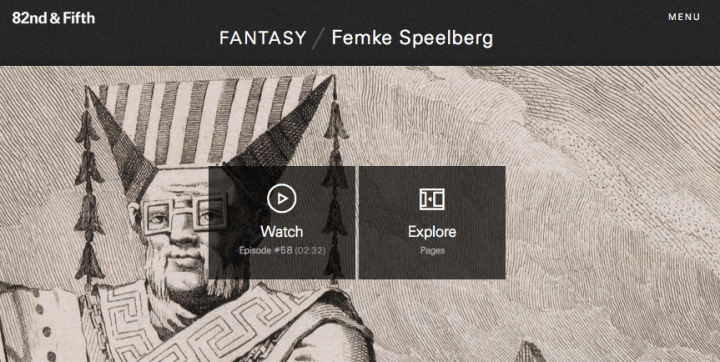
The latest installment of The Met’s 82nd & Fifth:
◊ ◊ ◊ ◊ ◊
In “Fantasy” (episode #58), Femke Speelberg addresses the Mascarade à la Grecque; Suite des Vases; and [Cheminées], a series of eight etchings designed by Ennemond Alexandre Petitot, and etched and published by Benigno Bossi (1771, 1764).
Call for Papers | Museum Metaphors
From the conference website:
Museum Metaphors
University of Nottingham, 20 November 2013
Proposals due by 9 September 2013
Organised by Lucy Bradnock and Briley Rasmussen
Throughout the relatively short history of the art museum, metaphorical constructs have often been used to explain the museum’s social and cultural role, as well as to define its various protagonists. Through the metaphorical language of the museum as, for example, temple (Duncan), tomb (Adorno), laboratory (Barr), or supermarket (Warhol), artists, curators, critics, philosophers and historians have sought to read the institution of the museum as symbolic of particular cultural and social ideologies.
Against the backdrop of a growing current interest in institutional and exhibition histories, this symposium will consider the many metaphors that have been used to describe, define and theorise museums. We will also address how changes in the metaphorical language of the museum might indicate broader discursive shifts. In addition, it will ask what metaphorical constructs shape our conception of museums today. We seek proposals that address examples of museum metaphors from a range of historical, geographic, and theoretical perspective. Topics might include, but are not limited to:
• The museum metaphor in museological discourse
• The museum as metaphor in artistic practice
• Metaphor, behaviour and the museum’s publics
• Museum metaphor, modernism and postmodernism
• Metaphor and museum architecture and/or design
• Social and spatial metaphors in the museum context
• Museum metaphors in film, literature and popular culture
Please submit proposals of up to 250 words to Lucy Bradnock (lucy.bradnock@nottingham.ac.uk).
New Books | Summer Reading
With the arrival of August, many of you begin thinking about syllabi and teaching loads. If, however, you’re looking for a bit more summer reading before it all starts again, you might consider one of these books: a trio of novels and a sampling of non-fiction that might even count as research for those of you working on topics in natural history. -CH
◊ ◊ ◊ ◊ ◊
From the Peepal Tree Press:
David Dabydeen, Johnson’s Dictionary (Leeds: Peepal Tree Press, 2013), 224 pages, ISBN: 978-1845232184, $20.
 Manu, a revenant from Dabydeen’s epic poem “Turner,” leads us through 18th-century London and Demerara (in British Guiana), recounting experiences that might be dreamed or remembered. We meet slaves, lowly women on the make, lustful overseers, sodomites and pious Jews – characters who have somehow come alive from engravings by Hogarth and others. Hogarth himself turns up as a drunkard official artist in Demerara, from whom the slave Cato steals his skills and discovers a way of remaking his world. The transforming power of words is what enlightens Francis when his kindly (or possibly pederastic) master gifts him a copy of Johnson’s Dictionary, whilst the idiot savant, known as Mmadboy, reveals the uncanny mathematical skills that enable him to beat Adam Smith to the discovery of the laws of capital accumulation – and teach his fellow slaves their true financial worth. From the dens of sexual specialities where the ex-slave Francis conducts a highly popular flagellant mission to cure his clients of their man-love (and preach abolition), to the sugar estates of Demerara, Dabydeen’s novel revels in the connections of empire, art, literature and human desire in ways that are comic, salutary and redemptive.
◊ ◊ ◊ ◊ ◊
From Canongate:
Jonathan Grimwood, The Last Banquet (London: Canongate, 2013), 368 pages, ISBN: 978-0857868794, £15. [due out in North America from Europa Editions in October]
 Jean-Marie Charles d’Aumout is many things. Orphan, soldier, diplomat, spy, lover. And chef. This is his story.
We meet Jean-Marie d’Aumout as a penniless orphan eating beetles by the side of a road. His fate is changed after an unlikely encounter finds him patronage and he is sent to military academy. Despite his frugal roots, and thanks to wit and courage in great measure, he grows up to become a diplomat and spy. Rising through the ranks of eighteenth-century French society, he feasts with lords, ladies and eventually kings, at the Palace of Versailles itself.
Passion, political intrigue and international adventure abound in Jean-Marie’s life, yet his drive stems from a single obsession: the pursuit of the perfect taste. Three-Snake Bouillabaisse, Pickled Wolf’s Heart and Flamingo Tongue are just some of the delicacies he devours on his journey toward the ultimate feast. But beyond the palace walls, revolution is in the air and the country is clamouring with hunger of a different kind.
◊ ◊ ◊ ◊ ◊
From Harper Collins:
Michael Irwin, The Skull and the Nightingale: A Novel (New York: William Marrow, 2013), 416 pages, ISBN: 978-0062202352, $26.
 Michael Irwin’s The Skull and the Nightingale is a chilling and deliciously dark, literary novel of manipulation and sex, intrigue and seduction, set in 18th-century England.
When Richard Fenwick, a young man without family or means, returns to London from a Grand Tour of Europe in 1761, his godfather, James Gilbert, has an unexpected proposition. Gilbert has led a sedate life in the country, but now, in his advancing years, he feels the urge to experience, if vicariously, the extremes of human feeling—love and passion, in particular—along with something much more sinister. He asks Richard to serve as his proxy and to write to him of his city adventures, and his ward believes he has no option but to accept. It quickly becomes clear that Gilbert desires correspondence of a titillating nature—tales of carousal, seduction, and excess—and so Richard begins to write of London’s more salacious side. For here is an invitation to hedonism and Richard, eager to taste all that a privileged life has to offer, rises to the challenge.
But Gilbert’s elaborate and manipulative “experiments” into the most intimate workings of human behavior soon drag Richard into a vortex of betrayal, where lives may be ruined and tragedy is only a step away. And when Richard does the unthinkable and falls in love, the stakes are raised and he must make a defining choice. But what sort of man has he by now become?
◊ ◊ ◊ ◊ ◊
From Harvard UP:
Edward H. Burtt and William E. Davis, Alexander Wilson: The Scot Who Founded American Ornithology (Cambridge: Harvard University Press, 2013), 464 pages, ISBN 978-0674072558, $35.
 Audubon was not the father of American ornithology. That honorific belongs to Alexander Wilson, whose encyclopedic American Ornithology established a distinctive approach that emphasized the observation of live birds. In the first full-length study to reproduce all of Wilson’s unpublished drawings for the nine-volume Ornithology, Edward Burtt and William Davis illustrate Wilson’s pioneering and, today, underappreciated achievement as the first ornithologist to describe the birds of the North American wilderness.
Abandoning early ambitions to become a poet in the mold of his countryman Robert Burns, Wilson emigrated from Scotland to settle near Philadelphia, where the botanist William Bartram encouraged his proclivity for art and natural history. Wilson traveled 12,000 miles on foot, on horseback, in a rowboat, and by stage and ship, establishing a network of observers along the way. He wrote hundreds of accounts of indigenous birds, discovered many new species, and sketched the behavior and ecology of each species he encountered.
Drawing on their expertise in both science and art, Burtt and Davis show how Wilson defied eighteenth-century conventions of biological illustration by striving for realistic depiction of birds in their native habitats. He drew them in poses meant to facilitate identification, making his work the model for modern field guides and an inspiration for Audubon, Spencer Fullerton Baird, and other naturalists who followed. On the bicentennial of his death, this beautifully illustrated volume is a fitting tribute to Alexander Wilson and his unique contributions to ornithology, ecology, and the study of animal behavior.
◊ ◊ ◊ ◊ ◊
From Harvard UP:
Peter Hansen, The Summits of Modern Man: Mountaineering after the Enlightenment (Cambridge: Harvard University Press, 2013), 392 pages, ISBN 978-0674047990, $35.
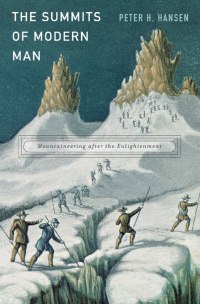 The history of mountaineering has long served as a metaphor for civilization triumphant. Once upon a time, the Alps were an inaccessible habitat of specters and dragons, until heroic men—pioneers of enlightenment—scaled their summits, classified their strata and flora, and banished the phantoms forever. A fascinating interdisciplinary study of the first ascents of the major Alpine peaks and Mount Everest, The Summits of Modern Man surveys the far-ranging significance of our encounters with the world’s most alluring and forbidding heights.
Our obsession with “who got to the top first” may have begun in 1786, the year Jacques Balmat and Michel-Gabriel Paccard climbed Mont Blanc and inaugurated an era in which Romantic notions of the sublime spurred climbers’ aspirations. In the following decades, climbing lost its revolutionary cachet as it became associated instead with bourgeois outdoor leisure. Still, the mythic stories of mountaineers, threaded through with themes of imperialism, masculinity, and ascendant Western science and culture, seized the imagination of artists and historians well into the twentieth century, providing grist for stage shows, poetry, films, and landscape paintings.
Today, we live on the threshold of a hot planet, where melting glaciers and rising sea levels create ambivalence about the conquest of nature. Long after Hillary and Tenzing’s ascent of Everest, though, the image of modern man supreme on the mountaintop retains its currency. Peter Hansen’s exploration of these persistent images indicates how difficult it is to imagine our relationship with nature in terms other than domination.
Exhibition | The Taste of Diderot
This upcoming exhibition at the Musée Fabre de Montpellier marks the 300th anniversary of Diderot’s birth (5 October 1713); today, incidentally, is the anniversary of his death (31 July 1784). From the museum’s programme brochure:
Le Goût de Diderot
Musée Fabre de Montpellier, 5 October 2013 — 12 January 2014
Fondation de l’Hermitage, Lausanne, 7 February — 1 June 2014
Le goût est sourd à la prière. Ce que Malherbe a dit de la mort,
je le dirais presque de la critique; tout est soumis à sa loi.
Diderot, Préface du Salon de 1765
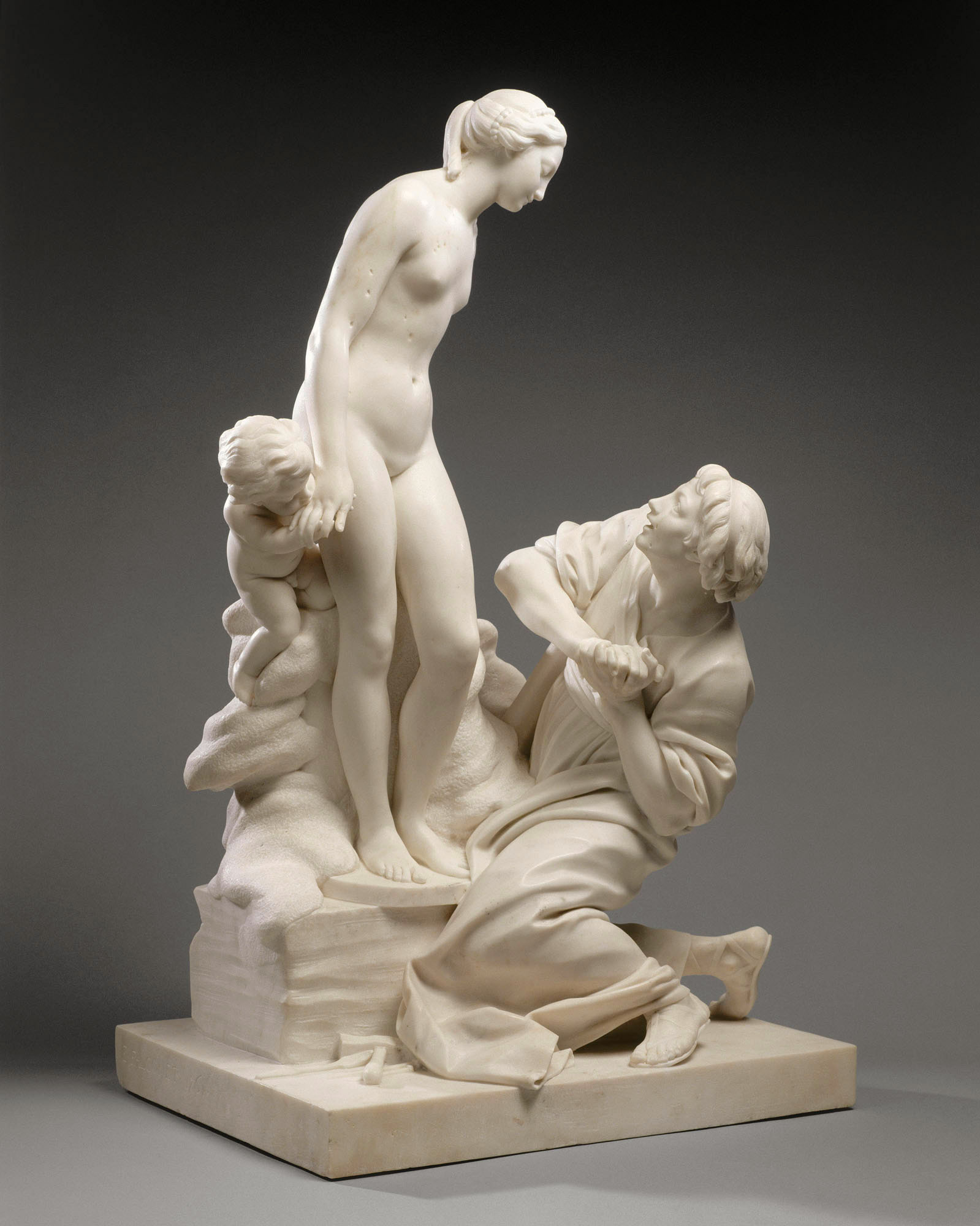
Etienne-Maurice Falconet, Pygmalion et Galatée, 1761, marbre ©RMN-Grand Palais (musée du Louvre) / Hervé Lewandowski
Le musée Fabre de Montpellier Agglomération et la Fondation de l’Hermitage de Lausanne s’associent pour célébrer le tricentenaire de la naissance de Denis Diderot (1713–1784), une figure majeure des Lumières françaises.
Philosophe, romancier, dramaturge, encyclopédiste, Diderot a également joué un rôle pionnier dans le domaine des arts, en rédigeant à partir de 1759, pour la Correspondance littéraire, les comptes rendus des expositions publiques de peinture et de sculpture que l’Académie royale organisait tous les deux ans dans le Salon carré du Louvre. Ces textes serviront et servent encore de modèle et de référence à la critique d’art.
A travers une sélection de peintures (Boucher, Chardin, Vien, Greuze, Vernet, David…), de sculptures (Pigalle, Falconet, Houdon…), de dessins et de gravures, l’exposition propose un aperçu de ce qu’était l’art au temps des Lumières auquel Diderot fut confronté, et de la manière dont il développa et exerça son goût propre. Sa culture visuelle, plastique, architecturale se développe progressivement, ses Salons deviennent au cours des années 1760 la rubrique fétiche de la Correspondance littéraire. Dans les années 1770, il est sollicité comme courtier par Catherine II lors des grandes ventes des collections privées françaises. Goethe lit ses Essais sur la peinture en Allemagne, ses idées esthétiques et sa dramaturgie influencent de façon décisive le courant Sturm und Drang.
Mais ce qu’on retiendra surtout, ce sont les mises en relation audacieuses qu’il propose, où genres, modes, médiums se rencontrent : Greuze avec Boucher, le vrai faux moral et le faux vrai libertin ; Deshays et Doyen avec Homère, Vien et Falconet avec Anacréon, pour que le peintre soit aussi un poète ; Vernet le paysagiste avec les verres et les fruits de Chardin, pour la magie de l’art. L’exposition proposera au spectateur de faire l’expérience de ces rencontres, guidé par la verve inimitable de Diderot.
Note (added 31 March 2014) — The original posting failed to note the mounting of the exhibition in Lausanne.
Conference | Liquid Intelligence and the Aesthetics of Fluidity
From the conference website:
Liquid Intelligence and the Aesthetics of Fluidity
McCord Museum, Montréal, 25–26 October 2013
Caroline Arscott (Courtauld Institute of Art) • Fabio Barry (University of St. Andrews) • Matthew C. Hunter (McGill University) • Yukio Lippit (Harvard University) • Jeffrey Moser (McGill University) • Alexander Nemerov (Stanford University) • Jennifer L. Roberts (Harvard University) • Itay Sapir (UQAM)
In an influential essay, contemporary artist Jeff Wall has sketched a suggestive genealogy linking chemical photography to a range of fluid processes and their modes of “liquid intelligence.” By Wall’s telling, wet procedures done in the dark historically connect photography to a vast, subterranean network of primordial acts of chemical transformation like dyeing and bleaching. But, the pull of liquids on art and aesthetic imagination runs deeper still. From the unctuous stains of Titian’s macchie to Ed Ruscha’s “liquid word” paintings—from Kenneth Anger’s filmic imagination of the Renaissance garden’s ritualized, watery flows to the “boggy, soggy, squitchy” picture that flummoxes Ishmael at Melville’s Spouter-Inn—the urge to sound the fluid image abides. Where Walter Pater would explain Leonardo’s strange imaginings as like sight “in some brief interval of falling rain at daybreak, or through deep water,” no less central a theorist of pictorial ontology than Leon Battista Alberti appealed to the myth of Narcissus. “What is painting,” Alberti asks, “but the act of embracing by means of art the surface of the pool?”
Hosted through the Department of Art History and Communication Studies at McGill University and Media@McGill, this conference aims to thematize liquid intelligence and the broader aesthetics of fluidity in which it moves. Drawing together leading, international scholars, the conference seeks to open conversations around conceptions of photography, painting, and other fluid strategies made perceptible by pushing upon liquid intelligence. Can an ingenuity of liquid realization be constructively compared, we might ask, to the raw, “fluid” smarts that psychologists oppose to formal, “crystallized” intelligence? Might the theoretical heuristic of liquid thinking devised for a recent, proximate past help flush out the modalities of more distant minds responsible for, say, the oozing, oil-spotted glazes of medieval tenmoku tea wares or the inky insubstantiality of Zen patriarch portraits? If we, like the intergalactic researchers in Andrei Tarkovsky’s Solaris, are influenced by the hegemonic, fluid images we study, how might those subtle currents work to dissolve the dry media genealogies and hoary theoretical constructs that continue inform much thinking on relations between photography, painting and other arts past and present?
F R I D A Y , 2 5 O C T O B E R 2 0 1 3
8:30 Coffee/Registration
9:00 Introduction
Session I
9:30 Fabio Barry, TBA
11:00 Jeff Moser, “Fire-Star and Secret Hue: The Molten Mind in Song-Yuan Ceramics”
Session II
2:00 Matthew Hunter, “The Cunning of Sir Sloshua: Reynolds, the Navy and Risk”
3:30 Jennifer Roberts, “Veins of Commerce: Nature-Printed Currency in Colonial North America”
S A T U R D A Y , 2 6 O C T O B E R 2 0 1 3
Session III
9:00 Itay Sapir, “Contained Liquidity: Fluid Intelligence and Rock-Solid Framing in the Port Scenes of Claude Lorrain”
10:30 Alexander Nemerov, “Rubens’ Adoration of the Magi at the Prado”
Session IV
1:00 Yukio Lippit, “Inky Painting”
2:30 Caroline Arscott, “Dyeing, Bleaching, Printing: Morris and Abundance”
Session V
4:00 Responses/General Discussion
Call for Papers | ASECS 2014 in Williamsburg
2014 American Society for Eighteenth-Century Studies Conference
Williamsburg, 20–22 March 2014
Proposals due by 15 September 2013
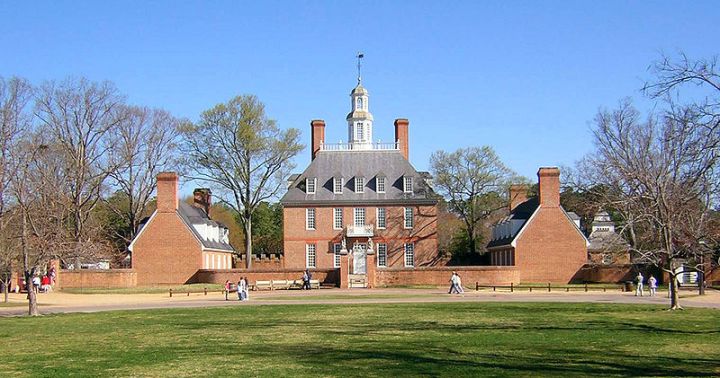
Governor’s Palace in Williamsburg, Virginia. The original structure was built between
1710 and 1722, with further additions made in the 1750s. Fire destroyed the
main house in 1781. The present building was constructed in the early 1930s.
Photo by Larry Pieniazek, 2006, from Wikimedia Commons.
◊ ◊ ◊ ◊ ◊
The 2014 ASECS conference takes place in Williamsburg, 20–22 March. Along with our annual luncheon and business meeting, HECAA will be represented by two panels chaired by Denise Baxter and Amy Freund and Jessica Fripp. In addition to these, a wide selection of sessions that might be relevant for HECAA members are also included below. A full list of panels (68 pages’ worth!) is available as a PDF file here.
◊ ◊ ◊ ◊ ◊
Anne Schroder New Scholar’s Session (Historians of Eighteenth-Century Art and Architecture)
Denise Amy Baxter, 1304 Edgewood Court, Carrollton, TX 75007; denise.baxter@unt.edu
Named in honor of the late Anne Schroder, this seminar will feature outstanding new research by emerging scholars.
◊ ◊ ◊ ◊ ◊
Selfhood and Visual Representation in the Eighteenth Century (Historians of Eighteenth-Century Art and Architecture)
Amy Freund, Texas Christian U. and Jessica Fripp, Parsons The New School for Design; a.freund@tcu.edu and frippj@newschool.edu
This panel will consider the relationship between the visual arts and new ideas of selfhood in the eighteenth century. Enlightenment-era debates about the nature of the self had profound effects on how people imagined the individual’s place in society, how gender, age, and racial difference were framed, how science and medicine conceived of the mind and body, and how emotions such as love and friendship were understood and expressed. Some scholars have approached the question of the eighteenth-century self in terms of the rise of possessive individualism, of secularization, and of consumer culture; others have pointed to the persistence and transformation of traditional hierarchies, of collective identities, and of mysticism and the irrational. We are seeking papers that examine the visual representation of the eighteenth-century self, both in portraiture and in other genres and modes, including (but not limited to) genre and history painting, architecture and the decorative arts, dress, and material culture. We encourage proposals that deal with the eighteenth-century self in Asia, Africa, and the Americas, and with the transformation (or inapplicability) of Enlightenment ideas outside of Europe. (more…)
New Title | Woods in British Furniture-Making, 1400–1900
Distributed by the University of Chicago Press:
Adam Bowett, Woods in British Furniture-Making, 1400–1900: An Illustrated Historical Dictionary (London: Royal Botanic Gardens, Kew, 2012), 368 pages, ISBN: 978-0955657672, $180.
 Bowett charts the species, sources, and history of the woods used in British furniture making from medieval times to the twentieth century. The main dictionary section of the book has 460 entries that cover 477 species of hardwoods and softwoods and detail the history of each wood, describe its uses, and provide cross references to other woods. Extensively illustrated with examples of historic furniture, this book also includes an introductory survey of the historic timber trade and several appendices, including over 160 illustrated wood samples from the Economic Botany collection at Kew Gardens. The layout and accompanying photographs make this a valuable and accessible read that will interest furniture and antique enthusiasts, collectors, restorers, curators, and botanists, among others.
Adam Bowett is an independent furniture historian. He has published widely in academic and popular journals and is the author of two books on English furniture. He works as a consultant to museums and auction houses, as well as to organizations such as the National Trust,
Historic Scotland and Historic Royal Palaces.
Preface
Acknowledgements
Introduction
How to use this book
Hardwoods
Softwoods
Appendix I: Map of the principal trade routes for imported timber 1400–1900
Appendix II: Woods named in the text, arranged by family
Appendix III: Woods named in the text, arranged by geographical region
Appendix IV: Wood specimens
Bibliography
Index of Botanical Names
General Index
Exhibition | Mark Catesby: Watercolours from the Royal Collection
From the Royal Collection:
Mark Catesby: Watercolours from the Royal Collection
Gainsborough’s House, Sudbury, Suffolk, 6 July — 12 October 2013

Mark Catesby, The Bald Eagle, watercolour and bodycolour heightened with gum arabic over pen and ink, ca.1722-26
(Royal Collection 924814)
Watercolours of birds, fish and exotic flora painted by British naturalist Mark Catesby (1682–1749) go on display at Gainsborough’s House in Sudbury, Suffolk, from 6 July. The 27 works lent by Her Majesty The Queen from the Royal Collection were acquired by George III in 1768, when the King purchased Catesby’s original illustrations for Natural History of Florida, Carolina and the Bahama Islands.
Catesby, who was raised and educated in Sudbury, showed a passion for natural history from a young age. After his father died, leaving him a sufficient income, Catesby made extended trips to the east coast of North America from 1712, travelling to Virginia, Carolina, Florida and also to the West Indies.
At the time, there was a burgeoning garden culture in Britain, fuelled by the introduction of plant species from the Near East. This ignited Catesby’s desire to produce a comprehensive study of the flora and fauna native to the eastern seaboard of North America. He collected seeds, animals and botanical specimens during his travels and made detailed drawings along the way. Catesby returned to England in 1726 and began work preparing the plates and text for his Natural History of Florida, Carolina and the Bahama Islands, the first major publication on the subject. The Natural History was issued in parts between 1729 and 1747.
In 1768, George III purchased Catesby’s original watercolours for the Natural History and had them bound into a three-volume set of the publication (rather than the usual two), in the place of the printed illustrations. In more recent times, the watercolours were removed from the volumes for conservation reasons and individually mounted.
Among the studies on display at Gainsborough’s House is The Bald Eagle, which Catesby placed at the beginning of the first volume of Natural History. It was rare for the artist to introduce drama into his compositions, but in this work the eagle is shown swooping to catch a fish which has been dropped by an osprey above.










 Enfilade
leave a comment