Call for Papers | Ateliers et Manufactures, 1789–1815
From the Call for Papers (the PDF includes the French version) . . .
Workshops and Manufactures in the Years between the
French Revolution and the Napoleonic Empire (France, 1789–1815)
Institut national d’histoire de l’art and Centre allemand d’histoire de l’art, Paris, 13–14 June 2014
Proposals due by 30 September 2013
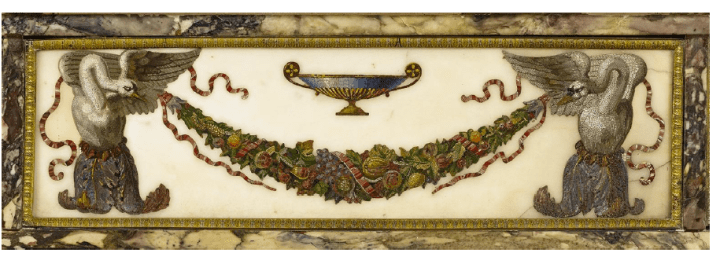
The twenty-five years between the assembly of the États généraux and the end of the Napoleonic Empire saw political, social, cultural and economic changes that created a context of instability for the luxury industries and fine arts in France. Workshops and manufacturers were confronted with material and logistical challenges. The shortage of materials, the collapse of the financial system and the loss of a significant number of skilled workmen to the army, had a direct impact on French productivity. In spite of these difficult conditions, the insecurity and instability of social upheaval and war in this period, creativity and the invention of new trends and fashions were by no means halted in Paris. New markets quickly offered plenty of opportunities for inventive craftsmen to extend and diversify their activities.
Up until now the revolutionary period has mainly been considered as a period of disruption, especially in the field of luxury industries, which were considered to be at odds with the values of the new emerging social system. It is now possible to show that contrary to this general assumption, continuity can be found in this pivotal period between the eighteenth and nineteenth centuries. The quick re-awakening of the production of luxury goods followed the establishment of the Directoire and its flowering during the Napoleonic years is proof of great flexibility and adjustment to social change and the new paradigms of labor. A number of questions emerge from these observations: what events and changes confronted former royal and later national manufacturers, famous workshops and regional producers in the years between the Ancien Régime and the Bourbon Restoration? In what ways were artists and artisans able to adapt or resign themselves to the new challenges? But also – to what extent did these events stimulate new modes of creativity and production which would have an impact on the development of industrialization in France?
This symposium aims to shed light on a pivotal period in the history of material culture and the decorative arts in France. One of its goals is to provide a better understanding of and insight into what exactly happened during these years and into the impact of the transformation of every aspect of civil and industrial life on Parisian and regional production in this period, which is generally recognized as one of cataclysmic change. Organized as an interdisciplinary event, this symposium will study the period from the point of view of art, social, economic and technological histories. Its main objectives are to define and shed light on the specific characteristics of the period and its production, in order to generate new insights and conclusions which complement the field’s well-established stylistic analyses, while also providing new tools for the broader analysis of objects.
Contributions of 20 minutes should approach the following pivotal points:
The Organization of Production: Actors and places of production – The management of workshops before and after the abolition of the guilds in 1791 – The institutional and legal context for production – Creators and makers in different trades linked to the luxury industries – Supply and suppliers of materials – Competition between national and private industries.
Forms and Materials: Tools, techniques and materials – Fashion and trends – The relation of stylistic evolution and industrialization- Professional schools and academic institutions for the industries – Iconographies and style for manufactured goods – Know-how and the evolution of style
Distribution: Industrial exhibitions from 1798 onwards – Methods of distribution – Producers of manufactured goods – Commercial networks – Press and publicity – Franchising and dealers – Places of sale – Diplomatic gifts – Commercial challenge and competition
Papers may be given in French or English language. Proposals for papers of one A-4 side length and a short biography in French or English should be sent to the following address before Monday, September 30th 2013: AteliersManufactures1789-1815@dt-forum.org.
Organisational Board
Natacha Coquery (université Lumière Lyon 2, LAHRA)
Jörg Ebeling (Centre allemand d’histoire de l’art, Paris)
Anne Perrin-Khelissa (université de Toulouse 2 Le Mirail)
Philippe Sénéchal (Institut national d’histoire de l’art)
Scientific Board
Marc Bayard (Mobilier national, Paris) ; Jean-Francois Belhoste (École Pratique des Hautes Études, Paris) ; Andreas Beyer (Centre allemand d’histoire de l’art) ; Philippe Bordes (université Lumière Lyon 2) ; Anne Dion (musée du Louvre) ; Daniela Gallo (université Pierre Mendès France Grenoble 2) ; Liliane Hilaire-Pérez (université Paris 7) ; Ulrich Leben (Bard Graduate Center, New York) ; Lesley Miller (Victoria & Albert Museum, London) ; Jean-Michel Minovez (université de Toulouse 2) ; France Nerlich (université de Tours) ; Odile Nouvel (Paris) ; Jean-Michel Olivier (université de Toulouse 2) ; Hans Ottomeyer (Berlin) ; Daniel Roche (Collège de France, Paris) ; Bénédicte Savoy (Technische Universität, Berlin) ; Patrick Verley (Geneva).
Happy Birthday, Sir Joshua!

Joshua Reynolds, Self-portrait, ca. 1747–49 (London: National
Portrait Gallery). Image from Wikimedia Commons
◊ ◊ ◊ ◊ ◊
To mark the birthday of Sir Joshua Reynolds (1723–92), who would turn 290 today, I draw readers’ attention to this blog posting from the material culture seminar series organized by CRASSH at the University of Cambridge. Katy Barrett summarizes presentations made by Matthew Hunter and Mark Hallett on June 11, each of whom addressed Reynolds’s output under the larger rubric of ‘painted things’. Audio is available here»
Recent TLS Reviews (5 July 2013)
The eighteenth century in The Times Literary Supplement (5 July 2013). . .
Angus Trumble, “Six Half-Lengths: Review of James Stourton and Charles Sebag-Montefiore, The British as Art Collectors, From the Tudors to the Present (Scala, 2012),” TLS (5 July 2013), pp. 3-4.
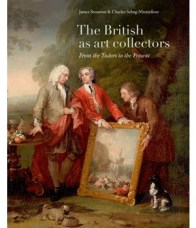 . . . The British as Art Collectors, liberally and beautifully illustrated, sets out the history of the art-collecting impulse in Britain from the beginning of the sixteenth century to the present. Shaping it into four densely packed, chronological sections, James Stourton and Charles Sebag-Montefiore deal, first, with “Royalty” (in other words, collecting at Court, above all the assembly and dispersal of the superb collection of King Charles I at Whitehall); “Aristocracy” (the principally eighteenth-century Whig Grand Tour and country-house phenomena which Quatremère de Quincy had in mind); “Plutocracy” (the transitional period brought about by the displacement effects of the French Revolution and the Napoleonic Wars); and, finally, “Democracy” (which concerns the arrival of the public art museum in the early nineteenth century, its proliferation, and the gradual institutionalization, professionalization and broadening of the collecting impulse into our time).
But this is an over-simplification, for the history of collecting is really the history of individual shoppers, and, occasionally, partnerships or syndicates such as that of the coal and canal magnate the third Duke of Bridgewater, with budgets ranging from the merely large to the positively obscene, and not necessarily husbanded with corresponding degrees of wisdom. It is also the history of sweatypalmed acquisitiveness, of rapacious greed, and also of processes of dissolution and loss – an invariably human story in which mostly anonymous crate-makers, removalists and shipping agents must figure prominently, while debt, disease, dispossession and death often interrupted grand schemes. . .
Perhaps the principal pleasure of The British as Art Collectors . . is the intelligence and effectiveness with which a mass of contemporary illustrative material is marshalled to open a window onto cultural worlds. If at times the text is weighed down by lengthy descriptions of who owned what when, there is also a wealth of information, current and historical, in purely visual form. . .
The full review is available here (subscription required)
◊ ◊ ◊ ◊ ◊
Albert Rivero, “Truths to Life: Review of John Bender, Ends of Enlightenment (Stanford University Press, 2012),” TLS (5 July 2013), p. 12.
 The publication of Imagining the Penitentiary in 1987 established John Bender as a compelling critic of eighteenth-century British literature and culture. That book, written in imitation of Michel Foucault, connected novels by Daniel Defoe and Henry Fielding to the panoptic model of incarceration that was then emerging. Since then, Bender has published a number of important and groundbreaking essays, ranging widely and often brilliantly over various topics and disciplines. Ends of Enlightenment gathers ten of those essays, grouped under three headings (Enlightenment Knowledge, Enlightenment Novels and Enlightenment Frameworks), with a framing introduction elucidating their common themes and concepts. . .
Novelistic realism has a dark ideological side, but not all essays here cast a suspicious eye on Enlightenment. In its ideal quest for universal and objective knowledge, available in conversation and in print to men and women from every walk of life (Jürgen Habermas’s “public sphere,” a construct Bender invokes frequently), the Enlightenment had many salutary effects. Some of these, in fragmentary and surprising ways – Bender regards the democratically composed Wikipedia as today’s version of Diderot and d’Alembert’s Encyclopédie – are still very much with us.
It is in fact the sceptical David Hume who has displaced Foucault as Bender’s principal point of reference, and who inspires the modes of inquiry and ordering knowledge in Ends of Enlightenment. . .
The full review is available here (subscription required)
◊ ◊ ◊ ◊ ◊
James Hall, “Fade to Grey: Review of the exhibition Paper Palaces: The Topham Collection as a Source for British Neo-Classicism, Eton College Library,” TLS (5 July 2013), pp. 17-18.
 . . . Expertly curated by Lucy Gwynn and Adriano Aymonino, Paper Palaces explores the influence exerted on architect-designers by illustrations of antique decorative painting commissioned by Richard Topham (1671-1730), Old Etonian antiquary and MP for Windsor. . .
The exhibition suggests Topham was rather more single-minded and original than Pope would have us believe, even if he did use agents in Italy to amass his roughly 2500 documentary drawings of Roman antiquities. Topham’s was the largest and most systematic collection of its kind in England, unique in being organized by location like a tourist guidebook, with every drawing clearly indexed in his own
hand. . .
New Acquisition | Portrait by Adolf Ulrik Wertmüller
Press release (July 2013) from Stockholm’s Nationalmuseum:
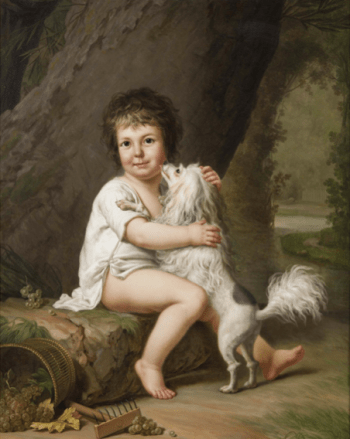
Adolf Ulrik Wertmüller, Henri Bertholet-Campan at Age Two, exhibited at the Salon of 1787 (Stockholm: Nationalmuseum, NM 7133)
Nationalmuseum’s collection of Swedish-French paintings from the 18th century now includes a portrait of the two-year-old Henri Bertholet-Campan (1784–1821), painted by Adolf Ulrik Wertmüller. The boy was the son of Marie Antoinette’s First Lady of the Bedchamber Henriette Genet-Campan. The portrait depicts him with his dog Aline in the English landscape garden at the family’s summer house in Croissy outside Paris. The painting was exhibited at the Salon of 1787, but under the rather anonymous title of A Child Playing with a Dog.
Adolf Ulrik Wertmüller (1751–1811) trained under his second cousin Alexander Roslin in Paris and studied at the French Academy in Rome. When Wertmüller returned to the French capital in spring 1781, he found it difficult to obtain work as a portraitist and instead earned his keep as a copyist at Roslin’s studio. Here he was discovered by the Swedish Ambassador Gustaf Filip Creutz, who made several important commissions. This in turn resulted in Gustav III convincing France’s Queen Marie Antoinette, during his stay in Paris in the summer of 1784, to let Wertmüller paint her portrait as a gift to the Swedish King. The portrait is currently held in the collections of Nationalmuseum.
King Gustav III had intended this to be Wertmüller’s ticket to a successful career in Paris, but jealousies abounded. When the portrait of Marie Antoinette was exhibited in August 1785, it was attacked by the critics. The Queen was also unimpressed. The artist fell into a deep depression, but recovered enough to make the necessary changes before the portrait was dispatched to Sweden the following year. It was Wertmüller’s friend Henriette Genet-Campan who came to his aid. The fact that Wertmüller even got paid was largely down to Mme Campan, since she managed the Queen’s purse and was intimately involved in the royal finances. For security reasons a mutual friend, Gabriel Lindblom, acted as a go-between in contact between the two. Lindblom had been governor to Mme Campan’s younger brother Edmond Genet and served as an interpreter at the French Ministry of Foreign Affairs in Versailles. This explains why Wertmüller was so well informed and why he came to paint almost a dozen portraits of various members of the Genet-Campan family.
As a show of gratitude to his friend Mme Campan, Wertmüller painted a portrait of her two-year-old son Henri in autumn 1786. He had already immortalised the child as a new-born baby and would continue to paint other relatives of Mme Campan. These include the portrait of her sister Adélaïde Auguié dressed as a milkmaid in the royal dairy at Petit Trianon-Le Hameau, painted in 1787. This painting has been part of the museum’s collection since 1951 as a gift from the Friends of Nationalmuseum. A study for the portrait of the French Crown Prince Louis has also since been purchased. Now this latest acquisition adds another piece to the fascinating puzzle of how Wertmüller came to paint his portrait of Queen Marie Antoinette.
Exhibition | The Male Nude: Drawings from the Paris Academy
From Paul Holberton Publishing:
The Male Nude: Eighteenth-Century Drawings from the Paris Academy
The Wallace Collection, London, 24 October 2013 – 19 January 2014
 Including artists such as Rigaud, Boucher, Nattier, Pierre, Carle van Loo, Gros and Jean-Baptiste Isabey, this catalogue of nearly forty French drawings of male nude figures, all drawn between the late seventeenth and the late eighteenth centuries, accompanies an exhibition that is unprecedented in Britain. All from France’s equivalent of the Royal Academy, the École nationale supérieure des Beaux-Arts in Paris, many of the extraordinary drawings are by artists represented in the Wallace Collection.
Painting in eighteenth-century France before the Revolution was centred on the Royal Academy of Painting and Sculpture, which had been founded in 1648. The purpose of the Academy was to train the most important artists and to provide them with the raw materials for successful history painting, which was by far the most esteemed genre for an artist to practise. Budding painters or sculptors would be apprenticed to a master, but much of their training would take place at the Academy where the drawing of the male human figure was at the core of the curriculum. Only after mastering the copying of drawings and engravings, and then casts of antique sculptures, would the student be allowed to progress to drawing the nude figure in the life class. The drawings they produced there were so associated with the Academy that they came to be known as ‘académies’.
The male human figure was regarded as the very foundation of painting and sculpture; it had to be mastered by any aspiring artist of the highest class. No female artists were admitted to the Academy and all models were male. This practice in itself went on to create problems for artists, who lacking the necessary training to portray the female form, were compelled to search out models, not always in the most respectable and salubrious settings. Classes were complemented by courses on anatomy, perspective, geometry, literature and history. The Academy’s training was learned and structured, and, although it was sometimes criticized for its rigour and its insistence on discipline and uniformity, it produced superb draughtsmen. Some of the artists featured became painting Masters of their generation, focusing on historical and allegorical pictures. Others utilised their training in a variety of artistic fields, including Bachelier, who went on to assume the role of Director of Design and Decoration at the Sèvres porcelain factory, influencing many of the pieces exhibited in the Wallace Collection.
Variety and beauty are omnipresent in The Male Nude. The works show figures – sometimes single, sometimes two together – in an enormous variety of poses and in various degrees of light and shade. The study of physiognomic expression was also taught at the Academy, and the facial expressions of the figures always complement the poses they adopt, whether they show, say, serenity, exertion, pleasure or anger.
As a descendant of the French Royal Academy of Painting and Sculpture, the École nationale supérieure des Beaux-Arts owns an incomparable collection of these académies which have come down to it directly from the Academy’s teaching classes. It also owns an outstanding collection of drawings, second only to the Louvre in France, comprising not only a superb group of French drawings, but many works by some of the other great draughtsmen of European art, such as Raphael, Dürer and Michelangelo. This exhibition at the Wallace Collection will be an excellent opportunity for collections at ENSBA – which are open to anyone to visit – to become much better known to a British audience, as well as allowing visitors an insight into this influential, but now non-existent world.
The Wallace Collection displays one of the greatest collections of eighteenth-century French paintings in the world, and these drawings from Paris will make an excellent complement to them. The Hertfords collected almost no academic, or historical, works for which these drawings were the basis, favouring ‘pleasing pictures’: portraits and landscapes. In many ways, The Male Nude will offer the visitor a new dimension and complete the jigsaw. Seen alongside our world-class holdings of eighteenth-century furniture and decorative arts, they will provide a thorough understanding of the period.
Catalogue edited by Emmanuelle Brugerolles with Georges Brunel and Camille Debrabant, The Male Nude: Eighteenth-Century Drawings from the Paris Academy (London: Paul Holberton Publishing, 2013), 144 pages, £25.
Fire Severely Damages the Hôtel Lambert in Paris
As reported by BBC News (10 July 2013) . . .
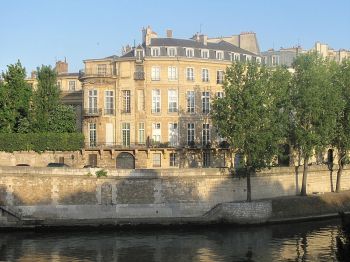
Hôtel Lambert, 2 rue Saint-Louis-en-l’Île, Paris
(Photo: Wikimedia Commons, 2010)
A fire has damaged the landmark 17th-century Hotel Lambert in Paris. Dozens of firefighters tackled the blaze, which broke out overnight on the roof of the riverside mansion in the centre of the French capital. The building was being renovated after its purchase by a Qatari prince in 2007. Located on the World Heritage-listed Seine embankment, the mansion was once home to the 18th-century philosopher Voltaire.
It took six hours for the fire brigade to put out the blaze, which started in an area below the rooftop which emergency services found difficult to access. A large portion of the roof has been destroyed. A spokesman for the fire service, Lieutenant Colonel Pascal Le Testu, said 650 square metres (7,000 sq ft) of the roof had gone, along with a section of a central staircase. Some of the brickwork on the front of the building has collapsed. Renowned fresco ceiling paintings by Charles Le Brun in the Gallery of Hercules were also “severely damaged by smoke and water”, Lt Col Testu said. . .
The full article is available here»
Call for Papers | Questioning the Frame in Decorative Systems
Questioning the Frame in the Decorative Systems of the Modern Era
Jeux et enjeux du cadre dans les systèmes décoratifs à l’époque moderne
Institut national d’histoire de l’art, Paris, 9–10 May 2014
Proposals due by 15 October 2013
International symposium organized by the CHAR (HICSA, University Paris 1 Panthéon – Sorbonne), the Centre François-Georges Pariset (Université Michel de Montaigne – Bordeaux 3) and the GEMCA (Catholic University of Louvain)
In its ability to create systems, modern decor emerges as a phenomenon of artistic practice that deserves further analysis. Between the fifteenth and eighteenth centuries, decoration reached a particularly high degree of elaboration and complexity through the multiplication of presentation devices in the visual discourse, while simultaneously integrating the spatial constraints imposed by supports. This symposium seeks to explore the originality of this phenomenon through the question of the frame. Often neglected and marginalized in studies pertaining to decoration, the frame constitutes one of its essential dimensions, which conditions not only modes of perception but also provides paths towards understanding the mechanisms of decorative systems. Indeed, if decorative systems are the place par excellence of experimentation with the boundaries between real and representational spaces, subtle and varied framing games are the active agents, and shall be explored during this event.
Quadri riportati, architectural elements, anthropomorphic and hybrid figures, feigned materials (tapestries, parchment, leather, etc.), medallions, cartouches, and festoons are some examples of framing devices which, far from being accessory or gratuitous, carry a multitude of illusionistic, syntactic, and semantic implications, all-the-while participating in the visual splendor and the mise-en-scène of the representation. Through the definition and articulation of these particular spaces and discursive registers, framing devices create interpretative solutions, conditioning and guiding the perception and comprehension of visual discourse. Even when the frame appears as a disjunctive element, which separates and differentiates, it can still allow for conjunctions and transitions through space, or, through an excess of reflexivity and a tendency for autonomy, blur and provoke a crisis in the hierarchy between the visual regions. By taking into consideration this perpetual shifting of frontiers, these games and perspectival challenges, the goal of this symposium is to question the framing devices of decorative systems in the modern era. In other words the objective is to understand how the frame participates in the transformation of decor into a system that produces meaning across a variety of supports and mediums.
Among the many issues raised by this topic, some possible themes include:
• What are the specific mechanisms in decorative practice used for defining and creating spaces, images, and graphic or symbolic representations? Could this use of the frame contribute to the definition of certain tendencies or aesthetic currents?
• In terms of reception, what are the devices used to create frontiers or passages between the decor and the viewer? In what ways does decor create effects of presence and distance, thus contributing to the viewer’s experience?
• How does the ornament of the frame respond to the principle of decorum? To what extent does this constitute a transgression? How does the relationship between ergon and parergon apply in this context? How do the boundaries and transitions between these different areas challenge the traditional hierarchies of representation and create spaces of freedom and autonomy?
• How can the transition between different mediums and contexts provoke, for similar devices, varied readings corresponding to particular challenges? How does the use of different materials, real or feigned, participate in the framing process, from an aesthetic as well as a symbolic point of view?
Developing on studies which, since the 1960s, have been problematizing the issues of the frame in the visual arts, and adhering to the current revival of interest in question of the ornamental, this symposium aims to shed light on this essential issue in the art of the modern era, which is the decor. Abstracts of no more than 300 words (in French or English) should be sent before October 15, 2013 by email to the address: cadre.decor.2014@gmail.com
Organizing Committee: Nicolas Cordon, Edouard Degans, Elli Doulkaridou, Caroline Heering
Scientific Committee: Pascal Bertrand, Nicolas Cordon, Edouard Degans, Ralph Dekoninck, Elli Doulkaridou, Caroline Heering, Philippe Morel, Victor Stoichita
The Call for Papers in French is available at L’ApAhAu»
Call for Articles | Museum and Curatorial Studies Review
Museum and Curatorial Studies Review is a new peer-reviewed journal powered by the University of California, Berkeley Electronic Press, and the California Digital Library. Each issue will feature full-length academic articles, exhibition reviews, book reviews and dialogic contributions (such as interviews and open letters).
Volume 1, Number 1 will be published very soon. The editors are now seeking contributions to journal’s second issue. All submissions should be sent electronically in MS Word format and follow The Chicago Manual of Style. The details for each submission type are below:
• Articles (6000–9000 words): send a fully drafted, polished version of the paper to be blind peer reviewed.
• Interviews, open letters, or other conversational pieces (2000–6000 words): send a 300- to 400-word proposal for the item [Note: interviewers are responsible for all transcription work]. Final drafts are also welcome.
• Exhibition reviews (1000–2500 words): send a 250-word proposal that includes a description of the exhibition you intend to review and a brief discussion of its significance to the field of museum and curatorial studies.
• Book reviews (1000–1500 words): send a 250-word proposal that includes a description of the book you intend to review and a brief discussion of its significance to the field of museum and curatorial studies.
Email submissions and inquiries to: macs.review@gmail.com
Exhibition | Shunga: Sex and Pleasure in Japanese Art, 1600–1900
Press release from The British Museum:
Shunga: Sex and Pleasure in Japanese Art, 1600–1900
The British Museum, London, 3 October 2013 — 5 January 2014
Curated by Tim Clark

Torii Kiyonaga, Sode no maki (Handscroll for the Sleeve), ca. 1785
(London: British Museum)
◊ ◊ ◊ ◊ ◊
In early modern Japan, 1600–1900, thousands of sexually explicit paintings, prints, and illustrated books with texts were produced, known as ‘spring pictures’ (shunga). Official life in this period was governed by strict Confucian laws, but private life was less controlled in practice. Often tender, funny and beautiful, shunga were mostly done within the popular school known as ‘pictures of the floating world’ (ukiyo-e), by celebrated artists such as Kitagawa Utamaro (died 1806) and Katsushika Hokusai (1760–1849). This was very different from the situation in contemporary Europe, where religious bans and prevailing morality enforced an absolute division between ‘art’ and ‘pornography’.
 Early modern Japan was certainly not a sex-paradise. However, the values promoted in shunga are generally positive towards sexual pleasure for all participants. Women’s sexuality was readily acknowledged and male-male sex recognised in particular social contexts.
Shunga is in some ways a unique phenomenon in pre-modern world culture, in terms of the quantity, the quality and the nature of the art that was produced. This exhibition — which features some 170 works of explicit shunga paintings, sets of prints and illustrated books drawn from collections in the UK, Japan, Europe and USA — explores some key questions about what is shunga, how it circulated and to whom, and why was it produced. In particular it begins to establish the social and cultural contexts for sex art in Japan.
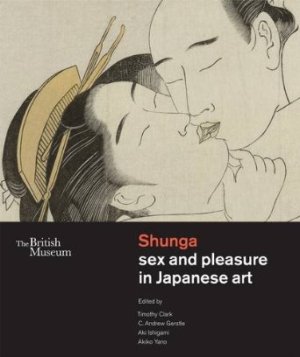
During the late nineteenth and twentieth centuries, shunga was all but removed from popular and scholarly memory in Japan and became taboo. The ambition of the exhibition is to reaffirm the importance of shunga in Japanese and world history. In conjunction with the exhibition, British Museum Press will publish a lavish scholarly catalogue of some 550 pages and with 400 colour illustrations, edited by Timothy Clark (British Museum), C. Andrew Gerstle (SOAS, University of London), Akiko Yano (SOAS) and Aki Ishigami (Ritsumeikan University, Kyoto), and with contributions from more than thirty authors worldwide.
The exhibition is part of Japan400, a nationwide UK series of events celebrating 400 years of Japan-British relations.
◊ ◊ ◊ ◊ ◊
Timothy Clark, C. Andrew Gerstle, Aki Ishigami, and Akiko Yano, eds., Shunga: Sex and Pleasure in Japanese Art (London: The British Museum Press, 2013), 560 pages, ISBN: 978-0714124766, £50.
As reported by AFP, the exhibition includes an age limit requiring visitors under 16 to be accompanied by an adult.
Display | The Trappings of Trade at Osterley Park and House
Opening at Osterley in July:
The Trappings of Trade: A Domestic Story of the East India Company
Osterley Park and House, Hounslow, London, 27 July — 3 November 2013
Curated with UCL’s East India Company at Home Project

◊ ◊ ◊ ◊ ◊
The display explores the story of the East India Company at Osterley. This country house, famous for its extraordinary Adam interiors, holds not only European antiques but is packed with treasures from the East.
Discover the luxuriant materials that transformed the English country houses of Britain during this time and the ships that travelled the perilous trade routes in the 18th century to bring them here. Make discoveries of your own in our activity room for families with a sea-faring theme. See local people and community groups as part of the oral history initiative, which draws connections between Osterley’s early history as an East India Company home and life in contemporary Hounslow.











 Enfilade
leave a comment