Call for Session Proposals | CAA 2014 in Chicago
102nd Annual Conference of the College Art Association
Chicago, 12-15 February 2014
Panel Proposals due by 3 September 2012
The 102nd Annual Conference will take place February 12–15, 2014, in Chicago, Illinois. The Annual Conference Committee invites session proposals that cover the breadth of current thought and research in art, art and architectural history, theory and criticism, pedagogical issues, museum and curatorial practice, conservation, and developments in technology.
The submission process for 2014 proposals is now open. In order to submit a proposal, you must be a current CAA member. For full details on the submission process for the conference, please review the information published below. Deadline: September 3, 2012; no late applications will be accepted. (more…)
Petition Related to Old Masters at the Gemäldegalerie
The following petition, written by Jeffrey Hamburger, Kuno Francke Professor of German Art & Culture at Harvard University, voices concerns for the exhibition fate of Old Masters at the Gemäldegalerie in Berlin. The German text is available at the petition website. Kate Connolly reported on the story for The Guardian (12 July 2012).
◊ ◊ ◊ ◊ ◊
We write to you to ask that you reconsider the current plan to empty the Gemäldegalerie to make room for a display of twentieth-century art from the Pietzsch collection.
We understand that Mies van der Rohe’s Nationalgalerie provides inadequate space for Berlin’s growing collections of modern art, and we welcome the prospect of a permanent home for them.
However, finding that space in the Gemäldegalerie at the expense of one of the world’s premier collections of Old Master paintings, without also making concrete plans to display that collection concurrently in its entirety, would be a tragedy. In the current plan, it appears that once again the past is being asked to make way for the present without sufficient attention to its future. The disappearance into storage of whatever paintings cannot be displayed in the Bode Museum – which we call on you to disclose — is not acceptable, even for only six years. In the current political and economic climate, and with stiff competition for funding from politically more expedient, if culturally more dubious, plans to rebuild the Stadtschloß, we fear that six years could easily become a decade or more.
All too often, it seems, great works of art in Berlin serve as pawns in a seemingly endless chess game, to be moved about and sacrificed at the will and whim of politicians. Germany is fortunate in that culture remains a focus of political and public concern. That concern, however, would best be expressed by finding a reasonable solution, one that respects a legacy that barely survived the centuries and that deserves better than to be rendered invisible for an indeterminate length of time.
We therefore write to ask, not that you shelve your plans for the Pietzsch collection, but rather that you complement them with an adequate strategy that will do justice to the whole of Berlin’s extraordinary collections. We believe that the Old Master collection should be moved to make way for the Pietzsch collection only after space on the Museuminsel has been found to accommodate it – hardly a rash proposal.
Yours sincerely, Jeffrey Hamburger, Kuno Francke Professor of German Art & Culture, Harvard University
To add your name to the petition, click here»
New Title | Sheltering Art: Collecting and Social Identity
From Penn State University Press:
Rochelle Ziskin, Sheltering Art: Collecting and Social Identity in Early Eighteenth-Century Paris (University Park: Penn State University Press, 2012), 392 pages, ISBN: 9780271037851.
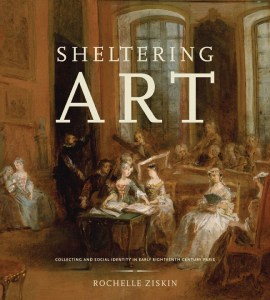 The turn of the eighteenth century was a period of transition in France, a time when new but contested concepts of modernity emerged in virtually every cultural realm. The rigidity of the state’s consolidation of the arts in the late seventeenth century yielded to a more vibrant and diverse cultural life, and Paris became, once again, the social and artistic capital of the wealthiest nation in Europe. In Sheltering Art, Rochelle Ziskin explores private art collecting, a primary facet of that newly decentralized artistic realm and one increasingly embraced by an expanding social elite as the century wore on. During the key period when Paris reclaimed its role as the nexus of cultural and social life, two rival circles of art collectors—with dissonant goals and disparate conceptions of modernity—competed for preeminence. Sheltering Art focuses on these collectors, their motivations for collecting art, and the natures of their collections. An ambitious study, it employs extensive archival research in its examination of the ideologies associated with different strategies of collecting in eighteenth-century Paris and how art collecting was inextricably linked to the shaping of social identities.
Contents
List of Illustrations
Acknowledgments
Abbreviations
Introduction
1 Cultural Geography of the French Capital Circa 1700
2 Cloistered in the Faubourg Saint-Germain
3 The Maison Crozat Transformed
4 A Circle of “Moderns”
5 The Regent and Collecting on the Right Bank
6 Les Anciens and an Expanding Public Realm in the Arts
7 The Circles Converge: Carignan and Jullienne
Conclusion
Note on the Appendixes
Appendixes
1 Maison Crozat, rue de Richelieu, in 1740
2 Hôtel de Verrue, rue du Cherche-Midi, end of 1736
3 Collections of Lériget de La Faye, Glucq de Saint-Port, and Lassay
4 Collections of Nocé and Fonspertuis
5 Hôtel de Morville, rue Plâtrière, in 1732
6 Selections from the Collection of Carignan
Notes
Selected Bibliography
Index
Call for Papers | New Perspectives on the Romantic Period
As noted at BARS:
New Perspectives on the Romantic Period — A Student-Led Conference
Tate Britain, London, 6-7 November 2012
Proposals due 24 August 2012
The Tate Research Centre: British Romantic Art aims to promote research on British art from around 1770 to 1850. Tate’s collection of watercolours and drawings, and major holdings of the work of William Blake and John Constable is among the greatest in the world. With a special focus on Blake, Constable and Turner, the Centre offers a programme of events and activities aimed at encouraging research on these artists and on the Romantic era as a whole, as well as the legacy of Romantic art and culture in Britain and around the world.
This two-day conference is being organised by PhD students in collaboration with Tate. The event will be open to postgraduate researchers from the UK and abroad with a particular interest in the Romantic period, with the aim to discover and explore common areas of interest and create an informal network of students working in this area. We are looking for current postgraduates working on the Romantic period (loosely defined as c.1770–1850) to participate in this event. Contributions may be in the form of a traditional paper (of approximately twenty minutes), a gallery or print-room talk, chairing a round-table discussion or any other idea you may have to disseminate your research and contribute to the broader theme of the conference.Contributions should focus on British art and visual culture of the period c.1770–1850, though related cultural artefacts from different periods and countries may also be brought into the discussion. We particularly encourage submissions relating to the Tate collection.Suggested topics include, but are not limited to:
– National identity; transnational currents or connections; empire
– Religious art
– Spectacle; visual entertainment
– Romantic influence and afterlife; cross-period connections; the past as a theme and obsession
– Definitions or limitations of the term ‘Romanticism’; questioning the canon
– New interpretations of Romantic art and artists; new approaches or methodologies
– Landscape art and theory
– Aesthetic discourses
The precise schedule for the two days is subject to submissions. A social event will be incorporated into the programme on the first evening.Please send a 300-word abstract of your idea (including your name and institutional affiliation) tonewperspectives@tate.org.uk The deadline is Friday 24th August 2012. In relation to successful submissions, the organisers will seek further details on the format and delivery of proposed contributions in due course. Please note there will be no registration fee for this event, but places will be limited.
New Title | Slavery and the Culture of Taste
From Princeton UP:
Simon Gikandi, Slavery and the Culture of Taste (Princeton: Princeton University Press, 2011), 386 pages, ISBN: 9780691140667, $45.
 It would be easy to assume that, in the eighteenth century, slavery and the culture of taste–the world of politeness, manners, and aesthetics–existed as separate and unequal domains, unrelated in the spheres of social life. But to the contrary, Slavery and the Culture of Taste demonstrates that these two areas of modernity were surprisingly entwined. Ranging across Britain, the antebellum South, and the West Indies, and examining vast archives, including portraits, period paintings, personal narratives, and diaries, Simon Gikandi illustrates how the violence and ugliness of enslavement actually shaped theories of taste, notions of beauty, and practices of high culture, and how slavery’s impurity informed and haunted the rarified customs of the time.
Gikandi focuses on the ways that the enslavement of Africans and the profits derived from this exploitation enabled the moment of taste in European–mainly British–life, leading to a transformation of bourgeois ideas regarding freedom and selfhood. He explores how these connections played out in the immense fortunes made in the West Indies sugar colonies, supporting the lavish lives of English barons and altering the ideals that defined middle-class subjects. Discussing how the ownership of slaves turned the American planter class into a new aristocracy, Gikandi engages with the slaves’ own response to the strange interplay of modern notions of freedom and the realities of bondage, and he emphasizes the aesthetic and cultural processes developed by slaves to create spaces of freedom outside the regimen of enforced labor and truncated leisure.
Through a close look at the eighteenth century’s many remarkable documents and artworks, Slavery and the Culture of Taste sets forth the tensions and contradictions entangling a brutal practice and the distinctions of civility.
Simon Gikandi is the Robert Schirmer Professor of English at Princeton University.
◊ ◊ ◊ ◊ ◊
July 2012 Issue of the Journal of the History of Collections
The following selection of articles from the current issue address the eighteenth century (access to full texts will require institutional subscriptions).
◊ ◊ ◊ ◊ ◊
Journal of the History of Collections 24 (July 2012)
A R T I C L E S
 Thomas Ketelsen and Christien Melzer, “The Gottfried Wagner Collection in Leipzig: Insights into a Middle-Class Private Collection of c. 1700,” pp. 199-218.
[Abstract] [Full Text] [PDF]
Cristiano Giometti, “‘Per accompagnare l’antico’: The Restoration of Ancient Sculpture in Early Eighteenth-Century Rome,” pp. 219-30.
[Abstract] [Full Text] [PDF]
David A. Wisner, “French Neo-Classical Artists and Their Collections,” pp. 231-42.
[Abstract] [Full Text] [PDF]
B O O K R E V I E W S
Nicholas Tromans, “Review of Spanish Art in Britain and Ireland, 1750-1920: Studies in Reception in Memory of Enriqueta Harris Frankfort, edited by Nigel Glendinning and Hilary Macartney (2010),” pp. 276-77.
[Full Text] [PDF]
Walking Tour of London’s Coffehouses
From Unreal City Audio:
Tour of London’s Coffeehouses with Matthew Green
Unreal City Audio: London Walking Tours, Next tour is 28 July 2012
 Join actors, musicians, and Dr Matthew Green for a caffeinated tour of London’s original – and best – coffeehouses: from the City’s warren of medieval streets, through St Paul’s Churchyard, down historic Fleet Street, and into the cobbled courtyards of the Temple. Free shots of black and gritty coffee, brewed after the 18th-century fashion, included.
The streets of London are awash with chain coffee shops. But they are a dismal incarnation of London’s historic coffee culture: a heady brew of wit, wisdom, innovation…and crucified crocodiles.
London’s love affair with coffee can be traced back 350 years to a muddy churchyard in the heart of the City of London. Dr Green will meet you in this churchyard for it was here, in 1652, that a Greek visionary with a twirly moustache and shocking English accent first sold a foul-looking liquid to the public. Coffee would transform the face of the metropolis forever, spawning more than 3,000 coffeehouses, triggering a media boom, scientific discoveries, literary excellence, freedom of speech, dolphin dissections, and imperial triumphs. It was coffee, not tea, that built the British Empire.
Learn about the meteoric rise of the coffeehouses in the 17th century as you weave past their original sites on Cornhill, Cheapside, St Paul’s and Fleet Street; jolt as actors in period costume leap out performing real debates that raged around their candlelit tables hundreds of years ago; hear Dr Green tell stories of the kaleidoscopic activities that went on inside their walls: from dolphin dissections at the Grecian Coffeehouse to lethal duels over Latin grammar at Tom’s; from slave auctions at Garraway’s to ventriloquism and viper decapitations at John’s.
Marvel at a world where you could begin a conversation with anyone you liked simply by asking for the latest news; feel a tinge of nostalgia for this lost world of social conviviality as you gaze through the windows of the cloned coffeehouses that have usurped the City.
◊ ◊ ◊ ◊ ◊
The route (from a previous tour) is available here»
Call for Papers | Additional HBA Session at CAA 2013
In addition to the regular session chaired by Julie Codell on ‘Parallel Lines Converging: Art, Design, and Fashion Histories’, the Historians of British Art is sponsoring a 90-minute session on ‘British Visual Culture and the Levant’ at the annual meeting of the College Art Association in New York, 13-16 February 2013. Whereas the deadline for proposals for regular sessions was May 4, the due date for this panel is not until September 1. Moreover, as an additional, short session, not subject to the regular CAA purview, neither CAA membership nor CAA conference registration is required for speakers or for those attending the panel. All participants are, however, required to be members of HBA. Please direct any questions to the chairs, Eleanor Hughes and Christine Riding. -CH
◊ ◊ ◊ ◊ ◊
CAA 2013 | HBA Affiliate Session: British Visual Culture and the Levant, 1600-1830
New York, 13-16 February 2013
Proposals due by 1 September 2012
This panel aims to address a variety of ways in which interactions between Britain and the Levant were reflected in contemporary visual and material culture during the two centuries before professional artists such as John Frederick Lewis and David Roberts began traveling to Egypt and the Holy Land in search of subject matter. The Levant is here defined as the countries of the eastern Mediterranean–roughly corresponding to present-day Greece, Turkey, Syria, Lebanon, Iraq, Israel, Jordan, Egypt, and Libya–which for much of the period fell under the control of the Ottoman Empire. We welcome papers addressing a wide range of topics, including illustrated travel accounts, the exchange of commodities and customs, scholarly expeditions and the rediscovery of classical and biblical sites, the reception and use of middle-eastern imagery by British artists, and the geo-political importance of the region as mediated in visual representations, as well as those that might address broader questions relating to imperialism and orientalism.
Please submit a CV and a 250-word abstract to Eleanor Hughes (eleanor.hughes@yale.edu) and Christine Riding (criding@nmm.ac.uk).
Exhibition | Prints at the Frick in Pittsburgh
From the Frick Art & Historical Center:
In the English Manner: Mezzotint Portraits
Frick Art & Historical Center, Pittsburgh, 16 June — 2 September 2012
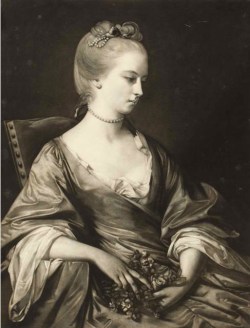
Edward Fisher, after Sir Joshua Reynolds, Miss Jacob alias Miss Roberts alias Mrs. Glynn, 1762. Published 1762 by Johnathan Spilsbury. Mezzotint (Pittsburgh: Frick Art & Historical Center)
The temporary exhibition galleries at the Frick is home to three simultaneous exhibitions of prints this summer. Thirty-five etchings by 17th-century master Jacques Callot and his followers form the cornerstone of our summer look at printmaking. Together, the three exhibitions span more than 200 years and provide a look at three different centuries as observed by artists working with different techniques and for different purposes, yet all illustrating the importance of the printmaker in recording, publishing and disseminating a distinct view of the world. . . .
While Callot’s work gives us a look at a slice of 17th-century life and subject matter, a selection of fine 18th-century English mezzotints purchased by Henry Clay Frick in the early twentieth century provides a fascinating look at who-was-who in eighteenth-century England. The majority of these mezzotints are of fashionable society figures whose appeal has endured for collectors. English portraiture in particular was extremely popular with American collectors in the early 20th century. A collection of portraits evoked an appreciation of history and continuity, while conjuring images of a gracious lifestyle to which America’s newly rich aspired. Frick’s mezzotints, purchased from one of his regular dealers, Knoedler & Co, were hung at both his New York residence and his summer home in Massachusetts.
Mezzotint is a printmaking process that dates to the seventeenth century. It quickly gained prominence as the preferred method for creating reproductions of famous paintings. Used with particular success to make reproductive prints of portraits by Thomas Gainsborough (1727–1788), Sir Joshua Reynolds (1723–1792), John Hoppner (1758–1810), and Sir Thomas Lawrence (1769–1830), the process became so popular in 18th-century England that the technique is sometimes referred to as “the English manner.” Mezzotint as a form was prized for its ability to imitate the tonal properties of painting.
The technique begins with a copper plate that is “rocked” over its entire surface. This rocking, done with a sharp, toothed instrument, creates a surface covered with tiny metallic burs which hold the ink—a completely rocked plate prints a rich velvety black. The image is created by flattening the burs, and creating smooth areas in the copper; the smoother or more polished the plate, the lighter the area prints. Even without the use of colors, a mezzotint has incredible depth and richness of tone, which in the hands of a skilled printmaker, creates a painterly feel.
The 13 prints included in this exhibition are almost all of fashionable ladies, some from a series by Valentine Green (1739-1813) published in 1780, Beauties of the Present Age, which featured Green’s mezzotints made after Reynolds’ portraits. An etcher, mezzotint, and aquatint artist, Green was one of the most celebrated and prolific British printmakers of the late eighteenth century. He produced nearly 400 plates in his distinguished career, which included an appointment as Royal Engraver to King George III.
Henry Clay Frick owned a number of significant oil on canvas examples of eighteenth-century portraiture; Yet, Frick and his peers also prized the works of the masters of the mezzotint—artists like Valentine Green and John Raphael Smith (1752–1812) who could take on a Gainsborough or a Reynolds and translate its power into print.
Exhibition | Drawings from the Christian and Isabelle Adrien Collection
Didier Rykner reviewed the exhibition for The Art Tribune in May (with an English version available). From the museum’s website:
Une Collection Particulière: Les Dessins de la Collection Christian et Isabelle Adrien
Le Musée des Beaux-Arts de Rennes, 21 March — 26 August 2012
 Le musée des Beaux-Arts de Rennes présentera, à partir du 21 mars, les plus belles feuilles de la collection de dessins de Christian et Isabelle Adrien. Au hasard des rencontres, à la lumière de quelques intuitions fulgurantes, M. Adrien a inlassablement cherché et étudié, tout au long de sa vie, les feuilles dessinées par les grands maîtres du passé. C’est à Rennes que ce collectionneur d’origine bretonne invite aujourd’hui le public à venir partager sa passion pour le dessin ancien. La découverte de près de quatre-vingt dessins français (La Hyre, Poussin, Boucher), italiens (Bandinelli, Salviati, Carraci) et nordiques (Bloemaert, Rubens), dont beaucoup sont encore inédits, marquera l’un des temps fort de la Semaine du dessin 2012 et de la programmation culturelle rennaise du printemps et de l’été prochain. Le catalogue de l’exposition, qui rassemble les notices des plus grands spécialistes de
chaque artiste, est dirigé par Monsieur Rosenberg, de l’Académie française.
◊ ◊ ◊ ◊ ◊
Catalogue: Francis Ribemont and Pierre Rosenberg, Dessins de la collection Christian et Isabelle Adrien (Paris: Editions Chaudun, Musée des beaux-arts de Rennes, 2012), 207 pages, ISBN: 9782350391281, $77.50. [Available from ArtBooks.com]










 Enfilade
leave a comment