HECAA’s Young Scholars Session at ASECS, 2012
With CAA now behind us, ASECS is just around the corner in San Antonio, 22-24 March. More to come soon, but here’s HECAA’s New Scholar Session:
HECAA New Scholars Open Session
Chairs: Melissa Hyde (University of Florida) and Heidi Kraus (The University of Iowa)
- Katherine Arpen (University of North Carolina at Chapel Hill), “Touch, Sensation, Imagination: Étienne-Maurice Falconet’s Bather“
- Zirwat Chowduhry (Northwestern University), “Incongruously Indian: The Joke behind George Dance the Younger’s Guildhall Facade”
- Amanda Strasik (The University of Iowa), “Portraying the (Future) Queen: Le Portrait de Marie-Joséphe de Saxe et Le Duc de Bourgogne“
- Hyejin Lee (University of North Carolina at Chapel Hill), “The Language of Music in Jean-Baptiste-Siméon Chardin’s Food Still Lifes”
Call for Papers | Gardening and Knowledge
Gardening and Knowledge: Landscape Design and the Sciences in the Early Modern Period
Hanover, 17-19 September 2012
Proposals due by 29 February 2012
Gardening and Knowledge is co-organised by the Centre of Garden Art and Landscape Architecture at the Leibniz Universität Hannover and the Interdisciplinary Centre for Science and Technology Studies (IZWT) at the Universität Wuppertal in Hannover. The workshop will open on the evening of 17 September with a keynote lecture by Professor Dr. Michael Leslie and will conclude on September 19. Because experts from the USA and several European countries will be participating, the conference language will be English.
Speakers have already committed to presenting on such topics as:
– Gardening nature, gardening knowledge: early modern gardens and the rise of natural knowledge
– John Evelyn, the Elysium Britannicum and the generation/ creation of knowledge
– Water technology, the increase of knowledge and its impact on gardens in the time of the Renaissance
– Botanical illustrations and the cultivation of botanical knowledge in the early modern era
– Water technology and the theory of perspective in Early Modern garden art
– the scientific approach and professionalism in garden art historiography in the Early Modern Period
Proposals for papers are welcome by February 29, 2012. The workshop’s scope and aims invite interdisciplinary collaboration:
proposals from all disciplines that can meaningfully contribute to expanding the field of “Gardens and Knowledge”are welcome. Special consideration will be given to proposals from emerging scholars. Proposals must include a proposed title and an abstract (1–3 pages) of a 20-minute talk. The intention is to publish the conference proceedings promptly.
Please send titles, abstracts (1-3 pages) and a short CV (one page max.) via post or e-mail to:
cgl@uni-hannover.de
Zentrum für Gartenkunst und Landschaftsarchitektur
Leibniz Universität Hannover Herrenhäuser Straße 8 D-30419 Hannover, Germany
Exhibition | Red Chalk: Raphael to Ramsay
Press release from the National Galleries of Scotland:
Red Chalk: Raphael to Ramsay
Scottish National Gallery, Edinburgh, 2012
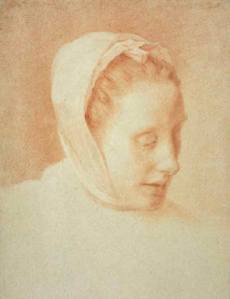
Allan Ramsay, "Head of Margaret Lindsay, The Artist’s Second Wife, Looking Down," ca. 1776 (Edinburgh: Scottish National Gallery)
This spring, a fascinating new exhibition at the Scottish National Gallery will explore the versatile and beautiful drawing medium of red chalk. Comprising some 35 works from the Gallery’s world-class collection, Red Chalk: Raphael to Ramsay will showcase a diverse range of exquisite drawings by distinguished artists, such as Peter Paul Rubens, Salvator Rosa, Jean-Antoine Watteau, Francois Boucher and David Allan. The display will feature works which, due to their delicate nature are rarely on show, as well as a number of drawings being exhibited for the first time.
Red chalk was first used for drawing on paper in late-15th century Italy. Chalk is a naturally occurring mineral, quarried directly from the earth then cut into drawing sticks which can be hand-held or chipped into a point and set into a holder. Drawing chalk can also be made, using ground up natural chalk mixed with water to form a paste then rolled into drawing sticks. This display will highlight the ways in which artists have, over the centuries, exploited the unique nature of red chalk to produce an array of dazzling and distinctive effects that cannot be achieved with any
other drawing medium.
The earliest drawing on display, and a highlight of the show, will be Raphael’s Study of a Kneeling Nude. This beautiful life-study was made in about 1518 and is a preparatory drawing for one of a series of Raphael’s painted frescos. The delicately drawn figure reveals not only the artist’s phenomenal skill as a draughtsman, but also his meticulous preparation for each composition.
Rosa’s powerful and arresting mid-17th century drawing, Head of a Bearded Man, is a fantastic example of red chalk being used to produce a highly expressive finished drawing, intended as a piece of art in its own right. A sheet of figurative studies by the influential Baroque draughtsman Pompeo Girolamo Batoni (1708–87), reveals the incredible precision and control that can be achieved with red chalk, whilst Rubens’ Four Women Harvesting from ca. 1630 demonstrates how effectively chalk can be used for rapid sketching, with the simplest and most minimal strokes.
Red chalk experienced a surge in popularity with French artists in the 18th century. Drawings in the display by Watteau and Boucher will showcase how the medium was used by artists of the Rococo period to produce highly decorative and elegant drawings. Studies by Fragonard and Hubert will also provide superb examples of red chalk being chosen as a useful medium for highly evocative depictions of the landscape.
Other highlights will include a preparatory study by Guercino for his monumental oil painting of Erminia Finding the Wounded Tancred (currently displayed in the main gallery), and the Scottish portrait painter Allan Ramsay’s iconic drawing from 1776 of his second wife, Margaret Lindsay. The show will also include works by artists David Allan, William Delacour and Archibald Skirving to illustrate how the medium was adopted in Scotland.
Whether used to draw a detailed study from nature, a summary sketch or a highly polished finished drawing, red chalk is an enduringly popular, richly expressive and unique medium for draughtsmen. Red Chalk: Raphael to Ramsay will showcase the breadth and variety of the Gallery’s drawings collection whilst providing a wonderful opportunity to see beautiful and accomplished drawings by a selection of our most admired artists.
Exhibition | Blazing with Crimson: Tartan Portraits
From the National Galleries of Scotland:
Blazing with Crimson: Tartan Portraits
Scottish National Portrait Gallery, Edinburgh, 1 December 2011 — 31 December 2013
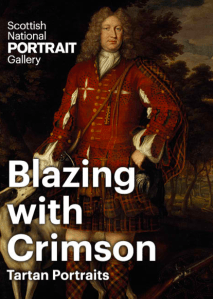 Highland dress and tartan fabric are universally recognised signs of Scotland and Scottish identity. This display explores what these distinctive garments and this highly recognisable textile meant to six different people who were painted between 1680 and 1780.
At first associated specifically with the Gaelic north and west of the nation, in particular with the flowering there of an elite warrior culture, the ‘Highland habit’ was subsequently used to convey various and sometimes conflicting messages. Highland dress was adopted by the Hanoverian army as it struggled to impose authority within Scotland, and the kilted soldier soon became a powerful symbol of the wider British Empire. In the nineteenth century British kings and queens led an obsession with Highland costume. Commerce combined with nostalgic scholarship to create a proliferation of different tartans linked to specific clans.
What most of our images have in common is a sense that the sitters, even when far from home, enjoyed the opportunities for display afforded by their dress. The artists appear to have been equally entranced by the visual appeal of bright colour and bold pattern, ample drapery and picturesque accessories.
The exhibition site includes a section on How to Wear a Great Kilt!
Call for Book Proposals: New Series from Ashgate
As noted at Richard Woodfield’s site at Academia.edu:
Monographs in Art Historiography
A New Series from Ashgate Publishing Edited by Richard Woodfield
The aim of this series is to support and promote the study of the history and practice of art historical writing focusing on its institutional and conceptual foundations, from the past to the present day in all areas and all periods. Besides addressing the major innovators of the past it also encourages re-thinking ways in which the subject may be written in the future. It ignores the disciplinary boundaries imposed by the Anglophone expression ‘art history’ and allows and encourages the full range of enquiry that encompasses the visual arts in its broadest sense as well as topics falling within archaeology, anthropology, ethnography and other specialist disciplines and approaches. It welcomes contributions from young and established scholars and is aimed at building an expanded audience for what has hitherto been a much specialised topic of investigation. It complements the work of the Journal of Art Historiography. Proposals should take the form of either
1) a preliminary letter of inquiry, briefly describing the project; or
2) a formal prospectus including: abstract, table of contents, sample chapter, estimate of length (in words, not pages), estimate of the number and type of illustrations to be included, and a c.v.
Please send a copy of either type of proposal to both the series editor and to the publisher:
Professor Richard Woodfield, Editor of the Journal of Art Historiography, http://arthistoriography.wordpress.com,
r.woodfield@bham.ac.uk and Erika Gaffney, Publishing Manager, Ashgate Publishing Company, 101 Cherry Street, Suite 420, Burlington VT 05401-4405, USA, egaffney@ashgate.com
New Title: ‘Mapping India’
Press release from Kodansha Europe:
Manosi Lahiri, Mapping India (London: Kodansha Europe, 2012), 320 pages, ISBN: 9788189738983, £90.
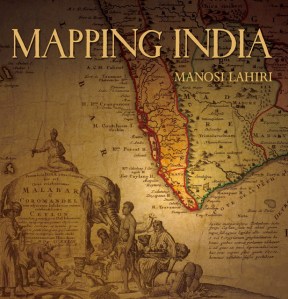 It began five hundred years ago when the very first modern maps of India were drafted. Travellers, wanderers, explorers and traders came overland from the West and carried hack tales about the India of their perception. The first maps of India were drawn based on the accounts of these men. When the sea route to India opened, sailors ferried hack information about the ports they touched on their way to India. Marine charts of the routes along the ocean coasts and artistic representations of port cities followed. As Europeans came in large numbers to trade and conquer, new territories further inland were mapped. The British surveyed and mapped India under their rule to settle borders, calculate tributes, assess taxes and record defence positions. Later, as scientific knowledge and instruments improved, extensive terrestrial surveys and compilation of their results into maps took place. At the end of the colonial period, once again maps identified the boundary between the new nations of India and Pakistan on maps of the sub-continent.
Mapping India presents an overview of important maps that eloquently reflect the changing social and political fortunes of India. These maps speak of the commercial interests and wars that led to the colonisation of India, and show territories the size of countries that were conquered, ceded or controlled through treaties. They also record changed courses of rivers, routes taken by armies, people living in communities in new cities, places where famines occurred, how the highest peak was discovered and named, when native royalty gathered to pay respect to the British Emperor, and the destination to which Mahatma Gandhi marched with his supporters for the salt satyagraha. From the earliest chronicles of India to its post-Independence strides, Mapping India is the story of India recounted through its maps.
Manosi Lahiri is a professional geographer. She holds a Bachelor’s degree in Geography from the University of Calcutta and Master’s degree in Human Geography from University of Delhi. As a Ford Foundation scholar, she took a course in Urbanisation at Centre for Urban Studies, University College, London and read for a Master’s degree in Geography of Monsoon Asia at the School of Oriental and African Studies, University of London. She completed her PhD in Geography at University of Delhi. Manosi was lecturer at Kirori Mal College, University of Delhi and undertook consulting work for several UN agencies. Her interest in Geographic Information Systems (GIS) started when she was a Visiting Fellow at the University of Durham in 1986. She founded ML Infomap, a pioneering GIS company, in 1993 to propagate GIS technology. In the intervening years the company has grown as a leader in the field and is accepted as a standard bearer in geographic information on India. Manosi received the Lifetime Achievement Award from GIS Development at MapIndia 2010.
Manosi has several publications to her credit: The Bihar GIS, and the series Understanding Geography for Middle Schools and Exploring Geography. Her widely acclaimed travelogue, Here Be Yaks: Travels in Far West Tibet, describes the source of the Sutlej and her journeys to Mount Kailash and Lake Manasarovar. Mapping India has been an area of interest that she has pursued for several years. Manosi has travelled extensively and is a keen reader. She has two daughters and lives in Gurgaon, India.
Exhibition: Adrian Zingg
From the Staatliche Kunstsammlungen Dresden:
Adrian Zingg: Pioneer of Romanticism / Wegbereiter der Romantik
Residenzschloss Dresden, 17 February — 6 May 2012
Kunsthaus Zürich, 25 May — 12 August 2012

Adrian Zingg, “Am Wasserfall,” 1785, Feder, aquarelliert © Kupferstich-Kabinett, Staatliche Kunstsammlungen Dresden, Fotograf: Herbert Boswank
An exhibition by the Kupferstich-Kabinett (Collection of Prints, Drawings and Photographs) of the Staatliche Kunstsammlungen Dresden in collaboration with Kunsthaus Zürich
Adrian Zingg, born in St. Gallen in 1734 and raised there, studied with Johann Ludwig Aberli in Bern and with Johann Georg Wille in Paris. In 1766, he came to Dresden. Together with his Swiss fellow, the portrait painter Anton Graff, he discovered and hiked in the Saxon and Bohemian landscape. Even today, his indexing of the site is known to have motivated the naming of the Saxon Switzerland. Zingg was running a very successful workshop in Dresden. Being a teacher for etching at the local art academy, he influenced an entire generation of landscape artists in Dresden. Furthermore, Zingg’s aftermath on the depiction of topographical landscape extended far from his death in 1816. Caspar David Friedrich was his most important heir and, at the same time, he overcame his idea of landscape depiction in the spirit of Enlightenment and Classicism.
◊ ◊ ◊ ◊ ◊
Note (added 25 May 2012): The catalogue is available at Michael Shamansky’s artbooks.com — Petra Kuhlmann-Hodick et al., Adrian Zingg: Wegbereiter der Romantik (Dresden: Sandstein, 2012), 280 pages, ISBN: 9783942422864, $72.50.
Vidal Award Results
Warm congratulations to this year’s recipients of the Mary Vidal Award!
Lauren Cannady (New York University) to present a paper, “The Garden Landscape and the French Interior” at the HECAA New Scholars session at CAA
Amanda Strasik (University of Iowa) to present a paper, “Portraying the (Future) Queen: Le Portrait de Marie-Josèphe de Saxe et le duc de Bourgogne,” at the HECAA New Scholars session at ASECS
Happy President’s Day! — Washington on Civility
The text isn’t a new release, but I only recently learned of it, thanks to Courtney Barnes of Style Court, who pointed me to this version. Washington’s rules themselves, from a manuscript in the Library of Congress, are widely available for free at a variety of websites, including NPR (which featured a story on Brookhiser’s book in 2003) and Colonial Williamsburg.
On a more personal note, I recall that my mother, a school teacher for much of her life, would observe the holiday by taking chocolate-covered cherries in for her third-graders. Given that a large number (if not most) of the students were none too fond of these treats, it seemed like the perfect way to underscore the bittersweet component of national myth-making. -CH
◊ ◊ ◊ ◊ ◊
From the University of Virginia Press:
Richard Brookhiser, ed., Rules of Civility: The 110 Precepts that Guided Our First President in War and Peace (Charlotttesville: University of Virginia Press, 2003), 96 pages, ISBN: 9780813922188, $18.
 As a young man, George Washington admired and copied into a little notebook 110 rules for civil behavior that originated from a Jesuit textbook. Washington took these rules very much to heart, and that handwritten list remained with him throughout his life, serving as inspiring guidance from his military days at Valley Forge and Yorktown to his two terms as president. Guidance that at first sounds archaic, it is in fact just as relevant as — indeed, possibly more necessary than — it was nearly three hundred years ago. Richard Brookhiser makes clear the pertinence of these rules for modern readers and proposes that now more than ever we will be wise to follow the modest example of such a great man. Witty and insightful, Brookhiser’s commentary offers real-world instruction in the lost art of self-discipline, and his new preface provides a compelling and timely context in which to employ these guidelines today.
Richard Brookhiser, senior editor of the National Review and a columnist for the New York Observer, is the author of Founding Father: Rediscovering George Washington; Alexander Hamilton, American; and America’s First Dynasty: The Adamses, 1735-1918.
Washington’s Wine Cooler
A silver wine cooler owned by Washington sold at Christie’s on 19 January 2012. Here’s the report from ArtDaily.com:
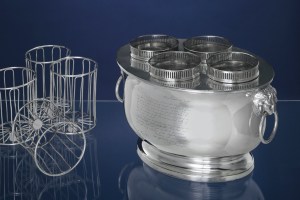 A Sheffield-plated silver wine cooler, ordered by George Washington in 1789, and given to Alexander Hamilton in 1797, sold at Christie’s during Americana Week for $782,500, exceeding its estimate of $400,000-600,000. This four-bottle wine cooler is an exceptionally well documented historical object, symbolizing the famous partnership between Washington and Hamilton in the early days of the republic. It was sold by direct descendants of Alexander Hamilton and bought by Americana expert, Gary Hendershott.
Jeanne Sloane, Deputy Chairman, Head of Silver, comments, “We are thrilled with the result of this unique piece of American history—the only three-dimensional object known to connect Washington with Hamilton, his most important collaborator.”
The four-bottle wine cooler is one of four commissioned by George Washington in 1789 to be used for entertaining after dinner. Detailed correspondence between Washington and his emissary, Gouvernor Morris, who was tasked with procuring objects to outfit the President’s House, describes the great level of forethought Washington devoted to creating an appropriate style for the new country.
In response to Washington’s admonition to “avoid extravagance,” Morris wrote to Washington in 1790, “I think it of very great importance to fix the Taste of our Country properly, and I think Your Example will go very far in that respect. It is therefore my Wish that every Thing about you should be substantially good and majestically plain; made to endure.”. . . .
The full article is available here»










leave a comment