Call for Papers: Two Study Days on Montfaucon
As noted at Le Blog de l’ApAhAu:
L’Antiquité expliquée et représentée en figures de Montfaucon : genèse et réception
Bibliothèque Carré d’Art de Nîmes, 12 October 2012
Médiathèque du Grand Narbonne, 22 March 2013
Proposals due 15 April 2012
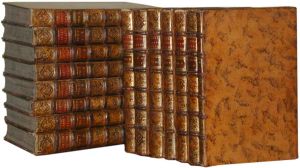
This second edition of Montfaucon's "L’Antiquité expliquée et représentée en figures" is available from the Manhattan Rare Book Company for $13,000. Click on the photo for more information and images from the plates.
La publication à Paris en 1719 des 10 volumes de L’Antiquité expliquée et représentée en figuresa constitué un véritable événement éditorial, avec un chiffre de tirage imposant au regard de l’histoire du livre, et plus particulièrement du livre illustré – dans sa version finale, augmentée de 5 volumes de suppléments, l’ouvrage intègre plus de 1300 planches reproduisant œuvres d’art, monnaies, objets et monuments de l’Antiquité. Ce succès en concrétise un autre : celui, intellectuel, du long travail de collecte et d’érudition mené par le bénédictin dom Bernard de Montfaucon pour rassembler dans un monumental « musée de papier » les connaissances de l’époque sur l’Antiquité.
 La place remarquable occupée par cette « histoire visuelle » dans l’évolution de l’antiquarisme et de ses réseaux en Europe est indiscutable : au xviiie siècle comme au xixe encore, nombreux sont ceux qui citent le languedocien Montfaucon et s’y réfèrent, explicitement ou implicitement, pour construire et étayer leur propre regard sur le passé, soit au travers d’une filiation soit en se démarquant de leur modèle. Dans le même temps, l’influence de l’ouvrage déborde le champ de l’histoire, infléchi par les deux disciplines émergentes de l’archéologie et de l’histoire de l’art, pour s’exercer aussi dans le domaine littéraire, une part de son rayonnement aujourd’hui encore sous-estimée.
Les deux journées d’études envisagées se donnent pour objectif de réévaluer la place de l’œuvre de Montfaucon dans l’histoire des idées et des savoirs, à la croisée des champs de l’histoire, de l’archéologie, de l’histoire de l’art et de la littérature ; elles proposent de mener une réflexion sur la genèse et les réceptions de l’AERF depuis sa parution. La première de ces deux journées, qui portera sur l’élaboration et la publication de l’œuvre, se déroulera à la Bibliothèque Carré d’Art de Nîmes le vendredi 12 octobre 2012 : il s’agira de contextualiser l’entreprise de Montfaucon en clarifiant son arrière-plan intellectuel (vie culturelle, littéraire et savante au début du xviiie siècle ; Montfaucon et la congrégation de Saint-Maur ; sources et références de l’AERF) et en examinant l’ouvrage en lui-même (intentions, genre, démarche scientifique, méthodes à l’œuvre, représentation véhiculée de l’Antiquité). La seconde de ces journées, qui s’intéressera aux réceptions, jusqu’à nos jours, de l’AERF, se déroulera à la Médiathèque du Grand Narbonne le vendredi 22 mars 2013 : y seront précisées les influences directes ou obliques de l’œuvre sur des ouvrages et/ou démarches ultérieures, à partir d’une réévaluation de son audience (public visé/public réel, réception critique, « autorité » de l’auteur, etc.).
Les propositions de contribution (300 mots environ) sont à adresser avant le 15 avril 2012 à Véronique Krings, Université de Toulouse, PLH ERASME (vkrings@mail.com) et Magali Soulatges, Université d’Avignon, IRCL Montpellier III (magali.soulatges@univ-avignon.fr).
Le souci de favoriser une approche pluridisciplinaire du sujet (par les historiens, archéologues, historiens de l’art et littéraires) guidera le choix des communications retenues.
Call for Articles: Eating Together
I’m afraid there’s not much time for this one, but interesting enough that I wanted to pass it along. -CH.
Special Issue of Museums & Social Issues on Eating Together
Articles or Prospectuses due by 20 December 2011

Hanoverian Table Setting (Photo from M. Ford Creech Antiques, click on the image to visit the site)
The deadline is approaching for submitting articles or reviews for the next issue of the journal Museums & Social Issues (published by Left Coast Press, Inc). Tentatively titled Eating Together, the issue will examine the intersection of museum practice and access to and changing traditions associated with food. We would like to highlight programing and exhibits exploring food access, eating practices, sustainability, preservation of heritage seeds, traditional cuisines, culinary science and other creative uses of food. We are also interested in articles from outside the museum field, dealing with research, theory or innovative projects that connect people and communities to practices of eating.
Please submit full articles (ideal) or well developed prospectuses to http://mc.manuscriptcentral.com:80/msi by December 20, 2011. For more information, contact the editor at MSIuw@uw.edu or Morriss8@uw.edu.
Stefania Van Dyke
Museum Studies & Practice
Left Coast Press, Inc.
museums@lcoastpress.com
1787 U.S. Coin Fetches $7.4 Million
From CoinWeek (12 December 2011) . . .
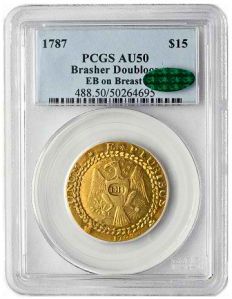 Blanchard and Company places world’s most valuable gold coin – the Brasher Doubloon for a record $7.395 million . . .
This rare numismatic treasure is considered America’s first and most important gold coin. It was purchased from John Albanese, founder of Certified Acceptance Corp. (CAC), and the transaction is the single highest price ever paid for a coin in a private transaction. It is truly unique as there is only one known example. . .
The Brasher Doubloon with the punch on the breast was minted in 1787 by Ephraim Brasher, a silversmith and goldsmith in New York City, and it contained $15 worth of gold at the time of its minting. Brasher made a small number of gold coins that historians today believe were intended for public circulation. . . .
The full article is available here»
Additional coverage is available at The Daily Mail.
HBA Publication Grant
Historians of British Art Publication Grant
Proposals due by 15 January 2012
The Historians of British Art (HBA) invites applications for its 2012 publication grant. The society will award up to $750 to offset publication costs for a book manuscript in the field of British art or visual culture that has been accepted by a publisher. Applicants must be current members of HBA. To apply, send a 500-word project description, publication information (name of journal or press and projected publication date), budget, and CV to Renate Dohmen, Prize Committee Chair, HBA, brd4231@louisiana.edu.
Exhibition: French Drawings in Grenoble

Jean-François-Pierre Peyron, “Curius Denatus refusant les présents
des ambassadeurs Samnites,” XVIIIe siècle, Musée de Grenoble
◊ ◊ ◊ ◊ ◊
Currently on display at the Musée de Grenoble, as noted by Hélène Bremer . . .
L’idée et la ligne – Dessins français
Musée de Grenoble, 5 November 2011 — 12 February 2012
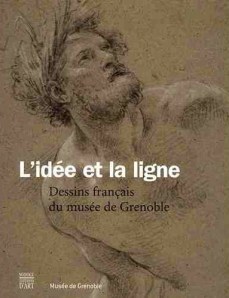 Après la présentation de ses plus belles feuilles italiennes, le musée de Grenoble met en valeur son extraordinaire fonds de dessins français. De la Renaissance à la fin du XVIIIe siècle, les plus grands artistes répondent présents. Nicolo dell’Abate, appelé pour travailler à Fontainebleau, offre une introduction magistrale à un parcours graphique qui puise ses sources en Italie. Laurent de la Hyre, Simon Vouet, Philippe de Champaigne, Patel, Charles Mellin, Charles Alphonse Dufresnoy ou François Perrier illustrent brillament les tendances d’une école française qui s’affirme et prend peu à peu son indépendance face à l’Italie. Le Brun, Noël Coypel, Jean-Baptiste de Champaigne, Louis de Boulogne et Charles de la Fosse poursuivent les avancées sous Louis XIV. La partie la plus riche et paradoxalement la moins connue de cette collection concerne le XVIIIe siècle : Boucher, Pierre ou Huber Robert viennent marquer le triomphe de la couleur et de la nature. Feuillet après feuillet, un pan entier de l’histoire de l’art française se dessine
sous nos yeux.
◊ ◊ ◊ ◊ ◊
Catalogue: Guillaume Kazerouni, Barbara Brejon de Lavergnée, Jérôme Delaplanche and Pierre Rosenberg, L’idée et la ligne: Dessins français du musée de Grenoble, XVIe-XVIIIe siècle (Paris: Somogy éditions d’art, 2011), 240 pages, ISBN: 9782757204818, €35.
At Sotheby’s: Zoffany and Joseph Wright
Press release from Sotheby’s:
Old Master & British Paintings Evening Sale, L11036
Sotheby’s, London, 7 December 2011

Johann Zoffany, The Garden at Hampton House
with Mr. and Mrs. David Garrick Taking Tea, 1762.
◊ ◊ ◊ ◊ ◊
Sotheby’s London Old Master & British Paintings Evening Sale realised a total of £20,074,500/ $31,364,399/ €23,437,051, comfortably within the pre-sale estimate of £17.6 – 24.2 million. The top lot of the sale was a pair of paintings by Johann Zoffany – the most important works by the artist to appear on the market in recent years – The Garden at Hampton House, with Mr and Mrs David Garrick Taking Tea and The Shakespeare Temple at Hampton House, which fetched £6,761,250/$10,563,777/ €7,893,784 (pre-sale estimate of £6-8 million). . . .
◊ ◊ ◊ ◊ ◊
Characterizing the auction as “a little subdued,” Bendor Grosvenor reports at Art History News that the two paintings were acquired by the Garrick Club:
The buyer was the Garrick Club, and the pictures will hang alongside their pre-eminent collection of theatrical portraits, including numerous Zoffanys. This is splendid news for the preservation of English heritage, for there was a risk the pictures could have been sold overseas. . . .
◊ ◊ ◊ ◊ ◊
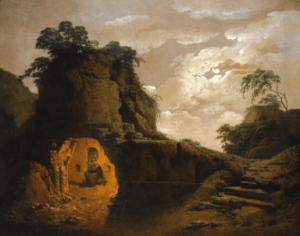 Also up for sale was Joseph Wright’s 1779 painting Virgil’s Tomb by Moonlight (Lot 37). Estimated to sell for £600,000-800,000, it roughly doubled that, fetching just under £1.5 million.
To be sure, along with these British highlights, the evening belonged to Jan Steen, whose Interior with Figures Playing Cards at a Table established a new auction record for the artist. At £4.8 million, it was a strong price, though still toward the low end of the estimate (£4.5-6million).
More information on the painting is available at Art Daily.org.
◊ ◊ ◊ ◊ ◊
For more information on the pair of paintings by Zoffany, see the original announcement from Sotheby’s (5 September 2011). From the press release:
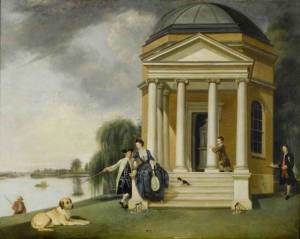 Sotheby’s announced the sale of the two most important works by Johann Zoffany to appear on the market in recent years. Both commissioned by David Garrick, Britain’s greatest actor, they depict him with his family and friends in the garden of his house on the banks of the river Thames at Hampton. Painted in 1762 they have only appeared once on the open market, when they were sold in 1823 from Garrick’s estate, and have descended in the family of a distinguished private collection ever since. From 2007 until 2010 the paintings hung together on loan at Tate Britain, in London, and have been requested as highlights for the forthcoming retrospective of Zoffany’s work at the Royal Academy later this year. They will be offered together as part of Sotheby’s Old Master & British Paintings Evening Sale on 7th December 2011 with an estimate of £6-8 million. (more…)
Exhibition: Boxes and Objets de Vertu
From the Cognacq-Jay, as noted by Hélène Bremer . . .
Boîtes en or et objets de vertu
Cognacq-Jay Museum, Paris, 21 December 2011 — 6 May 2012
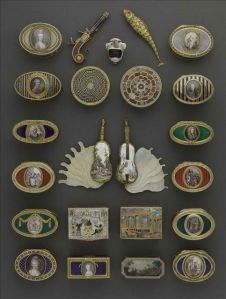 A l’occasion de la parution du Catalogue raisonné des Boîtes en or et objet de vertu, le musée Cognacq-Jay expose cet hiver sa riche collection de boîtes, tabatières, étuis, boîtes à rouge, à mouches, nécessaires de toilette, à écrire… Avec 240 objets, celle-ci est l’une des plus importantes des musées français.
Chefs-d’œuvre de l’orfèvrerie, en or, enrichis de pierres dures ou précieuses, d’émail, de porcelaine, d’ivoire ou de nacre. . . étaient dès le XVIIIe siècle l’objet d’orgueil et de convoitise Leur forme était parfois étrange, prenant l’apparence d’un dromadaire, d’un tatou, d’une jambe, d’une tête, d’un violoncelle. . . Leur usage, participant aux rituels de la vie quotidienne, témoigne des pratiques de la sociabilité au Siècle des Lumières : le tabac, les modes cosmétiques, le jeu. . .
L’exposition mettra exceptionnellement en lumière cette collection, au moyen d’une scénographie originale et surprenante, et en réunissant autour de ces
objets des dessins, des gravures pour mieux comprendre leurs secrets de
fabrication et leur usage.
◊ ◊ ◊ ◊ ◊
Catalogue: Objets de Vertus, Boites, Tabatieres, Etuis et Necessaires Collections D’Orfevrerie (Paris: Paris Musées, 2011), ISBN: 9782759601813, €44.
New Acqusitions at LACMA: Baratta’s ‘Wealth’ and ‘Prudence’

Giovanni Baratta (1640-1747), Pair of Allegorical Figures – "Wealth" and "Prudence," ca. 1703-08, photo © 2011 Museum Associates/LACMA
Press release from LACMA:
The Los Angeles County Museum of Art has acquired two life-size allegorical figure statues by the late Florentine Baroque master, Giovanni Baratta (1640–1747). The rediscovery of these sculptures, Wealth and Prudence, has been recognized as a major contribution to the study of early eighteenth-century Florentine art. The works are generous gifts to the museum by long-time benefactor, The Ahmanson Foundation, which has contributed extensively to the development of LACMA’s collection of European Painting and Sculpture over the last forty years. The sculptures are on view on the third floor of the Ahmanson Building, in the recently reinstalled European galleries.
Originally part of one of the artist’s most illustrious commissions, the works are noted for their refined elegance. The sculptures were commissioned by Niccolò Maria Giugni (1672-1717) for the gallery in his Palazzo on the Via degli Alfani in Florence. Facing one another at either end of the gallery, they were part of an elaborate iconographic scheme intended to glorify the Medici family and celebrate the Giugni family’s allegiance to the Medici. The choice of Wealth and Prudence was particularly appropriate to illustrate the joint virtues of the families, as some members of the Giugni family had advised the Medici in various aspects of their governance. (more…)
Holiday Gift Guide, Part 5: Historic Holiday Rentals
Back in September of 2009, I included a posting on the UK’s Landmark Trust, which rents some remarkable historic properties. Now at the end of another semester, as I’m facing piles of papers to grade (how could I possibly have gotten so far behind in just the past week?), daydreaming about quiet retreats is pretty tempting. Even grading those final exams in these wonderful locales wouldn’t seem quite so bad. What a lovely present indeed! The descriptions come from the Trust’s website (with the italics as my own additions) -CH
◊ ◊ ◊ ◊ ◊
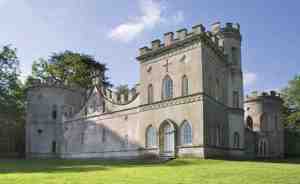 Clytha Castle — Near Abergavenny, Monmouthshire, Wales (1790s)
Roasted chestnuts, anyone? Maybe just the place after a visit to the newly restored Strawberry Hill.
This most affecting folly, which we lease from the National Trust, stands on the summit of a small hill, at the edge of a grove of old chestnuts. It was designed by a little-known architect and garden designer, John Davenport, perhaps with help from his client. Besides being an eye-catcher, the castle was used for grand picnics and as a retreat; the square tower contains fine rooms on both floors. When we arrived it had been empty for twenty-five years and before that had housed a gamekeeper. After more than thirty years as a Landmark, we carried out a major refurbishment in 2007 and reorganised the accommodation, making the circular room in the south turret a kitchen-dining room looking out into the clearing in the woods. . .
◊ ◊ ◊ ◊ ◊
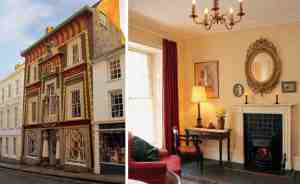 The Egyptian House — Chapel Street, Penzance, Cornwall (1830s)
Yes, I know, it’s a nineteenth-century house, but just the place for serious reflection on the Empire Style and Egyptomania. It was presumably inspired by the Egyptian Hall in Piccadilly, London (1812), which housed William Bullock’s collection, including items brought back by Captain Cook.
This unusual house is a rare and noble survivor of a style that enjoyed a vogue after Napoleon’s campaign in Egypt in 1798. It dates from about 1835 and the front elevation is similar to that of the former Egyptian Hall in Piccadilly, designed by P. F. Robinson. Robinson or Foulston of Plymouth are the most likely candidates for its design, though there is no evidence to support the claim of either.
It was built for John Lanvin as a museum and geological repository. When we acquired it in 1968, its colossal façade, with lotus-bud capitals and enrichments of Coade stone, concealed two small granite houses above shops, solid and with a pleasant rear elevation, but very decrepit inside. During our work to the front, we reconstructed them as three compact apartments, the highest of which has a view through a small window of Mounts Bay and St Michael’s Mount over the chimney pots of the town.
Why was there a geological shop here? Although picked over by Victorians (doubtless including Mr Lanvin) the beaches at Penzance still hold every kind of pebble, from quartz to chalcedony. You will find yourself at the bustling heart of Penzance, a handsome town accessible by train as well as road, where the pulse of the late nineteenth-century colony of artists known as the Newlyn School still beats strongly. Beyond it lies that hard old peninsular in which, at places like Chysauster and the Botallack mine, can be found moving evidence of human labour over an immense span of time.
◊ ◊ ◊ ◊ ◊
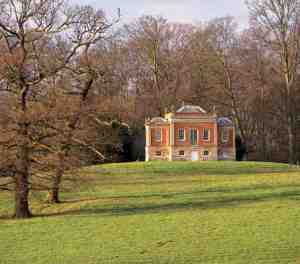 The Chateau — Gate Burton, Lincolnshire (ca. 1750)
Built as a weekend retreat from the city of Lincoln, it would seem ideally suited for getting away from it all.
This is the earliest recorded building by John Platt of Rotherham, designed in 1747 when he was 19 and almost his only work outside Yorkshire, where he practised and prospered for the next 50 years.
It stands on a grassy knoll above a big bend of the River Trent, on the edge of Gate Burton park. Built as a Gainsborough lawyer’s weekend retreat, and later used for picnics and other mild kinds of excursion, it had since been altered and then neglected. Its present owner gave us a long lease of it.
We have restored the Château to its original elaborate and slightly French appearance, an ornament in the landscape, which shows up well from the road some distance away. John Platt must have been a talented young man, because it is difficult to realise until one is inside just how small the scale of the building is; apart from the principal room upstairs, which has a high coved ceiling, there is little space in which to swing a cat. But there are fine views across the park and up a shining reach of the River Trent, along which big slow barges, piling the water in front of them, press on towards an enormous power station, whose cooling towers steam majestically in the distance.
◊ ◊ ◊ ◊ ◊
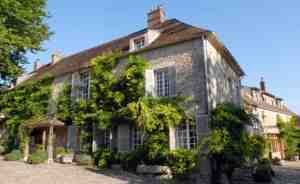 Le Moulin de la Tuilerie — Gif-sur-Yvette, Essonne (near Paris)
An eighteenth-century converted mill house that came to be home for the Duke and Duchess of Windsor, it’s perfect for anyone enamored of the story. I imagine we’re all going to hear lots more about the couple in the coming weeks with the wide release of Madonna’s new film, W.E.
The three buildings on the lovely site known as Le Moulin de Tuilerie in the town of Gif-sur-Yvette are our first French Landmarks. This was the former country weekend residence of the Duke and Duchess of Windsor. Edward VIII abdicated from the British throne in 1936 to marry the woman he loved, a twice divorced American, Wallis Simpson. In exile after the war, the Duke and Duchess of Windsor settled in Paris and Le Moulin de la Tuilerie was the only house they ever owned.
The Windsors were leading lights of international café society, and entertained the glitterati of the 1950s and 60s here, including Maria Callas, Marlene Dietrich, Elizabeth Taylor & Richard Burton, and Cecil Beaton. Edward especially was captivated by the site and commissioned English garden designer, Russell Page, to design the gardens, which he tended himself and whose layout remains today. The buildings are set around a courtyard behind huge oak gates, and the grounds open miraculously to views of the valley beyond. Each Landmark has a private terrace, and all who stay can wander the extensive grounds, parterre merging into ancient rocky woodland full of birdsong, where the Windsors buried their beloved pugs.
Le Moulin de la Tuilerie is on the edge of the town of Gif-sur-Yvette, approximately 35km south-west of Paris – a perfect staging post for journeying on to the rest of France. Just as for Edward and Wallis, still today this is a place for contrasts: a wonderful setting to play host, or enjoy deep tranquillity; an easy day trip by direct train to the bustle and culture of central Paris or the delights of Versailles, and yet a place where the city finally yields to deep countryside.
Holiday Gift Guide, Part 4: Gift Shop Finds
By Courtney Barnes
 Certain scents and sights instantly remind me of my grandparents and the holidays: bourbon mingling with chocolate; a tin of Virginia peanuts; and brass trivets and Duke of Gloucester Fifer ornaments from a Colonial Williamsburg gift shop. In terms of style, the iconic trivets are certainly versatile and very eye-appealing, but other historically connected gift options abound. More than ever, museums and historic foundations are going beyond the tote bags, mugs, and ubiquitous replicas by expanding their gift shop offerings to include locally crafted wares that speak to their roots.
Take, for example, some of the glass sold at Monticello. There are small cobalt blue vials ($18 each) based on Jefferson-era medicinal bottles and currently handmade in Virginia at the
Jamestown Glasshouse, as well as sculptural double-lipped water
pitchers made by West Virginia artisans ($55).
 At first mention, a magnolia paperweight might sound like the ultimate tourist purchase, but South Carolina’s Drayton Hall (the oldest surviving example of Georgian Palladian architecture in the U.S. and an important repository of African American heritage) offers an object with an interesting backstory: handcrafted by students from the American College of the Building Arts in Charleston—they visit Drayton to perfect their own craft through hands-on interaction with rare examples of intact eighteenth-century craftsmanship—the paperweight is modeled after a detail of the plaster ceiling in the house’s great hall ($20).
◊ ◊ ◊ ◊ ◊
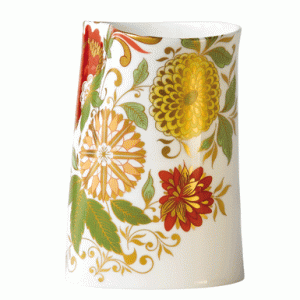 In the UK, contemporary ceramicist Ken Eastman has been working in collaboration with Royal Crown Derby Porcelain Company and adapting pattern manuscripts from the Derby factory archives to decorate new forms of bone china. The pieces impressed the V&A so much that the Museum added select items to its permanent collection and sells the wares in its shop. Limited but gorgeous V&A options are available online; a wider array can be found at Derby online.
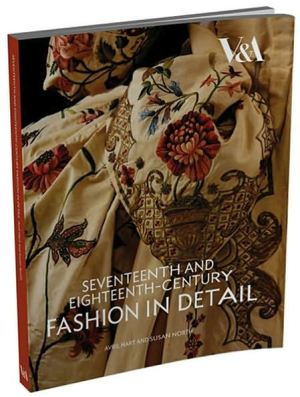
For the budding fashion student—maybe a teen intrigued with the craftsmanship of Catherine Middleton’s wedding dress—there is the V&A’s Fashion in Detail series. One example, Seventeenth and Eighteenth-Century Fashion in Detail, explores minute details that are not always visible to museum visitors: decorative
seams, refined stitching, slashing, stamping, and corseting.
◊ ◊ ◊ ◊ ◊
And finally something for the renovation junkie: Mount Vernon’s large scale paint fan deck, a collaboration between the Estate and Fine Paints of Europe. At $50, it’s a portable little luxury. The cost is refundable with future paint purchase. Although the name leads to some confusion, Fine Paints of Europe is a privately owned American company specializing in Dutch paint.
◊ ◊ ◊ ◊ ◊
Courtney Barnes writes the blog Style Court, which has been praised by editors at various national publications including Time, Elle Decor, Domino, Lonny, and The Washington Post. With a B.A. in art history and a Master’s in education, Courtney provides smart, stimulating coverage of the decorative arts, textiles, books, art exhibitions, and interior design.










leave a comment