Paper Proposals for ASECS due on Wednesday
2011 American Society for Eighteenth-Century Studies Conference
Vancouver, British Columbia, 17-20 March 2011
Proposals due by 15 September 2010
The 2011 ASECS conference takes place in Vancouver, British Columbia, March 17-20, at the Sheraton Vancouver Wall Centre. Along with our annual luncheon and business meeting, HECAA will be represented by two panels chaired by Douglas Fordham and David Ehrenpreis and Kevin Justus. In addition to these, a wide selection of sessions are also included, here»
◊ ◊ ◊ ◊ ◊
Art Before Nationalism (Historians of Eighteenth-Century Art and Architecture)
Douglas Fordham and David Ehrenpreis, U. of Virginia, McIntire Dept. of Art, PO Box 400130, Charlottesville, VA 22904-4130; Tel: (434)243-2285 (Douglas work); Fax: (434) 924-3647 (Douglas work); E-mail: fordham@virginia.edu, EHRENPDH@jmu.edu
The concept of nationalism is often associated exclusively with modern state formation and the push for popular sovereignty that accompanied the American and French revolutions during the last quarter of the eighteenth century. But how are we to interpret the shifting attitudes toward the state in other periods and/or in other places? This session seeks papers that explore the relationship between visual art and the concept of nationhood at a variety of moments and geographic locations throughout the long eighteenth century. Papers could address this relationship through a focused examination of individual works of art, aesthetic theories, or broader frames of inquiry. Relevant questions might include: Has there been a tendency to read 19th century notions of nationhood and nationalism back onto the eighteenth century? Were there aspects of either art production or aesthetic writing that failed to cross national boundaries? Is there a difference between patriotism and nationalism during this period? Have British and/or French conceptions of nationhood been imported uncritically into our understanding of other ‘national’ artistic traditions? These are the types of questions that we encourage contributors to pose through the lens of their own regional and interpretative specializations.
◊ ◊ ◊ ◊ ◊
Looking Forward, Looking Back: HECAA’s New Scholars Session (Historians of Eighteenth-Century Art and Architecture)
Kevin Justus, 4134 E Hayne Street, Tucson, AZ 85711; Tel: (520) 327-8407; E-mail: kevinjustus@yahoo.com
This session seeks to present works by new scholars who are members of HECAA. A diverse subject matter is encouraged and welcomed.
Exhibition in Atlanta: ‘Islamic Calligraphy’
From The Carlos Museum (thanks to Courtney Barnes for her account at Style Court) . . .
Islamic Calligraphy and the Qu’ran, ca. 1600-1900
The Carlos Museum, Emory University, Atlanta, 28 August — 5 December 2010

Calligrapher’s storage box from Turkey, eighteenth century, wood inlaid with tortoiseshell (over gold leaf), ivory, brass, mother-of-pearl and bone. Private Collection.
The Carlos Museum will host complementary exhibitions showcasing exceptional masterworks of Islamic calligraphy and related objects. Islamic Calligraphy and the Qu’ran combines Traces of the Calligrapher: Islamic Calligraphy in Practice, c. 1600–1900 and Writing the Word of God: Calligraphy and the Qur’an, and will be on view from August 28 to December 5, 2010.
The exhibitions and accompanying community outreach and educational programs will celebrate the rich religious and artistic tradition of calligraphy, or “beautiful writing,” the most esteemed of the Islamic visual arts. The varied works of calligraphy in the exhibitions—from practice alphabets to elaborately finished manuscripts—serve as traces of individuals, belief systems, and cultures. The costly and exotic materials lavished on writing instruments also document the international trade of the period, from 1600 to 1900, and create a rich material legacy that fuses aesthetics and piety.
Approximately 150 objects and works from an important private collection in Houston and the Arthur M. Sackler Museum, Harvard University Art Museums convey the elegance of the esteemed art form and reveal the skills of the many artisans—calligraphers, paper makers, gold beaters, illuminators, bookbinders, and metalworkers, to name a few—involved in the creation of the tools, the calligraphies, and the manuscript folios.
The practice of calligraphy constituted an expression of piety, as stated in the hadith (associated with the Prophet Muhammad): “the first thing created by God was the pen.” Calligraphy became a worthwhile endeavor for men of all stations and served as a permanent record of the calligrapher’s character.
Traces of the Calligrapher maps the practice of the calligrapher from the 17th through the 19th centuries both through examples of calligraphy, as well as through tools of the trade. The objects in the exhibition come from Iran, Turkey, and India, and include reed pens, penknives (used to cut the nib of the pen), and maktas (used to hold the pen during this process), in addition to inkwells, scissors, burnishers, storage boxes, and writing tables.
The fine craftsmanship of these objects is revealed in the exquisite and detailed designs, which often employ precious materials such as jade, agate, ivory, ebony, silver, and gold. Calligraphic practice exercises and fair copies are displayed alongside these implements, and a video shows a master calligrapher at work. Together, the objects and their output present a comprehensive overview of the intimate world of the calligrapher and the environment in which he worked.
Writing the Word of God is devoted to key developments of the Islamic scripts of distinct cultural areas, spanning from Spain and North Africa to greater Iran from the seventh to the 15th centuries. A selection of approximately 20 folios from now-dispersed Qur’ans from the regions will illustrate the rich variety and system of scripts.
The exhibitions were organized by the Museum of Fine Arts, Houston, and the Harvard University Art Museums, and were curated by Mary McWilliams, Norma Jean Calderwood Curator of Islamic and Later Indian Art at the Arthur M. Sackler Museum, and David J. Roxburgh, Prince Alwaleed bin Talal Professor of Islamic Art History at Harvard University.
Sartorial Choices for Academics
From the Editor
With the beginning of a new academic year and a new round of attacks on the tenure system, we perhaps shouldn’t be surprised that the question of how professors should dress surfaces once more (older discussion can be found here). Andrew Hacker and Claudia Dreifus in their book, Higher Education? How Colleges Are Wasting Our Money and Failing Our Kids — And What We Can Do About It (recently reviewed in The New York Times) use clothes as a shorthand for what they see as larger problems in the system:
Say goodbye to Mr. Chips with his tattered tweed jacket; today’s senior professors can afford Marc Jacobs.
Katrina Gulliver, who works on urban identity in colonial cities, ca. 1500-1900, responds to Hacker and Dreifus, The New York Times review, and general assumptions that professors shouldn’t look overly fashionable — or even professional (a Research Fellow at Ludwig-Maximilians-Universität in Munich, Gulliver hosts the podcasts, Cities in History; her website is especially useful for anyone interested in historians who Tweet, Twitterstorians).
For all the ways I find myself nodding in agreement with Gulliver’s critique of Hacker and Dreifus, it doesn’t quite match my own feelings: apart from the question of whether academics should dress fashionably, the vast majority of my colleagues (at various institutions across North America) simply are not, in fact, sporting Marc Jacobs. Period. I imagine it stems from a lack of interest and a lack of resources, but whatever the reasons, the reference by Hacker and Dreifus seems to be a straw man for the sake of rhetorical flourish. Regardless, it’s interesting that once again fashion serves as a means of critiquing, not establishing academic credibility. We’ve heard this refrain before. It’s probably safe to bet that we’ll hear it again.
-Craig Hanson
In This Month’s ‘Apollo Magazine’
The eighteenth century in the September issue of Apollo Magazine:
 Michael Pick, “Remarkable and Curious” — The quantity and superb quality of 18th-century French furniture in English collections is testament to the British passion for their neighbours’ designs, yet the presence of these works is little known in the UK or abroad.
Selma Schwartz, “Objects of Desire” — Sèvres’ lesser-known output of veilleuses, exquisite 18th-century nightlights or perfume burners, reflect in miniature the contemporary fashions and collectors’ interests of the time, including the depiction of drunken men in the style of Teniers the Younger.
Sylvain Levy-Alban, “A Taste for History” — The interior designer Jacques Garcia, currently refurbishing the 17th- and 18th-century period rooms at the Louvre, shares his obsessive passion for collecting with Apollo.
Rethinking Study Habits: Mix It Up
Benedict Carey, “Forget What You Know about Good Study Habits,” The New York Times (6 September 2010) . . .
. . . In recent years, cognitive scientists have shown that a few simple techniques can reliably improve what matters most: how much a student learns from studying. The findings can help anyone, from a fourth grader doing long division to a retiree taking on a new language. But they directly contradict much of the common wisdom about good study habits, and they have not caught on. . . .
These findings extend . . . even to aesthetic intuitive learning. In an experiment published last month in the journal Psychology and Aging, researchers found that college students and adults of retirement age were better able to distinguish the painting styles of 12 unfamiliar artists after viewing mixed collections (assortments, including works from all 12) than after viewing a dozen works from one artist, all together, then moving on to the next painter. . . .
The full article is available here»
◊ ◊ ◊ ◊ ◊
The Psychology and Aging article referenced is even more interesting than the the NY Times piece might imply:
Nate Kornell, Alan D. Castel, Teal S. Eich, Robert A. Bjork, “Spacing as the Friend of Both Memory and Induction in Young and Older Adults,” Psychology and Aging 25 (2010): 498-503.
Abstract: We compared the effects of spaced versus massed practice on young and older adults’ ability to learn visually complex paintings. We expected a spacing advantage when 1 painting per artist was studied repeatedly and tested (repetition) but perhaps a massing advantage, especially for older adults, when multiple different paintings by each artist were studied and tested (induction). We were surprised to find that spacing facilitated both inductive and repetition learning by both young and older adults, even though the participants rated massing superior to spacing for inductive learning. Thus, challenging learners of any age appears to have unintuitive benefits for both memory and induction.
Lawrence Exhibition and Conference
Opening next month at the NPG in London is a major exhibition on Thomas Lawrence, which will then appear in New Haven in the first part of next year. As noted by The Art History Newsletter, Mark Brown of The Guardian offers a preview. As noted previously here at Enfilade, the Paul Mellon Centre will sponsor a two-day conference in conjunction with the show November 18-19.
◊ ◊ ◊ ◊ ◊
Thomas Lawrence: Regency Power and Brilliance
National Portrait Gallery, London, 20 October 2010 — 23 January 2011
Yale Center for British Art, New Haven, 24 February — 5 June 2011
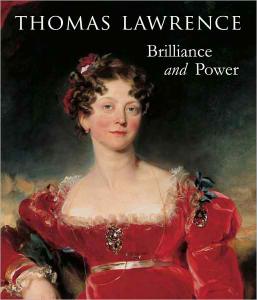 This will be the first exhibition in the United Kingdom since 1979 to examine Lawrence’s work and the first substantial presentation of this artist in the United States. It will present Lawrence as the most important British portrait painter of his generation and will explore his development as one of the most celebrated and influential European artists of the late eighteenth and early nineteenth centuries. By his untimely death in 1830, Lawrence had achieved the greatest international reach and reputation of any British artist. Based on new research and fresh perspectives, this exhibition will introduce Lawrence to a new generation of museum visitors and students. It will also contextualise his work in the light of recent scholarship on the art, politics and culture of the period. The exhibition will include the artist’s greatest paintings and drawings alongside lesser known works in order to provide a fresh understanding of Lawrence and his career. It will contrast his approach to sitters according to age and gender, juxtapose the power and impact of his public works with the intimacy and intensity of those portraits of his friends and family, trace his innovations as a draughtsman and painter, and place him within the broader contexts of the aesthetic debates, networks of patronage and international politics of his day.
Hamburger and Grafton on the Warburg Library
From The New York Review Blog (1 September 2010) . . .
Jeffrey Hamburger and Anthony Grafton, “Save the Warburg Library!”
. . . both Labour and Tory governments seem bent on rearing hierarchies, crushing autonomy, and destroying morale. The idea, apparently, is to reconfigure the universities on a corporate model—not, however, the democratic model used by Google and other corporations that are flourishing now, but the older one of the 1950s, which did wonders for such British industries as shipbuilding and car manufacturing.
Particularly painful is the University of London’s attempt to disperse the unparalleled collections of the Warburg Institute. Named for a supremely imaginative historian of art and culture, Aby Warburg, the institute began as his library in Hamburg, which was devoted to the study of the impact of classical antiquity on European civilization. The library was rescued from Hamburg in 1933, following Hitler’s rise to power, thanks in part to the help of British benefactors. . . .
Recent articles in the German and Swiss press have called attention to the Warburg’s travails. If the University of London insists on following through with its plan, perhaps the German authorities can find the means to bring the Warburg back to its original home. That would certainly be preferable to watching as philistines demolish a great European institution.
The rest of this version of the essay can be found here at the New York Review Blog; a longer version will appear in the September 30 issue of The New York Review.
Symposium Examines Classicism and Buen Gusto in Latin American Art
On the heels of the exhibition on Charles IV as patron and collector, comes this University of North Texas Symposium. From the conference website:
The Politics of Taste in 18th- and 19th-Century Latin America
Meadows Museum, Dallas, 17 September 2010 (organized by the University of North Texas)
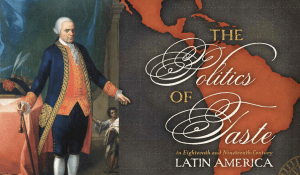 As the Bourbon monarchy took the Spanish throne in 1700, the art, architecture, and visual culture of Latin America began a gradual transformation. A defining moment in this evolution was the establishment of the Royal Academy of San Carlos in 1785 in Mexico City, a time that corresponded to the escalation of the Bourbon Reforms across the Indo-Hispanic Americas. The new academy set standards of neoclassicism and buen gusto (good taste) and sought to impose these protocols on colonial society. In Latin America, however, these two domains existed in an ambiguous relationship to one another. For example, good taste did not necessarily refer to neoclassical style. To complicate matters further, the results of artistic reform were not as expected by the proponents of the Academy. Rather than sweeping transformation in the visual arts, Latin American artists and institutions produced works that reveal cultural hybridity, the persistence and assimilation of traditional colonial styles and genres, as well as the transformation of European neoclassical forms themselves into American expressions.
This symposium poses a number of questions to interrogate this period of stylistic transition. By what processes were academic and/or neoclassical art, conforming to standards of buen gusto in Spain, transformed in Latin America? As the term “neoclassical” is not period language, what can examining period notions of buen gusto tell us about the American assimilation of European academic and/or neoclassical styles and genres? How was possessing buen gusto consciously political in Latin American contexts? What are the issues in contexts beyond Mexico City and New Spain, such as Cuba? How was neoclassicism deployed with respect to forced labor in the countryside? How did American antiquity enter discourses about neoclassicism and taste? How were the arts of taste expressed in early national contexts in Latin America? This symposium seeks more contextual understandings of this complex phenomenon in Latin American art history.
Program
9:00 Introduction
9:15 Susan Deans-Smith, University of Texas at Austin
10:00 Ray Hernández-Durán, University of New Mexico
10:45 Kelly Donahue-Wallace, University of North Texas
11:30 Paul Niell, University of North Texas
12:15 Luncheon
1:30 Charles Burroughs, Case Western Reserve University
2:15 Robert Bradley, University of Texas Pan American
3:00 Magali Carrera, University of Massachusetts Dartmouth
3:45 Stacie G. Widdifield, University of Arizona
4:30 Discussion
Colloquium on the History of Paris
The full program for this international colloquiem is available at the CIERL website:
History of Paris
Musée de la civilisation, Québec, 22-25 September 2010
Colloque international du Cercle interuniversitaire d’étude sur la République des lettres (CIERL)
Qu’il s’agisse de considérations sur la voirie ou les projets d’embellissement, sur les aspects sociaux, économiques ou poli-ques de la ville, sur l’architecture, la naissance du tourisme ou l’apparition du promeneur urbain, qu’il s’agisse des chroniques intimes ou officielles qui en ont scandé et organisé les péripétes, qu’il s’agisse encore du faste des entrées royales ou de la misère du peuple, des rumeurs ou des modes, des peintures ou des fictions qui l’ont mis en scène, le Paris d’Ancien Régime a fait l’objet depuis plusieurs décennies de nombreux travaux qui ont collectivement contribué tant à la restitution de la réalité « historique » de la capitale qu’à la mise au jour d’un imaginaire de la ville tissé au fil des représentations. Sociologues, anthropologues, historiens, spécialistes de l’urbanisme ou de l’architecture, mais aussi littéraires, historiens de l’art, ou encore spécialistes de l’histoire des mentalités ont ainsi, chacun selon les paradigmes de leur discipline, les champs de leur corpus et les horizons de leur théorie, proposé un contenu spécifique à l’Histoire de Paris, de ses lieux, de ses monuments, de ses habitants, des événements, heureux ou tragiques, officiels ou anonymes, collectifs ou individuels, qui s’y sont produits. . .
Chimneypieces at Sotheby’s
Press Release (PDF) from Sotheby’s:
Chesney’s Chimneypieces and Fire Furniture, Sale L10311
Sotheby’s New Bond Street, London, 14 September 2010
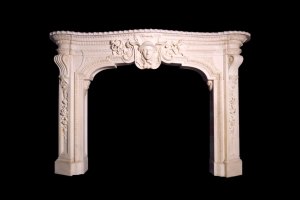
Chimney piece, designed by G.B. Borra c.1755, from one of London’s great “Lost Palaces” Norfolk House, in St James’s square. Estimate: £200,000-300,000
On Tuesday, September 14, Sotheby’s will hold its first-ever sale dedicated entirely to antique chimneypieces and fire grates. The sale –among the first of its kind at a leading auction house – will bring to the market some 200 rare, important and unusual pieces, ranging in date from the 1600s to the 19th century, and emanating from all corners of Europe. Amassed with a discerning eye over a period of some 25 years by Paul Chesney, founder of the leading eponymous fireplace suppliers, the pieces to be sold represent almost the entire antique stock of the company. With the business now focusing on its increasingly international operation of producing and supplying fine reproduction fireplaces, the company’s antique stock is to be released onto the market in a vast sale that will occupy almost all of Sotheby’s New Bond Street gallery space. While the sale as a whole will allow for an overview of chimneypiece design over the course of some 300 years, many of the individual pieces to be offered have interesting stories to tell: some are pieces of great architectural importance; some demonstrate the extraordinary craftsmanship of names such as Robert Adam; some are quirky and unusual; and all are fine examples of their period.
The Norfolk House Chimney Piece
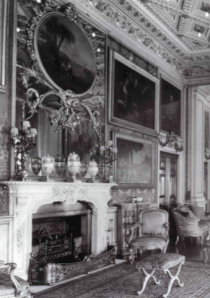 This extraordinary example of the best in fireplace design and execution was, for over half-century, believed to be lost. The crisp, fluently carved piece was once the centerpiece of the Saloon, or “Green Damask Room,” in one of London’s most celebrated “private palaces”: Norfolk House. This splendid palace, the interiors of which were “infinitely superior to anything in this Kingdom… and to most things… in Europe” (Capt. William Farrington, 1748) was built between 1748 and 1752 on the site of an earlier house (also Norfolk House).
While each of the rooms was decorated in a slightly different manner, it was – thanks to the influence of the incurable Francophile Mary, 9th Duchess of Norfolk – the rococo style that dominated. But even the wildest dreams of the indomitable Duchess (or “My Lord Duchess,” as Horace Walpole referred to her) could not have been made real without the creative genius of Italian architect Giovanni Battista Borra (1713-1770), who was responsible for almost every decorative detail inside the house, from the grimacing monkeys above the doorcases in the ballroom, to the rococo extravagance of the Music Room (“the most fluent expression of the rococo to be found in England,” now fully recreated in the Victoria & Albert Museum in London), to the fireplace that, long considered to be lost, now forms the centerpiece of September’s sale. (more…)










 Enfilade
leave a comment