Conference | Enlightenment Cosmopolitanisms and Sensibilities
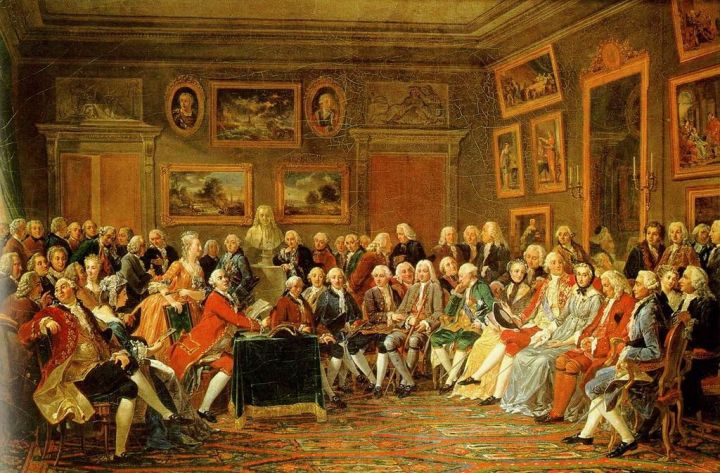
Anicet Charles Gabriel Lemonnier, Salon de Madame Geoffrin,
1812 (Château de Malmaison)
◊ ◊ ◊ ◊ ◊
From the Sydney Intellectual History Network, with the workshop programme:
Enlightenment Cosmopolitanisms and Sensibilities
Sancta Sophia College, The University of Sydney, 11–12 June 2014
The character of practiced cosmopolitanism during the Enlightenment often appears to amount to little more than an extension of early modern courtly internationalism infused with a new language of ideas. Further investigation reveals the desire on the part of Enlightenment cosmopolites to open borders in the name of economic, political, intellectual and artistic progress. This workshop explores cosmopolitanism in practice during the long eighteenth century in Europe and, through circulation, beyond its borders. It seeks out lived experiences of cosmopolitanism in the evidence of visual, social and textual expressions, and then asks how to interrogate this evidence. What were the opportunities through which border crossings became fixed in the minds of participants and observers? How was Enlightenment cosmopolitanism in practice inflected with different forms of sensibility?
W E D N E S D A Y , 1 1 J U N E 2 0 1 4
9:30 Welcome
9:45 Session 1: Languages of Cosmopolitanism
• David Garrioch (History, Monash University), Cosmopolites and their Critics: the Eighteenth-Century Language of Cosmopolitanism
• Jennifer Milam (Art History, University of Sydney), Visual Cosmopolitanism
11:15 Morning Tea
11:30 Session 2: Rome and Cosmopolitan Aesthetics
• David Marshall (Art History, University of Melbourne), Cosmopolitanism and Non- Antiquarian Taste in Early Eighteenth-Century Rome
• Mark Ledbury (Art History, University of Sydney), Cosmopolitanism and Anti- Cosmopolitanism in Rome
1:00 Lunch
2:00 Session 3: Rousseau and Cosmopolitanism
• Anik Waldow (Philosophy, University of Sydney), Rousseau, Theatre and Civic Identity
• Ian Coller (History, LaTrobe University), Rousseau’s Turban
3:30 Afternoon Tea
3:45 Session 4: Cosmopolitan Circulations
• Alexandra Cook (Philosophy, University of Hong Kong), Eighteenth-Century Botanical Cosmopolitanism: Books, Seeds and Herbaria
• Peter McNeil (Design History, University of Technology, Sydney), ‘Beauty in Search of Knowledge’: Eighteenth-Century Fashion and the Uses of Print
• Melissa Hyde (Art History, University of Florida), Wertmüller, National Identity and the Cosmopolitan Circulation of the Artist
T H U R S D A Y , 1 2 J U N E 2 0 1 4
9:30 Session 5: Open Borders: Europe and Beyond
• Simon Burrows (History, University of Western Sydney), Books Crossing Borders: Material Traces and Enlightenment Cosmopolitanism
• Jennifer Ferng (Architecture, University of Sydney), Maritime Voyages: Siege and Sovereignty at Galle Fort, Ceylon, 1729–1796
11:00 Morning Tea
11:15 Session 6: Revolutionary Exchanges
• Peter McPhee (History, University of Melbourne), Cosmopolitanism, Robespierre and the French Revolution
• Richard Taws (Art History, University College London), Chains of Command: Telegraphing Liberty in Lemonnier’s Le Commerce
12:45 Lunch
Cosmopolitan Moments: Instances of Exchange
in the Long Eighteenth Century, Emerging Scholar Sessions
In these sessions, emerging scholars explore discrete instances of cultural interaction in the long eighteenth century (visual, textual, political, philosophical, social). How do we define the nature of the exchange? Is it cosmopolitan? Areas of analysis include roles of actors and agents, bi-lateral or unilateral action, acceptance, rejection and the medium of transmission.
1:45 Session 7
• Garritt Van Dyk (History, University of Sydney), Before the Parisian Café: Cosmopolitanism and the Franco-Ottoman Alliance
• Mark Shepheard (Art History, University of Melbourne), The Cosmopolitan Castrato: Farinelli and the Visual Arts
• Warren Andrews (Art History, University of Sydney), An Ambush in Print
3:15 Afternoon Tea
3:30 Session 8
• Emma Gleadhill (History, Monash University), Lady Holland’s House: ‘The House of all Europe’
• Katja Abramova (Art History, The University of Sydney), Botany as a Cosmopolitan Pursuit for Women: The Case of the Maria Feodorvna
• Laura Jocic (History, University of Melbourne), Anna King’s Dress: Trade and Consumption in the Early Years of Settlement in Australia
• Janet Healy (Music, Monash University), Mozart in a Revolutionary Context










 Enfilade
leave a comment