Exhibition | Paintings from the Society of Antiquaries of London
The summer kicks off the first of what’s planned as a regular feature of annual temporary exhibitions at the Society of Antiquaries of London:
Portraying the Past: Paintings from the Society of Antiquaries of London
Burlington House, Society of Antiquaries of London, 30 June — 1 August 2014
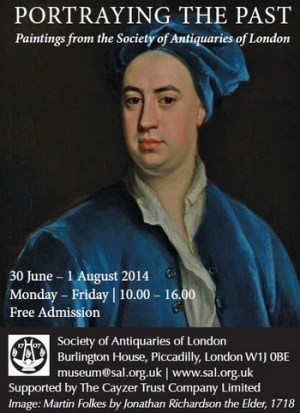 An exhibition of the Society’s collection of paintings including portraits of eighteenth-century antiquaries and rare fifteenth- and sixteenth-century portraits of medieval and Tudor monarchs and rulers of early modern Europe. These include the outstanding group of fifteenth- and sixteenth-century panel paintings bequeathed to the Society in 1828 by Thomas Kerrich, FSA, including portraits of Richard III, Henry VII and Henry VIII, as well as such works of international importance as the portraits of Jan van Scorel, by Antonis Mor, and of Mary I, by Hans Eworth.
Conference | Idols in the Museum: Sculpture and Historiography
From the conference programme:
Les Idoles Entrent au Musée: La sculpture, son historiographie, sa muséographie, 1650–1880
École du Louvre, Paris, 10–12 June 2014
La participation au colloque Les idoles entrent au musée. La sculpture, son historiographie, sa muséographie, 1650–1880 est gratuite mais subordonnée à une inscription préalable obligatoire à colloques@ecoledulouvre.fr.
Comité scientifique: Caroline van Eck (Leyde), Pascal Griener (Neuchâtel), Maarten Delbeke (Gand/Leyde)
M A R D I , 1 0 J U I N 2 0 1 4
Première partie : Des histoires visuelles de la sculpture
Président de la session : Pascal Griener
13.00 Accueil
13.30 Ouverture du colloque (Philippe Durey/Caroline van Eck)
14.00 Frits Scholten (Conservateur en chef du département de la sculpture, Rijksmuseum Amsterdam), ‘The Amsterdam ivories of Francis van Bossuit (1635–1692): reception and transformation in the 18th century’ [‘Les ivoires d’Amsterdam de Francis van Bossuit (1635–1692) ; réception et transformation au XVIIIe siècle’]
14.45 Erin Downey (Doctorante Temple University. Kress Fellow Université de Leyde), ‘Sculptures in print: the Galleria Giustiniana as exemplar and agent of taste in early modern Europe’ [‘Sculptures imprimées : la Galleria
Giustiniana comme exemple et agent de goût en Europe prémoderne’]
15.30 Pause
16.00 Anne Ritz-Guilbert (docteur en histoire de l’art, membre de l’équipe de recherche de l’Ecole du Louvre), ‘La sculpture comme source historique : les dessins de la collection de François-Roger de Gaignières (1642–1715)’
16.45 Guilhem Scherf (Conservateur en chef du département de la sculpture, Musée du Louvre), ‘Une collection révélée par le livre : Les Monumens érigés en France à la gloire de Louis XV de Pierre Patte (1765)’
M E R C R E D I , 1 1 J U I N 2 0 1 4
Deuxième partie : La muséographie de la sculpture
Présidente de la session : Caroline van Eck
10.00 Accueil
10.30 Ruurd Halbertsma (Conservateur en chef du départment des sculptures Grecques, Musée National d’Antiquités. Professeur en muséologie Université de Leiden), ‘Admiration and indignation: calvinistic approaches to classical sculpture in the Netherlands’ [‘Admiration et indignation : les approches calvinistes de la sculpture aux Pays-Bas’]
11.15 Claire Mazel (Docteur en histoire de l’art, CRHIA, université de Nantes), ‘Désenchantement et réenchantement de la sculpture européenne dans la collection de Robien’
12.00 Thomas Beaufils (Maître de conférences à l’université Lille 3, actuellement en détachement à l’Institut français des Pays-Bas. Membre de l’Institut de Recherches Historiques du Septentrion (IRHiS) – UMR CNRS 8529 – Lille 3), ‘Manque-t-il quelque chose ? L’incompréhensible statuaire de l’île indonésienne de Nias dans les musées de France et des Pays-Bas’
12.30 Pause
14.00 Cecilia Griener Hurley (Docteur en histoire de l’art. Membre de l’équipe de recherche de l’Ecole du Louvre), ‘La présentation du paragone dans les dispositifs muséaux au XIXème siècle’
14.45 Bram van Oostveldt (Postdoc Université de Leyde. Maître de conférences Université d’Amsterdam), ‘La mise en scène de la sculpture aux visites nocturnes du Louvre comme au théâtre’
15.30 Pause
17.00 Visite collections de sculpture du Musée du Louvre
J E U D I , 1 2 J U I N 20 1 4
Troisième partie : le statut de la sculpture
Président de la session : Maarten Delbeke
14.30 Stijn Bussels (Directeur du programme ERC Elevated Minds : The sublime in the public arts in 17th-century Paris and Amsterdam, Université de Leyde), ‘»We are still trembling when we think of it »’ Honouring the sculptures of the Amsterdam Town Hall’ [‘« Nous tremblons encore quand nous y pensons » : comment rendre honneur aux scultures de l’Hôtel de Ville d’Amsterdam ?’
15.15 Pascal Griener (Professeur en histoire de l’art et muséologie, Université de Neuchâtel), ‘Les idoles au musée. Pour revisiter la description de l’Apollon Belvédère par Johann Joachim Winckelmann (1764).’
16.00 Tomas Macsotay (Postdoc Université Autonome de Barcelona, Département d’histoire de l’art et musicologie), ‘Baron D’ Hancarville’s Recherches on the evolution of sculpture: submerged emblems and the collective self’ [Baron d’Hancarville’s Recherches sur l’évolution de la sculpture : emblèmes sousmergés et le soi collectif’]
16.45 Caroline van Eck (Professeur en histoire de l’art et de l’architecture prémodernes, Université de Leyde), ‘Une histoire visuelle de la sculpture. Présence matérielle et trompe l’oeil dans le programme de décoration du Musée Charles X.’
17.30 Conclusion du colloque
Call for Articles | Intersections 2017: Global Republic of Sacred Things
As noted at The History of Women Religious of Britain and Ireland (among other places) . . .
Intersections: Yearbook for Early Modern Studies 2017
The Global Republic of Sacred Things: The Circulation of Religious Art in the Early Modern World
Proposals due by 30 June 2014
Sixteenth-century Europe was a time when monarchial territories were redrawn, permanent schisms split a single church, and sustained, repeated circumnavigation of the globe was achieved for the first time. The ‘globalization’ of the early modern world expanded and transformed the ‘Republic of Things’. While there has been an increasing literature on biographies and itineraries of objects, European religious overseas networks, often at the heart of Protestant Reformation and post-Tridentine political, geographical and theological reform, have received considerably less attention to date. How, for example, did points of contact by agent, merchant and missionary impact the early modern imagination as a social practice? And how did the journeys of images, artifacts, and precious cargoes across intersecting networks affect their value and use? Previously, these webs of communication
bore only incidental information about the material cultures their presence at the frontiers of known lands stimulated at home and abroad. Further still, as European systems largely governed by and for Europeans, the things that linked religious and commercial networks have the potential to offer insight into Europe’s initial attempts to grapple with long-distance contact zones. In a challenge to models of individual organizations, cultural comparisons, and post-colonial theories of industrialized societies, this volume seeks to consider how a sacred Republic of Things—material residues of global encounter most broadly conceived (masterpieces, decorative art and functional objects)—can cast light on the dramatis personae of the fifteenth- to eighteenth-centuries as they came to terms with an expanding world.
Objects should give some evidence of the interaction of Europe with Asia, Africa or the Americas, and religious ‘things’, or objects of devotion, that have not yet had their moment in the sun are ideal. We are particularly interested in the production of artisanal cultures, local accommodation via technologies and materials, shifting currencies of value and objects used against the grain of their intended purpose. Issues at stake could include, but need not be limited to, the globalization of different types of religious subjects or objects, the use of new media (either alone or in conjunction with others), mimesis and memory, spolia and translation, commoditization and mobility.
Working Schedule
Proposals are due June 30, 2014.
Applicants will be notified no later than July 31, 2014.
First drafts of papers (approximately 8,000 words, including endnotes) will be expected by December 15, 2015.
An intensive workshop (pending funding) will take place the week of January 18, 2016.
Final papers should be sent to the editors by July 1, 2016.
Publication is scheduled for 2017.
Please send proposals (PDF format preferred) before June 30, 2014 to both editors (Prof. Dr. Christine Göttler, Prof. Dr. Mia M. Mochizuki)
with:
1. A one-page abstract (300 words) with at least one exemplary image
2. A curriculum vitae (maximum two pages)
christine.goettler@ikg.unibe.ch
mia.mochizuki@nyu.edu
Exhibition | Coypel’s Don Quixote Tapestries
Next February at The Frick:
Coypel’s Don Quixote Tapestries: Illustrating a Spanish Novel in Eighteenth-Century France
The Frick Collection, New York, 24 February — 17 May 2015
Curated by Charlotte Vignon
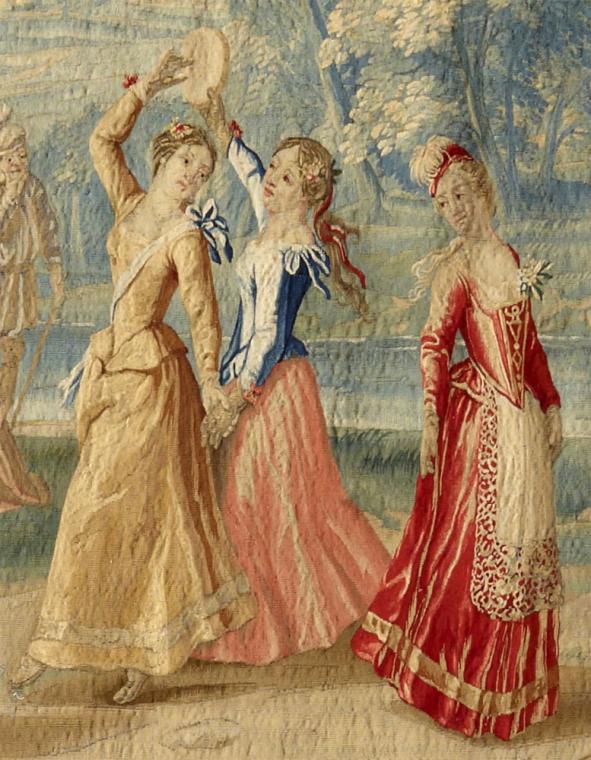
Peter Van den Hecke, The Arrival of Dancers at the Wedding of Camacho (detail), Brussels, ca. 1730s–40s. Tapestry,
123 x 219 inches (New York: The Frick Collection).
Photo by Michael Bodycomb.
A masterpiece of comic fiction, Cervantes’s Don Quixote (fully titled The Ingenious Gentleman Don Quixote of La Mancha) enjoyed great popularity from the moment it was published, in two volumes, in 1605 and 1615, respectively. Reprints and translations spread across Europe, captivating the continental imagination with the escapades of the knight Don Quixote and his companion, Sancho Panza. The novel’s most celebrated episodes inspired a multitude of paintings, prints, and interiors. Most notably, Charles-Antoine Coypel (1694–1752), painter to Louis XV, created a series of twenty-eight cartoons to be produced by the Gobelins tapestry manufactory in Paris. Twenty-seven were painted between 1714 and 1734, with the last scene realized just before Coypel’s death in 1751. In 2015 (the four-hundredth anniversary of the publication of the second volume of Don Quixote), the Frick will bring together a complete series of Coypel’s scenes, which will be shown in the Frick’s Oval Room and East Gallery. The exhibition with include the Frick’s two large tapestries inspired by Coypel—which have not been shown for more than ten years—and twenty-five other eighteenth-century paintings, prints, and tapestries from Coypel’s designs.
The accompanying publication will explore Coypel’s role in illustrating Don Quixote and the circumstances of his designs becoming the most renowned pictorial interpretations of the novel. It will also map the production of Coypel’s Don Quixote tapestries, from cartoons and engravings to looms in Paris and Brussels. The Frick will offer rich education programs that will include a series of lectures on eighteenth-century French and Flemish tapestries and on the illustration of Don Quixote over the centuries. Further programs will explore the history of the novel and its influence on artists working in a variety of media, including film, ballet, and opera. The exhibition is organized by the Frick’s Associate Curator of Decorative Arts, Charlotte Vignon.
Opening Dates for Frogmore House and Garden for 2014
Press release (23 April 2014) from the Royal Collection Trust:

Frogmore. Photo by Gill Hicks from Wikimedia Commons, 2006.
Frogmore House and Garden—the charming royal retreat set within Windsor Castle’s magnificent private Home Park—will open to the public on 3, 4 and 5 June, as part of the annual Charity Garden Open Days, and on 16, 17 and 18 August 2014.
Built in the 17th century, Frogmore became a royal residence in 1792 when George III purchased it for his wife, Queen Charlotte. Since then successive monarchs have enjoyed the tranquil surroundings and delightful interiors. Although it is no longer an occupied royal residence, it is frequently used today by the Royal Family for private entertaining.
The interior of Frogmore House bears testimony to the interests and talents of the generations of the royal family who have resided there. Queen Charlotte’s passion for botany is particularly evident. She commissioned Mary Moser, the renowned 18th-century flower painter, to decorate one of Frogmore’s principal rooms to resemble an arbour open to the skies. The result was said to be the Queen’s favourite room in the house. George III and Queen Charlotte’s third daughter, Princess Elizabeth, continued the floral theme and decorated The Cross Gallery, which spans the entire breadth of the building, with painted flower garlands.
Victoria, Duchess of Kent, lived at Frogmore for almost 20 years and works by the Duchess and her daughter, Queen Victoria, can be seen on display within the house. Queen Victoria was a frequent visitor during her long widowhood. Watercolours painted by her daughters, the Princesses Victoria and Louise, can also be seen at Frogmore.
The gardens at Frogmore House are one of its most enduring attractions. In 1867, Queen Victoria wrote “this dear lovely garden. . . all is peace and quiet and you only hear the hum of the bees, the singing of the birds.” First laid out for Queen Charlotte in the 1790s with 4,000 new shrubs and trees, it is based on a model ‘picturesque’ landscape. Garden features such as a Gothic Ruin, designed with the assistance of her daughter, Princess Elizabeth, were added shortly afterwards.
The design and planting scheme seen today incorporates additions made during Queen Victoria’s reign, and that of Queen Mary’s, who redesigned the gardens and introduced numerous flowering trees, shrubs and grasses, and some 200,000 bulbs. Numerous trees and shrubs, presented on the occasion of Her Majesty The Queen’s Silver Jubilee in 1977, were subsequently added. Today, visitors can enjoy gentle garden walks and views of Queen Victoria’s Tea House, the white-marble Indian Kiosk, and the 18th-century lake.
Frogmore House and Garden are open on 3, 4 and 5 June in aid of the National Gardens Scheme, The Leprosy Mission and Parkinson’s UK respectively, and on 16, 17 and 18 August. Tickets and visitor information: www.royalcollection.org.uk.
Exhibition | Treasures from the Royal Archives
Press release (16 May 2014) for the exhibition:
Treasures from the Royal Archives
Windsor Castle, 17 May 2014 — 28 January 2015
From the title deed of Buckingham Palace to George III’s reflections on the loss of America, the Royal Archives contains an unparalleled collection of documents that capture key moments in the history of the British Monarchy. To mark the centenary of the establishment of a permanent home for the Archives in the Round Tower at Windsor Castle, more than 100 documents from the private archive of the Royal Family are published in a new book, Treasures from the Royal Archives, and 25 of the most fascinating items go on display at the Castle from Saturday, 17 May, many for the first time.
In the exhibition, and among the documents on display for the first time, is the title deed for Buckingham Palace. Dated 20 April 1763 and bearing George III’s wax seal, it records the purchase of Buckingham House from Sir Charles Sheffield for the sum of £28,000 (over £2,000,000 today). Named after its previous owner, the sixth Duke of Buckingham, the property was bought by the King for his wife, Queen Charlotte, to accommodate their growing family—they had 15 children.

Often remembered as the monarch who lost the American colonies, George III wrote his personal reflections on Britain’s relationship with America following the end of the War of Independence in 1783. The Crown and Government received much public criticism for the manner in which the conflict was handled; however the King’s essay takes a surprisingly sanguine approach to the defeat. Opening with the words “America is lost!,” it assesses the impact of the independence of America on the wealth of Britain, concluding with the King’s hope that “we shall reap more advantages from their trade as friends than ever we could derive from them as Colonies…”
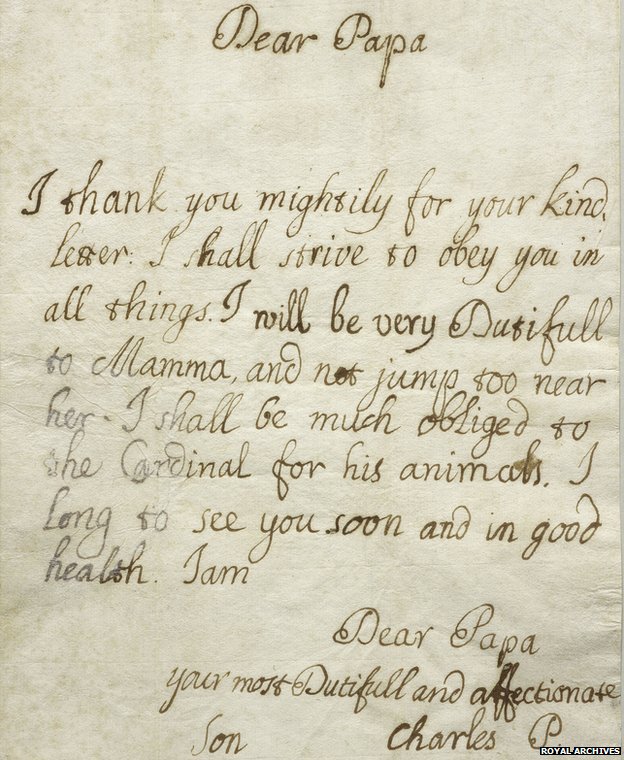 The Royal Archives includes thousands of papers relating to the exiled Stuarts. The documents not only reflect the continuing Jacobite efforts to reclaim the throne for the Stuart royal line, but also shed light on the private lives of the Stuart family. A letter written in 1728 by the seven-year-old Bonnie Prince Charlie will go on display in the exhibition for the first time. Written to his father, Prince James Francis Edward Stuart, from Palazzo Muti, the Stuart residence in Rome, it appears to be the young boy’s response to a reprimand for upsetting his mother. The Prince writes, “Dear Papa, I thank you mightily for your kind letter. I shall strive to obey you in all things. I will be very Dutifull to Mamma, and not jump too near her…”
Also on display for the first time is Major John Chard’s account of the Defence of Rorke’s Drift. Written at the request of Queen Victoria, it describes with the help of sketches and plans the unlikely victory of British troops on the night of 22 January 1879, when Chard’s men successfully defended the field station at Rorke’s Drift from Zulu attack, despite being heavily outnumbered. Chard recalls the moment when they ‘saw them, apparently 500 or 600 in number, come around the hill to our south and advance at a run’ and describes how “many of the men behaved with great gallantry.” Upon his return to England, Chard, along with Lieutenant Bromhead and other officers, was summoned to Balmoral to recount the battle to the Queen, who had followed the progress of the Anglo-Zulu War with great interest.
A report prepared for King George V by the Prime Minister, James Ramsay MacDonald, records a turning point in British politics—the first sitting of the House of Commons under the first Labour Government on 13 February 1924. Describing the occasion as “unique and historical in the annals of the British parliament,” MacDonald concludes that, although it was a “difficult and trying ordeal,” “on the whole it was a very encouraging start.” The report is just one of many examples of correspondence, both formal and private, between monarchs and political leaders held in the Royal Archives, including letters from the President of the United States, Abraham Lincoln, and British Prime Ministers Winston Churchill and Benjamin Disraeli.
Exhibition curator Lauren Porter of Royal Collection Trust said, “The 100th anniversary of the foundation of the Royal Archives at Windsor Castle provides a wonderful opportunity to explore and exhibit some of the greatest treasures in the collection of documents. The wide variety of material held in the Royal Archives—from private correspondence and diaries to official papers—provides a fascinating insight into the history of the British Monarchy, often from a very personal perspective.”
Pamela Clark, Julie Crocker, Allison Derrett, Laura Hobbs and Jill Kelsey, Treasures from the Royal Archives (London: Royal Collection, 2014), 240 pages, ISBN: 978-1909741041, £30.
 Since 1914, the famous ‘Round Tower’ of Windsor Castle has been the secure and honoured home to the Royal Archives—an extraordinary collection of many thousands of documents and records dating back to the reign of Elizabeth I. This publication showcases, for the very first time, the treasures of this fascinating and internationally significant collection, ranging from records of affairs of state to personal letters, diaries and domestic jottings, recounting the stories of kings and queens, politicians, rebels, soldiers and artists in their own words—and painting a remarkable portrait of history through the passions, dilemmas and life-changing moments of the people who shaped it.
Call for Papers | Tableau Vivant
Tableau Vivant: La Politique de l’Interruption
Paris, 31 October 2014
Proposals due by 15 June 2014
Journée d’études organisée par Michel Poivert et Julie Ramos
Désormais étudié dans ses différentes modalités historiques et esthétiques, le tableau vivant ne cesse de nous interroger sur la puissance d’un arrêt (du geste comme de l’image) : quelle est la nature de la force expressive de l’immobilité ? Considérer parfois comme anachronique au regard des arts du mouvement, le tableau vivant dans ce qu’il peut avoir d’archaïque propose une intensité que le théâtre ou l’arrêt sur image au cinéma ont largement expérimentée. L’artifice de l’immobilité contrainte des tableaux vivants peut-elle se comprendre à l’aune d’une réflexion sur les rapports entre l’image et le politique ? En performant le tableau vivant, la scène et le corps s’inscrivent dans une relation à l’espace social qui n’est pas dénué d’enjeux idéologiques. Objet singulier de l’histoire de l’art, le tableau vivant ouvre en réalité des perspectives plus larges qui concernent toutes les pratiques artistiques, le théâtre et la danse, la vidéo et la performance, ou bien encore l’installation. En proposant de repérer les enjeux politiques de l’immobilité à travers le paradigme du tableau vivant, il sera question d’autorité et de liberté, de l’économie générale du rapport entre le spectateur, l’auteur et l’acteur, et peut être aussi de penser la question de la création en dehors de l’image.
Date limite de réception des propositions de communication : 15 juin 2014.Les propositions doivent être adressées à Michel Poivert (m.poivert@orange.fr) et Julie Ramos (julie.ramos@free.fr). Les propositions de communication ne devront pas dépasser 300 mots et comporter : nom et prénom de(s) auteur(s), court C.V. et bibliographie sélective, titre(s), fonction(s) et institution de rattachement, coordonnées (adresse postale et électronique, téléphone), titre de la communication et principaux arguments.
◊ ◊ ◊ ◊ ◊
Le « tableau vivant » questionne les définitions traditionnelles de l’art. Communément défini comme un arrangement de personnes vivantes reproduisant de manière immobile une composition artistique, que ce soit une peinture, une sculpture ou une estampe, le tableau vivant aurait, selon un récit largement admis, connu son apogée au XIXe siècle (notamment par sa désignation en 1839 dans le récit La Toison d’or de Gautier.) C’est toutefois à cette période qu’il commence à être dévalorisé pour ses rapports avec le divertissement populaire, la photographie, voire l’érotisme. Cette croyance en un déclin du tableau vivant a contribué à concentrer son étude autour de 1800 (voir l’étude pionnière de Kirsten G. Holmström), à occulter ses origines plus anciennes, ainsi qu’à négliger ses évolutions ultérieures et son apport à l’histoire de l’art. L’objectif de la journée d’étude est de pallier ces manques en rassemblant des spécialistes du Moyen Âge, de l’époque moderne (XVIIe–XVIIIe siècles) et de la période contemporaine, afin d’en saisir les enjeux dans la longue durée.
Les études sur le tableau vivant ont jusqu’à présent majoritairement été menées par des historiens du spectacle. Ils l’ont en effet rattachés aux réformes scéniques du XVIIIe siècle, qu’il s’agisse de la redécouverte de la pantomime antique chez les théoriciens de la danse (Cahusac, Noverre, etc.) ou de la théorie du « quatrième mur » de Diderot, qui valorise l’immobilisation de l’action théâtrale en un « tableau dramatique ». À ces éléments s’ajoute l’ascendant, analysé par les historiens de l’art, des théories néo-classiques (Winckelmann, Lessing, etc.), qui préconisent pour les arts visuels la représentation du « moment fécond » d’une action, rendu sensible dans un geste suspendu exprimant la vie intérieure des figures. La plupart des spécialistes identifient ainsi le premier tableau vivant moderne dans la reproduction de L’Accordée de village de Jean-Baptiste Greuze au milieu de l’acte II des Noces d’Arlequin donné par Carlin à la Comédie Italienne, en 1761, l’année même de l’exposition de la toile au Salon.
Le tableau vivant s’émancipe ensuite rapidement de la scène pour se propager comme genre autonome dans les salons privés de l’élite cultivée européenne. S’y associe la pratique dite des « attitudes », inaugurée par Emma Hart, épouse de Sir William Hamilton, qui adoptait des « poses plastiques » inspirées des statues antiques et des silhouettes des vases étrusques de la collection de son époux. Enfin, Goethe contribue à la vogue des tableaux vivants au XIXe siècle, en les insérant dans la trame de son roman Les Affinités électives (1809). Il avait non seulement assisté au « attitudes » de Lady Hamilton lors de son voyage à Naples en 1787 et avait inclus le tableau vivant à ses réflexions sur le théâtre (voir l’essai sur son monodrame Proserpine) mais il en avait aussi été l’ordonnateur à la cour de Weimar.
Le tableau vivant et ses genres connexes (les attitudes et « poses plastiques ») questionnent les frontières à la fois esthétiques et sociales : entre œuvre originale et reproduction, imitation d’une image et présence des protagonistes, auteur et spectateur, mise en scène de soi et voyeurisme. Il contribue notamment à briser le contrôle à l’accès culturel, par son lien aux pratiques amateures et par ses déplacements d’un monde « aristocratique » et « artiste » aux scènes populaires, aux ateliers de photographie et aux premières projections filmiques. Au-delà de l’histoire du tableau vivant durant les XVIIIe et XIXe siècles, qui contribue à l’arrimer à la question du « faire tableau » dans l’ensemble des arts, l’étude de ses précédents dans les Mystères médiévaux et les fêtes d’Ancien Régime ouvre d’autres perspectives. Si les chercheurs n’ont repéré, pour ces périodes anciennes, qu’une seule occurrence d’une performance réalisée d’après une œuvre d’art (la reproduction du fameux polyptyque de l’Agneau Mystique des frères Van Eyck lors de l’entrée de Philippe le Bon à Gand en 1458), nombreuses sont les performances de personnes s’immobilisant pour « faire image » à l’occasion des rituels religieux et princiers. Leur disparition progressive au profit des « machines » et des décors imposés par la monarchie absolue pose la question du pouvoir qui s’y déploie. Pouvoir de figer l’infigurabilité du vivant ? Ou revanche du vivant sur l’image lors de performances dont l’hybridité fondamentale (entre l’art et de la vie) permet d’en briser l’efficacité ? Ces questions semblent réactualisées par les pratiques plus contemporaines du tableau vivant, du cinéma à l’art contemporain, en passant par le très populaire festival Pageant of the Masters, organisé à Laguna Beach depuis 1933. Elles permettent d’envisager les relations entre image et performativité, leurs affinités et leurs tensions dans l’instant suspendu. Elles supposent d’interroger le rôle de l’auteur de ces images collectives, mais aussi leur dimension politique.
Conference | Workshops and Manufactures in France, 1789–1815
From the conference programme:
« Les progrès de l’industrie perfectionnée »
Ateliers et manufactures de la Révolution française au Premier Empire, 1789–1815)
Workshops and Manufactures in the Years between the
French Revolution and the Napoleonic Empire, 1789–1815
Institut national d’histoire de l’art and Centre allemand d’histoire de l’art, Paris, 13–14 June 2014
 Entre la réunion des États généraux et la fin du Premier Empire, vingt-cinq ans s’écoulent pendant lesquels bouleversements politiques, économiques, sociaux et culturels créent un contexte d’instabilité pour le secteur du luxe et du demi-luxe français. Les ateliers et les manufactures sont confrontés à des conditions matérielles et organisationnelles difficiles. Le manque de matières premières, la détérioration des finances et la diminution du personnel en raison du départ des jeunes hommes aux armées ont un impact négatif sur la production artisanale. L’incertitude générale que représente cette période d’instabilité politique et de conflits armés n’empêchent pourtant pas l’émergence de modes. De nouveaux marchés s’ouvrent et offrent de riches opportunités aux artistes et artisans pour diversifier et élargir leurs créations.
La période révolutionnaire a souvent été considérée comme un temps de rupture, en particulier dans le domaine du luxe dont elle remet en cause les fondements. Il s’agira ici, au contraire, de l’envisager dans sa continuité, à la jonction des XVIIIe et XIXe siècles. La reprise de la production des objets de luxe s’observant dès le Directoire et s’épanouissant avec l’Empire, les mutations de la société et du travail posent la question du développement de nouveaux paradigmes. À quels évènements et à quels changements les manufactures d’État, les ateliers de renom ainsi que les producteurs régionaux doivent-ils faire face entre l’Ancien Régime et la Restauration des Bourbons ? De quelle manière les artistes et les artisans réussissent-ils – ou échouent-ils – à s’adapter ? Mais aussi comment, de ces situations complexes, émergent les facteurs mêmes d’une évolution possible d’un secteur en processus d’industrialisation ?
Le présent colloque entend faire le point sur cette période charnière de l’histoire des arts décoratifs en France, l’objectif étant de mieux comprendre comment, au sein d’une actualité foisonnante, porteuse de transformations, ont fonctionné des ateliers et des manufactures établis à Paris et sur l’ensemble du territoire français. Pluridisciplinaire, croisant en particulier l’histoire de l’art, l’histoire sociale, l’histoire économique, l’histoire culturelle et l’histoire des techniques, le colloque cherchera autant à affiner la périodisation de son sujet d’étude qu’à fournir les clefs de lecture d’une analyse plurielle des objets, en complément d’une approche stylistique déjà éprouvée.
◊ ◊ ◊ ◊ ◊
V E N D R E D I , 1 3 J U I N 2 0 1 4
9.00 Accueil par Philippe SÉNÉCHAL (INHA, Paris)
Organiser les ateliers et les manufactures
Présidence de séance Odile NOUVEL (musée des Arts décoratifs, Paris)
9.10 David CELETTI (université de Padoue) « Filer le luxe. Manufactures, ateliers et travail domestiques à l’aube de l’industrialisation »
9.30 Stéphane PIQUES (université Toulouse – Jean Jaurès, FRAMESPA, UMR 5136) « L’organisation de la production dans l’industrie céramique sous la Révolution : l’exemple du territoire industriel de Martres-Tolosane (Haute-Garonne) »
9.50 Élodie VOILLOT (université Paris Ouest Nanterre La Défense, INHA, Paris) « Des canons aux statuettes. L’industrie du bronze au tournant du XIXe siècle »
10.10 Pause
10.50 Camilla MURGIA (université d’Oxford) « The Elusive Link : Fine Arts and Industry Exhibitions under the Consulate and the Empire »
11.10 Christiane DEMEULENAERE-DOUYÈRE (Centre Alexandre Koyré, UMR 8560, CNRS-EHESS-MNHN, Paris) « Le luxe sous l’Empire. Entre pénurie de matières premières et recherche de substituts »
11.30 Discussion
12.30 Pause
Créer de nouveaux objets et de nouveaux styles
Présidence de séance Patrick VERLEY (université de Genève)
14.00 Piedade DA SILVEIRA, Michelle SAPORI (Paris) « Louis-Hyppolite Leroy et son atelier de modes de 1793 à 1815 »
14.20 Marie-Agnès DEQUIDT (université Paris-Est Créteil) « Horlogerie et Révolution : continuer à tourner dans un monde en bouleversement, 1789–1815 »
14.40 Bernard JACQUÉ (musée du papier peint de Rixheim) « Des décors de luxe en papier peint pendant la Révolution française »
15.00 Pause
15.40 Justin BEAUGRAND-FORTUNEL (École Pratique des Hautes Études, Paris) « Le mobilier de campagne de Napoléon Ier. L’artisanat au service de l’Empereur »
16.00 Discussion
S A M E D I , 1 4 J U I N 2 0 1 4
9.15 Accueil par Thomas KIRCHNER (Centre allemand d’histoire de l’art, Paris)
9.30 Un double bilan historiographique en histoire de l’art et en histoire
Philippe BORDES (université Lumière Lyon 2, LARHRA, UMR 5190) et Anne PERRIN KHELISSA (université Toulouse – Jean Jaurès, FRAMESPA, UMR 5136) ¬- Jean-François BELHOSTE (École Pratique des Hautes Études, Paris) et Natacha COQUERY (université Lumière Lyon 2, LARHRA, UMR 5190)
Diffuser et promouvoir la production à l’international
Présidence de séance Anne DION-TENENBAUM (musée du Louvre, Paris)
10.00 Valeria MIRRA (Archives du Moderne de Mendrisio, université de la Suisse italienne) « Labor omnia vincit. La Manufacture Piranesi de vases et ornements en terre cuite de Mortefontaine »
10.20 Ludmila BUDRINA (musée des Beaux-Arts d’Ekaterinburg) « Lapidaires parisiens aux services de Nicolas Demidoff : la collection des objets en bronze doré et malachite avec des mosaïques en reliefs des pierres dures réalisés par Thomire (d’après les documents inédits et les collections européennes) »
10.40 Pause
11.20 Hans OTTOMEYER (Munich)« Innovation by Design as Strategy for Luxury Goods »
11.40 Iris MOON (Sterling and Francine Clark Art Institute in Williamstown) « The Immutable Décor : Revolutionary Aesthetics and Material Transformations in Interior Decoration at the cabinet de platine, ca. 1800 »
12.00 Discussion (more…)
Met Initiative Provides Free Access to 400,000 Digital Images

Lock, 18th century, French, gilt bronze, 7 x 8 inches (New York: Metropolitian Museum of Art, Gift of J. Pierpont Morgan, 1906, #07.225.510.1). For more information, click here»
◊ ◊ ◊ ◊ ◊
Press release (16 May 2014) from The Met:
Thomas P. Campbell, Director and CEO of The Metropolitan Museum of Art, announced today that more than 400,000 high-resolution digital images of public domain works in the Museum’s world-renowned collection may be downloaded directly from the Museum’s website for non-commercial use—including in scholarly publications in any media—without permission from the Museum and without a fee. The number of available images will increase as new digital files are added on a regular basis.
In making the announcement, Mr. Campbell said: “Through this new, open-access policy, we join a growing number of museums that provide free access to images of art in the public domain. I am delighted that digital technology can open the doors to this trove of images from our encyclopedic collection.”
The Metropolitan Museum’s initiative—called Open Access for Scholarly Content (OASC)—provides access to images of art in its collection that the Museum believes to be in the public domain and free of other known restrictions; these images are now available for scholarly use in any media. Works that are covered by the new policy are identified on the Museum’s website with the acronym OASC. (Certain works are not available through the initiative for one or more of the following reasons: the work is still under copyright, or the copyright status is unclear; privacy or publicity issues; the work is owned by a person or an institution other than the Metropolitan Museum; restrictions by the artist, donor, or lender; or lack of a digital image of suitable quality.)
OASC was developed as a resource for students, educators, researchers, curators, academic publishers, non-commercial documentary filmmakers, and others involved in scholarly or cultural work. Prior to the establishment of OASC, the Metropolitan Museum provided images upon request, for a fee, and authorization was subject to terms and conditions. Additional information and instructions on OASC can be found here.
Exhibition | The New Georgians
Now on at Orleans House Gallery in Twickenham, just outside of London:
The New Georgians
Orleans House Gallery, Twickenham, 3 May — 27 July 2014

Valena Tzvetanska (Valena Lova) Mademoiselle Cuckó
The New Georgians celebrates the tercentenary of the Hanoverian accession. This exhibition, part of the Richmond upon Thames Georgian Festival, commemorates this historical event through a display exploring the life and local links of Queen Caroline of Ansbach (1683–1737), wife of King George II. Caroline lavishly dined in the Octagon Room on a visit here in 1729. Her husband’s mistress, Henrietta Howard, lived at the nearby Marble Hill House.
The focus of the exhibition is contemporary artwork from across the UK submitted via open submission. Artists explore the impact and relevance of 18th-century history, society, ideas, culture, and styles in the 21st century. Alongside reverent homages and playful pastiches are genres and media revolutionised and popularised in the 18th century, including botanical art, landscapes, portraits, prints and ceramics. Costume, accessories, and the representation and roles of women are also popular themes—fitting as the exhibition honours Queen Caroline, who possessed great intellect, culture, personal charm, and political influence. In her husband’s absences, she acted as Regent or Protector of the Realm.
Also on display are works created for the exhibition by the gallery’s artist in residence Michael Coldman. His constructions made from found, recycled and second hand objects are transformed into three dimensional scenes examining Georgian life and Queen Caroline and her Court. These often humorous works are complemented by a choice selection of 18th-century caricatures by British artists Hogarth, Smith, and Gillray from the Richmond Borough Art Collection.
The Richmond upon Thames Georgian Festival brochure is available as a PDF file here»










 Enfilade
leave a comment