Exhibition | Made in China: Cultural Encounters through Export Art
Press release for the exhibition now on view at the ROM:
Made in China: Cultural Encounters through Export Art
Royal Ontario Museum, Toronto, 5 September 2015 — 2 August 2016
Curated by Jian-fei He and Wen-chien Cheng

Soup plate (ROM European Collection)
Primarily originating from four renowned ROM collections, Made in China: Cultural Encounters through Export Art features nearly 100 objects including paintings, porcelain, lacquer, silver, and photography. Displayed over several rotations, these pieces were created in the 18th and 19th centuries for enthusiastic European and North American consumers. Placing the ‘Made in China’ trademark in historical context, the exhibition explores the cultural encounters between China and the West, revealing a dynamic history of export trade centered in the port city of Canton (Guangzhou). Dr. Jianfei He, the ROM’s James M. Menzies Chinese Research Fellow, is the exhibition guest curator. Dr. Wen-chien Cheng, the ROM’s Louise Hawley Stone Chair of Far Eastern Art, is curatorial supervisor.

Wallpaper detail (ROM, Gift of Noah Torno)
Chinese export art is associated with both Chinese art traditions and Western ideas. Like many products manufactured in China today, the works created centuries ago served as decorative art and souvenirs for foreigners. Examples of pith paper paintings, a materially demanding and technically complex art form, are among the highlights of this intimate exhibition. Derived from the ginseng family, pith paper is strong and, when damp, may be stretched and folded into nearly any shape. Watercolours and tempera are absorbed easily, creating a relief texture with a velvety visual depth. Rarely publicly displayed, these paintings are among the hidden treasures of the ROM’s Far Eastern holdings. Beyond this distinction, these works embody the exhibition’s theme: a lens through which extraordinary cultural encounters are witnessed. Scenes painted on the pith paper romanticized Chinese customs, daily life, landscapes, and exotic plants and insects—all serving to evoke fantasized images of China for Westerners.
Establishing that this tradition continues to this day is the inclusion of a set of contemporary hand-painted wallpaper commissioned especially for the ROM’s exhibition and created by a modern workshop in Shenzhen, China. A diverse group of specimens and objects from a number of different collections—from insects of the ROM’s entromology department corresponding to those seen in nearby pith paper paintings to a silver goblet from the Museum’s European Decocorative Arts Department depicting a dramatic scene—round out the display.
Jianfei He’s research fields and interests include ancient Chinese bronze mirrors as well as the embroidery, textile, and cultural heritage management of Southwest China and Southeast Asia. Wen-chien Cheng’s major area of research is premodern Chinese painting, and her research approach is a contextualized study of visual culture.
New Book | The Villa Laurentina of Pliny the Younger
From L’Erma di Bretschneider:
Jerzy Miziolek, The Villa Laurentina of Pliny the Younger in an 18th-Century Vision (Rome: L’Erma di Bretschneider, 2016), 250 pages, ISBN: 978-8891308443, €75 / $94.

The book deals with a paper reconstruction of Pliny the Younger’s (c. AD 61–112) villa near Ostia, some twenty kilometres from Rome. This unique work was created in Rome in the years 1777–78 by a young Pole, Count Stanisław K. Potocki (1755–1821) in cooperation with Giuseppe Manocchi and other outstanding artists of the time. The work, originally in the Potocki collection in Wilanów, is today housed in the iconographic collection of the National Library, Warsaw. It contains over thirty large-format, color drawings. In the late 18th century, probably during his last sojourn in Italy (1795–97), Count Potocki wrote a 24-page-long commentary to his work, entitled Notes et Idées sur la Villa de Pline. This hitherto unpublished manuscript commentary and reconstruction drawings of the villa are now published together with a virtual visualisation of the villa produced in 3D Studio Max 2014.
Jerzy Miziolek is professor of the visual arts and the classical tradition at the University of Warsaw (Institute of Archaeology). He is the author of seven books and more than 150 papers and reviews. He has delivered more than forty papers and lectures at foreign universities and international symposia concerning Early Christian, Renaissance, and neoclassical art.
◊ ◊ ◊ ◊ ◊
C O N T E N T S
Introduction
I. Stanislaw Kostka Potocki: Archaeology and Artistic Culture in the 2nd Half of the Eighteenth Century
1 The Fascination with Antiquity and Its Influence in the 2nd Half of the Eighteenth Century
2 Stanisław Kostka Potocki in the Memoirs of Eyewitness
3 Stanisław Kostka Potocki’s Studies at the Royal Academy in Turin
4 Stanisław Kostka Potocki’s Travels around Italy in 1774–82
5 In the Company of Princess Izabela Lubomirska: Stanisław Kostka Potocki’s Sojourn in Italy in 1785–86
II. The Laurentina: Pliny the Younger’s Seaside Villa and Its Reconstruction in the Pure Taste of the Century of Trajan
1 A Literary Portrait of the Laurentina: The Dwelling-Place of the Muses
2 The Owner of the Laurentina
3 The Search for the Remnants of the Laurentina in the Eighteenth Century and Later
4 Pliny ‘s Letter on the Laurentina in European Culture from the Renaissance to Neoclassicism
5 Artists Employed by Stanisław Kostka Potocki and Their Drawings
6 Reconstruction Drawings of the Laurentina and Remarks on the Notes et Idées sur la Villa de Pline
7 Reconstruction of Pliny ‘s Villa, Decoration of the Main Rooms, Patterns, and Inspirations
8 The Cryptoportico with Adjacent Pavilions and the Heliocaminus
9 Some notes on the Ideas Guiding the Plan for Pliny ‘s Villa by Potocki
III. The Third Dimension of Pliny the Younger ‘s villa: Virtual Reconstruction of the Laurentina
Instead of an Epilogue: The Laurentina of Potocki ‘s Vision and the Artistic Cultures of Neoclassical Warsaw
Appendices
Pliny the Younger, Letter to Gallus (2, 17)
Stanisław Kostka Potocki, Notes and Ideas on Pliny ‘s Villa
Notes and Explanations in the Portfolios Containing the Drawings
Bibliography
Exhibition | Of Beauty and Grandeur: Roman Portraits in the Baroque
From the Staatliche Kunstsammlungen Dresden:
Of Beauty and Grandeur: Roman Portraits and their Baroque Appropriation
Von Schönheit und Größe: Römische Porträts und ihre barocke Aneignung
Skulpturensammlung at the Albertinum, Dresden, 22 July — 6 November 2016
 The Dresden Antiquities Collection is one of the oldest collections amassed in Dresden by the kings and prince electors, and one of the oldest large collections of antiquities presented in a museum outside Italy. The items, on view behind glass in storage depots at the Albertinum, are currently waiting to be presented again in the eastern gallery of the Semperbau at the Zwinger. The sculptures from classical antiquity and the Baroque period have not been presented to the public in a fitting manner since 2002, the year of a major flood on the Elbe, followed by the reconstruction of the Albertinum and its reopening as a museum for modern art.
The collection displays a selection of some 50 classical and Baroque portraits and portrait statues. These portraits—sculptures combining authenticity and idealisation—played a crucial role in defining and communicating political, social and communal identities, sending out various messages to their audience in ancient times. One of the most important art genres of classical antiquity, portraits of children, women, politicians, military commanders and the ruling elite were a ubiquitous element of everyday Roman life. They were erected on public squares, influencing broad swathes of the public as a kind of mass media. In the 16th and 17th centuries, the works, which had often survived only as fragments, were elaborately and splendidly completed with busts made of coloured stone or reworked in the classical style. At the start of the 18th century, they came to Dresden from the Brandenburg Collection built up by Friedrich Wilhelm I (1688–1740) and the Roman Collection assembled by the House of Chigi.
This presentation shines the spotlight on the sculptures which make up the heart of the collection and which stand out in terms of their quality and quantity. Among the items there are some unusual works, such as the statue of the Roman Emperor Antoninus Pius (150–160 AD), the portrait of his wife Faustina (around 140 AD) on a magnificent Baroque bust of coloured marble, or the porphyry bust of the emperor known as Caligula (17th century), whose acquisition was of particular value to Augustus the Strong because of its precious material. Loans from the Grünes Gewölbe (Green Vault) include a showpiece by Johann Melchior Dinglinger and Balthasar Permoser: a cameo of a Roman emperor from classical antiquity set in a precious frame. In the 18th century this portrait was seen as that of the first Roman emperor, Augustus. Augustus the Strong saw himself as linked to his namesake by his own fame as a ruler and a patron of the arts.
New Book | Klassizismus in Aktion: Goethes ‘Propyläen’
Published by Böhlau with details from De Gruyter:
Daniel Ehrmann and Norbert Christian Wolf, eds., Klassizismus in Aktion: Goethes ‘Propyläen’ und das Kunstprogramm der Weimarer Klassik (Vienna: Böhlau Verlag, 2015), 458 pages, ISBN: 978-3205201540, 59€ / $83 / £45.
 Der Band setzt sich mit der von Johann Wolfgang Goethe von 1798 bis 1800 herausgegebenen Kunstzeitschrift Propyläen auseinander und nimmt dabei nicht nur bekannte Essays des Herausgebers, sondern auch Beiträge Friedrich Schillers, Johann Heinrich Meyers und Wilhelm von Humboldts in den Blick. Erstmalig wird so eine zentrale Programmschrift des deutschen Klassizismus in ihrem inneren Zusammenhang gemustert und in ihren zeitgenössischen Kontexten interdisziplinär untersucht. Dadurch kann die literaturhistorische und ästhetikgeschichtliche Bedeutung des publizistischen Projekts neu ermessen werden. Der Forschung soll so ein vertiefender Einblick in das innere Gefüge und die spannungsreiche Beschaffenheit des klassizistischen Weimarer Kunstprogramms eröffnet werden.
◊ ◊ ◊ ◊ ◊
I N H A L T S V E R Z E I C H N I S
EINLEITUNG
• Daniel Ehrmann / Norbert Christian Wolf, Klassizismus in Aktion. Zum spannungsreichen Kunstprogramm der Propyläen
KULTUR UND AUTONOMIE
• Sabine Schneider, »Ein Unendliches in Bewegung«. Positionierungen der Kunst inderKultur
• Hans-Jürgen Schings, Laokoon und La Mort de Marat oder Weimarische Kunstfreunde und Französische Revolution
• Daniel Ehrmann, Bildverlust oder Die Fallstricke der Operativität. Autonomie und Kulturalität der Kunst in den Propyläen
NATUR UND DIE KÜNSTE
• Elisabeth Décultot, Kunsttheorie als Übersetzung. Goethes Auseinandersetzung mit Diderots Versuch über die Mahlerey
• Dieter Borchmeyer, Weimarer Opernästhetik. Goethes Essay Ueber Wahrheit und Wahrscheinlichkeit der Kunstwerke
• Ernst Osterkamp, Das Drama und die Kunst des Klassizismus in den Propyläen
NORMATIVITÄT UND VIELSTIMMIGKEIT
• Johannes Grave Natur und Kunst, Illusion und Bildbewusstsein. Zu einigen Bildern in Goethes Beiträgen für die Propyläen
• Norbert Christian Wolf, Vielstimmigkeit im Kontext. Goethes ›kleiner KunstRoman‹
Der Sammler und die Seinigen in entstehungsgeschichtlicher und gattungstheoretischer Perspektive
• Martin Dönike, »Antike Kunstwerke«. Johann Heinrich Meyers altertumskundliche Beiträge zu den Propyläen
KLASSIZISTISCHE UND ANTIKLASSIZISTISCHE KUNSTPRAXIS
• Frank Büttner, Die Weimarischen Kunstfreunde und die Krise der Kunstakademien um 1800
• Johannes Rössler, Über das Helldunkel. Re exionen zu Druckgraphik und Reproduktionsmedien in den Propyläen
• York-Gothart Mix, ›Das Unendliche und das Endliche‹. Die Propyläen und die kunstphilosophische Debatte über die Arabeske als romantisches Erkenntnisbild
VOR UND NACH DEN »PROPYLÄEN«
• Gerrit Brüning, Glückliches Ereignis im Zeichen der Kunst. Die Propyläen als Frucht der Zusammenarbeit Goethes und Schillers
• Claudia Keller, Die ungeschriebenen Propyläen – Klassizismus im Experiment
• Peter Sprengel, Goethe-Nachfolge als Architekturphantasie. Zum Motiv der Propyläen im Werk Gerhart Hauptmanns
Abbildungen
Siglenverzeichnis
Verzeichnis der Beiträgerinnen und Beiträger
Personenregister
Inaugural Getty Rothschild Fellowship Goes to David Saunders
Press release (11 July 2016) from The Getty:
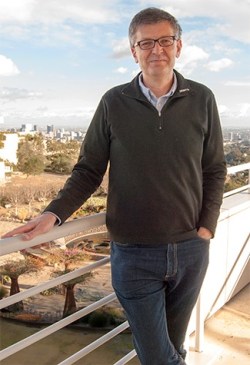 The Getty and the Rothschild Foundation today announced the creation of the Getty Rothschild Fellowship, which will support innovative scholarship in the history of art, collecting, and conservation, using the collection and resources of both institutions. The fellowship offers art historians, museum professionals, or conservators the opportunity to research and study at both the Getty in Los Angeles and Waddesdon Manor in Buckinghamshire, England. The inaugural fellow is Dr. David Saunders, a foremost expert in the area of conservation science who will work on museum and gallery lighting during the fellowship.
“The Getty and the Rothschild Foundation hold similar values regarding the understanding and conservation of visual art around the world, and it is only appropriate that we would work together to support individuals who demonstrate these values through their research,” says Jim Cuno, president and CEO of the J. Paul Getty Trust. “We are pleased to award the inaugural Getty Rothschild Fellowship to Dr. Saunders, whose work in museum lighting has been of long-standing interest to the Getty Conservation Institute and the Getty Museum.”
Dr. Saunders is a former principal scientist at The National Gallery and keeper of conservation, documentation, and research at the British Museum. Now an independent researcher, Saunders is writing what will be a seminal book about museum and gallery lighting. Waddesdon is an ideal place to advance his research, as it will serve as a case study for the upcoming publication. The Flint House, the RIBA award-winning Rothschild Foundation property, will provide an exceptional environment in which the fellow will stay while working at Waddesdon.
“The Rothschild Foundation and Waddesdon Manor are delighted to be collaborating with the Getty on this Fellowship, which will nurture high-level scholarship on subjects which are close to the hearts of both institutions, whether in the fields of art and art history, collecting, conservation or the application of new technologies to the museum and heritage worlds. I am particularly pleased that our first Fellow will be David Saunders, whose work is of the greatest possible relevance to Waddesdon, as a historic house seeking to present itself in innovative ways,” says Lord Rothschild, OM GBE.
The selection process for the Getty Rothschild fellowship includes a number of criteria, including whether the applicant’s work would benefit from proximity to the Getty and Rothschild collections. Fellowships will be for up to eight months, with the time split equally between the Getty and Waddesdon Manor. Dr. Saunders will be at the Getty from January to March 2017 and at Waddesdon Manor from April to June 2017. Fellows will also receive a stipend during their time at both locations. The fellowship is administered by the Getty Foundation.
In 2014, Lord Jacob Rothschild received the Getty Medal for his contributions to the practice, understanding, and support of the arts.
AAMC Foundation Engagement Program for International Curators
From The Association of Art Museum Curators:
AAMC Foundation Engagement Program for International Curators
Applications due by 15 October 2016
Applications are now open for the inaugural term of the AAMC Foundation Engagement Program for International Curators, made possible with major support from the Terra Foundation for American Art. The two-year Program will accept three non-US based curators and three US Liaisons working on or having worked within exhibitions and projects that explore historic American Art (c. 1500–1980), including painting; sculpture; works on paper, including prints, drawing and photography; decorative arts; and excluding architecture; design; and performance. Applications are now open for International Awardees and US Liaisons, and are due by October 15, 2016.
Through fostering international relationships between curators, the Program aims to not only provide opportunities for professional development and exchange within our field, but also to expand and strengthen the international curatorial community and give primacy to the curatorial voice in the international dialogue between museum professionals. The Program will be an active part of building international partnerships, leading cross-border conversations, and spearheading international representation within AAMC’s membership & AAMC Foundation’s efforts.
The first year of the Program pairs an International Awardee with a US Liaison for a direct partnership, during which time the pair will conduct ongoing discussions on the area sought by the International Awardee. The Liaison will offer insight into the International Awardee’s desired focus of advancement, which could include leadership, research, creating cross-border exhibitions, loan development, understanding US fundraising models, marketing initiatives, navigating galleries in the US, and so on. The International Awardee will also be part of AAMC’s Curator’s Circle donor group, allowing for interaction with leaders at this level and bringing their voice and experience to our supporters.
The second year of the Program provides the International Awardee with a travel stipend and complimentary registration for AAMC & AAMC Foundation’s Annual Conference & Meeting. Gathering together on average 350 curators from around the country, AAMC’s largest annual event provides attendees with a unique opportunity to network across borders, fields and institution type, while attending panels and sessions on leading issues facing the profession. Year two also includes placement on an AAMC Committee to add another international voice within our leadership base, and to assist in advancing AAMC’s initiatives. The Program will conclude with an International Awardee-led webinar presented to the full AAMC membership on a topic relevant to the Program or a current project of the individual International Awardee.
Follow-up beyond the two years would continue with access to the virtual chat space for current, past and incoming classes, an alumni reception every other year and review of initial Program goals.
Visit the program page to learn more about the program’s components, and to download US Liaison and International Awardee application forms.
Exhibition | Versailles: Treasures from the Palace

Hall of Mirrors (Galerie des Glaces), 1678–84
(Château de Versailles)
◊ ◊ ◊ ◊ ◊
Press release (18 July 2016) from the NGA:
Versailles: Treasures from the Palace
National Gallery of Australia, Canberra, 9 December 2016 — 17 April 2017
The NGA has revealed details of the sumptuous treasures from the Palace of Versailles, which will be on show in Canberra this December. Versailles: Treasures from the Palace is a once-in-a-lifetime chance to see and experience a mesmerising period in French history in Australia. For the first time ever, the treasures will travel from France to entice visitors into a world of power, passion and luxury through this epic exhibition. More than 130 paintings, intricate tapestries, gilded furniture, monumental statues and other objects from the Royal gardens, and personal items from Louis XIV to Marie-Antoinette, will bring to life the reigns of three kings, their queens and mistresses in a fascinating and tumultuous period of French history. The exhibition will celebrate the lives, loves, and passions of the people of Versailles through a full program of activities including music performances, children’s programs, and public events.

François Hubert Drouais, The Sourches Family (‘Le Concert Champêtre’), 1756, oil on canvas (Château de Versailles, Dist. RMN-Grand Palais / Christophe Fouin)
“We are delighted to bring the grandeur of the culture of Versailles exclusively to Canberra and make it possible for all Australians to access and appreciate the social, political and cultural aspects of this unique phenomenon. If ever absolute power can be expressed through unbridled opulence, this is it,” said Gerard Vaughan, NGA Director.
“Along with astonishing treasures, like the marble bust of Louis XIV, or the glamorous formal portrait of Marie- Antoinette, we are bringing to Australia the entire 1.5 tonne statue of Latona and Her Children from one of the main fountains of the Palace of Versailles,” said Dr Vaughan. “The authenticity of this cultural experience will leave a lasting imprint on all our visitors.”
The exhibition contrasts small personal items, such as the precious golden reliquary which belonged to Louis XIV’s mother, or Marie-Antoinette’s hand-crafted chair and harp, with huge works including six-metre tapestries from the most important Gobelins series ever produced for Louis XIV, and a monumental conversation piece of the Sourches family which requires individual freight.
“Versailles is at the heart of French cultural expression as much as the NGA is the heart of Australian visual expression and we are very excited to bring this historic exhibition to Australia,” said Catherine Pégard, President of the Public Establishment of the Palace, Museum and National Estate of Versailles.
“The opportunity to send such important French treasures has been made possible because of the major restoration program at Versailles, and we are thrilled to see that the outcome of the work will be the enjoyment of thousands of Australians,” said Christophe Lecourtier, Ambassador of France to Australia.
“The NGA is bringing to Canberra yet another spectacular show, which will attract people from all over the country and the world this summer,” said Andrew Barr, ACT Chief Minister. “These shows are important to the local tourism sector and I’m confident that this show will be another success for the Gallery.”
Exhibition | The Artistry of Outlander: Costumes and Set Designs
From The Paley Center:
The Artistry of Outlander: Costumes and Set Designs
The Paley Center for Media, Los Angeles, 8 June — 14 August 2016
 The Artistry of Outlander takes visitors into the world of the critically acclaimed STARZ and Sony Pictures Television series Outlander, showcasing many iconic costumes designed by Emmy-winning costume designer Terry Dresbach. Fans can step into 18th-century Parisian society, where they will be able to view actual set pieces from Outlander production designer Jon Gary Steele, life-size episodic photography, and behind-the-scenes video segments.
An extended description, with photographs, is provided by Amy Ratcliffe, writing for Nerdist (8 June 2016).
During a panel after the exhibit preview, Dresbach and Steele revealed they’ve been wanting to tackle 18th-century Paris for practically their entire careers. In fact, they longed to specifically work on Outlander. “Gary and I have been planning to do this show for about 25 years,” Dresbach said. She joked that she had to marry somebody (Outlander executive producer Ronald D. Moore) to make it happen, “It was all to get to Outlander.” Dresbach introduced Steele to Gabaldon’s book in the early ’90s, and they’ve been dreaming about it since. . . .
The sets in 18th-century France were so opulent and vivid, you’d think they were shot on location. That wasn’t the case. Most sets were built in a stage—including Claire and Jamie’s apartment, Master Raymond’s apothecary, and King Louis’ star chamber. They shot some exteriors in Prague, but for the most part, Steele got to dream the world into creation. “As designers, we want to build. It’s all from the ground-up. You create the whole thing. You control the color, the floor, the walls, the ceiling. That is so much more fun. It’s on stage, so it’s better in many ways for all of production,” Steele said. . .
Ratcliffe’s full piece is available here»
New Book | Hogarth’s Legacy
Distributed by Yale UP:
Cynthia Roman, ed., Hogarth’s Legacy (New Haven: Yale University Press, 2016), 272 pages, ISBN: 978-0300215618, $80.
 The legacy of graphic artist William Hogarth (1697–1764) remains so emphatic that even his last name has evolved into a common vernacular term referring to his characteristically scathing form of satire. Featuring rarely seen images and written contributions from leading scholars, this book showcases a collection of the artist’s works gathered from the Lewis Walpole Library at Yale University and other repositories. It attests to the idiosyncratic nature of his style and its international influence, which continues to incite aesthetic and moral debate among critics. The eight essays by eminent Hogarth experts help to further contextualize the artist’s unique narrative strategies, embedding the work within German philosophical debates and the moral confusion of the Victorian period and emphasizing the social and political dimensions that are part and parcel of its profound impact. Endlessly parodied and emulated, Hogarth’s distinctive satire persists in its influence throughout the centuries and this publication provides the necessary lens through which to view it.
Cynthia Roman is curator of prints, drawings, and paintings at the Lewis Walpole Library.
New Book | Artistes, savants et amateurs: Art et sociabilité
A collection of essays that emerged from the conference Art et Sociabilité au XVIIIe siècle
(Paris, 23–25 June 2011) is now available from Mare et Martin:
Jessica Fripp, Amandine Gorse, Nathalie Manceau, and Nina Struckmeyer, eds., Artistes, savants et amateurs: Art et sociabilité au XVIIIe siècle (1715–1815) (Paris: Les Éditions Mare et Martin, 2016), 296 pages, ISBN: 979-1092054422, 35€.
 La notion de sociabilité a fait l’objet, depuis quelques années, d’un renouvellement historiographique important. La complexité de cette notion impose pour son étude une approche pluridisciplinaire qui fasse appel aussi bien à la sociologie qu’à la philosophie, à l’anthropologie qu’à l’histoire de l’art.
Ce volume rassemble des études de spécialistes internationaux et explore la diversité des échanges sociaux dans le monde artistique du XVIIIe siècle. En examinant la sociabilité des divers acteurs de la création artistique, ces textes analysent les réseaux formés par le commerce des objets matériels, à travers l’étude des collections, du marché de l’art ou des expositions, et par le commerce des idées, à travers l’étude des écrits sur l’art et de l’art de la conversation. Le rôle des pratiques sociales au sein de la sphère publique dans l’évolution de la production artistique et des échanges matériels, économiques et intellectuels constitue donc l’objet de cet ouvrage collectif.
◊ ◊ ◊ ◊ ◊
T A B L E D E S M A T I È R E S
Préface, Étienne Jollet
Introduction: La sociabilité, une notion équivoque, Jessica L. Fripp, Amandine Gorse, Nathalie Manceau et Nina Struckmeyer
I. LA SOCIÉTÉ DES ARTISTES
• Le peintre-gentleman : un modèle de sociabilité et ses variations dans l’Angleterre du dix-huitième siècle, Elisabeth Martichou
• Entre hommage et parodie : une conversation graphique entre Watteau et Oppenord, Jean-François Bédard
• Behind Closed Doors: Charles-Antoine Coypel and le théâtre de société, Esther Bell
II. LA COMMUNAUTÉ PROFESSIONNELLE
• A case study in sociabilité: Bachelier’s École royale gratuite de dessin, Reed Benhamou
• La sociabilité à l’Académie de France à Rome sous le directorat de Charles-Joseph Natoire (1752–1775), Susanna Caviglia
• Les cercles des artistes allemands à Paris autour de 1800, Frauke Josenhans / Nina Struckmeyer
• Painters and Parish Life in Eighteenth-Century Paris: Art, Religion, and Sociability, Hannah Williams
III. LES REPRÉSENTATIONS DE LA SOCIABILITÉ
• Friendship at the Salon, Jessica L. Fripp
• Fêting the Hunt in Eighteenth-Century Painting, Julie Anne Plax
• Le tableau de mode et Hogarth – la peinture de genre dans la première moitié du XVIIIe siècle : entre autodérision et critique sociale, Jörg Ebeling
IV. LES LIEUX DE LA SOCIABILITÉ
• Les chimères de la République des Arts. Fonction et expérimentation du fac-similé scientifique dans la première moitié du XVIIIe siècle, Valérie Kobi
• Les dictionnaires des Beaux-Arts au XVIIIe siècle : pour qui et pourquoi ?, Gaëtane Maës
• Le commerce de la peinture dans les Salons de Diderot, Stéphane Lojkine
• L’œil du spectateur : incarnation d’une nouvelle sociabilité, Isabelle Pichet
• Des hommes et des œuvres : sociabilités et associations dans le musée parisien autour de 1800, Noémie Étienne
V. LES MODÈLES DE LA SOCIABILITÉ
• Paris/Provinces : une sociabilité savante et artistique au XVIIIe siècle vue au travers des correspondances privées, ou les échanges épistolaires comme instruments de la sociabilité, Patrick Michel
• Les classiques de Weimar en dialogue avec la culture parisienne, Boris Roman Gibhardt
• Les Souvenirs d’Élisabeth Vigée Le Brun : distinction et sociabilité dans une Vie d’artiste, Bernadette Fort
Illustrations
Bibliographie générale
Auteurs Remerciements
Index










 Enfilade
leave a comment