Call for Papers | Seventh Feminist Art History Conference
From Amart-l (9 September 2019) . . .
The Seventh Feminist Art History Conference
American University, Washington, D.C., 25–27 September 2020
Proposals due by 1 December 2019
The Feminist Art History Conference was established in 2010 to celebrate and build on the legacy of feminist art-historical scholarship and pedagogy originated by Norma Broude and Mary D. Garrard at American University in Washington, D.C. In September 2020 this international conference will convene for the seventh time. The core principles of a feminist art history have long included the goals of reclaiming the place of women artists and patrons within the history of art and visual culture, and of describing and elaborating how gendered ideologies have framed the structure of both artistic practice and the writing of art history over the centuries. In recent years feminist art history has also become increasingly intersectional and interdisciplinary, dialoguing with race, class, geography, and environmental and architectural issues, to name but a few.
In the spirit of bringing together the diverse strands of thought and practice that feminist art history now embraces, this conference will feature papers spanning a wide range of chronological, geographic, intersectional, and interdisciplinary topics. These may include (but are not limited to) artists, movements, and works of art and architecture; cultural institutions and critical discourses; practices of collecting, patronage, and display; the gendering of objects, spaces, and media; the reception of images; and issues of power, agency, gender, and sexuality within visual and material cultures. At this year’s conference, underrepresented art-historical periods (ancient, medieval, Renaissance), cultures and traditions beyond the Western world, and issues of race and ethnicity are especially encouraged. We welcome submissions from established and emerging scholars of art history as well as advanced graduate students.
To be considered for participation, please provide a single document in Microsoft Word. It should consist of a one-page, single-spaced proposal of unpublished work up to 500 words for a 20-minute presentation, followed by a curriculum vitae of no more than two pages. Please name the document “[last name]-proposal” and submit with the subject line “[last name]-proposal” to feminist.ahconference@gmail.com.
Invitations to participate will be sent by 1 February 2020.
Keynote Speaker
Kellie Jones, Professor in Art History and Archaeology and the Institute for Research in Aftrian American Studies (IRAAS), Columbia University
Organizing Committee
Joanne Allen, Jordan Amirkhani, Juliet Bellow, Norma Broude, Kim Butler Wingfield, Nika Elder, Mary D. Garrard, Andrea Pearson, Ying-chen Peng and Anne Nellis Richter (coordinator)
Sponsored by the Art History Program in the Department of Art, College of Arts and Sciences, American University, with the generous support of Robin D’Alessandro and Dr. Jane Fortune
Call for Papers | Emblemata Baltica
From ArtHist.net (10 September 2019) . . .
Emblemata Baltica — Representing Human Nature in the Baltic: The Visual Culture of Emblems and Allegories in Northern Germany, Southern Sweden, and Denmark, 16th–18th Centuries
Hamburg, 13-14 November 2019
Organized by Iris Wenderholm and Isabella Augart
Proposals due by 20 September 2019
A new research network aims at exploring the role of emblem books and the visual culture of emblems and allegories in the formation of a joined transnational community of cultural ideas and norms in the western Baltic region throughout the 16th–18th century. Given its liminal status of connected (coastal) towns, The Baltic region is a particularly interesting research area concerning questions of transnational cultural norms. Commercial contacts and shared religious beliefs helped to foster vivid zones of exchange and resulted in a jointed visual culture. Exploring the visual culture of emblems and allegories from the perspective of political iconography, the network wants to highlight that moral and political norms were transregionally transmitted and transformed in various political contexts throughout the Early Modern age. Tracing the transformation of moral, ethical, theological and scientific knowledge in various connects and functions, the new transnational and interdisciplinary network will explore the formation of political and social norms through (multilingual) emblem books, Mirrors for Princes, and the visual culture of emblems and allegories. We invite proposals for papers (10/20 minutes) and a short CV to be sent to the organizers by September 20, 2019: iris.wenderholm@uni-hamburg.de.
Call for Essays | Oxford Art Journal Essay Prize 2019
From ArtHist.net (9 September 2019) . . .
Oxford Art Journal Essay Prize 2019
Submissions due by 1 December 2019
The Oxford Art Journal Essay Prize for Early Career Researchers is now open for submissions until 1st December 2019. The annual Essay Prize seeks to further enhance Oxford Art Journal’s international reputation for publishing innovative scholarship, and can be on any topic relevant to art history. Submissions are encouraged from British and international doctoral students, as well as early career researchers who are within five years of gaining their PhD.
The winner will receive:
• Publication of the winning essay in Oxford Art Journal
• £500 worth of Oxford University Press books
• A year’s free subscription to Oxford Art Journal
Find out more by visiting the journal’s website.
New Book | Teaching Representations of the French Revolution
From MLA:
Julia Douthwaite Viglione, Antoinette Sol, and Catriona Seth, eds., Teaching Representations of the French Revolution (New York: MLA, 2019), 268 pages, ISBN: 978-1603294652 (cloth), $65 / ISBN: 978-1603294003 (paper), $34.
 In many ways the French Revolution—a series of revolutions, in fact, whose end has arguably not yet arrived—is modernity in action. Beginning in reform, it blossomed into wholesale attempts to remake society, uprooting the clergy and aristocracy, valorizing mass movements, and setting secular ideologies, including nationalism, in motion. Unusually manifold and complicated, the revolution affords many teaching opportunities and challenges. This volume helps instructors seeking to connect developments today—terrorism, propaganda, extremism—with the events that began in 1789, contextualizing for students a world that seems always unmoored and in crisis.
The volume supports the teaching of the revolution’s ongoing project across geographic areas (from Haiti, Latin America, and New Orleans to Spain, Germany, and Greece), governing ideologies (human rights, secularism, liberty), and literatures (from well-known to newly rediscovered texts). Interdisciplinary, intercultural, and insurgent, the volume has an energy that reflects its subject.
C O N T E N T S
Acknowledgments
• Julia Douthwaite Viglione, Antoinette Sol, and Catriona Seth — Introduction
Part I: Historical Contexts
• Julia Douthwaite Viglione, Antoinette Sol, and Catriona Seth — A Narrative Chronology of Events in Revolutionary France
• Lauren Pinzka — Teaching the French Revolution as Myth and Memory
• Christopher Tozzi — Teaching the Revolution through a Military Lens
• Séverine Rebourcet — Liberté, Egalité, Fraternité, and Laïcité: Frenchness, Islam, and French Hip-Hop
Part II: Rhetoric, Rights, and Revolution
• Jeffrey Champlin — Rights, Revolution, Representation: Thinking through the Language of the French Revolution
• Pratima Prasad — Human Rights and Human Wrongs: Slavery and Colonialism in a Time of Revolution
• Habiba Boumlik and Robin Kietlinski — Teaching the French Revolution at a Community College: Challenges and Benefits
• Melanie Conroy — Teaching Republican Culture through Caricature: The Scandal of Charlie Hebdo
Part III: Writing the Revolution
• Julia Douthwaite Viglione, Antoinette Sol, and Catriona Seth — Editors’ Choice: Essential Texts of the French Revolution
• Logan J. Connors — Teaching the Revolution’s Theater as Cultural History
• Amir Minsky — The French Revolution and the German Chimera: Theatricality, Emotions, and the Untransferability of Revolution in J. H. Campe’s Briefe aus Paris
• Erin A. Myers — The Sans-culottides: Learning Revolutionary-Era French Culture through Celebration and a Reading of Hugo’s Quatrevingt-treize
• Jennifer Gipson — Rethinking History: The ‘Marseillaise Noire’ and Legacies of the Revolution in Creole New Orleans
• Matthew Lau — Writing to Appreciate the Enigmas of Danton’s Death and Monsieur Toussaint at the Community College
Part IV: The Revolution in Art and Mass Media
• Beth S. Wright — ‘Speaking to All the Senses at Once’: The French Revolution through the Visual Arts
• Amaya Martin and José A. Martin-Pereda — The French Revolution and the Beginning of Modern Communications
• Giulia Pacini — Ideas on the Table: Teaching with the Faïences Révolutionnaires
• Melissa A. Deininger — The French Revolution and Modern Propaganda
• Dominica Chang — French Revolutionary Women: A Century of Media Representation
• Katherine Astbury — Engaging Students in Research: Stop-Motion Videos, Strip Cartoons, and the Waddesdon Manor Collection of Prints
Part V: Global Reverberations
• J. B. Mertz — Teaching the Revolution Debate: Edmund Burke, His Radical Respondents, and William Blake
• Ronan Y. Chalmin — How Should an Invisible Event Be Taught? The Haitian Revolution as Pedagogical Case Study
• Marlene L. Daut — Teaching Perspective: The Relation between the Haitian and French Revolutions
• Ourida Mostefai — Exile, Displacement, and Citizenship: Émigrés from the French Revolution to the Twenty-First Century
• Rosa Mucignat and Sanja Perovic — The French Revolution Effect: France, Italy, Germany, Greece
• John Pizer — Teaching the French Revolution in Late-Eighteenth- and Early-Nineteenth-Century German Literature Classes
• Yvonne Fuentes — The French Revolution’s Echo in Spain through Literary and Satirical Representations
• Amy E. Wright — From Transnational Political Thought to Popular National Iconography: Latin America’s Cult of Liberté in the Age of Revolution
Part VI: Resources
• Melissa A. Deininger — French Revolution: Dates and People
• Christopher Tozzi — Major Battles of the Revolutionary Period
• Julia Douthwaite Viglione, Dominica Chang, Melanie Conroy, and Melissa A. Deininger — Filmography
• Beth S. Wright — Revolutionary Artwork
Notes on Contributors
Index
Exhibition | Cut and Paste
◊ ◊ ◊ ◊ ◊
Now on view at Edinburgh’s Modern Two; for the earlier period, see the catalogue essay by Freya Gowrley:
Cut and Paste: 400 Years of Collage
Scottish National Gallery Of Modern Art (Modern Two), Edinburgh, 29 June — 27 October 2019
 A huge range of approaches is on show, from sixteenth-century anatomical ‘flap prints’, to computer-based images; work by amateur, professional and unknown artists; collages by children and revolutionary cubist masterpieces by Pablo Picasso and Juan Gris; from nineteenth-century do-it-yourself collage kits to collage films of the 1960s. Highlights include a three-metre-long folding collage screen, purportedly made in part by Charles Dickens; a major group of Dada and Surrealist collages, by artists such as Kurt Schwitters, Joan Miró, Hannah Höch, and Max Ernst; and major postwar works by Henri Matisse, Robert Rauschenberg, and Peter Blake, including the only surviving original source photographs for Blake’s and Jann Haworth’s iconic, collaged cover for the Beatles’ album Sergeant Pepper’s Lonely Hearts Club Band.
The importance of collage as a form of protest in the 1960s and 70s will be shown in the work of feminist artists such as Carolee Schneemann, Linder, and Hannah Wilke; Punk artists, such as Jamie Reid, whose original collages for the Sex Pistols’ album and posters will feature; and the famously subversive collages of Monty Python founder Terry Gilliam. The exhibition also features the legendary library book covers which the playwright Joe Orton and his lover Kenneth Halliwell doctored with collages, and put back on Islington Library’s shelves—a move which landed them in prison for six months. In addition, the exhibition also demonstrates how collage remains important for the practice of many artists working today. Owing to the fragility of much of the work, the exhibition will not tour: it can only be seen at the Scottish National Gallery of Modern Art in Edinburgh.
Patrick Elliott, ed., with essays by Freya Gowrley and Yuval Etgar, Cut and Paste: 400 Years of Collage (Edinburgh: National Galleries of Scotland, 2019), 184 pages, ISBN: 978-1911054313, £25.
Call for Papers | ASECS 2020, St. Louis
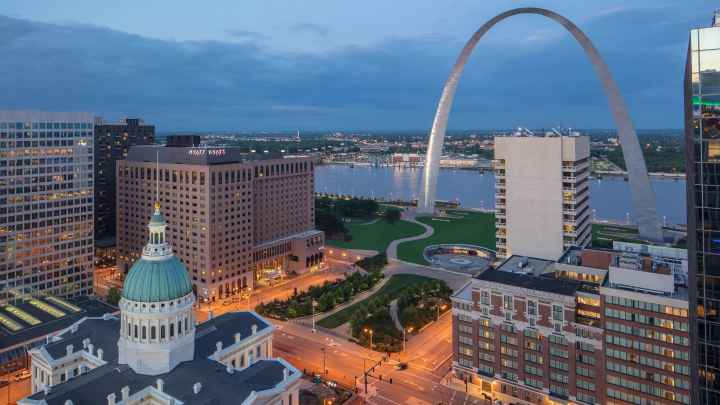
Just a reminder that that the due date for ASECS 2020 proposals is Sunday (15 September). Send them in!
2020 American Society for Eighteenth-Century Studies Conference
Hyatt Regency at the Arch, St. Louis, 19–21 March 2020
Proposals due by 15 September 2019
Proposals for papers to be presented at the 51st annual meeting of the American Society for Eighteenth-Century Studies, in St. Louis, are now being accepted. Along with our annual business meeting, HECAA will be represented with the Anne Schroder New Scholars’ Session, chaired by Susanna Caviglia. A selection of additional sessions that might be relevant for HECAA members is available here»
New Book | Painting and Calligraphy from the Islamic World
From PHP:
Will Kwiatkowski, Legacy of the Masters: Painting and Calligraphy from the Islamic World (London: Paul Holberton Publishing, 2019), 224 pages, ISBN: 978-1911300731, £50.
 Lavishly illustrated, this exquisite and scholarly book presents a collection of over sixty paintings, drawings, and calligraphic specimens mostly made in the Safavid, Uzbek, Ottoman and Mughal Empires in the period from the 16th through the early 19th century for inclusion in albums (muraqqa). The compilation of these albums, involving the collection and ordering of the works to be included as well as the design and execution of decorative borders, was an art form in itself and amounted to a broader cultural phenomenon that has increasingly become the focus of scholarly attention.
This was the age of the master artist, whose work was eagerly sought by collectors, imitated by admirers and forgers, taken as loot by invaders, and exchanged as gifts that had value across political borders. The international currency of a master artist’s work is particularly apparent in the case of the calligrapher Mir ‘Ali of Herat (d. 1544), whose calligraphies were almost obsessively sought out by the Mughal rulers of India and provided a model for subsequent generations of calligraphers in India and Iran.
In Iran, Shah ‘Abbas’ new capital of Isfahan was the breeding ground for a generation of artists specialized in single-page calligraphic compositions, paintings, and drawings, often working in distinctive styles. These included calligraphers such as Mir ‘Imad al-Hasani and ‘Ali Riza ‘Abbasi, and painters like Riza ‘Abbasi, Muhammad Qasim and, later, Mu’in Musavvir.
The processes of collection and compilation were complex, as albums were gifted and reassembled to suit the tastes and outlook of new owners. An eloquent example of this ongoing evolution is the famous St. Petersburg Album. Compiled and given decorative borders in Iran in the mid-18th century, the album contains a number of Mughal and Deccani paintings and drawings presumed to have been taken to Iran as plunder by Nadir Shah following the invasion of India in 1739. The end of this tradition is marked in the publication by a number of works from Mughal-style albums of calligraphy and painting acquired by officers and administrators of the British East India Company such as Warren Hastings and William Fraser.
Call for Essays | Insect Studies in the Long Eighteenth Century
From the CFP:
Critical Insect Studies in the Long Eighteenth Century, 1660–1830
Edited by Beth Fowkes Tobin and Beth Kowaleski Wallace
Abstracts due by 1 December 2019; final essays will be due 1 August 2020
We are seeking abstracts for an interdisciplinary collection of critical essays exploring insects in the long eighteenth century.
First, we are especially interested in work that explores the place of insects in eighteenth-century life: while we acknowledge the destructive capacity of insects, we also aim to consider how insect activity may have been crucial to human purposes, perhaps in invisible or unrecognized ways. Second, if indeed insects have always been useful to human thinking, how were they deployed in various forms of eighteenth-century literature and philosophy? Third, how were insects represented visually and to what degree were modes of picturing insects entangled with insects as collectable objects, specimens, and commodities? Fourth, our collection will engage with the history of science, acknowledging and exploring important (if at times problematic) processes of insect classification and taxonomy that occurred largely during the second half of the eighteenth century.
Our ultimate goal is to rethink human kinship with tiny terrestrial creatures, both in the eighteenth-century and now. Thus, we especially welcome work that showcases new materialist approaches, as well as other methodologies rooted in the environmental humanities. We seek in the process to find a way to knit together humanistic and scientific perception into a unified understanding of the agentic capacity of all materiality.
We especially welcome essays that address non-European texts and insect/human entanglements as well as essays from a range of disciplines, including art history, literary studies, the history of science, environmental history, and museum studies. Contact us if you have any questions about the collection at: btobin@uga.edu and kowalesk@bc.edu.
Please submit proposals (no more than 500 words) and a brief cv by December 1, 2019. Final essays should run about 6,000–8,000 words in length and are due by August 1, 2020.
Exhibition | America’s First Veterans
From The American Revolution Institute:
America’s First Veterans
The American Revolution Institute of the Society of the Cincinnati, Washington, D.C., 8 November 2019 — 5 April 2020

John Neagle, A Pensioner of the Revolution, 1830 (Washington, DC: The American Revolution Institute of the Society of the Cincinnati, museum purchase, 2017).
The tens of thousands of men who fought for American independence suffered extraordinary privations in the war and risked their lives and livelihoods to help establish the United States. They had gone unpaid for much of the war, and many of them returned home with little more than the honor of having served the nation and the satisfaction that comes from duty faithfully performed. The new republic, which struggled to pay its wartime debts, thanked them for their service but offered them scant compensation or reward.
America’s First Veterans brings together paintings, artifacts, prints and documents to address the post-war experiences of the men who won the Revolutionary War—not the famous generals and leading officers whose names appear in histories of the war, but rather the junior officers and enlisted men whose stories are less often told. The exhibition focuses on their return to civilian life, their reception by a country torn and bankrupted by eight years of war, and the nation’s gradual realization of its vast debt to the men who won our independence. A centerpiece of the show is John Neagle’s arresting portrait of a pensioner of the Revolution, painted in 1830 in the midst of the fight for comprehensive federal pensions for the remaining Revolutionary War veterans.
Conference | The American Revolution

From the Museum of the American Revolution:
2019 International Conference on the American Revolution
Museum of the American Revolution, Philadelphia, 3–5 October 2019
The Museum of the American Revolution, the Pritzker Military Museum & Library, and the Richard C. von Hess Foundation are pleased to present the 2019 International Conference on the American Revolution. This event will bring noted historians, writers, and curators from Ireland, Scotland, England, and the United States together to explore military, political, social, and artistic themes from the Age of Revolutions.
The conference will coincide with the opening of Cost of Revolution: The Life and Death of an Irish Soldier, the Museum’s first international loan exhibition. With more than one hundred works of art, historical objects, manuscripts, and maps from lenders across the globe, Cost of Revolution will explore the Age of Revolutions in America and Ireland through the life story of an Irish-born artist and officer in the British Army, Richard Mansergh St. George (1750s–1798).
Program highlights include an opening keynote by Dr. Eliga Gould, speaking on “Making Peace in Britain, Ireland, and America: 1778 to 1783,” and a closing keynote by Martin Mansergh, noted historian and former Irish diplomat and Fianna Fáil politician who played a key role in the Northern Ireland peace process. In addition to two days of engaging talks, panel discussions, and tours of Cost of Revolution, conference guests may register for an optional one-day guided bus trip to follow the footsteps of Richard St. George through the Philadelphia Campaign of 1777.
The full conference packet is available here»
Note (added 29 September 2019) — The posting has been updated to reflect the change in keynote speakers; originally Linda Colley was scheduled to speak but was forced to cancel due to unforeseen circumstances. The museum hopes to host her in the future.










 Enfilade
leave a comment