New Book | Small Things in the Eighteenth Century
From Cambridge UP:
Chloe Wigston Smith and Beth Fowkes Tobin, eds., Small Things in the Eighteenth Century: The Political and Personal Value of the Miniature (Cambridge: Cambridge University Press, 2022), 280 pages, ISBN: 978-1108834452, $99.
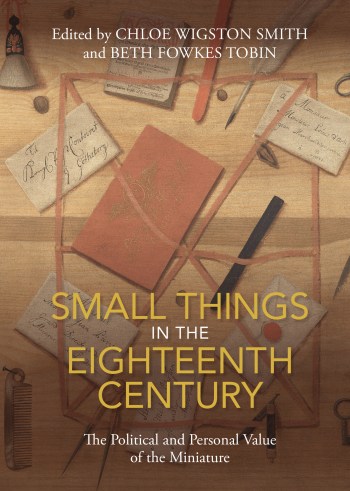 Offering an intimate history of how small things were used, handled, and worn, this collection shows how objects such as mugs and handkerchiefs were entangled with quotidian practices and rituals of bodily care. Small things, from tiny books to ceramic trinkets and toothpick cases, could delight and entertain, generating tactile pleasures for users while at the same time signalling the limits of the body’s adeptness or the hand’s dexterity. Simultaneously, the volume explores the striking mobility of small things: how fans, coins, rings, and pottery could, for instance, carry political, philosophical, and cultural concepts into circumscribed spaces. From the decorative and playful to the useful and performative, such small things as tea caddies, wampum beads, and drawings of ants negotiated larger political, cultural, and scientific shifts as they transported aesthetic and cultural practices across borders, via nationalist imagery, gift exchange, and the movement of global goods.
Chloe Wigston Smith is the author of Women, Work, and Clothes in the Eighteenth-Century Novel (2013) and co-editor, with Serena Dyer, of Material Literacy in Eighteenth-Century Britain: A Nation of Makers (2020). Her current research, supported by a British Academy fellowship, centers on material culture and the Atlantic world.
Beth Fowkes Tobin, a recipient of NEH and NSF fellowships, is the author of The Duchess’s Shells: Natural History Collecting in the Age of Cook’s Voyages (2014), Colonizing Nature: The Tropics in British Arts and Letters, 1760–1830 (2005), and Picturing Imperial Power: Colonial Subjects in Eighteenth-Century British Painting (1999).
C O N T E N T S
Figures
Notes on Contributors
Acknowledgments
Introduction: The Scale and Sense of Small Things — Chloe Wigston Smith and Beth Fowkes Tobin
Part I: Reading Small Things
1 ‘The Sum of All in All’: The Miniature Book and the Nature of Legibility — Abigail Williams
2 Nuts, Flies, Thimbles, and Thumbs: Eighteenth-Century Children’s Literature and Scale — Katherine Wakely-Mulroney
3 Gothic Syntax — Cynthia Wall
4 Small, Familiar Things on Trial and on Stage — Chloe Wigston Smith
Part II: Small Things in Time and Space
5 On the Smallness of Numismatic Objects — Crystal B. Lake
6 Crinoidal Limestone and Staffordshire Teapots: Material and Temporal Scales in Eighteenth-Century Britain — Kate Smith
7 ‘Joineriana’: The Small Fragments and Parts of Eighteenth-Century Assemblages — Freya Gowrley
8 ‘Pray What a Pox Are Those Damned Strings of Wampum?’ — Robbie Richardson
Part III: Small Things at Hand
9 ‘We Bought a Guillotine Neatly Done in Bone’: Illicit Industries on Board British Prison Hulks, 1775–1815 — Anna McKay
10 ‘What Number?’: Reform, Authority, and Identity in Late Eighteenth-Century Military Buttons — Matthew Keagle
11 Two Men’s Leather Letter Cases: Mercantile Pride and Hierarchies of Display — Pauline Rushton
12 The Aesthetic of Smallness: Chelsea Porcelain Seal Trinkets and Britain’s Global Gaze, 1750–1775 — Patricia F. Ferguson
13 ‘Small Gifts Foster Friendship’: Hortense de Beauharnais, Amateur Art, and the Politics of Exchange in Post-Revolutionary France — Marina Kliger
Part IV: Small Things on the Move
14 Hooke’s Ant — Tita Chico
15 Portable Patriotism: Britannia and Material Nationhood in Miniature — Serena Dyer
16 Revolutionary Histories in Small Things: Louis XVI and Marie Antoinette on Printed Ceramics, c. 1793–1796 — Caroline McCaffrey-Howarth
17 A Box of Tea and the British Empire — Romita Ray
Afterword: A Thing’s Perspective — Hanneke Grootenboer
Select Bibliography
Index
Sydney’s Powerhouse Announces Gift of Schofield Jewellery

French demi-parure consisting of necklace (shown) and a pair of earrings (not pictured), gold and onyx cameos, 1820
(Sydney: Powerhouse, gift of Anne Schofield; photograph by Marinco Kajdanovski)
◊ ◊ ◊ ◊ ◊
Press release (3 November 2022) from Sydney’s Powerhouse:
Powerhouse today announced an unprecedented gift from Australia’s leading antique jewellery dealer, 100 rare pieces of historical gemstone jewellery, this acquisition is one of the most significant donations in the museum’s history.

Ring, gold, chrysoprase, and rose diamonds, ca 1780 (Sydney: Powerhouse, gift of Anne Schofield; photograph by Ryan Hernandez).
Anne Schofield’s personal jewellery collection includes works created between the 17th and early 20th centuries featuring an astonishing range of gemstones and techniques. Highlights from the Anne Schofield Collection include exquisitely crafted archaeological jewellery, 18th-century hardstone intaglios, Carlo Giuliano earrings, an Egyptian-style lapis lazuli demi-parure, Art Nouveau dragonfly and wasp pedants, Cartier and Georg Jensen pieces, and a French demi-parure with onyx cameos from 1820.
Internationally renowned for her knowledge and passion for fine jewellery, Ms Schofield established her legendary boutique Anne Schofield Antiques in Woollahra in 1970. It was the first successful business in Australia to specialise in antique jewellery. A long-standing donor and supporter of the Powerhouse as Life Fellow and honorary adviser for jewellery, in 2014 she generously lent 70 significant objects from her personal collection to the award-winning exhibition, A Fine Possession: Jewellery and Identity. [See The Culture Concept Circle for coverage of that show.]
The Anne Schofield Collection will be photographed and made available on the Powerhouse website and will be on display at Powerhouse Ultimo next year.
“Over the past 30 years I have made many individual donations of antique and costume jewellery to the Powerhouse, to enhance the museum’s existing holdings. Many famous collections throughout the world have grown in importance as a result of private donations and bequests. I strongly believe that collectors who have enjoyed success should consider giving back to their city or country as generously as Australia has given to them,” Anne Schofield said.
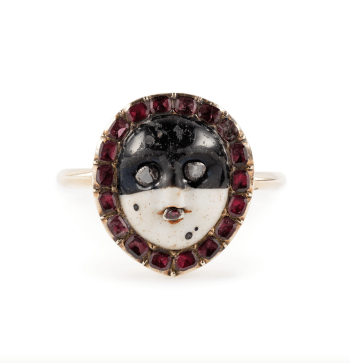
Ring (Italy), gold, enamel, garnets, and rose diamonds, ca 1760 (Sydney: Powerhouse, gift of Anne Schofield; photograph by Ryan Hernandez).
“Anne Schofield has extraordinary knowledge and expertise in fine jewellery. Over many years she has generously shared her knowledge with our museum and shared her collections with our audiences and communities. This transformative gift to the people of Sydney and NSW will have an impact for many generations to come,” Powerhouse Trust President Peter Collins AM KC said.
“Across her incredible career, Anne Schofield has continually sought out ways to share her remarkable collections with the public. This generosity of spirit could not be clearer than in this extraordinary donation that will transform the Powerhouse collection. Jewellery is not only powerful decorative art, but a form of social history and it is our privilege to be able to share this with the community. I pass on my deep gratitude and thanks to Anne for this gift and her ongoing commitment to the Powerhouse Museum,” Powerhouse Chief Executive Lisa Havilah said.
During her formative years in London in the early 1960s, Anne became passionate about the decorative arts with a focus on costume and, eventually, antique jewellery. In 1970 she established Anne Schofield Antiques on Queen Street Woollahra. In 2003 Anne was appointed a Member of the General Division of the Order of Australia AM for her services to the performing arts and to the decorative arts, particularly antiques, as an author and consultant. Anne is a member of the international Society of Jewellery Historians (SJH), a Life Fellow of the Powerhouse museum, a member of the Australian Art and Antique Dealers Association (AAADA), and co-author with Kevin Fahy of the seminal book Australian Jewellery: 19th and Early 20th Century.
Powerhouse sits at the intersection of arts, design, science, and technology and plays a critical role in engaging communities with contemporary ideas and issues. We are undertaking a landmark $1.4 billion infrastructure renewal program, spearheaded by the creation of the flagship museum, Powerhouse Parramatta; expanded research and public facilities at Powerhouse Castle Hill; the renewal of the iconic Powerhouse Ultimo; and the ongoing operation of Sydney Observatory. The museum is custodian to over half a million objects of national and international significance and is considered one of the finest and most diverse collections in Australia. We are also undertaking an expansive digitisation project that will provide new levels of access to Powerhouse collections.
Art Market | Fine Arts Paris & La Biennale, November 2022

Designed by Pierre-Antoine Mongin and produced by Joseph Dufour (1754–1827), Jardins de Bagatelle/Jardins Anglais, ca. 1802, imprimé à la planche en papiers raboutés, 51 × 380 cm. Offered by Carolle Thibaut-Pomerantz.
◊ ◊ ◊ ◊ ◊
From the July press release, via Art Daily:
Fine Arts Paris & La Biennale
Carrousel du Louvre, Paris, 9–13 November 2022
In February 2022, two leading French art fairs—the venerable Biennale, one of the world’s oldest art fairs (formerly known as La Biennale des Antiquaires) and the fast-growing Fine Arts Paris—announced that they had merged to create a new annual flagship event in Paris celebrating art from the Antiquity to present day. Now, Fine Arts Paris & La Biennale unveils details of its inaugural edition, which will take place at the prestigious Carrousel du Louvre, from 9 to 13 November, before moving to the Grand Palais Ephémère in November 2023 and then to the renovated Grand Palais in November 2024.
 86 internationally renowned galleries and talented young dealers will participate in what promises to be a major event in the global art market calendar. A showcase of art, culture, savoir-faire, and heritage, Fine Arts Paris & La Biennale will present carefully selected artworks spanning no fewer than fourteen categories, including Antiquities, Old Masters, Antique Furniture, Modern and Contemporary Art, Tapestries, Ceramics, and Jewellery, as well as Tribal Art, Asian Art, Islamic Art, and Books and Manuscripts.
Louis de Bayser, President of Fine Arts Paris & La Biennale said: “Fine Arts Paris & La Biennale is Paris’s only fair dedicated to Fine Arts, tracing the entire history of art across time and continents. In the next three years, as we move from the Carrousel du Louvre to the Grand Palais Ephémère and ultimately the Grand Palais, our objective will be to expand the fair’s global reputation and growth, as well as to contribute to reinforce Paris’s status and importance on the international art market”.

Rosalba Carriera, Portrait of a Gentleman in Blue Coat, 18th century, pastel, 55 × 40 cm. Offered by Galerie de Bayser.
Following on the footsteps of its illustrious predecessors, the new fair will bring together prominent Old Master galleries, led by a strong contingent of renowned French specialists (De Bayser, Didier Aaron, Baulme, Perrin, Giovanni Sarti, Coatalem, Mendes, Terrades, Leegenhoek, Talabardon & Gautier) and young art dealers (Edouard Ambroselli, Chaptal). They will be joined by London gallerist and pre-eminent scholar of 18th-century Venetian view painting Charles Beddington; Artur Ramon, one of Spain’s most important specialists in the field; Costermans, Brussels’ oldest art gallery, and the Geneva-based Dutch and Flemish painting specialist de Jonckheere who will present a 16th-century panoramic view by Hans Bol, among other masterpieces.
Antique Furniture and Decorative Arts
France’s long and glorious tradition of furniture-making and decorative arts will be reflected in the extraordinary selection showcased by Parisian galleries Steinitz, Léage and Oscar Graf. Belgium silver specialist Janssens van der Maelen will also participate alongside London dealer Brun who will unveil a terracotta bust of Napoleon.
Furthermore, the fair will welcome passionate gallerists with an unusual profile, including Portuguese neurologist turned collector and art dealer Mário Roque and 36-year-old Maxime Carron who, following a sporting education, created Royal Provenance, a gallery in Paris specialising in European heirlooms. Having recently sold a chair that once belonged to Queen Marie-Antoinette’s bedroom, he will unveil many more fascinating treasures, including a rare early 19th-century Morocco case containing the keys of Paris parks, possibly given by King Louis Philippe to his eldest son, Ferdinand-Philippe d’Orléans, Duke of Orléans (1810–1842) on the occasion of his coronation in 1830.
The fair will also welcome Carolle Thibaut-Pomerantz, one of very few specialists in historic wallpapers in the world. The New York/Paris-based gallerist, whose greatest finds are now part of the major museums including New York’s Metropolitan Museum of Art, will present a selection of wallpapers dating from the 18th century to the 1950s, including three large panels known as Jardins de Bagatelle / Jardins Anglais, designed by Pierre-Antoine Mongin and produced ca. 1800–04 by the French wallpaper and fabrics manufacture, Joseph Dufour in Macon.
Sculpture
Sculpture will feature strongly, with some of the most discerning specialists in the discipline vying to present rare pieces. The Parisian gallery Sismann, which focuses on Old Master sculpture, will present a Virgin and Child in limestone, made in Toul (France), ca. 1330–1340. Trebosc + van Lelyveld, Chiale and Ratton-Ladrière will show an ensemble of works from the Renaissance to the early 20th century. Michel Poletti and Alain Richarme from Univers du Bronze will celebrate the Golden Age of French sculpture (1830s–1930s) with works by Antoine-Louis Barye, Emmanuel Fremiet, Henri Laurens, and a life-size bronze nude representing David Victorious over Goliath, ca. 1894–1910, which was once in the collection of Auguste Lumière, the inventor of the cinematograph. The bronze is one of only two known similar works by the artist, the other being in the collection of the Musée d’Orsay.
Renowned for his early 20th-century animal sculptures, Xavier Eeckhout will exhibit an exquisite bronze lion cub made in 1935 by Louis de Monard. Galerie Malaquais will celebrate French figurative sculpture with Assia, a 1936 monumental sculpture by Charles Despiau, dedicated to and from the collection of the eminent French art dealer, editor and historian Georges Wildenstein (1892–1963).
Modern and Contemporary Art
Modern and Contemporary Art will also take centre stage in this inaugural edition of the fair. In a nod to history, Marianne Rosenberg, the granddaughter of Paul Rosenberg, perhaps the most important Modern Art dealer of the first half of the 20th century (who, for a time, worked with Wildenstein) will be present at the fair. Her New York gallery, Rosenberg & Co will exhibit a very rare oil on board by Henry Rousseau, La Citadelle, ca. 1893. Specialising in drawings for four generations, the Galerie de Bayser will unveil a magnificent charcoal drawing of a woman wiping her neck by Edgar Degas and a pastel depiction of a monkey by Simon Bussy.
Other leading modern and contemporary art galleries will include Jill Newhouse (New York), Lancz, La Béraudière (Brussels), and reputed French dealers, such as Applicat-Prazan, Berès, Brame & Lorenceau, Laurentin, Seine 55, Ary Jan, La Présidence, and Opera Gallery, which will showcase a roll call of modern and contemporary artists, from Fernand Léger and Marc Chagall, to Pierre Soulages and Fernando Botero. They will be joined by two Paris-based contemporary art galleries, RX and Christophe Gaillard.
Antiquities and Non-Western Arts
Tracing a complete world art history, Fine Arts Paris & La Biennale will bring together specialists in Antiquities, Tribal Art, Asian Art, and Islamic Art. A Roman marble Head of Aphrodite from the 2nd century AD will be one of the highlights presented by Kevorkian, a third-generation Parisian dealer specialising in Islamic Art.
They will be joined by Kent Antiques, a prominent London gallery dealing in Islamic and Indian art, Orientalist paintings, and courtly objects which will present an important Iznik blue and white pottery tile decorated with Saz leaves and khatai blossoms made in the Ottoman Empire, ca. 1545–50.
Asian Art will be represented by two highly regarded gallerists: Tamio Ikeda whose Parisian gallery Tanakaya will feature original Japanese prints, Ukiyo-e and Shin-Hanga, paintings, bronzes, ceramics, and lacquers; and Christophe Hioco, who will showcase a bronze head of Buddha from Thailand, Sukhothai, made in the late 14th–early 15th century.
In addition, the fair will be distinguished by a roster of Tribal Art galleries, led by Belgian African art expert Didier Claes and Oceanic art specialist Anthony Meyer. Visitors will be able to admire a 19th-century Dogon mask from Mali in the booth of Barcelona dealer Montagut, while the Parisian galleries Monbrison, Flak, and Belgian art dealers Mestdagh will impress with a display of artifacts from Oceania, Indonesia, Africa, India, and Japan.
Rare Books and Prints
A great drawing or painting is not always found in a frame, as demonstrated by the selection of rare books, manuscripts, and prints in the fair. The fourth-generation Parisian print dealer Prouté will present a 16th-century woodcut by Albrecht Dürer depicting the Christ in Limbo. They will be joined by H. H. Rumbler, Frankfurt specialists in Old Master prints; London dealer Daniel Crouch, a world authority in the field of rare atlases and maps; and an outstanding group of book specialists whose expertise spans the 15th through the 20th centuries. These include young gallerist Camille Sourget, fourth-generation book specialist Stéphane Clavreuil, and Parisian expert Jean-Baptiste de Proyart.
Jewellery
Finally, breaking the boundaries between fine and decorative arts, the new fair will also celebrate jewellery as a form of art. Renowned dealers in antique jewellery (Bernard Bouisset, Orpheo Genève, Martin du Daffoy, Larengregor) will be joined by contemporary artist-jewellers Walid Akkad, Frédérique Mattei, and Chinese designer Feng J. One year after one of her creations entered the collections of the Musée des Arts Décoratifs in Paris, Feng J will uncover spectacular new designs especially made for the fair. These include a masterpiece of jewellery craftmanship inspired by the artist’s passion for the Impressionist period: a diamond tiara whose various pastel tones are reminiscent of a Monet painting.
Conference | The Horse and the Country House

John Frederick Herring, Sr., Grey Carriage Horses in the Coachyard at Putteridge Bury, Hertfordshire, 1838, oil on canvas, 102 × 127 cm
(New Haven: Yale Center for British Art)
◊ ◊ ◊ ◊ ◊
From The Attingham Trust:
The Horse and the Country House: Art, Politics and Mobility
Online and In-person, Institute of Continuing Education, Madingley Hall, Cambridge, 18–19 November 2022
The Attingham Trust is organising a stimulating two-day conference in Cambridge focused on the horse and the country house. Following on from the successful Attingham Study Programme in 2018, issues and themes relating to the equestrian culture associated with these houses will be explored by an international panel of speakers.
Horses, once so vital to the smooth functioning of the country house in England, have, more recently, been marginalized and even omitted from discussions. Existing stable blocks are seldom used for their original purposes and the signs of the working horse and horse-drawn transport are often hard to find. Inside houses, the legacy of the horse in the form of sporting art and racing trophies is more evident, but rarely examined. The conference will encourage a wide-ranging assessment of the many roles played by horses in country house life. From sporting art and memorabilia, riding dress and horse tack, carriage design, stables and stable servants, mobility and horseracing, it will explore the ways in which the horse has been central to the artistic, social, cultural, and political functions of the country house.
Following an overwhelming response to the call for papers, the advisory committee has selected a varied list of international speakers including representatives of major museums, universities, and historic houses. Spread over the two days, there will be sessions on horse welfare, the employment of stable servants, social mobility, women riders and drivers, and the visual representation and material culture of horses.
Madingley Hall is a beautiful sixteenth-century country house and garden. Built by Sir John Hynde in 1543, and occupied as a residence by his descendants until the 1860s, the Hall is now owned by the University of Cambridge. It is close to the centre of town, with free parking available onsite. Specially discounted B&B rates are available if you would like to stay at Madingley Hall. To take advantage, please email reservations@madingleyhall.co.uk quoting “horse and the country house conference.”
In person tickets are now sold out, but the conference will be live-streamed thanks to the generous sponsorship of the Carriage Association of America. Tickets are available for purchase here. If you would like to be placed on a waiting list for in-person tickets, please email rebecca.parker@attinghamtrust.org.
F R I D A Y , 1 8 N O V E M B E R 2 0 2 2
9.00 Registration
9.30 Welcome from Helen Jacobsen (Attingham Trust)
9.35 Introduction
• Elizabeth Jamieson (Attingham Trust) — The Horse and the Country House: An Untold History
10.00 Session 1 | The Domesticated Horse: Horse Welfare and Care of Servants
Chair: Christopher Garibaldi (University of Cambridge)
• Jana Schuster (University of Cambridge) — Transport Innovations, Stables, and Animal Welfare of the 2nd Duke of Montagu, 1709–49
• Jessica Dallow (University of Alabama, Birmingham) — Architecting Horses and Buildings: Stable Design and Culture at John Hartwell Cocke’s Bremo
• Frances Bailey (National Trust) — Chariots and Gold Cups, Tails and Hooves, Hermit and Hambletonian: The Lives of the Londonderry’s Horses
• John Stallard (Carriage Association of America) — The Pride of the Country House Stable: Carriages for Sport
11.30 Coffee Break
12.00 Session 2 | Evidence of the Horse: Architectural, Visual, and Textual
Chair: Michaela Giebelhausen (Courtauld Institute)
• Julian Munby (Independent Scholar) — Horse and Carriage in Town and Country: Sources and Issues
• Christopher Garibaldi (University of Cambridge) — Evidence of the Architectural History of the Royal Palaces of Newmarket in Paintings by Jan Siberechts and John Wootton
• Adam Menuge (University of Cambridge) — Blickling’s Early 17th-Century Stables Revisited
• Aurore Bayle-Loudet (Hermès) — Hermès and Horses, 1837–1914: A Story of Patrons and Muses
1.30 Lunch Break
2.30 Session 3 | Places for Horses: Old Buildings, New Life
Chair: Elizabeth Jamieson (Attingham Trust)
• Alexandra Lotz (State Office for Heritage Management and Archaeology, Saxony-Anhalt) — The Stables of the Garden Kingdom of Dessau-Wörlitz: New Life for Historic Buildings
• Sally Goodsir (Royal Collection Trust) — Creating and Curating the Royal Mews, Buckingham Palace
• Allesandra Griffo (Uffizi Galleries) — The Carriage Museum in the Stables of the Pitti Palace
• Paula Martin (Harewood House Trust) — The Horse at Harewood
• Phillippa Turner (National Trust) — The National Trust Carriage Museum at Arlington Court, Devon
• Thomas Reinhart (George Washington’s Mount Vernon) — The Mount Vernon Stables
3.45 Tea Break
4.15 Panel Discussion
5.30 Drinks Reception
S A T U R D A Y , 1 9 N O V E M B E R 2 0 2 2
9.30 Coffee and registration for new delegates
10.00 Session 4 | Horsepower: Politics, Social Mobility, and Fashion
Chair: Oliver Cox (Victoria and Albert Museum)
• Sophie Chessum (National Trust) — Horse Racing and the Onslows of Clandon Park: A Case Study in Politics, Business, and the Country
• Jon Stobart (Manchester Metropolitan University) — Clergy and Carriages: The Place of the Horse in the Late Georgian Parsonage
• Emma Lyons (University College, Dublin) — Racehorses, Gambling, and Equestrian Buildings of Sir Edward O’Brien of Dromoland
• Maria-Anne Privat (Château de Compiègne) — Anglomania and French Horse-Drawn Carriages
11.30 Short Break
11.45 Session 5 | Women and the Horse: Riders, Hunters, and Carriage Drivers
Chair: Frances Bailey (National Trust)
• Erica Munkwitz (American University) — Country Contentments: Women, Hunting, and the English Countryside
• Helena Esser (Independent Scholar) — Horse-Riding and Gender in the Victorian Popular Imagination
• Charlotte Newman (National Trust) — Equine Adventures and Constructions of Femininity at Lanhydrock House, Cornwall
• Whitney White (Pebble Hill Plantation) — Elisabeth ‘Pansy’ Ireland Poe: An Extraordinary American Equestrienne
1.15 Lunch Break
2.15 Session 6 | The Commodification of the Horse: Visual Representation and Culture
Chair: Lydia Hamlett (University of Cambridge)
• Sebastian Edwards (Historic Royal Palaces) — The Horse from Hanover: The Role of the Horse and Equine Sport in the Court Culture of Kings George I and II
• Timothy Cox (British Sporting Art Trust) and Karen Hladik (Independent Scholar) — The Mysterious Case of Sir T.S. Bonnet and his Horse ‘Swallow’
• Michaela Giebelhausen (Courtauld Institute of Art) — The Trouble with George Stubbs: More than Just a Horse Painter
• Alexandra Mayson (University of Oxford) — ‘Extraordinary Sagacity’: Representations of Arab Horses and Arabic Horsemanship in Four Horseracing Prizes from the 1830s
• Sheila O’Connell (Independent Scholar) — Magnificent or Comic: Horses and Riders in Prints
4.10 Closing Remarks and Tea
Exhibition | ‘Without Hands’: The Art of Sarah Biffin
Now on view at Philip Mould in London:
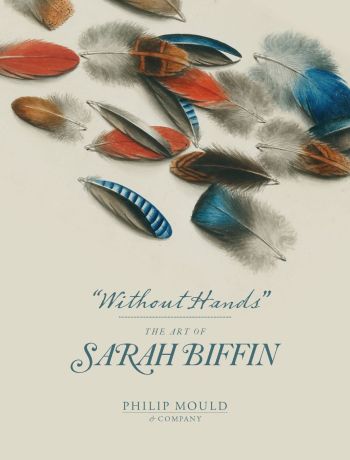
‘Without Hands’: The Art of Sarah Biffin
Philip Mould & Company, London, 1 November — 21 December 2022

Sarah Biffin, A miniature watercolour of subaltern or captain of a British ‘royal’ regiment of line infantry by, ca. 1815–20.
The remarkable story of Sarah Biffin (1784–1850), has been largely overlooked by historians. Those who have attempted to illustrate her life have often perpetuated misconceptions, and Biffin’s artistic reputation has suffered as a result. This exhibition, established upon ground-breaking primary research, is the first of its kind to present Biffin’s artistic achievements and represent her history.
Sarah Biffin (or Beffin) was born into a farming family in Somerset in 1784, where her baptism records state that she was “born without arms and legs.” Teaching herself to write and draw from a young age, Biffin rose to fame as an artist and established a professional career as a portrait painter. Throughout her long and successful career, she travelled extensively, took commissions from royalty, and recorded her own likeness through exquisitely detailed self-portraits. Her artworks—many proudly signed “Without Hands”—are a testament to her talent and accomplishment.
Around the age of twenty, Biffin left home. She contracted herself to a ‘Mr Dukes’ who toured the country with Biffin, visiting county fairs where she was described as the “Eighth Wonder.” Using her mouth and shoulder, Biffin would sew, write, and paint watercolours and portrait miniatures in front of crowds who turned up and left with a sample of her writing included in the cost of their ticket. One such spectator was the wealthy and well-connected Earl of Morton, who supported her in her quest to finesse her artistic skills. In her mid-twenties she began formal tuition with a miniature painter, William Marshall Craig. From 1816 she set herself up as an independent artist and later took commissions from nobility and royalty.
 Biffin travelled extensively, exhibiting her artwork and taking commissions all over the country and abroad. She took studios in cities including London, Brighton, Birmingham, Cheltenham, and Liverpool. In each of these cities, she taught the art of miniature painting and was a champion of women students in particular. Continuously recording her own image throughout her lifetime, Biffin’s self-portraits evidence the artistic aptitude, self-respect, and skill of this tenacious artist.
Following the story of her life, the exhibition includes original handbills and broadsides from Biffin’s time in travelling fairs, along with the samples of her writing included in the cost of the entry tickets. Visitors to the exhibition will also be able to see examples of the art from her professional career, including portraits, landscapes, and highly-skilled still lifes. More personal exhibits include private letters (including one to her mother) and almost every self-portrait she ever painted. With advisor, artist Alison Lapper MBE (born 180 years later with the same condition); consultant and contributor, Professor Essaka Joshua (specialist in Disability Studies at the University of Notre Dame, Indiana); and loans from national institutions, the exhibition will celebrate Biffin as a disabled artist who challenged attitudes to disability.
The catalogue is published by PHP and distributed by The University of Chicago Press:
Emma Rutherford and Ellie Smith, eds., with contributions by Essaka Joshua, Alison Lapper, and Elle Sushan, ‘Without Hands’: The Art of Sarah Biffin (London: Paul Holberton, 2022), 80 pages, ISBN: 978-1913645366, £18 / $25.
Emma Rutherford is a portrait miniatures consultant at Philip Mould & Company in London. Ellie Smith is a researcher at Philip Mould & Company. Professor Essaka Joshua is a specialist in disability studies at the University of Notre Dame, Indiana. Based in Brighton, Alison Lapper is an artist, television presenter, speaker, and Gig-Arts Charity patron. Elle Shushan is a specialist, author, lecturer, and museum consultant in Philadelphia.
New Book | Sculpture at the Ends of Slavery
From the University of California Press:
Caitlin Meehye Beach, Sculpture at the Ends of Slavery (Berkeley: University of California Press, 2022), 240 pages, ISBN: 978-0520343269, £47 / $60.
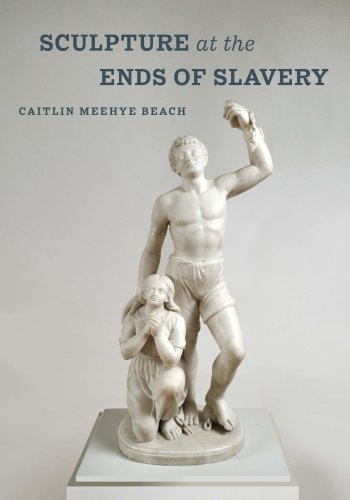 From abolitionist medallions to statues of bondspeople bearing broken chains, sculpture gave visual and material form to narratives about the end of slavery in the eighteenth and nineteenth centuries. Sculpture at the Ends of Slavery sheds light on the complex—and at times contradictory—place of such works as they moved through a world contoured both by the devastating economy of enslavement and by international abolitionist campaigns. By examining matters of making, circulation, display, and reception, Caitlin Meehye Beach argues that sculpture stood as a highly visible but deeply unstable site from which to interrogate the politics of slavery. With focus on works by Josiah Wedgwood, Hiram Powers, Edmonia Lewis, John Bell, and Francesco Pezzicar, Beach uncovers both the radical possibilities and the conflicting limitations of art in the pursuit of justice in racial capitalism’s wake.
Part of the Phillips Collection Book Prize Series and supported by the Simpson Imprint in Humanities.
Caitlin Meehye Beach is Assistant Professor in Art History and Affiliated Faculty in African and African American Studies at Fordham University.
C O N T E N T S
Acknowledgments
Introduction — ‘Within a Few Steps of the Spot’: Art in an Age of Racial Capitalism
1 Grasping Images: Antislavery and the Sculptural
2 ‘The Mute Language of the Marble’: Slavery and Hiram Powers’s The Greek Slave
3 Sentiment, Manufactured: John Bell and the Abolitionist Image under Empire
4 Relief Work: Edmonia Lewis and the Poetics of Plaster
5 Between Liberty and Emancipation: Francesco Pezzicar’s The Abolition of Slavery
Coda — ‘Sculptured Dream of Liberty’
Notes
List of Illustrations
Index
New Book | Repertoires of Slavery: Dutch Theater, 1770–1810
From Amsterdam UP:
Sarah Adams, Repertoires of Slavery: Dutch Theater between Abolitionism and Colonial Subjection, 1770–1810 (Amsterdam: Amsterdam University Press, 2022), 252 pages, ISBN: 978-9463726863, €117.
 Through the lens of a hitherto unstudied repertoire of Dutch abolitionist theatre productions, Repertoires of Slavery prises open the conflicting ideological functions of antislavery discourse within and outside the walls of the theatre and examines the ways in which abolitionist protesters wielded the strife-ridden question of slavery to negotiate the meanings of human rights, subjecthood, and subjection. The book explores how dramatic visions of antislavery provided a site for (re)mediating a white metropolitan—and at times a specifically Dutch—identity. It offers insight into the late-eighteenth- and early-nineteenth-century theatrical modes, tropes, and scenarios of racialised subjection and considers them as materials of the ‘Dutch cultural archive’, or the Dutch ‘reservoir’ of sentiments, knowledge, fantasies, and beliefs about race and slavery that have shaped the dominant sense of the Dutch self up to the present day.
Sarah J. Adams holds a Ph.D. in Dutch Literature (Ghent University, 2020). Her postdoctoral project Blackface Burlesques, funded by the Research Foundation — Flanders, investigates the scenarios, tropes, and techniques used to design and represent ‘Blackness’ on the comic stage of the Low Countries before the heyday of minstrel culture.
C O N T E N T S
Acknowledgements
List of Figures
Introduction
1 Dutch Politics, the Slavery-Based Economy, and Theatrical Culture in 1800
2 Suffering Victims: Slavery, Sympathy, and White Self-Glorification
3 Contented Fools: Ridiculing and Re-Commercializing Slavery
4 Black Rebels: Slavery, Human Rights, and the Legitimacy of Resistance
5 Conclusions
Bibliography
Consulted Archives, Collections, and Databases
Literature
Appendix
In the News | Russia Steals Potemkin’s Bones
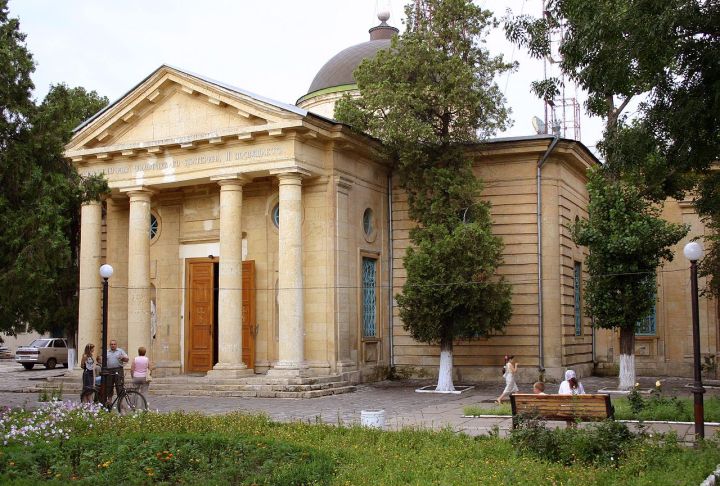
Cathedral of St. Catherine, Kherson, Ukraine, 1781–86. Dedicated to Catherine of Alexandria, the patron saint of the reigning empress, it was one of the earliest churches built in ‘New Russia’ (Photo by Sven Teschke, July 2004, from Wikimedia Commons).
◊ ◊ ◊ ◊ ◊
So many twenty-first stories are also eighteenth-century stories. From The NY Times:
Marc Santora, “Why Russia Stole Potemkin’s Bones From Ukraine,” The New York Times (27 October 2022). The 18th-century military commander and lover of Catherine the Great helped conquer Ukraine and looms large in the version of history the Kremlin uses to justify the war.
With Ukrainian forces bearing down on the occupied port city of Kherson this week, the Kremlin’s puppet rulers dispatched a team to an 18th-century stone cathedral on a special mission—to steal the bones of Prince Grigory Aleksandrovich Potemkin.
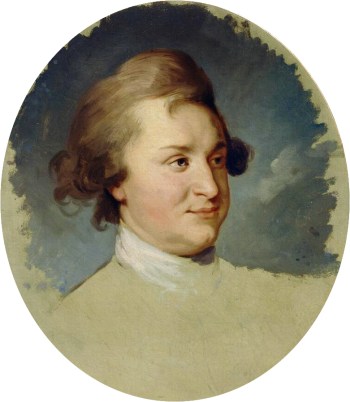
Johann Baptist von Lampi the Elder, Portrait of Russian Fieldmarshal Grigory Potemkin, 1790s (Moscow: State Tretyakov Gallery).
The memory of the 18th-century conqueror is vivid for those in the Kremlin bent on restoring the Russian imperium. It was Potemkin (1739–1791) who persuaded his lover, Catherine the Great, to annex Crimea in 1783. The founder of Kherson and Odesa, he sought the creation of a ‘New Russia’, a dominion that stretched across what is now southern Ukraine along the Black Sea.
When Russian President Vladimir Putin invaded Ukraine in February with the goal of restoring part of a long-lost empire, he invoked Potemkin’s vision. Now, with Putin’s army having failed in its march toward Odesa and threatened with ouster from Kherson, his grand plans are in jeopardy. But among Kremlin loyalists, the belief in what they view as Russia’s rightful empire still runs deep.
So it was that a team descended into a crypt below a solitary white marble gravestone inside St. Catherine’s Cathedral. To reach Potemkin’s remains, they would have opened a trapdoor in the floor and climbed down a narrow passageway, according to people who have visited the crypt. There they would have found a simple wooden coffin on a raised dais, marked with a single cross. Under the lid of the coffin, a small black bag held Potemkin’s skull and bones, carefully numbered.
Kremlin proxies have made no effort to hide the theft—quite the contrary. The Russian-appointed head of the Kherson region, Vladimir Saldo, said that Potemkin’s remains were taken from the city, on the west bank of the Dnieper River, to an undisclosed location east of the Dnieper, as Ukrainian troops edge closer.
“We transported to the left bank the remains of the holy prince that were in St. Catherine’s Cathedral,” Saldo said in an interview broadcast on Russian television. “We transported Potemkin himself.”
Local Ukrainian activists confirmed that the church had been looted and that, along with the bones, statues of venerated Russian heroes had been removed. By the count of historian Simon Sebag Montefiore, author of the book Catherine the Great and Potemkin, it was the ninth time Potemkin’s restful peace had been interrupted. . .
The full article is available here»
Marking the Tercentenary of Wren’s Death in 2023
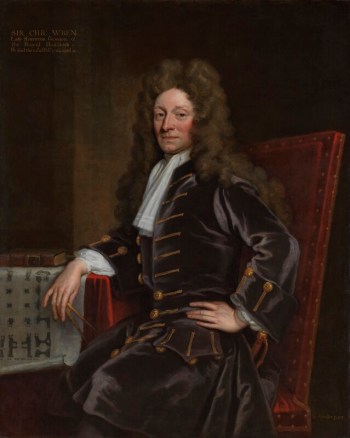
Sir Godfrey Kneller, Portrait of Sir Christopher Wren, 1711, oil on canvas (London: NPG, 113).
2023 marks three hundred years since the death of Sir Christopher Wren (1632–1723)—mathematician, astronomer, physicist, anatomist, and one of the United Kingdom’s greatest architects.
Wren was given responsibility for rebuilding 51 churches in the City of London after the Great Fire in 1666, including what is regarded as his masterpiece, St Paul’s Cathedral, where today he is buried under a gravestone with the Latin inscription which in part translates: “If you seek his memorial, look about you.” From centres of learning in Greenwich, Oxford, and Cambridge, churches, and palaces fit for a king, Wren’s influence spans the centuries.
His tercentenary will be marked in the Square Mile Churches by a year-long education and conservation programme for children and adults which has been awarded a £241,000 grant by The National Lottery Heritage Fund. Throughout 2023, Wren’s remaining churches in The City will host a variety of school and community initiatives, marking the enduring legacy of one of Britain’s most acclaimed polymaths.
With projects including school pupils building a replica of the dome of St Paul’s, and a ‘Wrenathon’ of choirs across The City of London, the Wren300 Square Mile Churches programme offers a range of opportunities to explore the work of Sir Christopher Wren through conservation, heritage, and musical activities.
The Wren300 projects include:
• The Schools’ Programme: Working with the London Diocesan Board of Schools, Temple Bar Trust and the London Fire Brigade Museum, primary school children will have the opportunity to visit Wren churches throughout 2023. The programme will be open to all state schools, with almost 5,000 pupils expected to take part in these trips, focused on London’s most under-privileged areas.
• Conservation Workshop: A series of workshops, talks and events on new construction techniques and sustainable construction materials, inspired by Wren’s work, run by Cliveden Conservation Workshop.
• The ‘Dastardly’ Triple Dome: Taking place during School Science Week in March 2023 and led by Chris Wise, Senior Director of Expedition Engineering, this project will involve 100 secondary school pupils coming together to build a mini dome using foam blocks and bamboo, representing the triple dome of St Paul’s Cathedral.
• A City Full of People: Led by historians, Dr Rebecca Preston and Dr Susan Skedd, this programme will engage and recruit volunteers from diverse communities in researching and understanding the lives of people engaged with Wren’s churches over the centuries, who might previously have been overlooked.
• The Wrenathon: Working with Music in Offices, work-based, community, and intergenerational choirs, drawn from diverse communities, including The Samaritans Choir and Ukrainian Refugees Choir, will come together in Wren churches. to sing music ranging from baroque and classical to contemporary and jazz.
• Exhibitions of fire artists: From September 2023, a number of churches will be hosting exhibitions of fire artists, depicting the destruction and rebuilding of Wren churches.
Alongside a grant from the National Lottery Heritage Fund, Wren300 has also received grants from the Royal Academy of Engineering, The Linbury Trust and the London Fire Brigade Museum.
Commenting on Wren300, the Bishop of London, the Rt Revd and Rt Hon Dame Sarah Mullally, said: “We are very grateful for the funding the Wren300 project has received from the National Lottery Heritage Fund. This will go a long way to helping those from all backgrounds to experience Wren’s churches in The City, encouraging new audiences to feel inspired by the architecture, heritage, arts and music of his time.”
Stuart McLeod, Director England – London & South at The National Lottery Heritage Fund, added: “We are delighted to support this project, which, thanks to money raised by National Lottery players, will enable more people to learn about the fantastic legacy of Sir Christopher Wren. His work is so integrated into the community and bringing this to life through a year-long programme will be a fitting legacy. Heritage has a huge role to play in instilling pride in our communities and through Wren300 more people will be able to get involved with, protect, and learn about the exciting heritage right on their doorstep.”
Annie Hampson, Chair of the Wren300-Square Mile Churches, said: “Wren300 is a celebration of an extraordinary and prolific career that occurred at a changing point in British history and transformed our architecture. The Great Fire of London decimated the City and Wren brought his pragmatism and skill to the rebuilding of the City Churches, providing him with the expertise and knowledge to achieve his greatest masterpiece in the rebuilding of St Paul’s. The Wren300 project provides a range of activities that will ensure these Churches are better known and appreciated, that they are an enriching experience to all who come to them, a learning resource for young people living in and around the City of London and a lasting legacy that will ensure their survival for generations to come.”
Wren300 Square Mile Churches, Honorary Patron, Lord Norman Foster of Thames Bank added “Sir Christopher Wren was one of our greatest ever citizens. I admire him not only as a great architect but also as a surveyor and manager who remarkably came up with a plan for rebuilding the City only days after the Great Fire. What is even more extraordinary is that he succeeded in carrying it out, supervising the rebuilding of 51 churches, including St Paul’s Cathedral, where he used a completely new architectural language not previously seen in England. His influence continues to this day.”
New Book | House and Home in Georgian Ireland
From Four Courts Press:
Conor Lucey, ed., House and Home in Georgian Ireland: Spaces and Cultures of Domestic Life (Dublin: Four Courts Press, 2022), 216 pages, ISBN: 978-1801510264, €50.
 This book explores the everyday character and functions of domestic spaces in Georgian Ireland. Reflecting real as opposed to ideal patterns of living, the topics and themes addressed here range widely from maternity and hospitality to social identity and consumption. Broadening the species of spaces typically considered for this period—embracing country piles and urban mansions, but also merchant houses, lodgings, and rural cabins—this collection of essays expands and deepens our understanding of the meanings of house and home in Ireland in the long eighteenth century.
Conor Lucey is associate professor in architectural history in the School of Art History & Cultural Policy, University College Dublin
C O N T E N T S
• Conor Lucey, Introduction: Species of Domestic Spaces
• Emma O’Toole, Brought to Bed: The Spaces and Material Culture of the Lying-in
• Patricia McCarthy, A Male Domain? The Dining Room Reconsidered
• Melanie Hayes, Fashioning, Fitting-out, and Functionality in the Aristocratic Town House: Private Convenience and Public Concerns
• Aisling Durkan, The Merchant House in Eighteenth-Century Drogheda
• Toby Barnard, ‘Baubles for Boudoirs’ or ‘an Article of Such Universal Consumption’: Ceramics in the Irish Home, 1730–1840
• Claudia Kinmonth, Communality and Privacy in One- or Two-Roomed Homes before 1830
• Judith Hill, Entertaining Royalty after the Union: Space, Decoration, and Performance in Charleville Castle, 1809
• Priscilla Sonnier, ‘A Taste for Building’: Domestic Space in Elite Female Correspondence
• Conor Lucey, Single Lives, Single Houses










 Enfilade
leave a comment