New Book | Buddhist Art of Tibet: In Milarepa’s Footsteps
With postings, I typically aim for editorial invisibility, allowing the marketing materials of an exhibition or book to do the talking. In this case, however, I would also point readers to Erin Thompson’s review “Sex Tourism with Statues: Buddhist Art of Tibet: In Milarepa’s Footsteps Is a Cringe-worthy Display of ‘Spiritual Colonialism’,” Hyperallergic (3 January 2023). As an associate professor of art crime at John Jay College of Criminal Justice (CUNY), Thompson holds a JD from Columbia Law School and a PhD in art history from Columbia University (both 2010). Lots of interesting questions about lots of things; I can imagine using the review in class next time I teach my introduction to Chinese art. –CH
From Rizzoli:
Etienne Bock, Jean-Marc Falcombello, and Magali Jenny, Buddhist Art of Tibet: In Milarepa’s Footsteps, Symbolism and Spirituality (Paris: Flammarion, 2022), 288 pages, ISBN: 978-2080280947, $50.
 Fascinated by Buddhist art and Asian spirituality, Alain Bordier has spent more than forty years building a unique collection of religious objects from the Himalayas (Tibet, Nepal, and Bhutan). On display today at the Tibet Museum in the heart of the medieval city of Gruyères, Switzerland, some six hundred works offer visitors the rare opportunity to discover an endangered world heritage. This volume presents a general historic and artistic framework of Tibetan art through narratives, anecdotes, and commentary from Bordier on the different subjects and the collection itself. Beyond the artistic aspect, this work demonstrates the symbolism and spirituality that emerge from each object and offers an interpretation of the themes from a Buddhist viewpoint. The highlight of the book is the presentation of an unpublished manuscript retracing the life of Milarepa, the great eleventh-century Tibetan yogi, whose analysis provides an excellent introduction to the great Buddhist principles.
Etienne Bock is a specialist in Himalayan art and literature. Jean-Marc Falcombello is a cultural journalist and a disciple of Lama Teunsang, one of the oldest living Tibetan masters, for four decades. Magali Jenny is an ethnologist.
Note: The image used for the cover of the book is a Tibetan depiction of Milarepa, from the 18th century, pigment on cloth, 24 × 16 inches (Gruyères: Tibet Museum: Fondation Alain Bordier).
Exhibition | Weng Family Collection: Art Rocks

Scholar’s rock, Qing dynasty, stone (Boston: MFA, Gift of the Wan-go H. C. Weng Collection and the Weng family, in honor of Weng Tonghe).
◊ ◊ ◊ ◊ ◊
Now on view at the MFA Boston:
Weng Family Collection of Chinese Painting: Art Rocks
Museum of Fine Arts, Boston, 26 March 2022 — 27 November 2023
In China, rocks in their natural form are objects of great aesthetic appreciation. As far back as one thousand years ago, serious art collectors and critics acquired and competed for rocks with the same passion they afforded great works of painting and calligraphy.
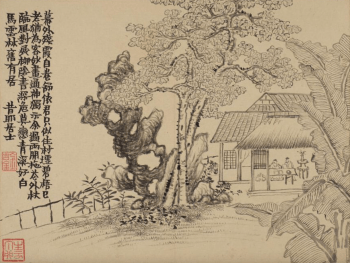
Jin Nong (1687–1764), Elegant Ink (Landscapes after Ancient Masters) / 龍梭墨妙畫冊 (金農), Qing dynasty, 1757, ink on paper, 27 × 35 cm (Boston: MFA, Gift of the Wan-go H. C. Weng Collection and the Weng family, in honor of Weng Tonghe, 2018.2828.1).
Rather than celebrating superficial beauty, collectors exalted imperfection for its expressive possibilities and sought rocks that were not symmetrical or smooth or pretty. They used terms like strange, weird, and awkward as complimentary descriptions of the rocks they most preferred. The humble rock became, like an abstract sculpture, a medium to explore forms and textures, and to express one’s inner being. In the minds of serious connoisseurs, rocks, as microcosms of mountains—or even the entire universe—were meditations on life itself.
From 2018 to 2021, Wan-go H. C. Weng (1918–2020) made the largest gift of Chinese paintings and calligraphy to the MFA in the institution’s history, comprising more than 390 objects acquired and passed down through six generations of his family. Rocks were integral to the Weng family’s art collection, as subjects of paintings and as art objects themselves.

Glass in the shape of a rock / 北京造湖石形料器, Qing dynasty, 18th century, 7 inches (17.8 cm) high (Boston: MFA, Gift of the Rosenblum Family, 2001.221).
This exhibition features more than 25 works from the gift as well as the MFA’s collection that explore how rock aesthetics have permeated architecture, landscape design, and painting styles in China for a millennium. Visitors can envision themselves in paintings of gardens where colossal rocks loom over a scholar’s studio, or scenes of fantastical caves where artists gaze in awe at mysterious rock formations. And rocks of all kind—large and small, weird and imperfect—are on view throughout the gallery, welcoming viewers to ponder, explore or, like the ancient poets, venerate.
This is the third in a series of three exhibitions celebrating the landmark donation made by Wan-go H. C. Weng, a longtime supporter of the MFA who, until he passed away in 2020 at the age of 102, devoted his life to the preservation, study, and promotion of China’s cultural heritage.
More information is available from Asian Art.
◊ ◊ ◊ ◊ ◊
Note (added 14 October 2023) — The posting was updated to include the extended run of the exhibition (from 3 May to 27 November).
Call for Collaborators | The Digital Piranesi

View of the Flavian Amphitheatre, called the Colosseum (Veduta dell’Anfiteatro Flavio detto il Colosseo), from Giovanni Battista Piranesi’s Opere, volume 1 of 29 (Paris: Firmin Didot, 1837–39). Piranesi’s original copper plates were used for this posthumously published collection; this specific print comes from a complete set of volumes at the University of South Carolina, home to The Digital Piranesi project.
◊ ◊ ◊ ◊ ◊
From the Call for Participants:
Essay Contributors for The Digital Piranesi
Applications due by 1 March 2023
 Digital art history, word-image studies, architectural history, and book history meet in The Digital Piranesi, a developing digital humanities project devoted to the complete works of Giambattista Piranesi (1720–1778). With funding from the Kress Foundation, six collaborators will be invited to contribute to the project. Following an introductory in-person workshop in Columbia, South Carolina, in late Summer 2023, regular virtual meetings through Summer 2024 will be dedicated to writing brief, impactful scholarly essays about each image in the first volume of his Roman Antiquities / Le Anthichità Romane (1756). Travel and accommodation will be supported by grant funds.
Each image of the first volume of the Roman Antiquities appears with original annotations and (in metadata) English translations here.
Please send a CV and one-page statement detailing qualifications, experience, and interest to Jeanne Britton at jbritton@mailbox.sc.edu by 1 March 2023. Inquiries are welcome.
The Digital Piranesi has received generous support from the NEH Division of Preservation and Access, the Kress Foundation, and, at the University of South Carolina, the Office of the Vice President for Research, the Center for Digital Humanities, the Magellan Scholar Program, the Maners-Pappas Endowment, the Humanities Collaborative, and the Irvin Department of Rare Books and Special Collections.
Seminar | Holly Shaffer and Sussan Babaie on Food and the Senses

Painting attributed to Muzaffar ‘Ali, from The Coronation of the Infant Shapur II, Folio 538r from the Shahnama (Book of Kings) of Shah Tahmasp by Abu’l Qasim Firdausi, ca. 1525–30, opaque watercolour, ink, silver, and gold on paper.
◊ ◊ ◊ ◊ ◊
From the PMC:
Holly Shaffer and Sussan Babaie on Food and the Senses
In-person and online, Paul Mellon Centre for Studies in British Art, London, 11 January 2023, 5pm
Part of the series In Conversation: New Directions in Art History, which will explore the changing modes and methodologies of approaching visual and material worlds. Running from January to March 2023.
Holly Shaffer | Plants, Gardens, Markets, Delicacies: Food and Art in 18th- and 19th-Century India
Food is ephemeral. Produce can last at most months, while cooked foods remain for a few hours or, with conservation, a few years. Yet artists, cooks, and writers have developed methods of preservation—from documenting the cultivation of plants to transcribing recipes—that acknowledge continuity through memory and repetition as well as change through colonial and environmental factors, artistic ingenuity and loss. In this paper, I will align botanical, ethnographic and narrative manuscript paintings, recipe books, and vessels produced by artists and chefs in north India in the eighteenth and nineteenth centuries with oral histories taken primarily in Lucknow in the twenty-first century. How does thinking through a framework of ephemerality allow multiple items to co-exist and perishable objects to survive? Does art history as a discipline offer a method to study ephemeral arts such as cultivation or cuisine? What might the intersection of food and art—and their different temporalities—offer us as art historians?
Holly Shaffer is Assistant Professor of History of Art and Architecture at Brown University with a specialisation in British and South Asian Art and their intersections. Her book, Grafted Arts: Art Making and Taking in the Struggle for Western India, 1760–1910, published by the Paul Mellon Centre with Yale University Press in 2022, won the AIIS Edward C. Dimock, Jr. Book Prize in the Indian Humanities. She has published essays in The Art Bulletin, Art History, Journal 18, Modern Philology, and Third Text, and has edited volume 51 of Ars Orientalis (2021) on the movement of graphic arts across Asia and Europe. Currently, she is co-curating an exhibition at the Yale Center for British Art on Artists and the British East India Company, and is developing a book project on food and art.
Sussan Babaie | ‘Adorning the Delicious Food Is To Say Grace for the Blessings’: Persian Art and Cookery in the 16th and 17th Centuries
This talk is about rice. The history of rice and its adaptation from a staple food in East Asia to a culinary canvas for innovative recipes, objects, and ceremonies is, I claim, an altogether Iranian story. Thanks largely to the Mongol rule in West Asia, rice was made a widespread agricultural product, just as Persian spread across West, Central, and South Asia as the language of literary high culture, and being a shah, and not a caliph, gained ascendency as the legitimate mode of rulership. Rice, however, does not command its central role as a marker of Iranian cuisine and a source of effect in food—a style nowadays called ‘fine dining’—until the early modern period and especially in Persianate Asia. From the late fifteenth century onwards cookbooks, written by chefs not chroniclers, indicate a form of professionalisation in the cookery crafts. Vessels, amongst which the large, wide, shallow platters are distinctive products of the ceramic arts of the sixteenth and seventeenth centuries in Safavid (1501–1722) Iran, indicate a specialised function, namely for serving rice dishes in a particularly ‘artistic’ manner. The cooks write on how to arrange food in a dish and the dishes carry epigraphic sayings about specific functions of the vessels and the food they were to serve. These—the recipes, the objects for food, and the visual representations of foodways—act as mediators marking the food and the dish as a multisensory experience of rice as art.
Sussan Babaie is Professor of Islamic and Iranian Art History at the Courtauld, University of London. She has curated exhibitions on Persian and Islamic arts at the Metropolitan Museum of Art, at Harvard, Smith College and Michigan University museums, and at the Calouste Gulbenkian Museum in Lisbon. She is the author of the award-winning Isfahan and Its Palaces and co-author of Persian Kingship and Architecture; Shirin Neshat, Honar: The Afkhami Collection of Modern and Contemporary Iranian Art; and Geometry and Art: In the Modern Middle East. Sussan is currently working on a co-curated exhibition about arts of the Great Mongol State for The Royal Academy, London, and on a book about Persian art and food.
Exhibition | Jean Bardin (1732–1809)
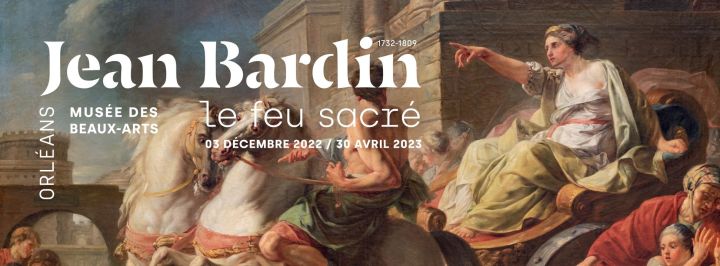
Jean Bardin, Tullia Driving Her Chariot over the Body of Her Father, detail, 1765, oil on canvas, 114 × 146 cm
(Landesmuseum Mainz)
◊ ◊ ◊ ◊ ◊
Now on view at the Museum of Fine Arts in Orléans:
Jean Bardin (1732–1809), le feu sacré
Le musée des Beaux-Arts d’Orléans, 3 December 2022 — 30 April 2023
Curated by Frédéric Jimeno
Le musée des Beaux-Arts d’Orléans présente la première exposition rétrospective consacrée à l’un de ses grands hommes : le peintre Jean Bardin (1732–1809).
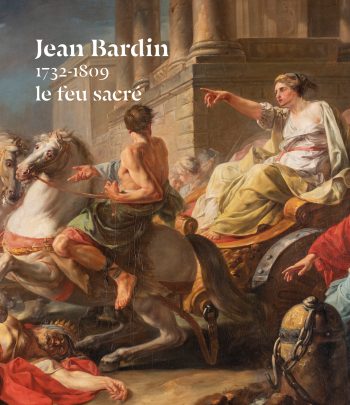 L’exposition Jean Bardin (1732–1809), le feu sacré réunit pour la première fois le corpus de l’artiste. Des tableaux provenant de cathédrales et églises françaises (Bayonne, Mesnil-le-Roi, Charmentray…), récemment restaurés, seront présentés aux côtés d’œuvres provenant des grands musées français (Louvre, Nancy…) et européens (Albertina à Vienne, Mayence…) ainsi que de collections particulières. L’un des temps forts sera le cycle monumental des Sept sacrements, réalisé entre 1780 et 1791 pour la chartreuse de Valbonne et aujourd’hui conservée à la chartreuse d’Aula Dei à Saragosse. Cette série monumentale est exposée en France pour la première fois.
Cette exposition, initiée en 2016 avec Frédéric Jimeno, spécialiste de l’artiste et commissaire scientifique de l’exposition, est le fruit de plusieurs années de recherches. Elle révèle un artiste parmi les principaux de son temps, dans les premières lueurs du néoclassicisme. Le catalogue de l’exposition constitue la première monographie du peintre et propose également une synthèse sur la naissance des institutions artistiques orléanaises sous son égide. Jean Bardin (1732–1809), le feu sacré déploie ainsi un parcours allant de ses débuts dans l’atelier de Jean-Baptiste- Marie Pierre jusqu’à sa mort, qui laisse en héritage les fondements du musée des Beaux-Arts actuel qui ouvrira en 1825. Cette exposition est par ailleurs l’occasion d’évoquer l’entourage familial du peintre, à commencer par la figure de sa fille, Ambroise- Marguerite (1768–1842), artiste formée par son père, seconde femme peintre orléanaise connue après Thérèse Laperche (1743–1814), elle-même révélée au public en 2020 dans le cadre de l’exposition Jean- Marie Delaperche.
Mehdi Korchane, ed., Jean Bardin (1732–1809), le feu sacré (Paris: Les éditions Le Passage, 2023), 304 pages, ISBN: 978-2847424973, €38.
Additional information and more images can be found here»
Exhibition | Mirror of the World
Now on view at the Musée du Luxembourg:
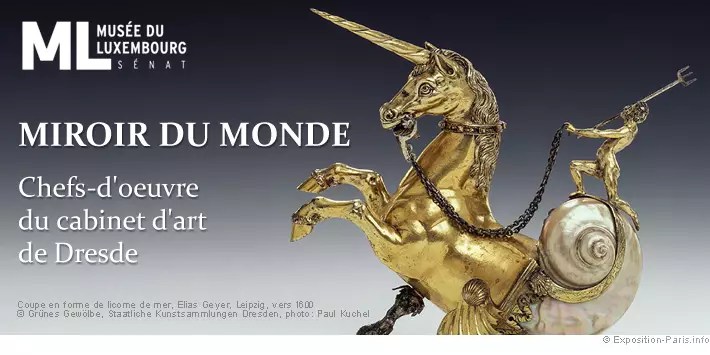
Mirror of the World: Masterpieces from the Dresden Cabinet of Curiosities
Miroir du monde: Chefs-d’œuvre du Cabinet d’art de Dresde
Musée du Luxembourg, Paris, 14 September 2022 — 15 January 2023
Curated by Claudia Brink
The exhibition at the Musée du Luxembourg brings together around one hundred remarkable artworks and objects collected between the 16th and 18th centuries by the powerful Prince-electors of Saxony. During a period marked by the struggle for imperial power between the Electorates of the Holy Roman Empire and the courts of Europe, this dazzlingly rich collection demonstrates the political power of the Prince-elector. Featuring objets d’art, instruments and scientific books, natural materials and ethnographic objects, the Kunstkammer or ‘cabinet of curiosities’ was the first European collection to open to the general public, who viewed it as a place of knowledge and learning. This exhibition places an emphasis on the artistic quality and provenance of the works, which not only reflect the many global relationships and cultural exchanges, but also the Euro-centric world view they embody. A few historical objects are arranged so as to mirror works by contemporary artists, putting these historic collections into perspective through the key issues of our time.
The exhibition is curated by Claudia Brink, curator at the Staatliche Kunstsammlungen Dresden (SKD) / Dresden State Art Collections.
L’ E X P O S I T I O N
Introduction
1 Étudier le Monde, Images du Ciel et de la Terre
2 La Vogue des Cabinets Curiosités, Une Quête de la Rareté
3 L’Ivoire, Un Matériau d’Intérêt Mondial
4 Naturalia, l’Art, et la Nature
5 Visions du Monde, Formation de Stéréotypes
6 La Porcelaine, Symbole des Échanges entre l’Orient et l’Occident
7 L’Art de l’Empire Ottoman, Mode et Fêtes de Cour
The exhibition guide (in French) is available as a PDF file here»
Exhibition | Hieroglyphs: Unlocking Ancient Egypt

Mummy bandage of Aberuait, linen, Egypt, Ptolemaic Period 332–30 BC (Paris: Musée du Louvre / photo: Georges Poncet). This bandage was a souvenir from one of the earliest ‘mummy unwrapping events’ in the late seventeenth century, where attendees would witness a mummy’s unwrapping and receive a piece of the wrapping linen, preferably inscribed with hieroglyphs.
◊ ◊ ◊ ◊ ◊
From the press release (July 2022) for the exhibition:
Hieroglyphs: Unlocking Ancient Egypt
The British Museum, London, 13 October 2022 — 19 February 2023
Curated by Ilona Regulski
Hieroglyphs: Unlocking Ancient Egypt, a major exhibition at the British Museum, marks one of the most important moments in our understanding of ancient history: the decipherment of Egyptian hieroglyphs. The exhibition explores the inscriptions and objects that helped scholars unlock one of the world’s oldest civilisations 200 years ago.
At the exhibition’s heart is the Rosetta Stone, amongst the world’s most famous ancient objects and one of the British Museum’s most popular exhibits. Before hieroglyphs could be deciphered, life in ancient Egypt had been a mystery for centuries with only tantalising glimpses into this forgotten world. The discovery of the Rosetta Stone in 1799, with its decree written in hieroglyphs, demotic, and the known language of ancient Greek, provided the key to decoding hieroglyphs in 1822—a breakthrough that expanded the modern world’s knowledge of Egypt’s history by some 3,000 years.
 This immersive exhibition brings together over 240 objects, including loans from national and international collections, many of which will be shown for the first time. It will chart the race to decipherment, from initial efforts by medieval Arab travellers and Renaissance scholars to more focussed progress by French scholar Jean-François Champollion (1790–1832) and England’s Thomas Young (1773–1829). The Rosetta Stone is on view alongside the very inscriptions that Champollion and other scholars studied in their quest to understand the ancient past. The exhibition also features stunning objects that highlight the impact of that breakthrough.
Star objects include ‘the Enchanted Basin’, a large black granite sarcophagus from about 600 BCE, covered with hieroglyphs and images of gods. The hieroglyphs were believed to have magical powers and that bathing in the basin could offer relief from the torments of love. The reused ritual bath was discovered near a mosque in Cairo, in an area still known as al-Hawd al-Marsud—‘the enchanted basin’. It has since been identified as the sarcophagus of Hapmen, a nobleman of the 26th Dynasty.
Rarely on public display, the richly illustrated Book of the Dead papyrus of Queen Nedjmet is over 3,000 years old and more than four metres long. A recitation of the texts demonstrates the power of the spoken word, with ritual spells there to be pronounced. The papyrus is presented alongside a set of four canopic vessels that preserved the organs of the deceased. These were dispersed over French and British collections after discovery, and this is the first time this set of jars has been reunited since the mid-1700s.
Among the exceptional loans to the exhibition is the mummy bandage of Aberuait from the Musée du Louvre, which has never been shown in the UK. It was a souvenir from one of the earliest ‘mummy unwrapping events’ in the 1600s where attendees received a piece of the linen, preferably inscribed with hieroglyphs. The exhibition also brings together personal notes by Champollion from the Bibliothèque nationale de France, and by Young from the British Library. A 3,000-year-old measuring rod from the Museo Egizio in Turin was an essential clue for Champollion to unravel Egyptian mathematics, discovering that the Egyptians used units inspired by the human body.
The striking cartonnage and mummy of the lady Baketenhor, on loan from the Natural History Society of Northumbria, was studied by Champollion in the 1820s. In correspondence with colleagues in Newcastle, Champollion correctly identified the inscription on the mummy cover as a prayer addressed to several deities for the soul of the deceased only a few years after he cracked the hieroglyphic writing system. Baketenhor lived to about 25–30 years of age, sometime between 945 and 715 BCE.
From love poetry and international treaties, to shopping lists and tax returns, the exhibition reveals fascinating stories of life in ancient Egypt. As well as an unshakeable belief in the power of the pharaohs and the promise of the afterlife, ancient Egyptians enjoyed good food, writing letters, and making jokes.
Many people in ancient Egypt could not read or write so language was enjoyed through readings, recitations, and performances. The exhibition includes digital media and audio to bring the language to life alongside the objects on display. As part of the interpretation, the British Museum has worked with Egyptian colleagues and citizens from Rashid (modern day Rosetta), with their voices featured throughout the exhibition.
Ilona Regulski, Curator of Egyptian Written Culture at the British Museum, said: “The decipherment of hieroglyphs marked the turning point in a study that continues today to reveal secrets of the past. The field of Egyptology is as active as ever in providing access to the ancient world. Building on 200 years of continuous work by scholars around the globe, the exhibition celebrates new research and shows how Egyptologists continue to shape our dialogue with the past.”
Hartwig Fischer, Director of the British Museum, said: “Hieroglyphs: Unlocking Ancient Egypt marks 200 years since the remarkable breakthrough to decipher a long-lost language. For the first time in millennia the ancient Egyptians could speak directly to us. By breaking the code, our understanding of this incredible civilisation has given us an unprecedented window onto the people of the past and their way of life. I would like to express my gratitude to our long-term exhibition partner BP. Without their support, the British Museum would not be able to present such exhibitions, allowing visitors to discover the art, culture and language of ancient Egypt through the eyes of the pioneering scholars who unlocked those ancient secrets.”
Ilona Regulski, Hieroglyphs: Unlocking Ancient Egypt (London: The British Museum, 2022), 272 pages, ISBN: 978-0714191287 (hardback), £35 / ISBN: 978-0714191294 (paperback), £20.
Institutional Membership, New York Society Library
From the SHARP-L listserv (14 December 2022) . . .
The New York Society Library offers e-memberships for those interested in access to its collection of 20+ electronic resources, including JSTOR, Project Muse, the America Founding Era Collection (papers and correspondence from several 18th-and early 19th-century figures), back issue archives for The TLS, The New York Review of Books, and the London Review of Books, various Oxford University Press databases (including the The Grove Dictionary of Art and the Oxford DNB), American National Biography, and many more. For leisure reading, the Library also offers databases of popular e-books and magazines (The Economist, The New Yorker, Harper’s, thousands more). Assistance with research questions is available by emailing the Reference Desk.
The E-membership costs $100 / year.
E-memberships also include 10 building visits annually, with access to the quiet study spaces and reading rooms in our beautiful, landmark Italianate building. (The membership does not include circulating privileges for the print collection or access to individual study rooms.)
The New York Society Library was founded in 1754 as a membership library. Various membership options provide circulating privileges from our collection of 300,000 volumes in open stacks, electronic resources, reading and study spaces, member-only events, and more. The Library is open to all for reading, reference, and many events. More information on e-memberships is available here: https://www.nysoclib.org/members/e-memberships.
Exhibition | Kimono Style
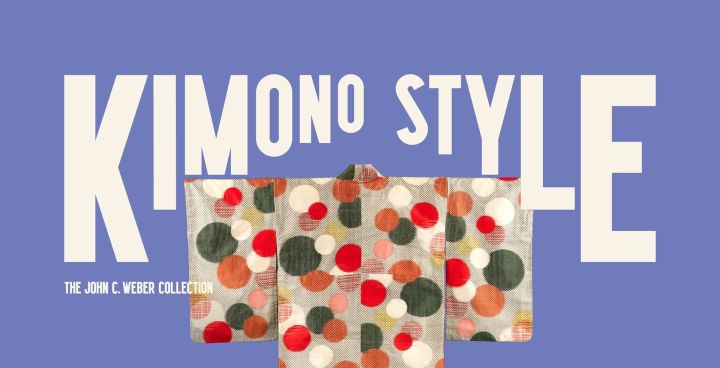
From the press release (1 June 2022) for the exhibition:
Kimono Style: The John C. Weber Collection
The Metropolitan Museum of Art, New York, 7 June 2022 — 20 February 2023
Curated by Monika Bincsik, with Karen Van Godtsenhoven
Kimono Style: The John C. Weber Collection traces the transformation of the kimono from the late 18th through the early 20th century, as the T-shaped garment was adapted to suit the lifestyle of modern Japanese women. The exhibition features a remarkable selection of works, including a promised gift of numerous modern kimonos from the renowned John C. Weber Collection of Japanese art, as well as highlights from The Costume Institute’s collection. More than 60 kimonos, including men’s and children’s wear, are displayed alongside Western garments, Japanese paintings, prints, and decorative art objects.
“This outstanding exhibition presents the kimono from a transnational perspective, highlighting the artistic conversations between Japan and the West, and the garment’s continued impact on designers around the world,” said Max Hollein, Marina Kellen French Director of The Metropolitan Museum of Art. “We are extremely grateful to John C. Weber for his promised gift, his loans to this exhibition, and his long-term support of Asian art at The Met.”

青竹色地輪宝瑞雲模様唐織, Noh Costume (Karaori) with Dharma Wheels and Clouds, Edo period (1615–1868), mid-18th century, twill-weave silk with silk supplementary weft patterning, 158 × 136 cm (John C. Weber Collection).
Monika Bincsik, the Diane and Arthur Abbey Associate Curator for Japanese Decorative Arts, said, “The kimono has served for centuries as a tableau on which to describe and record the histories of women. The variety of patterns and colors and the often-changing trends reveal much about Japanese culture and society when we shed light on the circumstances of the owners of these intricate garments and their production techniques. For many Western couturiers and designers, the kimono was a catalyst to inspire new motifs and novel cuts and to provide freedom to the wearer by creating space between the body and the clothes. At the same time, Western manufacturing techniques and materials along with artistic trends contributed to the modernization of the T-shaped garments and helped to create fresh styles.”
The weaving, dyeing, and embroidery techniques for which Japan is so well known reached their peak of artistic sophistication during the Edo period (1615–1868). Members of the ruling military class were the primary consumers of sumptuous kimonos, each one being custom made. At the same time, a dynamic urban culture emerged, and the merchant class used its wealth to acquire material luxuries. One of the most visible art forms in daily life, kimonos provided a way for townspeople to proclaim their aesthetic sensibility. The kimono-pattern books and ukiyo-e woodblock prints used during that time are comparable to modern fashion magazines and provide evidence of a sophisticated system of production, distribution, and consumption.
Depictions of kimonos in Japanese woodblock prints were widely studied by Western couturiers in the late 19th century who were first inspired by the garment’s decorative motifs. Later, the kimono’s comparatively loose, enveloping silhouette and its rectilinear cut would have a most profound and lasting influence on Western fashion, with couturiers like Madeleine Vionnet and Cristóbal Balenciaga taking inspiration for their avant-garde creations from the kimono’s construction and geometric lines.
In the Meiji period (1868–1912), Western clothing was introduced to Japan. Simultaneously, modernization and social changes enabled more women to gain access to silk kimonos than ever before. Later, some of the kimono motifs were even inspired by Western art. Around the 1920s, affordable ready-to-wear kimonos (meisen) became very popular and reflected a more Westernized lifestyle. These were sold in department stores modeled on Western retailers, following Western-style marketing strategies.
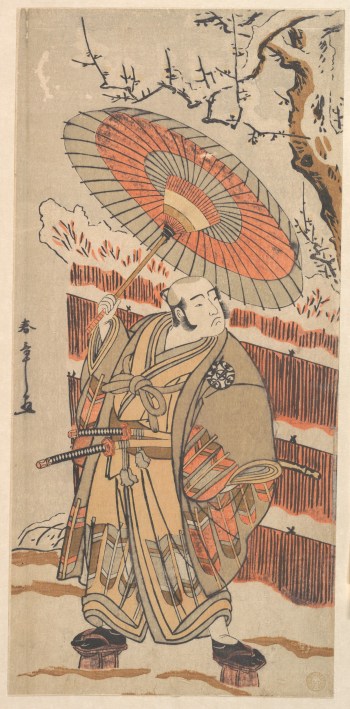
Katsukawa Shunshō (Japanese, 1726–1792), 勝川春章画 二代目中村傳九郎, Kabuki Actor Nakamura Denkurō II, Edo period (1615–1868), ca. 1770s, woodblock print (nishiki-e); ink and color on paper, 29 × 14 cm (New York: The Metropolitan Museum of Art, Rogers Fund, 1914, JP125).
Kimono Style is organized thematically and largely chronologically across 10 galleries. A number of the textiles were rotated in October. The exhibition begins with a look at the costumes worn for Japan’s traditional forms of theater, Noh and Kyōgen, to highlight earlier traditions of clothing from which these elaborate costumes derive. While the two theater forms share roots, they grew from different stage conventions: Noh is solemn drama, while Kyōgen is comic and emphasizes dialogue. They developed together in the 14th century, with Kyōgen pieces performed during interludes or between acts of the main Noh play. The costumes—ornately decorated silk weaves, often made in the Nishijin district of Kyoto, for Noh, and simpler dyed fabrics for Kyōgen, such as the Kyōgen suit with rabbits jumping over waves—were integral to distinguishing the age, social status, and gender of the different characters, all played by male actors. Deriving from actual garments, these costumes preserved past traditions of apparel and shed light on Japanese textile history.
In the early days of Noh theater, during the Muromachi period (1392–1573), audience members often gave their own richly decorated clothing to actors in appreciation. These precious gifts subsequently were transformed into costumes, a tradition that likely led to the creation of exquisite garments specifically for the stage, such as the elegant Noh costume (nuihaku) with orchids and interlinked circles on view in the exhibition, decorated with refined gold foil and silk embroidery patterns
During the Edo period (1615–1868), the military government’s strict control of society meant that dress was not an entirely free or personal choice. Many aspects of clothing, such as the use of gold and expensive techniques, were regulated by the Tokugawa shogunate. At the top of the social hierarchy were the samurai. On the rare official occasions when elite samurai women were seen in public, they wore finely crafted silk garments rooted in conservative traditions, like the Summer robe (hito-e) with court carriage and waterside scene from the late Edo period, made for a woman in the Tokugawa shogun family. Of the three tiers of commoners who followed the samurai in the social order—farmers, artisans, and merchants—merchant-class women had the most freedom in deciding what to wear. Although their choices were supposed to reflect their class position and conform to sumptuary laws, they often disregarded such rules in order to be fashionable and to show off their families’ wealth. Their distinct looks will be illustrated through a number of Edo-period woodblock prints and fashion books depicting the patterns and dye techniques.

茶緑段蘭七宝模様縫箔, Noh Costume (Nuihaku) with Orchids and Interlinked Circles, Edo period (1615–1868), 18th century, plain-weave silk with gold- and silver-leaf application and silk embroidery, 168 × 136 cm (John C. Weber Collection).
Specialized apparel worn to conduct dangerous tasks—whether fighting enemy warriors or battling fires—exemplified the fusion of function and fashion in Japanese textiles. High-ranking samurai had access to the finest materials, including wool imported from Europe, and used boldly decorated battle surcoats (jinbaori) to project status and individual taste. Jinbaori, produced from about the 15th through the mid-19th century, were sleeveless garments originally worn over armor as protection from the weather that eventually became ceremonial wear, such as the Battle surcoat with tattered fan. Firefighters also enjoyed respect in Japan, especially in Edo (present-day Tokyo), where wood architecture led to frequent outbreaks of fire. Samurai firefighters wore expensive garments made of imported wool. The townsmen’s coats were reversible and made of thick, quilted cotton with a plain indigo-dyed exterior and an elaborately decorated interior, usually depicting warrior heroes and mythical creatures that instill bravery or are related to water. One example portrays a legendary warrior, Tarō Yoshikado, who acquired magical skills to be able to morph into a toad.
Access to cotton for commoners, especially those living in the north, increased in the late 17th century with the establishment of the kitamaesen, a commercial shipping route between northern and central Japan, which enabled the secondhand clothing trade to flourish. Castoff cotton clothing was brought from Edo to Osaka and dispersed to the north. Nothing was wasted. The respect for and ingenious use of scarce materials led to the emergence of regional folk textile traditions. On view will be sturdy working clothes for farmers and fishermen as well as lightweight indigo-dyed cotton kimonos for women intended for summertime.
After the collapse of the Tokugawa shogunate in 1868 and the abolition of the class structure, the modernization of the Japanese fashion system occurred first in textile production. Global trade and industrialization in the second half of the 19th century vastly expanded Japan’s access to expensive or restricted wool, cotton, and machine-spun silk. Kimono patterns in the early to mid-20th century increasingly drew from Western art movements, including the organic style characteristic of Art Nouveau and the bold, geometric forms of Art Deco, as can be seen in the Summer kimono (hito-e) with swirls. At the same time, Western couturiers looked to Japanese art and clothing. Kimonos were first reinterpreted as dressing gowns, and later, primarily their fabrics, became a source of inspiration for the creations of couture houses such as Worth. By the early decades of the 20th century, the garment’s rectilinear form and loose shape revolutionized Western fashion: couturiers gave up the S-shaped, corseted bodice for a flat, straighter, modern line. Parisian innovators such as Paul Poiret, Callot Soeurs, and Madeleine Vionnet borrowed Japanese ideas and draped their garments from the shoulder, rather than tailoring the fabric to follow the shape of the body. For example, Poiret’s modernist ‘Paris’ coat from 1919, one of the highlights from The Costume Institute’s collection, was constructed using a single 15-foot length of silk velvet with minimal cutting, recalling the concept of creating a kimono from a single bolt of fabric without any waste and using only rectilinear elements.
 In the Edo period, dry-goods stores or fabric merchants (gofukuten) sold high-quality, made-to-order kosode (the predecessor of the kimono, with small sleeve openings) of silk or fine hemp to men and women of the samurai and wealthy merchant classes. Precursors to the department store, the best-known gofukuten all had branches in multiple cities, including Kyoto, from where they ordered the fabrics. Around the early 20th century, these gofukuten gradually transitioned into modern department stores, adopted Western retail practices, and promoted a modernized lifestyle.
Affordable, stylish kimonos made from meisen, an inexpensive silk woven from predyed yarns, a technique known as ikat (kasuri), became popular in the early 20th century. By the 1920s and 1930s, working- and middle-class women from high-school students to shop assistants could buy these casual, bright-colored, ready-to-wear modern kimonos with bold, graphic patterns. Department stores frequently released new designs to spark trends and inspire purchases. Many meisen kimono patterns were inspired by avant-garde art movements, such as Italian Futurism and the Dutch ‘De Stijl’. Piet Mondrian’s compositions were particularly influential, as demonstrated by a large ikat (ōgasuri) kimono in bright yellow, teal, and raspberry red.
Since the second half of the 20th century, the kimono’s iconic structure has been a source of inspiration in both Japanese and Western fashion. Some modern designers use its shape as a starting point for architecturally constructed garments, as seen in the work of Issey Miyake and Cristobal Balenciaga, whose Evening wrap from 1951 will be on view. Others play with the kimono’s symbolic associations. Remixed and reinterpreted by Japanese designers active in the West, including Yohji Yamamoto and Rei Kawakubo, the kimono dynamically reflects Japanese culture both to the world and back onto itself as evident in Rei Kawakubo’s Ensemble for Comme des Garçons featuring a manga figure. Through all these iterations, the kimono has gestured toward a future beyond fashion trends, cultural boundaries, and gender norms.
Kimono Style: The John C. Weber Collection is curated by Monika Bincsik, Diane and Arthur Abbey Associate Curator for Japanese Decorative Arts, with guest co-curator Karen Van Godtsenhovenk. The exhibition is made possible by the Mary Livingston Griggs and Mary Griggs Burke Foundation Fund, 2015. A fully illustrated catalogue accompanies the exhibition. Published by The Metropolitan Museum of Art and distributed by Yale University Press, it is made possible by the Florence and Herbert Irving Fund for Asian Art Publications. Additional support is provided by the Richard and Geneva Hofheimer Memorial Fund.
Monika Bincsik, Karen van Godtsenhoven, and Masanao Arai, Kimono Style: Edo Traditions to Modern Design (New York: The Metropolitan Museum of Art, 2022), 176 pages, ISBN: 978-1588397522, $35.
Monika Bincsik is the Diane and Arthur Abbey Associate Curator for Japanese Decorative Arts in the Asian Art Department at The Metropolitan Museum of Art, New York. Karen Van Godtsenhoven is an independent curator based in Belgium. Arai Masanao is a textile historian based in Japan.
Exhibition | Ganesha: Lord of New Beginnings

Seated Ganesha, detail, 16th century, India (Odisha), ivory, 7 inches (18.4 cm) high
(New York: The Metropolitan Museum of Art, 64.102)
◊ ◊ ◊ ◊ ◊
Now on view at The Met:
Ganesha: Lord of New Beginnings
The Metropolitan Museum of Art, New York, 19 November 2022 — 25 February 2024
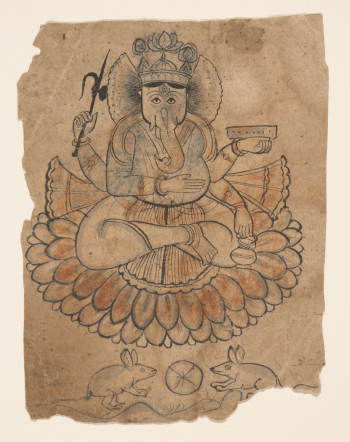
Seated Four-Armed Ganesha, ca. 1775, India (Rajasthan, Bundi), ink and opaque watercolor on paper, 15 × 11 cm (New York: The Metropolitan Museum of Art, 1977.440.15).
Ganesha, the son of Shiva and Parvati, is a Brahmanical (Hindu) deity known to clear a path to the gods and remove obstacles in everyday life. He is loved by his devotees (bhakti) for his many traits, including his insatiable appetite for sweet cakes and his role as a dispenser of magic, surprise, and laughter. However, Ganesha is also the lord of ganas (nature deities) and can take on a fearsome aspect in this guise.
The seventh- to twenty-first-century works in this exhibition trace his depiction across the Indian subcontinent, the Himalayas, and Southeast Asia. Featuring 24 works in a variety of media—sculptures, paintings, musical instruments, ritual implements, and photographs— the exhibition emphasizes the vitality and exuberance of Ganesha as the bringer of new beginnings.
The exhibition is made possible by the Florence and Herbert Irving Fund for Asian Art Exhibitions.










 Enfilade
leave a comment