ASECS 2026 Prize Winners
Exemplary work in art history as recognized by this year’s recently announced ASECS awards:
Gottschalk Prize
Mei Mei Rado, The Empire’s New Cloth: Cross-Cultural Textiles at the Qing Court (Yale UP, 2025).
Dan Edelstein, The Revolution to Come: A History of an Idea from Thucydides to Lenin (Princeton UP, 2025).
For an outstanding historical or critical study
Chair, Amelia Rauser, with Logan Connors and Rachel Carnel
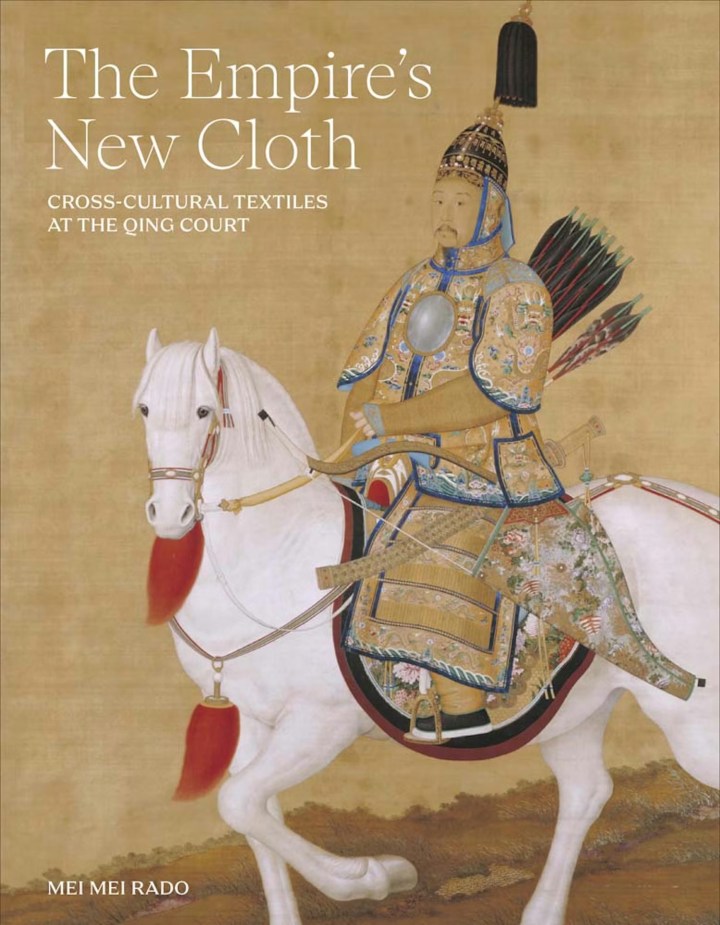 This year the prize is split between two very different, yet equally impressive and important books.
Mei-Mei Rado’s The Empire’s New Cloth dazzles with its deep research into textiles and their cross-cultural uses in both Asia and Europe, demonstrating mastery of different languages, cultures, and archives in both China and France, as well as the technical aspects of silk manufacture and tapestry weaving. She rewrites the received understanding of Orientalism, arguing instead that chinoiserie is a shared, fluid, global style “floating back and forth between China and Europe, evoking in each place something foreign and exotic while also adapting to local cultural desires and expectations.” Rado synthesizes impressive archival research with close readings of visual and literary sources, situating material practices within broader debates about race, labor, and sovereignty. The book’s argument reframes familiar narratives of empire by foregrounding material practices that linked plantation economies, powerful empires, artisanal production, and elite display. The result is a study that speaks across disciplines while remaining focused on such a diverse and unique corpus.
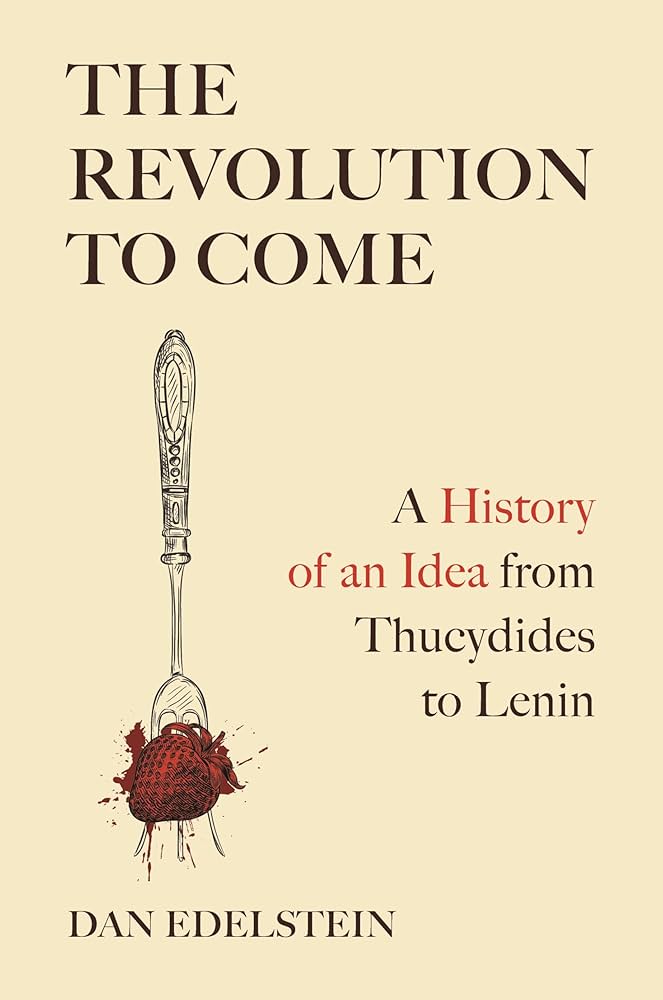 Dan Edelstein’s The Revolution to Come is a tour de force across time and space. Its central insight is that revolutions are conceptual, not sociological, events—thus, it is also a potent defense of the history of ideas. By mapping the circulation of ideas about sovereignty, rights, and regeneration, he shows how Enlightenment thinkers created a horizon of anticipation that reoriented political time. The book situates canonical figures alongside lesser-known writers to reveal the broader discursive field in which revolutionary futures were articulated. The book is a timely reminder of the limits of political moderation as well as a caution against jumping at every revolutionary call. It is breathtaking in its temporal and geographic scope while all the while grounding the fundamental traits of modern revolution in the eighteenth century. Most important are his powerful concluding observations about how a regime shifts seamlessly from democracy to dictatorship. He ends the book with a prescient warning: “Our biggest fear should be that no one even notices the revolution to come.”
Together, these two books stand up for the importance of ideas and proclaim the eighteenth century’s enduring centrality in our understanding of modernity, even as they remind us of the globally interconnected nature of our period. They also represent research excellence of two very different types: archival understanding and close study of material objects on the one hand; and synthetic mastery of a vast corpus of texts and ideas on the other. Between them, they truly represent the best of our field.
◊ ◊ ◊ ◊ ◊
James Clifford Prize
Oliver Wunsch, “The Aesthetic Redemption of the Black Body in Eighteenth-Century France,” Art History 48.1 (February 2025): 14–44.
For an outstanding article
Chair, Masano Yamashito, with Douglas Fordham and Terry Robinson
In his essay, Oliver Wunsch adeptly demonstrates “how the differing goals of artists and philosophers yielded divergent forms of engagement with Blackness.” Wunsch argues that the aesthetic aims of painters, focused on producing ‘visual pleasure’, introduce a disjuncture between a social discourse that would at times marginalize or demean Black subjects and the formal qualities involved in capturing Blackness. Wunsch calls this phenomenon the ‘aesthetic redemption’ of the Black body. Wunsch wonderfully captures of the uniqueness of painting as a discursive field. The article, which complicates “the dichotomy of artistic humanisation and stereotypical objectification” in curatorial assessments of eighteenth-century portraits of Black subjects, is valuable (essential?) reading for anyone interested in visual art, aesthetic theory, natural philosophy, historiography, and exhibition curation.
◊ ◊ ◊ ◊ ◊
Annibel Jenkins Prize
Janis Tomlinson, Goya: A Portrait of the Artist (Princeton UP, 2020).
Awarded every other year for an outstanding book-length biography
Chair, David Alff, with Rebecca Haidt and Robert Paulett
This rigorous account of a landmark visual artist impressed the committee with its ability to immerse readers in the politics, patronage, and courtly intrigue of eighteenth- and nineteenth-century Spain. We especially appreciated Tomlinson’s skill in recovering Goya as a professional painter rather than as a Byronic hero or clandestine revolutionary, as he is sometimes sketched. The resulting portrait raises complex questions of career ambition, artistic expression, and moral complicity that remain evergreen today.
◊ ◊ ◊ ◊ ◊
Women’s Caucus, Catharine Macaulay Prize
Faith Barringer, “The Delineated Breast: Race and the Maternal Body in French Eighteenth-Century Portraiture.”
Graduate Student Paper Prize
Committee: Jacob Myers, Natasha Shoory, Fauve Vandenberghe
Faith Barringer examines the visualization of whiteness in French depictions of breastfeeding women to understand racial stereotypes surrounding motherhood in the eighteenth century. The essay argues that French art rarely depicted Blackness or French colonial realities directly, but instead reinforced racial categories by idealizing white motherhood and marginalizing Black women’s maternal roles. Through meticulous analysis of portraits of breastfeeding women, Barringer reveals how visual representations contributed to stereotypes about motherhood and racial identity, excluding Black women from the ideal of nurturing maternal care. The committee found the paper to be exceptionally well-written and compelling, with a particularly strong analysis of the construction of whiteness in French art and an innovative contribution to current debates about gender and colonialism.










leave a comment