Call for Papers | CAA, 2027, New York
I’ve highlighted here only a selection of CAA panels related to the eighteenth century; so, please consult the Call for Papers for additional possibilities. –CH
115th Annual Conference of the College Art Association
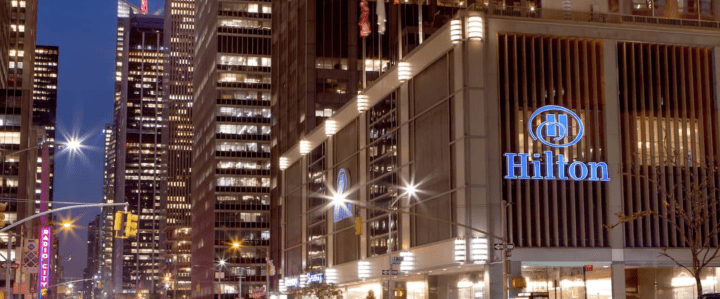
Hilton Midtown, 3–6 February 2027
Proposals due by 31 August 2026
All at Sea: Art and Open Water in the (Long) Eighteenth Century (ASECS)
Chairs: Elisabeth Rivard (University of Virginia) and Dani Rebecca Ezor (SUNY New Paltz)
This panel takes inspiration from what literary scholar Steve Mentz has termed the ‘blue humanities’, or human engagement with the world’s oceans. The challenge is for scholars to center the seas as a dynamic force rather than a passive surface between land or nation-based borders. Historically, the long eighteenth century was marked by efforts to survive or even control the open oceans. ‘All at sea’ meant leaving the sight of land and entering open water. The vast waterways of the Atlantic, Pacific, and Indian Oceans provoked numerous responses from artists and writers, ranging from wonder, indifference, terror, fascination, and opportunism. These sensibilities linger in the second quarter of the 21st century, as the majority of ocean environments remain unmapped and unexplored.
Here, we turn our attention to human-centric attempts to engage with the open seas and oceans, in any dimension or media in visual culture of the long eighteenth century. Papers are invited to explore real or imagined confrontations with the ‘high seas’ and ‘deep water’, whether close to or far removed from the coasts in either direction. Topics may include but are not limited to movements of people and objects, depictions of oceans, and marine material culture. We encourage submissions that consider or contrast Euro-American-centric perspectives with timelines, knowledge, and practices from global cultures and welcome all papers that broadly address visual and/or material culture in the long eighteenth century.
◊ ◊ ◊ ◊ ◊
Assessing Cause, Assigning Responsibility: Responses to Human and Natural Disaster before 1800
Chairs: Sofia Hernandez (Princeton University) and Ashton Fancy (Princeton University)
From earthquakes to sieges, structural collapse to flooding, disasters—whether natural or human-engineered—reshape the built environment. Recent scholarship in disaster studies has expanded our understanding of how catastrophe was experienced in the pre and early modern worlds. This panel builds on such work to ask how natural and human-made disasters might differently transform architecture and urbanism? Foregrounding the relationship between causation and reconstruction, we ask how the origin of destruction—seismic, environmental, military, or technological—shapes the material and spatial responses that follow. What forms of repair, adaptation, or redesign emerge from these distinctions? Post-disaster interventions are never neutral: they are shaped by material limitations, local knowledge, and competing political priorities, and often encode judgments about responsibility and blame. Natural disasters may be framed as acts of God or environmental inevitabilities, while warfare or infrastructural failure more readily invite attribution and accountability. Such distinctions may leave materially legible traces.
Bringing together cases before 1800, this panel examines how societies have historically responded to—and differentiated between—forms of destruction. By foregrounding architecture as a practice shaped by instability and constraint, this session also speaks to the renewed urgency of building amid ongoing environmental risk and uncertainty. We welcome contributions that address: architectural survival or collapse during disasters; comparative approaches to the impact of manmade and natural disasters on material culture; approaches to reconstruction, urban redesign, and their cultural or political significance; disastrous interactions between natural forces and built environments; comparative perspectives across different periods or regions.
◊ ◊ ◊ ◊ ◊
British Art In and Out of Fashion (Historians of British Art)
Chairs: Lindsay Wells (UCLA) and Courtney Tanner Wilder (Vanderbilt University Museum of Art)
British art production, as well as its study within the field of art history, has been subject to sporadic periods of fashionability. At present, British art—or the idea of it, in any case—is having a pop culture moment, from the reimagined Georgian society of Bridgerton to the Pre-Raphaelite aesthetic of Taylor Swift’s The Life of a Showgirl. Yet British art itself has just as frequently fallen out of fashion, both in popular media and academic scholarship. This panel invites papers that propose new ways of engaging with the waxing and waning of British art’s fashionability, broadly conceived. What insights can an emphasis on fashions bring to our current understanding of British art, and what might such a focus obscure? How have fashions across the arts shaped the representation of Britain’s national and imperial identity? What roles have trends, crazes, tastemakers, and revivals played in the production of British art and its critical reception? How have fashions in dress and design historically intersected with those in the fine arts? Why are Britain’s colonial entanglements essential to understanding the fashionability of British art in different contexts? Papers might also examine moments during which British art contributed prominently to the development of art history as a discipline or, alternatively, moments when British art was notably unfashionable in the academy. Other potential subjects include the reception of British art in popular culture, film, and contemporary art. Abstracts for 15-minute papers on these or related topics are warmly welcomed.
◊ ◊ ◊ ◊ ◊
Napoleon’s Suppression of the Venetian Scuole: Their Historic and Artistic Legacy
Chair: Diana Gisolfi (Pratt Institute, Pratt in Venice)
Napoleon’s decree of 1806 suppressed the ‘scuole’ or confraternities of Venice, large and small. Combined guild, charity and devotional society, the scuole were central to the life and economy of the Republic. Their membership comprised virtually all workers. Carpenters, goldsmiths, butchers, shoemakers, silk-weavers, merchants etc, each of over 200 scuole had statutes and a site for devotion. Sites ranged from one altar to a building with boardroom and two large halls. The scuole grandi had formed in the Middle Ages for devotion and had grown in wealth. Scuole members participated in processions on feast days; processional banners depicted patron saints.
Napoleon’s decree disrupted Venetian society. Confraternities’ property, from altarpieces to buildings, was confiscated, movable items sent to Paris or sold on the art market, a few select objects reserved for the new Accademia. Venetian regret for this loss of patrimony engenders ongoing efforts for recovery. Two scuole buildings were exempt and survived with decorations intact: Scuola Grande di San Rocco and Scuola Dalmata. Some others’ sites have been revived, with changed decorations or virtual installations. Some remaining sites of scuole are identified and purloined works traced.
This session invites papers that study Venice’s confraternities, their histories, their patronage, their displaced patrimony, and their roles in the world of Venice. Papers might attempt to identify works from a particular scuola, or study the specific charitable role of a confraternity in relation to surviving descriptions of an iconographic program.
◊ ◊ ◊ ◊ ◊
Painted Statuary and Statue Paintings in the Global Iberian World (Society for Iberian Global Art)
Chairs: Jessica Weiss (Metropolitan State Univ of Denver) and Ilenia Colón Mendoza (Univ of Central Florida)
In the global Iberian world (1400–1800), painted statuary and statue paintings functioned as sophisticated tools of devotion, illusion, and aura transfer. This not only included polychromed three-dimensional objects but also grisaille, trompe l’oeil, and polychrome techniques that were used to represent painted statues in two-dimensional images. From fresco cycles to altarpieces, sculptures were clearly chosen as a communicative device, but to what end? Was it to showcase the skill of the painter or did it convey a deeper meaning? For example, statue paintings that depicted miraculous images of sculptures with great attention to detail could, by extension, become miraculous images themselves. In this case sanctity becomes transferable. This panel seeks to explore this topic further by asking considering the function of painted statuary within the context of ‘traditional’ painting. Were there overlaps in artistic techniques between creating two-dimensional images of sculpture and sculptural polychromy? How are the statues presented with regard to the picture plane? And what does evidence reveal about their use? Was it possible for paintings, which were transported to distant territories, to provide sculptural substitutes? Ultimately, the relationship between sculpture and painting is at the forefront of the discussion of painted statuary as we seek answers to these questions. This panel invites scholarship on painted statuary and statue paintings created in the global Iberian world from 1400 to 1800.
◊ ◊ ◊ ◊ ◊
Proxy Nature: Specimens, Images, and the Mediation of the Nonhuman
Chairs: Benjamin Pollitt (University of Queensland) and Shing-Kwan Chan (Princeton University)
At the heart of this panel is a deceptively simple question: what is the relationship between a specimen and its image, its trace, or its reproduction? As scholars have long noted, specimens—whether fossils, preserved plants, or taxidermy—are not only scientific objects, but forms that invite imaginative reconstruction. They require interpretation and speculation, even as they remain profoundly artificial. In this sense, the notion of the ‘proxy specimen’ may be something of a tautology: the specimen itself is already a proxy, a mediated form that stands in for a once-living organism that can no longer be fully present. If this is the case, then the images and objects that follow the specimen are not secondary or derivative, but part of the same representational process. Drawings, prints, photographs, and cabinets of natural history do not simply mirror nature, they extend, translate, and transform it, shaping how it is understood, classified, circulated, and valued. What might it mean, then, to bring the tools of art history to bear on the specimen itself?
With particular attention to the eighteenth and nineteenth centuries—a period of intensified collecting and imperial expansion—the panel situates specimens and their proxies within networks of extraction, circulation, and labour. It considers how these forms shaped aesthetic and epistemic categories such as beauty, vitality, and classification. By repositioning the proxy as fundamental rather than secondary, this panel reframes natural history as a visual and material practice in which life is not simply preserved, but actively reconstituted.
◊ ◊ ◊ ◊ ◊
Shine, Shimmer, and Sheen: Surface Effects and Material Thinking in the Early Modern World (HECAA)
Chairs: Carole Nataf (CASVA, National Gallery of Art) and Cynthia Kok (Los Angeles County Museum of Art)
What did it mean for early modern objects to catch the eye? Art history has long privileged line and color as categories of artistic analysis, yet the visual impact of artworks often depended just as much on surface effects. From the shine of silver and gold and the shimmer of silk and tapestries to the gloss of lacquer, the brilliance of porcelain, and the iridescence of mother-of-pearl—or the opacity of earthenware and wool—reflective effects shaped how art, objects, and people were seen, valued, and understood. These qualities were produced not only through finishing techniques such as polishing or glazing, but also through the manipulation of pigments, dyes, binders, and other materials across media.
How did makers manipulate and conceptualize reflective effects such as shine, shimmer, sheen, translucency, iridescence, or brilliance across media? What cultural or symbolic meanings did these reflective effects impart to objects? How might attending to surface effects reframe canonical art historical narratives? What roles did pigments, dyes, and surface treatments play in producing reflective effects?
We welcome papers addressing the social, gendered, and racial stakes of surface. Shine could signify luxury, splendor, and conspicuous consumption, but it also raises questions of ephemerality, artifice, and race. Materials such as porcelain, lacquer, or silver participated in circuits of global trade, colonial exchange, and racialized values of whiteness and blackness. Panelists are encouraged to reflect upon the politics of surface and visibility. As Krista Thompson has shown, shine can be understood as the art of being socially seen.










leave a comment