New Book | Kunstmarkt und Kunstbetrieb in Rom, 1750–1850
From De Gruyter:
Hannelore Putz and Andrea Fronhöfer, eds., Kunstmarkt und Kunstbetrieb in Rom, 1750–1850: Akteure und Handlungsorte (Berlin: De Gruyter, 2019), 304 pages, ISBN 978-3110621884, €100 / $115. Series: Bibliothek des Deutschen Historischen Instituts in Rom 137.
 Rom erlebte in der zweiten Hälfte des 18. Jahrhunderts und in den ersten Jahrzehnten des 19. Jahrhunderts tiefgreifende politische Umbrüche und ökonomische Krisen. Gleichzeitig prägte es als Kunstmetropole wie kein anderer Ort die europäischen Künstler und Kunstszene sowie den Kunstmarkt zwischen Klassizismus und Romantik. Hier studierten die jungen Maler, Bildhauer und Architekten antike und nachantike Kunstobjekte. Sie bildeten sich bei den zeitgenössischen Künstlern fort und nahmen im gegenseitigen Austausch kreativ Impulse auf. Auf dem in Europa rasch an Bedeutung gewinnenden freien Kunstmarkt trieb gerade der schier unerschöpfliche römische Sekundärmarkt (Handel mit Kunstobjekten, die sich auf dem Markt befinden), zu dem auch der Handel mit Antiken gehörte, auch den Primärmarkt (Handel mit „atelierfrischen“ Objekten) an. Der Tagungsband nimmt dieses lebendige und pulsierende Kunstgeschehen in den Blick. Er untersucht Produzenten, Agenten, Verkäufer und Käufer, widmet sich Verhandlungen um Preis und Wert und stellt auch die Frage nach dem Einfluss von Künstlern und Käufern auf die Produktion und Rezeption von Werken Bildender Kunst.
Hannelore Putz, Ludwig-Maximilians-Universität München; Andrea Fronhöfer, Oberhausmuseum Passau.
I N H A L T
Hannelore Putz, Andrea Fronhöfer, Vorwort
• Hannelore Putz, Kunstmarkt und Kunstbetrieb in Rom in der ersten Hälfte des 19. Jahrhunderts: Eine Hinführung
• Paolo Coen, Fra tutela e mercato: Johann Joachim Winckelmann Commissario alle Antichità e Belle Arti
• Clare Hornsby, ‘Rome … to say the Truth Seems to be in a most Tottering State’: The Contrasting Fortunes of Some British Artist-Dealers, 1797–1805
• Gabriele B. Clemens, Die Kunstverkäufe des römischen Adels: Eine Basis neuer europäischer Sammlungen
• Valeria Rotili, L’atelier di Carlo Albacini tra collezionismo e mercato
• Marina Unger, Durand’sche Preise: Archäologie zwischen Wissenschaft und Kunstmarkt im Rom der 1830er Jahre
• Johannes Erichsen, Mehr als ein Sammler: König Ludwig I. von Bayern und die Korona der Kunst
• Mathias René Hofter, Winckelmann und die Kunstkäufe Ludwigs I. von Bayern
• Stefan Morét, Martin von Wagner (1777–1858): Ein Bildhauer und Maler im Dienst König Ludwigs I. von Bayern als Kenner und Käufer von Gemälden
• Johanna Selch, Der Kunstagent und sein Netzwerk. Johann Martin von Wagner in Rom
• Anne Viola Siebert, ‘… so bringen wir noch in Hannover so viel zusammen, um den Geschmack zu wecken’: August Kestner als Kunstkenner und Sammler in Rom, 1817–1853
• Susanne Adina Meyer, ‘Prima di partire’: Orte, Akteure und Strategien des römischen Ausstellungswesens, 1750–1840
• Andreas Stolzenburg, Franz Ludwig Catels Engagement für die deutsche Künstlerschaft in Rom und die Gründung des Pio Istituto Catel
Personen- und Ortsregister
Exhibition | Futuruins
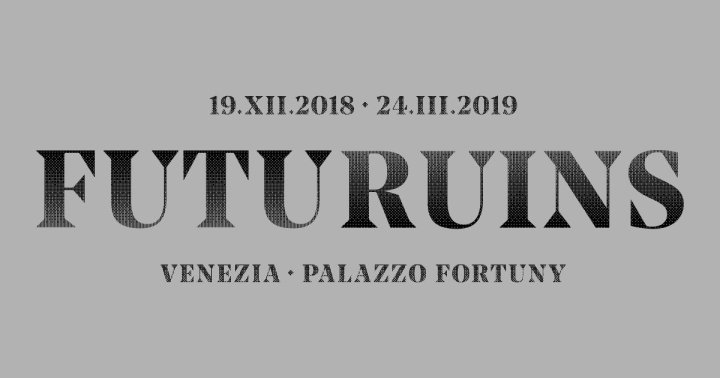
Now on view at the Palazzo Fortuny:
Futuruins
Palazzo Fortuny, Venice, 19 December 2018 — 24 March 2019
Curated by Daniela Ferretti and Dimitri Ozerkov with Dario Dalla Lana
Over 250 works from the Venetian Civic Museums and the State Hermitage Museum, as well as from other Italian and international public and private collections, illustrate the multiple meanings attributed to ruins through the centuries: from the architectural and sculptural remains of the Greco-Roman, Egyptian, Assyrian-Babylonian and Syrian civilisations, to contemporary art that looks at the physical and moral ruins of today’s society—ruins of its architecture, cities and suburbs, but also of men and ideas, as the result of time, negligence, degeneration, natural or political tragedies such as war and terrorism.

Giovanni Battista Piranesi, View of the Foundations of the Theater of Marcellus, detail, from Antichità Romane, volume 4, 1756–57 (Venice: Fondazione Musei Civici di Venezia, Museo Fortuny).
As a result of the collaboration between the City of Venice, the Fondazione Musei Civici di Venezia, and the State Hermitage Museum of St. Petersburg—strengthened by the agreements signed in recent years and the presence of ‘Ermitage Italia’ in the lagoon city—and following Dimitri Ozerkov’s proposal, Palazzo Fortuny will host the exhibition Futuruins from 19 December 2018 to 24 March 2019.
The exhibition reflects on the theme of ruins: an allegory for the inexorable passage of time, always uncertain and changeable, disputed between past and future, life and death, destruction and creation, nature and culture. The aesthetics of ruins is a crucial element in the history of Western civilisation. The ruin as concept symbolises the presence of the past but at the same time contains within itself the potential of the fragment: a fragment that comes from antiquity, covered by the patina of time, which with its cultural and symbolic implications also becomes a valid ‘foundation stone’ for building the future. It comes from the past, confers a wealth of meaning on the present, and offers an awareness to future projects.
 The contemporary itinerary opens with the extraordinary environmental installation by Anne and Patrick Poirier and is followed by works by Acconci Studio, Olivio Barbieri, Botto & Bruno, Alberto Burri, Sara Campesan, Ludovica Carbotta, Ugo Carmeni, Lawrence Carroll, Giulia Cenci, Giacomo Costa, Roberto Crippa, Lynn Davis, Giorgio de Chirico, Federico de Leonardis, Marco Del Re, Paola De Pietri, Jean Dubuffet, Tomas Ewald, Cleo Fariselli, Kay Fingerle, Maria Friberg, Luigi Ghirri, Gioberto Noro, John Gossage, Thomas Hirschhorn, Anselm Kiefer, Francesco Jodice, Wolfgang Laib, Hiroyuki Masuyama, Jonatah Manno, Mirco Marchelli, Steve McCurry, Ennio Morlotti, Sarah Moon, Margherita Muriti, Claudio Parmiggiani, Lorenzo Passi, Fabrizio Prevedello, Dmitri Prigov, Judit Reigl, Christian Retschlag, David Rickard, Mimmo Rotella, Anri Sala, Alberto Savinio and Elisa Sighicelli. In line with the tradition of exhibitions at the Fortuny, there are also a series of works specifically made for Futuruins that offer new stimuli for reflection on the present, works by Franco Guerzoni, Christian Fogarolli, Giuseppe Amato, Renato Leotta, and Renata De Bonis.
Between the two chronological extremes of the exhibition, there is a series of masterpieces in various media—paintings, sculptures, applied arts, graphic works—to suggest the major themes being examined. Many have been selected from Venetian collections—ranging from the jellyfish by Arturo Martini and Franz von Stuck to the fire-lit nocturnal ruins of Ippolito Caffi and Urbino-made ceramics bearing themes of genesis and death—while others come from museums and private collections. For its part, the State Hermitage Museum has loaned more than 80 works by such artists as Albrecht Dürer, Monsù Desiderio, Giovanni Paolo Pannini, Jacopo and Francesco Bassano, Parmigianino, Veronese, Jacob van Host the Elder, Arturo Nathan, and Alessandro Algardi.
The contemporary relevance of ruins has been made apparent in the light of recent history, characterised by wars in which iconic and symbolic aspects stand out (the collapse of the Twin Towers, the devastation of the Baghdad museum, Palmyra…) and of the increasingly extreme climate changes on our planet.
Dimitri Ozerkov, ed., with contributions by Dimitri Ozerkov, Mikhail Piotrovsky, and Gabriella Belli, Futuruins: The Future of Ruins and Ruins of the Future (Berlin: Hatje Cantz, 2019), 816 pages, ISBN 978-3775745413 (English edition), €50.
Exhibition | Anton Maria Zanetti and His Collections
The exhibition closed a few weeks ago, but the catalogue is available from ArtBooks.com:
A Life as a Work of Art: Anton Maria Zanetti and His Collections
Ca’ Rezzonico, Venice, 29 September 2018 — 7 January 2019
Curated by Alberto Craievich
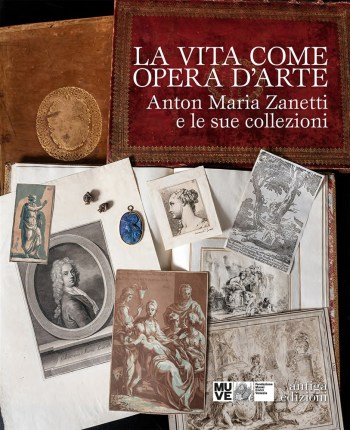 Anton Maria Zanetti (1679–1767) was a central figure in the eighteenth-century history of Venetian collecting and in the world’s endorsement of Venetian art. An art patron and influential intermediary on behalf of nobles and sovereigns, commissioning and purchasing works by Venice’s most famous artists, Zanetti was perhaps the most influential character in the Venetian art scene of the time. Known as ‘il Vecchio’, or ‘di Girolamo’—to distinguish him from his namesake younger cousin, a famous librarian at the Marciana Library in Venice—Zanetti was not only a passionate collector but also a talented draughtsman and skilled engraver.
After his father’s death in 1711, he was forced to provide for the rest of the family as an insurance agent, but despite difficulties, this did not prevent him from following his own inclinations. A friend to artists such as Canaletto, Rosalba Carriera, Sebastiano and Marco Ricci, and Giambattista Tiepolo, Zanetti was in close contact with the most important European collectors. He himself assembled an extraordinary collection of antique gems, drawings, and prints that was dispersed after his death. He also promoted splendid publishing initiatives, most notably two volumes on ancient sculpture, now conserved in the vestibule of the Marciana Library and one of the most beautiful and luxurious illustrated publications of the entire eighteenth century. An inexhaustible collection of letters, now spread among libraries and private collectors, documents his dense network of relationships and friendships and offers a rare insight into the cultural life of the period.
To commemorate this extraordinary figure, the Fondazione Musei Civici di Venezia presents an exhibition highlighting Zanetti’s activities as an artist and patron. Testimonies from his life in the form of books, letters, engravings, and drawings—none of which are usually exhibited for conservation reasons—will be shown together with art from his collection, including works by Tiepolo, Sebastiano and Marco Ricci, Palma il Giovane, and others, now preserved in the city’s museums, including the Gallerie dell’Accademia di Venezia, the Giorgio Cini Foundation, the Biblioteca Nazionale Marciana, and Venice’s civic museums, as well as in several private collections.
Alberto Craievich, La Vita Come Opera d’Arte: Anton Maria Zanetti e le sue collezioni (Antiga: Crocetta del Montello, 2018), 336 pages, ISBN: 978-8884351029, €38 / $60 (on sale for $42).
Eighteenth-Century Studies, Winter 2019
The latest issue of Eighteenth-Century Studies includes a forum in memory of Mary Sheriff, edited by Jennifer Germann and Michael Yonan. Their introduction brilliantly situates Mary’s role within eighteenth-century art history, making sense of the field in relation to ASECS (and implicitly, HECAA). It works not only as a tribute to a much loved scholar; it’s among the best institutional historiography I’ve ever encountered in just three pages. –CH
Eighteenth-Century Studies 52 (Winter 2019)
 Forum in Memory of Mary D. Sheriff
• Jennifer Germann and Michael Yonan, “Mary Sheriff and ASECS,” pp. 151–54.
• Dena Goodman, “On History and Art History (and Women, of course),” pp. 155–58.
• Tili Boon Cuillé, “Songs of Sorrow: Bardic Women in Girodet, Ossian, and Staël,” pp. 159–65.
• Christopher M. S. Johns, “Making History at the Capitoline Museum: Maria Tibaldi Subleyras’s Christ in the House of Simon the Pharisee,” pp. 167–71.
• Kathleen Nicholson, “Having the Last Word: Rosalba Carriera and the Académie Royale de Peinture et de Sculpture,” pp. 173–77.
• Melissa Hyde, “Something About Mary,” pp. 179–82.
Research Essays
• Samuel Rowe, “Beckford’s Insatiable Caliph: Oriental Despotism and Consumer Society,” pp. 183–99.
• Stephanie O’Rourke, “Histories of the Self: Anne-Louis Girodet and the Trioson Portrait Series,” pp. 201–23.
• Celestina Savonius-Wroth, “Bardic Ministers: Scotland’s Gaelic-speaking Clergy in the Ossian Controversy,” pp. 225–43.
• Juliane Engelhardt, “Anxiety, Affect, and the Performance of Feelings in Radical Pietism: Towards a Topography of Religious Feelings in Denmark-Norway in the Early Enlightenment,” pp. 245–61.
Review Essay
• Melvyn New, Review of The Letters of Oliver Goldsmith, ed. by Michael Griffin and David O’Shaughnessy (Cambridge University Press, 2018), pp. 263–70.
Book Reviews
• Mary McAlpin, Review of The Woman Question in France, 1400–1870 by Karen Offen (Cambridge University Press, 2017), pp. 271–72.
• Mary Beth Harris, Review of Masculinity, Militarism and Eighteenth-Century Culture, 1689–1815 by Julia Banister (Cambridge University Press, 2018), pp. 273–74.
• Elizabeth C. Libero, Review of Disciplining the Empire: Politics, Governance, and the Rise of the British Navy by Sarah Kinkel (Harvard University Press, 2018), pp. 275–76.
Books Received, pp. 277–78.
Exhibition | Maestro Van Wittel: Dutch Master of the Italian Cityscape

Caspar van Wittel, Piazza Navona, 1699, oil on canvas, 97 × 216 cm (Madrid: Carmen Thyssen-Bornemisza Collection on loan at the Museo Nacional Thyssen- Bornemisza).
◊ ◊ ◊ ◊ ◊
Now on view at the Kunsthal KAdE:
Maestro Van Wittel: Dutch Master of the Italian Cityscape / Hollandse meester van het Italiaanse stadsgezicht
Kunsthal KAdE, Amersfoort, 26 January — 5 May 2019
Kunsthal KAdE and Museum Flehite introduce the Netherlands to a world-renowned Dutch master who remained largely unknown in his country of birth, the Netherlands. Caspar Adriaensz van Wittel (1653–1736), also known as Gaspare Vanvitelli, became famous and revered in his adopted homeland of Italy. During the 17th and 18th century, he painted Rome, Naples, and Venice in minute detail, influencing famous Italian cityscape painters such as Canaletto and Bellotto. Van Wittel was born in Amersfoort, left around 1673 for Italy, earned a good reputation for himself there, and never returned to the Netherlands. Today, the vast majority of his works are in collections in Italy, England, and Spain. In the Netherlands, there are only a few drawings and a single gouache: View of Amersfoort in Museum Flehite. With the exhibition Maestro Van Wittel: Dutch Master of the Italian Cityscape, Museum Flehite and Kunsthal KAdE honour this master with a major retrospective from 26 January through 5 May 2019. It puts his extensive oeuvre in the context of his Dutch learning period and his influence on the later Italian vedutisti.
The exhibition at Kunsthal KAdE presents the entire Van Wittel story: the places he painted, the style he developed, his Dutch roots, his high-born patrons, and his undeniable influence in Italy. With this retrospective, Museum Flehite and Kunsthal KAdE want to give Caspar van Wittel his place in the canon of Dutch art history as maestro of the Italian cityscape.
Van Wittel’s Dutch Period
Caspar van Wittel was a student of Matthias Withoos, who had trained at Jacob van Campen’s painting school at the Randenbroek country estate in Amersfoort. Withoos’ masterpiece is his View of Amersfoort; commissioned in 1671 by the city government at the time, it was painted in the time that Van Wittel was training with him and therefore it is possible that the young student—he was 16 or 17 years old at the time—worked on it. Van Wittel relocated to Hoorn with Withoos in 1672. As a result of the move, he was neighbours with the painters Jan van der Heyden and Gerrit Berckheyde, who had developed a ‘pure’ rendering of the cityscape in Amsterdam and Haarlem. This ‘Dutch’ way of painting is conveyed in Van Wittel’s work.
Inventor of the Italian Cityscape
 Accompanied by a fellow young painter—Jacob van Staverden—Van Wittel travelled to Rome sometime around 1673. In Rome, he found himself in the Dutch Schildersbent (‘painters’ clique’) faction of the Bentvueghels (‘birds of a feather’), a group that had been an artists’ colony for decades in the eternal city. In Rome, he became acquainted with the work of Lieven Cruyl and Abraham Genoels, who made topographic drawings of the city. He also met Cornelis Meyer, a mechanical engineer who was striving to land an assignment from the Pope to build water works along the Tiber. Meyer asked the young Caspar—now in his mid-20s—to help with the illustrations for the manuscript. One of the subjects that Van Wittel drew was Piazza del Popolo, the square where Van Wittel arrived in Rome from the north. Ultimately, he would paint this square some 15 times in his career, always from the same perspective.
From that moment (around 1680), Van Wittel also began capturing other places in Rome with his signature precision: the Tiber with its bridges and the Castel Sant’Angelo on the banks, the Piazza Navona, the Colosseum, St. Peter’s Square, the Quirinal, Villa Borghese, churches, streets, and smaller squares. He often repeated these compositions numerous times, too, working from a single basic drawing. From Rome he travelled to Naples, the countryside surrounding Rome (Tivoli), Florence, and Venice. In the lagoon city of Venice, he captured the view of San Marco and the Doge’s Palace from the water. He painted the majestic La Salute church at the entrance to the Grand Canal. Nowadays it belongs to the standard repertoire of Venetian cityscape painting, but Van Wittel was the first to paint it.
Van Wittel Inspires Canaletto
Around 1719, the young Venetian painter Antonio Canal was in Rome to paint several decorative pieces with his father. It is highly likely that he met Van Wittel during this time and saw a number of his Venetian cityscapes. Filled with inspiration, Canal, who would quickly be called Canaletto, dedicated himself entirely to this subject. At the time, the Grand Tour—an educational trip for young members of the nobility—became incredibly popular and Canaletto, together with his cousin Bernardo Bellotto, became the go-to painters of Venetian cityscapes that were snapped up by the travellers. Incidentally, Van Wittel led the way here, too; he had provided Grand Tour travellers—including Thomas Coke—with these sorts of ‘picture postcards’. Upon his return to England, Coke built Holkham Hall in the north of Norfolk, which was inspired in part by his travels in Italy and the work of architect Palladio.
Once he arrived in Rome, Van Wittel established an extensive network of patrons that included not only Roman aristocracy such as the Sacchetti and Colonna families—in whose palaces he took up residence from time to time—but also the Spanish nobleman Medinaceli, who lived in Rome as an ambassador, became the viceroy of Naples in 1696 and commissioned a total of 35 paintings by Van Wittel, most of which were views of Naples and around the city.
Photographer Wilschut Follows in Van Wittel’s Footsteps
As part of the exhibition, Rotterdam photographer Hans Wilschut was asked to follow in Van Wittel’s footsteps and capture a number of the places in Rome, Naples, Venice, and Amersfoort that Van Wittel frequently painted. Some of these places have remained essentially the same; some have been completely transformed. Just as Van Wittel liked to capture the urban hustle and bustle in his cityscapes at the time, Wilschut shows people today in the iconic settings. Hans Wilschut is also featured in the exhibition Stadsbeelden (‘Cityscapes‘) at Museum Flehite, from 9 February through 19 May 2019.
Works from International Collections in Amersfoort
The exhibition presents around 45 paintings and gouaches and approximately 30 drawings by Van Wittel from Italian, English, Spanish, German, and French collections. In addition, there are about 30 paintings and drawings by Dutch and Italian masters.
An events programme to accompany the exhibition will be organised in cooperation with the Friends of Caspar van Wittel Foundation. Bekking & Blitz will publish an exhibition catalogue in Dutch and English. This is the first time that a monograph on the artist will be available in these languages. The catalogue costs €30.
The exhibition Maestro Van Wittel: Dutch Master of the Italian Cityscape is made possible by the generous support of the Turing Foundation, the Mondriaan Fund, Fonds 21, the Municipality of Amersfoort, the Cultural Heritage Agency, and the Province of Utrecht.
The Burlington Magazine, January 2019
The eighteenth century in The Burlington: (with the issue focused on Westminster Abbey) . . .
The Burlington Magazine 161 (January 2019)
 A R T I C L E S
• Susan Jenkins, “‘Sunbeams and Shadows’: Exhibiting the Collection at Westminster Abbey,” pp. 4–8. The Queen’s Diamond Jubilee Galleries, opened last year, display works of art and historic artefacts from the collections at Westminster Abbey, London. To introduce this special issue of the Magazine, the Abbey’s Curator, outlines the history of the building’s museum displays and explains the thinking behind the new galleries.
• Gordon Higgott, “Sir Christopher Wren’s Failed Project for a Crossing Tower and Spire at Westminster Abbey, 1713–25,” pp. 44–57. In 1713, with funds available for ‘finishing’ Westminster Abbey, the Surveyor to the Fabric, Sir Christopher Wren, began to plan the addition of a lofty crossing tower and spire. After Wren’s death in 1723 the proposal was shelved by his successor, Nicholas Hawksmoor, who recognised that it presented an insoluble structural problem.
R E V I E W S
• Lynn Jones, Review of the exhibition Armenia! (The Metropolitan Museum of Art, 2018–19), pp. 60–63.
• Eric Zafran, Review of the exhibition The Orléans Collection (New Orleans Museum of Art, 2018–19), pp. 67–69.
• Reinier Baarsen, Review of the exhibition Luigi Valadier: Splendor in Eighteenth-Century Rome (The Frick Collection, 2018–19), pp. 70–71.
• Michael Hall, Review of Karl-Georg Pfändtner, ed., ‘Gold und Bücher lieb ich sehr…’: 480 Jahre Staats- und Stadtbibliothek Augsburg (Quaternio Verlag, 2017), pp. 85–87.
• Roger White, Review of Rosemary Yallop, Cottages Ornés: The Charms of the Simple Life (Yale University Press, 2017), pp. 89–90.
• Gauvin Alexander Bailey, Review of Vittorio Magnago Lampugnani, Die Stadt von der Neuzeit bis zum 19. Jahrhundert: Urbane Entwürfe in Europa und Nordamerika (Verlag Klaus Wagenbach, 2017), pp. 92–93.
New Book | La peinture en Bourbonnais du XVIe au XVIIIe siècle
Published by PUR and available from Artbooks.com:
Guennola Thivolle, La peinture en Bourbonnais du XVIe au XVIIIe siècle (Rennes: Presses Universitaires de Rennes, 2019), 332 pages, ISBN: 978-2753575813, 35€ / $60.
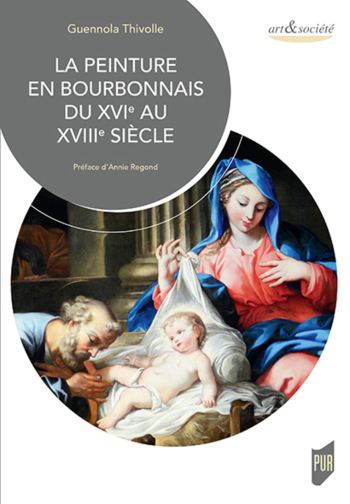 Cet ouvrage propose une étude des tableaux de chevalet et des décors peints réalisés en Bourbonnais entre 1531 et 1790 mais aussi de leurs commanditaires. Tous investissent l’œuvre d’une fonction, de la dévotion à l’apparat, qui s’exprime à travers les sujets représentés et leur emplacement dans l’édifice. Certains font appel à de grands maîtres de la peinture, d’autres à des artistes locaux alors assimilés à des artisans. La découverte de pièces d’archives relatives à ces peintres permet de comprendre leurs conditions de travail et leur cadre de vie. Quel que soit le niveau de fortune du commanditaire ou le talent du peintre, il apparaît que les réseaux de sociabilité jouent un rôle primordial dans le processus de la commande.
Guennola Thivolle est docteure en histoire de l’art moderne et conservatrice des Antiquités et Objets d’Art du département de l’Allier.
C O N T E N T S
Remerciements
Annie Regond, Préface: Une nouvelle approche de la vie artistique dans le Bourbonnais à l’époque moderne
Introduction
Les commandes religieuses: Entre piété et apparat
Les commandes profanes: Du prestige au raffinement
Les réseaux de sociabilité
Entre Paris et le Bourbonnais
Les peintres locaux
L’artiste au travail
Conclusion
Sources et bibliographie
Dictionnaire des peintres
Index
Crédits photographiques
A fully detailed table of contents is available here»
New Book | Luigi Garzi (1638–1721)
Published by Officina Libraria and available from Artbooks.com:
Francesco Grisolia and Guendalina Serafinelli, eds., Luigi Garzi (1638–1721): Pittore romano (Milan: Officina Libraria, 2018), 335 pages, ISBN: 978-8899765859, 30€ / $50.
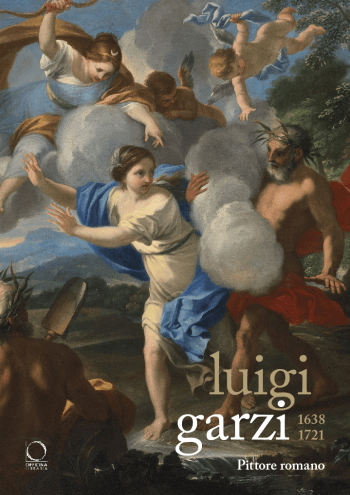 Pittore versatile e abile disegnatore, Luigi Garzi (1638–1721) fu celebrato dalla storiografia settecentesca per la sua lunga e operosa attività artistica all’insegna della grazia, dell’eleganza formale, dell’originalità creativa e della fine elaborazione cromatica.
Si formò giovanissimo a Roma presso «Salomon Boccali pittor di paesi» e completò la propria educazione nella bottega di Andrea Sacchi, dove diede prova di possedere uno spiccato talento artistico che in breve tempo gli permise di conseguire una certa autonomia professionale.
Garzi visse e operò per quasi tutta la sua vita a Roma: nel 1670 divenne accademico di San Luca (di cui fu Principe nel 1682) e successivamente, nel 1680 e nel 1702, Reggente della Congregazione dei Virtuosi al Pantheon. La sua produzione pittorica—pienamente debitrice della lezione sacchiana e orientata a un classicismo sia emiliano sia marattesco con evidenti suggestioni poussiniane—è documentata nella capitale pontificia a partire dagli anni Settanta del Seicento con la realizzazione delle prime opere di destinazione pubblica (San Marcello al Corso, Santa Caterina a Magnanapoli, Santa Croce in Gerusalemme, Santi Ambrogio e Carlo al Corso) e privata (Palazzo Borghese); imprese che contribuirono a consolidare la sua fama di impaginatore di pale d’altare e di decoratore a fresco, aprendogli la strada a nuovi incarichi non esclusivamente limitati all’ambito romano, tra cui le prestigiose commissioni napoletane della seconda metà degli anni Novanta del Seicento (Santa Caterina a Formiello, Galleria del principe di Cellamare, Palazzo Reale e San Carlo all’Arena).
La figura di Garzi è rimasta a lungo relegata ai margini degli interessi critici con rare eccezioni rappresentate da isolati contributi apparsi negli ultimi decenni. Il volume unisce saggi di autorevoli studiosi che, con metodologie diverse, affrontano la carriera del pittore, offrendo un imprescindibile contributo alla comprensione della sua vicenda artistica e biografica e uno strumento scientifico di riferimento in vista di un catalogo ragionato delle sue opere.
Contributors include Stefan Albl, Alessandro Agresti, Dario Beccarini, Paolo Benassai, Michela Di Macco, Mario Epifani, Fabrizio Federici, Francesco Gatta, Francesco Grisolia, Stefania Macioce, Mario Alberto Pavone, Erich Schleier, Guendalina Sera nelli, Stefania Ventra, Jana Zapletalova.
New Book | Scotch Baronial: Architecture and National Identity
From Bloomsbury:
Miles Glendinning and Aonghus MacKechnie, Scotch Baronial: Architecture and National Identity in Scotland (London: Bloomsbury, 2019), 312 pages, ISBN: 978-1474283472, £65 / $88.
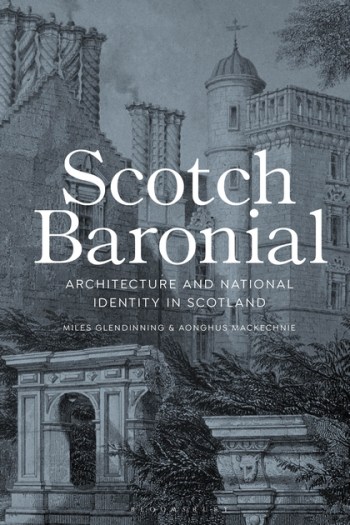 As the debate about Scottish independence rages on, this book takes a timely look at how Scotland’s politics have been expressed in its buildings, exploring how the architecture of Scotland—in particular the constantly-changing ideal of the ‘castle’—has been of great consequence to the ongoing narrative of Scottish national identity. Scotch Baronial provides a politically-framed examination of Scotland’s kaleidoscopic ‘castle architecture’, tracing how it was used to serve successive political agendas both prior to and during the three ‘unionist centuries’ from the early 17th century to the 20th century. The book encompasses many of the country’s most important historic buildings—from the palaces left behind by the ‘lost’ monarchy, to revivalist castles and the proud town halls of the Victorian age—examining their architectural styles and tracing their wildly fluctuating political and national connotations. It ends by bringing the story into the 21st century, exploring how contemporary ‘neo-modernist’ architecture in today’s Scotland, as exemplified in the Holyrood parliament, relates to concepts of national identity in architecture over the previous centuries.
Miles Glendinning is Professor of Architectural Conservation at the Edinburgh School of Architecture and Landscape Architecture, University of Edinburgh. Aonghus MacKechnie is an architectural historian and Head of Heritage Management at Historic Scotland. Together, they have co-authored numerous books including A History of Scottish Architecture (1996, co-authored with Ranald MacInnes) and Scottish Architecture (2004).
C O N T E N T S
Introduction, Pre-1603 Scotland: Castellated Architecture and ‘Martial Independence’
Part I: Absent Monarchs and Civil Strife
1 1603–1660: Empty Royal Palaces and Castellated Court Architecture
2 1660–1689: From Restitution to Rejection of the Old Order
3 1689–1750: The Architecture of Dynastic Struggle
Part II: From ‘Romantic Scotland’ to ‘Imperial Scotland’
4 1750–1790: Enlightenment and Romanticism
5 1790–1820: Scotland and England in the Age of Revolutionary War
6 1820–1840: Scott, Abbotsford, and ‘Scotch’ Romanticism
7 1840–1870: Billings and Bryce: Mid-Century Baronial
8 1870–1900: Traditionalism
9 External Reflections: ‘National’ Scottish Architecture and the Empire
Part III: The Twentieth Century
10 1914 Onwards: Scottish Architectural Identity in the Age of Modernism
Conclusion, The Architecture of Unionist Nationalism and Its International Significance
Bibliography
Index
Exhibition | Anton Maria Maragliano (1664–1739)
On view in Genoa at the Palazzo Reale:
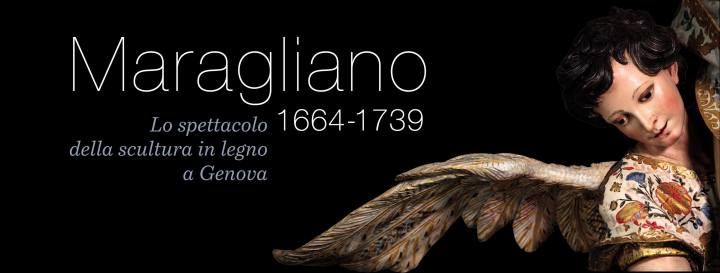
Anton Maria Maragliano (1664–1739), Lo spettacolo della scultura in legno a Genova
Palazzo Reale di Genova, 10 November 2018 — 10 March 2019
Curated by Daniele Sanguineti
From November 10th 2018 to March 10th 2019 Teatro del Falcone in Palazzo Reale Museum hosts the first monographic exhibition dedicated to the Genoese sculptor Anton Maria Maragliano (1664–1739). Viewers can admire the artist’s masterpieces, testaments to the persuasive power of painted and gilded wood to personify the protagonists of Paradise: from the elegant Marian statues, to the graceful Crucifixes, to the great processional machines with the martyrs of the saints.
 Maragliano’s ability to meet the needs of clients through beautiful images and strong emotional impacts made possible the obtaining of a monopoly that forced the sculptor to develop a structured business model. Two generations of students were welcomed in the rooms of Strada Giulia, in the heart of Genoa, where Maragliano had his workshop, giving rise to the phenomenon of divulging the master’s language which represents the most fascinating, though problematic, aspect of the approach to sculptor: and the pupils of the students pursued this popularization beyond the end of the century. The exhibition presents a dual approach: on the one hand, it displays a chronological path, with Maragliano’s cultural references, the beginnings, the artist’s workshop; on the other hand, it displays thematic sections, articulated in groups of works divided according to iconography.
The exhibition opens with a section dedicated to artistic precedents for the young Maragliano, from Giuseppe Arata and Giovanni Battista Agnesi, to Giovanni Battista Bissoni and Marco Antonio Poggio. The places that Maragliano evoked through a series of documents, engravings, and watercolors usefully tell the stages of apprenticeship and the environments that hosted the master’s workspace over the years. The magnificent San Michele Arcangelo of Celle Ligure, requested of Maragliano in 1694, and the San Sebastiano for the Disciplinanti of Rapallo, commissioned in 1700, testify to the role of models in tune with the most up-to-date figurative culture rooted in Genoa thanks to the painter Domenico Piola and the French sculptor Pierre Puget. These sculptures, capable of translating into the three-dimensionality of the artefact the engaging grace of contemporary painting and Bernini’s sculpture, reveal the new, delicate dynamism of Baroque culture.
The practice of work, from the manipulation of clay models to the collaboration with painters—especially those of Casa Piola—constitute a deepening of particular interest that make comprehensible the ideational project in the entirety of its process. The progressive juxtaposition of Crucifixes—large and small, from a chapel, from a high altar, or from a procession—shows the substantial renewal conferred by Maragliano on the iconography until obtaining a repeatable formula on the part of the students. A series of spectacular Madonnas seated on the throne and an extraordinary processional chest—the Sant’Antonio Abate contemplates the death of Saint Paul the Hermit now relevant to the brotherhood of Mele—highlight the theatrical values of Maragliano’s compositions, for which the biographer Ratti, reporting the judgment of the people, wrote, “have all the air of Paradise.”
Penitential themes from Holy Week are illustrated in the enthralling section on the Passion. Alongside works of small format, including nativity statues are exhibited refined objects—sacred and profane—commissioned by noble families for their private collections. The journey ends with an allusion to the complex management of Maragliano’s heritage, thanks to the presence of some pieces made by his primary students.
The catalogue is published by Sagep and available from Artbooks.com:
Daniele Sanguineti, et al., Maragliano (1664–1739), Lo spettacolo della scultura in legno a Genova (Genova: Sagep Editori, 2018), 288 pages, ISBN: 978-8863735970, €30 / $60.










 Enfilade
leave a comment