Exhibition | Visitors to Versailles

An earlier posting included information for the exhibition at Versailles, but here’s information for the exhibition at The Met, including details for the English edition catalogue, distributed by Yale UP:
Visitors to Versailles: From Louis XIV to the French Revolution
Château de Versailles, 24 October 2017 — 25 February 2018
The Metropolitan Museum of Art, New York, 16 April — 29 July 2018
Curated by Bertrand Rondot and Daniëlle Kisluk-Grosheide
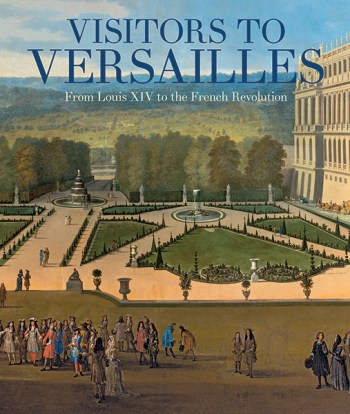 The palace of Versailles and its gardens have attracted travelers ever since it was transformed under the direction of the Sun King, Louis XIV, from a simple hunting lodge into one of the most magnificent and public courts of Europe. French and foreign travelers, including royalty, ambassadors, artists, musicians, writers, scientists, grand tourists, and day-trippers, all flocked to the royal palace surrounded by its extensive formal gardens. Versailles was always a truly international setting, and not only drew visitors from Europe and America, but also hosted dignitaries from as far away as Thailand, India, and Tunisia. Their official receptions at Versailles and gift exchanges with the king were among the attractions widely recorded in tourists’ diaries and court gazettes.
Bringing together works from The Met, the Château de Versailles, and over 50 lenders, this exhibition will highlight the experiences of travelers from 1682, when Louis XIV moved his court to Versailles, to 1789, when the royal family was forced to leave the palace and return to Paris. Through paintings, portraits, furniture, tapestries, carpets, costumes, porcelain, sculpture, arms and armor, and guidebooks, the exhibition will illustrate what visitors encountered at court, what kind of welcome and access to the palace they received, and, most importantly, what impressions, gifts, and souvenirs they took home with them.
Daniëlle O. Kisluk-Grosheide and Bertrand Rondot, eds., Visitors to Versailles: From Louis XIV to the French Revolution (New York: The Metropolitan Museum of Art, 2018), 392 pages, ISBN: 9781588396228, $65.
New Book | Picturing War in France
From Yale UP:
Katie Hornstein, Picturing War in France, 1792–1856 (New Haven: Yale University Press, 2018), 208 pages, ISBN: 9780300228267, $70.
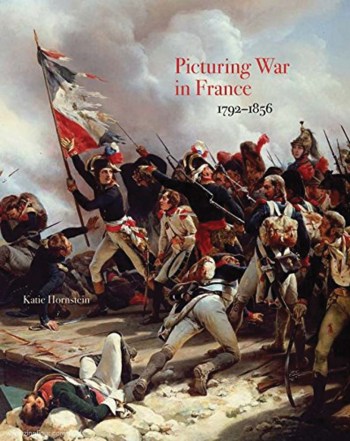 From the walls of the Salon to the pages of weekly newspapers, war imagery was immensely popular in postrevolutionary France. This fascinating book studies representations of contemporary conflict in the first half of the 19th century and explores how these pictures provided citizens with an imaginative stake in wars being waged in their name. As she traces the evolution of images of war from a visual form that had previously been intended for mostly elite audiences to one that was enjoyed by a much broader public over the course of the 19th century, Katie Hornstein carefully considers the influence of emergent technologies and popular media, such as lithography, photography, and panoramas, on both artistic style and public taste. With close readings and handsome reproductions in various media, from monumental battle paintings to popular prints, Picturing War in France, 1792–1856 draws on contemporary art criticism, war reporting, and the burgeoning illustrated press to reveal the crucial role such images played in shaping modern understandings of conflict.
Katie Hornstein is assistant professor of art history at Dartmouth College.
Exhibition | France, Between Enlightenment and Gallantry
From the Städtischen Museen Freiburg:
La France, Zwischen Aufklärung und Galanterie: Meisterwerke der Druckgraphik
La France au siècle des Lumières et de la galanterie: Chefs-d’œuvre de la gravure
La France, Between Enlightenment and Gallantry: Masterworks of Graphic Reproduction
Augustinermuseum, Freiburg, 24 February — 3 June 2018
 Das französische Bürgertum des 18. Jahrhunderts liebte gute Unterhaltung: galant und charmant, mit Witz und scharfem Verstand. Reich bebilderte Bücher erfreuten sich größter Beliebtheit. Die Verlage druckten Romane, Gedichte und Theaterstücke mit Illustrationen und gaben Graphikserien heraus, gestochen nach Gemälden des Rokoko.
Angespornt durch die große Nachfrage schufen die Künstler der Zeit wahre druckgraphische Meisterwerke. Das Haus der Graphischen Sammlung zeigt Zeichnungen, Graphiken und illustrierte Ausgaben galanter Literatur, satirischer Romane und moralischer Fabeln aus der Schenkung des Freiburger Sammlers Josef Lienhart, darunter Radierungen von François Boucher und Bilderfindungen Antoine Watteaus.
Hélène Iehl and Felix Reusse, eds., La France—Zwischen Aufklärung und Galanterie: Meisterwerke der Druckgraphik aus der Zeit Watteaus (Petersberg: Michael Imhof Verlag, 2018), 192 pages, ISBN: 9783731906339, $53. [French and German Text]
Exhibitions | Colony: Australia and Colony: Frontier Wars

Press release (6 February 2018) for the exhibitions:
Colony: Australia 1770–1861
National Gallery of Victoria, Melbourne, 15 March — 15 July 2018
Colony: Frontier Wars
National Gallery of Victoria, Melbourne, 15 March — 2 September 2018
NGV Australia will host two complementary exhibitions that explore Australia’s complex colonial history and the art that emerged during and in response to this period. Presented concurrently, these two ambitious and large-scale exhibitions, Colony: Australia 1770–1861 and Colony: Frontier Wars, offer differing perspectives on the colonisation of Australia.

Richard Browne (illustrator), Insects, 1813, p. 52 in Select Specimens from Nature of the Birds Animals &c &c of New South Wales collected and arranged by Thomas Skottowe, 1813, watercolour (Sydney: Mitchell Library, State Library of New South Wales, SAFE/PXA 555).
Featuring an unprecedented assemblage of loans from major public institutions around Australia, Colony: Australia 1770–1861 is the most comprehensive survey of Australian colonial art to date. The exhibition explores the rich diversity of art, craft, and design produced between 1770, the arrival of Lieutenant James Cook and the Endeavour, and 1861, the year the NGV was established.
The counterpoint to Colony: Australia 1770–1861, Colony: Frontier Wars presents a powerful response to colonisation through a range of historical and contemporary works by Indigenous and non-Indigenous artists dating from pre-contact times to present day. From nineteenth-century drawings by esteemed Wurundjeri artist and leader, William Barak, to the iridescent LED light boxes of Jonathan Jones, this exhibition reveals how Aboriginal people have responded to the arrival of Europeans with art that is diverse, powerful, and compelling.
Tony Ellwood, Director, NGV said: “Cook’s landing marks the beginning of a history that still has repercussions today. This two-part exhibition presents different perspectives of a shared history with unprecedented depth and scope, featuring a breadth of works never-before-seen in Victoria. In order to realise this ambitious project, we have drawn upon the expertise and scholarship of many individuals from both within and outside the NGV. We are extremely grateful to the Aboriginal Elders and advisory groups who have offered their guidance, expertise and support,” said Ellwood.
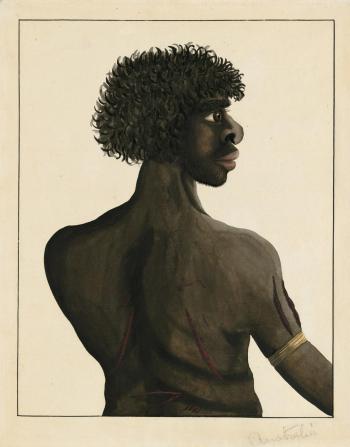
Port Jackson Painter, Half-length Portrait of Gna-na-gna-na, ca. 1790, gouache (Canberra, National Library of Australia, Rex Nan Kivell Collection NK144/D).
Joy Murphy-Wandin, Senior Wurundjeri Elder, said: “I am overwhelmed at the magnitude and integrity of this display: such work and vision is a credit to the curatorial team. The NGV is to be congratulated for providing a visual truth that will enable the public to see, and hopefully understand, First Peoples’ heartache, pain and anger. Colony: Australia 1770–1861 / Frontier Wars is a must-see for all if we are to realise and action true reconciliation.”
Charting key moments of history, life, and culture in the colonies, Colony: Australia 1770–1861 includes over 600 diverse and significant works, including examples of historical Aboriginal cultural objects, early watercolours, illustrated books, drawings, prints, paintings, sculpture, and photographs, to a selection of furniture, fashion, textiles, decorative arts, and even taxidermy specimens.
Highlights from the exhibition include a wondrous ‘cabinet of curiosities’ showcasing the earliest European images of Australian flowers and animals, including the first Western image of a kangaroo and illustrations by the talented young watercolourist Sarah Stone. Examples of early colonial cabinetmaking also feature, including the convict made and decorated Dixson chest containing shells and natural history specimens, as well as a rarely seen panorama of Melbourne in 1841 will also be on display.
Following the development of Western art and culture, the exhibition includes early drawings and paintings by convict artists such as convicted forgers Thomas Watling and Joseph Lycett; the first oil painting produced in the colonies by professional artist John Lewin; work by the earliest professional female artists, Mary Morton Allport, Martha Berkeley and Theresa Walker; landscapes by John Glover and Eugene von Guérard; photographs by the first professional photographer in Australia, George Goodman, and a set of Douglas Kilburn’s silver-plated daguerreotypes, which are the earliest extant photographs of Indigenous peoples.
Colony: Frontier Wars attests to the resilience of culture and community, and addresses difficult aspects of Australia’s shared history, including dispossession and the stolen generation, through the works of Julie Gough, Brook Andrew, Maree Clarke, Ricky Maynard, Marlene Gilson, Julie Dowling, S. T. Gill, J. W. Lindt, Gordon Bennett, Arthur Boyd, Tommy McRae, Christian Thompson, and many more.
Giving presence to the countless makers whose identities have been lost as a consequence of colonialism, Colony: Frontier Wars also includes a collection of anonymous photographic portraits and historical cultural objects, including shields, clubs, spear throwers and spears, by makers whose names, language groups and Countries were not recorded at the time of collection. Challenging global museum conventions, the exhibition will credit the subjects and makers of these cultural objects as ‘once known’ rather than ‘unknown’.
Colony: Australia 1770–1861 / Frontier Wars (Melbourne: National Gallery of Victoria, 2018), 394 pages, ISBN: 9781925432503, $50.
 This publication accompanies the two-part exhibition Colony: Australia 1770–1861 and Colony: Frontier Wars, which explores Australia’s shared history. Featuring works from the National Gallery of Victoria and key collections throughout Australia, it highlights the multiple perspectives on our colonial history through new scholarship and first-person statements from contemporary artists. This volume is a valuable addition to existing analyses of Australia’s complex colonial past.
Contributors
Brook Andrew, Robert Andrew, Louise Anemaat, Alisa Bunbury, Maree Clarke, Bindi Cole Chocka, Michael Cook, Carol Cooper, Julie Dowling, Amanda Dunsmore, Rebecca Edwards, Daina Fletcher, Elle Freak, Joanna Gilmour, Dr Ted Gott, Dr Julie Gough, Genevieve Grieves, Dr David Hansen, Peter Hughes, David Hurlston, Julia Jackson, Jonathan Jones, Cathy Leahy, Greg Lehman, Dr Donna Leslie, Dr Jane Lydon, John McPhee, Kimberley Moulton, Aunty Joy Murphy-Wandin AO, Richard Neville, Sarina Noordhuis-Fairfax, John Packham, Steaphan Paton, Cara Pinchbeck, Elspeth Pitt, Dr Joseph Pugliese, r e a, Beckett Rozentals, Dr Lynette Russell, Myles Russell-Cook, Judith Ryan AM, Yhonnie Scarce, Caitlin Sutton, Dr Christian Thompson, James Tylor (Possum), Michael Varcoe-Cocks, Judy Watson, H. J. Wedge, Danielle Whitfield, Nat Williams, Susan van Wyk.
New Book | Luca Giordano: Catalogue Raisonné
The English edition of the text is available from Artbooks.com:
Andrés Úbeda de los Cobos, Luca Giordano: Catalogue Raisonné (Madrid: Museo Nacional del Prado, 2018), 400 pages, $65.
 In spite of the huge number of paintings by this artist in the Prado, Luca Giordano (Naples, 1634–1705) is seldom studied and is therefore little known to the public, who often do not see beyond the cliché of his prodigious speed of execution. The present volume sets out to remedy this lack of knowledge. It begins with three introductory essays that set the Prado paintings in the context of Giordano’s life, survey the painter’s critical fortunes from his own time to the present day, and provide information on his Spanish period, which lasted from 1692 to 1702. These initial texts also look into specific issues, among them Giordano’s relationship with his dealers, and more controversial aspects such as the commercial strategies he used to disseminate his work.
The second part of the book—the catalogue raisonné proper—consists of entries for each of the paintings studied, including information on their provenance, condition, restoration history, related literature, iconography, visual sources and critical fortunes. It features a total of 99 paintings executed on different supports and in various media which span all the stages of his production except the period following his return to Naples in 1702.
Andres Ubeda de los Cobos, Deputy Director for Conservation and Research at the Museo del Prado. He is a specialist on Luca Giordano and has published various articles and books on the artist’s oeuvre, such as a study on the fresco of the Apotheosis of the Spanish Monarchy in the Casón del Buen Retiro in 2008—a project which, in a sense, has been brought to a successful completion by this book.
New Book | Orient et ornement
Published by Éditions de la Maison des sciences de l’homme, as noted at GRHAM:
Isabelle Tillerot, Orient et ornement: L’espace à l’œuvre ou le lieu de la peinture (Paris, Éditions de la Maison des sciences de l’homme et DFK Paris, 2018), 370 pages, ISBN: 978 2735124169, 48€.
Tout tableau est un fragment. Mais qui, du cadre ou du mur, construit le lieu de la peinture ? Que s’est-il passé lorsque cette énigme occidentale fut confrontée à l’époque moderne à une autre représentation du monde ? Si l’Europe des Lumières est souvent caractérisée par les chinoiseries et l’ornement rocaille, c’est un nouveau regard sur l’Extrême-Orient qui est analysé ici, celui qui lie l’histoire du tableau à une idée de l’espace transmise par les décors des objets venus d’Asie. Dans quelle mesure la présence réelle ou fantasmée de l’Orient a-t-elle modifié le rapport de la peinture au support qui la donne à voir ? Tel est l’objet de ce livre qui présente le changement de paradigme dans la construction du goût suscité par les notions orientales de paysage, de lointain et de vide, pour que le sort de la peinture se transforme. D’où vient la place particulière qu’elle acquiert au XVIIIe siècle ? De quelle façon fut bouleversée son exposition pour qu’elle devienne le tableau que nous connaissons aujourd’hui ?
 T A B L E D E S M A T I È R E S
Préface
Introduction
1 Les lieux de la peinture
Décorer ou la matérialité des décors
L’usage du décor
Les espaces impartis à la peinture
2 Le temps du décor
Les lointains de la peinture
Tableaux en amont
Le décor comme écrin
3 L’arabesque d’un ornement
L’arabesque peinte
L’arabesque à l’entour du tableau
Le tableau arabesque
4 L’orient des décorations
Rêve de chinoiserie
Rêve de matières
Rêve de couleurs
5 L’idée orientale du goût
De l’objet d’Orient à l’objet de goût
Lieux chinois d’Europe
Le blanc des jardins d’Asie
6 Un autre mode de représentation du monde
Un système non mimétique
Dissoudre le support architectural ou la surface repensée
Le décor reconnu comme oeuvre d’art
Conclusion – Le caprice de l’orient ou faire du tableau une île
Bibliographie
Sources anciennes
Sources anciennes éditées après le XVIIIe siècle
Études modernes
Catalogues d’expositions
New Book | British Women and Cultural Practices of Empire
From Bloomsbury:
Rosie Dias and Kate Smith, eds., British Women and Cultural Practices of Empire, 1770–1940 (London: Bloomsbury Visual Arts, 2018), 256 pages, ISBN: 9781501332173, £90.
 Correspondence, travel writing, diary writing, painting, scrapbooking, curating, collecting, and house interiors allowed British women scope to express their responses to imperial sites and experiences in the 18th, 19th, and 20th centuries. Taking these productions as its archive, British Women and Cultural Practices of Empire, 1775–1930 includes a collection of essays from different disciplines that consider the role of British women’s cultural practices and productions in conceptualising empire. While such productions have started to receive greater scholarly attention, this volume uses a more self-conscious lens of gender to question whether female cultural work demonstrates that colonial women engaged with the spaces and places of empire in distinctive ways. By working across disciplines, centuries and different colonial geographies, the volume makes an important contribution to the field by demonstrating the diverse ways in which European women shaped constructions of empire in the modern period.
Rosie Dias is Associate Professor in the History of Art, University of Warwick. Kate Smith is Senior Lecturer in Eighteenth-Century History, University of Birmingham.
C O N T E N T S
List of Illustrations
Contributors
Acknowledgments
Abbreviations
Introduction — Rosie Dias and Kate Smith
Part I | Travel
1 The Travelling Eye: British Women in Early 19th-Century India — David Arnold
2 Paper Trails of Imperial Trav(a)ils: Janet Schaw’s Journal of a Journey from Scotland to the West Indies, North Carolina, and Portugal, 1774–1776 — Viccy Coltman
3 Sketches from the Gendered Frontier: Colonial Women’s Images of Encounters with Aboriginal People in Australia, 1830s–1860s — Caroline Jordan
Part II | Collecting
4 ‘Of Manly Enterprise, and Female Taste!’: Mina Malcolm’s Cottage as Imperial Exhibition, c. 1790s–1970s — Ellen Filor
5 A Lily of the Murray: Cultivating the Colonial Landscape through Album Assemblage — Molly Duggins
6 Collecting the ‘East’: Women Travellers New on the New ‘Grand Tour’ — Amy Miller
Part III | Identities
7 Agents of Affect: Queen Victoria’s Indian Gifts — Rosie Dias
8 ‘Prime Minister in the Home Department’: Female Gendered Identity in 19th-Century Upper Canada — Rosie Spooner
9 Reconstructing the Lives of Professional Women in 1930s Zanzibar through Image, Object, and Text — Sarah Longair
Bibliography
Index
Exhibition | Black Out: Silhouettes Then and Now
From the National Portrait Gallery:
Black Out: Silhouettes Then and Now
Smithsonian National Portrait Gallery, Washington, D.C., 11 May 2018 — 10 March 2019
Mississippi Museum of Art, Jackson, 27 April — 25 August 2019
Curated by Asma Naeem
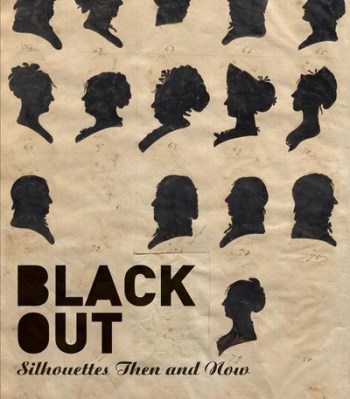 Silhouettes—cut paper profiles—were a hugely popular and democratic form of portraiture in the 19th century, offering virtually instantaneous likenesses of everyone from presidents to those who were enslaved. The exhibition Black Out: Silhouettes Then and Now explores this relatively unstudied art form by examining its rich historical roots and considering its forceful contemporary presence. The show features works from the Portrait Gallery’s extensive collection of silhouettes, such as those by Auguste Edouart, who captured the likenesses of such notable figures as John Quincy Adams and Lydia Maria Child, and at the same time, the exhibition reveals how contemporary artists are reimagining silhouettes in bold and unforgettable ways.
Highlights of the historical objects include a double-silhouette portrait of a same-sex couple and a rarely seen life-size silhouette of a nineteen-year-old enslaved girl, along with the bill of her sale from 1796. The featured contemporary artists are Kara Walker, who makes panoramic silhouettes of plantation life and African American history; Canadian artist Kristi Malakoff, who cuts paper to make life-size sculptures depicting a children’s Maypole dance; MacArthur-prize-winner Camille Utterback, who will present an interactive digital work that reacts to visitors’ shadows and movements; and Kumi Yamashita, who ‘sculpts’ light and shadow with objects to create mixed-media profiles of people who are not there. With both historical and contemporary explorations into the silhouette, Black Out reveals new pathways between our past and present, particularly with regard to how we can reassess notions of race, power, individualism, and even, our digital selves.
This exhibition is curated by Portrait Gallery Curator of Prints, Drawings and Media Arts, Asma Naeem.
Asma Naeem, Black Out: Silhouettes Then and Now (Princeton University Press, 2018), 192 pages, ISBN: 978 0691180588, $45.
◊ ◊ ◊ ◊ ◊
Note (added 27 April 2019) — The posting was updated to include the Mississippi Museum of Art as a second venue.
New Book | Commedia dell’Arte in Context
From Cambridge UP:
Christopher Balme, Piermario Vescovo, and Daniele Vianello, eds., Commedia dell’Arte in Context (New York: Cambridge University Press, 2018), 377 pages, ISBN: 9781139236331, $120.
 The commedia dell’arte, the improvised Italian theatre that dominated the European stage from 1550 to 1750, is arguably the most famous theatre tradition to emerge from Europe in the early modern period. Its celebrated masks have come to symbolize theatre itself and have become part of the European cultural imagination. Over the past twenty years a revolution in commedia dell’arte scholarship has taken place, generated mainly by a number of distinguished Italian scholars. Their work, in which they have radically separated out the myth from the history of the phenomenon remains, however, largely untranslated into English (or any other language). The present volume gathers together these Italian and English-speaking scholars to synthesize for the first time this research for both specialist and non-specialist readers. The book is structured around key topics that span both the early modern period and the twentieth-century reinvention of the commedia dell’arte.
New Book | Image, Identity, and John Wesley
From Routledge:
Peter Forsaith, Image, Identity, and John Wesley: A Study in Portraiture (London: Routledge, 2018), 210 pages, ISBN: 9781138207899, $140.
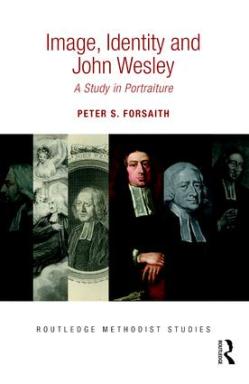 The face of John Wesley (1703–1791), the Methodist leader, became one of the most familiar images in the English-speaking and transatlantic worlds through the late eighteenth and nineteenth centuries. After the dozen or so painted portraits made during his lifetime came numbers of posthumous portraits and moralising ‘scene paintings’, and hundreds of variations of prints. It was calculated that six million copies were produced of one print alone—an 1827 portrait by John Jackson R.A. as frontispiece for a hymn book.
Illustrated by nearly one hundred images, many in colour, with a comprehensive appendix listing known Wesley images, this book offers a much-needed comprehensive and critical survey of one of the most influential religious and public figures of eighteenth-century Britain. Besides chapters on portraits from the life and after, scene paintings and prints, it explores aspects of Wesley’s (and Methodism’s) attitudes to art and the personality cult which gathered around Wesley as Methodism expanded globally.
Peter S. Forsaith is a historian of religion, culture and society in eighteenth-century Britain. He is Research Fellow of the Oxford Centre for Methodism and Church History, Oxford Brookes University, UK, and has written and lectured on many aspects of Methodist history. He gained his Ph.D. in 2003 for a scholarly edition of Rev. John Fletcher’s letters to Rev. Charles Wesley, later expanded and published as Unexampled Labours (2008). He is a Fellow of the Royal Historical Society.
C O N T E N T S
Introduction
1 ‘A Far Greater Genius than Sir Joshua’: Some Issues and Complexities around the Portraiture
2 ‘This Melancholy Employment’: Portraits from the Life to 1780
3 ‘I Yielded to Importunity’: Portraits from the Life, 1781–91
4 Prints and Posthumous Portraits: Spreading and Selling the Image
5 Scene Paintings
6 Pottery and Sculpture: A Note
7 No Striking Likeness? Images and Ambiguities
8 ‘The Pious Preacher’: Satire
9 ‘Of Pictures I Do Not Pretend To Be a Judge’: John Wesley and Art
10 Image, Identity, and Institution: Constructing a Canon
11 Conclusions: Visualising Mr. Wesley
Plates
Appendix A: Iconography of Principal Paintings of John Wesley, with Selected Prints
Appendix B: References in John Wesley’s Journal and Diaries to Portraits and Painters










 Enfilade
leave a comment